



A good work braid has to do three jobs at once: look neat in a meeting, stay put through a commute, and not make you want to yank it out by lunch. That is why braid hairstyles for work stay on rotation for so many people. They solve the annoying middle ground between “unstyled” and “spent forty minutes in front of the mirror.”
The best office braids are not the flashiest ones. They are the ones that sit flat under a blazer collar, don’t catch every time you turn your head, and still look intentional after a long stretch at a desk. A braid that feels tight at the hairline is the wrong braid. Comfort matters.
Texture changes everything, too. Fine hair needs grip. Thick hair needs control. Coily and curly hair often does best in protective styles that keep the ends tucked away and reduce daily handling. The trick is matching the braid to your hair, your dress code, and how much time you actually have before the kettle boils.
1. Low Three-Strand Braid
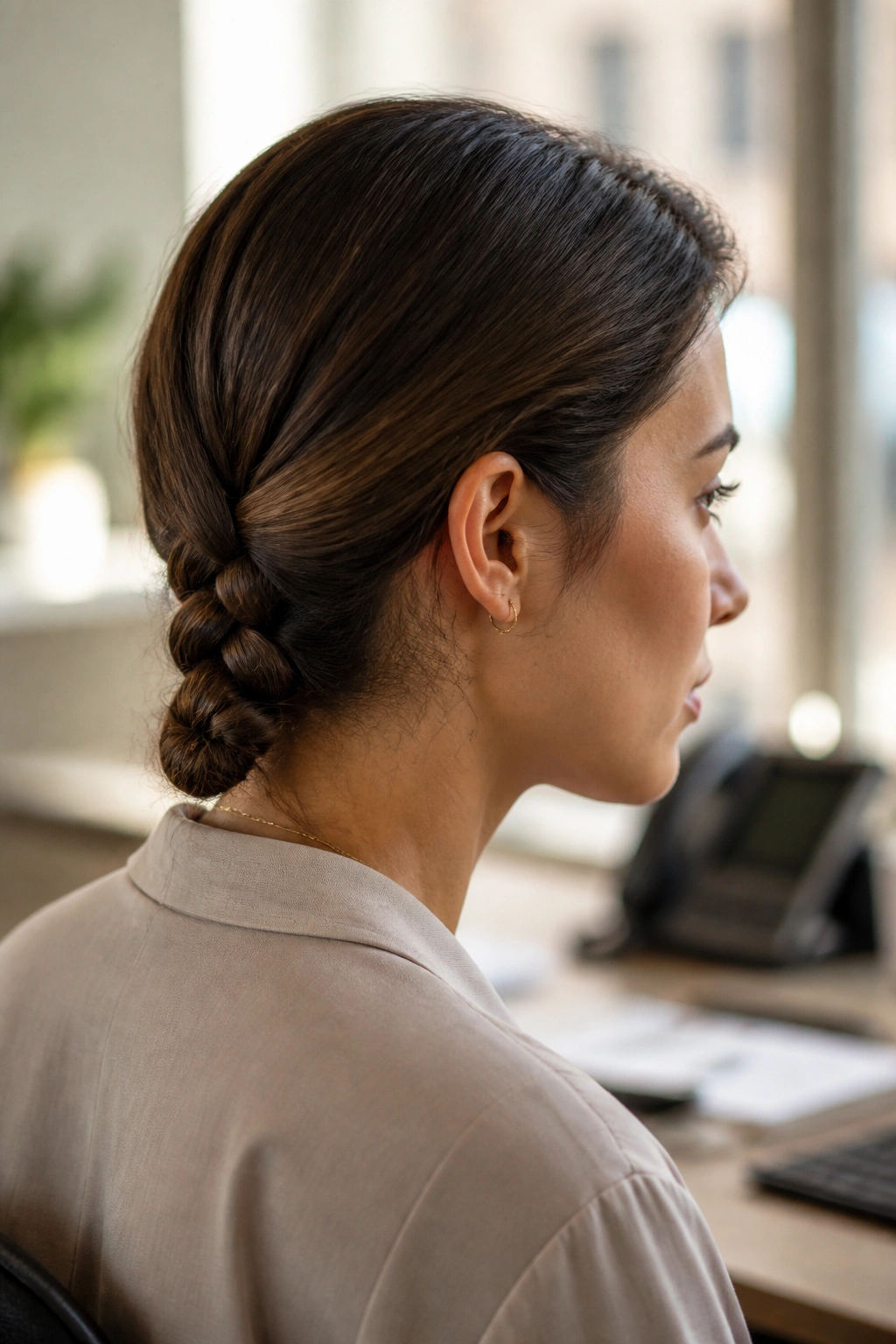
This is the braid I trust when the morning is already moving too fast. A low three-strand braid is plain in the best way: clean, fast, and hard to mess up. It works especially well when you want your hair off your neck but still want something softer than a bun.
Why It Works at a Desk
A low braid sits where a chair back won’t constantly rub it. That sounds minor, but it’s the difference between hair you forget about and hair you keep fixing. It also handles second-day hair well, because a little natural grip helps the sections stay in place.
- Takes about 3 to 5 minutes once your hands know the pattern.
- Best on day-two hair or hair with a touch of leave-in.
- Stays comfortable under collars, cardigans, and headset bands.
- Looks cleaner if you start with a middle or low side part.
Pro tip: wrap the elastic with a thin strand of hair and pin it underneath. It gives the braid a finished look without making it fussy.
2. Loose French Braid

A loose French braid looks more polished than people give it credit for. It’s one of those braid hairstyles for work that reads tidy from across a room, but still feels relaxed when you’re wearing it. The braid starts at the crown and pulls hair in gradually, which keeps shorter layers from drifting everywhere.
What makes it practical is the shape. It hugs the head, so it doesn’t swing into your face every time you lean over a laptop or reach for a file. Keep the tension even, not tight. Tight braids look sharp for about ten minutes and then start to hurt.
If your hair is silky, mist the top with a light texturizing spray first. If it’s thick, section smaller pieces so the braid lies flatter. A French braid can look too casual if it’s chunky and loose, or too severe if it’s pulled hard. The sweet spot is neat and slightly soft.
3. Dutch Braid
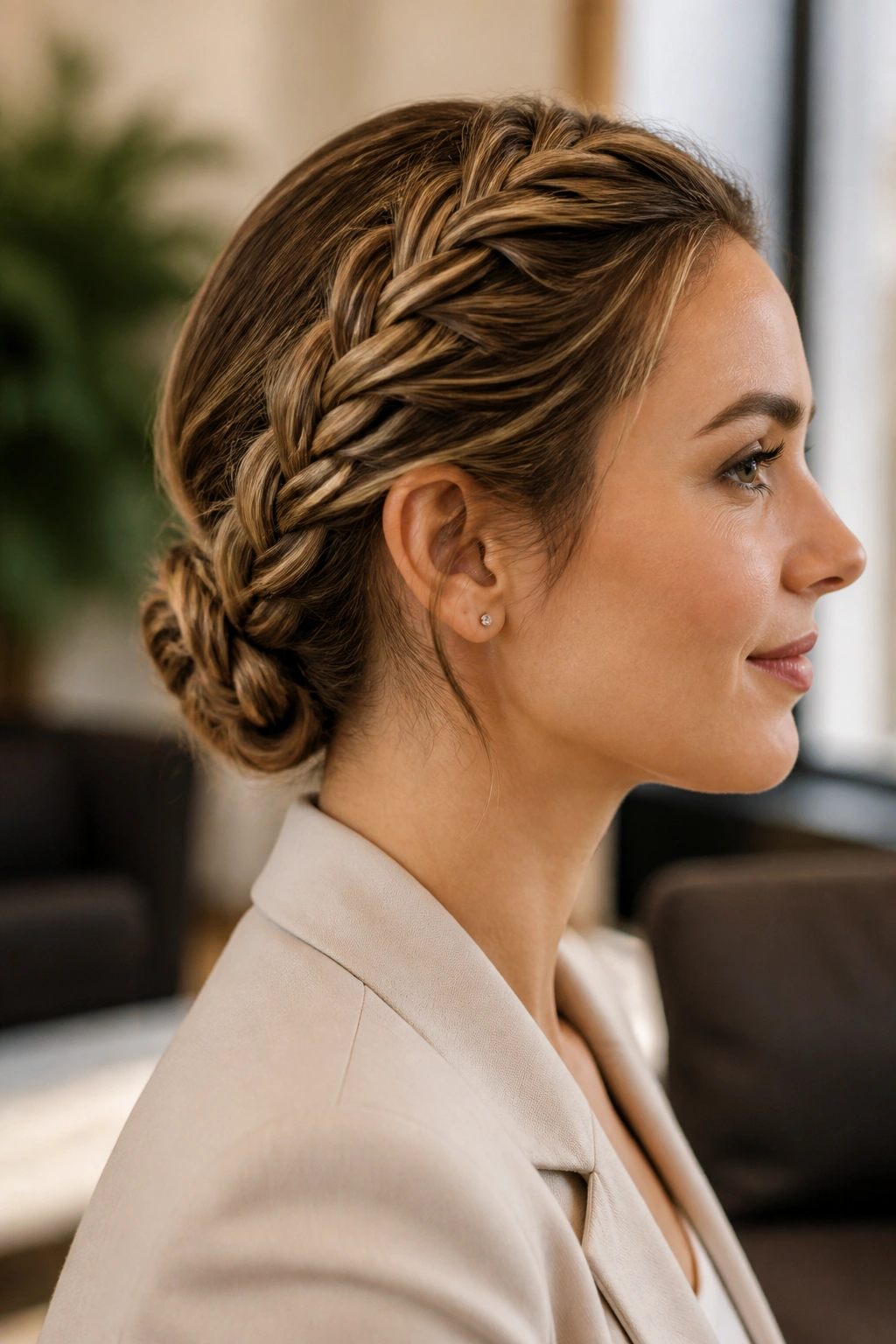
Why does a Dutch braid look fuller than a French braid? Because the strands cross under instead of over, so the braid lifts off the scalp a little and gives that embossed look. On thin hair, that extra shape helps. On thicker hair, it keeps the style from collapsing by lunchtime.
How to Keep It Work-Friendly
A Dutch braid can lean sporty if you make it too high or too dramatic. Keep it low enough to sit near the nape or start from a clean center part and run it straight back. That keeps the look office-safe rather than weekend-gym.
- Start with a clean part so the braid reads neat.
- Keep the first few crossings snug, not tight.
- Stop braiding at the nape and finish with a simple tail or bun.
- Use a small clear elastic if you want the end to disappear.
If you wear glasses, leave a little space around the temples. That tiny adjustment saves you from a day of arms, frames, and braid all fighting for the same spot.
4. Side-Swept Braid
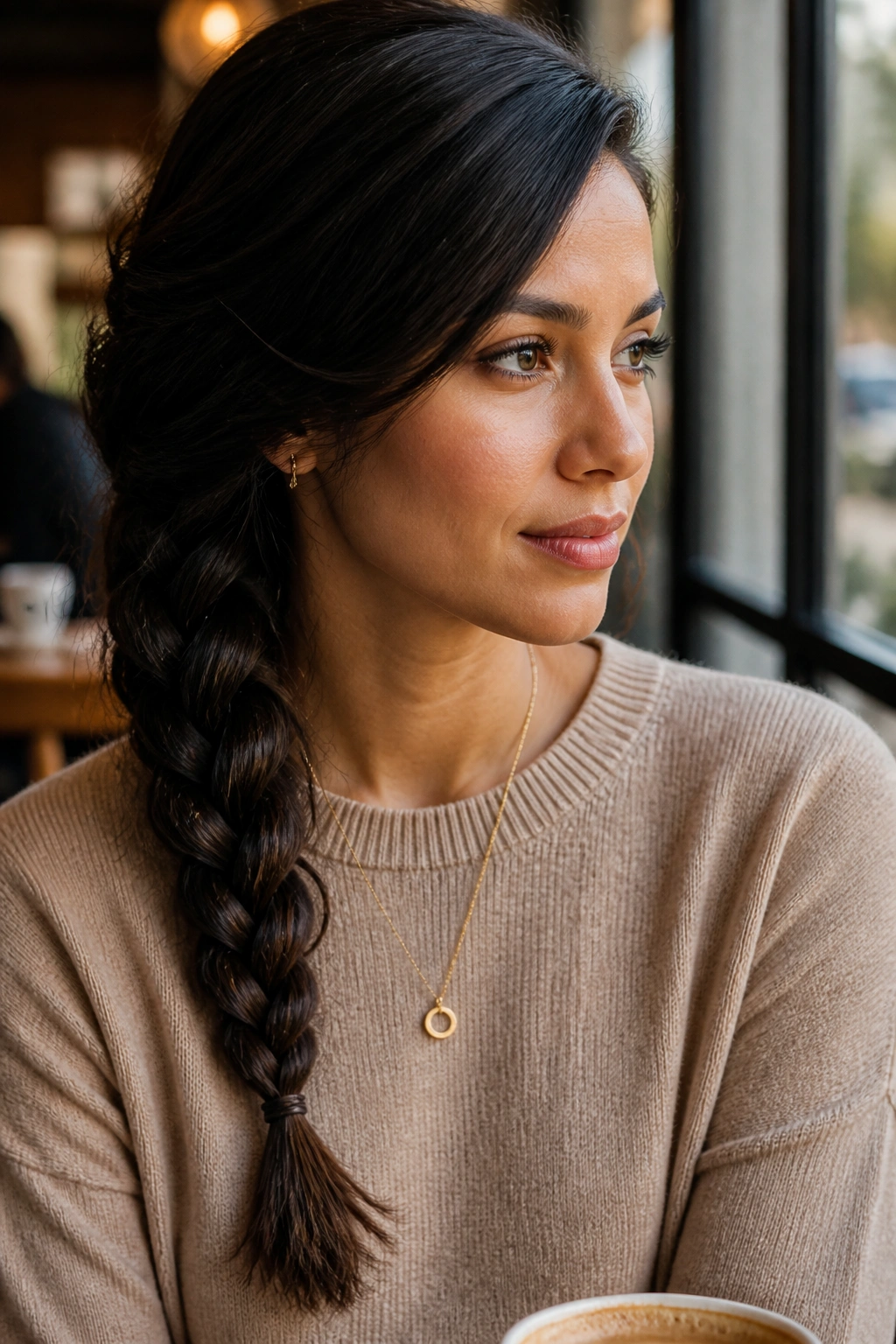
Late meeting, rushed commute, hair already slipping out of its shape. A side-swept braid fixes that kind of morning fast. It pulls the length over one shoulder, which makes the style feel softer than a straight-back braid and a little more finished than a quick ponytail.
The side placement does most of the work. It keeps hair from brushing your face, but it also leaves the neckline open, which matters if you’re wearing a collared shirt or a structured blazer. Start near the temple or just behind one ear and braid down toward the opposite shoulder.
- Works well on shoulder-length to long hair.
- Looks best when the braid sits low and slightly loose.
- Easy to pair with blazers, turtlenecks, and button-downs.
- A silk scrunchie keeps the ends from looking crushed.
There’s a reason this braid stays on my list: it takes almost no thought, but it doesn’t look like you gave up. That’s a rare combination.
5. Fishtail Braid

A fishtail braid looks complicated from across the room, which is part of its charm. Up close, it is just two sections and a lot of small, repeated crosses. The pattern creates a tight, woven look that feels polished without needing a perfect blowout.
For work, I like it best when it starts low. High fishtails can feel a bit dressy, even theatrical, depending on the thickness and how much you pull the pieces apart. A low fishtail over one shoulder is calmer. It also behaves better with jackets and scarves, because the braid stays closer to the body.
Nope, it doesn’t need to be flawless. A slight bit of fray at the ends often looks better than a braid pulled so tight it goes stiff. If your hair is slippery, a touch of dry shampoo at the roots gives the sections enough hold to stay defined.
The one thing to watch is speed. Take your time on the first few passes, then keep the sections even. Once the rhythm sets in, it becomes a quiet, almost repetitive kind of braid — and that’s exactly why it works before a workday starts getting loud.
6. Braided Low Ponytail

Unlike a plain low ponytail, a braided low ponytail keeps the length from swinging all over your shoulder every time you move. That makes it useful on days when you’re typing, reaching, walking, and maybe carrying coffee all at once. The braid keeps the tail together so it doesn’t split into a mess by noon.
This style is especially good for long hair and layered cuts. A low braid at the tail can corral the ends without flattening the roots too much. If you like a smoother finish, braid the ponytail after brushing everything back with a pea-size amount of serum. Keep it off the scalp, though. Product at the roots can make the style look greasy by lunch.
A simple version works in under five minutes. A more polished version uses a wrapped elastic at the base and one pin hidden underneath the braid. That little detail matters more than people think. It turns the style from “I tied my hair back” into something clean enough for client-facing days.
7. Crown Braid

A crown braid is what I reach for when the day has presentations, lunch outside, and no patience for hair falling into my face. It circles the head like a soft frame, which keeps the shape tidy and pulls attention upward instead of toward frizz or flyaways. For the office, the trick is to keep it slim.
Small Tweaks That Keep It Calm
If the braid gets too thick, it starts to feel costume-like. A narrower braid sits flatter and looks more practical. I also like leaving a simple side part or a small fringe, because a fully slicked crown can feel harsher than it needs to.
- Keep the braid close to the head rather than puffed out.
- Secure the back with 4 to 6 pins, crossed in an X.
- Leave the ends tucked low so they do not poke out.
- Use a light mist of hold spray if your hair slips easily.
This is one of those styles that looks like more work than it is. Once you know where the braid should sit, the rest is mostly pinning and patience.
8. Halo Braid
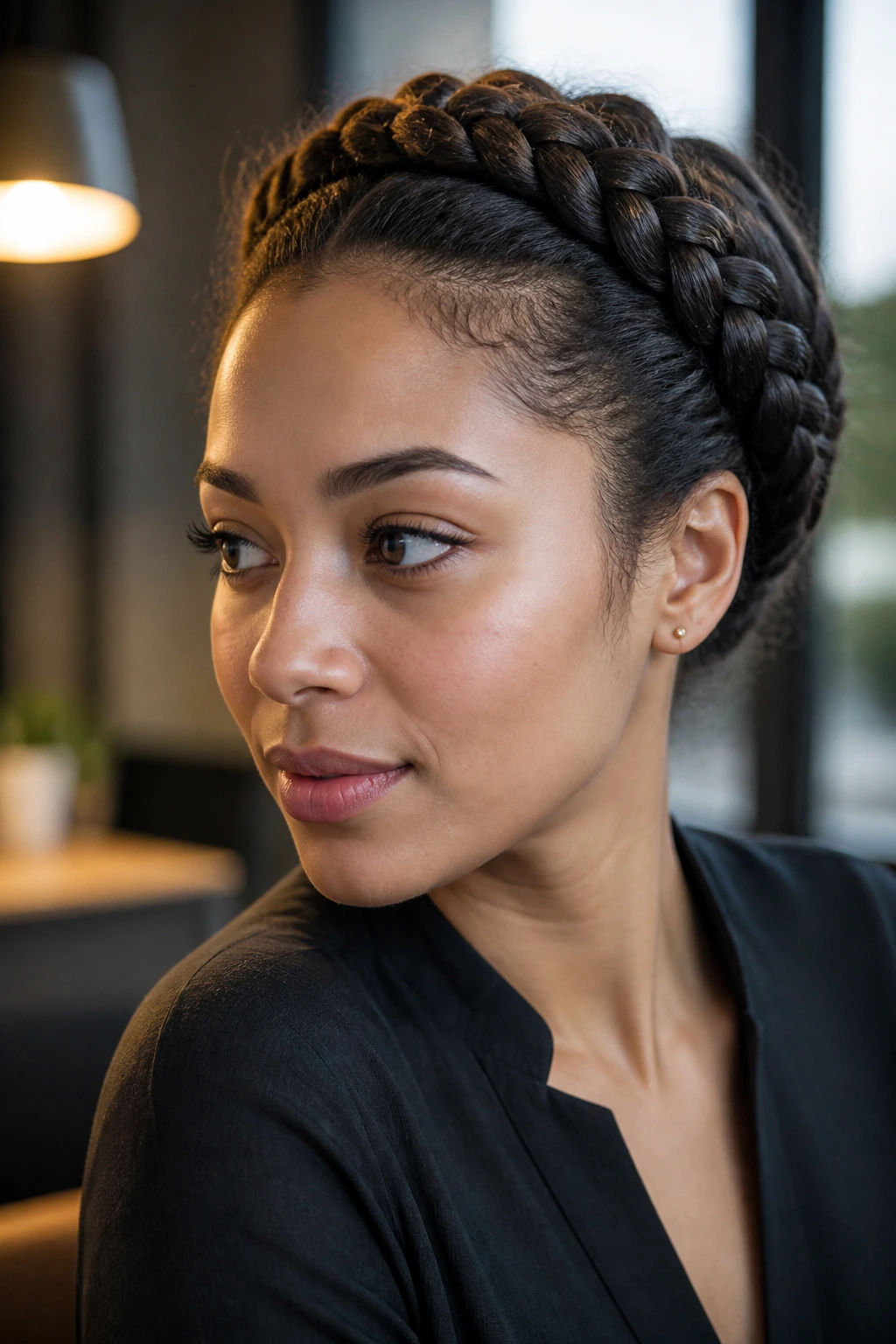
A halo braid gives you full face-off hair control with a softer finish than a tight updo. It wraps all the way around the head, which makes it a strong choice if you want nothing brushing your cheeks while you’re working through a stack of tasks. Done neatly, it feels clean and composed.
The big difference between a halo braid and a crown braid is how enclosed it feels. A halo braid usually wraps fully around, with the ends hidden or tucked underneath. That makes it a bit more formal, but still workable for office days if the braid stays close to the scalp and the silhouette stays low.
It tends to suit long hair and textured hair especially well, because there’s enough length to wrap and pin without the style falling apart. Keep the pins hidden and use hair that has a little texture already — freshly washed hair can be too slippery for this one. If you wear headphones, check the placement behind the ears before you leave the mirror. That tiny test saves a lot of mid-day adjusting.
9. Half-Up Braid

Need your hair down, but not in your face? A half-up braid solves that without making you feel overly “done.” It keeps the front and crown sections controlled while letting the rest of the hair move naturally, which is useful if your office leans polished but not stiff.
How to Wear It on Shorter Hair
This style works on more lengths than people expect. On shoulder-length hair, it can be a small braid across the top that clips back cleanly. On longer hair, it becomes a neat anchor that holds the front layers out of the way.
- Take the top third of the hair and braid it back.
- Secure it with a small elastic or pin at the crown.
- Leave the rest straight, waved, or softly bent at the ends.
- Keep the braid narrow if your dress code is strict.
I like this one for days when a full braid feels like too much and loose hair feels like too little. It sits in that useful middle space.
10. Double Braids Into a Low Bun

On busy mornings, two braids can feel like more work than you want. Then they become the cleanest bun base you own. Double braids into a low bun keep the shape neat, distribute the weight, and make the finished style look more intentional than a quick twist.
The process is simple enough. Part the hair down the middle, braid each side, then wrap both braids into a low bun at the nape. Because the braids are already holding the hair together, the bun tends to stay in place with less pinning than a loose chignon. That matters on long days when you do not want to chase a slipping bun every hour.
- Good for thick or layered hair.
- Helps keep the neck cool and the ends tucked away.
- Works with U-pins or 2 to 4 sturdy bobby pins.
- Holds up well if you need to go from desk to dinner without restyling.
The only real mistake is making the braids uneven. Keep them close in size, and the bun will sit centered instead of tilting to one side.
11. Waterfall Braid

A waterfall braid is the prettiest braid in this set, and I say that with some caution. It can easily drift into too-soft, too-romantic territory if it’s left loose all over. Keep it narrow and one-sided, and it becomes a fine office braid with a little movement around the face.
The charm is in the dropped strands. As you braid across the head, pieces fall through the braid like little gaps, which creates a lighter look than a full plait. That means it pairs well with straight or softly waved hair, where the pattern can still show. On very textured hair, it can be gorgeous, but you may need extra smoothing at the front so the braid reads clearly.
It is not the style I’d choose for a day full of rain or a packed commute. Loose pieces can puff if the weather fights you. But on a calmer day, it gives enough visual detail to look thoughtful without trying hard.
If you want it more work-friendly, stop the braid behind the ear and pin the rest back low. That keeps the whole thing from wandering into “special occasion” territory.
12. Braided Headband

A braided headband works a lot like an actual headband, only it looks like it belongs to the hair instead of sitting on top of it. That small difference matters. It keeps the front sections off your face and leaves the rest of the length free, which is helpful if you like wearing your hair down but hate touching it all day.
This style is especially friendly to short and medium-length hair, because you only need enough length to braid a narrow section from one side to the other. Once it’s pinned behind the opposite ear, it acts like a built-in frame. Fine hair likes it because the braid gives a little shape. Thick hair likes it because only part of the hair is doing the heavy lifting.
The key is to keep the braid slim. A chunky headband braid can sit too high and start slipping. A narrow one stays flatter, which makes it easier to tuck behind glasses, earrings, or a lanyard. It’s a small thing. Still matters.
13. Accent Braid With Straight Hair
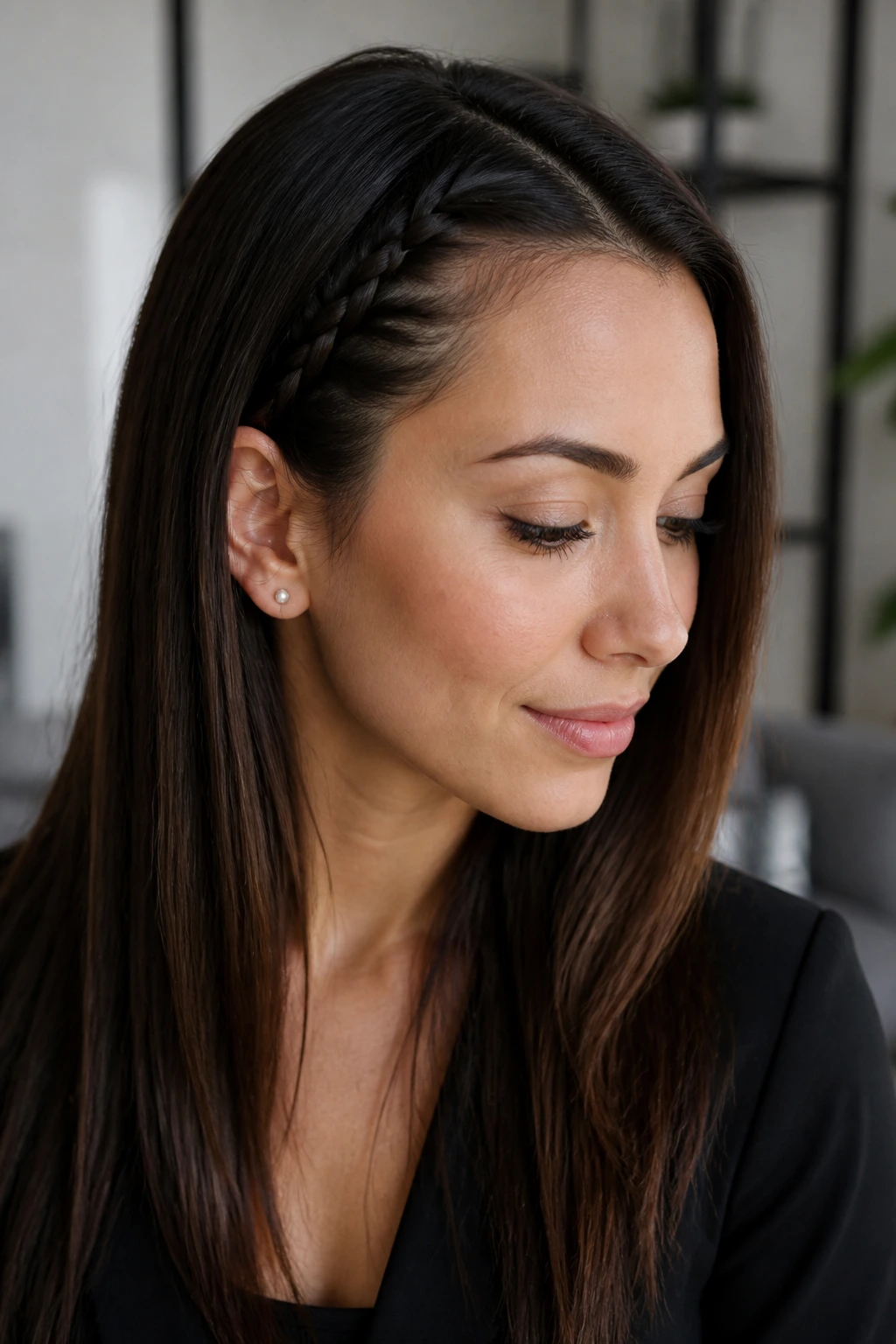
Sometimes the smallest braid does the most work. An accent braid is that braid — a narrow section placed along the part, near one temple, or just behind the ear to give straight hair a bit of texture without changing the whole style. It’s one of the easiest braid hairstyles for work when your dress code is conservative.
Where to Place It
The spot changes the mood. A braid along the hairline feels softer. One tucked close to the part feels cleaner. If you wear a blunt bob or shoulder-length cut, one slim braid can stop the style from feeling flat.
- Keep the braid no thicker than a pencil for a quiet look.
- Pin it behind the ear so it doesn’t swing forward.
- Pair it with a smooth low ponytail if you want more polish.
- Use a small touch of serum on the ends only.
I like this option when I want one detail, not a whole styled look. It’s restrained, which can be a virtue at work.
14. Box Braids in a Side Part

Box braids can be one of the easiest work styles, but only when the parts are clean and the length makes sense for your day. A side part softens the line at the front and keeps the style from feeling too severe. Medium-size braids usually work best for office life because they balance neatness with comfort.
Too much weight at the roots becomes a problem fast. Braids that are overly thick or extremely long can pull on the scalp and make headset use miserable. A shoulder-length or collarbone-length finish often feels better during long desk stretches. The lighter the braids, the easier they are to wear from morning to evening.
This is where a little maintenance pays off. A satin scarf at night helps the style stay smoother, and a tiny bit of mousse on the surface can tame fuzz without making the braids stiff. If you’ve ever had braids that looked good on day one and rough by day three, you already know how much that matters.
15. Knotless Braids in a Low Ponytail
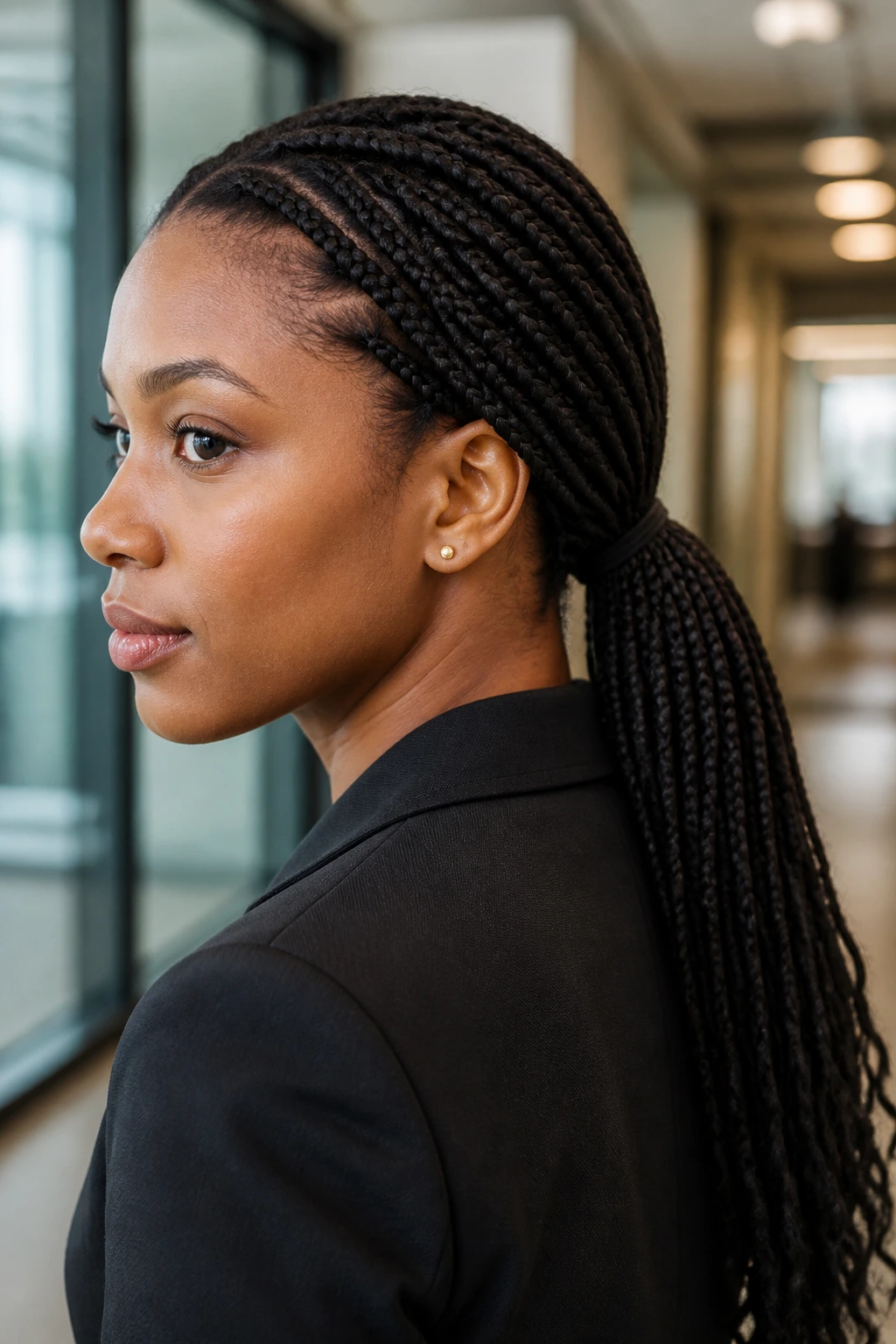
Why do knotless braids feel easier at work than some other protective styles? Because they usually sit lighter at the scalp, and that matters when you’re wearing them for hours at a time. The lower tension can make a real difference if your days include a desk, a commute, and a lot of head movement.
Low-Effort Ways to Wear Them
A low ponytail is the simplest move. Pull the braids back at the nape, leave the ends hanging, and you’ve got a style that stays off the face without needing constant attention. A half-up version works well too if you want a little lift around the crown.
- Use a snag-free elastic that won’t rough up the braids.
- Keep the ponytail low and centered so it does not pull.
- Add a wide scarf or wrap only if your office allows it.
- Avoid stacking too much weight at the crown.
Knotless braids already do a lot of the heavy lifting, so the styling can stay simple. That’s the appeal.
16. Feed-In Cornrow Ponytail
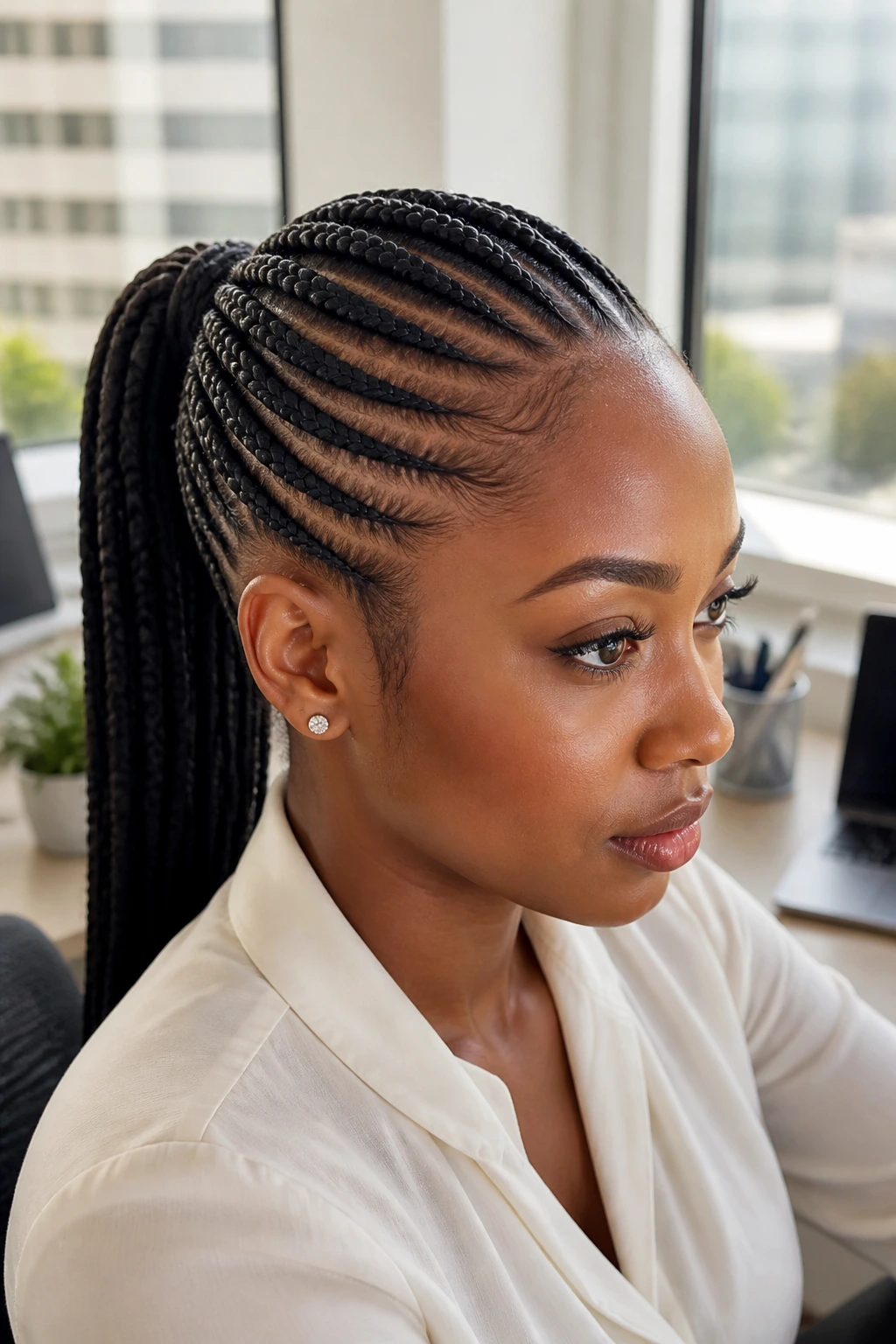
If you like a sleek look that stays put through a full calendar, a feed-in cornrow ponytail does the job. The gradual adding of hair creates a smooth braid pattern along the scalp, and the ponytail at the end keeps everything contained. It is tidy, practical, and very hard to accidentally mess up once it’s in place.
This style shines on coily and textured hair because it respects the hair’s shape while keeping the front neat. It also helps if you’re wearing a blazer, because the braids sit flat and don’t fight with the collar. I would ask for moderate tension here. Tight cornrows can feel sharp at the temples, and that is not worth it for a workday.
- Works well with simple studs or small hoops.
- Stays in place under hoods, jackets, and chair backs.
- Can be pulled into a low, medium, or high ponytail.
- Benefits from a little edge control only where needed.
The best version is smooth, not pulled skin-tight. That distinction matters more than people admit.
17. Zig-Zag Parted Braids
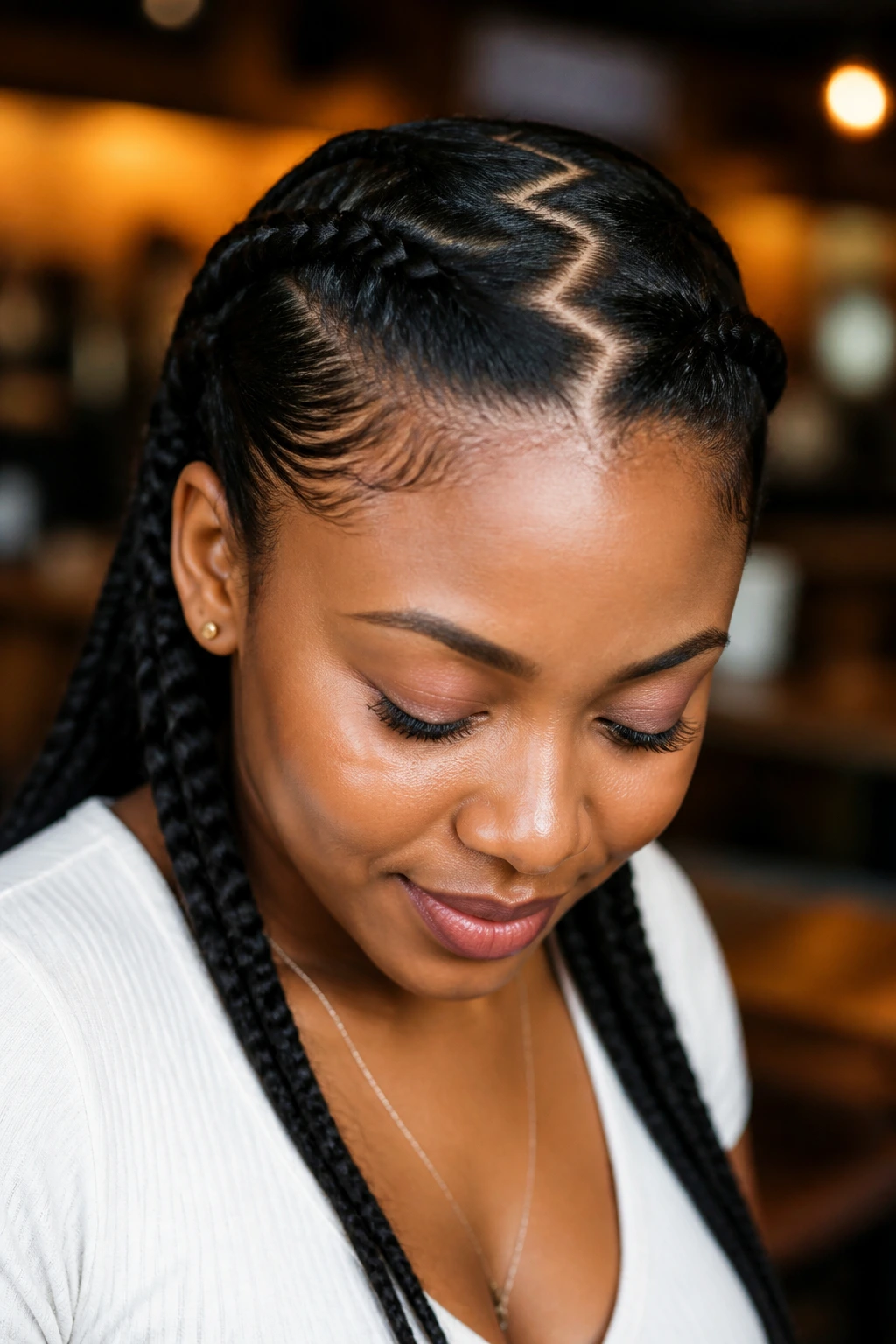
A zig-zag part gives familiar braids a little personality without asking for color, clips, or extra length. It’s a small design move, but it changes the whole read of the style. If your office dress code is relaxed, this is a nice way to keep things interesting while staying polished.
The parting is the point. Once the sectioning is clean, you can use it with double braids, cornrows, or simple braided pigtails. The braid itself should stay neat and calm so the part can do the visual work. That is the balance. Too much happening at once looks busy. One smart detail looks deliberate.
This style is also good for textured hair because the zig-zag can help break up a scalp line that feels too rigid with straight parts. Keep the part pattern subtle if you want it to fit a formal setting. A tiny angle here and there is enough. No need to draw a lightning bolt across your head unless your office is much cooler than most.
18. Braided Chignon

A braided chignon is the braid version of a tailored jacket. It looks finished from every angle, and it keeps the hair off the neck in a way that still feels refined. Unlike a plain bun, the braid adds texture at the base, so the style does not disappear against your head.
I like this one for interviews, presentations, and days when you want your hair to stay out of the conversation. Start with a low braid, coil it into a flat bun, and pin it in an X pattern so it holds. Four or five pins usually do the trick if the hair is prepped with a little texture.
A little grip goes a long way here. Freshly washed hair can make the bun slide, so if your hair is slippery, add a touch of dry shampoo or a light texturizing spray before you braid. The style should feel secure when you tilt your head back, but not so tight that the scalp feels strained. That line is easy to miss.
19. Two Braids Rolled Into a Tuck

Two braids rolled into a tuck give you the neatness of a bun with a softer, more woven finish. The style keeps the ends hidden, which is useful when you want a low-maintenance look that still feels finished. It also works well if your hair is medium length and does not quite want to behave in a single bun.
Why It Beats a Loose Bun
The braids create structure before you pin anything. That means less slipping, fewer random strands escaping, and a shape that stays centered at the nape. It’s a practical choice for long desk days because it keeps the weight low and even.
- Braid each side of a middle part.
- Roll both braids inward toward the nape.
- Secure with 3 to 6 pins depending on thickness.
- Tuck the ends under so they disappear cleanly.
This one feels calm in a way a messy bun rarely does. There’s shape, but not fuss.
20. Four-Strand Low Braid
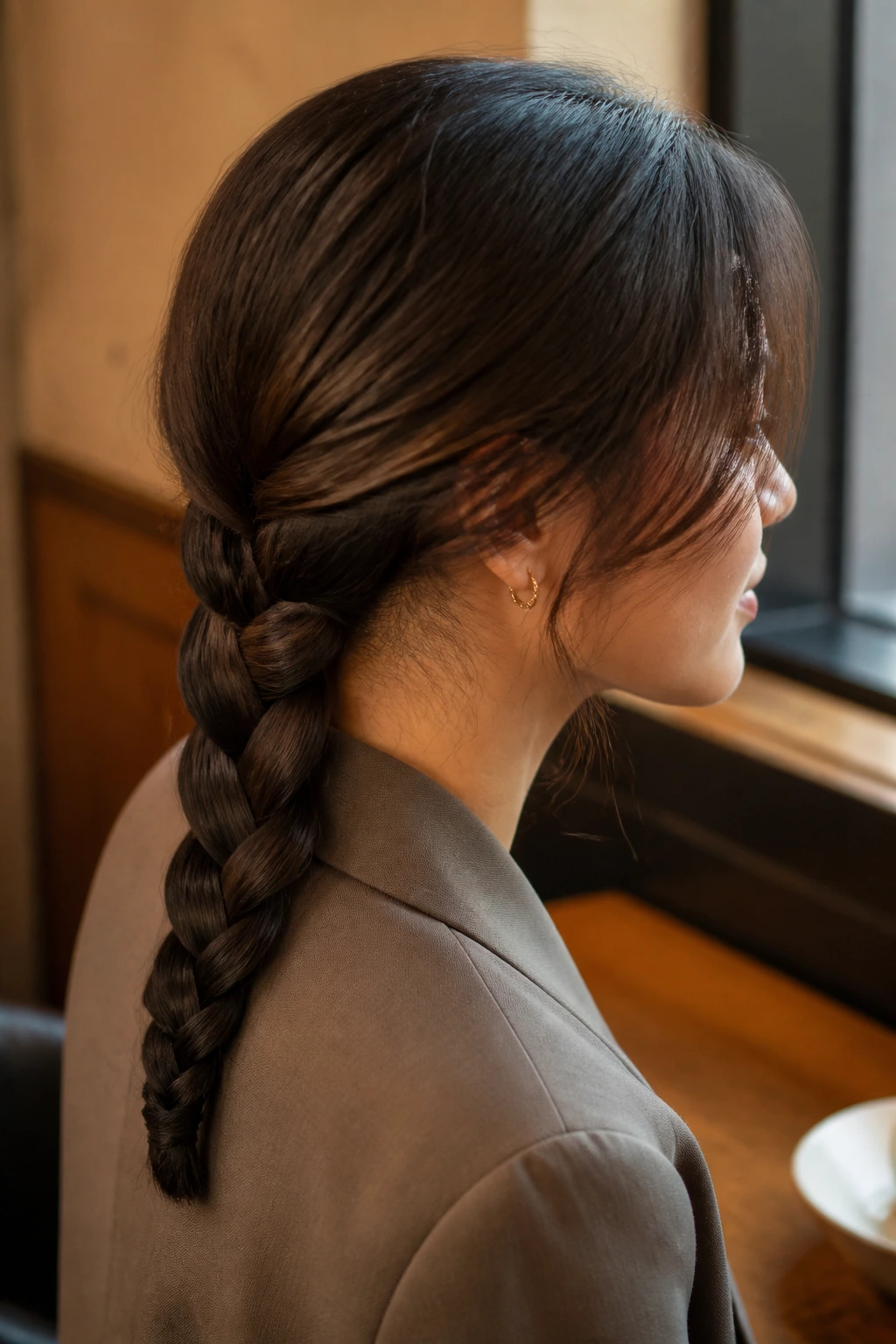
A four-strand low braid looks like more effort than it is, which is half the appeal. The extra strand gives the braid a fuller, woven texture, and that makes it feel a little dressier than a basic three-strand without crossing into special-occasion territory. Kept low, it works well for work because it stays controlled and sits close to the neck.
The main thing to remember is to keep the sections even. Uneven strands make the braid wobble, and then it starts to look accidental instead of polished. If you have time, practice once on dry hair before wearing it out. After that, the hand movement gets easier. It’s fiddly for about five minutes. Then it becomes rhythm.
For office wear, I’d keep the finish plain. No ribbon. No oversized clip. Let the braid itself do the job. If your hair is very long, secure the end with a small elastic and leave it tucked under a coat collar. If it is medium length, a low four-strand braid can sit at the nape and stay neat through a whole day of calls, typing, and moving from one task to the next. That’s the real test, anyway.
A good work braid should let you stop thinking about your hair. That’s the point.
