



Small braid hairstyles for short hair work best when the braid respects the cut instead of fighting it. That sounds obvious, but I see people miss it all the time: they try to force long-hair braids onto a bob, a tapered crop, or a grown-out pixie, and the style ends up looking cramped. Short hair needs cleaner parting, a little stretch, and less tugging. That’s the whole game.
A braid on a chin-length cut can look sharper than one on long hair. It has nowhere to hide. Every part line shows, every section matters, and the shape has to be intentional from the first inch at the scalp. Tight is not the same as neat.
Short hair also has a weird advantage. Because the ends are shorter, you can get away with small braids that sit flat, frame the face, or travel only partway down the head without looking unfinished. Some styles hold for days with a satin scarf and a light mousse refresh. Others are better for one clean outing and a quick wash the next morning. You learn the difference fast.
1. Straight-Back Mini Cornrows
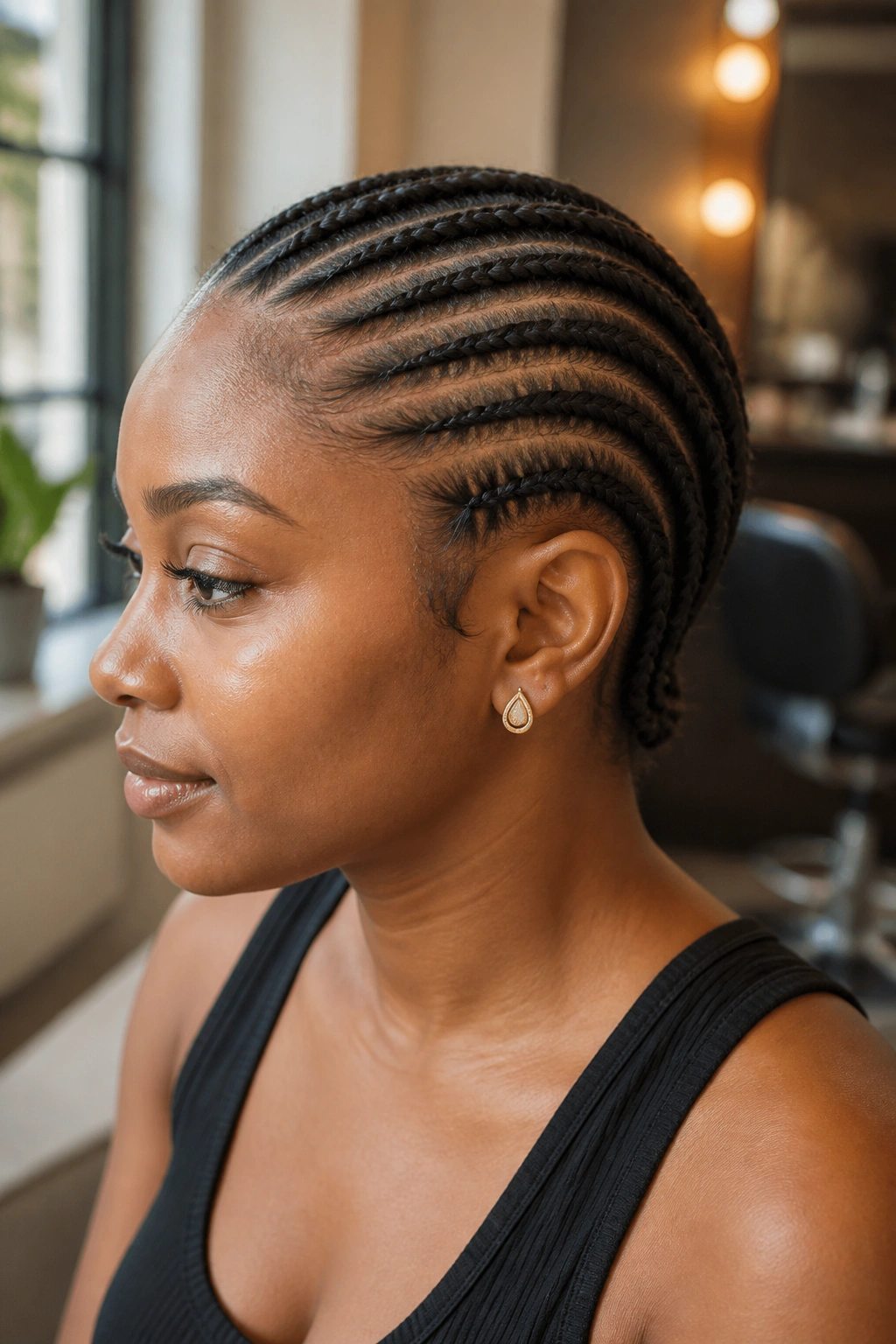
Tiny braids on short hair live or die by parting. When the rows are straight, the whole style looks cleaner, and the haircut underneath feels more deliberate. This is one of the easiest small braid hairstyles for short hair to keep neat because the braid starts at the scalp, not at the ends.
Why It Works on Short Hair
Straight-back rows give you structure when the hair itself does not offer much length. The lines make a cropped cut look sharper, and they keep the style from puffing out at the sides after a day or two. If your hair sits around the ear or jaw, this is often the braid pattern that behaves best.
- Best section size: about 1/4 to 1/2 inch wide.
- Best tools: rat-tail comb, light-hold gel, edge brush.
- Best finish: tucked ends with small elastics or a tiny braid fold.
If your cut is tapered, keep the shortest pieces out of the tightest rows. That sounds fussy, but it saves you from a lot of slipping. The braid only needs enough hair to grip cleanly.
Tip: use just enough product to smooth the part and help the grip. Too much oil makes the sections slide.
2. Side-Swept Feed-In Braids

Want a style that works when your hair barely clears your cheekbone? Side-swept feed-in braids are a smart answer. The angle does half the work for you, because the braid follows the face instead of asking the cut to do too much.
Feed-in braids start tiny at the scalp and build in size as you go. On short hair, that gradual start matters. A thick braid right from the first stitch can feel bulky and look forced. A thinner beginning blends better, especially if one side is shorter than the other.
This style is good for asymmetry. Short cuts are rarely identical on both sides, and that is fine. A side-swept pattern turns uneven length into part of the design, which is a nicer outcome than trying to hide it with a heavy hand.
Keep the braid low and close to the head for the first few inches. If the ends are too short to hang, pin them under a back section. No drama needed.
3. Braided Bangs Across the Hairline
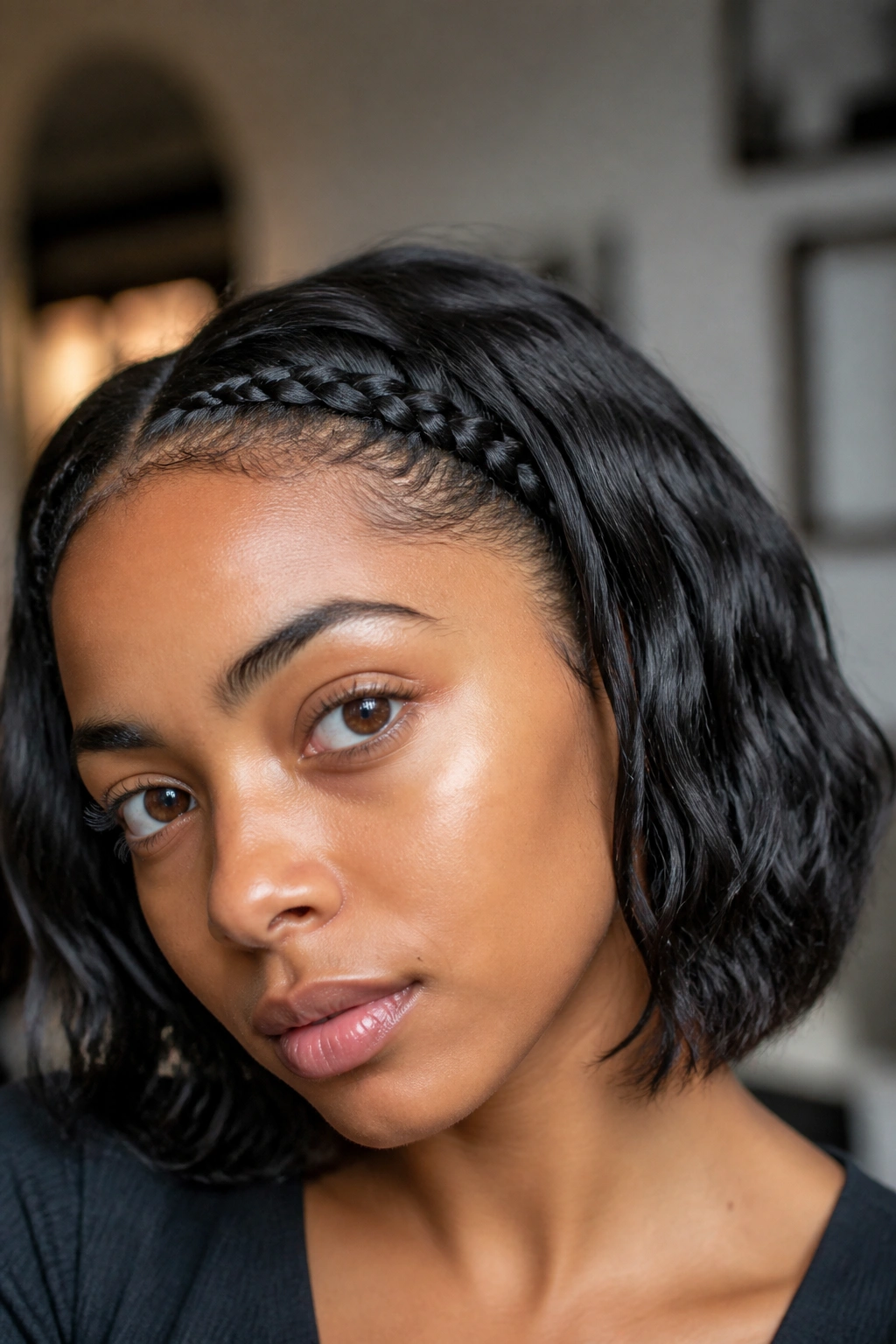
Braided bangs are sneaky. They solve a lot of problems at once: growing-out fringe, flyaway front pieces, and that awkward spot where the front is long enough to annoy you but not long enough to behave. On short hair, they can be the whole style or just the front detail that makes everything else look finished.
The braid usually sits across the hairline and angles gently toward one temple. You can do one slim braid or two tiny braids stacked close together. Either way, the front stays neat while the rest of the hair can be loose, curled, puffed, or pinned.
Tight is the mistake here. The braid should lie flat and feel secure, but it should not pull at the edges. If your hairline is tender, skip any style that feels like a tug-of-war. A soft hold gel and a little patience do more than force ever will.
Braided bangs look especially good with short curly hair, because the texture around them gives the braid some lift. The contrast is the point.
4. Double Mini Dutch Braids
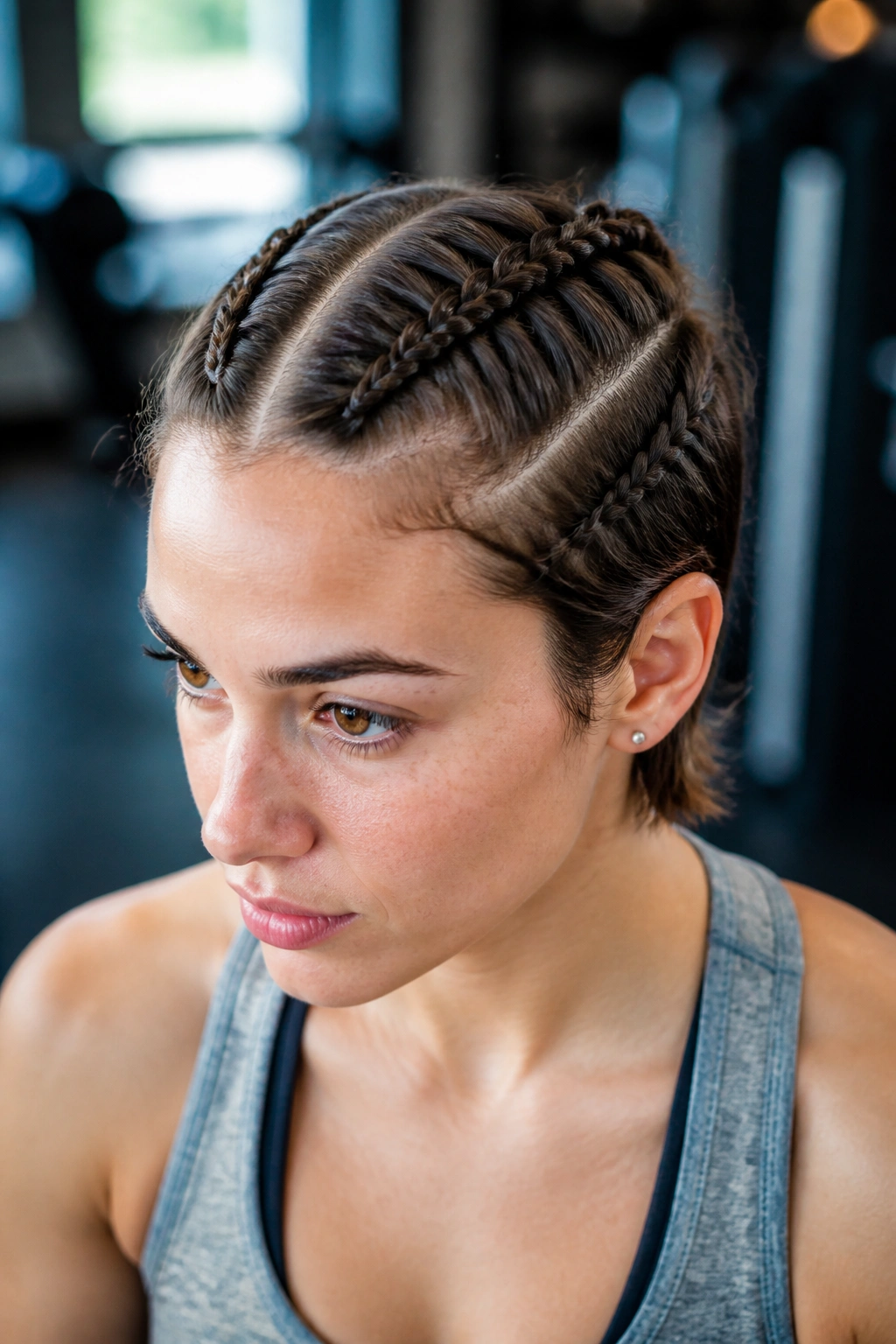
On a gym day, a travel day, or one of those mornings when your hair refuses to settle, double mini Dutch braids make a lot of sense. They sit on top of the head instead of disappearing into it, so the pattern reads clearly even when the hair is short.
How to Keep Them From Puffing Out
Dutch braids on short hair need a little more control than long ones. Start with small sections at the front, braid firmly, and keep adding hair in tiny amounts so the braid stays close to the scalp. If the sections get too chunky, the braid starts to stand up instead of lying down.
The ends can be tricky. Short layers often poke out before the braid gets very far, so finish each braid with a clear elastic and tuck the tail under the next row or pin it flat. If you want them to last more than a day, wrap the roots with a satin scarf at night.
This style looks especially good on hair that has been lightly stretched. Not bone-dry and fluffy. Just stretched enough that the sections don’t swell the second you touch them.
Useful detail: a small amount of mousse at the roots helps the braid stay compact without making it stiff.
5. Half-Up Crown Braids
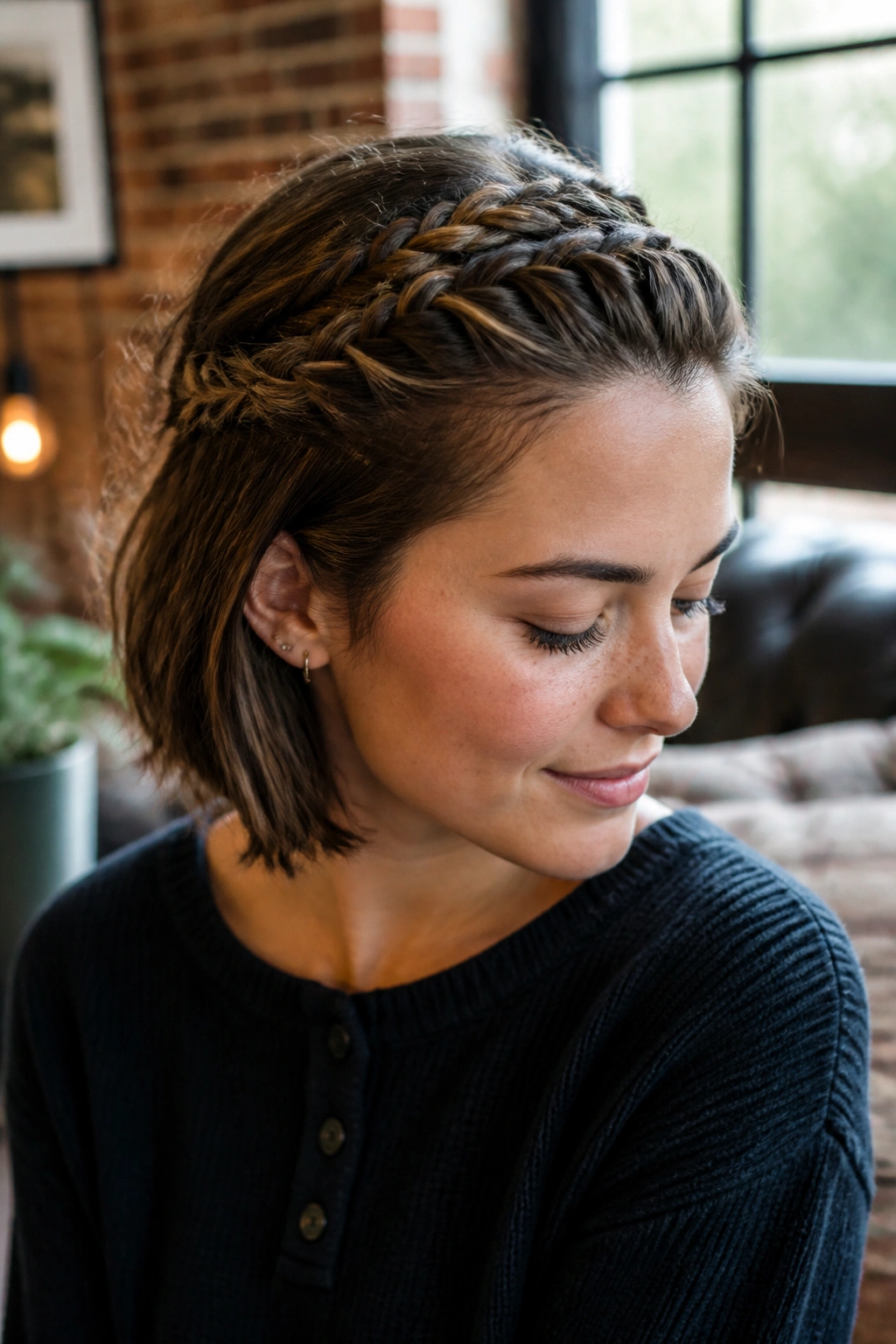
I reach for half-up crown braids when I want the hair off the face but I do not want the whole head braided. Short hair handles this style well because the braid only needs to travel from temple to temple, not all the way down the back.
The trick is keeping the crown line low and tucked. Two thin braids from each side can meet at the back and pin together under the top layer. On a bob, that creates a soft lift at the crown. On a pixie with enough top length, it gives you a small halo effect without heavy structure.
This is one of those styles that works better on hair with a little texture. Straight hair can do it, sure, but coily or wavy hair tends to hold the pinning better. You also get a nicer shape around the temples when the hair has some bend to it.
A little leave-in on the ends is enough. Too much product near the pins makes the braid slide. That part is boring. It matters anyway.
6. Mini Box Braids on a Tapered Cut

Short hair can still take box braids, but the sections need respect. A tapered cut, especially, needs careful parting so the shortest pieces do not get yanked into a shape they cannot hold. When the boxes are tiny and even, the result looks crisp instead of crowded.
What the Sections Should Look Like
Aim for squares or small rectangles about the size of a fingernail on the top and slightly larger along the crown if the hair density allows it. Keep the rows clean. Sloppy parting stands out more on short hair than on long hair, because there is less length to distract the eye.
What to Avoid
- Heavy added hair on fragile edges.
- Thick braids at the nape when the hair is too short to anchor them.
- Overloading the scalp with grease before installation.
If you want added length, keep it light. Short hair already carries enough weight from the braid itself; extra synthetic hair can pull the style down and make the roots ache by day two. A clean set of small box braids can sit close, last well, and still move naturally.
For a tapered cut, I like the braids above the fade line and a clean finish around the ears. That keeps the shape sharp.
7. Curved Feed-In Braids
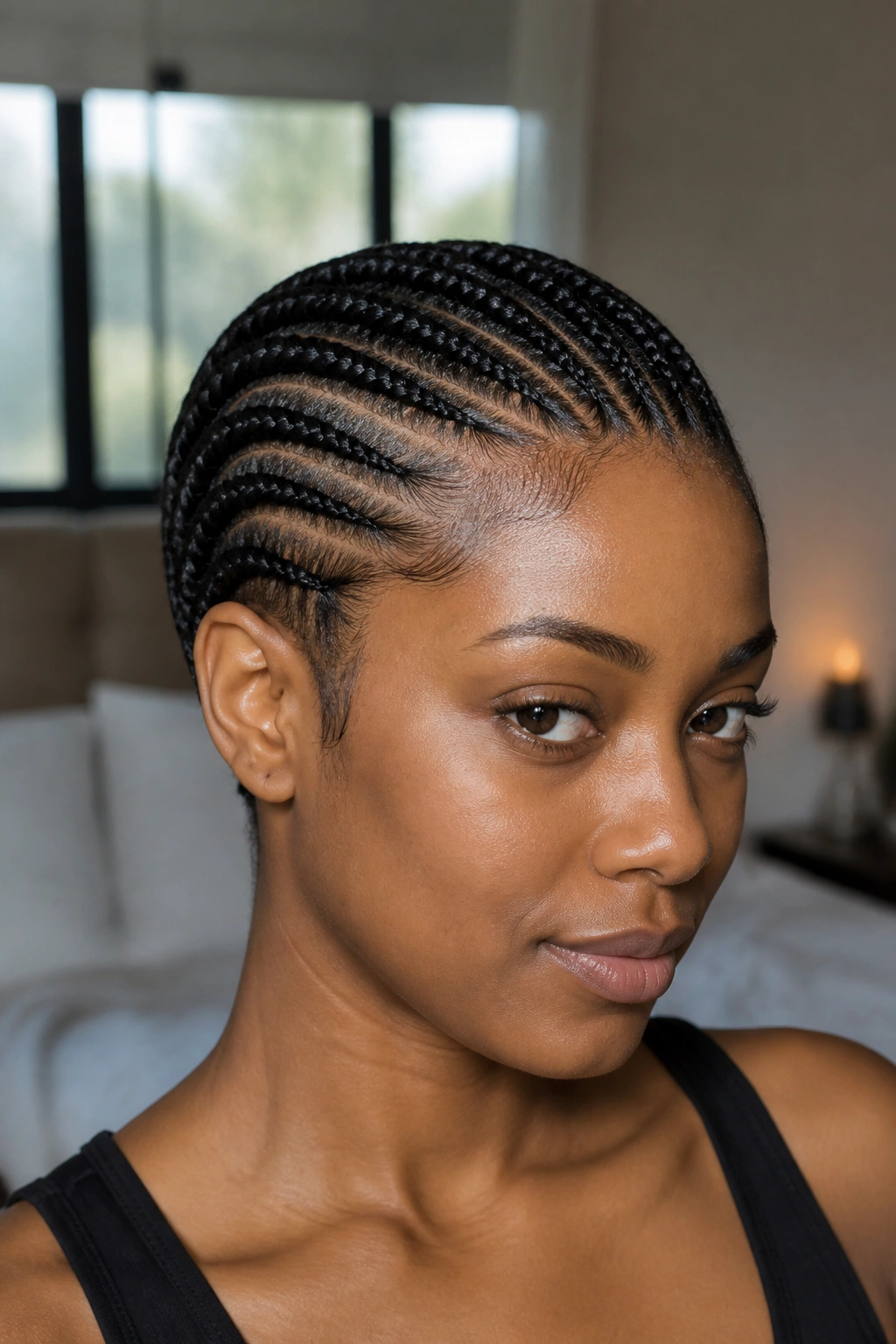
Curves matter more than extra length here. A braid that sweeps in a gentle arc can make short hair look much more deliberate than a straight row that ends abruptly. The eye follows the curve, not the missing length.
Feed-in braids work well because they start slim. That slim beginning gives you a soft hairline, which is especially useful when the cut is short around the temples. You can arc the braid toward the back, wrap it around the crown, or let it sweep diagonally across one side. The shape does the heavy lifting.
This style is good for people who hate hard lines. Not everybody wants a rigid, straight-back set. Curved feed-in braids feel a little softer, and on short hair that softness can keep the style from looking boxy.
A clean part is the main requirement. If the curve is shaky, the braid will show it. Use the tip of a fine comb and map the line first. Don’t rush that part.
8. Zigzag Part Cornrows
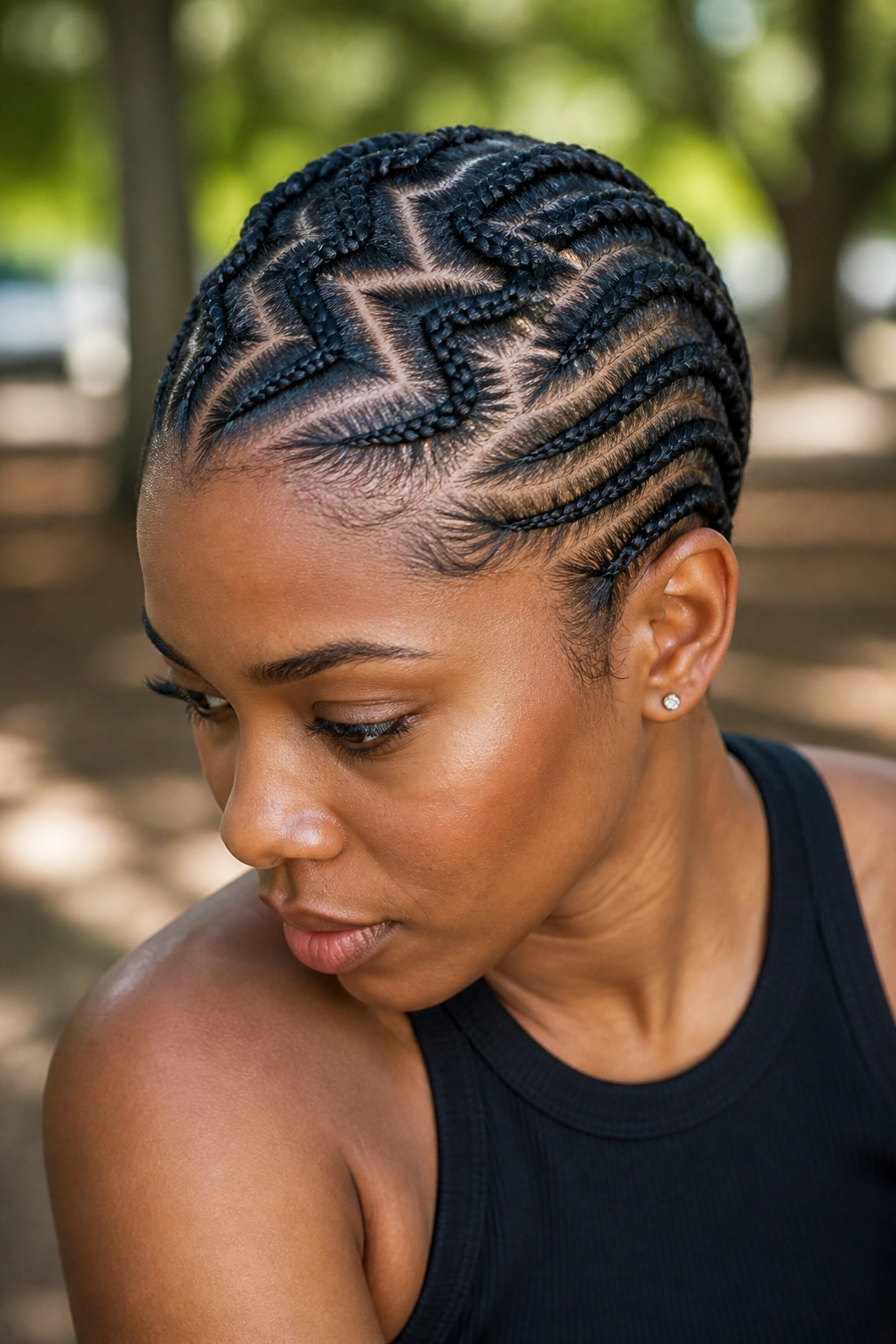
A zigzag part does more than look clever. It breaks up the scalp in a way that flat straight lines cannot, and short hair benefits from that visual movement. When the length is limited, the part becomes part of the style, not just the setup.
This pattern works best when the turns are wide enough to braid cleanly. Tiny sawtooth lines look cute on paper, but on coarse or dense hair they can get messy fast. A zigzag with broader angles usually holds up better and takes less time to execute.
- Best for: short natural hair, tapered cuts, and kids’ styles.
- Part width: about pencil-width to 1/2 inch, depending on density.
- Best finish: a few neat rows, not too many.
I like this style with a simple finish. Let the braid pattern stay the star. If you add too many accessories, the parting gets buried, and that is the whole point of the look. A little shine on the scalp is enough.
9. Beaded Braided Bob

A beaded braided bob reads playful and polished at the same time. On short hair, beads also solve a practical problem: they add a little weight to the ends, which helps tiny braids hang instead of sticking out in awkward directions.
The style works best when the braids stop around the chin or jaw and the beads are kept small enough to move with the head. Heavy metal pieces can drag on short hair and pull the braids out of shape. Wooden, clear, or lightweight plastic beads usually behave better.
There is also a sound to this style that people forget about. It clicks softly when you move, and that small detail gives the whole thing personality. Not loud. Just enough to notice.
If the hair is fine, use fewer beads per braid. If the hair is thick, you can place them at the very ends and still keep the braid balanced. The point is not decoration for its own sake. It is control, shape, and a little rhythm at the finish.
10. Front Accent Braids with Loose Back Length
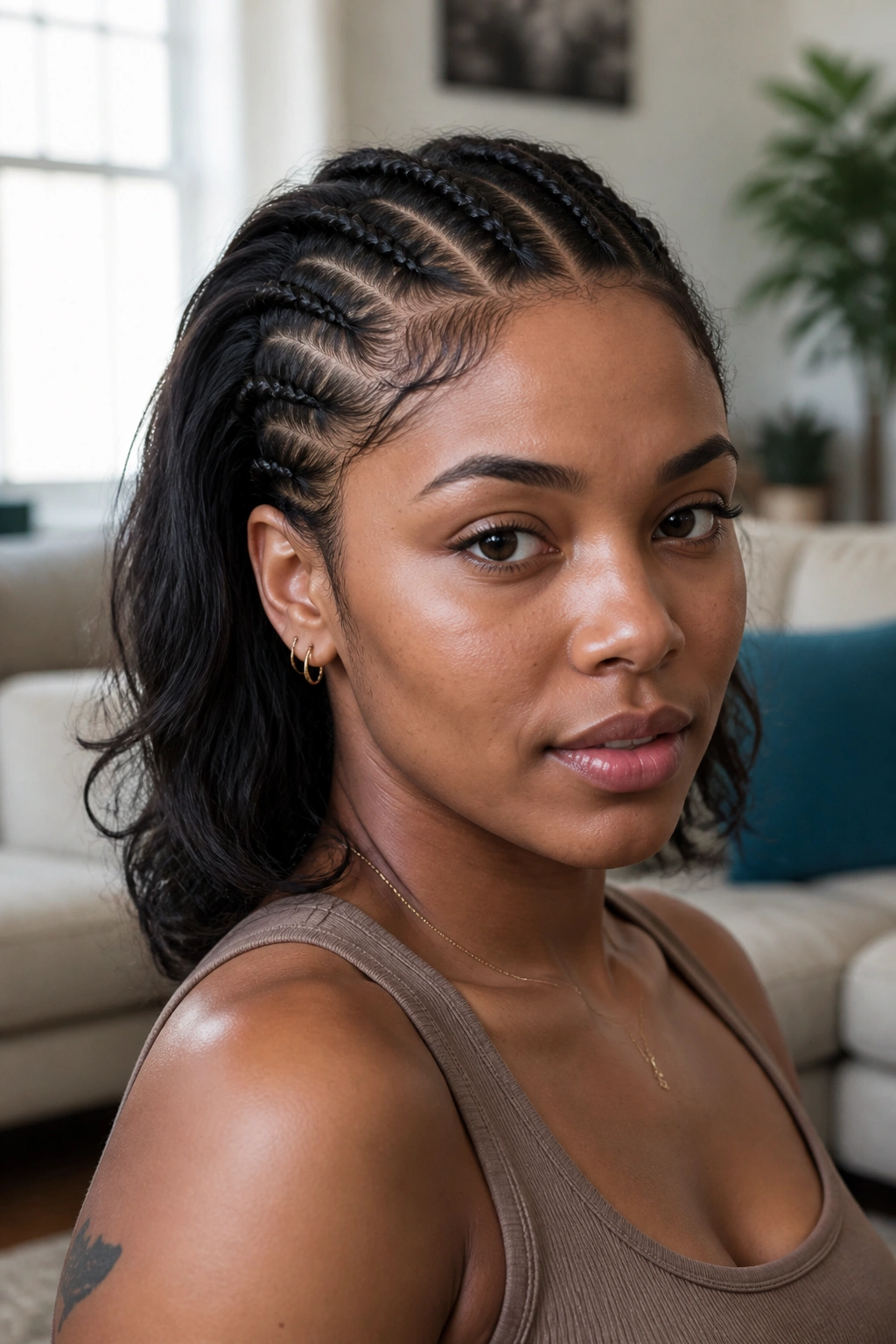
Unlike a full head of braids, front accent braids let you keep movement in the back. That makes this style especially useful for short hair that still has a bit of body or curl in the crown and nape. You get the neatness where people look first, and softness where you want it.
Usually, two to four slim braids start near the hairline and travel back toward the temple or crown. The rest of the hair stays loose. On a cropped bob, that can mean a tucked-under shape. On a longer pixie, it can mean a few curls left free to move around the ears.
This style is a good compromise if you want braid detail without braiding the entire head. It also grows out gracefully. The front rows stay tidy longer than a full set on short layers, which is part of why people keep coming back to it.
I’d use this when the back is too short for a full braid pattern but the front still has enough length to anchor cleanly. It saves time. It looks intentional. Handy combination.
11. Braided Mohawk
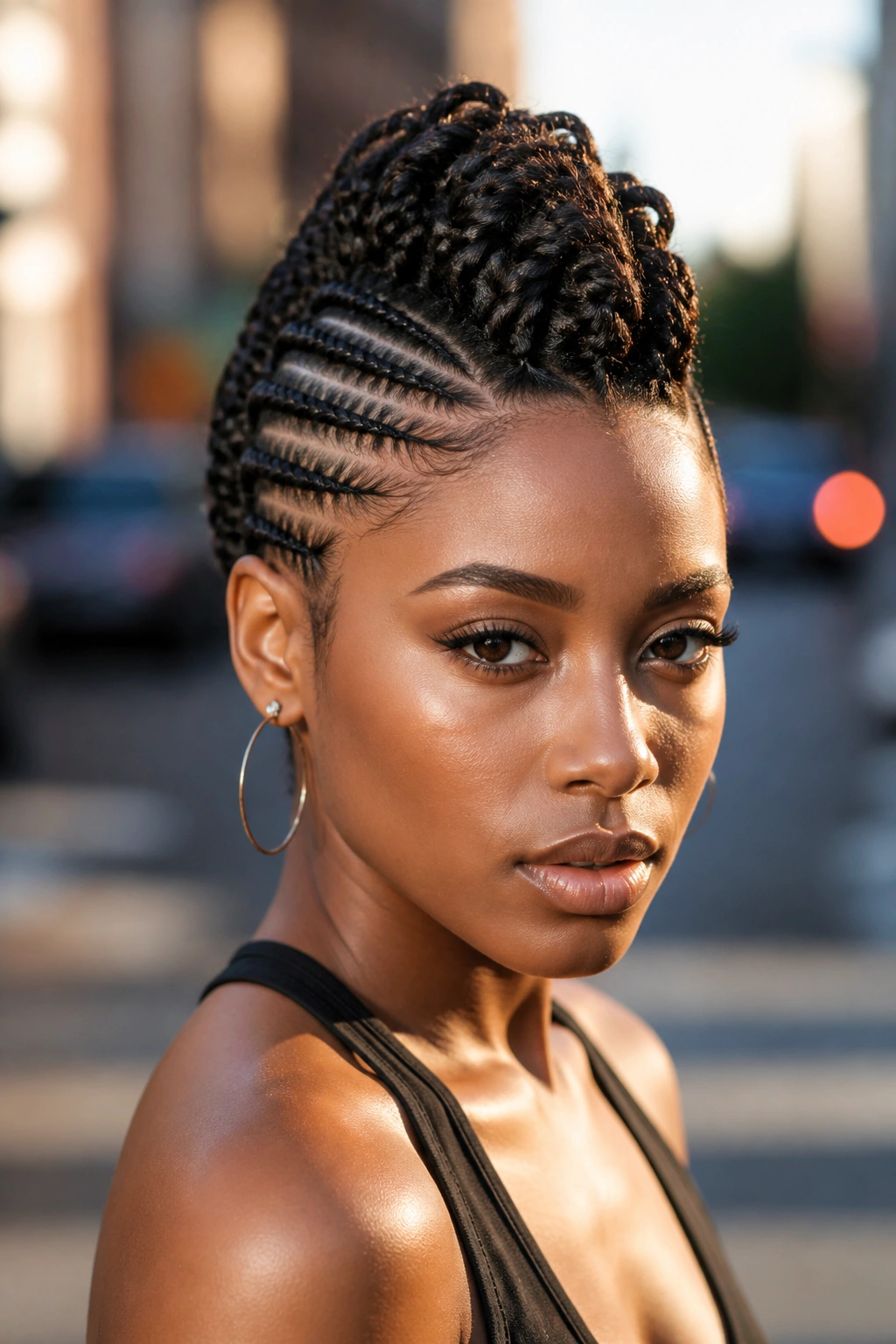
Some styles need attitude, and this one has it. A braided mohawk on short hair gives you height down the center and tight control on the sides, which is a clean fix when the haircut has a lot of texture or a strong taper.
The sides can be cornrowed flat, while the middle strip stays braided in small plaits or left in chunky texture and gathered upward. On shorter cuts, the mohawk effect comes from contrast, not from length. That is the part people miss. You do not need a giant braid to get a strong shape.
This style works especially well if the top is a little longer than the sides. Even an inch or two of extra length up top can make the center section stand up and read clearly. If the top is very short, keep the braids small and tight to the scalp so the shape doesn’t collapse.
A little edge control around the hairline can sharpen the look, but don’t smear it everywhere. Clean edges, defined sides, strong center. That’s the formula.
12. Invisible Cornrow Rows
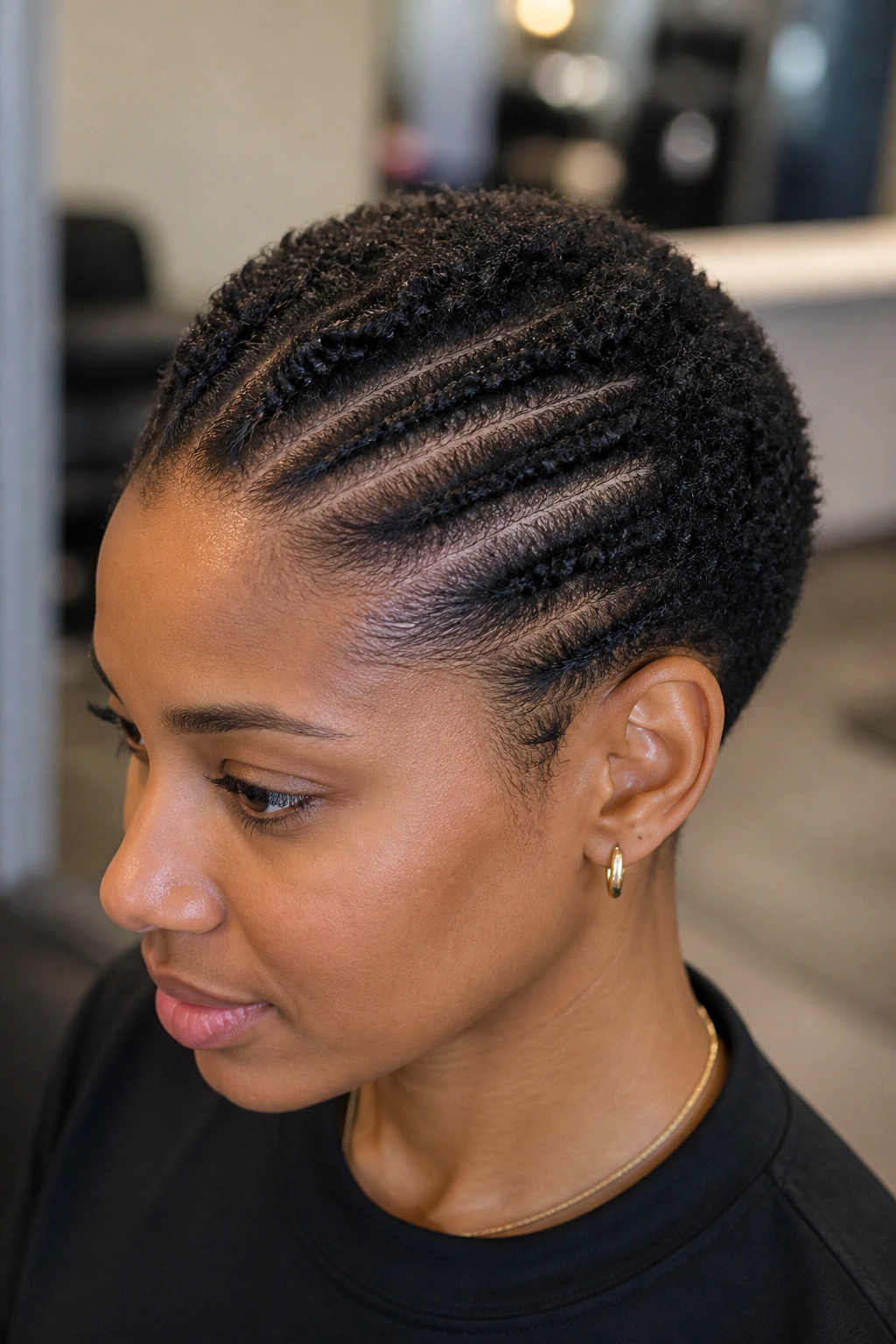
If you want the scalp to do the talking, this is the one. Invisible cornrow rows are so thin that they almost disappear into the hair, which makes them a slick option for short hair that needs neatness without obvious bulk.
The Trick
The parting has to be precise. Tiny rows only look invisible when they’re even and tightly followed to the scalp. On short hair, that means small, steady sections and a hand that does not wobble halfway through. A little holding cream at the root helps, but the real work is in the sectioning.
When to Skip It
- If the hair is very slippery from heavy oil.
- If the scalp is tender or recently irritated.
- If the shortest layers are too short to grip cleanly.
This is a style I like for sleek finishes. It sits flat under scarves, bonnets, and hats better than chunkier braids. It also makes short natural hair look refined without asking it to do too much.
The downside is simple: if the braid work is sloppy, the style exposes it fast. There is nowhere to hide. That’s exactly why people love it.
13. Curved Goddess Braids
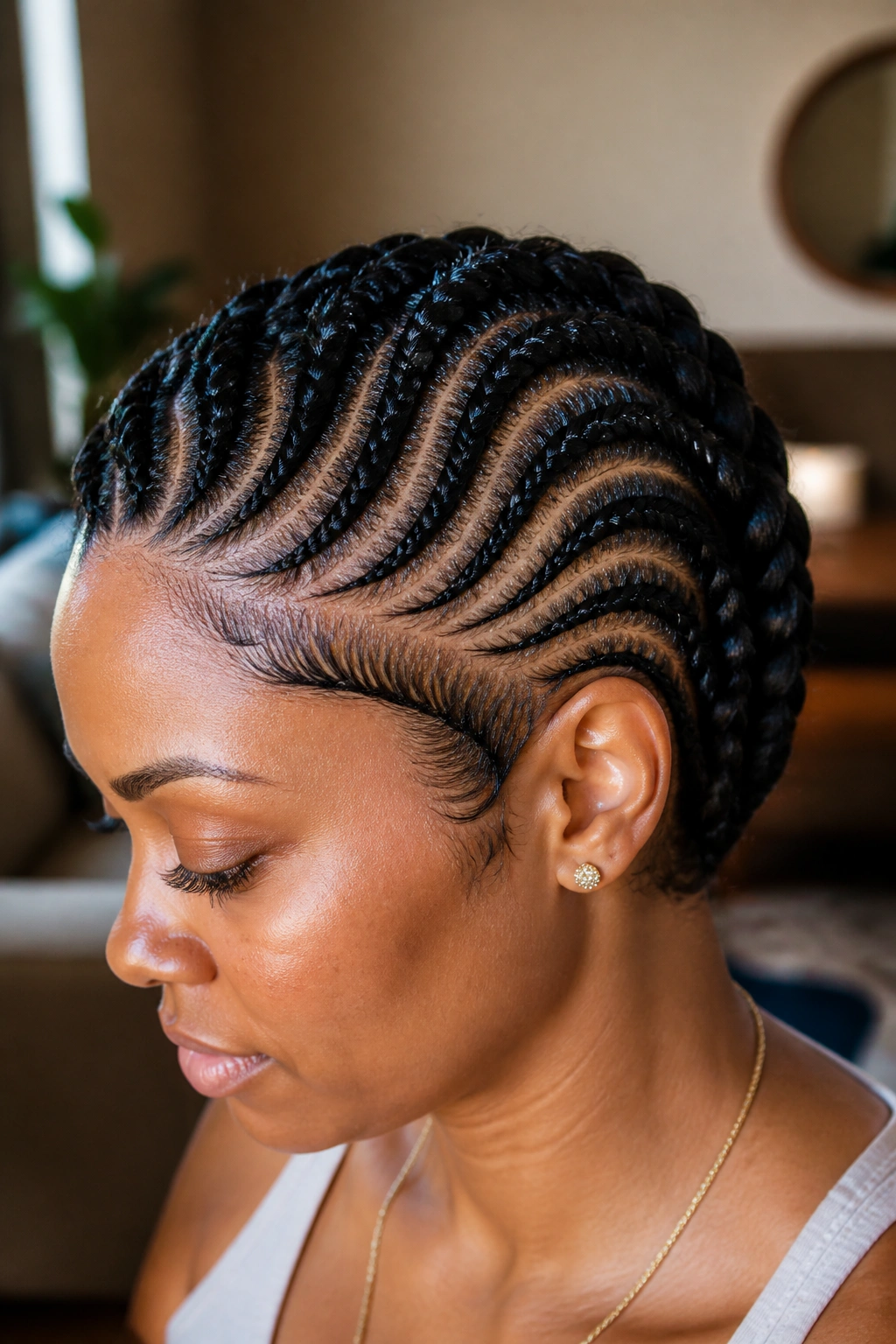
I like this style for thicker short hair because it gives you shape without making the whole head feel crowded. Curved goddess braids are bigger and softer than standard cornrows, and the curve keeps them from looking too severe on a short cut.
The braid line can sweep from one temple, arc over the crown, and land near the nape, or it can frame just one side and leave the rest open. On natural hair, the thicker texture helps the braid hold its shape. On relaxed or straightened hair, you may need a touch more grip product at the roots.
What Makes It Feel Different
The size. That’s the obvious part. The softer line matters too. A curved goddess braid looks less technical and more like a design choice, which is a nice shift when short hair already reads as bold.
If the style has added hair, keep it light. Goddess braids get bulky fast when too much extra hair is used on a short base. That can make the braid sit high in the wrong spots and flatten the shape instead of lifting it.
A small braid cuff or two can finish it off without stealing attention from the curve.
14. Diagonal Nape Braids
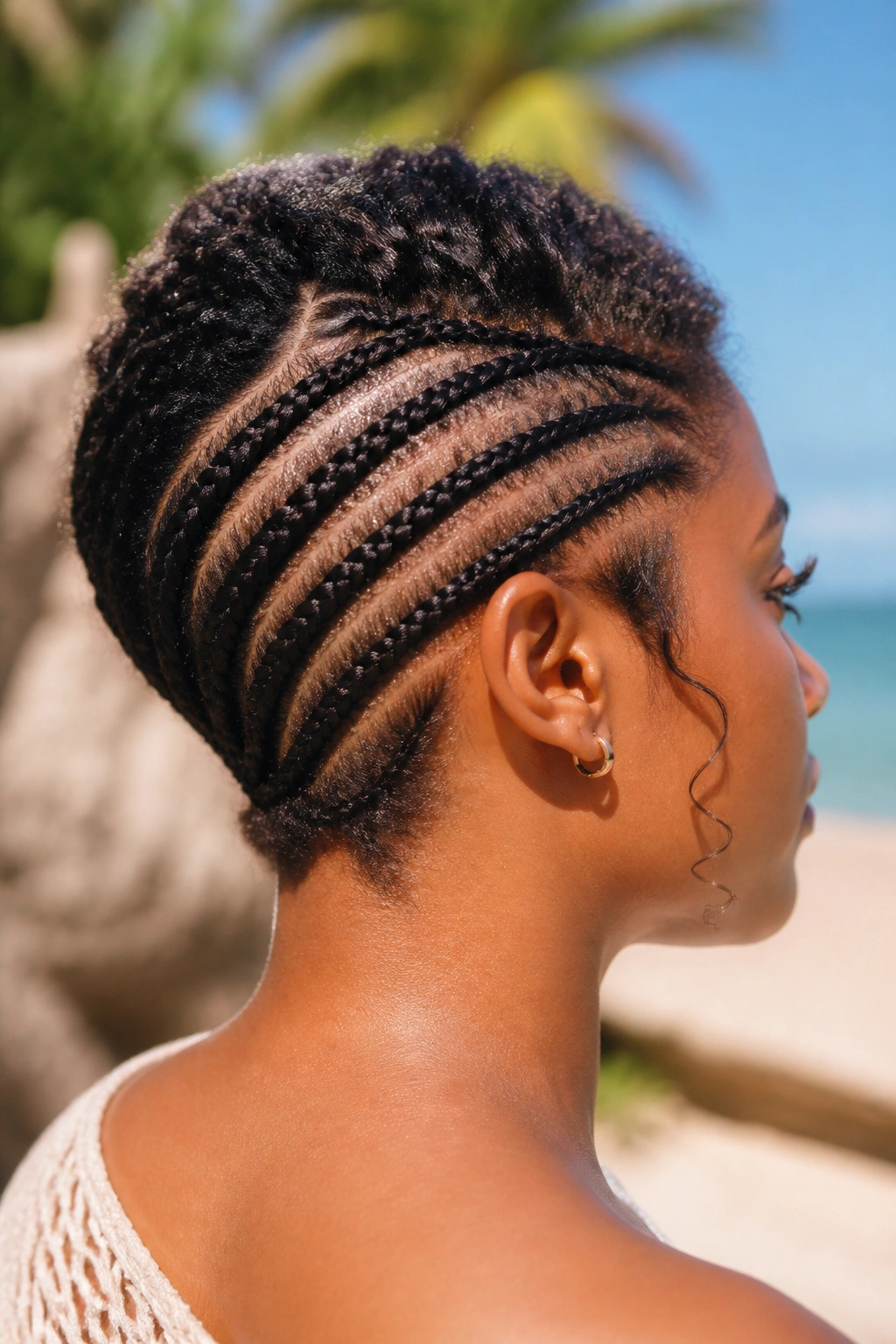
A diagonal line is kinder to short lengths than a straight one. It gives the braid a place to travel without exposing every short layer at the back, and that makes diagonal nape braids one of the smarter protective choices for cropped hair.
The braid can start near one side of the head and angle down toward the nape. The slant creates the feeling of length even when the cut itself is short. It also flatters the neck and keeps the style from feeling boxed in.
This pattern is useful when the back is the shortest part of the haircut. Instead of forcing a braid to run straight through the weakest area, you let it move with the shape of the head. That usually means less slipping and a cleaner finish.
You can keep the braid thin and close to the scalp for a subtle look, or build it a little wider if you want the angle to show more clearly. Either way, the diagonal is doing a lot of work. Quietly. Which is nice.
15. Criss-Cross Crown Braids
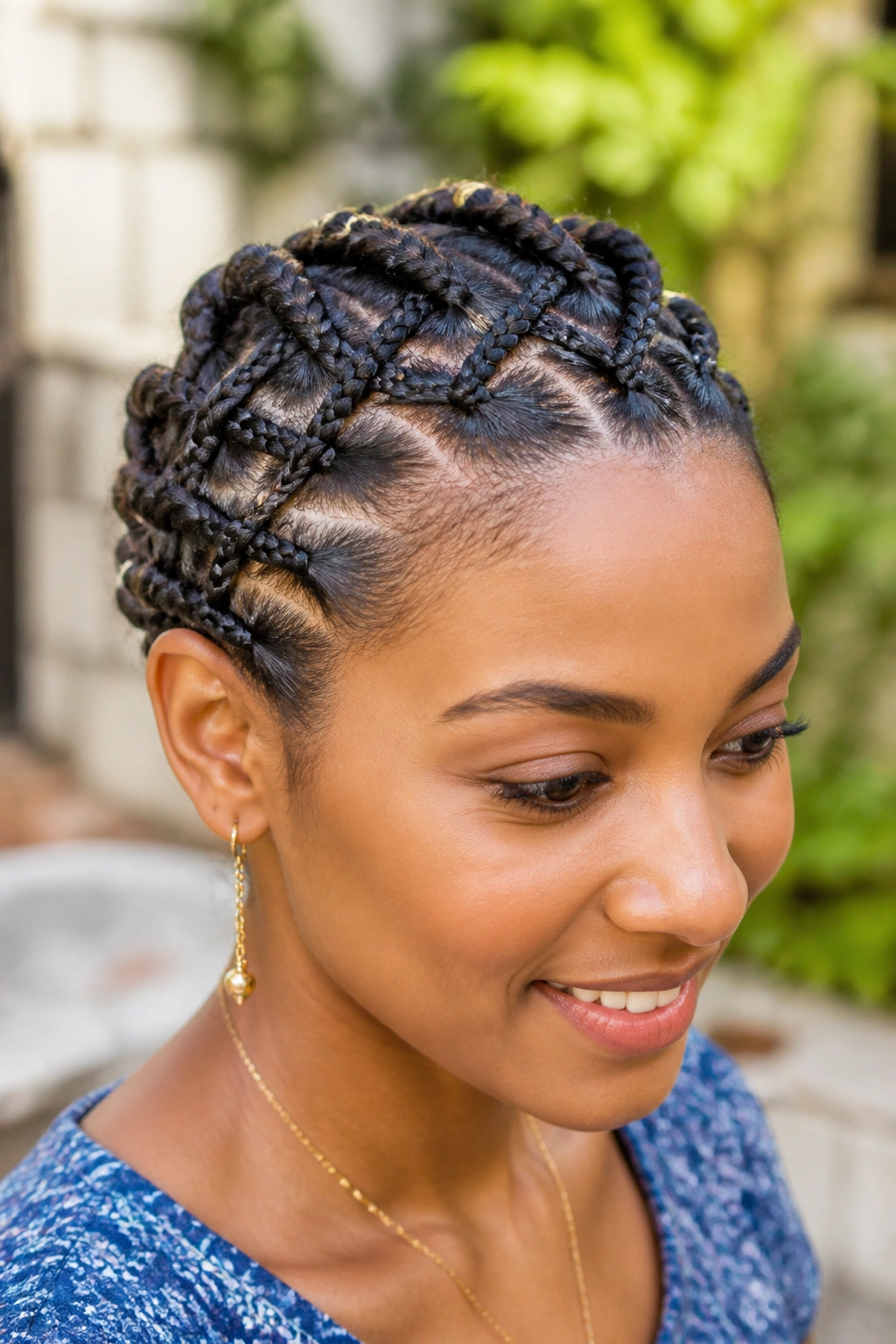
Criss-cross braids look fussy in photos, but on short hair the pattern is smaller and much more practical than it sounds. You are really working with a series of thin braids that cross over the crown and pin into place, which gives the top of the head a bit of architecture.
This style is good when the front and top are long enough to braid but the back is too short for a full set. The crossed lines hold the eye in place, and the remaining hair can stay loose or tucked. It’s a smart choice for a dressier day when you want a braid pattern but not a full braiding session.
Use small pins that match your hair color if possible. Big shiny pins ruin the effect. The whole point is for the criss-cross to feel built into the style, not bolted on afterward.
A light mist of hairspray can help the crossed pieces stay where you put them, but don’t soak the hair. Short hair gets crunchy fast, and nobody wants that.
16. Stitch Braids with Sharp Partings
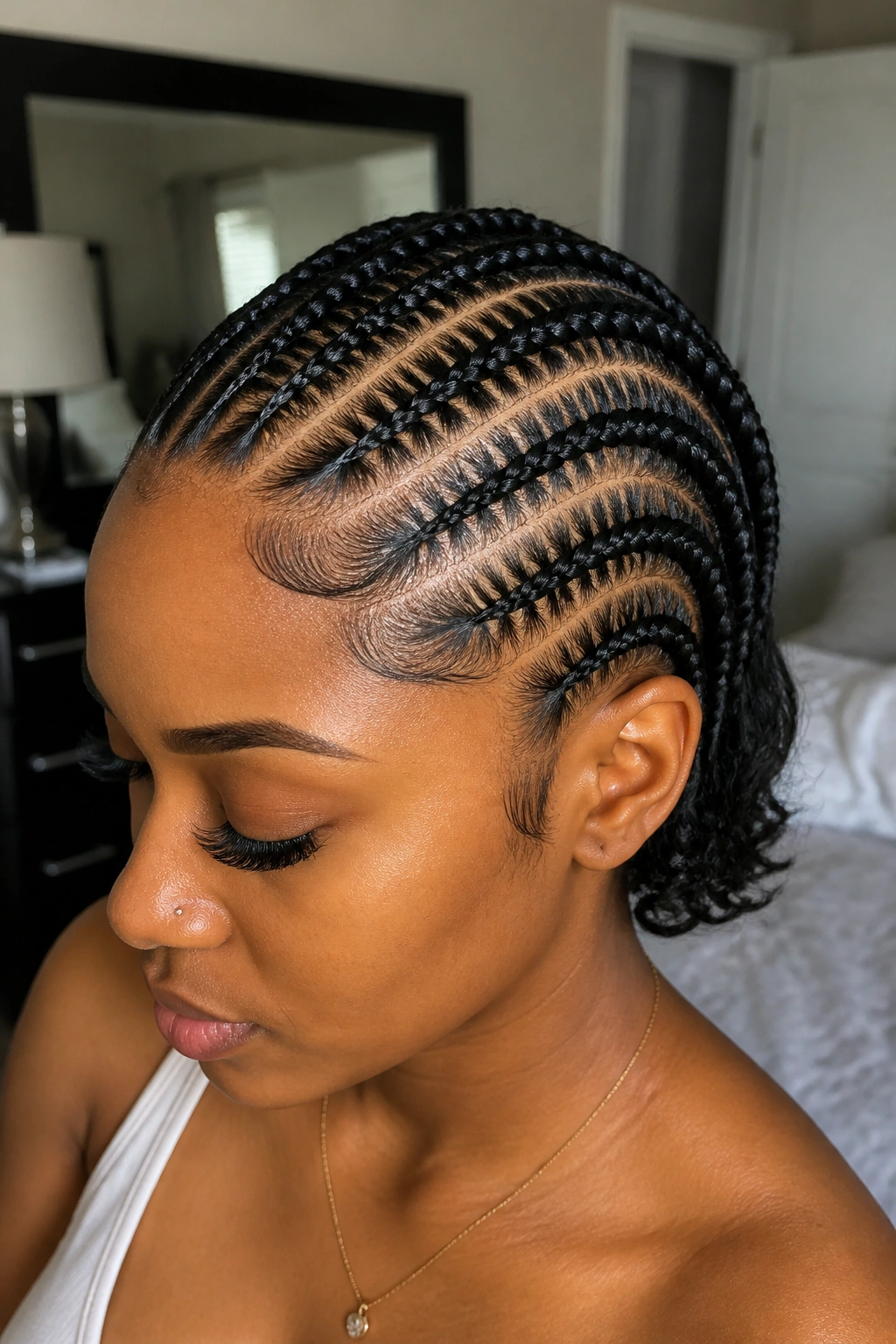
Stitch braids are the neat freak of the braid family. Every section is clean, every line is visible, and on short hair that precision creates the illusion of a fuller, more planned style. If your haircut is close to the scalp or has a strong taper, stitch braids can sharpen it fast.
What to Ask For
Ask for parting that stays straight and narrow, with the braid built in small steps. The “stitch” look comes from feeding hair into the braid in measured bits instead of grabbing a big clump all at once. That rhythm is what makes the braid look segmented and crisp.
What to Avoid
- Overloading the braid with heavy gel.
- Asking for sections that are too large for the length.
- Tugging at the hairline to force a cleaner finish.
This style is best when the parts are the star. If the lines are crooked, the whole look loses its edge. That’s why it suits someone who likes detail and does not mind sitting still while the parting gets done properly.
On short hair, I prefer a few well-executed stitch braids over a crowded head of them. Fewer, cleaner rows usually look better.
17. Braided Headband with Tucked Ends
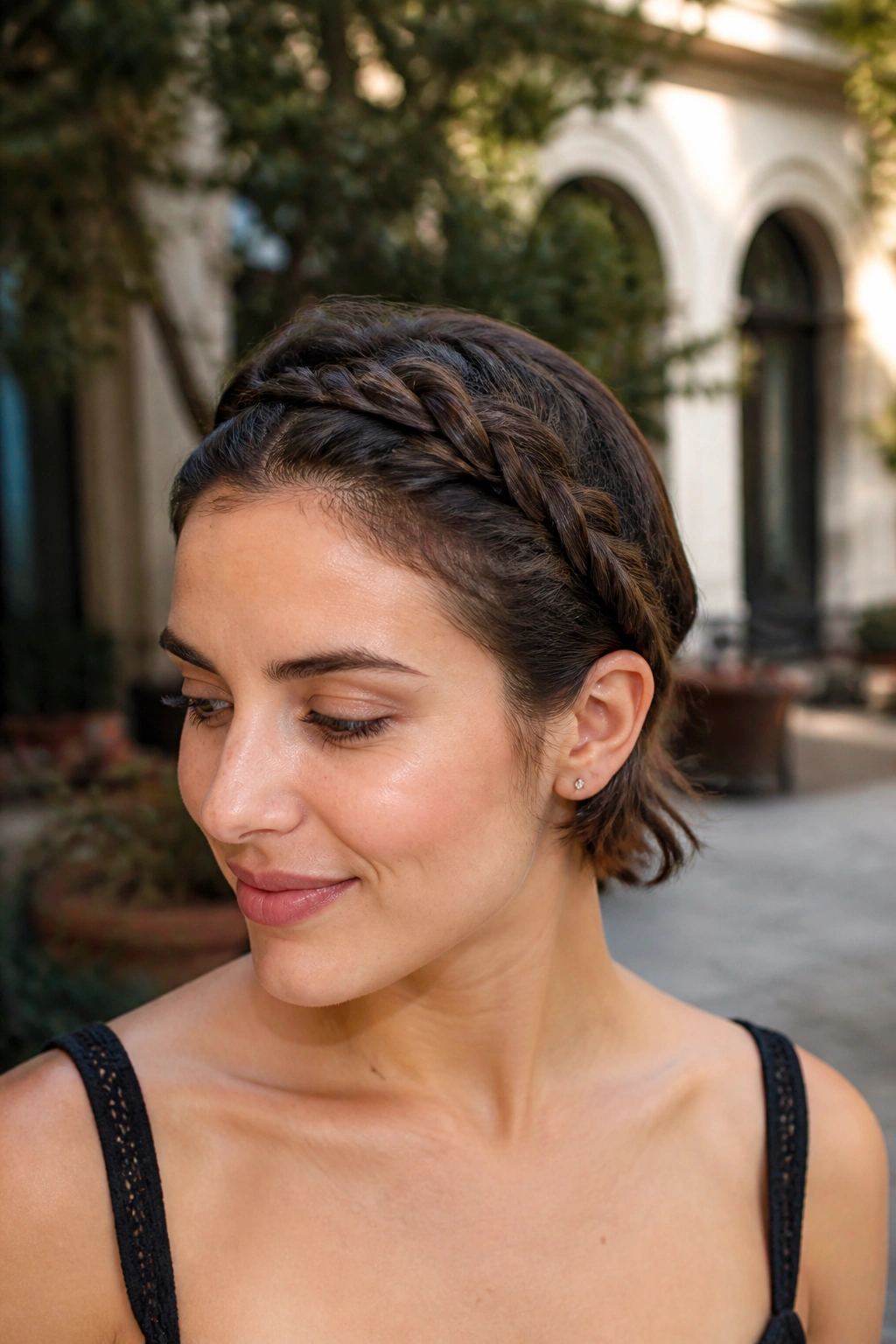
A headband braid is the one style that can save a bad hair day. It clears the face, hides a grown-out fringe, and gives short hair a finished frame without asking for much length in the back.
The braid travels from one temple across the top of the head like a band, then tucks into the opposite side. On a short cut, the ends usually need to be pinned under other hair or secured beneath a lower section. That hidden finish is what keeps the style looking polished instead of improvised.
This is a nice choice when you want your short hair to look deliberate under earrings, scarves, or a structured collar. It does not compete with the outfit. It supports it.
If you want a little extra detail, thread one tiny braid through the band or add a slim cuff near one temple. Keep it restrained. The braid line itself already does enough work.
18. Side Cornrow into a Puff
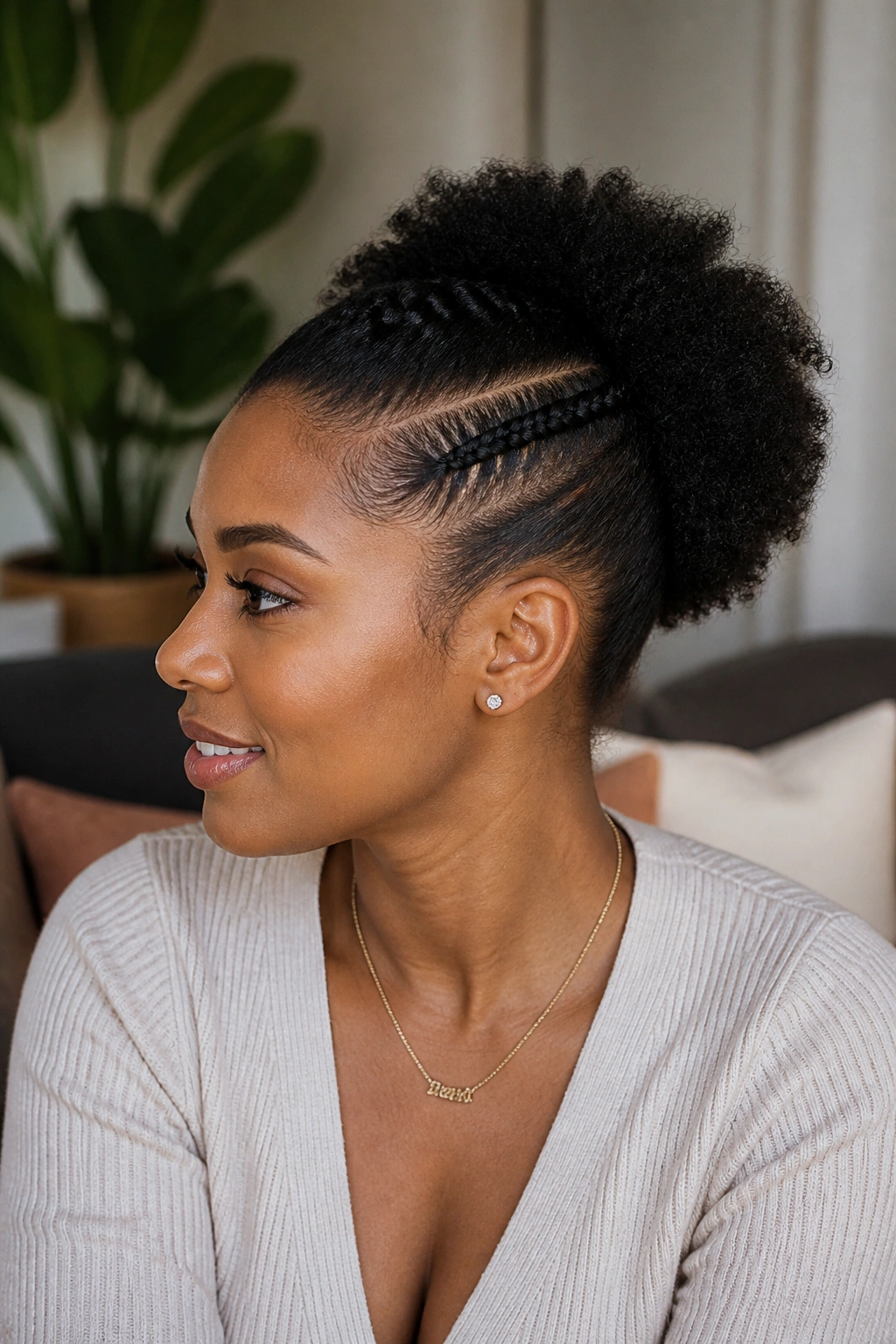
A side cornrow into a puff is useful when the back is too short for a full braid set but the curls still have enough life to gather. You get control on one side and softness on the other, which makes the whole shape feel balanced.
The cornrow can start at the temple and run along the side of the head, then stop where the length runs out. The remaining hair gets gathered into a puff, a small coil, or a curly pony near the back. That mix of sleek and loose is what makes the style interesting.
Best Fit
- Short curly or coily hair.
- Cuts with a bit of volume on top.
- Days when you want the hair off one side of the face.
I like this style because it works with texture instead of flattening it. The puff keeps the hair lively, and the cornrow gives it direction. If the sides are very short, use a single braid and keep the puff low so the whole shape stays anchored.
A satin scarf at night helps the puff keep its body. Otherwise the braid may stay fine while the loose side frizzes out.
19. Tiny Braids with Curled Ends
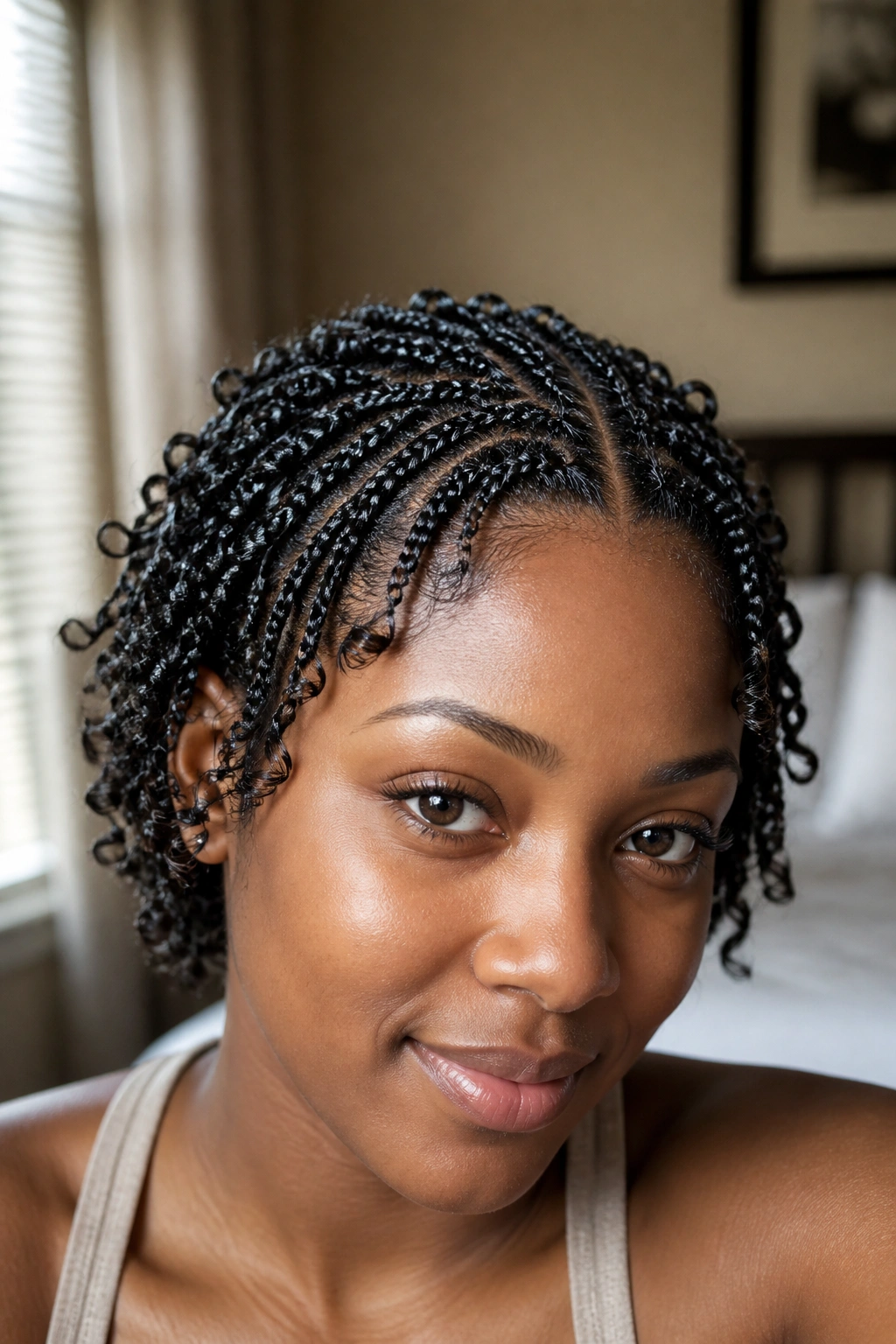
Tiny braids with curled ends are a good fix when your hair is short enough that straight tails look stubby. A little curl at the end softens the whole finish and makes the style feel planned instead of cut off.
How to Set the Ends
- Use small flexi rods or perm rods for the tail ends.
- Keep the braid tails damp, not soaked.
- Let them dry fully before removing the rods.
You can also braid the hair and then set the loose ends with pin curls if the length allows it. That works best on hair that has at least a little bit of tail to shape. If the ends are too short, skip the curl and choose a tucked finish instead.
This style is nice for a weekend, a party, or any day when you want the braids to feel softer around the face. The curl adds movement, and movement matters on short hair. Flat ends can make the style look too severe. A small bend changes everything.
If you use styling foam, keep it light. Heavy product can make the curls collapse before they dry.
20. Micro Halo with Face-Framing Braids
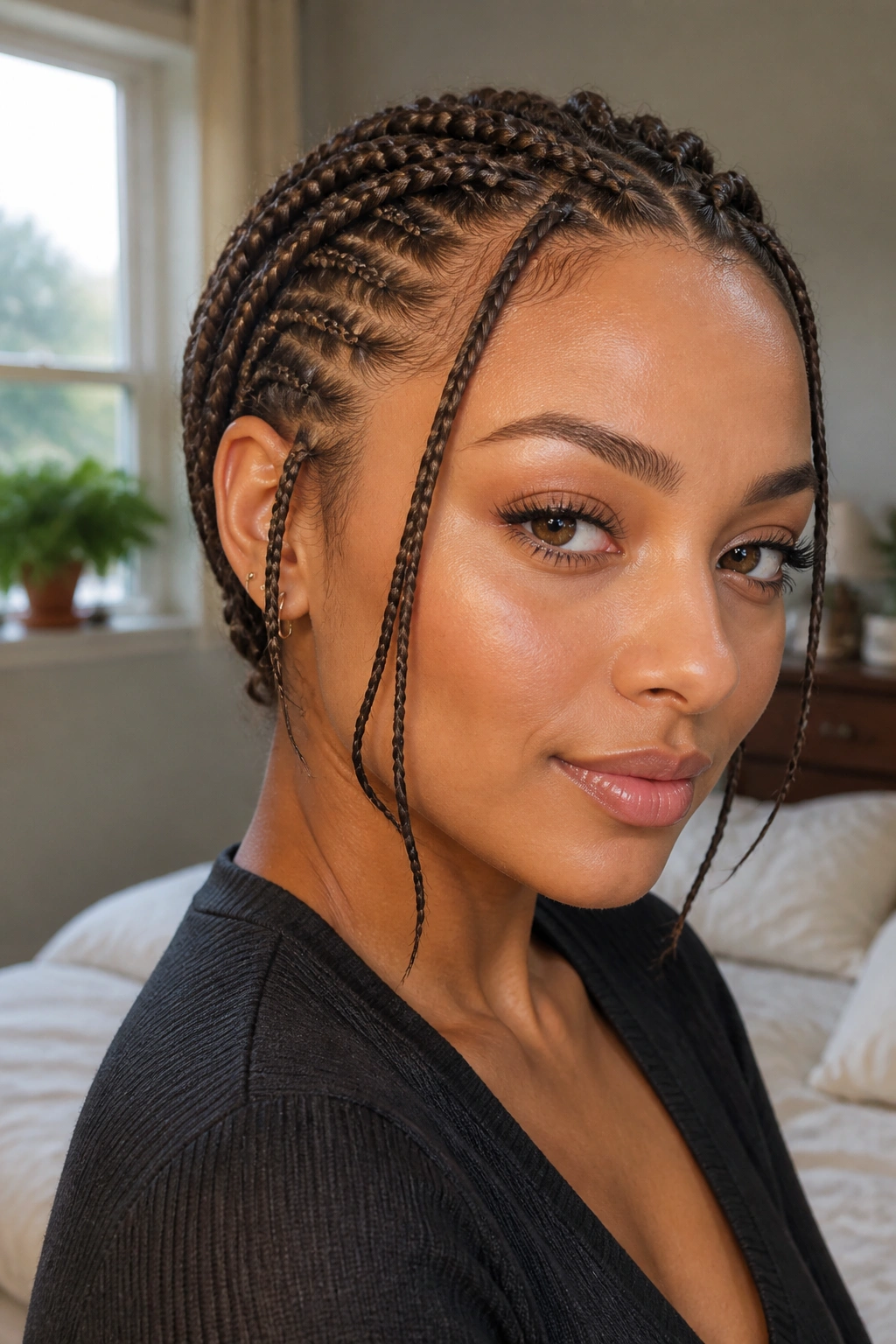
Micro halo braids with a few face-framing pieces are the style I reach for when short hair needs polish without looking stiff. The tiny braids travel around the perimeter or crown like a soft frame, and a few thinner front pieces stay loose to soften the face.
This is one of the most flexible small braid hairstyles for short hair because it works on a pixie, a bob, or a grown-out crop. The halo can sit close to the head, and the face-framing braids can be tucked behind the ear, pinned back, or left to fall near the cheekbone. The effect is clean, but not severe.
If your shortest layers are only about an inch long, keep the halo near the hairline and don’t try to cover the whole head. If you have 2 to 3 inches to work with, you can build a fuller ring and let the front pieces move more freely. That little bit of extra length opens up more options than people think.
And if the braid starts slipping after a few days, the fix is usually section size, not more product. Smaller sections hold better. They always do.
