



A clean shave on the sides changes box braids from pretty to sharp. It gives the whole style a frame, and that frame does a lot of work. The braids suddenly look longer, heavier, or more sculpted depending on where you leave the top volume, and that makes the cut around the ears matter as much as the braid pattern itself.
Box braids with shaved sides also solve a real problem: bulk. If you love braids but hate the way extra hair sits near the temples or around the nape, this shape keeps the sides neat while letting the top carry the drama. The catch is that the contrast has to be handled with care. A sloppy part, a fuzzy fade, or braids that are too tight can throw the whole thing off.
I like this look because it gives you room to play. One version feels clean and sporty. Another feels tough. Another leans fashion-forward without trying too hard. That range is exactly why the same base idea keeps showing up in braid chairs and barber shops alike. The details do the heavy lifting, and the next 18 styles show just how far you can push them.
1. High Ponytail Box Braids With Shaved Sides
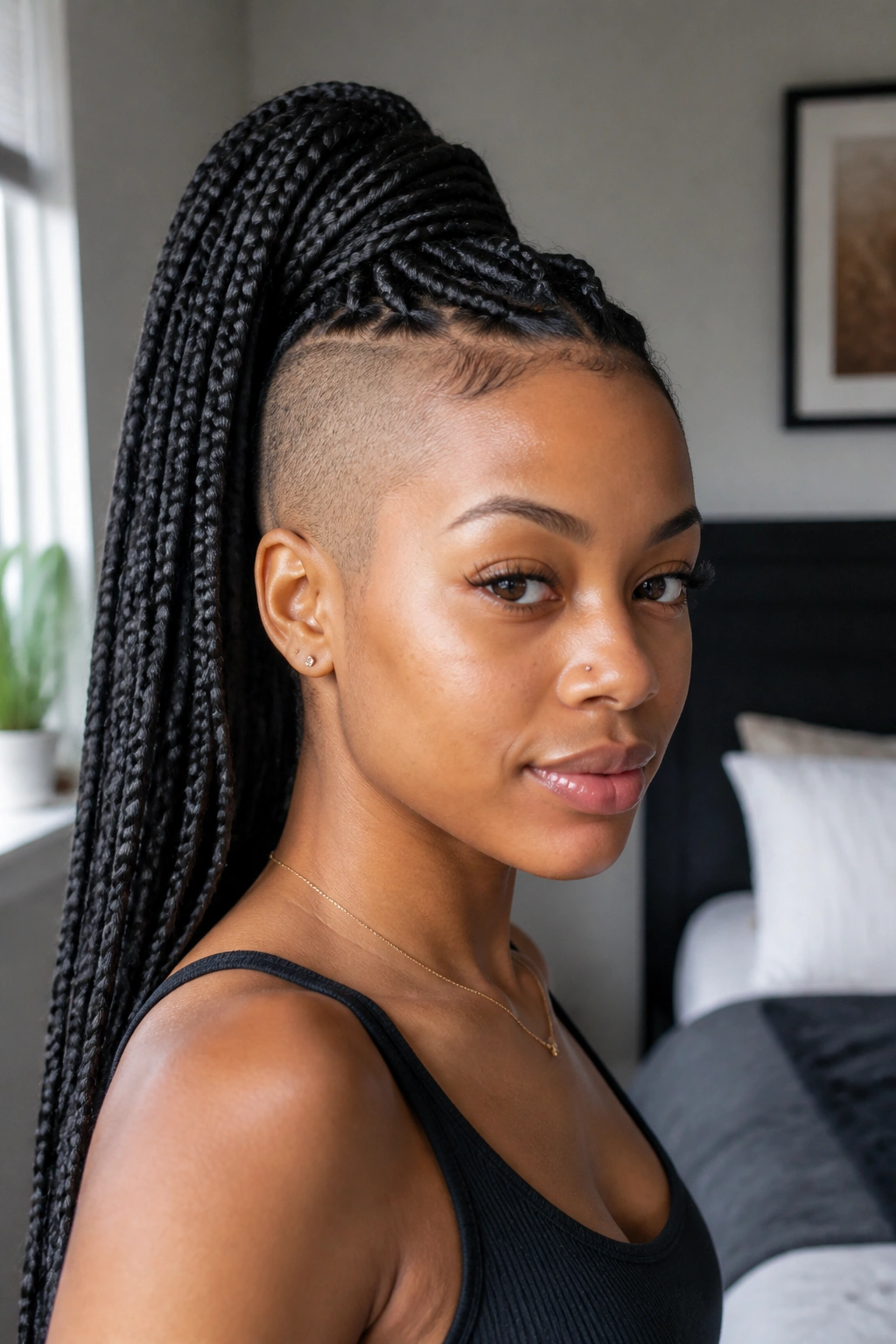
A high ponytail turns box braids with shaved sides into a lifted, almost sculpted shape. The braids swing the eye upward, while the bare sides keep the whole thing from looking heavy around the jaw. If you want height and a little attitude, this is where I’d start.
Why It Reads So Sharp
The best part is the balance. The top has movement, the sides stay close, and the back can either fall straight or wrap into the ponytail base. That clean contrast makes medium-length braids look longer and makes thick braids feel lighter than they really are.
A ponytail at the crown also opens up your face. Cheekbones show more. Earrings get their moment. Even a simple outfit feels more finished because the hairstyle gives it a clear shape.
- Best braid length: shoulder-length to mid-back braids, so the ponytail still has swing.
- Best braid size: medium sections, not jumbo; jumbo braids can feel bulky once they’re gathered up.
- Good fade choice: a low or mid fade on the sides keeps the line clean under the ponytail.
- Smart detail: wrap one braid around the base to hide the tie and keep the finish neat.
Pro tip: place the ponytail at the crown, not the back of the head. That one placement choice changes the whole profile.
2. Box Braids With a Tapered Fade and Side Part
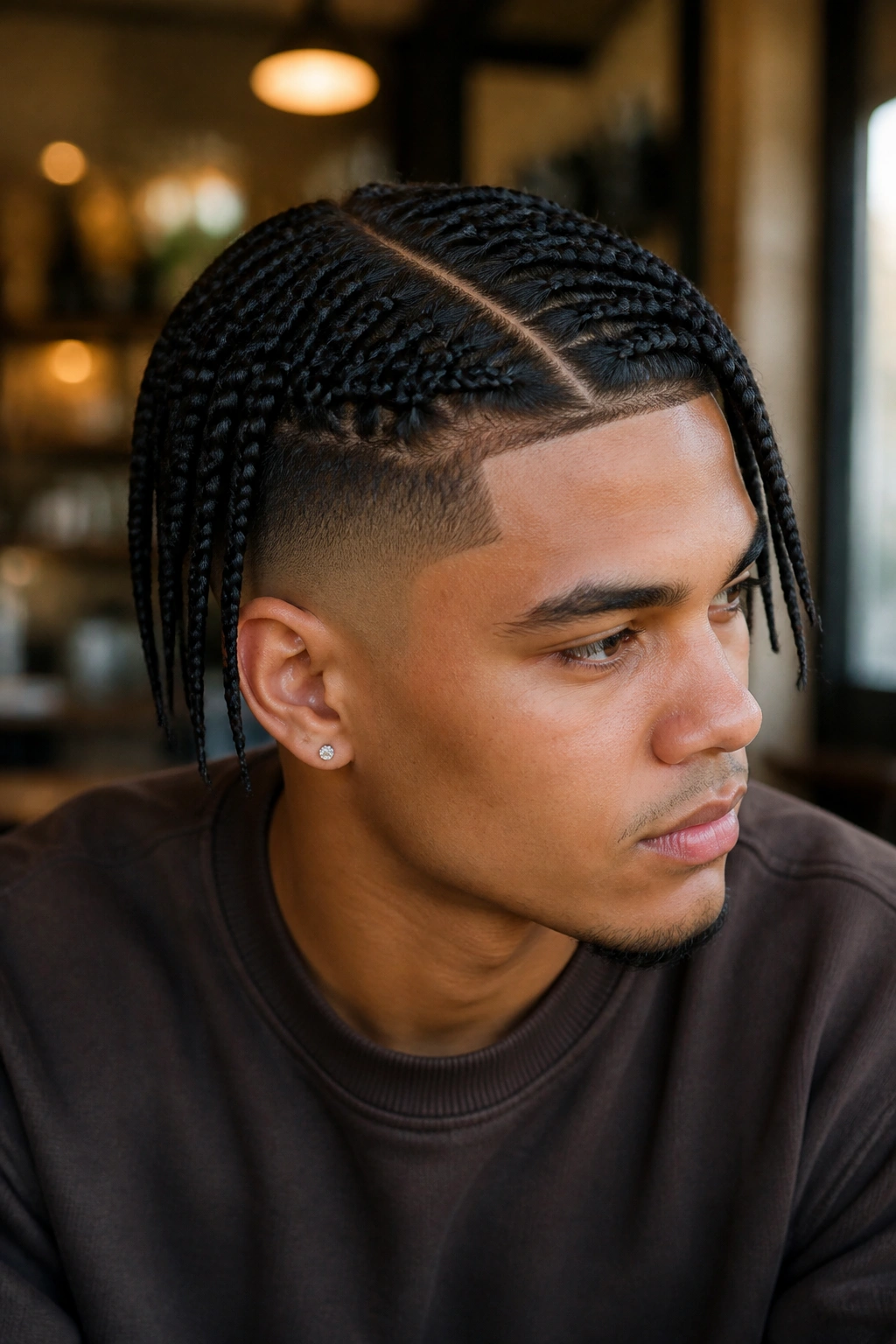
A side part sounds small. It changes everything.
The moment the braids start off-center, the style stops reading as symmetrical and starts reading as intentional. A tapered fade on the sides keeps the line soft near the ears, so the part becomes the main visual hook instead of competing with a hard edge.
This version works well if you want shape without going full mohawk. The side part creates a bit of tilt, and that tilt is doing a lot of work. It pulls the eye across the face instead of straight down, which can make the whole look feel a little more dynamic.
The trick is to keep the part clean and not too wide. A part that’s a finger-width off center usually gives enough shift without making the braid rows look crowded. If the taper is crisp, you do not need extra accessories or a complicated braid pattern. The haircut and the part already did the job.
3. Jumbo Box Braids With a Skin Fade

Why do jumbo braids look so good against shaved sides?
Because the contrast is immediate. Thick braids bring weight and texture, while a skin fade strips the sides down to the bone. That mismatch is what makes the style feel bold instead of just big. You see the braid size first, then the fade, and then the shape of the head itself.
Jumbo braids also make the install read faster. Fewer sections mean less visual clutter, which is useful when the haircut is already strong. I’d keep the length moderate here unless you want a lot of swing, because very long jumbo braids can start fighting the fade instead of playing with it.
How to Wear It
- Keep the fade low if you want the braids to stay the star.
- Ask for clean, even parting so the large sections do not look random.
- Skip too many cuffs or beads; the braid size already carries the style.
- Use a satin tie if you pull the braids back, since bulky sections can tug harder at the root.
Jumbo braids are not subtle. Good. They are supposed to be seen.
4. Braided Mohawk With Shaved Sides

Picture the center row rising like a ridge while both sides sit close and clean. That’s the whole appeal of a braided mohawk with shaved sides. It has shape before you even get to the braid pattern.
This style works because the eye follows the middle line from forehead to nape. The sides disappear just enough to sharpen the silhouette, which means even plain black braids look deliberate. If you want something that feels strong without needing bright color, this is a solid move.
A mohawk shape gives you room to stack braids upward, back, or into a loose crest. You can keep the braids medium and neat, or go larger and let the middle section take up more space. Either way, the side shave keeps the look from spreading too wide.
- Center the braids in a clean strip from front to back.
- Keep the sides faded tight so the ridge looks taller.
- Add cuffs or thread only to the middle row if you want extra detail.
- Leave enough length on top so the shape can bend, not stiffen.
The style has edge, sure. It also has structure, which is why it works so well.
5. Waist-Length Box Braids With an Undercut Nape
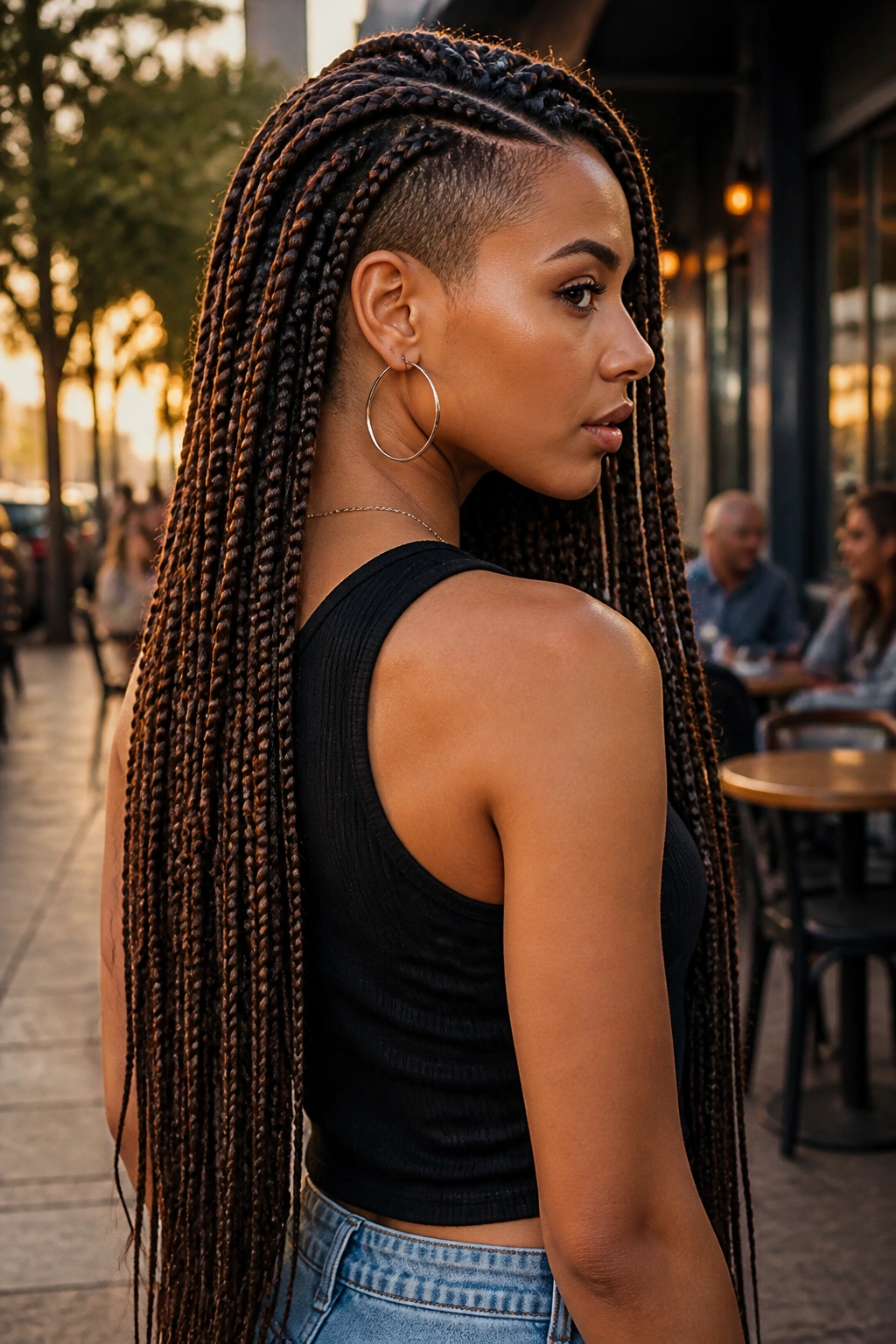
Long braids brushing the shoulders feel different when the nape is clipped short. The weight drops. The neck stays cooler. And the whole style stops bunching under collars or hoodies the way full-side braids sometimes do.
That undercut at the nape is the quiet part that makes the drama work. From the front, you still get the full curtain effect of waist-length braids. From the back, the hidden trim removes some bulk where braids usually catch sweat and friction. It is one of those details you only notice after wearing the style for a while, which is probably why people keep coming back to it.
This version also gives you more styling options than people expect. You can pull the braids into a low ponytail, sweep them over one shoulder, or leave them loose so the shaved nape only flashes when you move. It feels especially good if you wear jackets, scarves, or anything that sits high on the neck.
It is a small cut. It changes the whole wear.
6. Bob-Length Box Braids With Tapered Sides
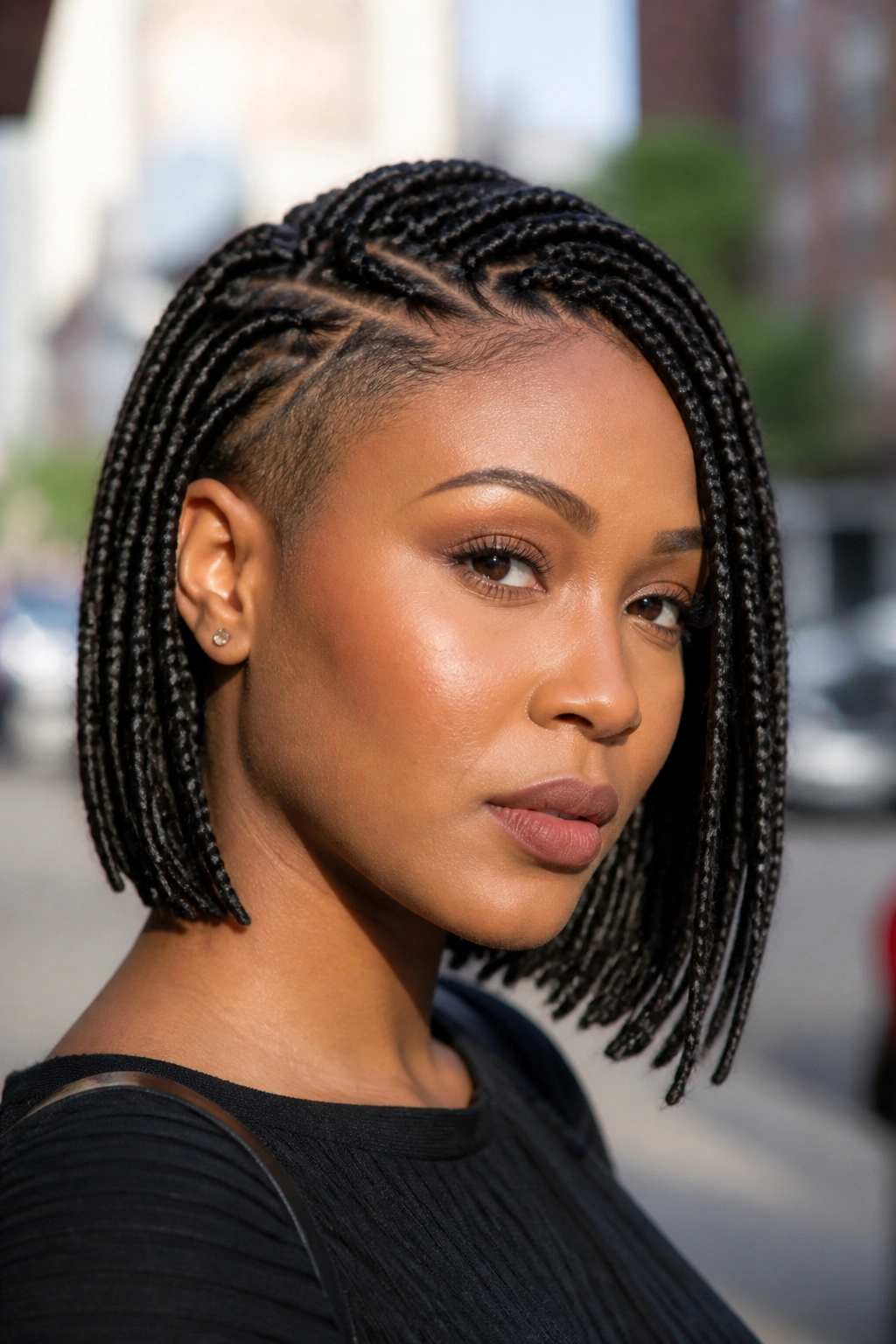
Unlike waist-length braids, a bob keeps the eye near the face. That alone makes it feel sharper, especially when the sides are tapered and the ends stop around the jaw or collarbone.
This is the version I’d point to if you want edge without the weight. Bob-length braids are easier to wash, easier to dry, and much less annoying on long days when you keep tugging at hair that’s too heavy on your shoulders. With shaved sides, the bob gets even cleaner because the shape is already cropped and tidy.
The styling sweet spot here is parting and finish. A blunt bob with a crisp fade feels neat and urban. A slightly uneven bob, where the front hangs a bit longer than the back, gives a little more movement and helps the shaved sides stand out.
It also plays well with earrings, glasses, and high necklines. The style doesn’t fight your clothes. It sits with them. That matters more than people think.
7. Triangle-Part Box Braids With Shaved Temples

Triangle parts make the braid pattern part of the style.
That’s the reason this version looks so different from standard square-box parting. The triangles pull in more light and create little points of interest across the scalp, which is especially nice when the temples are shaved down and you want the top to carry the visual weight.
Why the Parting Matters
The triangles give the braid rows a geometric feel. They can look cleaner than square parts if they’re evenly spaced, and they make the style look a bit more custom. On shaved sides, that geometry becomes easier to see because there is less hair competing with the pattern.
You do need consistency. If one triangle is too wide and the next one is narrow, the whole thing starts looking messy fast. I’d keep the braids medium-sized here so the parting stays visible instead of being hidden under too much hair.
- Use clean triangle sections from the front hairline to the crown.
- Keep the shaved temples tight so the parts have room to show.
- Avoid overloading the style with big accessories; the part pattern is already doing enough.
- Choose a neat edge-up around the hairline to frame the angles.
Tip: triangle parts look best when the rest of the haircut is simple. Let the geometry breathe.
8. Half-Up Top Knot Box Braids With Shaved Sides
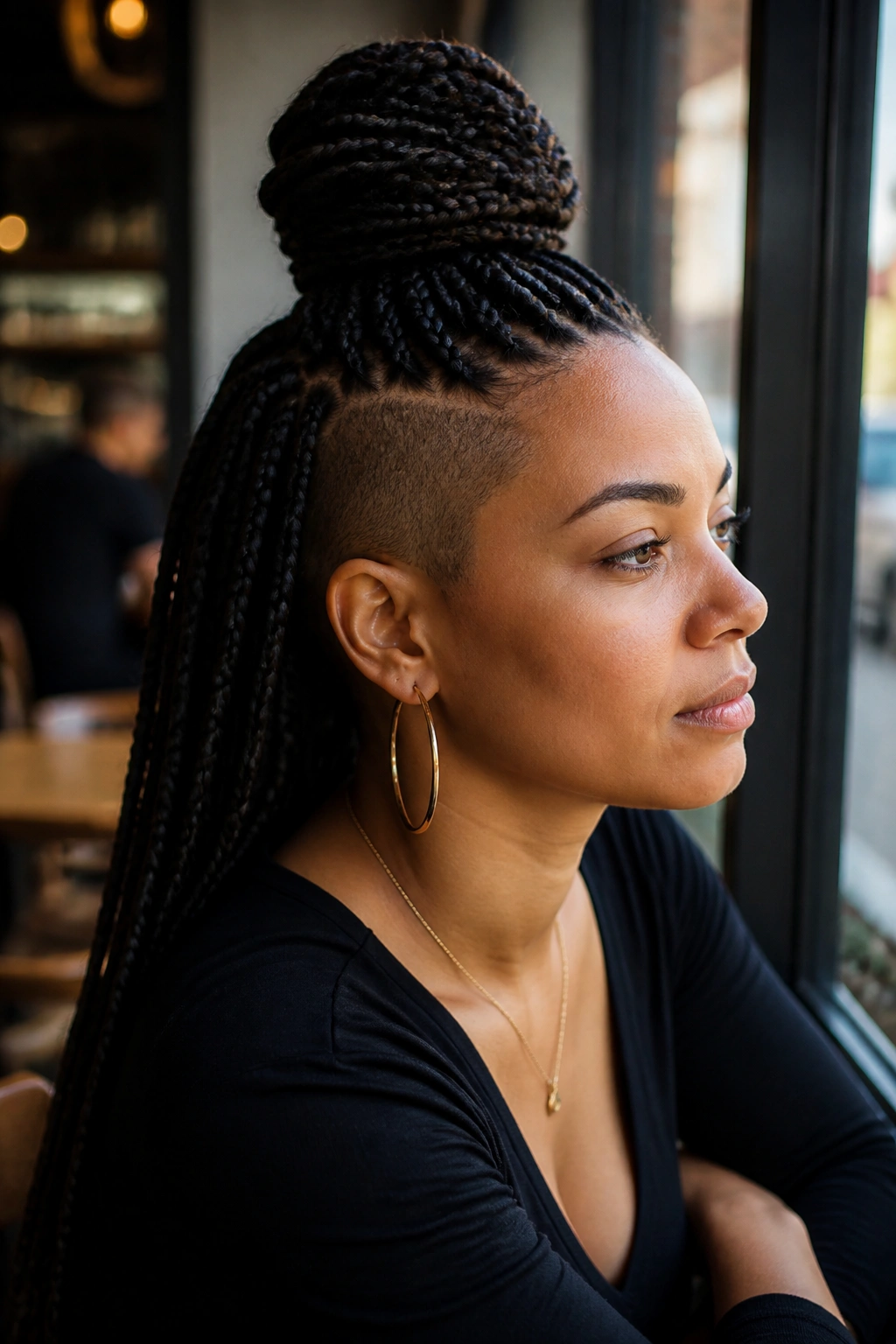
Half-up top knots were made for shaved sides. That’s the honest version.
A top knot can look bulky when there’s too much hair around the temples, but shaved sides solve that. The knot sits high and clear, and the loose braids left down the back keep the style from feeling too severe. You get lift up top, movement in the back, and a clean profile on the sides.
This is one of the easier shapes to wear if you like changing your hair during the day. Wear it up for work. Drop it down for dinner. Pull a few braids forward if you want a softer frame around the face. It stays flexible without losing the edge that the shave gives it.
Keep the knot high. Too low and it loses the point.
The best versions are the ones that do not look overworked. A wrapped knot, a satin tie, maybe one braid looped around the base. That’s enough. The sides already gave you the sharp part.
9. Copper Box Braids With a Low Fade

Why do copper, burgundy, and red tones hit harder with a low fade?
Because the bare sides act like a frame. Color needs contrast to pop, and shaved sides give it that contrast without adding extra braid size or extra accessories. When the fade is kept low, the eye sees one long line of color first, then the cut beneath it. Clean. Loud enough. Not noisy.
Copper works especially well if you like warmth in the hair. It catches daylight fast, and on braids it can read softer than the same shade would on straight hair. Burgundy is deeper and a little moodier. Rust tones sit in between, which is why they’re such an easy pick when you want color but don’t want the whole look to shout.
How to Choose the Tone
If the braid length is long, a rooted color that shifts into lighter ends keeps the style from looking flat. If you want a more solid look, stay with one shade all the way through and keep the fade extra neat. Either way, the sides should stay crisp, because bright braids and fuzzy edges do not play well together.
A low fade keeps the color line smooth. That’s the part worth paying attention to.
10. Side-Swept Box Braids Over One Shaved Side
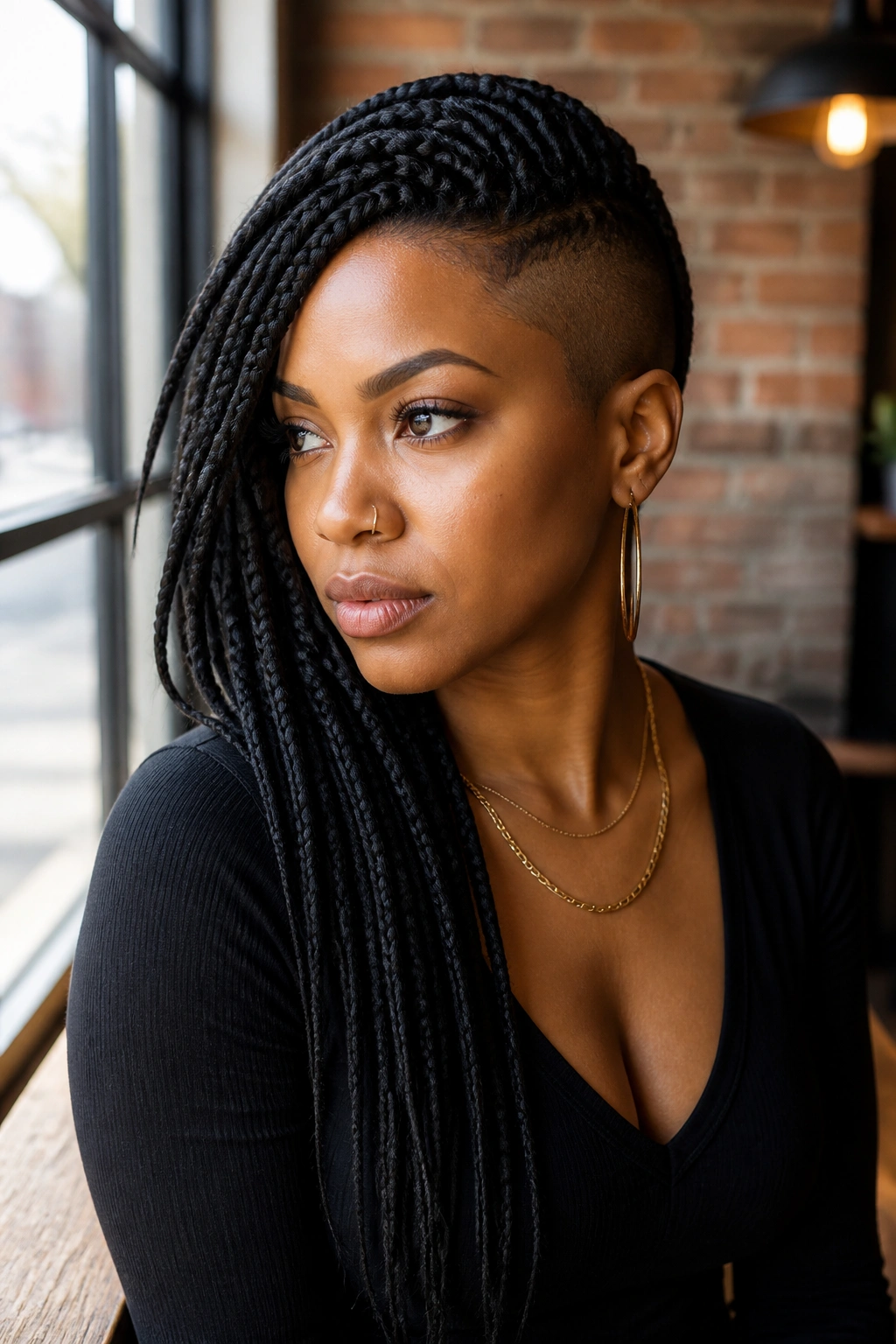
One shaved side and a deep sweep of braids can change the whole face shape.
This style is all about asymmetry. The hair falls across one side like a curtain, while the other side stays open and clean. The result is a look that feels a little cool, a little dramatic, and a lot more deliberate than straight-down braids. It can soften a sharper jaw or add shape where a face needs more movement.
The side-swept version works best when the braids are medium to long. Short braids do not drape enough, and super long braids can overwhelm the silhouette unless the shaved side is kept very clean. You want the contrast to feel balanced, not accidental.
- Part the braids deep on the heavier side.
- Keep the shaved side smooth around the temple and ear.
- Use one or two pinned braids near the crown if the sweep keeps slipping.
- Avoid stacking too many accessories on the heavy side; the shape should stay fluid.
It looks relaxed. It is not random. That’s the difference.
11. Beaded Box Braids With a Sharp Line-Up

Beads change the sound of the style as much as the look. Every step gets a little click. Every turn has movement. On box braids with shaved sides, that energy lands better because the cut keeps the look from drifting too sweet or too busy.
A sharp line-up matters here. The front edge around the forehead and temples gives the beads a clean place to sit visually, which is useful because beads can pull attention fast. If the edges are fuzzy, the whole style starts to lose shape. If the line is crisp, the beads feel placed on purpose.
I like small clusters more than heavy overload. Two or three beads on the front braids can be enough, especially if the rest of the braids are plain. Wood beads feel softer. Clear beads look lighter. Metal touches bring a harder edge, but they can also clang a little if you wear them on too many braids.
Too many beads get loud fast.
That is not always a bad thing, but with shaved sides, the haircut is already doing part of the talking.
12. Curved-Part Box Braids With Shaved Sides
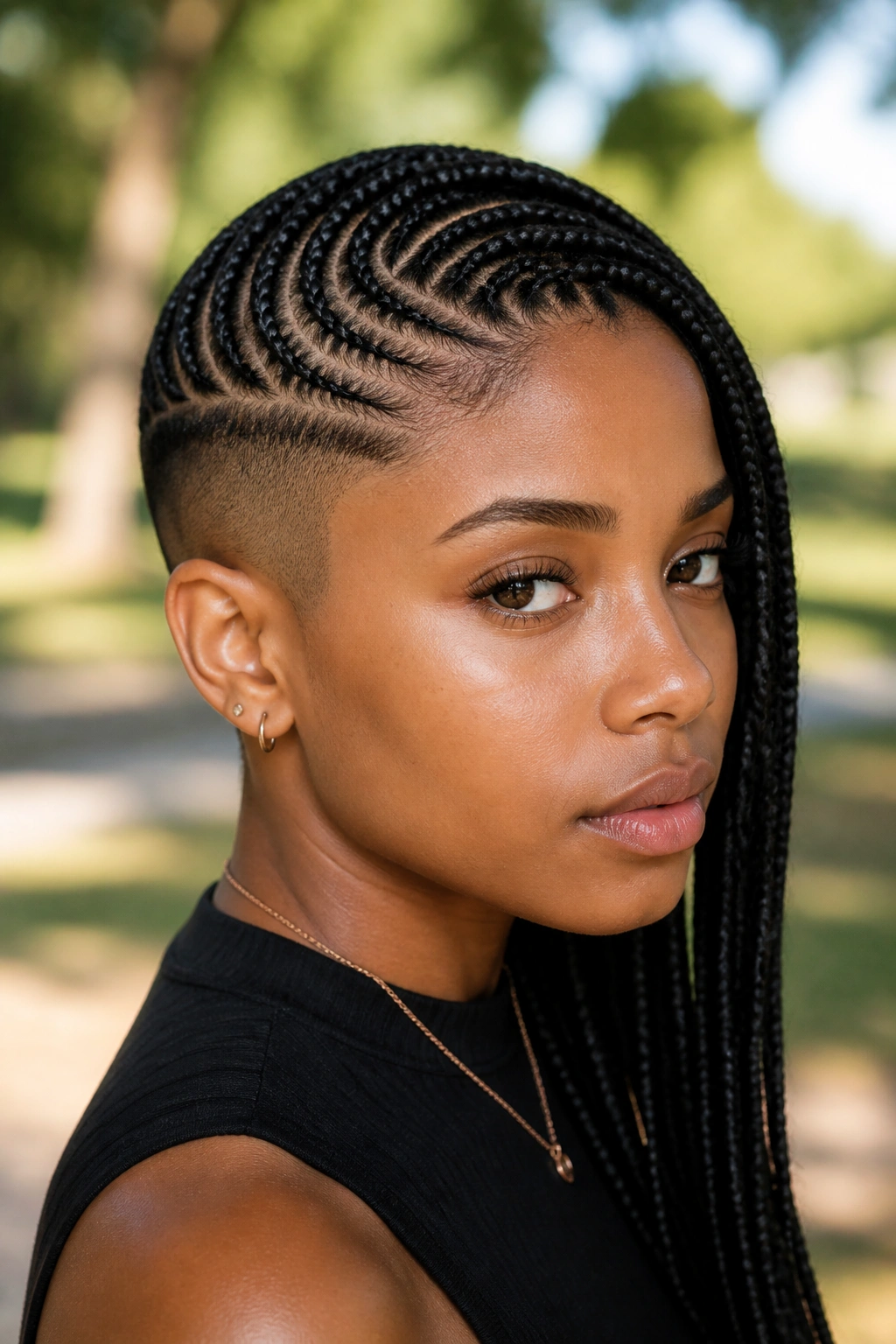
Straight parts can feel stern. Curved parts soften the whole read without losing structure.
That is why curved-part box braids with shaved sides work so well. The rows arc gently across the scalp instead of marching in a grid, which makes the top feel more fluid. The shave on the sides then sharpens that softness, so the style ends up sitting in a nice middle ground: clean but not harsh.
This shape is especially good if you want the braids to follow the head instead of sitting on top of it like a helmet. A shallow C-shaped part around the temple can make the front line feel smoother, and it gives the fade a chance to echo the curve instead of fighting it.
The key is restraint. Do not ask for wild swoops unless you want the pattern to become the main event. A gentle curve is enough. It gives you movement without making the braid map hard to read.
If you like styles that feel polished but not stiff, this is the one I’d send you toward.
13. Micro Box Braids With a Temple Fade

Micro box braids and a temple fade are for people who like detail. Lots of it.
The tiny braid size makes the shaved temples look even cleaner because the contrast is so fine. You can see the density up top and the bare skin at the sides almost at the same time. That can look expensive in the plainest sense of the word: the style has time and work built into it.
Why the Size Matters
Micro braids give you more styling freedom later. They pack into buns, fall into low ponytails, and swing more lightly than bigger braids. They also take longer to install and need a softer hand at the roots, which matters because shaved temples can make the whole shape feel tighter if the braids are pulled too hard toward the front.
- Best for long wear if you do not mind the install time.
- Great for buns, wrapped ponytails, and side drapes.
- Keep the temple fade clean so the braids do not blur into the cut.
- Use a light edge control only if needed; too much product can make the hairline look stiff.
Micro braids reward patience. Rushing them shows.
14. Gold-Cuffed Box Braids With an Undercut
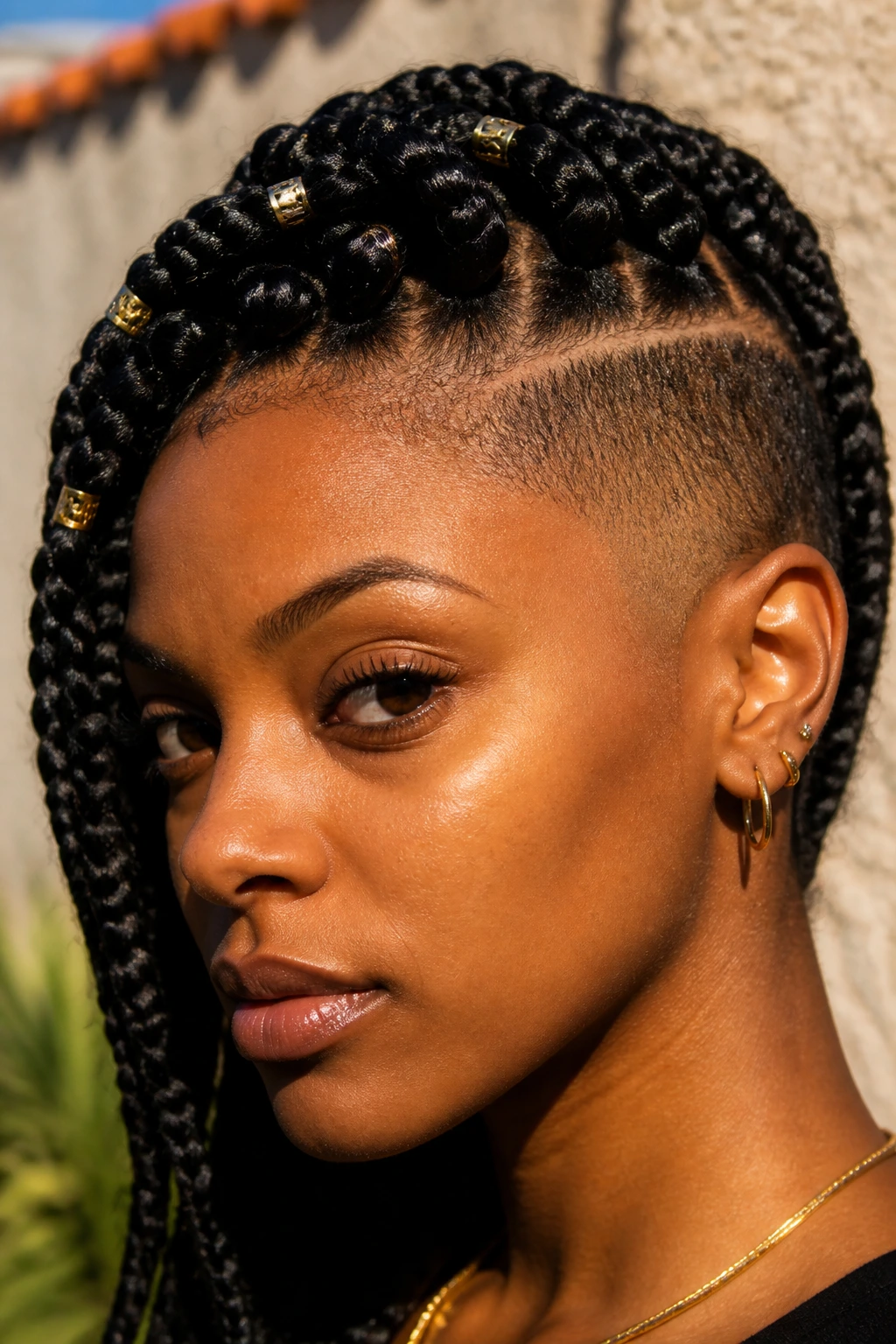
A few gold cuffs can do more than a whole pile of extra braid length.
That’s the part people miss. Metal accessories work because they catch the eye in small flashes, and shaved sides give those flashes a clean backdrop. Without the undercut, cuffs can disappear into the mass of hair. With it, they stand out right away, especially when you place them near the face or along the top row.
The undercut keeps the style from getting crowded. Gold already has a strong visual voice, so you do not need twenty cuffs for the look to land. In fact, too many can make the braids feel cluttered. I’d place a few near the ends of the front braids, then leave the rest plain so the shine has room.
Match the metal tone to the jewelry you wear most. Warm gold against a fresh fade feels rich and clean. Silver can look sharper, almost cooler. Either way, let the cuffs support the style instead of turning into the whole story.
Less is better here.
15. Asymmetrical Long Box Braids With One Shaved Side
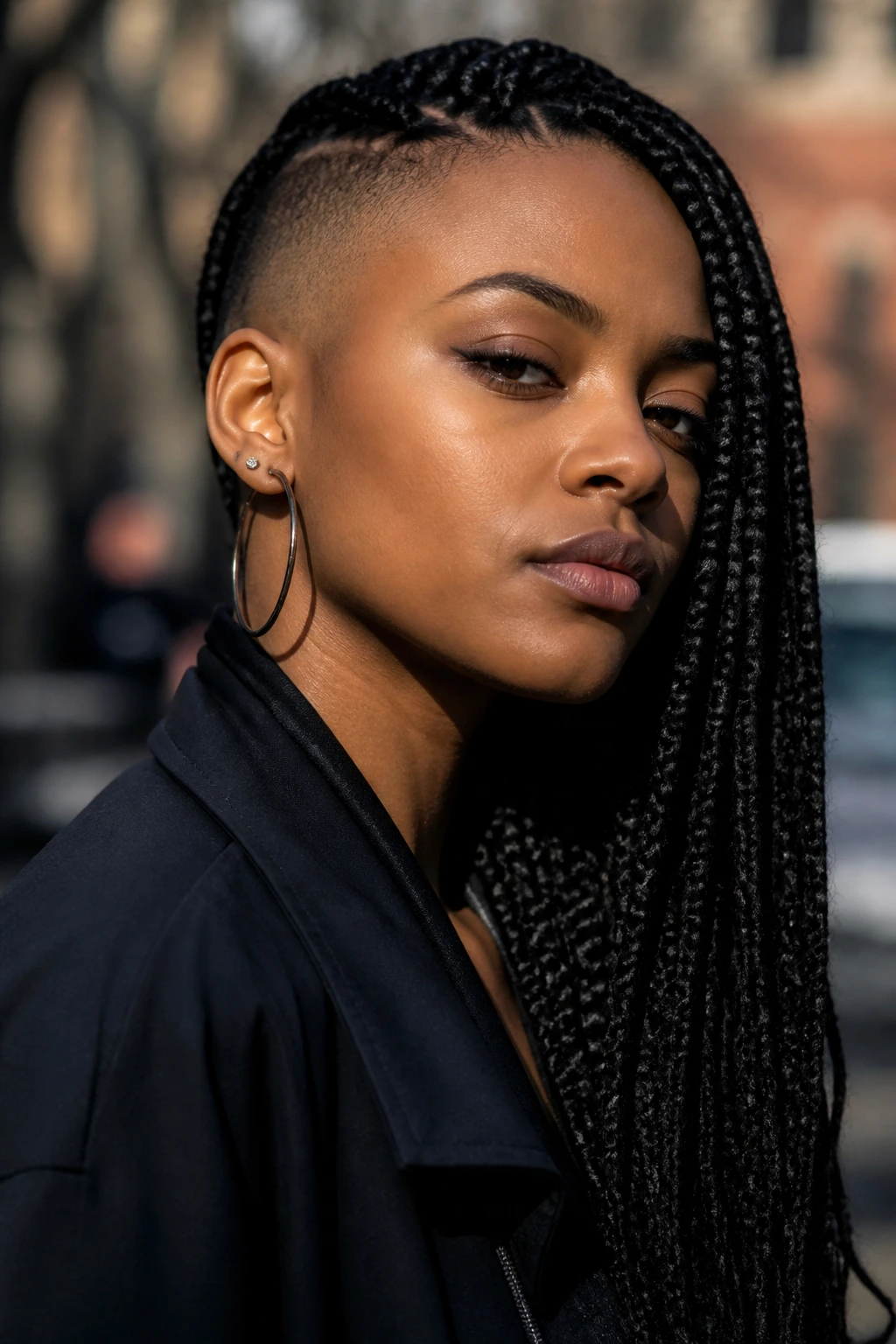
What does one shaved side do? It turns the braids into a drape.
Instead of spreading evenly around the head, the length falls toward the fuller side and leaves the other side bare. That asymmetry gives the style movement before the wearer even moves. It also makes long braids look heavier in a good way, because the eye has a strong contrast point to follow.
How to Wear It
- Keep the shaved side tight to the head so the long side feels more dramatic.
- Ask for a deep side part on the full side to help the braids fall naturally.
- Let the longest pieces sit in front of the shoulder if you want more face framing.
- Keep the ends even unless you want a more layered look.
This style suits people who want something bold but not full-on mohawk. It still has softness. It still lets the braids move. The single shaved side just gives the whole thing a harder edge and makes the shape feel more modern, even when the braid pattern is plain.
16. Freestyle Hair Tattoo Fade With Box Braids
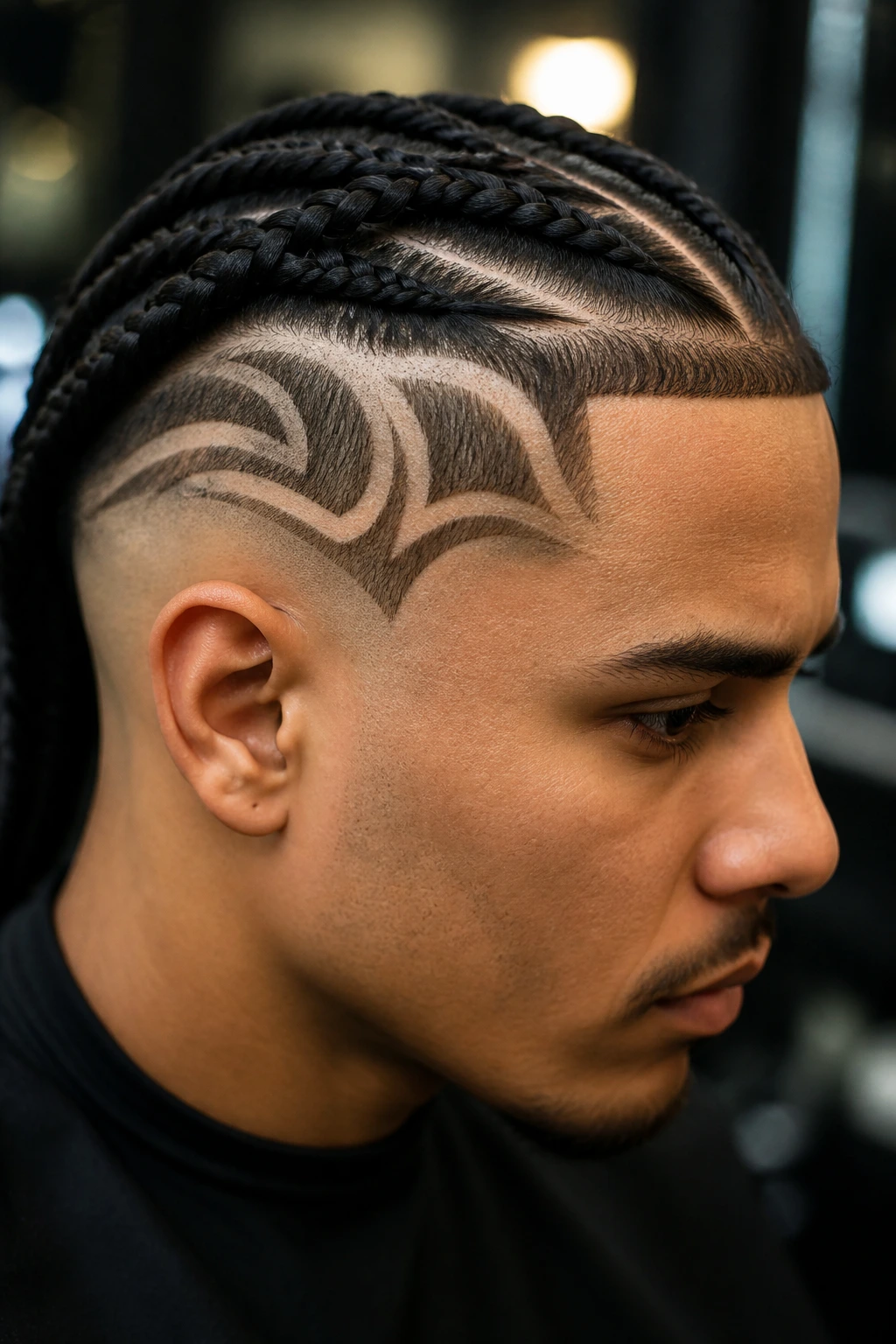
A braid style gets a different personality when the fade has lines cut into it.
Freestyle hair tattoo designs—zigzags, curves, lightning strokes, sharp arcs—turn the shaved sides into part of the artwork. That works especially well with box braids because the braids stay calm on top while the side design does the talking underneath. The contrast is the point.
The best thing about this look is that the design lives in the fade area, not at the braid roots. That keeps the scalp from looking crowded. It also means the pattern can be refreshed without undoing the braids themselves. If the design starts blurring, the haircut just needs a clean-up, not a full restart.
- Bring a clear photo or sketch to the barber.
- Keep the design in the side zone, not too high toward the crown.
- Choose medium braids if you want the tattoo to stay visible.
- Refresh the fade before the lines soften too much.
This style is not subtle, and it does not try to be. That’s the whole charm.
17. Goddess Box Braids With Shaved Sides
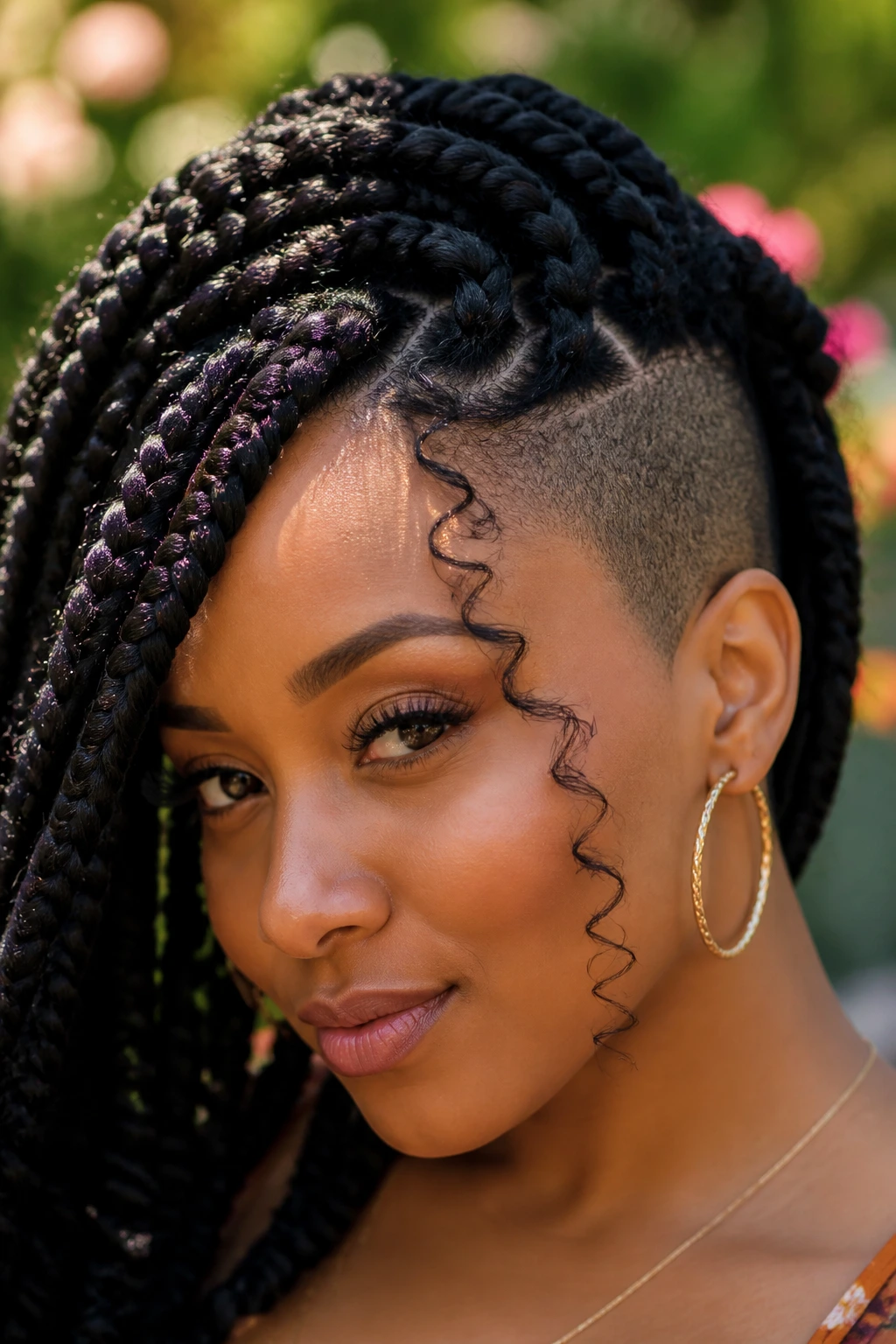
Goddess braids soften the edge that shaved sides can sometimes create. The loose curly pieces give the style movement and a little air, while the bare sides keep it from drifting into fluff.
That contrast is the point.
If the braids are neat and the curls are placed with some care, this look can feel both soft and strong. I like it when the curly pieces frame the face in just a few spots instead of everywhere. Two or three loose curls near the front can be enough. Too many, and the style loses the crispness that makes shaved sides worth wearing in the first place.
The side shave also helps the curls stand out. Without it, the loose pieces can blend into the rest of the hair and lose their shape. With the sides clipped down, every curl looks more deliberate. You see where the softness starts and where the structure ends.
A light mousse on the loose pieces helps them keep shape. Not a heavy cream. That usually makes the curls droop faster than people expect.
18. Low Bun Box Braids With Shaved Sides

Unlike the high ponytail, a low bun feels grounded. The braids sit close to the nape, the shaved sides stay visible, and the whole style reads calmer without losing its edge.
This is the one I’d pick for long days, travel, meetings, or any moment when you want your hair controlled but not stiff. A low bun also shows off the side shave in a cleaner way because the braids aren’t fighting for height. Everything stays lower, neater, and easier to look at from every angle.
The bun itself does not have to be tight. In fact, a slightly loose wrap often looks better because it keeps the braids from bulking up at the center. I like leaving one braid looped around the base and one or two ends tucked in with a pin. That keeps the finish tidy without making it look over-manicured.
If you want the style to feel polished but still a little sharp, this is the best closing move. The sides stay crisp, the shape stays simple, and the braids can still carry as much personality as you want them to.
