



Four braid hairstyles for school girls sit in that sweet spot between neat and manageable. They keep hair split into easy sections, hold up through buses, lunch trays, and recess, and still leave enough shape that the style looks intentional when the day runs long. The trick is picking the right four-braid setup for the child in front of you, not the one that looks prettiest on a phone screen.
A style that takes 20 minutes but gets yanked apart by third period is a bad deal. A braid pattern that stays smooth for several days, protects the ends, and does not make the scalp sore by lunchtime earns its keep. That is where four braids shine: there is enough structure to stay put, but not so much crowding that the head feels heavy.
Parting matters more than people think. Clean sections make the whole style look polished, and they also help the braids sit flatter, which matters when a kid needs to wear a hoodie, a backpack, or a sports helmet. I also like four-braid looks because they can be dressed up with ribbons, beads, cuffs, or a plain elastic and still look finished.
Some of the styles below are quick and practical. Others take more time but stay neat longer and look a little more special for picture day, assemblies, or any morning when the uniform needs help doing its job.
1. Straight-Back Four Cornrows
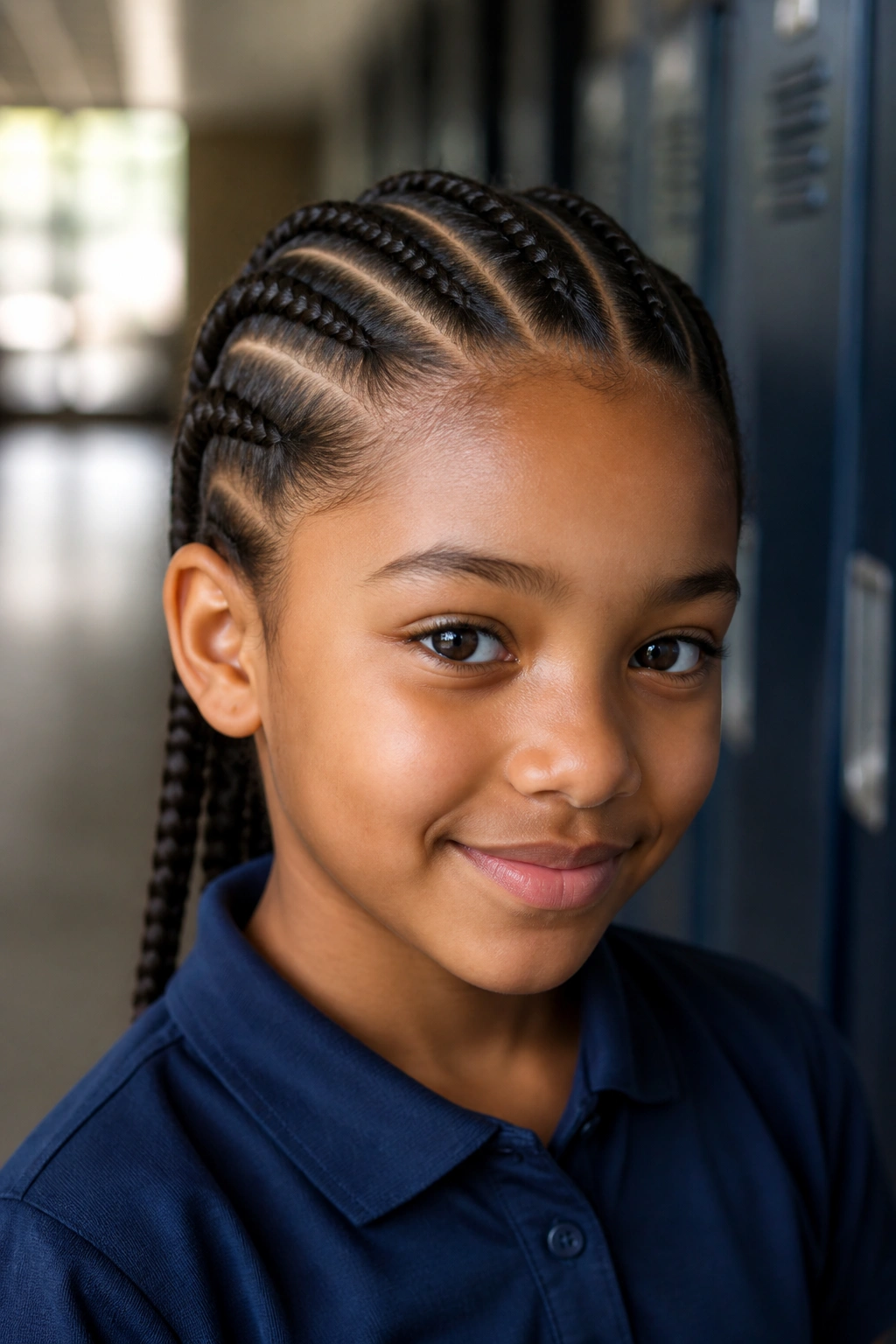
If the goal is tidy hair that behaves all day, start here. Straight-back four cornrows are the classic answer when you want something clean, low-fuss, and school-friendly without a lot of extra styling drama.
Why this one works on school mornings
Four straight rows keep everything close to the scalp, which means fewer loose strands escaping around the ears and forehead. That matters on days when there is no time for mid-morning touch-ups. The look is simple, but simple is not the same thing as boring when the parts are crisp and even.
A rat-tail comb, a light edge gel, and a steady hand do most of the work. Keep the sections equal, part from front to back, then make the rows wide enough that the scalp does not feel crowded. Tight is not the goal. A braid that sits snugly will last longer than one pulled too hard at the roots.
The small details that make it look neat
- Detangle first with a leave-in spray or a little water and cream.
- Make the center part straight before you create the two side parts.
- Braid with even tension from root to end, not a death grip at the hairline.
- Finish the ends with clear elastics, small beads, or tiny dipped ends if the hair length allows.
A style like this works on natural hair, stretched hair, and hair that has been freshly washed the night before. If a child is tender-headed, use slightly larger sections and keep the braid size uniform. That tiny adjustment can save the whole morning.
2. Four Dutch Braids with Loose Ends
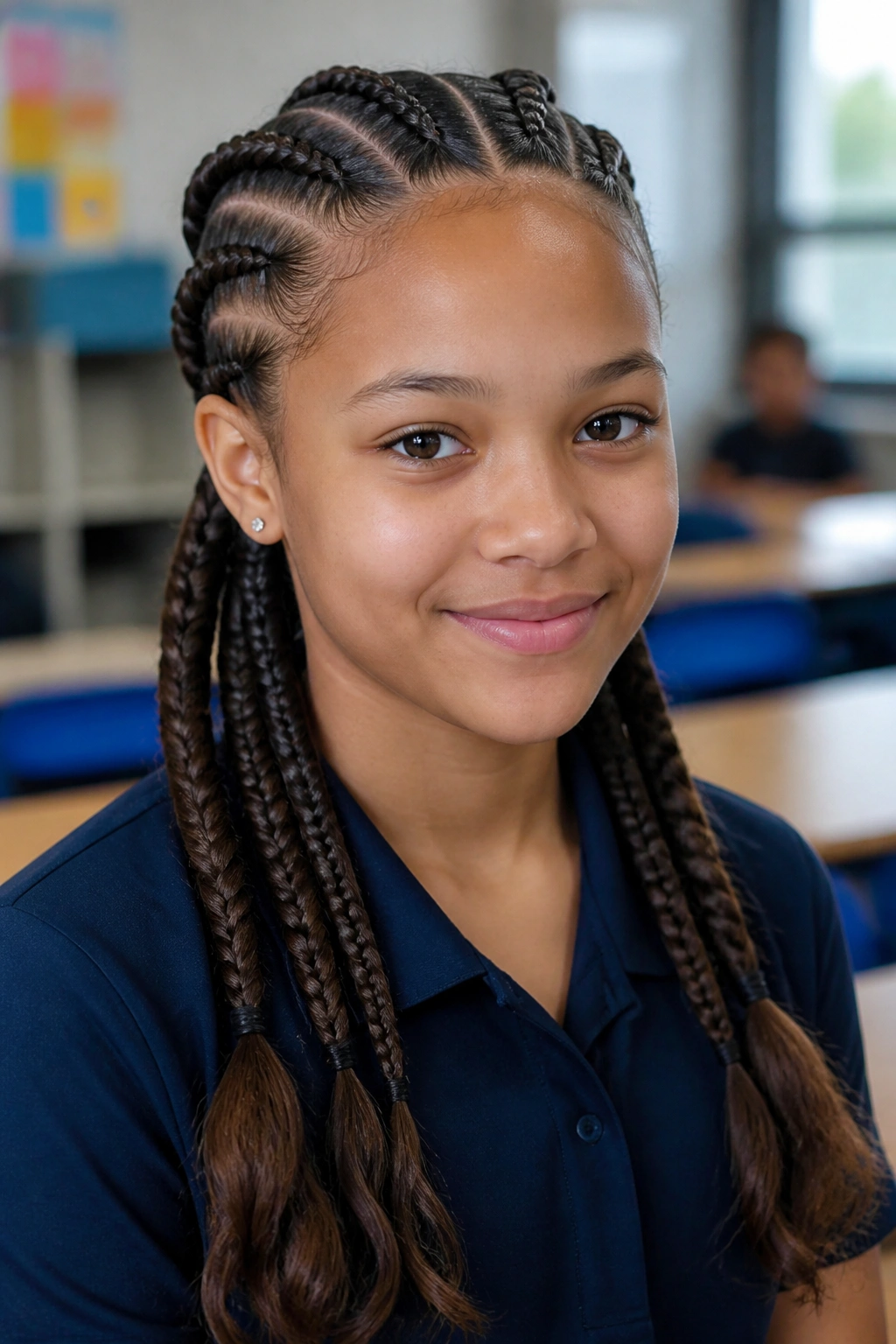
Dutch braids look fancier than they are. The braid sits raised off the scalp instead of lying flat, so four Dutch braids give the hair a little more shape without turning the style into a full production.
What I like here is the balance. The front still looks neat, the back has movement, and the braids do not flatten the head the way a tighter cornrow pattern sometimes can. For girls who like a little volume, this is a nice middle ground. It is especially good on thick hair, because the raised braid pattern shows off texture instead of hiding it.
Keep the sections medium-sized and the grip light. If the hands pull too close to the scalp, Dutch braids can feel sharp after a while, and nobody wants that. Finish the lower ends with loose curls, coils, or simple bands, depending on hair length.
School mornings are easier with this style because it does not need much after it is done. A quick finger fluff at the ends is enough. If the hair tends to frizz, a light mist of water and leave-in at the crown helps more than a heavy product layer ever will.
3. Four Feed-In Braids with Beads
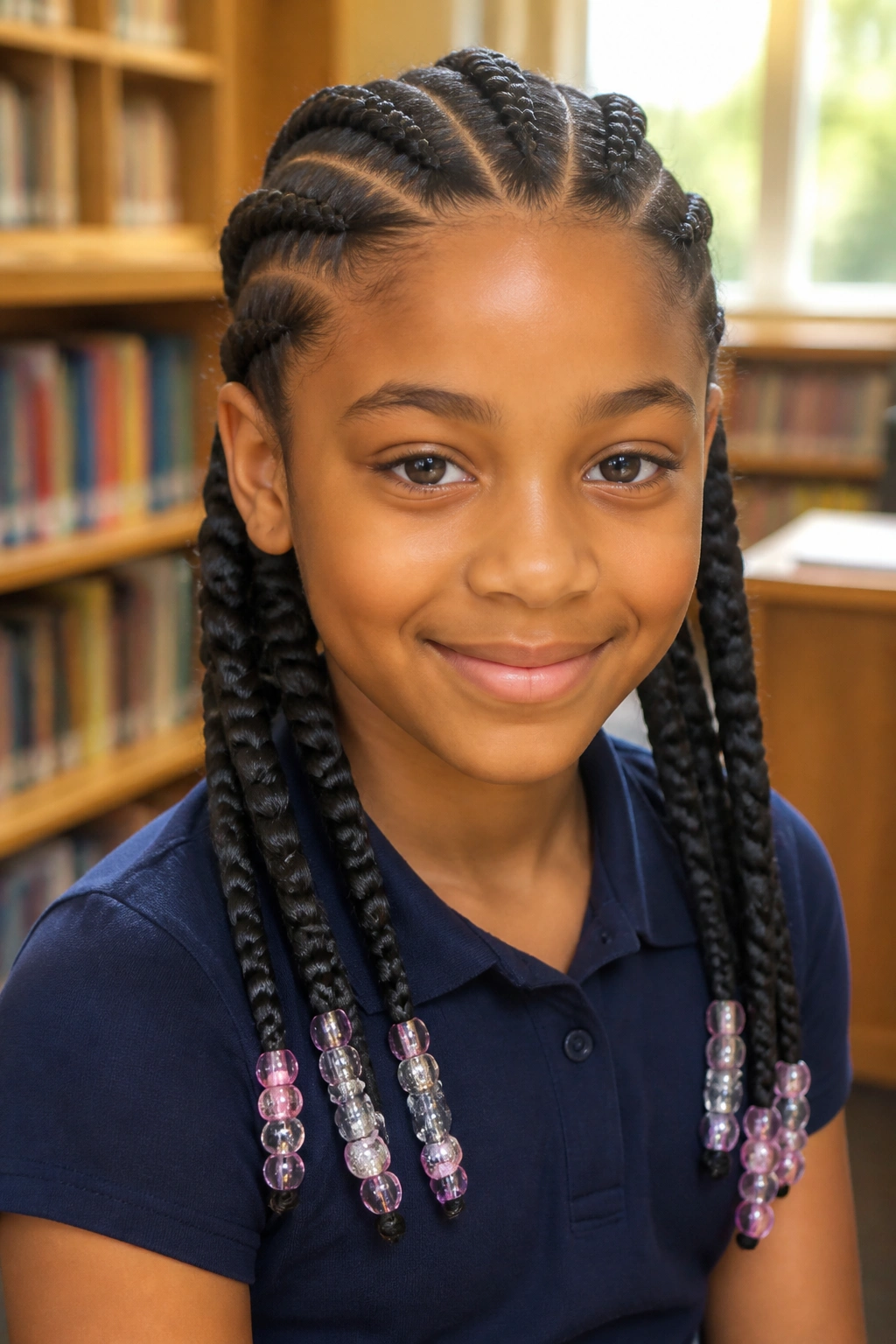
Why do four feed-in braids with beads work so well on kids who hate constant touch-ups? Because the feed-in method keeps the roots smooth, and the beads give the ends a finished look that does not depend on perfect styling every single morning.
How to wear them to school
Feed-in braids start small at the scalp and gradually get fuller as you braid down. That makes the base look clean instead of bulky. For school, I prefer medium beads rather than huge ones. They look neat, they do not weigh the ends down too much, and they tend to be less distracting during class.
Use beads that match the outfit rules, if there are any. Some schools are fine with colorful ends, while others prefer plain accessories. If metal cuffs or loud charms are not allowed, clear beads or matte black ones keep the style in line.
- Start with a clean part and small starter pieces.
- Add braiding hair slowly so the base stays flat.
- Keep bead count modest, especially on shorter braids.
- Seal the ends well so the beads do not slip off during playtime.
One thing I would not skip: check that the beads do not hit the shoulders or desk when the child leans forward. That little detail can turn a cute style into an annoying one.
4. Four French Braids into a Low Ponytail
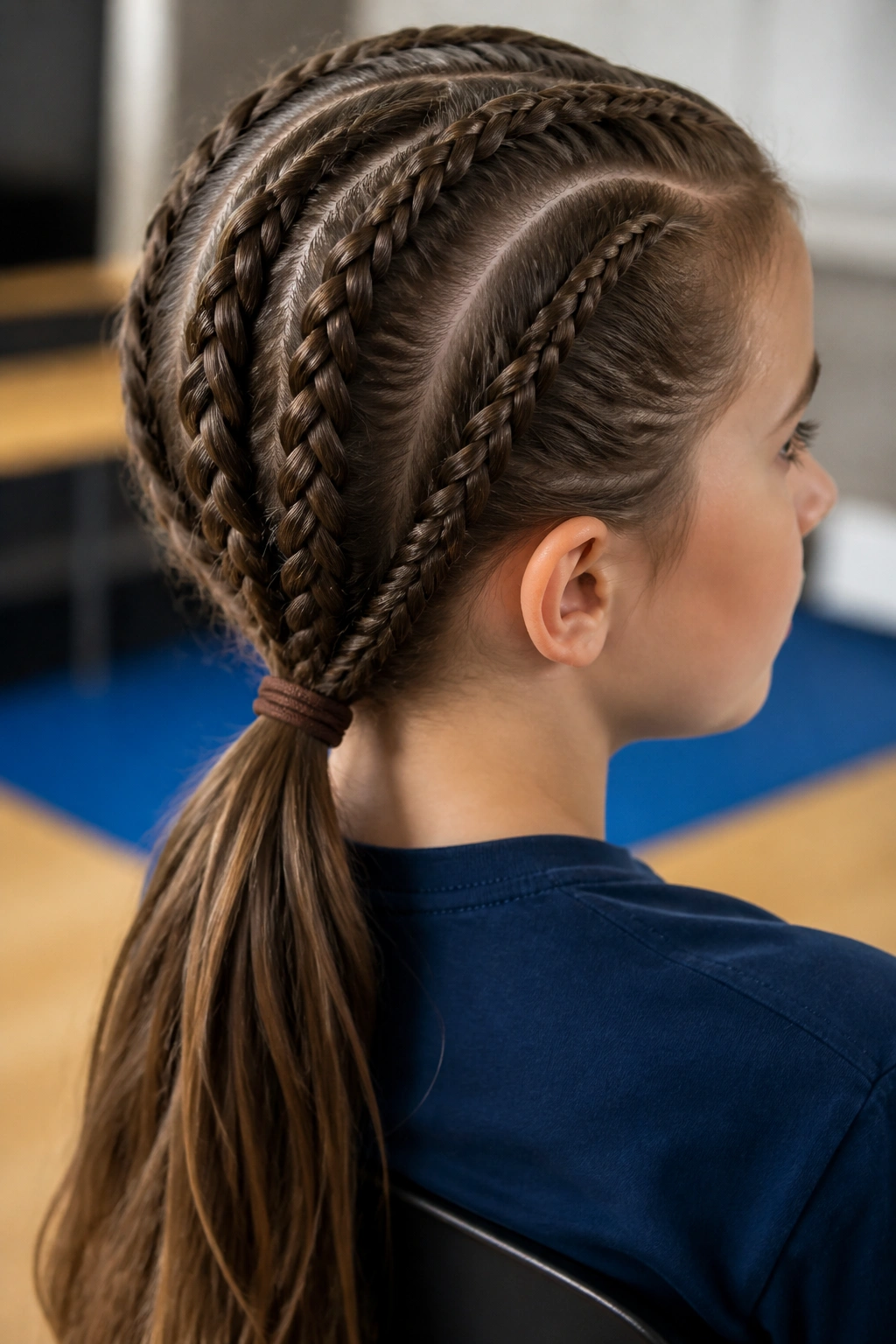
Picture a gym day, a spelling test, and a bus ride home all in one afternoon. Four French braids into a low ponytail handle that kind of day better than most styles because the hair stays gathered, controlled, and easy to tuck behind a collar.
French braids are a little softer in appearance than cornrows, which makes this style feel polished without looking stiff. The braids start near the hairline and move back, then meet at the nape for one low pony or a pair of smaller tail ends. That low placement matters. It keeps the style comfortable against a chair back, a hoodie, or a school sweater.
A satin scrunchie works better than a tight rubber band at the base. It holds without digging in. If the hair is long enough, wrap a small braid around the ponytail base to hide the elastic and make the whole thing look more finished.
This is one of those styles that looks better the more symmetrical the parts are, so take the time to line things up. A crooked first part will show every time the child turns her head.
5. Four Box Braids with a Clean Middle Part
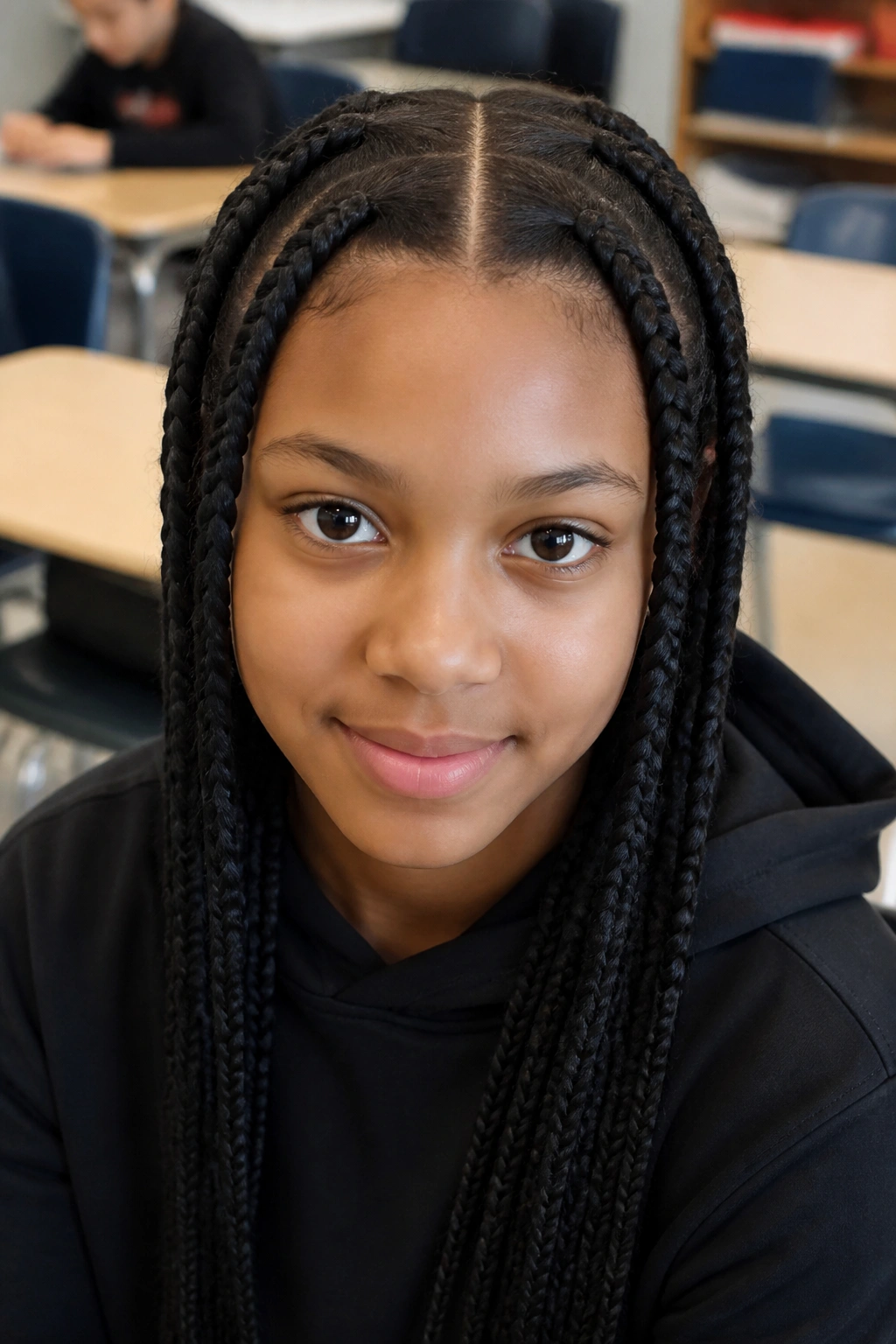
Box parts do a lot of the visual work here. Four box braids with a clean middle part feel organized from the start, and that organization is half the reason the style looks so calm and put together.
Neat square or rectangular sections create a crisp frame around the face. The braids can hang loose, be tied into two low sections, or be pinned back with small clips if the school day calls for less movement. What makes this style useful is that each braid has its own space. That means less crowding at the scalp and a cleaner look when the hair grows out a little between retouches.
Neat parts do the heavy lifting.
If the hair is thick, make the parts generous enough that the braid can sit flat. If the hair is finer or shorter, smaller sections help the braids stay anchored. Either way, I like this style for kids who wear the same hairstyle for several days and need something that still looks decent on day three.
Wrap the hair at night if you can. A scarf or bonnet cuts down on fuzz at the part lines, and that makes a bigger difference than people expect.
6. Four Zigzag Braids for a Playful Parting Pattern
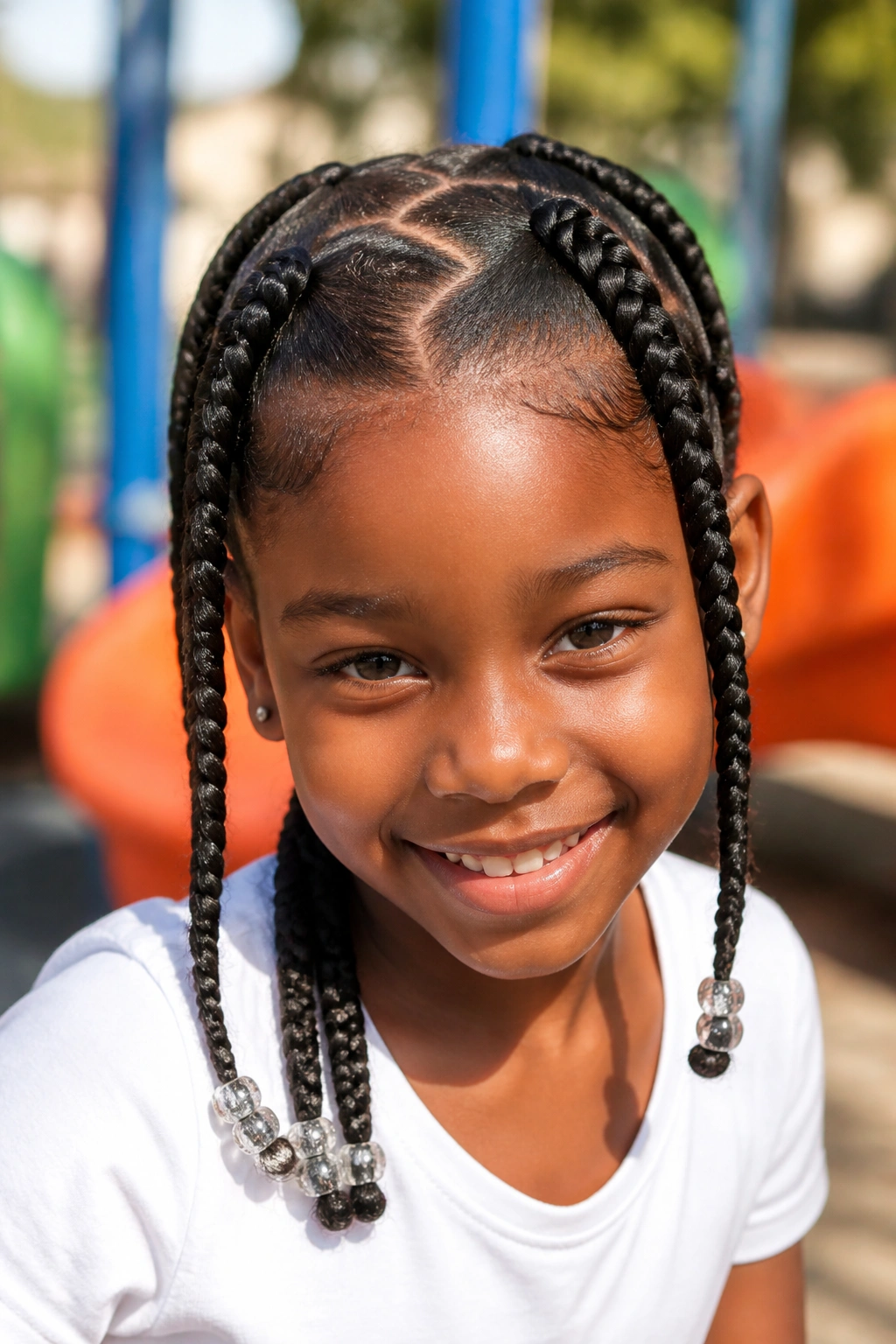
Unlike straight parts, zigzag parting makes simple braids look like somebody planned the whole outfit. Four zigzag braids are a nice choice when the child wants something fun but still appropriate for school.
The pattern itself is the point. A zigzag part draws the eye across the scalp before the braids even begin, so you do not need beads or extra accessories to make it feel special. That also means the style works well on days when you want the hair to stand out a little without turning loud.
Use the tip of a rat-tail comb and trace the part lightly before committing. A sharp zigzag with clean corners looks better than one that wobbles. Keep the angles wide enough to see from a few feet away; tiny zigzags often disappear once the braids are finished.
This style suits kids who like a little personality in their hair and do not mind a few more minutes in the chair. It is not the fastest four-braid look on this list. Still, it gives a lot back for the time spent, and the finished style has enough detail to carry a plain uniform.
7. Four Stitch Braids into a High Ponytail
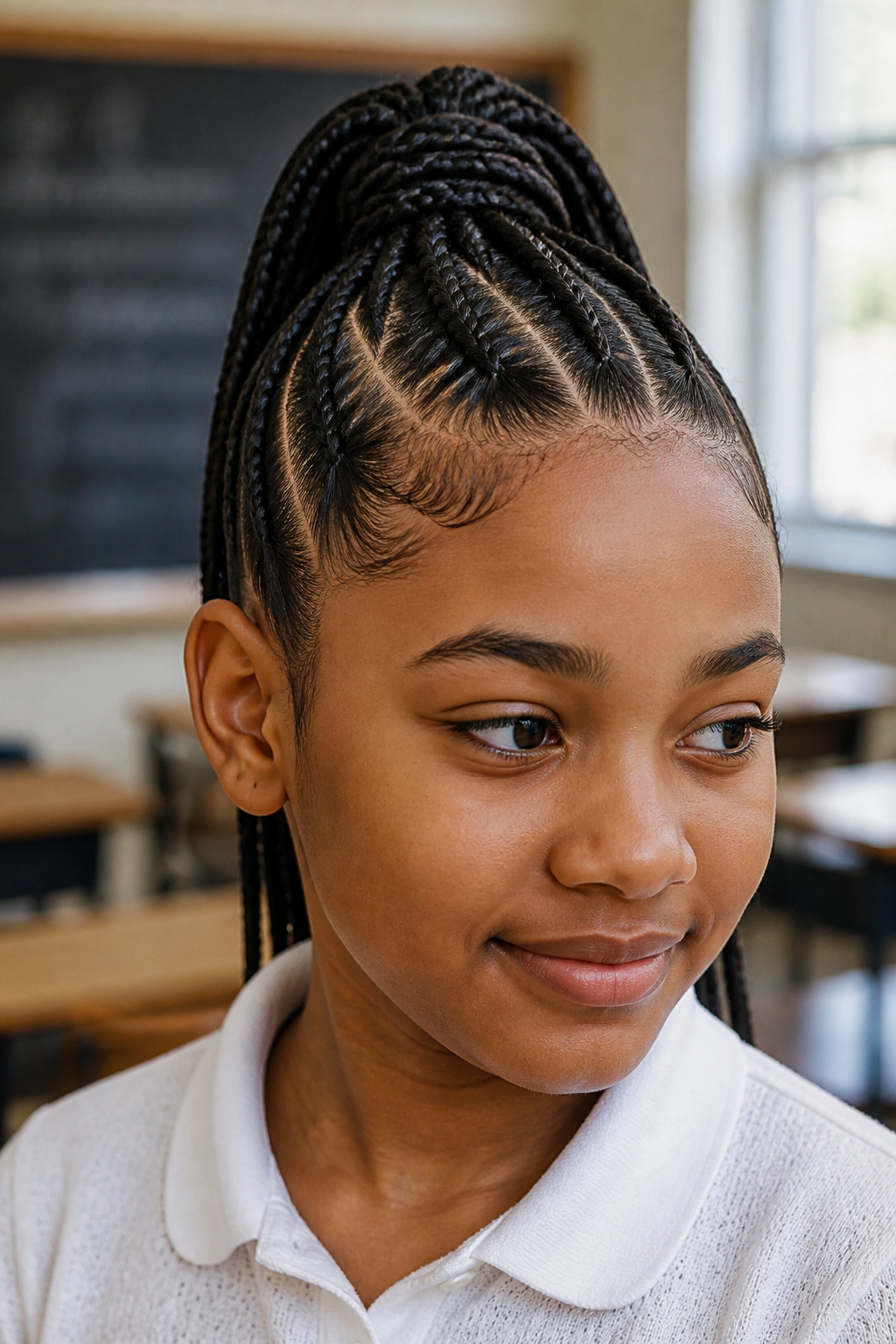
The scalp lines are the giveaway here. Four stitch braids into a high ponytail look crisp because the parting is pulled into tiny, even rows before the braid begins, and that makes the whole style feel sharp without looking overdone.
What to ask for at the braid chair
A medium-width stitch braid is usually the safest bet for school. Too thin, and the style takes forever. Too thick, and the braid loses the clean little line work that makes it stand out. Aim for a high ponytail that sits centered at the crown, not shoved back so far that it pulls at the temples.
- Ask for clean, even stitch rows.
- Keep the ponytail base wrapped or covered with a braid.
- Use a light hold product, not a thick layer that flakes.
- Finish with a soft elastic so the ponytail does not bounce loose during the day.
This is the style I’d pick for a child who has sports practice after school. It stays out of the face, and the high ponytail gives a little lift without needing a lot of restyling. The only catch is tension. If the forehead feels tight right after braiding, the style is too tight. Fix that before you leave the chair.
8. Four Side-Swept Braids into One Side Bun

Need hair off the face without the same old middle part? Four side-swept braids into one side bun solve that problem fast. The pattern moves the braids diagonally across the head, which softens the look and gives the style a little motion.
Side-swept braids work especially well when the child has layers around the front or likes to tuck hair behind one ear. There is something easy about the shape. It feels softer than a straight-back style, but it still keeps everything under control. And yes, a side bun is practical too. It sits well under a hat or cardigan hood and doesn’t smack the back of the neck when the child is walking or running around.
A few bobby pins at the bun base can help, especially if the hair is slippery. Place them in a criss-cross pattern so the bun holds from more than one direction. That one small step keeps the bun from sagging halfway through the school day.
If you want a small finishing touch, add a satin ribbon around the bun base. Not too much. Just enough to make the style feel finished.
9. Four Triangle-Part Braids with Cuffs
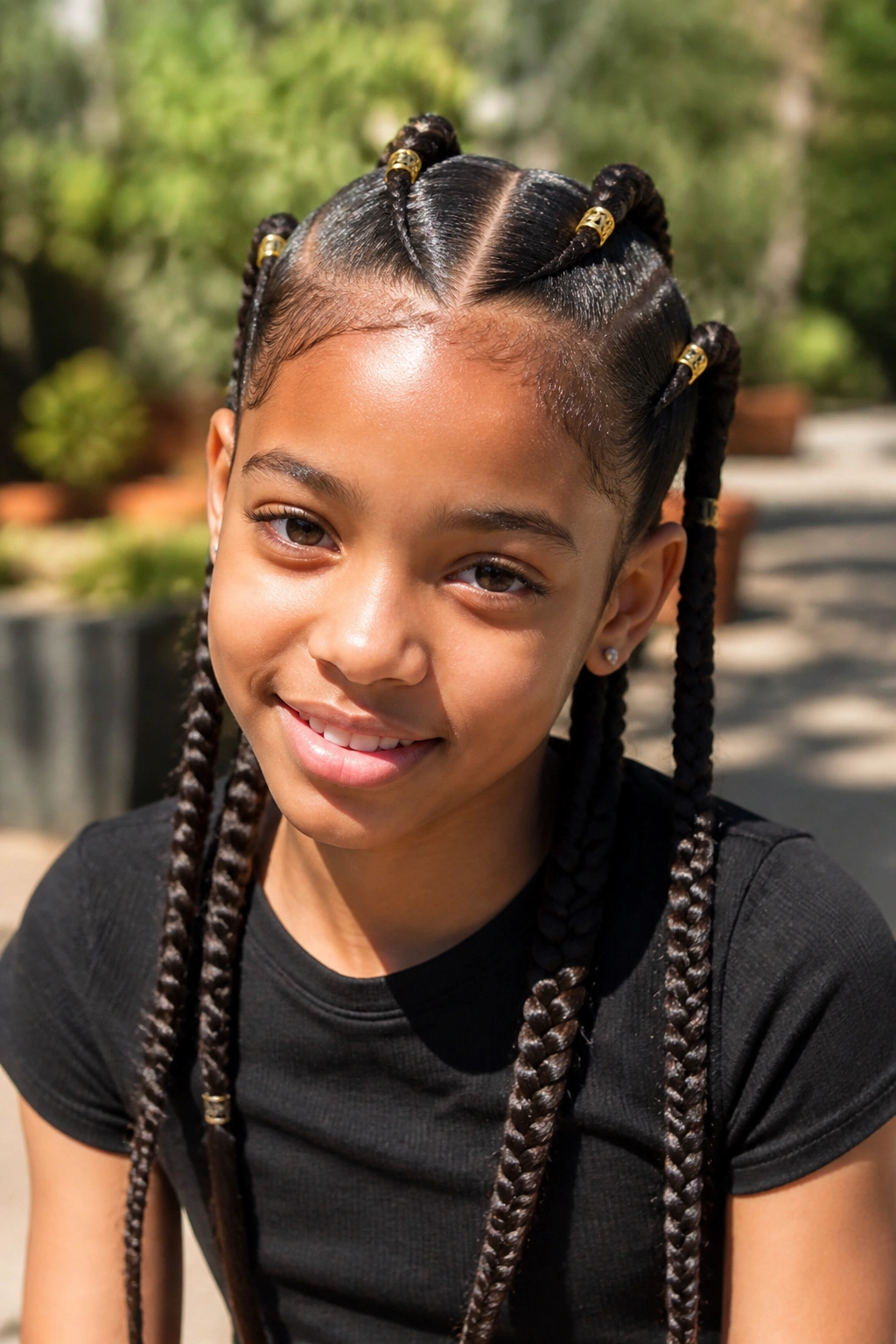
Triangle parts make even plain braids look deliberate. Four triangle-part braids with cuffs are a strong pick when you want geometric parts, clean lines, and a little shine without piling on extra pieces.
The triangle shape gives each braid a sharper look than a square or straight section. It also breaks up the scalp pattern in a way that feels fresh, which is useful for school pictures or a week when the hair needs to feel a little special. The cuffs add just enough detail to catch the eye without taking over the style.
Keep the triangles medium-sized. Tiny shapes can take forever and are harder to keep even, especially if the child moves a lot in the chair. A few well-placed cuffs are better than ten small ones stuffed into every braid. That can start to feel busy fast.
Best for: older girls, thick hair, and anyone who likes a more styled braid pattern without going full fancy.
If the school has a strict dress code, choose plain gold or silver cuffs instead of colorful ones. They look polished and do not clash with uniforms the way bright accessories sometimes do.
10. Four Braids with Ribbon Woven Through Each Section

I like ribbon braids for spirit days, picture day, and those school weeks when a child wants hair that matches the mood. Four braids with ribbon woven through each section add color in a way that still feels clean and controlled.
Satin ribbon slides through hair better than stiff craft ribbon, and that matters more than people think. A smoother ribbon is less likely to snag when the child takes off a sweater or brushes the braids over one shoulder. Choose a width that shows up in the braid, but not so wide that it overpowers the actual hair.
Thread the ribbon at the beginning of the braid and secure the end with a small elastic once you reach the bottom. If the braid is long enough, let the ribbon finish in a neat tail. If it is shorter, tuck the ribbon end under the elastic and trim it cleanly.
This style works best when the rest of the look stays simple. A plain uniform, clean braids, and one good ribbon color often look better than a pile of accessories. School colors are the obvious choice, but soft pastels and deep jewel tones can work too if the outfit allows it.
11. Four Braids into Two Space Buns
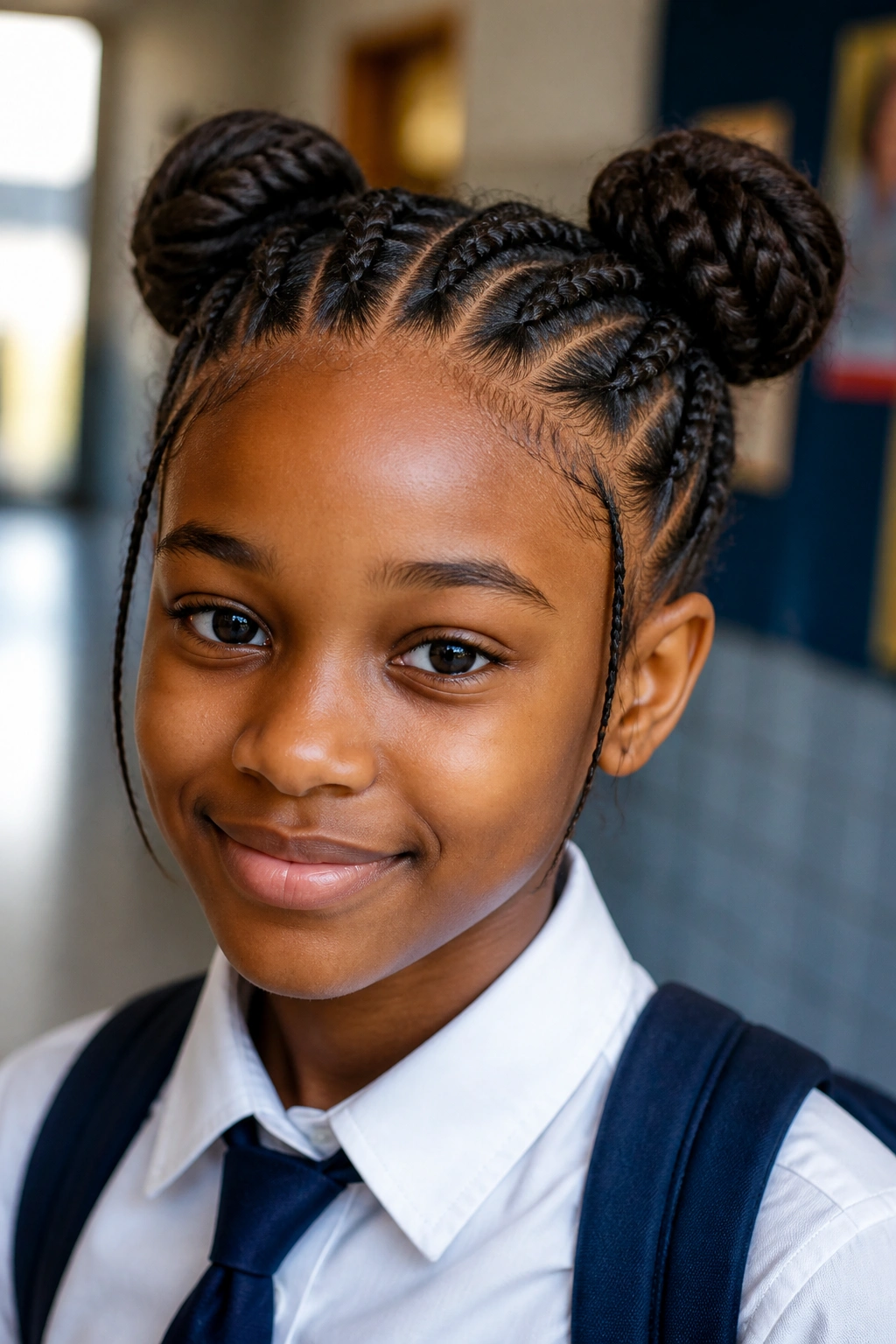
A seven-year-old with a bus ride, a playground, and an after-school club needs a style that stays put and still feels playful. Four braids into two space buns do exactly that. Two braids usually feed each bun, which keeps the shape balanced and makes the buns look round instead of lumpy.
How to keep the buns even
Start by splitting the braids into two equal groups. One side should not get the heavy braid while the other side gets the skinny one. That’s the fastest way to make the buns sit crooked. Wrap each pair at the same height, usually just above ear level for a cute, comfortable look.
A few pins or small elastics can help the buns hold, but do not overload them. The more hardware you add, the more likely the child is to feel it when she leans back in a chair. Low space buns are a good compromise if the hair is thick or if the head is sensitive.
- Keep the braids compact before wrapping them.
- Match the bun height on both sides.
- Use soft elastics first, pins second.
- Leave the front hairline smooth so the style looks neat from the front.
This is one of those styles that feels fun without becoming messy. Kids tend to love it because it moves a little, but it still survives a normal school day.
12. Four Fishtail Braids for a Neat Lengthy Look
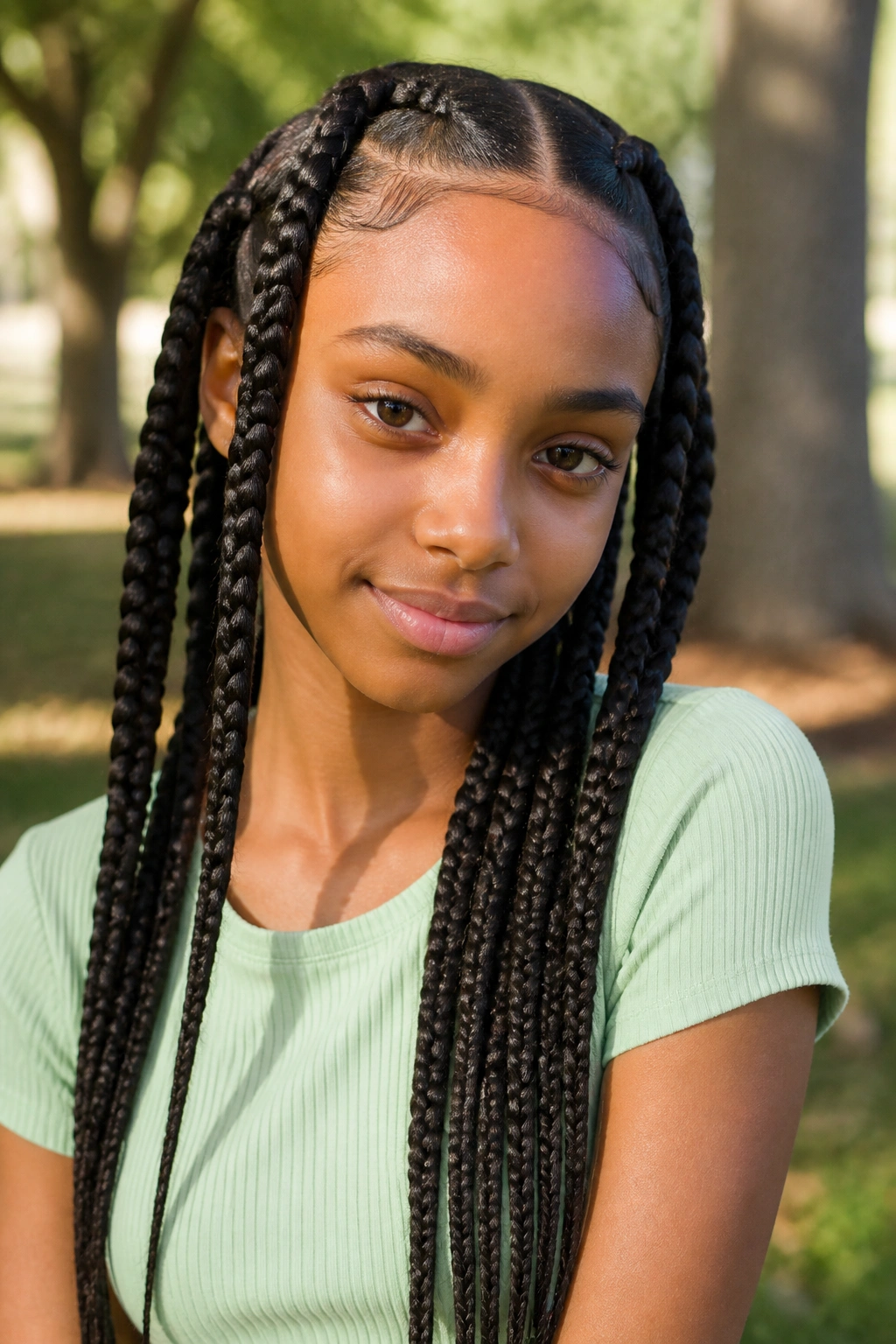
Four fishtail braids take more patience than standard three-strand braids, and that is exactly why they look so polished. The smaller crossing pattern creates a tight, detailed finish that reads as neat even when the hair is long.
These are not the braids you do while checking the clock every 30 seconds. Fishtails need tiny, even sections, and they reward steady hands more than speed. If the hair is silky or freshly detangled, a little leave-in cream or water mist can help the strands hold while you work. Too much product, though, and the braid starts slipping out of your fingers.
They are especially nice for older school girls who want a more grown-up look without giving up the comfort of braided hair. Four fishtails can hang loose, be tied into two low sections, or be pinned back if the school day is active. They also photograph well without needing much extra styling. The braid pattern does most of the work.
If you are trying this on a busy morning, start with slightly thicker sections. The braid still looks detailed, but it moves faster and holds together better.
13. Four Ghana Braids with Thicker Rows
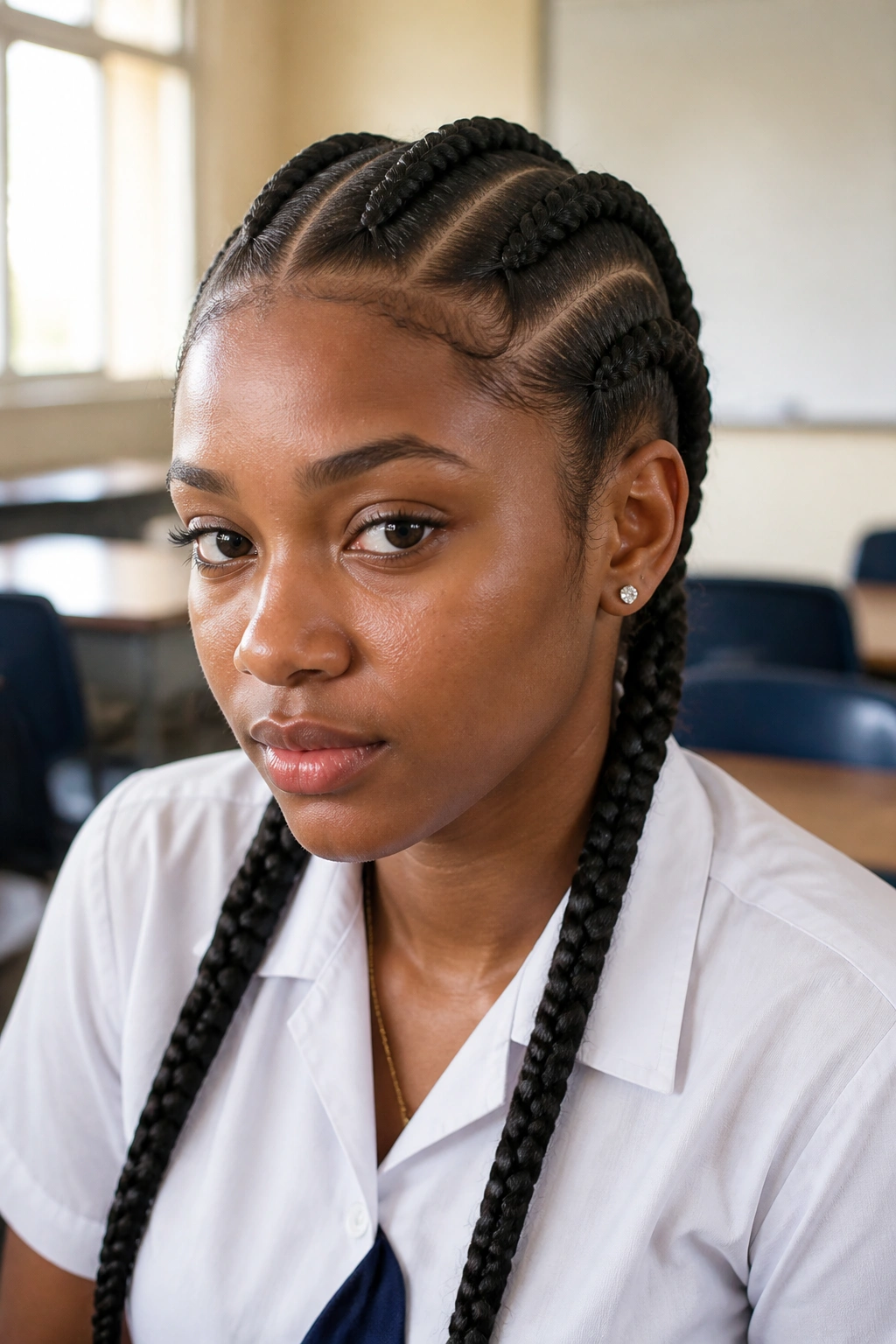
Why do four Ghana braids with thicker rows work so well on thick hair? Because the style gives you fewer, bolder braids that stay close to the scalp and cut down on daily fuss.
Ghana braids are a cousin of feed-in braids, but the rows are chunkier and the look is stronger. That can be a good thing for school. Fewer braids mean less time in the chair, fewer ends to manage, and less chance of one section frizzing out while the others stay neat. On dense hair, that matters a lot.
Best for thicker hair and long wear
- Keep the first feed-in section small so the base stays smooth.
- Build the braid gradually instead of adding too much hair at once.
- Use medium thickness so the style does not feel heavy.
- Finish with simple ends or beads only if the school rules allow them.
I prefer this style when a child needs something that can go several days without falling apart. It is neat enough for class, sturdy enough for playtime, and flexible enough to tuck into a sweater or jacket. If you want a style that looks strong without feeling fussy, this is one of the best options on the list.
14. Four Criss-Cross Braids at the Front
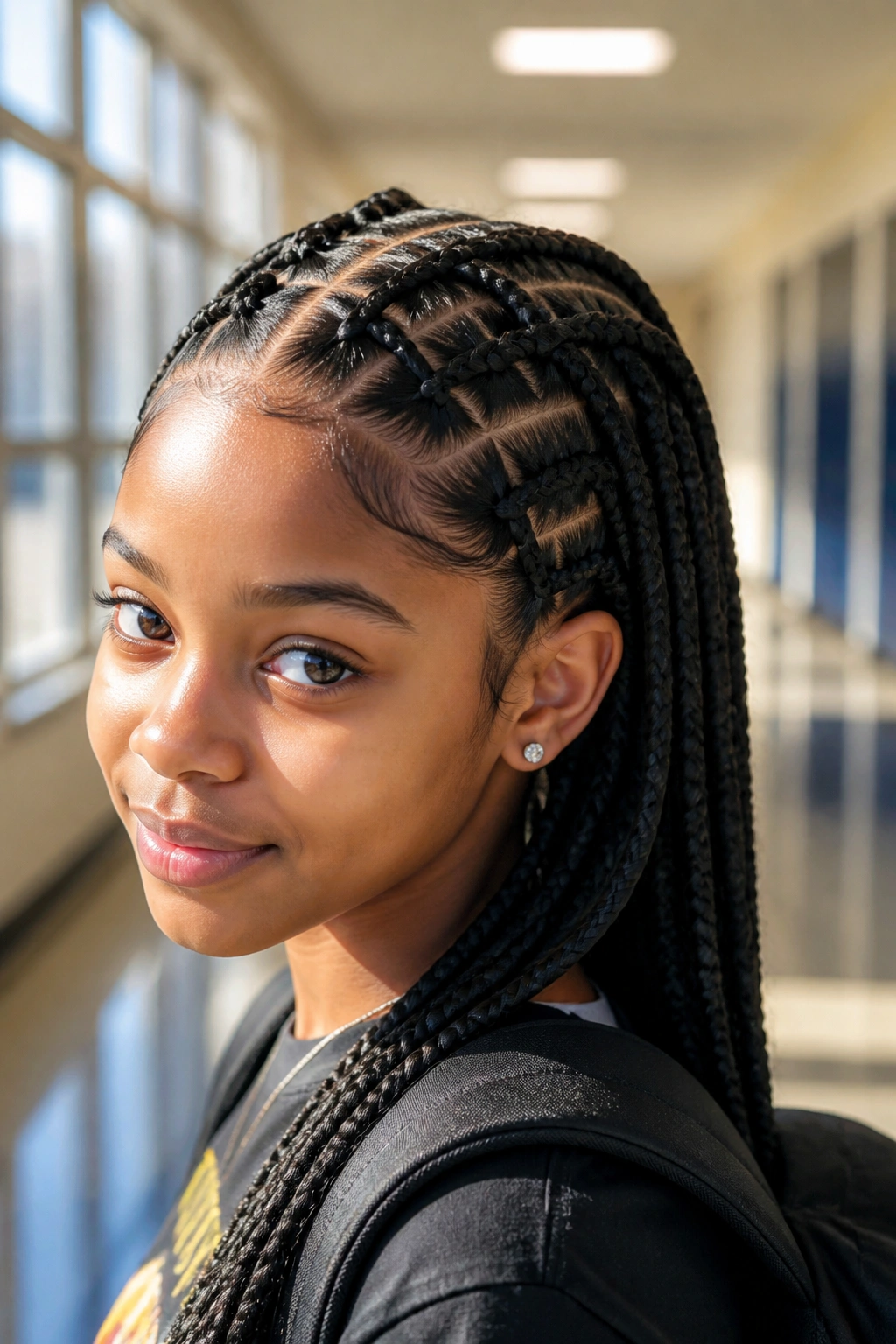
This is the style that makes people look twice. Four criss-cross braids at the front use crossing sections to build shape around the hairline before the braids move back or down, so the front of the style carries most of the visual work.
It takes more planning than a straight-back set, and that is part of the appeal. The crossing sections create a little movement across the crown, which keeps the style from feeling flat. For picture day, school events, or any time the child wants a more styled finish, it lands in the right place.
Best parting map
- Start with a clean center or side part, depending on the final direction.
- Clip the crossover sections before braiding so the pattern stays clear.
- Keep the criss-cross sections even, or the shape starts to sag.
- Use a light edge product to keep the front clean, but do not pile it on.
The main thing to watch is tension at the front. Crossing braids can pull if the sections are too small or the grip is too hard. Keep the lines smooth, not tight. The style should look structured, not strained.
15. Four Low Braids with a Bow for School Girls
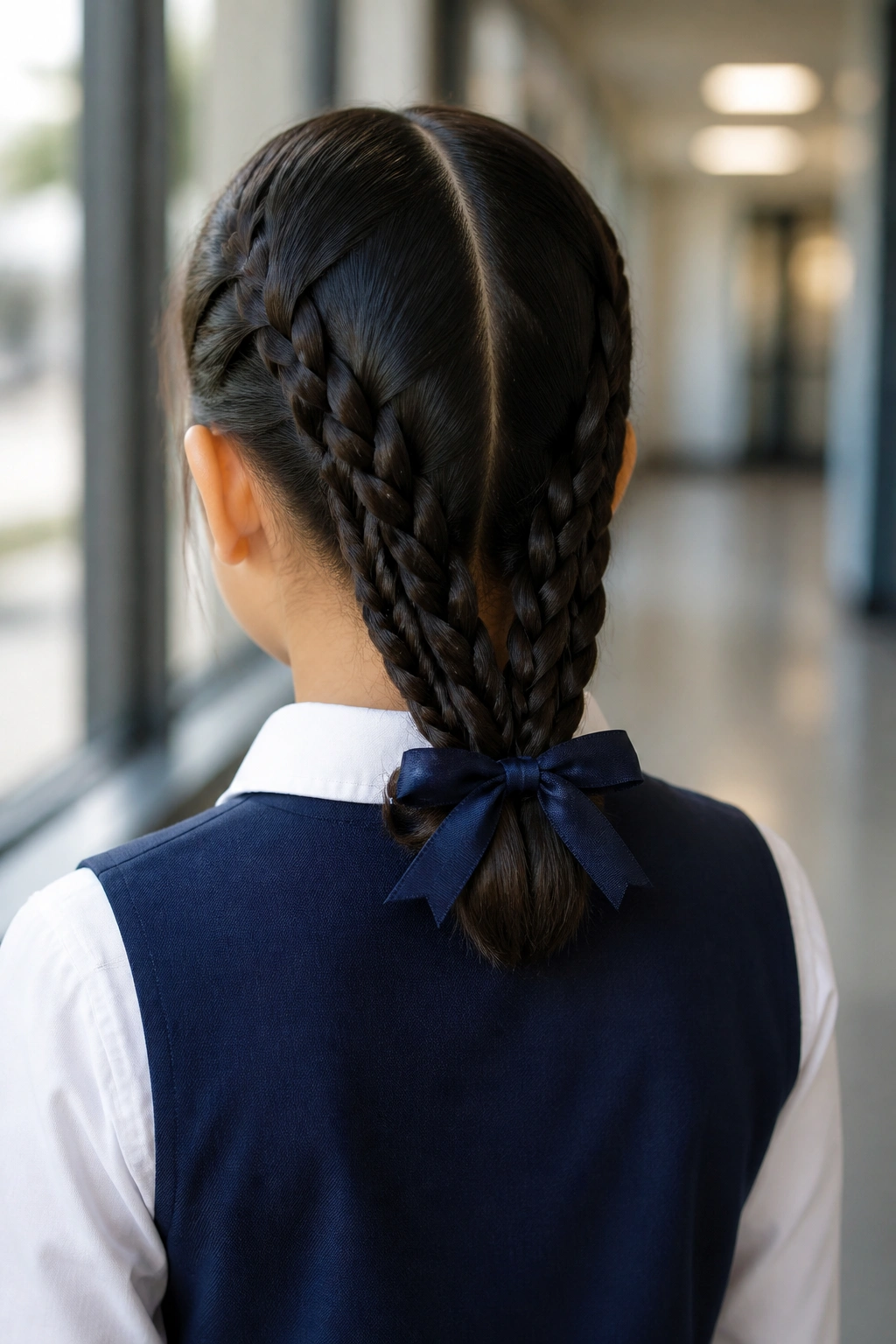
When all else fails, I come back to this one. Four low braids with a bow are simple, gentle, and easy to redo if the week gets chaotic. They are the kind of style that works on Monday morning and still makes sense by Thursday.
Low placement is the whole point. The braids sit near the nape, which keeps them comfortable against chairs, car seats, and backpack straps. A single bow at the back gives the style a finished look without making it feel overdecorated. If the child likes color, pick a bow that matches the uniform or one that pulls in a shade from the sweater or socks.
This style is also one of the easiest to adjust for different hair lengths. Shorter braids can be secured with small elastics and a bow clip. Longer braids can be tied off with ribbon or tucked into small low puffs. Either way, the look stays tidy.
A final practical note: sometimes the best school hairstyle is the one that leaves room for breakfast. That matters more than people admit. A neat set of four low braids does that job without asking for a dramatic morning.
