



Braided updo hairstyles for weddings solve a very practical problem: you want hair that stays neat through hugs, heat, dancing, and the awkward moment when someone leans in for a photo, but you still want it to look soft. Braids help because they give the style a built-in grip. Pins hold better in braided hair than in slippery loose hair, and that tiny bit of texture is often the difference between a bun that lasts and a bun that sags by dessert.
A wedding updo can go wrong in two opposite ways. It can be so stiff that the hair looks lacquered into place, or so loose that every strand escapes before the first toast. The sweet spot sits between those extremes. You want a shape that feels intentional at the crown, relaxed enough around the face to flatter real people instead of mannequins, and anchored well enough that veil combs, flowers, or pearl pins do not drag it down.
Braids also let you steer the mood. A low chignon feels classic. A halo braid reads romantic. A rope twist with a tucked roll looks neat and modern. That flexibility matters because wedding hair should work with the neckline, the fabric, and the amount of jewelry already in the picture.
Braids do the heavy lifting.
If you are choosing hair for a bride, bridesmaid, or a wedding guest with a dress that has one strong detail—lace, a dramatic back, big earrings, a high collar—start with the style that supports that detail instead of competing with it. The first braid worth a close look is the low chignon.
1. Braided Updo for Weddings: Low Chignon Under the Veil

A low braided chignon is the quiet workhorse of wedding hair. It sits at the nape, keeps the silhouette calm, and never fights a veil or a collar.
Why it stays neat at the nape
The braid runs along the head before it folds into the bun, so the base already has structure before the pins go in. That matters when you want the style to survive a long ceremony and a longer reception. The lower placement also keeps the neckline open, which is a gift if the dress has lace at the shoulders or a delicate back.
This is the style I reach for when the dress already has a lot going on. The hair should frame, not argue.
- The nape placement keeps the profile clean from the side.
- A braid feeding into the chignon gives bobby pins something to grab.
- It works well with fingertip veils, cathedral veils, and simple combs.
- Fine hair looks fuller once the braid is pancaked a little.
Tip: Keep the braid flatter at the crown if you want the face to stay open in photos. A little lift at the top is nice; a helmet shape is not.
2. Crown Braid Bun That Keeps the Nape Clean
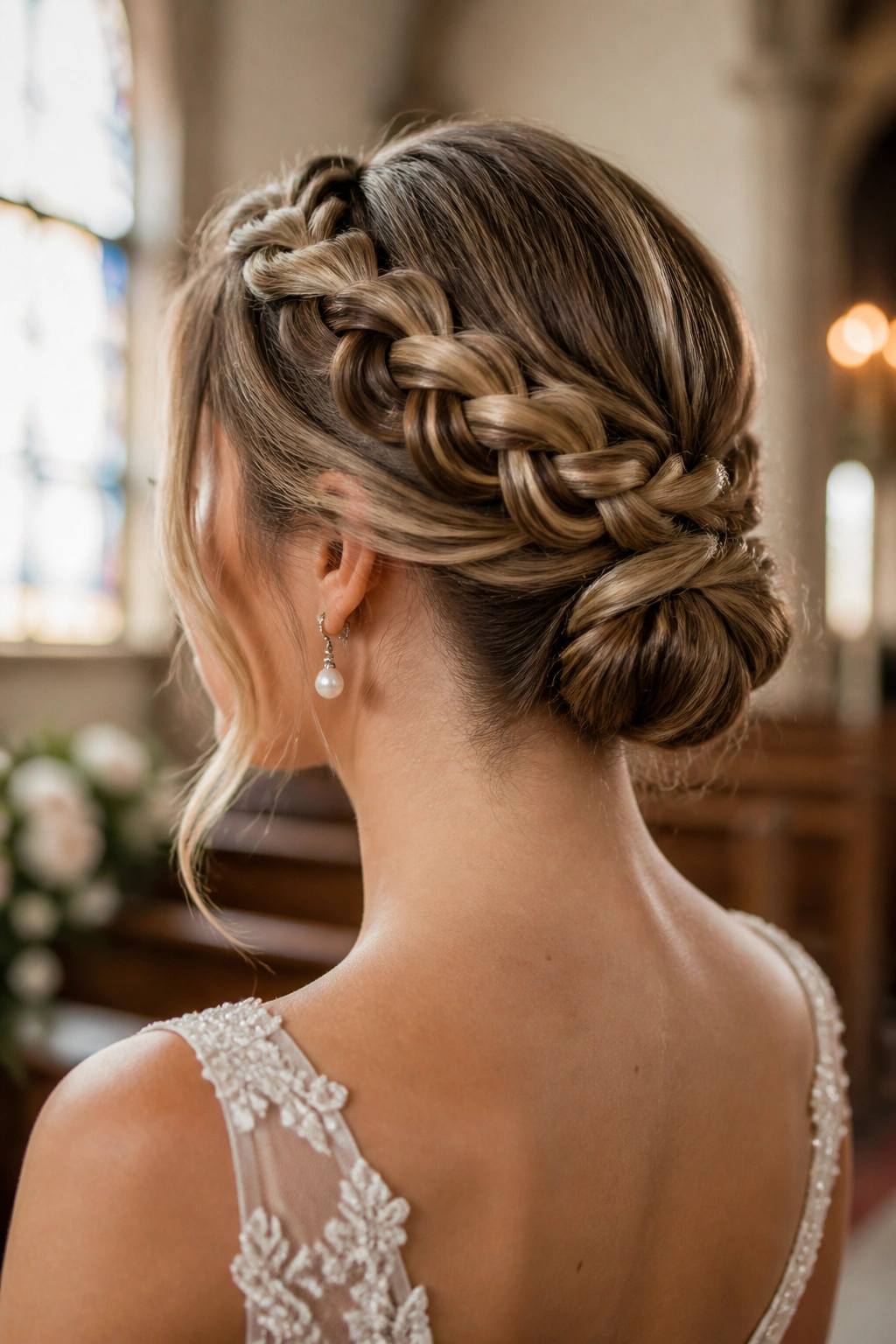
A crown braid bun looks polished without feeling severe, which is why I keep coming back to it for church weddings and formal receptions. The braid wraps around the head like a frame, and that ring of texture makes the whole style feel finished before the bun even goes in.
What makes this one work is the balance. The braid gives you detail at eye level, while the bun sits low enough to keep the back of the dress visible. If the gown has buttons, lace, or a clean satin panel, this style shows it off instead of covering it.
It also handles jewelry well. Drop earrings do not disappear into the hair, and a short veil can sit right under the braid without fighting the shape. The look is neat, but not severe. That is a useful distinction.
I like this braid for brides who want their hair to look styled from every angle. It photographs well from the front, the side, and the back, which sounds obvious until you look at how many wedding styles only work from one angle. This one does more than that.
3. Braided French Twist for a Formal Ceremony
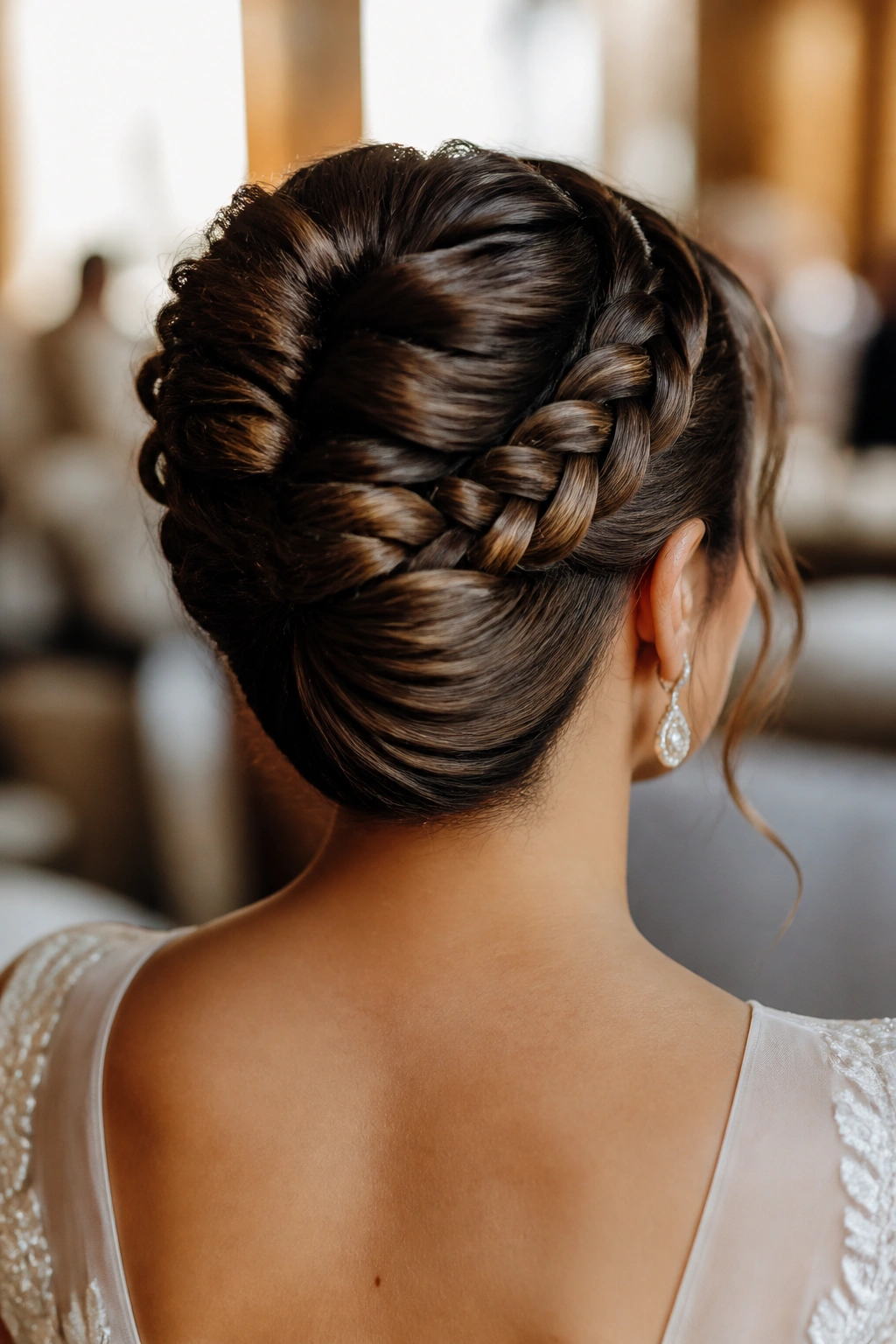
Can a French twist feel soft enough for a wedding? It can, if the braid runs into the roll instead of sitting on top like a separate piece. That is the whole trick. The braid should feel like part of the twist, not an extra decoration pasted on after the fact.
How to wear it without making it too severe
The best version starts with a braid at the crown or temple, then folds into the twist at the back of the head. A few softened edges around the face keep it from looking too sharp. If the dress has clean lines or a high neckline, this style gives you polish without adding bulk.
A pearl pin or two is enough. Anything more starts to fight the shape.
The French twist also suits older-school ceremony settings, especially when the bride wants something elegant that does not look trendy in a way she will regret in photos later. Keep the twist narrow and secure it with crossed pins, not one giant clip. The result should feel firm when you touch it and smooth from a few steps away.
4. Fishtail Halo Updo for Outdoor Wedding Vows

If the ceremony is outdoors and the wind has opinions, the fishtail halo updo earns its place fast. Fishtail braids hold tiny pieces of hair in a pattern that looks detailed even when the braid gets a little softer during the day. That matters when the air is moving and the schedule is not forgiving.
The halo shape keeps the braid around the perimeter of the head, then tucks the ends into a low bun or coil. It feels romantic without falling apart into fluff. A regular braid can look a little plain in this setup; fishtail gives the eye more to look at.
- The braid stays interesting from a distance and up close.
- The halo shape keeps hair off the neck, which helps in warm weather.
- The tucked bun at the back gives the style a stable center.
- It pairs nicely with small flowers or a narrow vine comb.
Use a light texture spray first. A fishtail braid is easier to grip when the hair has a bit of hold.
5. Waterfall Braid Into a Tucked Bun
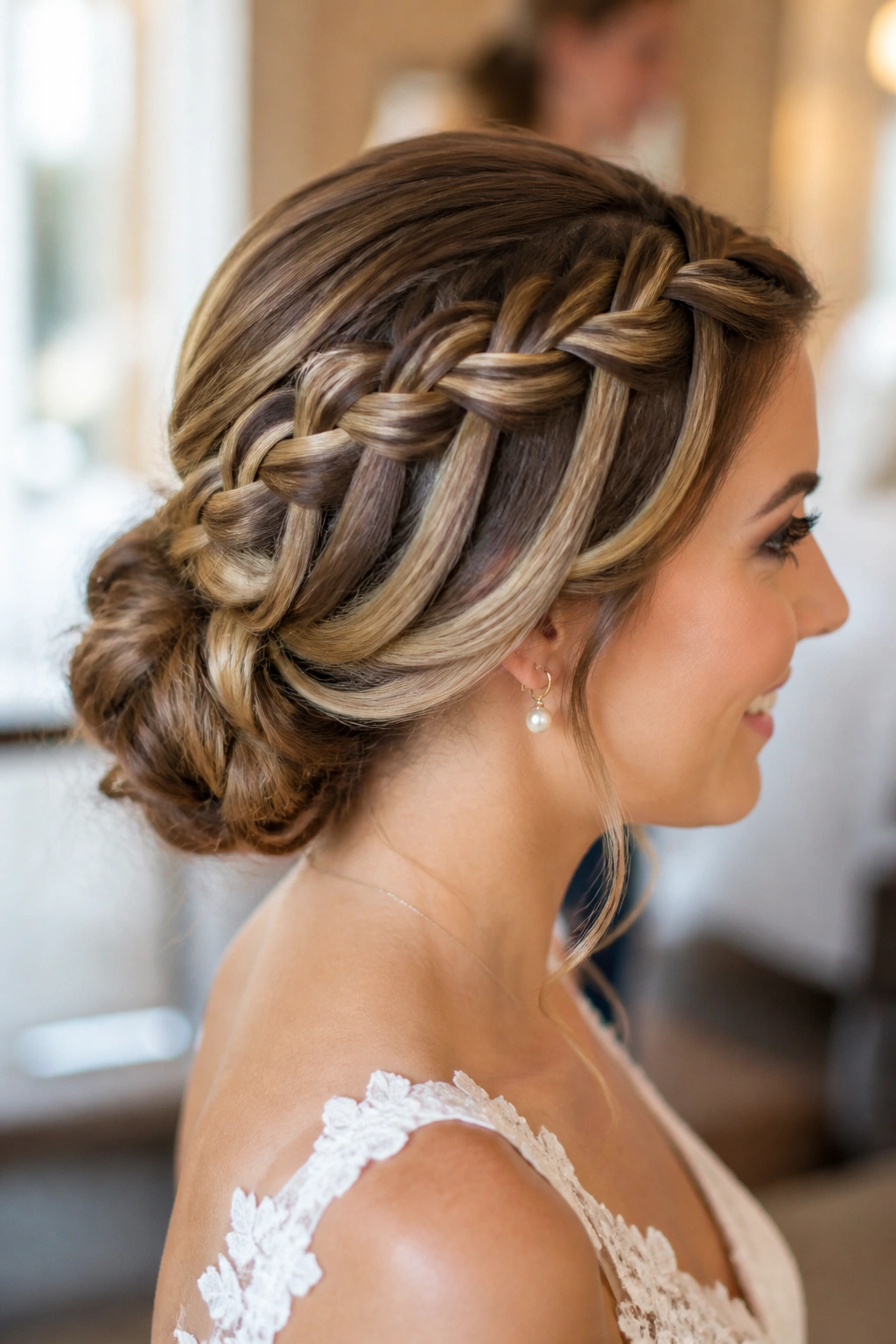
Waterfall braid into a tucked bun is the style for anyone who wants movement without loose hair hanging down the back. The braid releases sections along the way, which gives the surface a soft, ribbon-like look before everything gathers into the bun.
That softness is the point. A wedding updo does not need to be rigid to be formal. Here, the waterfall braid adds a gentle pattern at the crown and the sides, then the bun keeps the shape contained. The effect is pretty in a way that still feels controlled.
This style works especially well for medium to long hair because the dropped strands have enough length to show. On very fine hair, I would use a little more teasing at the roots before braiding, or the waterfall section can disappear in photos.
The tucked bun should sit low and compact. If it grows too large, it starts to look like a different hairstyle entirely. Keep the back smooth, let the braid do the decorative work, and leave the heavy styling to the dress.
6. Side-Swept Braided Knot for Off-the-Shoulder Dresses

Unlike a full crown braid, a side-swept braided knot leaves one shoulder open and keeps the look from swallowing an off-the-shoulder dress. That asymmetry is useful. It gives the eye a place to rest, and it stops the hair from competing with the neckline.
The braid usually starts near one temple, travels diagonally across the head, then folds into a knot just behind one ear or at the low back of the head. The diagonal line is what makes it interesting. Straight-back buns can feel blunt with this kind of dress; a side sweep feels more conversational.
I especially like it with dresses that have a single strap, a ruched bodice, or bigger earrings. The hair stays present, but it does not fill every inch of the frame. That is a good trade.
If the hair is long enough, keep a few softer pieces near the face and ear. If not, skip them. A clean side sweep can look sharper than a half-hearted strand that never settles.
7. Dutch Braid Crown Coiled Into a Low Bun
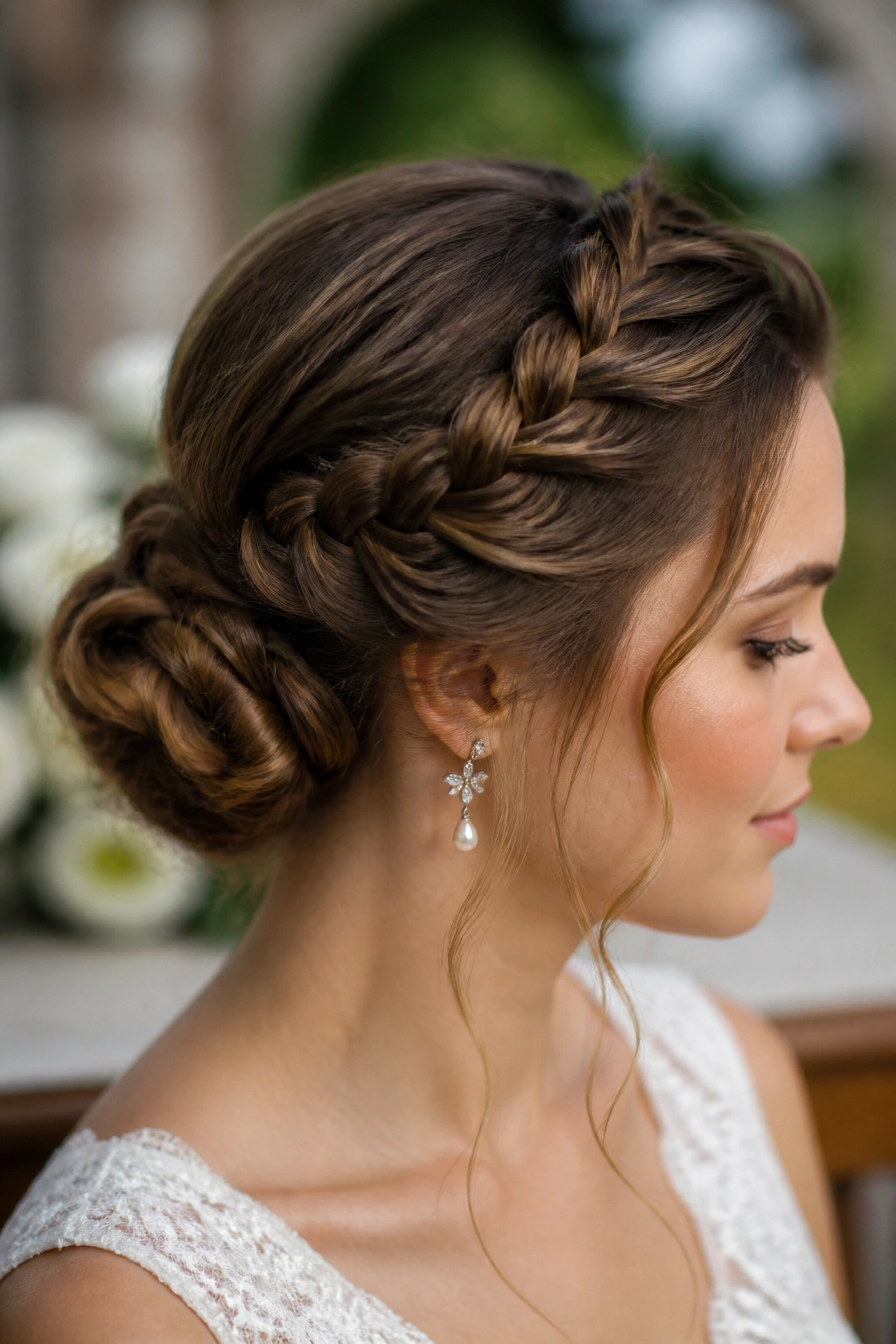
A Dutch braid crown coiled into a low bun gives you texture you can actually see. Because Dutch braids sit raised from the scalp, the pattern reads clearly even when the lighting is flat or the venue is dim. That is one reason this style keeps showing up in wedding hair boards.
What makes it hold its shape
The braid itself gives the style its structure before the bun ever starts. That means fewer pins and less guessing at the base. The crown braid wraps the head, then the remaining length coils into a low bun or tucked roll at the back of the neck.
- The raised braid is easy to spot in photos.
- The low coil keeps the nape tidy.
- It helps fine hair look fuller without heavy teasing.
- It holds decorative pins better than a smooth base.
Do not braid the entire head too loosely. The crown needs enough tension to stay put, even if you gently pull the edges later for softness.
This style suits brides who want a little texture but not a messy finish. It looks structured, and that is the appeal. Not stiff. Structured.
8. Braided Topknot for High Necklines

A braided topknot is the blunt answer to a high neckline. When the dress already climbs up the chest or neck, the hair should move up too. That frees the fabric, shows the line of the shoulders, and keeps the overall look from feeling crowded.
The braid usually starts near the hairline or crown, then loops into a knot at the top of the head. The updo reads clean and lifted, which helps if the dress has a dramatic collar, a halter shape, or a lot of beading near the chest. A low bun would fight that. A topknot works with it.
I like this one for brides who want a little modern edge without going full fashion editorial. The braid softens the topknot, so it does not look harsh. It also helps the knot stay secure, which matters when you plan to dance for more than one song.
Keep the hairline neat and the knot compact. A giant topknot can overpower the face, and that is not what you want on a day when the dress is already doing some of the talking.
9. Braided Updo for Weddings with a Fishtail Side Panel
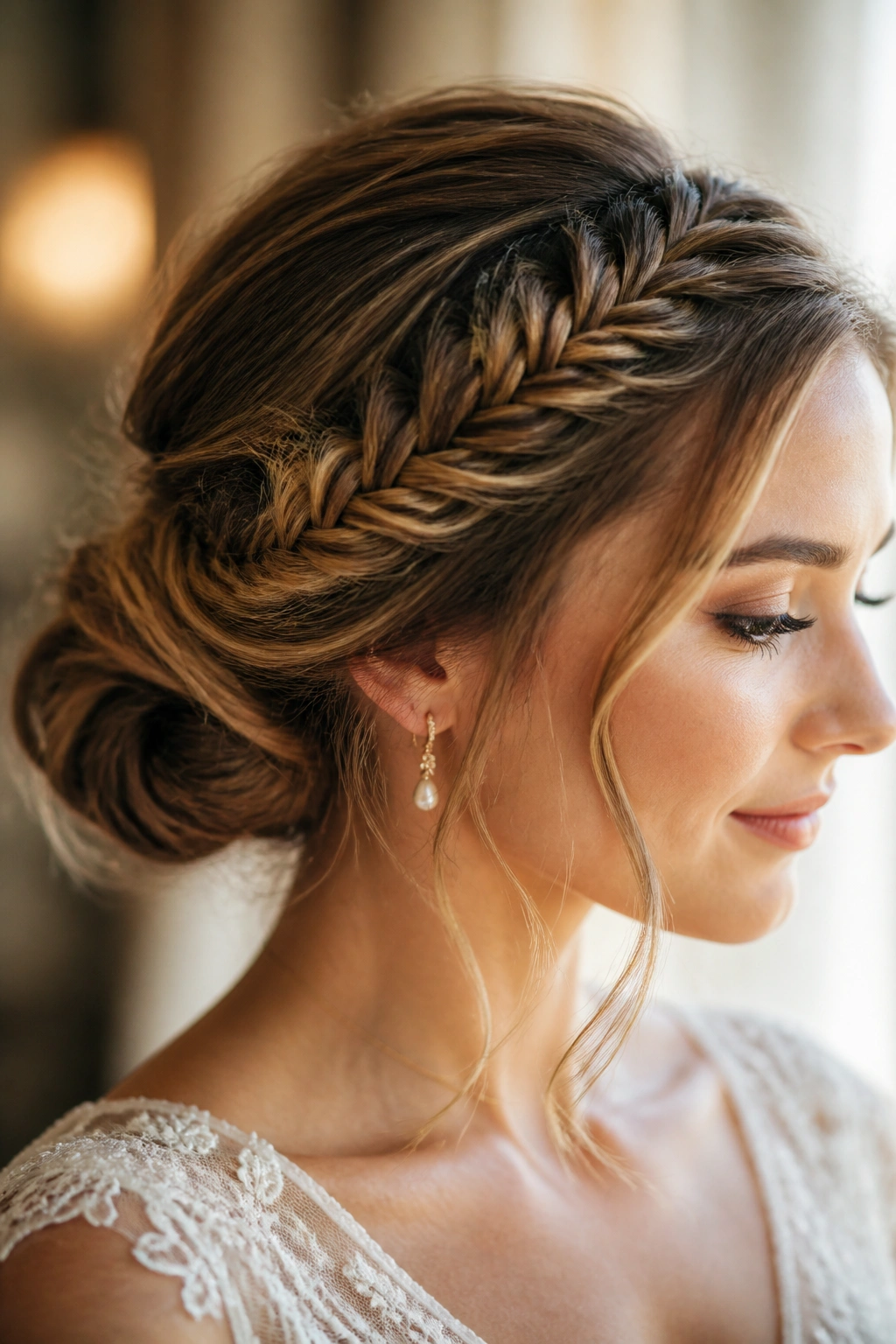
Why does a fishtail side panel still look interesting after you tuck it into a bun? Because the braid brings detail before it disappears. You get the texture along the temple and side of the head, then the rest of the hair settles into a lower knot or roll. The style gives you the best part of a side braid without leaving the ends loose.
How to keep it soft
Start the fishtail a little wider than you think you need. The first passes should sit snug, but not tight enough to flatten the head. Once the braid is secured, you can gently pull at the edges to make the sections look fuller and less sharp.
This style is a good match for brides who want one side of the face open for earrings or a veil comb. It also plays nicely with side-parted dresses and asymmetrical necklines. If you have strong cheekbones or a narrow face, the side panel adds width in a flattering way.
A small low bun at the back finishes the look without stealing attention. That is the sweet spot here. The braid gets the detail, the bun gets the stability, and the dress gets the spotlight.
10. Rope-Braid Roll for Sleek Satin Dresses
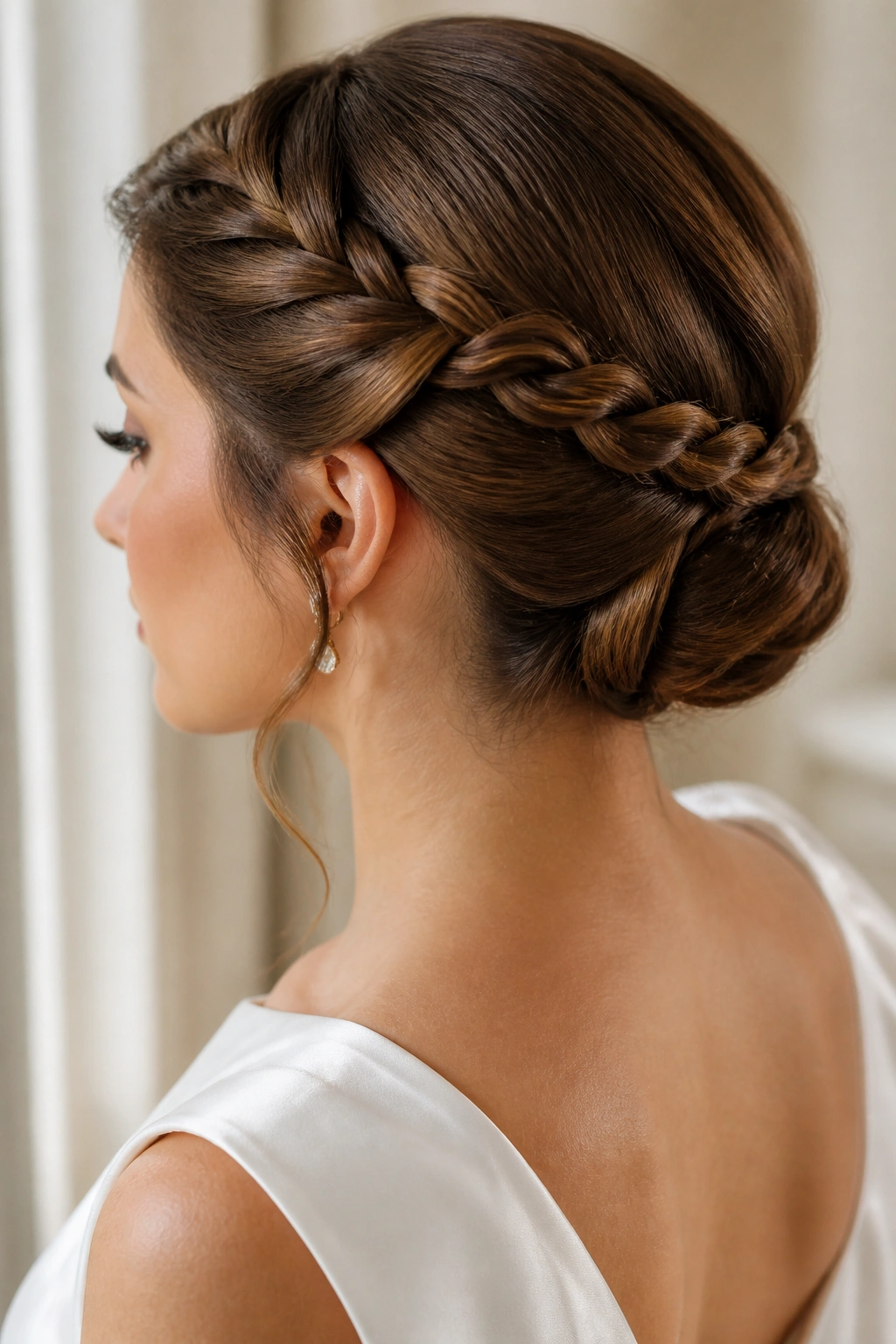
A satin dress already brings the shine. Hair should bring line and shape instead of more gloss. That is why a rope-braid roll makes sense with smooth fabrics. Two twisted sections sweep back, coil into a roll, and leave the surface looking neat without turning fussy.
The rope braid has a cleaner feel than a thick plait. It is also fast to read in photos, which matters when the dress fabric is reflective and the styling needs to stay crisp. If the wedding is formal and the gown has a strong architectural shape, this updo fits that mood.
- Twists keep the silhouette smooth.
- The roll sits low enough for a veil comb.
- The style works well with a center part or a side part.
- A satin ribbon wrapped around the base can match the dress without adding clutter.
Keep the roll narrow. A rope braid can swell if you pull it too much, and then the whole thing loses its clean edge.
11. Braided Gibson Tuck with a Vintage Feel

This one has old-school charm without looking like a costume piece. A braided Gibson tuck sits lower than a bun, with the hair rolled inward so the ends disappear into a soft fold. When a braid feeds into that fold, the shape gets enough detail to feel bridal instead of plain.
The style suits lace sleeves, structured bodices, and dresses that borrow a little from vintage shapes. It also works on hair that is not wildly long, which is nice because not every wedding updo needs extensions and extra fuss. The tuck gives the back of the head a smooth line, and the braid keeps the front from feeling too blank.
I like it when the bride wants polish but does not want the hair to dominate the room. That is a real preference, not a compromise. Sometimes the best wedding hair is the one that lets the dress, the bouquet, and the face do the talking.
A pearl comb or a slim barrette can sit right above the tuck. Keep it modest. The hairstyle already has enough character.
12. Infinity Braid Bun for a Polished Finish

Unlike a standard three-strand braid, the infinity braid bun gives the eye a little puzzle. The weaving pattern creates loops that look more intricate from close up, which is useful if you want the hair to reward a second glance without shouting for attention from across the room.
The braid can run along one side, across the back, or around the crown before it folds into a bun. The shape feels deliberate, almost tailored, and that makes it a smart choice for a sleek dress or a minimalist gown. A very embellished gown does not need this much braid detail, though. The two can start arguing with each other.
This style is best for someone who likes a neat finish with a little visual interest. It is not the softest option in the list, and that is fine. Some brides want the hair to look controlled and polished, with the braid serving as the main detail rather than a romantic afterthought.
If you want a sharp line with one interesting twist, this is the one I would test first.
13. Four-Strand Bridal Bun with Extra Texture

A four-strand braid gives the bun a richer surface than a regular plait. The pattern looks ribbed and full, which is handy when the hair itself is fine or the dress needs a little more visual weight near the back of the head.
How to keep four strands from turning into a knot
The easiest way is to section the hair cleanly before you start. Clip the pieces away from each other so you do not lose track halfway through. Once the braid is done, wrap it into a compact bun and pin the base in a crossed pattern so the weight spreads out.
- The extra strand makes the braid look denser in photos.
- The pattern works well with highlighted hair because the color shifts show up.
- A low bun keeps the style from feeling overly busy.
- A matte finish is better than a shiny one here.
Take your time with the sectioning. This braid looks much better when the pieces are even from the start.
I like this style for brides who want texture but do not want anything loose around the face. It has a bit of craft to it, and that craft reads well in a wedding setting.
14. Sleek Center-Part Braided Bun for Wedding Photos
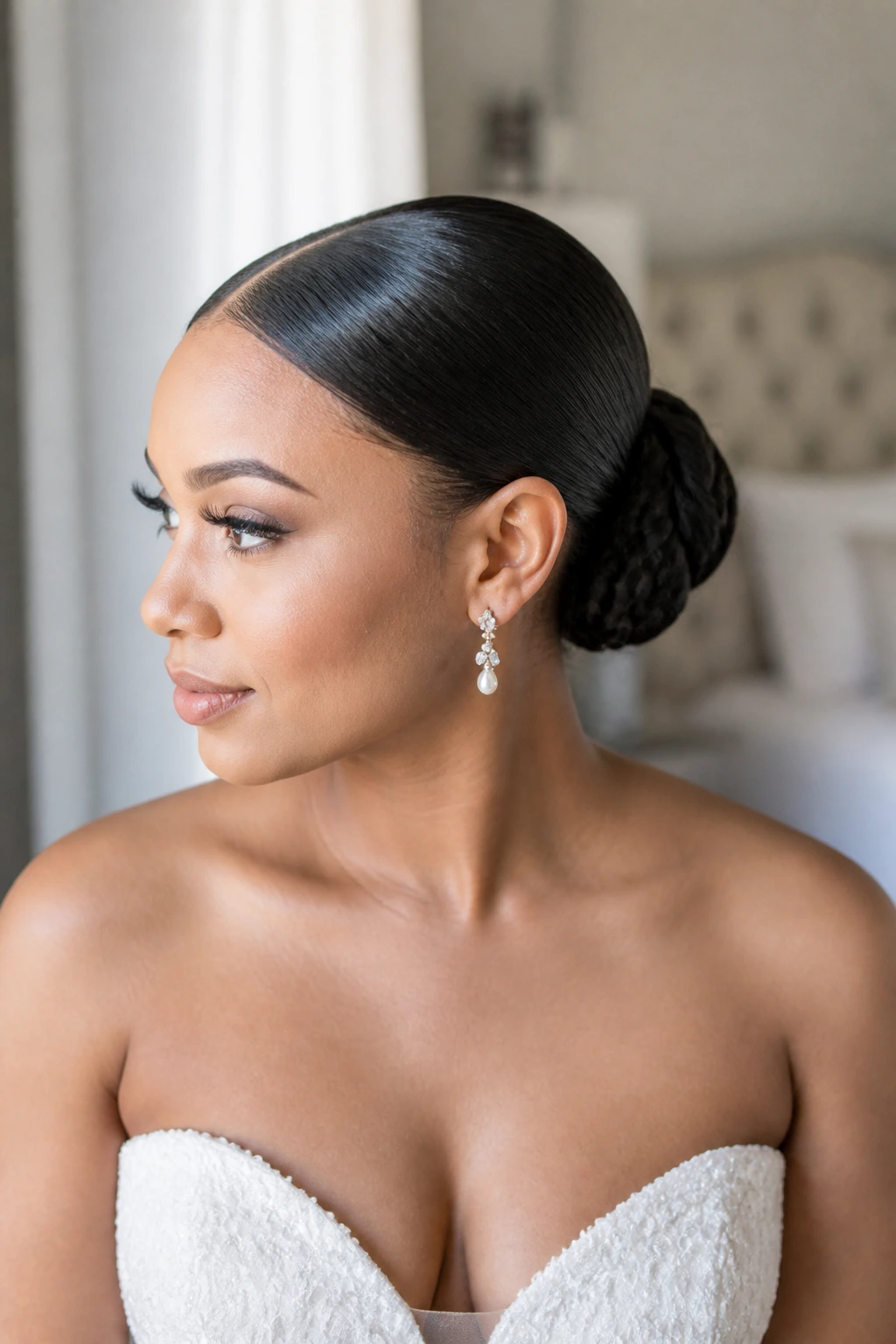
If the dress is clean-lined, this is the one that keeps the look from feeling plain. A sleek center part gives the face symmetry, and the braid pulled into a low bun adds enough detail to stop the style from looking flat.
It is tidy. That matters.
The key is control at the hairline. A little shine serum, a fine-tooth comb, and careful pinning keep the part crisp, while the braid adds texture where the eye needs it most. I would use this for square necklines, minimalist gowns, or any dress where the fabric already has the drama. The hair does not need to compete.
This style also photographs well from the front because the center part creates a strong line, and strong lines are useful in wedding portraits. If the bride wears a bold lip or statement earrings, the hairstyle stays in its lane and lets those details take over.
It is not the softest braid on the list. That is the point. Clean can be a choice, not a backup plan.
15. Milkmaid Braided Updo for Thick Hair

Does a milkmaid braid hold up when the hair is heavy? Yes, if you set the anchors right. Thick hair actually helps this style because the braid has enough substance to sit around the head without looking thin or stretched.
How to stop the crown from slipping
The first braid needs a secure base, and the second braid should sit close enough to the scalp that the whole crown feels like one shape. Use pins that cross each other under the braid, not just one pin dropped in and hoped for. That little detail matters on a long wedding day.
- Thick hair gives the crown more visual fullness.
- The wrapped shape keeps the neck clear.
- It works well with simple veils and flower crowns.
- The style feels romantic without needing a lot of extra pieces.
Keep the braids balanced in size. If one side is too thick and the other too thin, the whole crown tilts.
I reach for this style when the hair needs to feel secure and a bit soft at the same time. It has a slightly storybook look, but it still stays practical.
16. Braided Updo for Curly Hair with Pinned Coils
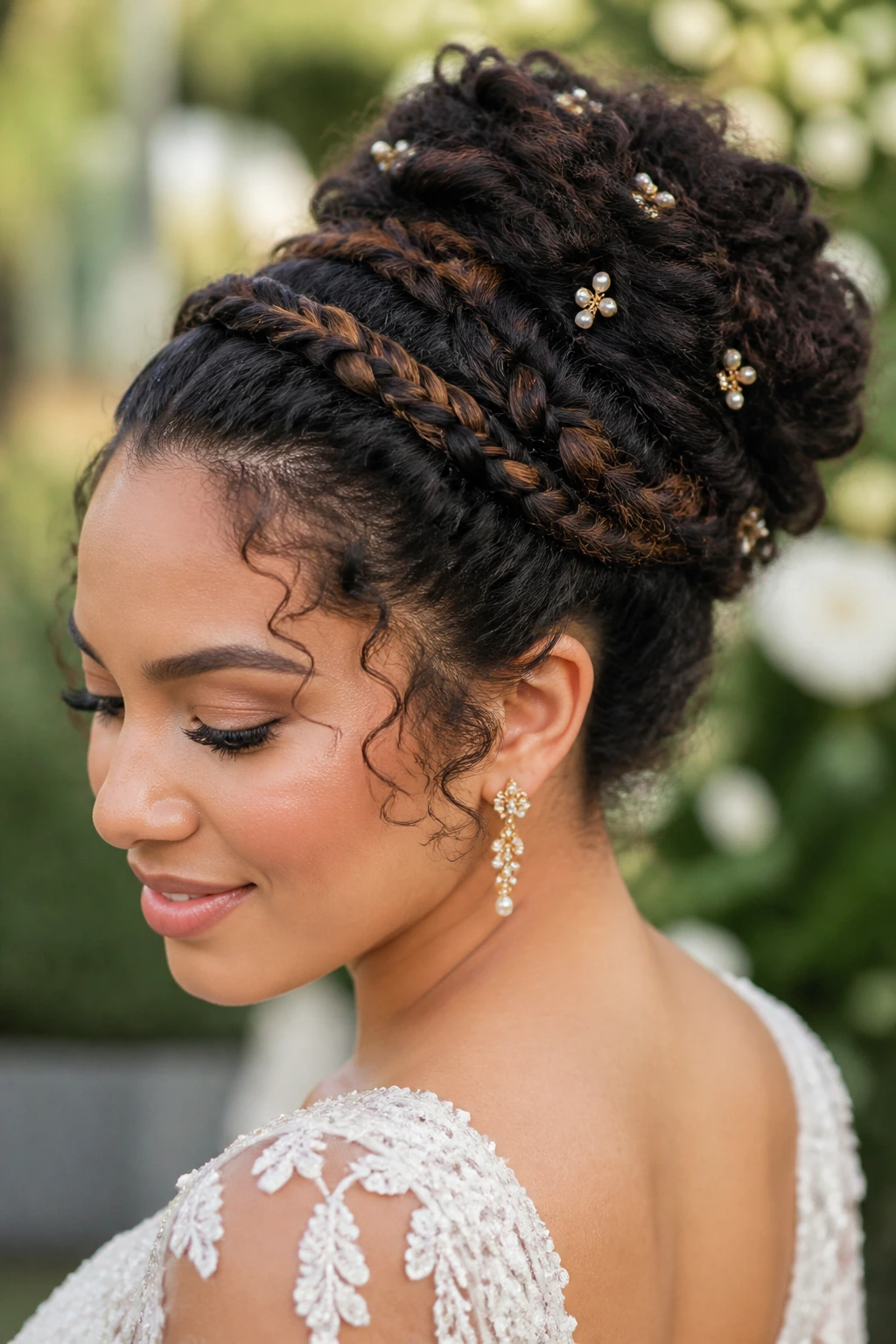
If you have curls and you do not want them brushed into a fog, this one makes sense. Braided updo hairstyles for weddings can be much kinder to curly hair when the braid works with the curl pattern instead of flattening it out first.
The braid gives structure through the top or sides, while the curls stay present in the bun or coil at the back. That keeps the hairstyle from looking forced. I also like leaving a few curl pieces near the hairline or temple when the dress allows it. Those curls soften the whole look and keep the style from feeling too tight.
- Braiding only part of the hair helps preserve curl shape.
- Pinned coils hold better than brushed-out ends.
- A curl cream or light gel can tame frizz without making the hair stiff.
- Small decorative pins look better than large clips here.
Pin the curls where they already want to sit. Fighting the curl pattern usually leads to puffing later.
This is one of the most flattering wedding styles for textured hair because it respects what the hair is doing naturally. That is the part people get wrong all the time.
17. Braided Low Roll with a Veil-Friendly Base
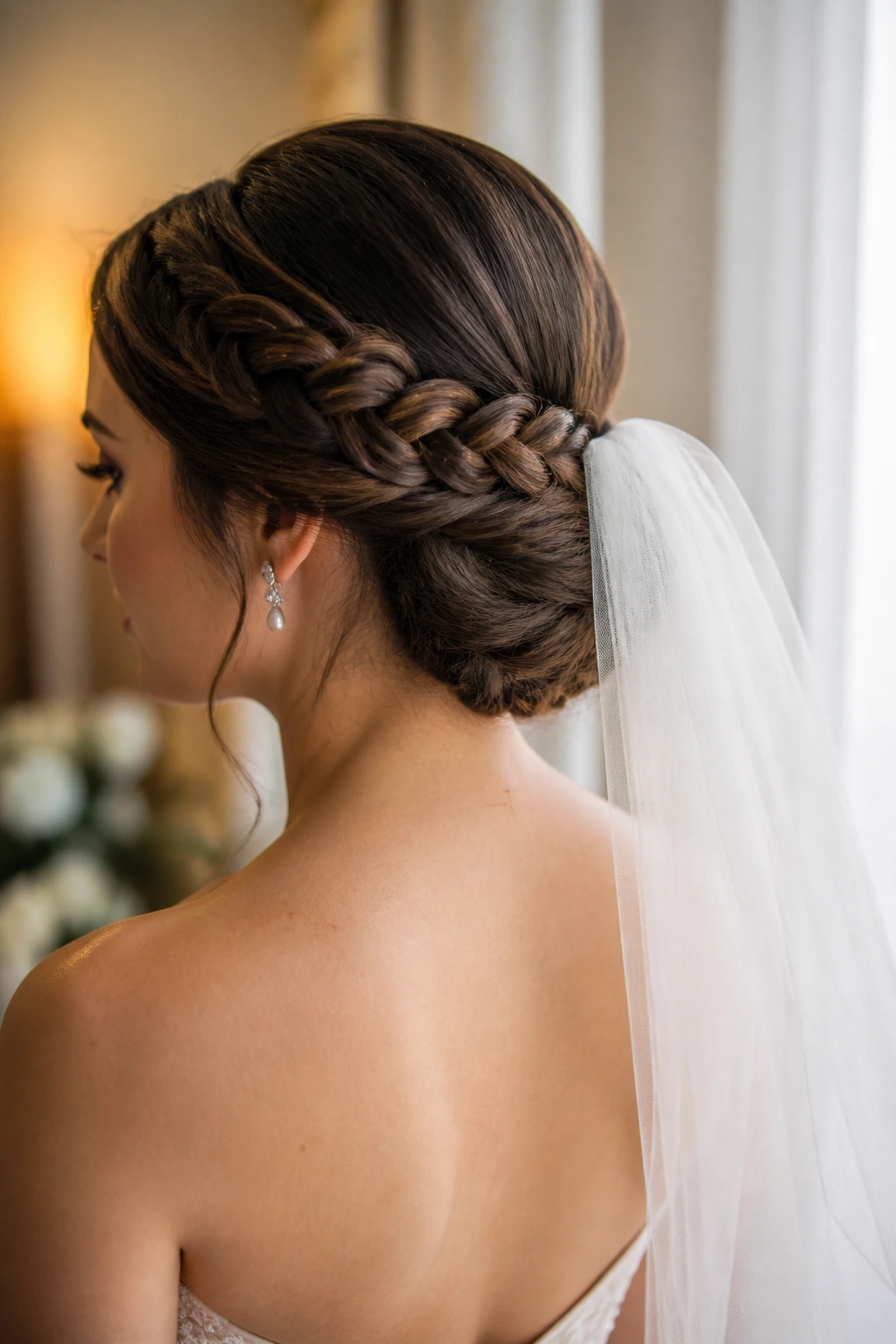
A braided low roll is one of those styles that looks simple until you put it on with a veil, then you understand why stylists keep using it. The base sits low and compact, so the veil comb can hide cleanly without pulling the shape apart. That is a small thing, but it saves a lot of frustration.
The braid runs into a smooth roll at the back of the head, usually just above the nape. The finished profile is neat from the side, which matters when the photographer spends half the day shooting from the shoulder. The shape also works if the dress has buttons, because the roll stays narrow enough to show them off.
I prefer this style when the bride wants the veil to be part of the outfit instead of a separate prop. The roll gives the veil a place to rest, and the braid keeps the whole thing from feeling plain.
Clean at the base. Soft around the face. That combination holds up better than people expect.
18. Pearl-Pinned Braided Bun for Simple Dresses

Unlike flowers or a jeweled comb, pearl pins let the braid stay the star. That is why this style works so well with simple dresses made of crepe, silk, or satin. The braid brings the texture, the bun brings the shape, and the pearls only add a small flash of light.
The bun itself can be low or mid-height, but I would keep the pearl placement sparse. Three to five pins are usually enough. Too many, and the hair starts to look like it is trying too hard. A simple dress needs a controlled finish, not decoration piled on decoration.
This is a smart choice when the bride likes clean clothing lines but still wants something bridal in the hair. Pearls are friendly that way. They nod to the wedding without stealing the scene.
It also ages well in photos. Pearls do not feel tied to a short-lived trend, and that can matter more than people admit when they look back at wedding pictures later.
19. Braided Updo with Hidden Padding for Short-to-Medium Hair

Short-to-medium hair can still pull off a full-looking braided updo, and hidden padding is the reason. A small bun pad or mesh filler gives the braid a bigger base, which means the final shape reads fuller without needing extra length. That is useful when the dress calls for an updo but the hair stops around the shoulders.
How the padding changes the shape
Place the padding where the bun will sit, then wrap the braid over it so the support disappears under the hair. The surface should look like one continuous style, not a fake donut with hair draped over it. That is the mistake to avoid.
- A padded base gives the bun more height and width.
- Smaller braids can cover the form neatly.
- The style holds better when the hair is not too soft.
- Matte pins help hide the edges of the padding.
Use padding to build shape, not size for its own sake. The goal is balance, not a giant bun.
This approach is honest and practical. It lets shorter hair meet the formality of a wedding without pretending to be something else.
20. Braided Updo with Floral Accents for Garden Ceremonies

Fresh flowers can be lovely, but only if the braid can carry them. A braided updo with floral accents makes the most sense for garden ceremonies, outdoor vows, and dresses that already lean soft. The braid gives the flowers a base, and the flowers give the braid a little life.
I like small blooms better than large ones here. Tiny roses, wax flowers, baby’s breath, or a single sprig of greenery usually look cleaner than a cluster that swallows the hairstyle. The braid can be low, swept to one side, or wrapped into a bun; the main thing is that the flowers should look tucked into the style, not perched on top of it like a separate bouquet.
The best version feels balanced from every angle. From the front, you should still see the face and earrings. From the back, the braid and flowers should sit together as one shape. From the side, the dress neckline should still have room to breathe.
Small flowers. Strong braid. That is the whole trick.
