



A good braid has to do more than look cute in a selfie. The best braid styles for teen girls need to survive a school day, a sports practice, a bus ride home, and maybe a last-minute plan after dinner without turning into a frizzy mess.
That is why protective styles matter so much. A braid that keeps hair tucked away can save time, cut down on daily heat styling, and make mornings feel less chaotic. But there is a catch: if the style is too tight, too heavy, or left in too long, the hairline pays for it. Fast.
The details matter more than people think. Part size changes the whole look. Braid size changes how long the install takes. Even the way the ends are finished — beads, curls, clear elastics, sealed ends — can make one style feel playful and another feel polished.
So the real trick is not finding “one braid that works.” It is choosing the right braid for the week you actually have, the hair you actually wear, and the amount of upkeep you are willing to do before first period. Start with the one that fits the day-to-day, and the rest gets easier from there.
1. Knotless Box Braids That Sit Light and Move Easily
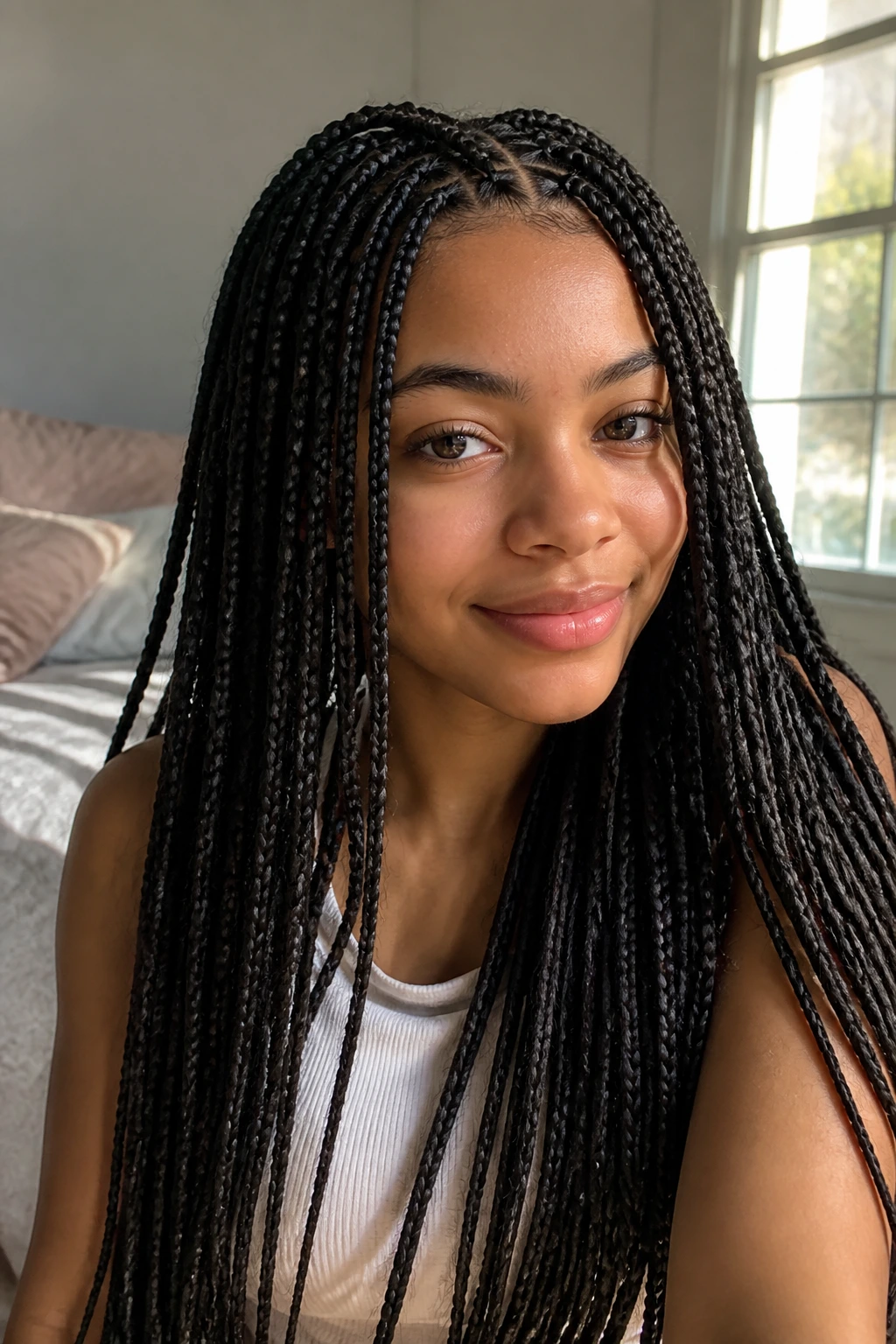
Knotless box braids are the style I reach for when the goal is less pulling at the root and more movement through the lengths. They start with your natural hair first, then the added hair gets fed in gradually, so the top looks smoother and feels lighter than a traditional knot.
That lighter feel matters. Teen girls do not need a braid that fights the scalp every time they turn their head. Knotless braids usually sit flatter, grow out cleaner, and feel easier to wear for long stretches if the install is done with a gentle hand.
Why They Work So Well
The neat part is that they still give you the full braid look — long, neat, easy to style into buns or half-up styles — without that hard bump at the base. If you want a style that looks polished but does not scream “I sat in a chair for seven hours,” this is a strong pick.
They are also forgiving. A little frizz at the root is less obvious than it is with sharper, chunkier braid styles. And that is nice, because real life happens.
A few things help:
- Ask for small to medium parts if you want the style to last longer and feel lighter.
- Keep the added hair weight balanced. Heavy braids at the front get annoying fast.
- Use a satin bonnet at night so the braids do not rough up against cotton pillowcases.
Best for: school weeks, busy schedules, and anyone who wants a braid that feels soft around the hairline.
2. Classic Box Braids With Clean Parts and Bead Ends

Classic box braids still have a place, and a strong one. They give a sharper, more structured look than knotless braids, and that crisp root area can feel bold in a way that some girls really love. If knotless braids are the easygoing friend, classic box braids are the one who walks in looking put together without trying too hard.
I like them most when the parts are clean and the sections are even. The square parting is half the style. If the parting is messy, the whole look goes off, no matter how pretty the braid ends are.
Beads at the ends can make the style feel younger and more fun, especially with clear, black, or wood-toned beads. Just do not overload the ends so much that the braids swing like wet rope. A little movement is good. Too much weight gets irritating.
A simple way to decide between classic and knotless:
- Choose classic box braids if you like a firmer root and a more defined braid pattern.
- Choose knotless if you want less tension and a flatter base.
- Choose bead ends if you want a playful finish that works with casual outfits and dressy ones.
They also pair well with side parts, center parts, and even colored rubber bands if the school dress code allows it.
3. Triangle-Part Braids That Give the Whole Style Edge
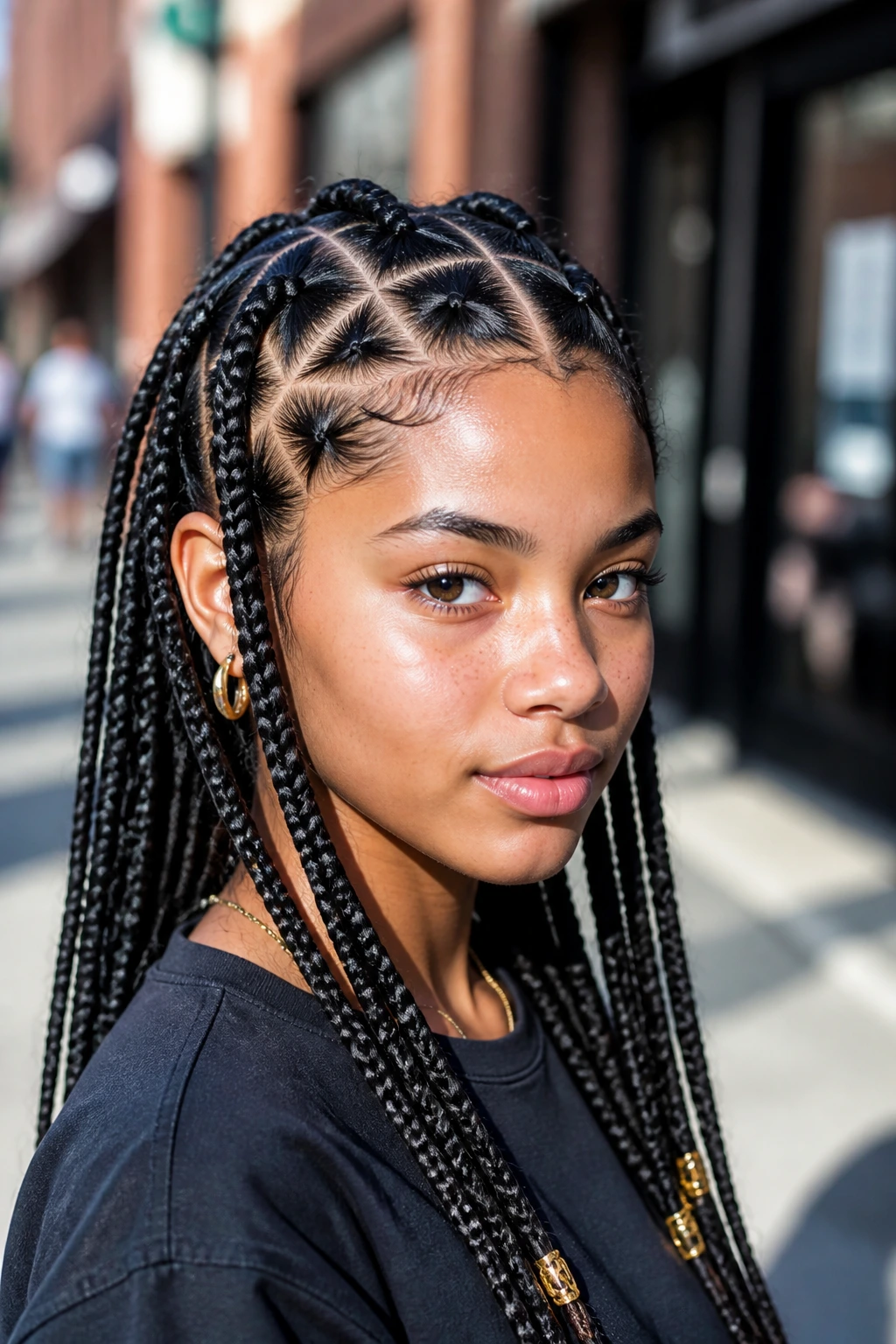
Why do triangle parts look so different from square ones? Because the parting changes the geometry before the braid even starts. Triangle-part braids keep the same protective feel as box braids, but the section shape gives the scalp pattern more movement and edge.
That tiny change makes a bigger difference than people expect. Triangle parts break up the grid look, so the style feels more fashion-forward right away. If square parts feel too standard, triangle parts are the cleanest way to switch things up without changing the braid itself.
How to Ask for the Parting
Tell the stylist you want the braids medium or small with triangle parting and a neat front hairline. The sections should be crisp, not huge. Huge triangles just look bulky. Small, even triangles give the best visual rhythm.
This style works especially well with knotless braids or waist-length box braids. It also looks good with one accent braid near the front if you want a little detail without crowding the scalp. That is the sweet spot.
If you want the style to stay fresh:
- Use a rat-tail comb for part touch-ups only if needed.
- Sleep with a satin scarf tied snugly at the edges.
- Keep product light so the triangle shapes do not get clogged with buildup.
Triangle parts are one of those small choices that make a braid feel custom. They are worth asking for.
4. Boho Knotless Braids With Soft Curly Pieces
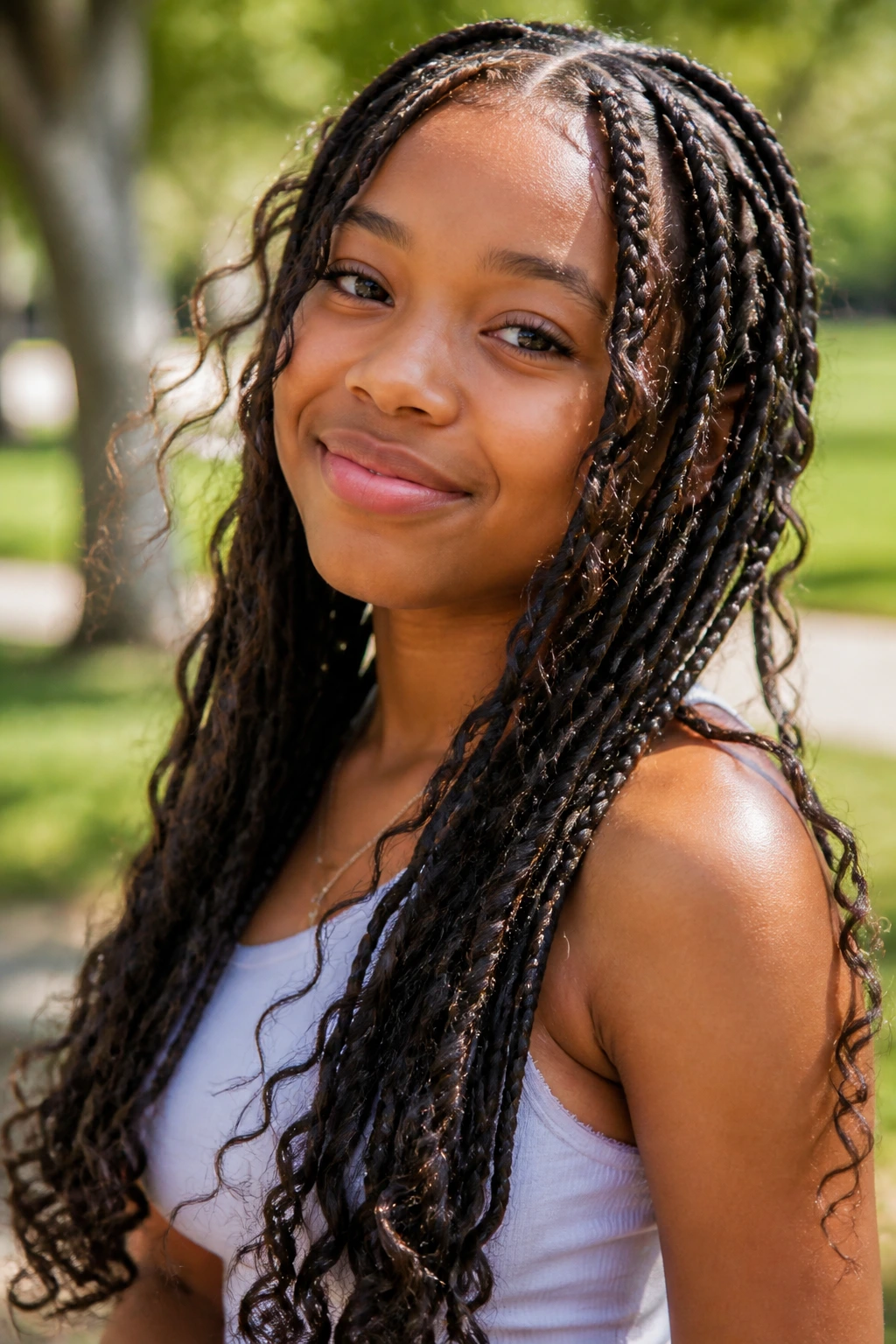
A few loose curls can change the whole mood of boho knotless braids. The style keeps the neat base of knotless braids, then breaks up the length with curly or wavy pieces left out here and there. The result is softer, less uniform, and a little more relaxed.
That looseness is the point. Boho braids look better when they are a little imperfect. The curls give movement, especially when the rest of the braid is long and straight. They also keep the style from feeling too serious.
I always think of this style as the one for girls who want braids but do not want a strict braid look. It works with school clothes, yes, but it also looks good with earrings, gloss, and a hoodie that fits right. The contrast is the charm.
A few practical notes help:
- Curly pieces frizz faster than the braid itself, so wrap the hair at night.
- Keep mousse light and focused on the braid lengths, not the scalp.
- If you do not want extra volume, ask for fewer curly pieces rather than more.
It is softer. It moves. And it looks good when the wind catches it.
5. Feed-In Cornrow Ponytails That Stay Sleek All Day
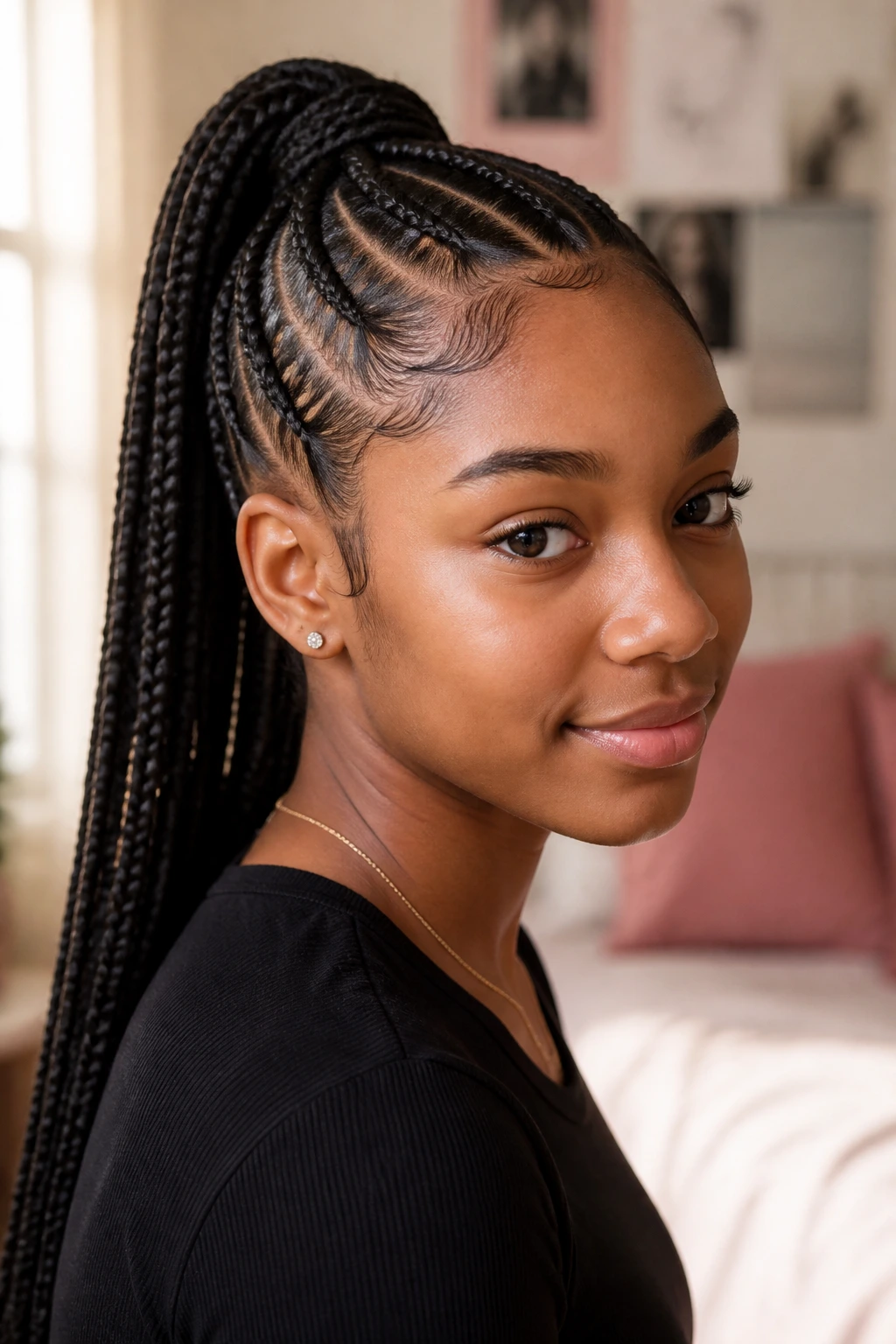
Feed-in cornrow ponytails are the closest thing to a hair reset button. The braids start close to the scalp, then extra hair gets added gradually so the base stays smooth and the ponytail can sit high, low, or dead center depending on the mood.
This style is a favorite for a reason: it keeps hair off the neck, stays neat under a hoodie, and holds up well through sports or dance practice. A good feed-in ponytail can look polished on Monday and still look decent by Friday if the install was not too tight.
The trick is balance. If the cornrows are pulled too hard, the whole style becomes a headache. If they are too loose, the ponytail loses its sleek shape. There is a middle ground, and a good stylist knows how to find it.
It also works for girls who like a cleaner face frame. A high ponytail lifts the features. A low one feels calmer and a little more grown. Either way, the braid pattern does the heavy lifting.
If you want this style to last:
- Ask for medium tension at the roots.
- Keep scalp oil light and use it sparingly.
- Wrap the ponytail in a silk scarf at night so the base stays smooth.
It is neat, practical, and honestly hard to beat on a packed week.
6. Stitch Braids With Sharp Part Lines

Regular cornrows and stitch braids are cousins, but they do not read the same. Stitch braids have those clearly marked horizontal or curved part lines that give the scalp a graphic, almost ribbed look. The braid itself is still close to the head, but the parting makes the whole style look sharper.
That is why people notice stitch braids from across a room. They carry more visual detail than simple straight backs, and that detail does the talking. If a teen girl likes clean lines and a more dramatic braid pattern, stitch braids are a strong choice.
They are especially good when the braid count is moderate. Four to eight braids often looks cleaner than cramming in too many tiny ones. The style needs space to show off the lines. Cramming it gets messy fast.
They also hold up well with ponytails, buns, and long hanging ends. Add cuffs if you want a little shine, but do not bury the parting under too much decoration. The line work should stay visible.
Best use cases:
- photo days
- special events
- school styles that still feel sharp
- anyone who likes structure more than softness
If regular cornrows are the plain white tee, stitch braids are the one with a crisp seam and a better fit.
7. Lemonade Braids Swept to One Side
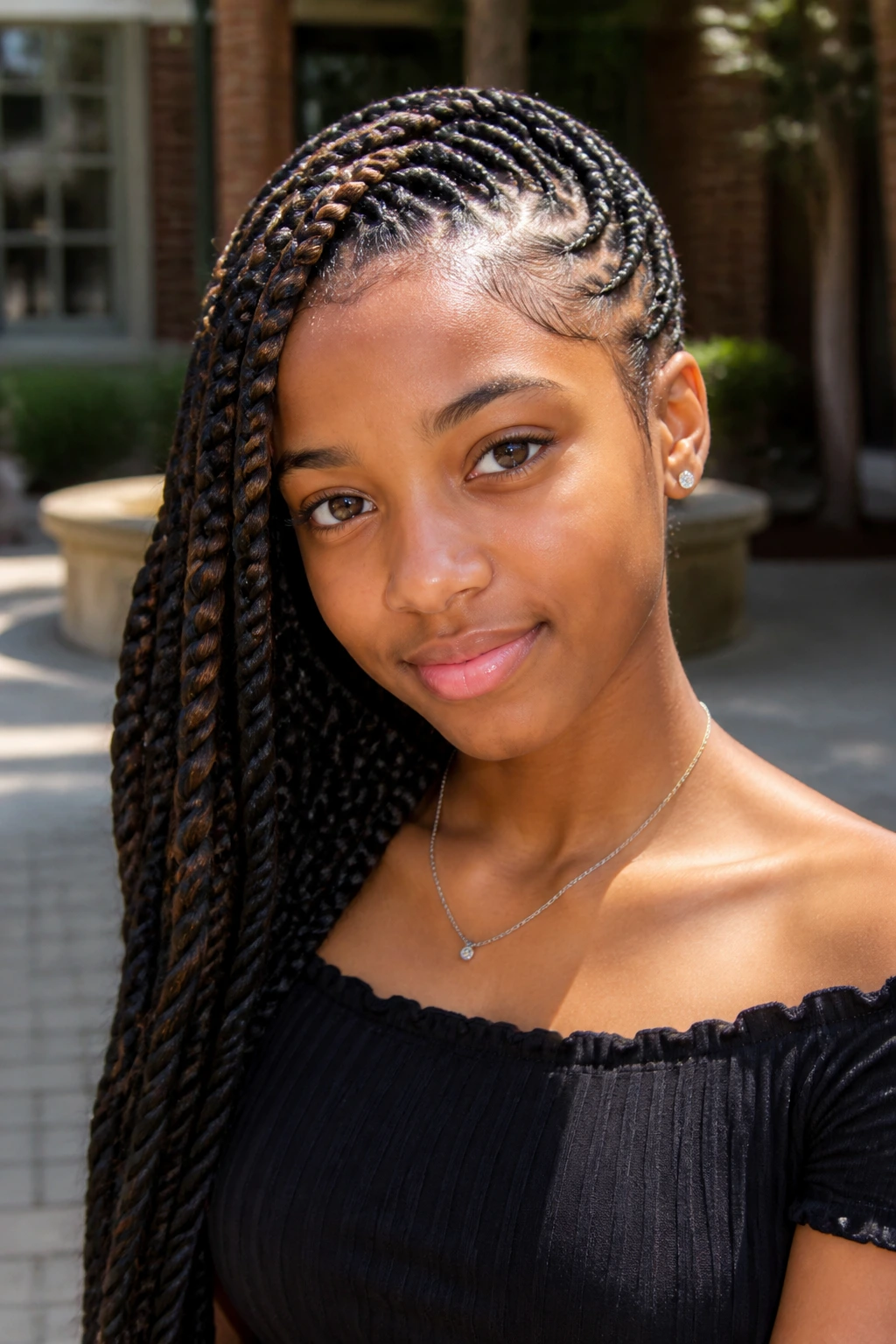
Lemonade braids are for girls who like movement in one direction. The braids sweep to one side, which opens up the face and gives the style a slanted, confident feel that straight-back styles do not always have. It is still a protective style, but it has more attitude.
Why It Works
The side sweep gives the hairline a softer visual break. Instead of all the braids pulling straight back, the pattern leans, which can make the style feel lighter around the face. That matters more than people think, especially if you wear glasses or like bold earrings.
Best Add-Ons
- Small gold cuffs on a few braids
- Thin thread wrapping near the ends
- A middle-size part to keep the sweep balanced
What to Watch For
Do not let the side closest to the part get overpacked with hair. That side takes the visual weight, and if it is too bulky, the whole braid line loses its shape. The style also looks best when the braids are the same thickness all the way down. Uneven ends make the sweep look accidental instead of styled.
This is a style with personality. It is one of the best braid styles for teen girls who want something neat, but not boring.
8. Fulani Braids With a Center Braid and Side Details
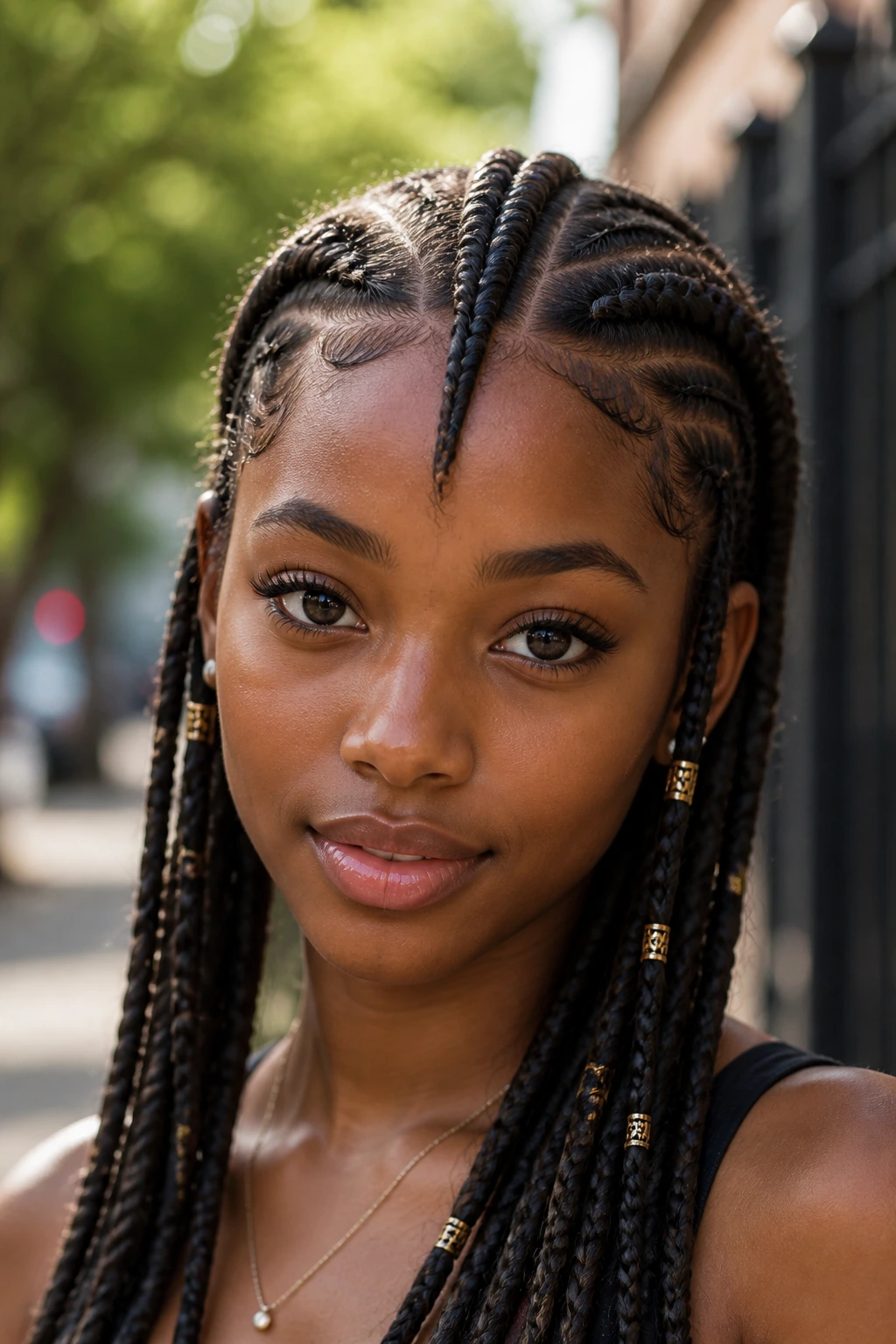
Fulani braids make even a simple outfit look thought through. The classic shape usually includes one braid or a few braids down the center, side braids near the temples, and sometimes beads or cuffs near the front. The balance of center and side details gives the style its identity.
What I like most is the way it frames the face without crowding it. The braids create a built-in design, so you do not need much else. A plain tee, hoop earrings, and Fulani braids already feel complete. That is a useful thing for a teenager who does not want to spend half an hour styling clothes around hair.
The key is restraint. Too many accessories make it look busy. A few beads or cuffs can be enough. The style should still breathe.
It also helps to keep the braid sizes consistent, especially around the front. If the front pieces are too thick, the face-framing detail gets lost. If they are too thin, the braids can look stringy instead of intentional.
One-sentence truth: Fulani braids are strongest when the pattern stays clean.
They are a little more decorative than everyday braids, but not so decorative that they feel costume-like. That is the reason they keep showing up.
9. Halo Crown Braid That Wraps the Head
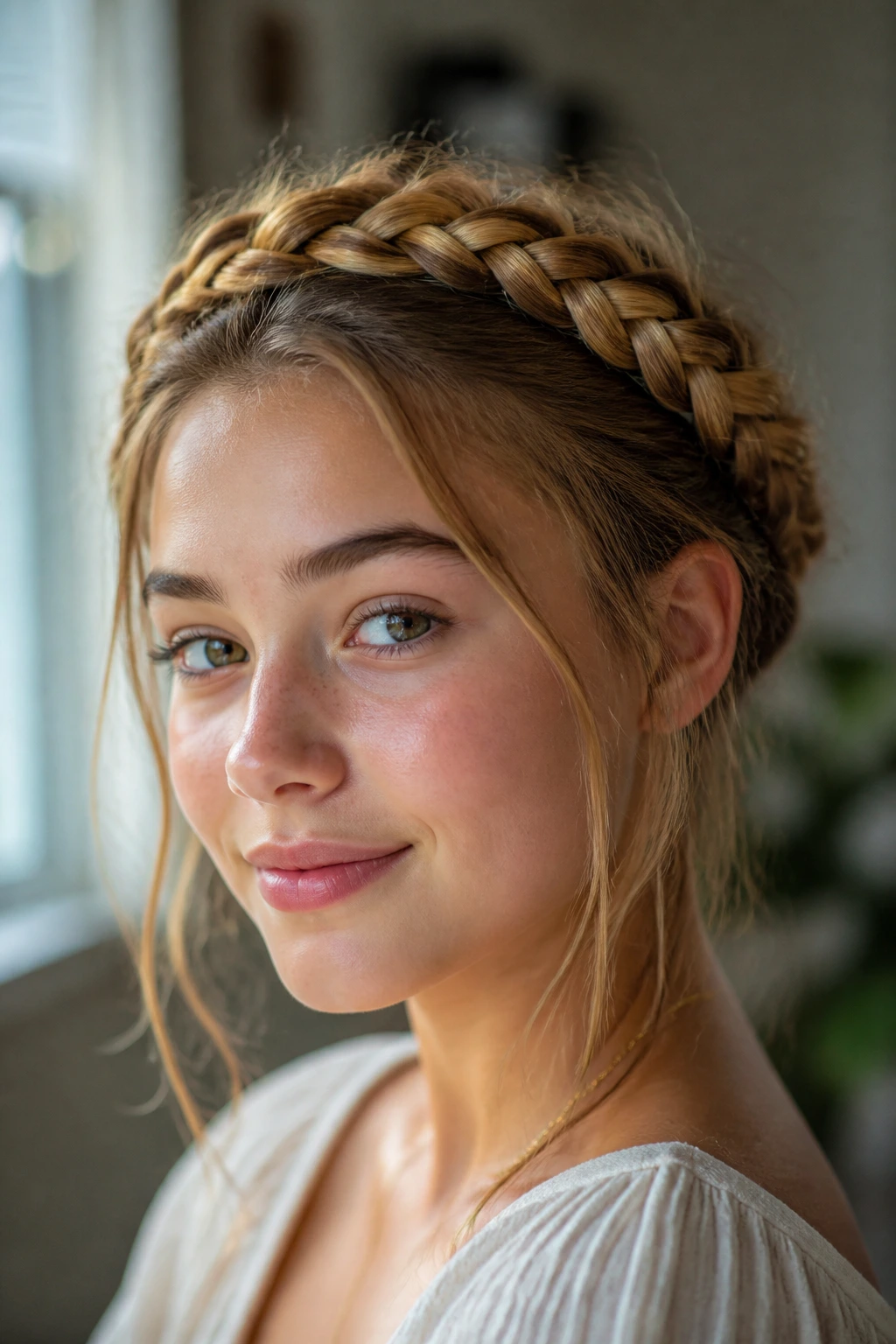
A halo crown braid looks fancy, but the braid itself is not the hard part. The real work is in the placement. Once the braid wraps around the head in a circle, the whole style looks polished, even if the rest of the outfit is just jeans and a sweatshirt.
This style is a quiet fix for days when hair needs to stay off the face. It works well for school events, performances, family pictures, or any day when loose hair would get in the way. It also keeps the neck clear, which is underrated when the weather is warm or the day is busy.
Where It Helps Most
If the hair is thick, the halo braid holds shape well. If the hair is fine or slippery, a little texture spray or dry shampoo can help the braid grip. Pins matter here too. Cheap pins that bend easily are a waste of time.
The style is prettier when it is not too tight around the front. That first curve near the temple should sit smoothly, not yank. A crown braid should feel like it belongs there, not like it was stapled on.
If you want to dress it up:
- tuck a ribbon into the tail
- pin in a small flower clip
- keep the braid low around the back for a softer line
It is one of those styles that looks more complicated than it is. That is part of the appeal.
10. Dutch Braid Pigtails for School and Sports

Can Dutch braid pigtails keep up with a full school day and a gym class? Yes, and that is exactly why they keep coming back. The braid sits raised on top of the hair rather than tucked under it, so the pattern stands out more than a French braid and stays secure once it is locked in.
They are a solid pick when the day is packed. Two Dutch braids pull the hair back evenly, which keeps the scalp from feeling overloaded in one spot. That makes them useful for running around, staying neat through class, or just getting hair out of the way without doing a full updo.
How to Wear Them
- Start with detangled hair that is slightly damp or lightly misted.
- Keep the braid tight enough to hold, but not so tight that the temples feel sore.
- Finish with a small elastic and leave the ends in short pigtails, mini buns, or tucked under.
They also work well with middle parts, but side parts can soften the look if straight center parts feel too rigid. A little ribbon at the ends can make them feel less sporty and more styled.
The style is practical without looking plain. That is a useful balance.
11. French Braid Into a Low Bun
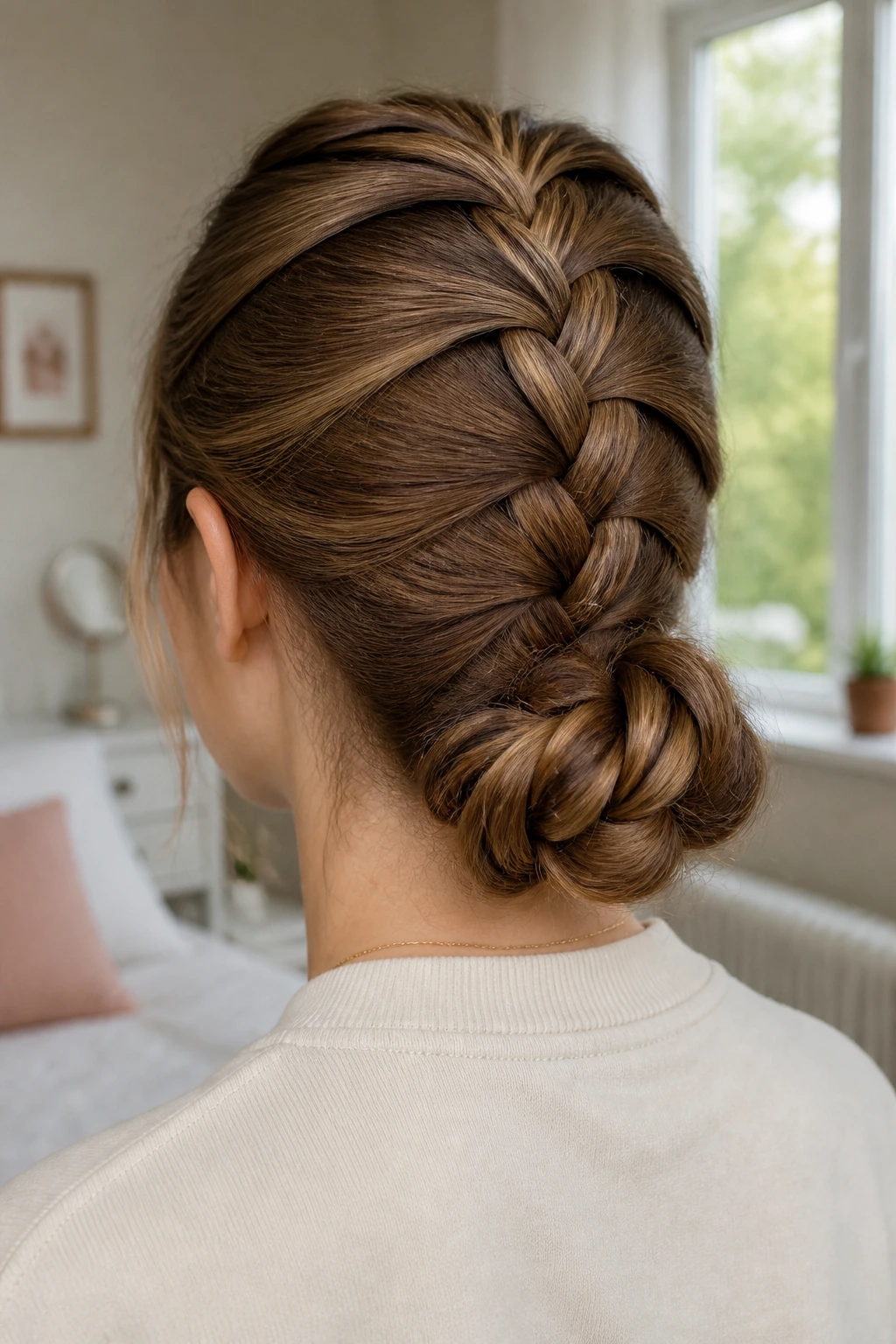
French braid into a low bun is one of those styles that looks calmer than it feels to make. The braid feeds hair into itself from the top, then the length gets wrapped into a bun at the nape of the neck. The finished look is neat, low-key, and easy to wear with collars, hoodies, or a school uniform.
I like this one when the goal is clean rather than flashy. It is the braid style version of a white button-down shirt: simple, tidy, and useful in more places than you expect. The low bun keeps the ends tucked away, which makes the whole style feel less fussy.
It also helps with thick or layered hair that tends to stick out of regular braids. Once the bun is pinned properly, the ends stop fighting the style. Use a few bobby pins crossed in an X if the bun needs extra grip. That small trick saves a lot of slipping.
This style can look dressed up with a satin ribbon, but it does not need one. The braid itself does enough. If the hair is very slippery, a bit of mousse at the roots before braiding can help the sections behave.
It is quiet, neat, and one of the easiest braid styles to make look intentional.
12. Fishtail Side Braid With a Soft Finish
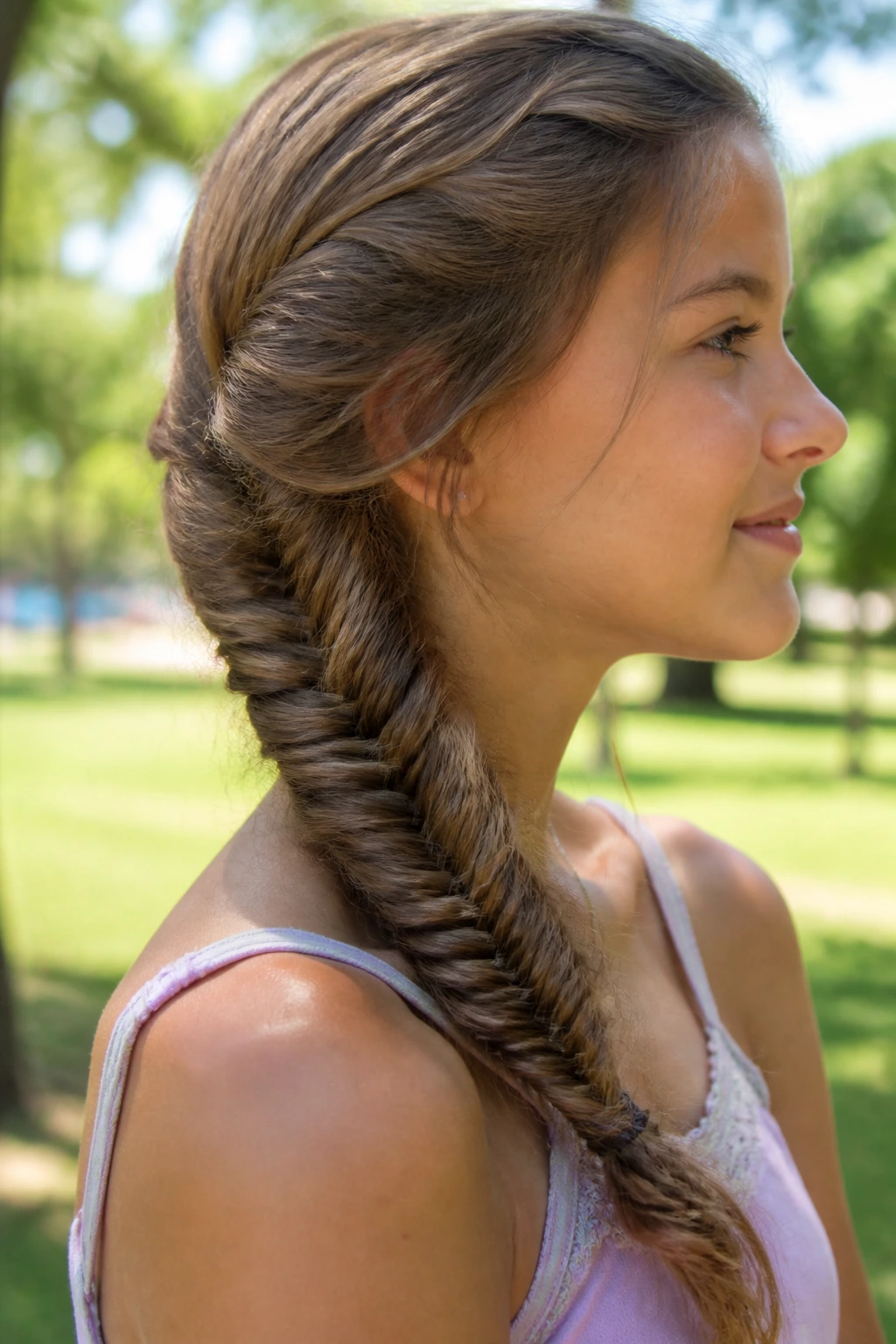
A fishtail side braid looks fancier than the effort it takes, which is exactly why teens keep coming back to it. The braid uses small pieces from each side instead of the three-strand pattern most people know, so the texture comes out finer and more detailed.
The side placement makes it feel less strict. It falls over one shoulder, which gives the style a softer shape than a center braid or a tight ponytail. The whole point is texture, not perfection.
A few small things make a big difference:
- Brush the hair smooth before you start.
- Use a clear elastic first so the braid does not unravel at the end.
- Gently pull the braid apart a little after finishing if you want a fuller look.
That last part matters. A fishtail braid can look skinny and stiff if you leave it untouched. A small amount of loosening helps the weave show up better. Do not tug it apart too hard, though, or the braid loses structure fast.
This style works best on medium to long hair and looks especially nice with soft waves or loose face-framing pieces. It is not the toughest braid on this list, but it is one of the prettiest when you want something a little more delicate.
13. Waterfall Braid Half-Up for Loose Hair Days

Waterfall braids are a little fussy, and that is part of the charm. The braid lets sections of hair fall through as you work across the head, so the style keeps some hair down while still giving you a clear braid detail at the crown or temple.
I like this one for days when full braids feel like too much, but plain loose hair feels unfinished. It sits right in the middle. The loose pieces create movement, while the braided section keeps the front from getting in your face.
This braid looks especially good on wavy or layered hair because the dropped pieces show texture. On straight, slippery hair, it can need extra pins or a bit of texturizing spray so the braid does not slide apart. That is the annoying part. Still worth it.
A waterfall braid works best as a half-up style for school pictures, parties, and weekends when you want something soft without spending an hour styling curls. It can also sit under a headband if you want to hide the join point.
One sentence says it all: This braid is more about shape than tight hold.
If you want neatness and zero fuss, skip it. If you want something airy and pretty, it delivers.
14. Braided Space Buns With Cornrow Bases
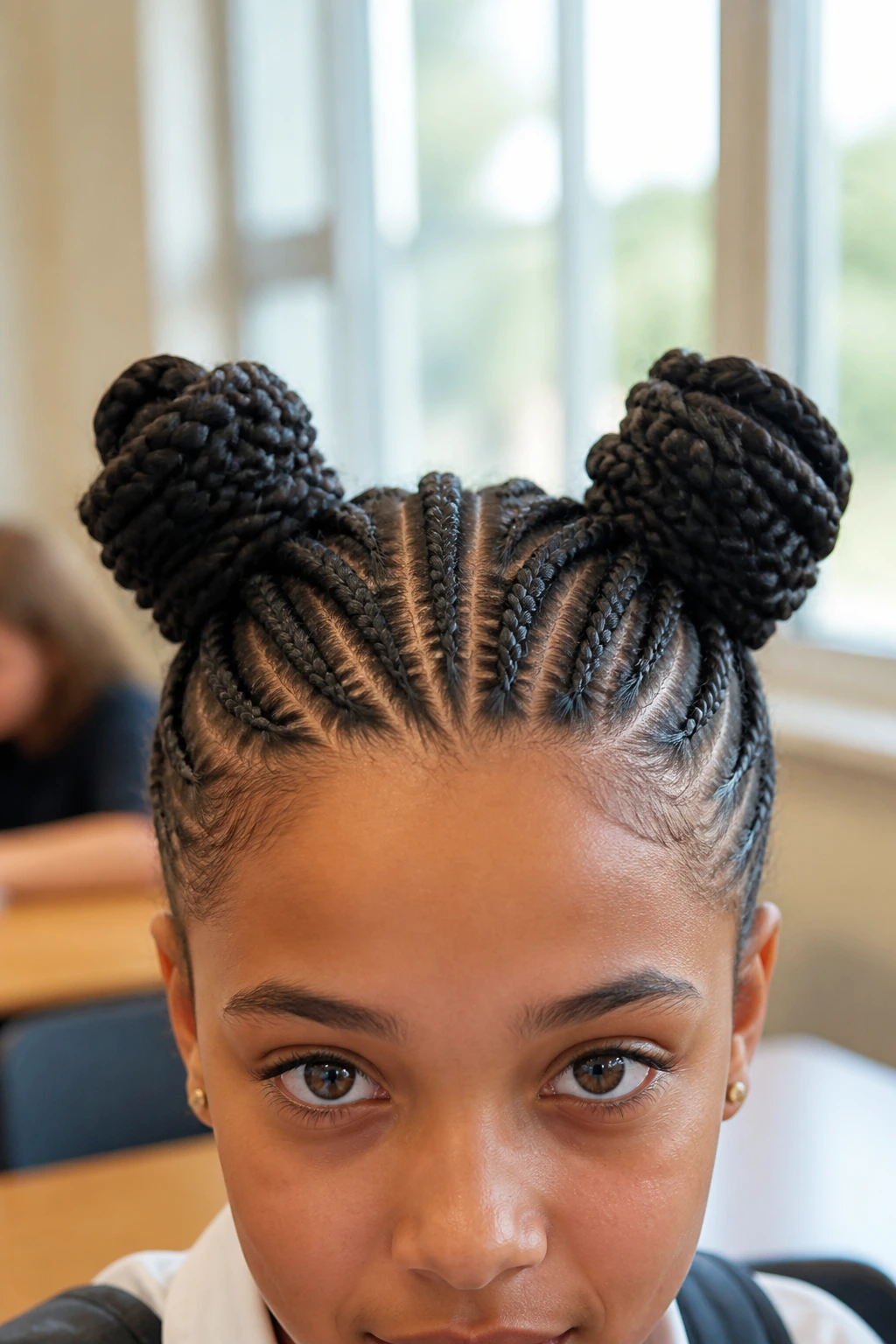
Braided space buns are the style you pull out when plain hair feels boring. Start with small cornrows or feed-in braids at the front, then gather the lengths into two buns high on the head. The result is playful, but still tidy enough for school if the braid base is neat.
Why the Base Matters
The cornrow base keeps the front smooth and makes the buns sit evenly. Without it, the buns can look lopsided fast. A clean base also helps the style last longer because the front is not constantly shifting around.
How to Keep the Buns Balanced
- Put the buns at the same height on both sides.
- Keep the size close to equal, even if one side has more hair texture.
- Use pins or a small elastic wrapped around each bun so they do not unravel.
This style is especially good when you want your hair off your neck but still want something with personality. It works with colored elastic ties, little clips, or even a few loose braided strands hanging out if you want a softer finish.
Space buns can go too cute if they are tiny and overly polished. Better when they have a little shape. A little shape feels human.
15. Ghana Braids With Bold Raised Ridges

Why do Ghana braids feel so bold even when the style is simple? Because the feed-in method creates thicker, raised ridges that stand out from the scalp right away. The braids usually start small and get larger as hair is added, which makes the pattern look sculpted instead of flat.
That thickness gives the style a strong shape. Ghana braids are a smart pick when you want fewer braids, faster styling, and a look that reads from across the room. They are especially useful if you do not want a dozen tiny parts all over your head.
They also make sense for girls who want a style that feels substantial without being fragile. A few larger braids are often easier to keep neat than many tiny ones. Less fiddling. Less chance of one braid sticking out at a weird angle by lunchtime.
The downside is that they do ask for good parting and even tension. If one braid starts too thick too soon, the shape gets bulky. The front pieces should still sit clean around the hairline.
Best pairings:
- gold cuffs
- a low ponytail finish
- a center part for symmetry
If you want a strong, clean braid look with less fuss than micro braids, this is a solid middle ground.
16. Braided Bob That Keeps Everything Short
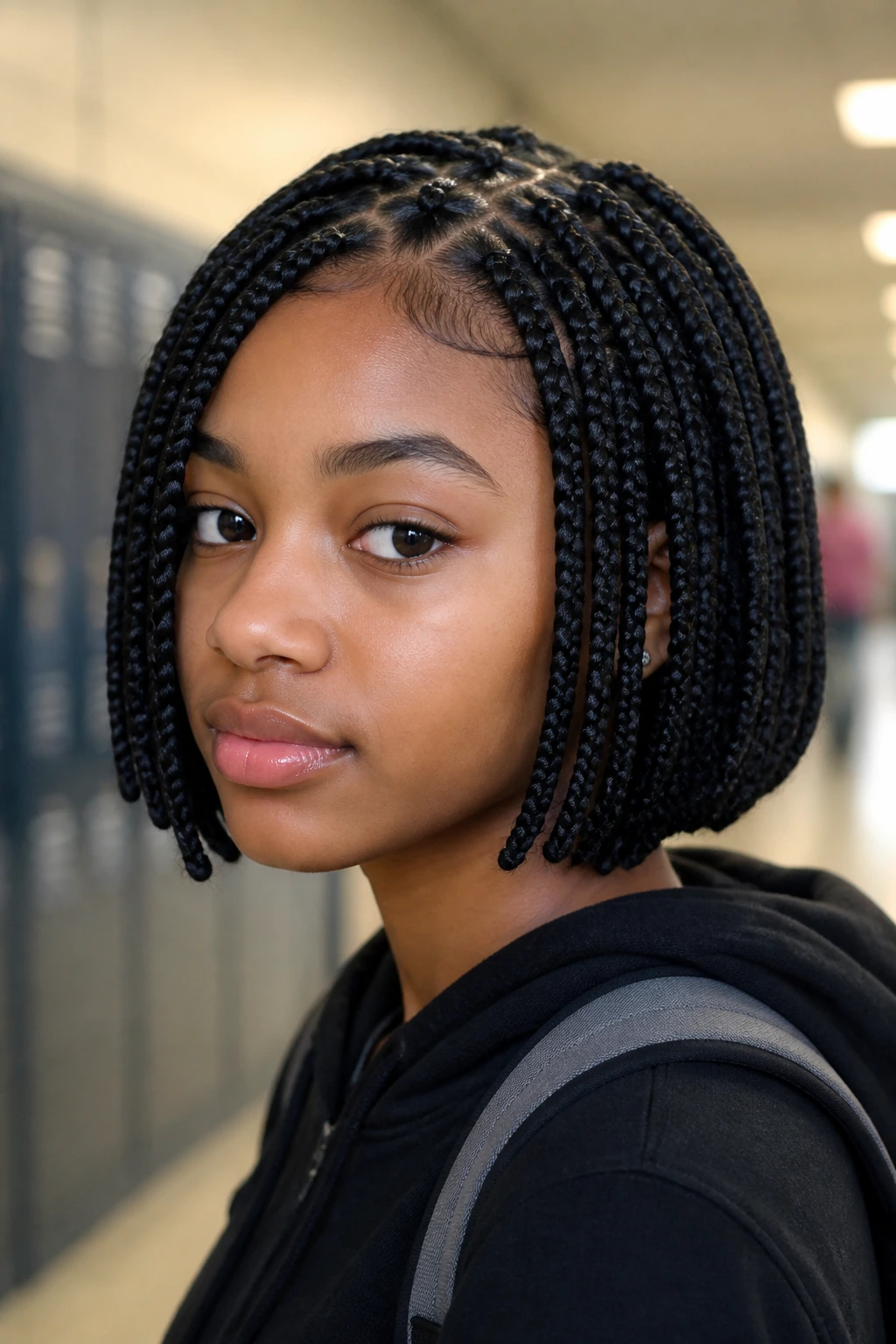
A braided bob changes the whole equation. Instead of long lengths to manage, you get a shorter braid style that sits around the jaw or collarbone, which makes washing, sleeping, and daily handling easier. The shape feels lighter, and that alone can make a braid style more wearable for a teen with a packed schedule.
It also looks fresh without relying on length. Long braids get the attention, sure, but a well-cut braided bob has a clean shape that stands on its own. The shorter length keeps weight off the scalp and makes styling faster in the morning.
This style is a good fit for girls who play sports, move around a lot, or simply do not want to deal with waist-length braids getting caught in zippers and backpack straps. That stuff gets old fast.
The best braided bobs have blunt or softly curved ends, depending on the vibe. A blunt bob feels sharper. A slightly curved bob feels softer. Either way, the trim at the end matters because it gives the style its silhouette.
It is one of the most practical braid styles on this list, and honestly one of the easiest to live with.
17. Zig-Zag Cornrows for a Graphic Pattern

Zig-zag cornrows are what happen when a neat braid gets a little attitude. Instead of straight parts, the braid lines bend into a zig-zag pattern, which makes the scalp design look more graphic right away. It is still practical, still close to the head, but a lot more eye-catching.
This style works because the parting does part of the styling for you. Even simple braids look special when the base lines move in angles. If straight-back rows feel plain, zig-zag parts are the fastest way to change the whole mood.
A few details help the style stay sharp:
- Use a fine rat-tail comb for the parting.
- Keep the zig-zag lines even instead of random.
- Do not make the angles too tiny or they disappear once the braids are installed.
The style looks best when the braid sizes stay consistent. If the sections are uneven, the part pattern loses its rhythm. That rhythm is the point.
It is a good choice for teen girls who like a little design work without adding beads or bright color. The scalp pattern itself becomes the decoration. Clean, clever, and not fussy.
18. Side Cornrows With Curls Left Out at the Ends

Side cornrows with curls left out at the ends are the best of both moods. The scalp stays neat and braided, while the loose curly lengths keep the style soft and a little romantic. It feels more relaxed than tight all-over braids, but still more controlled than full loose hair.
This style is especially nice when a girl wants movement around the face and shoulders. The curls soften the braid line, which can make the whole thing feel lighter and more wearable. It is a smart option when you want structure at the scalp and texture at the ends.
The cleanest versions keep the cornrows close and tidy, then let the curls start around the nape or shoulder line. That gives the style a clear shape. If the curls begin too high, the style can get busy fast. A little restraint goes a long way here.
It also helps to think about maintenance in two parts: the braids need a scarf or bonnet, and the curls need a light refresh with water or curl cream if they start looking flat. Do not soak the whole style. That just turns the curls puffy and the braids limp.
This one feels soft without being plain. That is a rare balance.
Final Thoughts
The smartest braid choice is the one that fits real life, not just a mirror moment. A style can be gorgeous and still be a bad pick if it hurts, takes too long, or falls apart before the week is over.
For teen girls, the sweet spot is usually somewhere between neat and easy to live with. Some days call for braids that sit flat and stay put. Other days want curls, beads, or a little design in the parting. Both are fine.
If the braid feels too tight at the roots, speak up before leaving the chair. Hair should feel held, not squeezed. That one rule saves a lot of trouble later.
