



Jumbo box braids are not shy hair. They take up space, frame the face, and make a plain tee look intentional in about five seconds.
The catch is weight. With thick braids, the parting line, the length, and the way the ends land matter more than people think. A braid that sits clean at the root and swings neatly at the shoulder looks sharp; one that pulls at the temples or flips awkwardly at the ends does not.
I like jumbo braids because they give you room to be plain or extra. You can wear them straight down, pile them up, twist them off-center, or load them with cuffs and beads. Same base, different mood.
The styles below lean into that drama without turning the look into a costume. Some are polished, some are playful, and some are a little loud in the best way. The first one is the cleanest place to start.
1. Waist-Length Jumbo Box Braids With a Clean Center Part
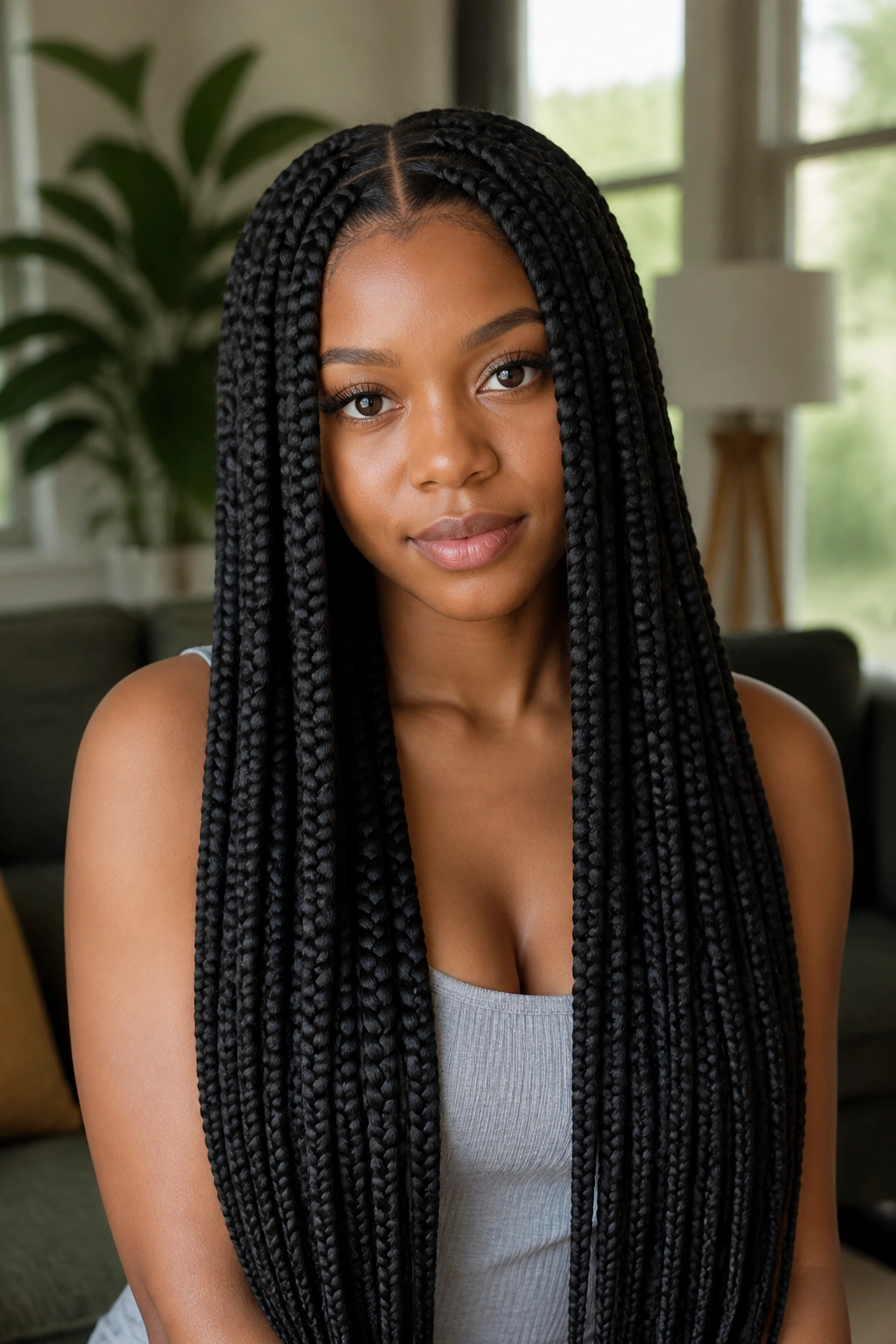
Plain, yes. Boring, no.
A clean center part turns jumbo box braids into a straight line of confidence. The look works because the eye gets one clear lane to follow from the forehead down through the length, and that makes the braids feel deliberate instead of bulky. Waist length adds movement, which matters with jumbos because still hair can look heavy fast.
Why It Works
A middle part gives the style balance. It also plays nicely with hoops, stacked necklaces, and anything that opens up the neckline.
- Ask for parts that are neat but not razor-thin; jumbo braids need room to breathe at the root.
- Keep the braid size consistent from the front to the back so the silhouette stays clean.
- If your hairline is sensitive, leave the front sections soft instead of pulling every strand tight.
- A blunt or lightly tapered end looks sharper than a messy, uneven finish.
Best tip: if you wear them down most days, oil the scalp in small drops, not a soak. Heavy oil near the part makes the roots look flat and dusty by day two.
2. High Jumbo Braided Ponytail

A high ponytail is the fastest way to make jumbo box braids look expensive.
It lifts the whole face, opens the neck, and gives thick braids somewhere to go besides your back. That matters more than people admit. Long jumbos can feel like a curtain after a few hours, but once they’re pulled up, the style suddenly feels lighter and sharper.
The trick is the base. Use a strong elastic, then wrap one braid around it so the ponytail looks finished instead of rushed. If the hair is very long, fold the ponytail once before you secure it. That keeps the weight from dragging the elastic down by midday.
Skip the over-slicked edge look if the ponytail is already high. A little softness around the hairline gives the style room to move. Too much gel can make the front look stiff against the rest of the braid pattern, and that contrast is not flattering.
3. Half-Up, Half-Down Jumbo Box Braids
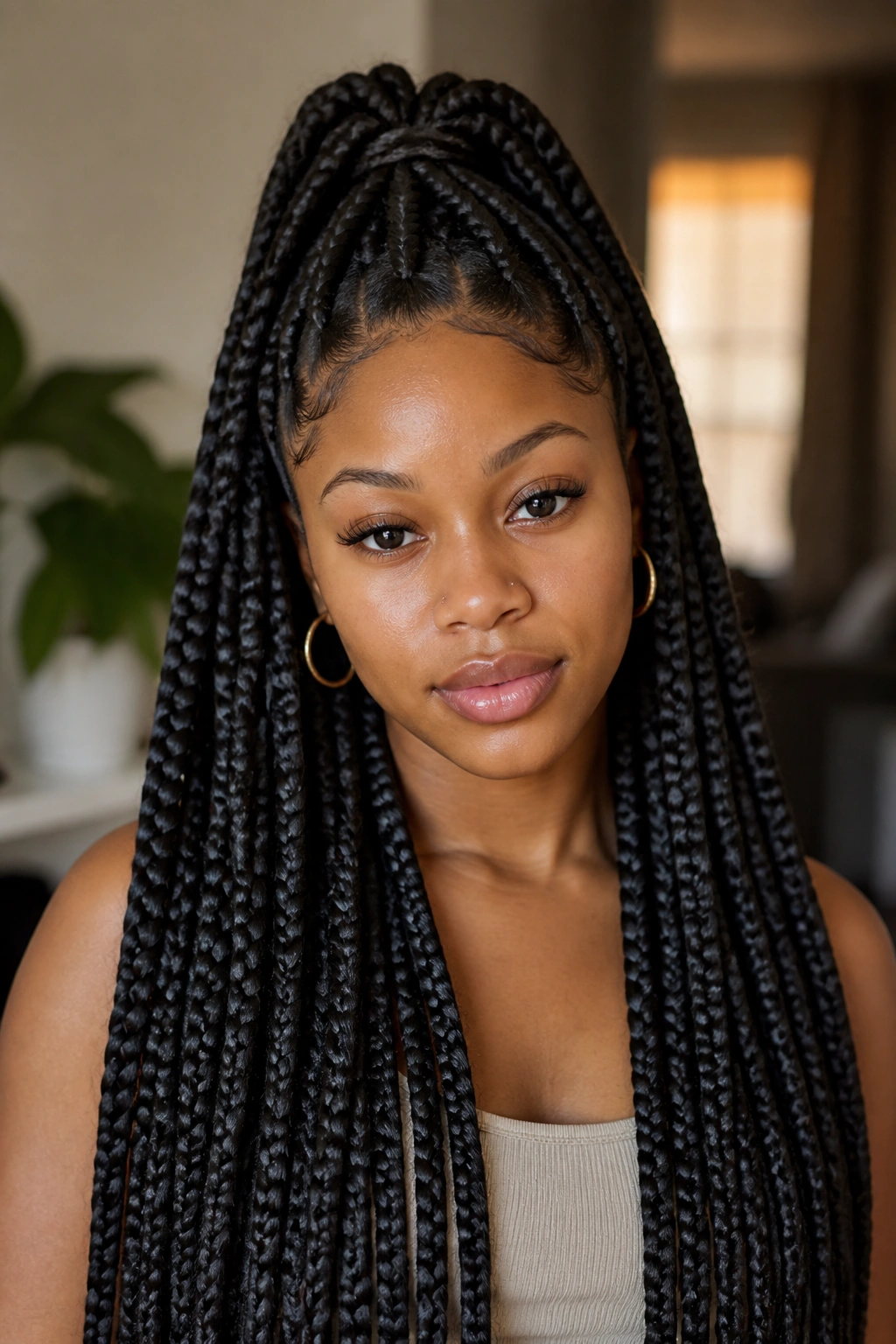
Why does half-up hair work so well with thick braids?
Because it solves the two biggest problems at once: too much hair in your face and too much hair on your shoulders. The top section gives structure, while the bottom section keeps the length and the swing. You get shape without losing the drama that makes jumbo box braids fun in the first place.
How to Wear It
Pull from the temples back to the crown, then leave the lower half loose. That alone does most of the work.
- Use a claw clip if you want the style to feel relaxed.
- Tie the top section into a knot if you want a cleaner line.
- Leave two braids loose in front if you want a softer frame around the face.
- Put the top section a little higher on the head if the braids are heavy.
It’s a good choice when you want the braids out of your mouth, out of your jacket collar, and still very much visible. That combination is harder to beat than it sounds.
4. Triangle-Part Jumbo Box Braids

If square parts feel too expected, triangle parts fix that fast.
The braid itself can stay the same size, but the shape at the scalp changes the whole read of the style. Triangle parts create a sharper rhythm across the head, so the pattern looks designed even before the braids move. It is one of those details people notice without always knowing why.
This style works especially well when the parts are consistent from the front row to the nape. If one triangle is stretched or misshapen, it shows. So does sloppy spacing. The clean geometry is the point, and that means the parting needs to be steady and measured, not rushed.
- Best on medium to thick density hair.
- Looks strongest when the braids are all the same size.
- Pairs well with minimal accessories so the parting stays visible.
- Needs neat roots, since the shape is the whole story.
A triangle part is basically the accessory. Everything else can stay quiet.
5. Shoulder-Length Jumbo Box Braid Bob
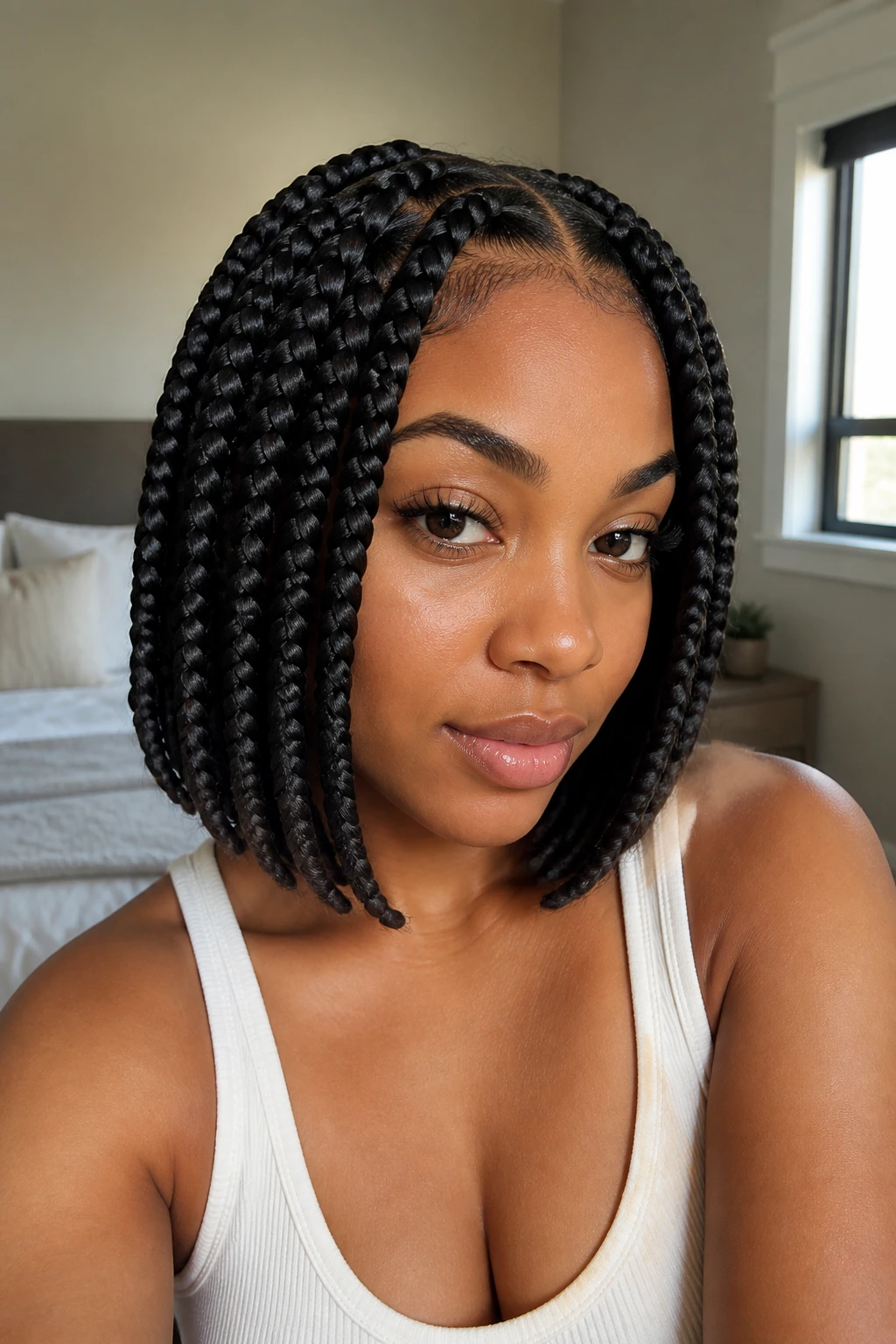
A shoulder-length bob hits hard.
It gives you the boldness of jumbo braids without the wall of hair that can come with waist-length lengths. The shape sits right where the jaw, neck, and shoulders meet, which is why it looks so crisp. You see the silhouette immediately. There is no waiting for it.
This cut also moves better than a super-long set. When you turn your head, the ends shift instead of dragging. That small detail makes the style feel lighter on the body, and it is a nice break if you like the look of jumbos but not the constant swing of long braids brushing your back.
Blunt ends make the bob feel sharp. Slightly rounded ends make it softer. I lean blunt, honestly. Rounded ends can drift into cute territory fast, and a bob like this usually looks better when it stays firm and clean.
The other win is practical: shorter jumbos are less likely to get caught in coats, seat belts, and bag straps. Small mercy. Big payoff.
6. Side-Swept Jumbo Box Braids

A side-swept style does more with less effort than people expect.
Unlike a center-part version, which keeps everything equal, the side sweep shifts the weight on purpose. That unevenness gives the face a little drama and makes the shoulders look broader and the neck look longer. It is especially good when you want one side of the face to stay open for earrings, makeup, or just a stronger profile.
The part should be deep enough to matter. A tiny offset does not read as a side sweep; it reads as a mistake. Bring the majority of the braids over one shoulder and keep the back side tucked so the style does not split in the middle by lunchtime.
What to Watch For
A side-swept look can collapse if the base is too loose.
- Pin the heavier side underneath the top layer.
- Keep the front edge soft, not glued flat.
- Use a single braid to wrap the base if you want a cleaner finish.
- Let the ends fall forward over the shoulder, not behind the back.
It is a simple shift, but it changes the whole mood. One shoulder carrying all that braid weight has a kind of swagger to it.
7. Jumbo Box Braids With Beaded Ends
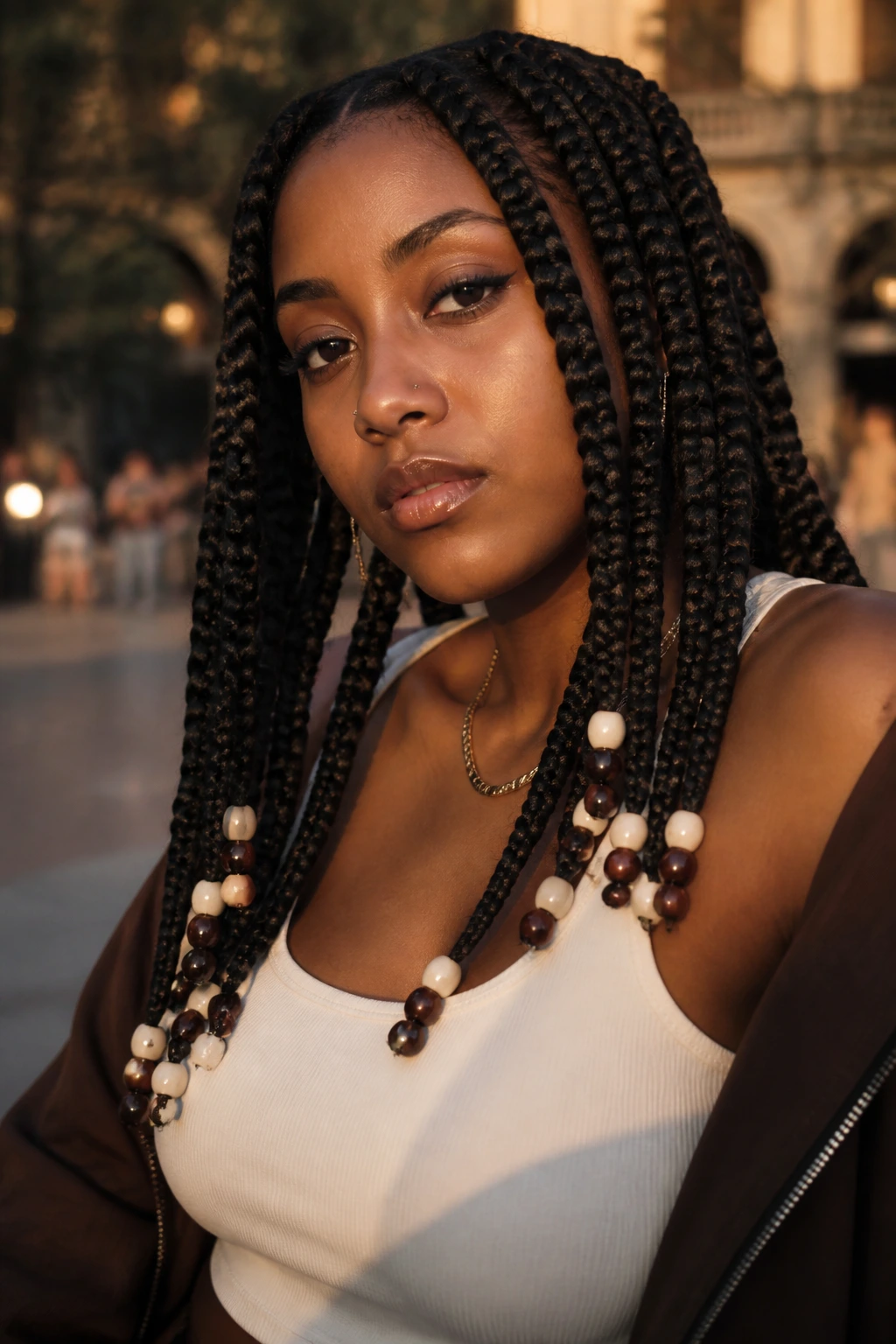
Beads give jumbo braids sound, movement, and a little attitude.
The first thing people notice is not always the look. Sometimes it is the clack. That small sound as the beads hit one another makes the style feel alive, and I think that is part of the appeal. The braids move, the beads move, and the whole head gets a bit more presence.
Sound, Weight, and Placement
The key is restraint. Too many beads, and the ends start to feel busy and heavy. Two to four beads per braid is enough for most sets, especially if the braids are already long.
- Wooden beads feel earthy and add weight near the tip.
- Clear or frosted beads show off the braid color underneath.
- Metal spacers work best near the ends, not all the way up the shaft.
- Put the beads on the same side of the head if you want symmetry, or stagger them if you want a looser look.
Tip: keep the bead load lighter at the temples. That area gets tugged a lot, and extra weight there starts to feel annoying faster than you’d think.
Beads can turn a straightforward braid set into something with personality. Not every style needs them, but when they fit, they fit hard.
8. Jumbo Box Braids in a Top Knot

When braids get long, a top knot keeps them from running the room.
This style is not subtle, and that is the point. Pulling jumbo box braids straight up changes the balance of the whole head, so the face gets more space and the neck gets a break. It is the kind of style that looks clean on a day when you do not want strands hanging in your sleeves, your food, or your lip gloss.
The knot should sit high enough to read as intentional, but not so high that it looks like it is fighting gravity. I like to make a loose base with a thick elastic first, then twist the remaining length around it and pin the underside. If the braids are heavy, a second elastic helps more than a mountain of pins.
Leave one braid out around the front if you want a softer finish. Or keep everything tucked tight if you want the shape to feel sharper. Either way, the top knot gives the braids a lifted, almost sculpted feel that suits jackets, big earrings, and plain shirts that need some help.
9. Jumbo Box Braids With Curled Ends

Why do curled ends change the whole braid?
Because they take the edge off the blocky shape. Jumbos can look strong and angular, which is part of the charm, but curled ends add bounce and a little softness at the bottom. That matters when the braids are shoulder-length or longer, because the ends are the part most likely to look heavy.
How to Use It
Set the last few inches on flexi rods or perm rods before sealing, if the hair fiber allows it. Keep the curl size large enough to match the thickness of the braid. Tiny curls on a thick braid can look off.
A few practical notes help here:
- Keep the curl zone to the last 3 to 5 inches.
- Use setting foam or mousse so the ends dry in place.
- Wrap the braids at night so the curls do not frizz out by morning.
- Ask for the braids to stop at a length that lets the curl pattern show.
The style works because it creates contrast. The body of the braid stays structured, but the bottom moves with a bit of spring. That little change makes the whole set feel less severe.
10. Double Bun Jumbo Box Braids

Two buns are a relief on a heavy braid day.
There is something practical and cheeky about splitting jumbo box braids into two sculpted buns. The neck gets air, the head gets shape, and the braids stop dragging the same way they do when left down. It is playful, yes, but not childish if the base is neat and the buns sit high enough to look deliberate.
The most important detail is balance. The buns do not have to be identical, but they should feel related. Keep the parts clean, twist the lengths into compact circles, and secure each side with its own elastic before pinning. If you try to force one giant bun out of too much hair, it gets bulky fast.
A few loose braids at the temples can soften the look if you want it less rigid. And if your braids are long, let a couple of ends peek out instead of hiding every last one. Perfect symmetry is not the goal here. Shape is.
11. Burgundy Jumbo Box Braids
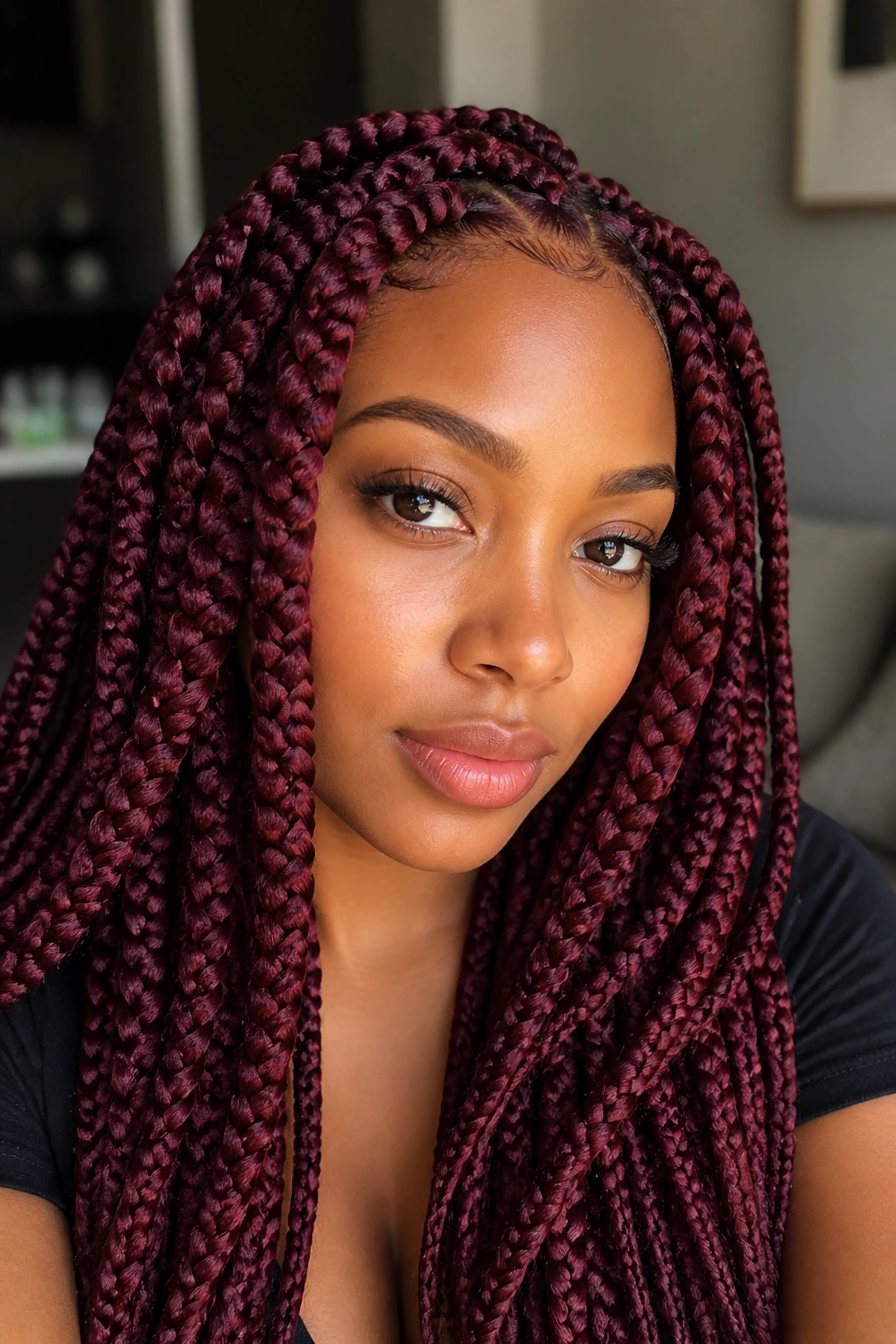
Color can do more than accessories ever will.
Burgundy jumbo braids are strong because the shade carries the style before you even add a cuff or bead. Deep burgundy reads rich and dark in indoor light, then picks up a red edge when the light hits it. Copper shades feel brighter. Plum leans cooler. The braid pattern stays the same, but the color gives it a whole different mood.
What I like about burgundy is that it works with simple clothes. Black, cream, denim, gold jewelry — the hair does the work, and the rest can stay quiet. If the color is glossy, the set can look sharp at first but a little plastic under strong light, so a softer sheen often looks better than an over-shiny finish.
Root color matters too. A dark root fading into burgundy or a full solid red-brown both work, but the transition should be clean. Messy color changes at the wrong spot make the braid look unfinished. If you want the color to feel rich rather than loud, keep the tone deep and the finish even.
This is one of those styles that does the talking for you.
12. Jumbo Box Braids Styled Into a Faux Hawk

A faux hawk gives jumbo braids a harder edge.
Unlike a standard down style, which spreads the braids across the head evenly, a faux hawk pulls the sides in and leaves a raised line through the middle. That makes the center section feel taller and the face look more open. It is a smart move when you want the braids to feel sharp without losing length.
The sides need to sit flat, but not crushed. Hidden pins every couple of inches help keep the ridge in place, and a few crossed pins at the back stop the style from slipping apart. If the braids are long, folding the back section under often works better than trying to make the whole thing stand upright.
This look likes structure. Leather jackets, structured blazers, bold lipstick, clean earrings — they all fit the mood. Still, you can soften it a little by leaving two or three braids loose around the temples. That keeps the style from feeling too severe.
The faux hawk is for days when you want the braids to look like they have an attitude.
13. Jumbo Box Braids Wrapped With a Head Scarf
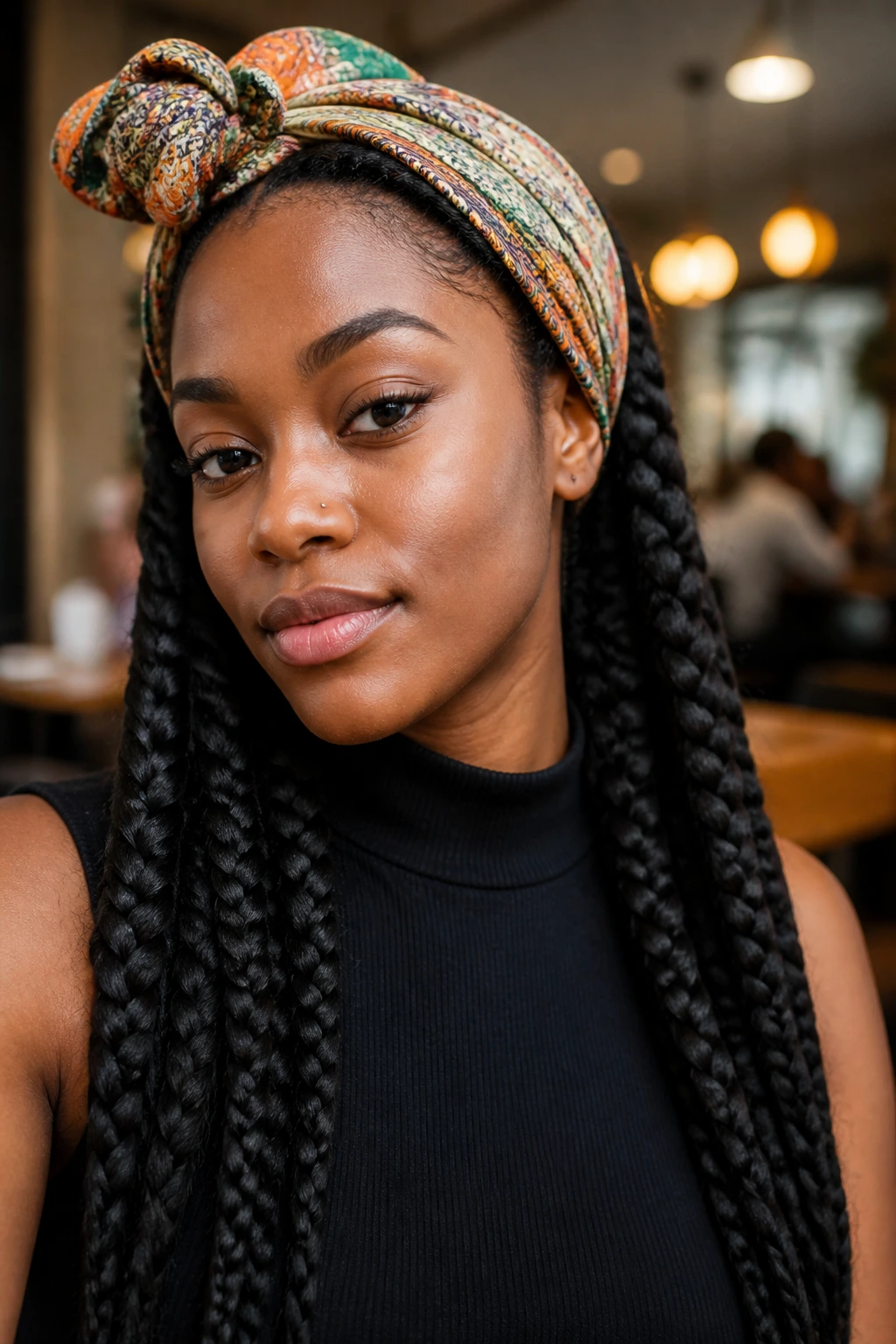
A scarf does not hide jumbo braids. It frames them.
That distinction matters. A well-placed scarf can add color, keep frizz under control, and change the whole shape of the hairline without burying the braids themselves. The strongest versions use the scarf as a frame across the crown or as a knot at the top, not as a blanket over the whole head.
What to Use
A square scarf around 27 by 27 inches works for smaller wraps. Go larger if the braids are thick or if you want a taller knot.
- Silk or satin finish reduces snagging.
- Prints with two or three colors keep the braid set visible.
- Tie the knot slightly off-center if you want more shape.
- Place the wrap above the brow line, not directly on it.
This style is one of the easiest ways to stretch a braid set between wash days without looking sloppy. And if a few flyaways show, that is fine. The scarf is already doing some of the work.
14. Jumbo Box Braids in a Low Sculpted Bun
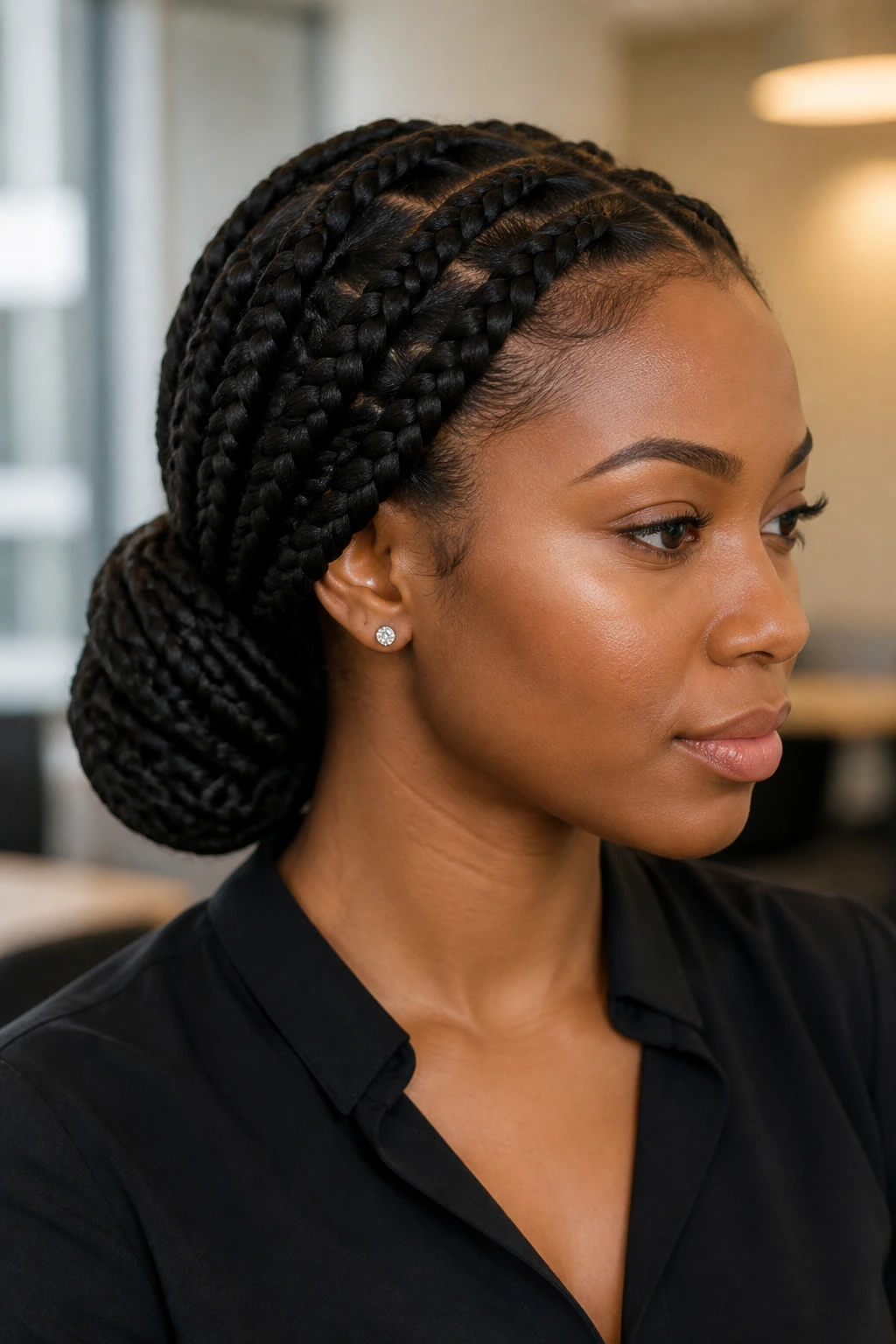
A low bun is where jumbo braids stop being casual and start looking composed.
It sits at the nape, which keeps the weight low and the profile clean. That alone makes the style feel different from a top knot. Instead of lifting the braids up, you are folding them inward so the head keeps a neat outline from every angle. It is a strong choice with blazers, dresses, and anything that needs the neckline to stay visible.
The bun works best when it is shaped rather than stuffed. Think looped braid lengths, tucked ends, and a base that feels secure but not clenched. If the bun has to fight the hair to hold its shape, it will look lumpy by the end of the day. A slightly off-center placement can make it feel less formal and more wearable.
I prefer a bun that sits a little above the hairline at the nape instead of jammed against it. That small lift gives the style breathing room. It also makes the back of the head look smoother, which is half the battle with thick braids.
15. Jumbo Box Braids With Curly Face-Framing Pieces
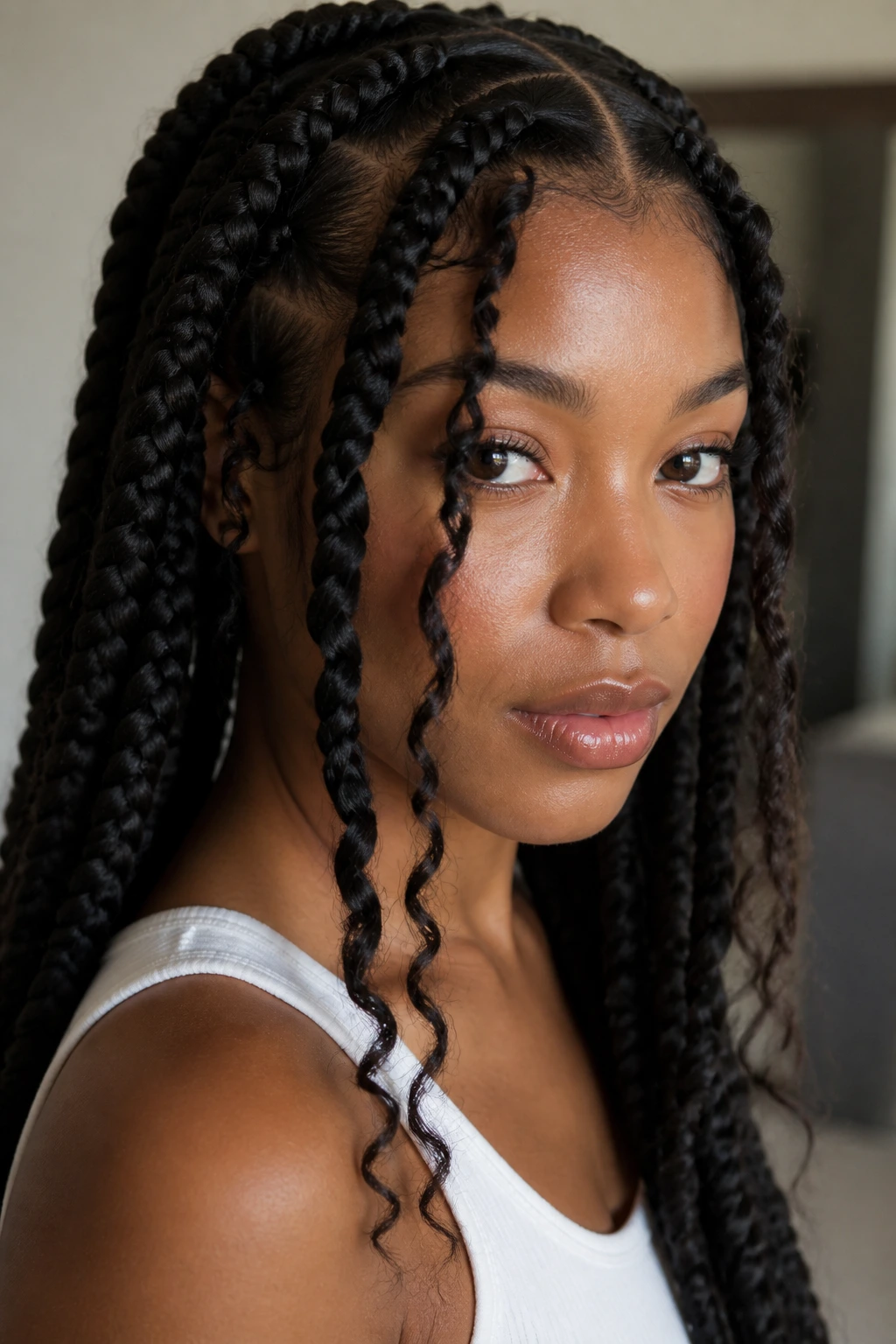
Why add curls to braids that are already bold?
Because the curls soften the front without taking away the strength of the braid set. A few curly pieces around the face break up the straight curtain effect that thick braids can create. The result feels lighter around the eyes and cheekbones, which can be a huge difference if you like your braids to feel strong but not hard.
Where to Place Them
Keep the curly pieces limited. Four to six pieces around the face is usually enough.
- Put two near the temples to soften the line of the braids.
- Leave one or two around the jaw if you want more movement.
- Keep the curls longer than the shortest braids so they do not disappear into the set.
- Use a light mousse so the curls keep shape without going crunchy.
This style is especially nice when the rest of the braids are very neat. That contrast — sleek roots, textured front pieces — gives the whole look a bit of depth. Too many curls, though, and the style starts to lose its clean edge. A little goes a long way here.
16. Asymmetrical Jumbo Box Braids With a Deep Side Part
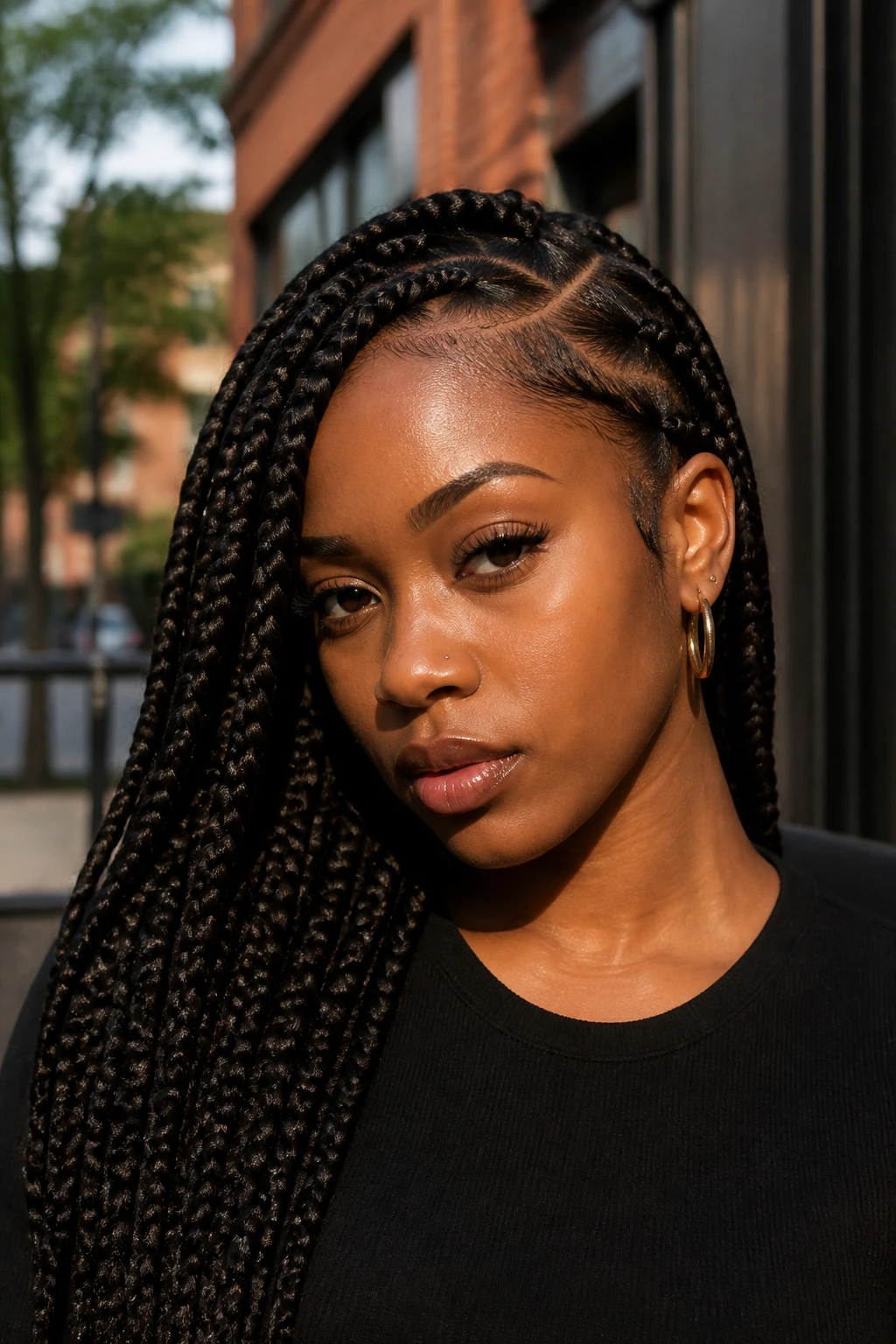
One side longer than the other changes the whole mood.
An asymmetrical braid set feels intentional in a way that straight symmetry does not always manage. The deep side part starts the story, but the length difference gives it a twist. One side can skim the collarbone while the other sits closer to the jaw, and that imbalance makes the face look framed rather than boxed in.
The style works especially well when one ear is left open for a hoop or cuff. It also plays nicely with high-neck tops because the line of the braids falls away from the center of the body instead of straight down it. That can make the whole outfit feel less stiff.
- Ask for a difference of roughly 2 to 4 inches between sides.
- Keep the shorter side neat at the front so the shape does not look accidental.
- Use the longer side as the visual anchor and tuck the shorter side behind the ear when you want more face showing.
- Pair it with a strong side part so the shift looks obvious.
It is the kind of style that looks like a choice, and that matters.
17. Jumbo Box Braids With Gold Cuffs and Rings

Gold cuffs can make jumbo braids look finished in a way that plain hair sometimes does not.
The trick is not to cover every braid. That turns the set into noise. A few cuffs placed near the front pieces, plus one or two rings lower on the length, is usually enough. On dark braids, gold reads clean and warm. On burgundy or red-brown hair, it gives a sharper contrast. Silver works too, but it creates a colder look.
I like cuffs most when they sit at different heights rather than in a neat row. That slight irregularity makes the style feel lived-in instead of overplanned. If the set already has a strong parting pattern or a high ponytail, the cuffs should support the shape, not compete with it.
Take them off before bed if they snag. Small metal pieces and pillowcases do not get along, and the last thing you want is a braid edge catching on hardware at 2 a.m. Annoying. Completely avoidable.
18. Jumbo Box Braids Pulled Into a Side Ponytail

A side ponytail is a strong finish when you want motion and do not want to spend forever on the shape.
Compared with a high ponytail, this version feels softer and a little more relaxed. Compared with wearing the braids down, it still keeps the length controlled. That middle ground is what makes it so useful. The hair sits over one shoulder, the other side of the neck stays open, and the whole look gets a long, slanted line that feels a bit dramatic without trying too hard.
The base should sit above the jawline, not too low near the collarbone. If it drops too far, the style starts to sag. Wrap one braid around the elastic for a cleaner finish, then tuck a pin or two beneath the ponytail so the base stays put. If the braids are extra long, fold the tail once before securing it. That keeps the weight from pulling the ponytail down.
A side ponytail is one of those styles that looks styled even when you did not fuss much. That is a nice place to be.
