



The wolf cut can look chic, messy, or like you lost a fight with a blow-dryer. The difference usually comes down to one thing: where the face-framing layers start and how hard they hit around the cheekbones, jaw, and collarbone. Get that shape right and the cut feels fresh. Get it wrong and it turns puffy fast.
A wolf cut with face framing layers works because it gives the front of the hair a job. Instead of letting everything fall straight down, those shorter pieces pull the eye upward, soften the edges, and keep the haircut from sinking into one heavy block. On straight hair, they add movement. On wavy and curly hair, they keep the shape from swallowing the face.
What I like about this haircut is how different it can be without losing the core idea. Some versions are soft enough for anyone who wants a low-drama change. Others lean hard into the shag-and-mullet mix and have a little bite. The 25 cuts below sit in that whole range, so you can find the one that matches your hair, your routine, and how much edge you actually want to live with.
1. Soft Long Wolf Cut with Face-Framing Curtain Bangs
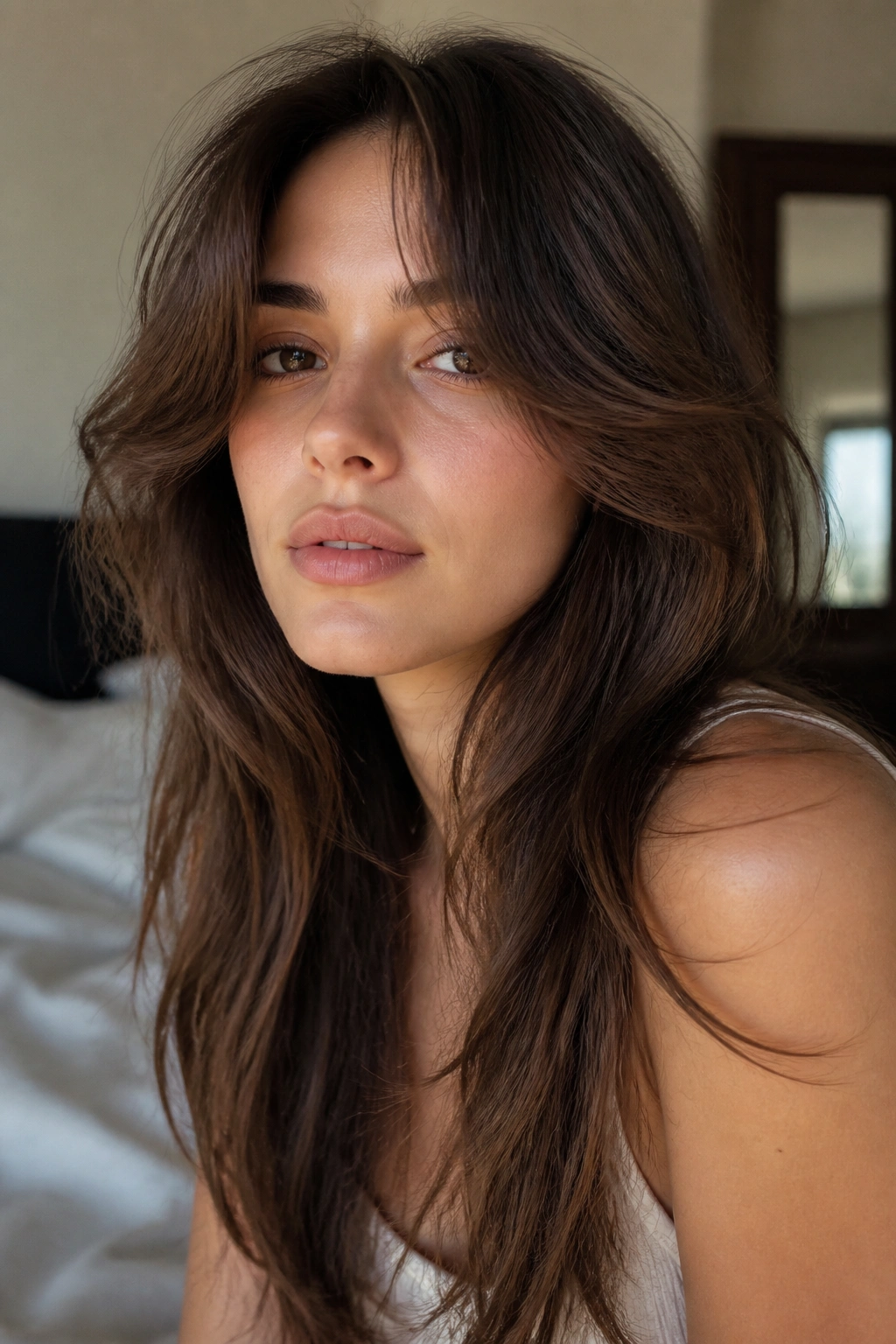
This is the version I’d send to someone who wants movement but is nervous about losing length. The longest pieces stay well below the shoulders, while the face-framing layers start around the cheekbone and drift into curtain bangs. That keeps the haircut light around the front without making the ends look thin.
What to Ask For
- Long internal layers that remove bulk without taking away too much length
- Curtain bangs that open in the middle and graze the cheekbones
- Soft texture through the ends, not razor-thin wisps
- A gentle crown lift instead of a choppy, high-contrast top
Best tip: Ask your stylist to keep the front pieces longer than they first suggest. You can always take more off later. You cannot put it back.
2. Chin-Grazing Mini Wolf Cut
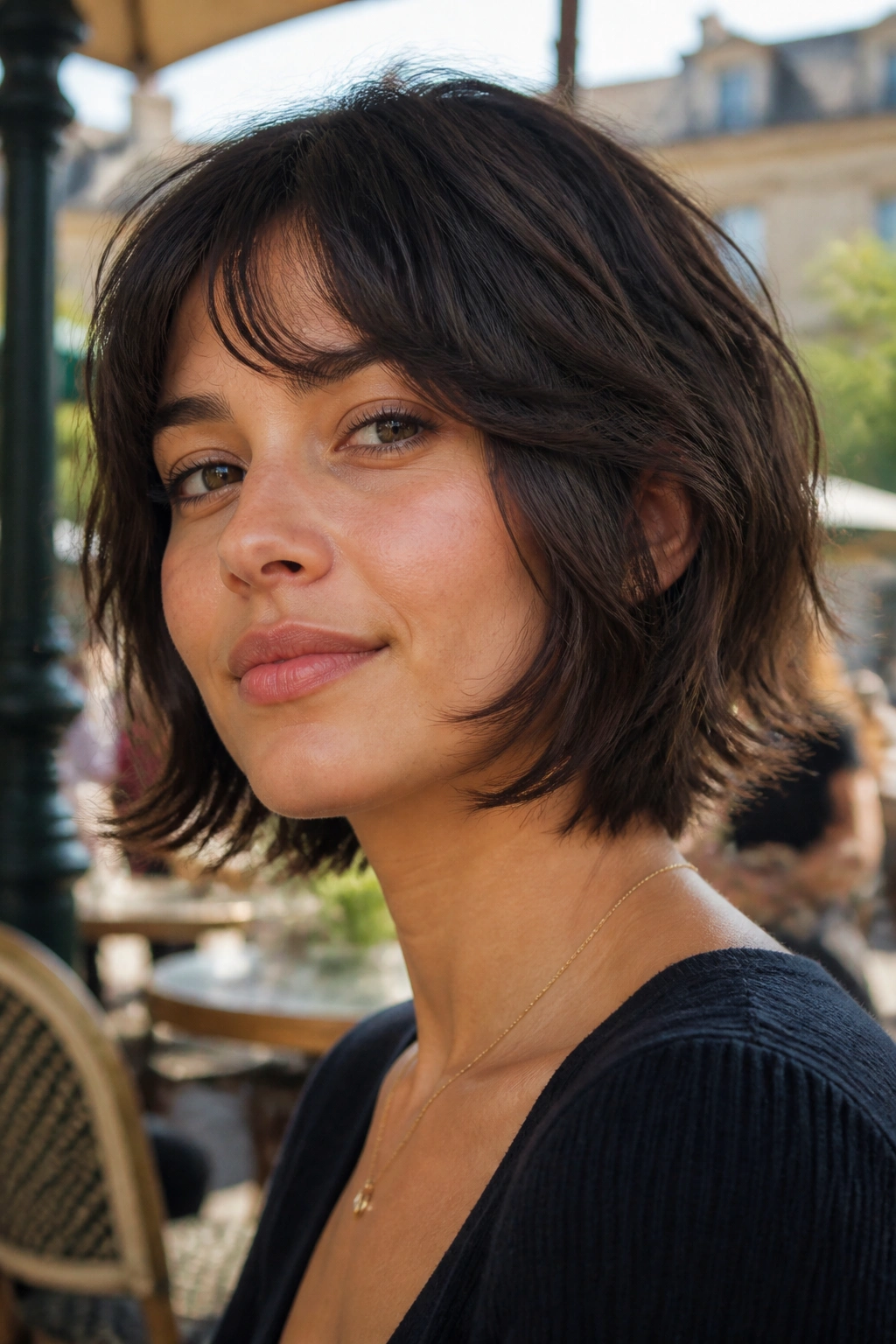
Short wolf cuts can be braver than long ones. Once the shape sits near the chin, the layers read faster and the face-framing pieces stop feeling shy. That’s why this cut looks so good on people who want something sharper than a bob but less severe than a mullet.
The trick is keeping the top short enough to show texture without making the whole head balloon. If the sides are cut with enough bend, the haircut hugs the jaw instead of sitting out like a triangle. It’s especially good on hair that goes flat at the crown and sticks to the head in the worst way.
This version likes a quick bend from a round brush or a flat iron wave, nothing fussy.
3. Curly Wolf Cut with Halo Layers
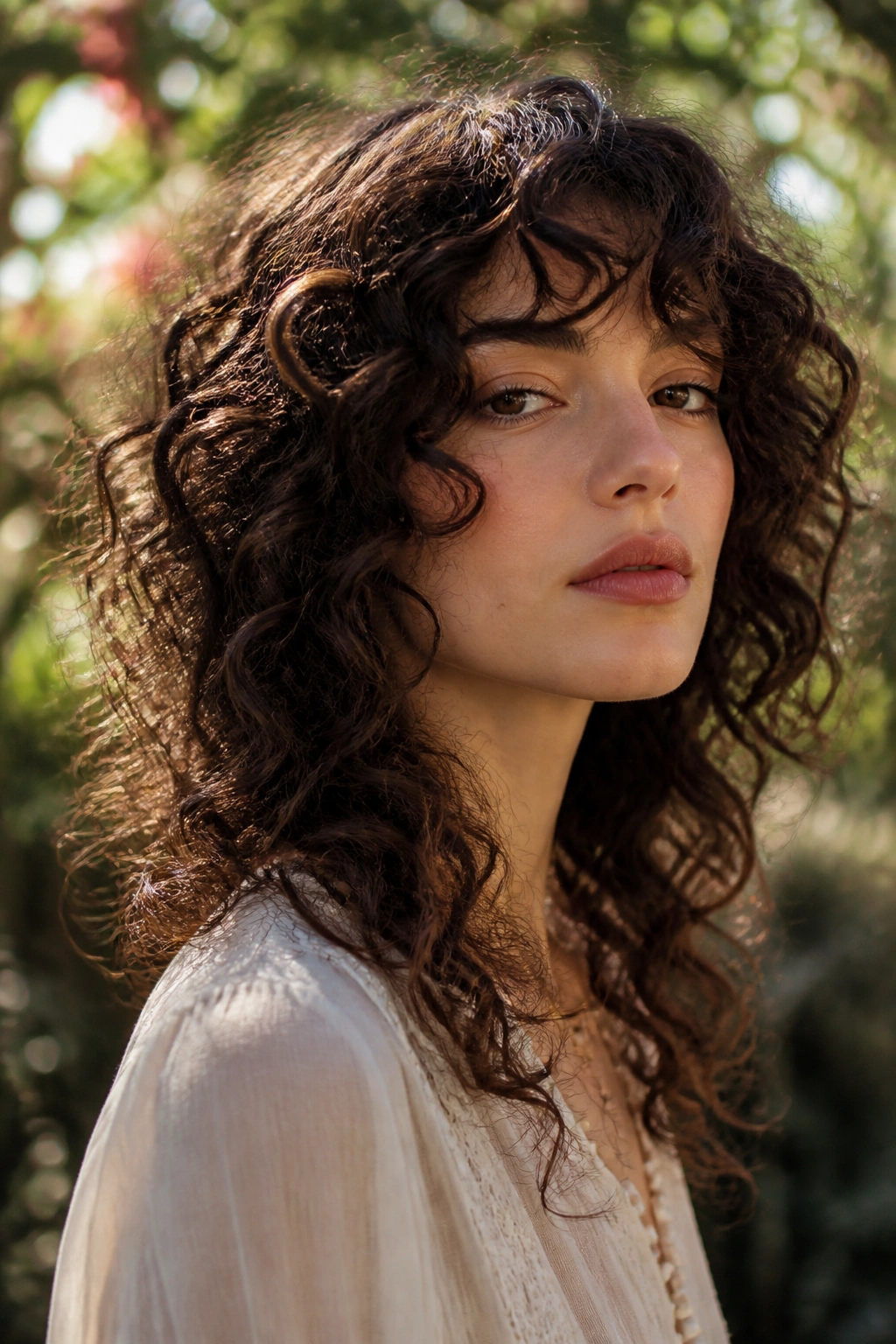
Curly hair and wolf cuts get along when the layers respect the curl pattern. You want shape, not a hacked-up pyramid. The best curly wolf cut uses halo layers around the crown and softer face-framing pieces that let the curls fall forward instead of puffing outward.
I’ve seen this cut rescue curls that were dragging the whole face down. Once the front is lifted and the sides are shaped, the hair suddenly looks lighter, even if the length stays nearly the same. That part matters.
- Keep the top layers long enough to avoid frizzed-out short bits
- Let the front pieces land near the cheek or chin
- Cut curl by curl when possible, especially around the face
- Diffuse on low heat so the shape stays springy
A good curly wolf cut should bounce. If it looks like a triangle before styling, the layering went too far.
4. Wavy Wolf Cut with Bottleneck Bangs

Why do bottleneck bangs work so well here? Because they give the front a shape that opens out slowly instead of cutting across the forehead in one hard line. The center stays shorter, then the pieces lengthen toward the cheekbones, which makes the whole haircut feel softer and more balanced.
That shape is flattering on wavy hair because waves already have motion. Add a blunt fringe and the front can feel heavy. Add bottleneck bangs and the cut suddenly has a cleaner flow from brow to jaw.
How to Style It
Use a light mousse at the roots, then twist the front sections away from your face while drying. A 1.25-inch curling iron can help if your waves are lazy. Don’t overdo the ends.
The best version looks touched, not sprayed into place.
5. Razor-Cut Wolf Cut for Straight Hair
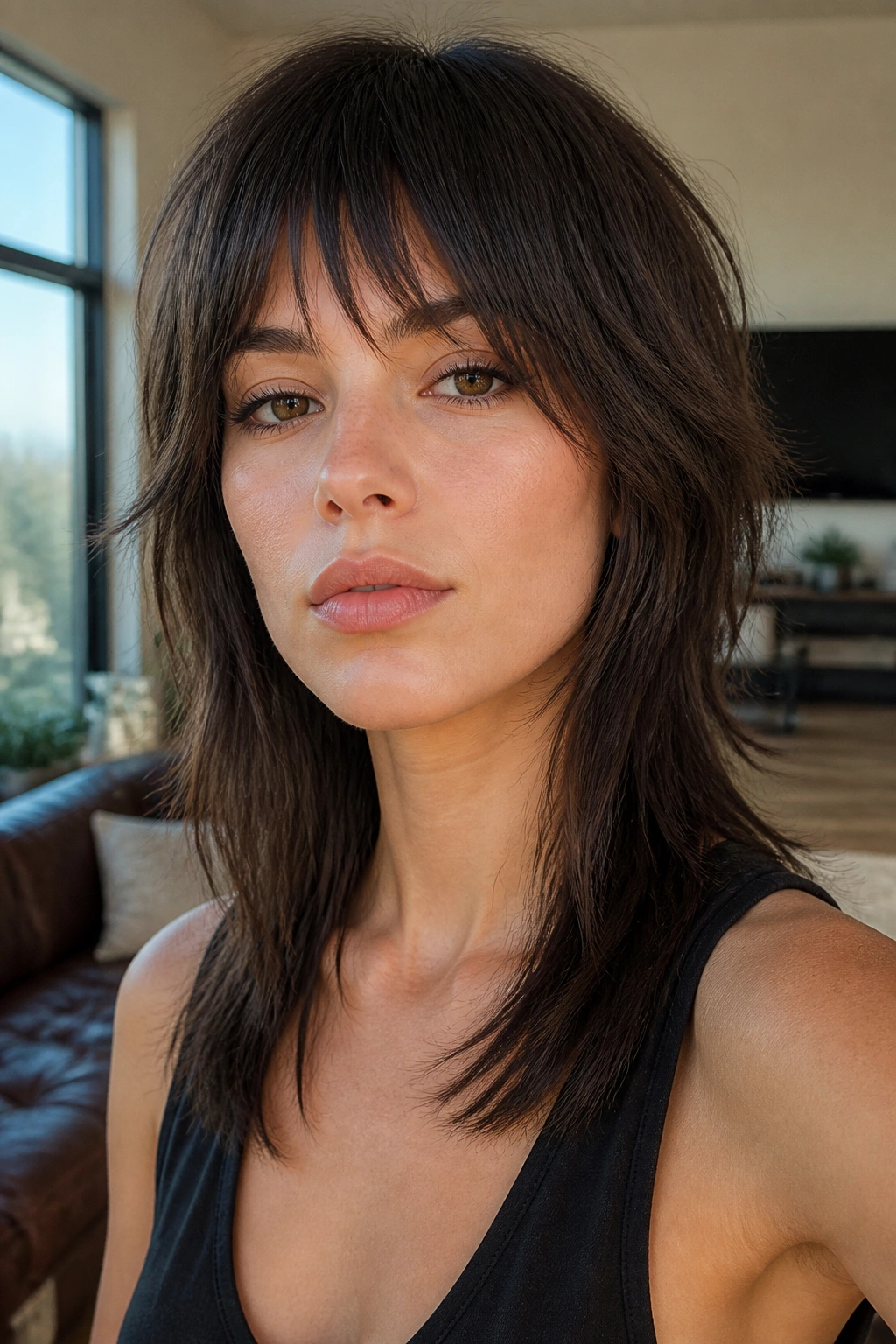
Straight hair needs a different hand. Without texture, a wolf cut can go flat at the top and stringy at the bottom. A razor-cut version solves that by softening the ends and letting the face-framing layers fall in thinner, more airy pieces.
Unlike a blunt lob, this cut does not rely on one solid line. Unlike a heavy shag, it does not ask your hair to do too much on its own. The result is cleaner and a little sharper, which is exactly why it works on straight strands that refuse to hold a curl for long.
This is a strong choice if you want movement but still like hair that lays close to the head. A little salt spray helps. So does a bend at the ends with a flat iron.
6. Shoulder-Length Wolf Cut with Cheekbone Framing
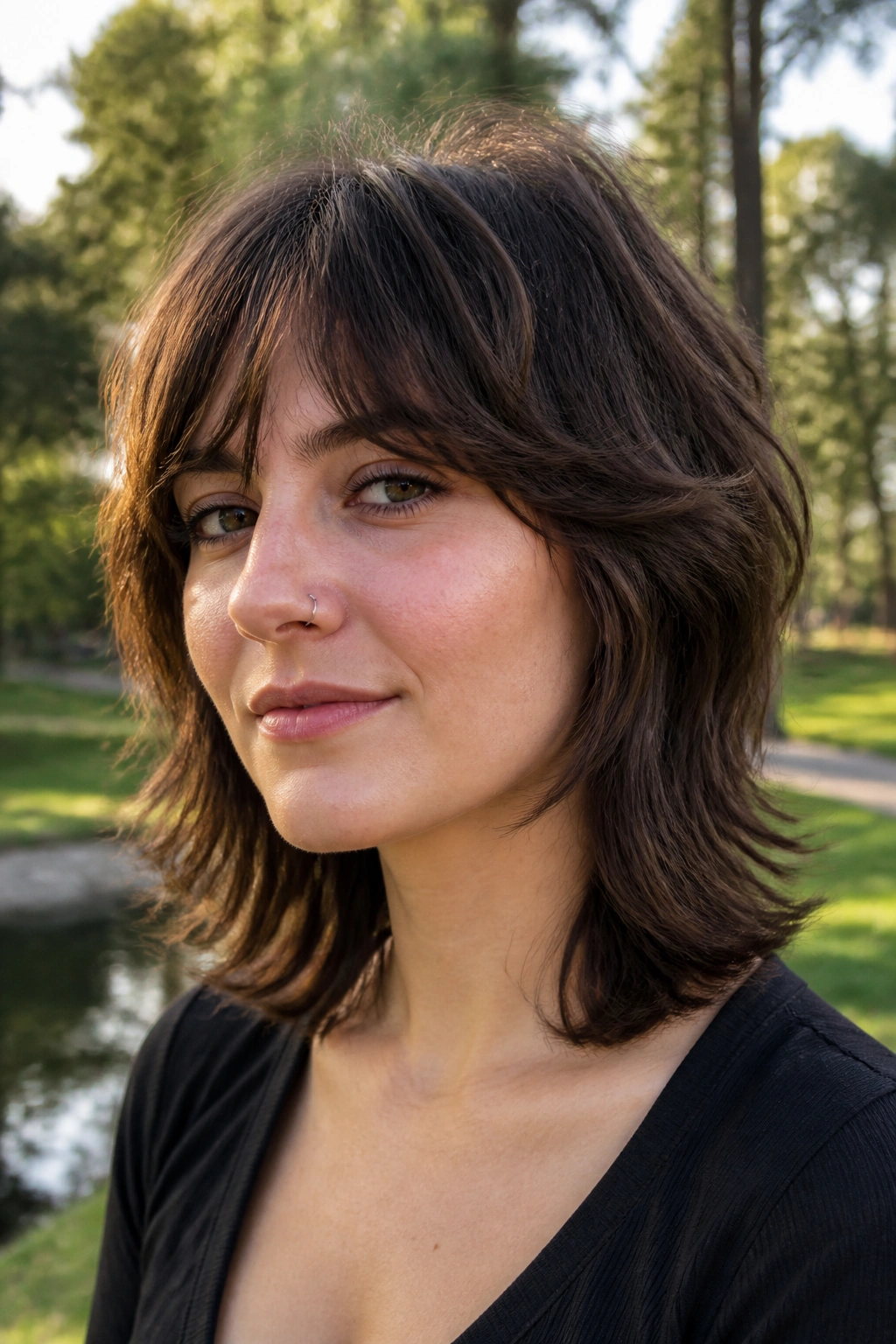
Shoulder length is where the wolf cut starts to behave. You get enough hair for the layers to show, but not so much that the shape disappears into the back. The face-framing pieces landing around the cheekbones make the whole style feel intentional, not accidental.
I like this length for people who air-dry half the time and blow-dry the other half. It doesn’t demand a full styling session. A little scrunching, a little rough-drying, and the cut usually falls into place.
The shoulder-length version also grows out well. That matters more than people admit. A lot of haircuts look good on day one and annoying on day forty-five. This one usually stays useful longer.
If you want softness around the face without committing to bangs, start here.
7. Mullet-Forward Wolf Cut with Heavy Fringe
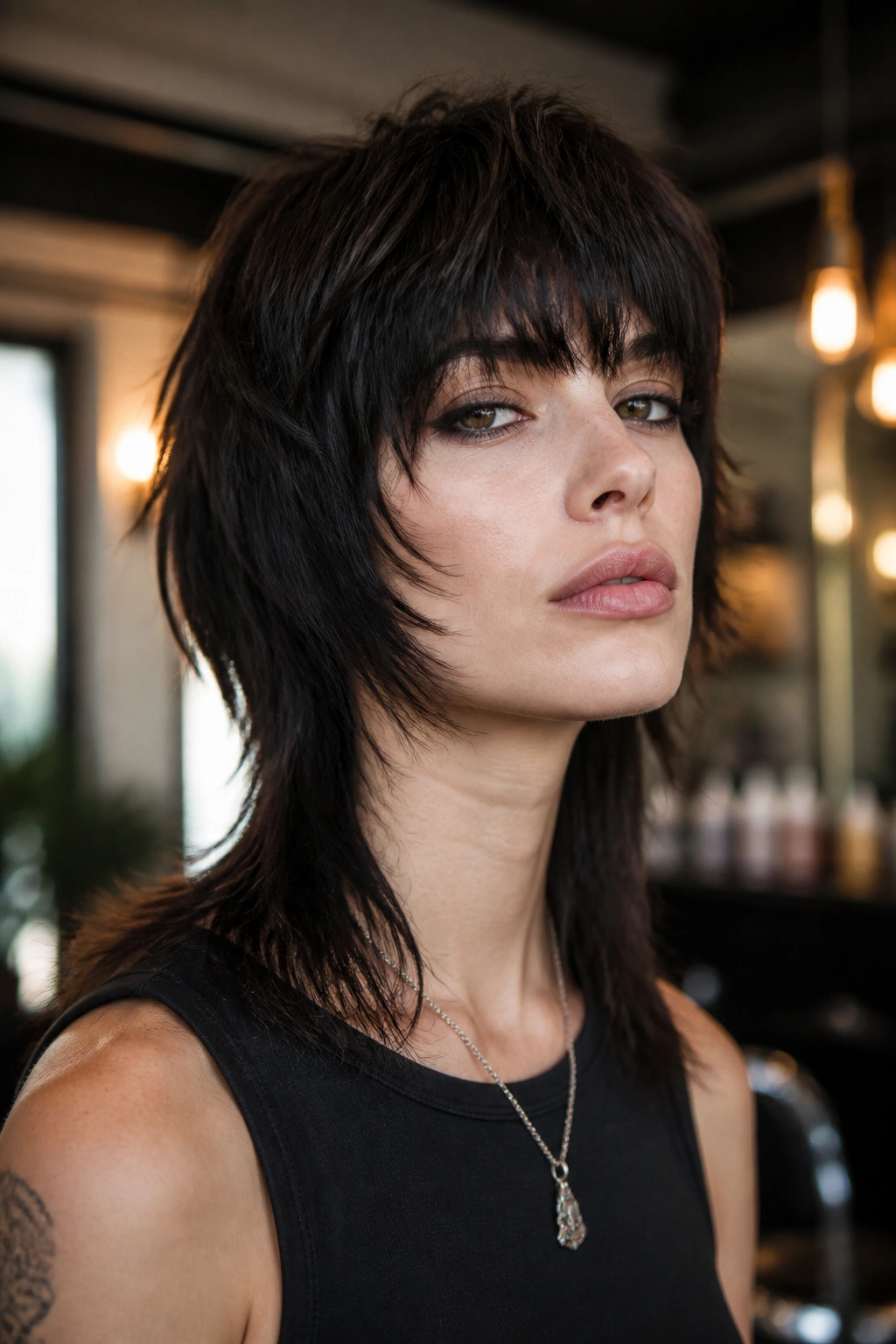
This one has attitude, and it knows it. The top sits shorter, the nape stays longer, and the fringe lands heavy enough to make the eyes pop. It’s the wolf cut for someone who does not want to whisper.
The face-framing layers are chunkier here. They start higher, move faster, and create a sharper split between the crown and the lengths. That contrast is the whole point. If the cut feels a little rebellious, good. That’s why people ask for it.
What Makes It Work
- Strong fringe that sits just above or at the brows
- Shorter crown layers for lift
- Longer back length to keep the mullet feel
- Textured ends so the haircut does not look boxy
It’s best on medium to thick hair with some natural bend. Fine hair can wear it too, but the layers need to stay controlled.
8. Fine Hair Wolf Cut with Soft Internal Layers
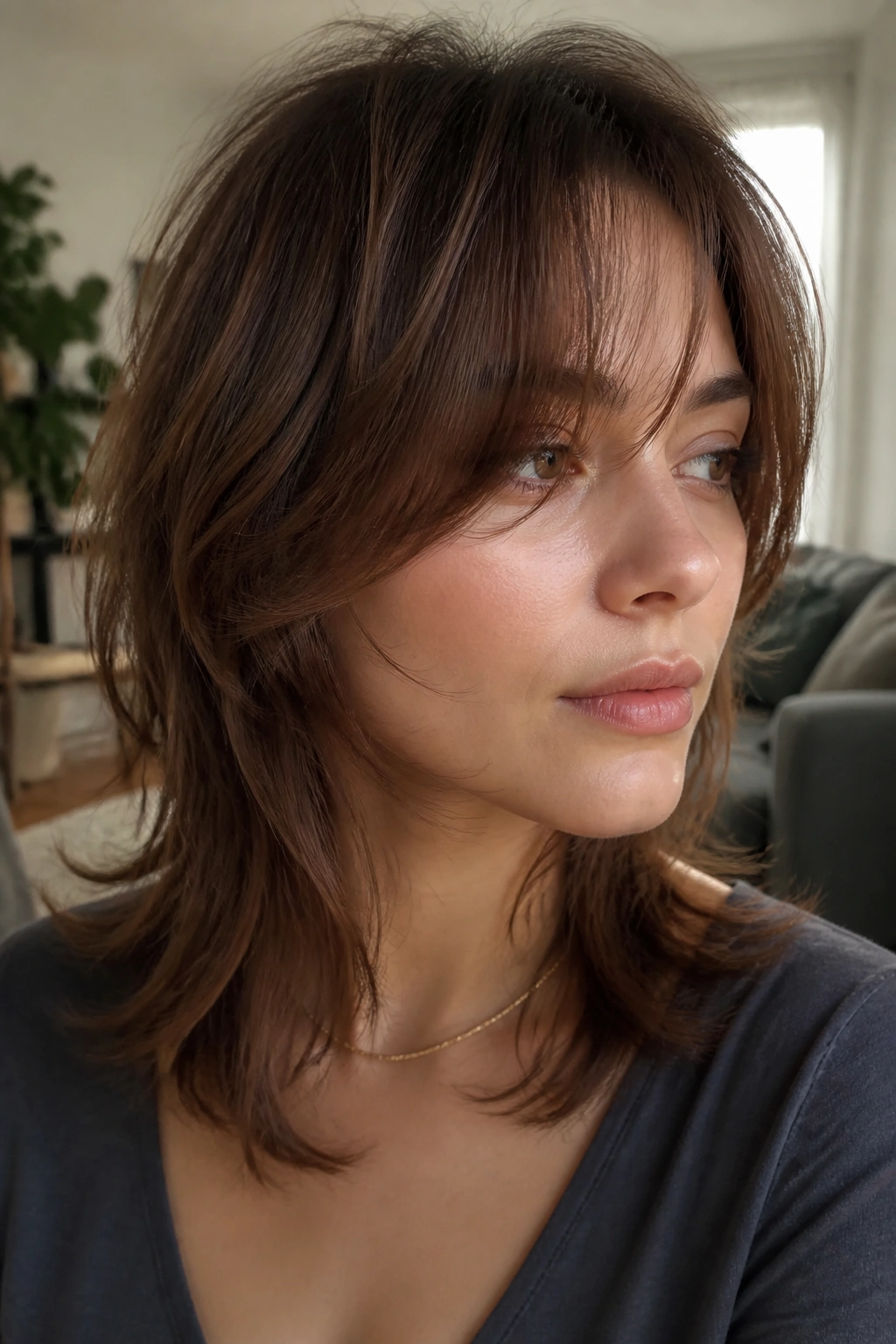
Fine hair needs a lighter touch. Too many short layers and the hair can start to look see-through in the wrong places. The better move is to keep the perimeter soft and build the wolf cut shape with internal layers that add movement without stripping away density.
Why does this matter? Because fine hair needs the illusion of fullness more than dramatic chunkiness. A few well-placed face-framing layers can lift the whole look, especially if they start around the lip or chin instead of the temple.
How to Keep It Full
Ask for point cutting instead of heavy razoring. Keep the crown layers long enough to hold shape. Use a root spray, then blow-dry upside down for about 70 percent of the dry time before smoothing the front pieces.
This version looks best when it moves. Still. It should never look frayed.
9. Thick Hair Wolf Cut with Weight Removal
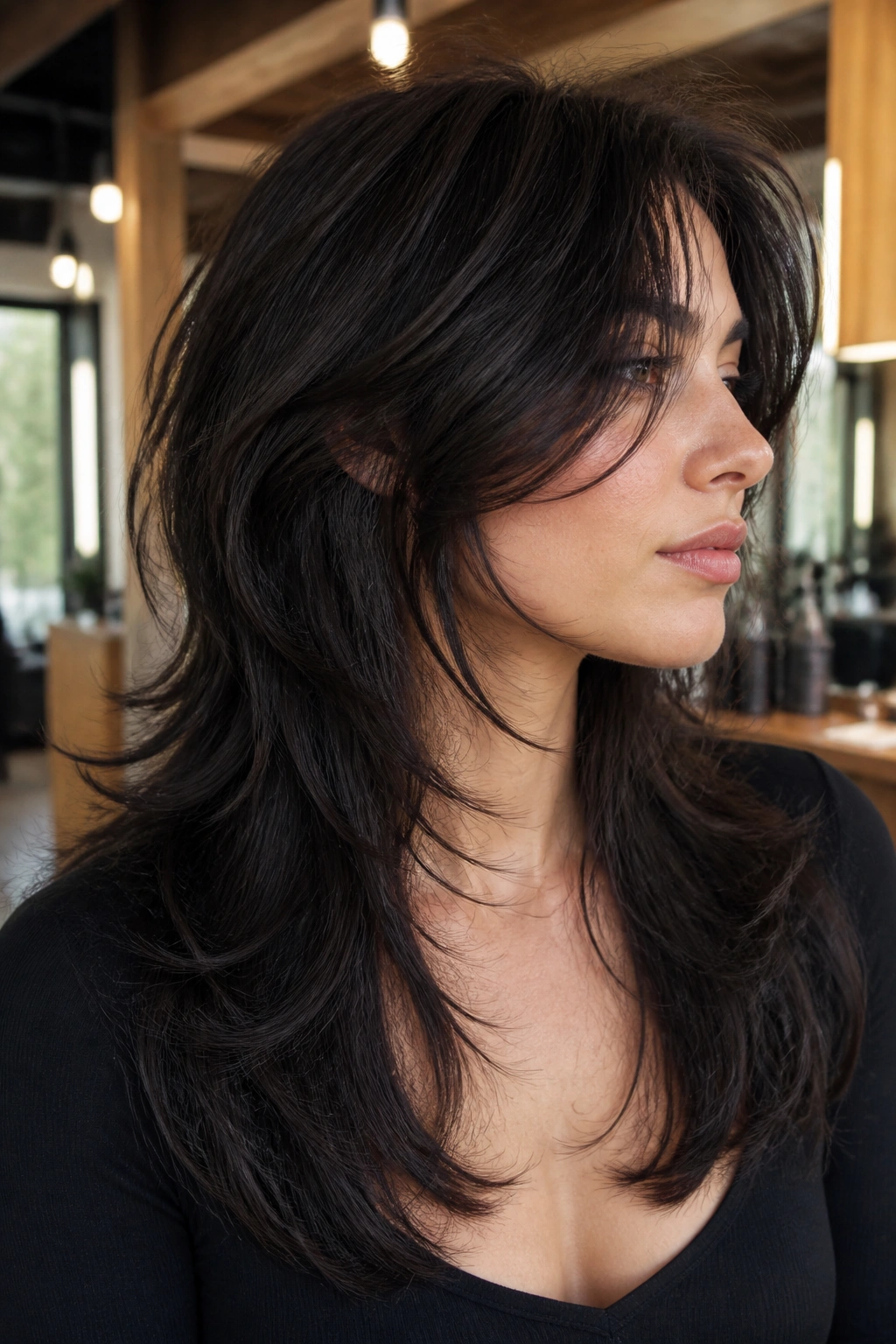
Thick hair can take a wolf cut better than almost any other texture, but only if the stylist removes weight in the right places. Otherwise you get bulk at the bottom and a helmet at the top, which is a waste of a good haircut.
The smartest version uses long face-framing layers, a carved-out crown, and careful thinning through the mid-lengths. Not every section needs to be thinned. That’s where people get into trouble. If you thin the wrong spots, the hair starts to separate in ugly little shelves.
A few details matter here:
- Keep the longest pieces heavy enough to hold shape
- Ask for interior debulking, not all-over thinning
- Let the front pieces start near the cheekbone or jaw
- Blow-dry with tension so the layers sit together
This is one of those cuts that looks expensive when it’s done right. When it’s not, it looks like a shortcut.
10. Face-Framing Wolf Cut with Side-Swept Bangs
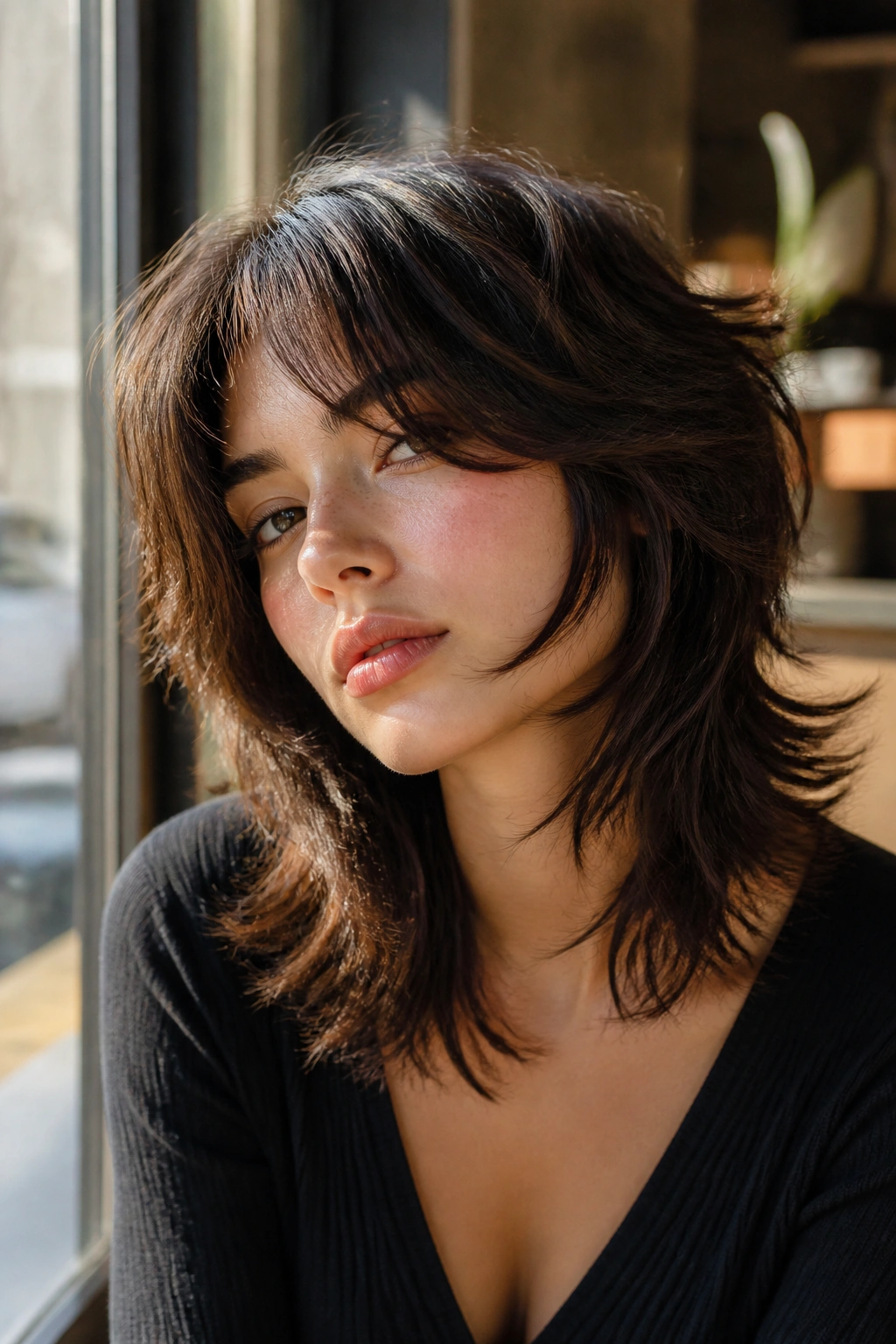
Side-swept bangs soften the wolf cut in a way curtain bangs sometimes don’t. They push the line off-center, which is useful if your face feels too long, too square, or just too symmetrical for your taste.
Why It Works
The side sweep breaks up the front and lets the face-framing layers fall like they belong there, not like they were added as an afterthought. That makes the haircut feel a little more polished than the heavier shag versions. It’s also easier to grow out if you don’t want to commit to a true fringe.
Best Styling Move
Dry the bangs first with a small round brush, pulling them across the forehead in the direction you want them to sit. Then rough-dry the rest of the hair and leave the ends a little undone.
Best tip: Ask for the longest face-framing piece to hit just below the cheekbone. That one detail makes the whole cut look softer.
11. Soft Korean-Inspired Wolf Cut
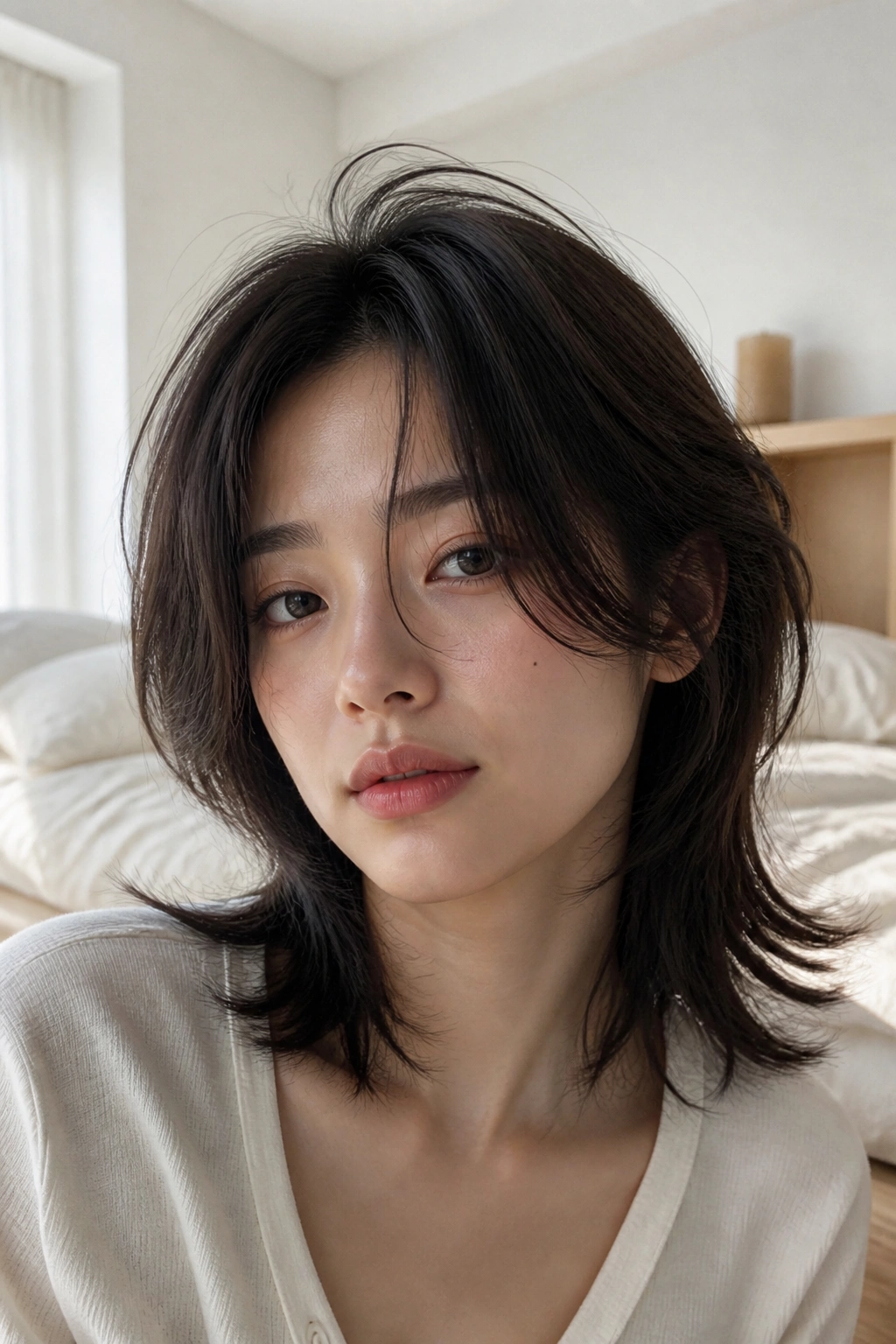
This version is gentler than the sharper shag cuts people usually picture. The top still has lift, but the edges stay smooth and the face frame drops in a soft arc rather than a jagged step. It’s the haircut equivalent of turning down the volume without losing the song.
The reason it works is balance. The crown gets enough texture to move, but the ends stay tidy enough to feel clean. That makes it a strong choice if you want a wolf cut that won’t scare you in the mirror on day two.
It also plays well with straight or lightly wavy hair. A small curve at the ends and a little bend near the cheekbones are usually enough. No need to make it look over-styled. That’s part of the charm.
12. Long Wolf Cut with Invisible Layers

Some haircuts announce themselves. This one doesn’t. The layers are tucked inside the length, so the cut looks calm when it’s still and more textured when you move. That makes it a good fit for people who want the wolf cut shape without the obvious shag silhouette.
Unlike a high-contrast mullet, this style keeps the front and back more connected. The face-framing pieces are there, but they’re subtle. They might only show their shape when you turn your head or tuck one side behind your ear. That quiet effect is what makes the cut feel expensive.
It’s a smart option if you work in a place where bold haircuts feel like a conversation. The shape is there. It just doesn’t shout.
13. Wispy Fringe Wolf Cut
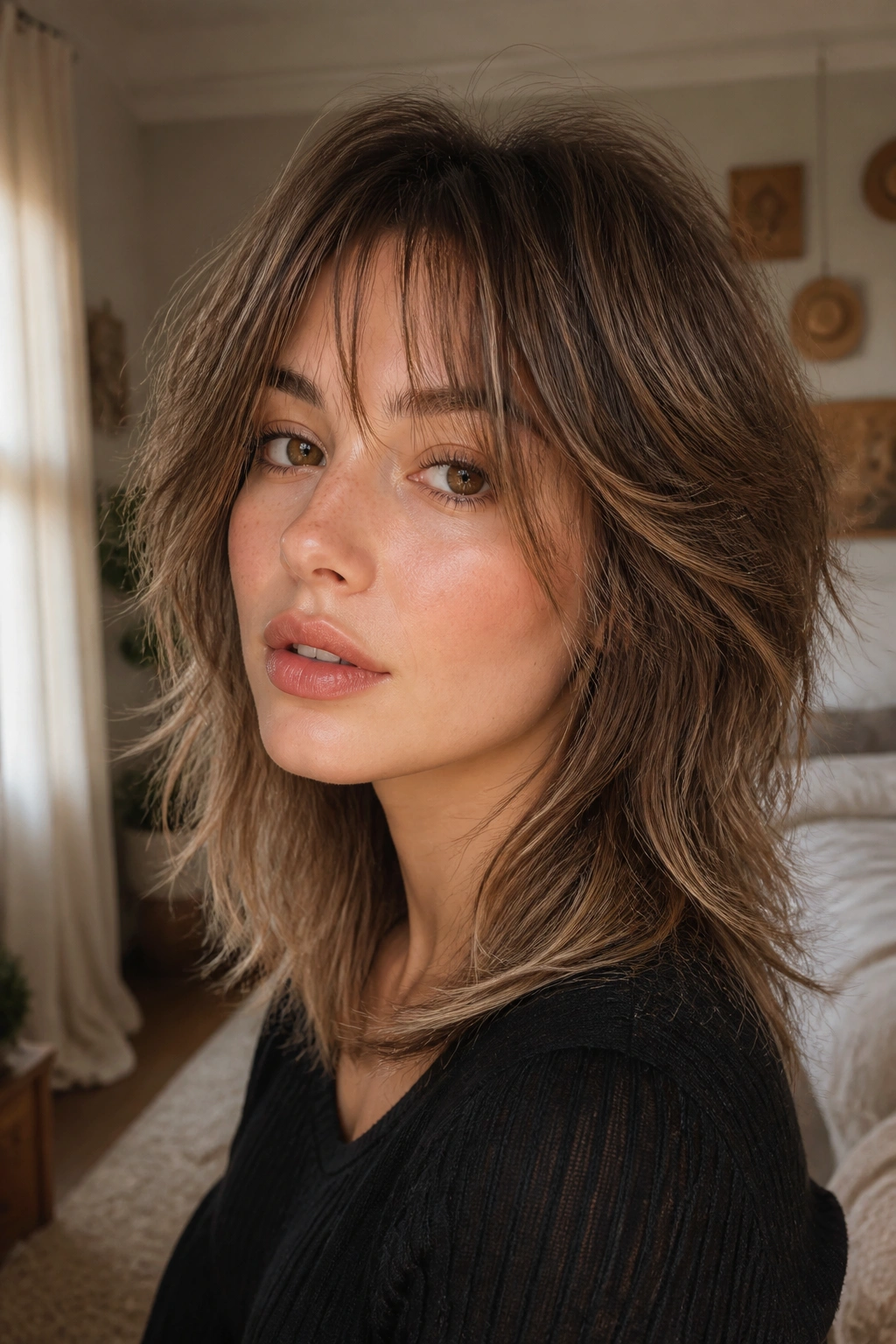
Can a fringe be light and still useful? Absolutely. A wispy fringe gives the wolf cut a bit of edge without locking you into a heavy bang that you have to fight every morning.
The best version starts narrow in the center and opens into longer face-framing pieces near the temples. That keeps the forehead from feeling boxed in. It also helps if your hairline has little growth patterns that make blunt bangs annoying.
How to Keep the Fringe Soft
Ask for dry cutting around the fringe so the stylist can see how it falls. Use a small round brush or your fingers to separate the pieces while drying. A pea-sized amount of cream on the ends keeps the fringe from puffing.
Skip heavy oil near the roots. It flattens the shape fast.
14. Jaw-Length Wolf Cut
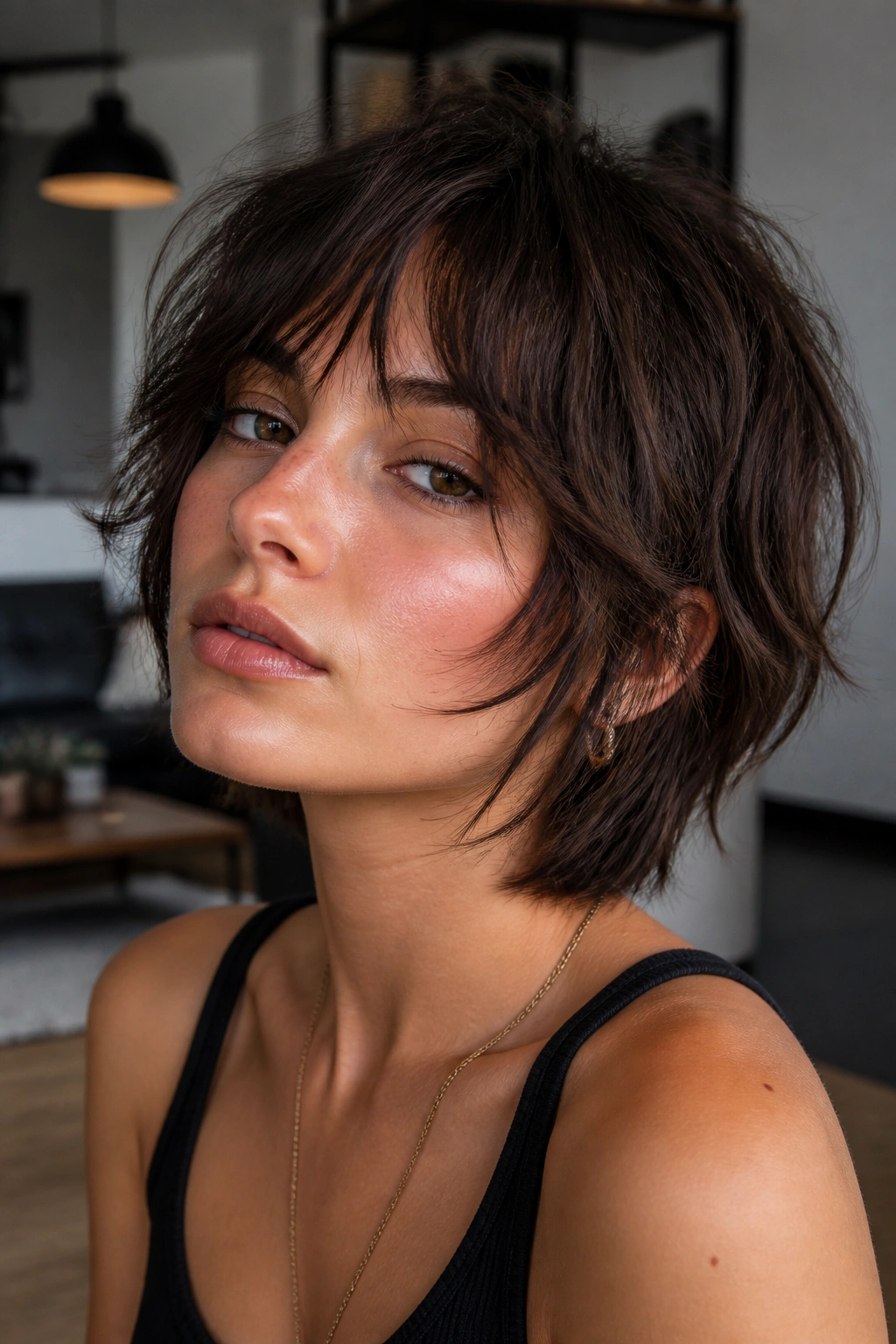
Not every wolf cut needs to live past the shoulders. A jaw-length version can be sharp, youthful, and easy to move around in. It works especially well when the face-framing layers stop right where the jaw turns, which gives the haircut a clean edge.
A lot of short cuts get too round. This one avoids that by leaving a bit of length in the back and keeping the top textured. You get lift at the crown, a little swing near the face, and enough structure to keep the cut from looking like a grown-out pixie.
I’d choose this if you like shorter hair but hate how a blunt cut can sit too still. It has motion built in.
15. Blowout Wolf Cut with Crown Lift
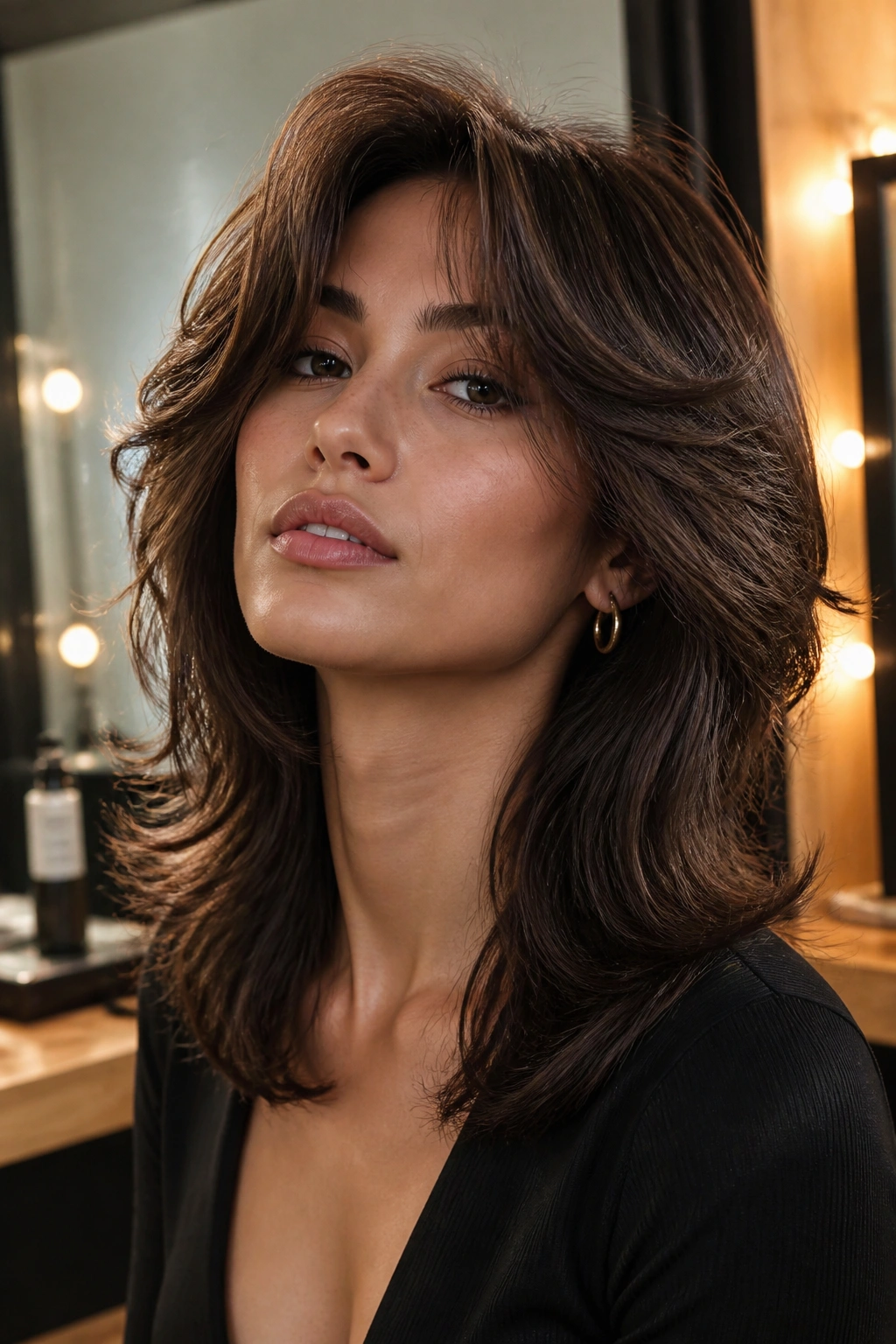
A blowout changes everything here. Same cut, different personality. The crown gets lifted with a round brush, the face-framing layers curve away from the cheeks, and the whole haircut starts to feel fuller and more styled without looking stiff.
I’ve seen this version work best on medium hair that needs help looking awake. The layers do half the work, and the brush does the rest. If you let the hair set a little while warm — even 5 minutes pinned up at the crown — the shape tends to hold longer.
Styling Notes That Matter
Use a heat protectant first. Then rough-dry the roots until they’re about 80 percent dry before switching to the round brush. That helps the shape last. Finish with a light hairspray, not a sticky one.
The goal is lift, not crunch.
16. Air-Dried Wolf Cut for Natural Texture
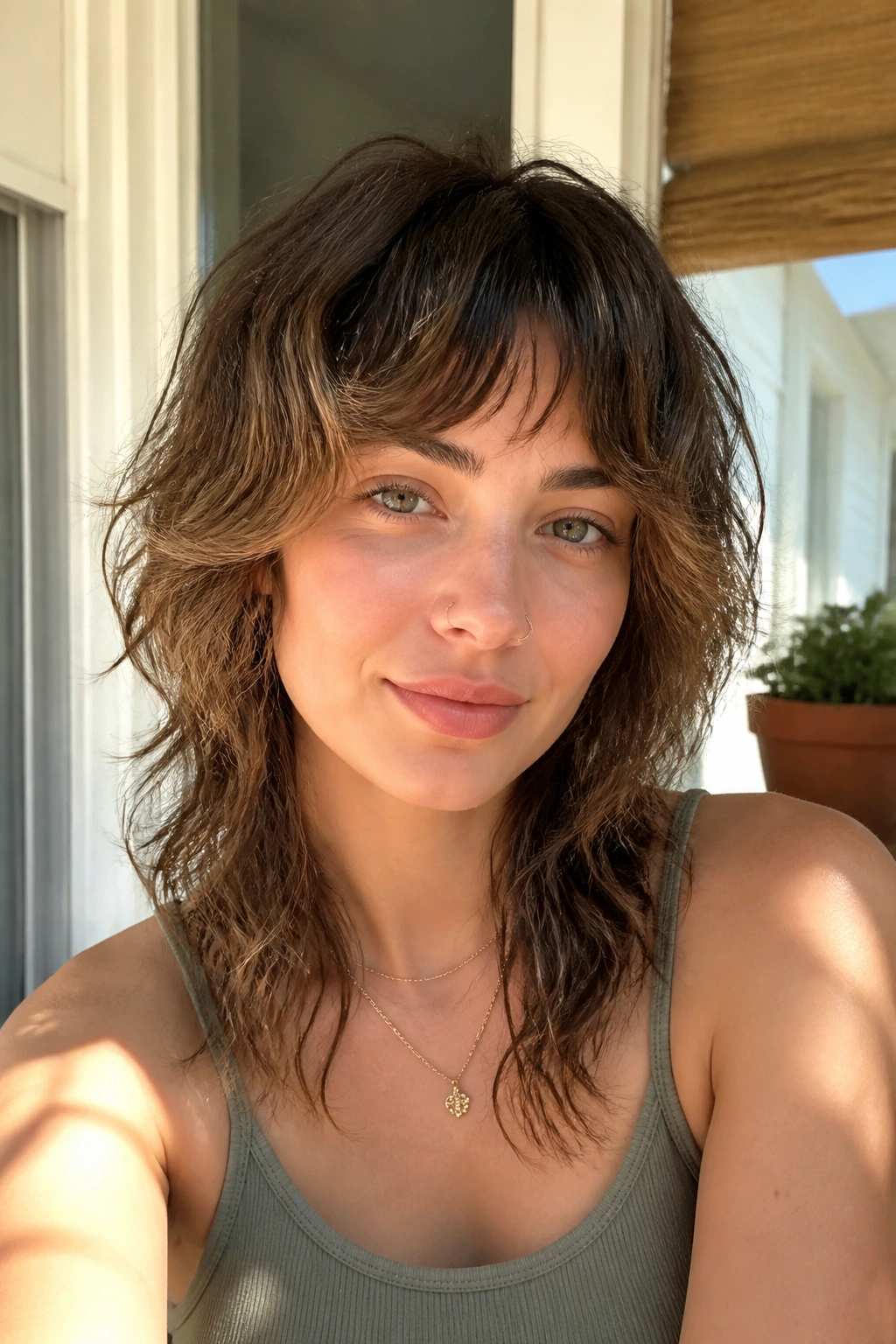
Does this cut work without heat? Usually, yes — and that is one reason people keep coming back to it. If your hair has wave or curl on its own, the wolf cut with face framing layers can air-dry into a shape that already looks styled.
The secret is not to overload it. Use a leave-in conditioner or light curl cream, then scrunch and leave the hair alone. The face-framing pieces should be long enough to fall around the cheeks, not stick out like little antennas. Shorter layers are fine too, as long as they’re not too blunt.
What to Do
- Apply product to damp hair, not dripping hair
- Scrunch from the ends upward
- Clip the roots if you want more lift
- Leave the front alone until it’s fully dry
A touch of frizz is fine. It keeps the style from looking too engineered.
17. Shaggy Wolf Cut with Piecey Ends
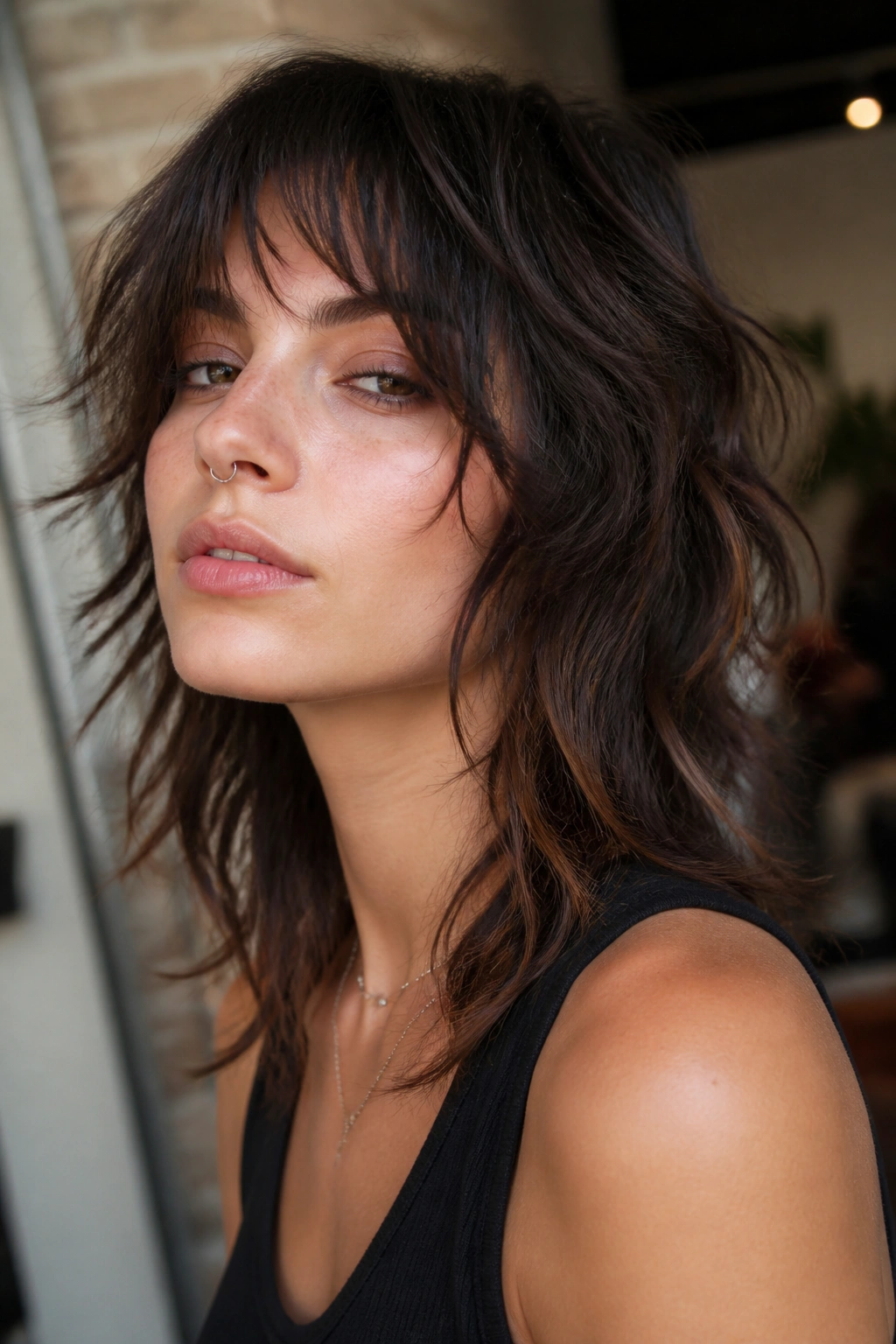
This is the version that looks best when it’s a little messed up. The layers are choppy, the ends are separated, and the face-framing pieces fall in small, broken sections that move when you talk. That movement is the point. Too much smoothness and the cut loses its charm.
The trick is to keep the separation controlled. You want piecey, not stringy. A matte texturizing spray gives the ends some grit, while a tiny amount of cream on the front stops the layers from sticking together in one flat curtain.
It’s a cut that feels casual in the best way. Not lazy. Casual. There’s a difference, and this one knows it.
18. Round-Face Wolf Cut with Long Cheek Layers
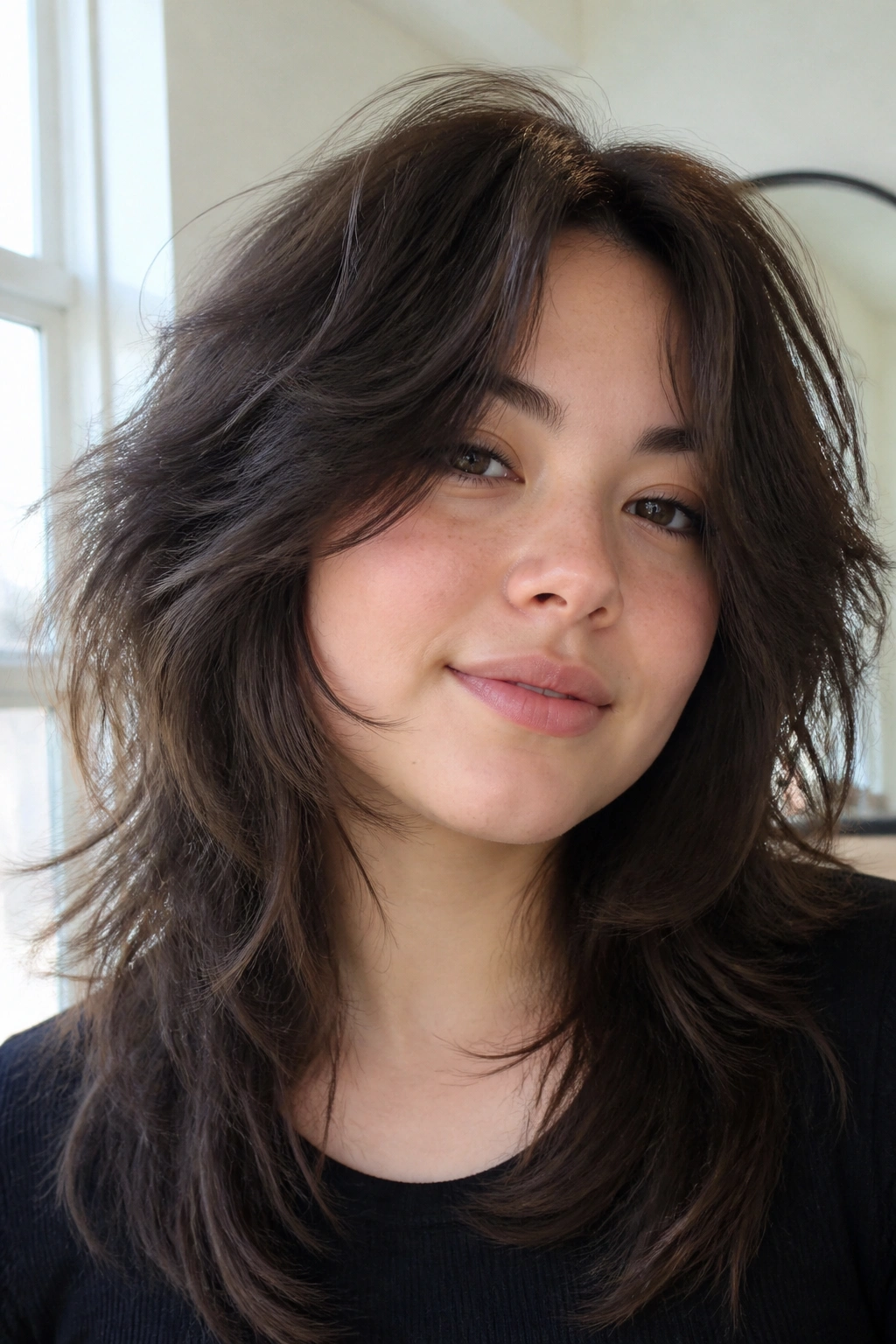
Round faces usually look better when the longest face-framing pieces fall below the widest point of the cheeks. That simple shift changes the whole shape. It pulls the eye downward a bit and keeps the haircut from widening the face at the exact spot you want to soften.
A chin-length frame can sometimes make the face feel fuller. This version avoids that by using longer, more vertical lines. The top still gets volume, but the front pieces taper down past the cheeks, which gives the haircut more stretch.
If you’re choosing between a short wolf cut and a longer one, go longer here. It gives the face more room.
19. Balanced Wolf Cut with Center Part
Some wolf cuts are all attitude. This one is about control. A center part with balanced face-framing layers gives the haircut symmetry while keeping enough movement to stop it from feeling flat.
The cut works because both sides mirror each other, which makes the shape easy to read. The layers can start near the lips and slide into longer pieces at the jaw. That keeps the front open without dragging the eye down. It’s a smart choice if you like structure but still want that loose shag feeling.
Wear it smooth for a cleaner look, or add a few bends through the mids. Either way, it stays readable. That’s the part people miss when they talk about wolf cuts like they’re only messy styles.
20. Feathered-Side Wolf Cut
Feathering around the sides changes the whole mood. The haircut goes from rough and piecey to soft and swingy, with the face-framing layers turning out at the ends instead of sitting bluntly against the cheeks.
This version feels especially good on medium-density hair. The feathered sides lighten the silhouette, and the back can stay a little longer to keep the mullet shape from disappearing. It’s a useful option if you want a wolf cut that still looks decent tucked behind the ears.
Key Details
- Ask for the front to be feathered, not thinned out
- Keep the ends soft enough to curve
- Let the shortest layers sit around the cheekbone
- Style with a small round brush or Velcro rollers
It’s not edgy in a loud way. That’s the appeal.
21. Retro-Volume Wolf Cut
There’s something a little 90s about this one, and I mean that in a good way. The roots lift up, the face frame curves out, and the lengths fall with a blown-out shape that feels bigger than the average shag.
The volume comes from where the layers are placed. Shorter pieces at the crown give you height, while the longer face-framing sections keep the style from turning into a puffball. If the blowout is smooth and the ends are slightly flipped, the whole thing looks polished without losing the wolf cut edge.
This is the version I’d pick for a night-out blow-dry or any day you want your hair to look like it tried harder than it did.
22. Soft Mullet Wolf Cut with Micro Layers
This cut leans into the mullet side of the equation, but it does it with a gentler hand. The micro layers near the crown add lift in small doses, and the face-framing pieces stay soft enough to keep the front from looking harsh.
Why Micro Layers Matter
Tiny layers can do a lot when they’re placed well. They give the hair movement without removing huge chunks of weight. That matters if you want the back to stay long and the front to stay flattering. Too many big layers and the shape starts to wobble.
How to Wear It
Let the nape stay a little loose. Keep the fringe wispy or split. Use a light wax on the ends if you want more separation.
This is a good cut for someone who likes a little grit but still wants the face to stay open and readable.
23. Tousled Wolf Cut with Mid-Length Layers
Why does mid-length hair wear wolf cuts so well? Because it gives the layers enough room to show without letting the haircut fall into one long, heavy curtain. At collarbone length, the face-framing pieces can swing, bend, and tuck behind the ears without losing their shape.
That middle ground is useful. Short cuts can feel too committed. Long cuts can hide the shape. Mid-length sits in the sweet spot where the wolf cut actually looks like a wolf cut.
A salt spray or lightweight mousse is usually enough. Rough dry it, twist a few face pieces, and stop before the hair gets overworked. The charm here is that it looks better when it’s a little imperfect.
24. Low-Maintenance Wolf Cut with Long Grow-Out
This is the cut for people who want a shape that keeps behaving after the first trim grows out. The layers are long, the face-framing pieces blend cleanly into the rest of the haircut, and the overall outline stays soft instead of breaking apart.
That’s a real advantage. Some wolf cuts look great for three weeks and then turn into two separate haircuts arguing with each other. This one is calmer. You can usually stretch trims to around 8 to 10 weeks if your hair grows evenly and you don’t mind a softer edge.
It also plays nicely with a busy routine. A quick blow-dry, a bend at the front, and you’re done. No elaborate styling map needed.
25. Polished Wolf Cut with Face Framing Layers
If you want the wolf cut shape but need it to look cleaner, this is the one to save. The crown still has lift, the face-framing layers still do their job, but the finish is smoother and the edges stay tidier. It’s the version that can go from air-dried to brushed out without losing its point.
The smartest part is the front. Ask for the shortest face-framing pieces to land around the cheekbone or just below it, then let the rest blend down toward the collarbone. That keeps the haircut open near the eyes and soft near the jaw. It also means the style keeps looking deliberate even when it grows.
I like this cut for anyone who wants something modern without living in constant tousle mode. Clean enough to wear straight. Soft enough to look lived-in. That combination is harder to get than people think, and once you have it, you may not want to go back to a blunt cut.
