


A wolf cut lives or dies by the front pieces. Get the face-framing layers right, and the whole haircut looks deliberate, even if it leans messy and shaggy. Get them wrong, and the cut can sit heavy around the cheeks or puff out in the wrong places.
That’s why this style has staying power. The back can be choppy and wild, sure, but the front is where the haircut does its real work. A good wolf cut doesn’t just give you texture; it changes where the eye goes, whether that means sharper cheekbones, a softer jaw, or a little lift around the eyes.
The trick is that “wolf cut” means different things on different heads. On curly hair, it needs room to bounce. On straight hair, it needs a bend or it can fall flat and look unfinished. On thick hair, the layers have to remove bulk without turning the whole thing frizzy. On fine hair, too much layering can leave you with air and not much shape.
So the useful question is not whether wolf cuts are in or out. It’s which version gives your face the shape you actually want. That part matters more than the name on the mood board.
1. Soft Wolf Cut With Curtain Bangs
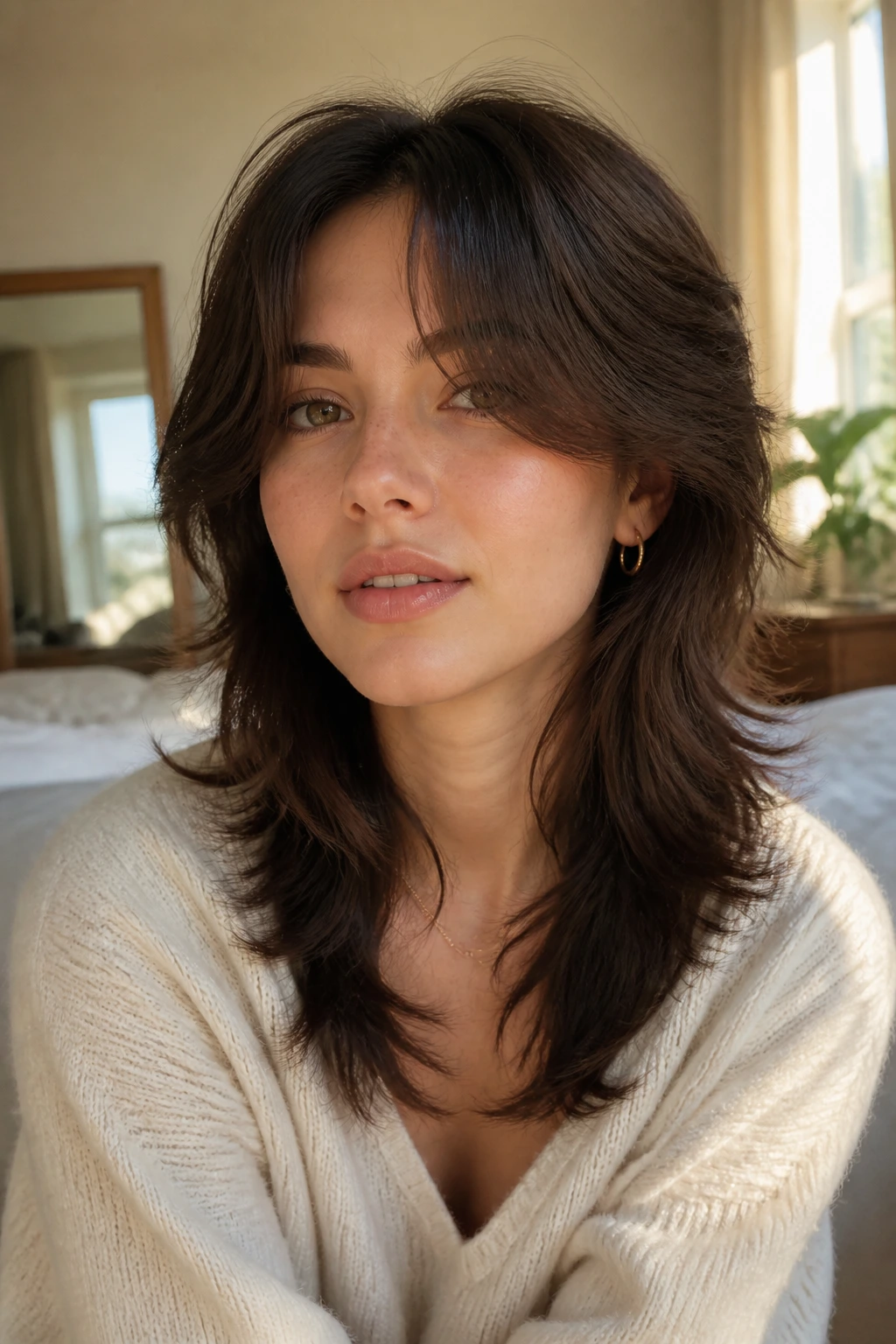
This is the version I recommend when someone wants the wolf cut idea without feeling like they’ve jumped straight into full shag territory. The curtain bangs split the front cleanly, then sweep away from the face so the layers feel soft instead of harsh.
Why It Works
Curtain bangs do a lot of the heavy lifting here. They break up the forehead, soften the temples, and guide the eye down into the rest of the cut without screaming for attention.
A stylist usually keeps the crown a little shorter, then lets the front pieces start around the cheekbone or just below it. That gives the haircut movement near the face without turning the whole front into a wall of fringe.
- Good for straight, wavy, or loose-textured hair.
- Ask for the shortest front pieces to land around the cheekbone.
- Style with a round brush or a 1.25-inch curling iron.
- Keep the bang area a touch longer in the center than at the sides.
My favorite part: it grows out cleanly. That matters more than people admit.
2. Chin-Grazing Wolf Cut With Cheekbone Layers

Want movement that shows up from across the room? This is the one. The front pieces hit closer to the chin, which gives the face a sharper edge and keeps the cut from feeling too soft.
The chin-level framing is especially useful if your jawline disappears under longer, flatter layers. It creates a visible line without making the haircut blunt.
I like this version on round and heart-shaped faces because it gives the front a little structure. The rest of the haircut can stay airy and piecey, but those chin-length front sections keep the whole thing from floating away.
If you ask for this at the salon, say you want shorter front movement with longer length kept in the back. That distinction matters. You’re not asking for a dramatic chop everywhere; you’re asking for a front shape with enough presence to matter.
3. Long Wolf Cut With Wispy Face-Framing Pieces
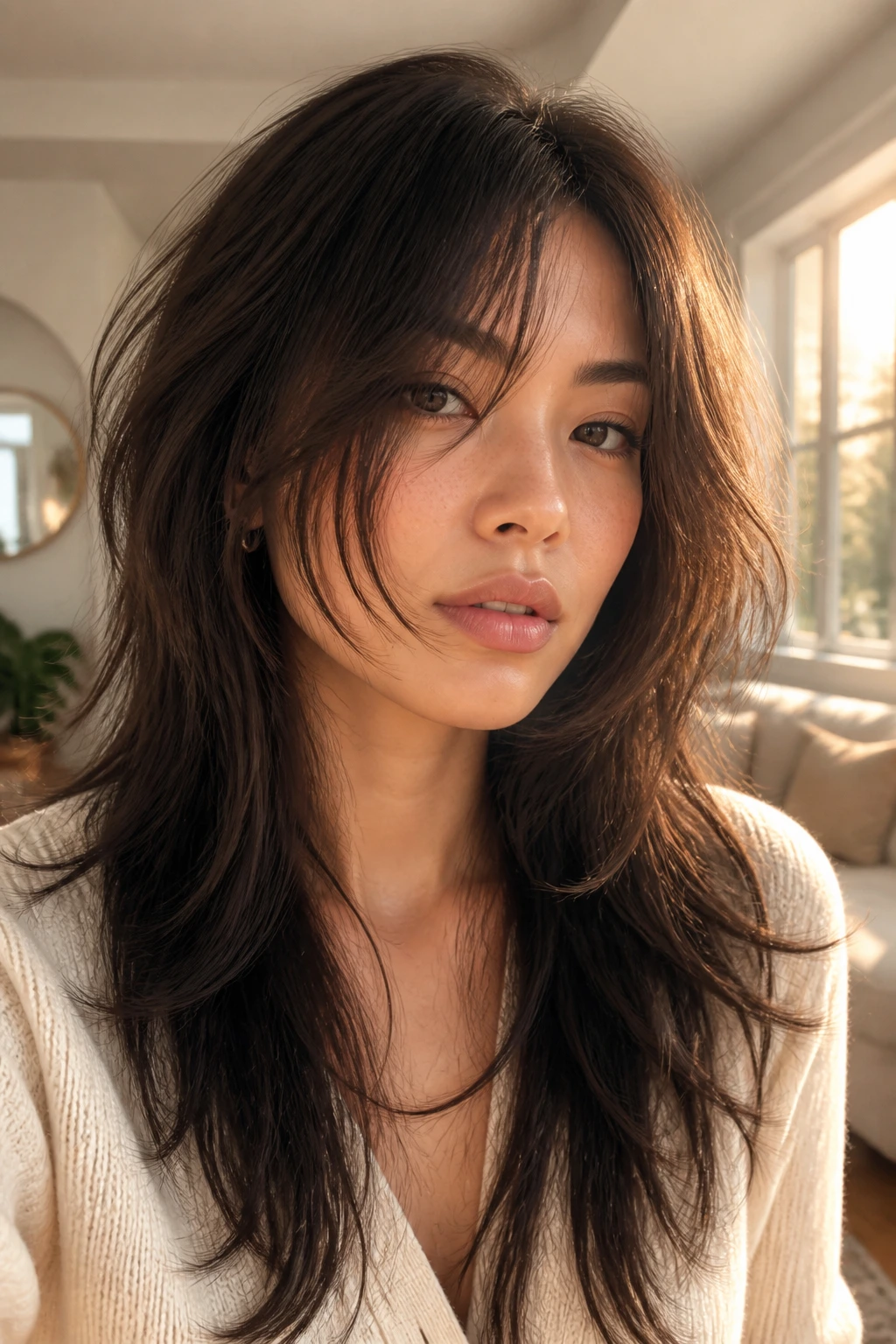
If you keep touching your hair because you do not want to lose length, this is the calm version of the wolf cut. The long layers stay down the back, while the face-framing pieces stay light enough to move when you turn your head.
How to Wear It
The shortest front section usually lands near the lip line, then blends into longer side pieces. That keeps the cut airy without making it look like you lost six inches overnight.
This works well on medium-density hair that wants a bit of shape but not a full reshaping. It also plays nicely with loose waves, since the front pieces can bend instead of sticking out in a hard line.
A large-barrel iron is the easiest way to style it. Wrap the front away from the face for just five to eight seconds, then brush it out with your fingers so the bend looks soft, not stiff.
Tiny detail, big payoff: keep the ends a little ragged. Too much polish kills the whole point.
4. Micro-Fringe Wolf Cut With Razor Ends

The sharpest wolf cuts are often the smallest in the front. A micro fringe gives this cut a graphic edge, and the razor-textured ends keep it from looking too neat.
That contrast is the appeal. The top looks compact, the middle layers flick out, and the face frame feels almost edgy enough to wear a leather jacket with everything.
This version is not for someone who wants to hide their forehead. It puts the face on display, and it does it on purpose.
- Best on short to medium hair lengths.
- Ask for a cropped fringe that sits well above the brows.
- Keep the side pieces soft so the fringe does not feel severe.
- Use a matte paste or light wax on the fringe tips.
If you like haircuts that look a little rebellious even when they’re not styled, this one has real bite.
5. Curly Wolf Cut With Rounded Front Layers
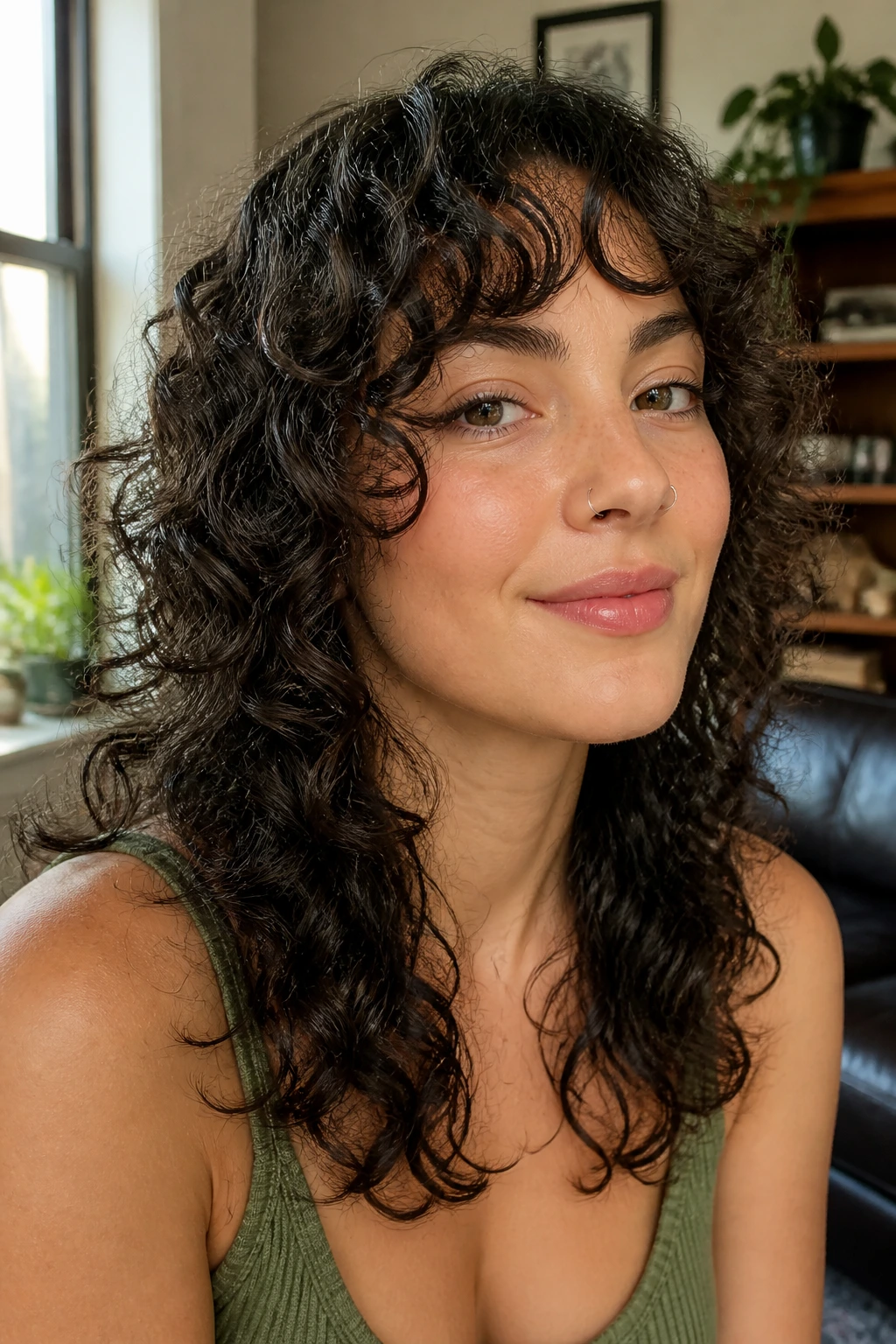
Curls need room, and this cut gives them some. The front layers should follow the curl pattern instead of fighting it, because the second you cut curly hair into a flat shape, the whole thing starts to feel boxed in.
A rounded face frame works especially well here. It lets the curls bounce around the cheeks and jaw without collapsing into a triangle. That shape is the difference between “I have layers” and “I have a haircut that actually understands curls.”
Dry cutting can help a lot, since curls shrink and shift once they dry. If your stylist cuts them wet, the front can end up shorter than you expected, which is how people wind up with surprise baby pieces that do not blend.
Use curl cream on soaking-wet hair, then scrunch in a light gel and diffuse on low heat. The front layers should dry with movement, not crunch.
6. Wavy Wolf Cut With Collarbone Flicks
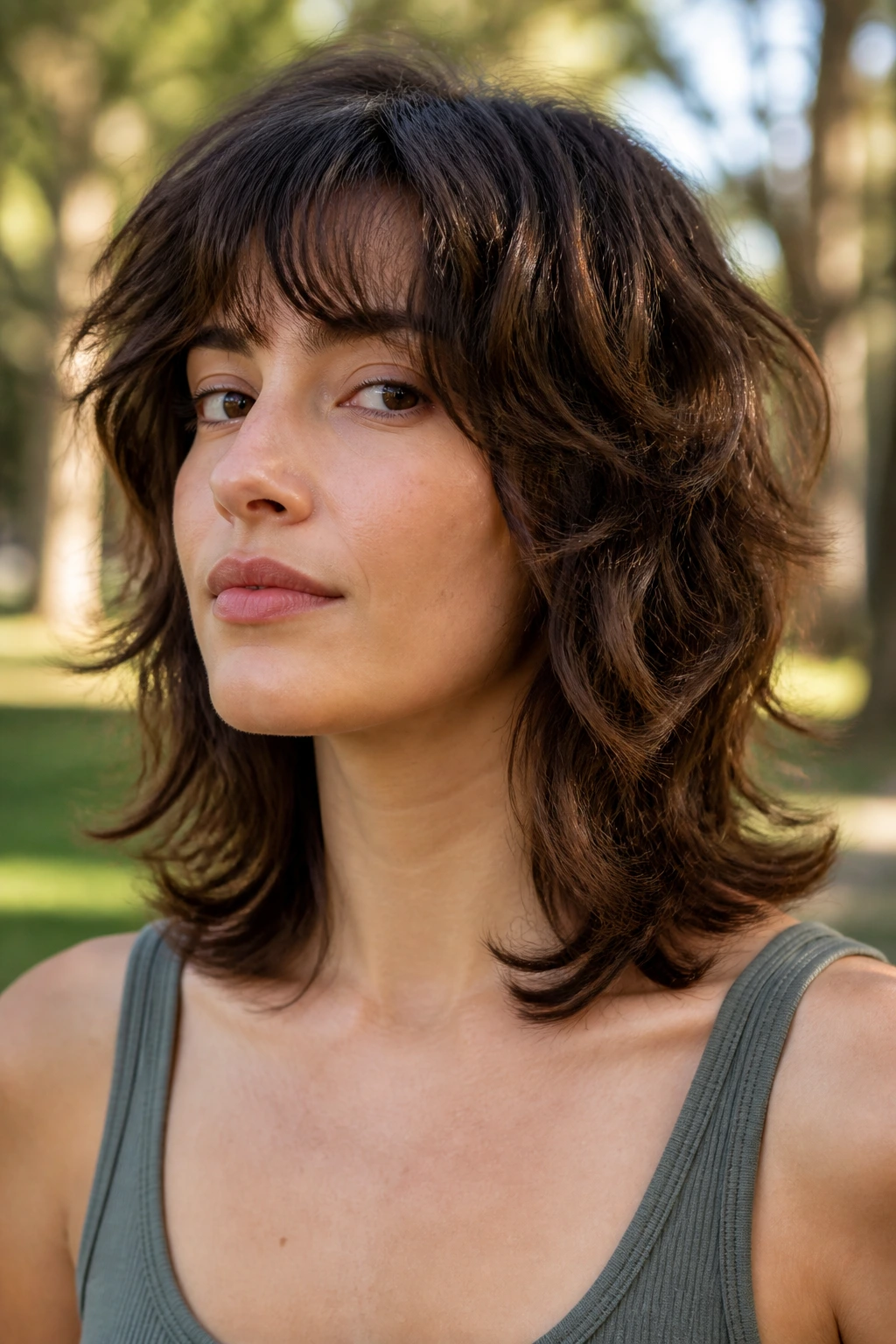
Collarbone length. That’s the sweet spot.
Unlike a blunt lob, this wolf cut keeps the edges moving, so the hair flips out a little as it brushes the collarbone. The face-framing layers are long enough to feel soft, but they still give the haircut shape when the rest of the hair falls straight.
This version is a nice fit for people whose waves flatten at the roots but puff out at the ends. The cut gives the crown some lift without taking away the length you probably want to keep.
A little mousse at the roots and a touch of wave cream through the mids can do a lot here. Twist the front pieces once while they’re damp, then let them air-dry or diffuse. That one move gives the face frame a bend that looks intentional instead of random.
7. Thick-Hair Wolf Cut With Debulked Sides

Thick hair can wear a wolf cut better than almost any other texture — if the bulk is removed in the right places.
What Makes It Manageable
The trick is not to attack the whole head with thinning shears. You want weight taken out from underneath the top layers so the haircut still has shape, not frizzed-out fuzz.
Around the face, slide-cutting or point-cutting can keep the front pieces light without leaving them stringy. That matters a lot on thick hair, because the wrong texturizing technique can make the ends feel choppy in a bad way.
- Keep the perimeter slightly heavier so the shape holds.
- Ask for internal layering, not random thinning.
- Let the front pieces start below the cheekbone if your hair is dense.
- Use a smoothing cream on the mids and ends.
My rule here: less is more on the first cut. You can always remove more weight later.
8. Fine-Hair Wolf Cut With Airy Internal Layers
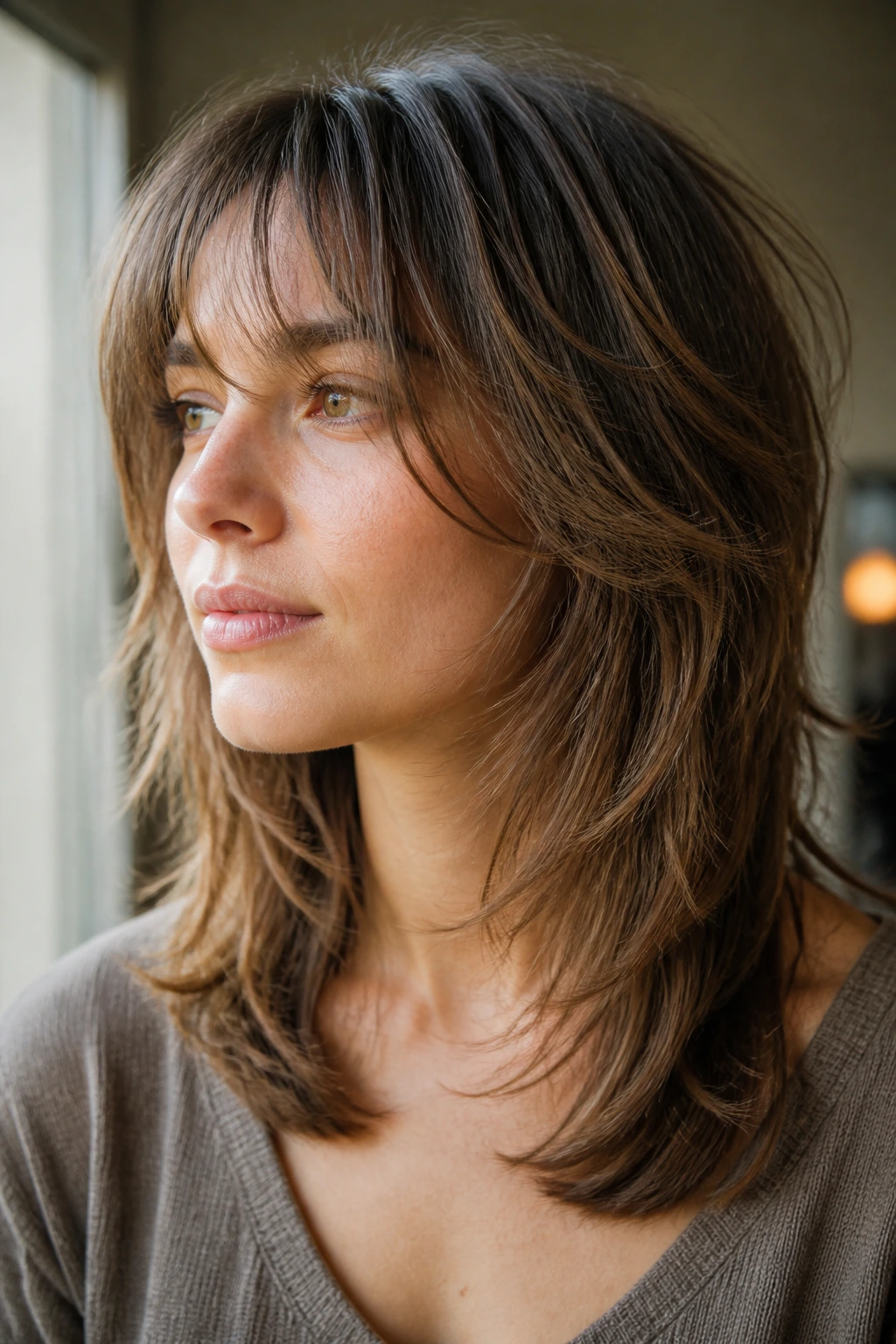
The mistake with fine hair is cutting too much of it away. A wolf cut can still work, but the layers need to stay controlled so the style looks full instead of flimsy.
The smartest version keeps the outer line a little longer while using just enough internal layering to create lift at the crown. That gives the haircut movement without exposing every thin end to the light.
I especially like face-framing layers that begin around the cheekbone on fine hair. Anything much shorter can make the front feel sparse, and once the ends look sparse, the whole cut starts to feel fragile.
Use a lightweight mousse at the roots, blow-dry with a round brush, and stop over-touching it. Fine hair gets limp fast when you handle it too much. A little grit from dry shampoo on day two can help the wolf cut shape stay visible.
9. Bottleneck-Bang Wolf Cut

Why do bottleneck bangs work so well with a wolf cut? Because they make the front look designed instead of simply chopped.
The center of the fringe stays narrow, then it opens out toward the temples and blends into the face-framing layers. That shape softens the forehead without closing off the face, which is one reason this combo looks so good on so many people.
How to Style the Bangs
Dry the center first with a small round brush, then work the side pieces away from the face so they fall into the rest of the cut. If you let the fringe dry crooked, the whole front can split in weird places.
This version is especially good if you want a little 1970s softness without committing to a full curtain bang. It has more shape than a wispy fringe, but less weight than a blunt one. That middle ground is the charm.
If your hairline has a stubborn cowlick, keep the shortest point a touch longer. That tiny adjustment can save you a lot of daily fighting.
10. Mullet-Leaning Wolf Cut With Narrow Face Frame

You know the haircut that looks coolest when the person moves? This is that one.
The back stays longer and a little wild, while the front gets a narrow frame that doesn’t spread too wide over the cheeks. That creates a leaner outline and keeps the style from turning fluffy at the sides.
It’s a strong look. Not loud, but strong.
- Best if you like punk energy or a sharper silhouette.
- Ask for short crown layers that graduate into a longer nape.
- Keep the side pieces narrow so the haircut doesn’t balloon out.
- Use a texture spray, then squeeze the ends with your hands.
This cut looks best when it is not overcombed. Leave a little mess in it. That’s the whole point.
11. Straight-Hair Wolf Cut With Flipped Ends
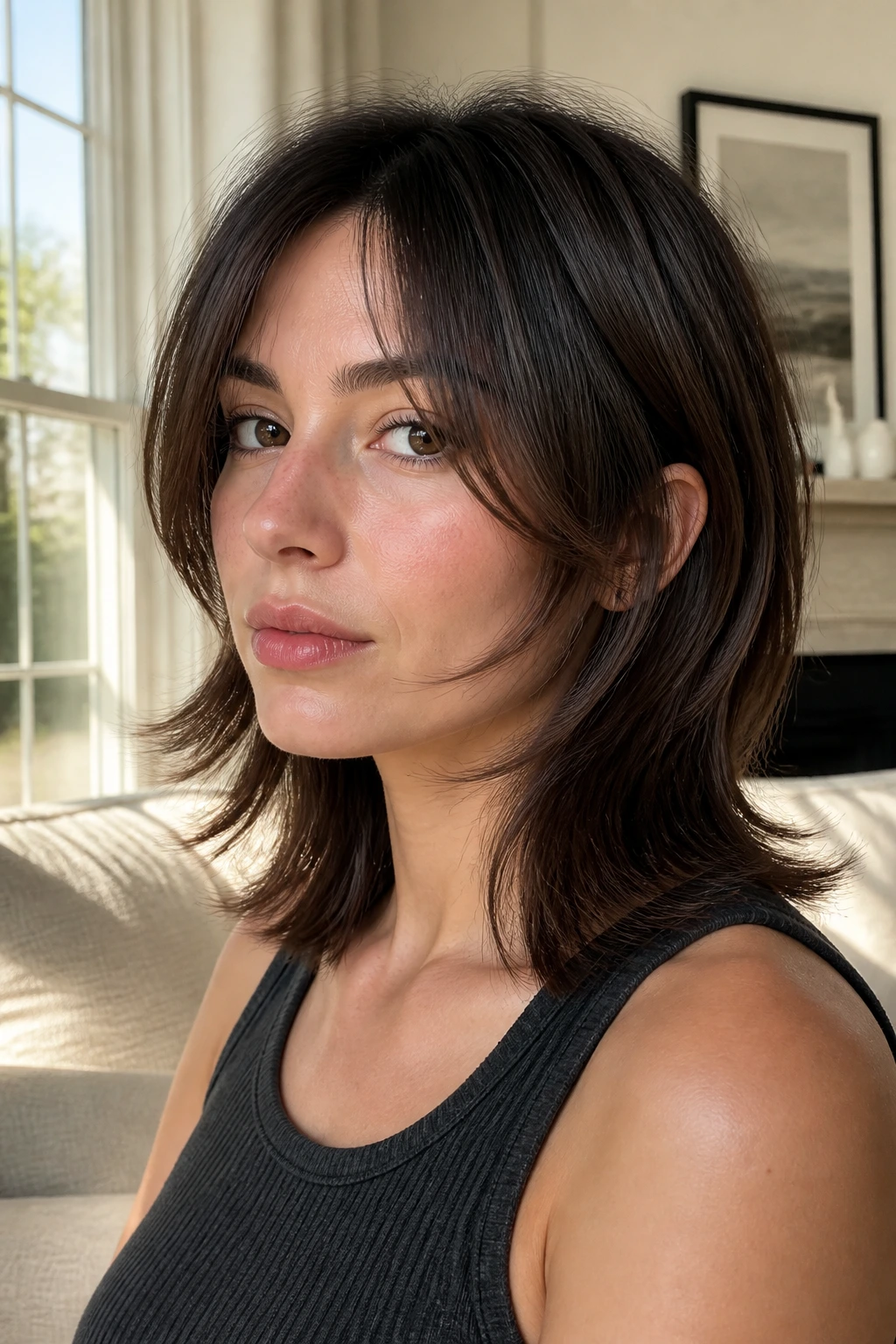
Straight hair can make a wolf cut look flat if the ends are left too tidy. The fix is a visible bend, especially in the front pieces, so the haircut has some lift and does not hang like one long curtain.
I like this shape because it gives straight hair a little swagger. The layers near the face can be cheekbone-length or just below the chin, then the ends flip slightly outward so the silhouette feels loose.
A 1.25-inch curling iron works well here, but you do not need full curls. Wrap the front away from the face for a few seconds, then let the bend cool before brushing it open. That keeps the movement soft.
The back should stay textured too, or the cut can feel front-heavy. A few pieces flipped in different directions make the whole shape look more natural. Straight hair loves that little bit of disorder.
12. Round-Face Wolf Cut With Longer Front Pieces

Unlike a short fringe that stops high on the face, this version pulls the eye downward. That makes the face look a little longer and keeps the cheeks from taking over the whole silhouette.
The key is length. You want the front pieces to skim below the cheekbone, then taper toward the jaw or collarbone. If the shortest layer ends too high, the roundness comes right back.
This is one of those cuts where the side view matters as much as the front. The pieces should open the face, not sit on top of it like a shelf.
I prefer this shape with a little root volume and a soft bend through the mids. Keep the widest part of the haircut around the crown, not around the cheeks. That gives the eye somewhere else to go.
13. Square-Face Wolf Cut With Softened Jaw Layers
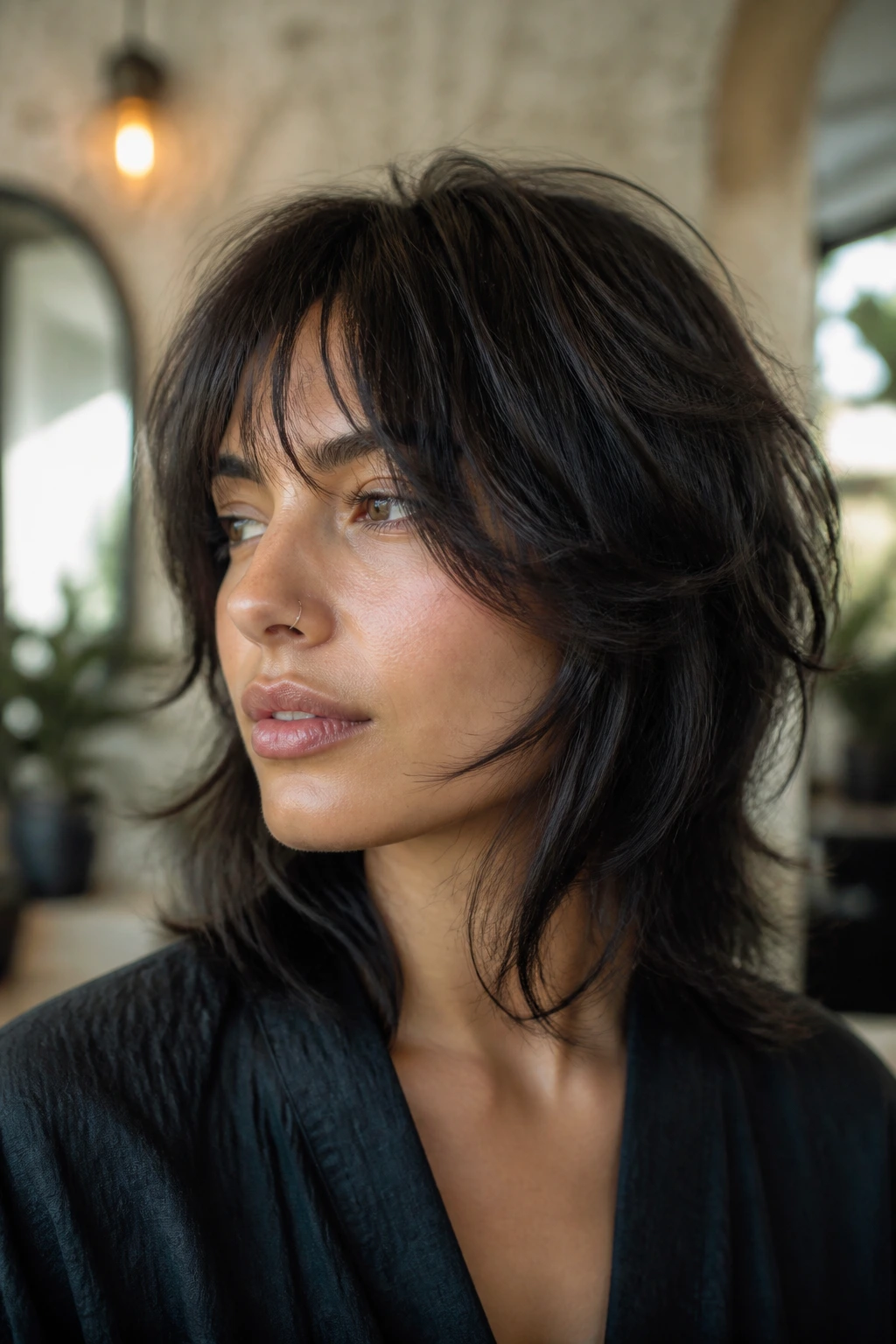
Jawline layers matter here. A square face can look even sharper if the wolf cut ends at exactly the wrong spot, so the front needs a softer hand.
The Softening Move
Let the face-framing layers pass the jaw before they finish. That one detail breaks the hard line and keeps the haircut from echoing the angles of the face too closely.
A broken fringe helps too, because it stops the front from looking severe. The pieces can be uneven, light, and slightly separated, which is much friendlier than a single heavy curtain.
- Ask for front pieces that start around the cheekbone and finish below the jaw.
- Avoid a blunt end at chin level.
- Use a round brush to create a small inward bend.
- Keep the crown textured so the front does not become too boxy.
Small warning: if the sides get too wide, the face can look broader than you want.
14. Oval-Face Wolf Cut With a Broken Fringe

Oval faces can wear nearly any wolf cut, which is exactly why the front needs a little irregularity.
A broken fringe keeps the cut from looking too tidy. Instead of one smooth curtain, you get pieces that separate slightly, skim the brow, and then fall into the layers around the temples. That gives the haircut some attitude without stealing the whole show.
For oval faces, I usually like the shortest front pieces to land around the eyebrow or a touch below it. That keeps the shape lively. If the fringe gets too long, the face can lose its center a bit; too short, and the cut starts to feel more fashion-y than wearable.
A matte texture spray on dry hair is enough here. You do not need to over-style it. The irregularity is the point, and the little gaps between pieces are what keep it interesting.
15. Wolf Cut With Money-Piece Highlights
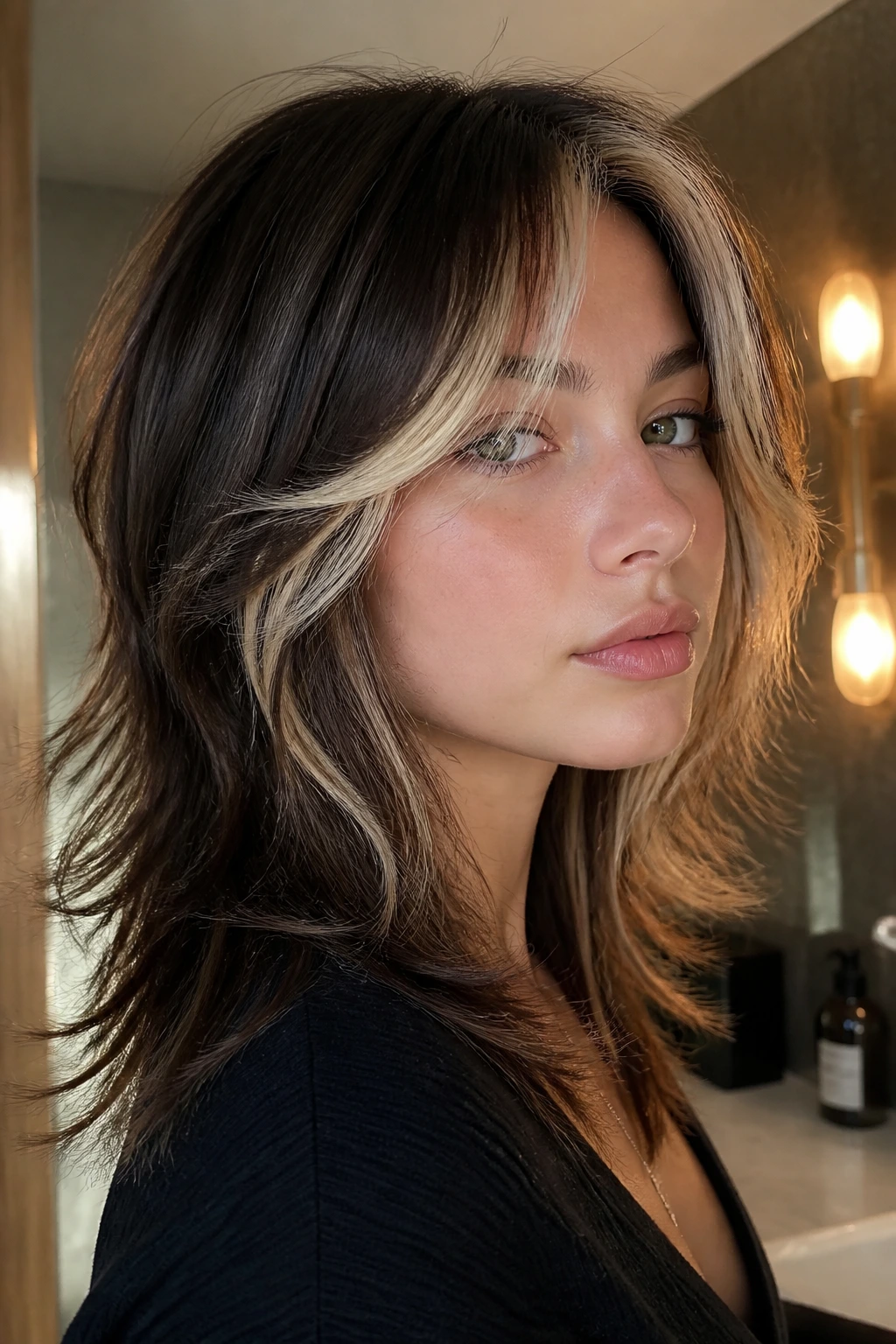
Can color change the shape of a haircut? Absolutely. A bright money piece around the front can make face-framing layers look sharper, even if the cut itself stays soft.
The lightest ribbons should sit where the eye naturally lands: the cheekbone, the outer eye area, and the first bend of the front layer. If you place the brightness too high at the hairline only, the effect gets a little flat. Place it lower, and the layers suddenly read with more dimension.
Where the Light Should Sit
Ask for the brightest pieces to live in the front sections, not scattered all over. That keeps the focus on the face frame instead of turning the whole head into a highlight map.
This works especially well with a wolf cut that already has movement. The color catches the layered texture and makes the shape easier to read from a distance. It also helps when the hair is tied back halfway, since the front pieces still do a job.
If your base color is dark, a warm caramel or copper ribbon can look softer than a stark light blonde. If your base is light, a tone just one or two levels brighter usually gives enough contrast.
16. Low-Maintenance Air-Dry Wolf Cut
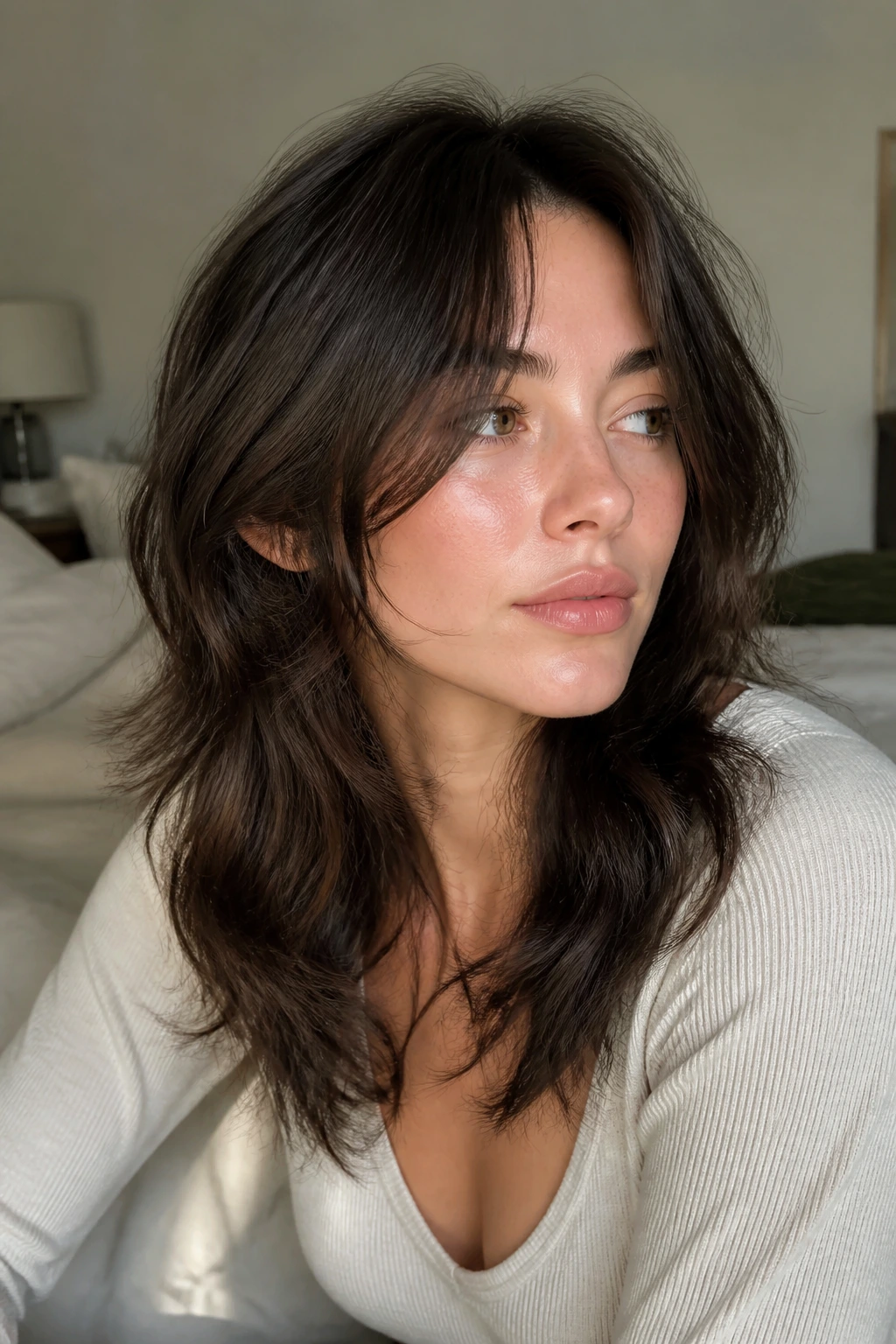
If you want your hair to look better on hour three than it did on minute one, air-dry styling helps a lot.
The cut itself needs to be forgiving. That means the face-framing layers should be long enough to fall into place without a round brush, and the crown should not be chopped so short that it sticks up when left alone.
I like this version on wavy or lightly textured hair because the natural bend does the styling for you. Work in a small amount of mousse, twist the front pieces once or twice while wet, and leave them alone. Touching them every ten minutes is how you end up with frizz and weird bends.
- Use leave-in conditioner on the mids.
- Add mousse only at the roots and front.
- Scrunch once, then stop.
- Let the face frame dry in place before moving it around.
This cut rewards patience. That’s not glamorous, but it is true.
17. Shoulder-Length Wolf Cut With Piecey Ends

Shoulder length is where the wolf cut starts behaving.
The hair is long enough to keep the face-framing layers soft, but short enough that the texture still shows up. The ends can flick in and out around the collarbone, which gives the haircut motion without making it feel overloaded.
I like this length on people who want shape but not a dramatic change. It’s one of the easier wolf cut versions to live with because the front pieces can fall forward, tuck behind the ear, or get pushed back without losing the silhouette.
A little texturizing spray at the ends helps separate the layers. If the ends clump together, the whole cut loses its piecey feel and starts looking like an ordinary layered lob. That would be a shame, honestly.
18. Dramatic Cheekbone Wolf Cut
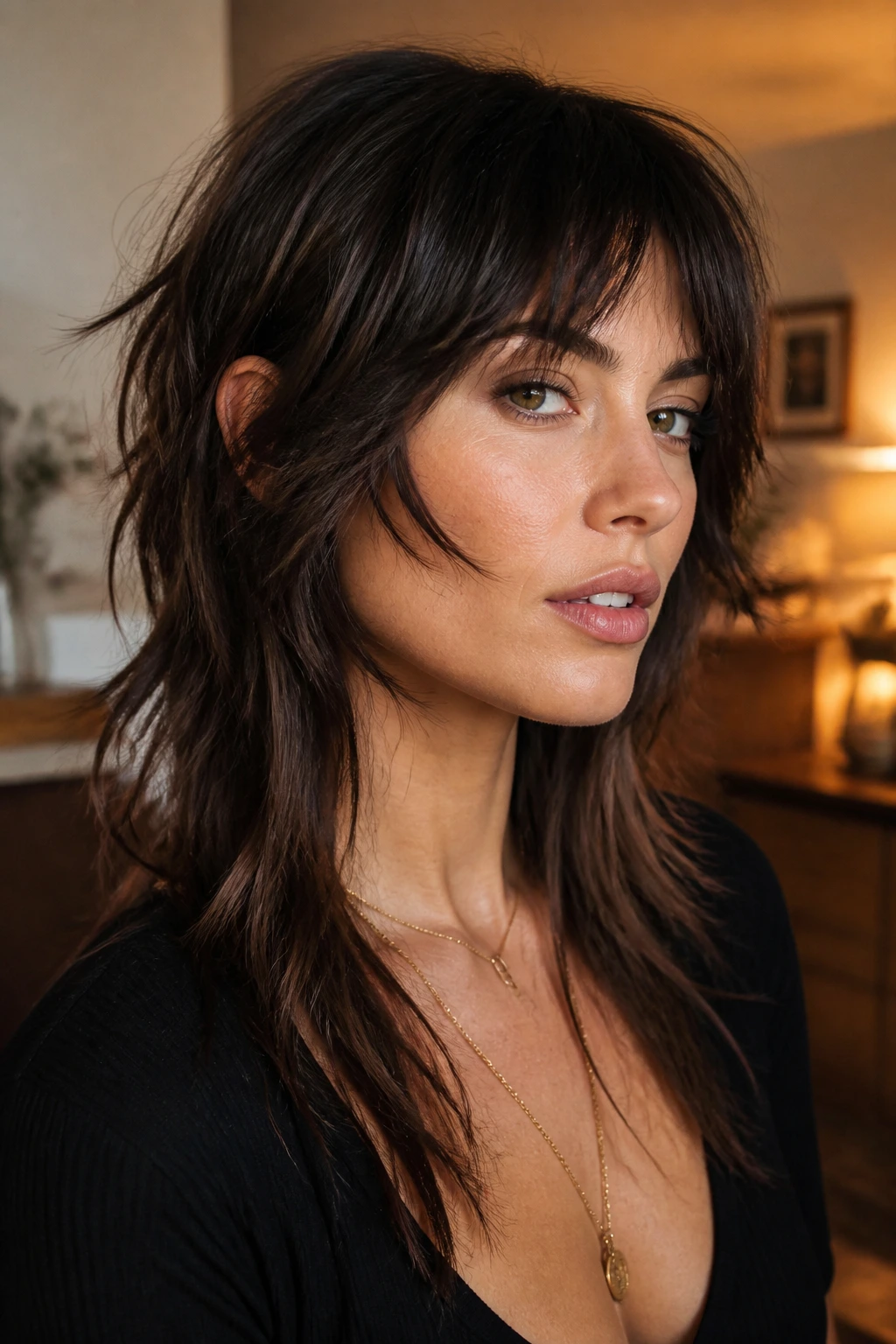
This is the version for people who want the front of the haircut to speak first. The face-framing layers are stronger here, and they sit close enough to the cheekbone that the shape reads fast.
It’s a good fit if you already like your cheekbones or want more visual lift around the eyes. The haircut draws a diagonal line from the temples toward the jaw, which gives the face more movement than a softer frame would.
I would keep the back only moderately shaggy with this one. Too much texture everywhere and the face frame stops being the star. You want contrast, not chaos.
This style often looks best with a slight bend away from the face. The bend creates a little tension in the line, and that tension is what makes the cut feel deliberate. Flat pieces can dull the whole thing down.
19. Long-Length Wolf Cut That Keeps the Back Full
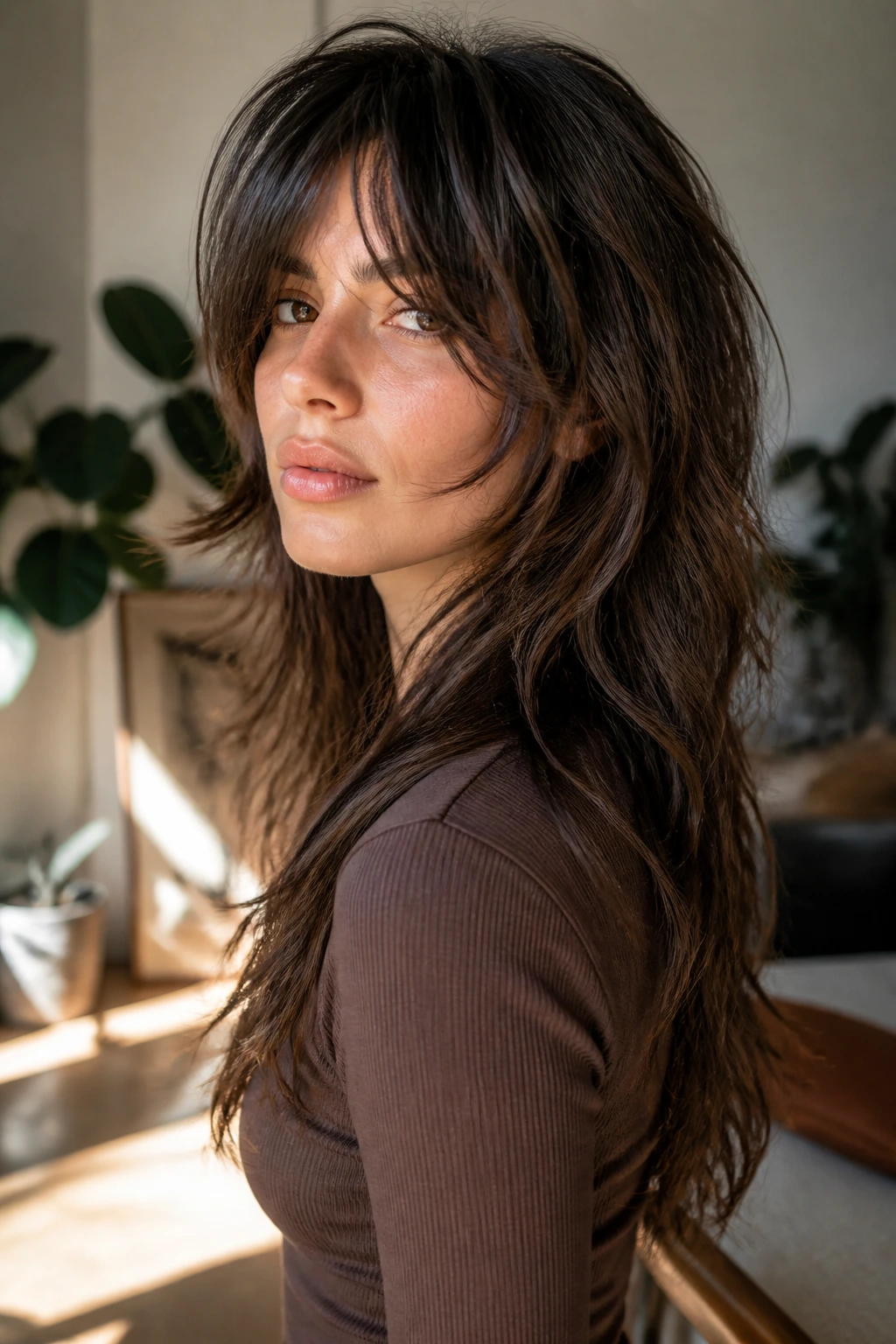
If you are nervous about losing length, this is your safety net. The back stays full, the layers stay visible, and the face-framing pieces do their work without forcing a dramatic chop.
Why Long Hair Can Still Feel Light
A long wolf cut only works when the shortest front layer starts high enough to make a difference. That might be near the nose, lips, or cheekbone depending on the density of your hair and how much movement you want.
The back should not be over-thinned. Leave some fullness there so the cut still has weight and the layers don’t disappear once you wear your hair down. The whole thing should feel long, but not heavy.
- Good for people growing out shorter layers.
- Ask for long internal layers, not a major length removal.
- Keep the face frame soft and tapered.
- Style with a blowout brush or a large round brush.
Best part: it looks intentional even when the styling is minimal.
20. Soft Wolf Cut With Tucked-In Layers

Not every wolf cut needs to look wild at the edges. This softer version keeps the shape, but the layers tuck inward a little around the ears and neckline so the cut feels calmer.
That makes it useful if you like movement but not a lot of visual noise. The front pieces can still frame the face, but they should bend gently rather than kick out with a hard flick.
I especially like this on people who want a little edge but still need the haircut to work in more polished settings. It keeps the texture, but tones down the chaos. A soft blow-dry cream and a medium brush are enough to shape it.
If you wear glasses, this cut can be a smart choice. The face frame stays away from the lenses without disappearing, and the tucked-in layers keep the sides from crowding your face. It’s a small thing, but it changes the way the haircut lives on you.
Final Cut
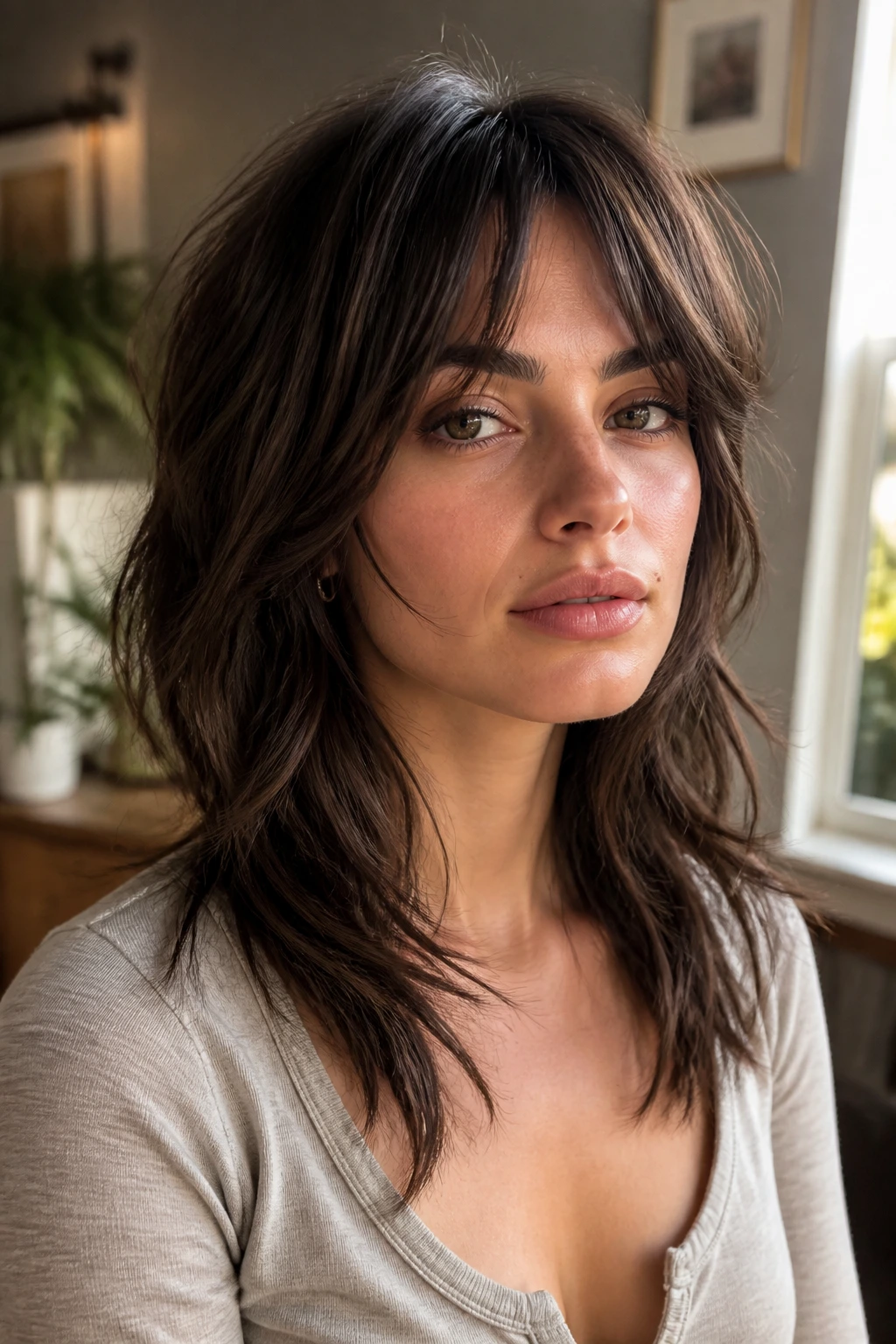
The smartest wolf cut is not the most dramatic one. It is the one that puts the front pieces exactly where you want attention: cheekbones, jawline, eyes, or length. That decision does more for the haircut than chasing a louder silhouette.
If you’re showing a stylist photos, bring one that shows the front and one that shows the back. The back of a wolf cut can look great while the front feels wrong, and that mismatch is where bad haircuts are born. I’d much rather see a slightly softer version that fits your face than a chopped-up one that only works from behind.
One last thing. If you are torn between two versions, keep the back longer and adjust the face frame first. That gives you room to live with the shape before committing to anything sharper.