



A curly shag can be brilliant or a total mess, and the difference usually comes down to weight. Too much of it sits at the ends, and you get a wide triangle. Too little, and the whole cut frizzes outward like it lost its mind. The sweet spot is somewhere in the middle, which is why medium shag haircuts for curly hair keep showing up in salon chairs again and again.
They give curls room. They keep the length useful. And, when they’re cut well, they make the hair look like it has movement even on days when you barely touch it.
The trick is that “shag” is not one haircut. It’s a family of shapes. Some are soft and face-framing, some have a stronger wolf-cut edge, and some are built to stop thick curls from ballooning out at the sides. A good stylist will look at your curl pattern, shrinkage, density, and face shape before they ever pick up the shears. That part matters more than the Pinterest picture you brought in.
1. The Classic Rounded Curly Shag
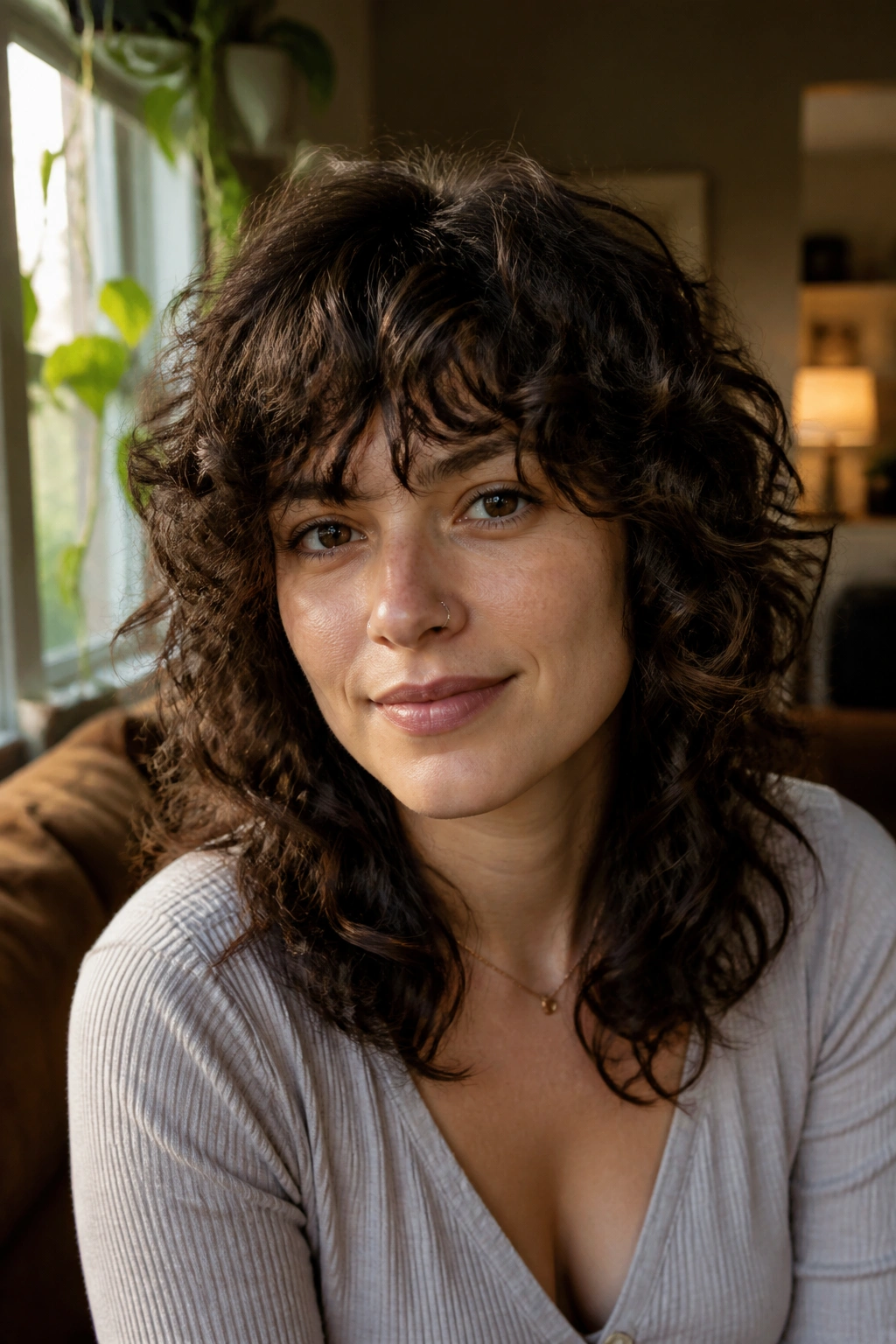
This is the one that made the medium shag a permanent fixture for curly hair. It keeps a soft, rounded crown, a little lift through the top, and enough length at the bottom to stop the cut from feeling too chopped up. The shape looks especially good on curls that want definition but do not want to sit flat against the head.
Why it works
The magic is in the balance. The layers start high enough to free the curls at the crown, then ease down through the sides so the outline stays full, not boxy. If your curls tend to collapse on top and puff out at the shoulders, this shape fixes that without needing a lot of styling.
Ask for long, blended layers rather than short, choppy ones if your curls are dense. That keeps the silhouette soft. A curl cream and a diffuser usually do the rest.
- Best for 2C to 3B curls
- Needs a dry finish or a dry cut
- Looks good with a middle part or a slight off-center part
Pro tip: Tell your stylist you want the shape to look good at day three, not just right after the appointment.
2. Curly Shag With Curtain Bangs
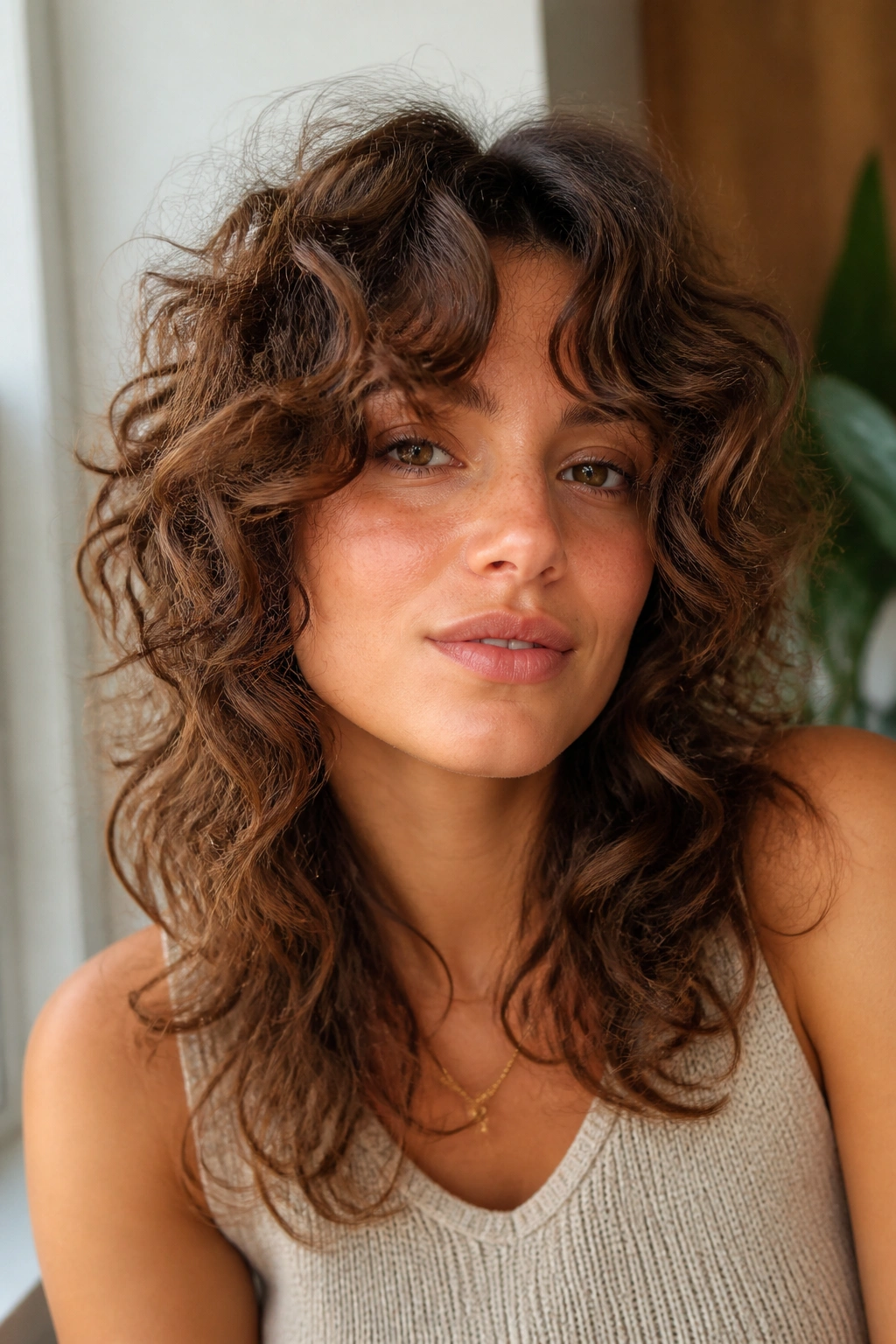
Want bangs that cooperate with curls instead of fighting them? Curtain bangs are the answer more often than blunt fringe, and a medium shag gives them somewhere to live. The bangs can fall around the eyes and cheekbones, then blend into the rest of the layers without looking like a separate haircut.
The best version of this cut keeps the bang area a little longer than people expect. That’s the part many stylists get wrong. Curly hair springs up, and if the fringe is cut too short, it can sit awkwardly high for weeks.
The soft split in the front also makes this cut easy to wear tucked behind the ears, pinned back, or worn loose. It has a relaxed feel. Nothing stiff about it.
3. The Wolf-Shag Hybrid
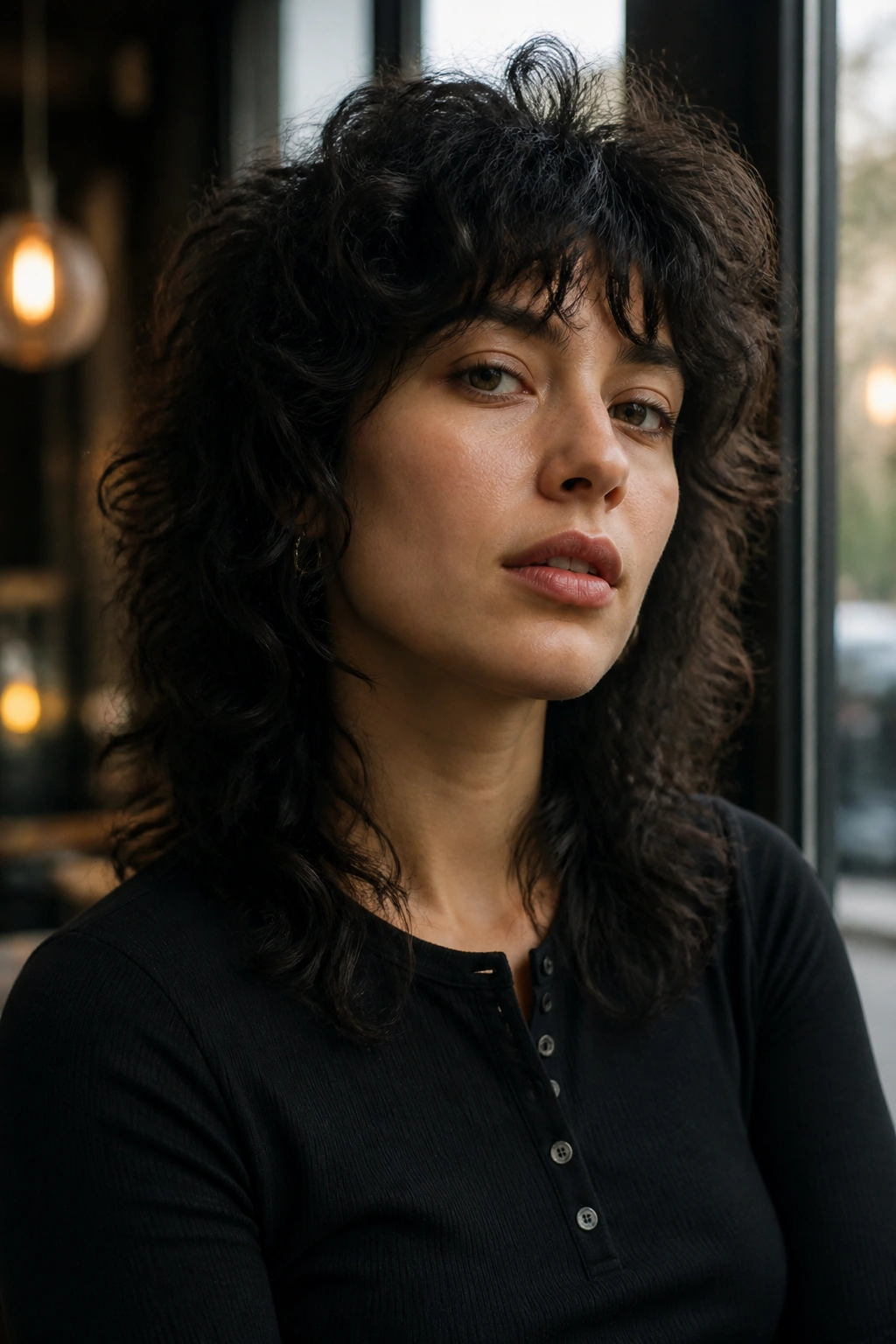
A wolfy shag is for anyone who likes a little edge. It borrows the choppier crown of a wolf cut but keeps the medium length and easier grow-out of a shag. The result is a stronger silhouette up top, then more movement as the curls fall toward the shoulders.
This cut is not shy. It gives lift fast. If your curls are flat at the roots and you want a shape that looks like it has attitude even when you air-dry and walk out the door, this is a solid pick.
What makes it different
Unlike a softer shag, this version leans into contrast. The top layers are shorter, the bottom length stays visible, and the overall shape has more bite. It works best when the curls have some spring and don’t need tons of trimming to stay controlled.
Best for:
- 3A to 3C curls
- People who like a messier outline
- Hair that needs root height
- Low-fuss styling days
4. A Heavy Fringe Shag for Coily Curls
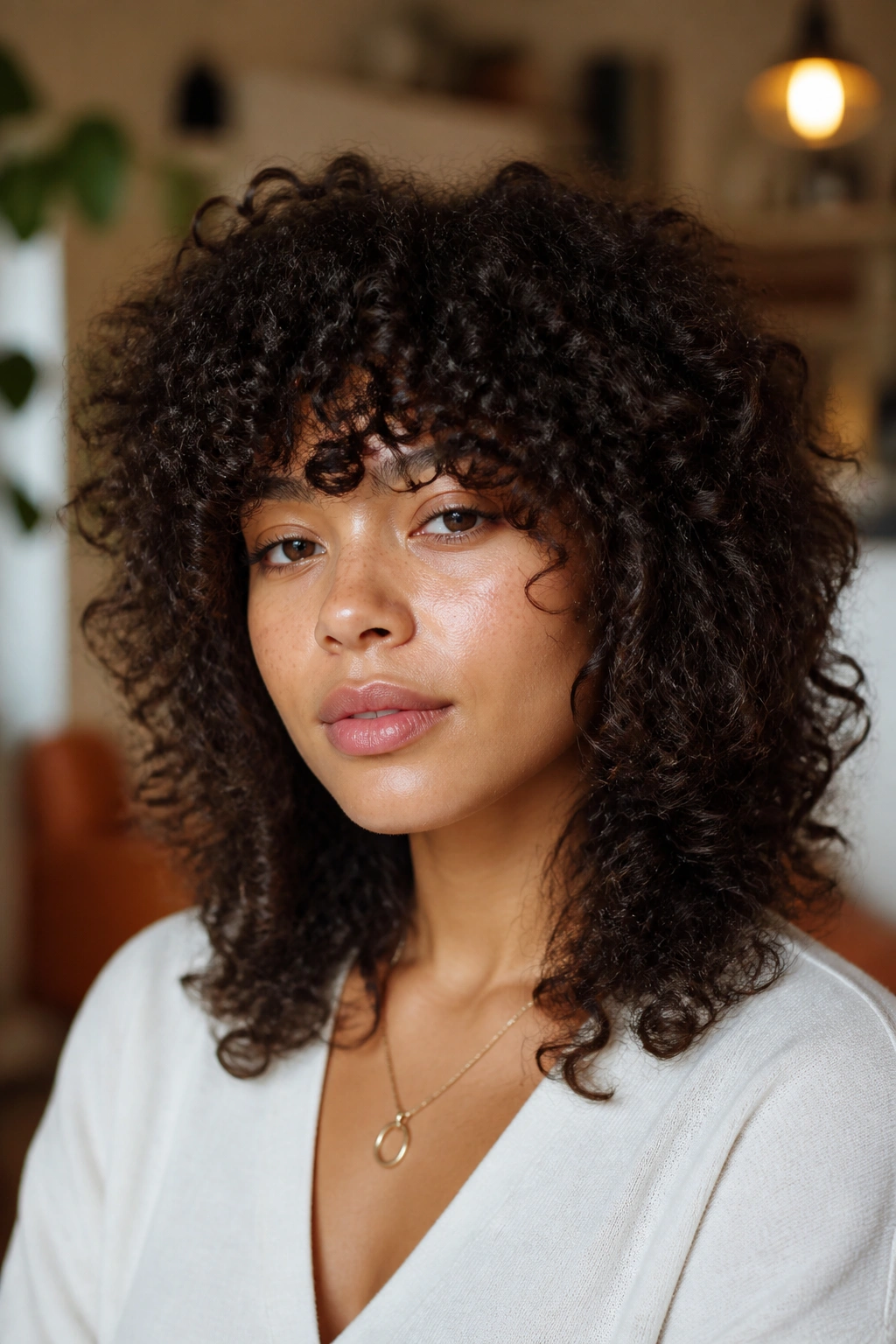
A lot of people assume fringe and coils do not mix. That’s not true. It just means the bangs need room to shrink and settle. A heavy fringe shag gives the front section enough weight to curve properly instead of springing into a short, floaty mess.
The haircut works well when the coils are tight enough that shrinkage is part of the shape, not a surprise. The front can sit slightly longer than the rest at first, then dry into a clean frame around the face. That little bit of extra length saves you from accidental forehead bangs that are gone in a week.
If you like definition near the eyes and a fuller look through the front, this is one of the better medium shag haircuts for curly hair.
- Keep the fringe cut on dry hair
- Ask for soft tapering at the temples
- Use a light gel near the front so the pieces clump instead of frizz
Watch out for this: too much thinning in the bang area will make the front look wispy, and coils rarely forgive that.
5. The Face-Framing Shag for Oval and Heart Faces
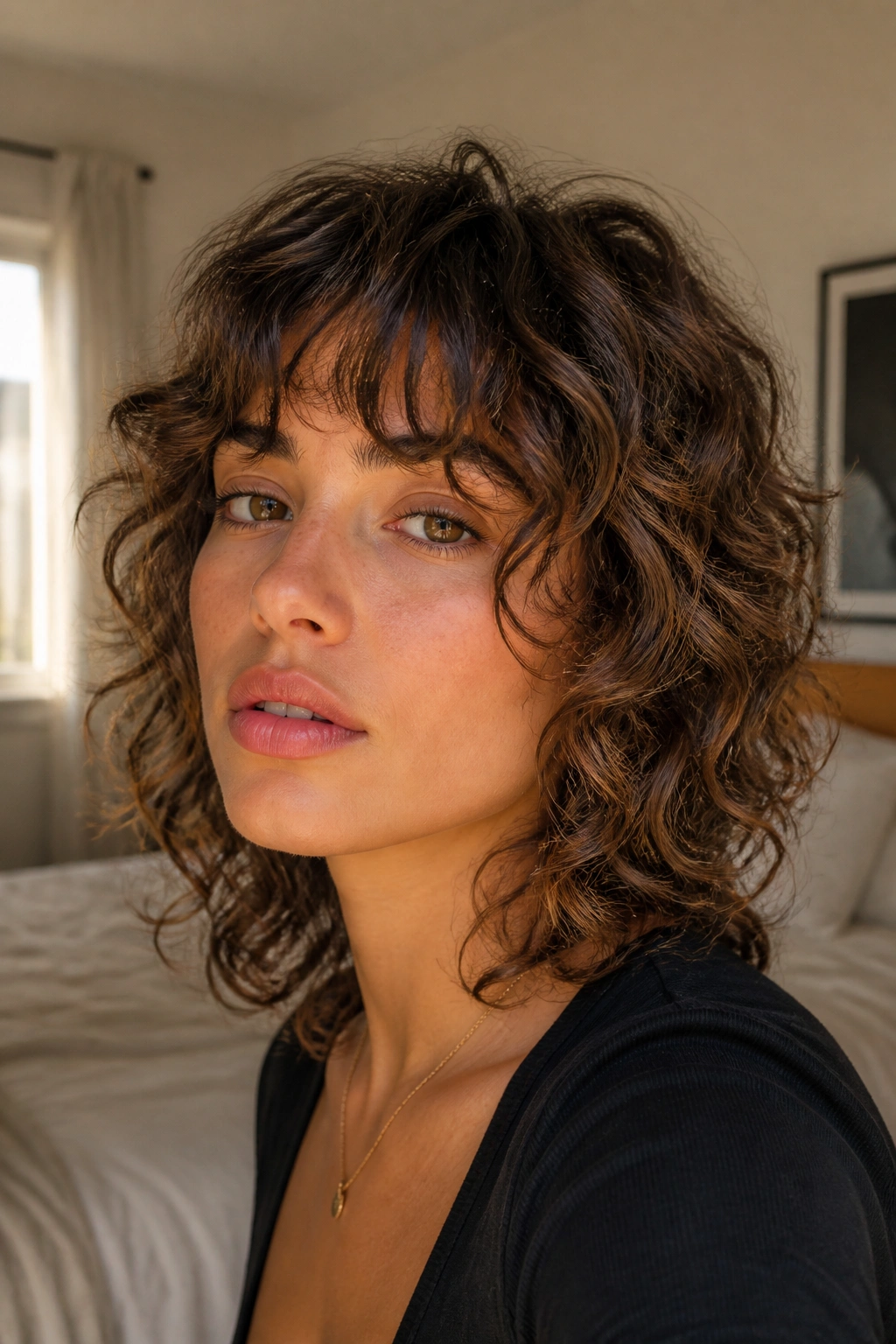
This is the safest shag to recommend when someone says, “I want layers, but I don’t want to hate my haircut.” The face frame starts around the cheekbones or lips, then drifts into longer layers that shape the curl pattern without breaking the overall length.
For oval faces, it’s almost unfair how well this works. The face frame adds focus without crowding the features. For heart-shaped faces, the longer front pieces soften a wider forehead and keep the bottom from feeling too narrow.
The key is restraint. Don’t go too short around the front unless you want a big, dramatic shape. A softer face frame gives you movement without turning the whole haircut into a costume.
6. Thick-Hair Shag With Interior De-Bulking
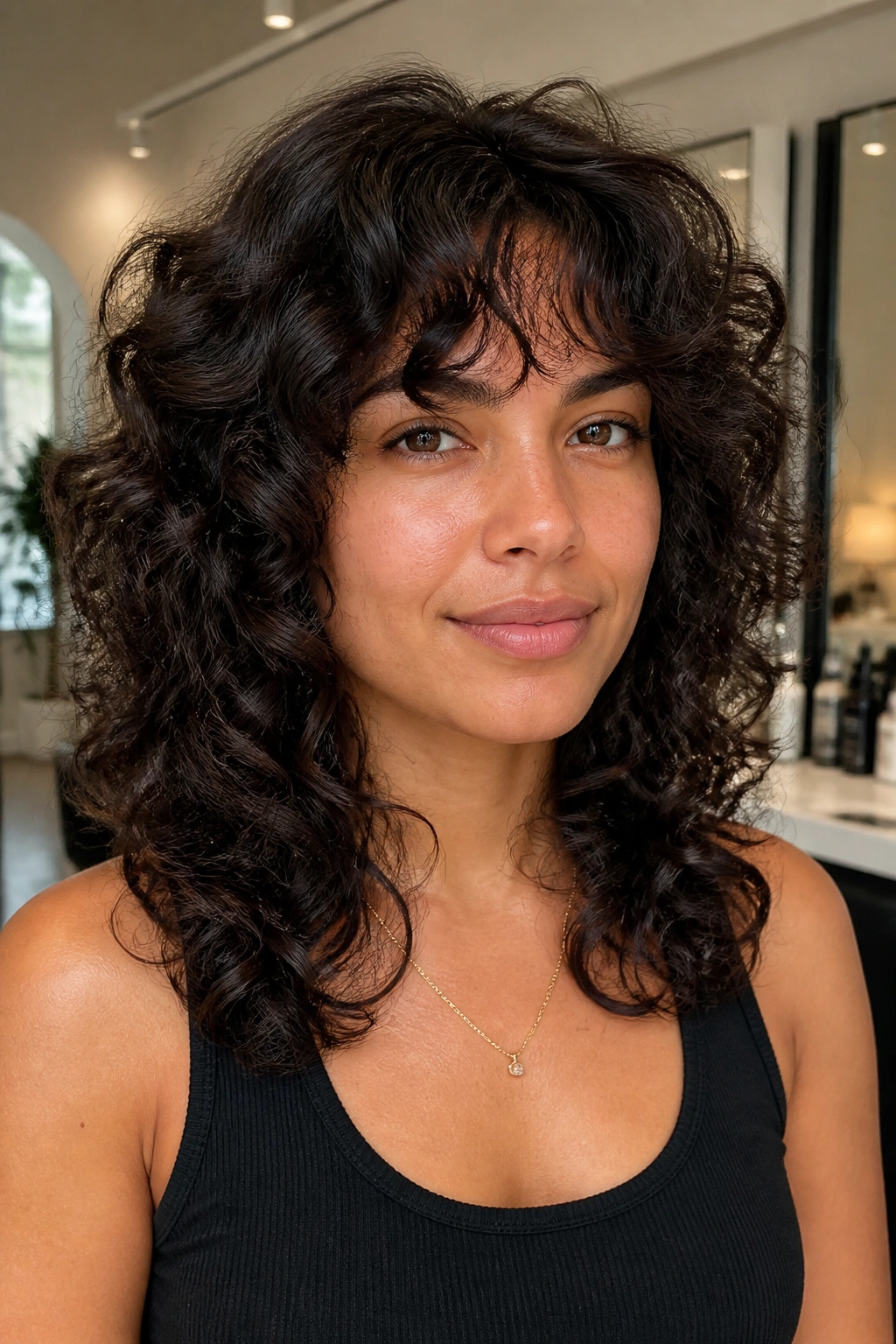
Thick curls can look amazing in a shag, but they can also turn into a shelf if the cut keeps too much weight in the wrong places. Interior de-bulking fixes that. The stylist removes mass from inside the shape, not just from the outer edges, so the curls drop better and the head doesn’t feel like it has too much width.
What to ask for
You want internal layers, not aggressive thinning. Those are not the same thing. Thinning shears can make curly ends look fuzzy if they’re used carelessly, especially on the outer perimeter where the shape needs to stay strong.
What to avoid
- Razor chopping every section
- Taking too much off the top crown
- Cutting the sides shorter than the back unless you want a wide frame
A thick-haired shag should feel lighter, not hollow.
7. The Soft Side-Part Shag
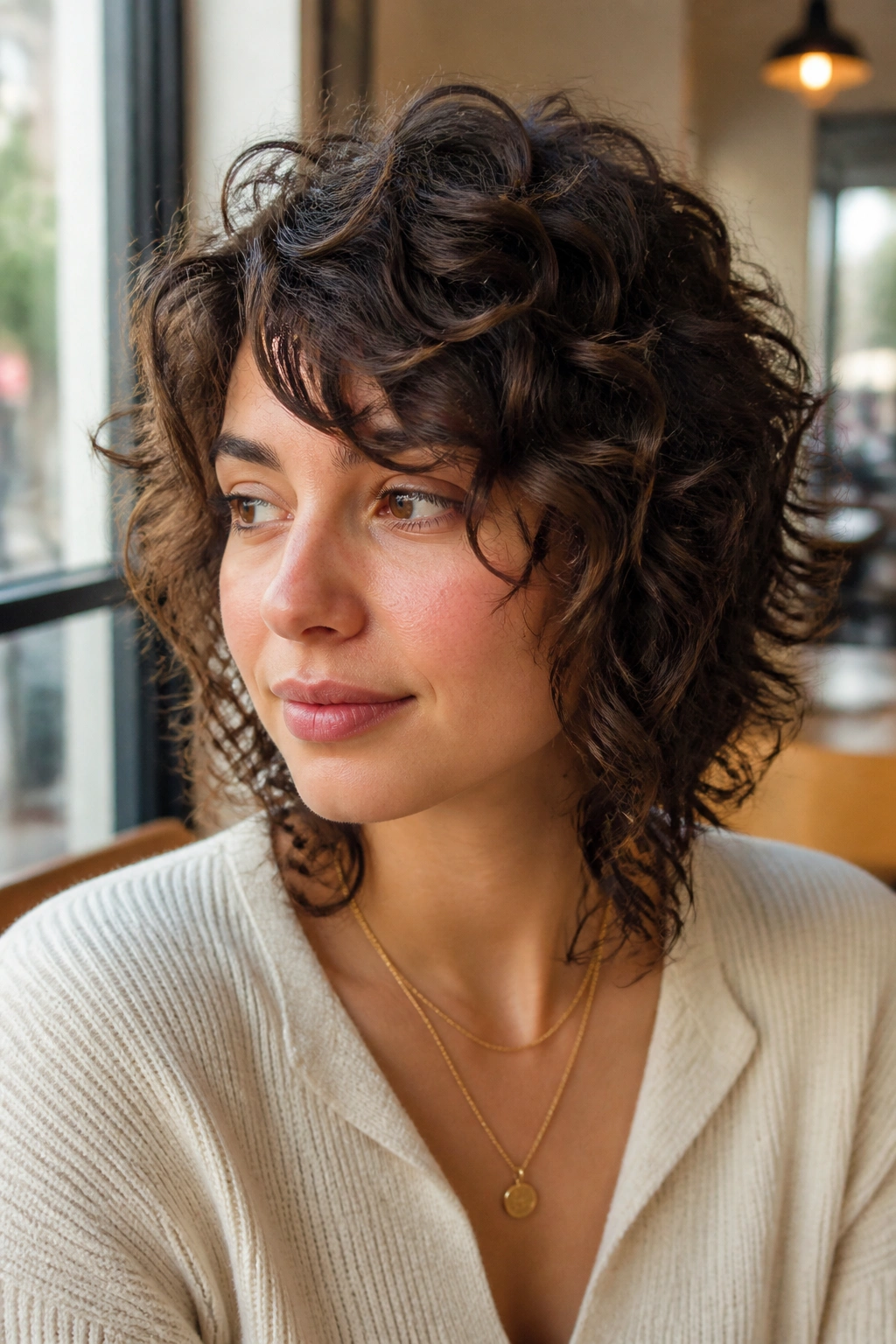
A side part changes more than people think. It gives a medium shag a little sweep, a little asymmetry, and a less “done” feel that works especially well with curls that fall in big clumps. If you’ve worn a middle part forever and your face has started to feel tired of it, this is an easy shift.
The side part also helps when one side of your curls is denser than the other. Instead of fighting the imbalance, the cut can play with it. That’s the part I like. A haircut that works with the hair you actually have tends to age better than one built around perfect symmetry.
The soft side-part shag is especially good if you want movement around the cheek and jaw without cutting in a dramatic fringe.
8. The Fine-Curl Shag With Micro Layers
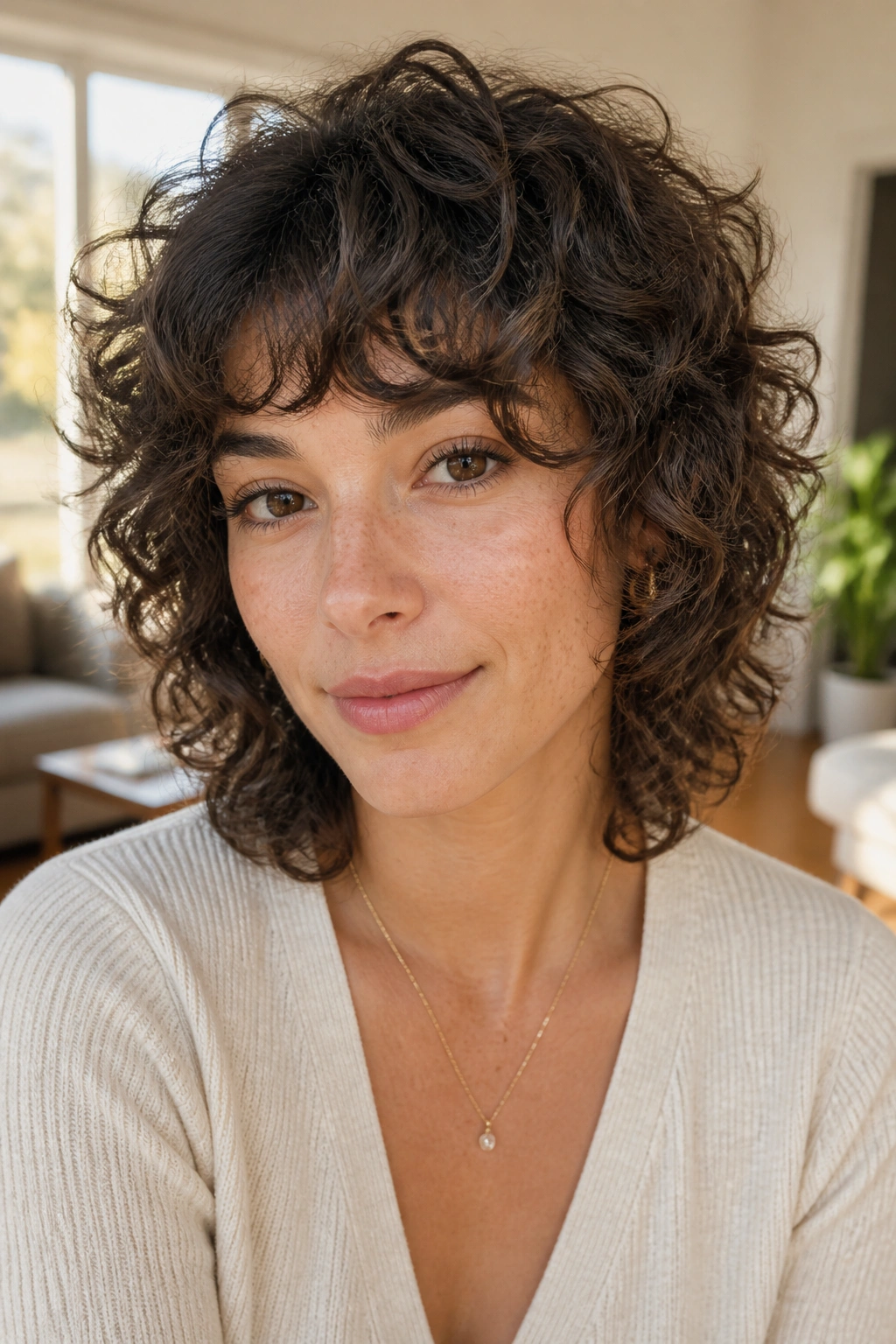
Fine curls need a different kind of help. Too much layering, and the ends look see-through. Too little, and the curls fall flat by lunch. A micro-layer shag solves that by creating tiny changes in length that encourage bounce without stripping away the perimeter.
This cut is sneaky. It looks simple. Then you air-dry it and realize the whole head has more lift than it should have. That’s because fine curls respond fast to small changes in shape.
The details that matter
- Keep the layers close together, not widely spaced
- Leave enough weight at the bottom to protect fullness
- Style with foam or lightweight mousse, not heavy butter
- Diffuse on low heat to preserve the curl clump
Skip this cut if your hair is both fine and very high-density. It may get fluffy faster than you want.
9. The Collarbone Shag With Long Face Pieces
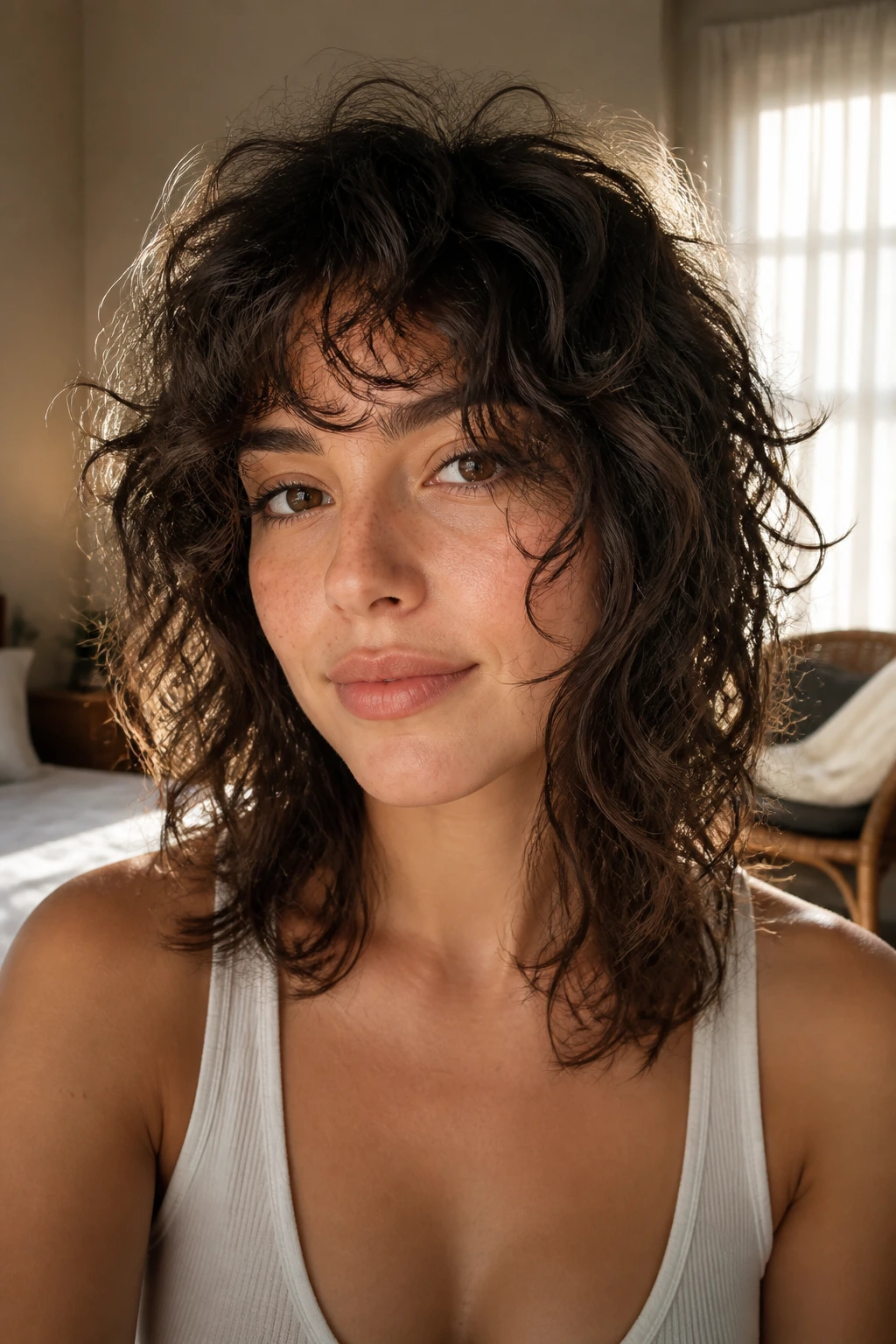
A collarbone-length shag is a nice middle ground for people who want movement but do not want to lose too much length. The curls hit around the collarbone, then taper into long face-framing pieces that keep the shape from feeling blunt.
This cut is smart for people growing out an older shag or a layered bob. It gives you a fresh shape without starting from scratch. And because the front stays longer, it works with clips, headbands, and lazy half-up styles.
Compared with a shorter shag, this one feels more elegant. Not fussy. Just a little more settled. If your curls are medium in density and you want something that can move from office to weekend without much drama, it’s a good place to land.
10. The Loose-Wave Shag With Airy Ends
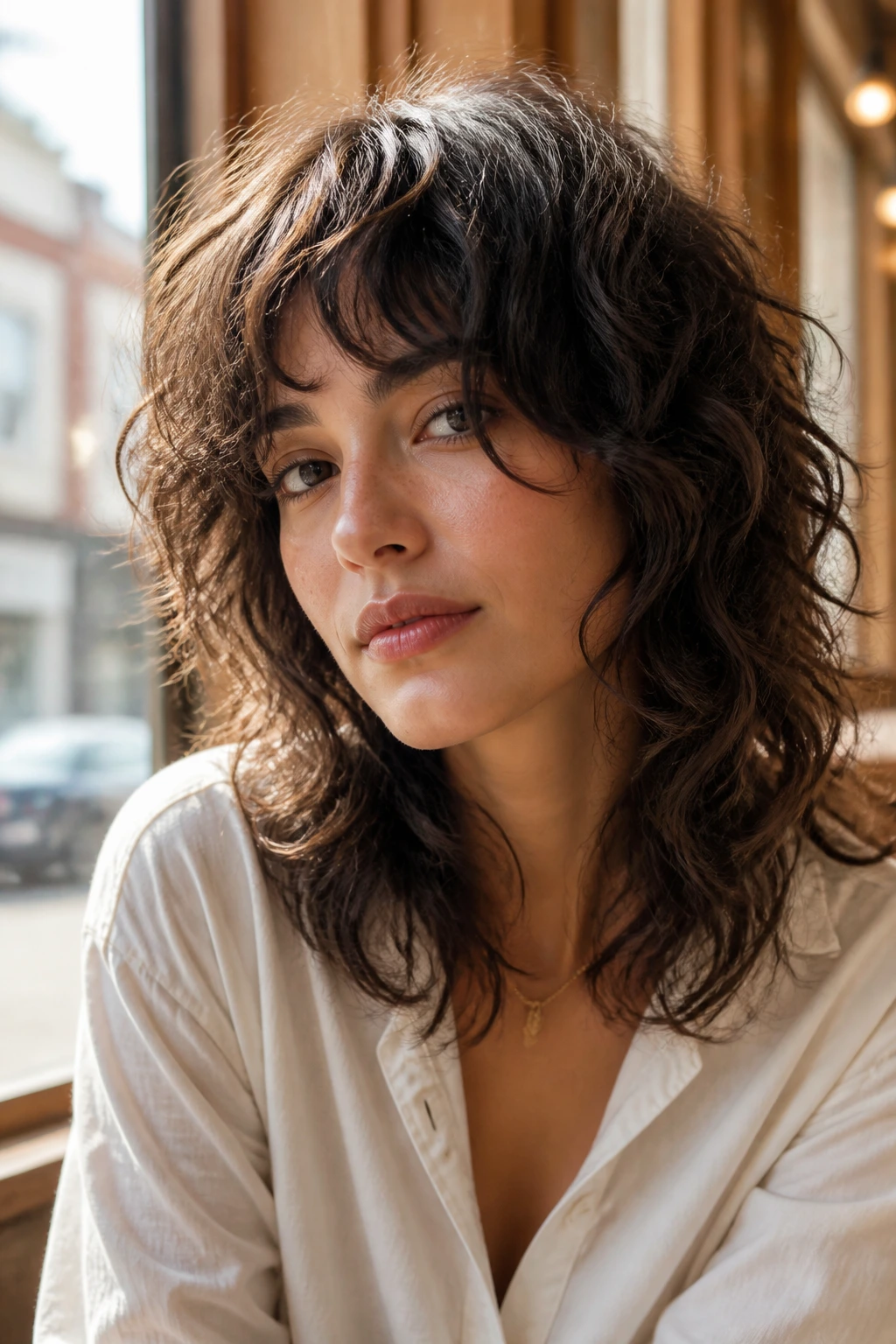
Loose waves don’t need the same heavy layering as tighter curls. They need air. A shag that is cut too aggressively can make waves look stringy, especially at the bottom. The better version keeps the layers soft and the ends light enough to swing without splitting apart.
You can usually feel when this haircut is right. The hair stops hanging in one heavy sheet and starts moving in little bends. The ends still look like they belong to the cut, not like they were attacked with scissors in a hurry.
This style works well if your texture sits somewhere between wave and curl. If the hair gets frizzy in humidity but still needs a little structure, the airy-end shag is a smart call.
11. The Dry-Cut Shag for Shrinkage Control
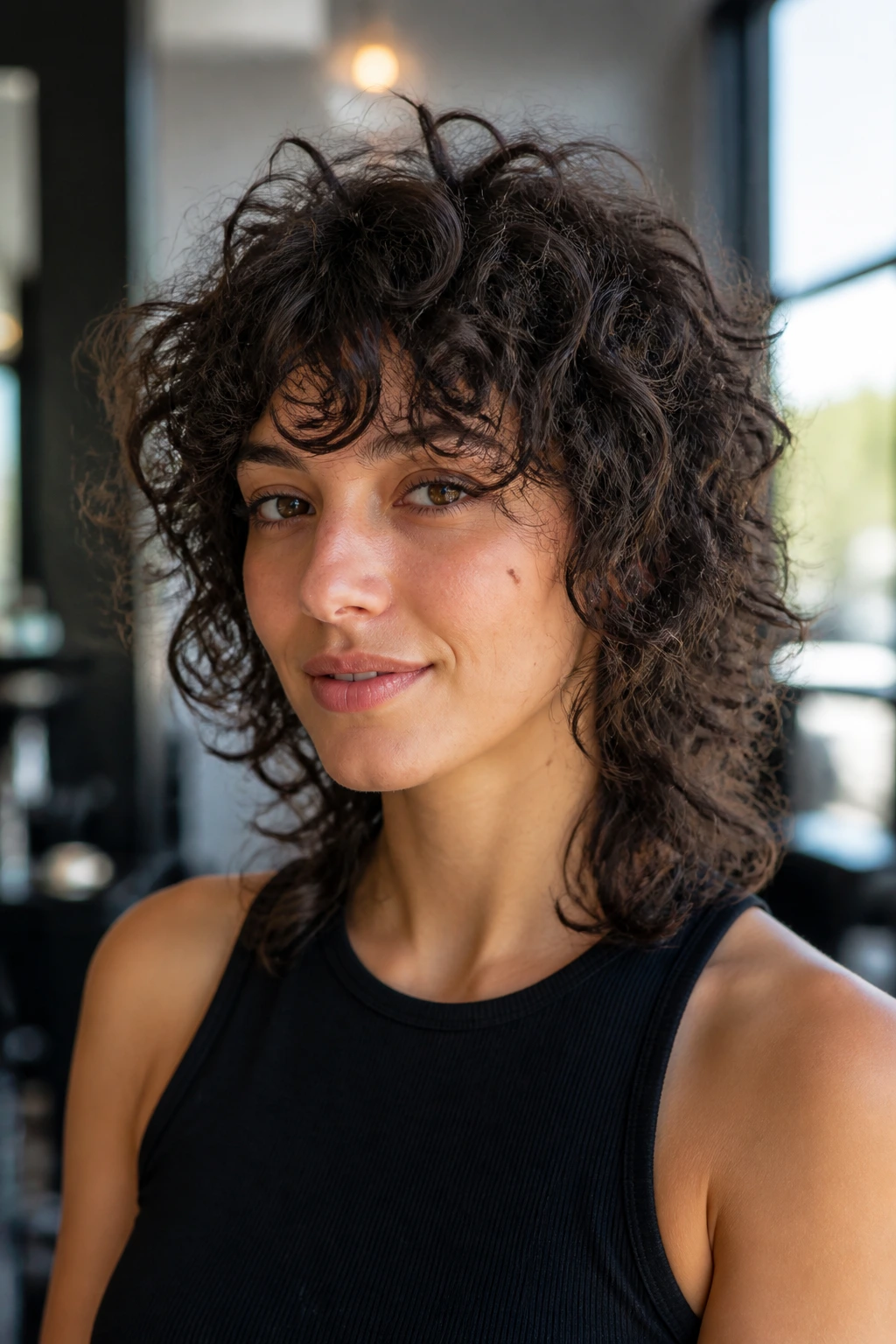
How do you keep a curly shag from ending up five inches shorter than you expected? Cut it dry. Or at least finish the shape dry. Wet curls lie. They stretch, they calm down, they behave like different hair altogether, and then they spring up later and make everybody nervous.
A dry-cut shag lets the stylist see the real pattern. The curl clumps, the bends, the uneven spots, the little pieces that always sit higher than the rest. That matters a lot if your curls shrink a full inch or more.
How to use it
- Arrive with your hair clean, dry, and styled the way you wear it
- Bring photos of cuts on similar curl types, not straight hair inspiration
- Ask the stylist to check the shape after each section dries
- Expect tiny tweaks after the first wash
It’s a slower appointment. Worth it.
12. Curly Curtain Bangs and a Medium Shag
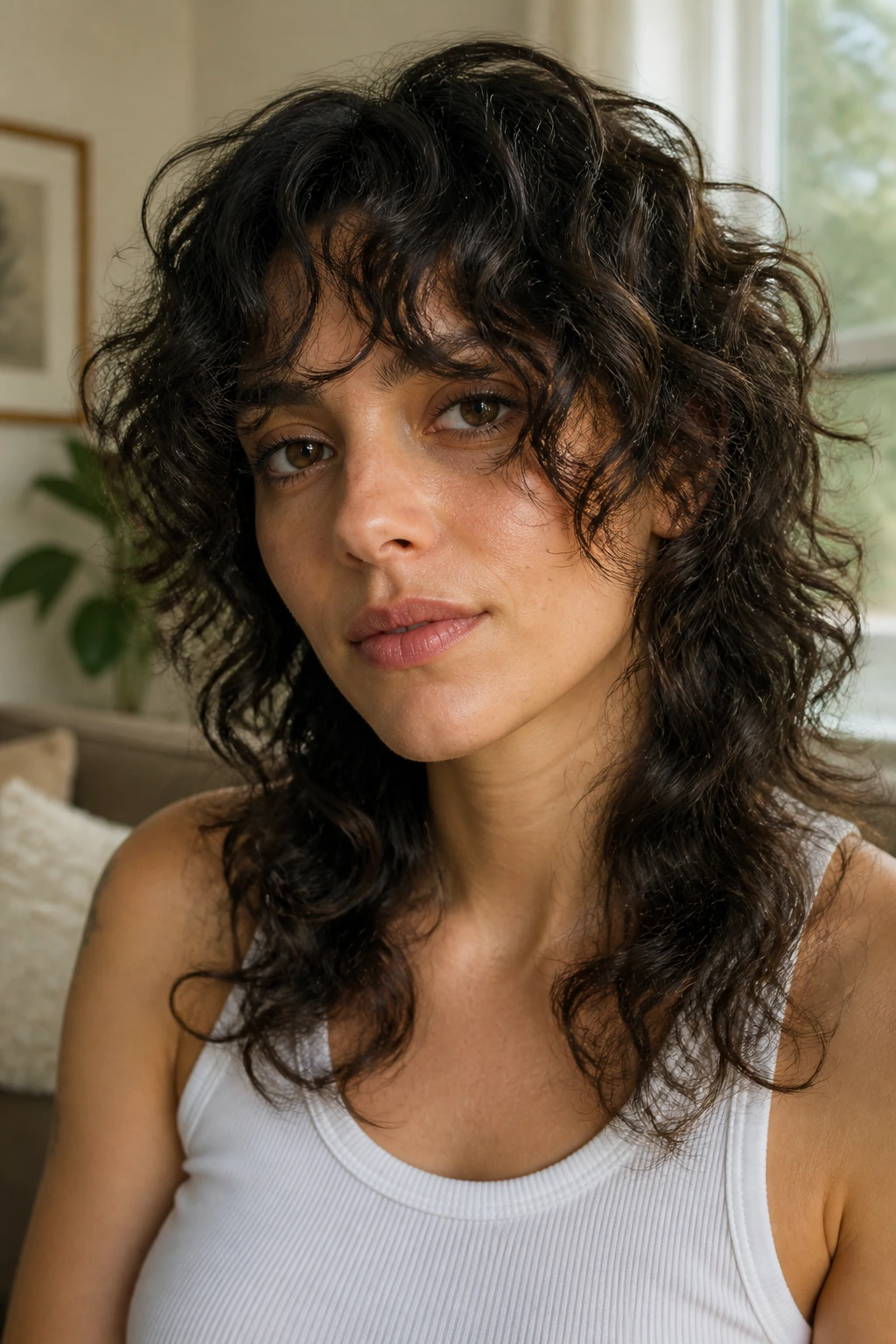
Curtain bangs on curls can look soft and expensive in the best sense of the word, but they need patience. They should skim the cheekbones, split gently down the middle, and blend into the front layers so the whole cut feels like one shape. If the bangs are too short or too blunt, the curl pattern takes over and the result can look jumpy.
The medium shag gives those bangs a home. The front pieces do not sit alone. They fall into a cascade of shorter layers, then longer ones, and the eye moves down naturally. That’s the appeal.
A little face cream and a diffuser go a long way here. So does restraint with the brush. Fingers are better. A brush can stretch the curl too much and kill the airy front shape that makes the cut work.
13. The Wash-and-Go Curly Shag
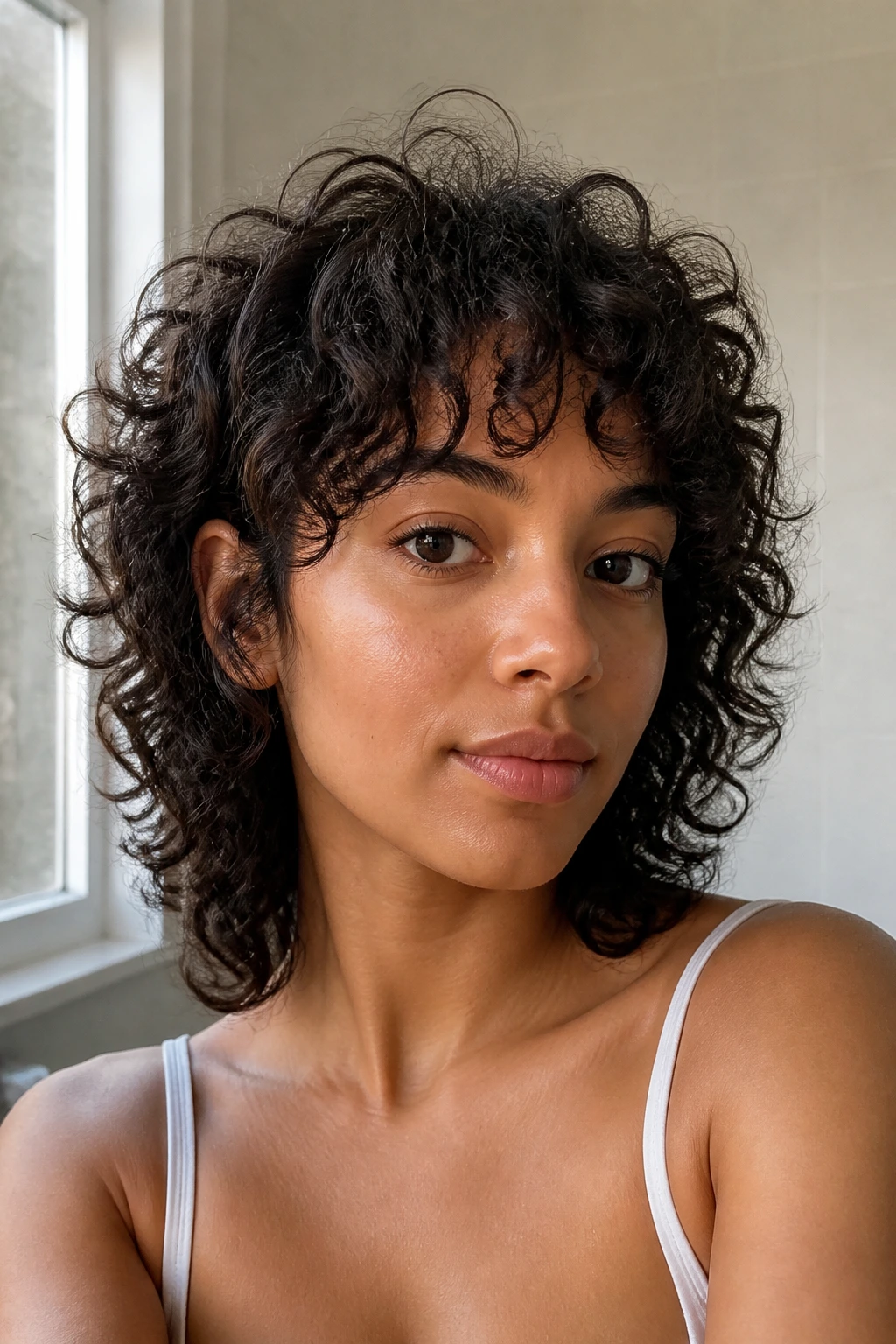
This is the shag for people who are not interested in a long morning routine. You wash, you scrunch, you diffuse for a bit if needed, and you walk away. The layers are doing the work for you, which is exactly how a good curly cut should behave.
The wash-and-go version usually has soft layers, a shape that follows the head, and enough perimeter weight that the curls do not separate into little frayed wisps. It is less about drama and more about consistency. That’s why it’s popular with people who wear their hair down most of the week.
A mousse or gel-cream combo works well here. Let a gel cast form if your hair likes one. Then break it with dry hands once the hair is fully dry. Easy. No ceremony.
14. The Crown-Height Shag for Round Faces

A round face does not need fewer curls. It usually needs a little more height. That is the whole game. A shag with lift at the crown and slightly longer sides helps draw the eye upward and keeps the shape from spreading too wide across the cheeks.
This is where the cut can look sharper than people expect. The top layers need enough support to stand up a bit, while the lower sides should fall in a way that keeps the outline narrow. If everything is equal length, the face can look wider than it is.
A side part can help here, too. So can keeping the shortest layers near the top of the cheekbone instead of the jaw. That small choice makes a visible difference in the overall balance.
15. The Deep Side-Part Shag With a Sweep
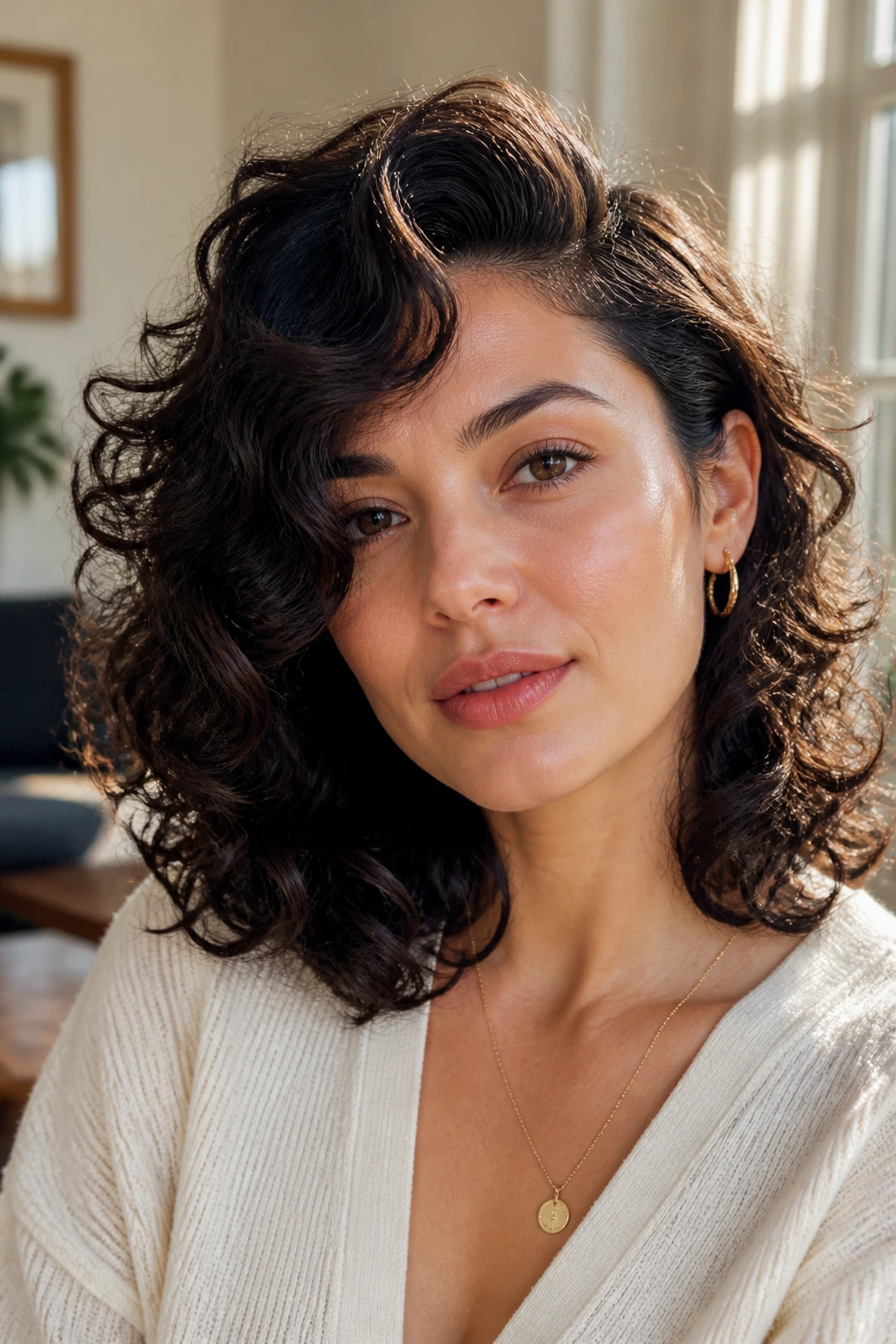
A deep side part gives curls motion even before you touch a styling product. One side falls forward. The other side opens up. The whole cut gets a little sweep that makes medium-length layers look more intentional, even when the styling is casual.
This version is especially good if your curls have a strong pattern on one side and a softer bend on the other. Rather than trying to force both sides to behave exactly the same, the part lets the cut lean into the difference. That feels more natural.
How to style it
Start on damp hair. Apply your styling product from roots to ends, then comb the top section in the direction of the part before scrunching the rest. Diffuse with your head tilted toward the heavier side so the lift holds. A root clip at the front can help if the top wants to fall flat.
16. The Hidden-Layer Shag
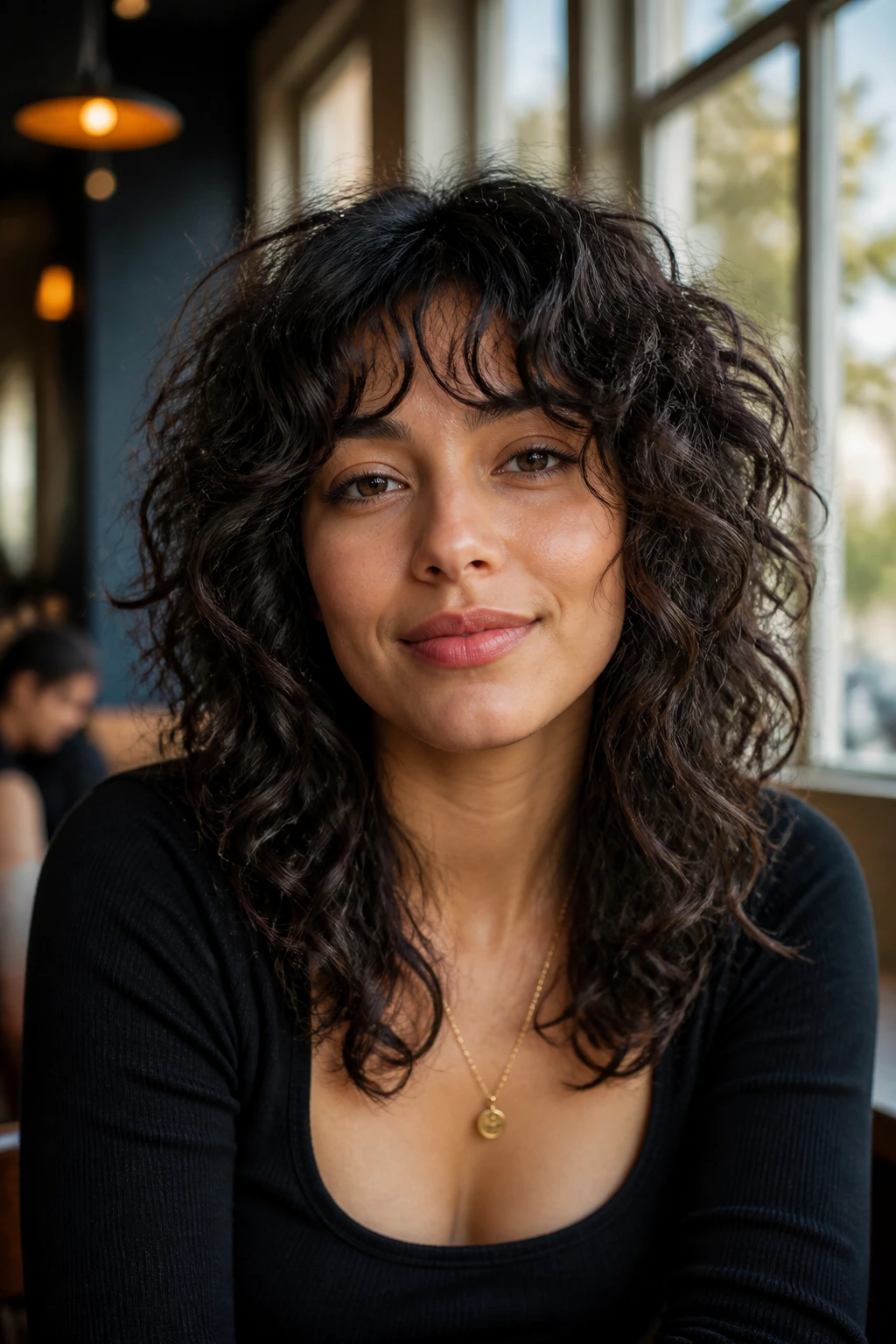
A hidden-layer shag keeps the outside looking full while the inside does the work. It is a smart choice when you want movement but don’t want every layer to show up in a choppy way. The curls on the surface keep a smooth, medium-length outline. Underneath, the weight is reduced enough that the hair does not feel heavy or stuck.
That makes this version a nice fit for people who need volume control without a visibly “piecey” look. It can look polished from the front and still feel light when you flip your hair over and shake it out.
Honestly, this is one of the most wearable versions of the cut. It’s not flashy. It just works. And sometimes that’s the better haircut.
17. The Blunt-Edge Shag
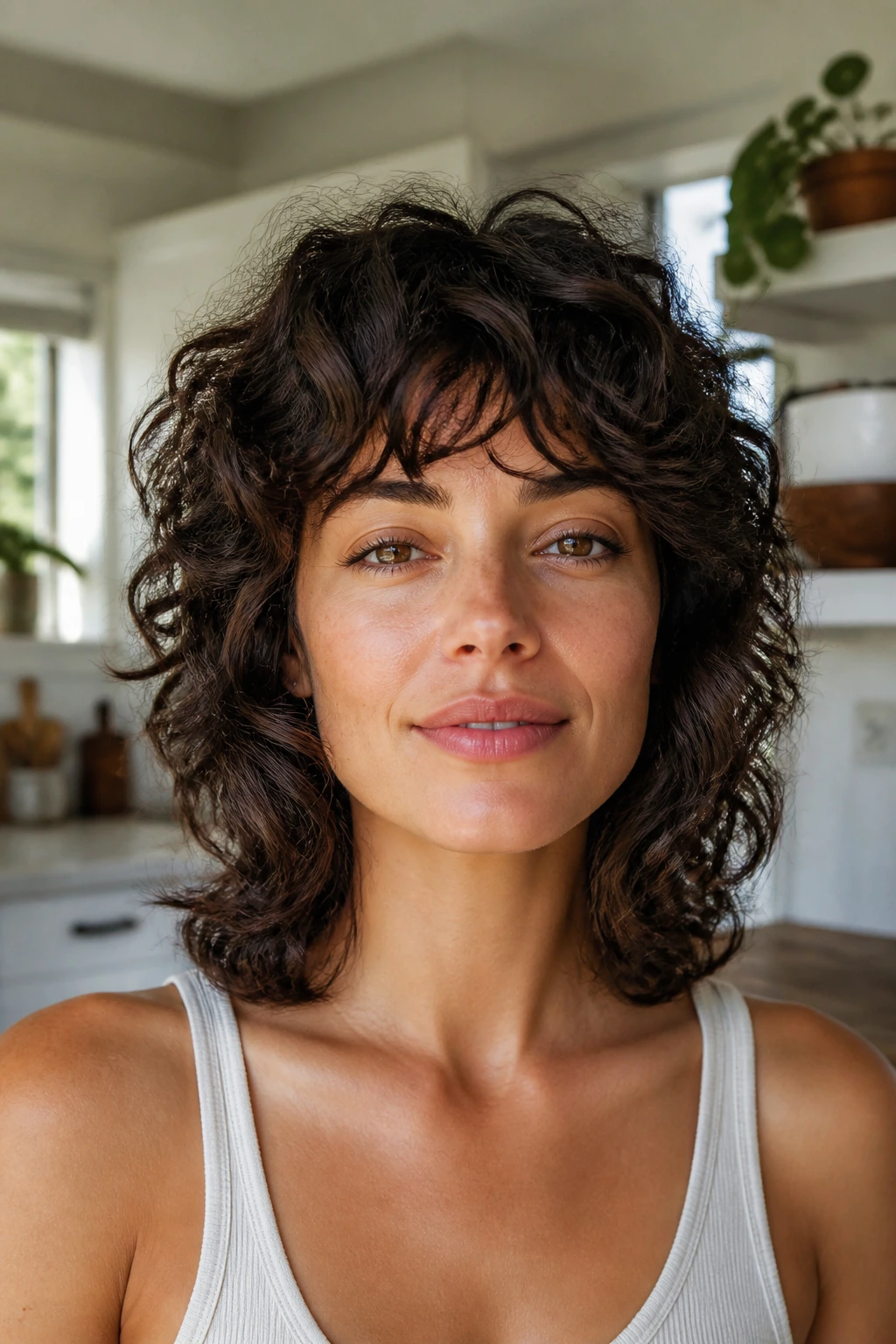
A shag does not have to look feathered to be soft. A blunt-edge version keeps the perimeter stronger, which can be a lifesaver for curls that look thin when the bottom gets too broken up. The layers still move, but the ends stay solid enough to anchor the shape.
This is a good pick if your curls are medium density and you hate that wispy finish some layered cuts create. The blunt edge gives the hair a cleaner line, which helps the curls look thicker and more deliberate.
It also grows out nicely. A sharp perimeter can hold its shape longer between trims, especially if you do not mind a little length settling over time. That makes this one more practical than it first appears.
18. The Salt-and-Pepper Shag

Gray curls are gorgeous in a shag because the layers catch light in all the right places. The texture is already doing interesting things, and a medium shag gives it room instead of burying it under one flat shape. Silver strands can look coarse when the cut is too blunt. Layers soften that fast.
There is also a nice honesty to this cut. It does not try to hide texture or color variation. It lets both show up. That can be especially flattering if your hair has a mix of silver, dark, and white strands, because the movement makes the color changes feel deliberate rather than random.
A shine cream can help, but do not overload the hair. Gray curls can get dull if they’re coated too heavily, and a light hand usually looks better.
19. The Dense Curl Shag With Hidden Overdirection
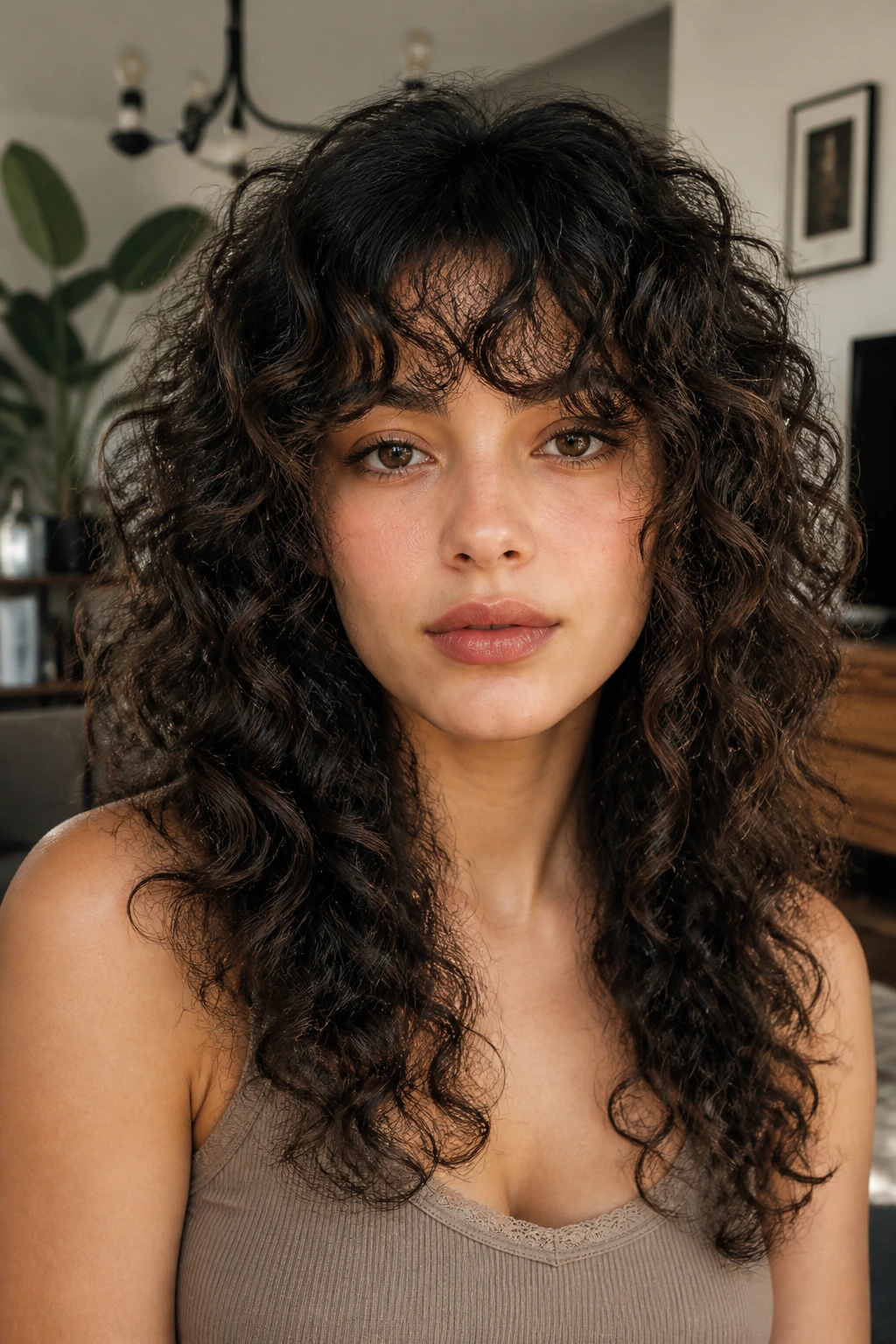
Dense curls need shape control. If the cut ignores that, the sides widen, the top gets heavy, and the entire head starts looking bigger than the face beneath it. Hidden overdirection solves that. The stylist pulls sections in a way that removes bulk where it matters while preserving a strong outer line.
What to ask for
- Longer top layers that release weight at the crown
- Interior shaping near the sides
- A perimeter that stays long enough to hold the outline
- Minimal razor work on the ends
The result is a shag that feels lighter without losing presence. That distinction matters. People sometimes ask for “less hair” when what they really want is better placement. This is how you get it.
20. The 70s Feathered Bangs Shag
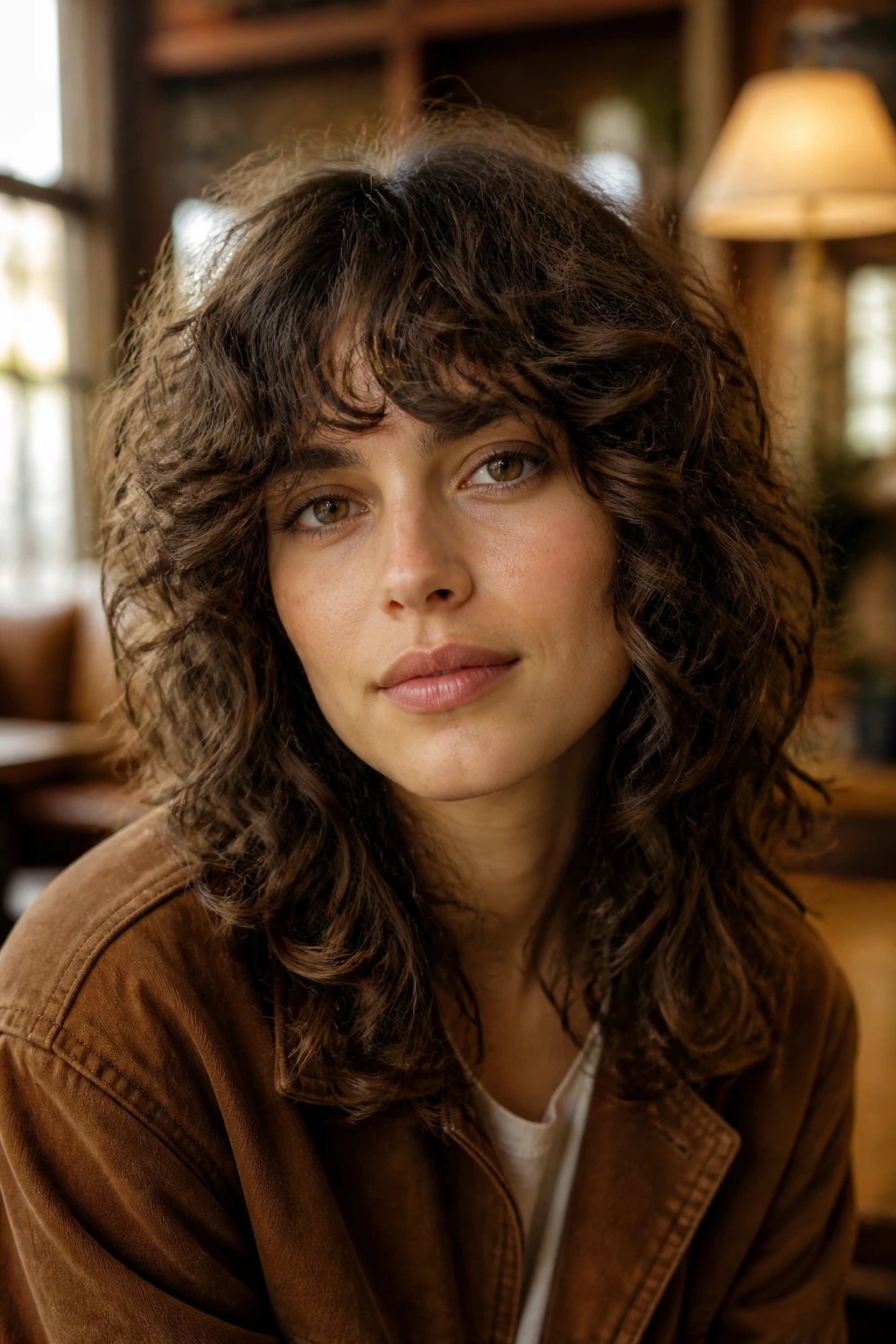
A feathered bang on curls can look soft in a way a blunt fringe never will. The pieces split and bend, the front opens up, and the whole haircut gets a little retro without feeling like a costume. That’s the sweet spot.
The medium shag supports this shape by keeping the layers around the face long enough to blend. If the bangs are feathered but the rest of the haircut is too heavy, the front looks disconnected. If the whole thing is softly layered, it reads as one clean design.
This is a good choice for people who want personality in the haircut without going full wolf-cut. It has charm. Real charm. And it wears well with a round brush, a diffuser, or no tool at all.
21. The Soft-Edged Mid-Length Wolf Cut
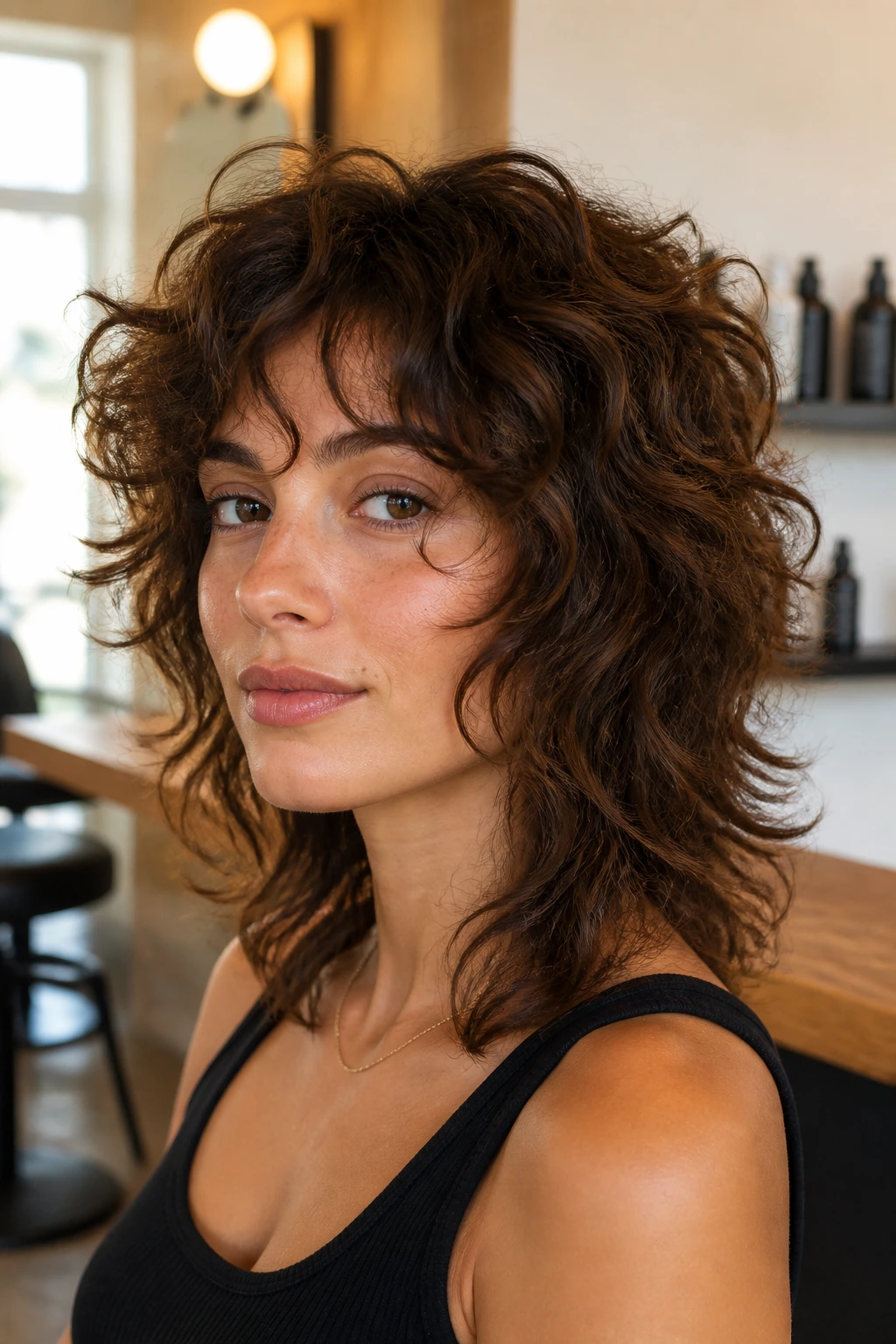
If a full wolf cut feels too sharp, this softer version is the compromise. It keeps the medium length and the piecey crown, but the edges are less extreme and the transition from top to bottom is smoother. Curly hair often likes that. Harsh steps can look jagged once the hair dries and shrinks.
The soft-edged version is best when you want some edge, some lift, and a little bit of that undone shape people keep asking for at the salon. But it is still wearable. It can go to work. It can go out. It does not need a leather jacket to make sense.
This is also a smart choice if your curls are on the looser side and you want a cut that gives more shape without making the ends look too light.
22. The Grow-Out-Friendly Medium Shag
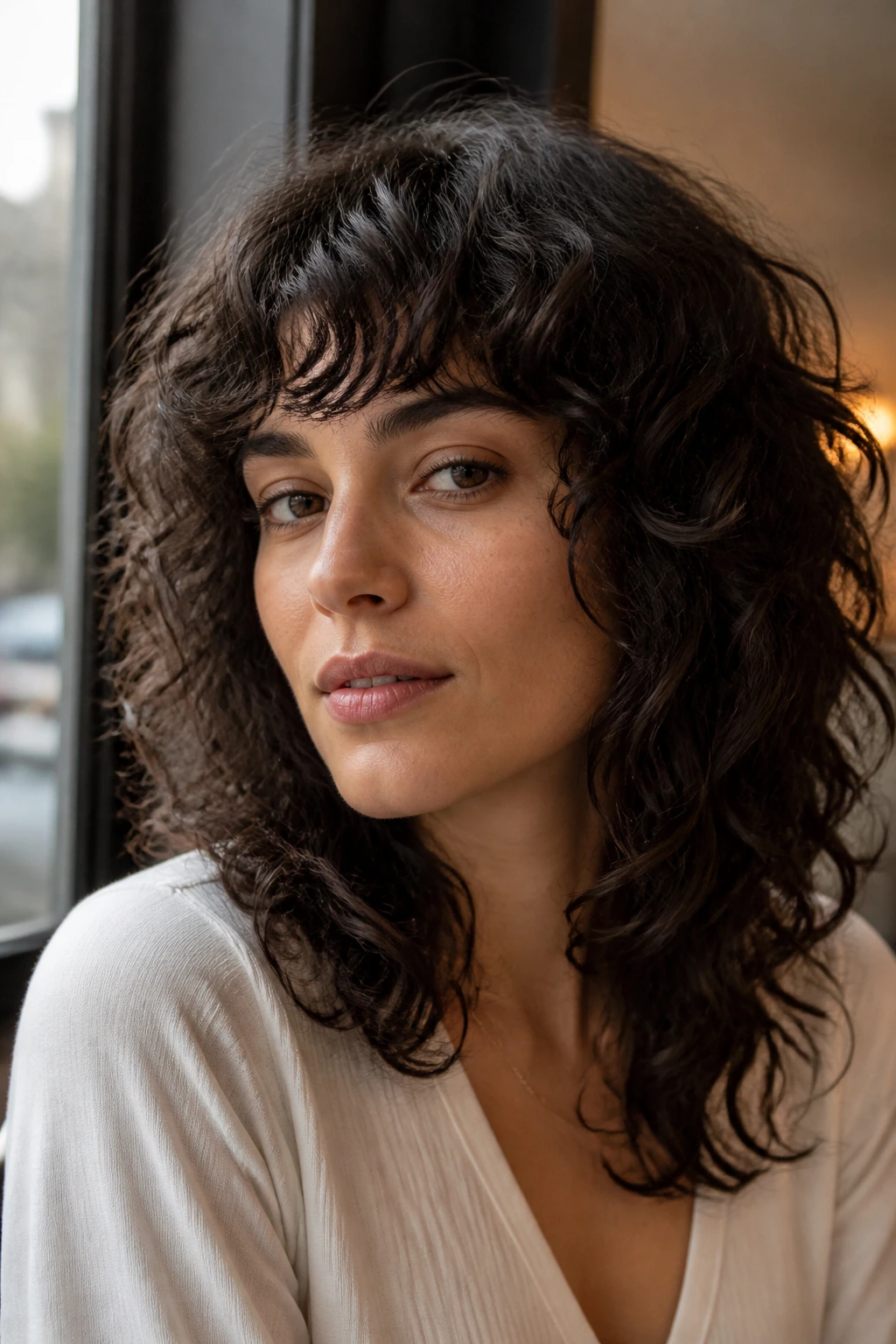
Some cuts look good for two weeks and then fall apart. This is not one of them. A grow-out-friendly shag is built with soft transitions, longer face pieces, and enough shape at the bottom that the haircut still makes sense when the layers settle. That is what makes it such a practical choice for people who do not want constant trims.
The nicest version keeps the shortest layers away from the hairline and lets the front pieces drift just below the cheekbones. That way, when the hair grows, the shape becomes a little longer and a little looser, not awkward. The curls do the rest.
If you want one shag that can survive real life — humidity, bad sleep, a skipped wash day, the whole mess — this is the one I’d send you toward. It’s forgiving. That counts for a lot.
