



Long wolf cuts with bangs are one of the few layered styles that can make straight hair look fuller without forcing it into a fake, overworked shape. The cut has enough structure to keep things interesting, but it still leaves room for movement — which matters a lot when your hair likes to lie flat the second you walk out the door.
Straight hair is picky in a way people don’t always admit. It shows every line. It shows every blunt edge. And it will happily expose a weak haircut the minute the blow-dry settles. That’s why the long wolf cut works so well when it’s done right: the crown gets lift, the ends keep their length, and the bangs decide how soft, sharp, or shaggy the whole thing feels.
The trick is balance. Too much layering and straight hair can turn stringy fast. Too little, and the wolf cut loses its shape and starts looking like long hair with random snips in it. The versions below keep the front section doing real work, which is where this haircut either comes together or falls apart.
1. Curtain Bangs That Melt Into Long Wolf Layers
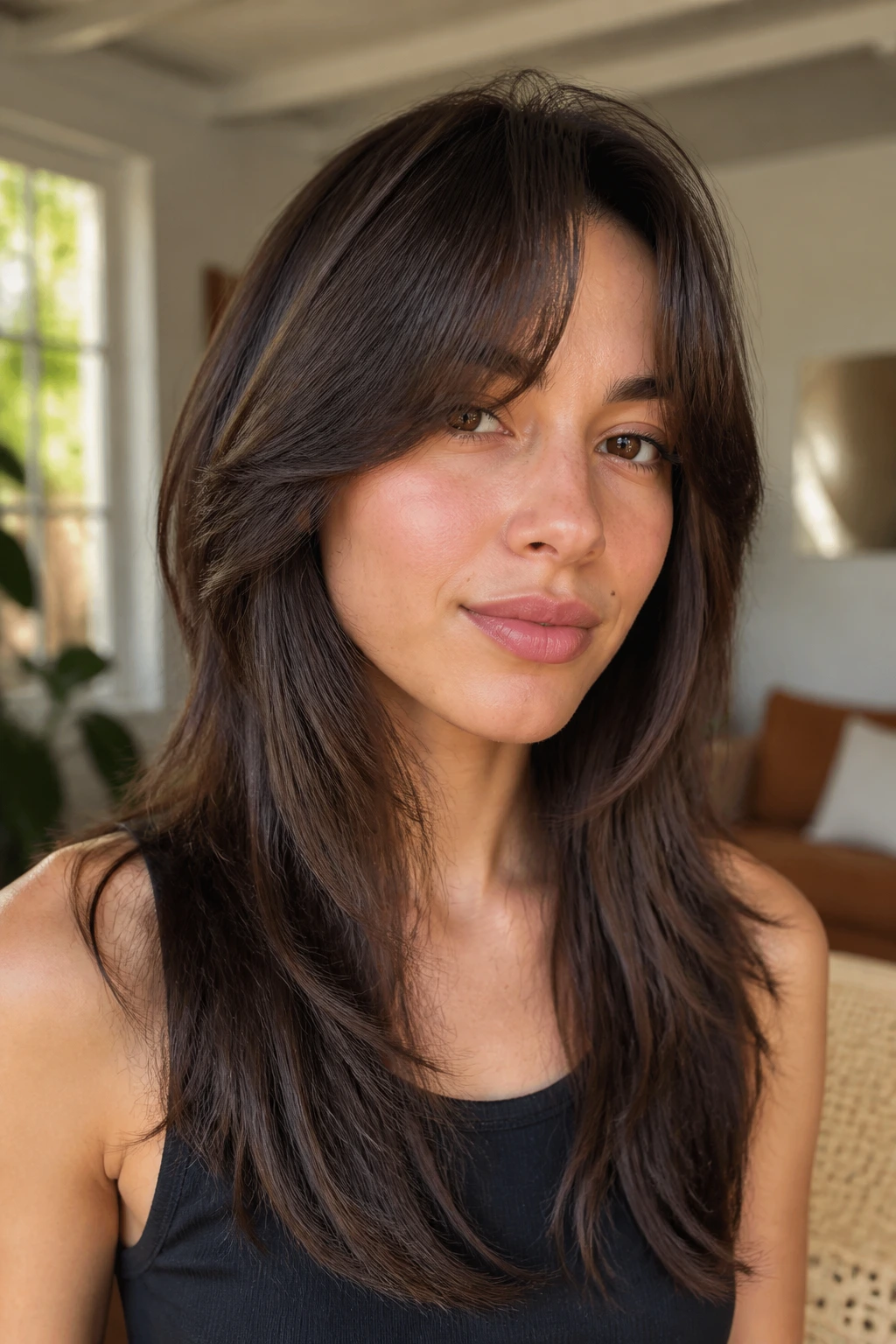
Curtain bangs are the safest place to start, and I mean that as a compliment. On straight hair, a long wolf cut can look too severe if the front is cut blunt and short, while curtain bangs keep the shape open and easy to wear.
Why They Work on Straight Hair
The center stays a little shorter, the sides drift longer, and that soft split helps straight hair avoid the helmet effect. You get face-framing without a heavy block of fringe sitting across the forehead. That matters because straight hair doesn’t hide mistakes well.
Curtain bangs also blend neatly into the top layers of a wolf cut. When the stylist points the shears through the ends, the front can fall forward or swing away from the face with a quick bend from a round brush.
- Ask for the shortest point around the bridge of the nose or just below it.
- Keep the outer pieces long enough to graze the cheekbones.
- Blow-dry the fringe away from the face with a 1-inch round brush.
- Add a touch of light mousse at the roots if your hair goes flat fast.
Best use: if you want the wolf cut shape without committing to a fringe that needs constant babysitting.
2. Bottleneck Bangs With a Clean, Narrow Center
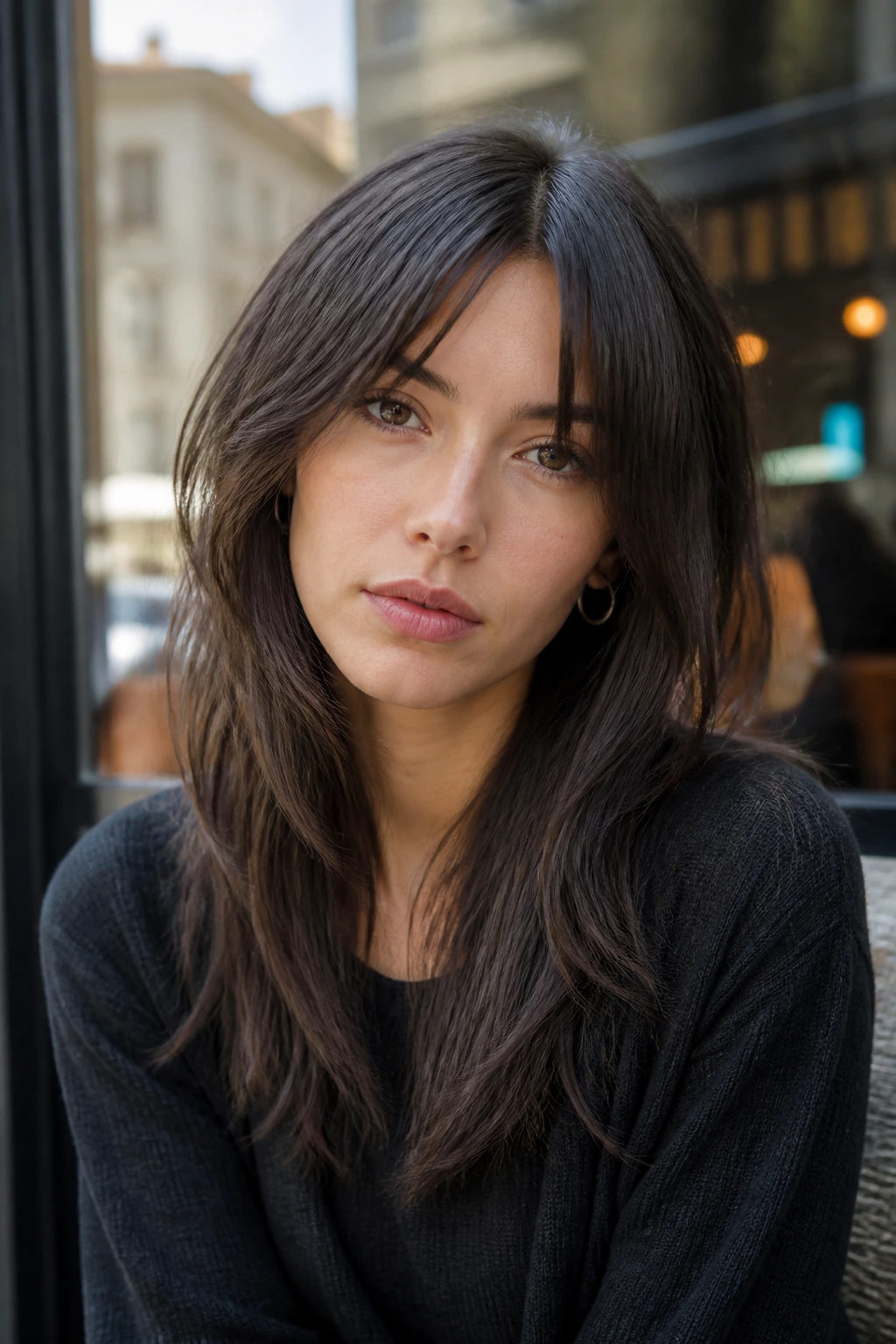
Bottleneck bangs give straight hair more shape than curtain bangs without turning the front into a wall. That narrow middle section is the whole point.
The shortest point sits near the center of the forehead, then the length widens toward the temples. On straight hair, that taper looks deliberate instead of messy, because the strands fall in clear lines. You get a strong outline up front, but the sides still soften the face.
This version works especially well if your hair is medium to thick. Fine straight hair can wear bottleneck bangs too, but the cut has to be light. If the front is taken too heavy, it starts to feel boxy and you lose the airy wolf-cut movement.
I like this shape when someone wants a little more edge than curtain bangs but still wants to tuck the front back on busy days. It’s tidy. It’s a little sharp. And it photographs better from the side than most people expect.
3. Wispy Brow-Skimming Bangs for Fine Straight Hair
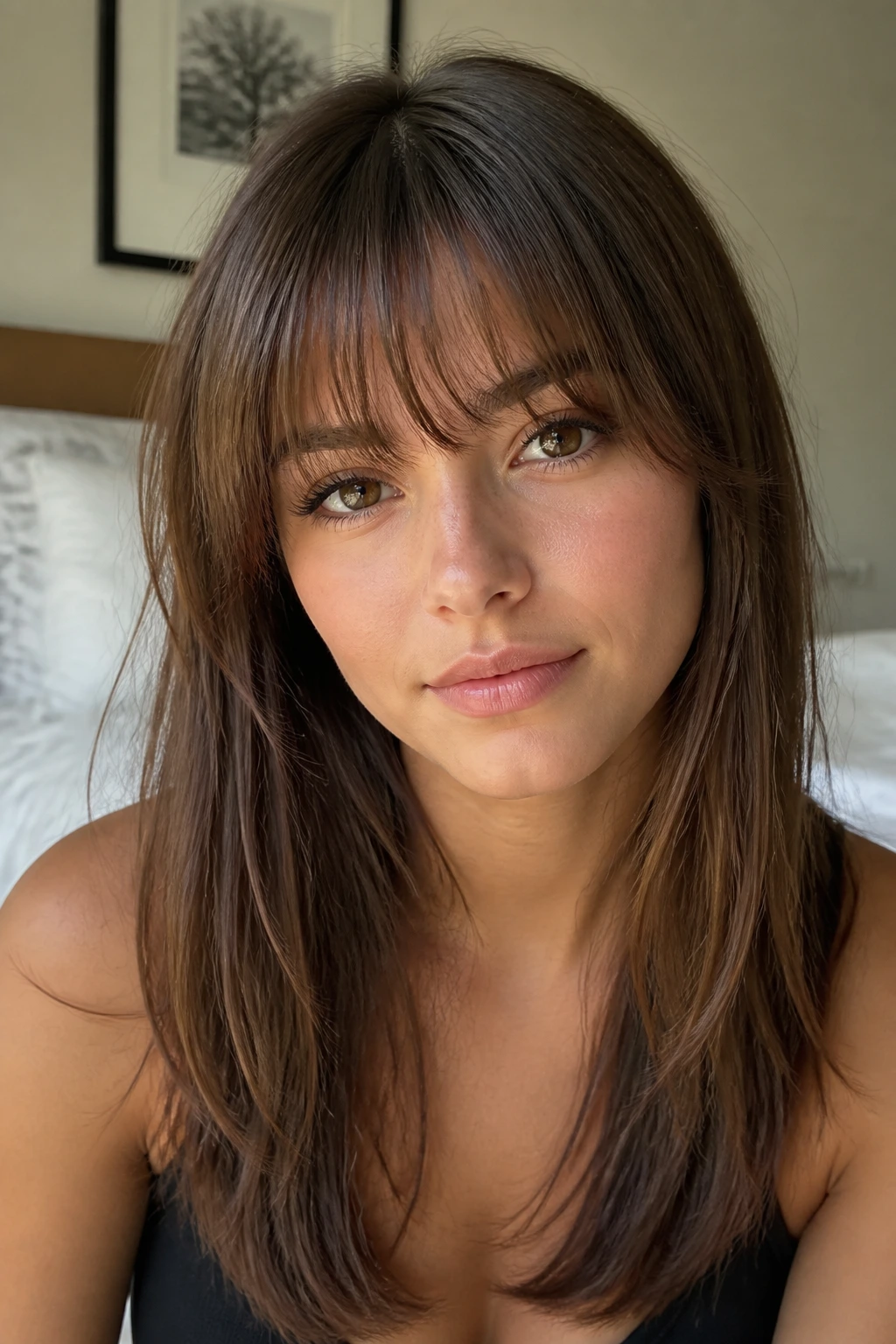
Why do wispy bangs look so good with straight hair? Because they add presence without loading the forehead with weight.
Fine straight hair can go limp fast if the fringe is too dense. Wispy bangs avoid that problem by letting some skin show through the strands. The result is lighter, softer, and less fussy, which is exactly what a long wolf cut needs when the rest of the hair is already layered.
How to Wear Them
The cut should sit right around the brow line, or a hair above it, with the ends softly broken up rather than carved into a sharp edge. If the fringe is trimmed too short, it loses the easy feel and starts looking like a mistake you’ll need to grow out.
A quick blow-dry with a paddle brush or a flat brush is enough. Keep the roots smooth, then leave the ends a little separated. That tiny bit of imperfection is the whole charm.
Good for: low-maintenance people, finer hair, and anyone who wants fringe that doesn’t shout.
4. Choppy Blunt Bangs That Wake Up Flat Hair
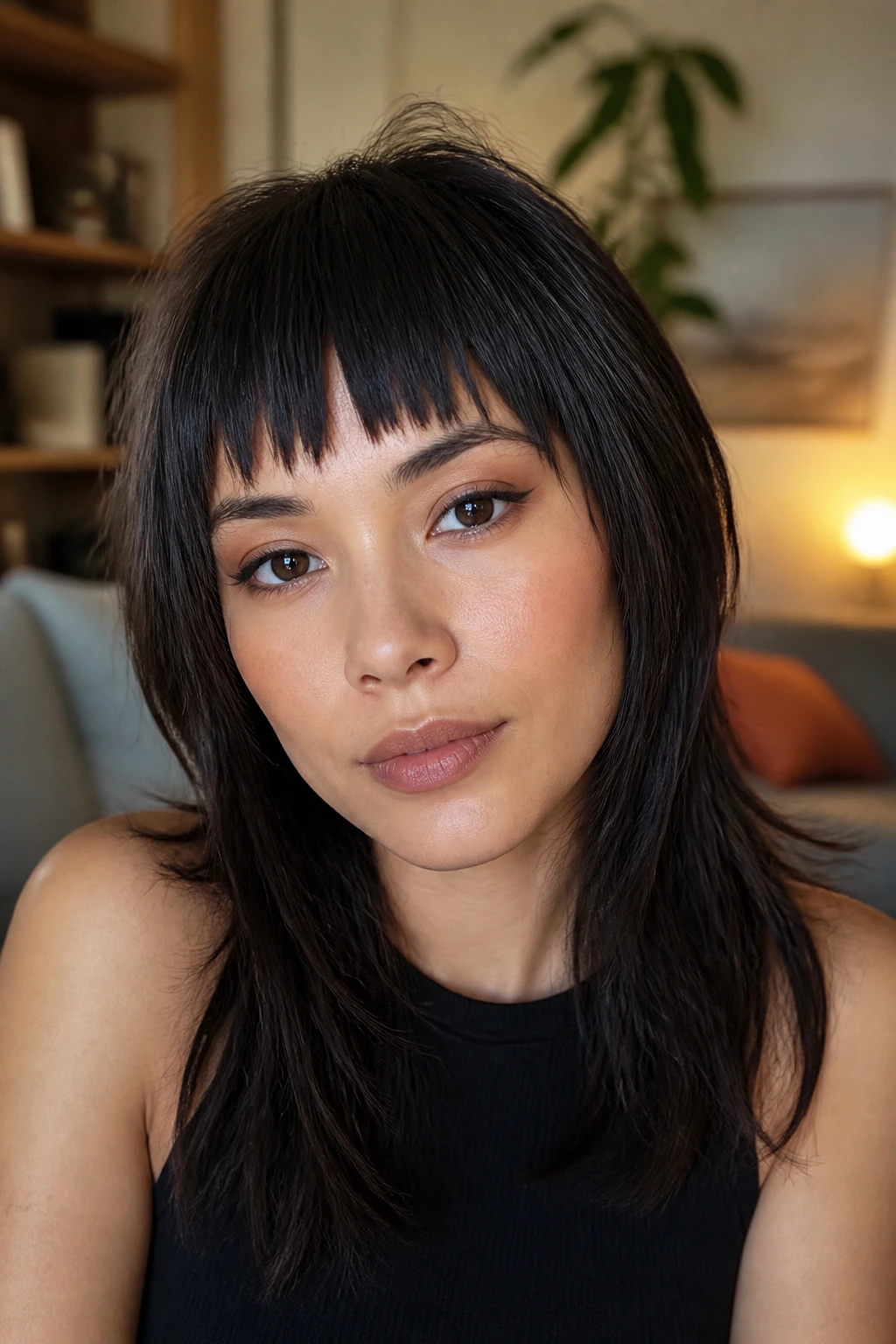
If your long wolf cut disappears the second it dries, choppy blunt bangs wake it back up. The contrast is the point here.
A blunt front gives straight hair a clear line to anchor the rest of the cut. Then the wolf layers around it keep the style from looking too neat. That tension — sharp in front, soft through the body — is what makes this version feel fresh instead of overthought.
A lot of stylists overdo the choppiness and forget that blunt bangs still need shape. You want a straight edge, yes, but not a stiff block. A little point-cutting at the temples helps the fringe move when you do. Without that, the cut can feel heavy and a bit costume-y.
- Best on medium to thick straight hair.
- Keep the line at the brows or just above.
- Ask for soft point-cut ends at the sides.
- Use a flat brush for a smooth finish, then break the ends up with your fingers.
The blunt front does the talking. The layers do the rest.
5. Side-Swept Fringe With Long, Soft Layers
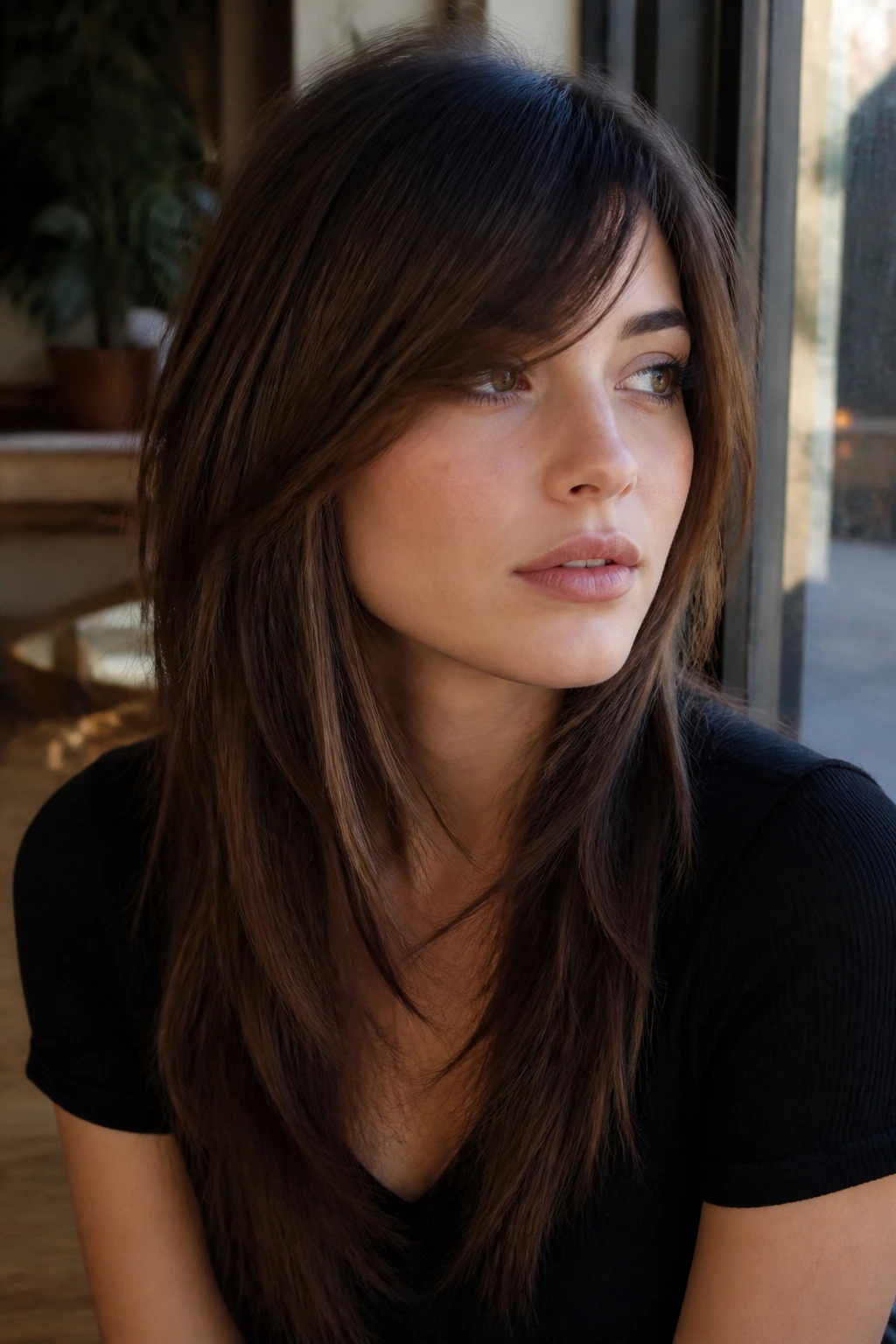
Side-swept fringe is for the person who likes the idea of bangs but does not want a full forehead commitment. On straight hair, that matters more than people think.
This version keeps the wolf cut relaxed. The fringe slides across the face in one direction, usually starting deep on one side and blending into the front layers instead of sitting as a separate section. It’s forgiving if your hair has a cowlick or if you change your part a lot. It’s also a nice choice when you want the haircut to work with a blazer one day and a T-shirt the next.
Low drama. High payoff.
The styling is simple, but the cut has to be done well. If the sweep starts too short, it sticks up. If it’s too long, it falls into your eyes and loses shape. The sweet spot is usually around the cheekbone on the shorter side, then longer as it travels across the forehead. Straight hair makes that diagonal line look crisp, which I love.
6. See-Through Bangs That Leave a Little Space
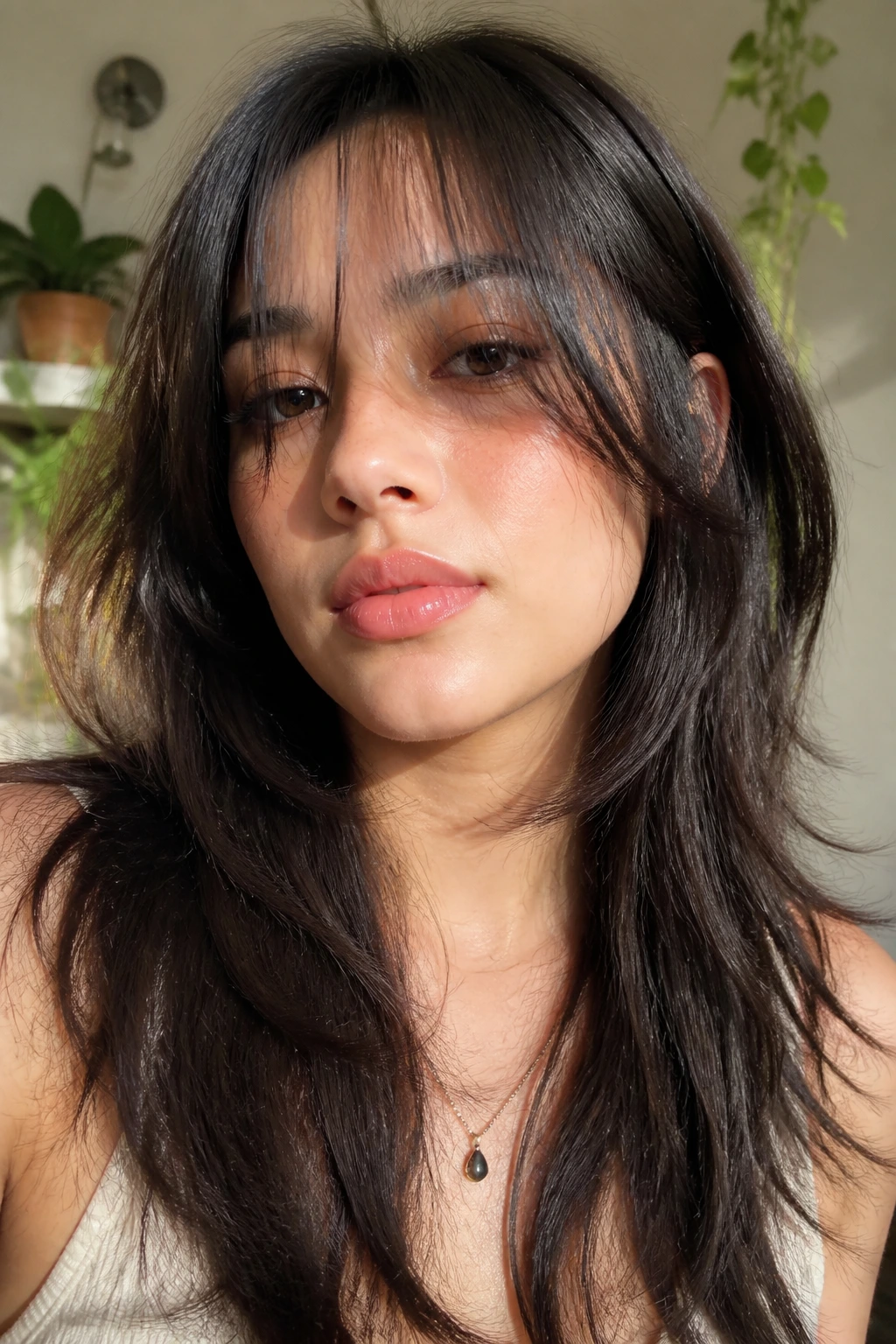
Unlike dense fringe, see-through bangs leave visible forehead between the strands. That tiny gap changes the whole mood of a long wolf cut.
This style is a smart pick for fine straight hair because it avoids the heavy curtain effect. Instead of one thick block across the front, you get a soft veil of hair that moves easily and doesn’t need much heat styling. The cut reads lighter, which helps when the rest of the wolf layers already bring shape around the crown and ends.
The best version lands a touch below the brows so the fringe still looks intentional when it settles. If it’s cut too short, the airy effect can turn a little awkward. If it’s too long, it looks like grown-out bangs instead of a choice.
Who It Suits Best
- People with fine straight hair that gets weighed down fast.
- Anyone who wants bangs without a hard visual line.
- Faces that need a little softness around the forehead.
If you want a fringe that whispers instead of announces itself, this is the one.
7. Feathered Bangs That Blend Into the Crown
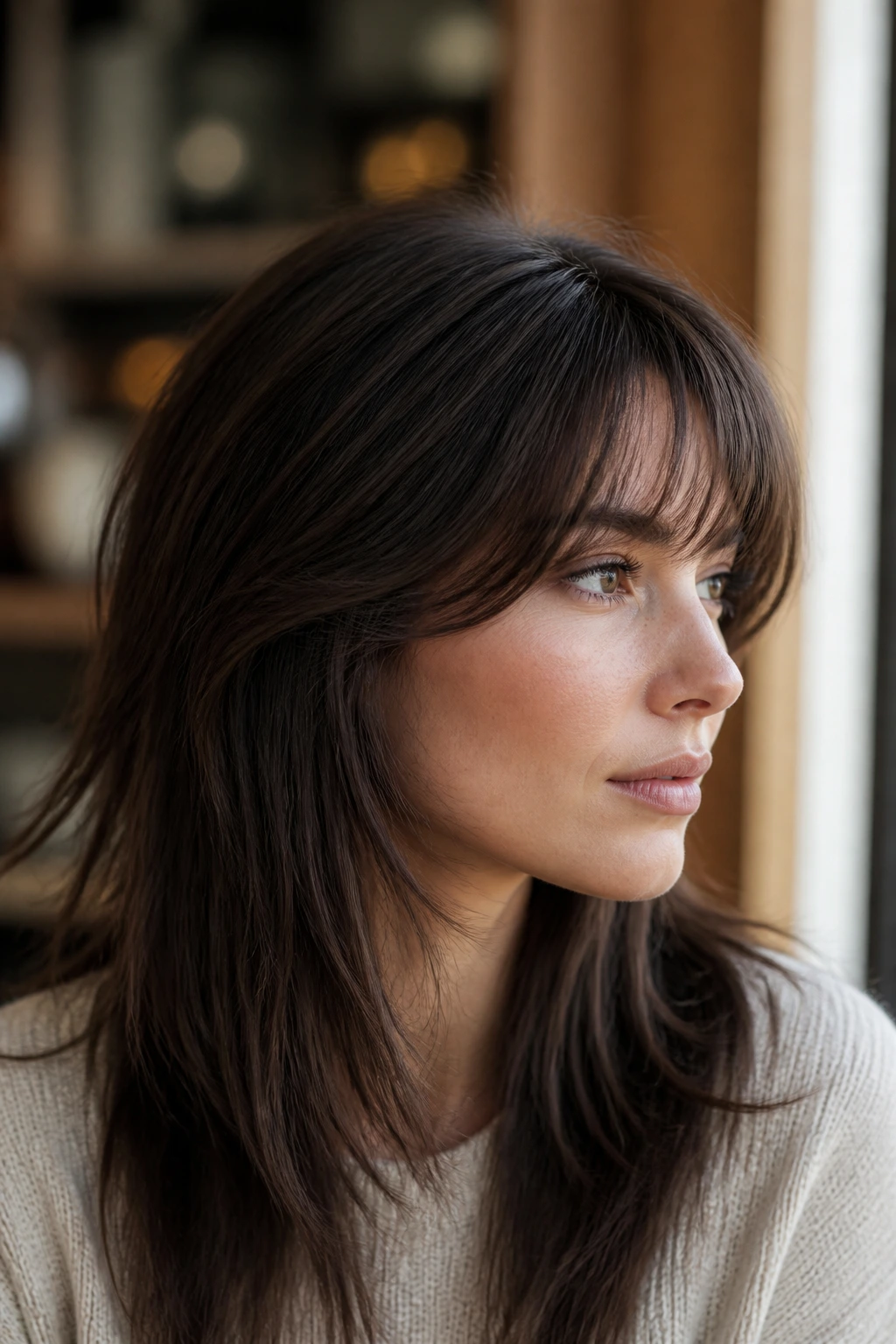
Feathered bangs are old-school in the best way. They belong on straight hair because straight hair shows the feathering clearly.
The key difference here is texture at the ends. Instead of a heavy, blunt fringe, the stylist cuts the bangs so they taper into the layers at the top of the head. That keeps the cut from sitting as a separate piece. It feels connected to the rest of the wolf shape, which is exactly what you want on straight hair.
What Makes Them Different
Feathered bangs are not the same as wispy bangs. Wispy fringe is lighter overall. Feathered bangs have more body, but the edges are softened so they don’t look chopped. That makes them a nice middle ground if you want movement and still need the front to show up.
How to Ask for Them
Ask for longer face-framing pieces around the temples and a softly broken-up center. Point-cutting works better than aggressive thinning here. Too much thinning can leave straight hair fuzzy at the ends, and nobody wants that.
Feathered bangs are one of those styles that looks better with a quick round-brush bend than with pin-straight dryness. The slight curve matters.
8. Micro Bangs for a Sharp Long Wolf Cut

A long wolf cut with micro bangs is a sharp contrast that straight hair handles better than people expect. The front is tiny, the rest is long, and the whole thing feels a little rebellious without needing a dramatic color change or a huge chop.
Micro bangs work because the long wolf layers soften the visual shock. If the whole haircut were short and choppy, the style would feel aggressive. With length left through the body and a little softness in the sides, the tiny fringe becomes the focus instead of the only thing you notice.
This is not the low-maintenance option. It grows out fast, and straight hair shows that growth line almost immediately. So if you hate trims, think twice. Still, if you like a strong front edge and you wear your hair straight most of the time, it can look fantastic.
- Keep the bangs around 1 to 2 inches above the brows.
- Ask for light texture, not a jagged hack job.
- Keep the rest of the cut long enough to balance the front.
- Style with a flat brush and a tiny bit of cream so the fringe doesn’t stick up.
Tiny fringe. Big attitude.
9. Face-Framing Bangs That Start at the Cheekbones
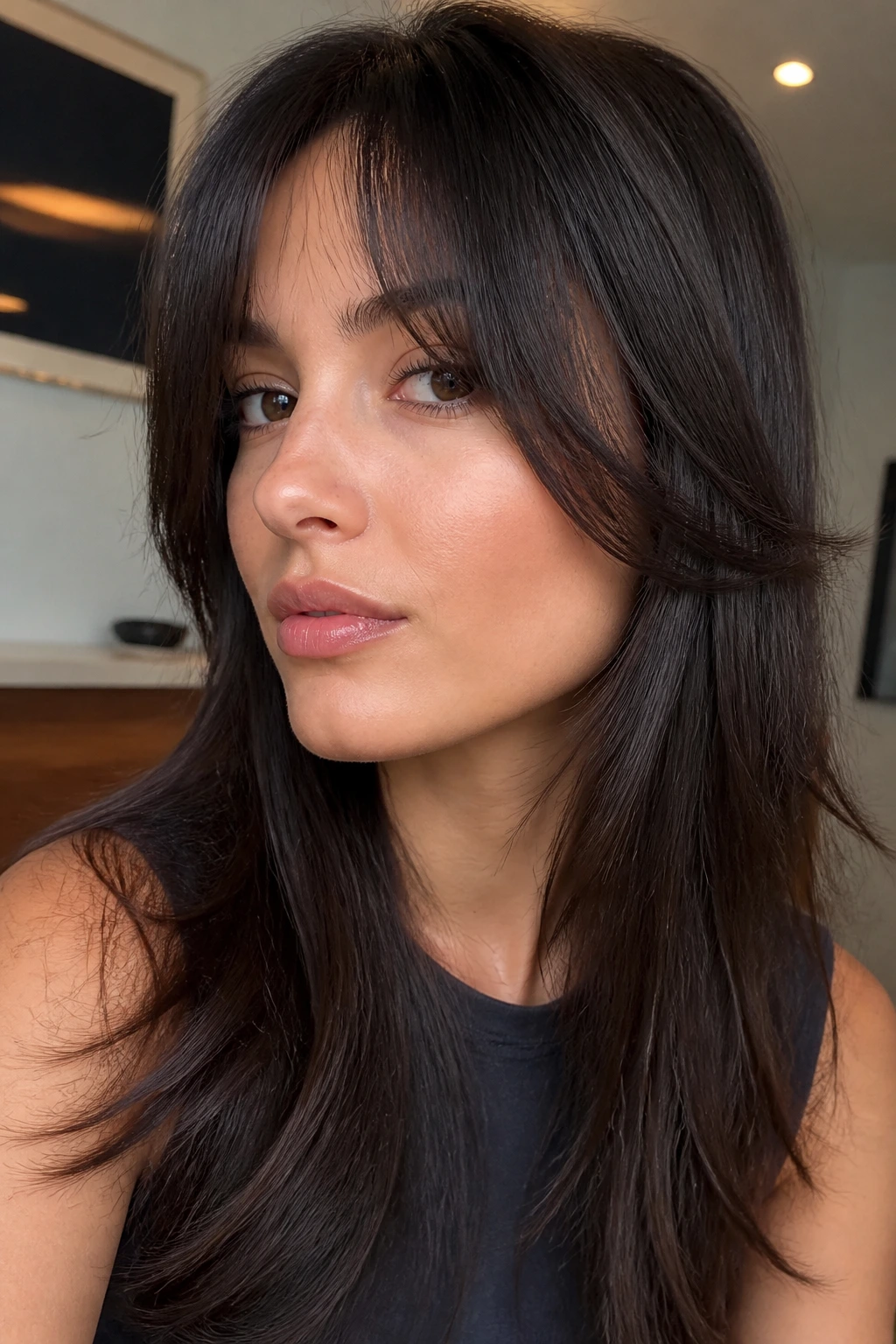
Why do face-framing bangs make long wolf cuts look softer on straight hair? Because they pull attention to the sides of the face instead of crowding the forehead.
This version is really about the front layers more than the fringe itself. The shortest pieces usually begin around the cheekbones, then fall into longer lengths that graze the jaw or collarbone. On straight hair, that line reads clean and controlled, which makes the whole cut feel expensive without being fussy. I know that word is overused, but here it fits.
How to Ask for the Shape
Tell the stylist you want the front pieces to start at the cheekbones and blend down into the long layers. If your face is narrow, keep the shortest pieces a little softer. If your hair is dense, the layers can be more obvious.
- Shortest pieces at the cheekbone.
- Longer pieces at the jaw or collarbone.
- Soft point-cut ends so the front doesn’t look blunt.
- Blow-dry away from the face for lift.
This is one of the easiest ways to make a wolf cut feel grown-up without losing the edge.
10. Grown-Out Bangs That Look Intentional
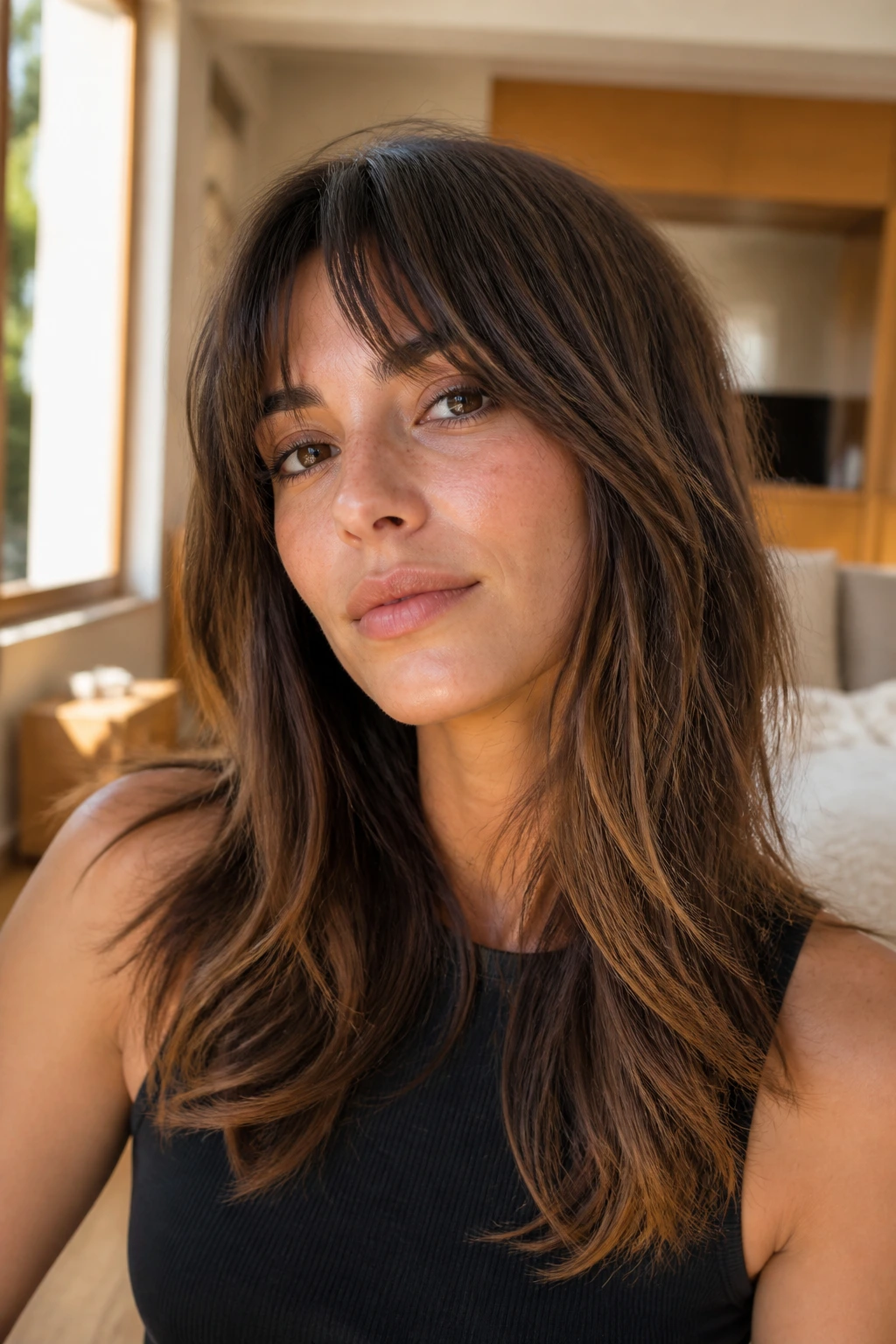
The best part of grown-out bangs is that they forgive a bad trim. That alone earns them a place on this list.
Straight hair tends to reveal every awkward stage of fringe growth, but a long wolf cut can hide that better than a blunt bob or a one-length style. Once the bangs sit below the brows and start blending into the side layers, the whole haircut gets a lived-in feel. It looks chosen, not neglected.
I like this version for anyone who wants a fringe but does not want to schedule a trim every few weeks. The front can be parted in the middle, pushed to one side, or tucked behind the ears when needed. That flexibility is the appeal. You are not locked into one shape.
The trick is keeping the shortest pieces soft enough to move. If they’re cut too heavy, grown-out bangs can slump into the eyes and get annoying fast. A little bend at the ends helps the fringe settle instead of hanging there.
11. Split Bangs With a Softer Middle Part
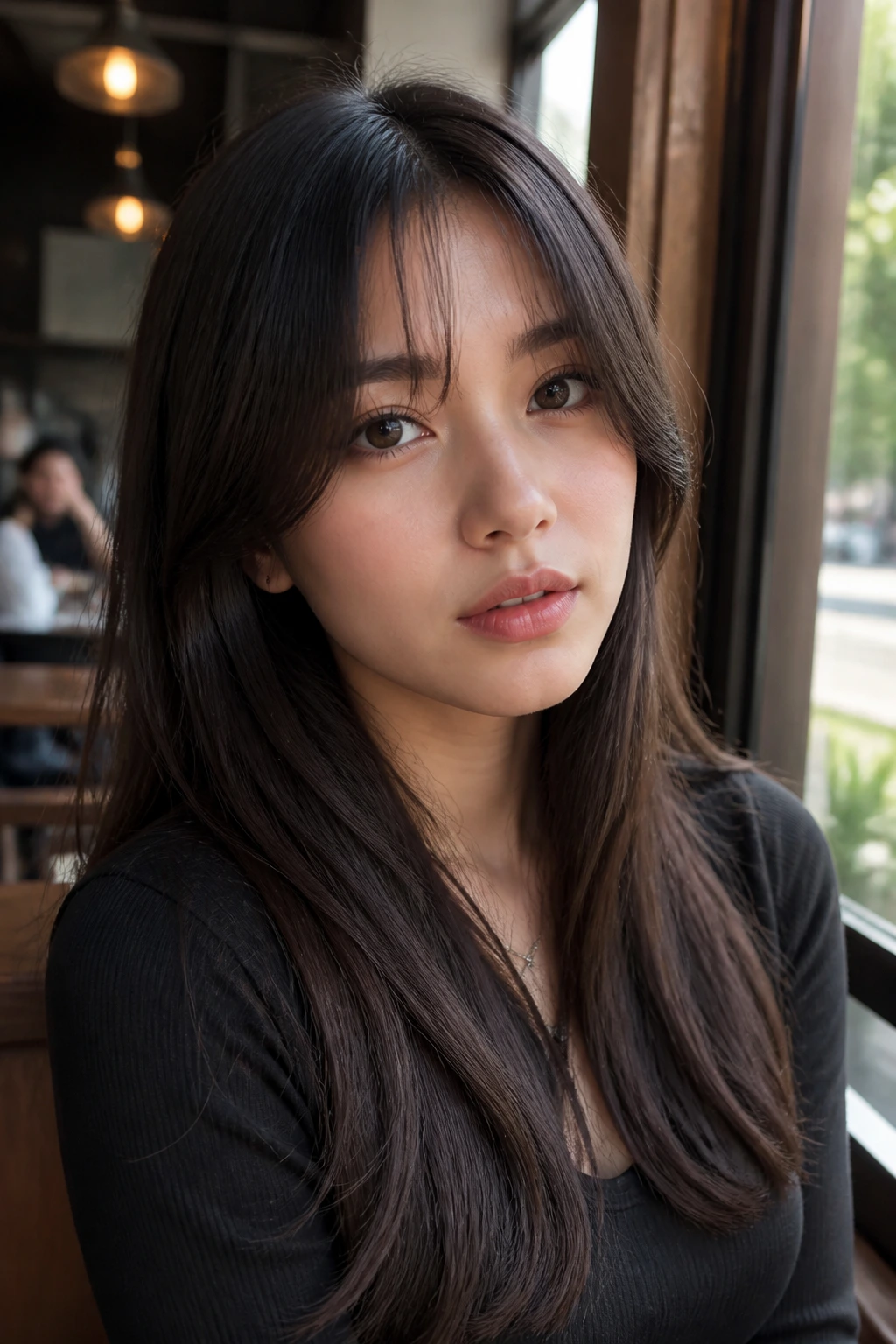
Split bangs are not quite curtain bangs, and that distinction matters. They keep a more centered opening at the forehead, which gives straight hair a cleaner, more controlled line.
Unlike curtain bangs that fan out broadly from the middle, split bangs usually stay a little tighter around the part before they sweep outward. That makes them a good match for straight hair that naturally falls in a middle part anyway. You don’t have to force the direction. The cut follows what the hair already wants to do.
They’re also useful if you want the wolf cut to feel light near the eyes without going full fringe. There’s enough separation to frame the face, but not so much that the bangs become the star of the show.
What to Ask For
Ask for a soft center opening, then longer pieces that start around the temples. The shortest section should not be so short that it stands up on its own. It needs to blend into the top layers. If you wear glasses, this version can be easier too, because the bangs don’t pile into the frames the way heavier fringe sometimes does.
Straight hair loves a clean split. It just does.
12. Arched Bangs That Follow the Brow Line
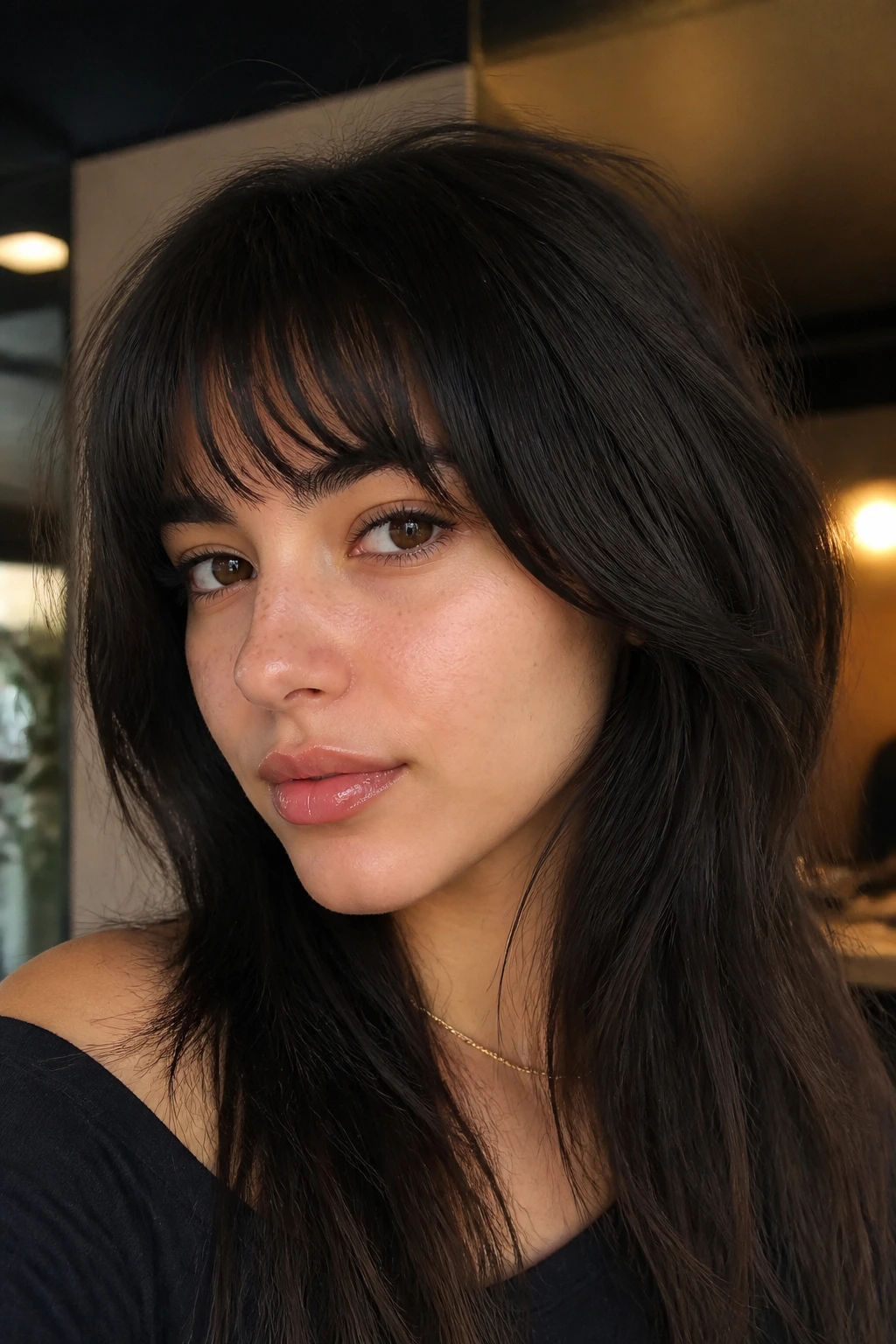
Can a curved fringe make straight hair look less boxy? Yes. And more people should try it.
Arched bangs follow the shape of the brow instead of sitting in a hard horizontal line. That small curve changes the way the whole wolf cut lands on the face. Straight hair often looks sharp in a way that can feel too flat or too rigid, and the arch softens that without losing definition.
This style works especially well if you have a strong brow line or a forehead that feels a little broad to you. The curve pulls the eye down and inward, then the long layers take over around the cheeks and jaw. It’s an easy handoff, which makes the haircut feel cohesive.
The Trick
Keep the center a little shorter and the sides longer, but not so much longer that it becomes curtain bangs. That’s the mistake. Arched bangs need a visible curve, not a wide sweep. A round brush helps, but don’t overdo it. If the fringe is blown too puffy, the arch loses its clean shape.
One more thing: this style looks best when the rest of the wolf cut stays light through the top layers. Heavy crown layers can fight the curve.
13. Heavy Straight Bangs With Long, Choppy Layers
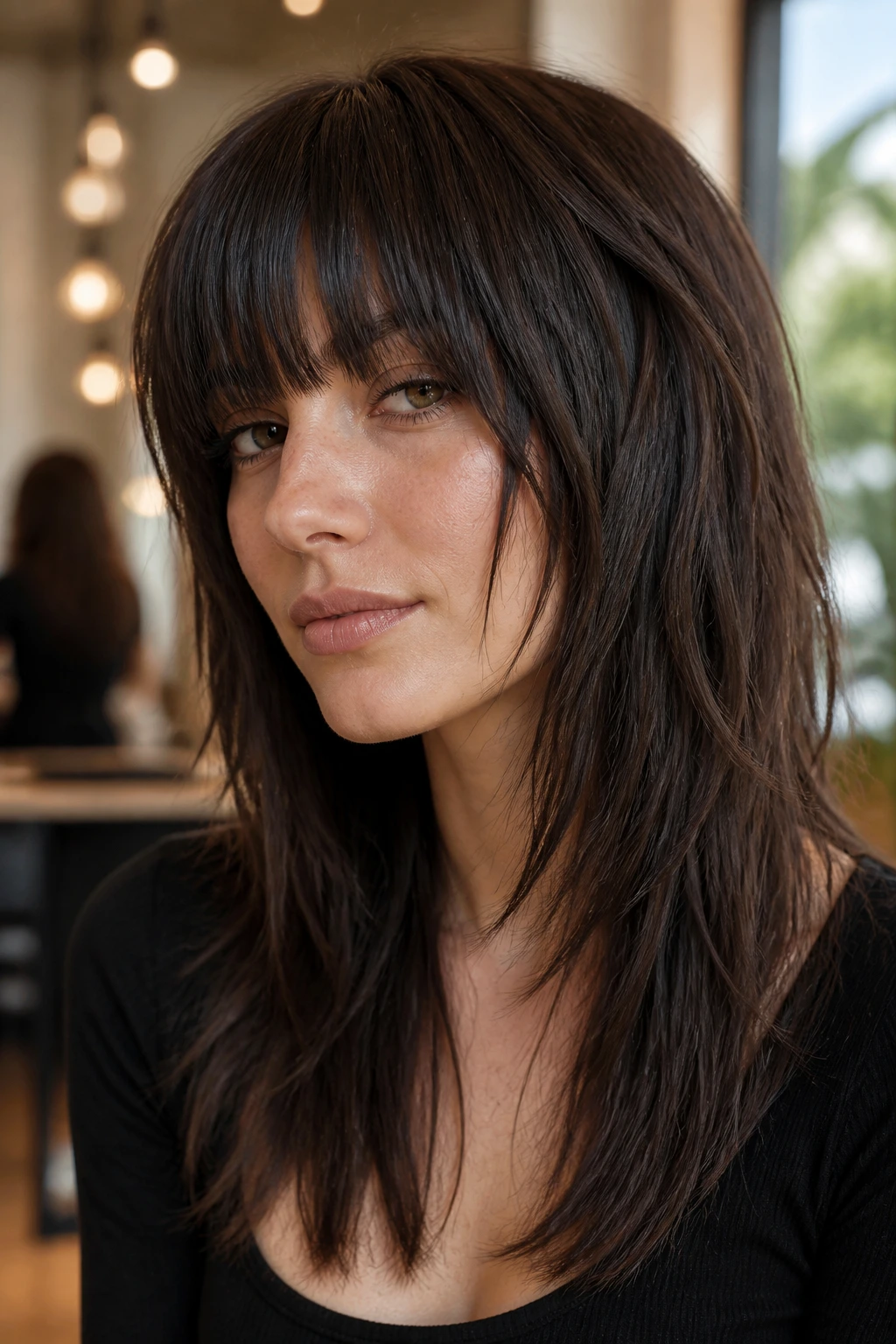
Heavy straight bangs are not delicate, and that’s the point. If you want your long wolf cut to feel stronger and a little more graphic, this is the version.
On straight hair, a dense fringe can look fantastic because the texture already supports a clean line. You don’t need waves or curls to make it work. The bangs can sit across the forehead with real weight, while the long layers and shaggier ends keep the haircut from becoming too formal. That contrast is the magic.
This style is best if your hair is thick enough to hold the fringe without gaps. Fine hair can wear it, but it needs careful cutting so the bangs do not look see-through in bad lighting. Nobody wants their fringe to look thinner in the mirror than it did in the chair.
A heavy fringe does ask for more upkeep than a wispy one. You’ll probably need to smooth the top section with a blow-dryer or flat iron most days. Still, the payoff is strong. It gives straight hair a clear face and makes the wolf layers around it feel even more deliberate.
14. Razor-Cut Bangs With Soft, Airy Ends
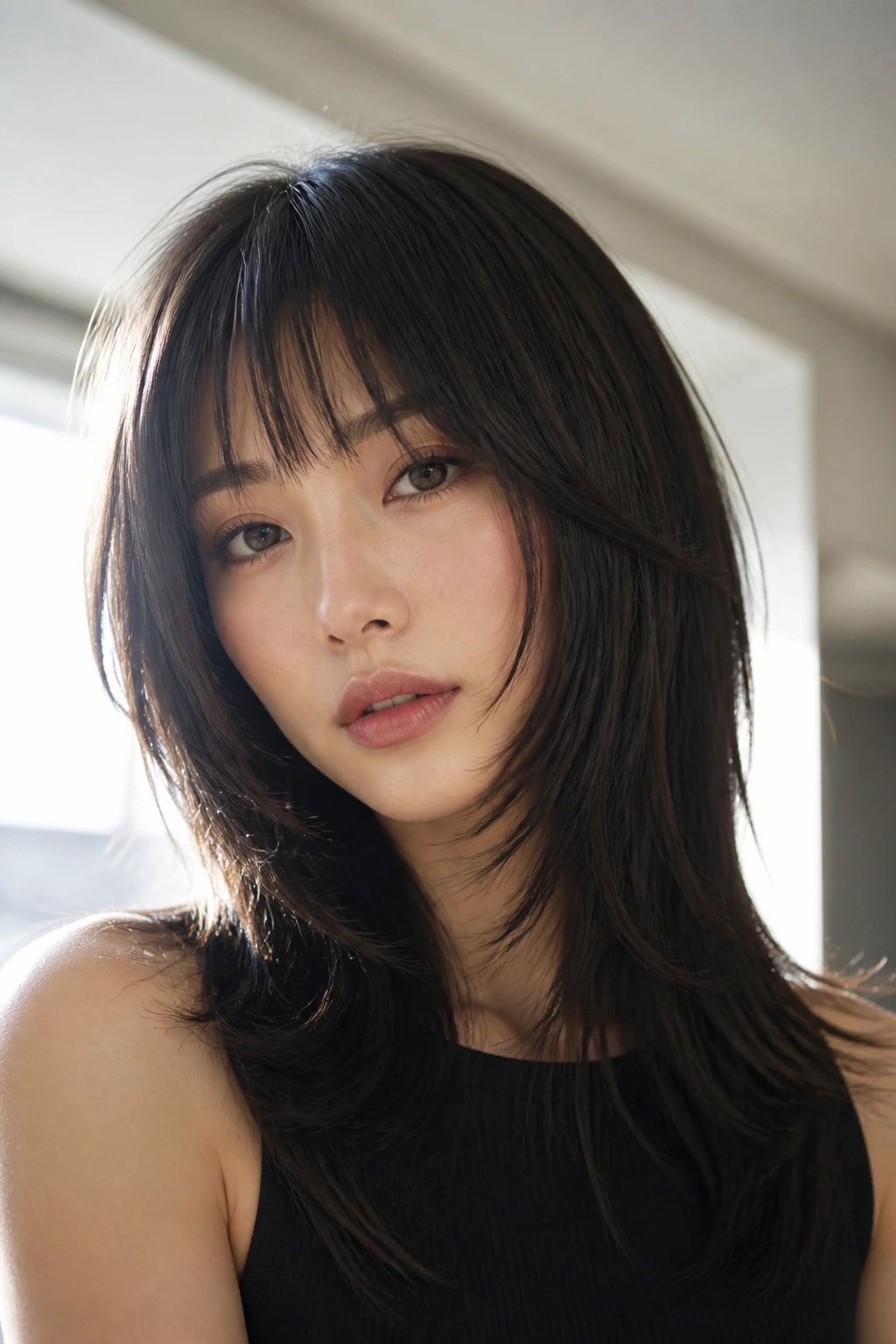
Razor-cut bangs are one of the easiest ways to make straight hair look less rigid. The edges come out softer, the ends fall with a little bend, and the whole front section feels lighter.
A razor cut is useful when the hair is dense enough to handle it. On medium straight hair, the fringe can take on a nice fluid shape without looking blunt or boxy. That’s why this style pairs so well with a long wolf cut: the layers in the body stay textured, and the bangs echo that same broken-up finish.
But there’s a catch. If your hair is dry, fragile, or prone to frizz, a razor can make the ends look rough instead of soft. In that case, point-cutting may be kinder. A good stylist will know the difference, but it helps to speak up.
What to Watch For
- Works best on healthy, medium-density straight hair.
- Needs a light hand, not a heavy slice.
- Looks best with a little bend, not a pin-straight finish.
- Can fray if the hair is already dry.
Razor-cut bangs look casual in a way that still feels planned. That’s rare.
15. Airy Fringe With a Barely-There Feel
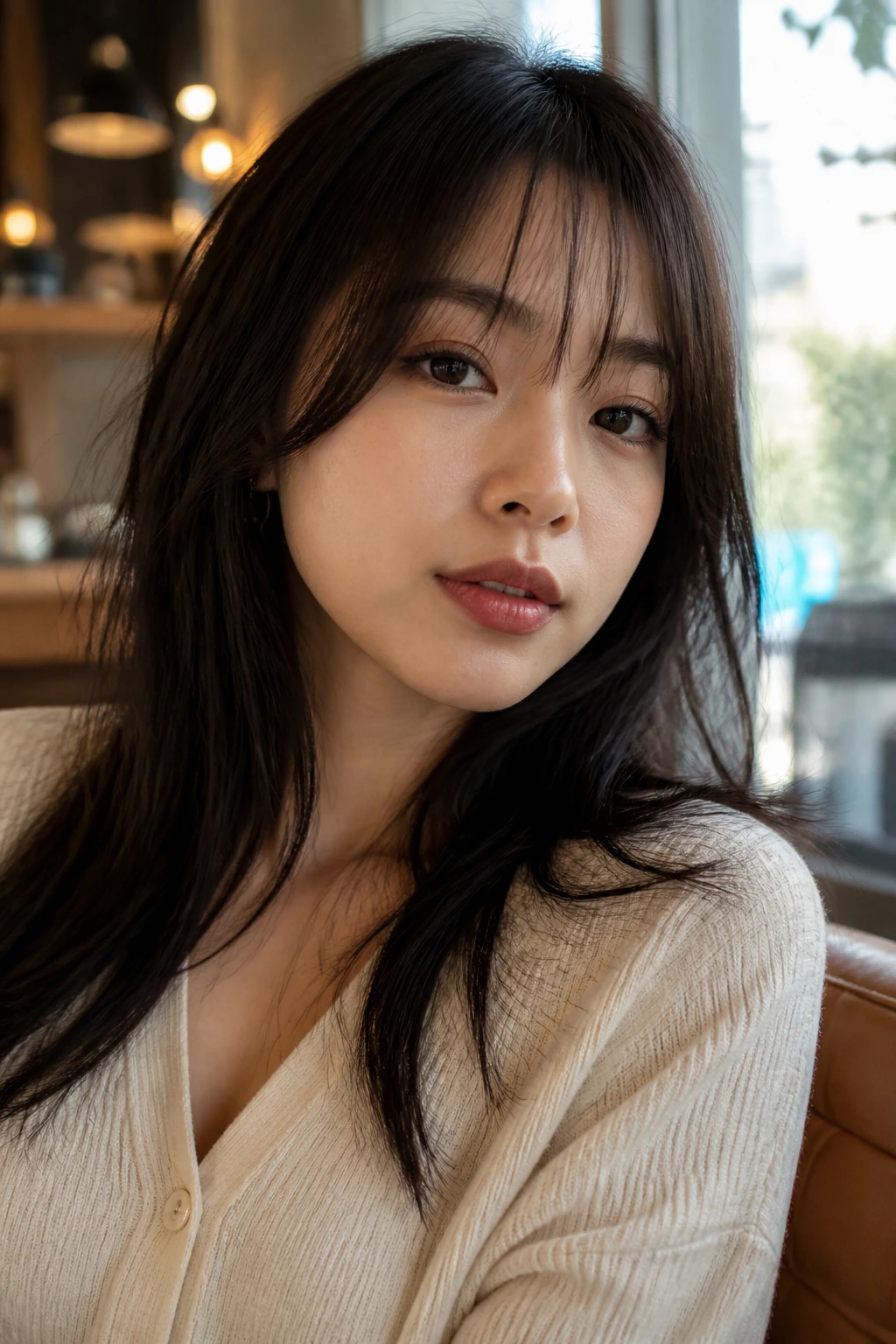
Airy fringe is for people who like the idea of bangs but don’t want the forehead covered. The whole point is lightness.
The front section stays thin enough to move easily, but it still gives the wolf cut a face-framing layer to work with. Straight hair is good at holding that shape because it doesn’t collapse into curls or puff out unpredictably. The fringe sits where you put it, which makes the style easy to manage.
How to Keep It Airy
Use a small amount of mousse at the roots, then dry the fringe with a flat brush or your fingers. Do not overload it with oil or cream. That’s the fastest way to kill the lift and turn airy fringe into limp fringe, which is a different animal entirely.
This style suits people who wear glasses, people who like to pin their bangs back sometimes, and people who hate the feeling of hair stuck to their forehead. It’s also a nice reset if you’re growing out a heavier fringe. The shape stays present, but it never feels heavy.
Light. Clean. Useful. That’s the whole deal.
16. Uneven Piecey Bangs With a Lived-In Finish
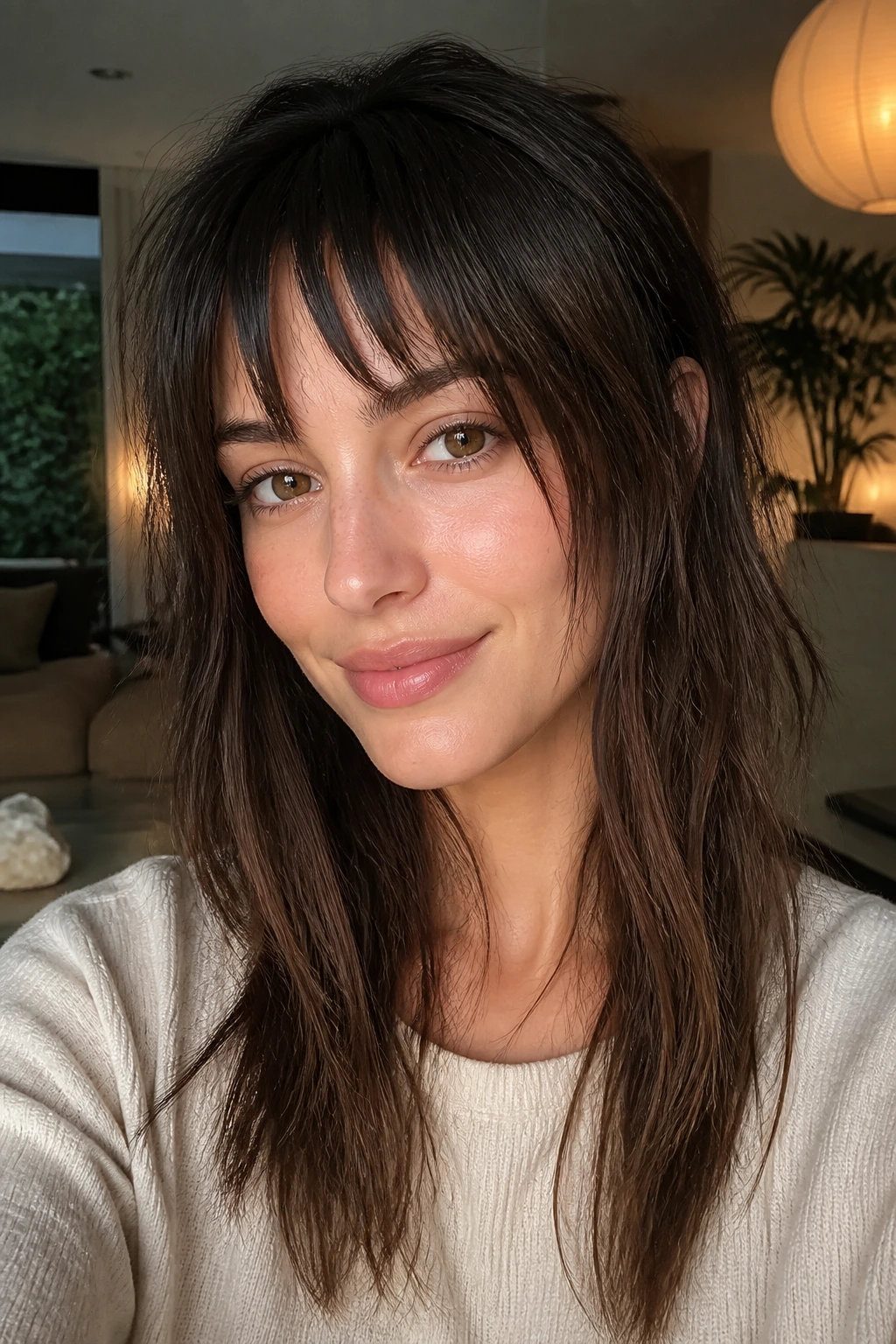
Some of the most wearable wolf cuts with bangs are a little messy on purpose. Uneven piecey bangs fall into that category.
The strands are separated into small sections rather than cut into one smooth curtain or one blunt line. On straight hair, that piecey finish holds its shape well, especially if the front is styled with a bit of dry texture spray. You get movement without the cut collapsing into one flat sheet.
This version is a good choice if you like the wolf cut to look a little undone. It has that “I didn’t overthink it” feel, but the shape still needs a careful hand. If the pieces are too random, the fringe just looks chopped. If they’re too even, you lose the point.
- Use a texturizing spray on dry hair.
- Twist a few tiny sections while blow-drying.
- Keep the ends soft, not ragged.
- Finger-comb instead of brushing the fringe smooth.
That last part matters. A brush can erase the texture you were trying to create in the first place.
17. Long Crown-Boost Layers With Fringe
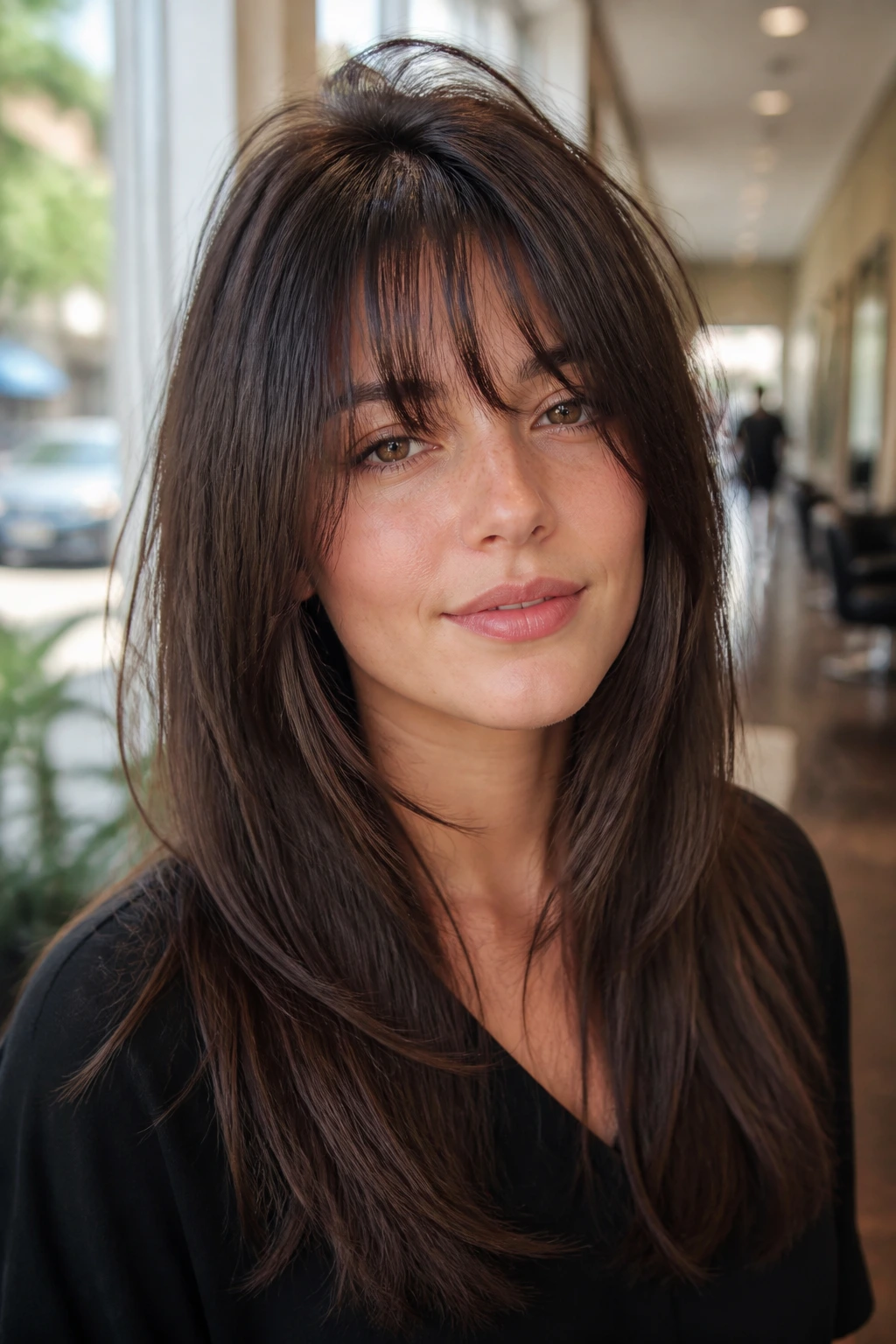
Flat roots kill the wolf cut fast. That’s why long crown-boost layers matter so much on straight hair.
This version puts some attention at the top of the head, where straight hair tends to lie closest to the scalp. The fringe stays long enough to frame the face, but the crown gets shorter internal layers that lift the whole shape. The result is taller at the top and looser through the lengths, which is exactly what a wolf cut should do when the hair is straight.
I like this look for hair that feels heavy even when it’s healthy. Sometimes the problem isn’t thickness or texture. It’s weight. A little crown shaping fixes that more cleanly than taking a chunk out of the bottom.
The styling is straightforward: blow-dry the roots upward with a round brush or a vent brush, then smooth the fringe into place. If you skip the root lift, the cut can settle too close to the head and lose the wolf shape. The front may still look fine, but the whole silhouette gets flatter than it should.
18. Shaggy Mullet Bangs With a Longer Back

If you want the wolf cut to lean closer to a mullet, shaggy mullet bangs are the way there. They keep the front relaxed, but the whole shape feels sharper and more rebellious.
Compared with a classic wolf cut fringe, this version usually has more separation and a stronger transition into the side layers. The back stays long, sometimes noticeably longer, which gives straight hair a striking silhouette. That contrast can be brilliant when the cut is done with discipline. It can also go wrong fast if the layers are overthinned, so this one really depends on the stylist’s hand.
Best for people who like a little edge. Also best for hair that can hold a shape without needing waves to prop it up. Straight hair is actually helpful here because it makes the lines read clearly. You see the top, the sides, and the longer back without guessing.
If you want something soft and safe, skip this one. If you want the wolf cut to say something, this is one of the louder options.
19. Soft Birkin Bangs With Long, Loose Layers
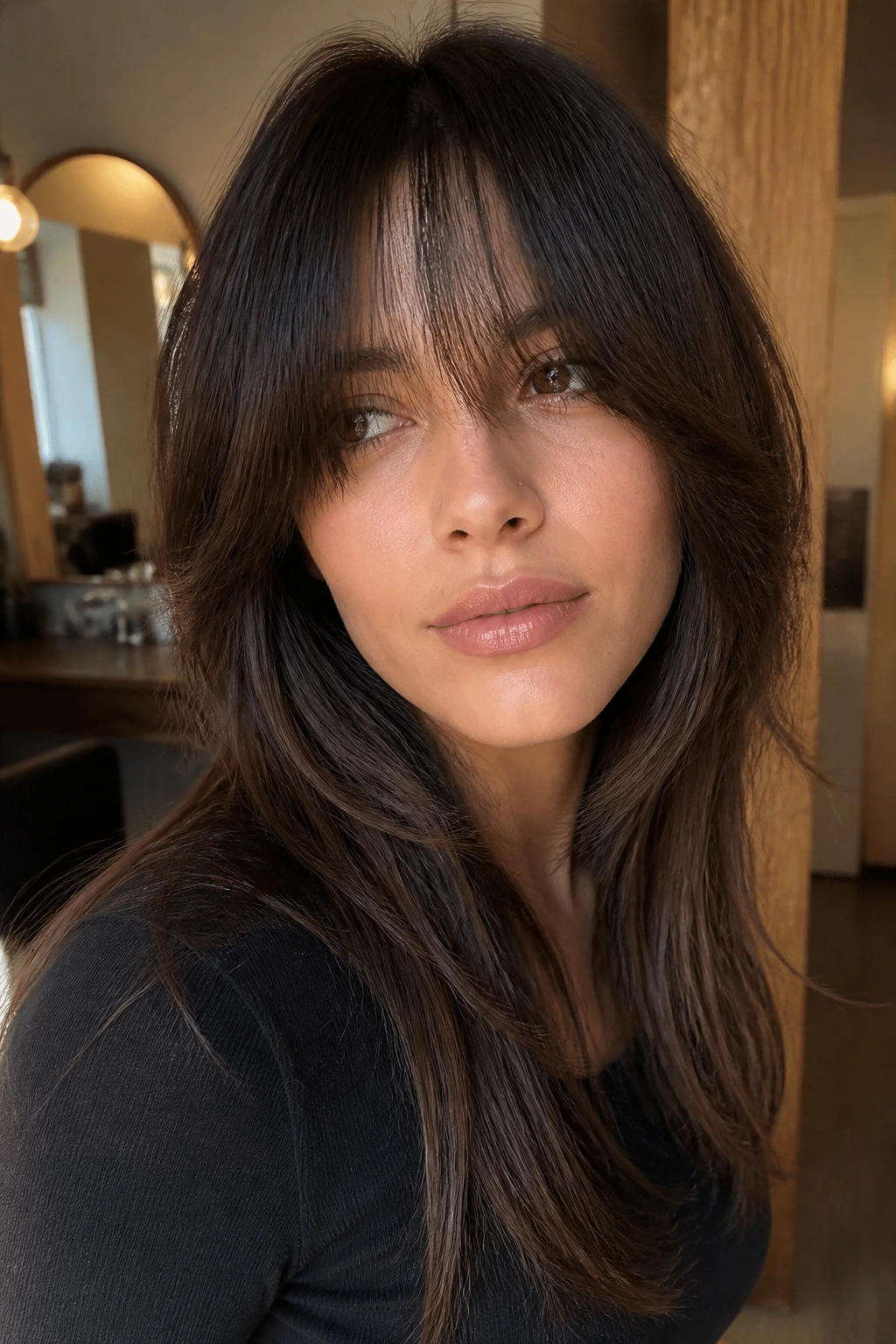
Soft Birkin bangs have that slightly undone, brushed-open feel that suits straight hair beautifully. They sit fuller than wispy fringe, but they don’t have the hard edge of blunt bangs.
The front usually grazes the lashes or lands right around the brows, with a little separation through the middle. Straight hair helps because it keeps the strands smooth and visible without much effort. Pair that with long wolf layers through the body, and you get a cut that feels airy but still finished.
Why They Work So Well
Birkin-style bangs are flattering because they don’t block the face. They frame it. That means the rest of the wolf cut can stay long and layered without the front feeling disconnected. If you wear your hair behind your ears a lot, this fringe still looks good when it falls back into place.
They do need regular trimming if you want the length to stay where it should. Too long, and the effect gets mushy. Too short, and the softness disappears. The sweet spot is that loose, slightly imperfect line that falls naturally after a quick brush-through.
20. Tapered Bangs That Melt All the Way Into the Lengths
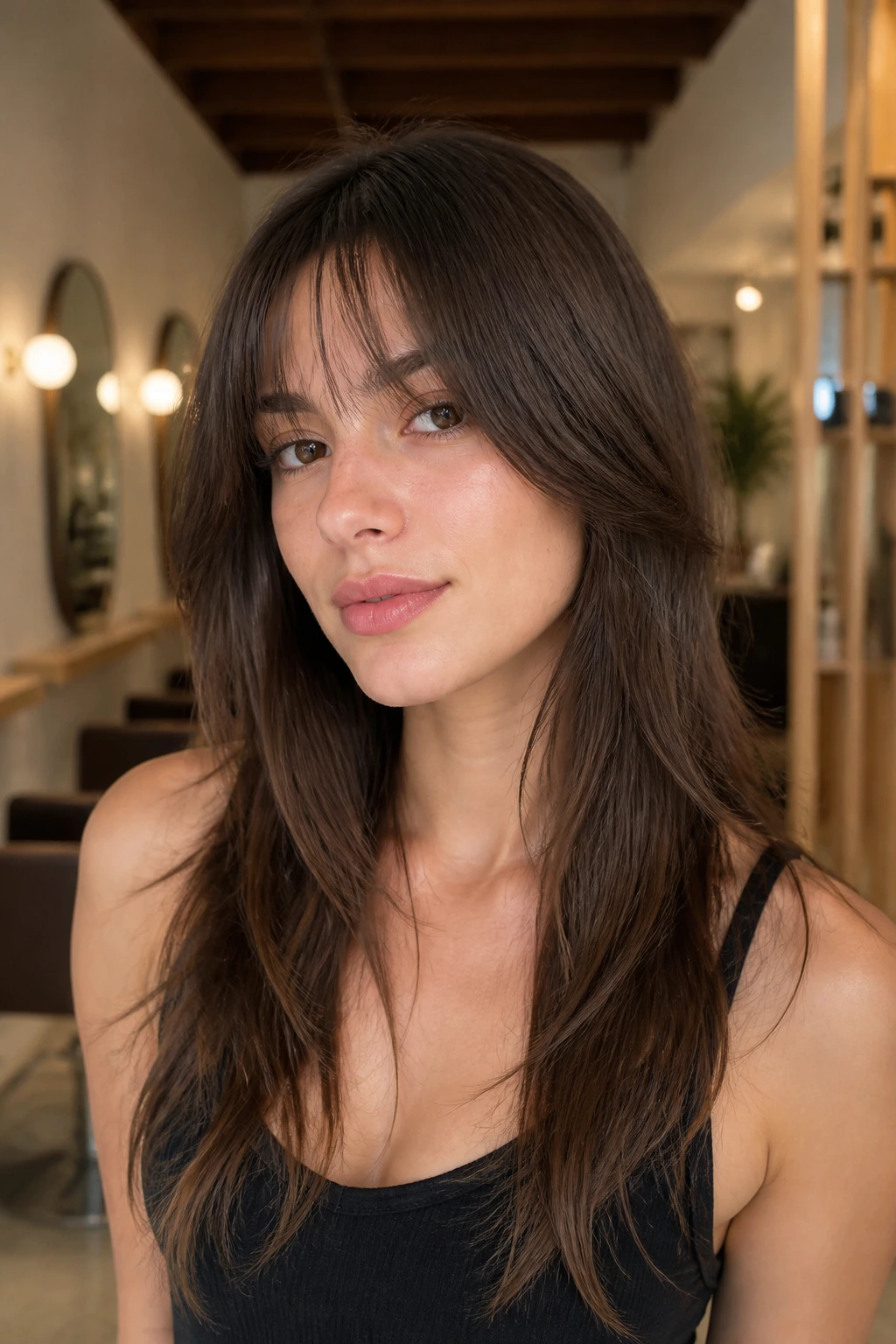
If you’re nervous about bangs, start here. Tapered bangs that melt into the lengths are the easiest long wolf cut version to live with on straight hair.
The fringe begins with a little shape at the front, then gradually disappears into the side layers and face-framing pieces. There’s no hard stop, which means the cut grows out more gracefully than a blunt fringe. That matters if you don’t love frequent salon visits or if you’re the kind of person who lets haircuts stretch longer than planned.
Straight hair makes this style look polished without much help. The taper reads clearly, the layers don’t puff out, and the front never feels too heavy. It’s the most forgiving version in this whole group, which is why I usually think of it as the safest entry point for anyone who wants a wolf cut but still wants to keep things long and wearable.
The request to make at the salon is simple: keep the perimeter long, lighten the interior, and let the bangs soften into the sides instead of cutting them off sharply. That’s the whole game.
Final Thoughts
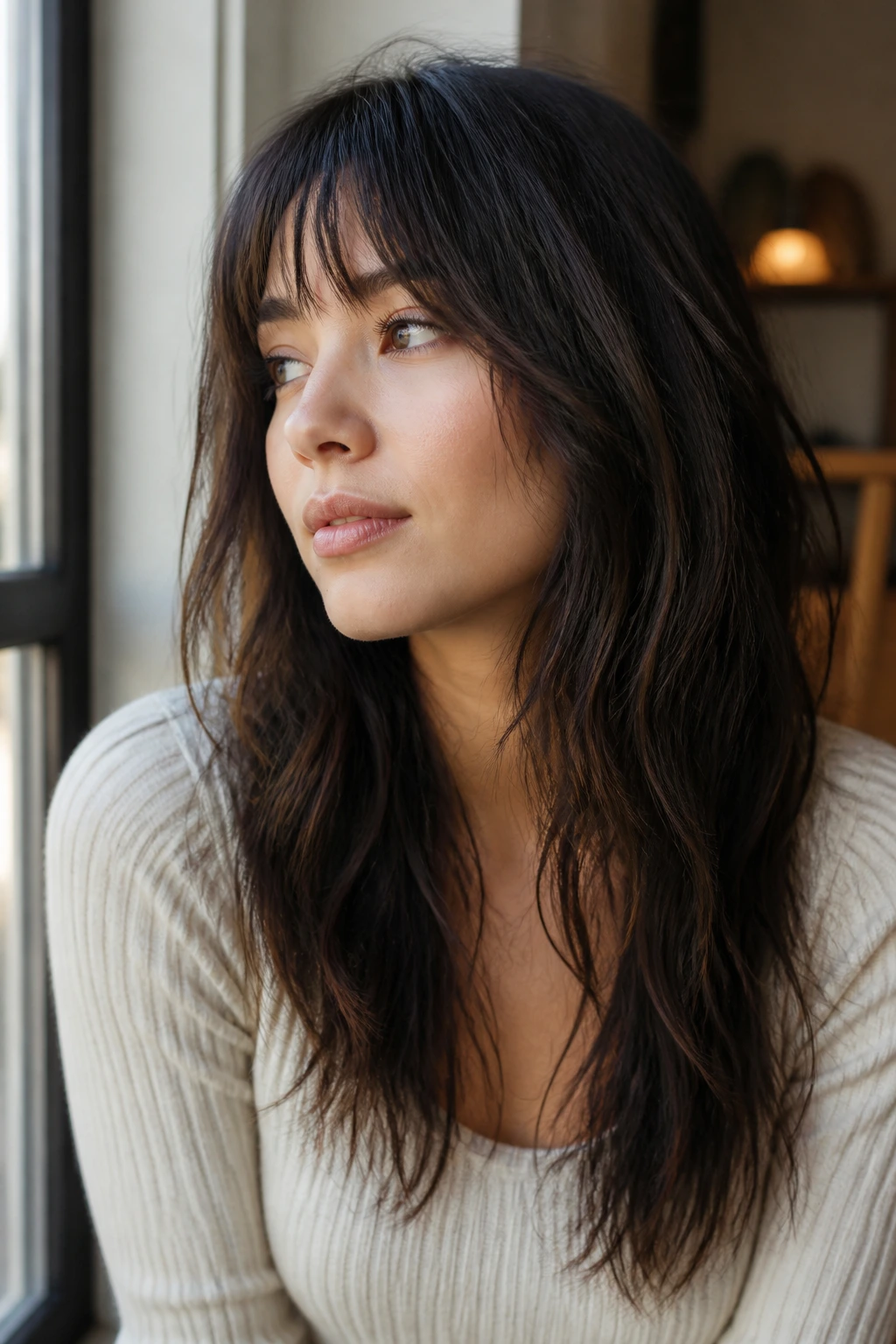
Long wolf cuts with bangs work on straight hair when the front and the crown are treated like part of the same shape. If the bangs are too blunt or too heavy for the rest of the cut, the whole thing feels disjointed. If the layers and fringe are planned together, the haircut looks easy in the good sense of the word — not boring, just believable.
The safest bets are curtain bangs, bottleneck bangs, and tapered fringe if you want something you can grow out without regret. The bolder options — micro bangs, heavy straight bangs, and shaggy mullet bangs — are the ones that give the cut more attitude. I’d bring photos, yes, but I’d also ask for point-cutting and a long perimeter so the straight hair keeps enough weight to fall well.
A small detail makes a big difference here. Ask your stylist where the shortest piece should land when your hair is dry, not just when it’s wet.
