



A wolf cut can look a little shy in brown. Put ginger on it, though, and the whole haircut wakes up.
That’s the trick with ginger wolf cuts: the color does half the shaping for you. Copper catches the broken layers. Auburn softens the edges. Rust gives the cut some grit. Even a small change in tone can make the shaggy crown, feathered sides, and longer nape read in a completely different way.
I like this family of cuts because it refuses to look flat. A good wolf cut should move when you move. Add warm red color, and the texture stops hiding. It starts showing off. The right shade also changes the mood fast — more playful, more smoky, more rock-and-roll, or just a little softer around the face.
The easiest place to start is the classic copper version.
1. Classic Copper Wolf Cut
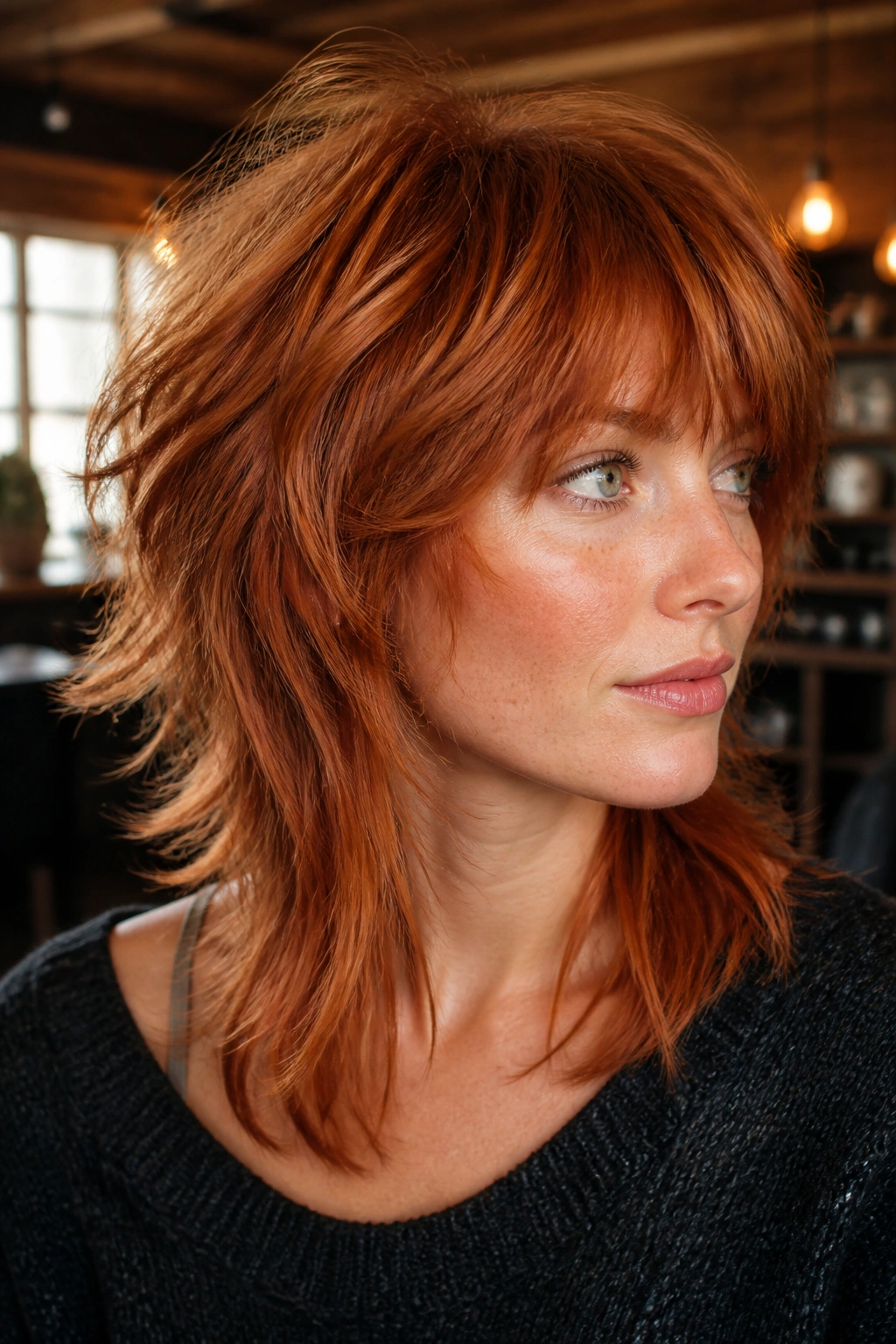
This is the version that makes the whole look click. The cut already has lift at the crown, choppy ends, and that half-shag, half-mullet shape. Copper brings all of it into focus. Not neon red. Not orange overload. Just a bright, warm copper that makes each layer look like it has its own job.
Why It Works
The best classic copper wolf cut keeps the top layers short enough to push volume upward, while the bottom stays loose and touchable. That contrast is the whole point. If the crown is too long, the cut loses its bite. If the ends are too blunt, the color sits there and sulks.
- Ask for shorter crown layers and a softly tapered perimeter.
- Keep the copper in a level 7 to 8 range if you want brightness without harshness.
- Style with a 1-inch curling wand and leave the ends out a little for that rough, airy finish.
- A light gloss or demi-permanent copper helps the color stay shiny instead of brassy.
My favorite detail: the cut looks best when the hair isn’t over-brushed. A little separation is the whole personality here.
2. Curtain-Bang Ginger Wolf Cut
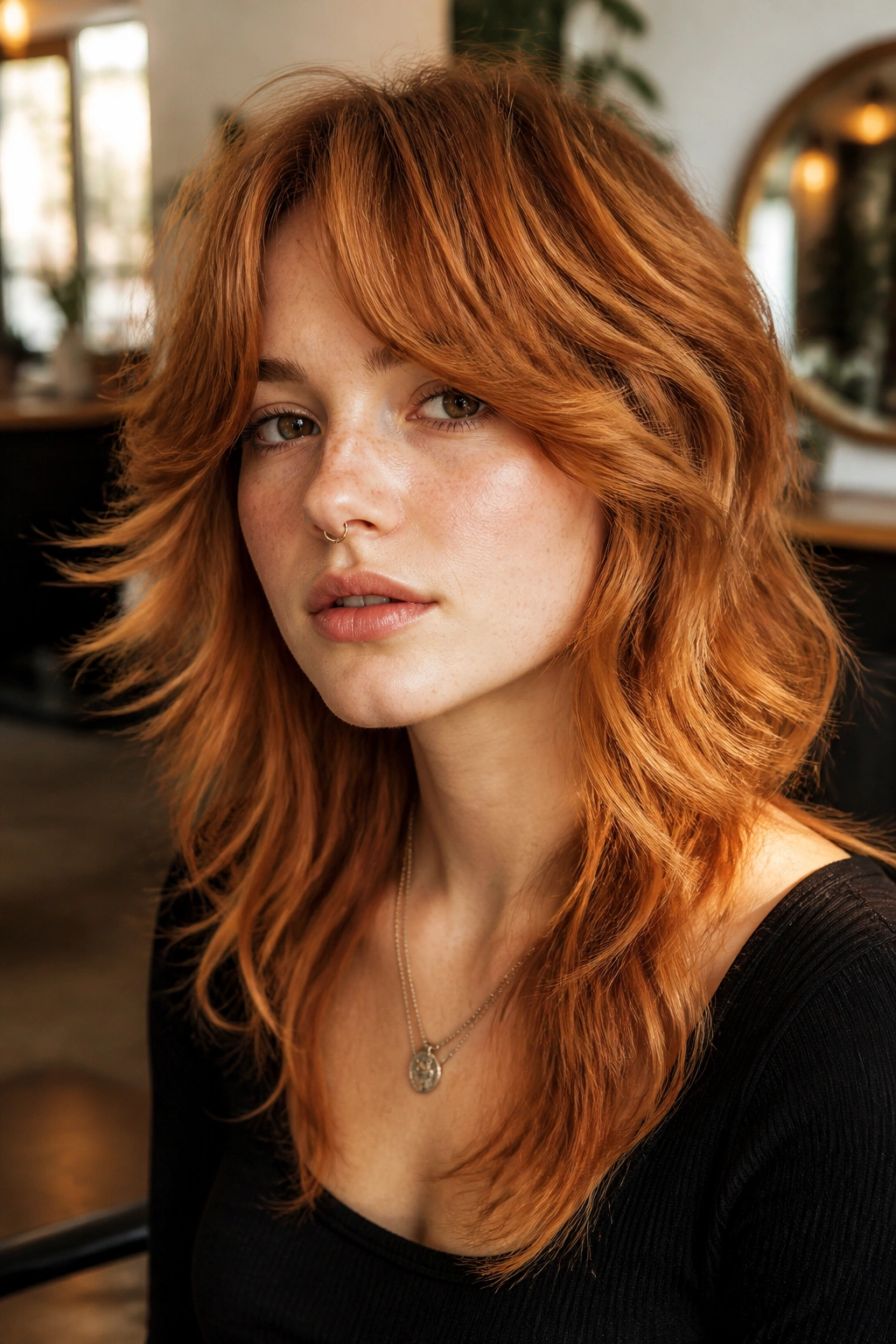
Why do curtain bangs make ginger hair look softer? Because they break up the forehead line and keep the red from feeling too heavy up top.
This version is for anyone who wants the warmth of ginger without a hard edge around the face. Curtain bangs work especially well when they start around the cheekbone and fall open toward the jaw. The shape draws the eye inward, then lets it move down into the shaggy layers. It feels easy, but it’s doing a lot of work.
The color matters here, too. A soft ginger with a touch of gold keeps the bangs from looking too dense. I’d avoid a flat, single-process red on this one. The cut wants movement, and the color should move with it.
A blow-dryer and a round brush can smooth the front without making it too polished. Or skip the brush entirely and twist the bangs away from your face while drying. A little bend is enough. Too much curl makes the whole thing look fussy.
3. Auburn Shaggy Wolf Cut
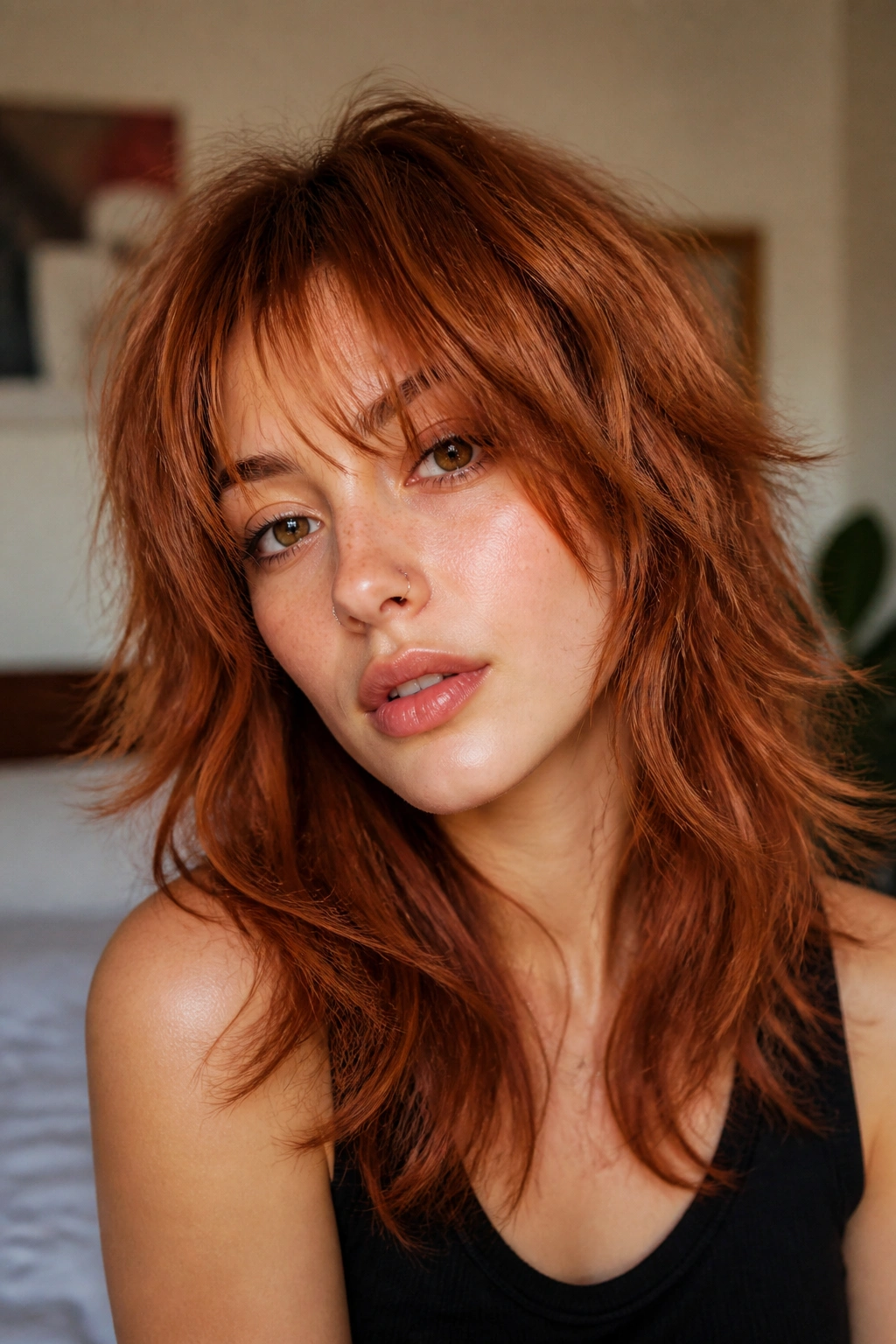
Picture shoulder-length hair that used to hang heavy, then suddenly doesn’t. That’s the auburn shaggy wolf cut doing its job.
Auburn shifts the mood away from bright copper and toward something richer, deeper, and a little more grounded. It still reads warm, but it has enough brown in it to feel wearable on a daily basis. The shaggy cut helps the color show through in pieces instead of one solid block. That matters more than people think. Solid red can flatten quickly.
What Makes It Different
The shag in this version should feel feathered rather than chopped to pieces. You want texture, not frizz. The best auburn wolf cuts usually keep the top layers light and the lower lengths uneven in a controlled way. Not random. Controlled chaos is the goal.
- A soft auburn base helps the cut look richer in dim light.
- Razored ends can help if your hair is thick and resistant.
- A longer fringe keeps the shape from getting too severe.
- If your hair is straight, a spray of texture mist adds enough grit to keep the layers visible.
This is one of those cuts that looks a little better on day two. The shape settles, the layers separate, and the auburn starts to look deeper. That’s when it gets good.
4. Copper Ginger Wolf Cut With Micro Fringe
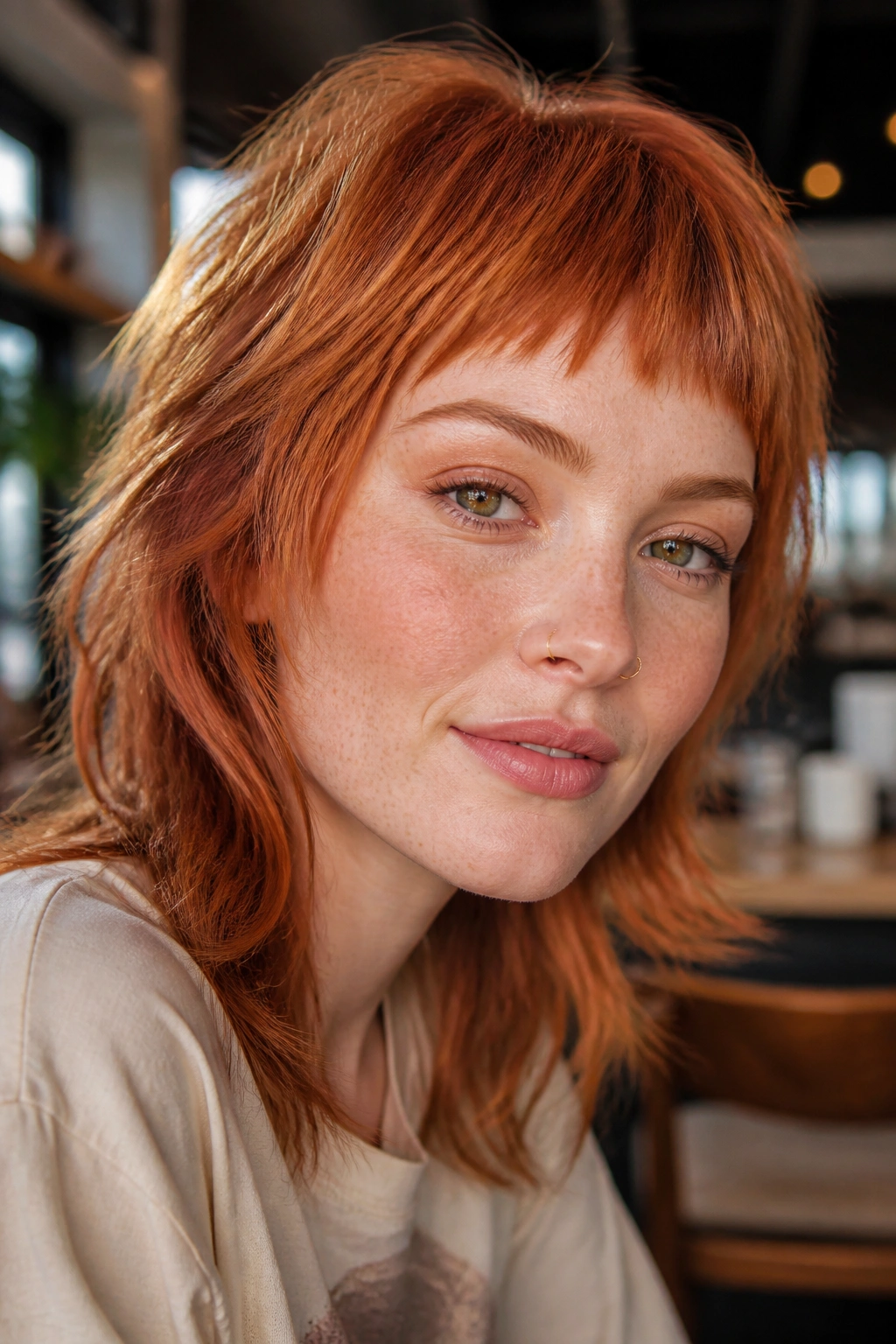
What happens when you pair a sharp little fringe with a soft wolf cut? The whole style gets a little mischievous.
Micro bangs are a risk. I’ll say that plainly. They can look cool, strange, artsy, or just too short if the proportions are off by even half an inch. On a ginger wolf cut, though, they can be fantastic because the top of the haircut already has lift. The fringe gives you a strong line up front, and the longer layers keep the rest from feeling severe.
What to Watch For
Micro fringe works best when the rest of the cut stays very airy. If the back is too thick, the bangs start to look disconnected. If the copper is too dark, the fringe can disappear into the rest of the hair. You want enough brightness near the front to make the shape readable.
- Keep the fringe just above the brows if you want a cleaner look.
- Ask for soft point cutting at the ends so the fringe doesn’t sit like a block.
- A light copper or ginger-gold tone helps the short pieces stand out.
- This shape needs regular trims, because micro bangs grow fast and lose the effect quickly.
It’s a bold choice. Not a tiny one.
5. Deep Rust Wolf Cut
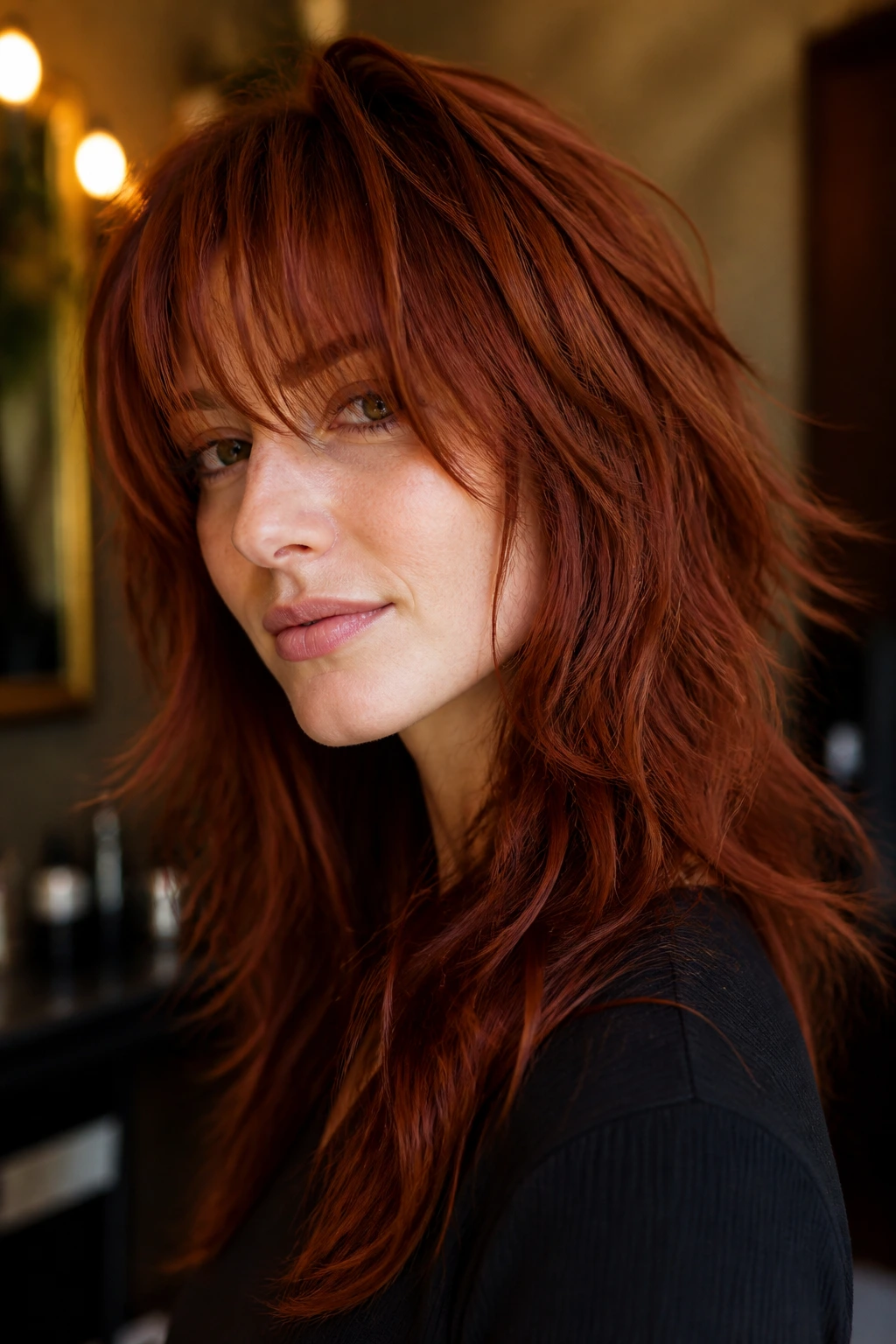
This is the one with the most depth. Deep rust makes the wolf cut feel denser, moodier, and a little more serious without losing the warmth that makes ginger hair so good in layers.
The reason it works is simple: dark red shades show texture differently. Bright copper throws light around. Rust absorbs a little more of it, which means the shape has to do more of the talking. That’s not a bad thing. It just means the haircut needs clean layering and a perimeter that still has some swing.
I like deep rust on hair that already has a little body. Wavy hair is the sweet spot. It gives the color someplace to break apart. Straight hair can wear it too, but the layers need enough internal movement so the style doesn’t feel like one heavy curtain.
The ends should still be soft. If they get too blunt, the whole cut starts to look boxy. A wolf cut should never feel like a helmet. That’s the line you don’t want to cross.
6. Strawberry Ginger Wolf Cut
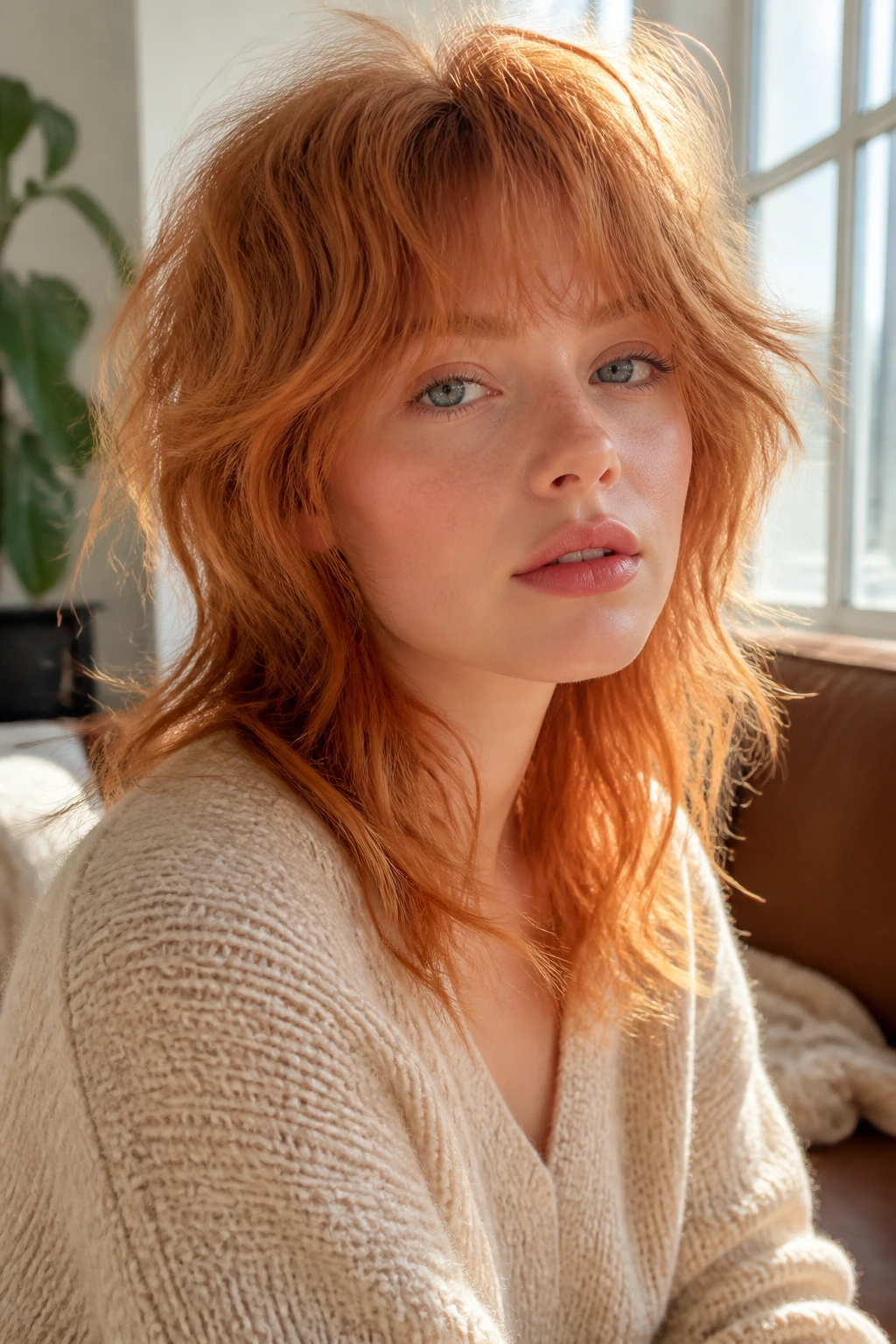
Strawberry ginger has a lighter, peachier feel. It smells like sunlight, if color could smell.
This version softens the wolf cut in a way I really like. The pink-gold warmth in strawberry ginger keeps the haircut from looking too edgy or too heavy. The layers still do their shaggy job, but the color adds a gentler finish. If you want warmth without that strong copper punch, this is the sweet spot.
The cut looks especially good when the texture is loose and a little undone. Air-dried waves, a soft bend from a flat iron, or a large-barrel wave all work. Tight curls can be pretty here too, but the shade reads differently depending on the light. Under indoor light, strawberry ginger can look almost creamy. Outside, it starts showing more shimmer.
I’d avoid making the crown too tall on this one. Too much lift and the whole thing feels overstyled. Keep it soft. Keep it touchable. The color already gives it enough personality.
7. Ginger Wolf Cut for Thick Hair

Big hair needs room. That’s the whole story here.
A thick-hair ginger wolf cut should be built to remove weight without erasing the shape. If someone shaves too much bulk out of the interior, the ends can turn wispy in a bad way and the top becomes a puff. No one wants that. The better move is controlled debulking, cleaner layering, and enough length at the bottom to stop the haircut from floating away from the head.
What Makes It Different
The best version keeps the top layers close enough to give lift, while the lower layers stay long enough to hold the outline. That balance keeps thick hair from swallowing the red tone. Color gets hidden when the cut is too heavy.
- Ask for internal weight removal, not aggressive thinning.
- Keep the nape and sides softly tapered so the shape stays narrow enough.
- Use point cutting at the ends instead of blunt chopping.
- A diffuser helps bring out waves without blowing the whole shape apart.
I’m picky about this one. Over-thinning thick hair is a fast way to make a wolf cut look fried. You want movement, not fray.
8. Copper Wolf Cut for Fine Hair
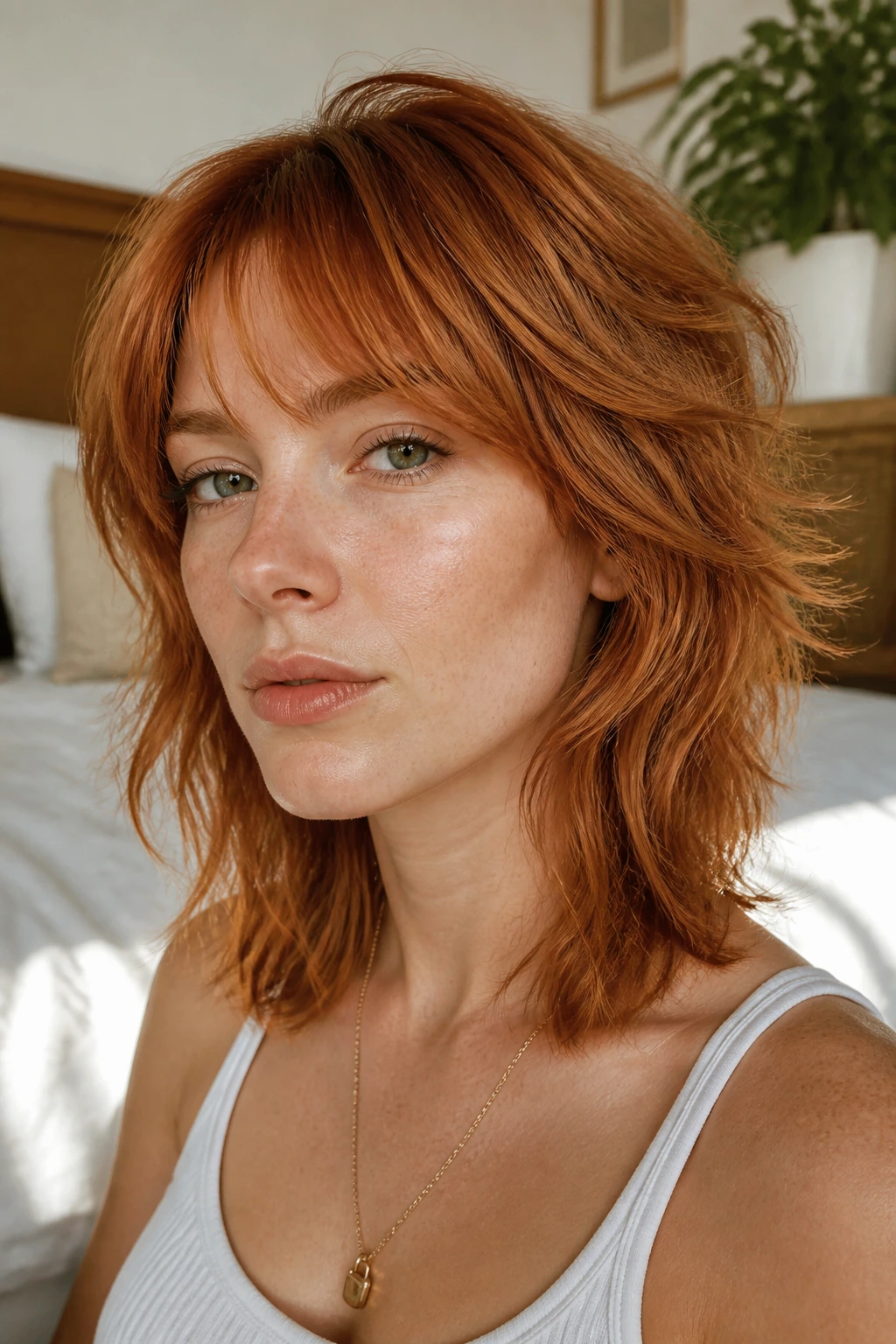
If your hair goes flat by lunch, this is the smarter version.
Fine hair can wear a wolf cut beautifully, but the shape has to be disciplined. Too many choppy layers and the ends vanish. Too much thinning and the whole haircut looks tired. The better strategy is to keep the perimeter a little stronger, then build texture in the crown and around the face where it actually shows.
Copper helps a lot here because it gives fine strands more visual presence. Even a subtle warm-red tint makes the hair catch light better and look fuller around the edges. That matters more than people expect. Fine hair can disappear in darker shades if the cut doesn’t have enough structure.
A collarbone length often works better than going too short. The weight at the bottom keeps the cut from flipping into fluff. Then the top can be light and lifted without losing the line. A root-lift spray at the crown and a small round brush at the front are usually enough. No need to overwork it. That’s the trap.
9. Rusty Mullet-Wolf Hybrid
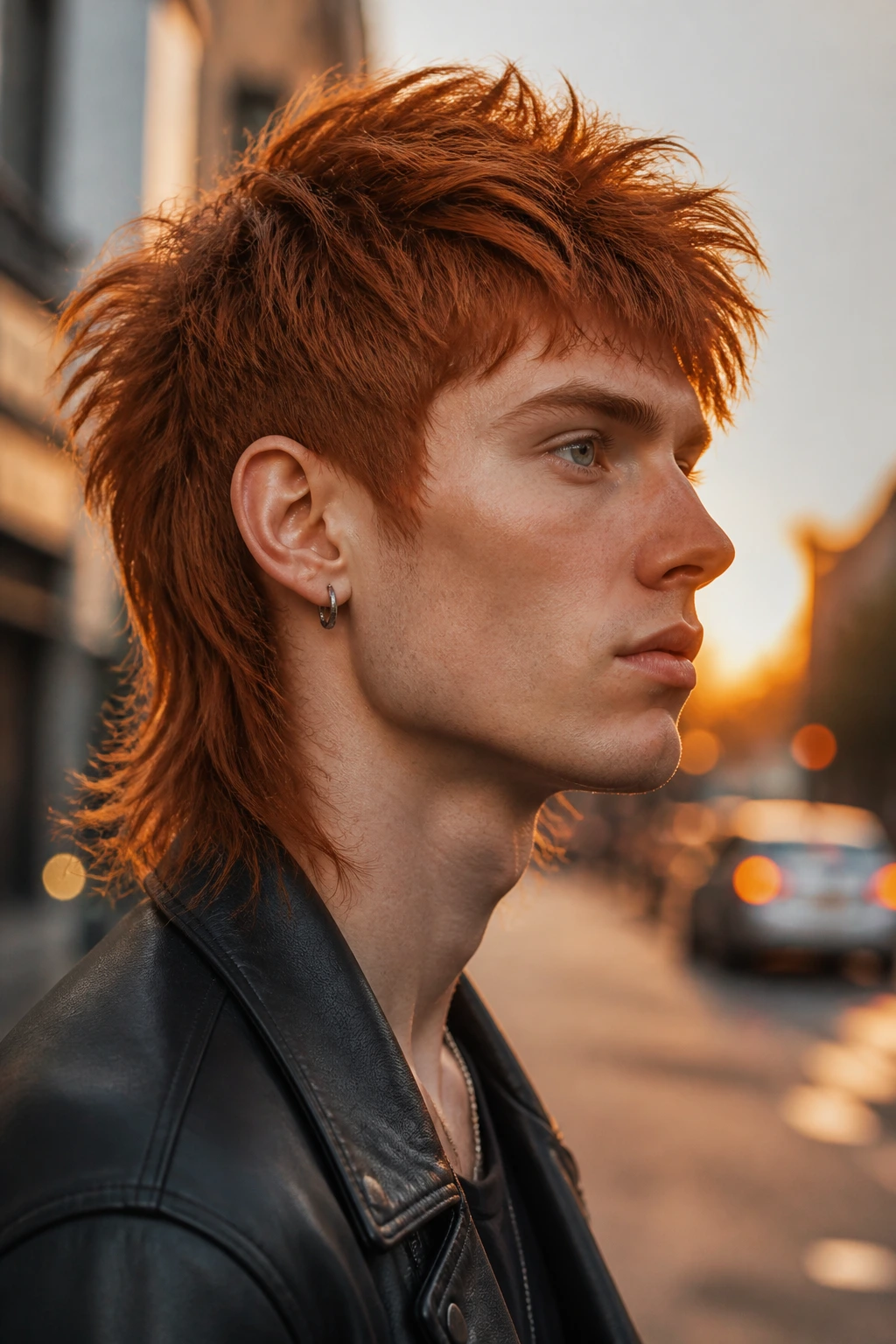
This is the one with the most attitude. If you want the mullet side of the wolf cut to show up, rusty red makes the whole thing sharper.
The hybrid version keeps the front and sides choppy, then lets the back stay longer and more obvious. It’s the least polite member of the family. The warm rust tone suits that. A clean orange-red would be too bright; a flat auburn would be too subdued. Rust sits in the middle and gives the haircut some dirt under its nails.
This cut needs a good neckline. If the back is too blunt, the mullet part looks accidental. If it’s too shredded, the whole thing loses shape. I like a slightly longer tail with soft ends and a face frame that lands near the cheekbones. That keeps the front lively while the back carries the statement.
- Keep the sides tighter than the back.
- Ask for a longer nape section with feathered ends.
- Use matte paste or texture cream to separate the top.
- Best on hair that already has wave or bend.
There’s a reason this cut keeps coming back. It has a point of view.
10. Bottleneck Bang Ginger Wolf Cut

What if curtain bangs feel too wide and micro bangs feel too sharp? Bottleneck bangs sit in the middle, and that middle is often where the sweet spot lives.
A bottleneck fringe starts narrow in the center, then opens out through the sides. On ginger hair, that shape is useful because it lets the color frame the face without swallowing it. The shorter center gives a little edge. The longer sides keep the cut soft enough to blend into the wolf layers. It’s one of the easiest ways to keep the front interesting without committing to a blunt bang.
The key is length. If the center gets too short, the look turns fussy fast. If the sides don’t blend into the face frame, the fringe ends up looking pasted on. A good stylist will slide the front pieces down toward the cheekbone so they melt into the rest of the cut.
I like this version for people who want shape up top but still want to tuck hair behind the ears. Small thing. Big difference.
11. Cinnamon Ginger Wolf Cut
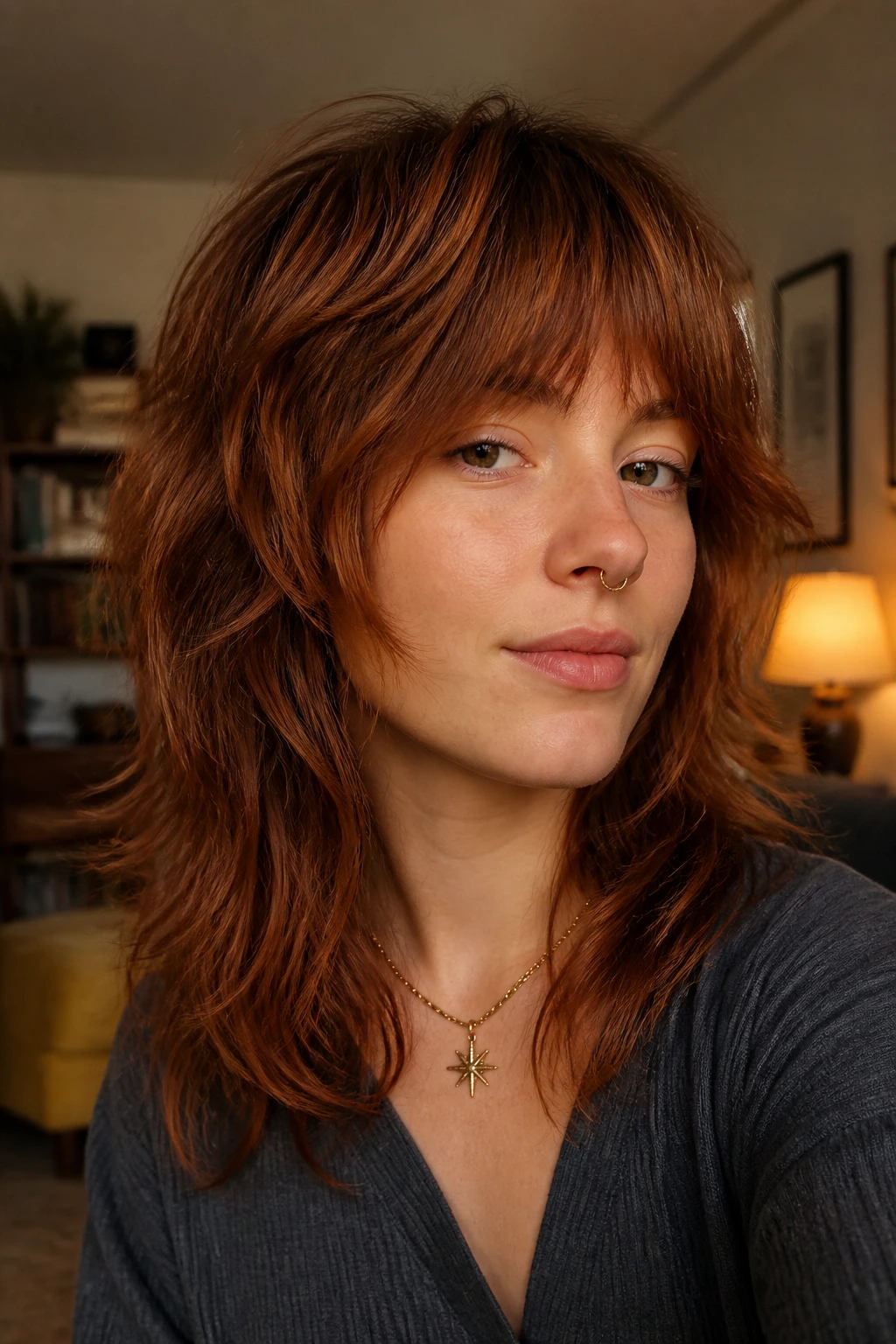
Compared with bright copper, cinnamon reads warmer and calmer. Less flash. More depth.
Cinnamon ginger has that red-brown sweetness that works especially well when you want the wolf cut to feel a little richer and less obvious. The color doesn’t scream for attention, which means the layers can do a subtler kind of work. You see the movement when the hair shifts, not from across the room. I prefer that on longer wolf cuts, where too much brightness can make the ends look busy.
The tone also grows out cleanly. Darker roots don’t clash as hard with cinnamon, so the color can stay softer between salon visits. That’s useful if you don’t want to chase a high-maintenance copper every few weeks. A gloss that leans warm brown and red can keep the shade from turning muddy.
This one pairs well with loose, brushed-out waves and a fringe that’s more feathered than blunt. If your style leans understated but you still want red, cinnamon is the shade I’d steer you toward first.
12. Fiery Copper Wolf Cut
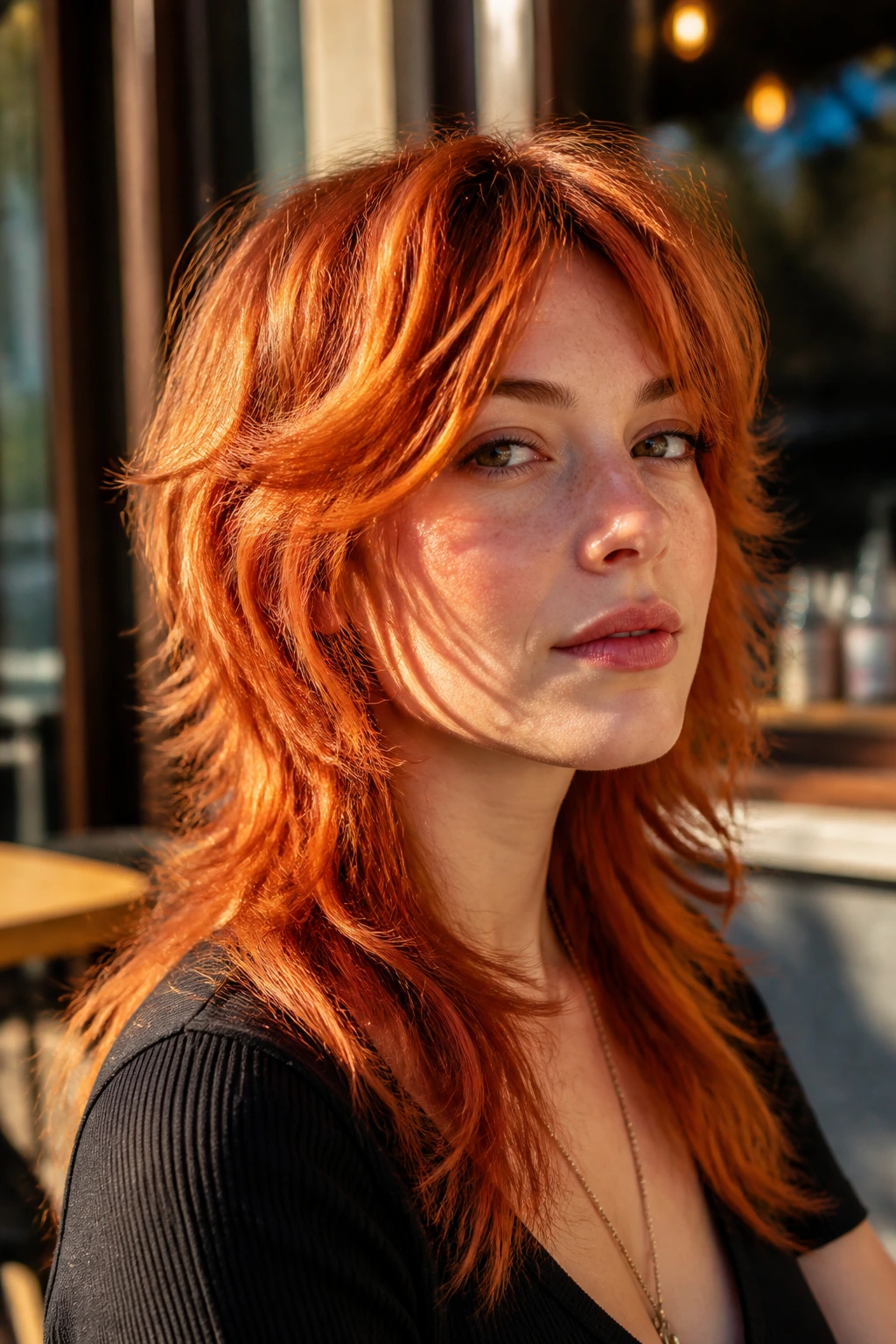
On days when you want the hair to do the talking, this is the one.
Fiery copper leans brighter than classic ginger, and the cut needs to match that energy. The layers should be a little bolder, the face frame more obvious, the ends more separated. Otherwise the color overpowers the shape and the haircut starts looking like a single bright mass. That’s the mistake people make. They think the red can carry everything. It can’t.
A dimensional color job helps here. A deeper root, brighter mids, and the lightest copper pieces around the front give the haircut a kind of flicker when it moves. The wolf cut loves that flicker. It was built for it.
- Place the brightest pieces around the fringe and cheekbones.
- Keep the crown piecey, not puffed out.
- A shine spray or light gloss stops the copper from looking dry.
- This shade looks best on hair that can hold soft bends or waves.
I’d keep the styling loose. Tight curls can steal the air out of it. The whole point is that fiery, lifted messiness.
13. Ginger Wolf Cut for Curly Hair
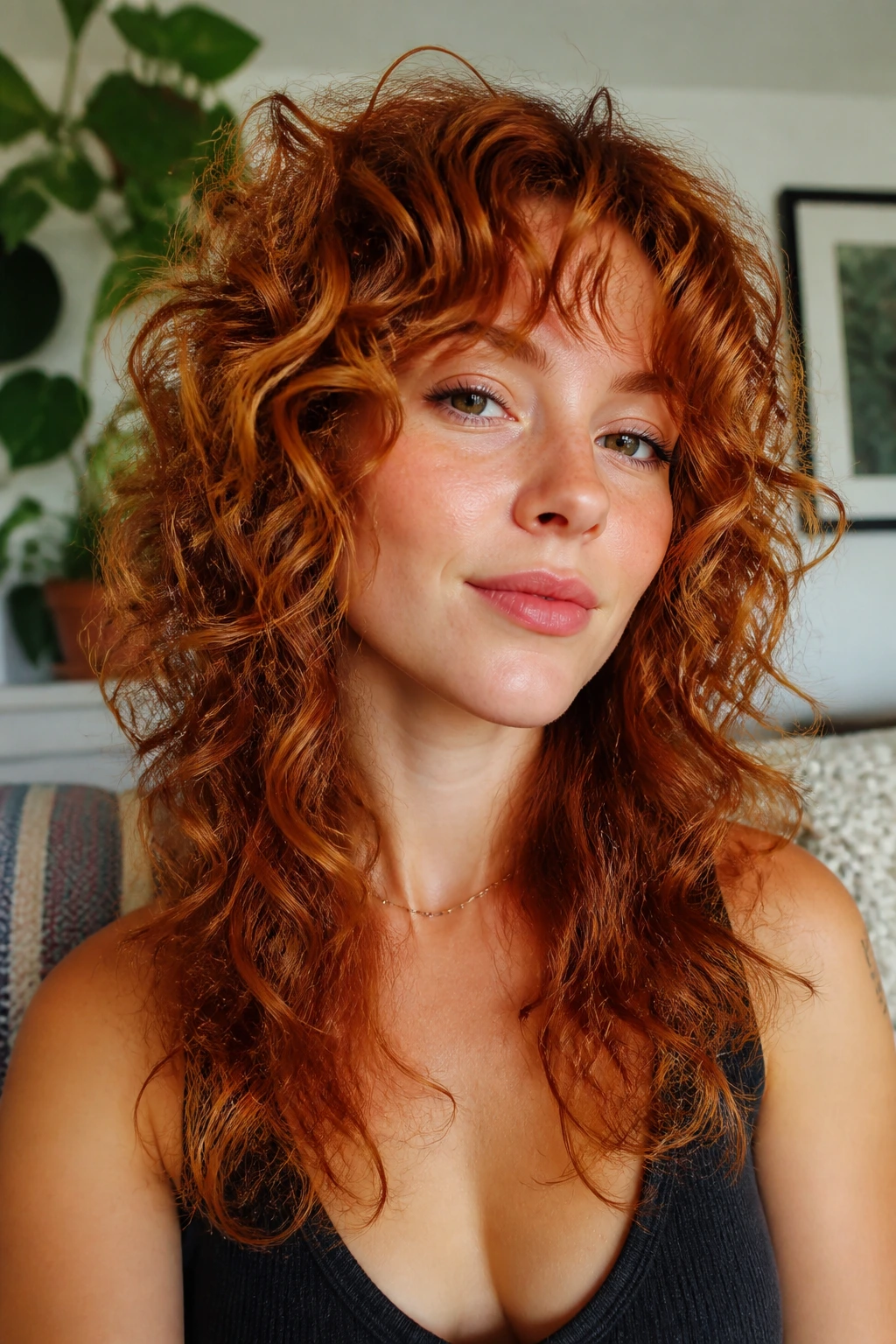
Curly hair changes the rules, and honestly, that’s a good thing.
A curly ginger wolf cut should follow the curl pattern first and the trend second. If you cut curls like straight hair, you get triangle shape or weird gaps. Nobody wants that. The better move is to dry-cut or shape the hair with the curl pattern visible, then remove weight where the curls actually stack. That keeps the crown lifted and the ends from ballooning.
The color shows up differently on curls, too. Ginger tends to catch on the curves and ridges of the hair, so the texture can look almost striped in motion. That’s a good thing when the color is well-placed. A few brighter copper ribbons around the face and through the top layers are usually enough. You do not need to flood the whole head with one shade.
Diffusing helps, but it should be done gently. Low heat. Low airflow. Scrunch a little, stop before the curls get crunchy, then let the shape cool. Too much touching can break the pattern and make the cut frizzy. Curly wolf cuts reward restraint.
14. Soft Auburn Wolf Cut
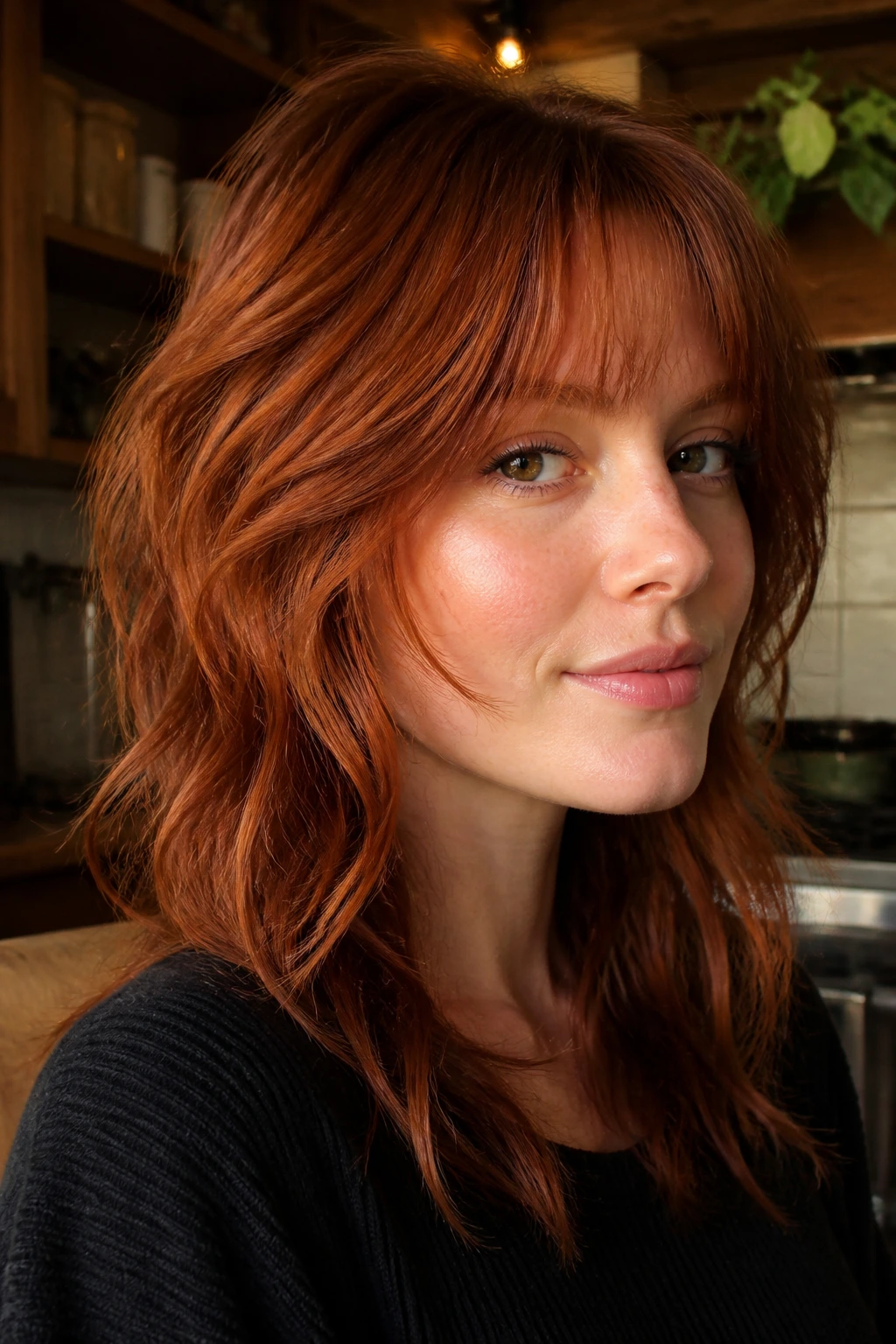
Some red hair wants to shout. This one just speaks clearly.
Soft auburn is the easiest ginger-adjacent shade to live with if you want warmth without a loud copper finish. The cut can lean more feathered than choppy, which keeps it wearable and clean around the face. I like this version for people who want movement but don’t want the haircut to look styled every single minute of the day.
The best soft auburn wolf cut usually keeps the front layers around the chin or cheekbone and the back long enough to preserve some swing. The color does a quiet job of tying everything together. A warmer gloss on the mids can keep the auburn from drifting brown. Tiny detail. Huge payoff.
This is also one of the better versions if you like low-maintenance grow-out. The shape stays flattering as the layers lengthen, and the shade softens instead of fighting the roots. It doesn’t need drama to work. That’s what makes it so useful.
15. Long Ginger Wolf Cut With Feathered Ends
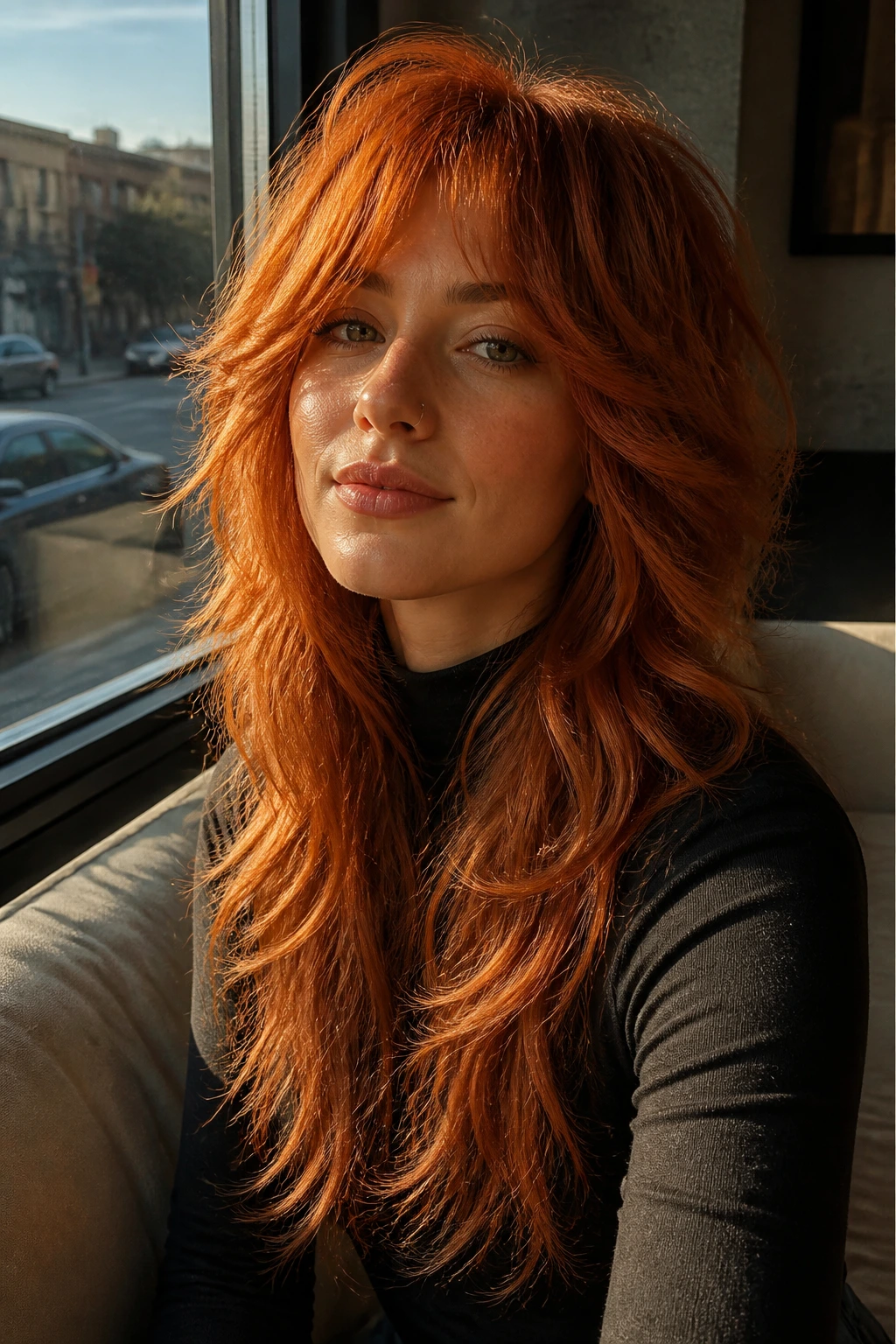
Long does not mean flat.
A long ginger wolf cut keeps the length, which some people need, but still gives you that broken, shaggy movement through the crown and sides. The trick is holding enough weight at the bottom so the cut doesn’t vanish. You still want the top to kick up. You still want the face frame to breathe. You just don’t want to lose inches everywhere in the process.
How to Ask for It
- Keep the shortest layers around the cheekbone or lip, not high into the forehead.
- Ask for a long perimeter that lands below the collarbone if you want length to stay visible.
- Request feathered ends instead of blunt cutting at the bottom.
- If you color it, use a warm ginger gloss that enhances shine without making the hair look painted on.
This version is the one I’d hand to anyone who loves the wolf cut idea but isn’t ready to lose much length. It keeps the shape, keeps the warmth, and still feels like hair with a pulse.
The best ginger wolf cuts do one thing well: they make texture look intentional without making the hair feel stiff. That’s the whole appeal. The color gives the cut warmth. The layers give the color somewhere to go. And when the two are tuned together, the result is far better than either one on its own.
