



Medium hair can be awkward in the best possible way. It’s long enough to hang flat if you ignore it, short enough that a bad cut shows fast, and right in that middle zone where shape matters more than length. A good shag haircut solves a lot of that. It gives movement at the crown, softness around the face, and ends that don’t sit there like dead weight.
The medium-length shag is also sneaky. It can look soft and pretty, sharp and punky, or easy and lived-in depending on where the layers land. Put the shortest pieces around the cheekbones and you get lift. Keep the perimeter a little heavier and it reads calmer. Push the layers higher and you’re inching toward a wolf cut. Keep them lower and it leans more like a layered lob. Tiny changes. Big difference.
That’s why this haircut family has stuck around for so long. It isn’t one look. It’s a handful of looks that all start with the same idea: remove enough weight to let the hair move, but not so much that the whole shape falls apart by lunchtime.
And medium hair is the sweet spot. The length gives the layers room to show up, but not so much that you’re stuck waiting forever for the shape to come back after a trim. If you’ve been wanting something with texture that still feels wearable, the styles below are the ones worth knowing.
1. Classic Shoulder-Grazing Shag
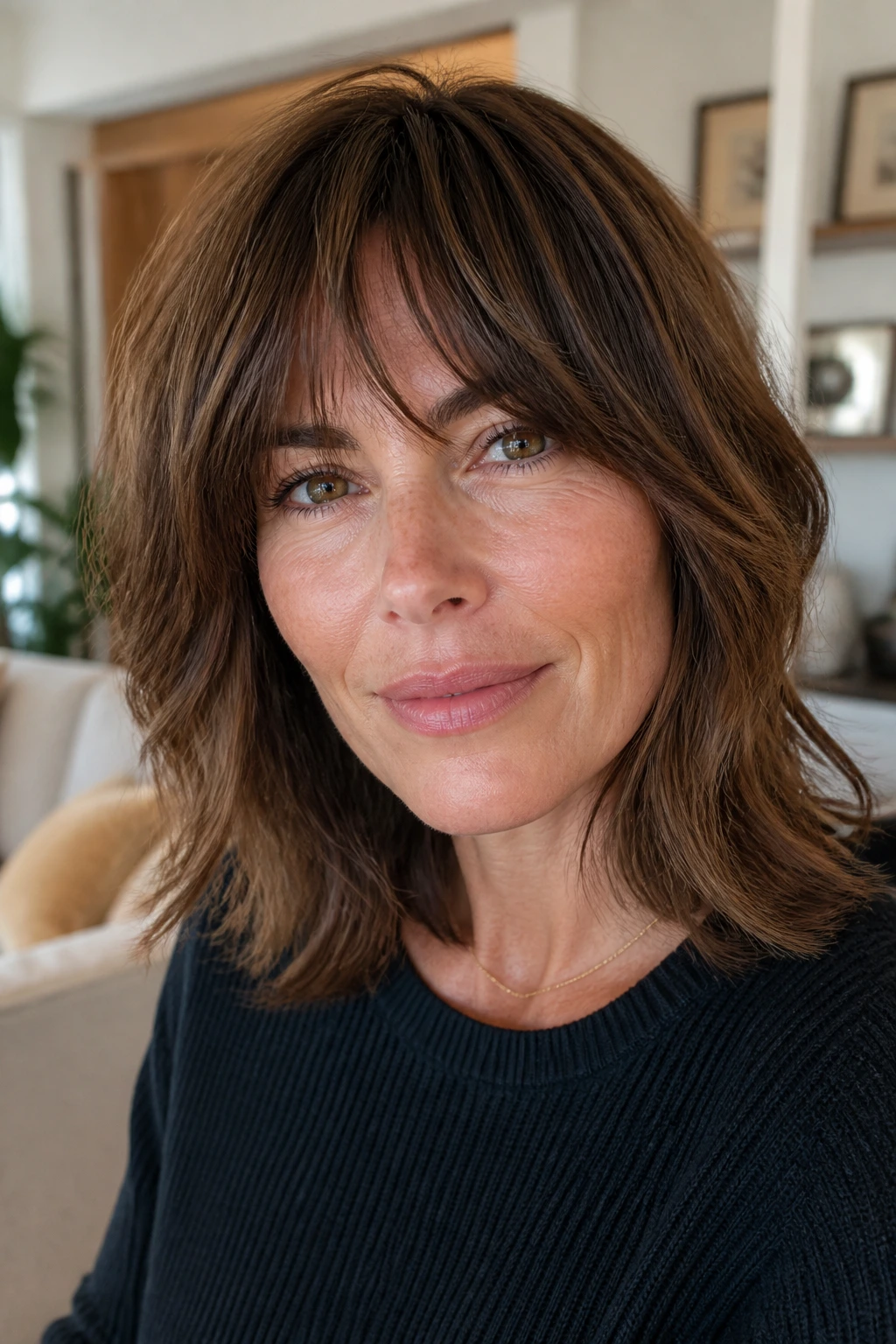
The cleanest place to start is the classic shoulder-grazing shag. It’s the haircut I’d hand to someone who wants movement without looking like they raided a rock poster from a basement bar. The shape usually lands somewhere between the collarbone and the top of the shoulder, with soft layers that start around the cheekbone and taper down through the ends.
The reason it works is simple: it keeps the outline familiar while the interior does the interesting work. You still get length to tuck behind the ear or clip up, but the layers stop the cut from hanging like a blunt curtain. On straight hair, the ends kick a little. On wavy hair, the layers give the bend somewhere to live.
Why it flatters medium hair
Medium hair can get heavy fast, and a classic shag breaks that up without eating the whole shape. If your hair is fine, ask for softer, longer layers so the ends do not look see-through. If it’s denser, the stylist can remove more bulk underneath and keep the top pieces light.
A good version of this cut should look decent even after a rough air-dry. That matters more than people think. If a haircut only looks good after a 45-minute styling session, it’s not a good medium shag. It’s a project.
Try this if you want movement, shape, and a cut that still behaves when you’re late. It’s the safest shag on the list, and that is not a criticism. It’s usually the one people come back to.
2. Curtain-Bang Shag
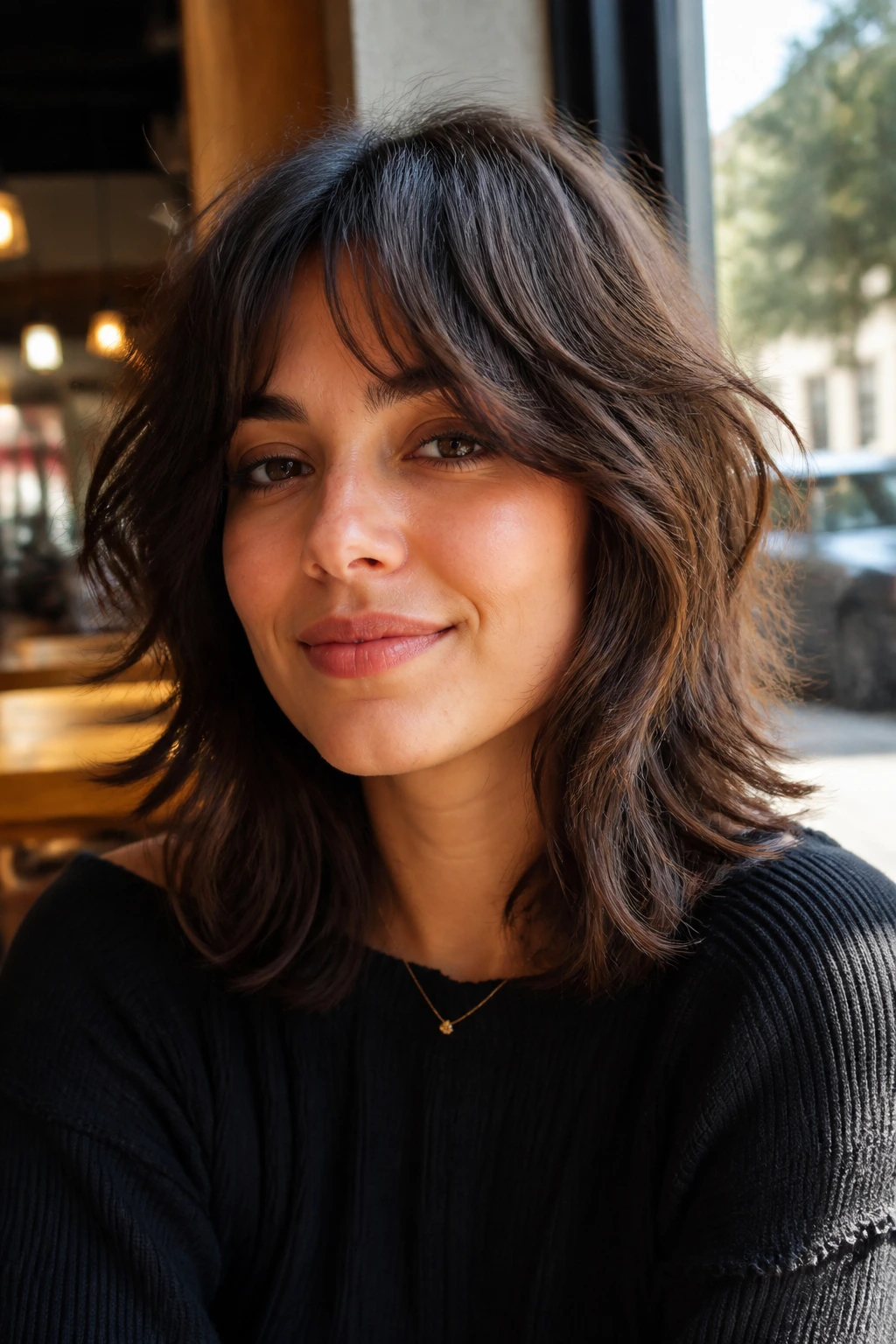
Why do curtain bangs keep showing up with shag haircuts? Because they solve the biggest complaint people have about medium hair: the front can feel flat while the rest of the cut has all the personality. Curtain bangs open the face, pull the eye upward, and make the whole style feel softer at once.
The trick is the length. If the shortest pieces stop around the brow or just below it, the bangs blend into the shag instead of sitting on top of it like a separate haircut. The longer cheekbone pieces matter too. They give you that easy, swung-out frame that looks good even when the rest of the hair is a little messy.
How to ask for it
- Keep the shortest point around the brow line or slightly below if your hair bends a lot.
- Ask for the side pieces to land at the cheekbones or jaw, not all the way at the chin.
- Make sure the bangs blend into the top layers so the front does not look chopped off.
- Trim the bangs every 4 to 6 weeks if you want the center part to stay open and tidy.
This version suits round, heart-shaped, and oval faces especially well, but the real win is how easy it is to style. A round brush, a medium blow-dry brush, or even a quick bend with a flat iron near the front can bring it to life. The rest can stay imperfect. That’s the charm.
3. Soft Wolf Cut for Medium Hair
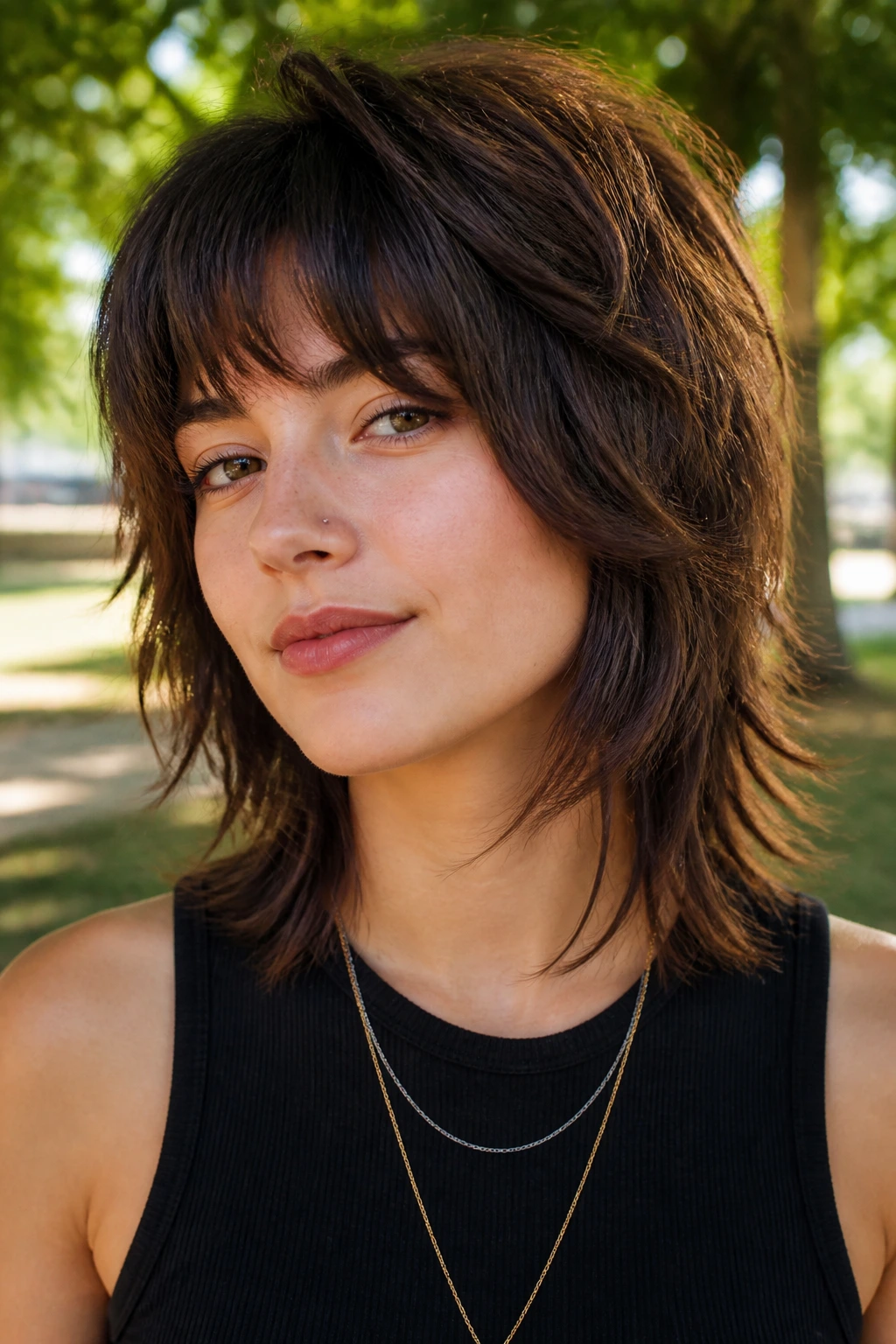
A soft wolf cut is what happens when a shag decides to get a little louder, then remembers it still wants to be wearable. The crown sits higher, the back keeps some length, and the layers are separated enough to give you that edgy, piecey feel without tipping into full mullet territory.
Unlike a heavily disconnected wolf cut, the medium version keeps the perimeter gentler. That matters. If the bottom is left too thin on shoulder-length hair, the style can start to feel stringy instead of textured. The better version leaves enough weight in the ends so the cut still moves as one shape.
This is one of the best options if your hair is thick, wavy, or naturally full at the root. It gives you lift where you usually want it and takes some of the bulk off the places that puff out. If your hair is pin-straight and very fine, ask for a softer take with less crown height. Otherwise the shape can feel too broken up.
I like this cut for people who want a little attitude. Not costume-level attitude. Just enough. It looks good with messy waves, a dry texture spray, and a part that is not overworked into perfection.
4. Choppy Face-Framing Shag

A choppy face-framing shag does one thing very well: it puts the attention where you want it. The layers are cut to hit around the cheekbones, jaw, and collarbone, which means the face gets all the movement while the rest of the hair stays a little quieter.
What makes it different
The magic is in the contrast. The front has more visible texture, while the back can stay slightly longer and softer. That keeps the haircut from feeling too busy. It’s a smart choice if you like a haircut with a little bite but do not want the whole head to look aggressively layered.
- Ask for the shortest face pieces to start around the cheekbone.
- Keep the perimeter near the shoulders if you want the style to stay versatile.
- Use point-cutting or soft razor work on the front so the ends don’t look blunt.
- Blow-dry the front away from the face once or twice a week if you want the layers to keep their shape.
The face-framing version is especially good if you wear your hair loose most of the time. Pull it back into a claw clip and the front pieces still do a lot of the work. That’s a nice trick for medium hair, which can sometimes feel like it needs a full styling routine to look finished. Here, it doesn’t.
5. Curly Medium Shag with Long Layers
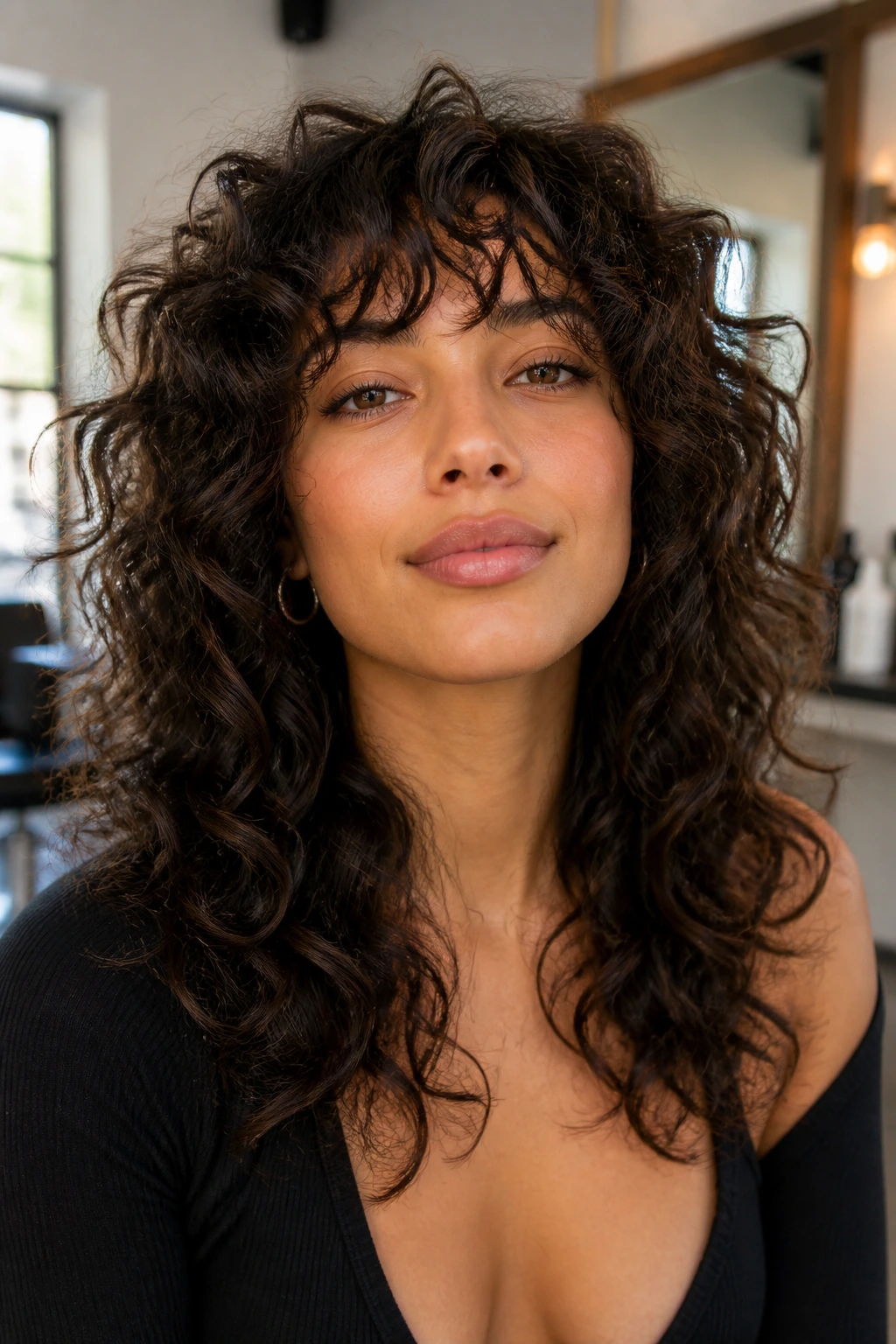
Curly hair and shags get along best when the layers are long enough to respect the curl pattern. Short layers can make curls spring up too much in one spot and leave the silhouette too wide in another. Long layers fix that by letting the curls stack without turning into a triangle.
The best curly medium shag is built around shrinkage. That’s the part people forget. Hair looks longer when it’s wet, shorter when it dries, and curly hair can change a full inch or more depending on the pattern. A stylist who understands that will cut the shape with the dry curl pattern in mind, not just the wet length.
This cut works because it removes weight without destroying the curl clump. You still want pieces to group together, not fray into fuzz. That means less rough brushing, less over-layering near the crown, and more attention to where the curls naturally sit when dry.
I’d pair this with a leave-in conditioner, a curl cream, and a light gel if your curls need hold. Scrunch with a microfiber towel or a soft T-shirt, then diffuse on low heat or let it air-dry halfway before touching it. Too much hands-on styling breaks the shape apart. Too much product weighs it down. The middle ground is where it behaves.
6. Razored Shag with Airy Ends

The razor-cut shag has a different mood from a scissors-only layered cut. The ends feel lighter, the texture looks a little more broken up, and the whole shape can read almost feathered if the hair is straight or slightly wavy. It’s a sharper look, but not an unkind one.
What gives it that airy finish is the edge of the blade. A razor can soften the line of the hair faster than shears, which means medium-length hair loses bulk without losing all its shape. On thick hair, that can be a gift. On fragile or over-processed hair, it can go wrong fast if the stylist is heavy-handed. Split ends don’t need more drama.
If your hair is fine but dense, this cut can be a sweet spot. It keeps the silhouette from looking too heavy and adds movement without forcing you into a very short shape. If your ends already feel dry or rough, ask for point-cutting instead of a full razor pass. Same general result. Less risk.
This version looks best when it’s not over-styled. A bendy blow-dry, a touch of texture cream, and a few messy pieces around the face usually beat a perfect round-brush finish. It’s a haircut that likes a little fray.
7. Bottleneck Bang Shag

Why does the bottleneck bang shag look so good on medium hair? Because the fringe changes shape in stages. It starts narrow in the center, then opens out wider as it blends into the sides. That shape softens the forehead without covering the face in one thick curtain.
It’s a neat little adjustment, and it matters more than people expect. A straight-across fringe can make medium hair look boxed in. Bottleneck bangs keep the front lighter while still giving you that fringe moment. They also play nicely with layers because the transition from bang to side piece feels smoother.
How to style it
- Blow-dry the center forward first, then sweep the sides away from the face.
- Use a small round brush if you want the ends to curl under slightly.
- Keep dry shampoo away from the bang roots if they get gritty fast.
- Trim the fringe every 4 to 6 weeks so the center opening stays clear.
This is a smart pick if you want your shag to feel softer and a little more polished. It works especially well on oval and square faces, because the fringe breaks up the width around the forehead and cheek area. Not fussy. Just well placed.
8. Micro Fringe Shag

A micro fringe changes the whole attitude of a medium shag in about five seconds. The bang sits short—usually somewhere around half an inch to an inch above the brows—and suddenly the haircut reads sharper, more graphic, and a little more deliberate.
It’s not subtle. That’s the point.
What to watch for
- Micro fringe works best when the rest of the shag is soft enough to balance it.
- On wavy or curly hair, the fringe can shrink fast, so leave more length than you think you need.
- Straight hair shows the cleanest shape and needs the least fighting.
- The look gets stale if the fringe grows past the intended line, so trims matter more here than in softer shag styles.
I like this cut on medium hair because the length below the fringe keeps it from feeling too severe. The contrast between the tiny bang and the loose layers is the whole story. If the haircut is cut well, it feels modern without trying too hard. If it’s cut badly, it can look like the bang arrived from another appointment entirely.
This is one of those styles you either know you want or you probably don’t. But if you do want it, commit. Half-measures look awkward. A clear micro fringe with a soft shag underneath looks intentional in a way that a timid fringe never does.
9. Invisible-Layer Shag
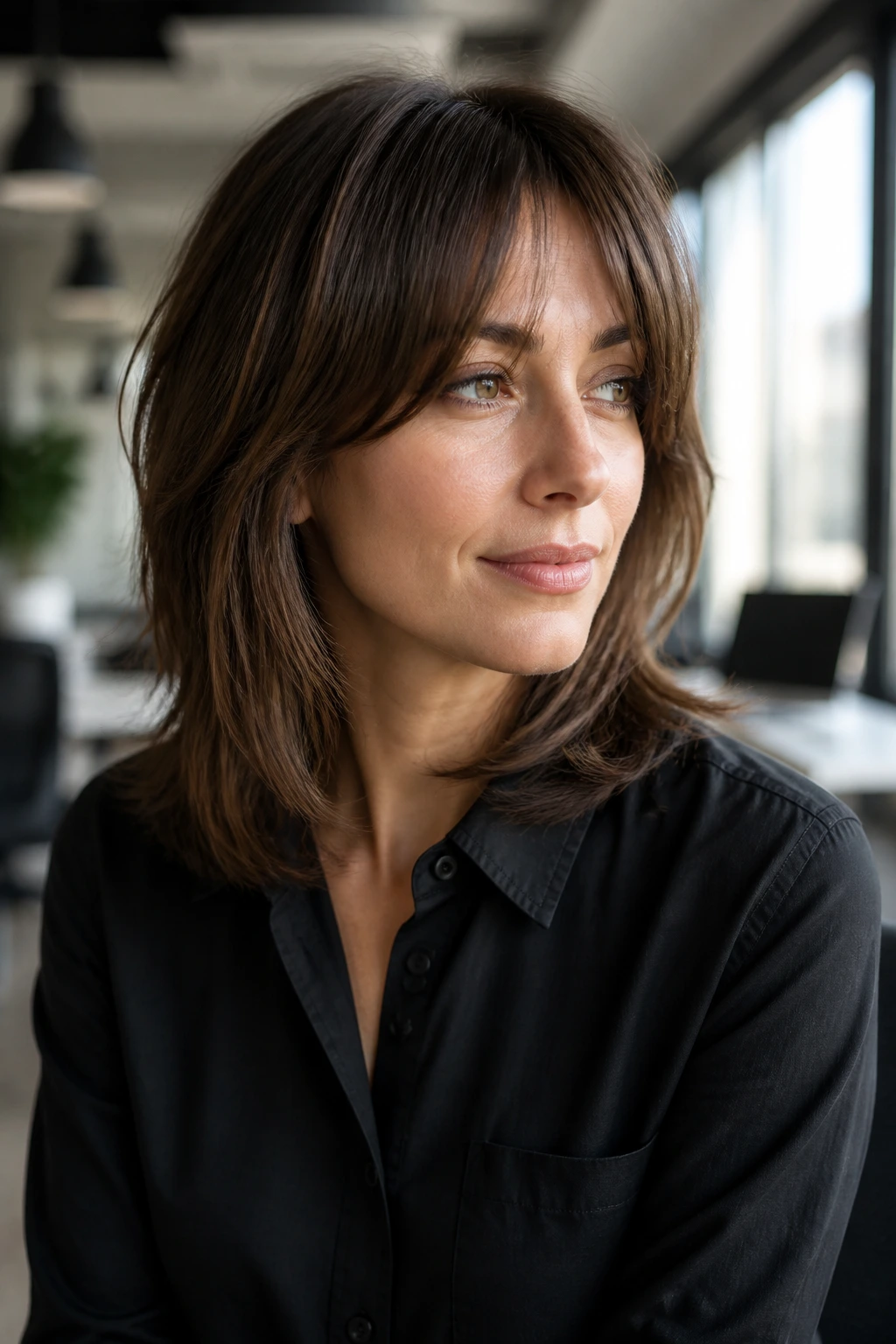
Invisible layers are the quiet cousin in the shag family. You don’t always see them right away, which is exactly why they’re useful. Instead of carving obvious steps through the hair, the cut removes weight from the inside so the surface stays smoother and the movement shows up when the hair swings.
That makes this version great for people who want texture but still need their hair to look neat in a blazer, a meeting, or a setting where “messy” is not the brief. The cut has shape, but it doesn’t scream for attention.
The whole point is hidden movement. Medium hair can look heavy when every layer is visible from the outside. Internal layers fix that by letting the hair collapse more naturally around the head. It’s especially good for thick straight hair that tends to sit flat at the top and puff at the ends.
If you ask for this, say you want soft internal layers and a clean outer line. That outer line is what keeps the haircut from drifting too far into shag territory. A little texture spray or a light mousse is enough most days. Overstyling ruins the quiet effect. This cut is meant to look like it was born that way, which is annoyingly rare and very useful.
10. Retro ’70s Shag
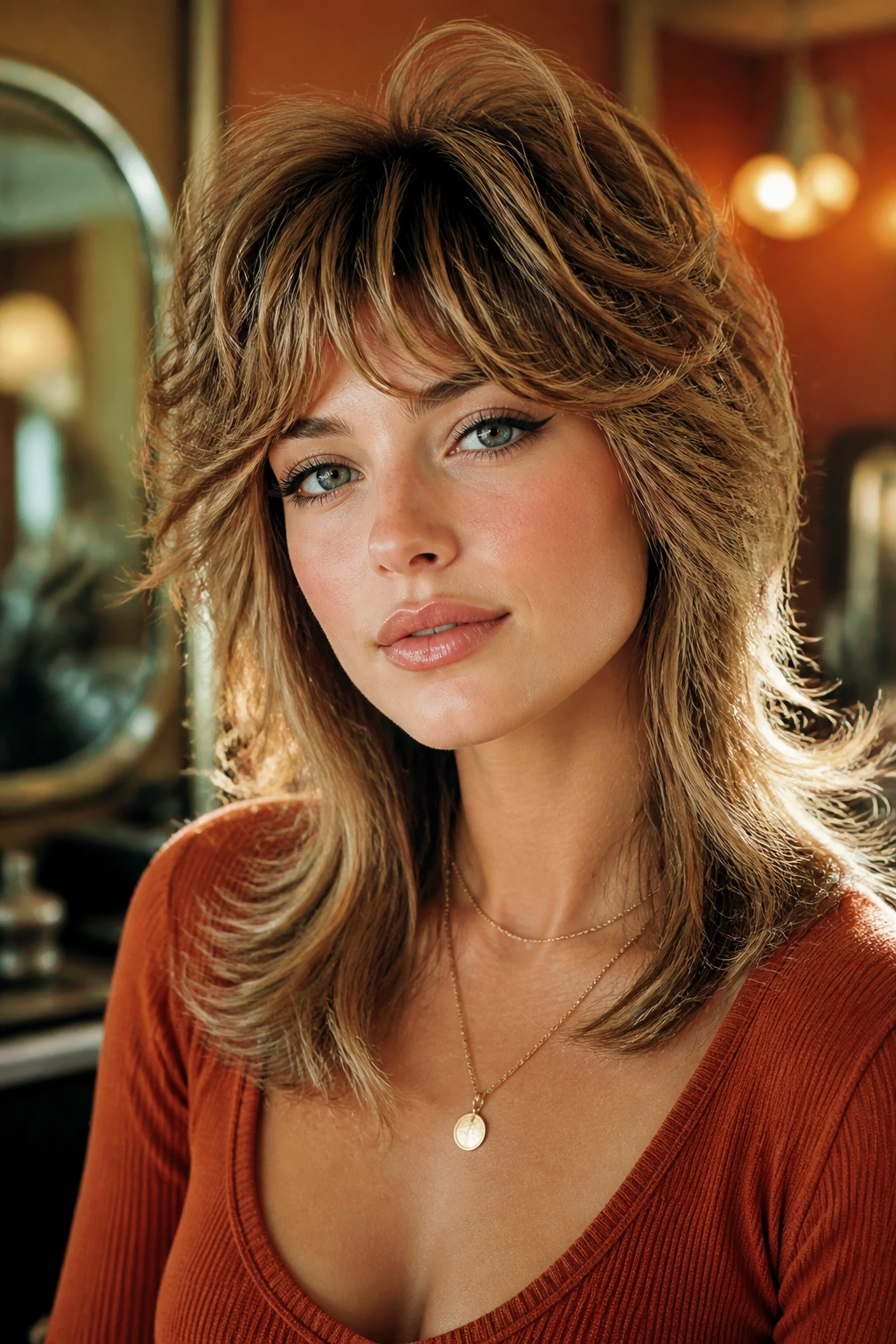
This is the shag that still turns heads first. The crown has lift, the layers fan out, and the ends flick away from the neck in that unmistakable feathered shape. On medium hair, it feels nostalgic without becoming costume-y if the cut stays a little softer than the vintage photos that inspired it.
What I love here is the amount of shape you get at the front and crown. The hair feels styled even before you touch it. That said, the style does need some help if your hair is stubbornly straight. A round brush, a little mousse at the roots, and a quick bend at the ends usually make the difference between “retro” and “flat.”
If you like a blowout, this is your cut. If you air-dry and walk away, you may lose some of the magic.
The retro shag suits medium hair that can hold a curve, wave, or soft bend. It also gives a nice lift to fine hair without asking you to go shorter. Ask for feathered layers around the face and a little extra height at the crown if you want that classic frame. The result can feel glam, but not precious. That balance is why people keep coming back to it.
11. Lob-Shag Hybrid
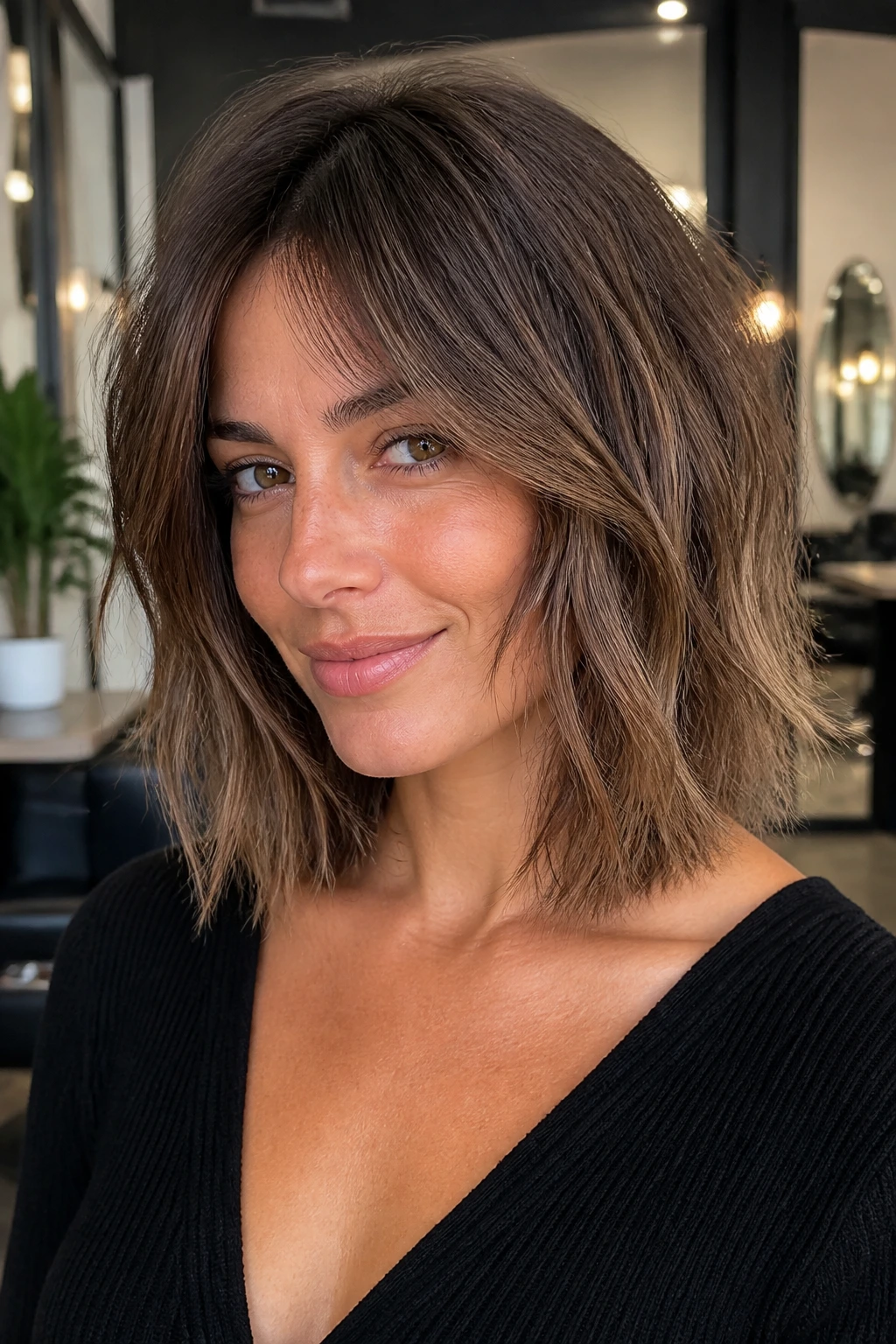
The lob-shag hybrid is the haircut for people who want texture but still want their hair to sit in a civilized way. It keeps more of the blunt outline of a long bob, then slips in shaggy layers through the interior and around the face. The result feels cleaner than a full shag and less stiff than a plain lob.
Unlike a traditional shag, this version doesn’t rely on a lot of broken-up ends to make the point. The structure is stronger. That means it’s easier to wear straight, easier to tuck behind the ears, and less likely to feel wild on the second day after washing.
It’s a smart choice for medium hair that leans fine or medium-density. Too many layers can make those hair types look wispy near the bottom. The lob-shag hybrid keeps enough weight at the perimeter to avoid that problem while still giving the cut some motion.
If you want one haircut that can be sleek on Monday and rough-dried on Saturday, this is probably the one. Ask for a collarbone-length base with soft, invisible layers through the top and face frame. That’s the formula. Everything else depends on how much texture you want to show off.
12. Side-Swept Bang Shag

Why do side-swept bangs still work so well with medium shag haircuts? Because they soften the forehead without taking over the whole face. A side fringe can also help if your part has a stubborn cowlick or if center-part curtain bangs keep splitting in weird places.
What to tell your stylist
- Keep the fringe long enough to sweep across the brow, usually around cheekbone length when dry.
- Blend the bang into the front layers so it doesn’t sit like a separate piece.
- Leave the ends soft, not razor sharp, if you want the haircut to stay easy to grow out.
- Ask for a little shorter length near the part and a longer taper toward the cheek.
This version is one of the easiest shags to live with if you don’t love constant bang upkeep. It grows out more smoothly than a blunt fringe, and the side motion keeps the cut from feeling too symmetrical. That matters on medium hair, where symmetry can sometimes make the shape look stiff.
A side-swept bang shag also does a nice job of framing glasses. The fringe clears the lenses better than a heavy curtain bang, and the layers behind it still keep the cut from going flat. Small detail. Big daily difference.
13. Wavy Shag with Heavy Texture

If your hair already waves on its own, a heavy-texture shag can feel like the haircut finally caught up with the hair you’ve been living with. The point is not to force shape where there isn’t any. The point is to make the wave pattern look more obvious, more deliberate, and less like it gave up halfway through drying.
The mistake people make here is cutting too many layers too high. That can make wavy medium hair puff out at the crown and frizz at the ends. A better version keeps enough weight in the perimeter so the waves hang together, while texture is added in controlled sections around the face and mid-lengths.
What helps this cut behave
- Use a light mousse at the roots if your waves fall flat.
- Scrunch in a small amount of curl cream through damp hair.
- Diffuse on low heat until the roots are about 80% dry, then stop messing with it.
- If your ends flip out too much, smooth only the bottom 2 inches with a brush or flat iron.
This shag suits hair that wants to look undone without actually being neglected. There’s a difference, and it matters. If you’ve got natural bend, this cut can give it a better outline without turning it into a frizzy halo.
14. Underlayer Shag for Thick Hair
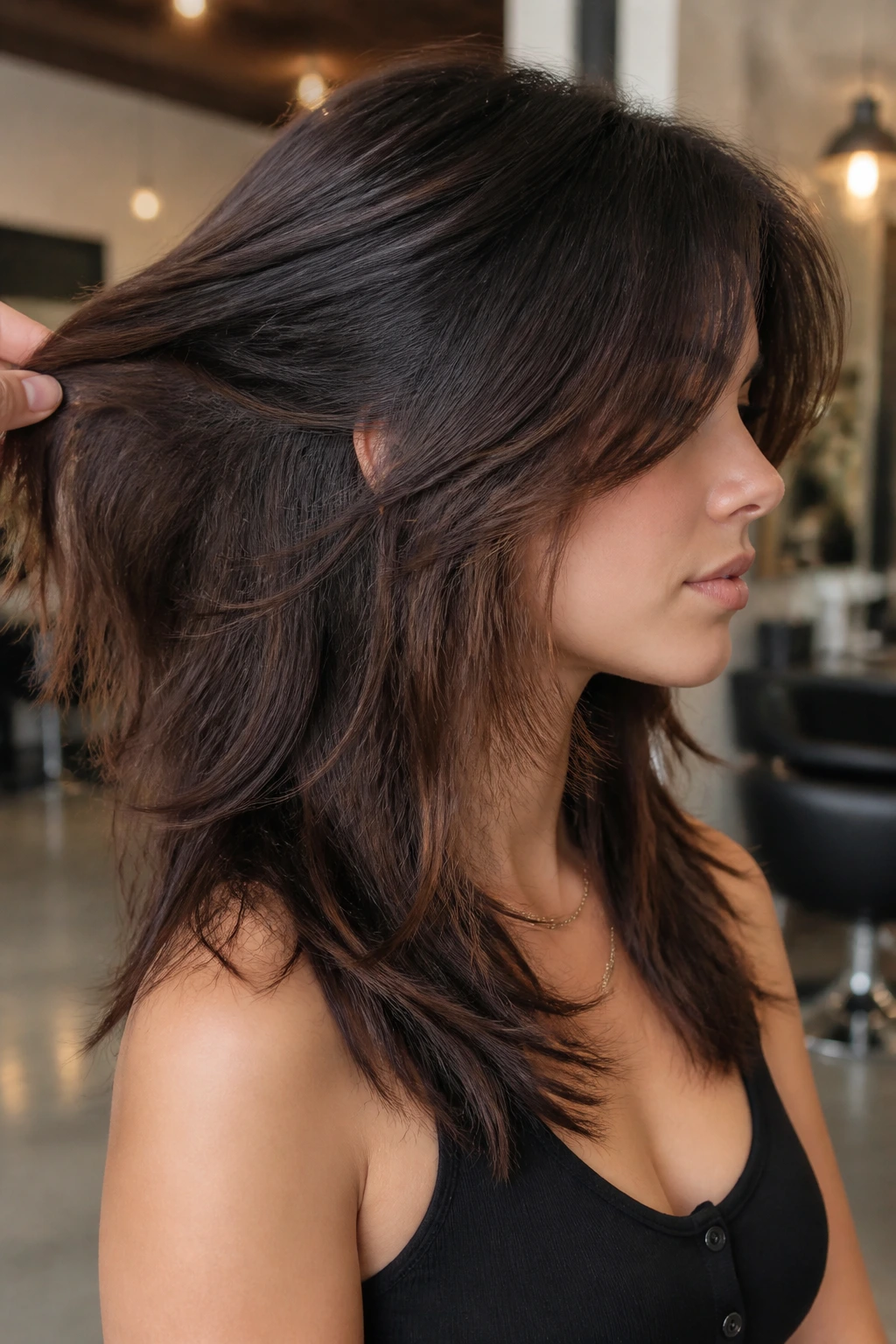
Thick medium hair often needs less “more” and more smart removal in the right places. That’s where an underlayer shag comes in. Instead of carving up the entire head, the stylist takes weight out from the inside and under sections, which keeps the top looking full while the lower parts stop ballooning out.
This is the one I’d point to if your hair feels heavy by noon. The outer layer stays smooth enough to look polished, but the hidden sections stop the haircut from feeling like a blanket. It can be a relief, honestly. Thick hair doesn’t need to be punished. It just needs room to move.
The best version still keeps the ends solid. Over-thinning the bottom makes thick hair fray and stick out at the wrong angles. You want reduction, not evacuation. Say that out loud if you have to. A stylist who gets thick hair will usually remove weight below the occipital bone and through the internal crown, then leave the perimeter strong.
This cut is especially good if you wear your hair down a lot and don’t want it to feel hot or bulky. It also dries faster, which sounds small until you’re standing there with a towel on your shoulders, wondering why a haircut seems to take all evening.
15. Rounded Curly Shag
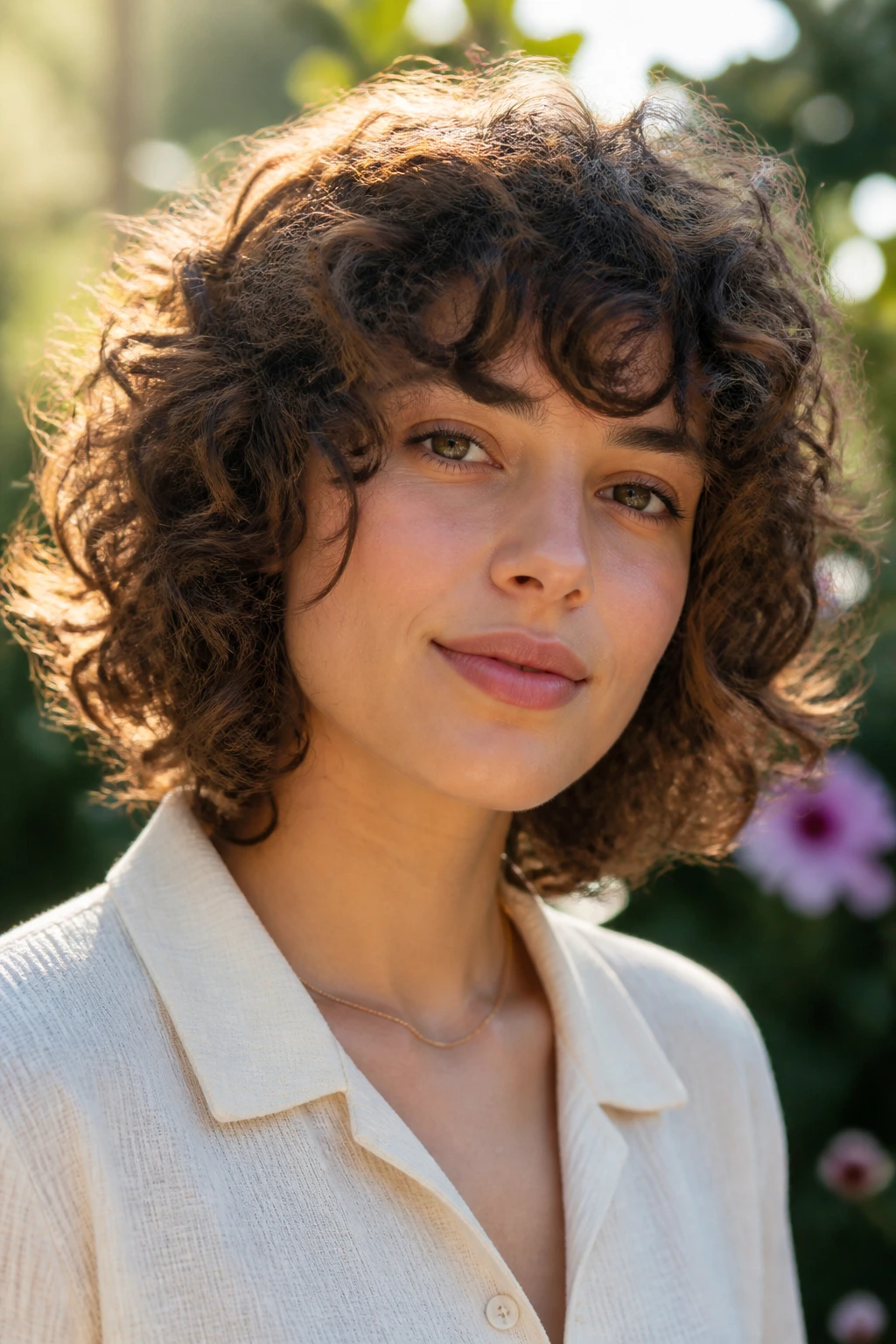
A rounded curly shag keeps the softness of the curl pattern intact while still giving the hair enough shape to avoid the dreaded triangle. That rounded silhouette matters. It lets the curls stack around the head instead of jutting out from the sides like they’ve each chosen a different direction.
Unlike the sharper wolfy versions, this one stays gentler at the edges. The perimeter is still layered, but the overall outline feels circular and balanced. That makes it a strong pick for medium curls that want movement without losing their shape. It also works well on slightly wavy hair that expands when air-dried.
A good rounded curly shag usually needs less styling than people expect. A leave-in, a curl cream, and a diffuser on low heat are often enough. If the curl clumps are strong, leave them alone while they dry. Touching them too much breaks the shape and creates fluff where you wanted definition.
If you’re choosing just one shag from this list and your hair has any natural bend at all, I’d look here first. It gives the softness of a shag haircut for medium hair without the harsh edges that can make some layered cuts look overdone. Clean shape. Easy texture. No drama unless you ask for it.
