



Some haircuts look fine only when they’ve just been styled and half a can of product is holding them together. A good curly shag does the opposite. It still has shape when you sleep on it, twist it up for a workout, or let it air-dry while you’re making coffee.
That’s why naturally curly shag haircuts keep showing up in salons and on real heads that have to live in the real world. They work with the bend that’s already there instead of forcing every curl into the same polite line. The right layers can lift the crown, open up the face, and stop the silhouette from turning into a triangle or that awkward mushroom shape nobody asked for.
The tricky part is that “shag” covers a lot of ground. Loose 2B waves, springy 3B curls, and tighter coil patterns all want different amounts of layering, different fringe lengths, and different finishing techniques. Cut it wrong and the shape feels choppy in a bad way. Cut it well and the haircut almost does the styling for you.
A few shapes keep proving themselves over and over: curtain bangs that split softly at the cheekbones, wolf-cut layers that add movement without killing length, mullet-inspired cuts that keep the back interesting, and shorter shags that give fine curls a real boost. The details matter. Dry cutting, point cutting, internal layering, and careful fringe placement can change the whole personality of the cut.
1. Shoulder-Grazing Curly Shag with Curtain Bangs
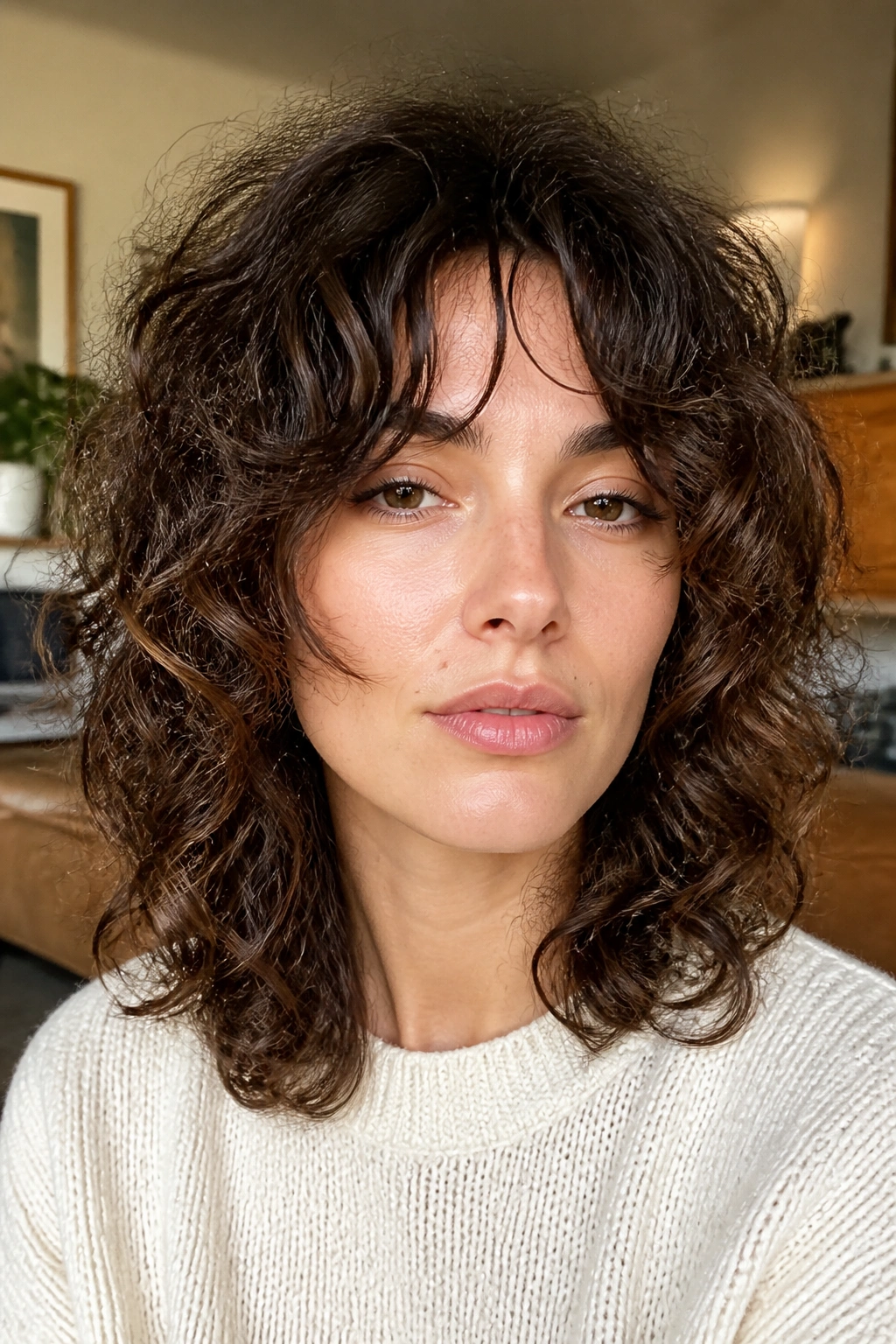
This is the curly shag haircut I’d hand to someone who wants change without drama. The length sits around the shoulders, which gives the curls enough weight to hang, while the layers pull the top away from the head so it doesn’t puff out in one block.
Why it works
Curtain bangs are doing a lot of work here. They open at the cheekbones, which softens the face, and they blend into the sides instead of looking like a separate piece dropped on top. On curls, that blend matters more than people think.
Ask for the bangs to be cut with shrinkage in mind. Curls spring up. Sometimes a lot. If the fringe looks perfect when wet, it may be way too short once it dries.
Best for: medium-density curls, round or square faces, and anyone who wants movement without losing much length.
Styling note: a light curl cream and a quick diffuser pass at the roots keep this shape from collapsing.
Watch out for: bangs cut too bluntly. They can sit heavy and take over the whole haircut.
2. Long Curly Shag with Face-Framing Layers
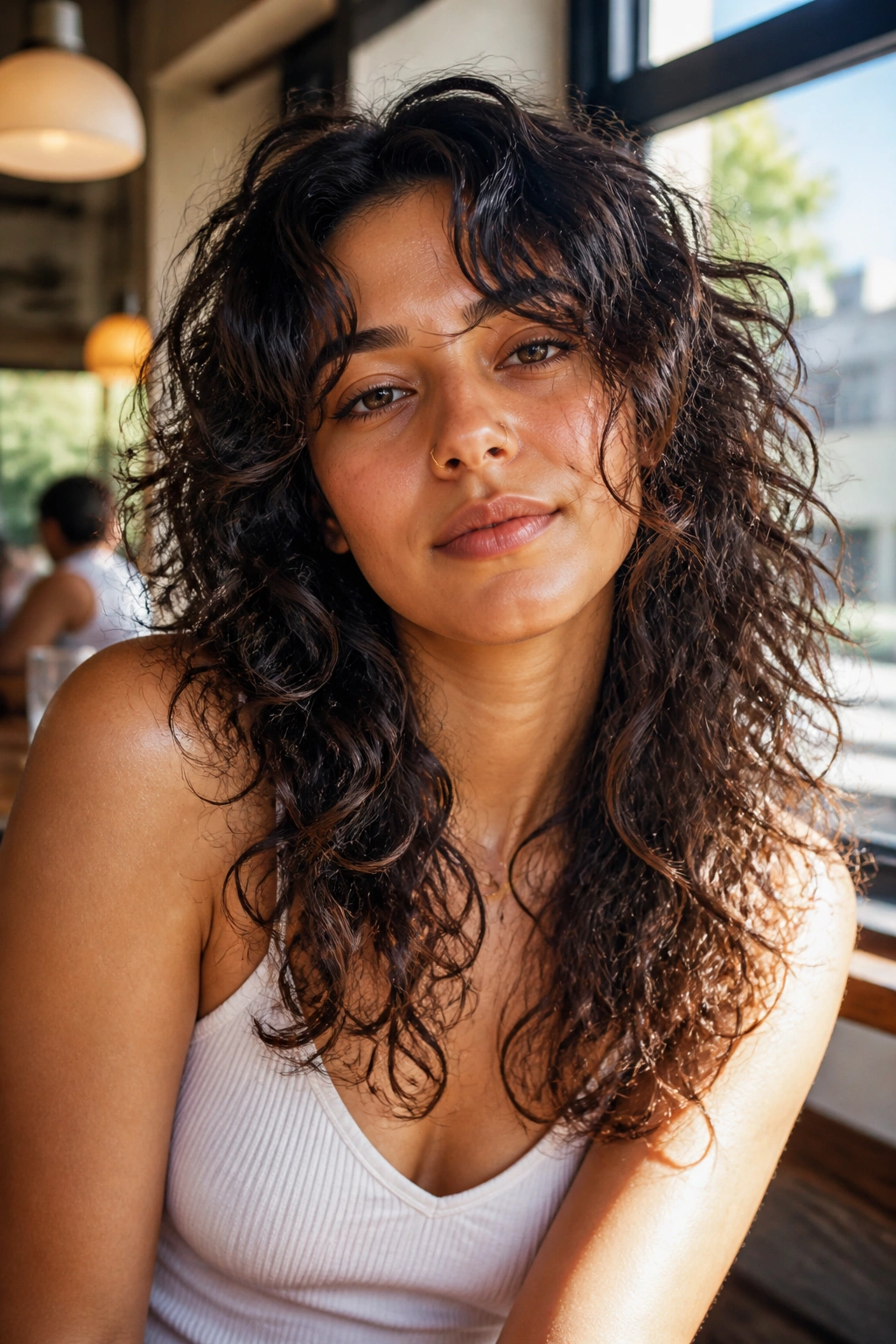
If you love your length and refuse to give it up, this is the safe bet that still feels fresh. The longest pieces stay well below the shoulders, but the face-framing layers start higher, usually around the chin or collarbone, so the hair doesn’t just hang there like a curtain.
That kind of layering matters on curly hair because long lengths can look gorgeous and sleepy at the same time. A little lift near the front changes the whole mood. Suddenly the curls move when you move.
I like this cut for people who wear their hair up half the week and down the other half. The face-framing pieces make a messy bun look intentional, and the longer back gives you room to play with twist-outs, diffusing, or just a fast wash-and-go.
Keep the shape, not the bulk
The goal is shape retention. Do not let a stylist thin the ends too aggressively. That can turn the bottom into little wisps that frizz out the second humidity shows up.
Instead, ask for soft layers that follow the curl pattern. You want movement, not a haircut that disappears at the ends.
3. Chin-Length Curly Shag Bob
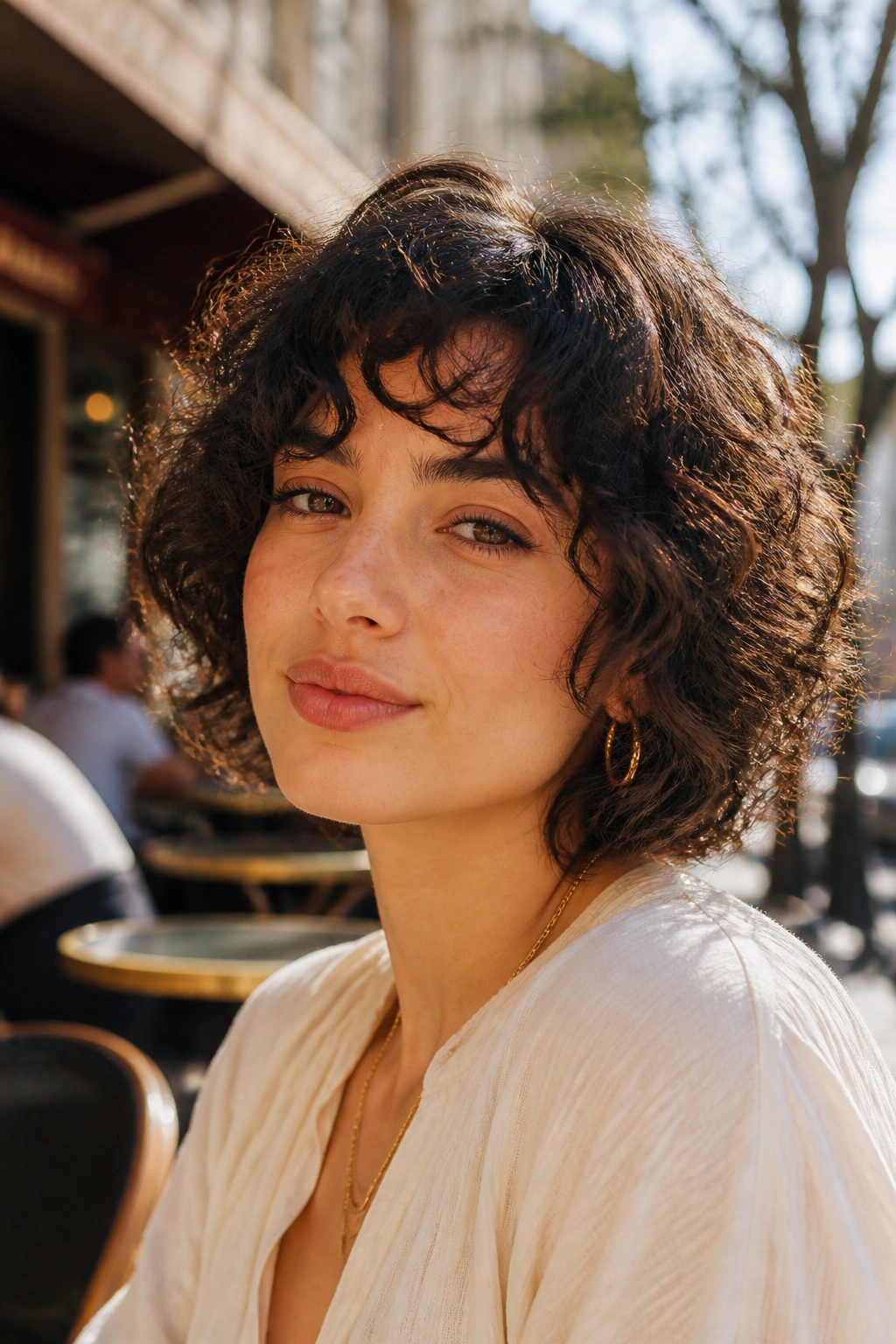
Short works.
A chin-length curly shag bob is sharp, airy, and a little cheeky in the best way. It sits high enough to show off the curl pattern, but not so short that the shape turns into a puffball. The edge around the jaw gives the haircut structure, while the interior layers keep it from feeling boxy.
What makes it different from a regular bob
A regular curly bob can get wide fast. This one avoids that by building in shorter pieces near the crown and around the ears. The result is movement in three directions instead of a single rounded mass.
This cut is especially good if your curls shrink a lot. A chin-length dry shape may land higher once it’s fully dry, which is exactly why a curl-aware cut matters so much. No one wants to lose two inches of length by accident.
- Best on curls that form strong clumps
- Works well with a side part or center part
- Needs regular reshaping if the perimeter starts to lose its line
My take: if you want your curls to look bouncy without a lot of styling time, this is one of the cleanest options.
4. Soft Wolf Cut for Loose Curls
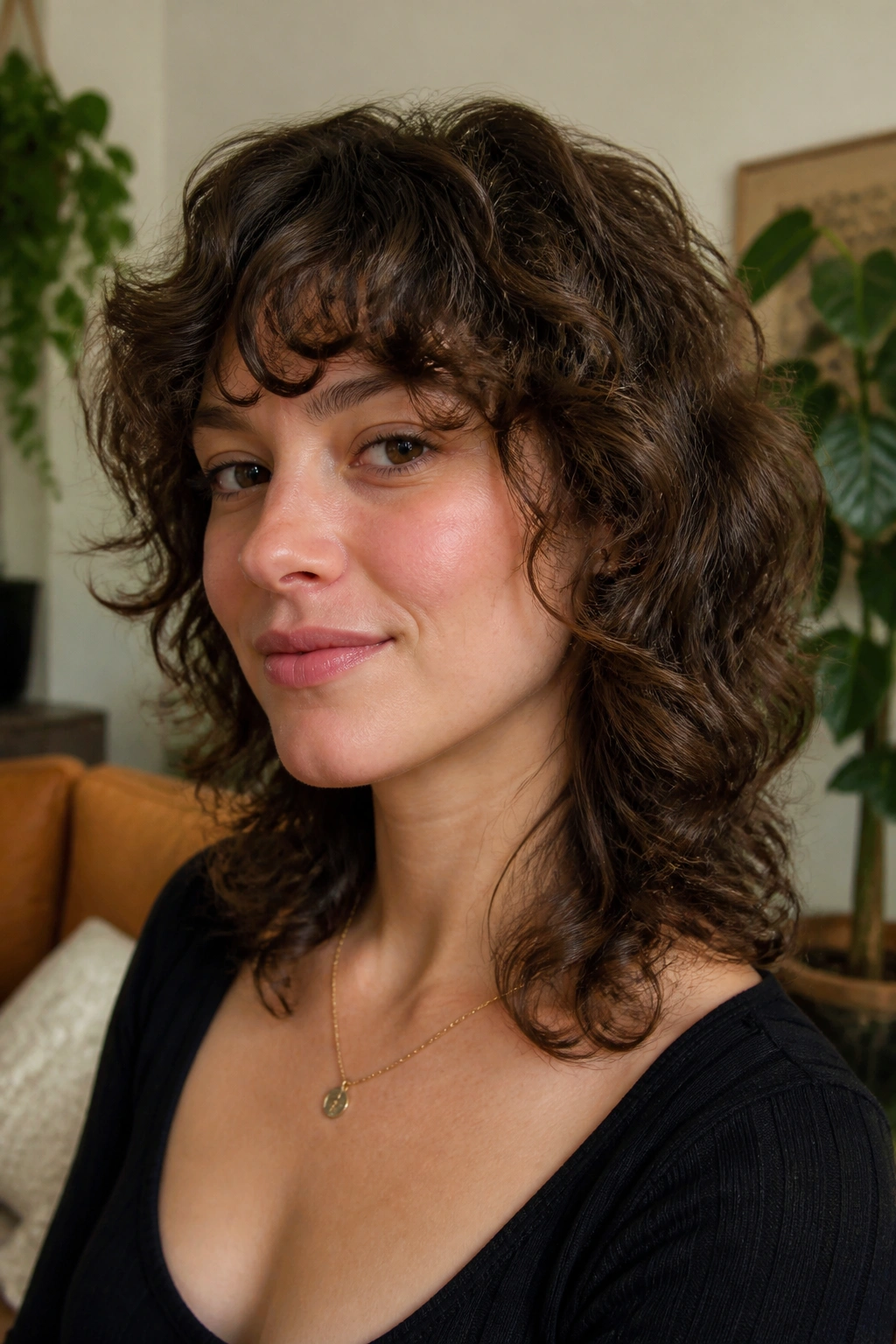
The wolf cut gets a rough reputation because people picture something aggressively mullet-like. A softer version is much easier to live with. The crown stays a little shorter, the sides fall in layers, and the back keeps enough length to feel grounded.
Loose curls love this shape because they need movement more than they need heavy structure. Too much structure and the hair can look stiff. Too little and it gets flat. The soft wolf cut sits in that useful middle space.
What makes it softer than the classic version
The transitions are less abrupt. The layers are still there, but they’re blended so the haircut reads as fluid rather than spiky. That makes a big difference on curls that already have their own spring and personality.
It’s a good fit if you like a little edge but do not want your hair announcing itself from across the room. The cut has attitude, not chaos.
Style it with: a medium-hold mousse at the roots and a diffuser set on low heat. Let the ends stay a little imperfect. That’s the point.
5. Curly Mullet Shag with a Tapered Neckline
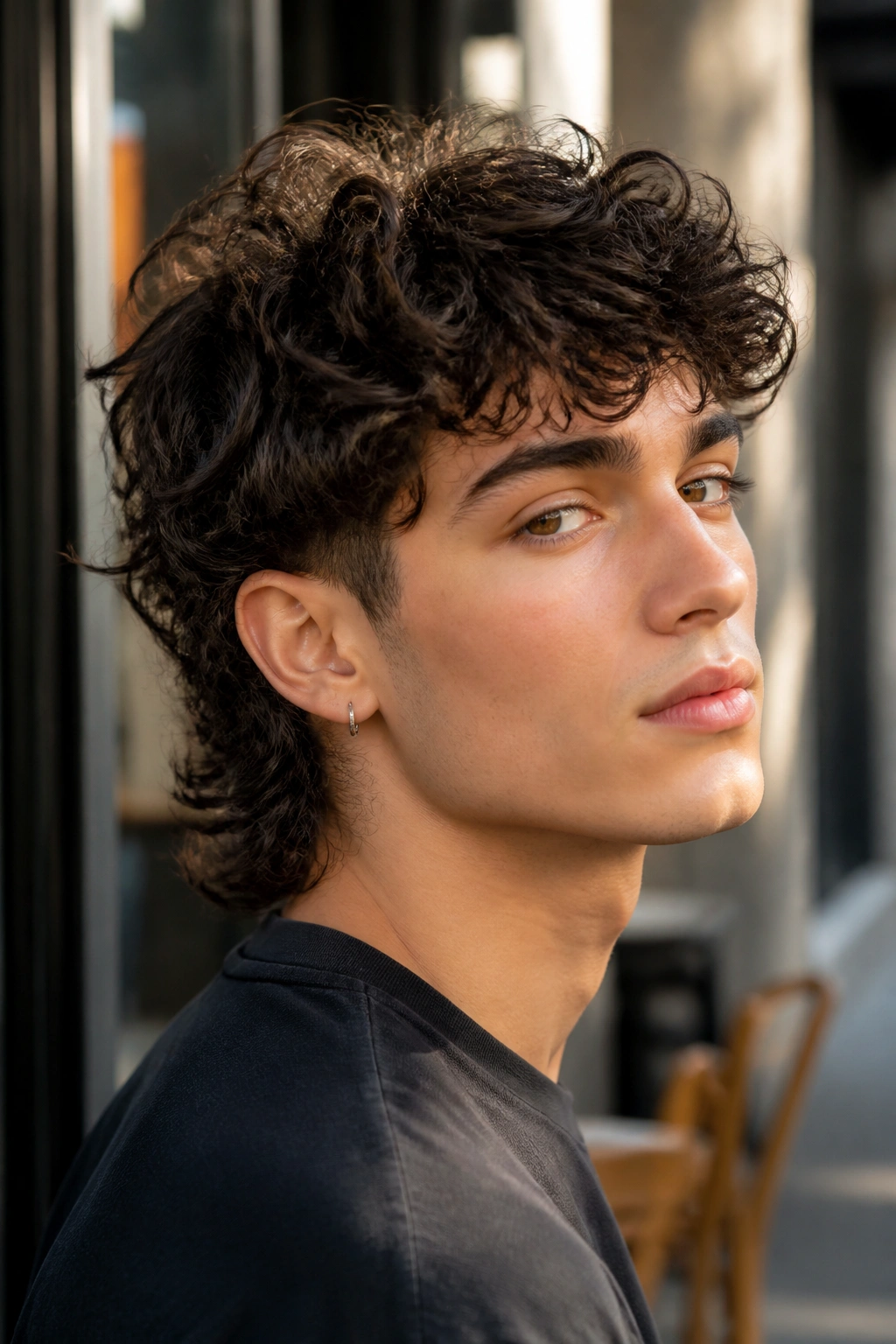
This one has range. It can look punk, artsy, or surprisingly soft depending on how it’s cut and styled. The front and crown stay lighter and more layered, while the back keeps more length and a tapered neckline, which keeps the shape from looking blocky.
A curly mullet shag is a smart choice for thick curls that need room to move. Thick hair often balloons at the sides if it’s cut evenly all around. A longer back and a tighter nape help redirect that bulk.
If you’ve ever tied your hair up and thought the neck area felt bulky or heavy, this cut solves that problem better than most. It takes weight out where it matters and leaves the silhouette with a little swagger.
What to ask for
- A soft taper through the nape, not a hard line
- Layering through the crown for lift
- Length kept in the back so the haircut still feels like a shag, not a short crop
This cut grows out well, too. That matters more than people admit.
6. Rounded Shag for Tight Coils
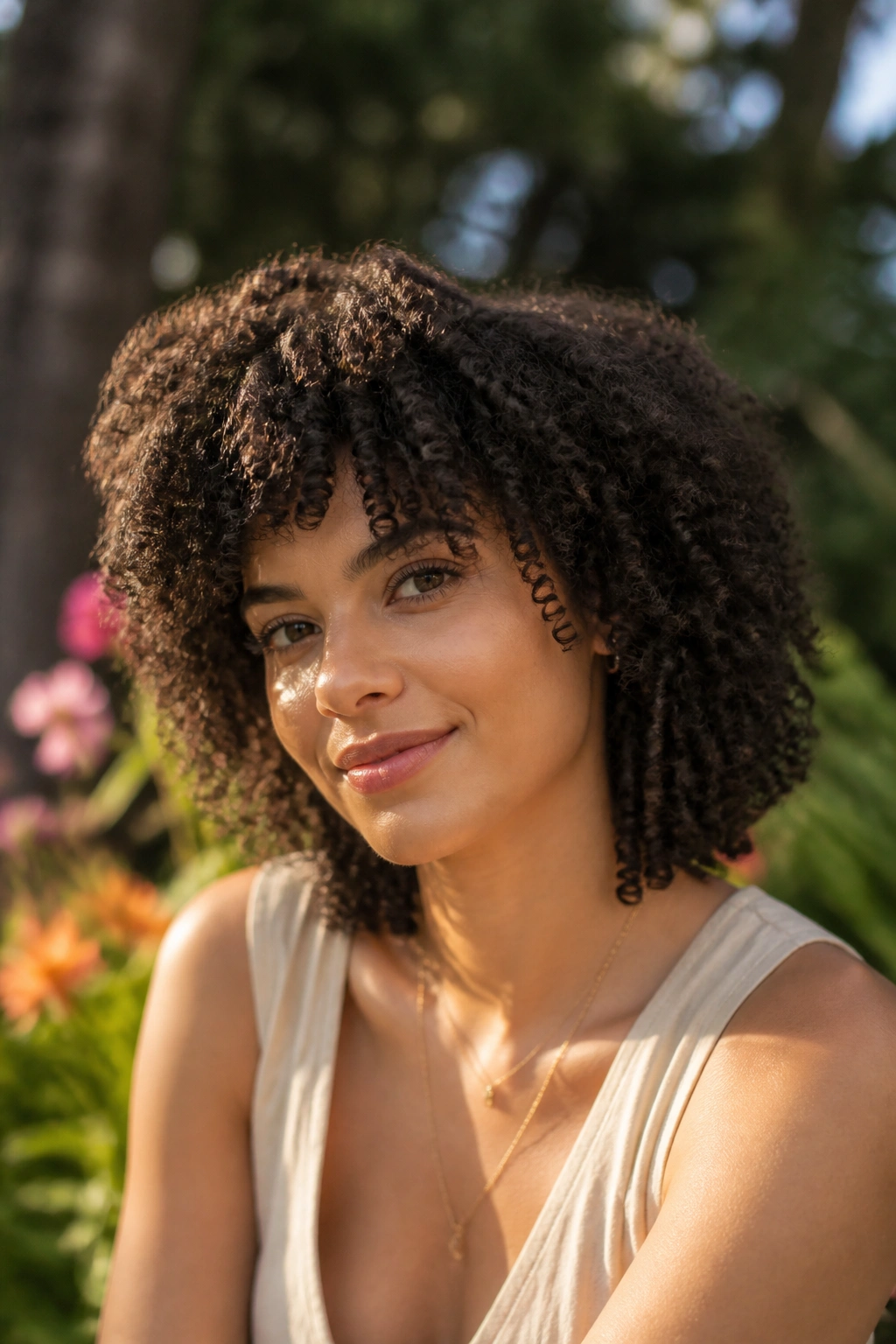
Tight coils need a shape that respects shrinkage instead of fighting it. A rounded shag does that beautifully. The haircut follows the head, builds fullness where the coils want to spring, and avoids the weird pyramid shape that happens when the top is too short and the bottom is left heavy.
Why the round shape matters
With coil patterns, a straight visual line is often less useful than a rounded silhouette. The curls stack, the shape lifts, and the haircut feels balanced from every angle. You get softness around the edges and height at the top without a harsh outline.
A good rounded shag is often dry-cut in sections so the stylist can see how each curl group sits. Wet hair can lie to you. Coils especially.
Good to know: don’t let someone over-texturize this one. Coils already have plenty of movement. Too much thinning can make the ends look hungry and uneven.
This is one of those cuts that looks simple until you examine the shape carefully. Then you notice the craftsmanship.
7. Micro-Bang Curly Shag
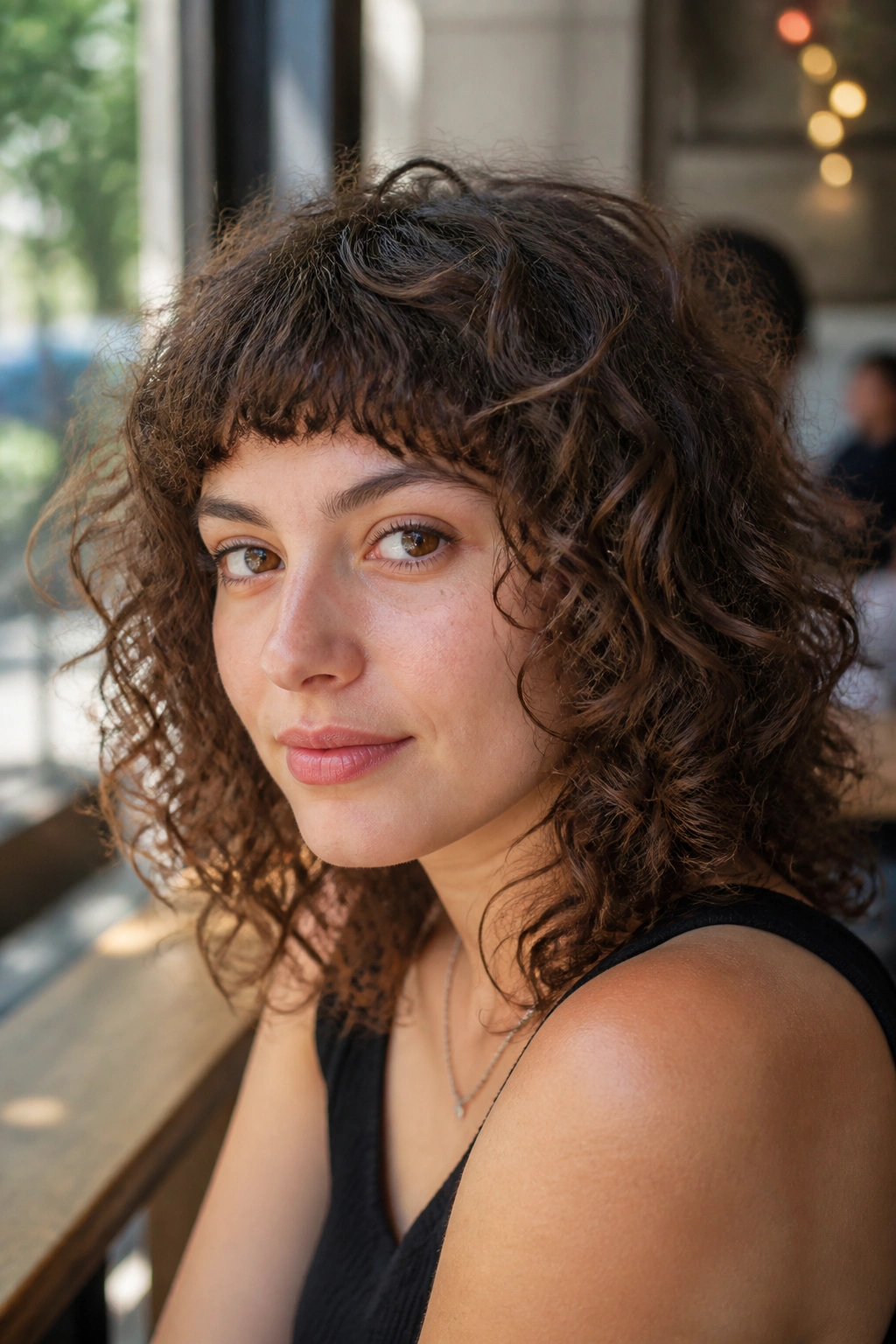
Not every fringe should land at the brow. Sometimes it should stop above it. That’s the whole appeal of a micro-bang curly shag: it shows off the eyes, keeps the face open, and gives the haircut a little shock of personality without making the whole style feel heavy.
Micro bangs on curls need confidence and precision. They also need dryness. A curl that looks tiny when wet can bounce up fast once it dries, and a micro fringe that’s too short is hard to unsee.
How to keep it from looking accidental
The fringe should be cut curl by curl, not as one blunt line. That lets the texture stay soft instead of turning into a hard shelf. Around the sides, the layers need enough length to balance the short front.
This shape works best when the rest of the haircut has some movement too. If the back is too flat, the bangs become the whole story. If the whole cut has texture, the bangs feel like part of the design.
It’s a bold cut. Not loud. Just decisive.
8. Heavy Fringe Shag for Thick Curls
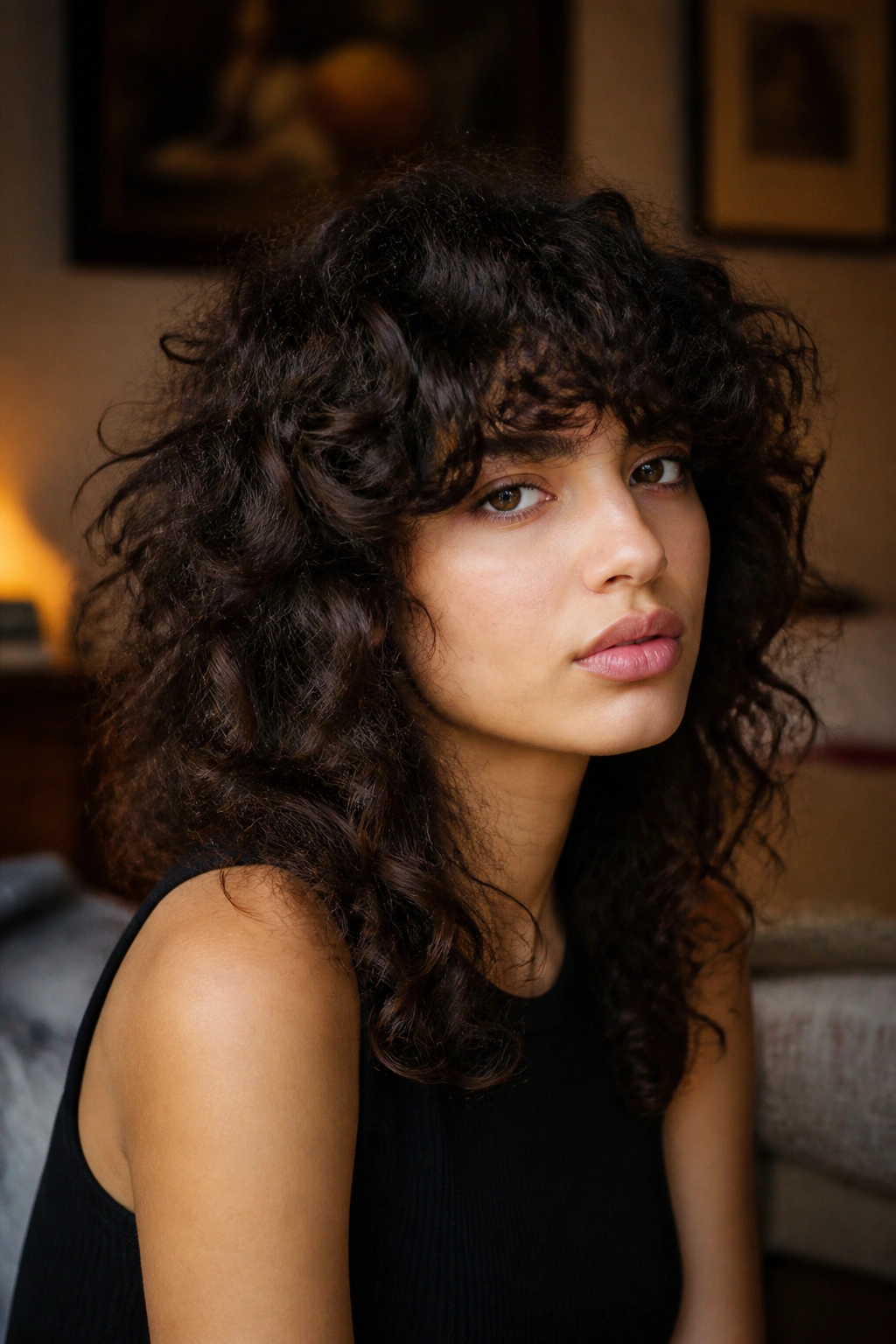
Thick curls can handle more bang than most people think. A heavy fringe shag leans into that density and turns it into something lush, moody, and full of texture. The fringe sits lower, the top layers stay fuller, and the sides get enough movement to keep the haircut from feeling helmet-like.
The trick is removing weight in the right places
You do not want the fringe to become a solid wall. The secret is internal movement. A stylist can carve space underneath the top layer so the front still has mass but not so much mass that it sits on the forehead like a blanket.
That balance is especially important if your curls clump tightly. Dense fringe without shape can look bulky fast. Dense fringe with soft layering looks expensive in the old-fashioned sense of the word — like the cut had time spent on it.
A few signs this cut may suit you:
- Your curls naturally sit in thick groups
- You like the idea of a fringe but hate wispy bangs
- Your hair holds shape for several days after washing
This is a strong cut. It has presence.
9. Lightweight Shag for Fine Curls
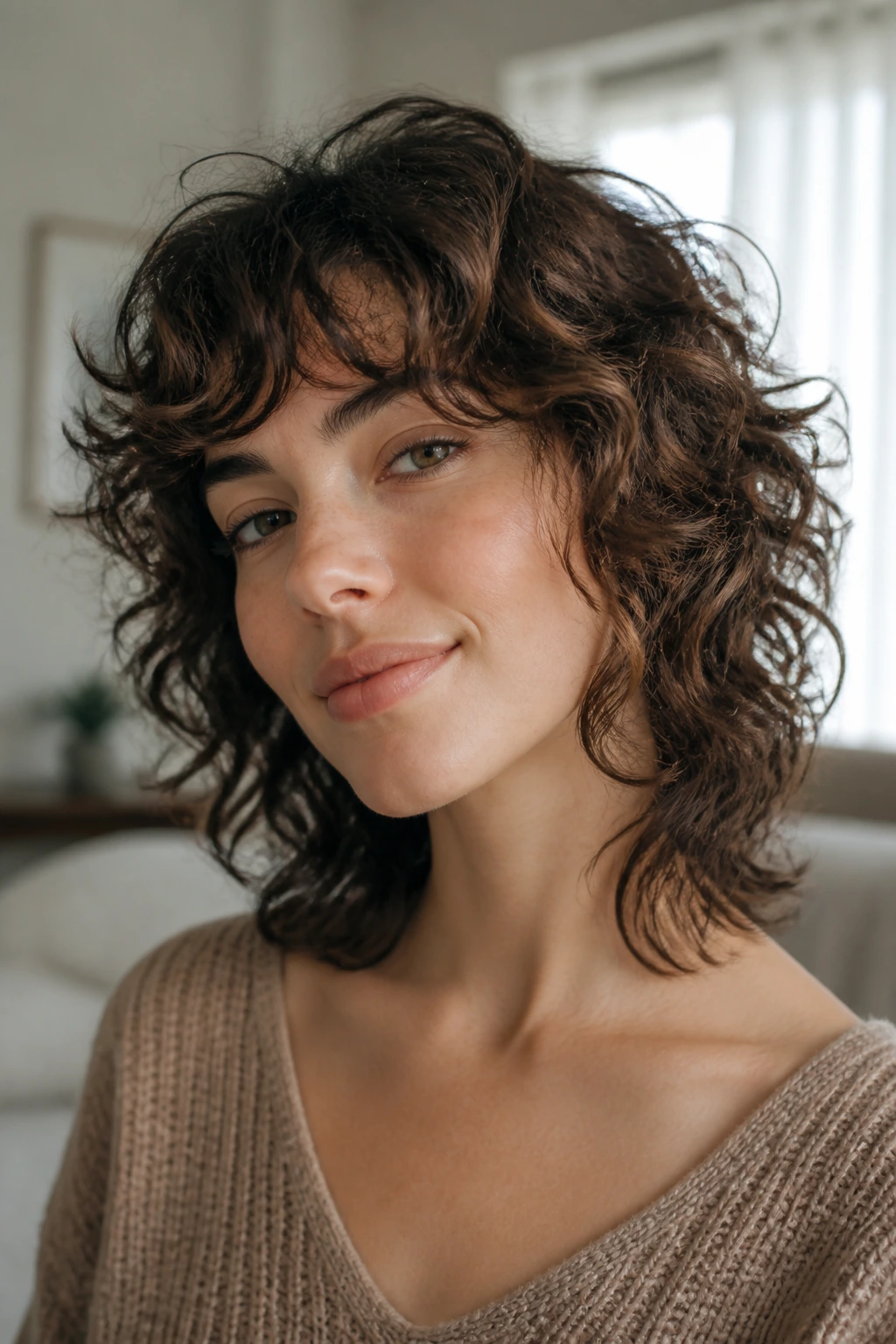
Fine curls need a different game plan. Too many short layers can strip away the body that fine hair is trying so hard to keep. A lightweight shag keeps the perimeter a little cleaner and uses only a few well-placed layers to make the curls feel fuller.
That sounds simple, because it is. And simple is good here.
A blunt or softly blunt bottom line gives fine curls something to bounce off. Then the top layers lift enough to stop the crown from lying flat. The result is air and shape, not a haircut that disappears the second the hair gets a little damp.
What to ask your stylist
- Keep the perimeter strong
- Use long layers, not a lot of short ones
- Avoid aggressive thinning shears near the ends
A root clip while the hair dries can help the top stay lifted. So can a small amount of mousse at the roots. Fine curls usually need a little support, not a pile of product.
This is one of the few shag variations where less cutting often gives more style.
10. Off-Center Part Curly Shag
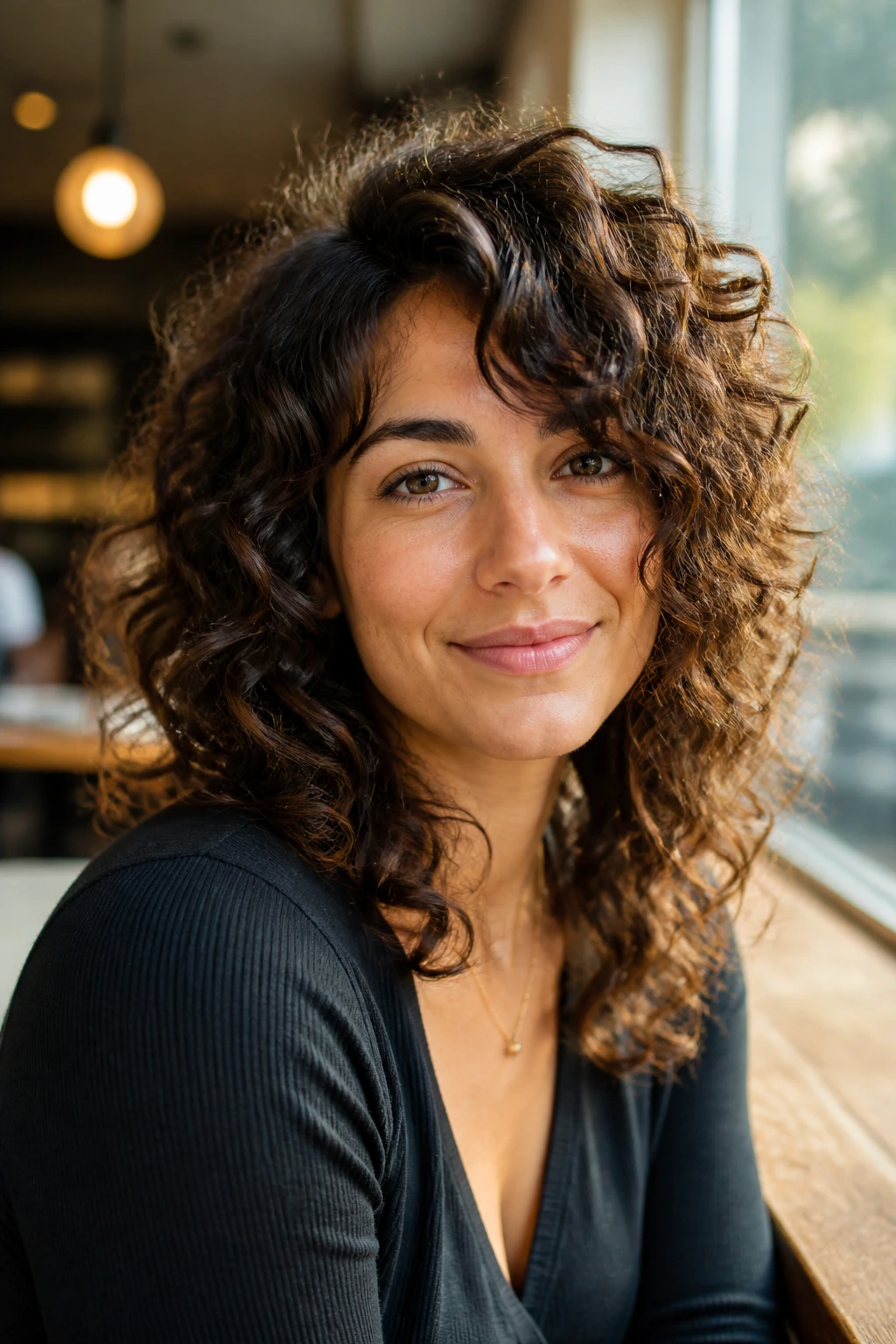
Middle parts get all the attention, but an off-center part can do better work on curly hair. It adds lift where you want it, shifts the volume slightly to one side, and gives the cut a looser, less predictable feel.
That tiny change in parting can change the whole haircut.
With a curly shag, the off-center part helps the fringe and front layers fall in a more flattering way for a lot of faces. It also keeps the top from looking too symmetrical, which can make curls seem stiff. A slight angle gives the hair more movement before the stylist has even picked up a diffuser.
Why this version stands out
The parting creates soft asymmetry without committing to a full asymmetrical cut. That makes it easier to wear if you like change but want something manageable on weekdays.
It also works well for people whose curls naturally split to one side anyway. Fighting your hair’s habits is a waste of time. Better to shape around them and move on.
Styling note: flip the part while the hair is damp, then let the roots dry in that direction. It helps the shape hold without needing much manipulation later.
11. Layered Lob Shag
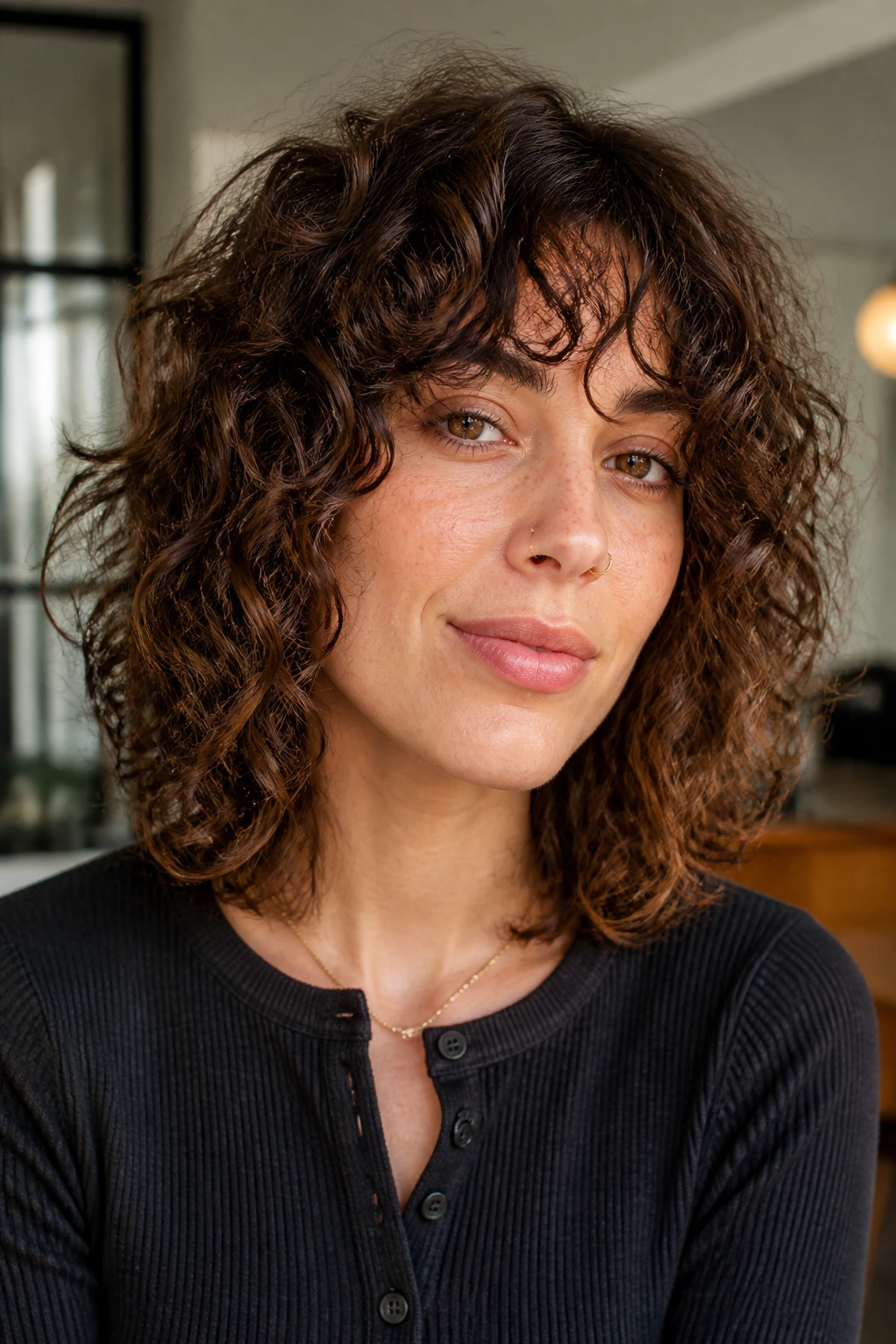
A layered lob shag lives in that useful collarbone zone where the hair feels long enough to tie back but short enough to have shape. It’s one of the most forgiving curly shag haircuts because it gives you room to wear the texture big or keep it smoother.
I keep coming back to this shape for people growing out a shorter cut. The layers soften the awkward stage. The lob length keeps the ends from fraying out. It’s practical, but not dull.
The best version has a little face framing near the front and a slightly shorter crown to stop the top from falling flat. Nothing too severe. Nothing that looks like it was attacked with scissors. The point is a soft frame with enough movement to show the curls off.
If you like air-drying, this cut is kind. If you like diffusing, it handles that too. Not every haircut gives you both.
12. Internal-Layer Shag for Dense Hair
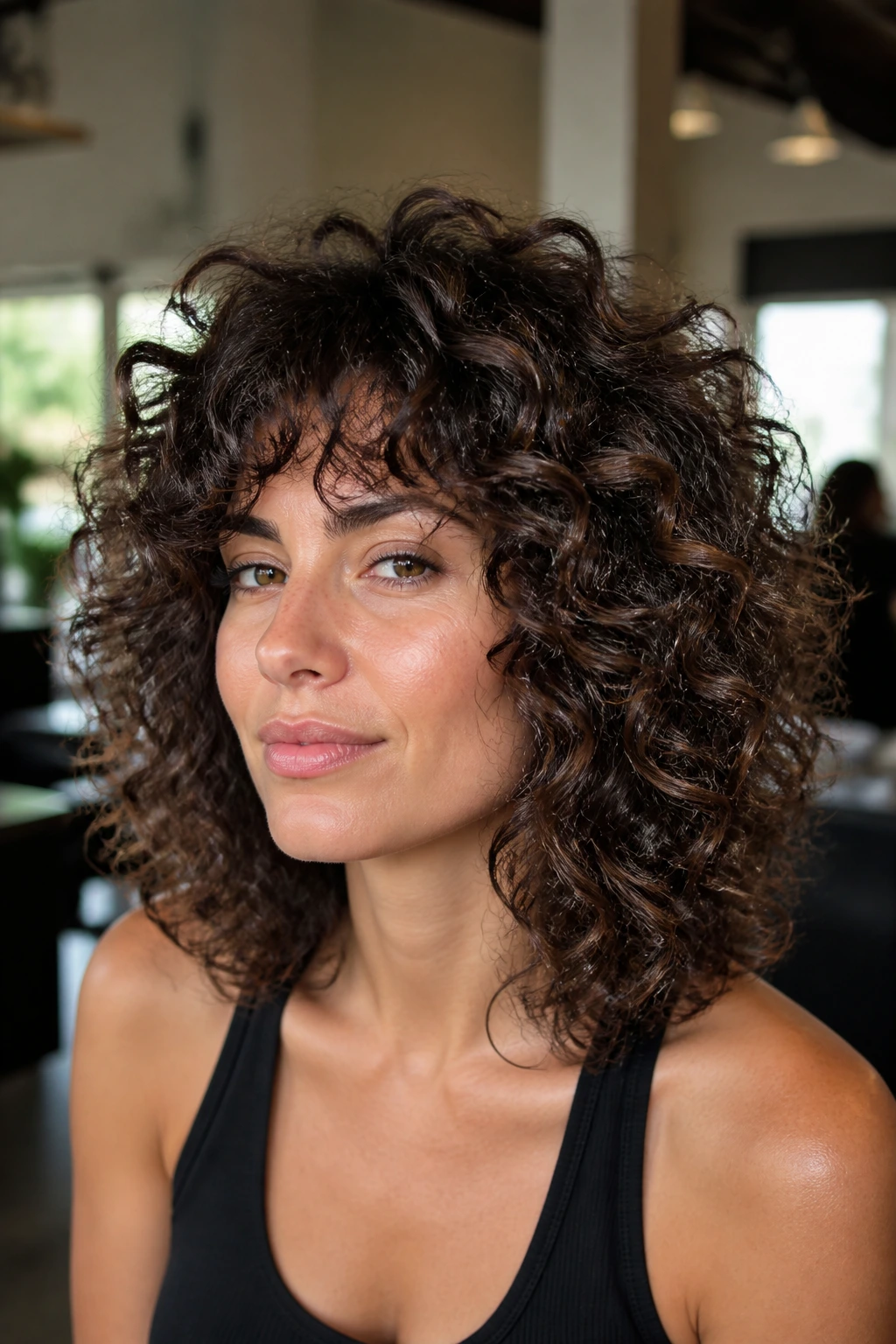
Dense hair needs space inside the haircut, not just around the outside. An internal-layer shag removes weight from the middle of the shape while leaving the outer line looking full and healthy. That matters when the hair is thick enough to eat a comb.
What to ask for at the salon
Tell the stylist you want the bulk removed inside the shape, not shredded from the ends. That usually means strategic layering through the interior and careful cutting around the crown and underlayers. A heavy-handed texturizing pass can make dense curls frizzier, not lighter.
The outer perimeter should still look deliberate. You want a shape with room to breathe, not a haircut that breaks apart when the humidity rises.
A dense-haired curly shag can feel almost unfairly easy once it’s cut right. The hair dries faster. The curls stack better. Your neck doesn’t feel buried under a blanket of weight.
- Best for thick, springy curls
- Helps reduce bulk without losing length
- Needs a stylist who understands how curls expand as they dry
That last part matters. A lot.
13. Dry-Cut Shag with Freehand Shaping
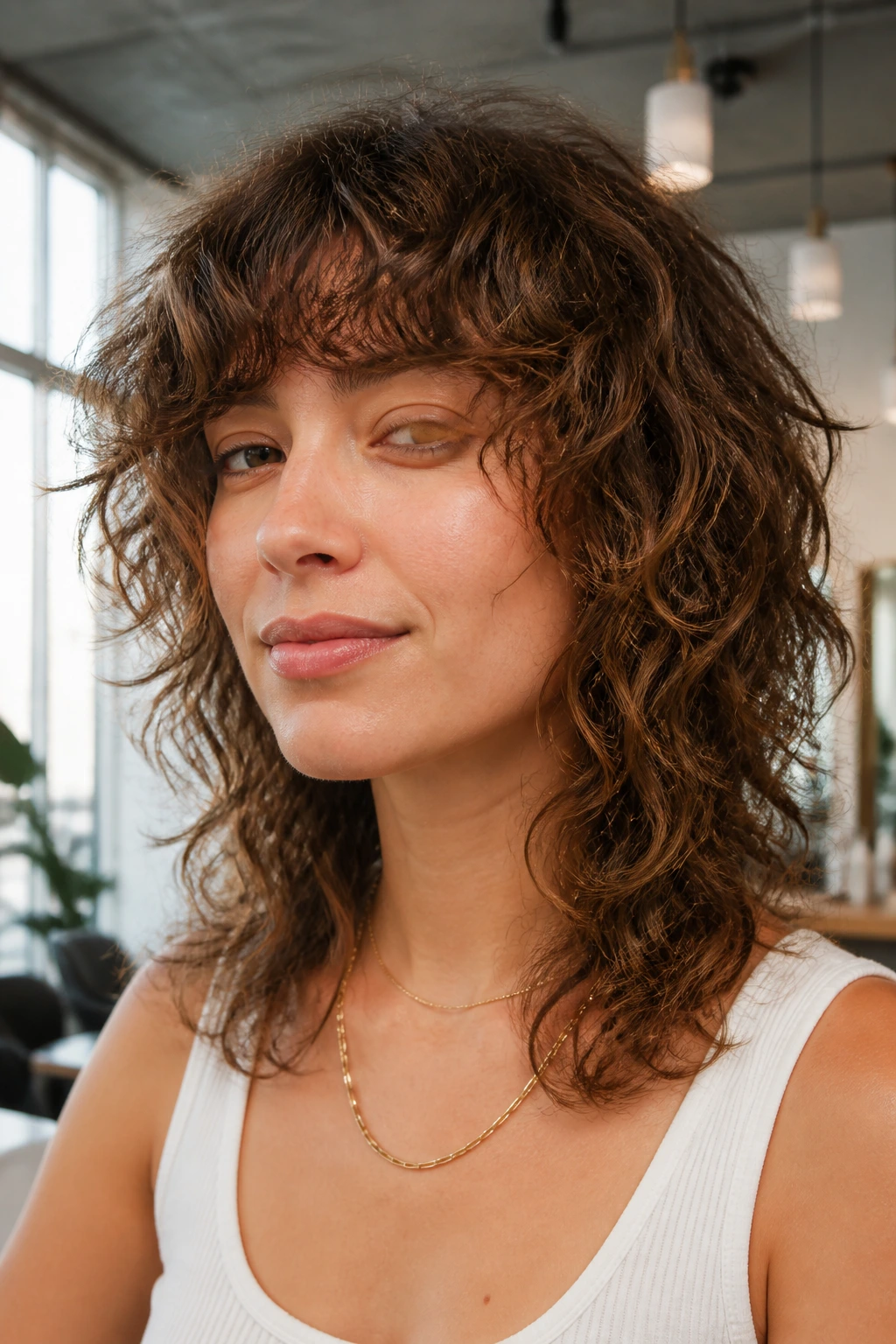
Dry cutting is not a trend gimmick. On curly hair, it often makes the difference between a haircut that fits and one that fights itself. A dry-cut shag is shaped with the curls in their natural state, which lets the stylist see how each section behaves before the scissors close.
That means more precision. It also means fewer surprises.
Freehand shaping works especially well when the curl pattern changes across the head — tighter at the nape, looser around the crown, maybe a few odd pieces near the temples. Wet hair can hide all of that. Dry hair tells the truth.
What to watch for
A good dry cut should still feel intentional, not improvised. The stylist should move curl by curl, check the silhouette from the side, and keep the layers balanced enough that one section doesn’t jump out at you later.
This method is useful for almost any shag length. Shoulder-grazing. Shorter. Even a longer wolf-shag hybrid. The technique is the point.
If you’ve ever had a curly cut look fine in the chair and strange a week later, dry cutting is usually where the fix starts.
14. Air-Dry Shag for Low-Maintenance Styling
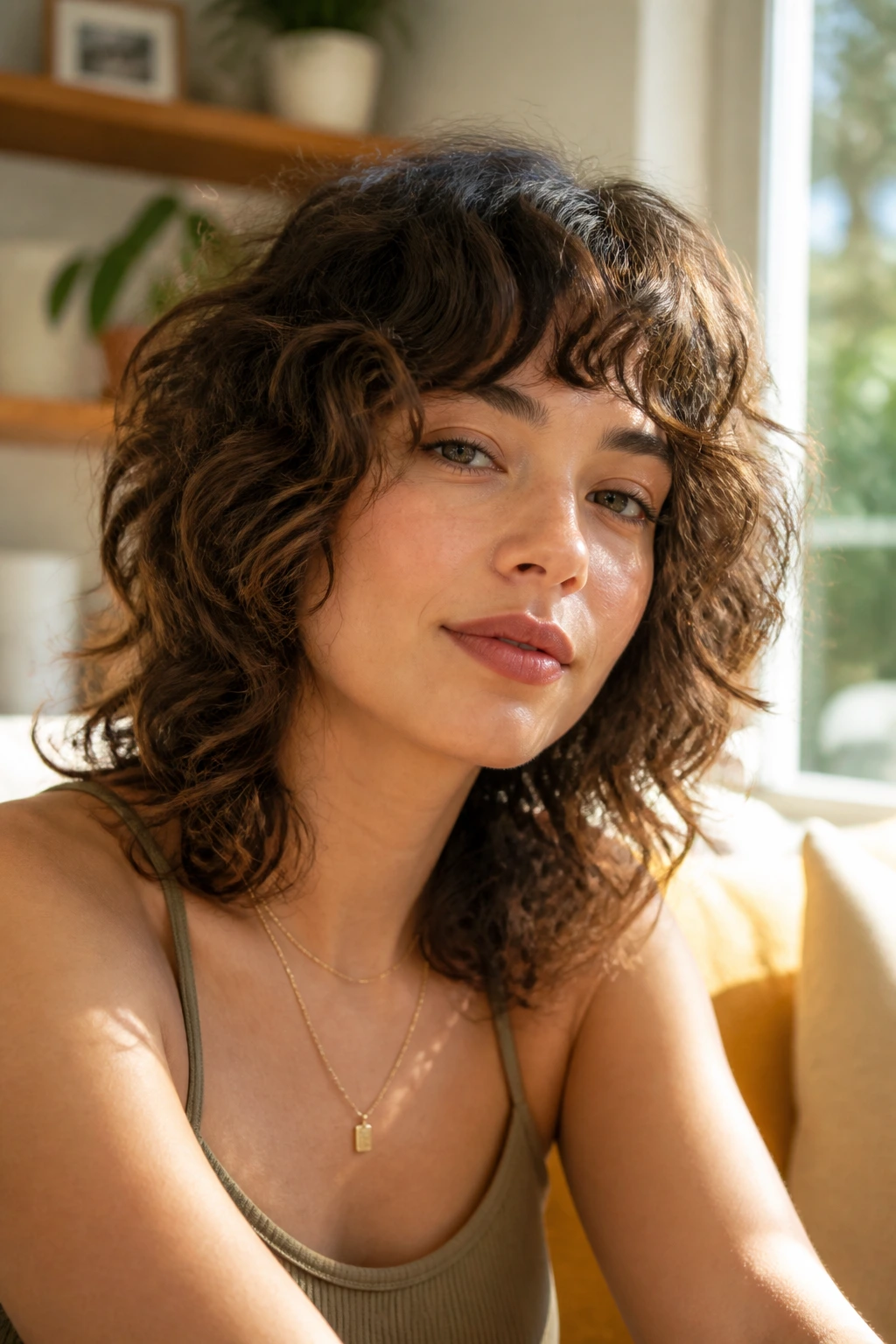
This is the cut for people who want their hair to look decent without a ten-step routine. An air-dry shag is built with enough internal shape that the curls can set on their own, then relax into movement as they dry. No huge styling ritual needed.
The haircut usually benefits from a little extra length in the front and soft layering throughout the sides. That gives the hair space to fall naturally instead of puffing out while it dries. A microfiber towel or cotton T-shirt helps, too. Rough drying is where a lot of good curl patterns go sideways.
What makes it low-maintenance
It’s not the absence of styling. It’s the cut doing more of the work. A light leave-in, a small amount of gel or cream, and hands-off drying are usually enough.
That’s why this version is so good for busy mornings. You can scrunch, part, clip, and leave it alone. If a haircut needs constant correction, it’s not really low-maintenance. This one actually is.
Best for: people with medium to loose curls who like shape but don’t want to fuss with it daily.
15. Asymmetrical Curly Shag
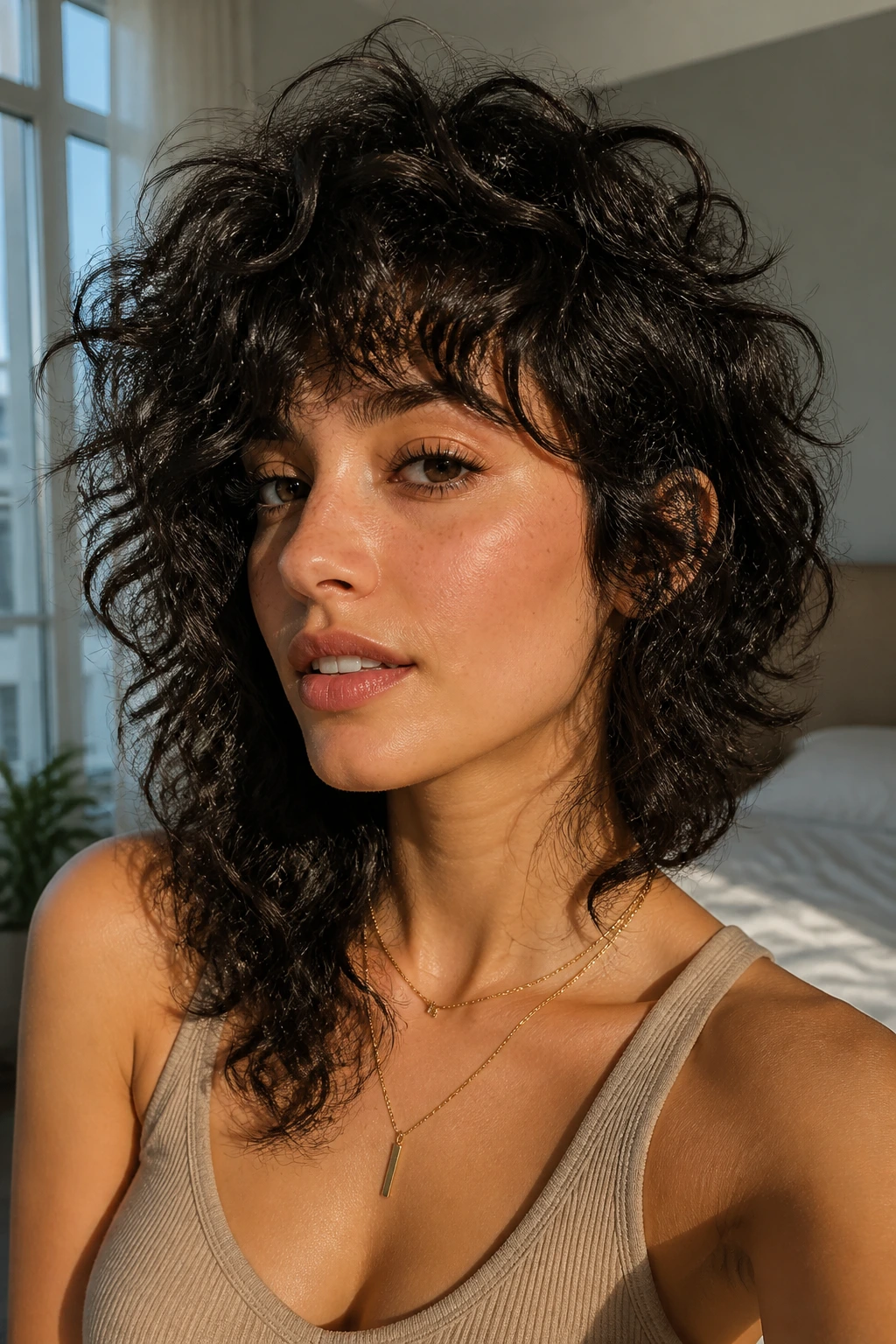
An asymmetrical curly shag brings a little tension to the shape, and that’s what makes it interesting. One side is a touch longer, the fringe may sweep across at an angle, and the overall line feels more alive because it isn’t trying to be perfectly even.
This cut works because curls already have a mind of their own. A small asymmetry can feel natural on a texture that bends and twists differently from one section to the next. The haircut stops trying to force symmetry and starts looking designed.
Who it suits
People with strong curl patterns often wear this cut well because the asymmetry gets softened by the movement. On very straight or barely wavy hair, the effect can look harsher. On curly hair, it tends to feel cooler and less stiff.
It also works well if one side of your face carries more volume naturally. The longer side can balance things without much effort. That’s the fun part of it — the haircut does some of the visual correction for you.
Just keep the difference subtle unless you want the cut to read as deliberately dramatic. One inch can be enough.
16. Halo-Layer Curly Shag
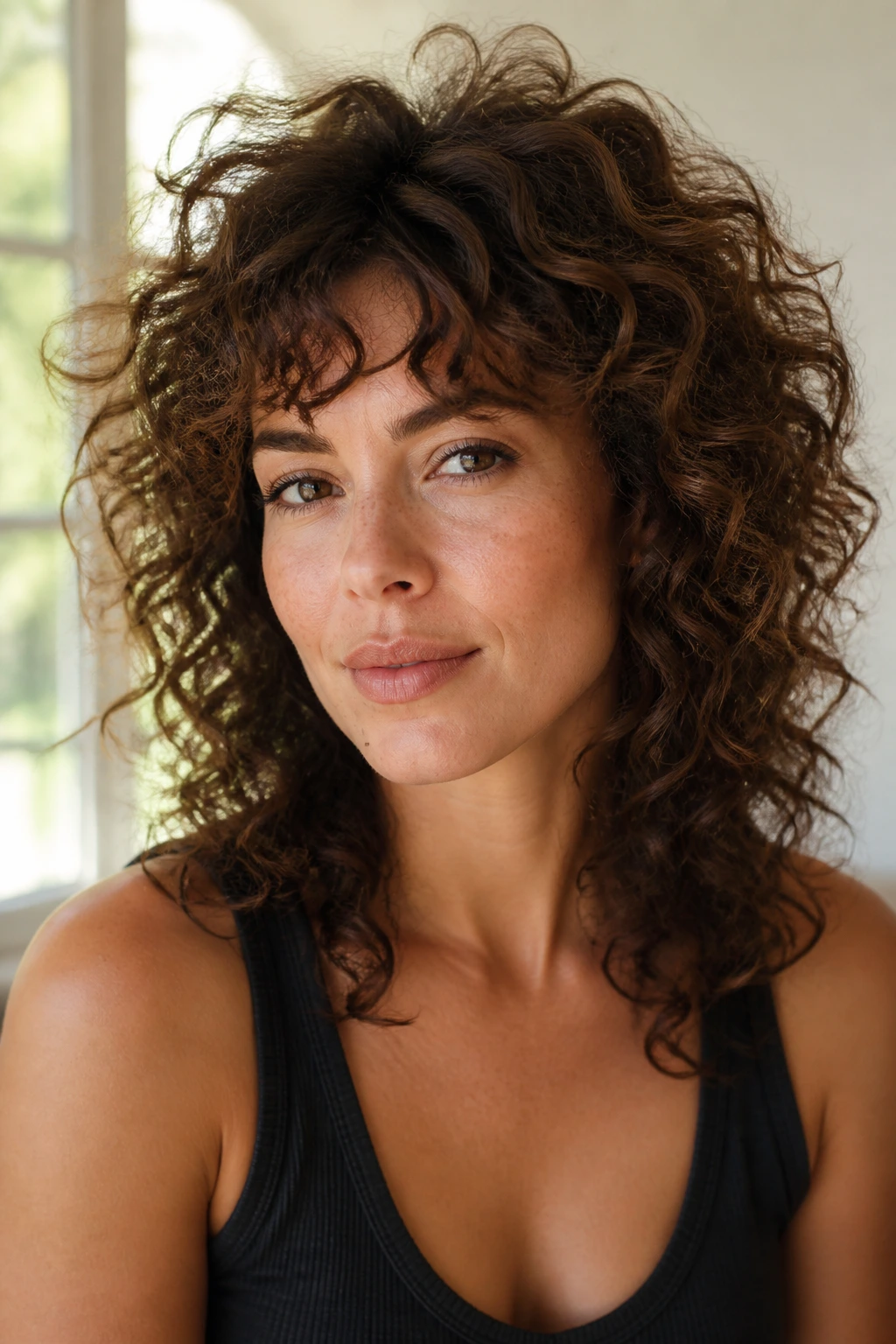
Halo layers are all about lift around the crown and softness around the face. Instead of spreading the layers evenly everywhere, this cut concentrates shape where the eye notices it most. The result is a kind of floating volume that sits above the head instead of collapsing around it.
That sounds fancy. It’s not. It just means the haircut has a smarter architecture.
Why the halo shape works
Curl patterns with flat roots often need this more than they need extra length. A few well-placed shorter pieces on top can wake up the whole silhouette. The face-framing layers then connect that crown lift to the rest of the haircut so nothing feels disconnected.
This shape is especially useful if your curls get weighed down by heavy conditioners or dense ends. The halo layers restore some air.
A curl mousse at the root area can help the top keep its height. So can flipping the part while drying. Small details. Big difference.
This is one of those cuts that looks soft from the front and fuller from the side. That combination is harder to fake than it seems.
17. Cropped Pixie Shag for Curly Hair
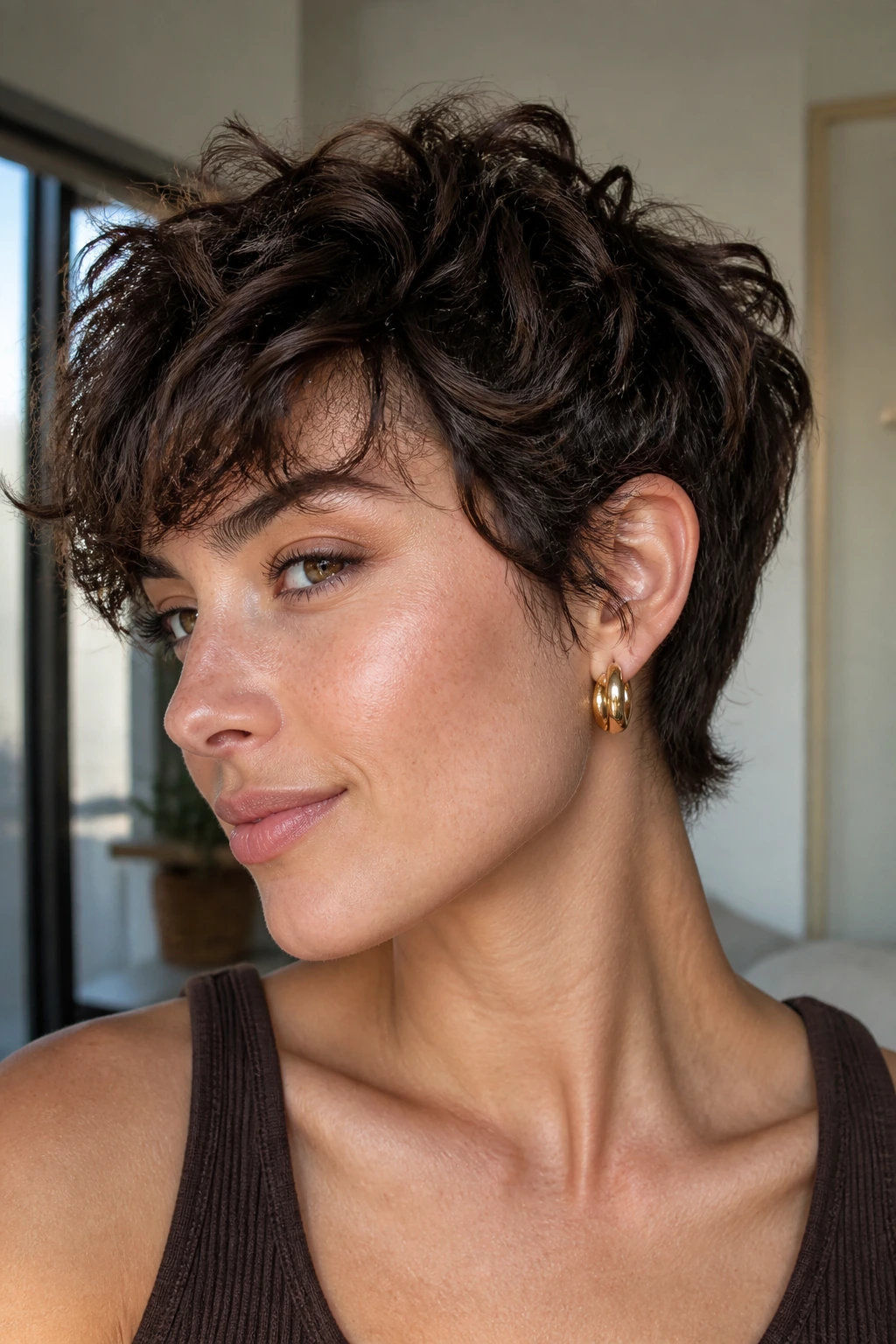
A cropped pixie shag is tiny in length and big in personality. The layers are short enough to expose the curl pattern, but the shag elements keep it from looking like a plain crop. There’s texture at the crown, softness at the edges, and a bit of movement around the ears and nape.
Short curly cuts can go one of two ways: either they look lively or they look like they stopped halfway through a haircut. The pixie shag avoids that by keeping the layers deliberate. The top needs enough lift to stand up, and the neckline needs a clean taper so the shape doesn’t blur into fuzz.
What makes it work day to day
It’s fast. That’s the honest appeal. A little cream, a tiny bit of gel, a quick scrunch, and you’re done. The catch is maintenance. Short shags need regular reshaping because curly hair grows out in all directions.
Still, if you want a cut that feels sharp, modern, and easy to wake up with, this is hard to beat. It shows the curl pattern instead of hiding it, and it doesn’t waste time pretending the hair is straight.
A good curly pixie shag has one job: make the curls look alive without asking for much. When it’s cut well, it does exactly that.
