



A long shag haircut with layers can do a surprising amount of work for hair that feels flat, heavy, or stuck in one shape. It takes the weight off, builds movement in the places that matter, and keeps the length that so many women want to hold on to. The cut looks relaxed, but the good versions are anything but random.
What makes a shag feel modern is the layering map. Some cuts start the shortest pieces around the cheekbones, some keep the face frame softer, and some leave enough length through the back to keep the whole thing from turning into a feather duster. That’s the difference between a flattering shag and a haircut that looks like it lost its plan halfway through.
A lot of the bad advice floating around this cut comes from treating every shag the same. That never works. Fine hair needs a different approach from thick hair. Curly hair needs more respect for shrinkage. Straight hair needs shape that shows up without a curling iron in hand for 20 minutes every morning.
So the real trick is picking the version that fits your texture, your face shape, and your tolerance for styling. Some women want soft movement. Others want a little bite. A few want the cut to look better on day three than it did at the salon. That’s where the good long shag lives.
1. Soft Face-Framing Long Shag
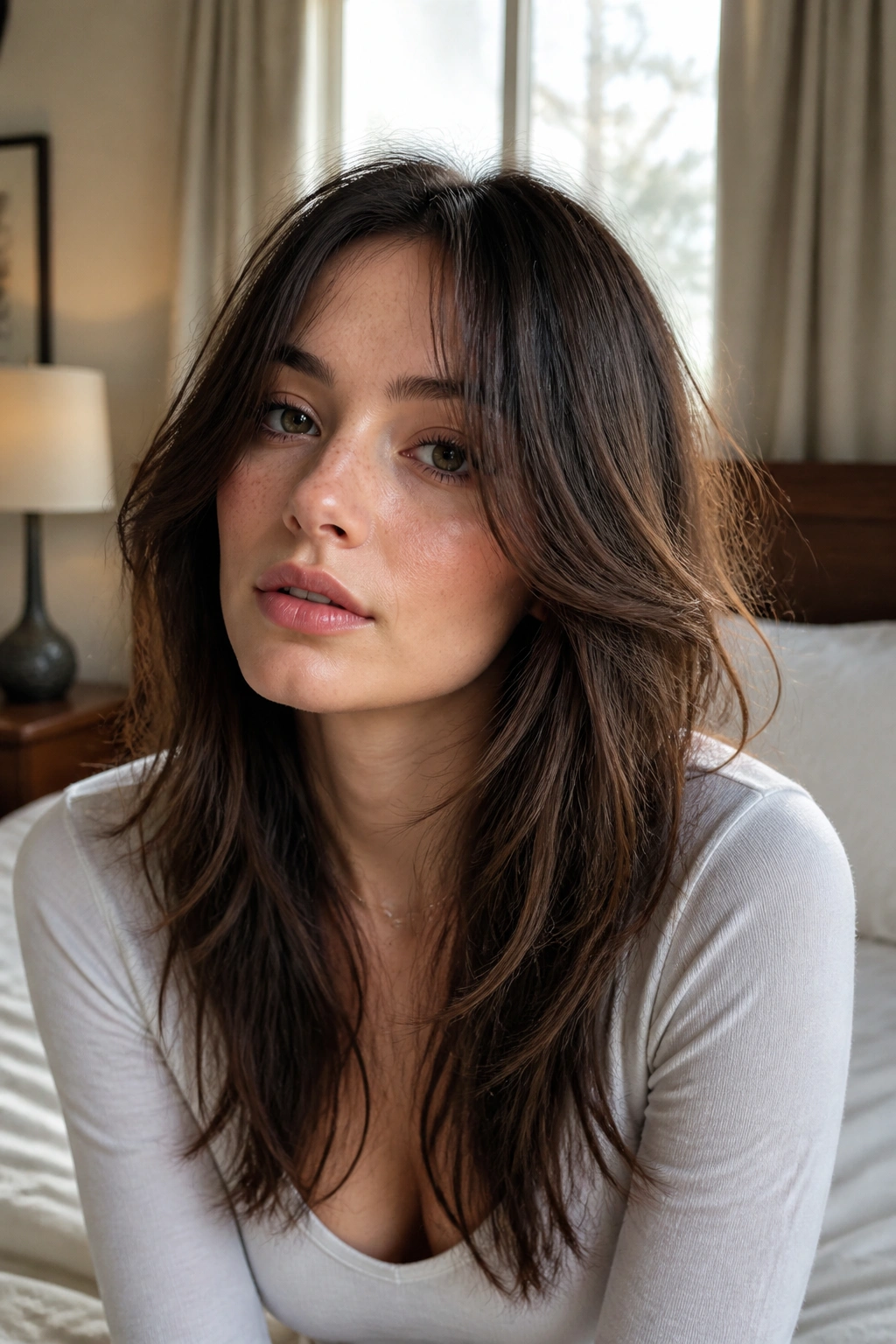
This is the version I reach for when someone wants movement without looking like they’re wearing a costume. The layers begin around the cheekbones and melt down into a longer perimeter, so the haircut still feels feminine and easy rather than sharp and overworked.
Why It Works
Soft face-framing layers pull attention upward without chopping the length into pieces. That matters if you like long hair but hate the heavy, flat shape that can happen once it grows past the shoulders.
- Ask for the shortest face pieces to hit around the cheekbone or just below it.
- Keep the back longer so the silhouette stays sleek.
- Style with a medium round brush or a large curling iron, then brush the ends out for a softer bend.
Pro tip: This cut looks best when the layers are cut to move, not to stick out.
2. Curtain Bang Long Shag
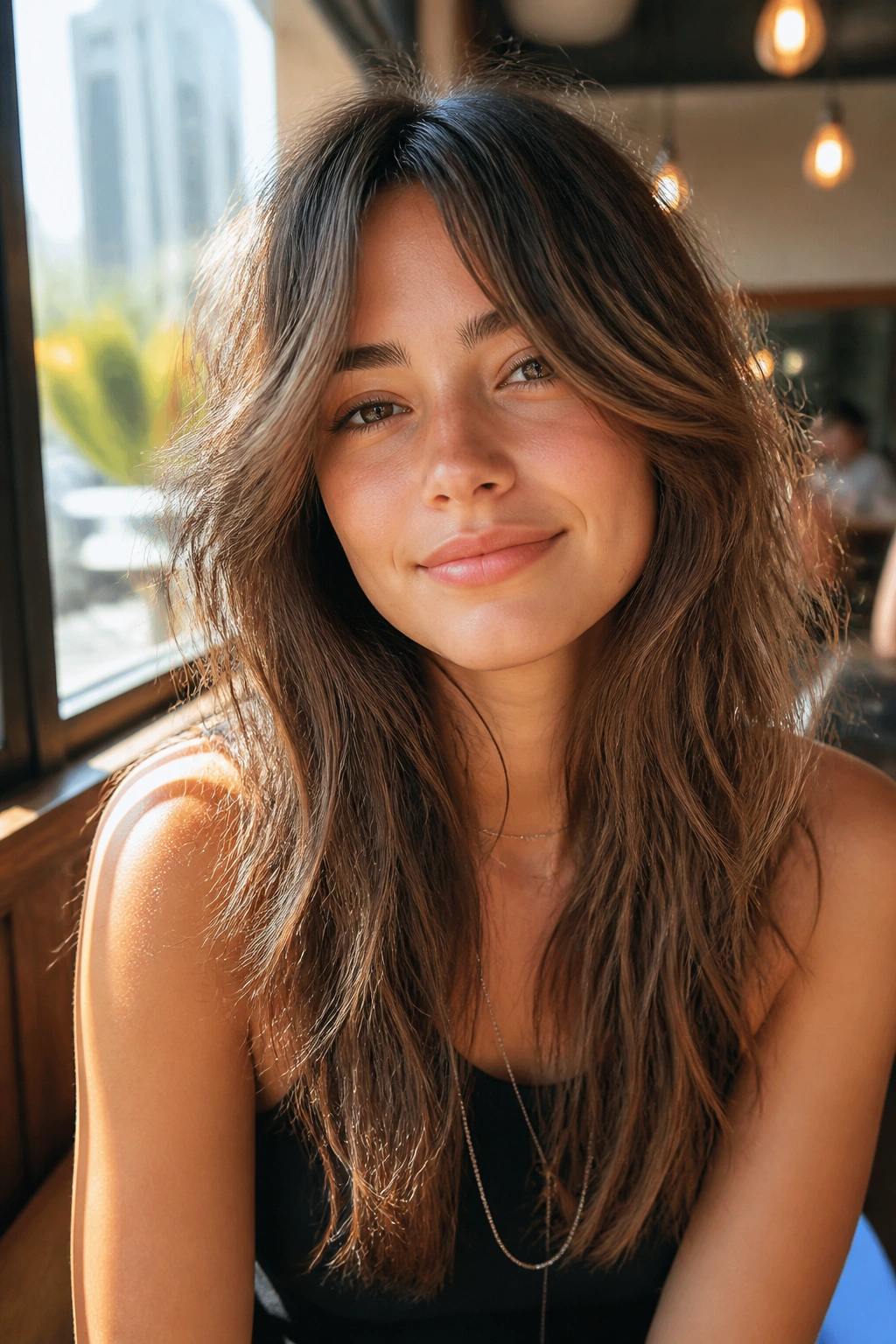
Curtain bangs change the whole mood of a long shag haircut with layers. They give the front of the style a little lift, soften the forehead, and make the haircut feel finished even on a lazy day. If you like a middle part but don’t want it to feel plain, this is the cleanest way to fix that.
The best part is how forgiving curtain bangs are. They can be worn airy and split, tucked behind the ears, or bent under with a round brush if you want a more polished look. They also grow out more gracefully than blunt fringe, which is why so many people come back to them.
I like this cut for people who wear their hair loose most of the time and want something that frames the face without needing a hard edge. It’s a good match for medium to thick hair, but fine hair can wear it too if the bangs are kept light. The mistake is making the fringe too dense. Too much bang up front can swallow the rest of the layers.
3. Heavy Fringe Long Shag

Can a long shag handle blunt bangs? Yes, but only if the rest of the cut stays loose. A heavy fringe gives the style a stronger focal point, which can be lovely if you want a little drama without going full rocker.
How to Wear It
The fringe should sit thick enough to make a statement, but not so thick that it feels helmet-like. I’d ask for the bangs to skim the brows and then break softly into the side layers.
- Keep the ends of the bangs slightly textured.
- Leave the body of the haircut with longer, softer layers.
- Blow-dry the fringe first so it doesn’t dry in a weird bend.
- Use a tiny bit of lightweight cream, not a heavy paste.
The contrast is the whole point. Strong fringe up front. Loose movement everywhere else. That tension gives the cut personality.
4. Razor-Cut Airy Shag
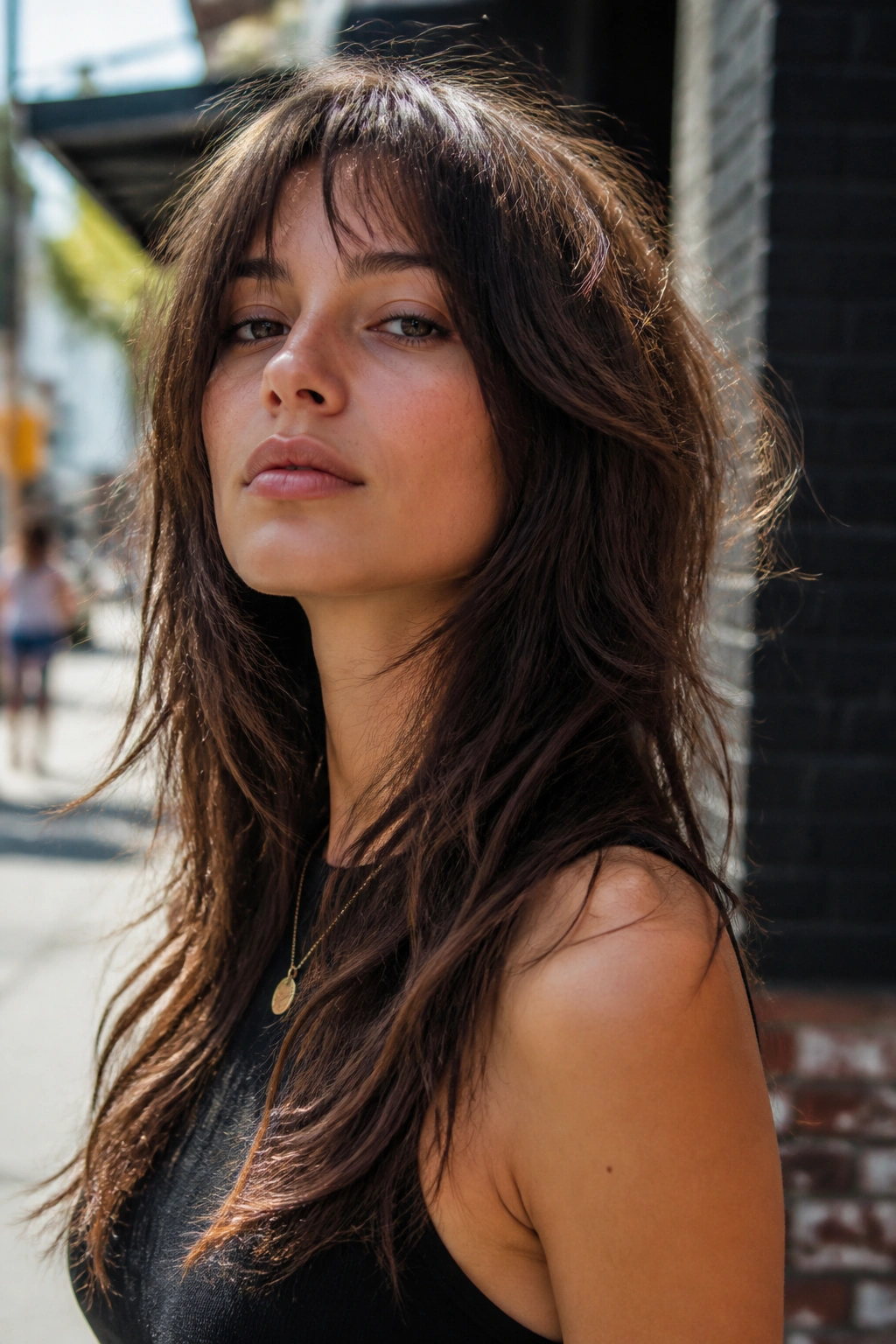
If your hair hangs in one heavy curtain, a razor-cut shag can feel like someone lifted a pile of weight off your head. The razor creates softer, frayed edges that move fast when you walk, which is exactly why this version has such a loose, airy feel.
A razor cut is not the right choice for every head of hair. Very fragile ends can look wispy in a bad way if the razor is used too aggressively, and very curly hair can puff if the stylist gets too eager. Still, on medium-density straight or wavy hair, it can be a gift.
The key detail is where the weight comes out. You want the interior layers thinned just enough to create motion, not shredded into nothing. A good razor shag still has shape at the bottom. It does not just dissolve.
5. Beachy Long Shag for Wavy Hair
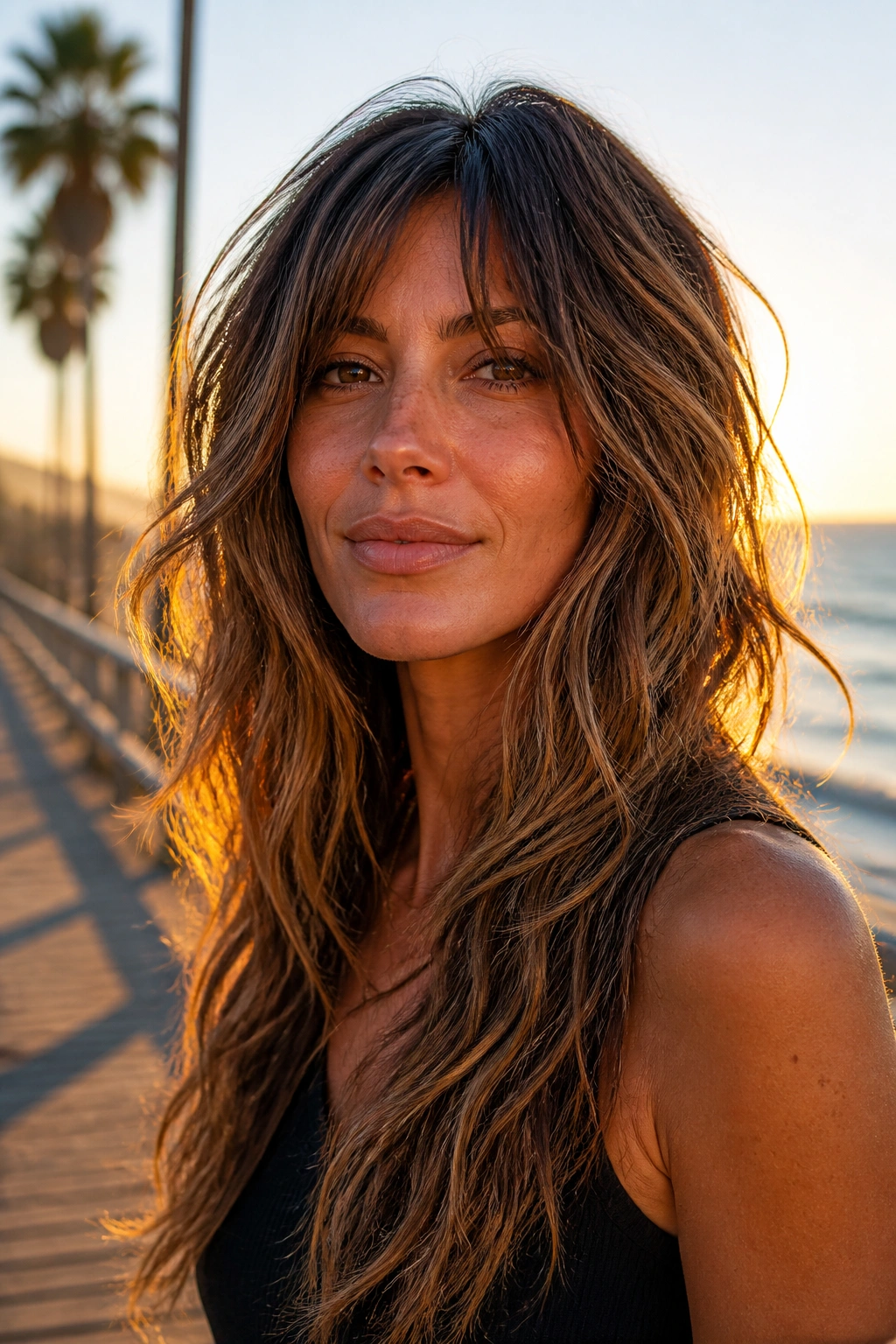
Waves love a shag that leaves enough weight at the bottom to keep the shape from going floaty. That’s why this version looks so easy on paper and so expensive in real life when it’s cut well. The layers should encourage your natural bend, not fight it.
The best beachy shag starts with a long perimeter and then uses soft, broken layers through the mid-lengths. You don’t need a lot of precision in the styling if the cut is built right. A little mousse at the roots, a touch of sea-salt spray through the ends, and a quick scrunch with your hands is often enough.
Air-drying works here, which is a win if you dislike spending an hour with a blow dryer. Let the hair dry halfway before touching it. That part matters. If you keep reworking it while it’s dripping wet, the wave pattern turns stringy. A diffuser helps, but I actually think this cut looks best when it keeps a little imperfect bend.
6. Curly Long Shag With Rounded Layers
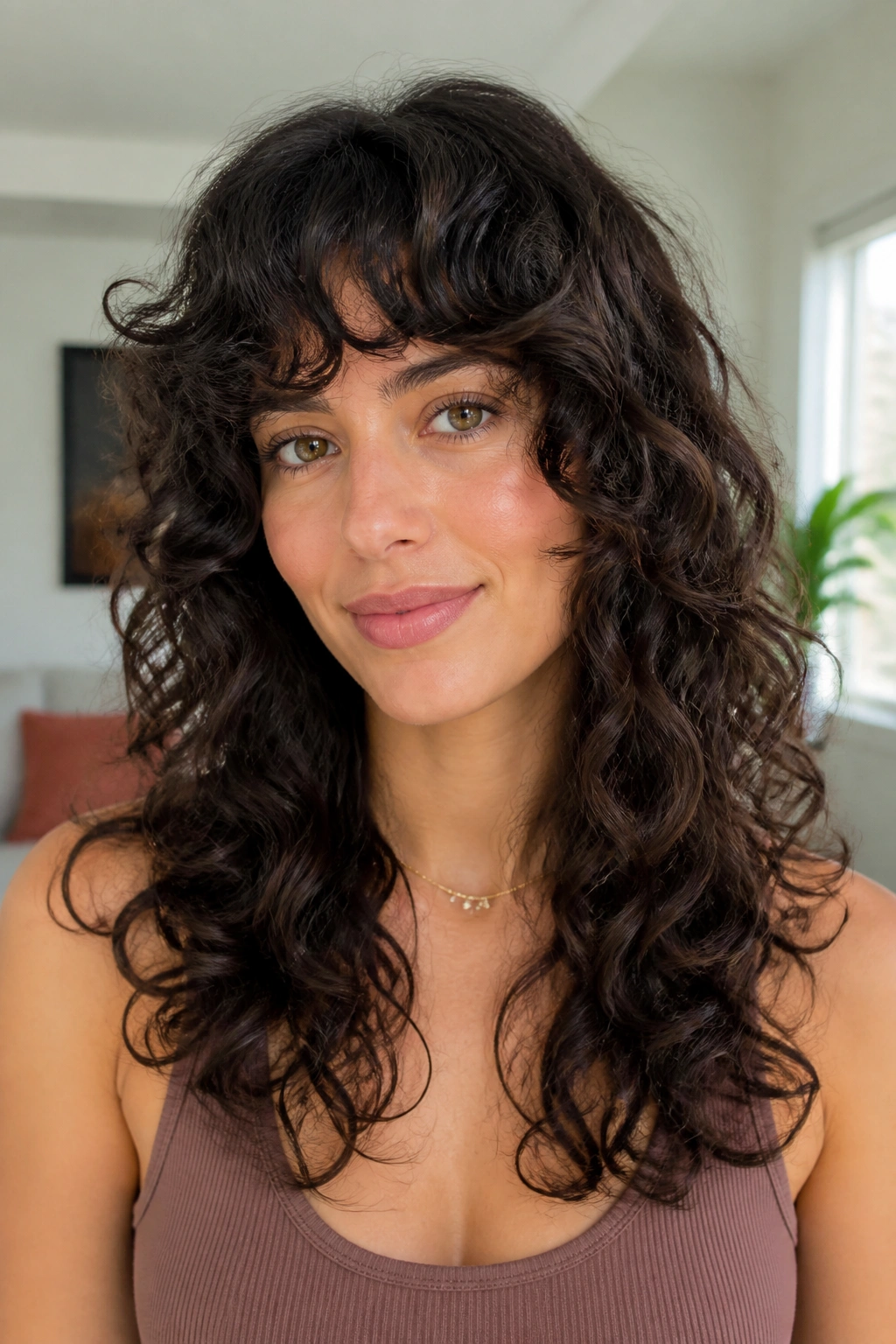
Unlike a straight shag, a curly shag has to respect shrinkage. That means the layers can’t be placed with a one-size-fits-all map, because curls stack differently once they dry. A cut that looks tame when wet can spring up a full inch or two when the curls settle.
The rounded shape is what makes this version work. Instead of carving in blunt shelves, the stylist should follow the curl pattern and remove bulk where the hair puffs the most. That usually keeps the silhouette from turning triangular. And triangular is not a cute look on anyone unless it was intentional.
What to Ask For
Ask for a dry cut or a curl-by-curl shape if your texture is tight or springy. If your curls are looser, a wet cut can still work, but the stylist should leave extra length to account for bounce.
Use a diffuser on low heat, and stop diffusing when the curls are about 80 percent dry. Let the rest finish on its own. That keeps the curl clumps from breaking apart.
7. Long Shag for Fine Hair
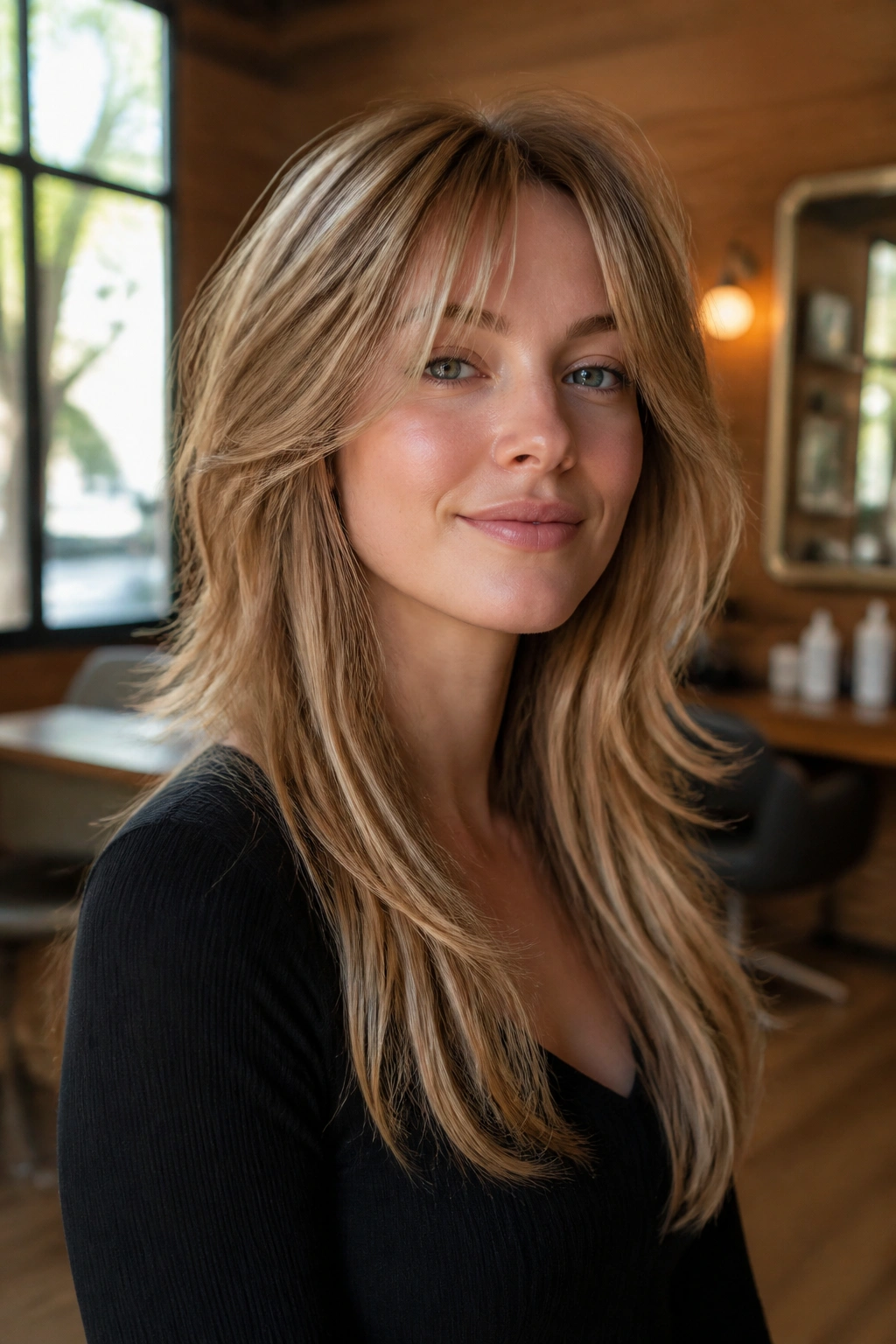
Fine hair needs fewer short layers than people think. That sounds backwards, but it’s true. If the crown gets over-layered, the haircut can go limp in a way that’s hard to fix with product.
The smarter move is to keep the longest pieces intact and use internal layers that create movement without exposing too much scalp. A shag for fine hair should feel light, but not sparse. That’s a thin line, and a lot of salons miss it.
Why It Helps
A longer layered shape gives fine hair a sense of fullness at the ends, where density matters most. The shortest pieces should live around the cheekbone or collarbone, not chopped up near the crown.
- Ask for soft, blended layers instead of choppy disconnection.
- Use a root lift spray before blow-drying.
- Flip the part from one side to the other every few days to keep the roots from settling flat.
- Keep the ends blunt enough to look denser.
Small note: Too much thinning shears work can make fine hair look wispy fast.
8. Long Shag for Thick, Heavy Hair
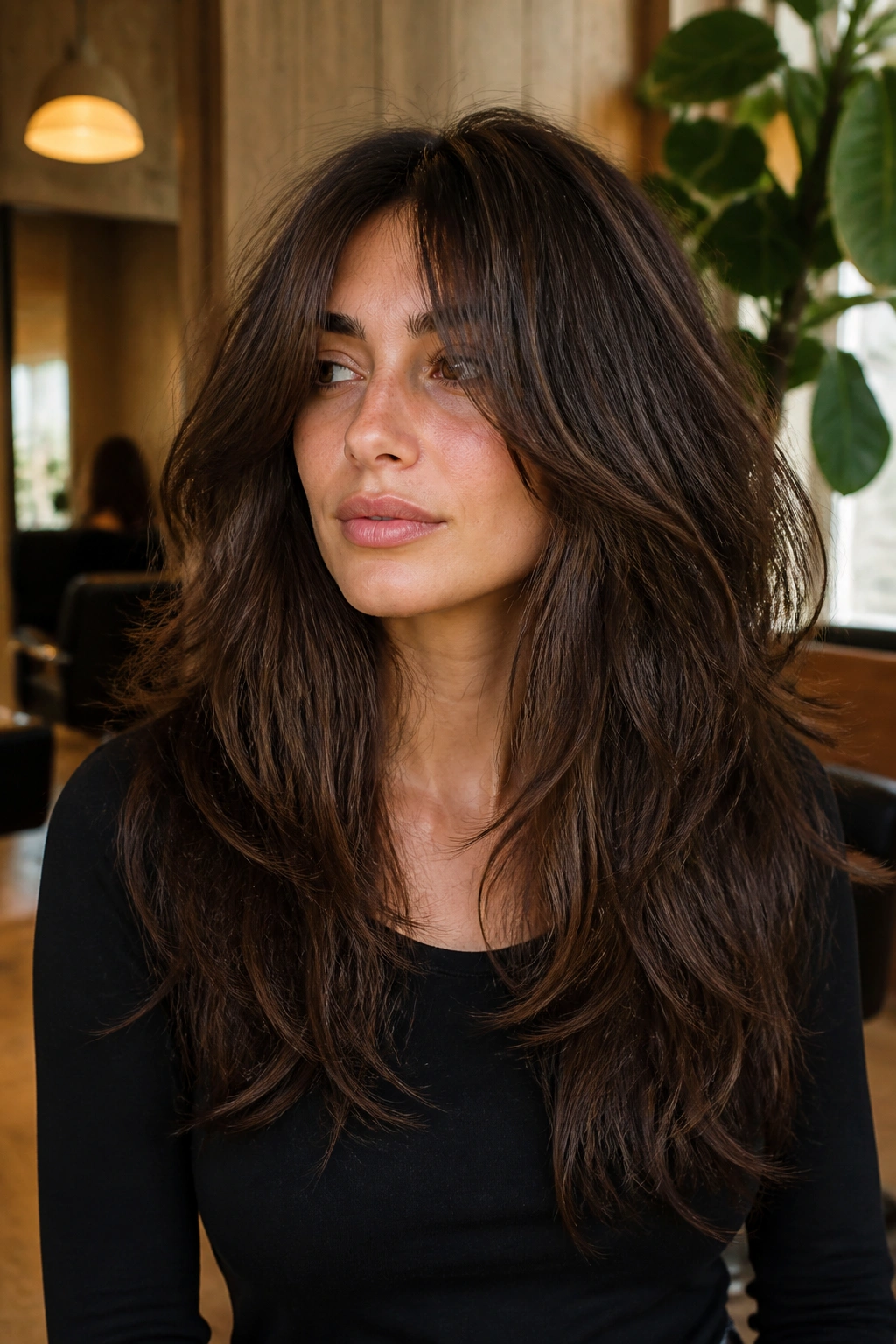
Thick hair can wear a shag beautifully, but only if the weight removal is done with a plan. Random short layers on heavy hair often create a puffed-up top and a dense bottom, which is a weird shape that takes too much styling to tame.
The better approach is strategic debulking through the interior. The top should keep enough length to sit down smoothly, while the middle layers release bulk around the shoulders and back. I like point cutting here because it softens the ends without leaving obvious slices.
This is one of those cuts that looks even better when the hair is a little dirty. Freshly washed thick hair can feel too fluffy and not sit right. On day two, the layers settle and the shape shows up more clearly. If you’re styling it, use a blow-dry cream or a smoothing lotion on the mids and ends before adding bends with a large iron.
9. Bottleneck Bangs and Long Layers
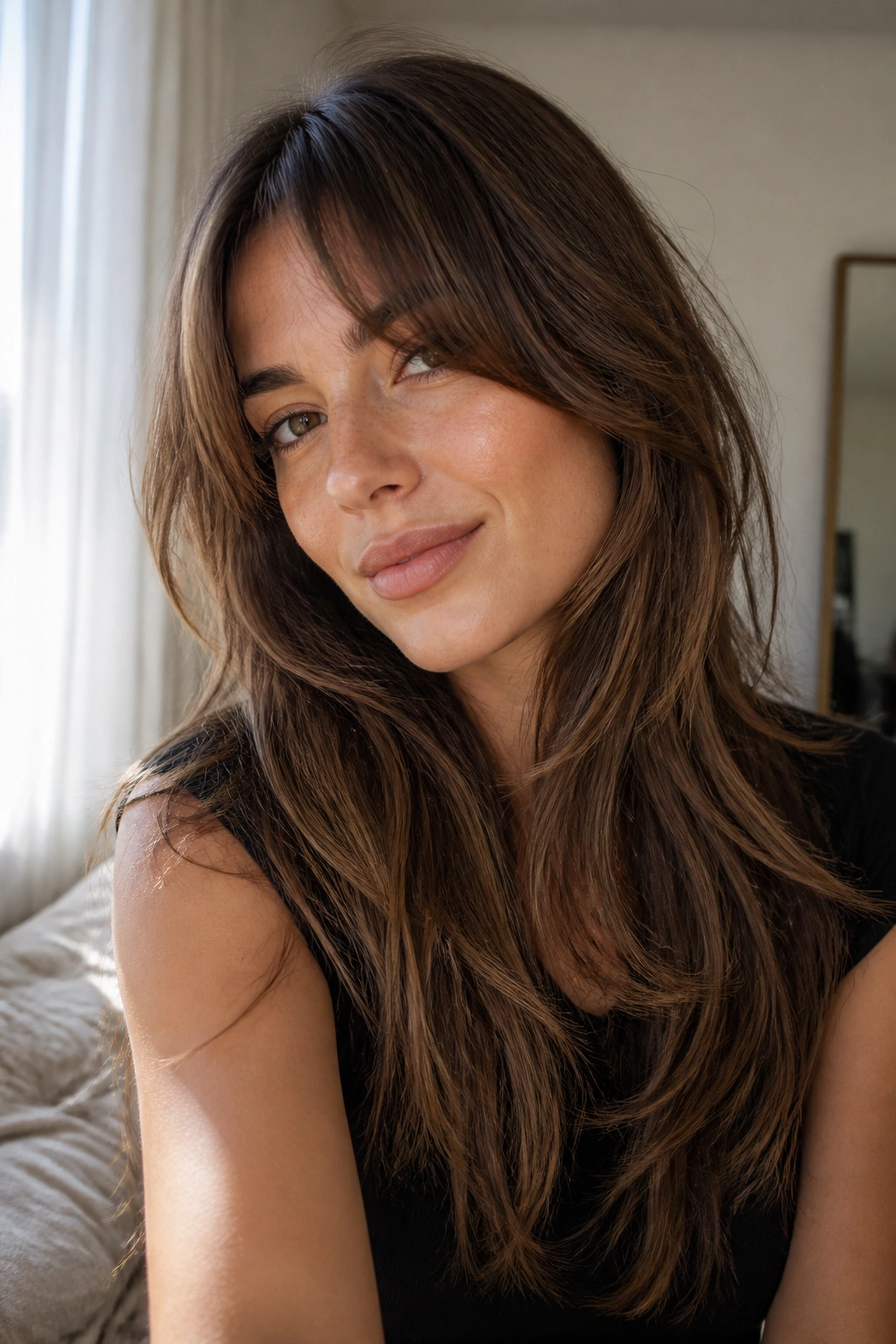
Do bottleneck bangs belong with a shag? Absolutely, and they make more sense than straight fringe on a lot of faces. The center is shorter and the sides open out gradually, so the front reads soft without disappearing into the rest of the haircut.
That shape plays well with long shag layers because both pieces of the cut are doing the same job: keeping the movement around the face and avoiding a hard block of hair. The result feels a little French, a little 70s, and a lot easier to grow out than a blunt bang.
How to Style the Front
Blow-dry the center section down first, then bend the side pieces away from the face with a round brush. A light pass with a flat iron can tidy the shape if your hair is stubborn. Don’t make the fringe too short unless you enjoy trimming it every two weeks. Most people don’t.
The rest of the cut should stay long and broken up, not too square at the bottom.
10. Money Piece Long Shag
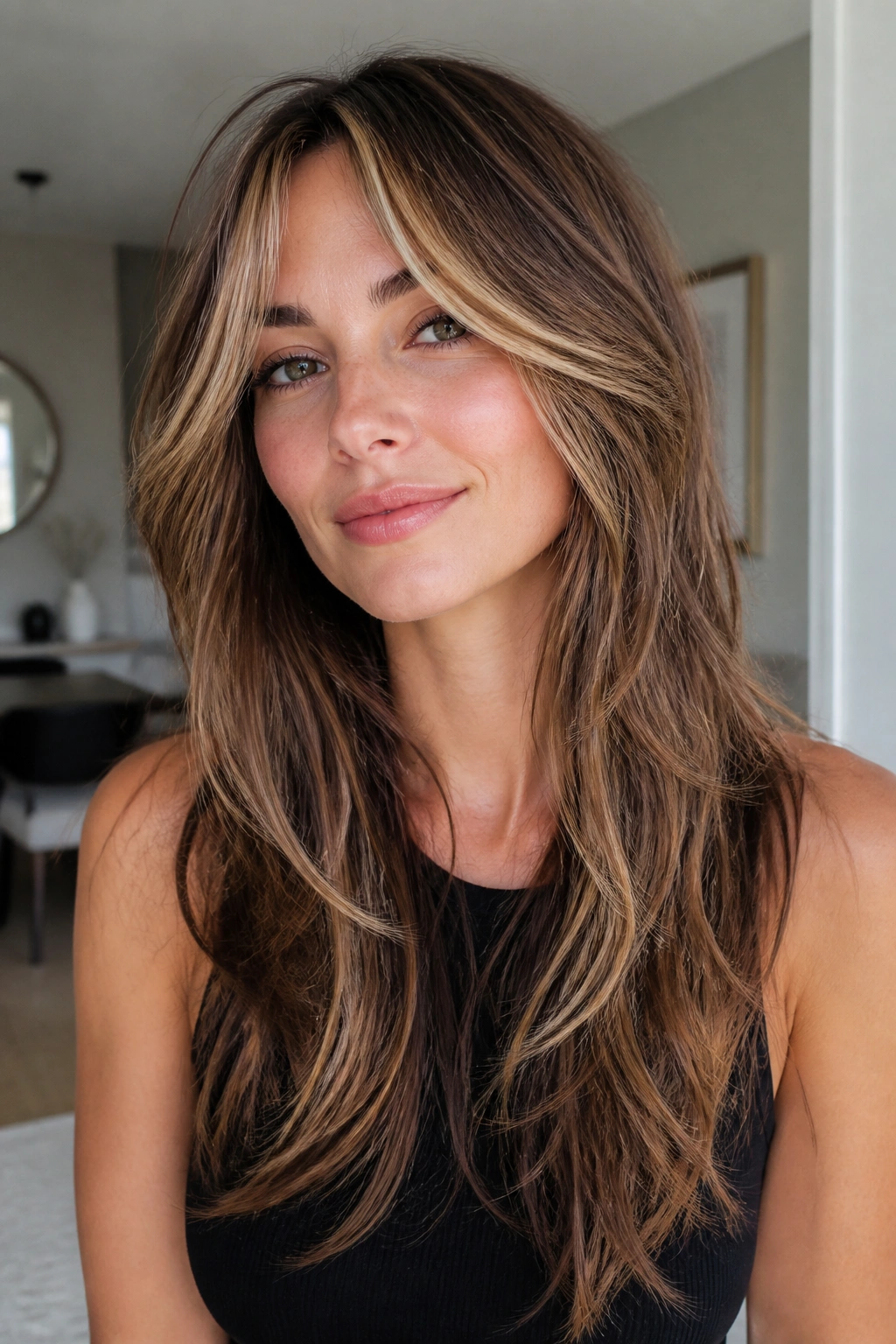
A money piece can make a long shag look sharper without touching the haircut itself. That face-framing brightness pulls the eye to the front layers, which is useful when you want the shag texture to show up even in flat light.
This is one of my favorite ways to make layers read as intentional. A lighter ribbon around the face can outline curtain bangs, cheekbone layers, or a soft fringe and make the whole cut feel more dimensional. It does not have to be platinum either. Two or three levels lighter than the base color is often enough.
The catch is maintenance. Bright face pieces grow out fast and need toning if the color shifts warm. If you hate upkeep, go for a softer caramel or beige highlight instead of a stark blonde stripe. That choice looks calmer and grows out with less fuss.
11. Wolf-Cut-leaning Long Shag
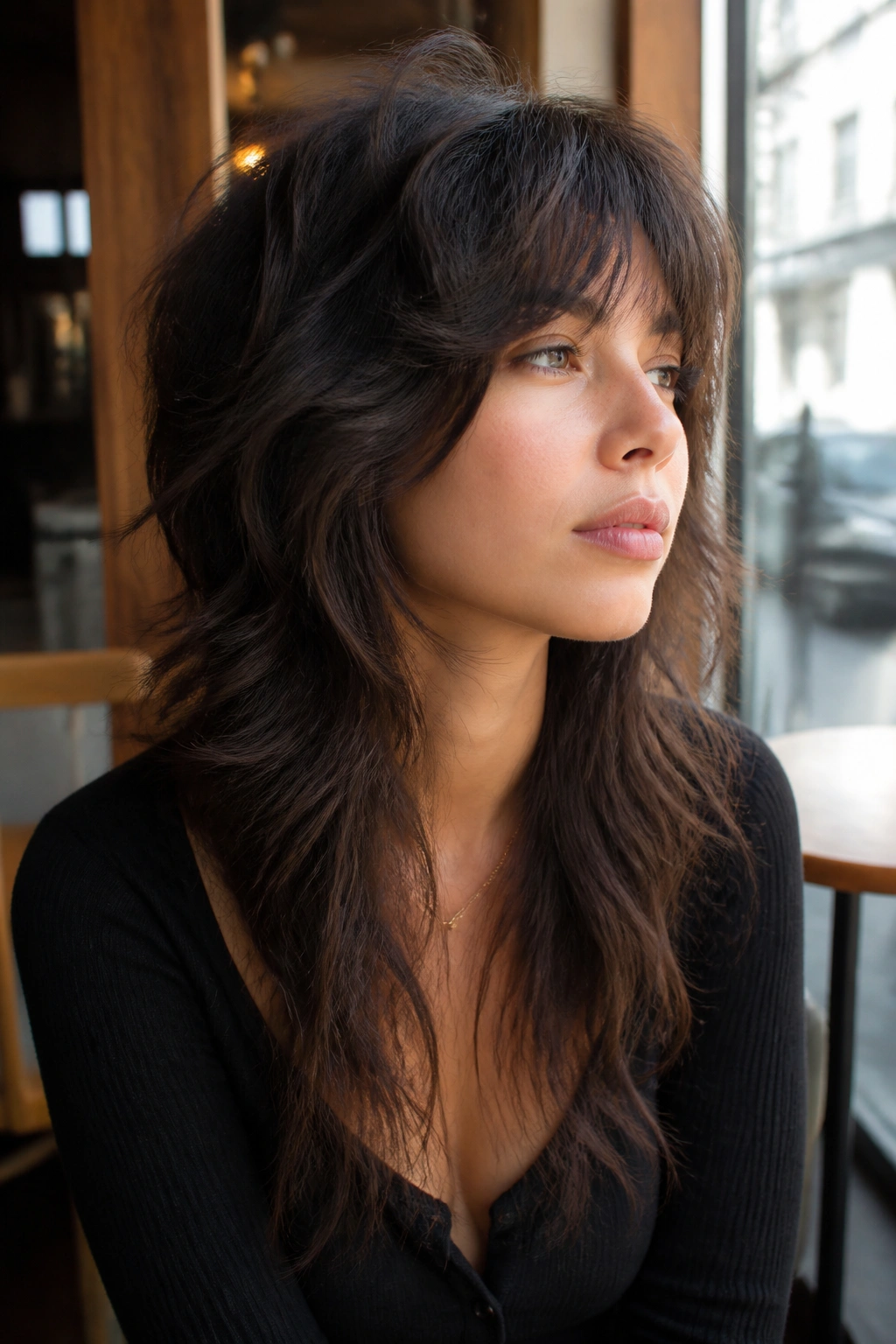
A wolf-cut-leaning shag is the rowdier cousin in this family. The crown gets more lift, the top layers sit shorter, and the whole silhouette leans toward messy volume rather than smooth swing. If you like hair with edge, this is the one that earns it.
The main difference from a classic shag is how disconnected the shape feels. The top can be noticeably shorter than the perimeter, which creates that mullet-adjacent profile people either love or avoid completely. I’m in the “depends on your personality” camp here, and that’s not me dodging the question. It really is a personality cut.
Wear it with waves, not pin-straight hair, if you want the shape to look relaxed instead of accidental. A little texture spray through the crown helps. So does bending the ends outward with a medium iron. If you leave it flat, the whole thing loses the point.
12. Feathered 70s Long Shag

Feathered does not mean dated. When the layers are cut well, a feathered shag has a soft swing that feels polished in motion and easy when it’s just hanging there. The trick is keeping the layering directional, so the hair opens away from the face instead of collapsing into the neck.
This version works especially well if you like a blowout. A large round brush, some root-lifting spray, and a little bend through the mids are enough to make the layers come alive. You do not need tight curls or a stiff round shape. That would fight the haircut.
I like this cut on hair that has a little natural body, because the feathering adds movement without stealing density. If your hair is very straight and slippery, a light mousse can help it hold the soft flip at the ends.
13. U-Shaped Long Shag

A U-shaped long shag keeps the perimeter curved, which is a nice way to protect length while still adding layers. From the front, the hair falls longer in the middle and slightly shorter at the sides, giving the style a gentle curve instead of a blunt line.
That shape matters if you want the haircut to look full when worn loose. The U keeps the ends from looking chopped off, and the layers inside create motion without breaking the whole outline. It’s a smart choice if you like the idea of a shag but still want your hair to read as long.
What to Ask Your Stylist
- Keep the perimeter soft and curved, not flat.
- Build the shortest layers around the collarbone or cheekbone.
- Avoid over-texturizing the last 2 inches of the ends.
- Style with a blowout cream if you want the curve to show.
Best for: women who want length first and texture second.
14. Choppy Long Shag With Piecey Ends
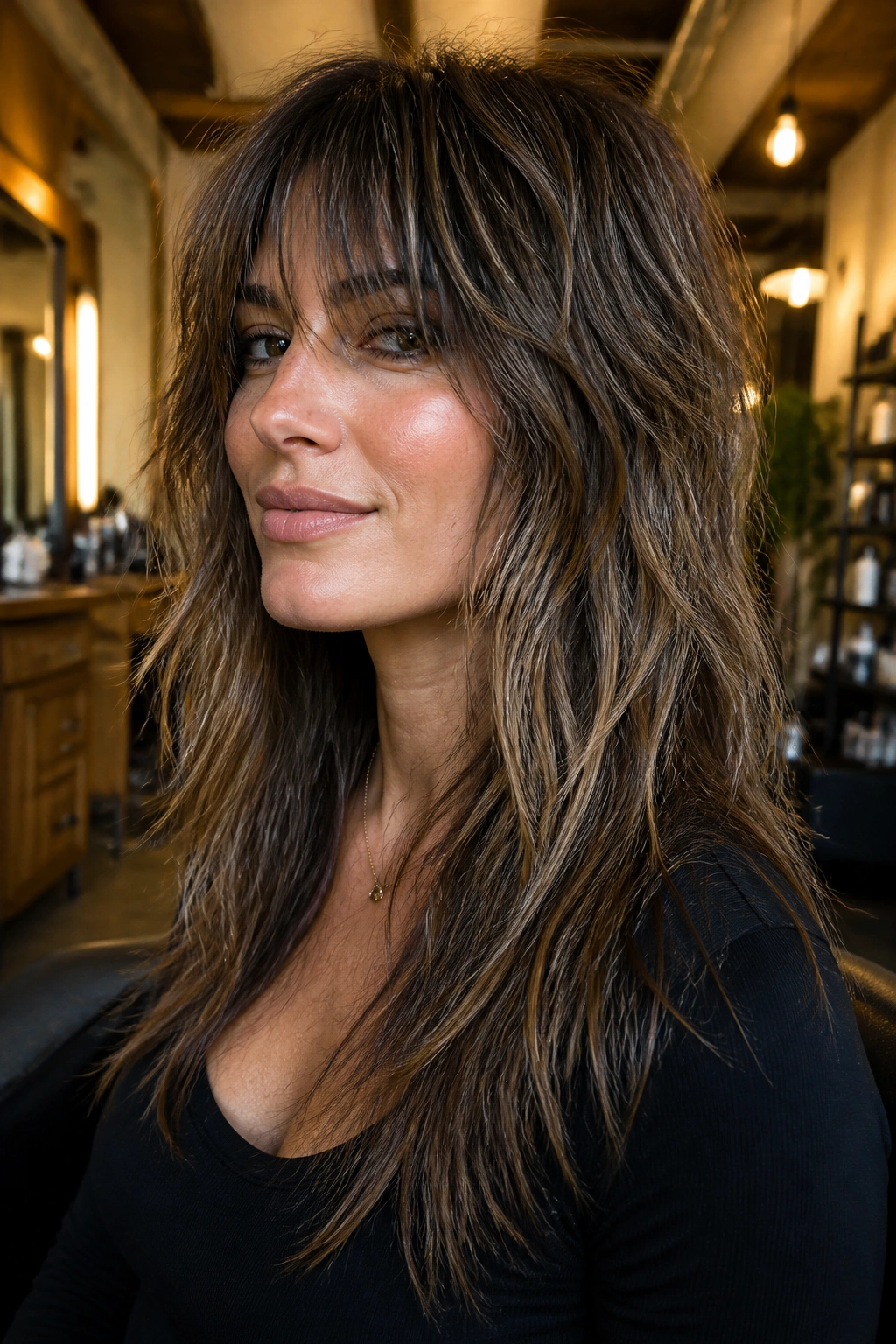
This is the shag for women who want the haircut to look a little broken-up on purpose. The ends are choppy, the layers show, and the styling usually leaves some separation between the pieces instead of smoothing everything together. It has a cooler, less precious feel.
The mistake here is going too far with the texture. If the ends are cut into nothing, the hair can look ragged instead of cool. You want visible movement, not damage. A good choppy shag still keeps enough shape through the outline that the style feels deliberate.
A tiny bit of styling wax or paste at the ends can help define the pieces. Work it through dry hair, not damp hair, and use less than you think. Too much product weighs the layers down and erases the point. This cut looks best when you can still see the lines of the layers.
15. Sleek Straight-Hair Long Shag
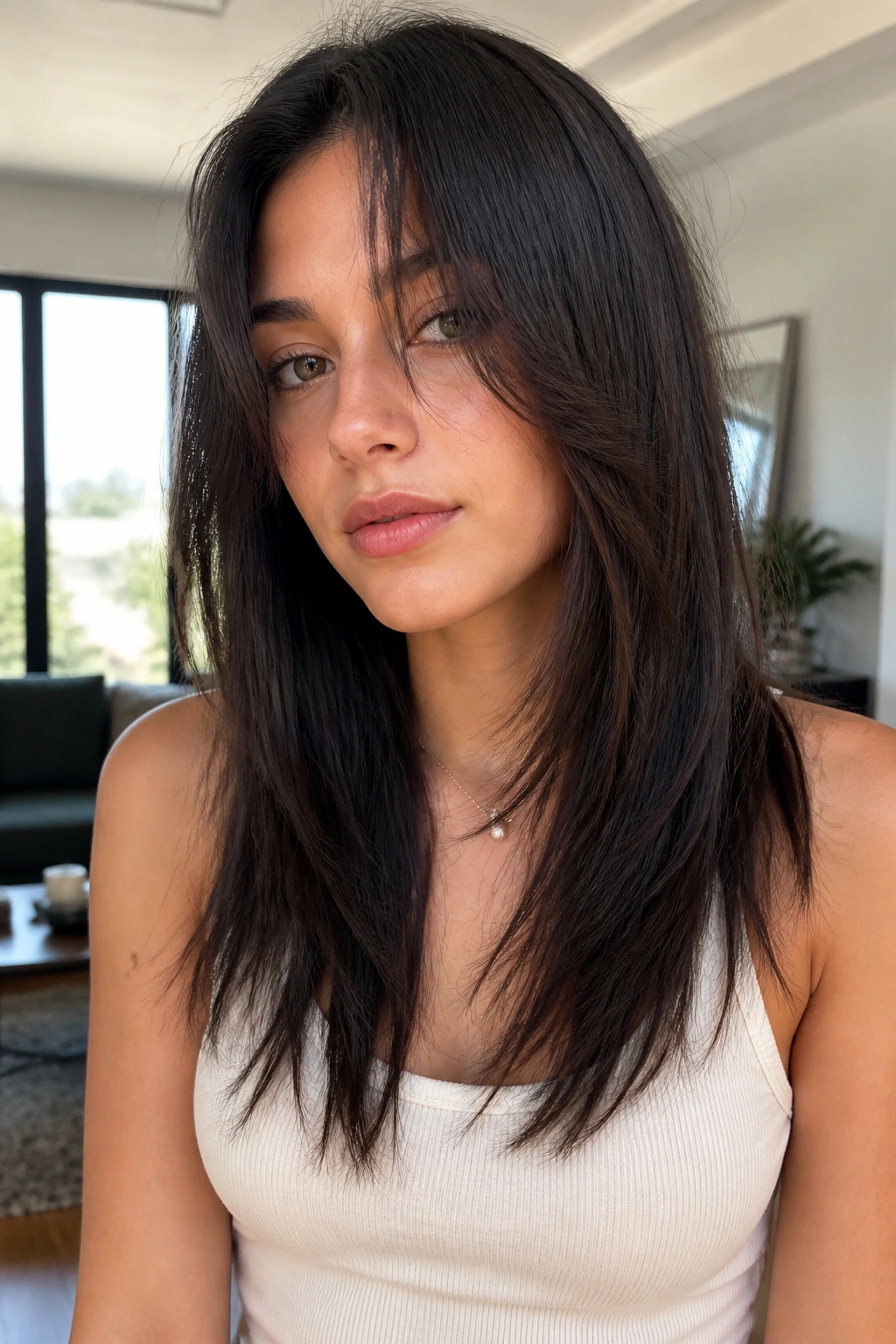
Does a shag work on straight hair? Absolutely, but it needs more precision than chaos. Straight hair shows every line, so the layers have to be placed carefully or they’ll look like shelves instead of movement.
The smart version of this cut keeps the layers long and subtle, with face framing that starts below the cheekbones. That way the hair still swings when you walk, but it doesn’t kick out at odd angles. It’s especially good for women who want a low-drama cut that still has shape.
How to Style It
Use a heat protectant, then blow-dry with tension for a smooth finish. If the ends look too blunt, bend just the last inch of hair under with a flat iron. That tiny move is often enough.
Skip heavy oils near the roots. Straight hair shows grease faster than almost any other texture, and the shag layers will not hide it for you.
16. Side-Swept Bang Long Shag
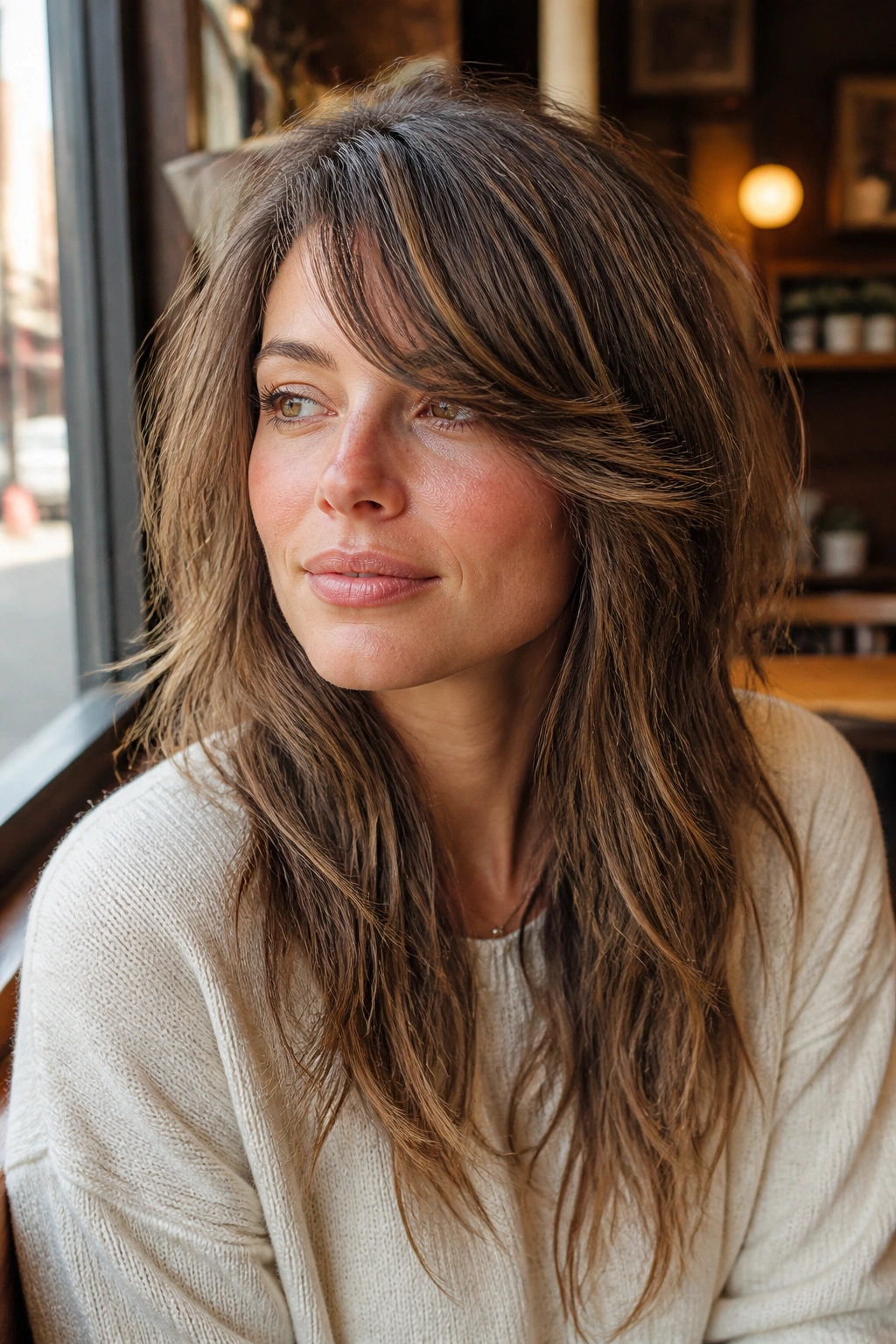
A side-swept bang changes the balance of a long shag in a very old-school, very flattering way. Instead of splitting the front down the middle, the fringe sweeps across the forehead and blends into the face frame, which can soften strong features and add a little mystery without being dramatic.
This cut is useful if your hair refuses to sit nicely in the middle. A deep side part can give the roots a lift, especially on the heavier side of the head, and that makes the whole haircut feel more alive. It also gives you an easy backup styling choice on days when curtain bangs would look too symmetrical.
The side-swept version works best when the bang is light enough to move. If it’s too heavy, it will flop over one eye and feel annoying by lunch. No one needs that. Keep the fringe soft and let the layers around it do the rest.
17. Low-Maintenance Soft Shag
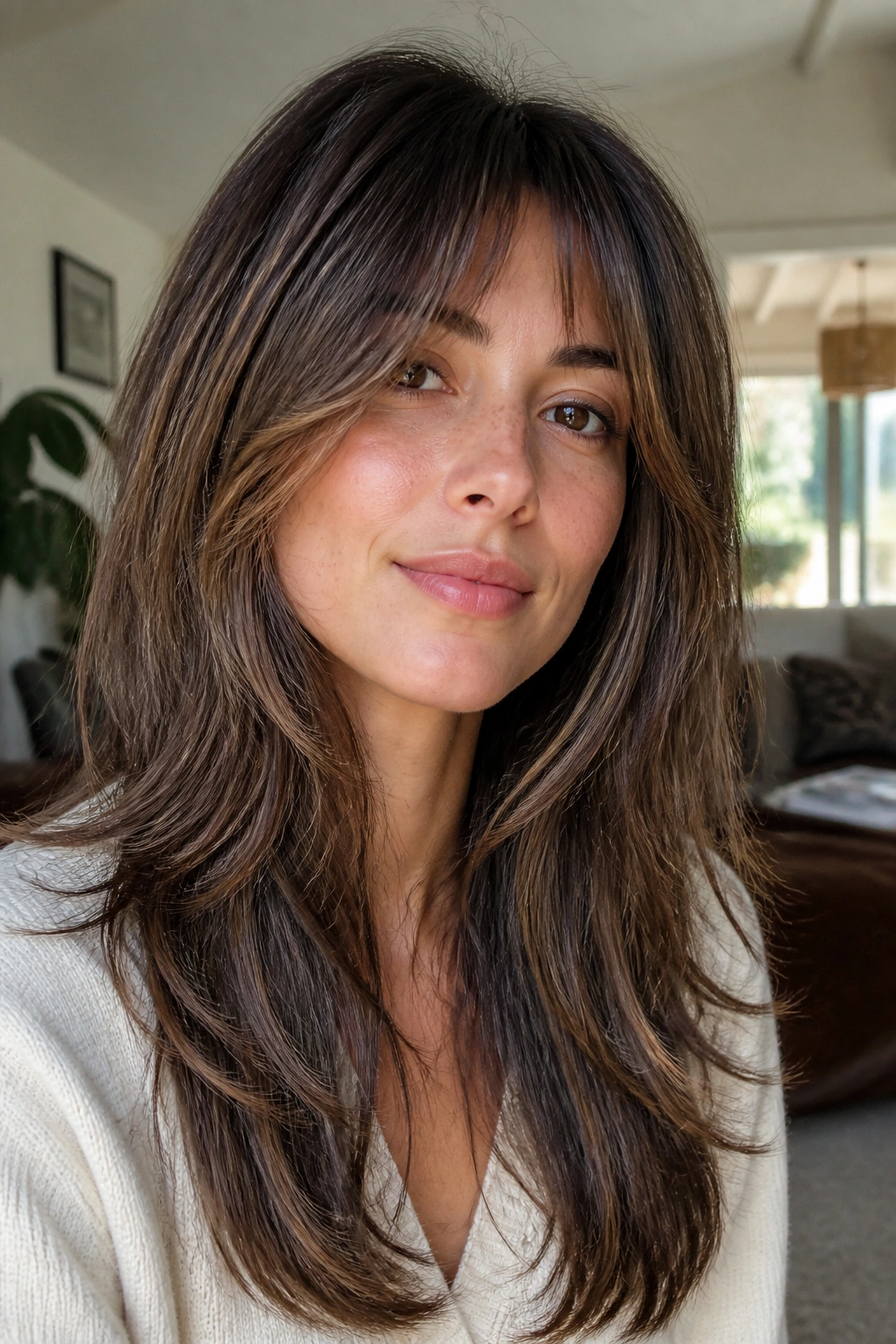
Some long shag haircuts ask for too much. They look good only when the blowout is fresh and the styling cream is perfect and the weather is forgiving. This is not that cut.
A low-maintenance soft shag keeps the shortest layers long enough to grow out without weird gaps, which means you can stretch salon visits and still look intentional. The shape should stay smooth through the ends, with just enough movement at the face to stop it from feeling heavy.
This version is especially good if you air-dry your hair or only use a blow dryer twice a week. Ask for blended layers instead of choppy ones, and keep the overall line long. If you want a little lift, use a root spray at the crown and tuck the hair behind one ear while it dries. That simple move gives the cut bend without much effort.
18. Mullet-Leaning Rocker Shag
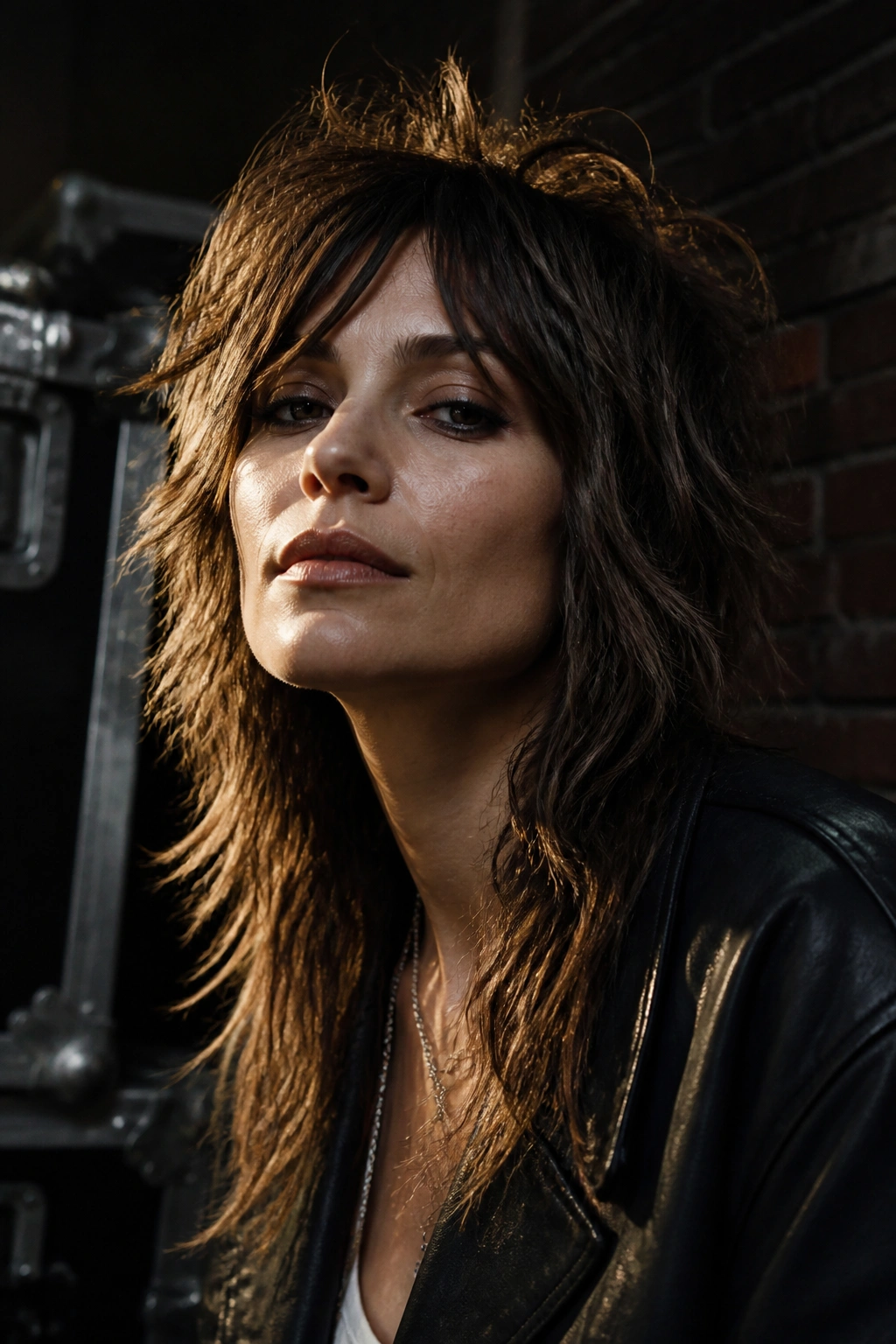
The mullet-leaning shag is not shy. It keeps more length in back, builds height at the crown, and creates a stronger contrast between the top and the bottom. If that sounds like too much, it probably is. If it sounds fun, keep going.
This cut lives in the space between rebellious and wearable. It looks best on hair with some natural wave or a bit of rough texture, because super-smooth hair can make the disconnect too obvious. A little grit is part of the charm.
Wear it with a center part for a softer read, or push the front pieces back for more attitude. The styling can be messy, but the cut still needs a clean outline through the bottom. Otherwise it just becomes an unfinished haircut, and that is a different thing entirely.
19. Round-Face Slimming Long Shag
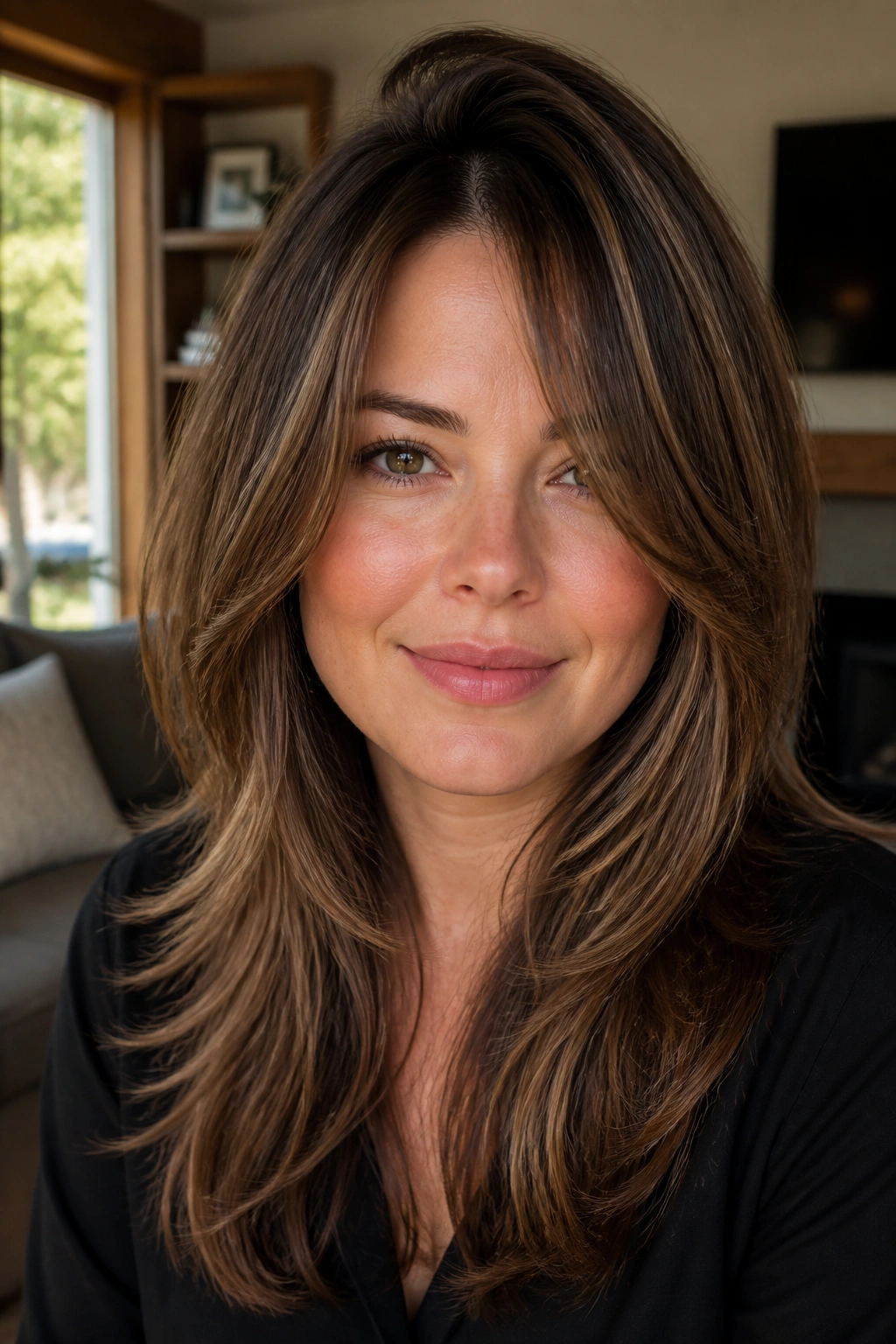
A long shag can flatter a round face, but only if the layers create length instead of stopping at the widest point. That means the shortest pieces should sit above or below the cheeks, not right at the fullest part of the face.
The vertical movement matters here. You want the eye to travel down, not across. Soft curtain pieces, longer side layers, and a slightly off-center part can all help stretch the shape. A blunt bang that ends at the cheek is usually not the move.
The Shape to Ask For
- Keep the front pieces longer than chin level.
- Leave the crown with light lift, not a puff.
- Avoid a heavy, rounded bottom edge.
- Use a deep side part if the middle feels too symmetrical.
My take: this version works best when the layers are soft enough to blend, but still clear enough to show direction.
20. Square-Face Softening Long Shag
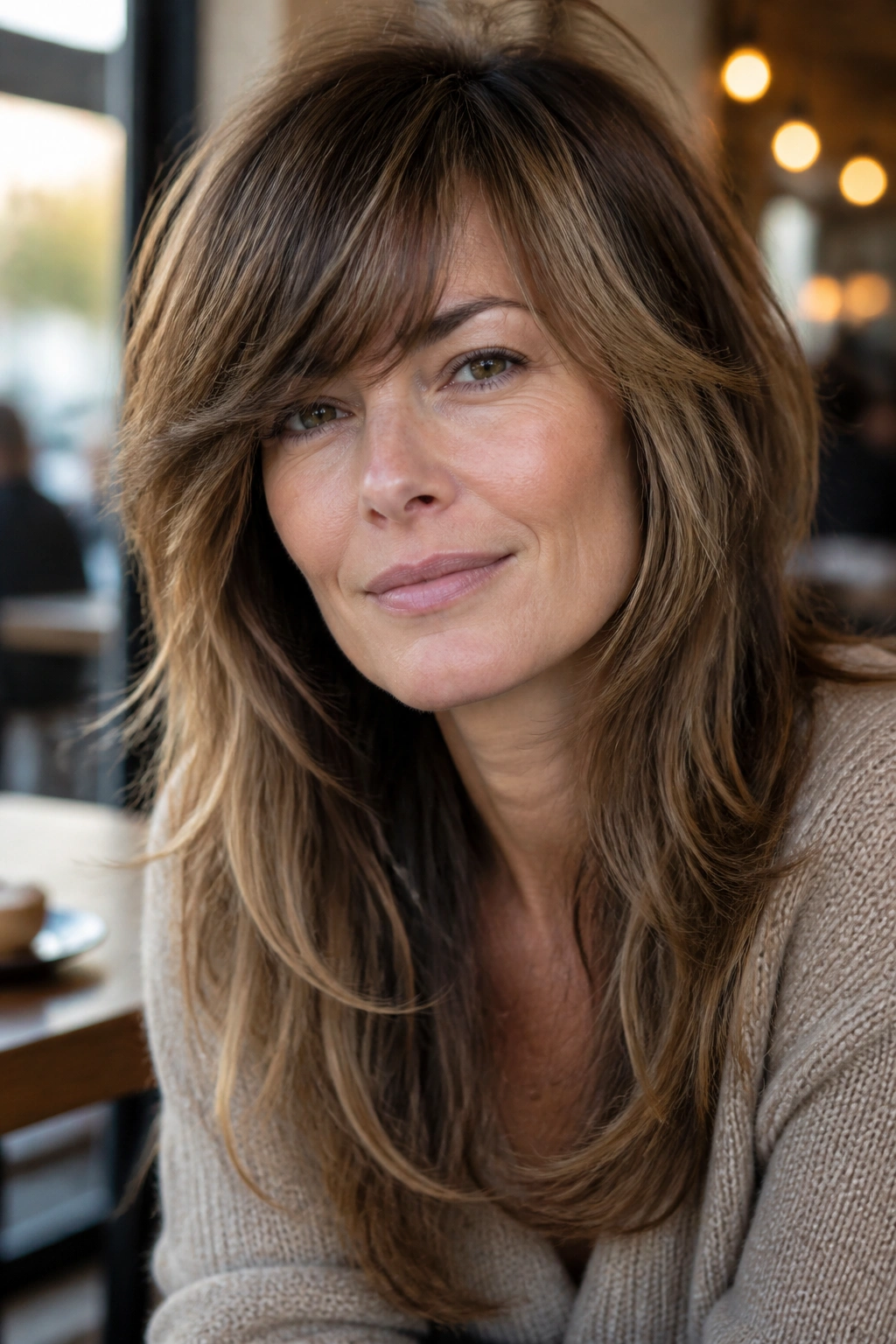
A square face usually benefits from breaks around the jaw, and a long shag can do that without hiding the face completely. The goal is not to cover your features. It’s to soften the hard lines a bit so the haircut and face don’t fight each other.
The front layers should move away from the jaw and cheek area, not stop right on it. Soft, slightly curved ends can keep the look from feeling boxy. A side-swept fringe or gentle curtain bang helps too, especially if your jawline is strong and you want a little balance.
I’d avoid a very blunt lower line on this version. Straight edges tend to echo the jaw too much. A bit of irregularity in the ends is better. It gives the face room to breathe and keeps the shag feeling lived-in instead of severe.
21. Heart-Face Balancing Long Shag
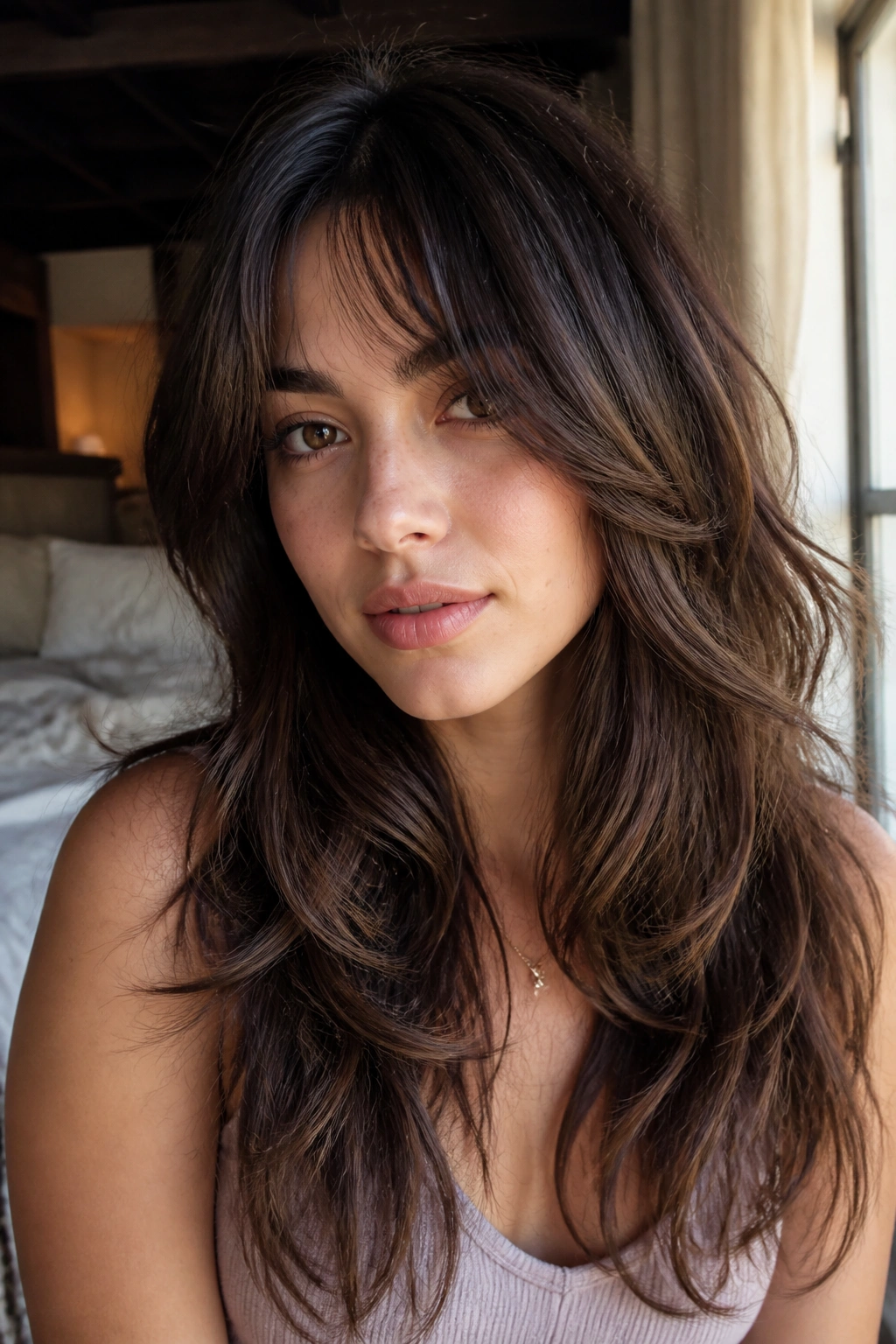
Can a shag balance a wider forehead and a narrower chin? Yes, and it does it through the front layers. Heart-shaped faces usually look best when the face frame adds softness near the jaw while keeping the top from getting too bulky.
The bangs or fringe area should not be too short or too thick. That can make the forehead feel wider. A longer curtain fringe or a bottleneck shape works better because it narrows gently through the center and opens at the sides.
What the Front Should Do
The front should guide the eye down toward the cheekbones and mouth, where the face narrows. A few loose pieces at the chin are useful here. They add a little visual weight where it’s needed.
If you wear your hair tucked back a lot, ask for front pieces that still hold their shape when the rest is behind the ears. That keeps the cut useful on busy days.
22. Invisible Layer Long Shag
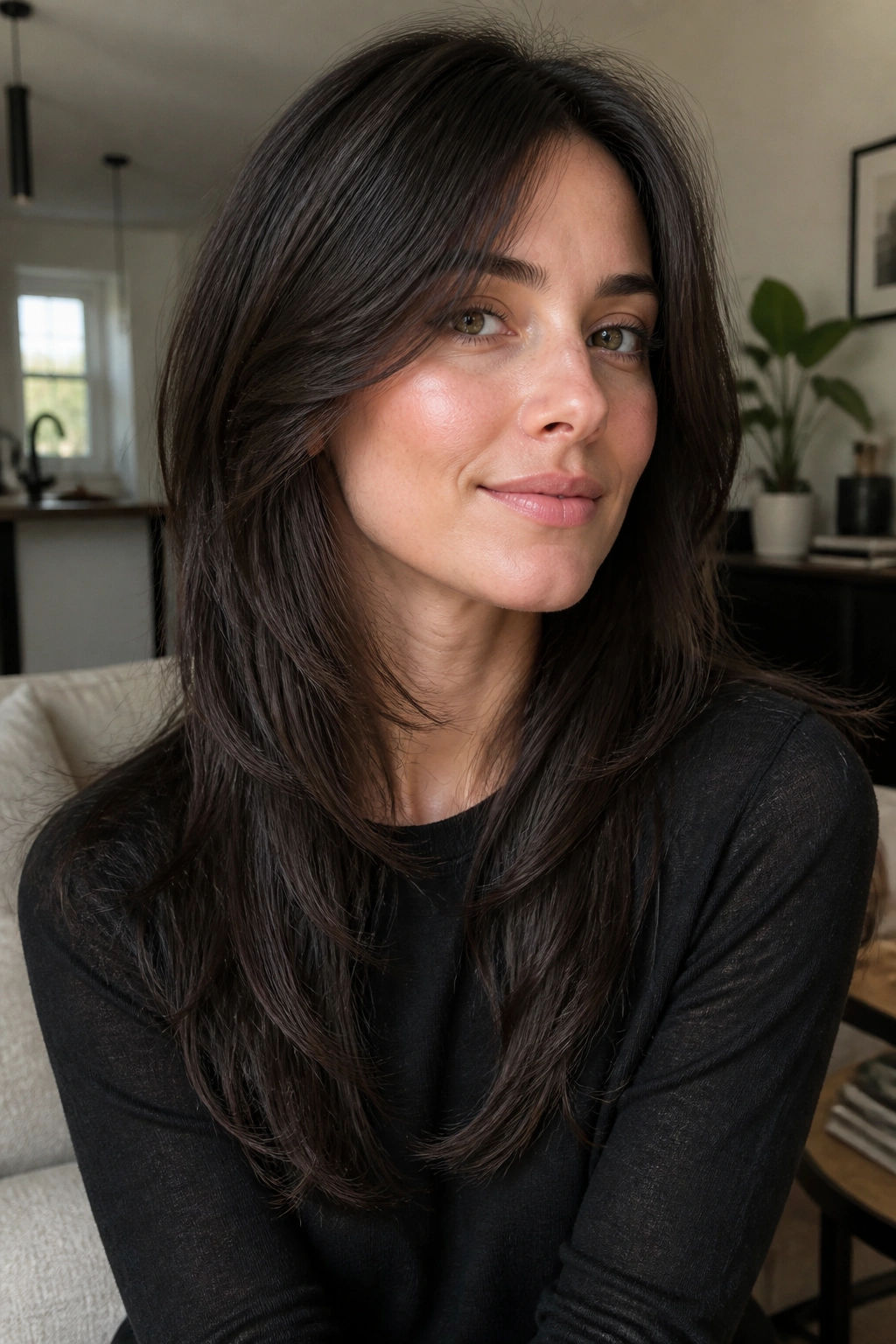
Invisible layers are the quiet version of a shag. You still get movement, but the haircut doesn’t shout about where every section begins and ends. That makes it a strong choice if you want texture without obvious choppiness.
The trick is to remove weight inside the shape while keeping the outer line smooth. The top layer may not look dramatic at first glance, but the hair falls better because the bulk underneath has been lifted out. It’s a cleaner look than a heavily sliced shag.
Why People Like It
- It keeps the ends looking full.
- It adds movement without obvious steps.
- It works well on hair that needs shape but not drama.
- It grows out with fewer awkward seams.
This cut is especially good if you wear your hair straight half the time and wavy the other half. It behaves in both directions, which is harder to find than it should be.
23. Disconnected-End Long Shag
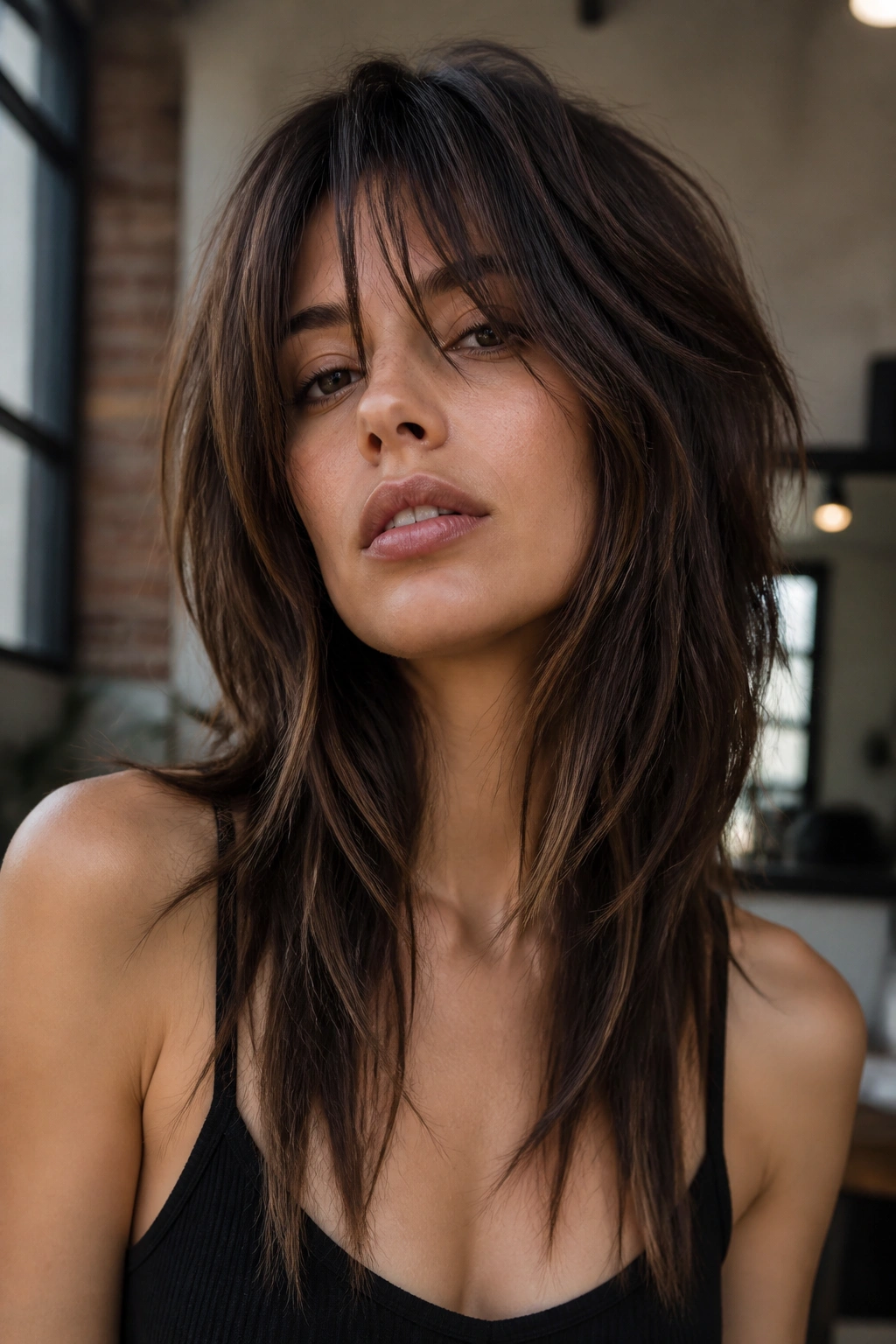
A disconnected-end shag has a little edge baked into it. The ends are deliberately separated, so the haircut feels more editorial and less blended. I like it when someone wants the layers to show from across the room, not just when they’re standing under a salon light.
The shape needs confidence. If the disconnection is too timid, the cut reads as uneven. If it’s done well, the contrast between the heavier top and lighter ends gives the whole haircut momentum. It’s a cut that likes styling cream, not fluffy mousse.
Wear it straight if you want the layers to look sharper. Wear it wavy if you want the line to soften a bit. Either way, this is not the haircut for someone who wants every strand to lie flat and behave. It has opinions.
24. Grow-Out-Friendly Long Shag
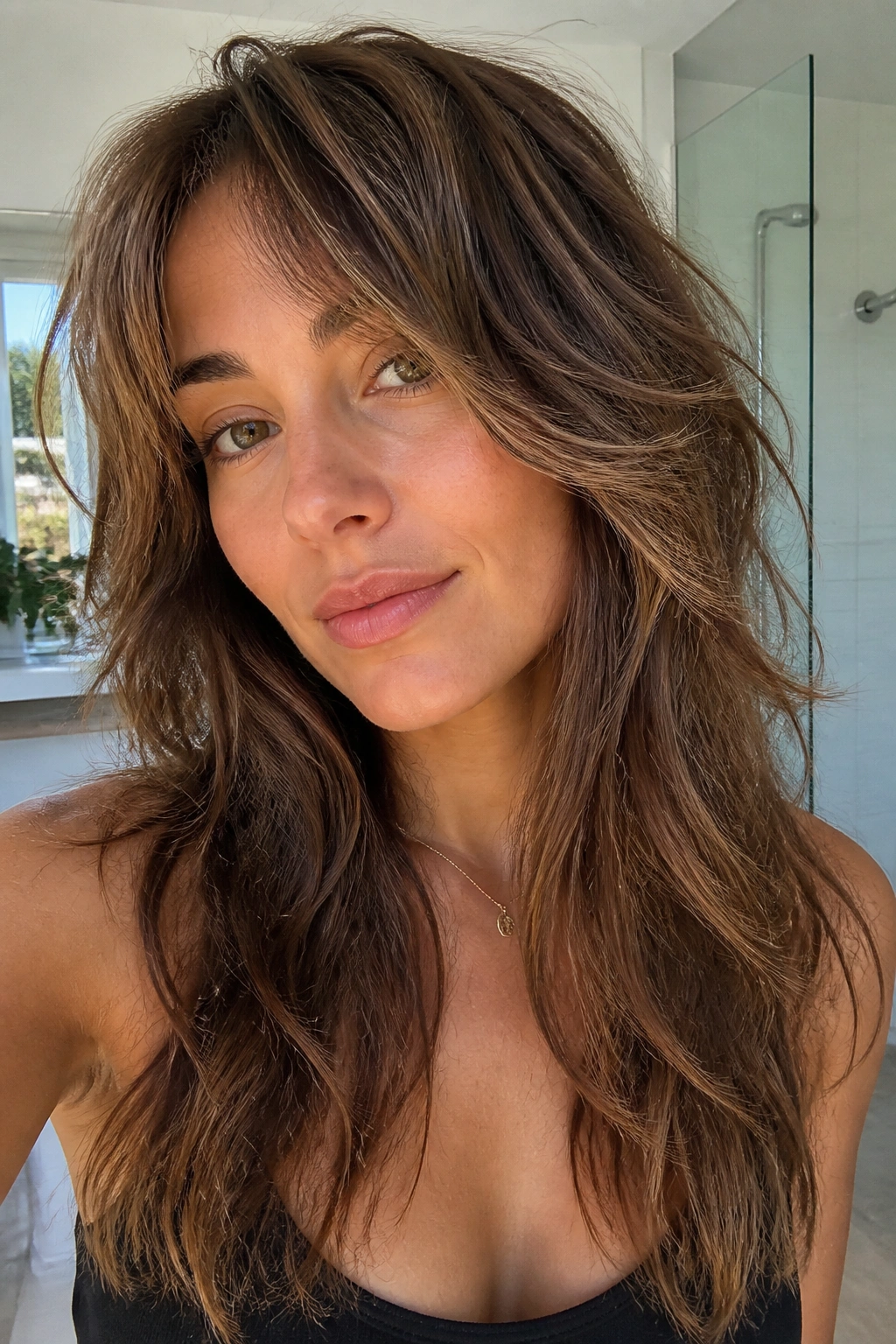
A good shag should not fall apart after six weeks. That is one of the real tests, and a lot of cuts fail it because they’re built too heavily around short pieces that lose shape fast. A grow-out-friendly version keeps the layers long enough to age in place.
This is the one I recommend to women who want a little texture but do not want to live in the salon chair. The front can be softly layered, the crown can hold light movement, and the back can stay long so the silhouette doesn’t collapse as it grows. That makes styling easier too, because the cut doesn’t demand a perfect blowout to behave.
Ask for blended transitions, not hard jumps between sections. That one detail matters more than people think. A smooth grow-out means fewer awkward weeks between trims, and that is worth a lot more than a few extra chopped pieces you’ll regret later.
25. Air-Dry Long Shag That Keeps Shape
An air-dry long shag is what I point people toward when they want the texture to do the work for them. The haircut should be shaped so the ends fall with a little bend even when you don’t touch them with heat. That means the layers need to be placed with the natural wave or movement in mind, not against it.
This version is especially good for women who have a busy morning routine or just do not want to spend 30 minutes with a round brush. A little leave-in conditioner through the mids, a curl cream or light mousse if your hair needs it, and a quick scrunch are usually enough. If your hair is straight, the result will be softer and less dramatic. If it’s wavy, the texture will show up almost on its own.
The best air-dry shag still looks intentional on the second day. That’s the real win. It should keep enough shape to frame the face, keep enough length to feel versatile, and keep enough texture that you don’t feel like you have to rescue it every morning. That’s the version I keep coming back to.
