



Long shag hairstyles are the haircut I reach for when someone wants movement that shows up the minute hair dries, not after half a morning with a round brush. The shape does the work. That’s the whole appeal.
A good long shag is not a random pile of chopped layers. The better versions keep enough weight through the ends to hold length, then carve softness into the crown, cheekbones, and fringe so the hair bends instead of hanging like one heavy curtain.
That balance is why the cut works on so many heads of hair. Straight strands get more grit. Wavy hair gets definition. Curly hair gets shape instead of bulk. Thick hair loses that helmet feeling that makes long lengths look tired before lunch.
The trick is picking the right version for your texture, face shape, and amount of styling you’re actually willing to do. Some long shag haircuts ask for a quick scrunch and a little leave-in cream. Others want a blow-dry, a bit of grit spray, and five extra minutes you may or may not want to give them.
1. Classic Long Shag with Curtain Bangs
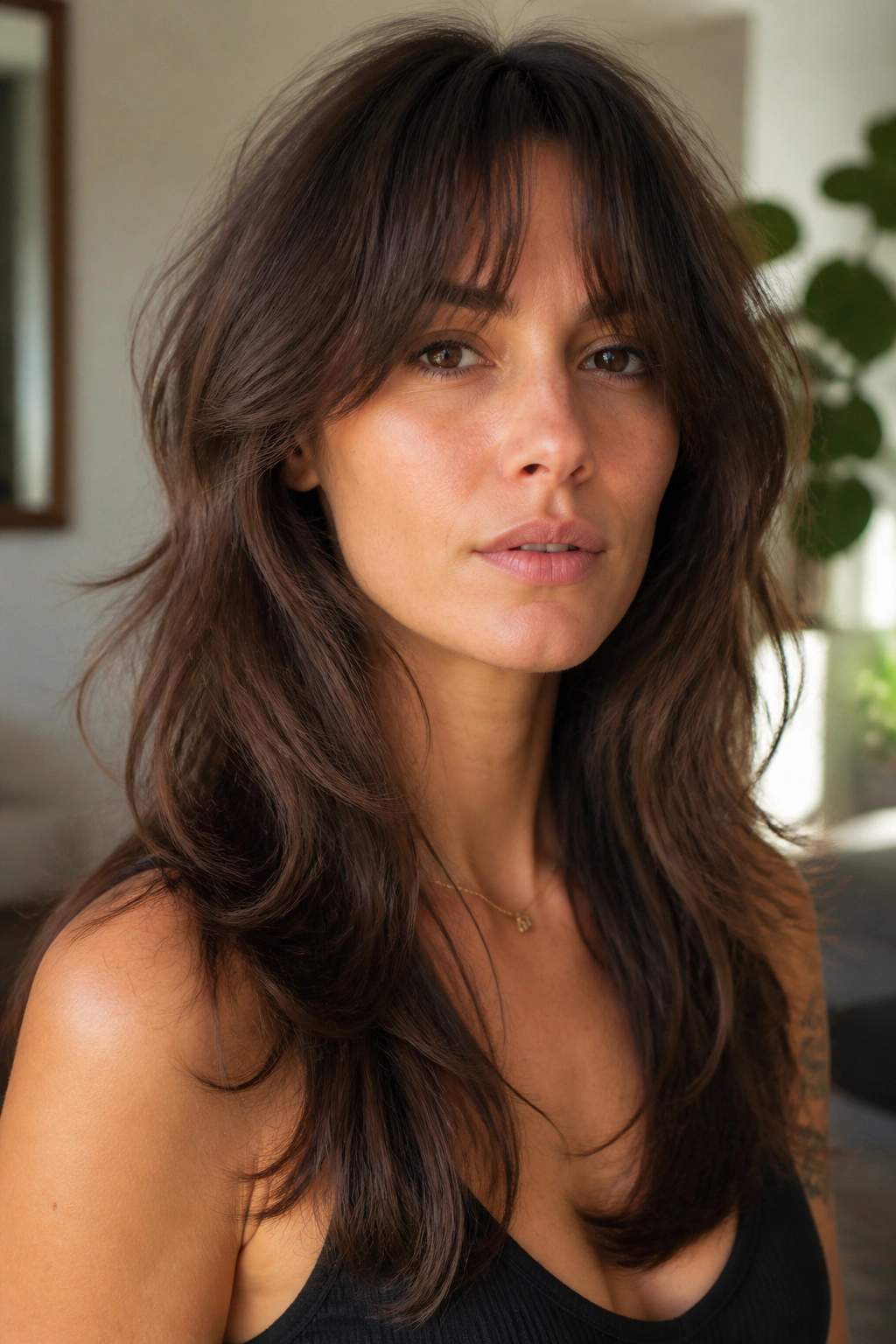
This is the version I’d hand to most people first. It gives you the shag shape without tipping the whole cut into chaos, and curtain bangs make the front feel soft instead of heavy.
The layers usually start around the cheekbone or lip, then fall longer through the sides so the outline stays feminine and easy to wear. What matters here is restraint. A good stylist will keep the perimeter strong enough to hold length, then remove weight inside the cut so the hair moves when you do.
Why It Works
Curtain bangs create a built-in frame, which means you do not need a full styling session to make the cut feel finished. A quick bend with a round brush or a large curling iron is often enough.
Ask for face-framing pieces that connect into the sides rather than a sharp disconnect. That gives the haircut a softer line when you tuck hair behind your ears or wear it half-up.
- Start the shortest front layers around the cheekbone.
- Keep the longest layers below the shoulders.
- Use a light mousse at the roots if hair falls flat.
- Finish with a tiny bit of texturizing spray at the ends.
Best for: straight to wavy hair that needs movement but not a lot of drama.
2. Soft Razor-Cut Long Shag
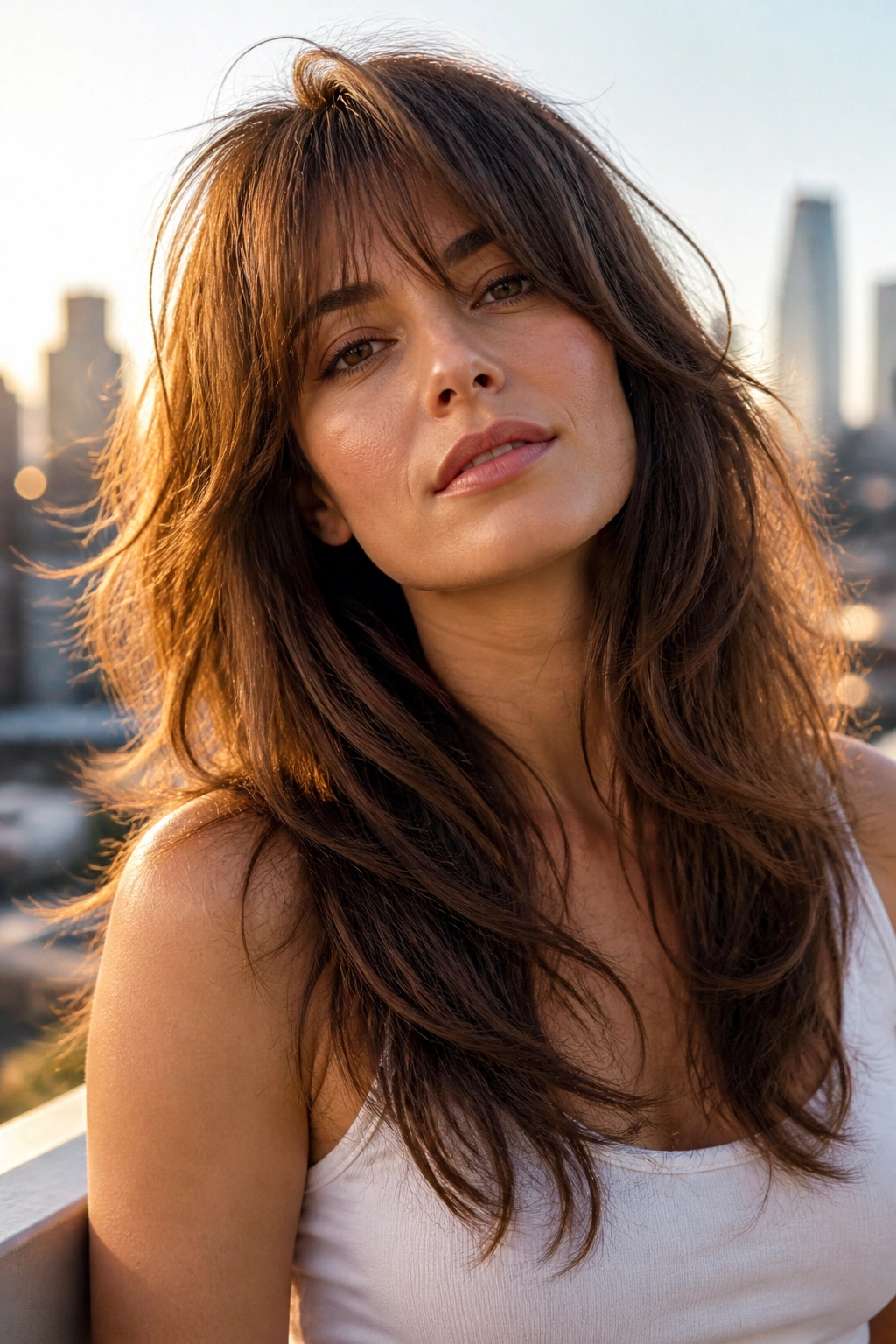
Why does a razor-cut shag feel lighter than scissors alone? Because the blade shaves away the blunt edge and leaves a feathered finish that moves with less effort.
That softness can be gorgeous on medium-density hair. The ends look airy, almost airy in a literal sense, and the cut has a little swing even when you let it dry on its own. I like this version for people who hate the look of stiff, boxy layers.
There is a catch. Razor work on dry, frizzy, or very curly hair can turn the ends fuzzy if the stylist goes too far. The best razor-cut shag keeps the perimeter controlled and uses the razor mostly inside the shape, not all over it.
A good styling routine stays simple: a leave-in cream, a pea-sized amount of styling balm, and a rough dry with fingers. If the hair is fine, skip heavy oils. They flatten the whole point.
3. Long Wolf Shag with Piecey Ends
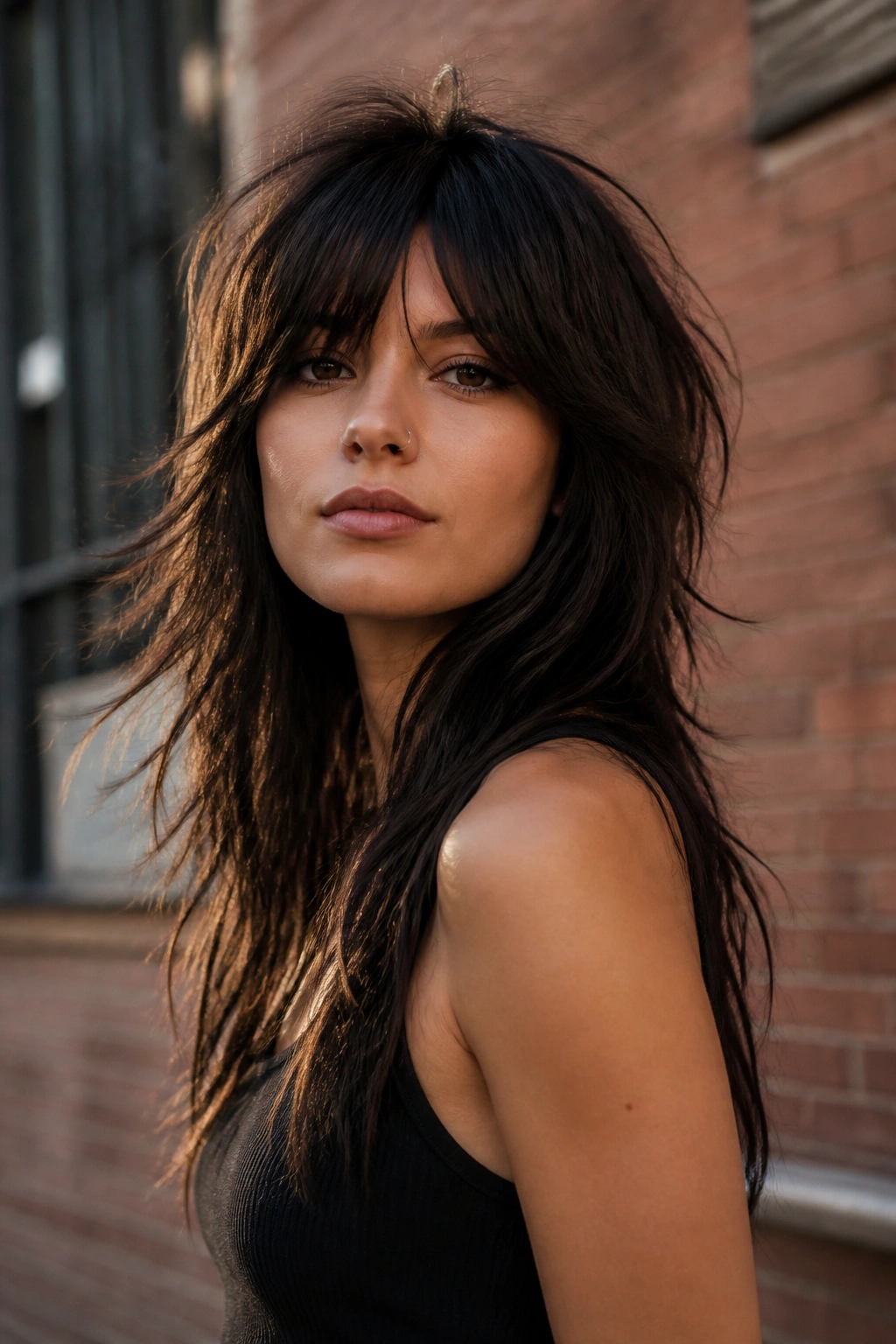
Picture hair that looks flat at the crown, then suddenly has personality around the cheekbones and neck. That is the long wolf shag when it’s done with a light hand.
This version leans a little edge-heavy. The crown is shorter, the face pieces are more obvious, and the ends stay long enough that you can still tuck, braid, or tie the hair back without losing the shape. It has that slightly rebellious look people want from a shag, but it’s still wearable in normal life.
What to Ask For at the Salon
Tell the stylist you want more lift at the top and more separation through the ends. That phrase matters, because “wolf cut” can mean ten different things depending on who’s holding the scissors.
- Shorter internal layers at the crown.
- A soft fringe or grown-out bang area.
- Long length preserved through the back.
- Point-cut ends for a piecey finish.
How to style it: Work in a dime-sized amount of mousse at the roots, then scrunch in a sea salt spray before diffusing or air-drying. Too much product kills the sharpness. Too little and the cut just looks flat.
4. Curly Long Shag with Round Layers
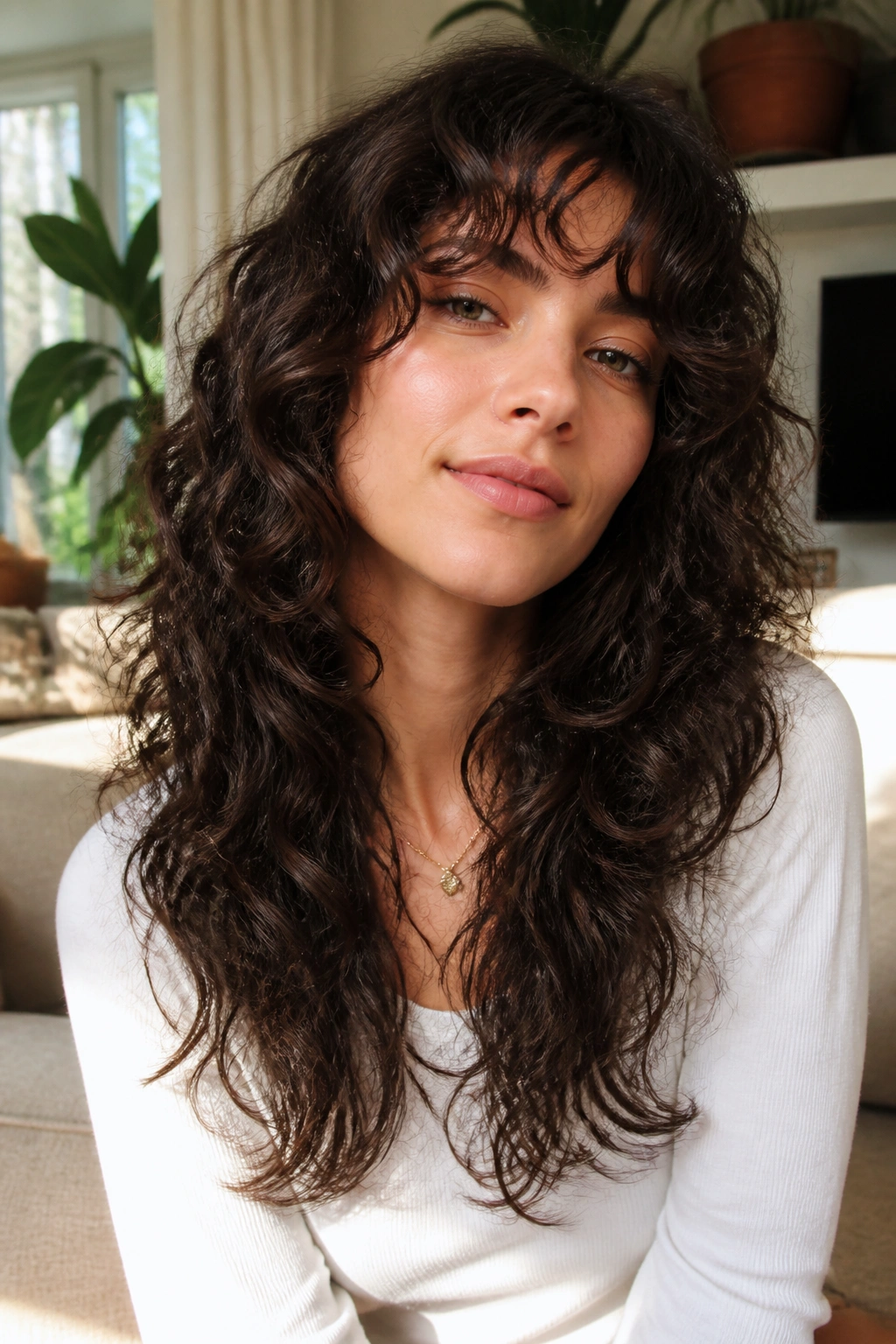
Curly hair and shag layers are old friends. When the cut respects the curl pattern, the shape gets better as it dries, which is a rare and lovely thing.
The trick is roundness. A curly shag should not look like a staircase. The layers need to follow the natural spring of the curls so the shape grows outward evenly instead of collapsing in the middle. I would rather see a stylist under-layer gently and preserve fullness than hack at the hair with thinning shears and hope for the best.
Dry curls crave water and hold. Use a curl cream on damp hair, then seal the shape with gel or a light custard. A diffuser works if you want more lift, but even air-dried curls can look good here if the layers were cut well.
- Best for 2C, 3A, 3B, and soft 3C curls.
- Avoid aggressive razor work on dry curls.
- Ask for curl-by-curl shaping if the hair is very dense.
- Keep the longest layers below the collarbone for weight and bounce.
The payoff is shape without triangle hair. That alone is worth the appointment.
5. Beachy Wavy Long Shag

Salt spray and a long shag have the same personality: a little rough, a little relaxed, and much better when they are not overthought. This cut lives in that space.
The best beachy shag has layers that catch the wave pattern rather than fight it. On wavy hair, that usually means soft lengths around the collarbone, with lighter pieces around the face and some air left between the layers. Hair should fall with bend, not stiff little bends that look like they were made by a toy curling wand.
I like this version because it looks done even when it is not. A touch of wave cream on damp hair, a few scrunches, and a messy dry often get you there. If your hair is naturally wavy, don’t brush it to death after it dries. That turns the whole cut into fluff.
A one-inch curling iron can help on stubborn pieces, but use it sparingly. The goal is not perfect waves. The goal is motion that looks like it belongs there.
6. Face-Framing Long Shag
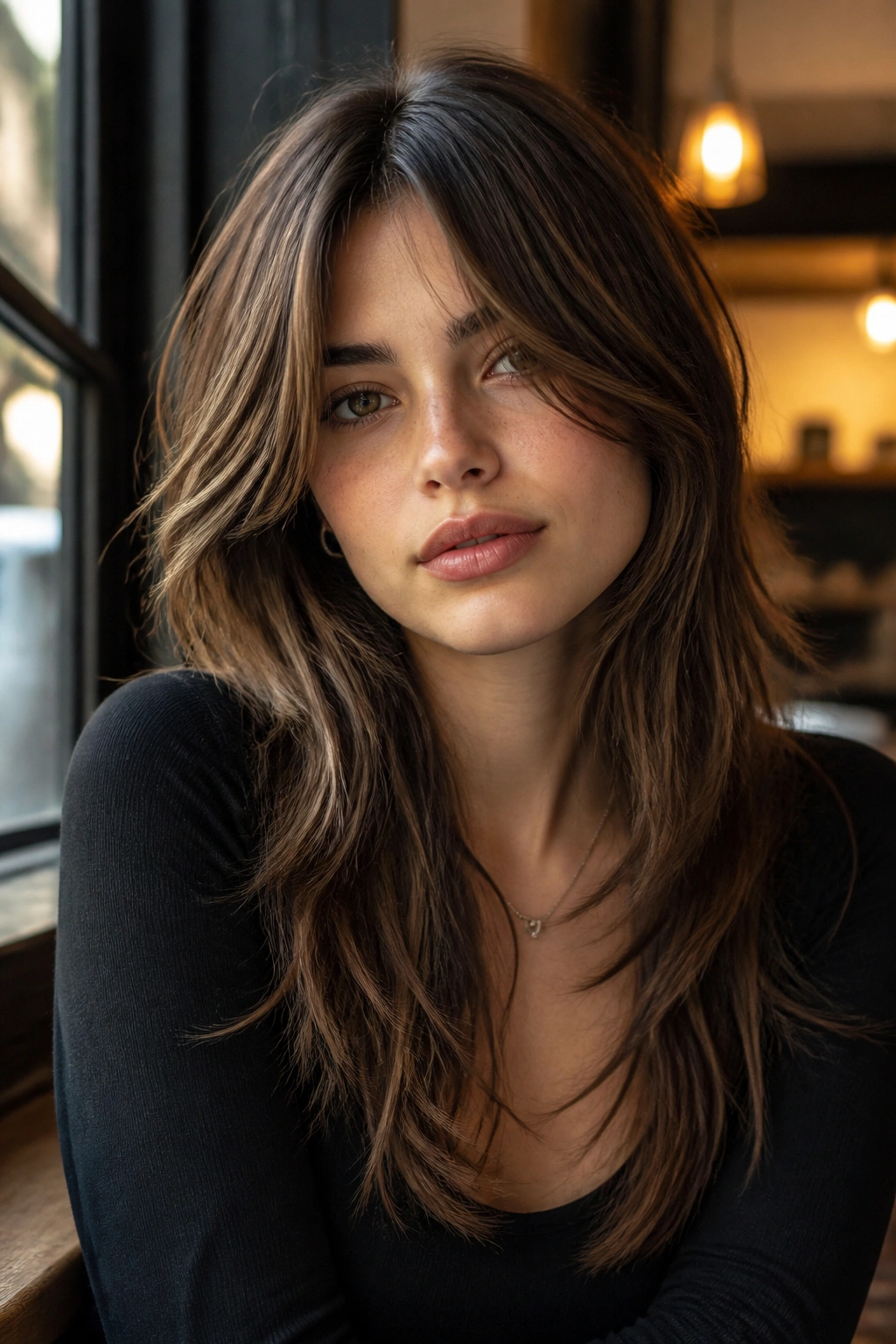
Unlike a blunt long cut with a few random face pieces, this version puts the movement where people actually notice it first: around the eyes, cheeks, and jaw.
That makes it a smart choice if you want to keep length but hate the way long hair can drag your features downward. The face frame should start softly, usually between the cheekbone and chin, then blend into longer layers that travel into the body of the haircut. If the connection is abrupt, the style starts to look dated fast. If it is blended well, the haircut feels easy.
Where the Shape Should Sit
The front pieces should not stop at one fixed point on the face. They need to taper so the cut works whether you wear a center part, a soft side part, or just tuck one side behind your ear.
Longer face-framing layers also make ponytails and half-up styles look better. That sounds small, but it matters. A lot.
I’d steer this cut toward people who want movement without a full fringe commitment. You get the softness of a shag and the freedom to pin the front back when you want your hair out of the way.
7. Long Shag with Bottleneck Bangs
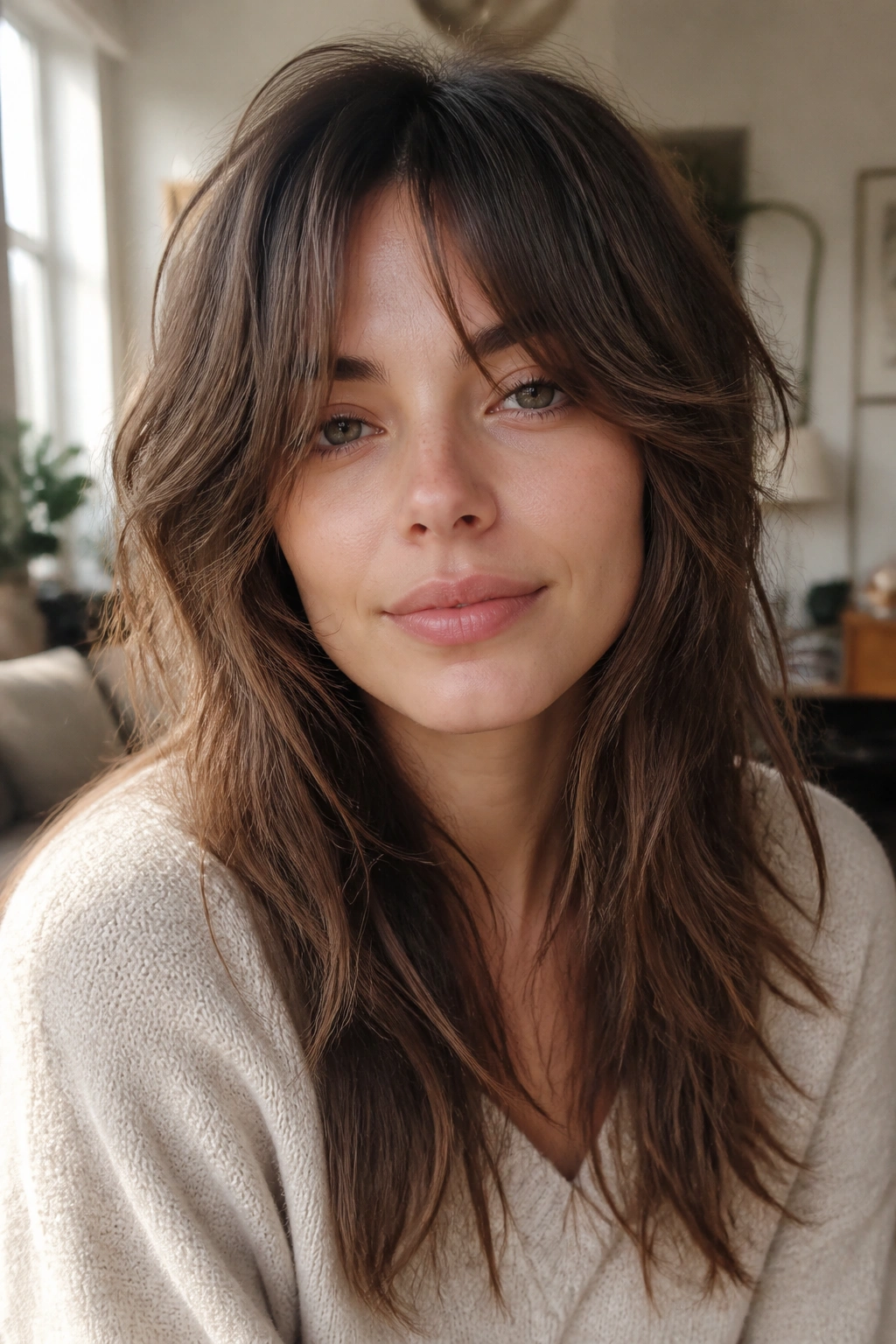
Are bottleneck bangs fussy? A little. Are they worth it? If you like a fringe that feels softer than blunt bangs and more styled than curtain bangs, yes.
The bottleneck shape is narrow in the center, then widens toward the temples. That makes it blend beautifully into long shag layers because the fringe grows out with more grace than a hard, straight bang. It also keeps the front from swallowing the face, which can happen with heavier fringe and long hair.
Styling Notes
This cut needs a small amount of attention at the front, but not a full routine. A round brush, a quick blow-dry side to side, and a tiny bit of cream on the ends usually do the job.
- Trim the bangs every 4 to 6 weeks if you want the shape crisp.
- Blow-dry the center forward, then sweep the sides out.
- Keep the rest of the hair loose and slightly undone.
- Use a lightweight dry shampoo at the roots when the fringe starts to separate.
The payoff is a face-framing shape that feels fresh without looking severe. That’s the sweet spot.
8. Feathered 70s Long Shag
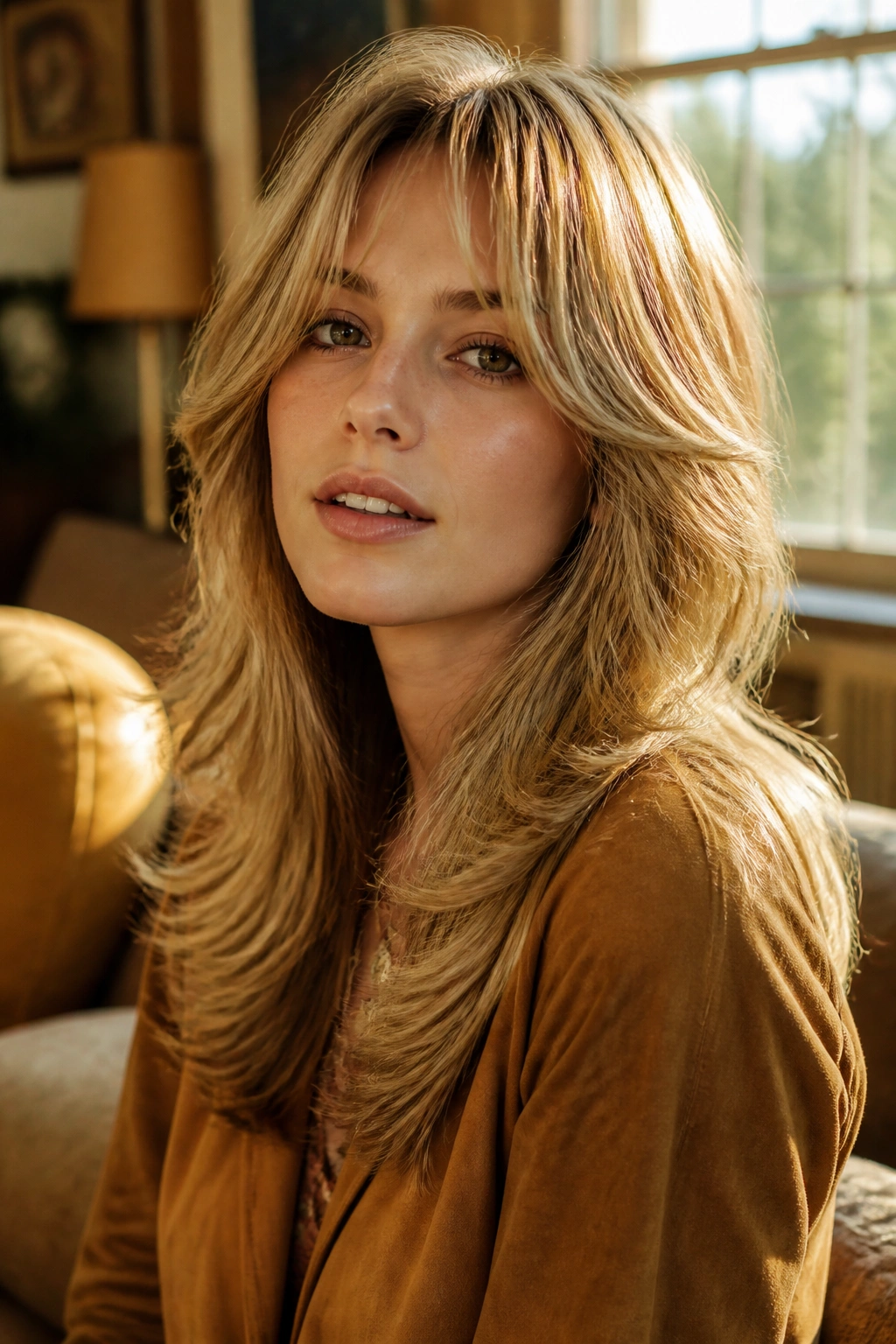
This is the polished cousin of the shag. It keeps the long layers, but the finish is softer, shinier, and more brushed out than piecey.
Think of it as movement with a bit of swing. The layers are often longer and more blended, which gives the hair that feathered effect around the face and shoulders. It works especially well if you like a blowout or if your hair naturally has a gentle bend that holds shape once it’s dry.
The styling is the fun part. A medium round brush, a blow dryer with a nozzle, and a few clips can make the front pieces curve away from the face in a way that feels old-school without looking costume-y. I’d skip heavy waxes here. They flatten the shine and make feathering look sticky.
This version suits people who want their shag to feel softer and a little more refined. Not precious. Just smoother around the edges.
9. Air-Dry Long Shag

If you air-dry your hair and pray, this is the cut that usually rewards that habit.
The shape depends on layers that are cut to fall into place without a lot of guiding. That means a stylist needs to think about how your hair dries in real life, not how it behaves under salon lights and a round brush. Good air-dry shags have enough internal texture to create bend, but not so much that the ends go wispy and strange.
A light leave-in, a mousse, and maybe a dab of curl cream are enough for many people. I would put those in damp hair, rake them through with fingers, then leave it alone. Touching hair while it dries is where half the frizz problems start.
- Scrunch once or twice, not twenty times.
- Part the hair while it’s wet.
- Use a microfiber towel or T-shirt to blot, not rub.
- Flip the part slightly off-center if the roots fall too flat.
The haircut should do more than your hands do. If it doesn’t, it needs better layering.
10. Long Shag for Fine Hair
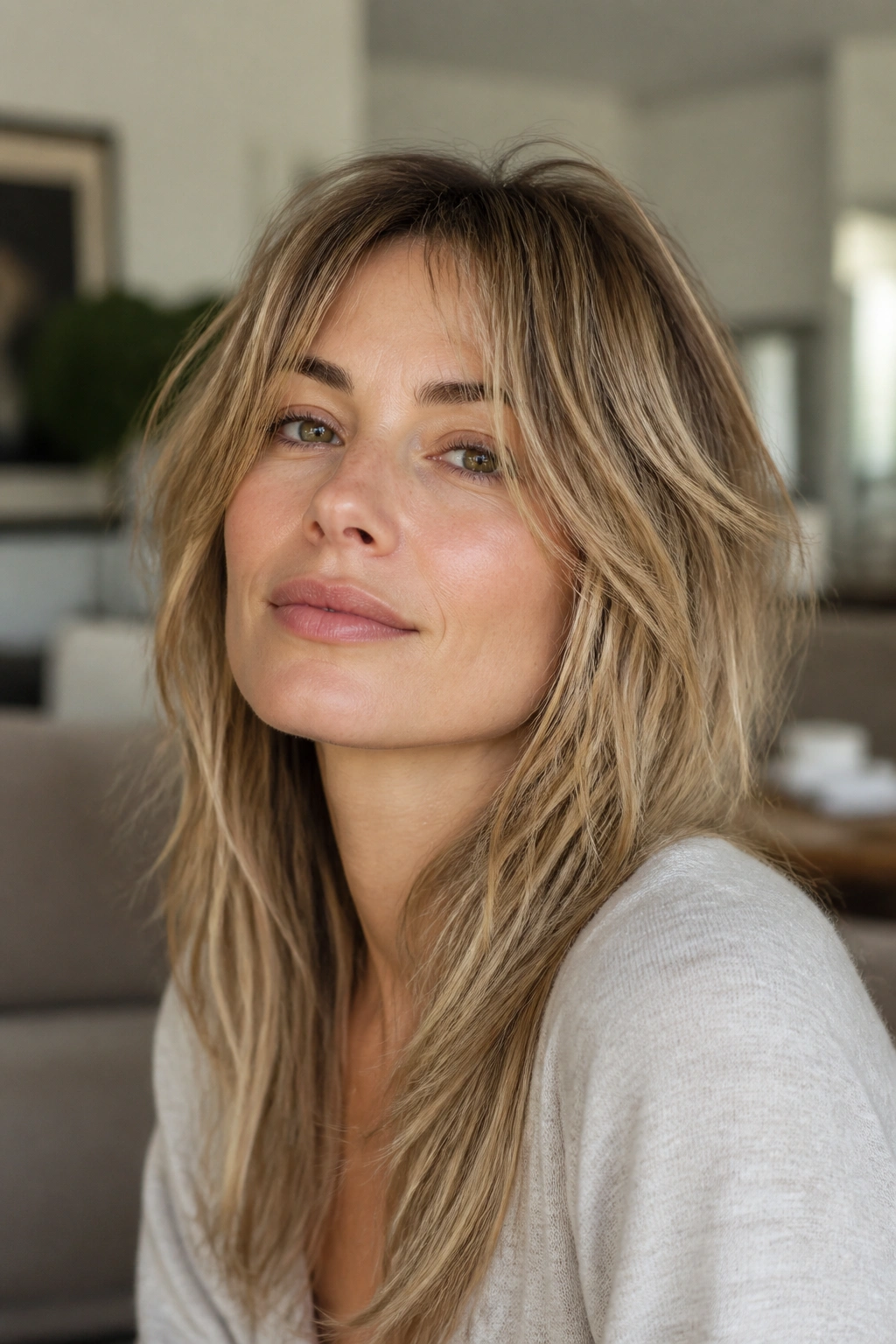
Fine hair can wear a shag, but it needs a lighter touch than people think. Too many short layers and the ends start looking see-through.
The smartest version keeps the longest pieces intact and uses only enough internal layering to create lift at the crown and around the face. I like layers that begin lower, around the chin or collarbone, because they give shape without stealing density from the bottom. On fine hair, density is the whole game.
Cut Details
Ask the stylist to avoid over-thinning the ends. Thinning shears can make the haircut look airy for a week, then flat and stringy after a few shampoos. That is a bad trade.
Styling Details
A root-lift spray at the scalp, a lightweight mousse through the mids, and a small round brush are usually enough. If you like heatless styling, two loose braids overnight can give the haircut a little wave without overworking it.
Fine hair usually looks better with fewer but smarter layers. That sounds boring. It isn’t. It’s the difference between movement and a haircut that disappears by noon.
11. Heavy Fringe Long Shag
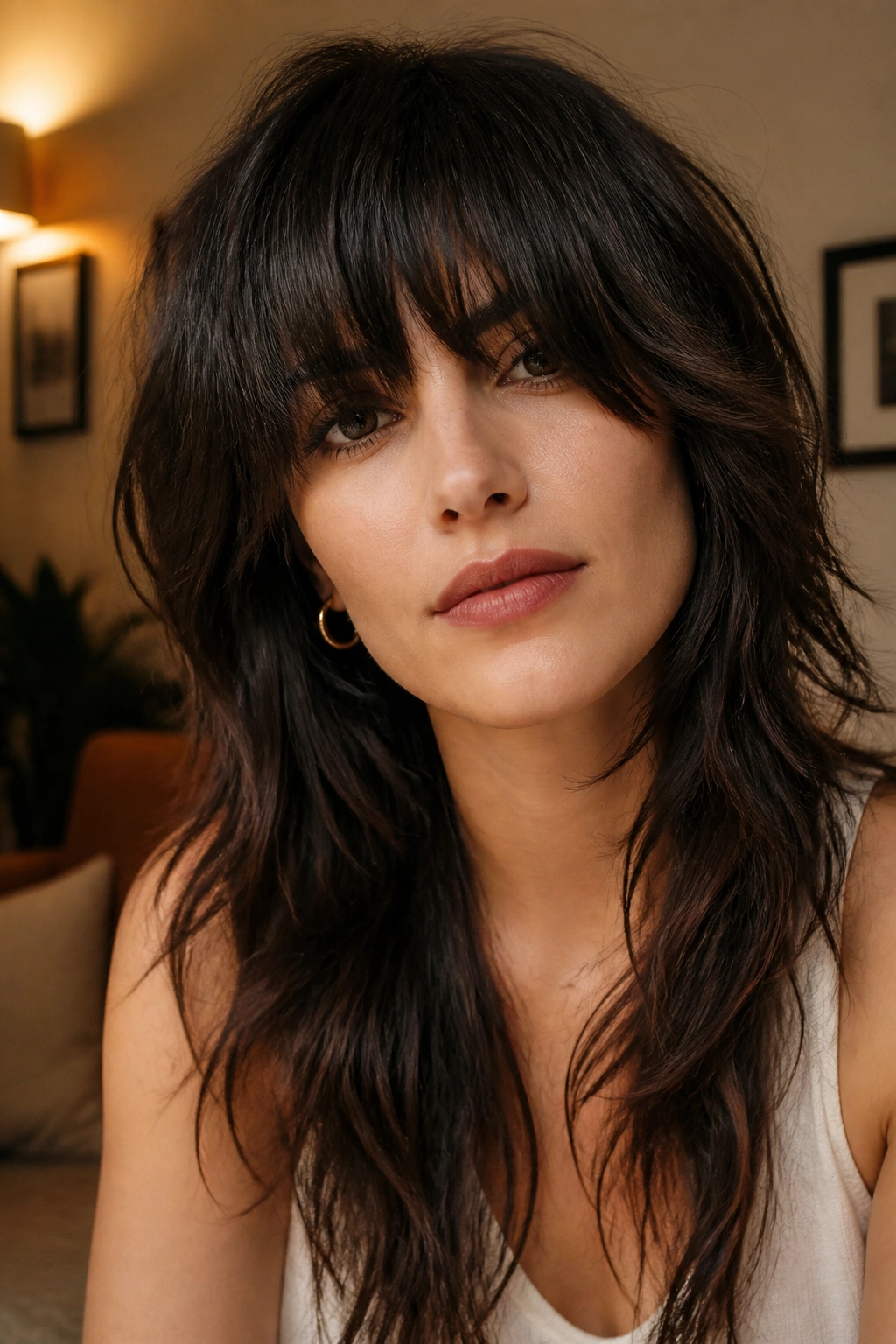
A heavy fringe changes the entire mood of a long shag. Instead of soft front pieces that open the face, you get a stronger line across the forehead and more contrast between the bangs and the length.
That contrast can be sharp in a good way. It makes long hair feel deliberate, and it pulls attention to the eyes. I like it on people who want a little drama but do not want the rest of the haircut to become fussy. The long shag underneath can stay loose and broken up while the fringe carries the attitude.
It does ask for more regular styling at the front. Heavy fringe usually needs a blow-dry or at least a quick pass with a brush and dryer to keep it from splitting. If you let it air-dry untouched, it may sit in awkward clumps.
A narrow flat brush helps the fringe lay flatter, while a round brush gives a bit of bend. Keep the rest of the hair soft so the bangs stay the star. If everything is equally loud, nothing stands out.
12. Long Shag with Invisible Layers
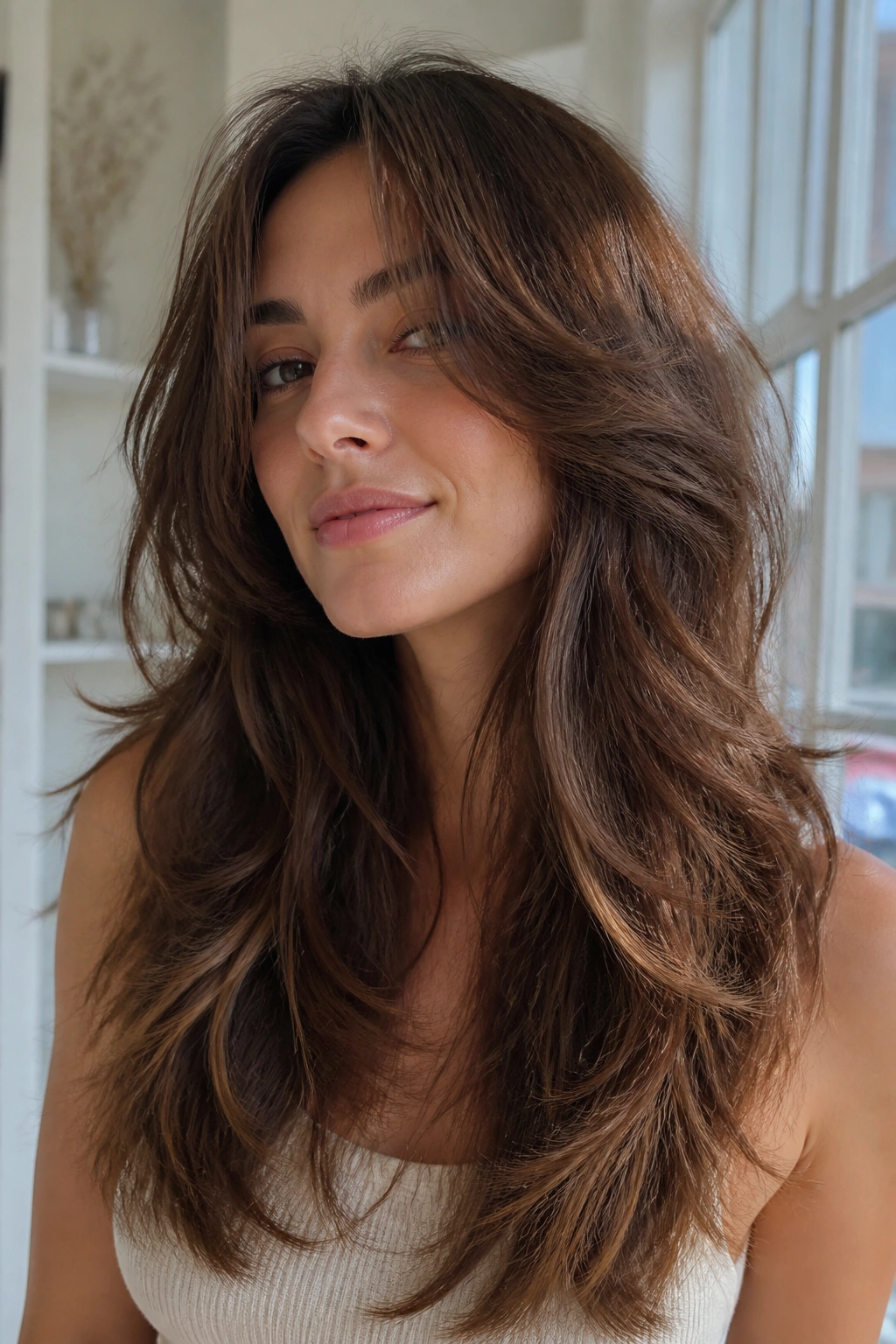
Invisible layers are the haircut equivalent of good tailoring. You do not see every seam, but you feel the shape when the fabric moves.
This version is for anyone who wants the texture of a shag without the obvious choppiness. The layers are blended so well that the length still reads as long and full, but the hair gains swing when it turns, bends, or gets tucked behind the ear. It’s subtle. That is the point.
How They Disappear
The cut usually uses long interior sections that remove bulk without breaking up the outline. Around the face, the pieces are soft and gradual. In the back, the weight stays low enough to preserve a clean line.
Why People Like It
You can wear it sleek one day and messy the next. It also grows out in a calmer way than a harder shag, which is useful if you do not want a shape that screams for attention every five weeks.
- Ask for blended internal layers, not heavy texturizing.
- Keep the perimeter long and soft.
- Style with a light cream or mousse, depending on hair thickness.
- Use a wide-barrel iron only on the front if you want extra movement.
This is the version I’d choose if I wanted texture but did not want to announce it.
13. Long Shag with a U-Shaped Finish
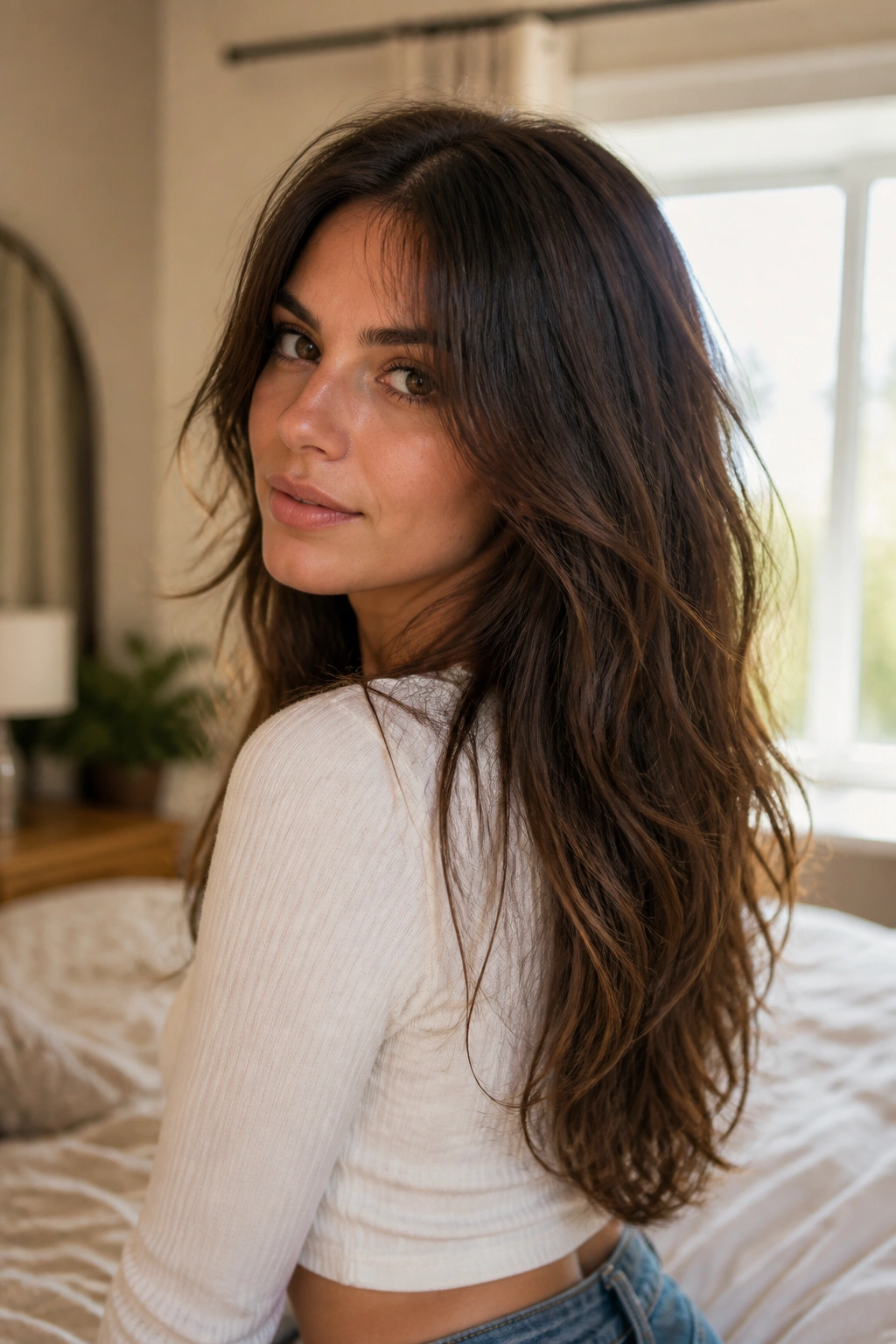
A U-shaped finish keeps the back fuller than a blunt cut and gives the ends a softer curve instead of a hard shelf. On long hair, that matters more than people think.
The U shape helps the haircut hold its length while still letting the layers move. It is especially nice when the hair is medium to thick, because the perimeter does not feel chunky. The sides can come forward gently, which makes the whole cut look polished even when it’s a little messy.
I like this cut because it behaves well in a ponytail. The front pieces drop naturally, and the back keeps enough shape that it doesn’t look like you forgot to finish your hair. That sounds minor. It isn’t. Daily wear matters more than salon photos.
If you want easy texture without losing the sense of long hair, this version is one of the better bets. It gives the shag some softness without turning the outline jagged.
14. Mullet-Leaning Long Shag
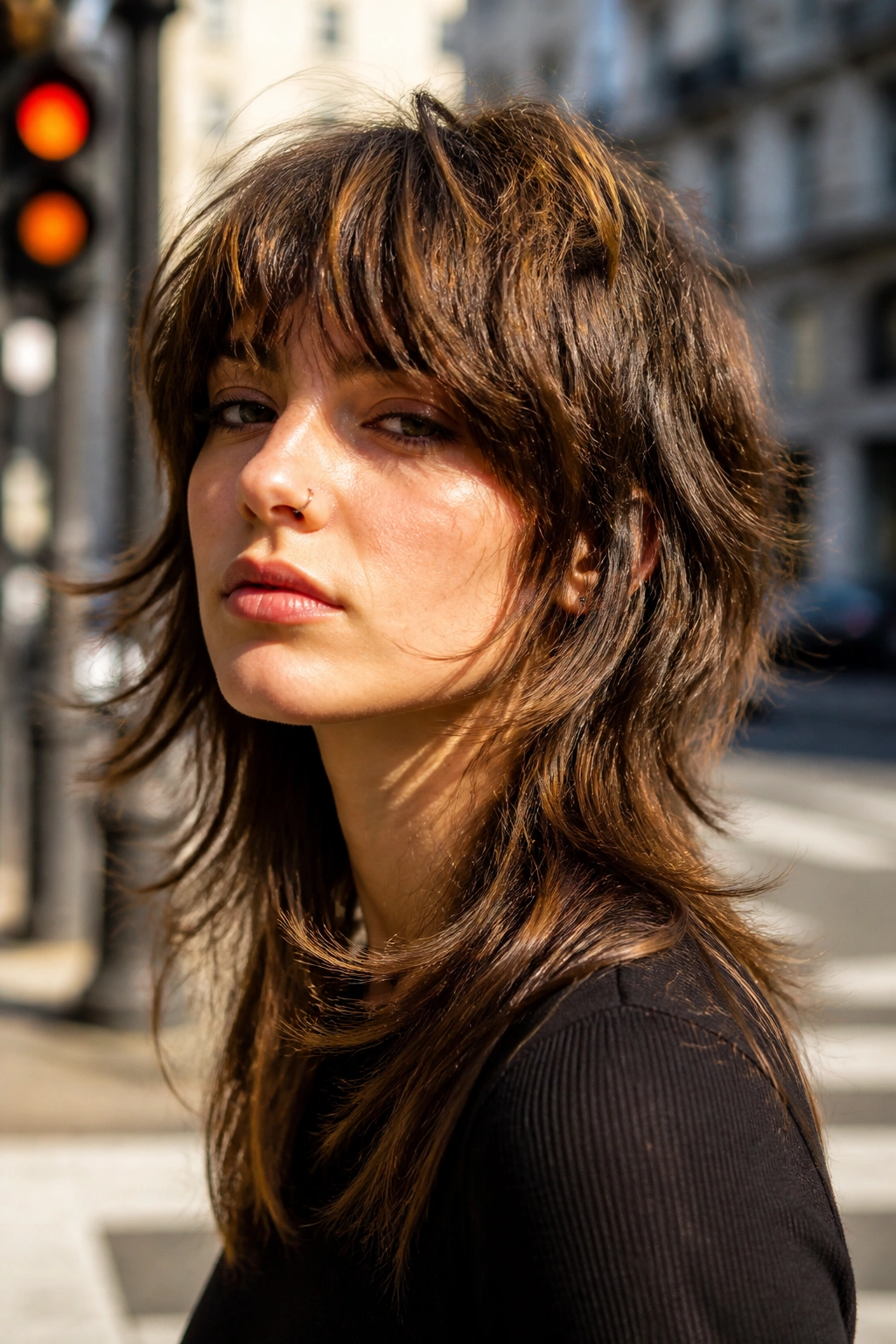
A mullet-leaning shag is what happens when the haircut decides to have a little nerve.
The crown comes up shorter, the sides stay lean, and the back keeps length so the shape feels deliberately uneven. Done right, it still reads as wearable. Done badly, it looks like two different haircuts arguing with each other. The difference is balance. The front and crown need enough structure to support the longer back, and the layers have to connect rather than jump.
What Makes It Wearable
Keep the face pieces soft. That one choice stops the cut from feeling costume-like.
- Ask for a textured crown with long back length.
- Keep the temple area blended, not chopped.
- Use a matte paste or texture cream sparingly.
- Wear it best with a little bend, not pin-straight perfection.
This version suits people who like their hair with a bit of edge and do not mind being noticed. It is less about prettiness and more about shape, attitude, and movement that doesn’t apologize for itself.
15. Long Shag for Thick Hair
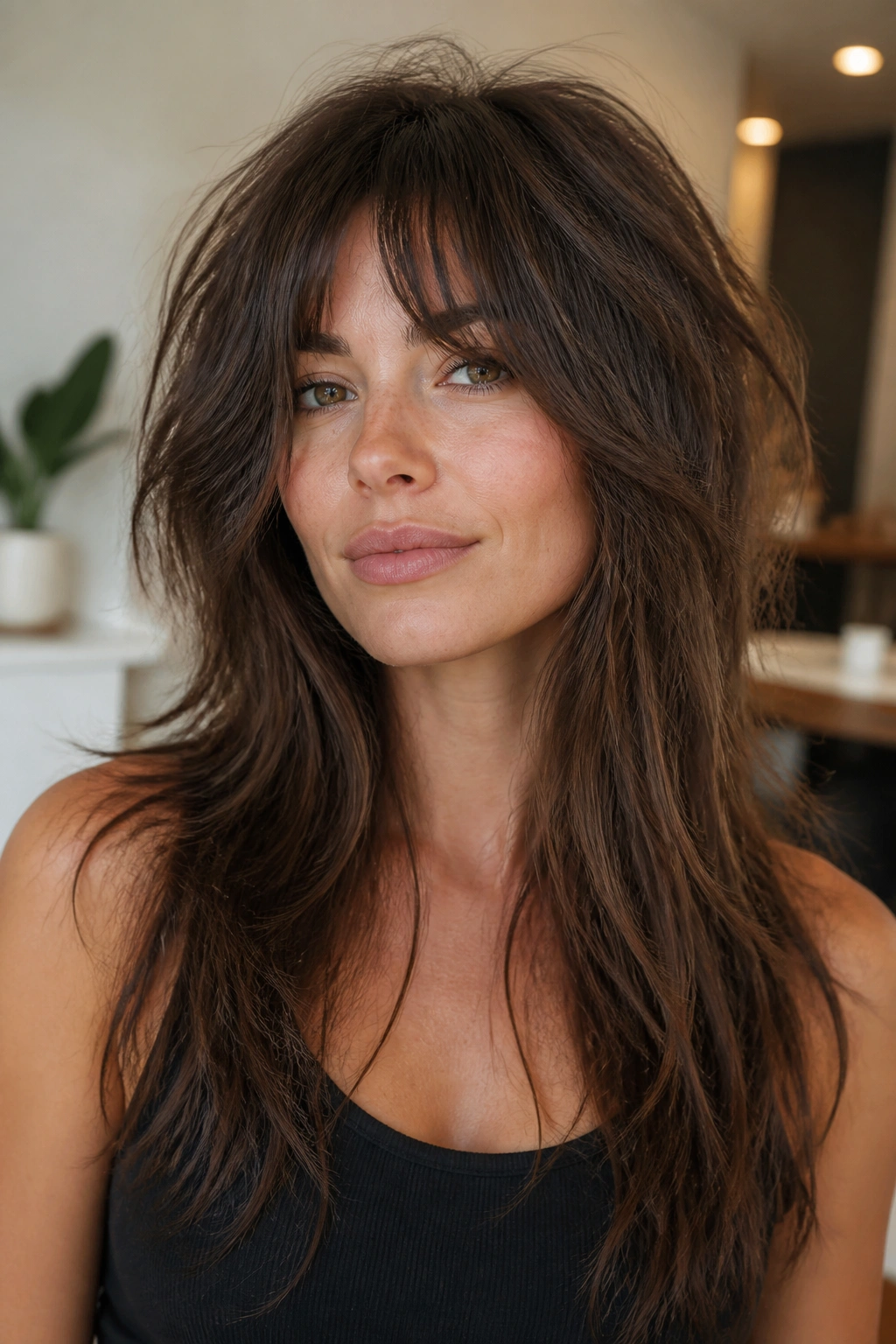
Does thick hair need more layers or fewer? Fewer, but smarter ones. That’s the answer almost every time.
Thick hair can swallow a cut if the layering is too aggressive, and then you get frizz, odd gaps, and ends that feel flimsy while the top still has too much bulk. A good long shag for thick hair removes weight from the inside, not by gutting the outline. The goal is movement, not thinness.
What to Ask For
Tell the stylist you want long interior layers, a clean perimeter, and soft face framing. That keeps the haircut from turning into a puffball.
What to Style With
A smoothing cream through the mids, a little root lift at the crown, and a blow-dry with a nozzle can help control the shape without flattening it. If the hair is prone to frizz, a diffuser on low heat is safer than rough drying with a towel.
- Avoid too many short layers near the crown.
- Ask for weight removal only where the hair feels bulky.
- Keep the ends strong so the haircut does not spread out.
- Use a weekly mask if the hair is coarse or dry.
Thick hair can wear a shag gorgeously. It just needs discipline at the scissors.
Final Thoughts
The long shag works because it makes texture look earned, not forced. That’s why the cut keeps coming back in so many different forms: curtain bangs, feathered layers, curly shapes, blunt fringe, softer invisible layers. Same family. Different moods.
The smartest version is the one that fits how your hair already behaves. If you air-dry, choose a shape that falls into place on its own. If your hair is thick, protect the ends. If your hair is fine, keep the layers long and avoid over-thinning.
Bring a few photos to the salon, sure, but bring a plain sentence too: “I want movement without losing length.” That line usually tells a good stylist everything they need to know.
