

A curly shag haircut can do what a blunt cut often refuses to do: let natural curls move without turning into a triangle.
That’s why curly shag haircuts for natural curls stay so appealing. The shape gives volume where you want it and removes weight where curls like to stack up — around the sides, under the ears, and at the ends that drag the whole head down.
I love a good shag because it doesn’t fight curl pattern. A 3A spiral, a dense 3C coil, and a loose 2C wave will all land differently, but the idea stays the same: layered hair that breathes, fringe that softens, and a silhouette that looks better with a little mess.
Shrinkage changes the story fast. So does where the front pieces land once they dry, which is why the most flattering versions are usually cut with the real curl pattern in mind, not stretched out under bright salon lights.
1. Rounded Curly Shag With Soft Curtain Bangs
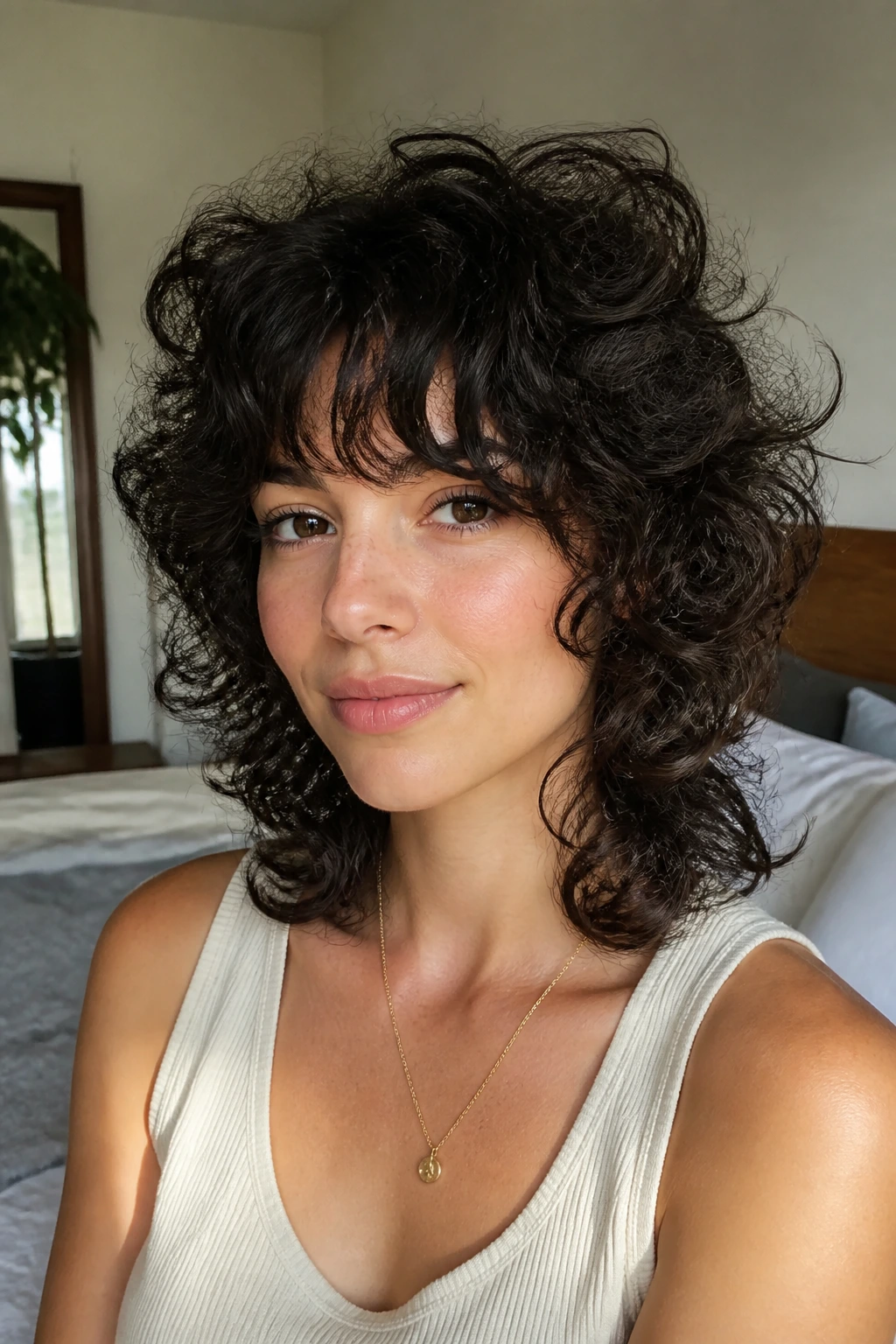
This is the shag that behaves.
A rounded shape keeps the silhouette from flaring out at the sides, which is the classic problem with curls that are cut too evenly. Add curtain bangs, and the whole cut feels softer around the face without losing the lift at the crown. It’s a smart choice if you want the shag look but don’t want anything too choppy or extreme.
Why It Works
The best versions start with layers that follow the curve of the head, not layers that are chopped in like a staircase. That small difference matters. Your curls fall into a dome instead of a pyramid, and the curtain fringe opens the face instead of sitting like a helmet.
Ask for the bangs to be cut longer than you think. Curly fringe shrinks fast, especially if your hair has a springy 3A or 3B pattern. When it dries, the bangs should land around cheekbone level, not halfway to your eyebrow.
- Best for medium to thick curls with some natural bounce
- Works well if you want width at the crown but less bulk at the jaw
- Looks best when the front is slightly longer than the sides
- Keeps styling easy on wash day and second-day hair
Pro tip: ask for the cut to be shaped dry or mostly dry so the stylist can see how far the bangs spring up.
2. Long Curly Shag With Feathered Layers
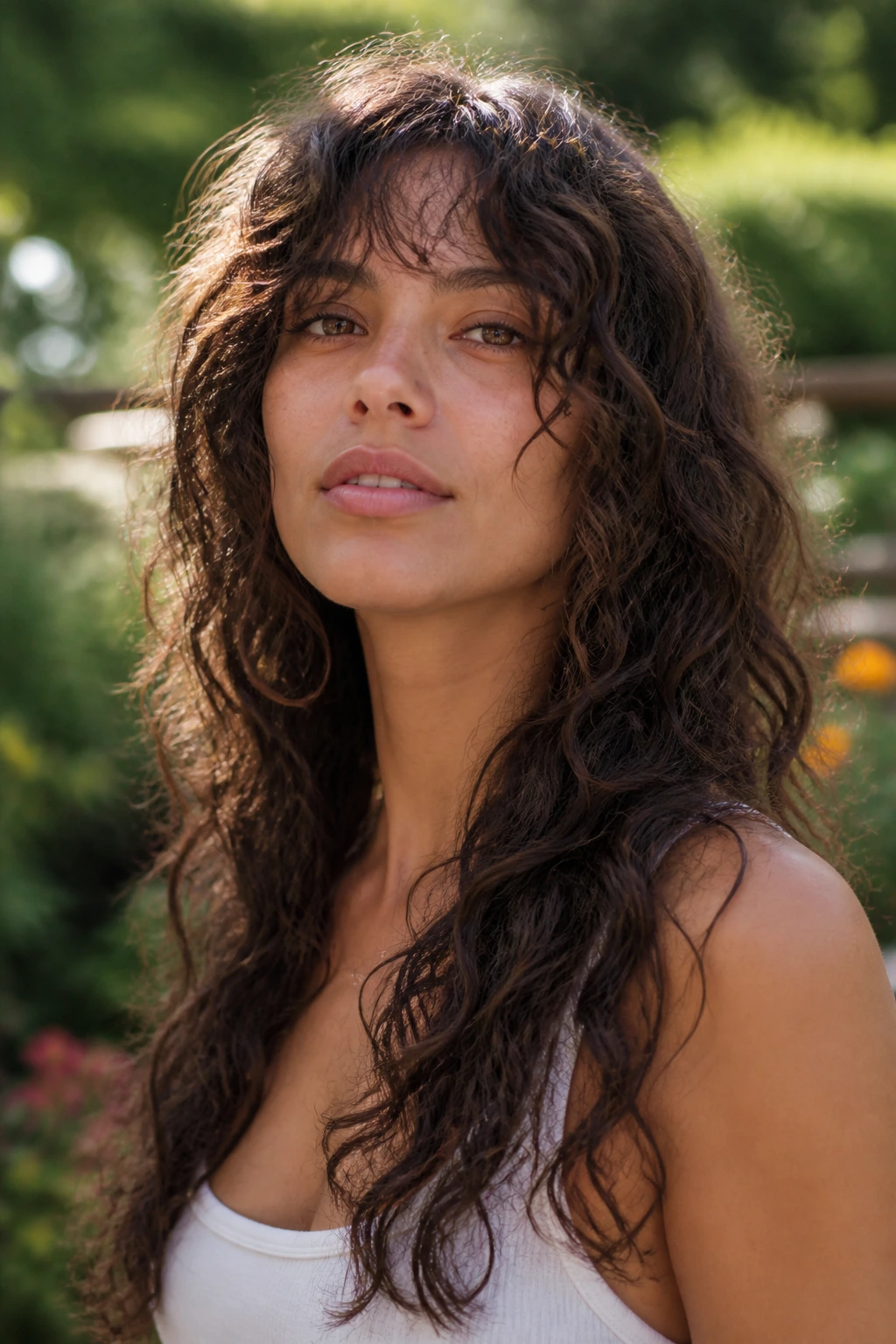
The long curly shag is for people who want movement without giving up inches.
That’s the big difference. A lot of layered cuts on curly hair get too aggressive and start chewing through the length until the bottom feels thin and tired. Feathered layers keep the ends light, but they let the body of the hair stay full. The result is soft, swishy, and a little undone in the best way.
This version shines when your curls have a bit of length to them already. Shoulder-blade to mid-back length is where the shape really shows. The layers should be placed with purpose, not scattered all over the head. You want the front pieces to open up the face and the interior to release bulk, while the perimeter still holds enough weight to keep the whole thing from puffing out.
It’s a good cut for people who wear their curls loose most days. It also plays nicely with a diffuser, a light mousse, and not much else. If your hair tends to collapse flat at the crown, keep the shortest layers around the top of the head and let the lower lengths stay calmer.
A long curly shag can look expensive without looking precious. That’s the charm.
3. Chin-Length Curly Shag With a Full Fringe
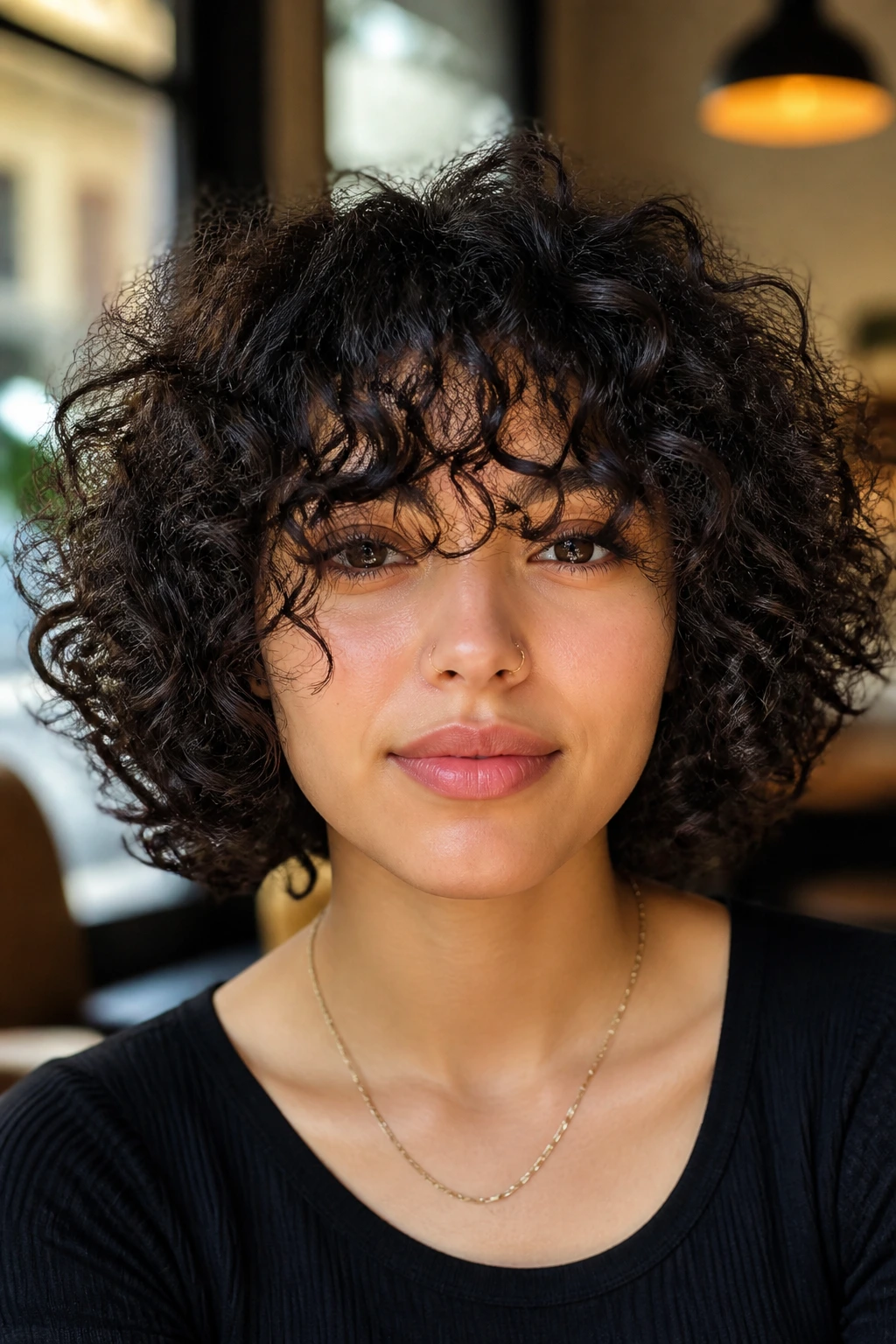
Why does a chin-length curly shag with a full fringe look so good? Because it commits.
Shorter curls need shape more than length. When the cut lands around the chin, the hair has room to bounce instead of dragging itself down. A full fringe gives the style a little attitude, but it also anchors the face so the cut doesn’t read as fluffy or unfinished.
This one is strongest on tighter curl patterns that want to spring up anyway. If your curls shrink a lot, the fringe needs to be longer than eyebrow level when stretched. Otherwise you end up with bangs that look daring in the salon and disappear by lunch. Not cute.
How to Wear It
Keep the edges soft. A blunt chin line can work, but only if the curl pattern is loose and even. Most people do better with a little irregularity at the ends, because the curls themselves create the line.
The top should not be over-layered. Too much chopping near the crown can make the haircut stand up like a mushroom. One or two strategic layers are enough if the fringe already carries visual weight.
It’s bold, yes. But it’s also practical if you like a haircut with a face-forward shape and you don’t mind your curls announcing themselves.
4. Shoulder-Grazing Shag for Thick Curls
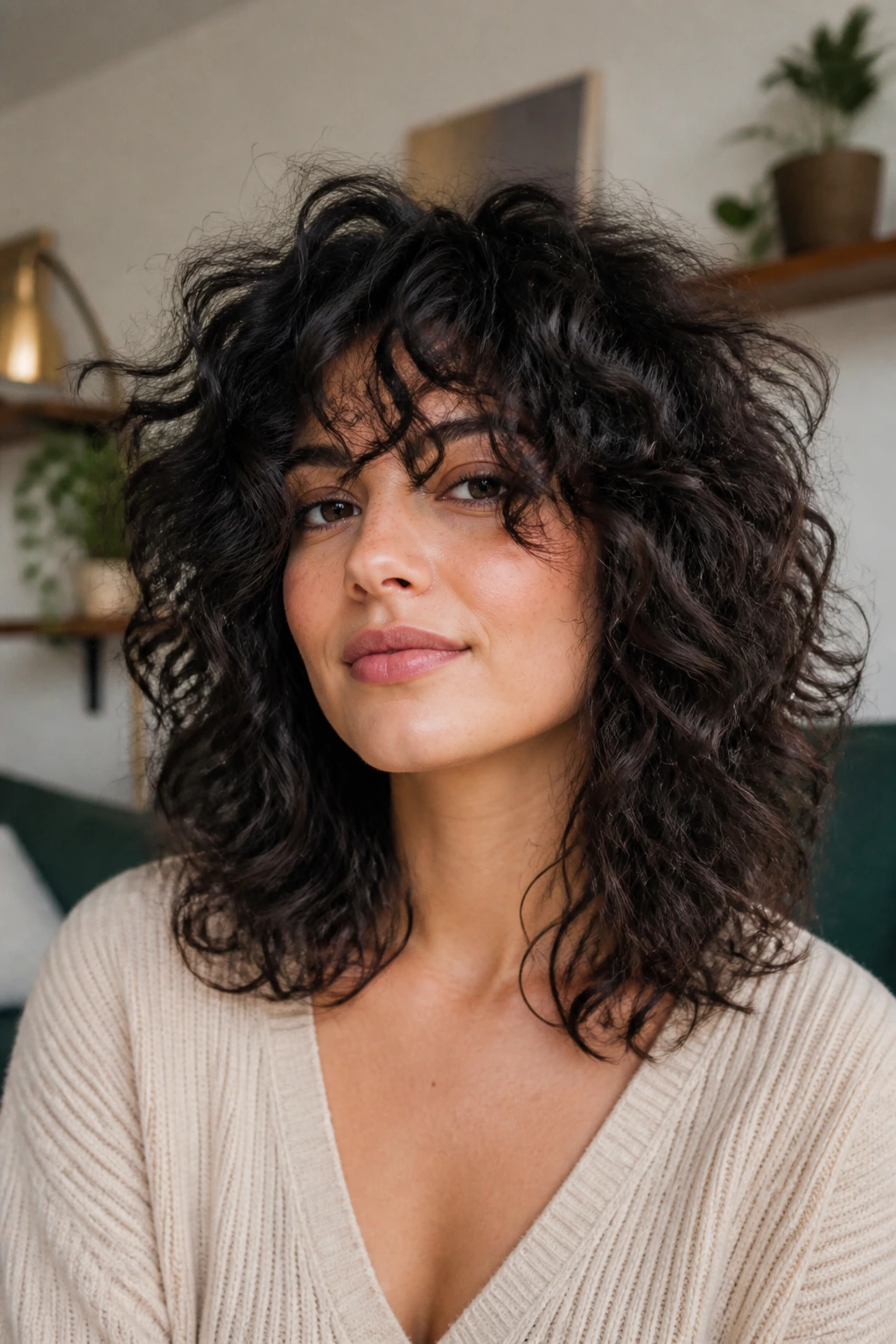
Picture thick curls that balloon out at the sides by lunchtime. That’s the problem this cut solves.
A shoulder-grazing shag removes weight where dense curls tend to pile up, but it leaves enough length to keep the shape from going fuzzy. It’s one of my favorite options for people with a lot of hair who are tired of choosing between “too heavy” and “too big.” You get movement, but you also get control.
The secret is balance. Layers should be placed around the ears and through the crown so the top can lift, while the bottom still carries enough weight to sit neatly on the shoulders. If the stylist chops too high all over, the cut loses its backbone. If they leave everything heavy, you’re back to triangle territory.
- Ask for internal layers, not endless surface layers
- Keep the front pieces slightly longer to frame the jaw
- Let the neckline stay soft instead of razor sharp
- Use a diffuser only until about 80 percent dry, then air-dry the rest
That last bit matters. Thick curls often look too puffy when they’re overhandled. Stop early. Let them finish on their own.
5. Soft Wolf-Cut Shag With Natural Texture
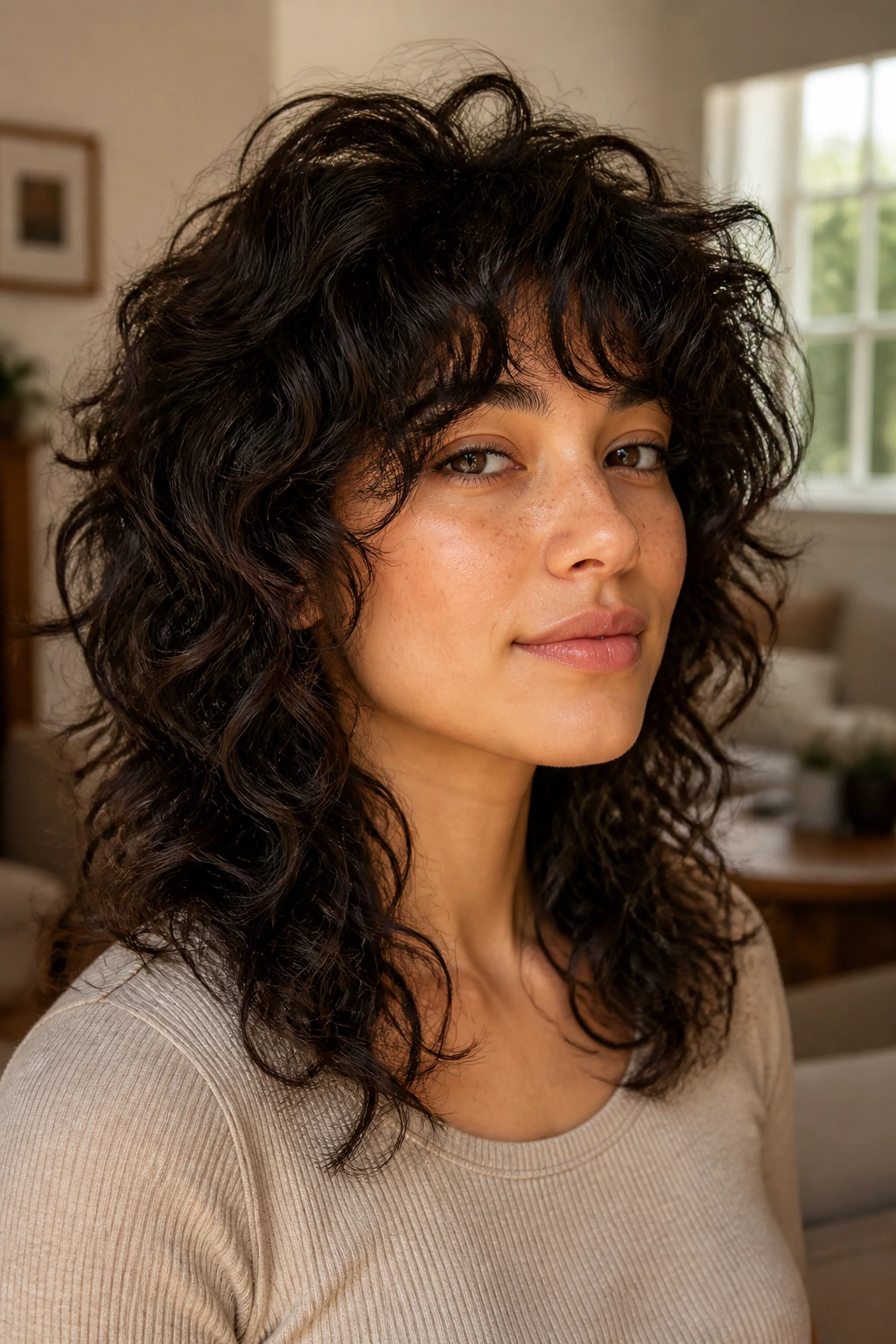
The wolf cut gets a bad reputation when people overdo it, but on curls it can be excellent.
What makes it different from a classic shag is the attitude in the back. There’s usually a little more length left at the nape, a little more lift around the crown, and a slightly wilder outline overall. On natural curls, that can look cool instead of try-hard, as long as the layers are softened enough to move.
Length does not have to mean heaviness.
That’s the whole point here. A soft wolf-cut shag keeps the shape loose, not spiky. The top layers should be short enough to create height, but not so short that the cut turns into a helmet. The back can trail a little longer, which gives the style a hint of mullet energy without going full costume.
This one suits people who like a cut that looks best when it’s a bit imperfect. Air-dry it, scrunch a little gel through the ends, and leave it alone. If your curls have a natural bend and some grit, the style will do the rest.
6. Curly Shag With Bottleneck Bangs
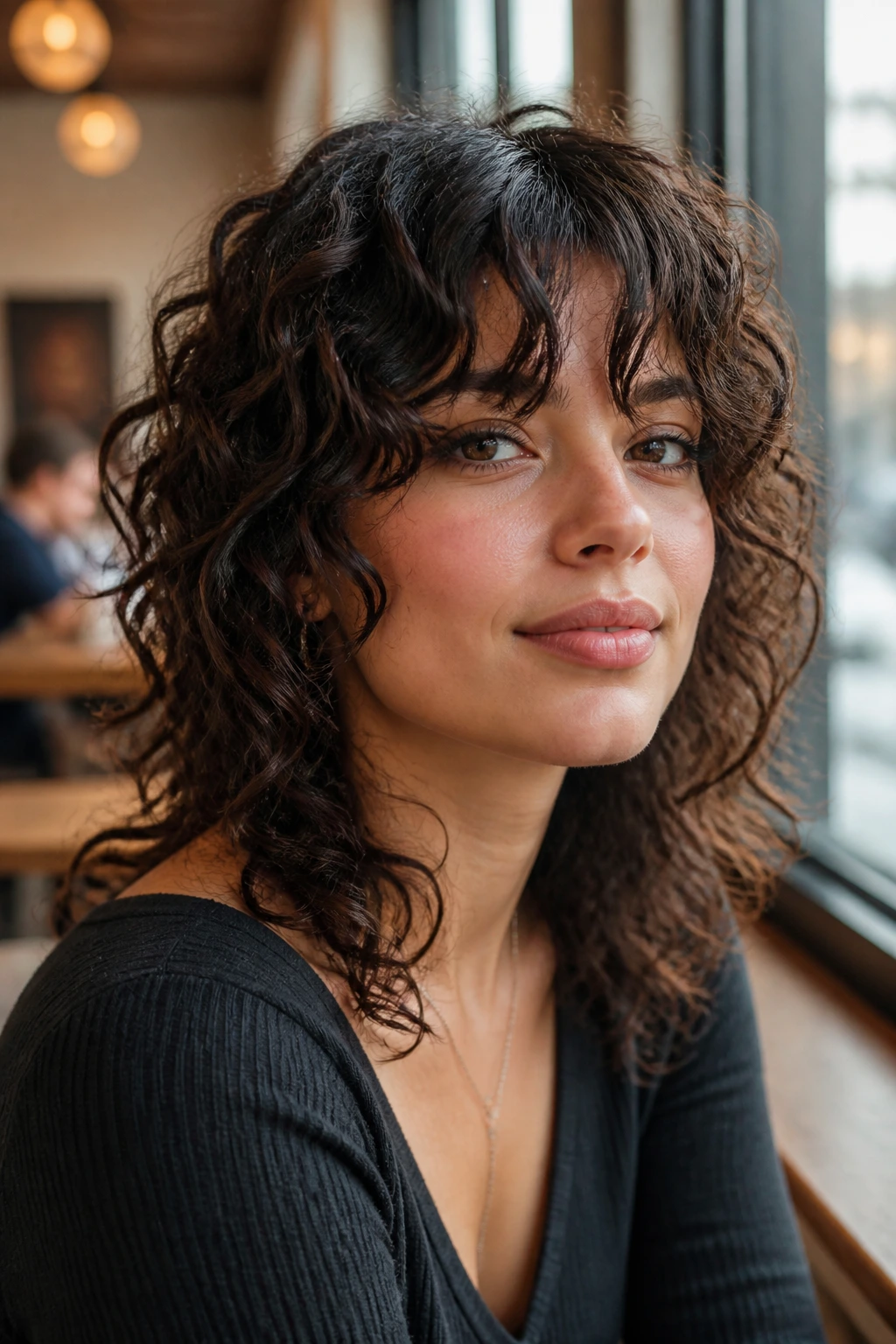
Bottleneck bangs are the safest fringe for a curly shag.
They start narrow between the brows, then open out near the cheekbones, which makes them easier to live with than a straight-across bang. On curls, that shape gives you face framing without a hard line. It also grows out more gracefully, and honestly, that matters more than people admit. Bangs look romantic on day one. On day forty, you want them to still make sense.
If your hair has a loose-to-medium curl, this cut can be a dream. The bangs should be left long enough to sit around the bridge of the nose when stretched, then shaped so the sides melt into the rest of the layers. That means the fringe feels part of the haircut instead of a separate event.
What to Ask For
- Keep the center shorter, but not blunt
- Let the sides open out toward the cheekbones
- Avoid over-thinning the fringe
- Use a round brush only if you want a softer bend; otherwise, diffuse and let the curl pattern show
The best part? Bottleneck bangs make a shag look finished even on a plain wash-and-go day.
7. Shoulder-Length Curly Shag for Dense Coils
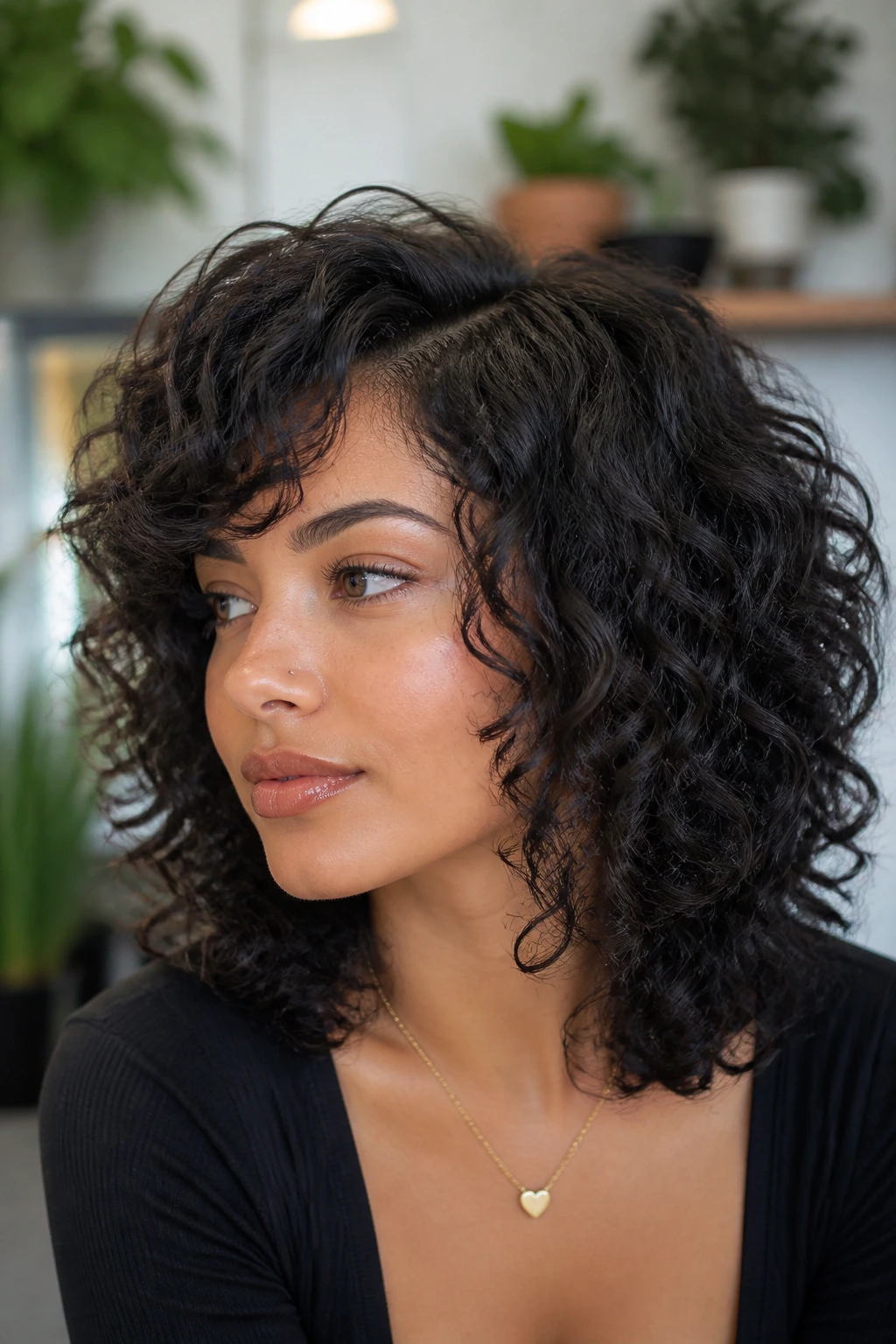
A shoulder-length shag can be a lifesaver for dense coils that need space.
This cut sits in that sweet spot between short and long. It gives the coils room to stack and spring, but it doesn’t ask them to support too much weight. The shoulders become part of the shape, which sounds odd until you see it. Then it makes perfect sense.
Dense hair usually needs thoughtful debulking, not aggressive thinning. That distinction is huge. You want the inside of the haircut to lose bulk so the outer shape can move, but the perimeter should stay strong enough to hold the line. If the ends get too wispy, the whole haircut expands in humidity and starts looking tired.
I like this version with a side part or a soft off-center part because it keeps the silhouette from feeling too round. It also works if you wear glasses, since the curls can sit just above the frames instead of crowding them.
It’s a practical shag. Not boring. Practical.
8. Micro-Bang Curly Shag
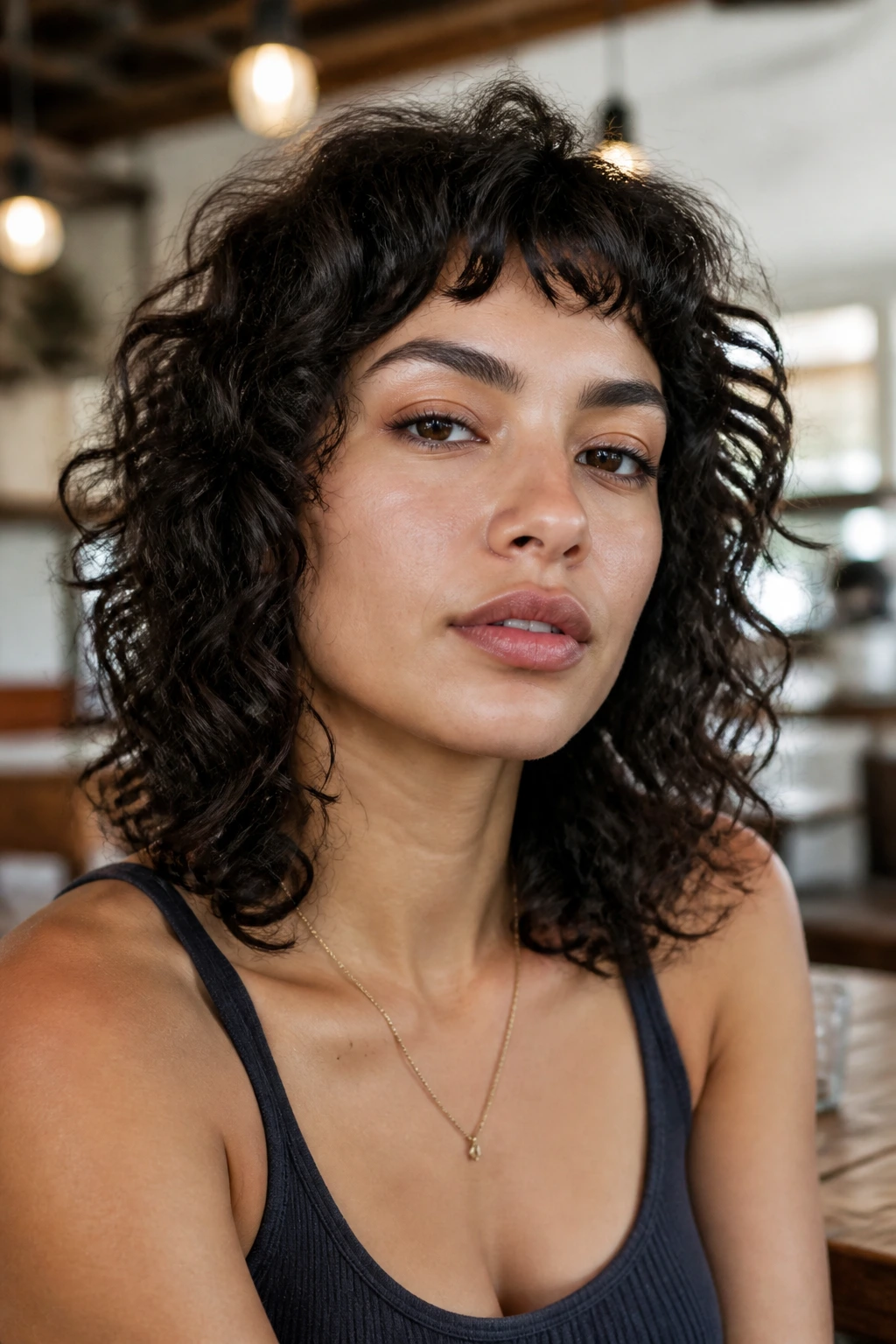
Can a short curly shag look tidy instead of fuzzy? Yes, if the bangs are handled with a little nerve.
Micro bangs on curls are not subtle. They sit high on the forehead, usually above the brow line even after shrinkage, and they make the whole haircut feel sharper. The rest of the shag should be loose and airy so the fringe becomes the point of focus. If everything is short and busy, the cut loses shape fast.
Short curls are honest.
They show every line, every cowlick, every uneven layer. That’s why this style works best when you like a little drama and you are fine with the hair doing its own thing. It’s especially striking on tighter curl patterns that naturally spring up around the temples and forehead.
What to Watch For
The fringe should not be cut too wide. A narrow micro bang with soft edges is easier to live with than a thick block of hair across the forehead.
Leave the sides long enough to frame the cheekbones. That keeps the haircut from looking like a bowl.
If you want low maintenance, skip this one. If you want a cut that looks like it has a point of view, here you go.
9. Deep Side-Part Curly Shag

Some heads of curls only start behaving once the part moves off center.
A deep side-part shag creates instant asymmetry, and that changes the whole mood of the haircut. One side gets more lift, the other side falls closer to the cheek or jaw, and the face opens in a way a center part never quite manages. It’s one of the easiest tricks in the book, but people ignore it far too often.
The cut itself should still have shaggy layers, but the side part gives those layers a job. The heavier side can hold longer pieces near the chin, while the lifted side shows more crown volume. That contrast keeps the haircut from feeling flat. It also helps with rounder face shapes, though I’d argue almost anyone can wear it if the length is right.
- Works well when one side of your curl pattern is stronger than the other
- Gives a flattering lift at the roots without extra teasing
- Makes second-day hair easier to reshape
- Looks especially good with a tucked side or one pinned-back section
A deep side part is not a gimmick. It’s shape control.
10. De-Bulked Shag for Very Dense Coils
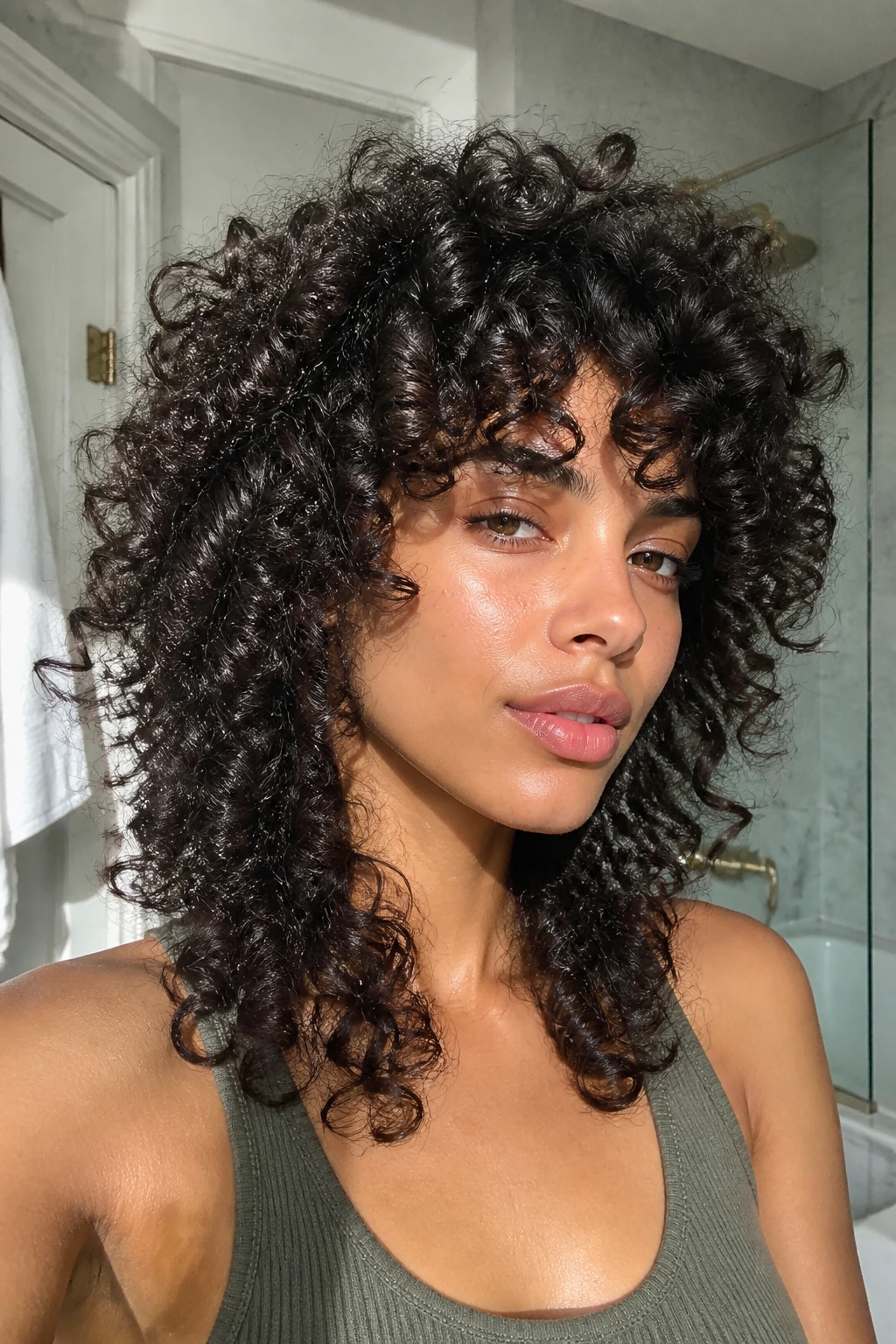
A de-bulked shag is not a timid cut.
It’s the one I’d pick for dense coils that eat up shape the second humidity shows up. The goal is to remove bulk from the inside without shredding the silhouette. That means the stylist should leave the visible outline strong and use the layering to reduce the heavy spots underneath. You want lift, not frizz-bait.
This matters because dense curls can look amazing and still feel impossible to manage if the cut is wrong. Too much weight at the crown pulls everything down. Too much thinning at the ends leaves the hair frayed and puffy. The sweet spot is somewhere in the middle, where the shape can breathe but still feels solid.
For this cut, the best result usually comes from longer visible layers and careful interior shaping. Ask for the perimeter to stay full. That’s not a small thing. It keeps the haircut from turning into a cloud you can’t tame.
If your hair is dense, this is the kind of shag that respects your hair instead of fighting it.
11. Curly Mullet With Soft Edges
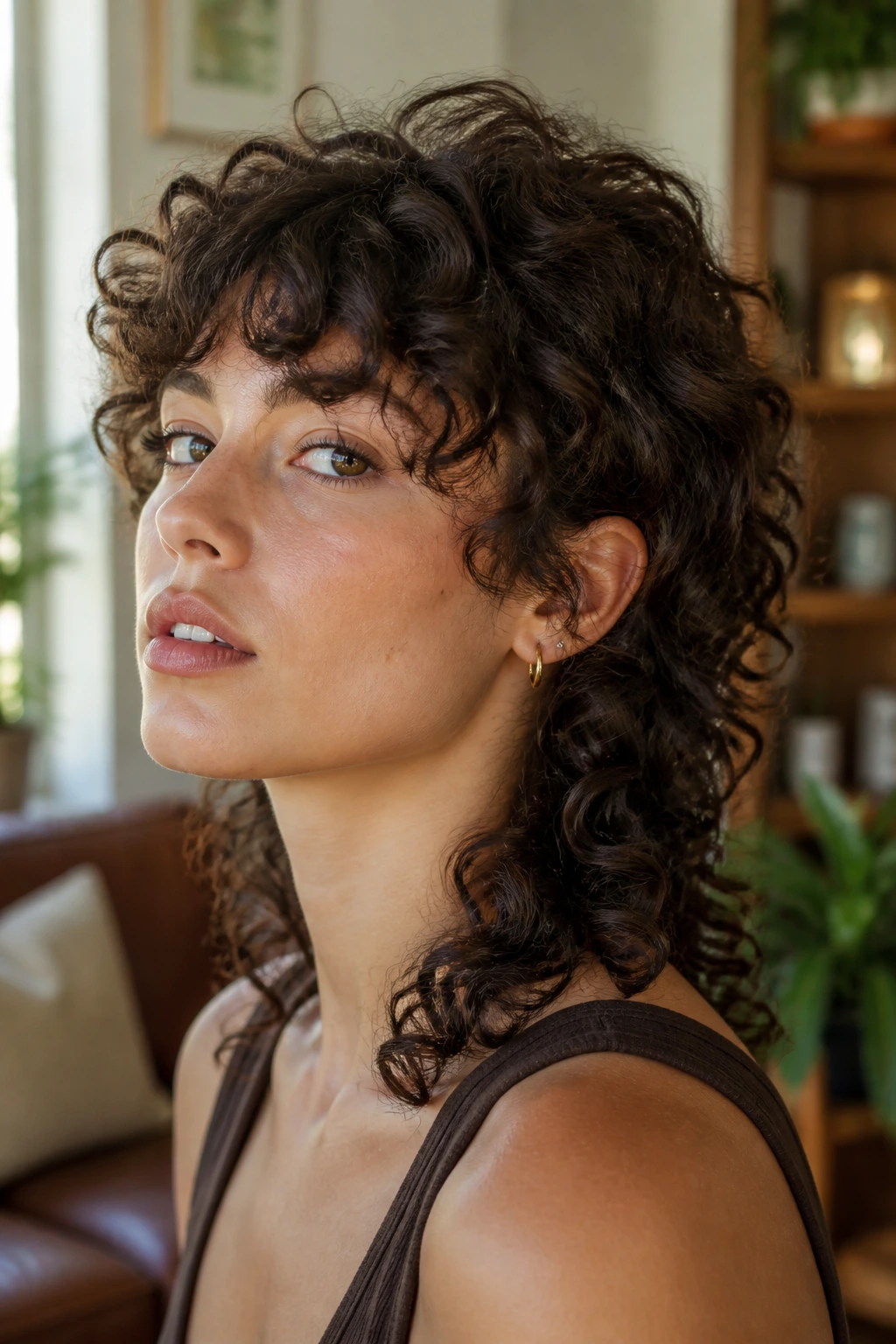
The modern curly mullet is softer than people expect.
The front stays shorter, the crown gets some lift, and the back keeps a little more length. But the sharp, punky version most people picture is not the one I’m talking about here. On curls, a softer mullet-shag hybrid can be incredibly flattering because it gives movement without making the head look bottom-heavy.
Why It Works
The shorter top keeps the shape lively. The longer back lets the curls hang in a more relaxed way, which is useful if your hair tends to puff at the sides. A soft mullet also makes room for texture around the ears and jaw, so the haircut feels casual instead of severe.
It works best when the transition from short to long is blurred. No hard step. No obvious shelf. The layers should melt into each other so the cut reads as shaggy first and mullet second.
If you want a little edge but do not want to commit to a full dramatic chop, this is a smart middle ground. It has personality. It also grows out better than people think.
12. Layered Lob Shag for Busy Mornings
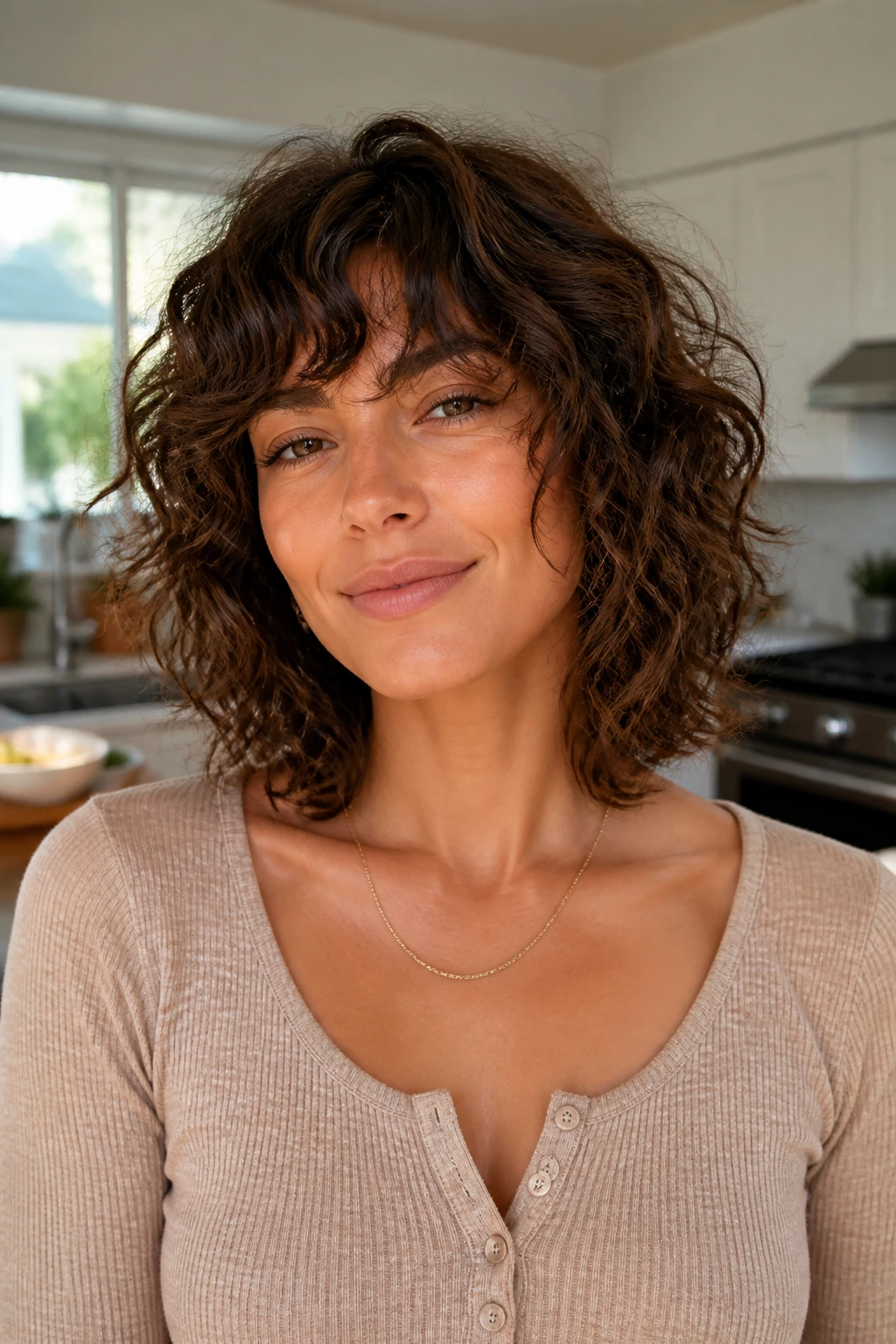
Need a curly shag that can live under a collar and still look good loose? This is the one.
A layered lob shag sits around the collarbone, which makes it easy to tuck, pin, or leave out. The length is practical, but the layers keep it from feeling flat or boxy. It’s the haircut I’d hand to someone who wants curls that look done without spending twenty minutes coaxing them into shape.
The collarbone length matters more than people realize. Hair at that point has enough weight to settle, but not so much that it drags the curl pattern down. The layers should be longer than in a shorter shag, with the face-framing pieces starting around the mouth or chin. That keeps the shape soft and wearable.
Styling Shortcut
If you’re in a hurry, scrunch in a light cream, diffuse for five to seven minutes, and stop before the roots get too dry. Let the rest air-dry. The cut does most of the work, which is exactly why this version is so easy to live with.
It’s the shag for people who want a low-drama morning.
13. Curly Shag for Fine Curls
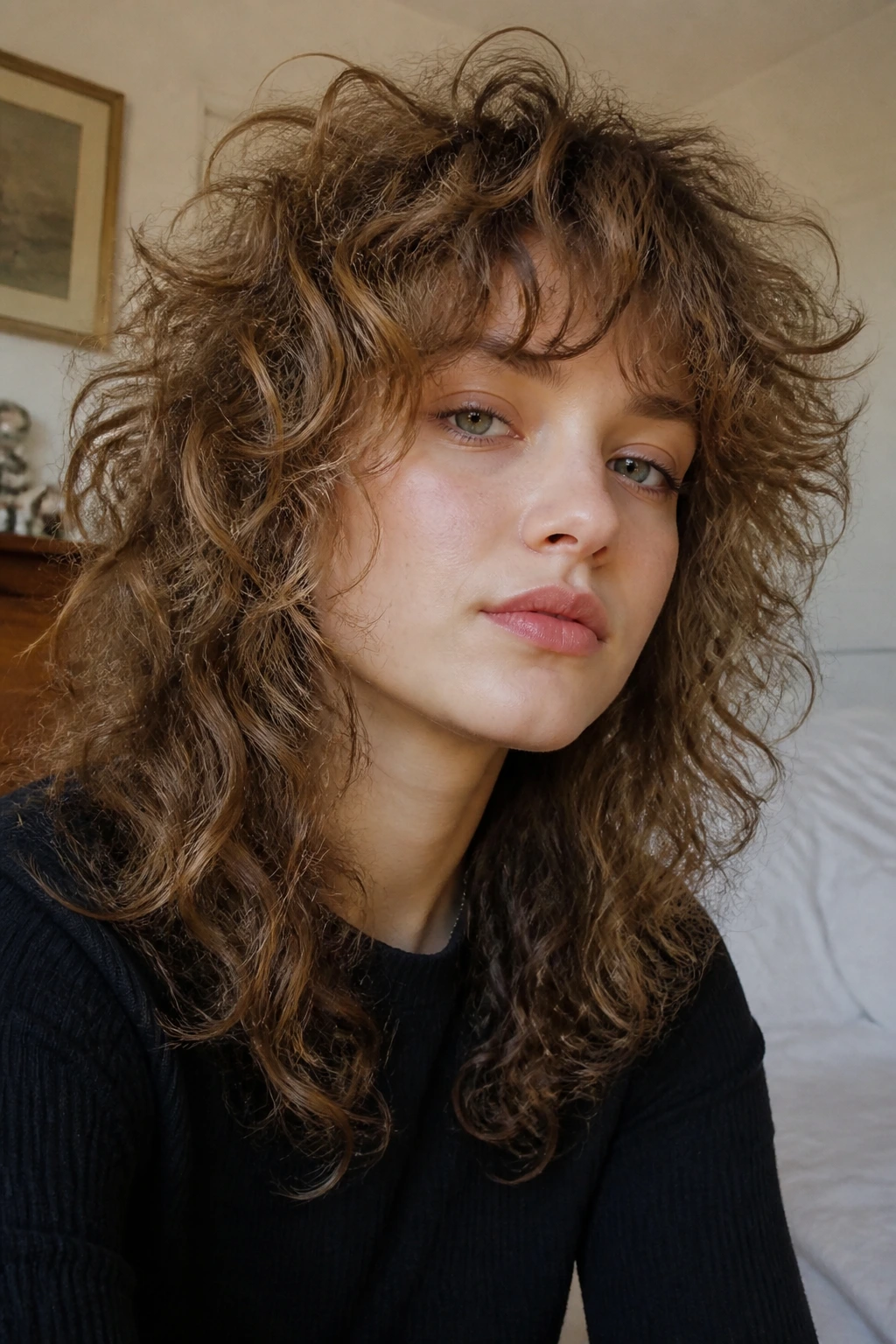
Fine curls need restraint.
That sounds backward if you’re used to seeing huge shag haircuts with piles of layers, but on fine hair, too much chopping can hollow everything out. You want shape, yes. You do not want the ends to look sparse. The right curly shag for fine curls keeps the layers longer and the perimeter a little fuller, so the hair still reads as substantial.
The smartest move is to create movement mostly around the face and crown. That gives the haircut lift without taking away the body that fine curls already struggle to keep. A soft fringe can help too, as long as it’s not over-thinned. I’d rather see a heavier bang that can be split than wispy bits that disappear.
The mistake to avoid is the “more layers must mean more volume” trap. Sometimes it does. Often it doesn’t. On fine curls, the result of too many layers is a cut that looks airy for three hours and stringy by dinner.
Keep it light, but not hollow. That’s the line.
14. Asymmetrical Curly Shag
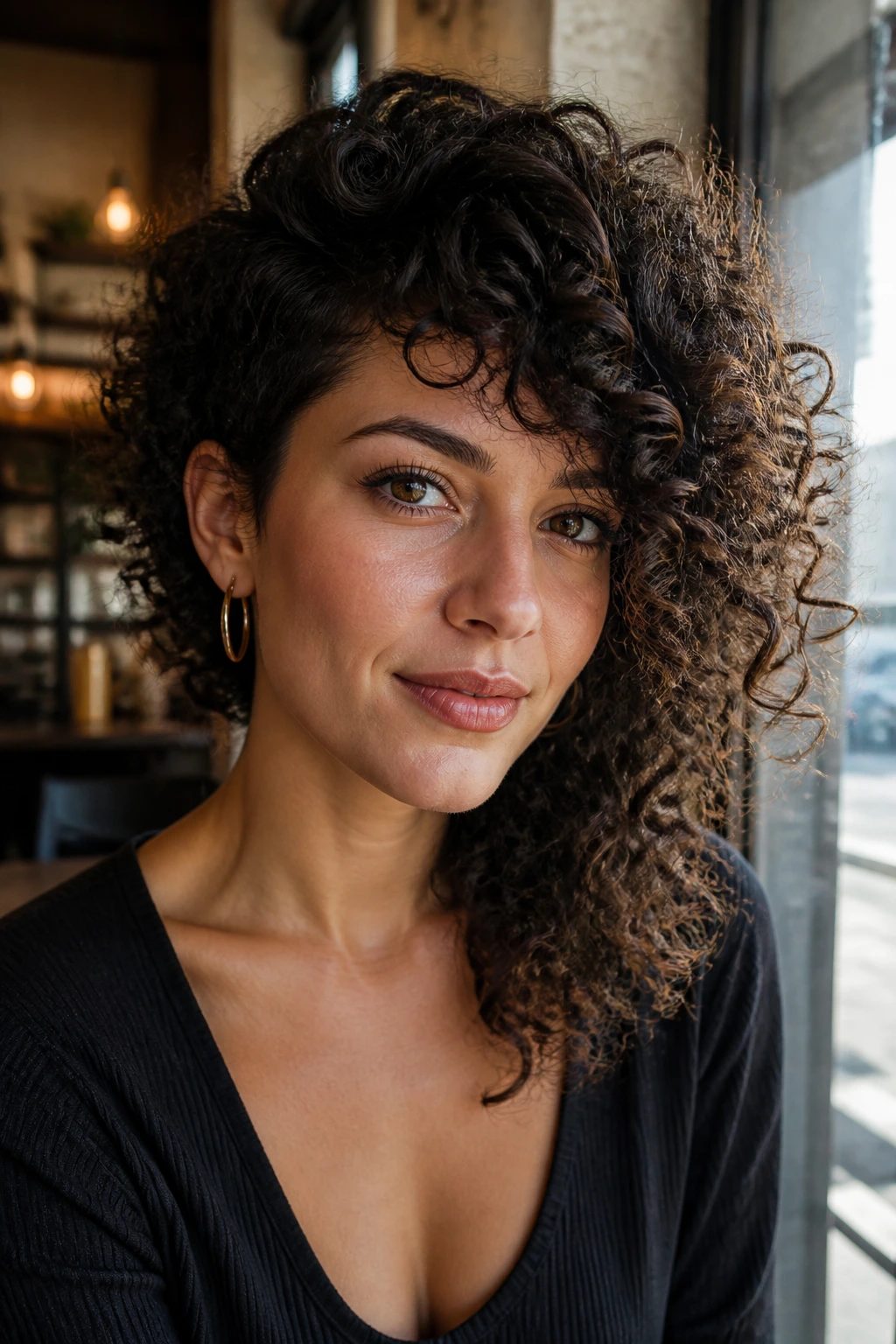
An asymmetrical shag changes the whole mood with one move: one side is a little longer.
That tiny imbalance makes curls look deliberate. It also helps if one side of your hair naturally behaves better than the other, which is more common than people admit. Instead of forcing the hair into a perfect mirror image, the cut leans into the difference and makes it part of the design.
I like this style on people who wear one ear tucked or like to flip their part often. The longer side can brush the jawline, while the shorter side opens the cheekbone. The shape feels cool without needing a lot of styling. You can keep the rest of the shag soft and let the asymmetry do the talking.
- Best with a side part or a deep off-center part
- Works well for medium-density curls
- Needs a clean outline so it doesn’t drift into randomness
- Pairs nicely with a fringe that sweeps to one side
If you like haircuts that look a little sharper than the usual shag, this one gives you that edge without making the curls lose their softness.
15. Halo-Shaped Curly Shag
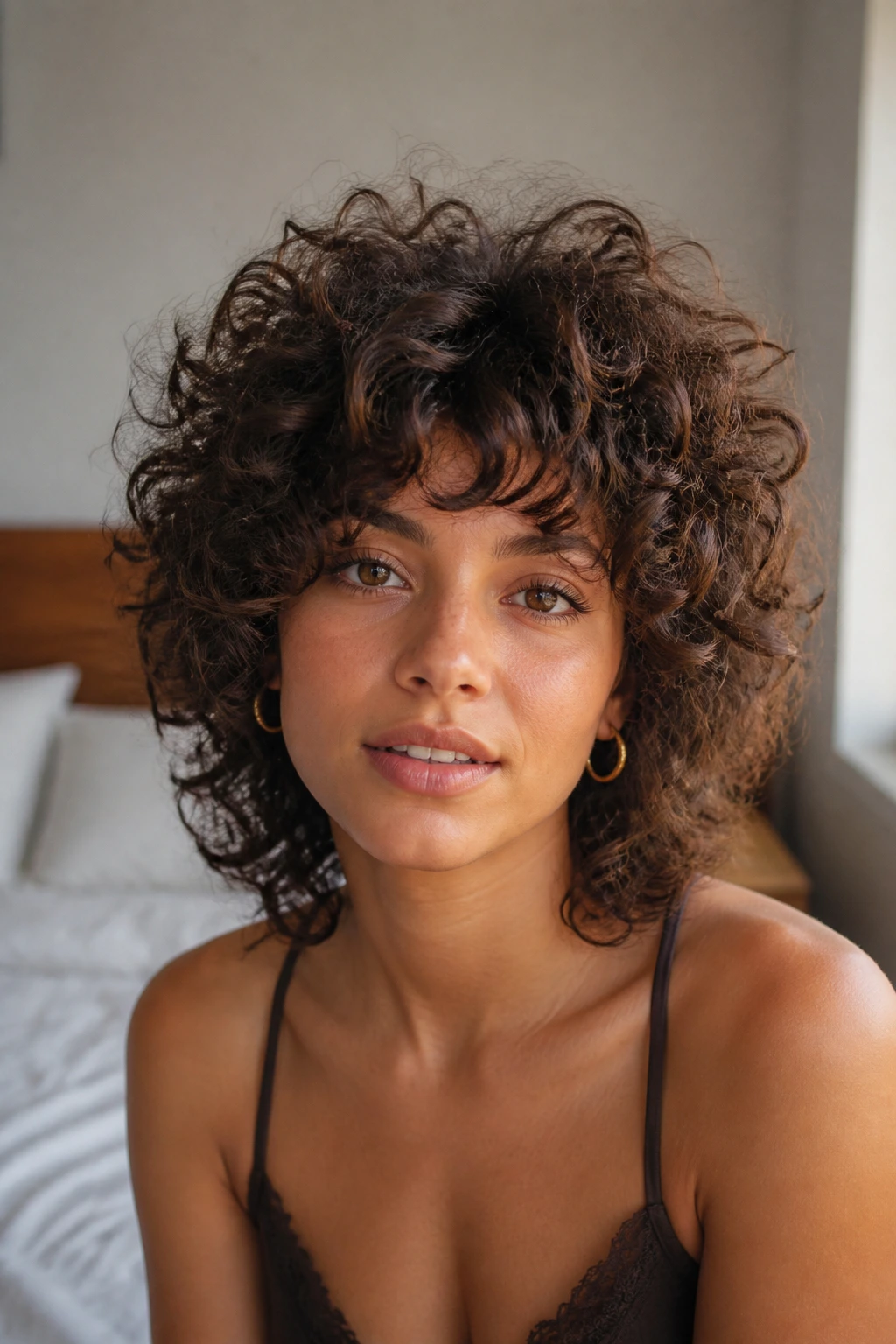
If your hair gets flat at the crown, a halo shape fixes the silhouette.
This cut builds roundness around the upper half of the head so the curls sit up and out instead of sinking into the sides. It’s a gorgeous option for people with a lot of top density or curls that like to droop near the crown. The halo effect gives the haircut life from every angle, which is why it photographs so nicely and still looks good in motion.
Where the Shape Sits
The shortest layers belong near the top and upper sides, not scattered all through the ends. That creates the lifted ring of volume that makes the halo shape work. The lower lengths should stay longer and softer so the hair doesn’t flare out too aggressively.
This one is especially good if you like a rounded silhouette and don’t mind a little extra volume around the head. It can feel almost cloud-like, but in a controlled way. The trick is keeping the edges soft so the shape doesn’t look puffy or overbuilt.
Not every curly haircut needs to be sleek. Some should just look alive.
16. Tapered-Nape Curly Shag
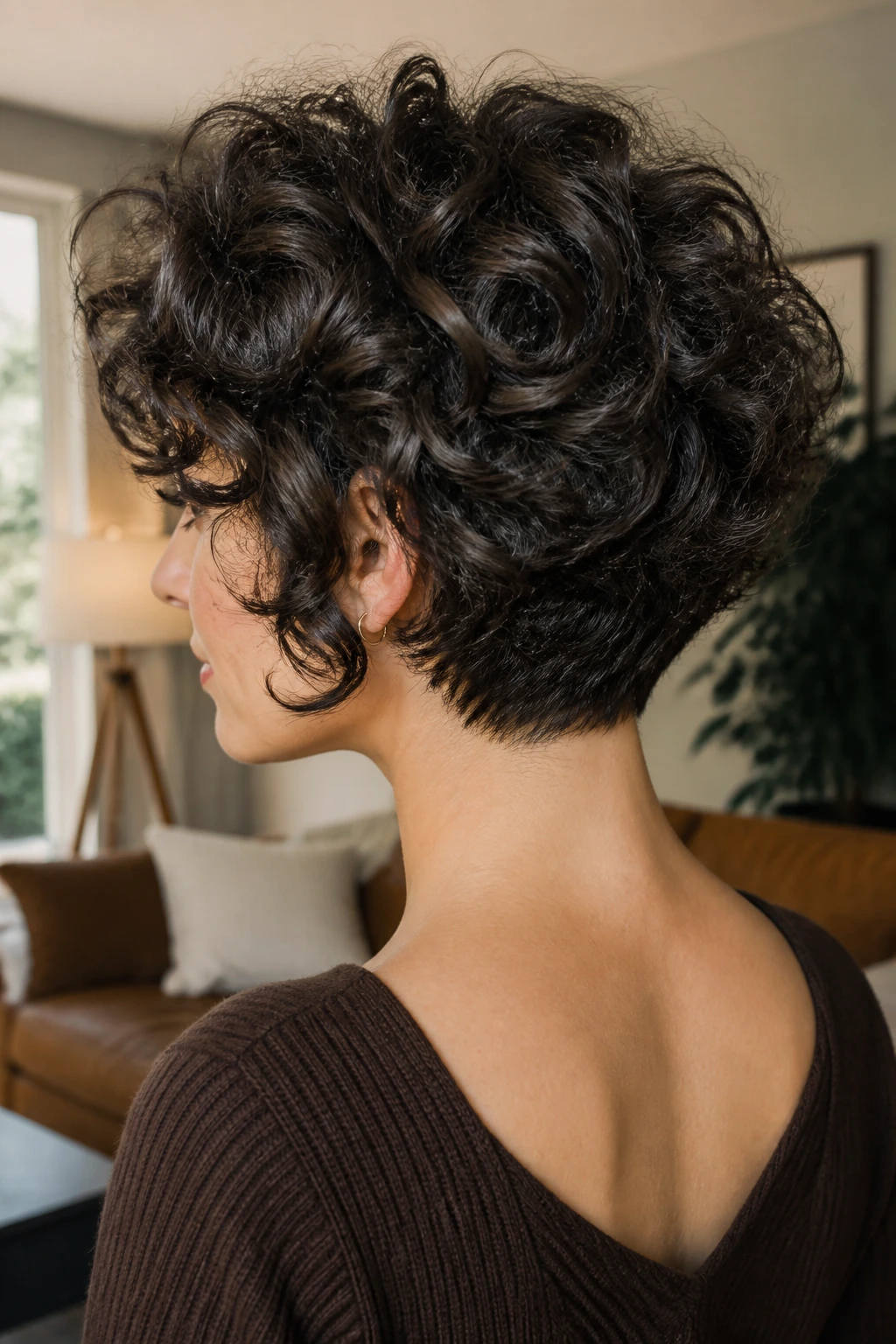
Why do some curly shags look sharp from the back and soft from the front? The nape.
A tapered nape pulls the weight in close at the back of the neck, which makes the rest of the haircut feel lighter and cleaner. Up front, you can still keep cheekbone layers, bangs, or a little wolf-cut energy. From behind, though, the taper gives the haircut a proper finish. It stops the back from ballooning out under sweaters and collars.
This is a really good option for people who hate that thick, fuzzy shelf that some layered curls create at the neck. The taper should be gentle, not shaved down or too tight. You want the curls to stack naturally, just with less bulk at the base.
The Back View Matters
A lot of people only think about the front of the cut. Big mistake.
The back is what makes a curly shag feel polished instead of accidental. If you wear your hair up sometimes, the tapered nape also helps the ponytail look cleaner. If you leave it down, the shape still feels tidy from the side.
It’s a small detail. It changes everything.
17. Jaw-Length Curly Shag
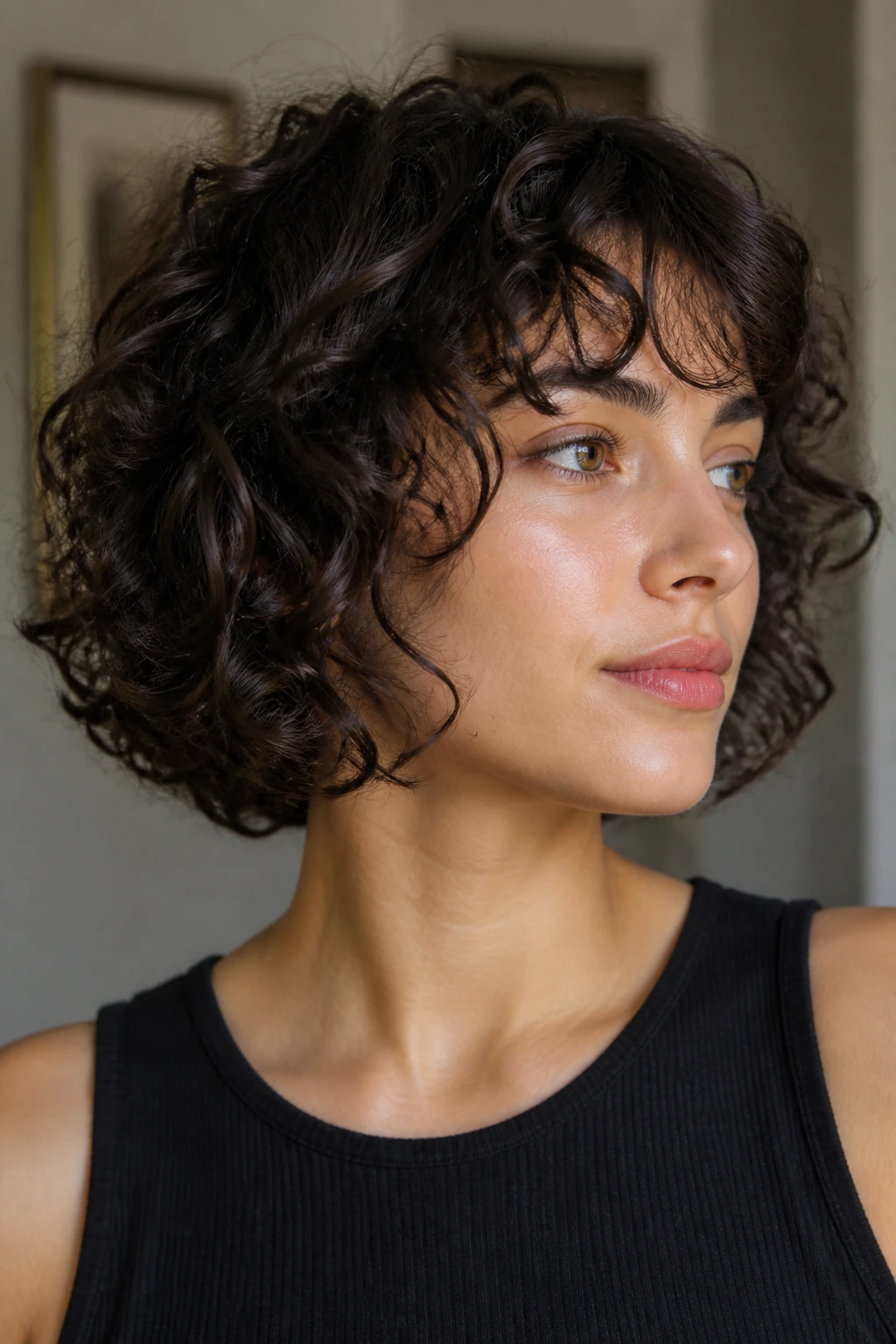
A jaw-length shag is brave, but it pays off fast.
This cut puts the curls right where the face needs framing most: around the jaw, the chin, and the neck. It can make strong bone structure look even sharper, and it gives looser curls a compact, lively shape that never feels dull. If you want short hair but you don’t want a pixie, this is a strong middle path.
The thing to respect here is shrinkage. Jaw-length on stretched hair may land much higher once dry, especially if your curls are springy. That means the cut should be planned with the dry finish in mind. Otherwise you end up with a shape that’s far shorter than expected, and that’s not a fun surprise.
- Works best on people who like visible face framing
- Needs enough density to avoid a wispy outline
- Can be styled with a side sweep or short fringe
- Feels light around the neck, which is useful in warm weather or just for comfort
It’s a clean, direct haircut. No hiding.
18. Long Fringe Curly Shag
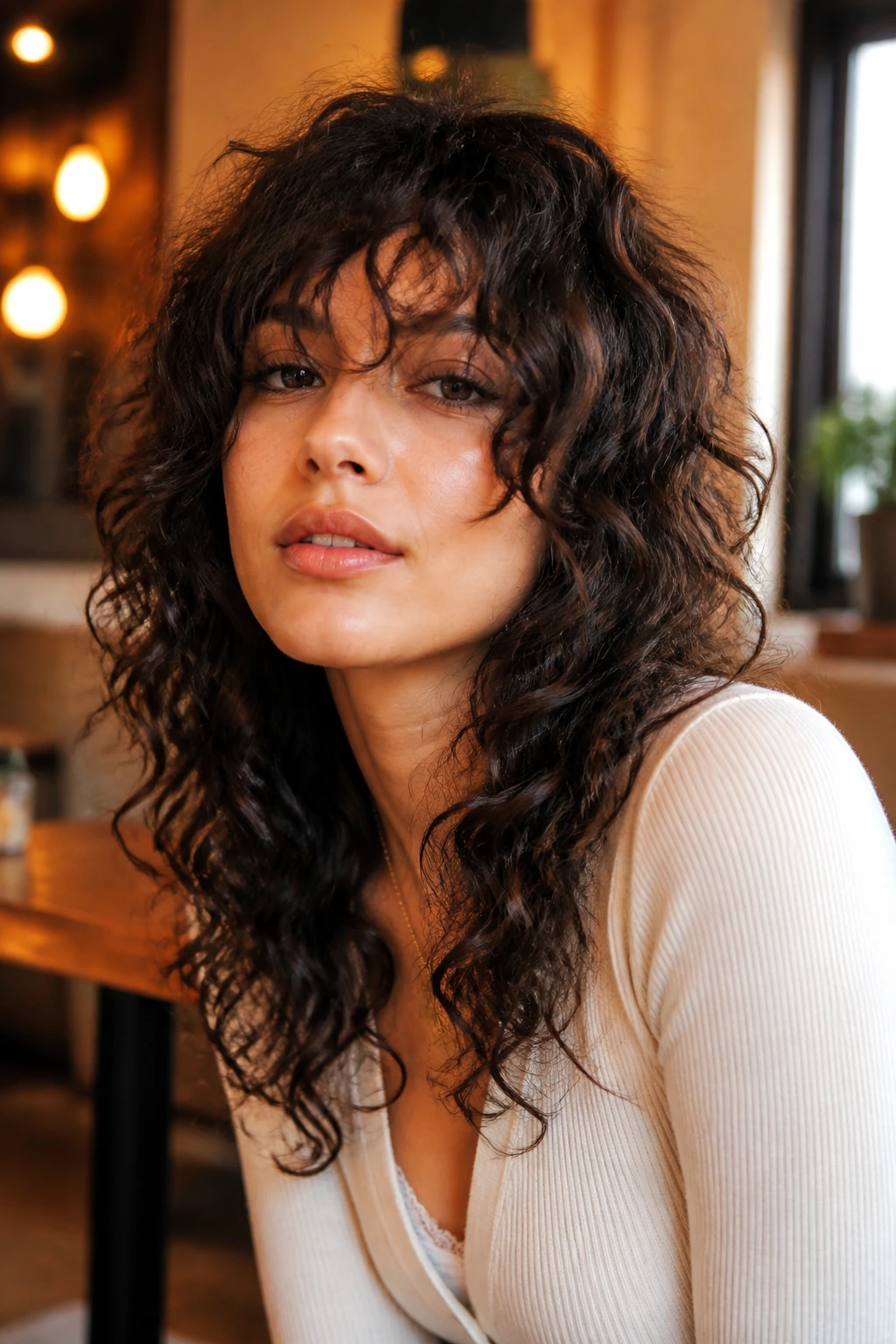
A long fringe is the easiest way to add drama without locking yourself into bangs you hate three weeks later.
That’s why I keep recommending it. The fringe can hit around the lashes when stretched, then spring up to a softer line when dry. It can split down the middle, sweep to one side, or tuck behind the ear when you’re tired of seeing it. In curly hair, that flexibility is gold.
The rest of the shag should stay loose and layered so the fringe doesn’t look disconnected. I like longer front pieces that merge into the cheek and jaw area. That way the bangs feel like part of the cut, not a decorative add-on.
Hair in the eyes gets old fast.
A long fringe solves that without making you commit to a short bang life. It’s especially useful if your hairline has a few cowlicks, because the extra length gives the curls more room to settle. If you’ve ever regretted bangs, this is the gentler entry point.
19. Open-Face Curly Shag
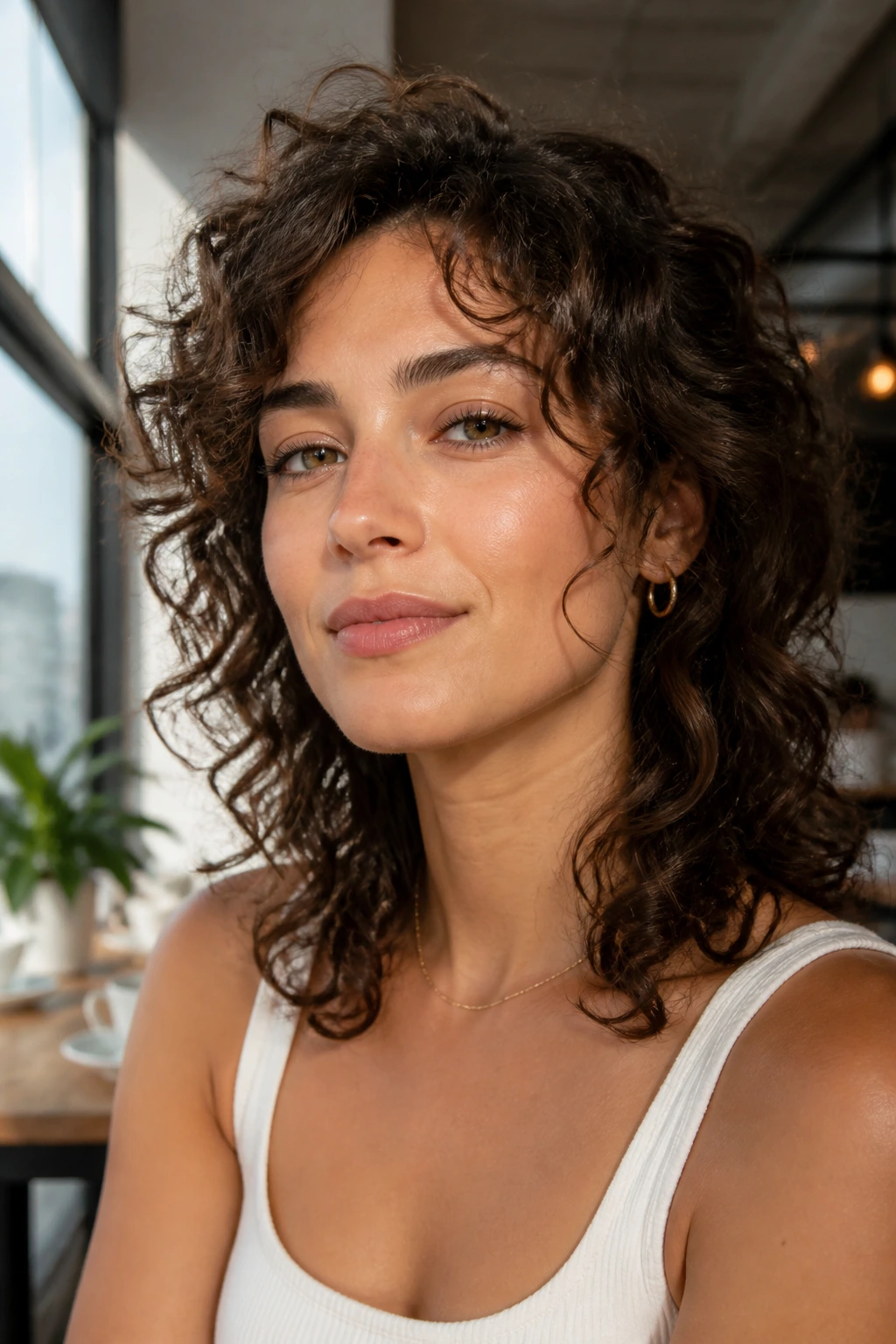
Unlike fringe-heavy cuts, this one keeps the whole face open.
That makes a bigger difference than people expect. When the front is free of heavy bangs, the curls around the temples and cheekbones get to frame the face without blocking it. Glasses sit better. Earrings show up. You can tuck one side behind your ear and still have a clear shape.
This is a good option if you like your curls to feel airy and easy, not busy. The layers should start around the cheekbone and continue downward in a soft cascade, with the shortest pieces kept away from the forehead. That keeps the cut relaxed and clean-looking even when the texture gets wild.
It’s also a smart choice for people who wear their hair up half the time. When you pull the curls back, the face-framing pieces fall out in a flattering way instead of leaving you with a blunt, awkward line. That’s a small thing. It saves a lot of annoyance.
If bangs are not your thing, this is the shag that still gives you shape.
20. Softly Tapered Curly Shag for Length Retention
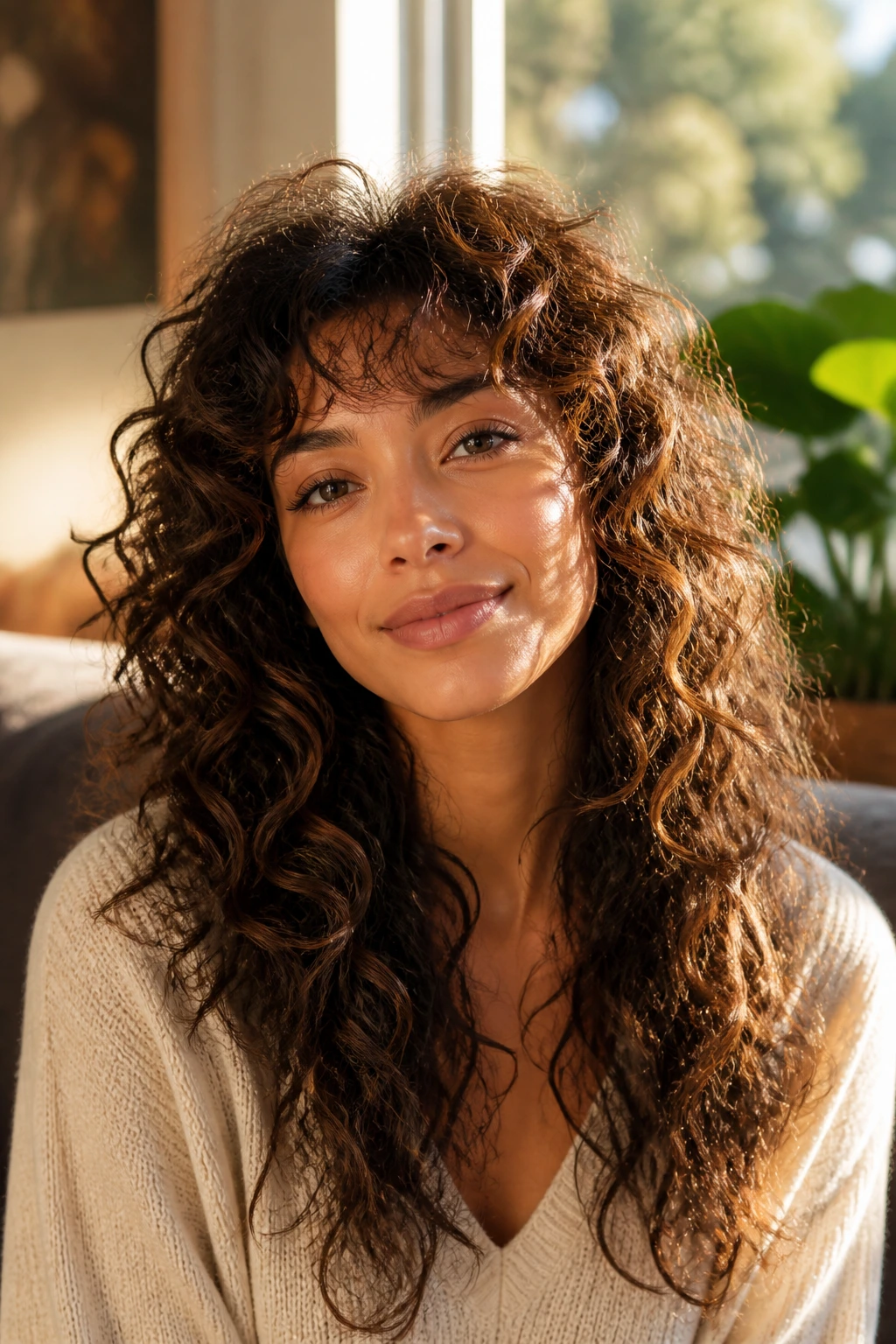
The best curly shag is sometimes the one that pretends not to be a shag at all.
This softly tapered version keeps most of the length and uses the layers in a quiet way. The crown gets a little lift, the sides lose some bulk, and the ends stay long enough to keep the overall outline calm. It’s the cut I’d choose for someone who likes the shag idea but is nervous about losing too much hair. Fair enough. That fear is common, and sometimes it’s justified.
What makes this version work is restraint. The layers should be spread out, not stacked too closely. The front can still frame the face, but nothing needs to be chopped high or made dramatic just for effect. You end up with curls that move more freely without losing the long line that some people really want to keep.
If you’re sitting on the fence, start here. It gives you the texture and softness people love about curly shag haircuts, but it keeps enough length to feel familiar. And that balance — not too chopped, not too safe — is probably why this cut keeps showing up in different forms over time.