



Shoulder length wolf haircuts hit a sweet spot that a lot of layered cuts miss: they keep enough length to tuck behind an ear, twist into a half-up knot, or brush onto the collarbone, but they still have the choppy crown and broken ends that make a wolf cut feel alive.
Cut it too blunt and you lose the shape. Cut it too hard and the sides can puff out like a triangle. The shoulder line matters because it gives the layers a place to land instead of letting them float into chaos.
That’s why this cut works on straight hair, waves, and curls alike. It can look soft and tidy with curtain bangs, or messy and sharp with razored ends; what changes is how much weight you leave in the ends and how much lift you build at the crown.
Some versions need a round brush. Others want nothing more than mousse, a diffuser, and a little patience. The difference between a flattering wolf cut and one that looks like an accident is smaller than people think, and it sits in the details.
1. Curtain Bang Wolf Cut
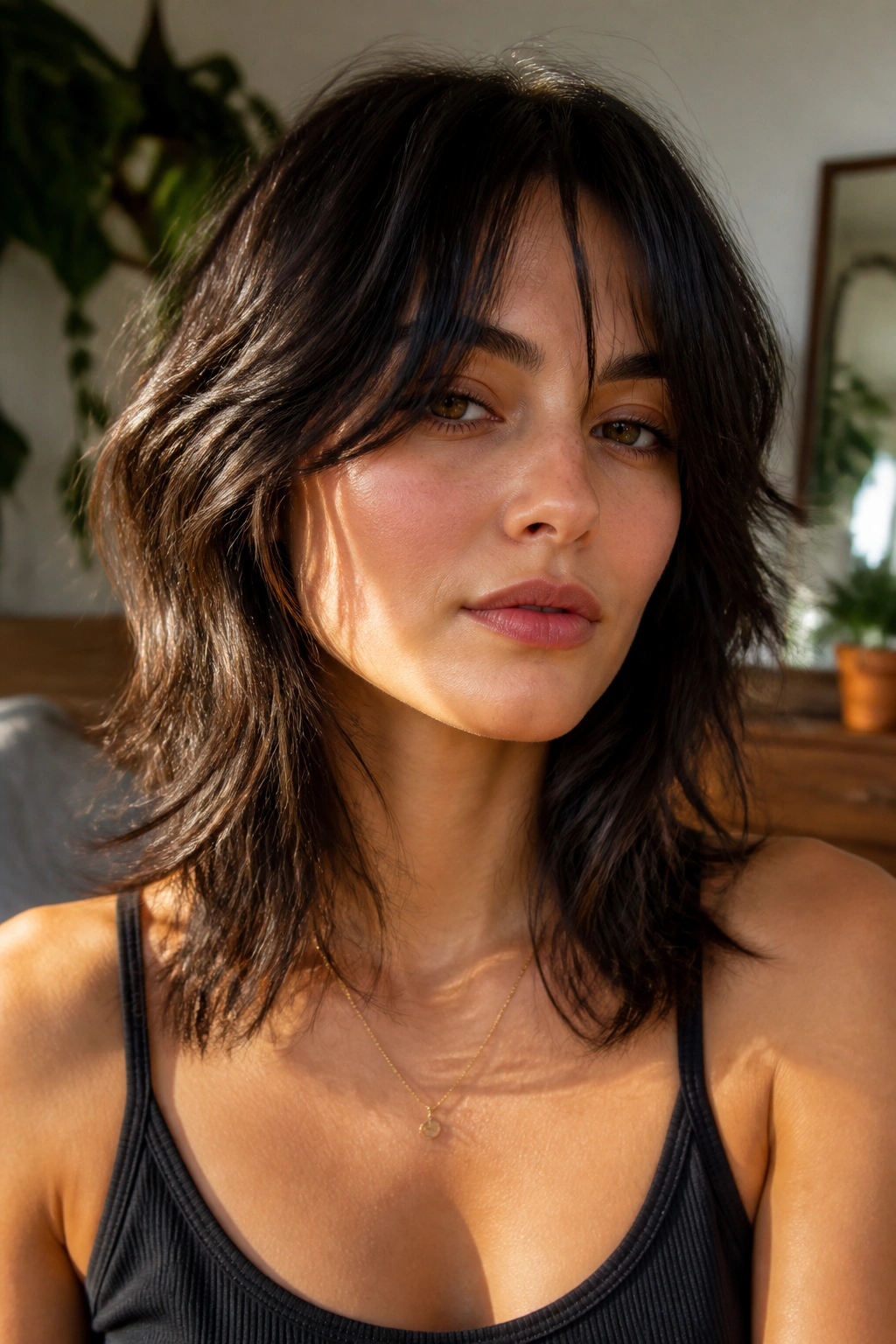
Curtain bangs are the easiest way to make a shoulder length wolf haircut feel soft instead of scrappy. The split fringe opens the face, while the layered crown keeps the cut from falling flat at the top.
I keep coming back to this version because it behaves. It grows out cleanly, works with a center or off-center part, and still tucks behind the ears when you need it out of the way.
Why It Works
The best curtain fringe starts a little lower than a classic bang, usually around the cheekbone zone, so it can fall away from the eyes and blend into the front layers. That keeps the line from looking boxy.
- Ask for the shortest face-framing pieces to hit around the cheekbone, not halfway to the jaw.
- Keep the crown layers soft, not chopped to pieces.
- Use a round brush only on the fringe, then let the rest air-dry for a looser finish.
Tip: If your hair is straight, bend the ends outward once with a 1-inch curling iron and stop there. Too much curl kills the easy shape.
2. Razor-Edge Wolf Cut
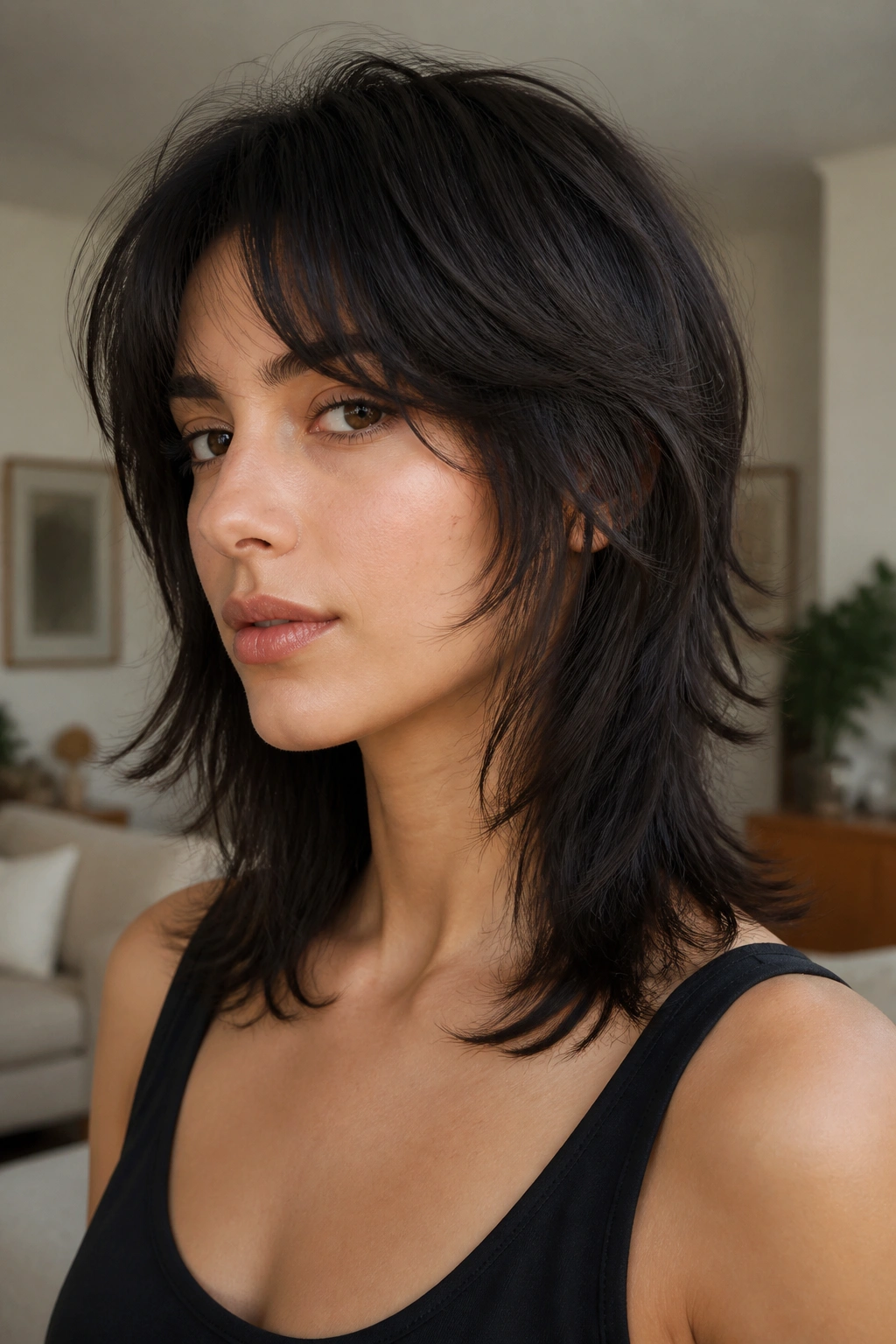
A razor edge makes this haircut look lighter without making it smaller. That matters on shoulder length hair, where blunt ends can look too tidy and heavy.
A razor creates broken, feathery edges that move when you turn your head. It gives the cut that lived-in swing people want, without making the whole shape look thin.
I’d keep this one for medium to thick hair that can handle some softness. Very fragile or over-processed hair can look wispy in the wrong way if too much weight gets removed.
Style it with a pea-size amount of matte cream on dry ends, then scrunch a little through the mid-lengths. You want separation, not crunch. And don’t drag product up to the roots — that’s how the crown goes limp by lunch.
3. Curly Shoulder-Length Wolf Cut
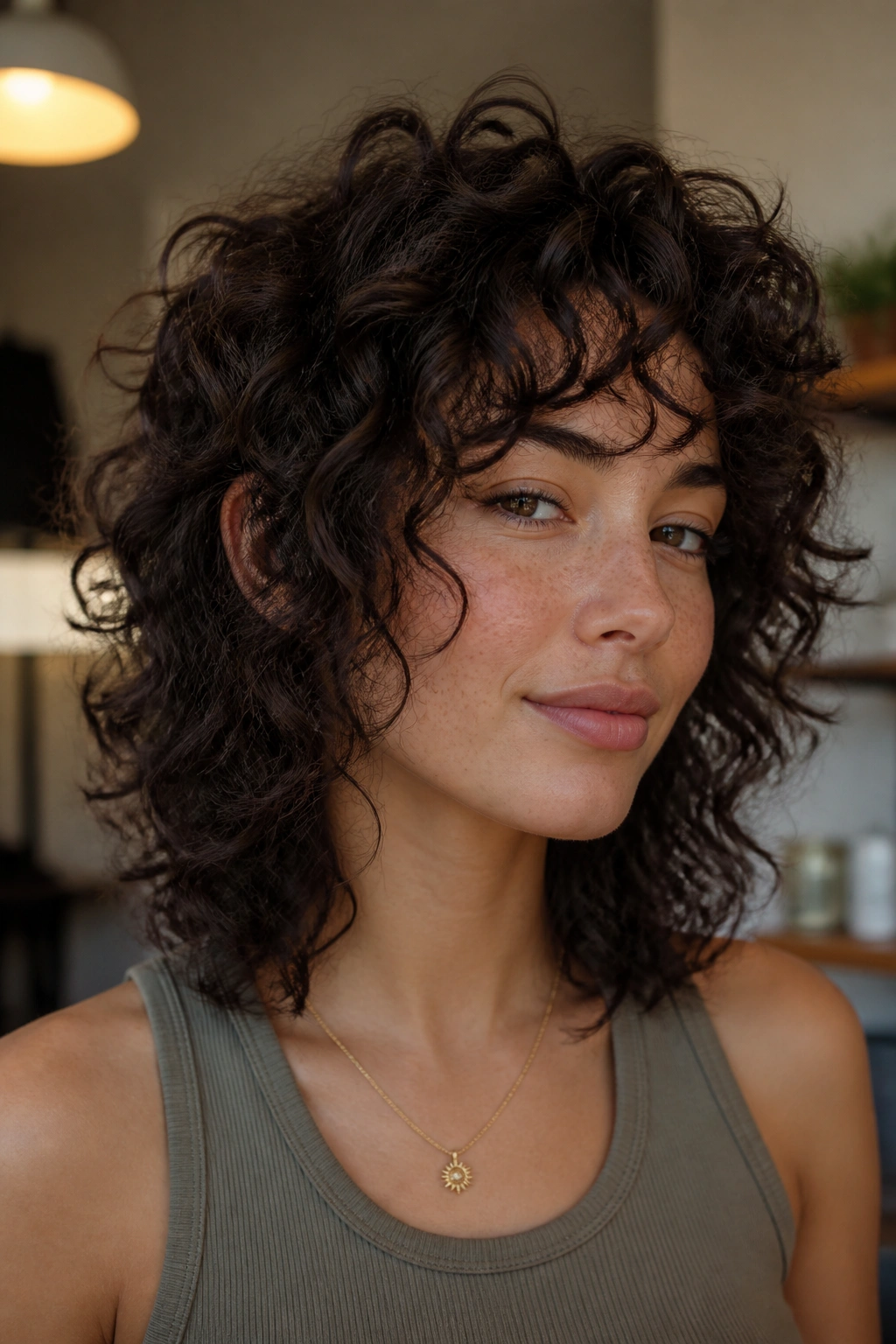
Can curly hair carry a wolf cut at shoulder length without turning into a triangle? Yes, if the stylist respects shrinkage and cuts it with the curl pattern in mind.
The worst curly wolf cuts are the ones that get chopped wet and then spring up into a stack of disconnected layers. A dry cut, or at least a curl-by-curl approach, keeps the perimeter where it should be and lets the top move without ballooning.
How to Style It
Use a light mousse on soaking-wet hair, scrunch once with a microfiber towel, then diffuse on low heat until the curls feel set but still flexible. A hard cast is fine; you can break it with a drop of serum after the hair is fully dry.
If your curls are loose, leave a little more length in the front so the face frame does not vanish. If they’re tighter, keep the crown layers softer than the ends. That small shift saves you from the mushroom effect.
4. Bottleneck Bang Wolf Cut
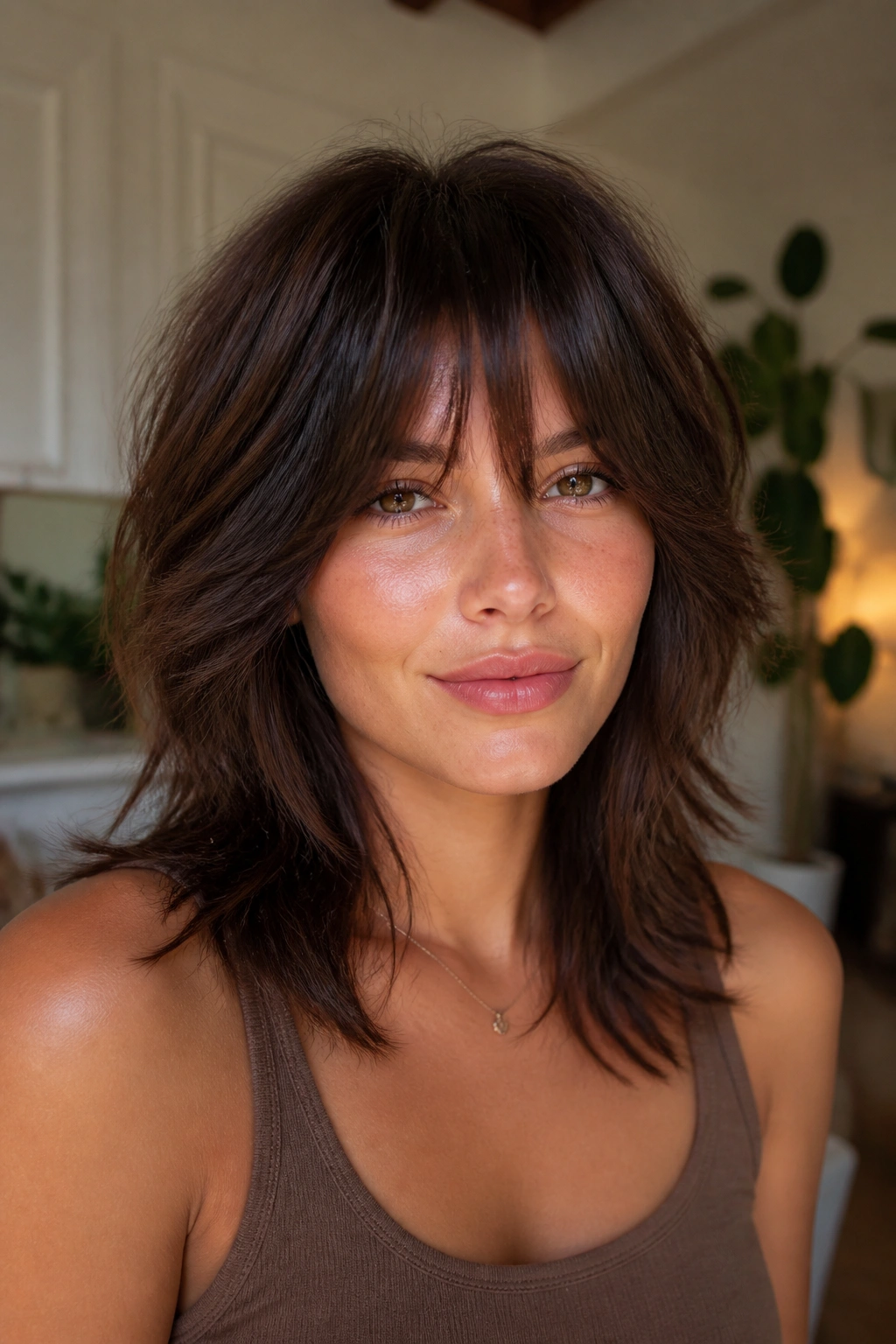
When a fringe sits too heavy across the forehead, the whole wolf cut feels like it is wearing a cap. Bottleneck bangs fix that by starting narrow in the center and opening toward the sides.
The shape is flattering because it gives coverage without blocking the face. You get a little drama at the brow, then the fringe melts into those shoulder-skimming layers.
- Keep the center bang section short enough to skim the brow, not dig into the lashes.
- Let the side pieces stretch to cheekbone length so they can blend into the front.
- Blow-dry the fringe first, before the rest of the hair gets damp and flat again.
Best move: use a tiny round brush just on the bang area, then finger-style the rest. It keeps the front crisp while the body stays loose.
5. High-Crown Volume Wolf Cut
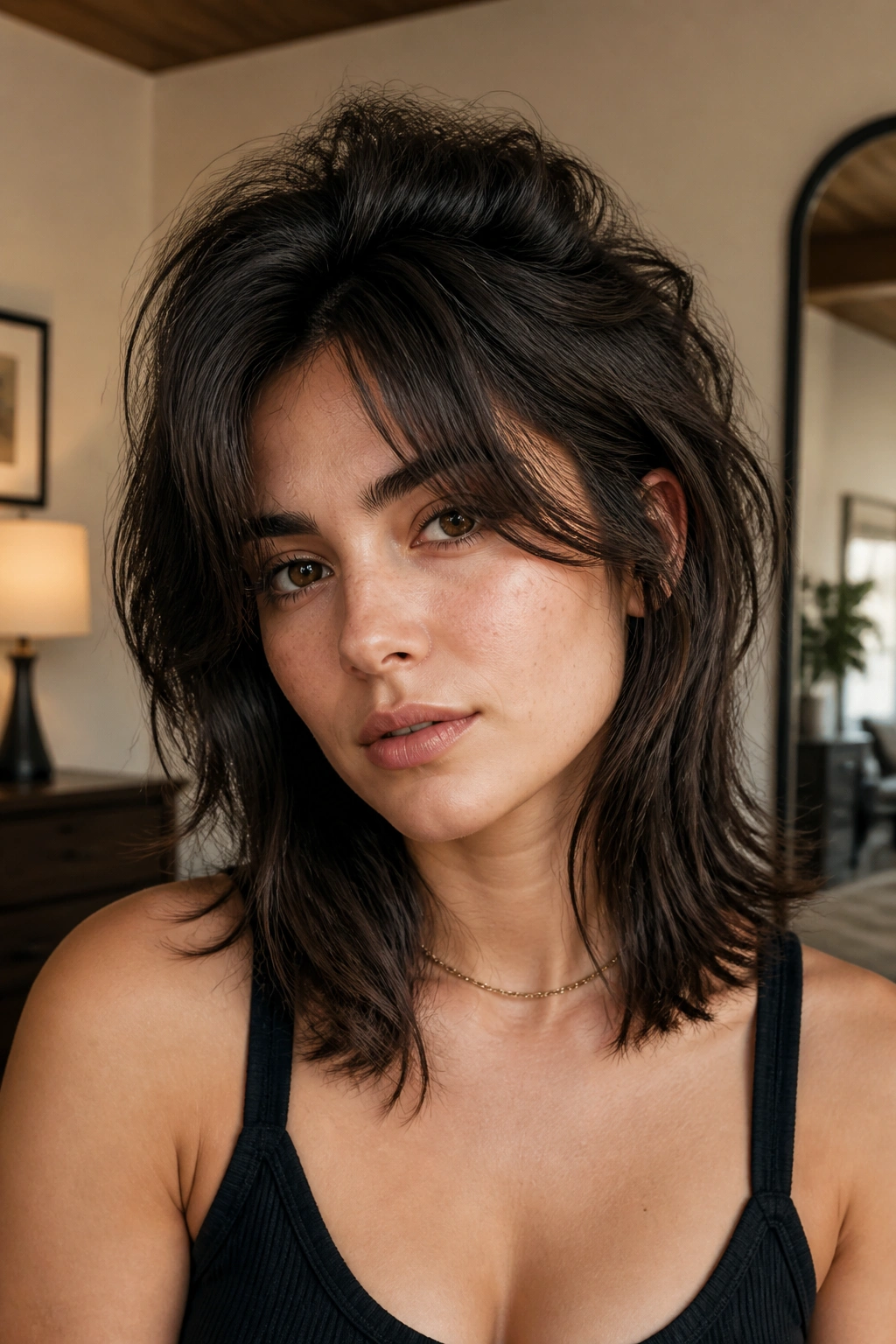
Fine hair often needs the wolf cut to do one job first: lift. This version puts the shortest layers at the crown and keeps the bottom line just grazing the shoulders, so the top has room to stand up while the ends still look full.
Too many short pieces around the sides and the head can turn puffy. That is the mistake. The shape should feel taller at the top, not wider at the ears.
A small round brush at the roots, plus mousse before blow-drying, gives this cut a better backbone than heavy cream ever will. If the roots are left damp and flat, the layers collapse into a limp, sleepy shape.
I like this version on hair that goes flat near the scalp but still has enough density to hold a bend. It looks especially clean when the front pieces fall from cheekbone to collarbone in one soft sweep. Simple. That is the whole trick.
6. Sleek Straight Wolf Cut
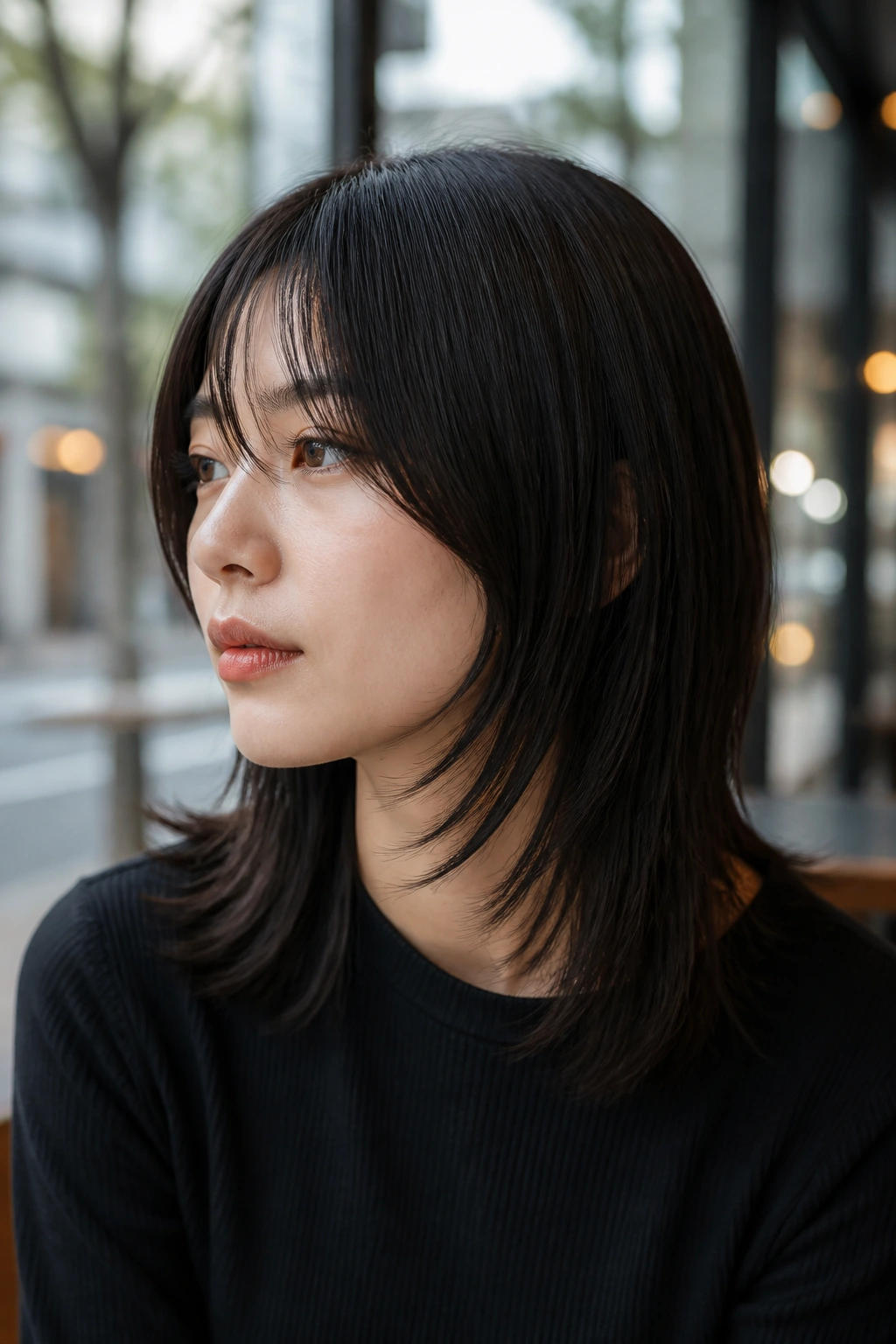
Unlike a shag that leans fuzzy, the sleek straight wolf cut depends on cleaner lines and a more deliberate outline. It still has layers, but they’re not shouting for attention.
This version is smart for straight or slightly wavy hair that needs movement without losing polish. A blunt perimeter at the shoulder keeps the cut from fraying, while long internal layers make the top feel lighter.
If you wear your hair straight most days, this one behaves better than trying to force beach waves on a texture that does not want them. Blow-dry with a paddle brush, then bend only the ends and the front pieces. That’s enough.
I’d show this to anyone who wants a wolf cut but still likes their hair to look neat when it’s tucked into a coat collar or clipped back for work. It’s less wild, sure. It also grows out better.
7. Beach-Waved Wolf Cut
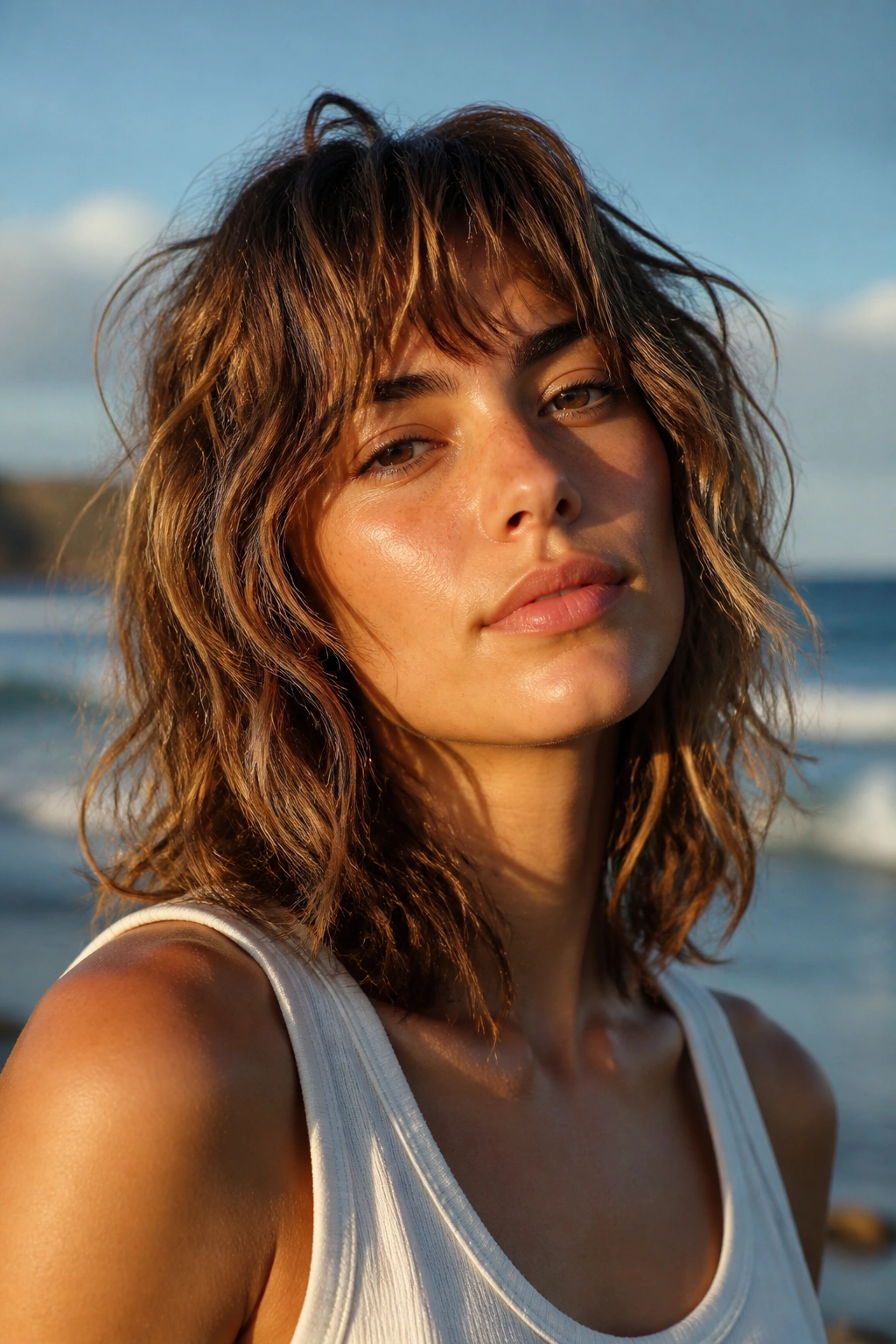
A shoulder-grazing wolf cut feels at home with a little bend, not perfect curls. That’s what makes the beach-waved version so easy to wear.
The shape lives in the mid-lengths. The waves just wake it up.
What Makes It Lived-In
Ask for layers that start around the chin and soften toward the shoulders, then style with a salt spray or wave mist on damp hair. Scrunch once, let it air-dry halfway, and finish with a diffuser only if the roots need help.
- Twisting 4 to 6 sections around your fingers gives a looser bend than curling every strand.
- A little wave at the front matters more than full-head texture.
- Don’t brush it out while it’s warm unless you want a bigger, frizzier halo.
My take: a slight bend at the ends beats polished curls every time on this cut. It keeps the haircut looking easy instead of overworked.
8. Side-Swept Fringe Wolf Cut
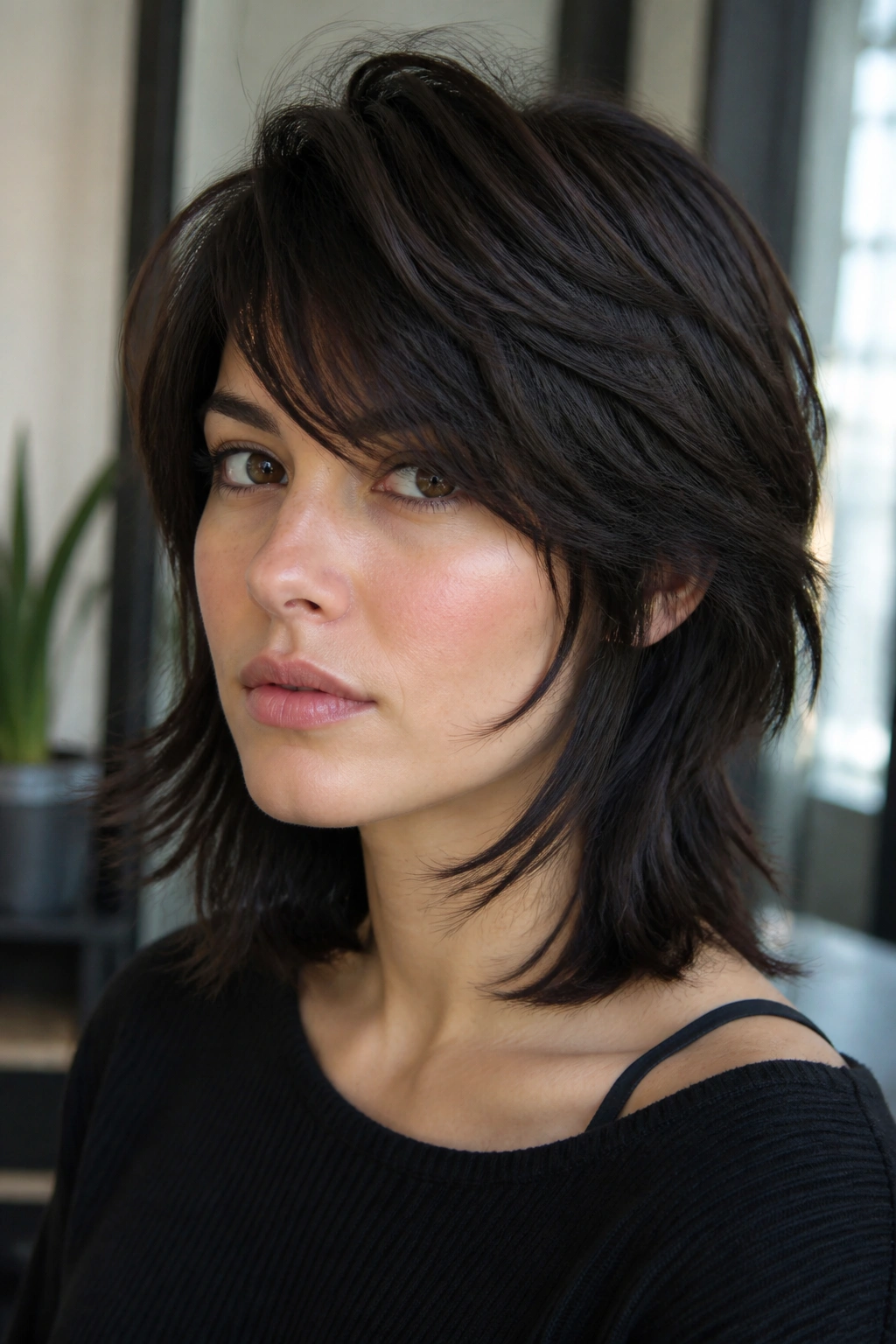
A side-swept fringe softens a wolf cut faster than almost any other change. It takes the edge off strong brows, a sharp jawline, or a face that feels a little too angular with a center part.
The side movement also buys you time during grow-out. That matters. A deep part can hide a fringe that’s in that annoying in-between stage where it’s too short to blend and too long to behave.
Take the front section in a diagonal line from the arch of the brow toward the temple, then keep the ends feathery so they melt into the first layer. If the fringe is too dense, it will fight the rest of the haircut.
For styling, aim the blow-dryer from the part toward the opposite side for a few seconds, then let it fall naturally. That gives the fringe a soft sweep instead of a stiff swoop. The difference is small. You can see it immediately.
9. Micro-Bang Wolf Cut

Can a tiny fringe live with a shoulder length wolf cut? Absolutely, if the rest of the haircut stays soft enough to balance it out.
Micro bangs bring sharpness to a cut that can otherwise lean too pretty. They’re the detail that says you meant to do this on purpose.
How to Wear It
Keep the crown layers light and the side pieces a little longer so the fringe has something to play against. If everything else is too shattered, the haircut starts to feel busy. That’s not the goal.
- Micro bangs look strongest when they sit a finger-width above the brows.
- Straight hair shows the shape best, but soft waves can work too.
- A small amount of texture spray at the ends helps the fringe stay separate from the front layers.
I would not choose this version if you want to hide your forehead. It’s for someone who likes a sharper line up top and does not mind a bit of attention there.
10. Thick-Hair Wolf Cut with Internal Layers
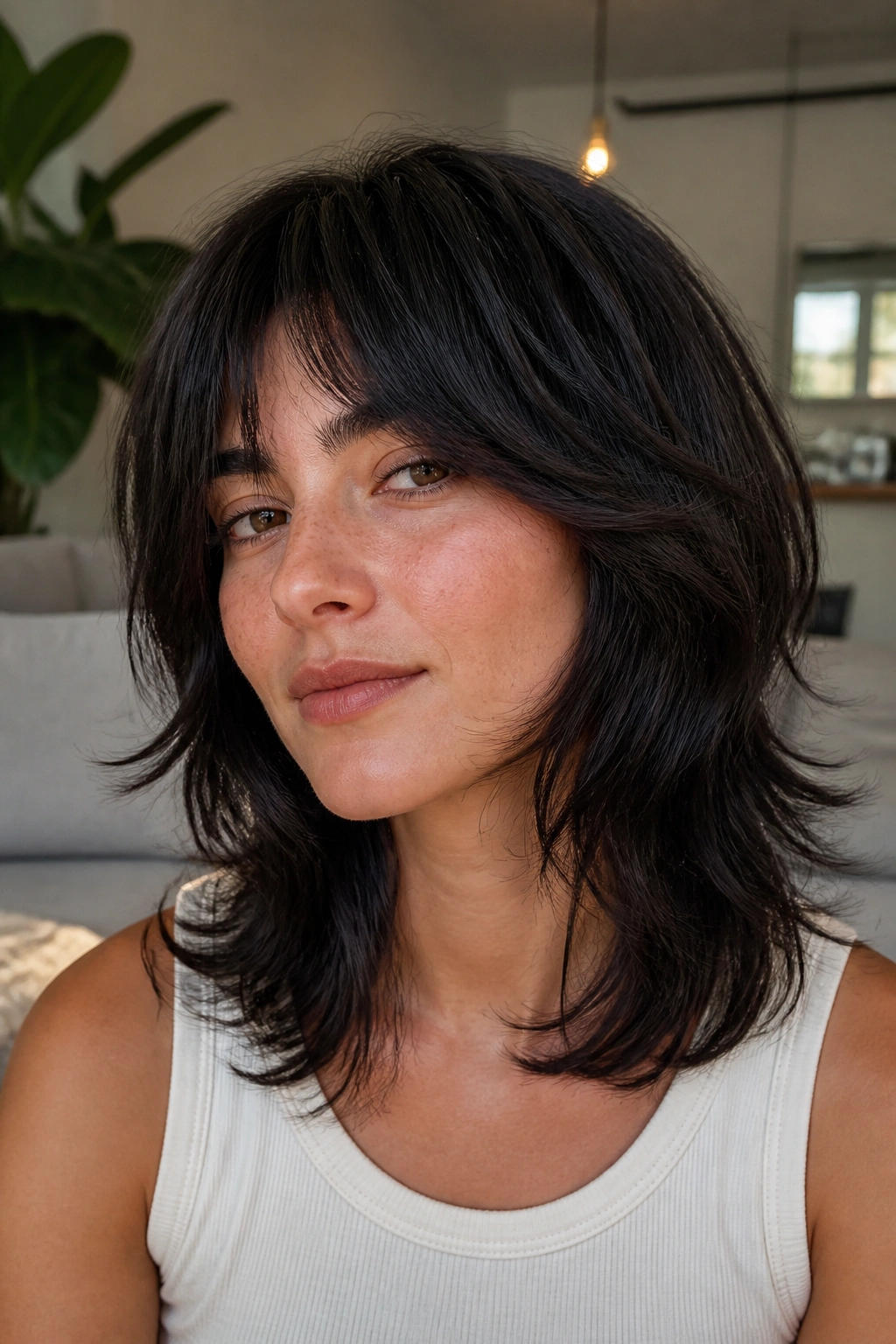
Thick hair can make this cut look expensive or heavy, and the difference comes down to where the weight is removed. If the bulk stays in the wrong place, the shape balloons. If it’s taken out with care, the whole haircut moves.
This is where internal layers matter. They live under the top surface, so the haircut gets lighter without looking chopped apart from the outside.
- Ask for weight removal beneath the crown, not random thinning on the top layer.
- Keep the perimeter at shoulder length so the cut still has a clear outline.
- Use point cutting at the ends instead of blunt slicing if you want a softer fall.
That last bit matters more than people think. A thick wolf cut that gets thinned too aggressively can frizz at the sides and feel hollow in the ends. Better to leave a little density and let movement come from shape, not from overcutting.
11. Fine-Hair Wolf Cut with Soft Lift
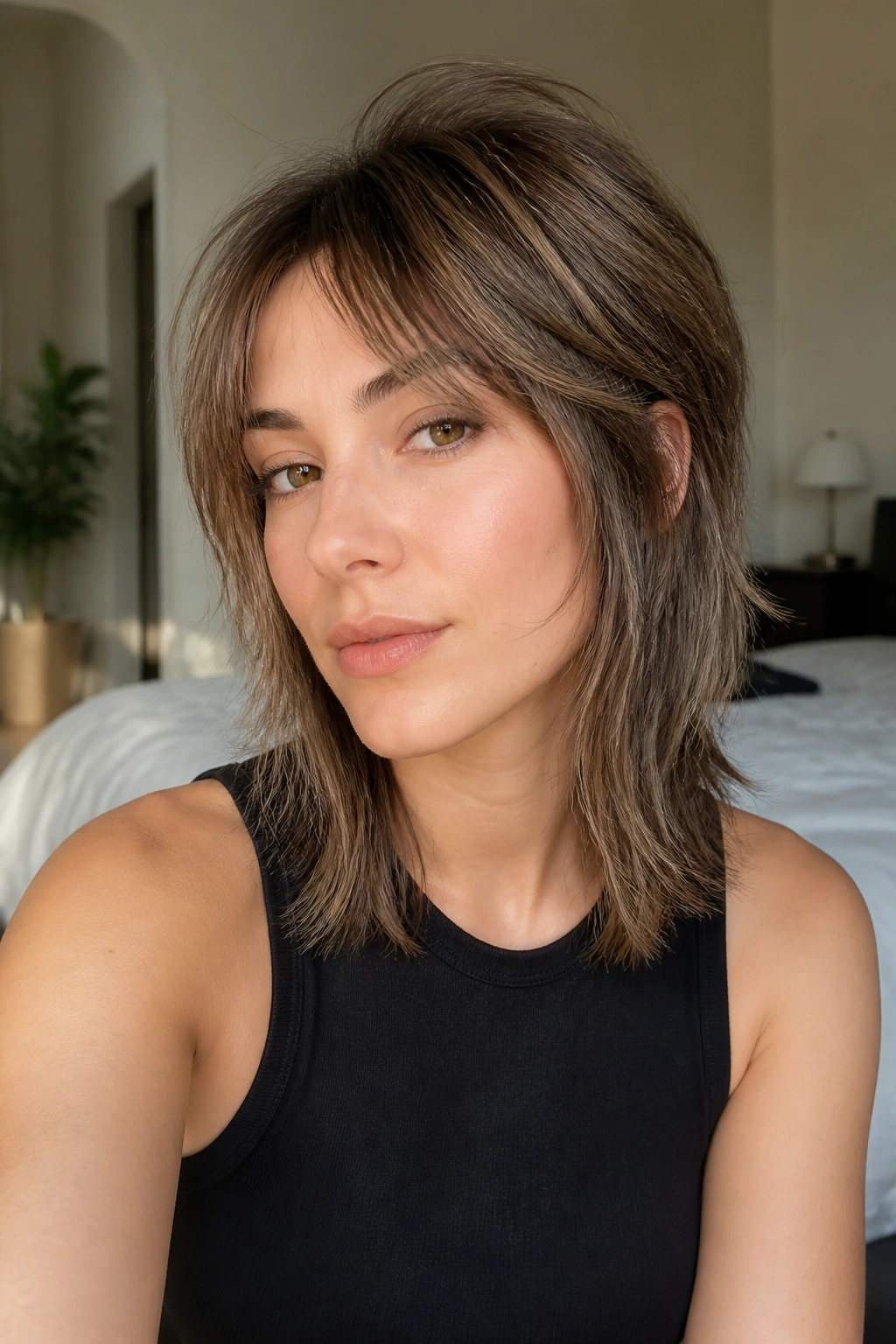
Fine hair needs a gentler hand than most people expect. Too many short layers, and it starts looking see-through. Too little layering, and the wolf cut never wakes up.
The sweet spot is a soft lift at the crown with long, whisper-light face framing that stops around the collarbone. That keeps the hair looking fuller while still giving it enough bend to feel modern.
I’m picky about products here. Heavy oils and rich creams can flatten the whole thing before you’ve left the house. A root spray, a light mousse, and a small amount of texture mist at the ends usually do more.
The cut also needs a clean grow-out. Fine hair that gets razor-thinned at the wrong places can look wispy in a bad way, and that is hard to fix without taking length off. Better to leave the ends blunt enough to hold their own and build movement with layers that are nearly invisible at first glance.
12. Air-Dry Wolf Cut

If you hate blow-drying, this is the version that behaves. It leans into your natural texture instead of fighting it.
The haircut itself should do most of the work. Ask for a shoulder-length perimeter, soft crown layers, and front pieces that can fall into place with a simple scrunch and go.
What Makes It Different
Compared with a more polished wolf cut, this one depends on products that encourage shape while the hair is wet. A leave-in conditioner, a light cream, and a little mousse are usually enough. Then you leave it alone. That part is not optional.
- Blot the hair with a microfiber towel instead of rubbing it.
- Twist the front pieces once if they separate too much while drying.
- Skip heavy brushing after wash day unless you want the layers puffier.
The nice thing is that it gets easier on day two. The shape is already there, so all you do is wake it up.
13. Soft Mullet Wolf Cut

This is the wolf cut with a little swagger. The back stays a touch longer, the front stays softer, and the whole thing keeps that whisper of mullet shape without turning theatrical.
I like this version because it gives the haircut direction. Without that slight length difference, some wolf cuts collapse into a generic shag. Here, the nape and crown have a real conversation.
Why It Works
The front pieces should still touch the collarbone, but the back can sit slightly longer so the haircut has a subtle tail. That back length gives the style its bite. Not too much. Just enough.
- Keep the nape soft rather than sharply stacked.
- Let the crown be shorter than the front, but not severed from it.
- Finish with a dry texture spray so the layers separate a little.
Tip: If you want this one to look less punk and more wearable, keep the ends feathered rather than blunt. It makes the whole cut easier to live with.
14. Feathered Retro Wolf Cut
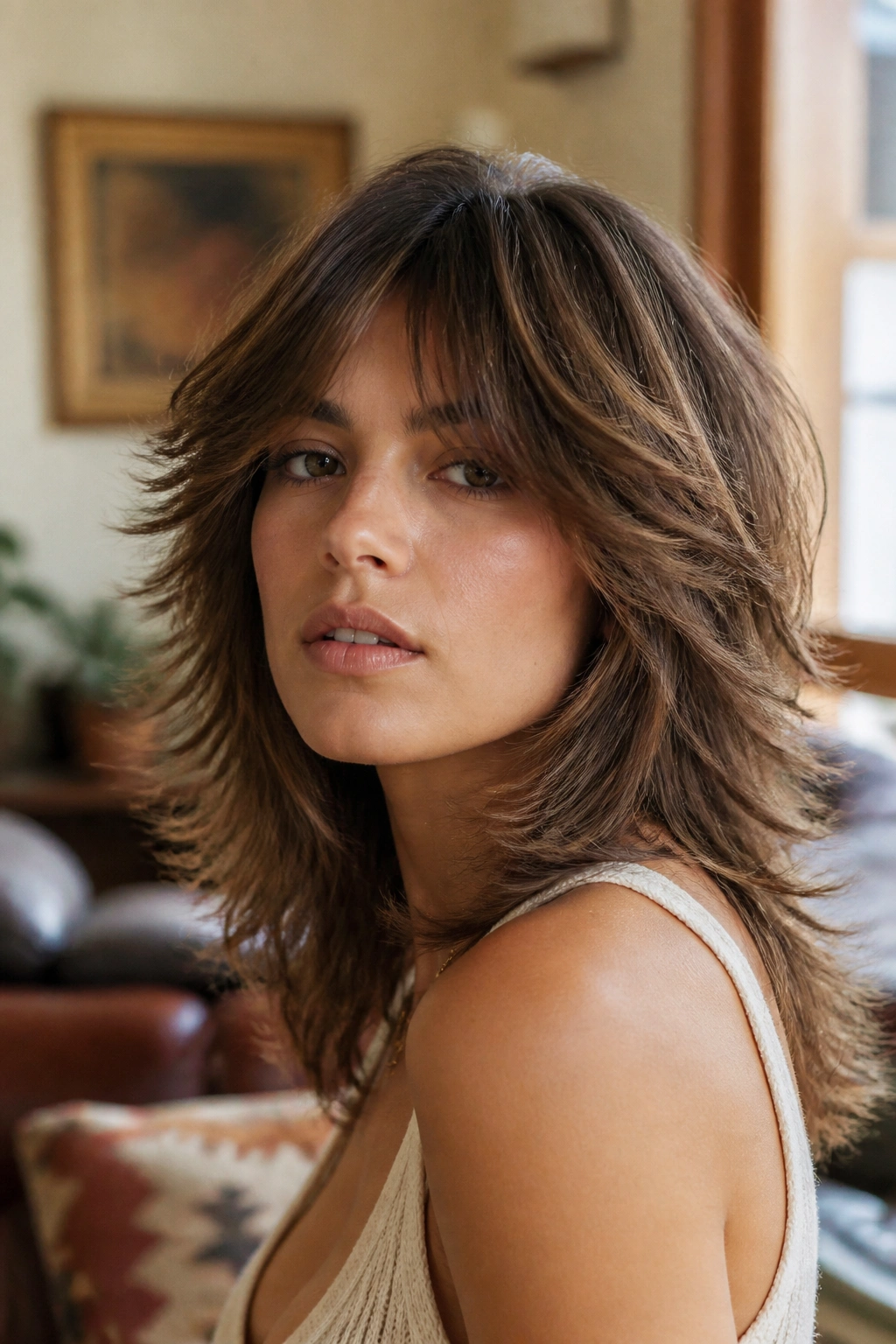
Feathering keeps a wolf cut from looking heavy around the jaw. That’s why this retro version still works so well.
The shape borrows from the 70s, but it does not need to look like a costume. The layers are longer, the ends are brushed back from the face, and the overall effect is airy instead of chunky.
A round brush is your friend here. Dry the front away from the face, then flip the ends just enough to give the layers lift. If the hair is left too straight and flat, the feathering disappears.
I like this on people who want a softer version of the wolf cut but still want movement they can see. It plays nicely with earrings, glasses, and a little fringe detail. The haircut has personality without demanding too much from the rest of your look.
15. Round-Face Wolf Cut

Need a wolf cut that doesn’t widen the cheeks? Start with vertical lines, not width.
Round faces usually benefit when the shortest layers sit below the cheekbone and the volume stays a little higher or lower, not right across the widest part of the face. That lets the cut lengthen the face instead of boxing it in.
How to Ask for It
Tell the stylist to keep the side pieces long enough to graze the jaw or collarbone, and avoid heavy bulk right beside the cheeks. Curtain bangs can still work here, but they should open at the center and taper before they sit too high on the face.
- Keep the crown lifted so the eye goes upward.
- Let the face frame start under the cheekbone.
- Avoid a rounded fringe that ends right at the fullest part of the face.
The right version feels softer, not smaller. That’s the difference.
16. Long-Face Wolf Cut
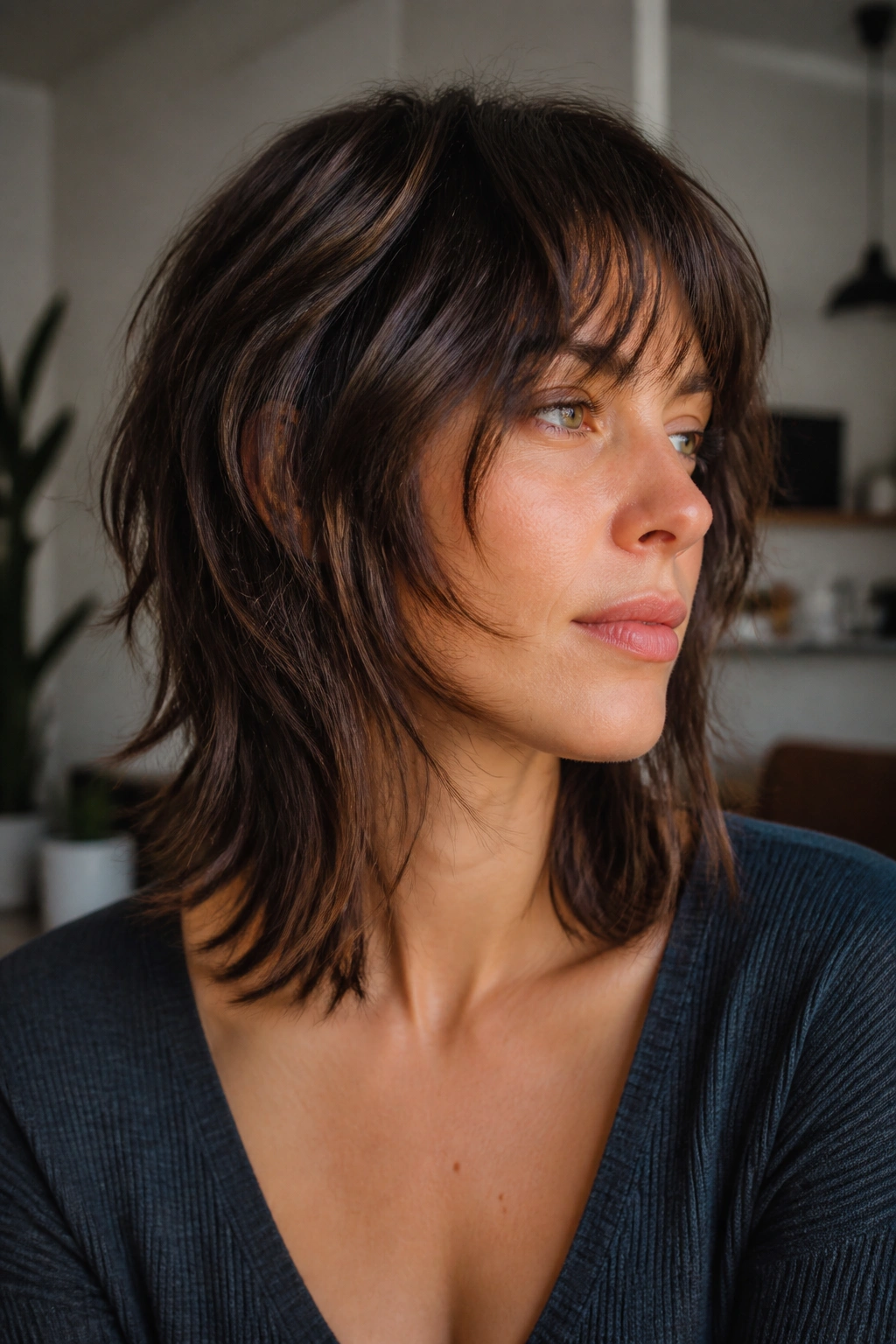
A long face can get stretched even more by layers that run straight down the sides. So the job here is to add width where it helps and shorten the visual line a little.
A shoulder length wolf haircut can do that well if the bangs are present and the side layers have some body. You want the haircut to create movement across the face, not just below it.
Picture a fringe that lands near the brow, then face-framing layers that fan out around the cheek and jaw. That gives the eye more places to land. It also breaks up the vertical line that can make a long face feel even longer.
- Ask for a fringe or curtain bang with enough length to graze the brow.
- Keep the side volume around the cheekbone, not only at the ends.
- Use a round brush to give the front a little outward bend.
If you skip the bang area entirely, this cut can feel a bit too stretched. That is the trap.
17. Piecey Wolf Cut

Piecey haircuts can look careless in the best way, if the separation is intentional. That is the point of this version.
The shoulder length wolf cut already has movement built into it. Piecey styling just makes the layers readable. You see the shape, then you see the texture, then you get that slightly undone finish that makes the cut feel current without chasing a trend.
A small amount of wax or paste on dry hair is usually enough. Work it through the ends with your fingers, not your palms, because palms tend to smear the product instead of separating the strands. That one detail matters.
I also like this version because it forgives a rough blow-dry. If one section dries crooked or the front flips out more than you meant, it still looks like part of the plan. Honestly, that’s half the appeal.
18. Polished Wolf Cut
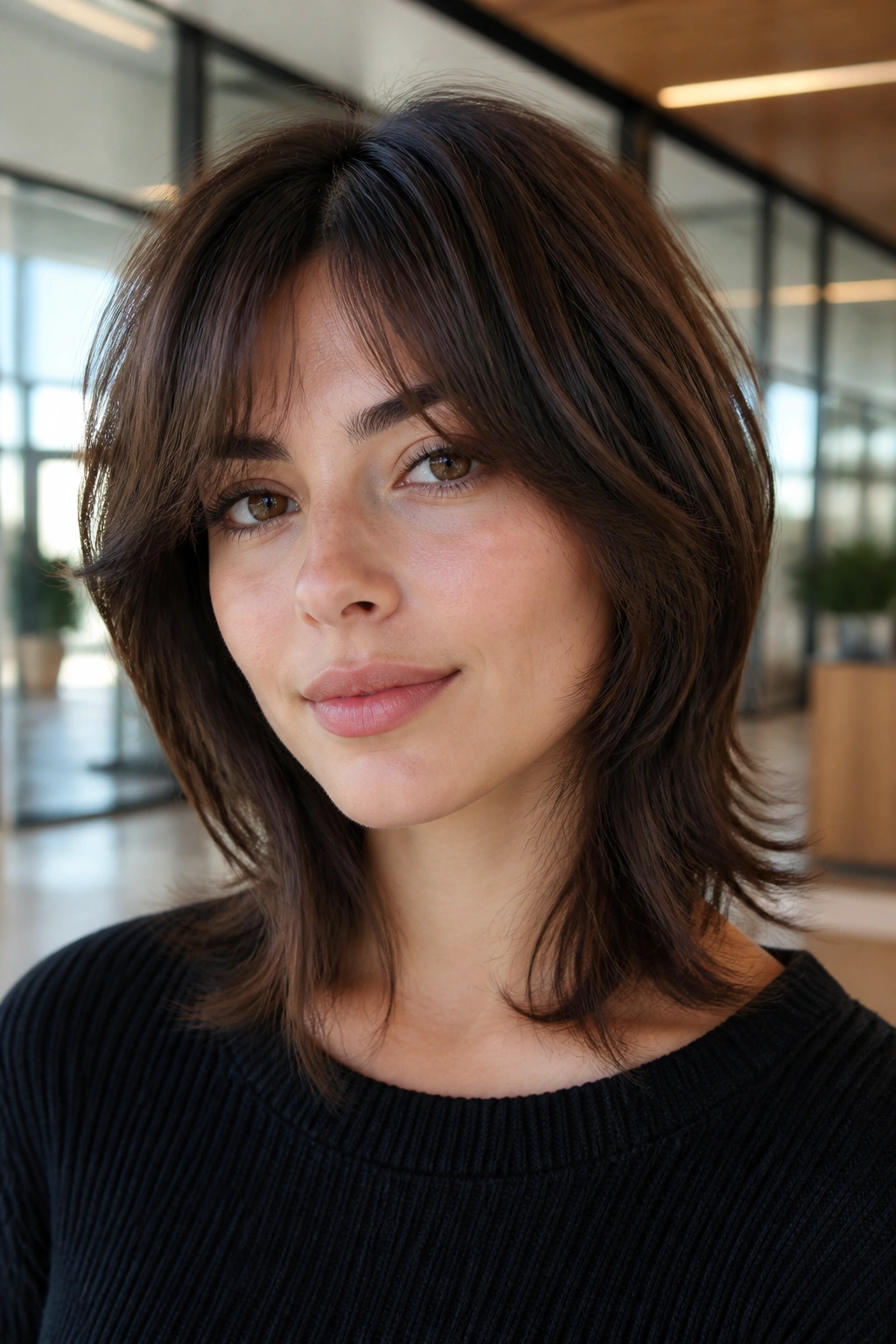
Unlike the messier versions, this one keeps a cleaner outline and a smoother finish. It still has layers, but they sit inside a more controlled shape.
That makes it a strong choice for work settings, formal events, or anyone who likes the wolf cut idea but does not want hair that looks lived-in every single day. You can still keep movement. You just polish the edges.
A blowout brush or round brush helps here, especially around the front pieces and the ends. Aim for a soft bevel at the shoulder instead of a sharp flip. That gives the haircut some swing without making it look too casual.
I’d call this the most adaptable version on the list. It can be worn sleek, tucked, clipped back, or bent a little at the ends. It also grows out with less drama than the more shredded styles, which is a nice bonus.
19. Invisible-Layer Wolf Cut

From the front, it looks almost simple; the movement hides inside the haircut. That’s why invisible layers are such a smart move on shoulder length hair.
The idea is to keep the exterior line calm while carving the shape under the top layer. You get bounce and lift, but you don’t get the obvious chopped look that some people love and others avoid at all costs.
The Trick Is in the Weight
This version works best when the stylist leaves enough hair on the outside perimeter to cover the internal shape. The layers should support the hair, not shout from every angle. Think of it as architecture under a clean coat of paint.
- Ask for internal layering under the crown and through the mid-lengths.
- Keep the ends full enough to look solid at shoulder length.
- Style with a light mousse or spray, not a heavy cream.
It’s a quiet haircut, but not a boring one. That quiet part is the point.
20. Second-Day Hair Wolf Cut

Some cuts look better after sleep. This is one of them.
The shoulder length wolf cut is friendly to a little bedhead because the shape already has movement. The next day, the layers separate a bit more, the roots lift a little, and the whole thing feels less rehearsed.
You can help that along with dry shampoo at the roots and a quick mist of water on the front pieces. Twist a few sections with your fingers, give the ends a tiny squeeze, and let the texture do the rest. No need to reset the whole head.
I like this version for people who do not want a haircut that demands fresh styling every morning. It is forgiving. It also survives hats, scarves, and weather better than a perfectly smooth cut.
21. Tapered-Nape Wolf Cut
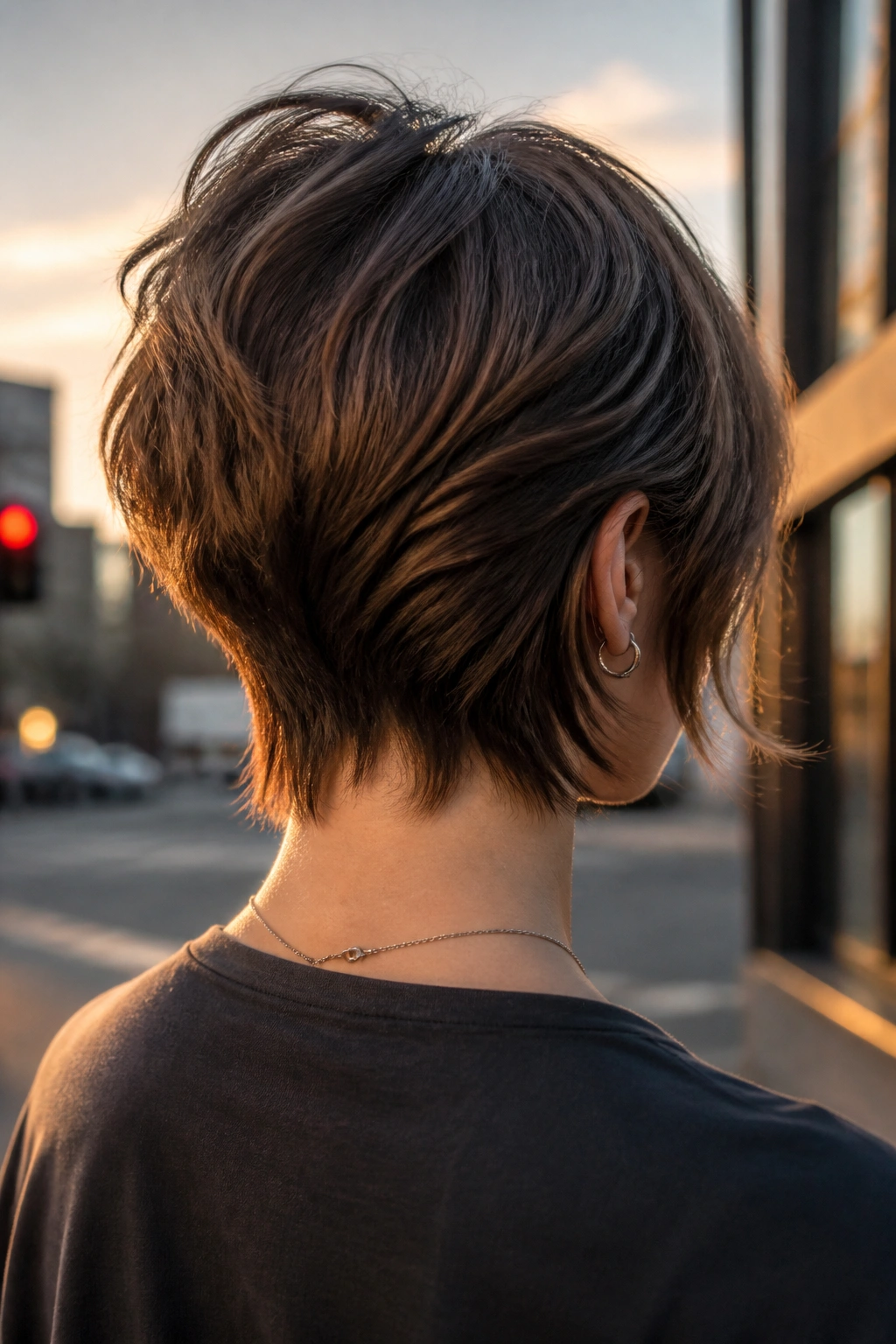
Why do some wolf cuts sit neatly from the back while others puff out? Usually because the nape was handled with more care.
A tapered nape helps the haircut lie closer to the neck, so the back does not feel bulky or square. That detail matters on shoulder length hair, where the cut can otherwise look wide from behind.
How to Ask for It
Tell the stylist you want the back to narrow gently into the nape while the top keeps enough lift to keep the wolf-cut shape alive. It is a small request with a big payoff.
- Keep the nape soft, not stacked.
- Let the back layers taper into the shoulder line.
- Balance the tighter back with a looser front frame.
This is the version I’d show someone who likes a clean back view but still wants the messy top and face-framing texture. It feels tidy when you tuck it up, and it still has edge when you wear it down.
22. Balanced Everyday Wolf Cut

If you want one shoulder length wolf haircut to bring to a stylist without overthinking it, make it this one. It sits between soft and edgy, which is why it works on so many people.
The shape keeps a shoulder-grazing perimeter, a gentle crown lift, and face-framing layers that can be pushed back or worn forward. Nothing in it feels extreme. That is a strength, not a weakness.
Ask for enough texture to keep the cut moving, but not so much that the ends look shredded after one wash. Leave space for a fringe if you want one later. Leave enough length to pin it back if you change your mind.
That balance is what makes this version last. It can lean polished with a round brush, messy with mousse, or casual with a quick air-dry, and it still feels like the same haircut. That’s the one I’d trust most when you want the wolf cut look without spending your whole week styling it.
