



Red wolf cuts do one thing better than almost any other haircut: they make the color move.
A flat block of red can look stiff. A wolf cut breaks that color into pieces, so the lighter ends flick, the crown lifts, and the whole style feels alive. That matters more than people think. Red pigment is picky. It fades into copper, brick, or cherry depending on your starting level and how often you wash, and a choppy cut can either make that shift look cool or make it look accidental.
The real trick is not “go red.” It’s picking the red that works with your texture, your root color, and how much styling you’re willing to do before coffee. Some reds need a gloss every few weeks. Some can live off dry shampoo, a diffuser, and a little grit spray. Some look best on soft waves. Others want a sharper, piecey finish.
Shade choice comes first, though. Copper, cherry, burgundy, flame red — each one changes the haircut in a different way, and once you start seeing the wolf cut through that lens, the whole idea gets more interesting.
1. Copper Wolf Cut with Soft Crown Layers

Copper and a wolf cut get along fast. The warm tone makes the chopped layers look softer, which is useful if you want movement without the haircut reading too aggressive. On medium hair, this combination gives you lift at the crown and a bright face frame without making the ends look thin.
Why It Works
Copper sits in that sweet spot between natural and bold. It catches light quickly, so even a small bend in the hair shows up. That means the wolf cut does not need to be overly shredded to look interesting.
Ask for soft crown layers, a longer perimeter, and a slightly brighter copper through the face frame. If your hair is fine, keep the interior layering gentle. Too much texturizing can make the ends look wispy in a bad way.
- Best on hair that already has some bend
- Works well with curtain bangs
- Looks especially good with a loose blowout or large-barrel wave
- Needs a color-safe shampoo and lukewarm rinsing to keep the copper from turning dull
Pro tip: keep the root a half-shade deeper than the mids. The haircut stays dimensional longer, and the grow-out looks deliberate instead of faded.
2. Cherry Cola Wolf Cut with Long Curtain Bangs
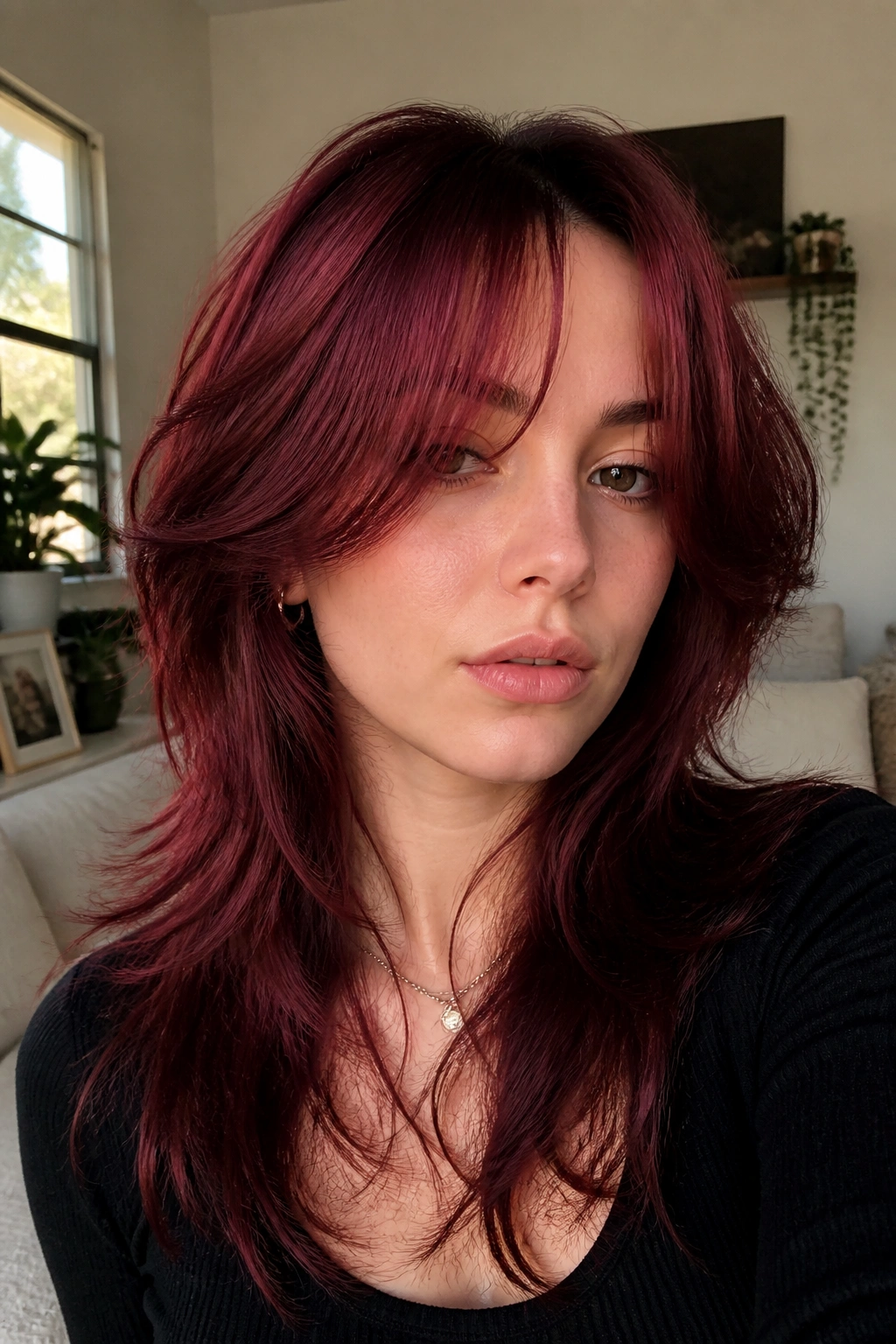
Cherry cola is the red I reach for when someone wants depth first and brightness second. It reads rich, not loud, and that matters on a layered cut because the movement does half the talking already. The dark base keeps the shape grounded, while the red-violet tones show up when the hair swings.
This version works especially well if you wear your hair straight or with a soft S-wave. The color doesn’t need a ton of volume to register. A little shine serum on the midlengths is enough.
The best part is the grow-out. Roots can stay a little darker and the style still looks finished. That’s rare with red.
If you want a wolf cut that feels polished without looking stiff, this is the one. It has a little edge. Not too much.
3. Auburn Wolf Cut with Airy Fringe
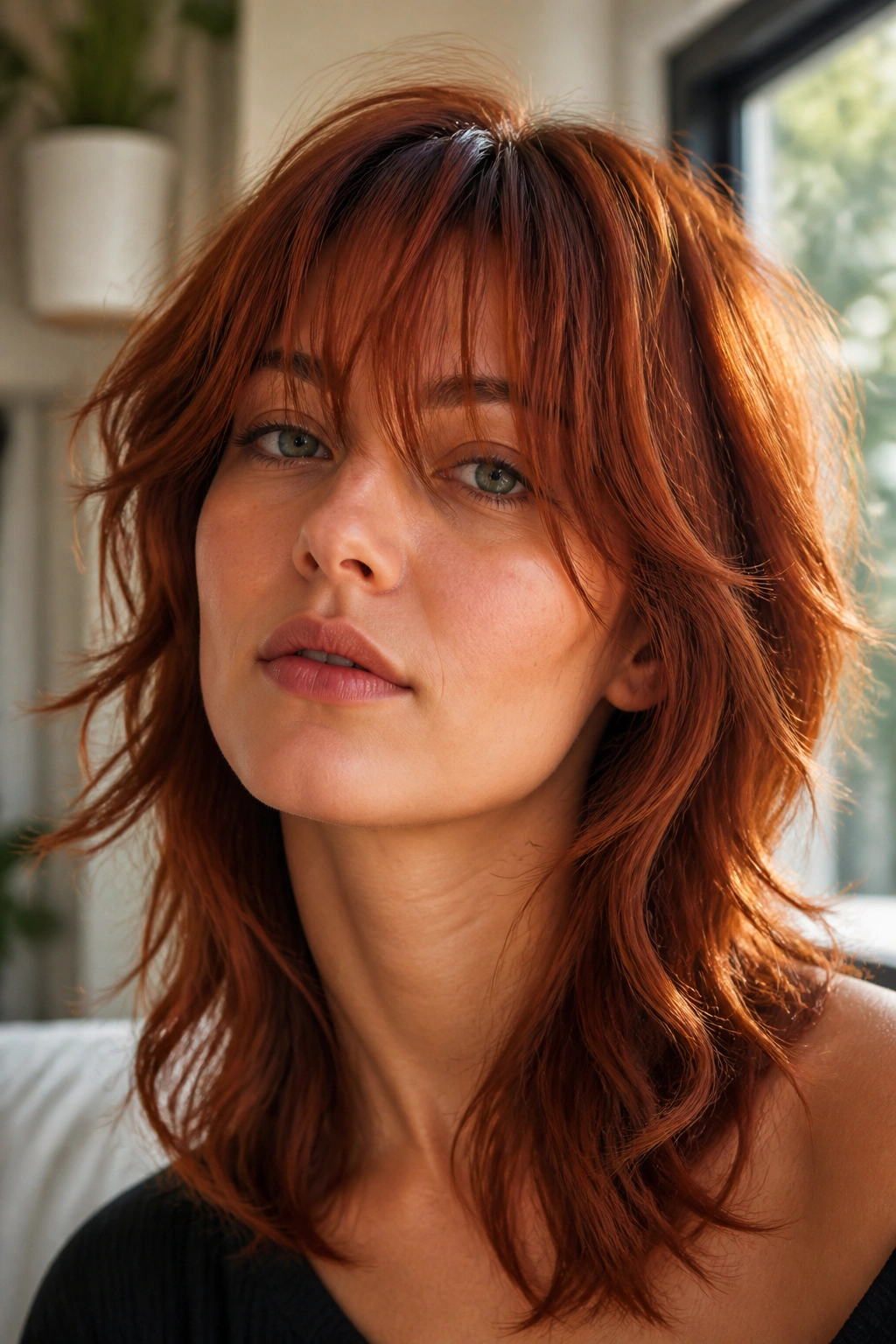
Why does auburn look so right on a wolf cut? Because auburn has enough brown in it to keep the layers from shouting, but enough red to make the texture visible. It’s one of those shades that looks expensive in natural light and still holds up under bathroom lighting, which is more useful than people admit.
The airy fringe makes a big difference here. Heavy bangs can box in the face, but a lighter fringe lets the wolf cut keep that choppy shape around the eyes and cheekbones. The whole cut feels less like a costume and more like hair you actually wear.
How to Wear It
- Blow-dry the fringe first, using a small round brush
- Keep the crown rough and piecey, not smoothed flat
- Use a pea-size amount of matte paste on the ends
- Let the front fall forward a little; that softness helps the red look less harsh
Auburn is also kind to people who do not want a high-maintenance red. The tone can fade a bit and still look intentional. That’s a nice thing to have in your back pocket.
4. Cherry Red Shag Wolf Cut for Thick Hair
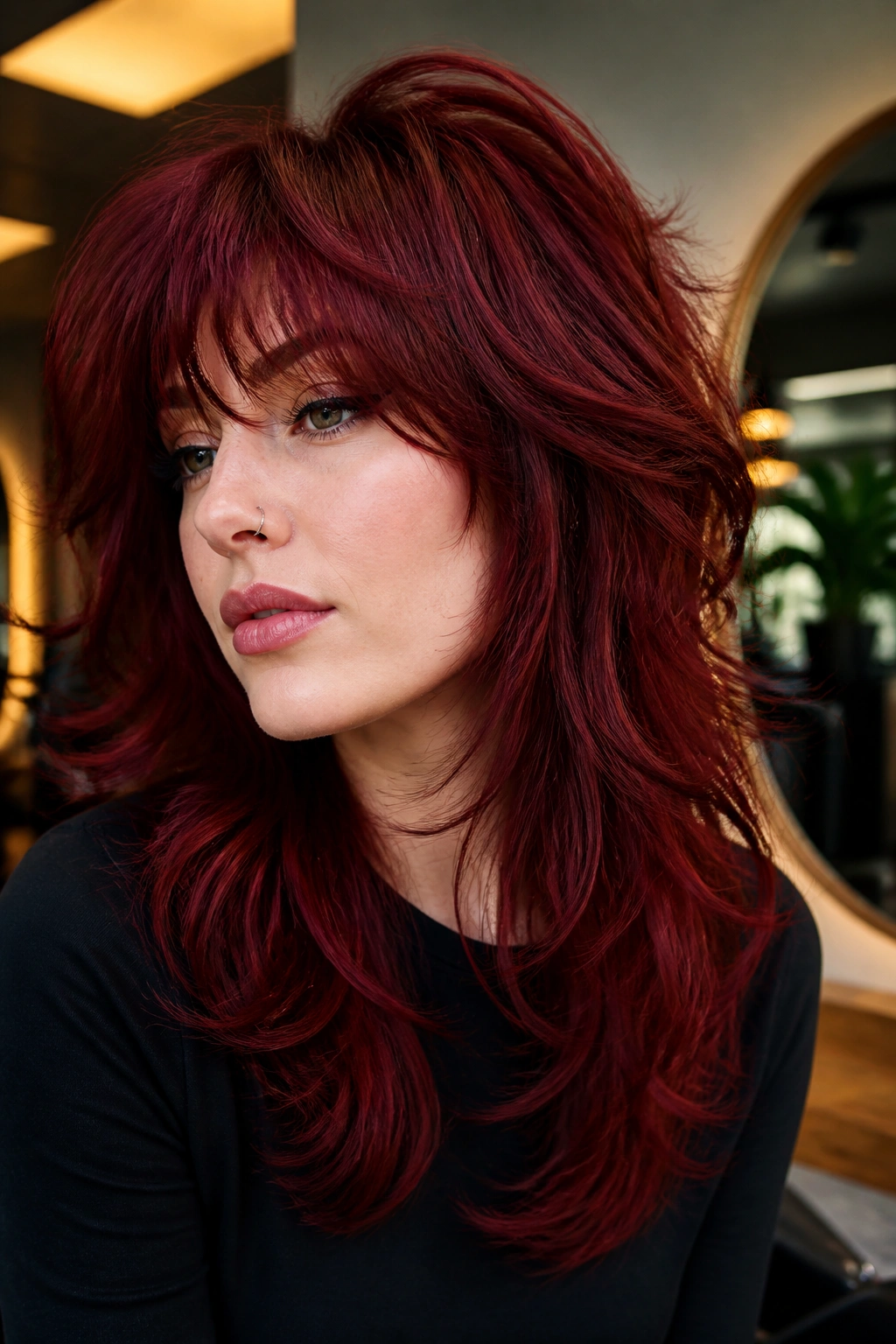
Picture thick hair that eats shape by lunch. This is the fix.
Cherry red brings energy to the cut, but the real job here is control. A shaggy wolf cut with cherry color takes some of the bulk out of the sides and puts it where it belongs — in the movement. You want visible layers, not random holes.
Thick hair can handle more texture than fine hair, so this is where a stylist can get a little bolder with razoring or point-cutting. The color helps too. Cherry red keeps the haircut from looking heavy, especially if the ends are a touch lighter than the roots.
- Ask for long interior layers
- Keep the perimeter soft, not blunt
- Leave enough weight at the bottom so the cut doesn’t puff out
- Style with a diffuser or a rough-dry method if your hair bends naturally
The result is lively, messy in a good way, and easier to move through the day without losing its shape. Heavy hair loves a little attitude.
5. Burgundy Wolf Cut with Long Internal Layers
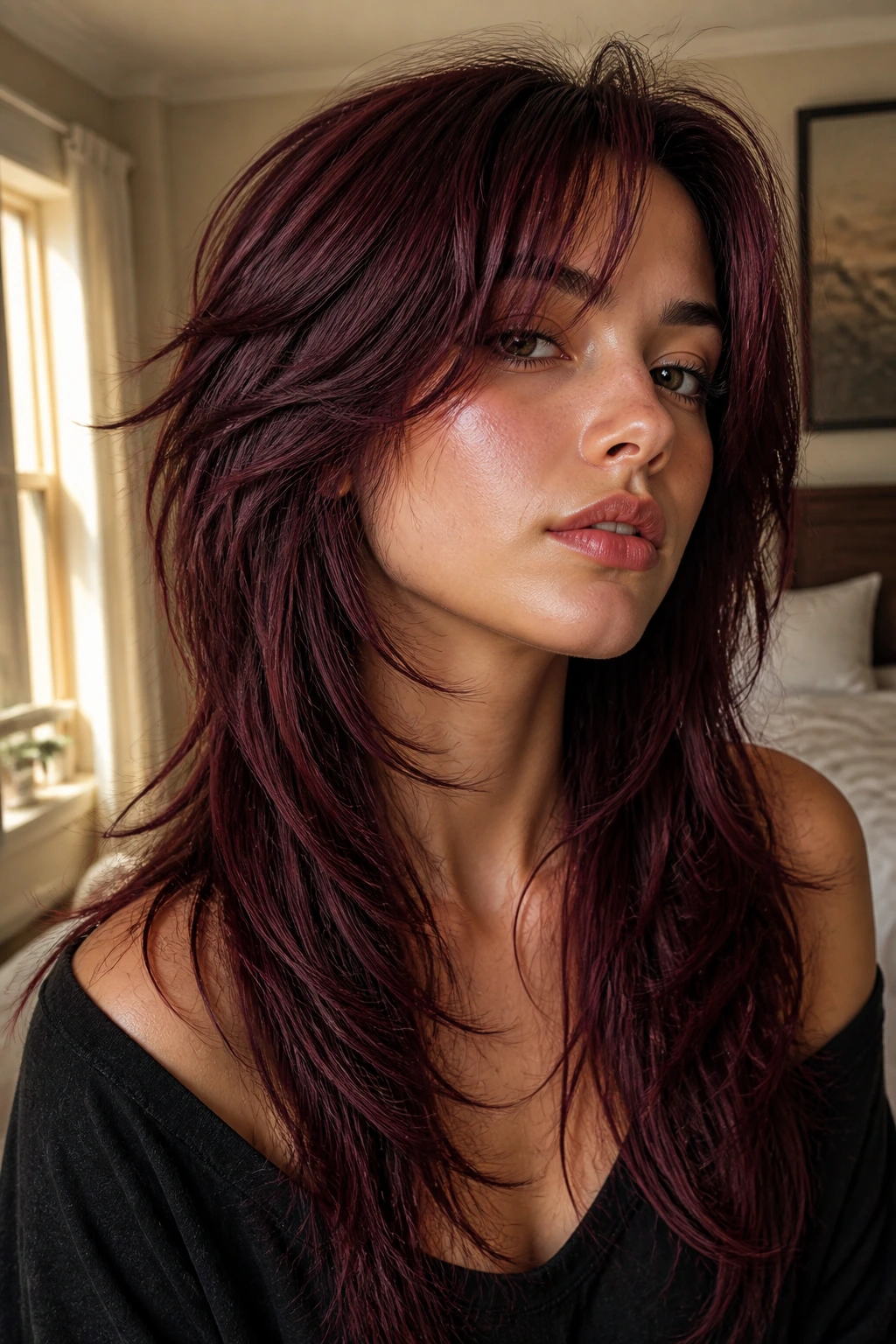
Burgundy solves the triangle problem. That’s the blunt truth.
When thick or wavy hair grows out, it can widen at the sides and make the whole head look square. Burgundy helps because the dark red tone pulls the eye inward, and long internal layers stop the silhouette from ballooning. You get shape without the chopped-up look becoming obvious from across the room.
This is the red I like for people who want drama but not fire. It feels deeper, almost wine-dark, and it pairs well with a wolf cut that reaches past the chin. Shorter burgundy cuts can feel too severe unless the face framing is very soft.
The styling is mercifully simple. A large brush, a low-heat blow-dry, and a small amount of smoothing cream usually do enough. If your hair is coarse, skip over-thinning the ends. That move looks tempting in the chair and annoying two weeks later.
6. Ruby Red Wolf Cut with Razor Ends

Ruby red is sharper than copper, and that sharpness is exactly the point. Unlike a softer red-brown, ruby reads graphic. The color has enough brightness to show off the layer pattern, so the haircut almost draws itself in motion.
This version suits straight or lightly waved hair best. The razor ends give the wolf cut a choppy edge, and ruby red keeps those pieces visible without needing a lot of curl. If you like a clean face frame and a little bite at the edges, this is a strong choice.
It is not the best pick for brittle hair. Razor cutting can make fragile ends feel airy in a bad way, and bright red will show dryness fast. Better to keep the layering controlled and use a glossing mask once a week.
Best for: someone who likes a sharper outline and doesn’t want the haircut to look soft or romantic.
Not great for: very dry hair that tangles easily. The color and the cut will expose that fast.
7. Ginger Wolf Cut on a Short Length

Can a short wolf cut still read red? Absolutely.
A chin-length or jaw-skimming ginger wolf cut has a cheeky feel that longer versions sometimes lose. Ginger adds brightness around the face, and the shorter shape keeps the layers from dragging the whole look down. It can be playful, a little punky, and easier to style when you’re not in the mood to wrestle with long hair.
How to Ask for It
Ask for short crown layers, a light fringe or micro curtain bang, and a slightly longer nape. That keeps the wolf shape visible without turning the haircut into a mushroom.
A short cut also shows off the color shift more clearly. The ends move close to the face, so even a simple tuck behind the ear feels deliberate. Nice touch, small effort.
If your hair is fine, keep the layers closer to the crown and leave a bit more weight around the jaw. That gives the ginger shade something to sit on instead of collapsing into fluff.
8. Mahogany Wolf Cut with a Blunt Fringe
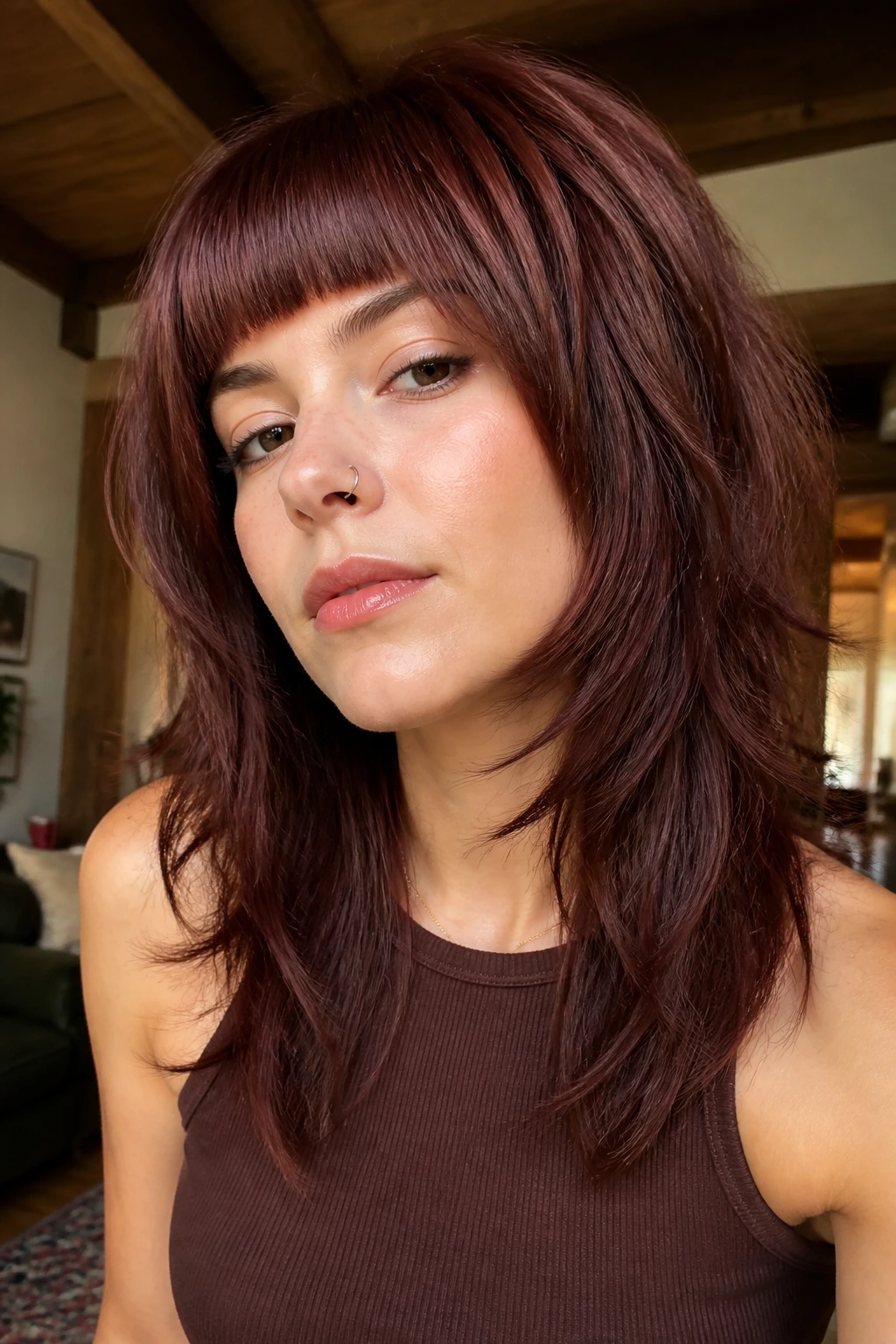
Mahogany has the smell of warm wood and the look of deep red-brown under lamplight. It is quieter than cherry or flame red, but that is part of the appeal. On a wolf cut, mahogany can make the layers look tailored instead of wild, especially when you pair it with a blunt fringe.
The fringe does heavy lifting here. A blunt bang grounds all the choppiness elsewhere, which is useful if you like the wolf cut shape but don’t want it to feel messy. The contrast between the clean fringe and the torn-up layers gives the haircut its personality.
This is a good color for people who want red at work without feeling like their hair is doing a costume piece. It also tends to flatter deeper eyebrows and stronger eye makeup, though it works just fine bare-faced too.
One thing I like about mahogany: it looks better when it is slightly imperfect. A smooth blowout, a loose bend, a day-two wave — all of it works. Too much polish can flatten the texture, and this cut deserves a little grit.
9. Crimson Wolf Cut with Face-Framing Pieces
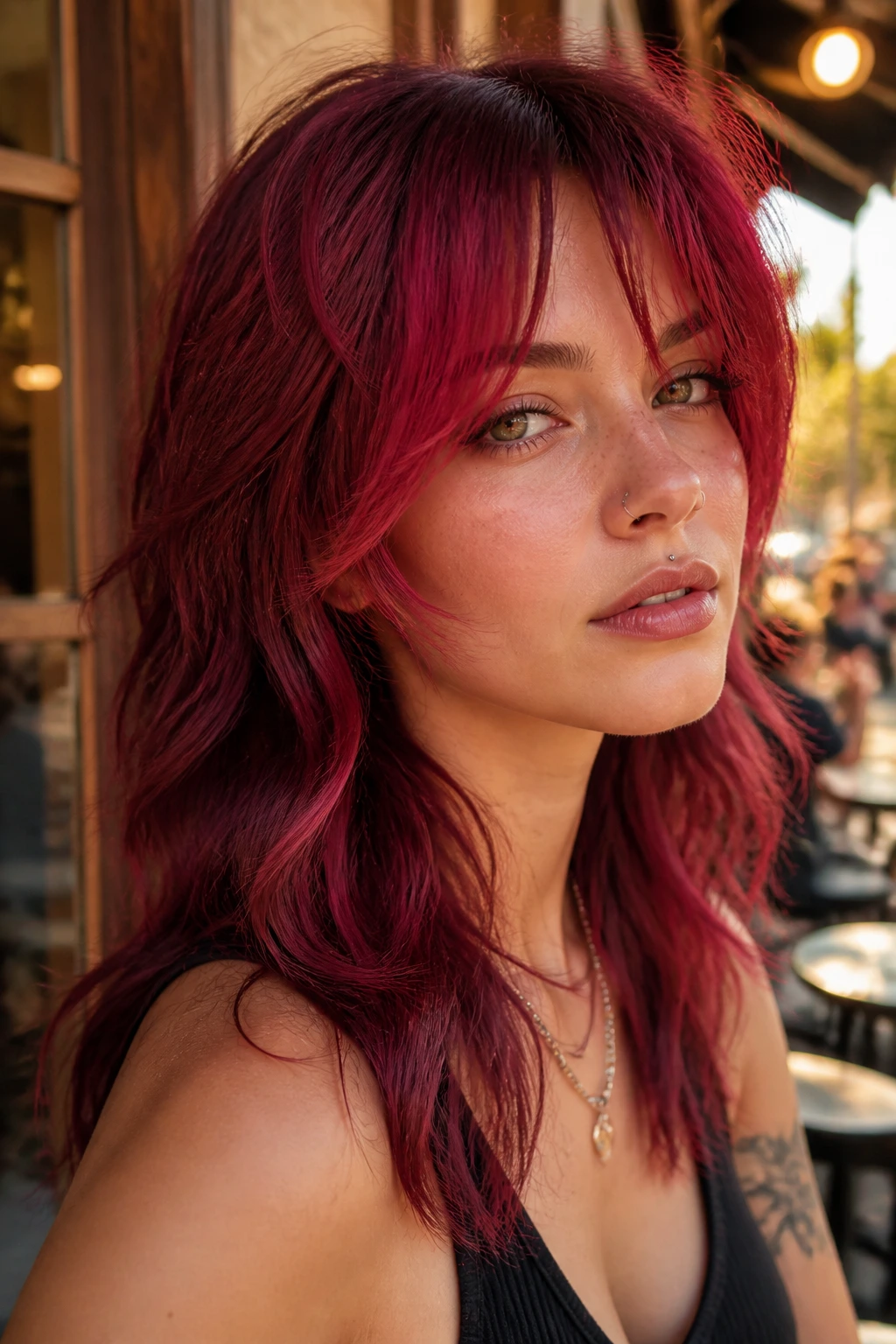
If you want the haircut to sharpen your cheekbones without a contour brush, crimson does that. The color is bright enough to pull attention to the front pieces, and the face framing can be cut to hit exactly where you want the eye to go — cheekbone, jaw, or collarbone.
What Makes It Stand Out
Crimson works best when the front pieces are a touch lighter than the rest. That doesn’t mean obvious streaks. It means enough contrast to show movement when you turn your head. The back can stay deeper and darker so the cut does not lose shape.
A few practical details matter here:
- Keep the face-framing layers at chin or cheekbone length
- Use a 1-inch iron for a loose bend, not a tight curl
- Finish with a light mist of flexible hairspray so the pieces stay separate
- Ask for a color gloss rather than a harsh toner if you want shine
This is the kind of red that feels alive in motion. Stand still and it looks rich. Move a little, and the front pieces do the talking.
10. Dark Cherry Wolf Cut on Straight Hair
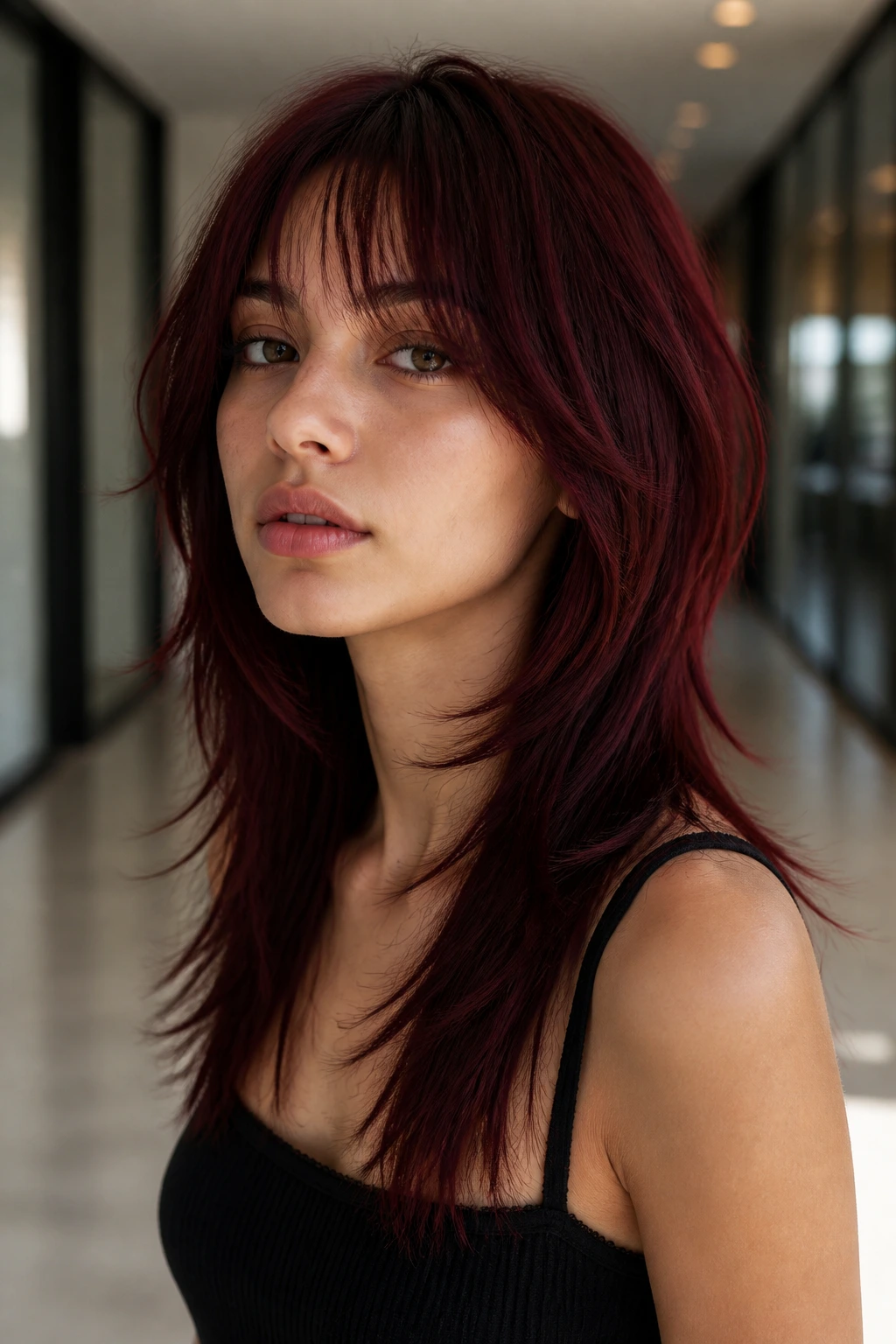
Straight hair is where a red wolf cut can look the sharpest.
That surprises people who think wolf cuts only work on wave-heavy textures. Straight hair lets dark cherry show off the actual shape of the haircut — the crown lift, the longer back, the cheek-grazing bits at the front. Nothing gets hidden. Every line is there.
The trick is not to over-layer. Straight hair can go stringy fast if the interior is stripped out too much. Ask for controlled layers, not aggressive thinning. Then add texture with a salt spray or a dry texture mist, focusing on the midlengths and ends.
Dark cherry is also kinder than bright red on a sleek base. The color adds depth without making the hair look flat from a distance. If you wear a lot of black, white, denim, or leather, this shade has enough contrast to feel intentional without screaming for attention.
Clean, sharp, a little moody. That’s the lane.
11. Pomegranate Wolf Cut with Curled Ends
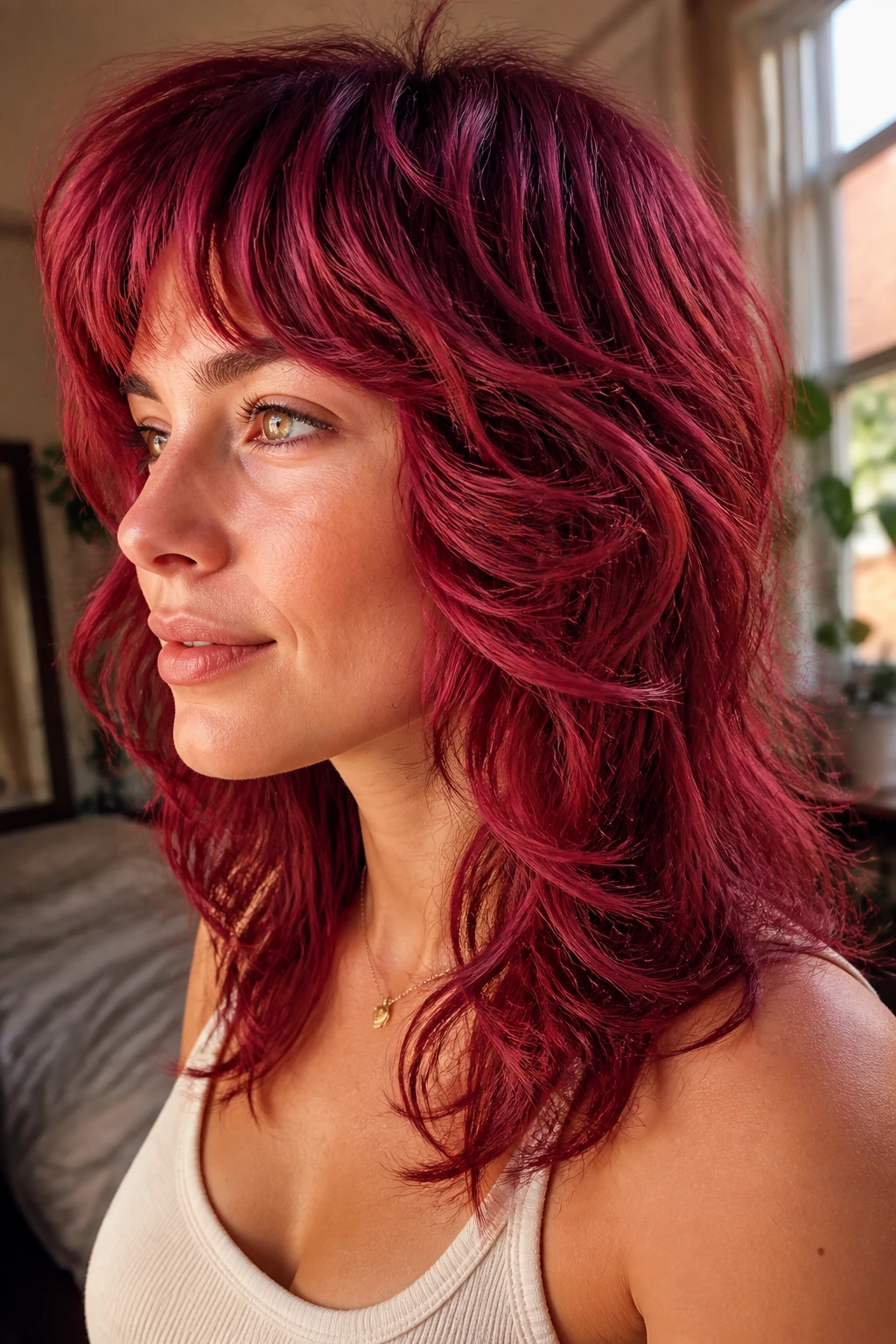
A pomegranate finish makes the layers move even when your hair is only loosely waved. The color has that jewel-like red brightness through the mids and ends, so the cut reads as dimensional even if the styling is soft. It’s one of the easiest ways to make a layered cut look fuller.
Best Styling Moves
Use a 1.25-inch curling iron or a wide wand if your hair is past the shoulders. Wrap the section away from the face for the front pieces, then leave the ends a little undone. That tiny imperfection keeps the style from looking too neat.
A pomegranate wolf cut is also friendly to air-drying if your texture already bends on its own. Scrunch in a light mousse, clip the roots for lift, and let the mids dry in loose waves. The color will do the rest.
- Use mousse at the roots for lift
- Skip heavy oils near the crown
- Keep the ends slightly textured
- Refresh with a light gloss spray between washes
This shade is strong enough to stand on its own, but the curled ends make the whole thing feel fuller and more expensive in the practical sense — not the vague one.
12. Cinnamon Red Wolf Cut for Warm Undertones

Who can pull off cinnamon red without looking washed out? People with warm, golden, or olive undertones usually have an easy time with it. Cinnamon sits between copper and brown, so it flatters the skin instead of fighting it. If your complexion already leans peach or gold, this is one of the easiest reds to wear.
The cut works best when the layers are soft and the shine is healthy. Cinnamon is not a neon color. It needs smoothness. A little gloss on the midlengths, a clean blow-dry, and a face frame that starts below the cheekbone usually do the job.
Why It Flatters Warm Skin
Cinnamon has a brown base, which keeps the red from turning loud. That makes the face look warmer and the hair look thicker at the same time. It also fades gracefully into a softer auburn, which means you do not get stuck with a strange orange stage if you keep up with color care.
Ask for a semi-permanent gloss if you like low commitment. It is easier to refresh and less likely to leave the ends thirsty.
13. Strawberry Red Wolf Cut with Wispy Layers

Fine hair can wear red — if the layers stay light.
Strawberry red is the softer, brighter cousin in the group, and it can do a lot for a wispy wolf cut. The shade adds the visual weight that fine hair sometimes lacks, while the feathered layers stop the cut from going flat. That combination matters because fine hair tends to look best when the texture is believable, not overloaded.
The best version keeps the crown short enough to create lift, then leaves the lower layers a little longer so the hair still has swing. You want airy movement, not a pile of little broken pieces.
A root-lifting spray helps here more than a heavy cream. So does a quick blast with a medium round brush at the top and a looser finish through the ends. If your hair is straight, a couple of soft bends around the face are enough.
Pretty without being sugary. That’s the balance.
14. Red Velvet Wolf Cut with a Longer Back Length
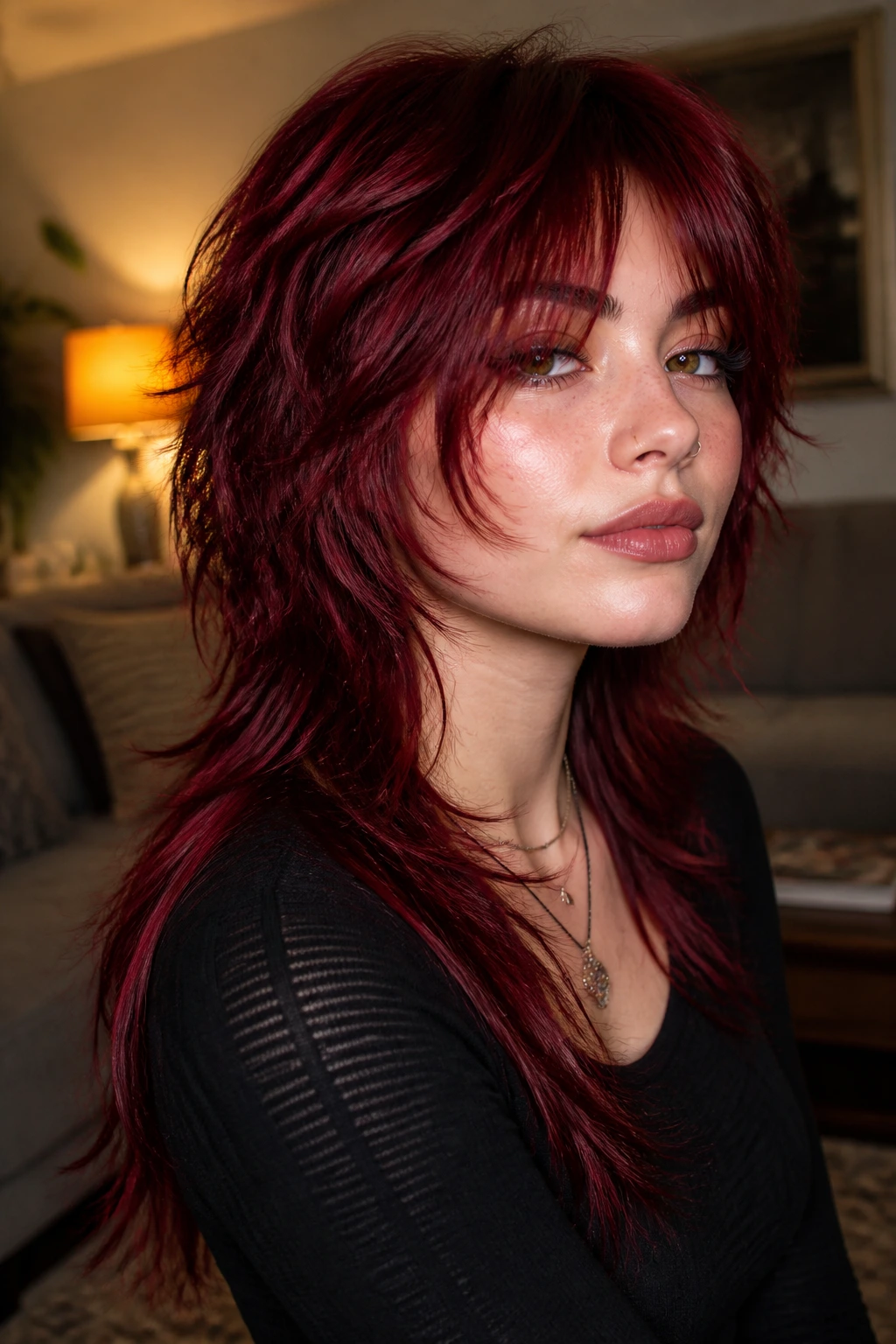
Unlike a short shag, the red velvet wolf cut keeps enough length to tie back. That tiny detail changes how wearable the style feels day to day. You still get the crown lift and the choppy face frame, but the back has enough length to tuck into a claw clip or low ponytail when life gets annoying.
Red velvet sits in the deep, rich part of the red family. It feels plush, almost smoky, and it suits thick wavy hair especially well because the color adds depth where the layers remove bulk. If your hair tends to frizz, this tone can make the texture look more deliberate.
This cut is also a good middle ground for someone who wants wolf-cut energy without losing too much length. The face-framing layers can stay light and cheeky while the back remains practical.
That matters. A lot.
Not every bold haircut needs to fight your schedule. This one behaves better than the louder versions and still looks like it has personality.
15. Flame Red Wolf Cut with High-Contrast Roots
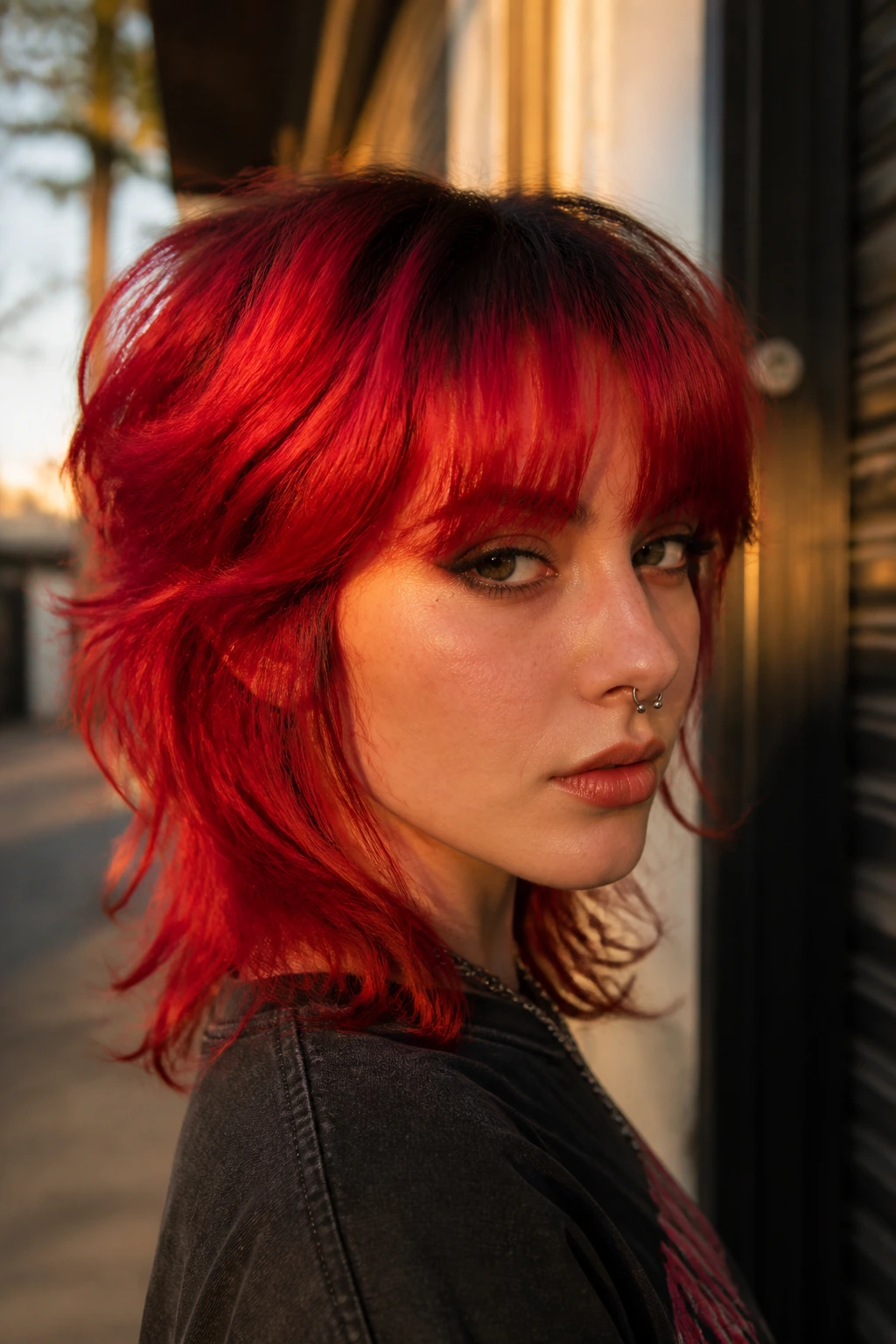
Flame red is not for the shy.
This is the loud version of the wolf cut, the one that leans into contrast instead of softness. The roots can stay a shade deeper, which gives the red mids something to blaze against. That darker base also keeps the grow-out from looking harsh, and that is not a small thing when the color is this bright.
You usually need a lighter starting base, or at least a serious pre-lightening session, if you want the flame effect to read cleanly. Skip the impulse to make every inch equally bright. The haircut looks better when the brightness moves through the layers instead of sitting like paint on top.
Use heat protection every time you style it. Bright red fades fast under high heat, and wolf-cut layers show that fade fast too. A gloss refresh every few weeks helps keep the color from tipping orange.
Keep the roots a shade darker than the mids, and the haircut will still read as shape even after the color softens. That’s the version I’d wear.
