



Wavy hair can look flat in a blunt cut and chaotic in a cut that’s too layered. The sweet spot is a shag haircut for wavy hair that leaves enough weight for the bends to fall, then removes just enough bulk to keep the shape alive.
That balance matters more than people think. A good shag does not fight your waves. It gives them a path, so the hair moves instead of ballooning at the ends or collapsing at the crown. Too many layers and the shape frays. Too few, and the whole thing turns boxy by lunch.
I keep coming back to the same practical point: wavy hair needs room, but it also needs edges. That’s why one shag can look soft and romantic, while another feels sharp, messy, or almost architectural. The cut is doing a lot of the work before you touch a styling tool.
So the real question is not whether shag haircuts work on waves. They do. The question is which version fits your texture, your length, and how much time you want to spend messing with it in the morning.
1. Soft Collarbone Shag
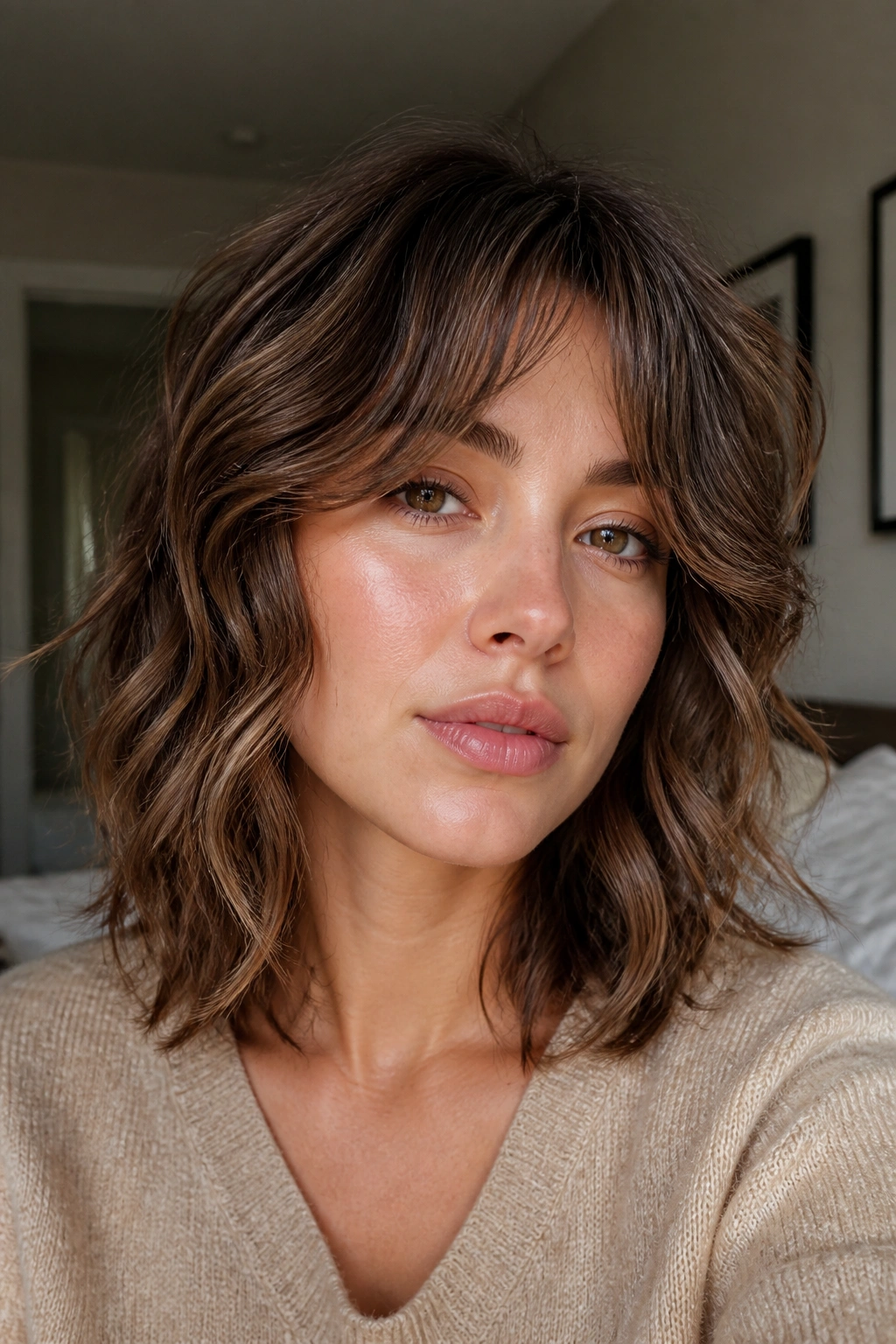
This is the shag I recommend first to people who want movement without drama. The length sits around the collarbone, which gives your waves enough weight to hang in clean bends, while the layers start low enough to avoid that frizzy halo some shag cuts create.
Why It Feels So Easy
Ask for long face-framing pieces, soft internal layers, and lightly feathered ends. That combination keeps the outline calm and lets the waves do the visual work. It’s especially good if your hair bends in a loose S-shape rather than a tight curl.
- Best for medium-density waves that flatten when they get too short.
- Looks good air-dried with a small amount of cream.
- Grows out in a forgiving way, which matters more than people admit.
Pro tip: keep the shortest layer below the cheekbone if you want movement without a lot of puff at the sides.
2. Heavy Fringe Shag
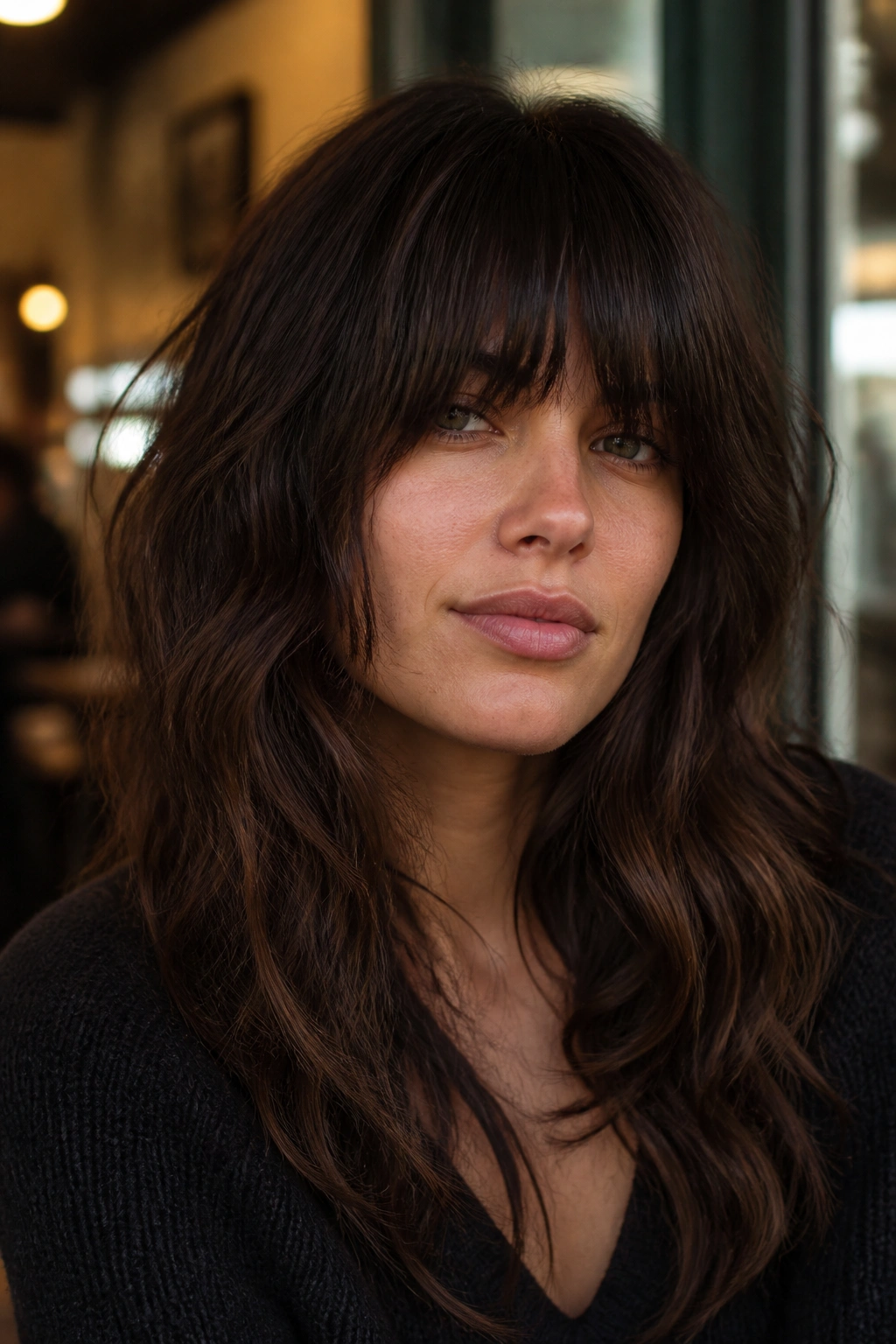
A heavy fringe changes the whole mood. The cut feels a little moodier, a little more deliberate, and wavy hair carries it well because the fringe never lies perfectly flat anyway.
The trick is balance. If the fringe is too wispy, it disappears into the rest of the cut. If it’s too blunt, it can sit like a shelf. I prefer a dense fringe that skims the brows and breaks into tiny pieces at the temples.
That shape works especially well on thick waves. The fringe gives the front of the haircut some weight, while the layers around it keep the rest from feeling boxed in. It’s a strong look. Not delicate. Not precious.
3. Curtain Bang Shag
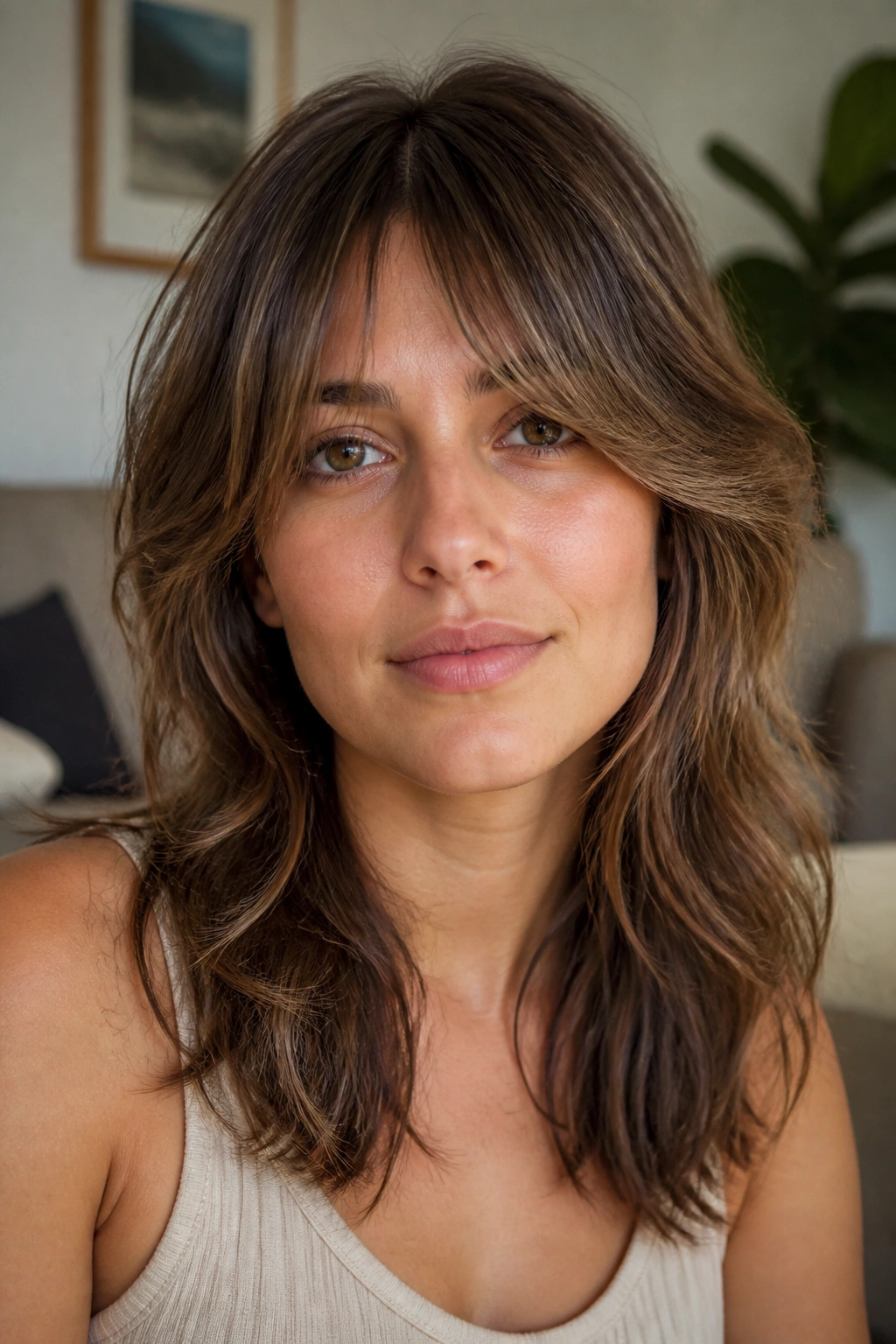
Want a shag that opens the face instead of crowding it? Curtain bangs do that job better than almost any other fringe.
The bangs part in the middle and fall away from the cheeks, which gives wavy hair a built-in frame without a hard line. A good stylist will blend the fringe into the first layer near the cheekbones so the cut feels connected, not patched together. That blending matters. Without it, the bangs look detached.
How To Wear It
Use a round brush or your fingers to direct the bangs forward while they dry, then let the rest of the hair fall naturally. If you part them before they dry, they’ll usually keep that shape.
4. Chin-Length Cropped Shag
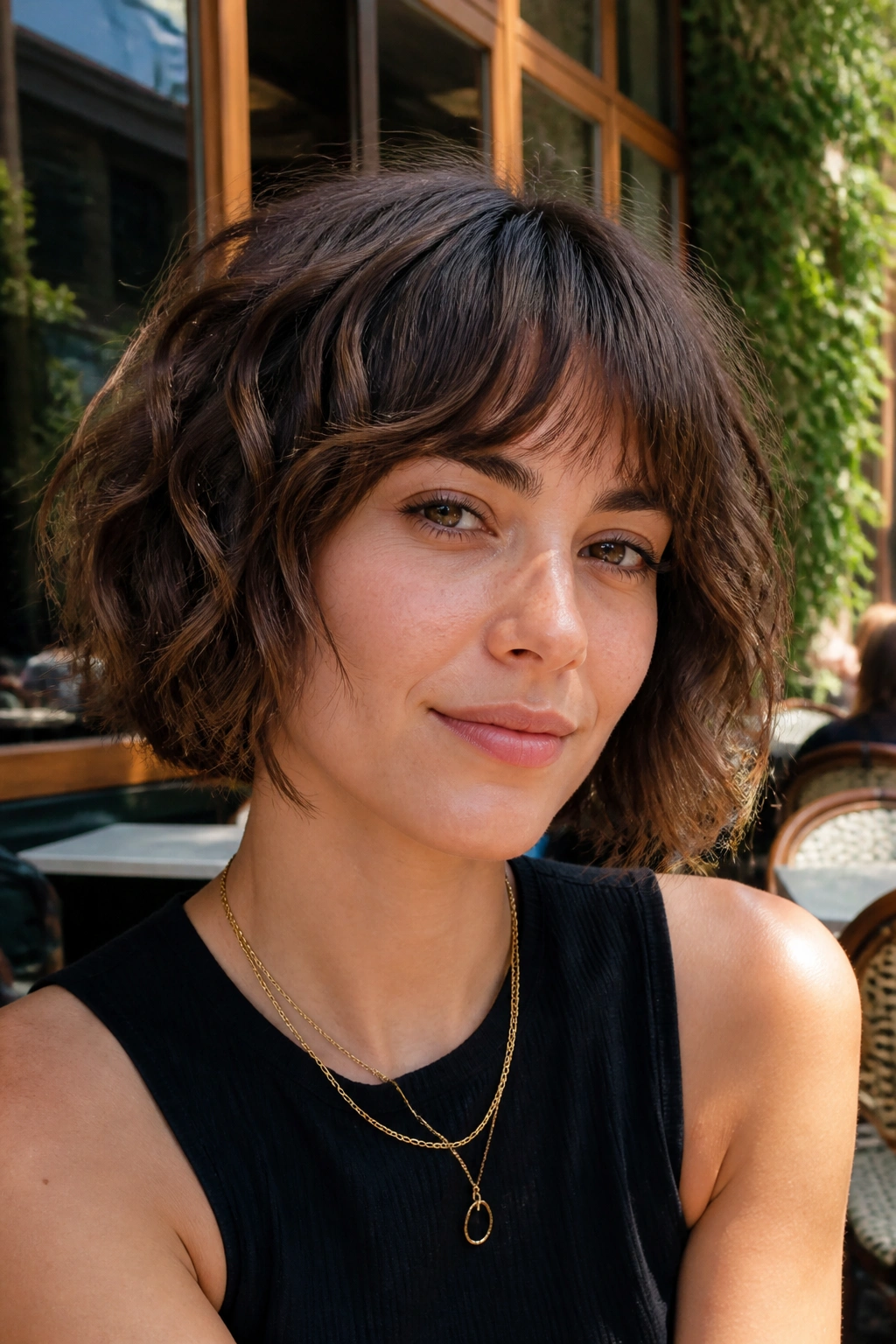
Short shags with wavy hair can be brilliant. They can also go sideways fast if the layering is too eager. Chin length is the sweet spot because it keeps enough body around the jaw while still letting the ends move.
This cut has a playful shape. The waves stack up a little, which gives you that messy, full finish people usually try to fake with products. It works best when the shortest pieces are not cut too high on the head. Keep the top soft, not spiky.
It’s a good choice if your hair has natural bounce and you do not want to spend half an hour shaping it every morning. A pea-sized amount of styling cream is usually enough.
5. Long Boho Shag
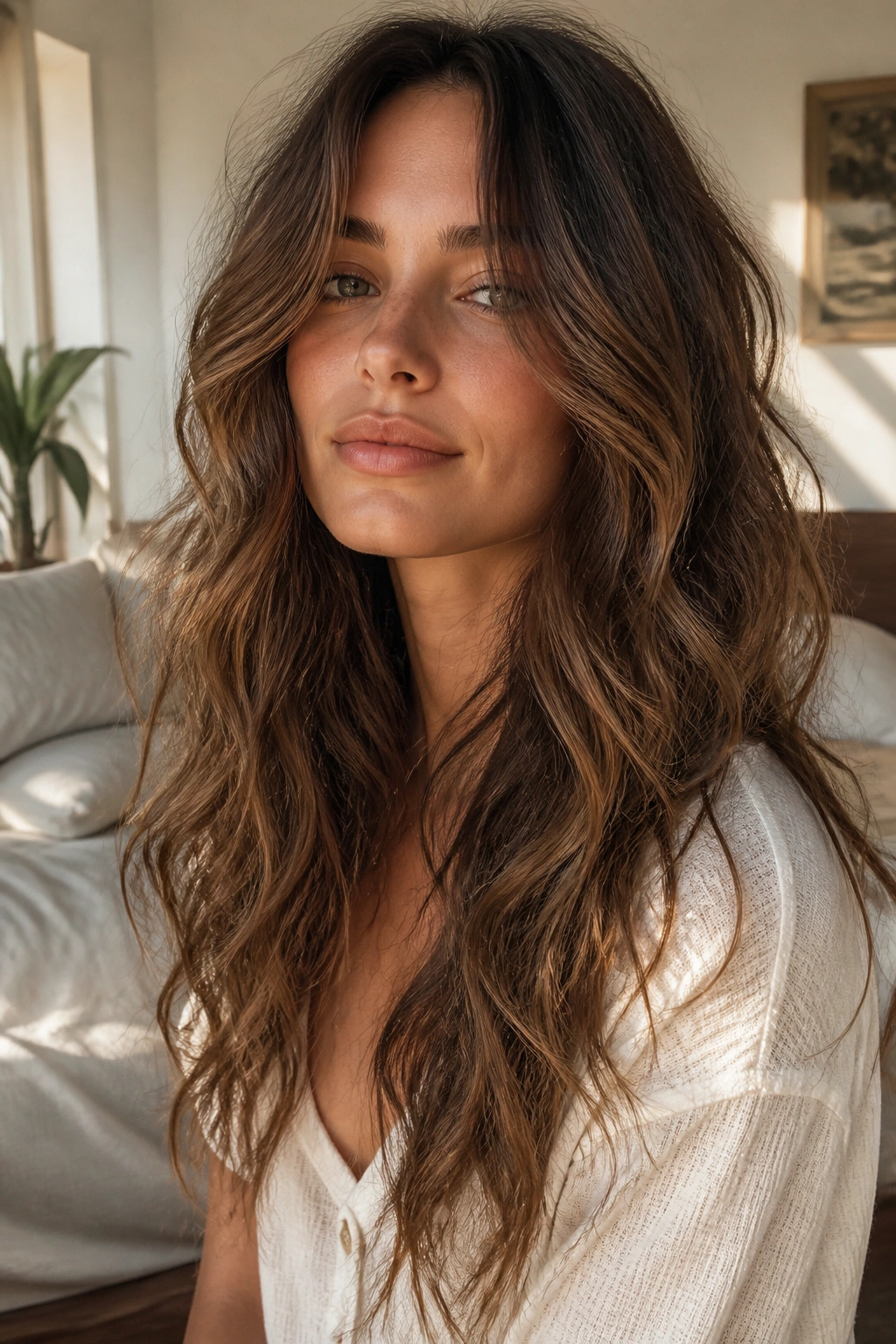
A long shag is what I point people toward when they love their length but want it to stop hanging there like curtains. The shape stays loose, with long layers beginning around the jaw or lower, so the length still feels present.
That makes it a smart fit for wavy hair that gets bulky when over-layered. You get movement in the mid-lengths and ends, but you keep enough weight for the hair to fall in waves instead of fuzzing out. I like this version with a center part and a little face framing that starts near the cheekbones.
It’s not trying to be neat. That’s the charm.
6. Softer Wolf Shag

A wolf cut can be too much for some people. A softer wolf shag keeps the spirit of the style — the lifted crown, the bit of edge at the nape — without going full punk.
Think of it as a shag that borrows the wolf cut’s attitude but calms down the sharpest corners. The top stays airy, the back keeps some length, and the sides are blended enough that the cut reads as wearable, not costume-y. Wavy hair helps because the texture keeps the layers from looking choppy in a bad way.
If you like the idea of a mullet-adjacent shape but want something easier to live with, start here.
7. Razor-Cut Midi Shag
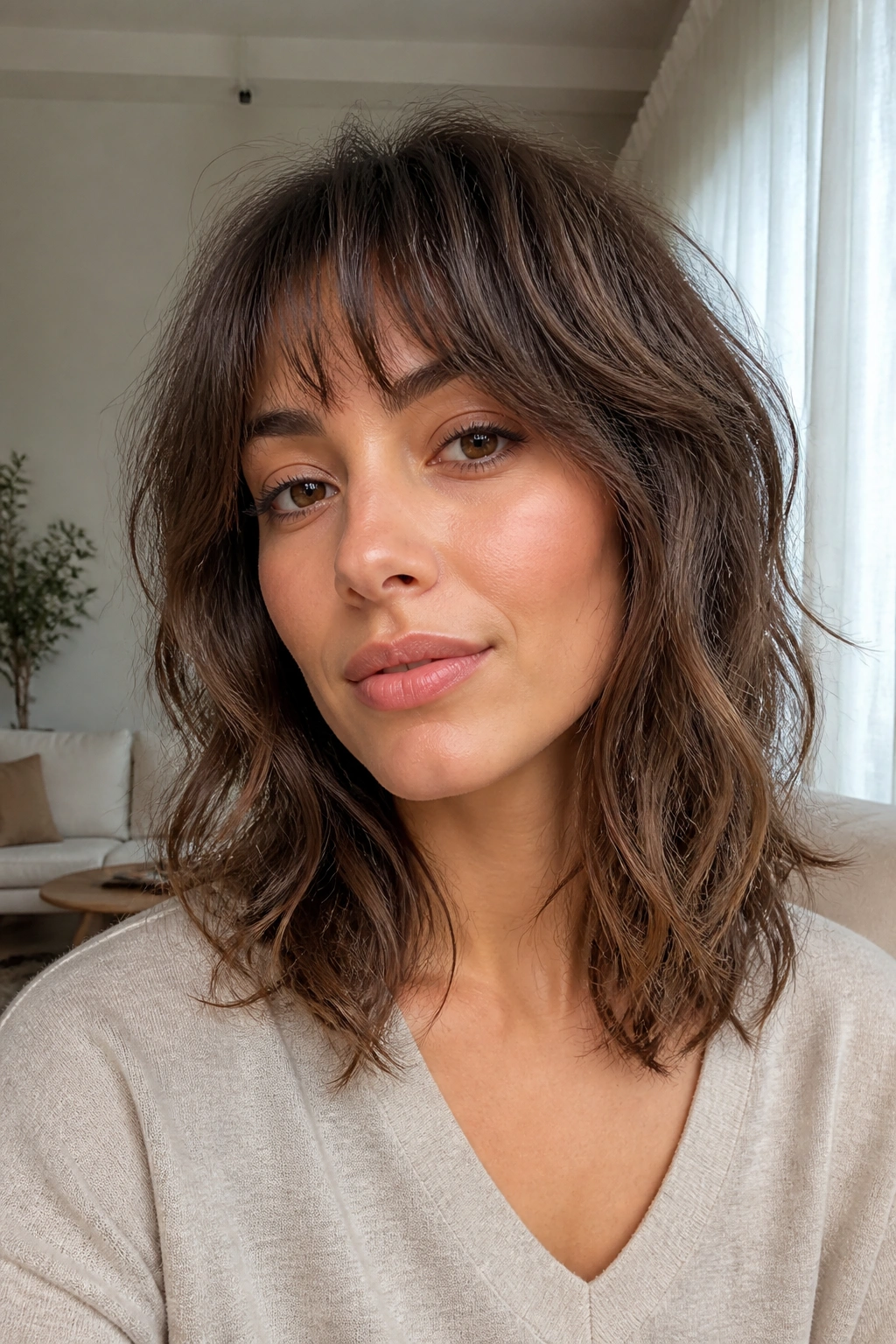
Razor cutting gives this shag a thinner, softer edge. The ends break apart in a way that suits loose waves especially well, because the texture looks intentional instead of overworked.
A midi length — somewhere between the collarbone and upper chest — gives the cut enough room to show shape. Shorter than that and the razor work can look a little severe. Longer than that and you lose some of the visual punch. This is the haircut for someone who likes piecey ends and a bit of grit in the finish.
It also behaves nicely with a diffuser. The hair dries with separation already built in, so you do not need to pile on product.
8. Retro 70s Rounded Shag
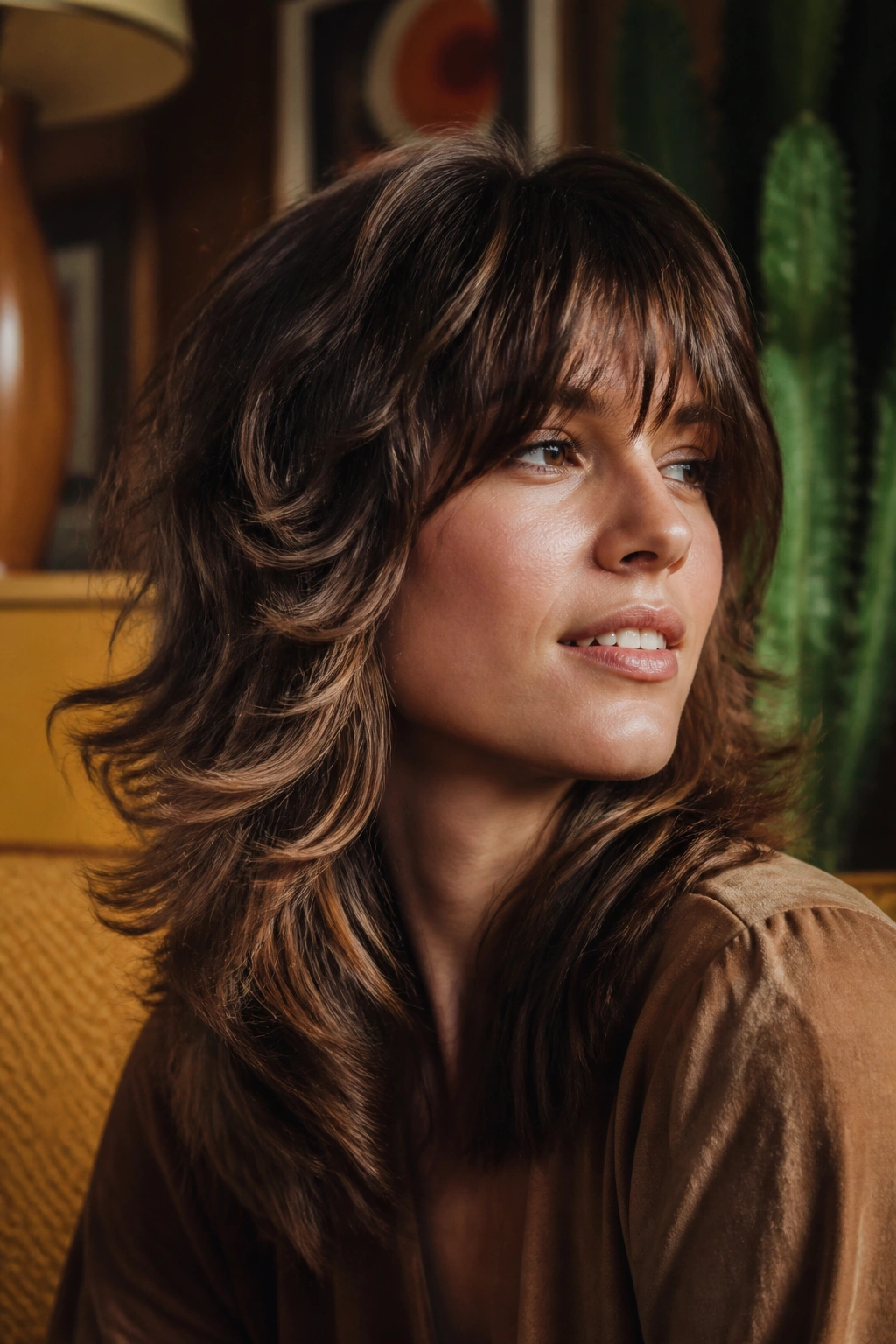
This one has a little glamour in it. The 70s shag is broader at the crown, softer through the sides, and usually styled with a gentle bend that flips away from the face.
The shape works because it lets wavy hair do what it already wants to do: move. A round brush can lift the roots, but the ends should still feel loose. If the styling gets too perfect, the haircut loses its charm. That’s the line to watch.
What Makes It Stand Out
- Crown volume without a stiff top.
- Feathered layers that curl away from the cheeks.
- Ends that bend out instead of lying flat.
This is one of those cuts that looks better with a little mess in it.
9. Tapered Mullet Shag
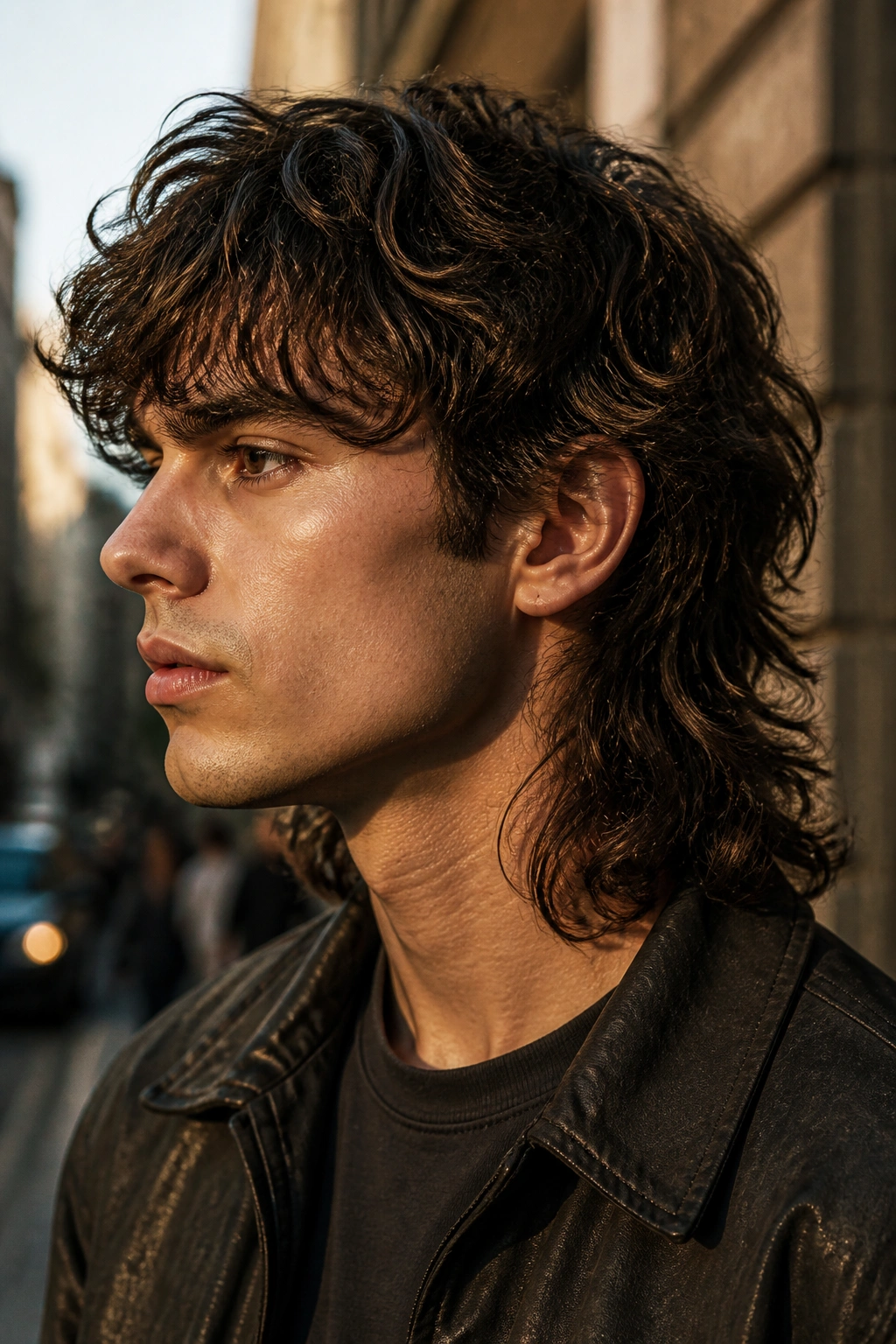
A tapered mullet shag sounds braver than it usually looks in real life. The front and sides stay soft, while the back keeps more length and a clearer tail shape.
That extra length at the nape gives the haircut some edge, but the taper keeps it from turning cartoonish. Wavy hair is useful here because the natural bend softens the transition between the shorter top and the longer back. Without waves, the cut can read harsh. With them, it reads cool.
Best tip? Ask for a gradual shift, not a sudden drop. If the back is too disconnected, you’ll spend too much time styling around it.
10. Air-Dry Shag
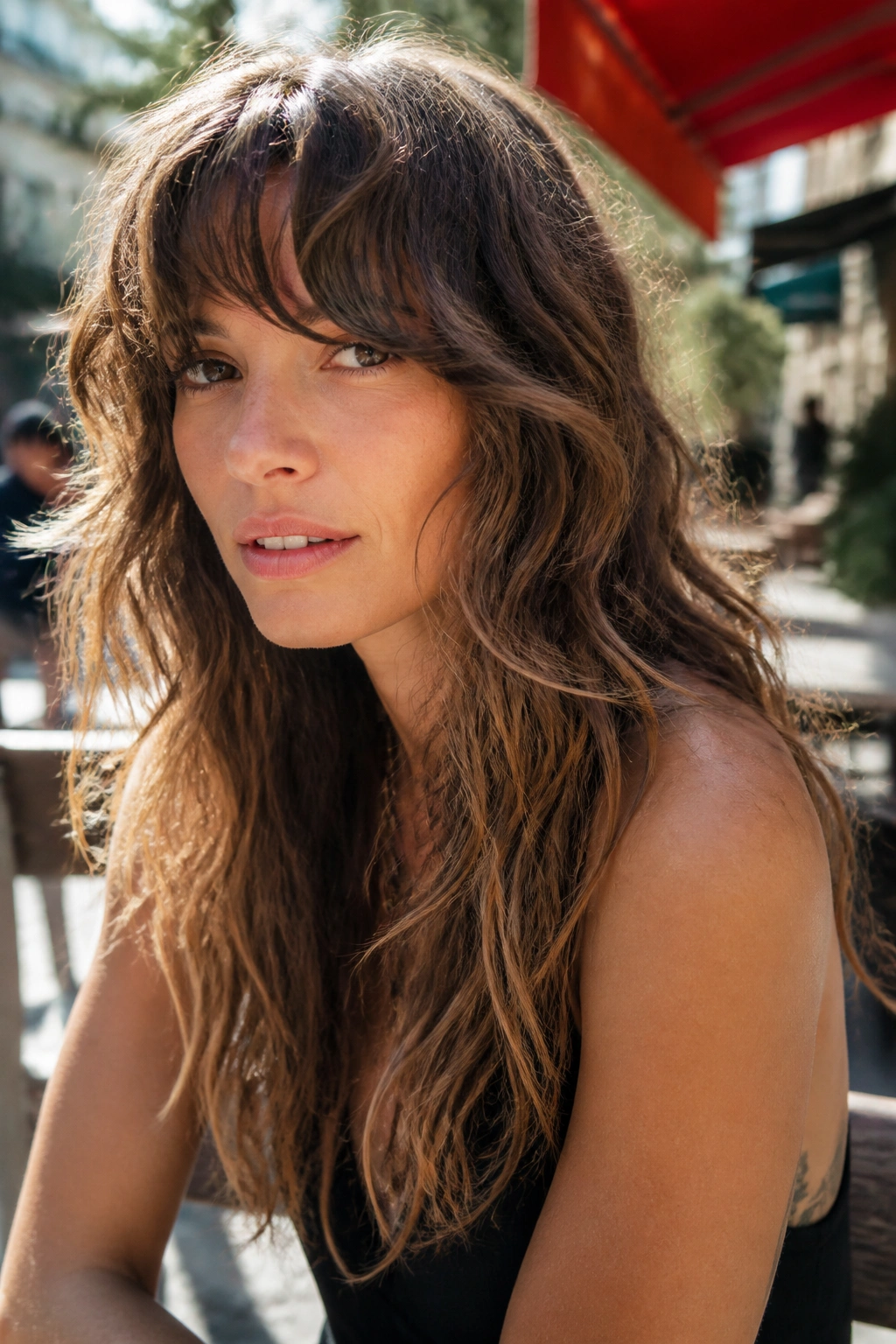
Some haircuts are designed around heat tools. This one is not.
An air-dry shag leans into your wave pattern instead of trying to force it into a polished shape. The layers are placed so the hair dries with movement on its own, especially if your wave pattern is loose to medium. The result is relaxed, a little undone, and low effort in the best sense.
I’d ask for invisible layering through the interior and a slightly broken outline at the ends. Then use a light mousse or foam, scrunch once, and leave it alone. Hands off. That part matters.
11. Deep Side-Part Shag
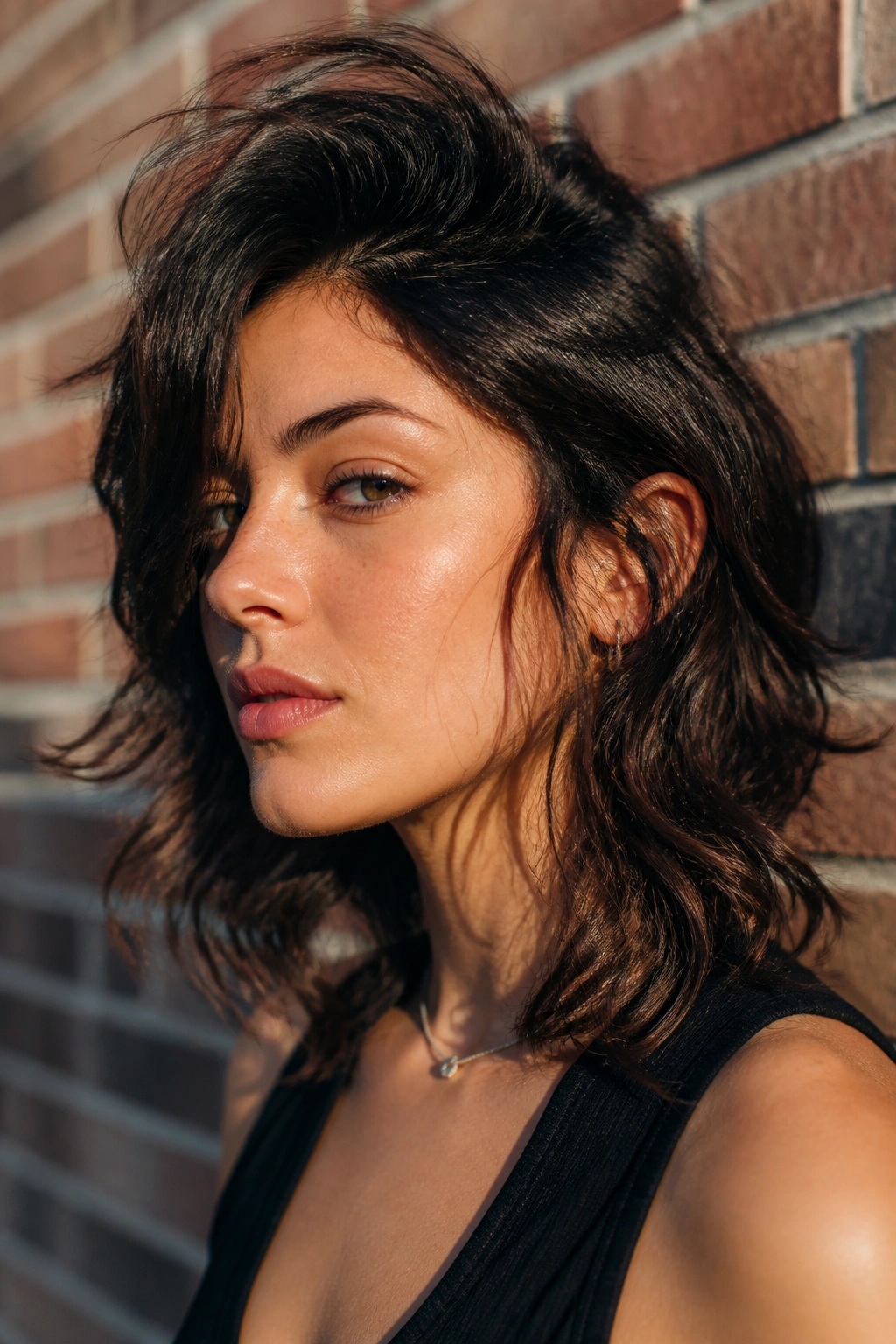
A side part can change a shag more than another inch of length ever will. Push the hair over, and suddenly the crown lifts, the face gets a diagonal line, and the waves fall with more shape.
Why does it work? Because wavy hair already has uneven movement. A deep side part makes that movement feel intentional instead of random. It also helps if one side of your hair tends to collapse more than the other.
Good Things To Ask For
- A longer fringe that can sweep across the forehead.
- Layers that start around the cheekbone on the heavy side.
- Slightly shorter pieces near the crown for lift.
If your face feels a little too symmetrical in a center part, this is a neat fix.
12. Piecey Pixie Shag
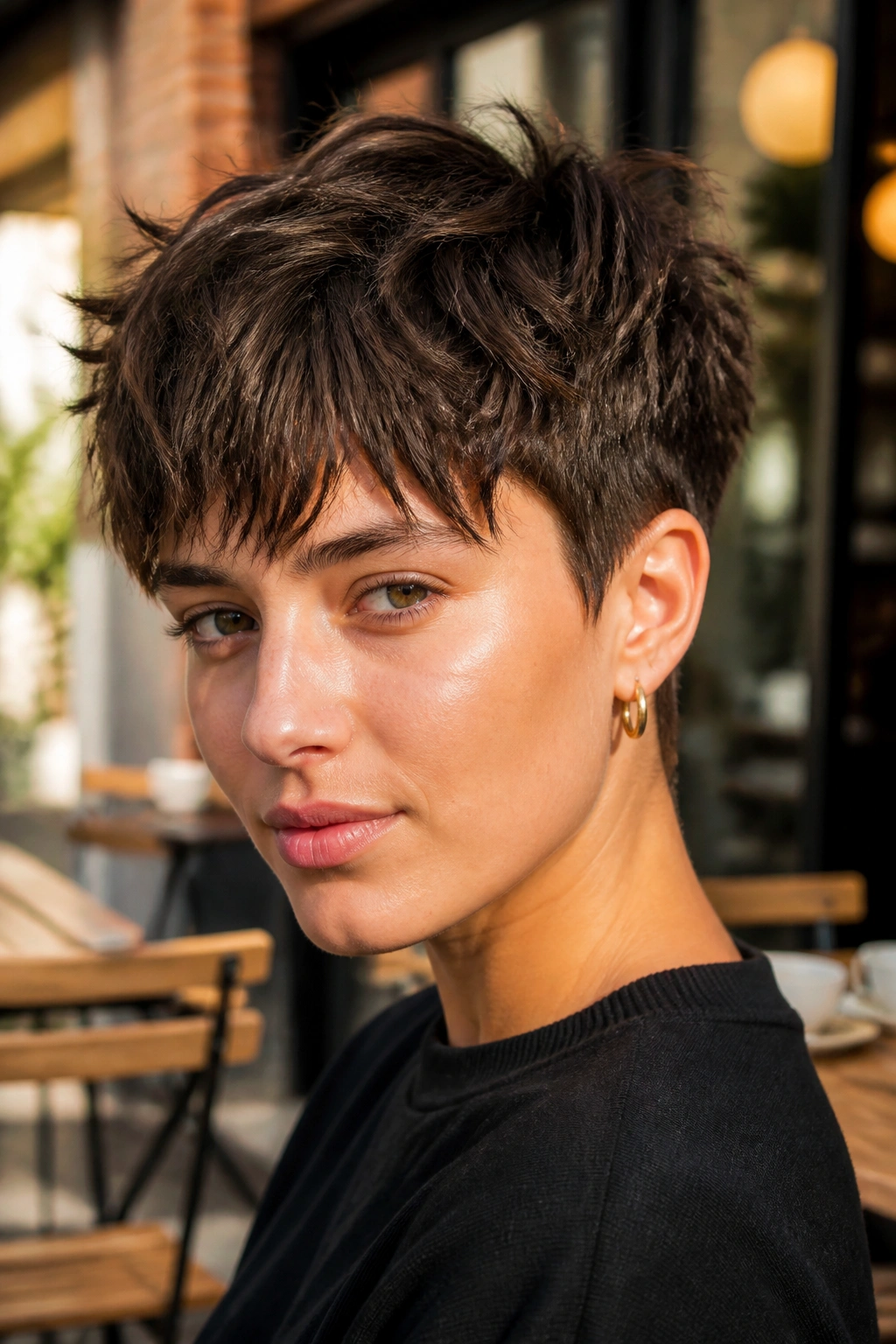
Short hair, but not stiff. That’s the point.
A piecey pixie shag uses wavy texture to keep the cut from turning helmet-like. The sides stay tight enough to show the ears and jaw, while the top carries choppy, separated layers that move when you run your fingers through them. It’s a sharp haircut, but not a polished one.
The styling is small but specific. Use a dab of matte paste, warm it in your hands, and pinch only the top layers. If you smear product all over, the cut can go flat fast. Keep the texture up top and leave the edges lighter.
13. Shoulder-Grazing C-Shaped Shag
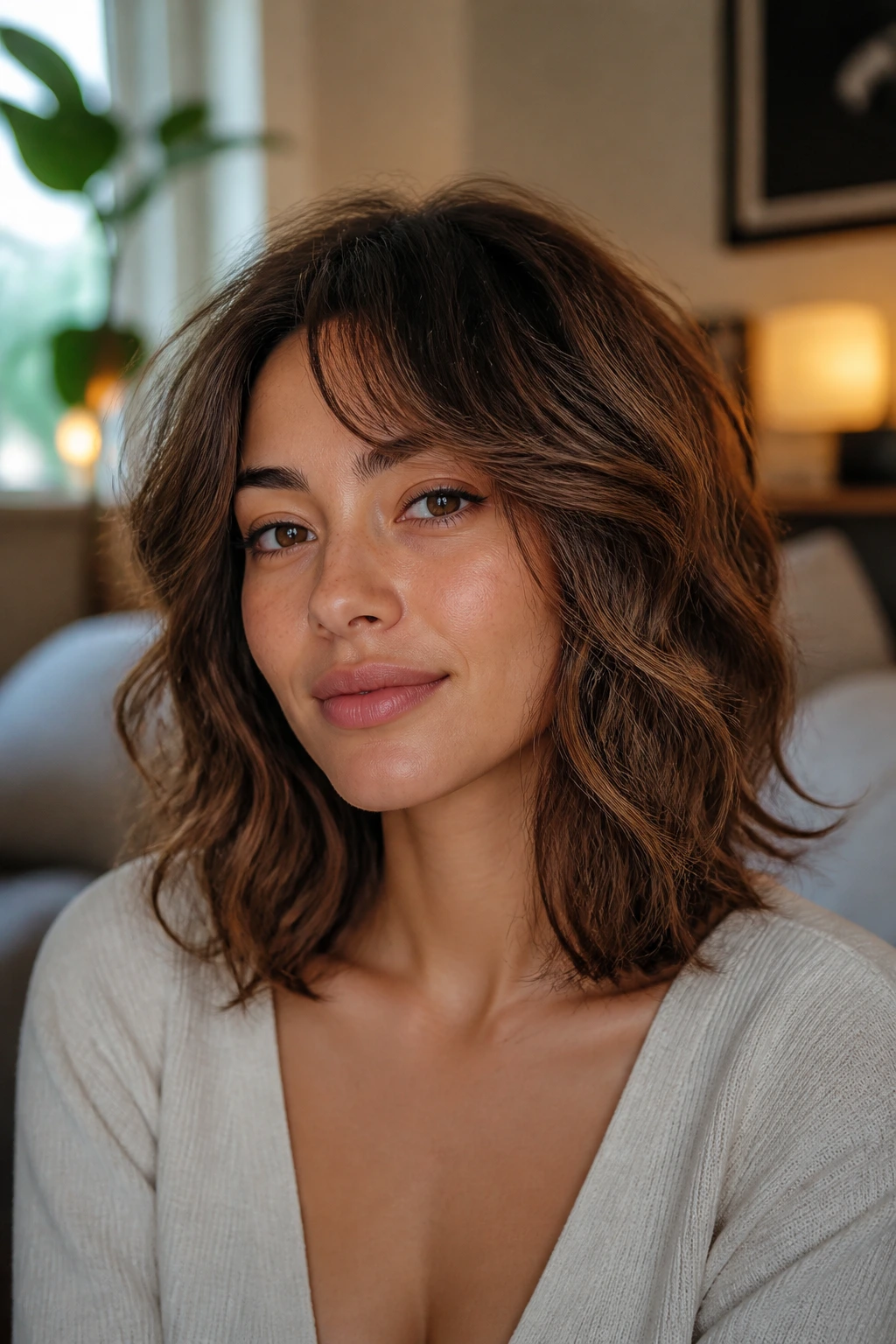
The C-shape is one of my favorite moves for wavy hair because it softens the front without swallowing the face. The layers curve inward near the jaw and shoulder, then bounce away from the neck.
Compared with straight face-framing layers, this shape feels less obvious. That’s a good thing if you want the haircut to look effortless rather than “I got a haircut and I need everyone to see it.” The curve also works around the shoulders, which helps the hair sit better when it rests on clothing.
It’s especially nice on medium waves that need direction but not too much texture carved into them.
14. Bottleneck Bang Shag

Bottleneck bangs start narrow in the center and open outward near the cheekbones. On wavy hair, that shape keeps the fringe from feeling bulky while still giving the haircut a clear front.
The bangs are short enough to show forehead, long enough to tuck into the rest of the layers when you want them out of the way. That flexibility is the reason they keep showing up in good shag cuts. They do not dominate the haircut; they steer it.
A Few Real-World Notes
- They need a bit of styling at the roots.
- They look best when the ends are softly bent, not bone straight.
- They grow out into curtain bangs if you’re patient.
That grow-out path is a gift. Honestly.
15. Fine-Hair Shag
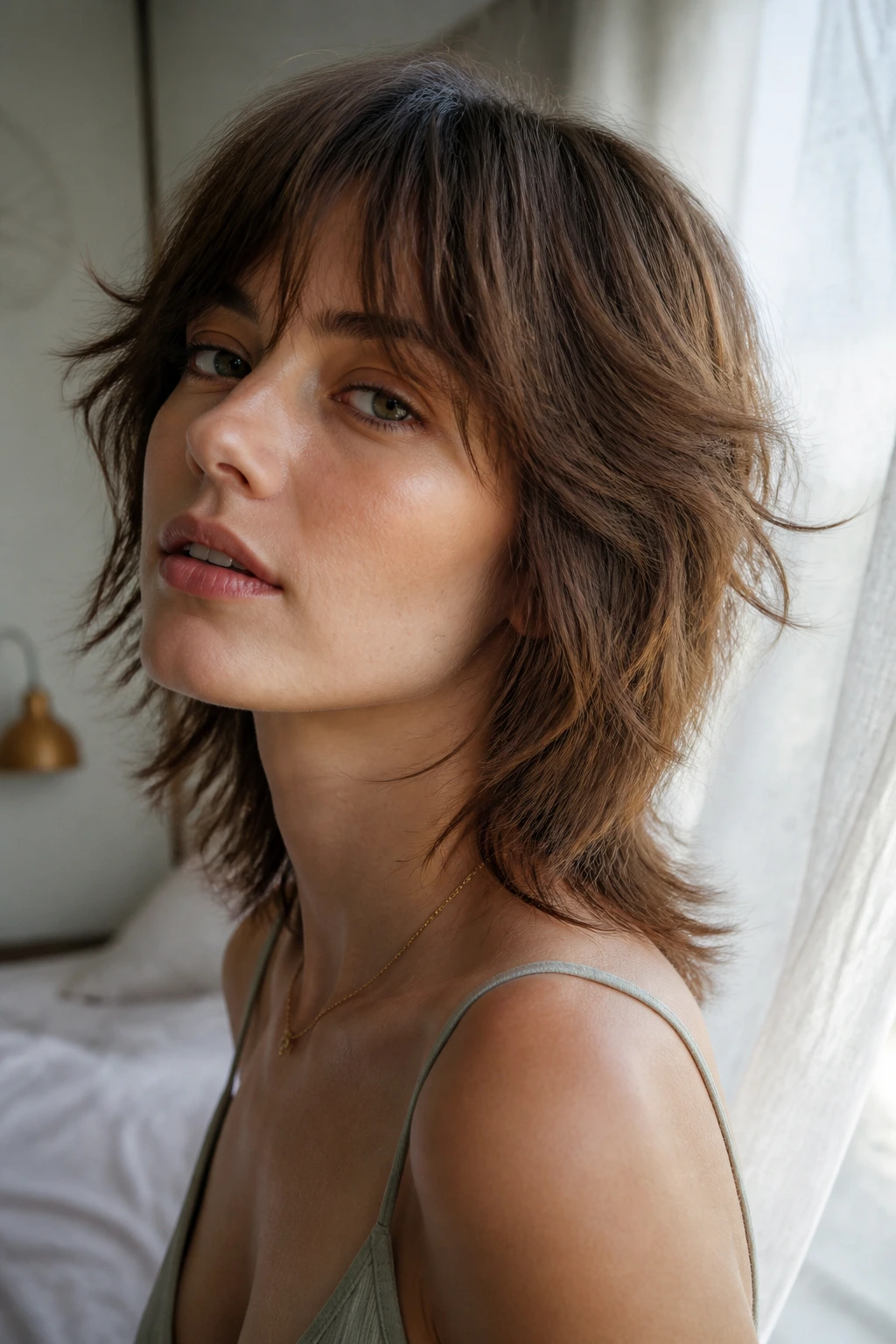
Fine wavy hair needs a different approach. Too many layers can make it look stringy, which is the last thing anyone wants.
This is where a lighter shag works better than a super chopped one. Ask for long internal layers, not aggressive slicing through every section. The goal is lift, not thinning. A good cutter will preserve some perimeter weight so the waves still have something to hold onto.
Why Less Is Better Here
Fine hair tends to separate fast, so the cut should create movement without exposing too much scalp. I’d keep the ends blunt-ish and let the texture live higher up. That gives the illusion of fullness without the frayed look that can happen when the crown is overcut.
16. Thick-Hair Shag
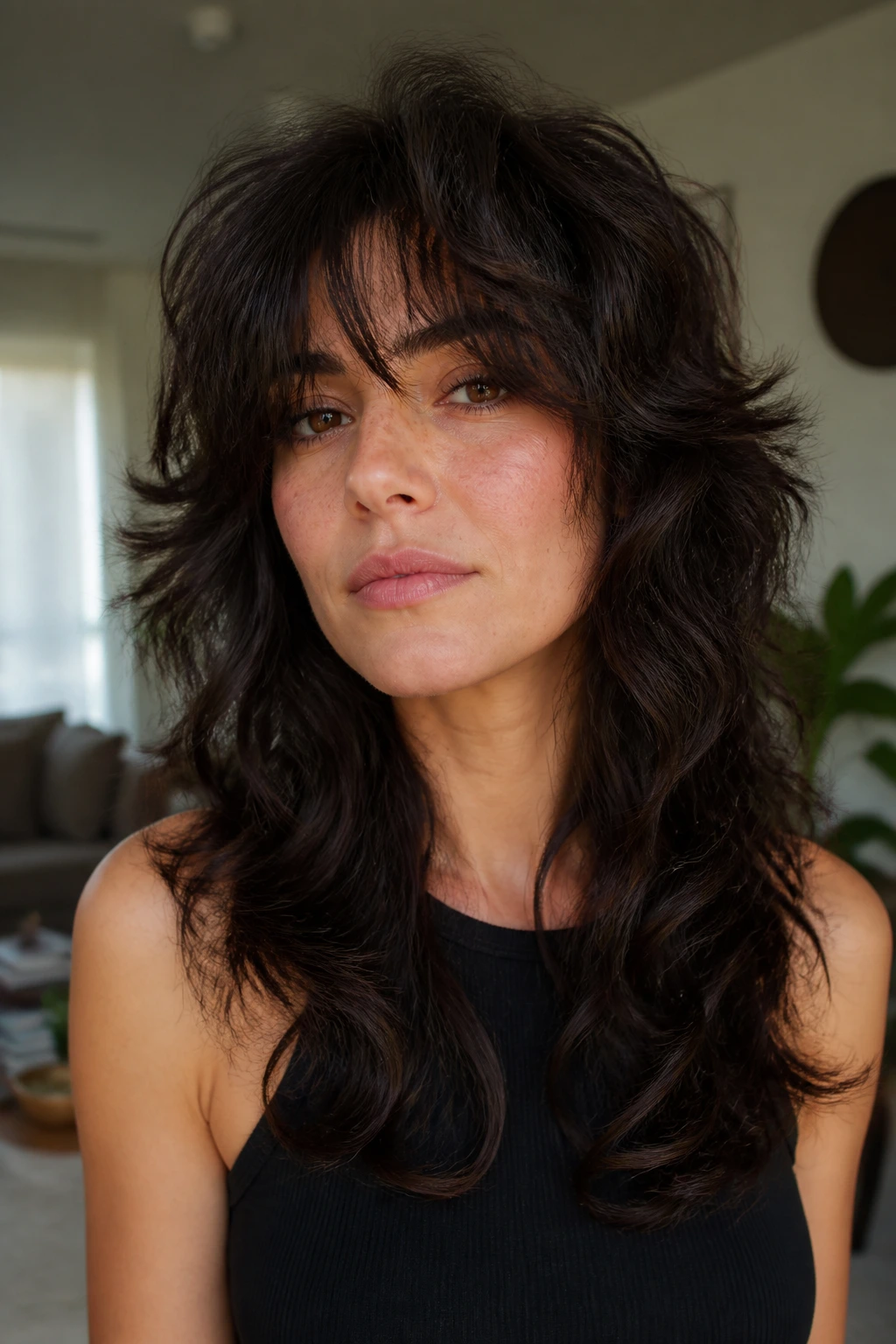
Thick wavy hair has the opposite problem: too much bulk, too little shape. A good shag fixes that by taking weight out from the inside, not by chopping the outline to pieces.
The best version has long layers under the surface, so the haircut feels lighter when it moves but still looks full from the outside. That matters. If you remove too much from the top, thick waves can puff at the sides and lose their clean line.
Ask for de-bulking through the interior and a soft perimeter. If your stylist starts hacking away at the surface with no plan, stop them. Seriously.
17. French-Girl Shag

There’s a reason this cut keeps getting copied. It hits that sweet spot between undone and polished enough to wear anywhere.
The French-girl shag usually sits around the jaw to collarbone and uses face-framing layers that open around the cheekbones. On wavy hair, the texture keeps the shape from looking too airy. The haircut wants to feel a little lived-in, a little imperfect, and that’s where waves help.
The Look In Practice
- Loose fringe or grown-out bangs.
- Soft ends, not razor-thin ends.
- A center or off-center part, depending on your face.
It’s the kind of cut that gets better after the first day, which is not true of every haircut. A lot of them lie.
18. Arched Fringe Shag

Arched bangs curve gently across the forehead, shorter in the center and longer at the sides. They frame the eyes without the heavy fall of a full fringe.
On wavy hair, the arch softens as soon as it dries, so it helps to cut the fringe slightly stronger than you think you need. That tiny correction matters. If the shape is too timid at the salon, it disappears later. If it’s a touch stronger, the waves relax it into the right place.
This is a good option when you want the front of the haircut to feel polished but not strict.
19. Layered Lob Shag
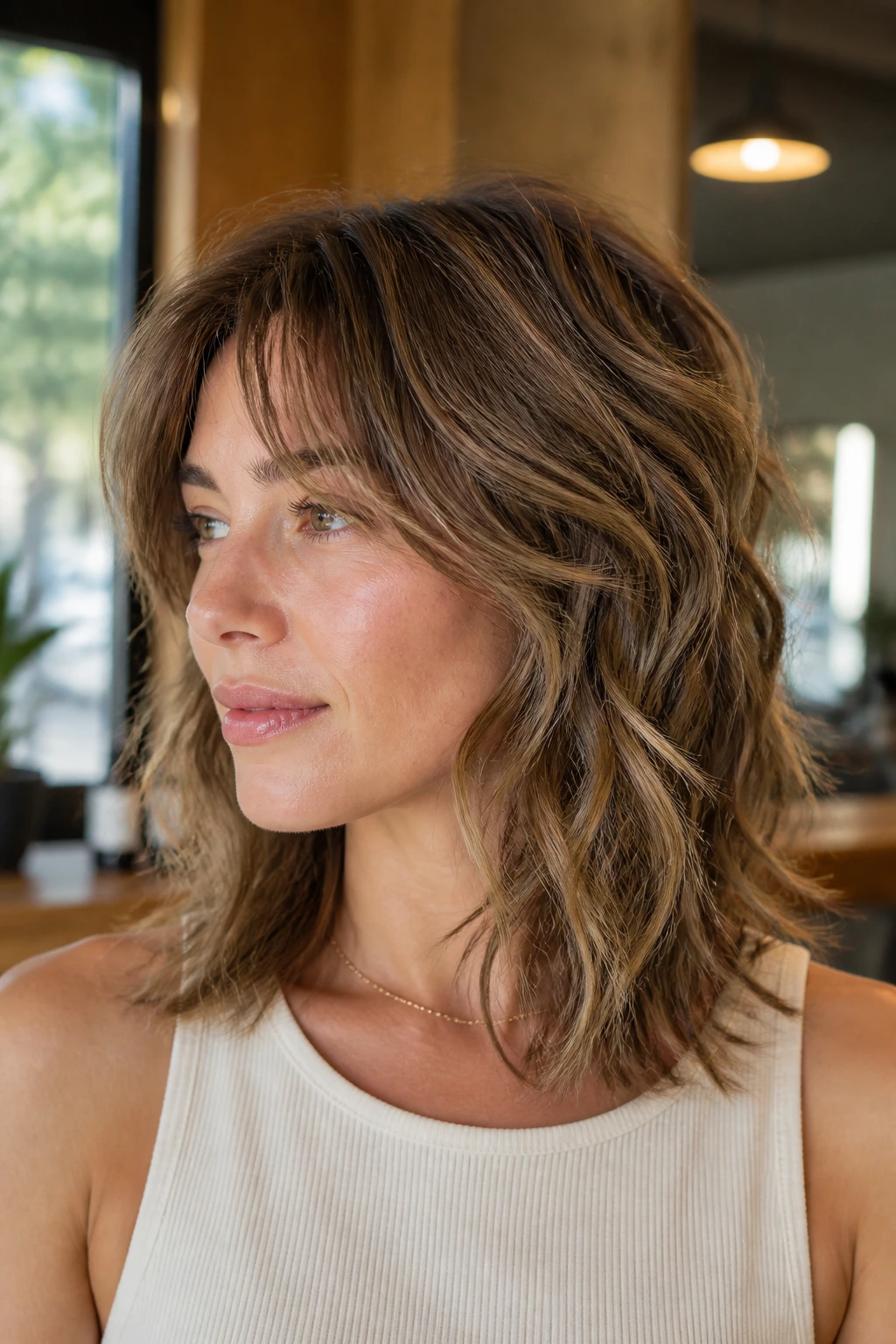
A lob shag is the answer for people who want to keep things near the shoulders but still need texture. The haircut stays long enough to tuck behind the ears, yet the shag layers keep it from sitting like one flat sheet.
I like this one because it works in real life. You can wear it smooth, let it air-dry, or rough it up with a diffuser, and the shape still makes sense. The shoulder length gives the waves a nice bend point, while the internal layers stop the ends from looking heavy.
How It Reads Visually
The outline is clean, but the interior is busy. That contrast is what makes it interesting.
20. Disco Shag
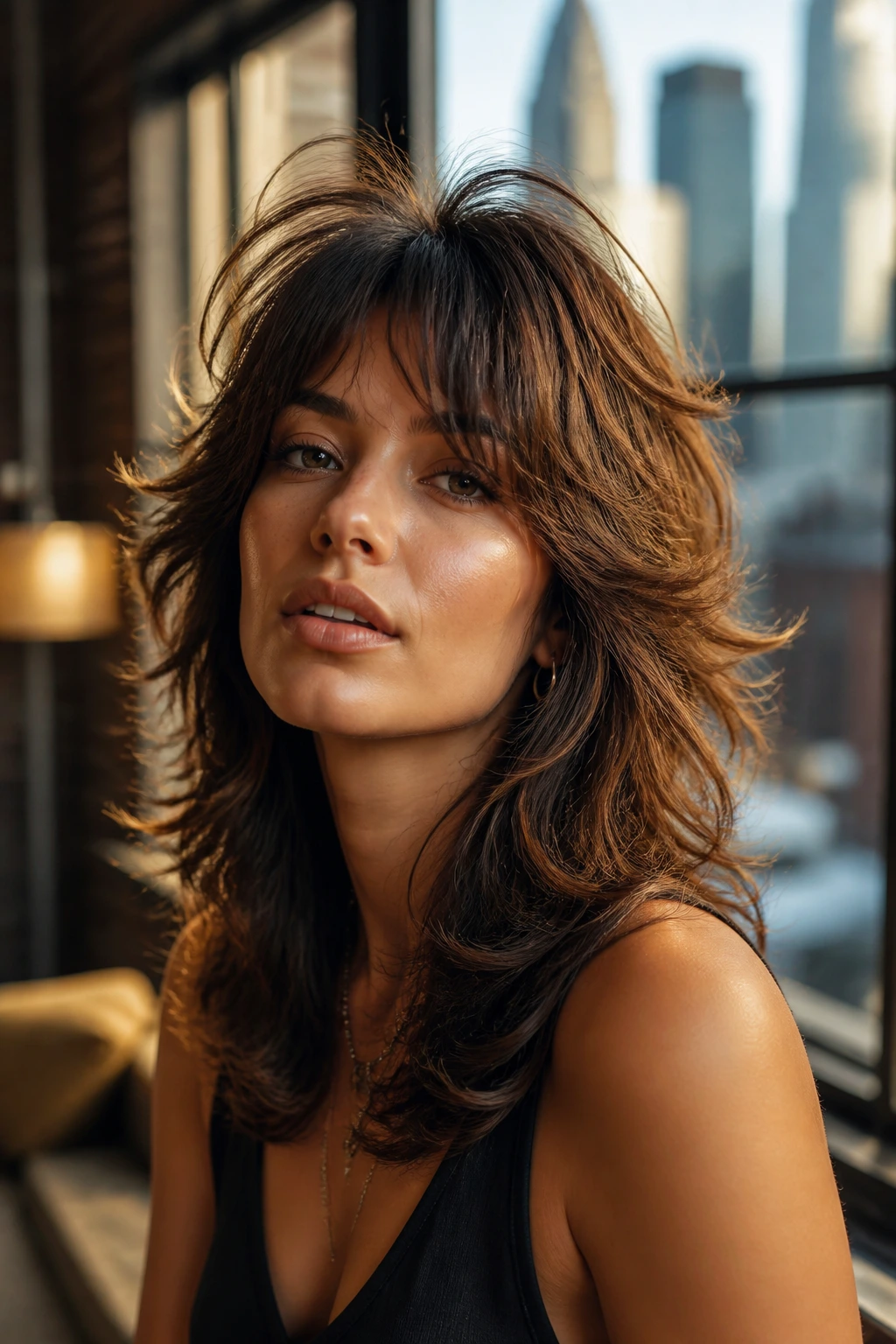
If you want volume, this is the loud one. The disco shag pushes height into the crown and movement through the sides, so the whole head feels alive.
It is not subtle. The cut wants lift at the roots, loose bends through the lengths, and a little flip at the ends. Wavy hair helps because it already carries that sort of motion; the cut just exaggerates it. I’d use a blow-dry brush or large round brush at the top, then leave the lower half a little imperfect.
What To Ask For
- Shorter crown layers for lift.
- Wider face-framing pieces.
- A shape that flares outward near the shoulders.
If you like big hair, this one has opinions.
21. Short Neckline Shag
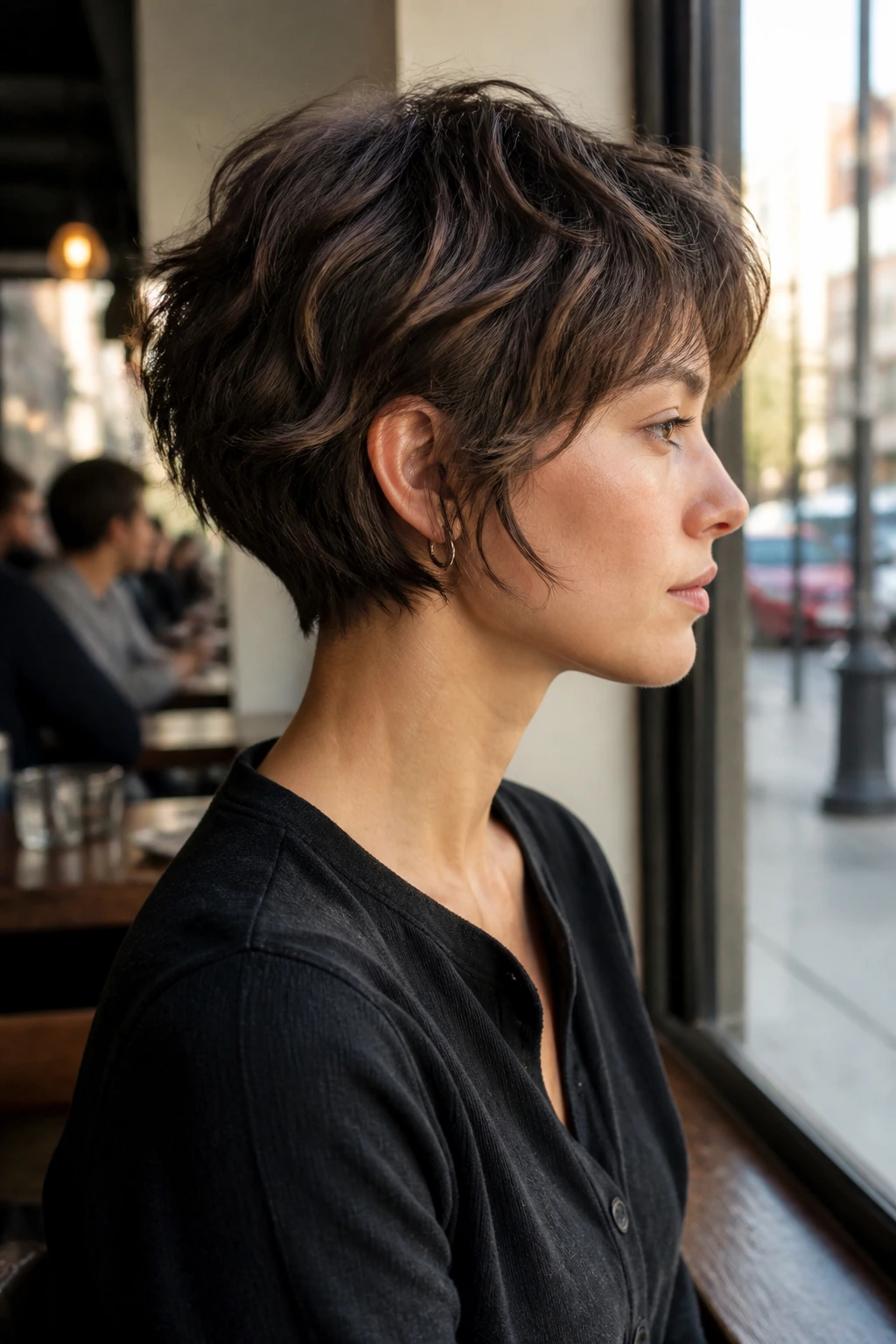
A short neckline shag keeps the nape clean and short while leaving softness higher up. The result feels neat from the back and textured from the front.
That contrast is the appeal. Wavy hair can get bulky at the neck when it grows out, and this cut keeps that area under control. It also makes the hairline look sharper, which is nice if you want some structure without going full undercut.
The front should stay softer than the back is short. If both areas are heavily cropped, the haircut can lose its shag character and start looking more like a disconnected crop.
22. Messy Center-Part Shag

A center part does not have to be tidy. In this cut, the part is a guide, not a rule.
The mess comes from the layers falling unevenly in a good way — some pieces curve toward the cheek, some kick out near the jaw, and the waves split naturally down the middle. That little bit of irregularity is what keeps the style from reading too formal. It works best if your wave pattern is loose enough to create movement without much encouragement.
Why It Flatters
A center part keeps the face open, while the shag layers stop it from feeling plain. If your hair tends to separate on its own near the middle, this is an easy haircut to live with.
23. Underlayer Contrast Shag
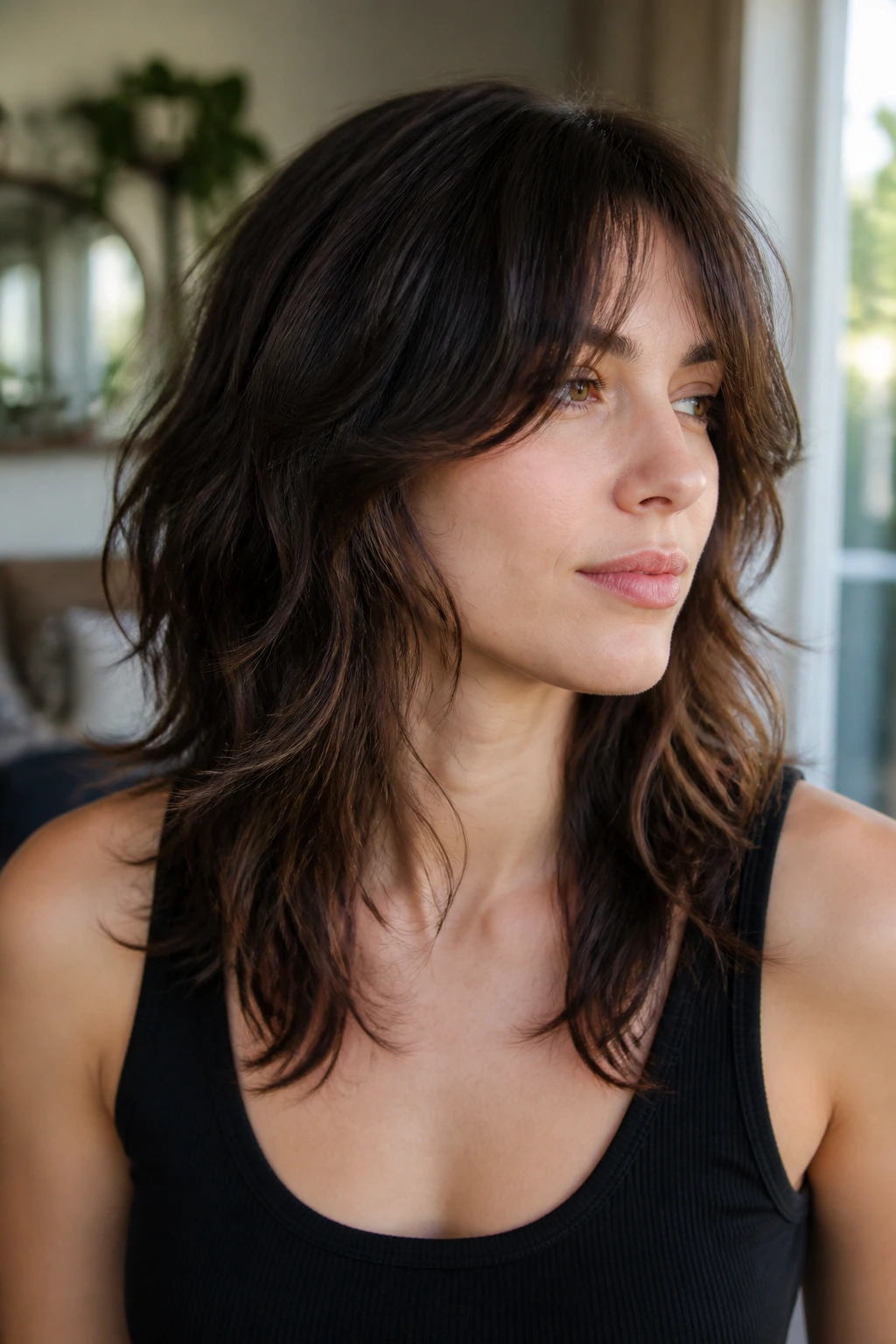
Some cuts hide their best work underneath. This is one of them.
The underlayer contrast shag keeps the top and surface layers longer, while the lower sections are cut shorter and more active. The visual effect is subtle when the hair hangs still, then more obvious when the waves move or you tuck one side behind the ear. I like it for dense wavy hair that needs relief without losing its shape.
The nice part is that it looks softer than a highly choppy shag, but it still gives you that lifted feel. It is one of the better choices if you want texture that shows up in motion more than in a mirror shot.
24. Shaggy Mini-Mullet

A mini-mullet is a small rebellion, not a full declaration.
The front and sides stay shaggy and face-friendly, while the back keeps a touch more length. That tiny difference creates attitude without the dramatic drop people associate with a classic mullet. Wavy hair smooths the transition, which is why this cut can feel surprisingly wearable.
Good Fit, Bad Fit
- Good fit: you like edgy shapes but still need a haircut that works at work.
- Good fit: your waves have enough bounce to show the back shape.
- Bad fit: you want something tidy and polished all the time.
It’s a fun cut. Also a committed one.
25. Minimalist Shag
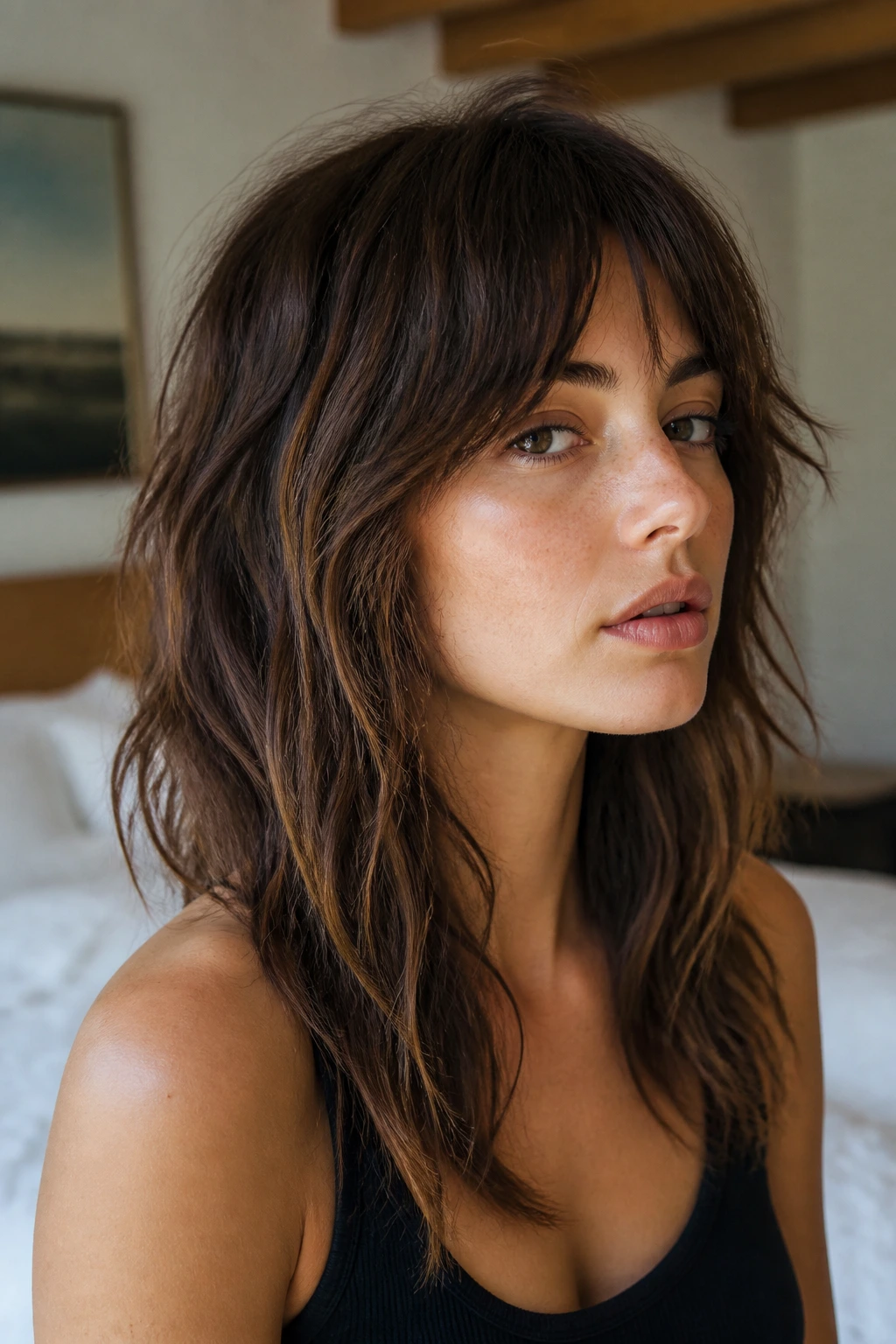
Not every shag has to look shredded. A minimalist shag keeps the layer count low and the shape clean.
This one relies on a few long layers placed carefully rather than lots of short pieces. The effect is quieter, which suits people who want movement without a visibly chopped finish. On wavy hair, that restraint pays off because the natural texture already supplies plenty of interest. The haircut does not need to compete with it.
If you hate the feeling of hair all over your face, this is the version to try. It gives just enough shape to keep the waves from collapsing.
26. Dense Layered Shag
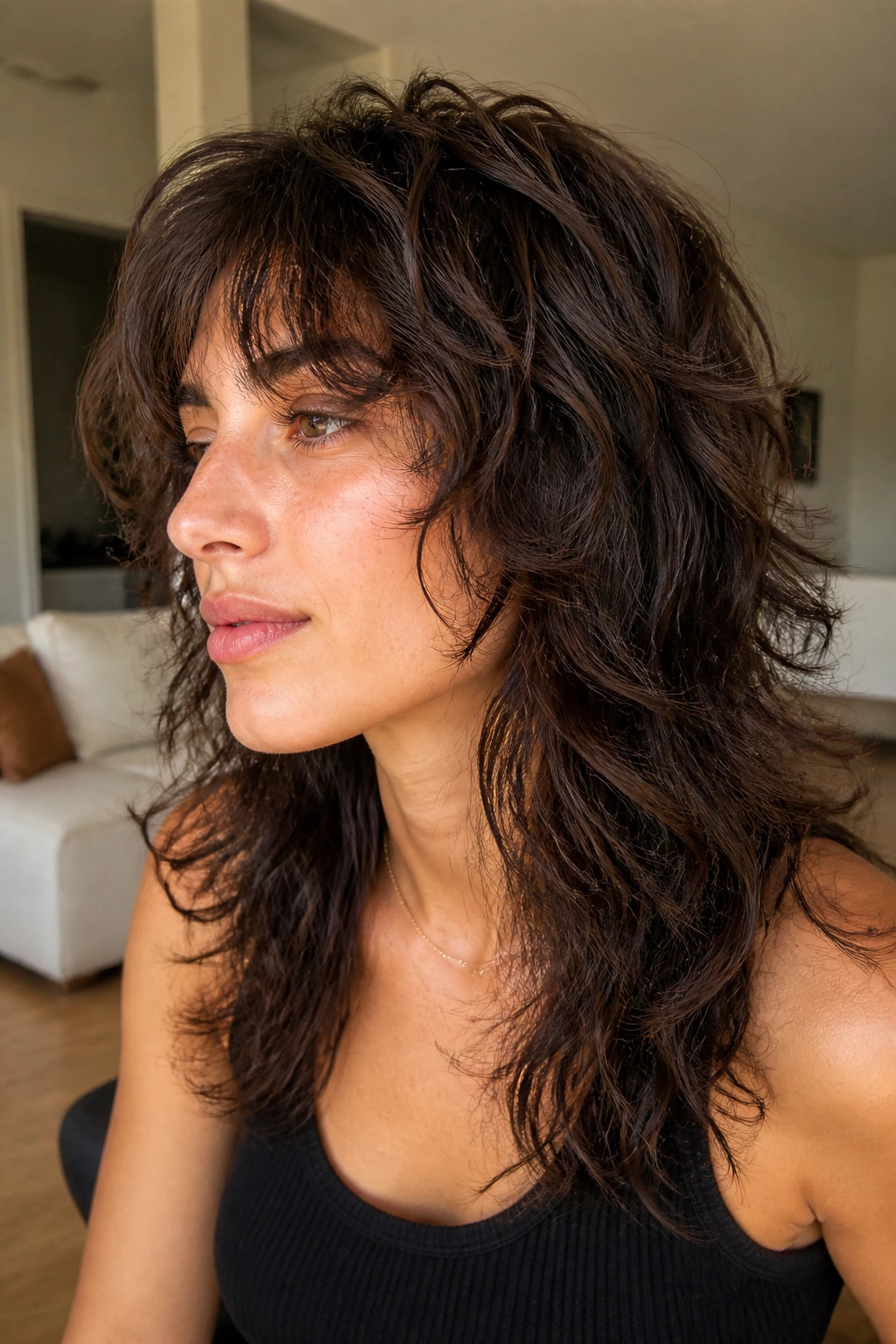
When hair is thick and the waves are strong, you can go farther with the layers. A dense layered shag removes more bulk and creates space between the strands, so the waves sit in clearer sections.
Compared with the minimalist shag, this one has more movement baked into it. You can see the layer pattern more easily, especially around the crown and through the lower mid-lengths. That can be a good thing, but only if the cut is done with control. Random choppiness is not the goal.
The Trick
Ask for internal layering that follows your head shape, not just generic slice-and-chop work. The haircut should breathe when it moves.
27. Grown-Out Shag
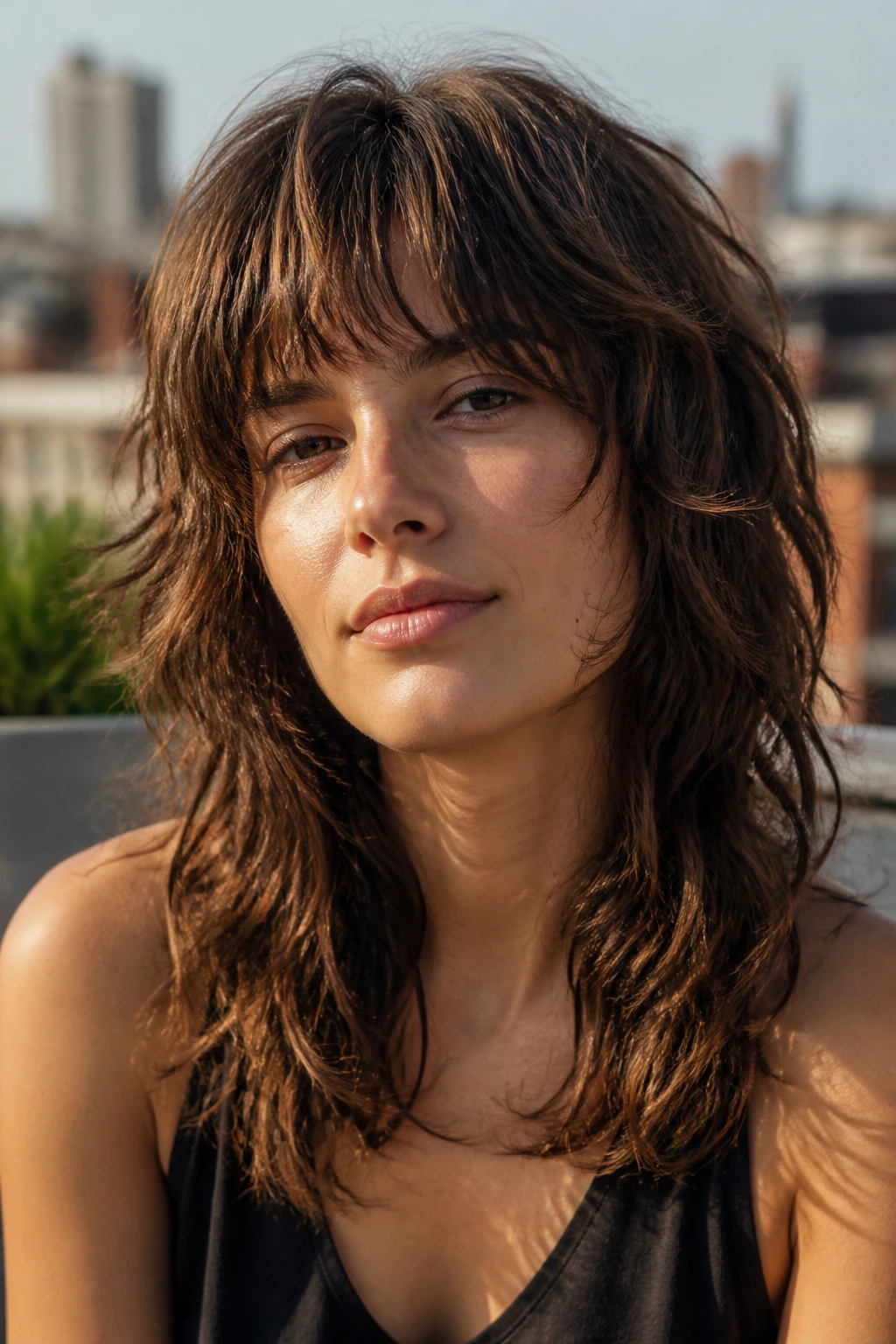
This is the shag for people who do not want a fresh trim every few weeks.
A grown-out shag starts with softer edges and longer transitions between layers, so when the haircut grows, it still looks deliberate. Wavy hair helps bridge the gaps because the bend disguises the change in length. I especially like this version if you’re trying to move away from a more structured cut and want something that degrades gracefully.
It’s practical, but not boring. The shape keeps changing as it grows, which is half the fun.
28. Micro Fringe Shag
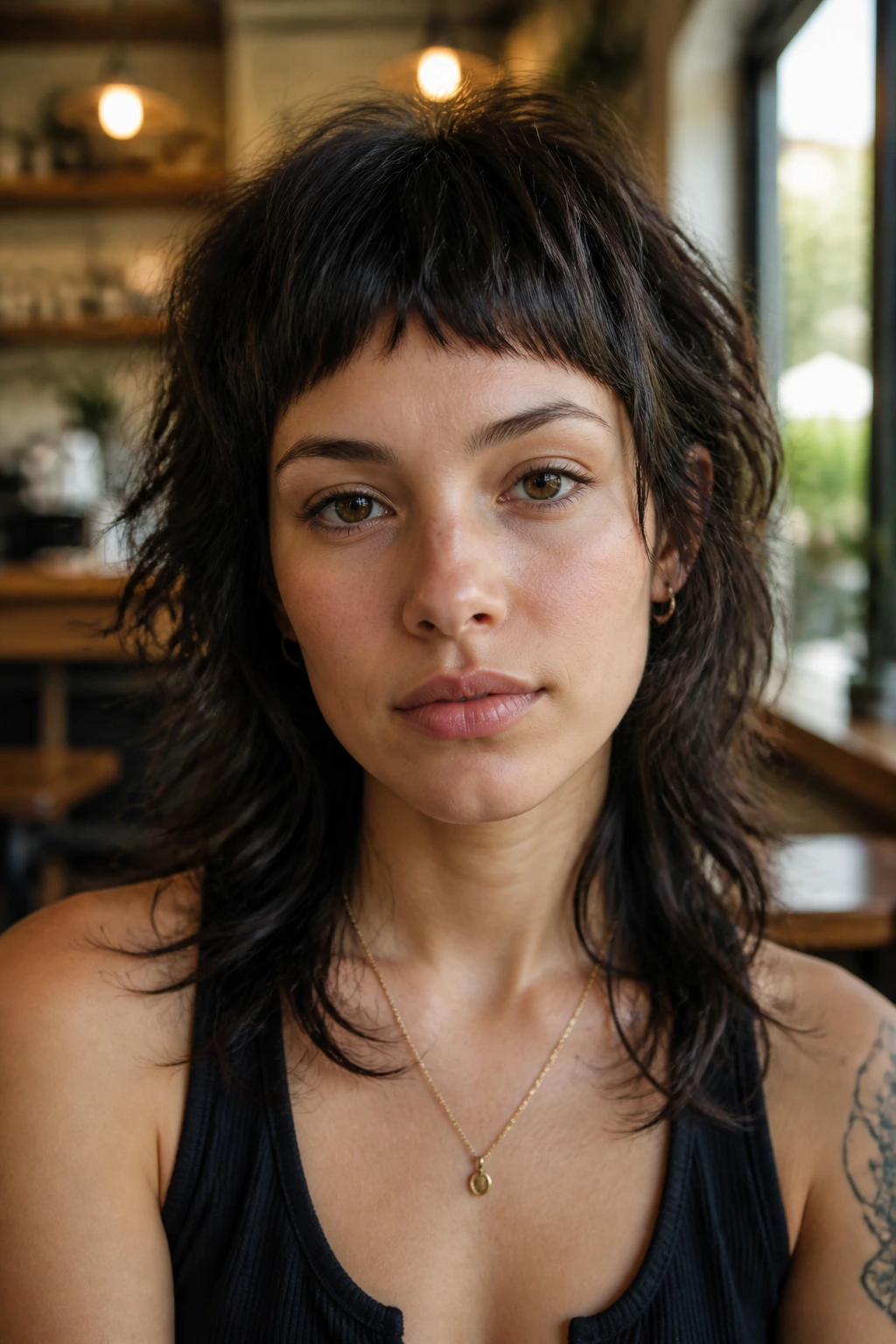
A micro fringe changes the whole balance of a shag. The bangs sit high on the forehead, which gives the haircut a sharp top line and a little attitude.
On wavy hair, a micro fringe needs confidence and a good cutter. If it’s left too thick, it can sit heavy. If it’s too thin, it can look accidental. The sweet spot is a short fringe with a bit of softness at the edges, then layered pieces underneath to keep the overall shape from feeling severe.
Best For
- People who like bold front sections.
- Hair that can hold a bit of shape at the root.
- Anyone who wants the eyes to become the focal point.
29. Swept-Back Crown Shag
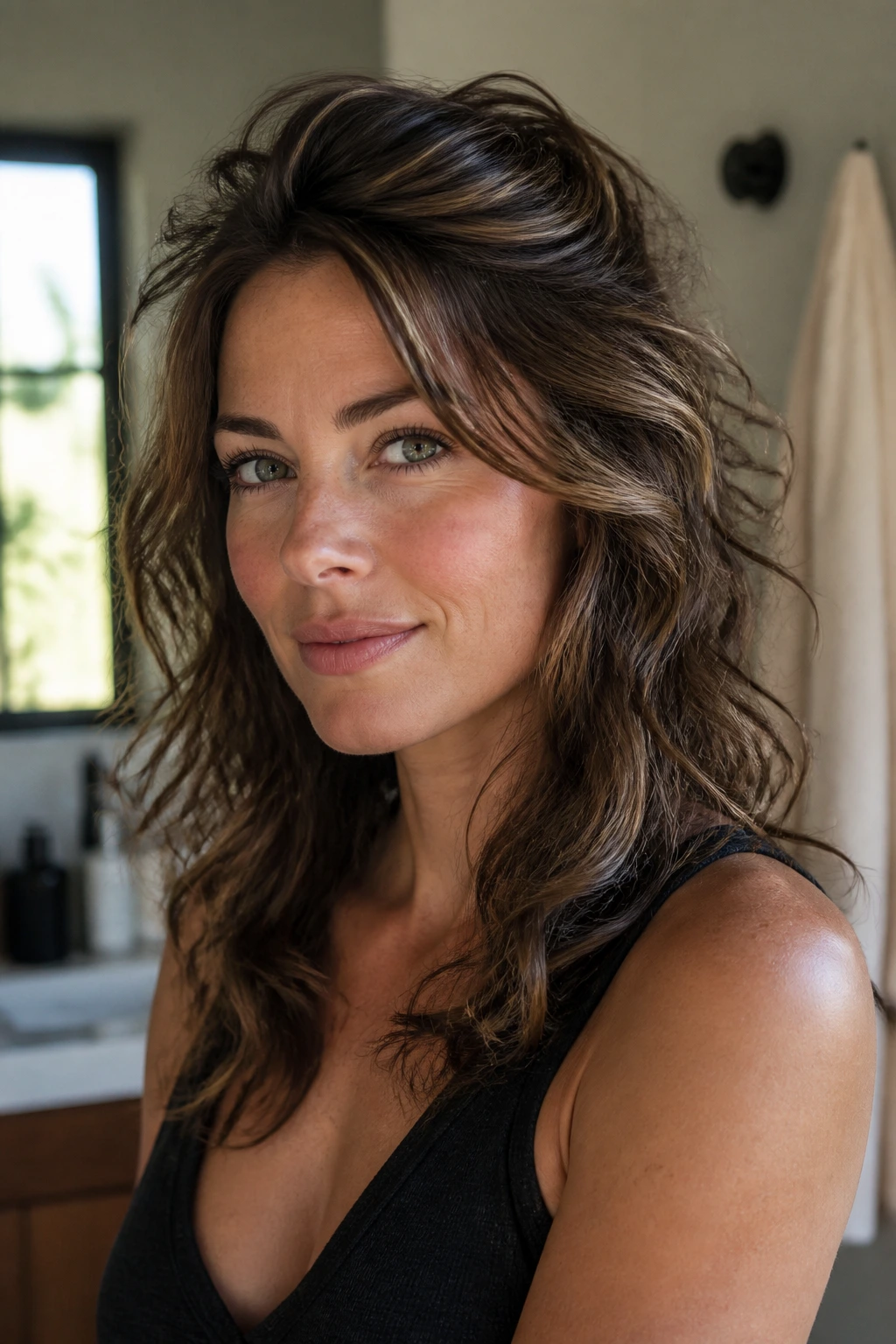
A swept-back crown gives the haircut a lifted, open feel. The top section is styled away from the face, while the layers underneath fall looser and softer.
This is one of those cuts that looks cleaner than it sounds. Because the crown is directed back, the waves do not crowd the forehead, and the rest of the cut can move more freely. It suits hair that gets oily or flat near the front, since the styling naturally builds lift where you need it most.
A little root spray helps here. Not a flood of it. A little.
30. Salt-Air Shag
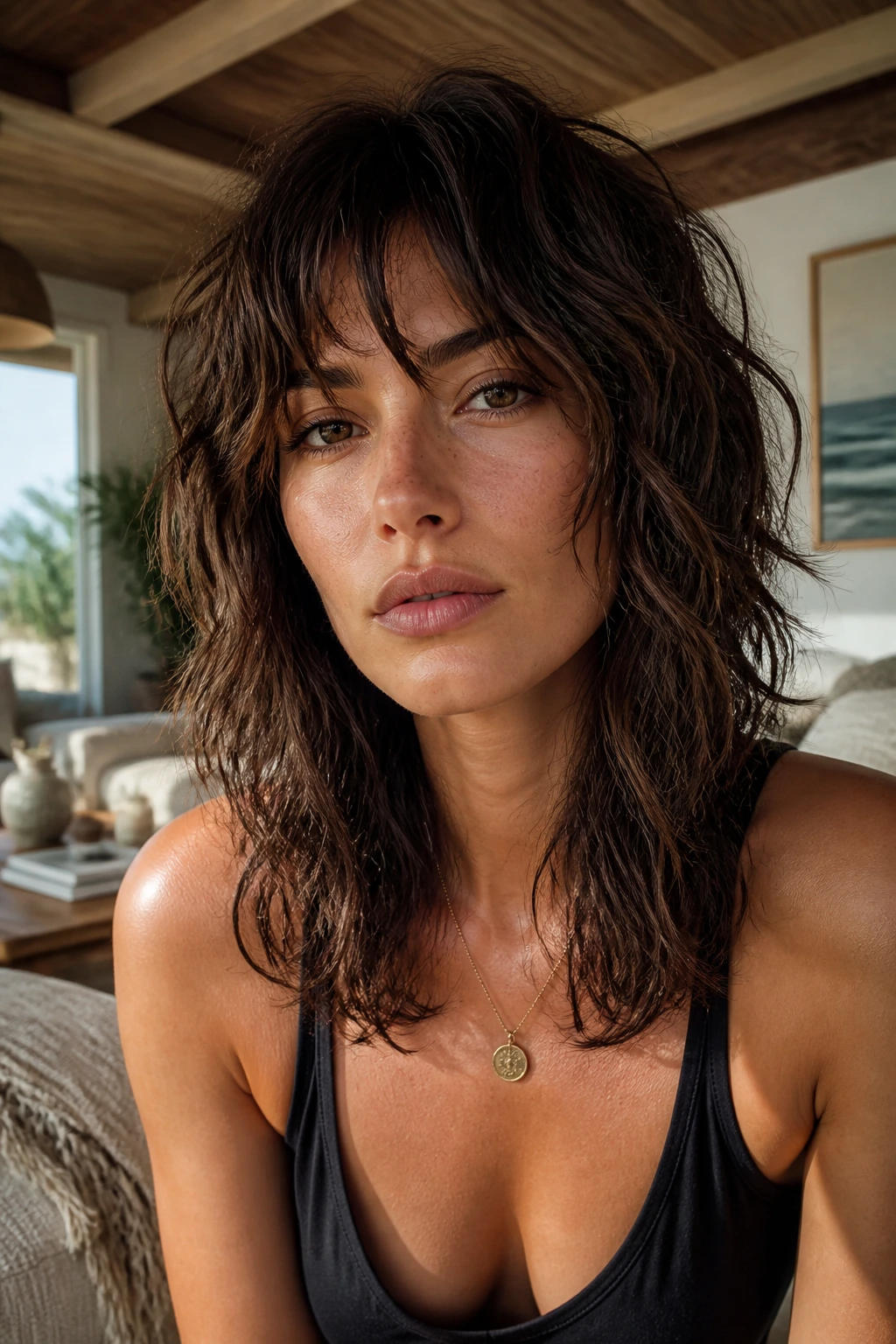
This cut likes a matte finish and a bit of grit. The salt-air shag is built around rough texture, separated waves, and ends that look broken up rather than polished.
That means you do not want silky, over-conditioned hair here. A light sea-salt spray or texture spray can help, but the haircut itself should do most of the work. Keep the layers soft enough that the waves clump into natural sections. If the cut gets too sliced, the finish can look dry in a bad way.
What Makes It Different
It feels casual without looking lazy. That’s harder than it sounds.
31. Asymmetric Shag

One side longer than the other. That small change gives the haircut a pulse.
An asymmetric shag works because waves already refuse perfect symmetry. Instead of fighting that, the cut leans into it. The longer side can graze the collarbone while the shorter side opens the face, creating a line that feels fresh without needing a dramatic shape change everywhere else.
It’s a smart pick if you like a haircut that looks slightly different from one angle to the next. There’s movement in the cut even before the hair moves.
32. Textured Ear-Length Shag
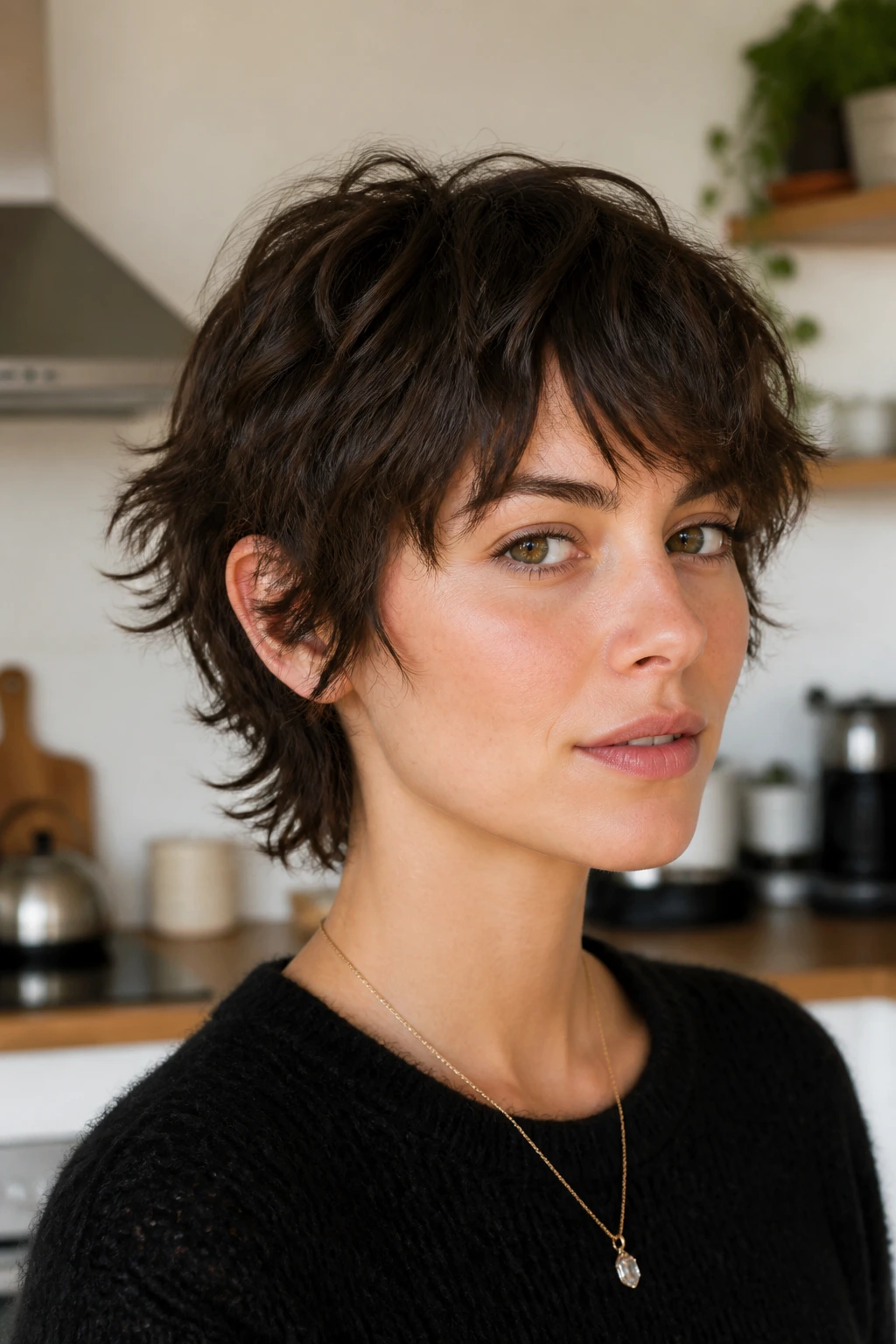
Ear-length pieces around the sides give this shag a sharper profile. The hair opens the face, shows the ears, and lets the waves stack in a compact shape.
I like this cut on people who want shorter hair but not a full pixie. The side sections stay active and piecey, while the top layers keep enough length to style with fingers or a small brush. It reads light, but not fragile.
Quick Fit Check
- Works well if your waves spring up when cut shorter.
- Needs a stylist who can keep the outline soft.
- Looks best when the ears are partly exposed, not hidden.
33. Soft Wolf Bob
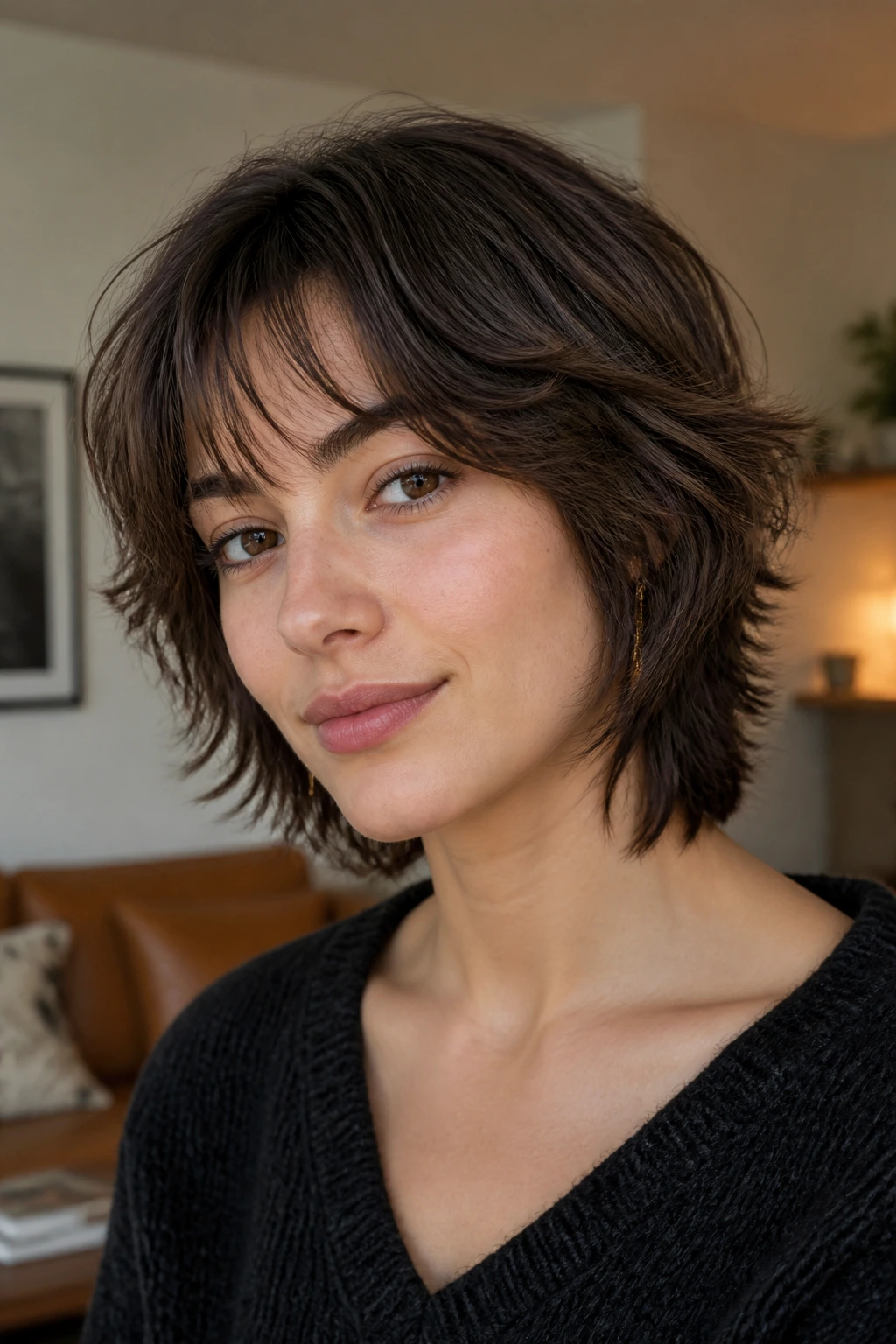
This is where the wolf cut gets civilized.
A soft wolf bob keeps the shorter crown and the slight mullet energy, but the overall length stays around bob range, which makes the whole thing easier to wear. Wavy hair gives it texture without needing aggressive styling. The back is a touch longer, the front a touch choppier, and the result feels modern without trying too hard.
If the full wolf cut feels like too much haircut for your life, this is the safer route. Still interesting. Less commotion.
34. Long Nape Shag
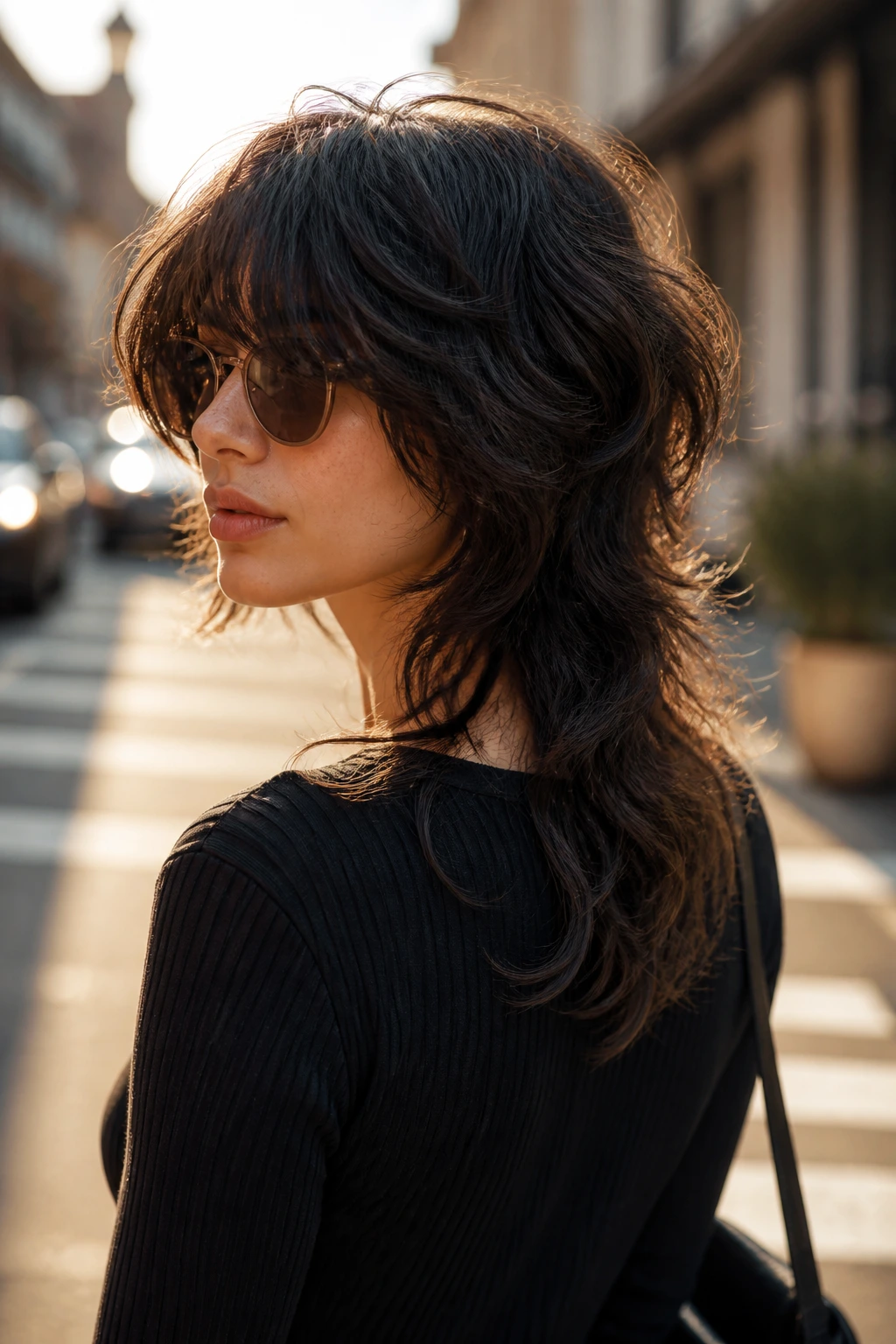
A long nape shag leaves more length at the back of the neck, which gives the haircut a softer fall and a nice silhouette from behind.
That extra length is useful if you like to tuck your hair up sometimes or need enough back length to pull into a small clip. The front stays lighter and more layered, so the contrast gives the haircut some shape. Wavy hair helps the nape area move instead of hanging heavy.
It’s one of those styles that looks better in motion than in a still image. Not every good haircut has to be loud.
35. Flipped End Shag
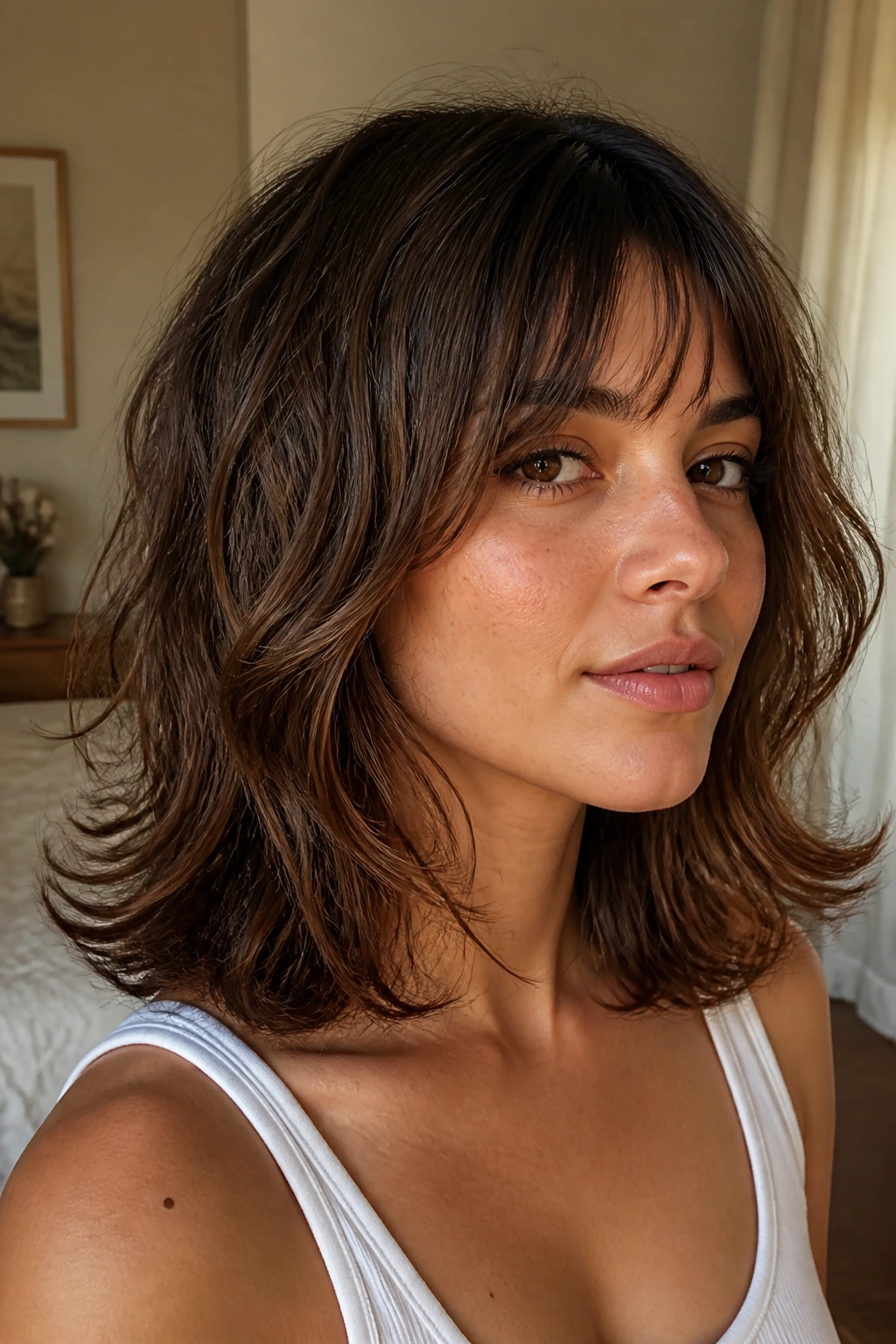
The flipped end shag has a playful, slightly retro edge. The ends turn out away from the face and shoulders, which keeps the haircut from falling straight down.
That flip can happen naturally with wavy hair, especially if the ends are cut with a little feathering. You can exaggerate it with a round brush or simply let the waves catch air-drying on their own. Either way, the shape gets a bit of lift at the bottom, which keeps the cut from feeling heavy.
Good Reasons To Try It
- It makes shoulder-length hair feel lighter.
- It gives the wave pattern a visible finish.
- It works well with layered bangs that can bend along with the ends.
36. Jawline Shag
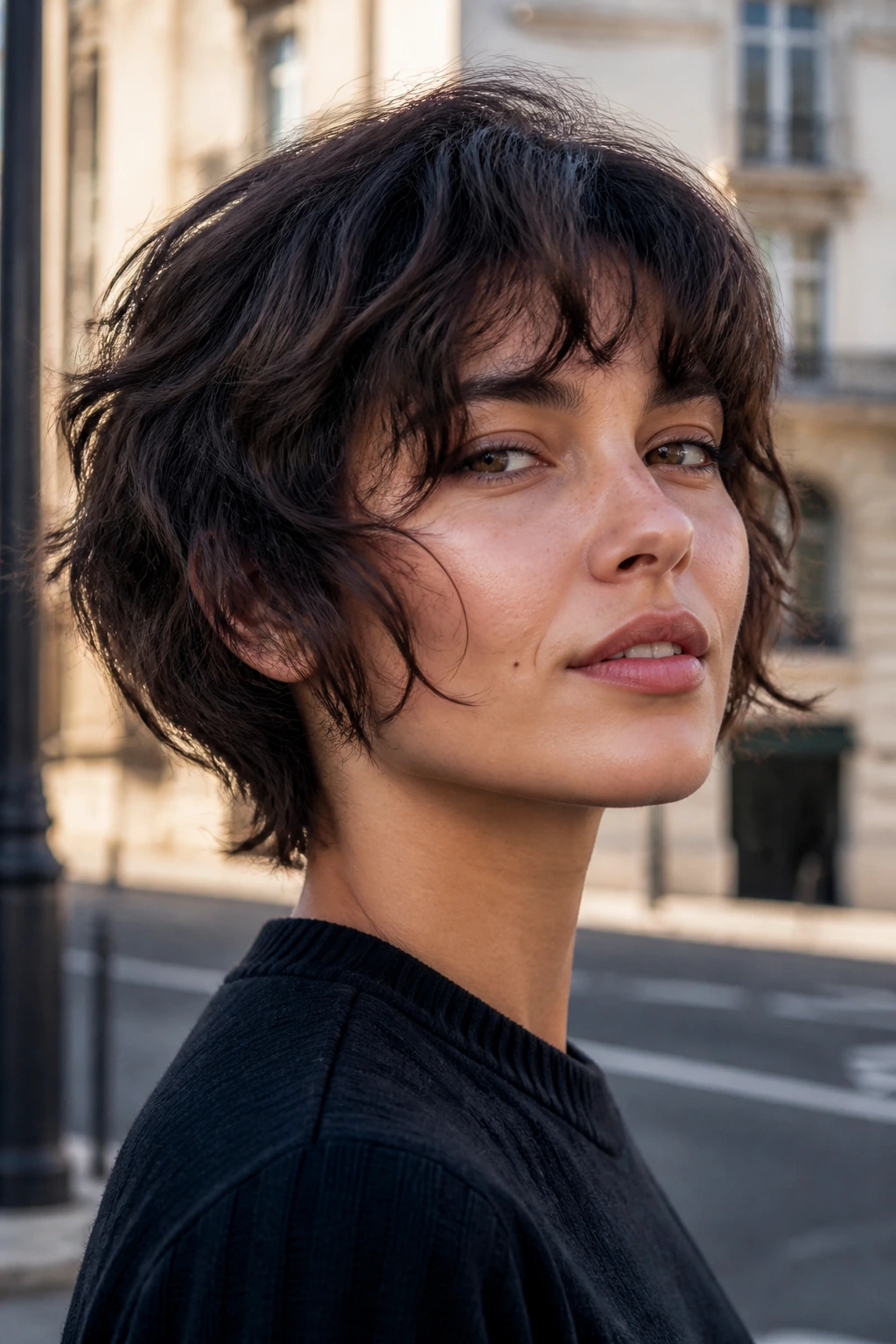
A jawline shag is all about framing. The shortest layers hit around the jaw, which draws attention to the lower half of the face and gives the haircut a crisp shape.
That placement works especially well if your waves puff at the cheeks when they get too short. By keeping the shortest pieces lower, the cut stays cleaner around the face. It’s a sharp look, but not severe if the ends are softened with point cutting.
If you want your cheekbones and jawline to show up more clearly, this is a good move.
37. Feathered Swoop Shag
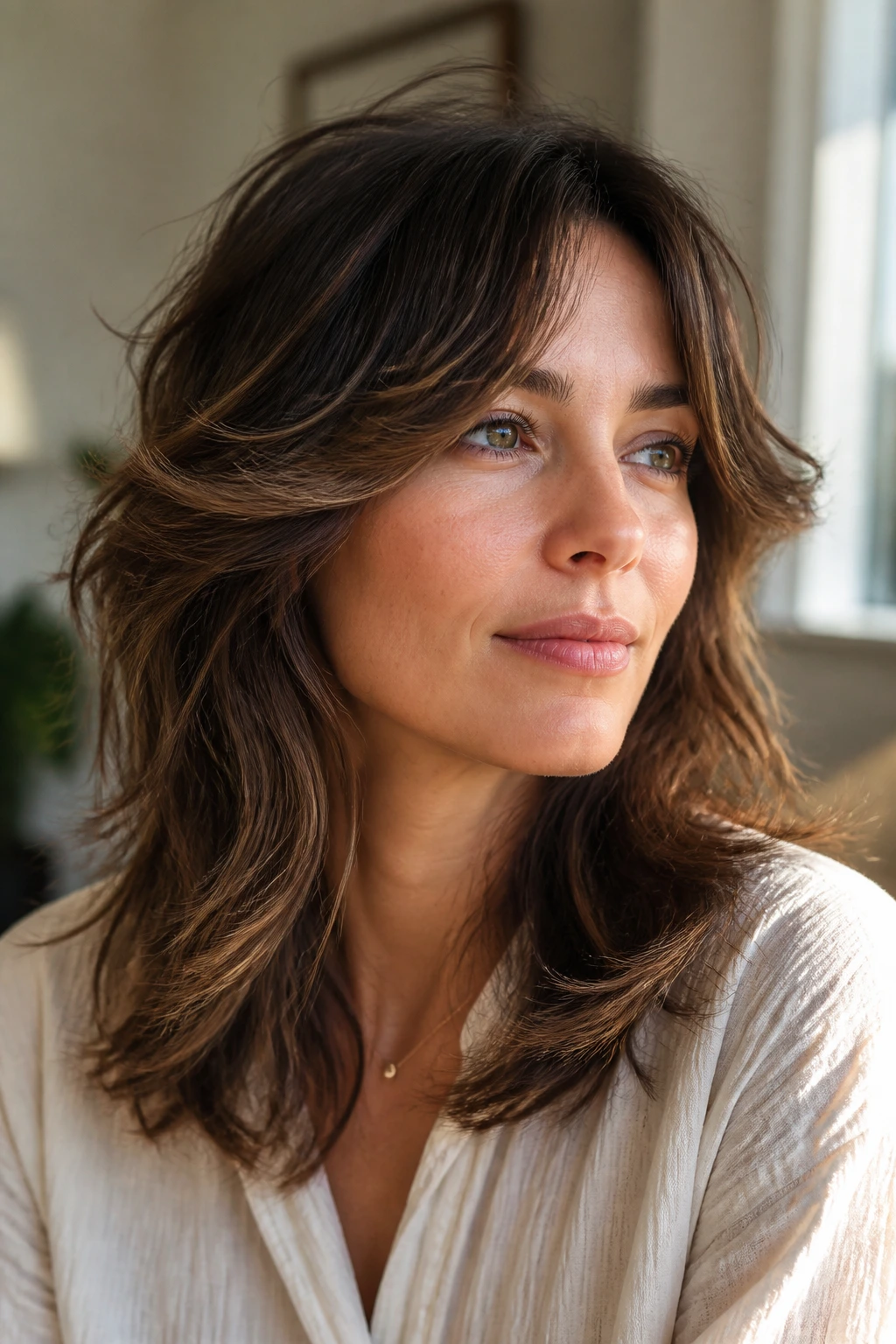
Feathering can be overdone, but when it’s controlled, it creates one of the nicest shag shapes around. The layers sweep away from the face in soft arcs, and the ends stay light enough to move.
Wavy hair makes this style look easy because the bend lands where the feathering wants it to. I like this cut when the front pieces are longer and the crown is kept modest. Too much volume up top and the sweep loses its elegance. Too little, and the feathering barely shows.
The Visual Cue
Think of the hair moving like a soft fan around the face. That’s the whole point.
38. Root-Lift Shag
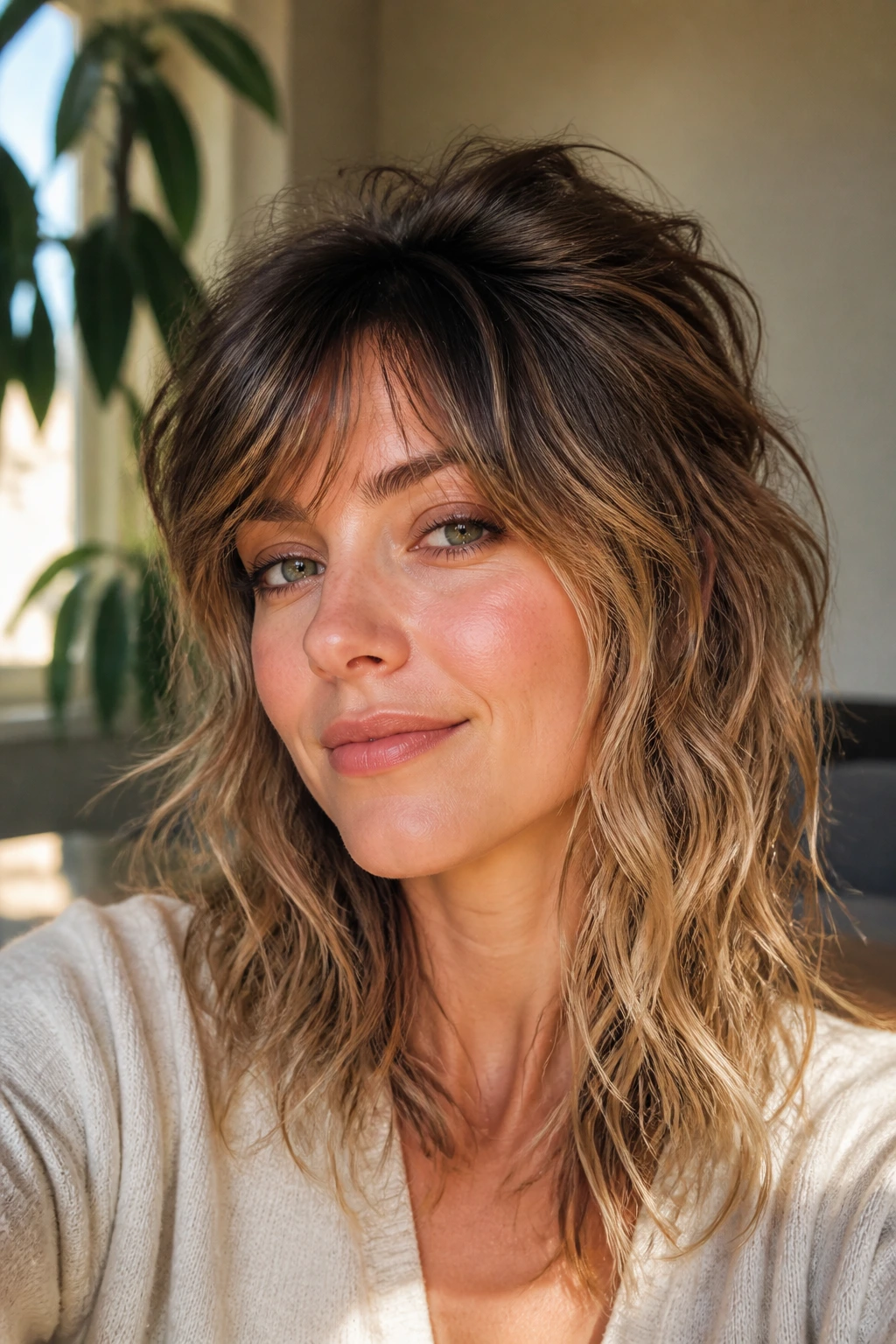
Flat roots can ruin a shag faster than anything else. This version is built to solve that.
A root-lift shag uses shorter crown layers and a shape that encourages the hair to stand up slightly at the top before it falls into waves. It’s especially helpful if your hair gets heavy near the scalp. The ends can still stay loose, but the top needs enough structure to keep the cut from collapsing.
A mousse at the roots and a quick lift with the fingers while drying go a long way here. Keep the ends lighter and the top controlled. That’s the formula.
39. Low-Maintenance Shag
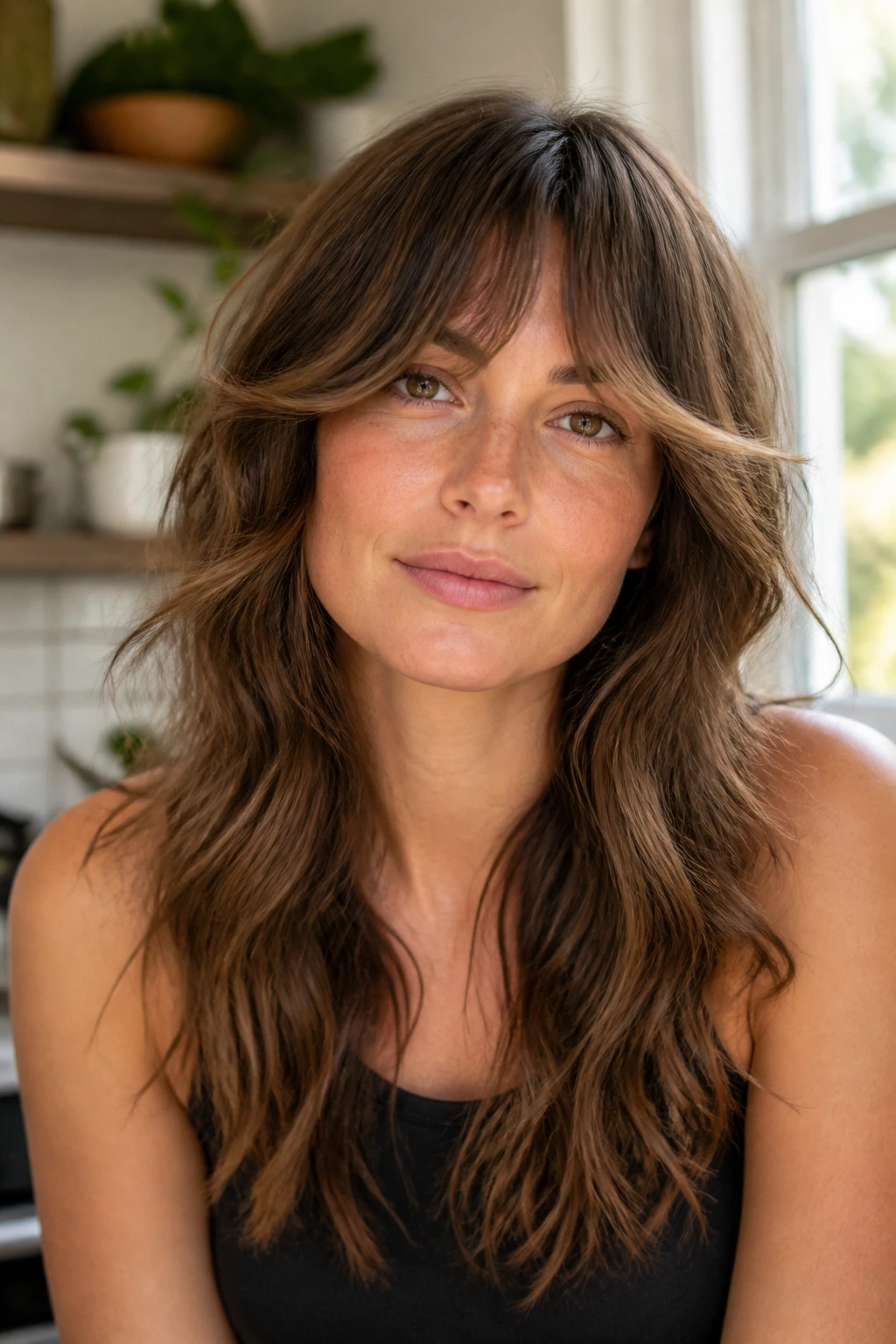
Some haircuts need a plan. This one just needs a trim eventually.
A low-maintenance shag keeps the layers long, the fringe soft, and the overall outline easy to live with. It’s designed to grow out without losing the shape you paid for. Wavy hair helps because the texture naturally disguises a few uneven inches here and there.
What To Ask For
- Long, blended layers instead of lots of short ones.
- A fringe that can split or sweep to the side.
- Ends that keep a little weight.
It’s the right choice if you want to get on with your day and not babysit your hair every morning.
40. Full-Body Shag
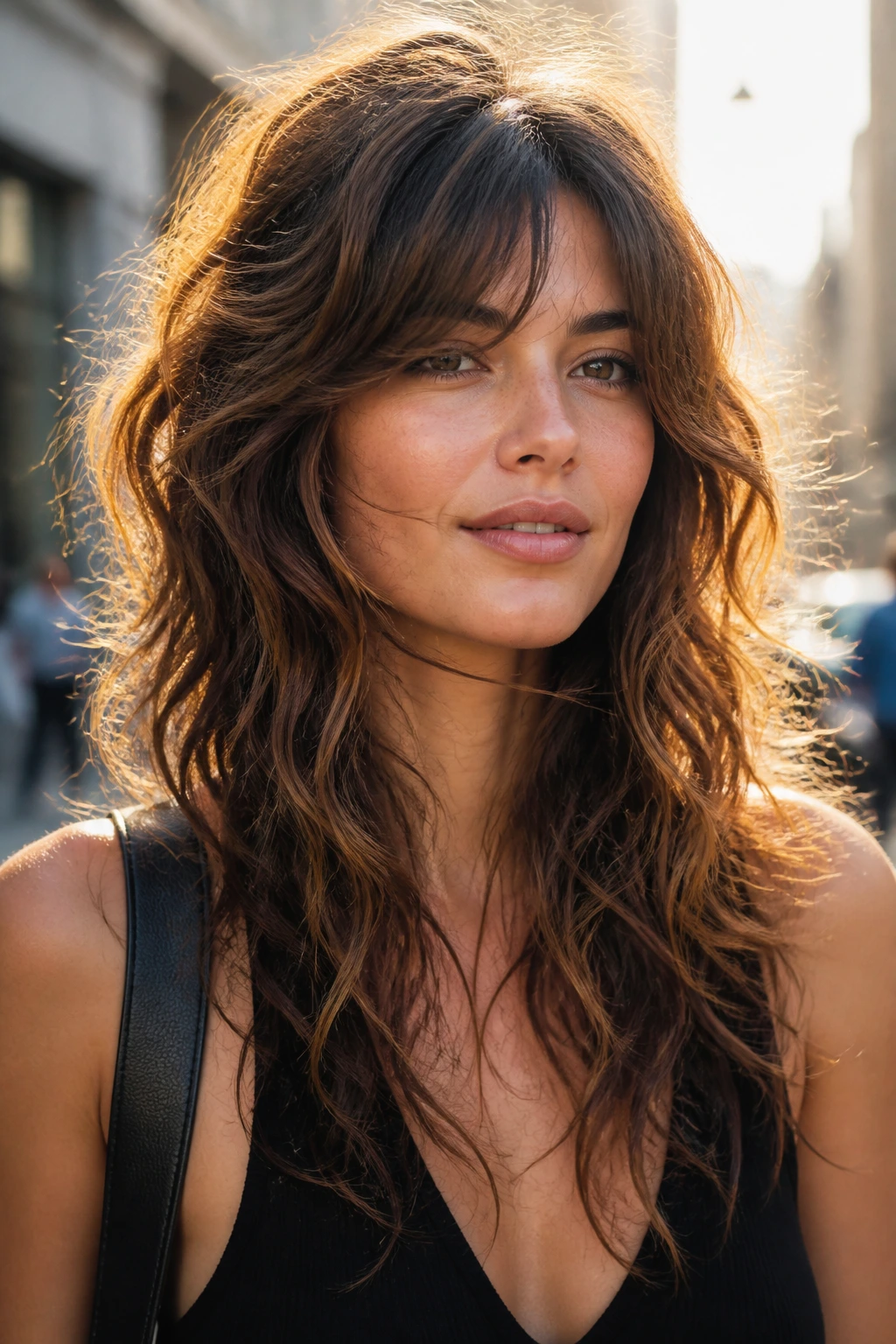
This is the biggest, most movement-heavy version in the bunch. The layers are placed to give lift at the crown, bend through the middle, and a loose finish at the ends, so the whole head feels active.
On wavy hair, that creates a shape that looks alive even when you barely style it. I like it for people who want their hair to feel full from every angle, not just from the front. The cut should still keep some perimeter weight, though. If the layers go too far, the body turns airy in a thin, fuzzy way.
This is the shag for someone who likes presence. Not fuss. Presence.
Final Cut
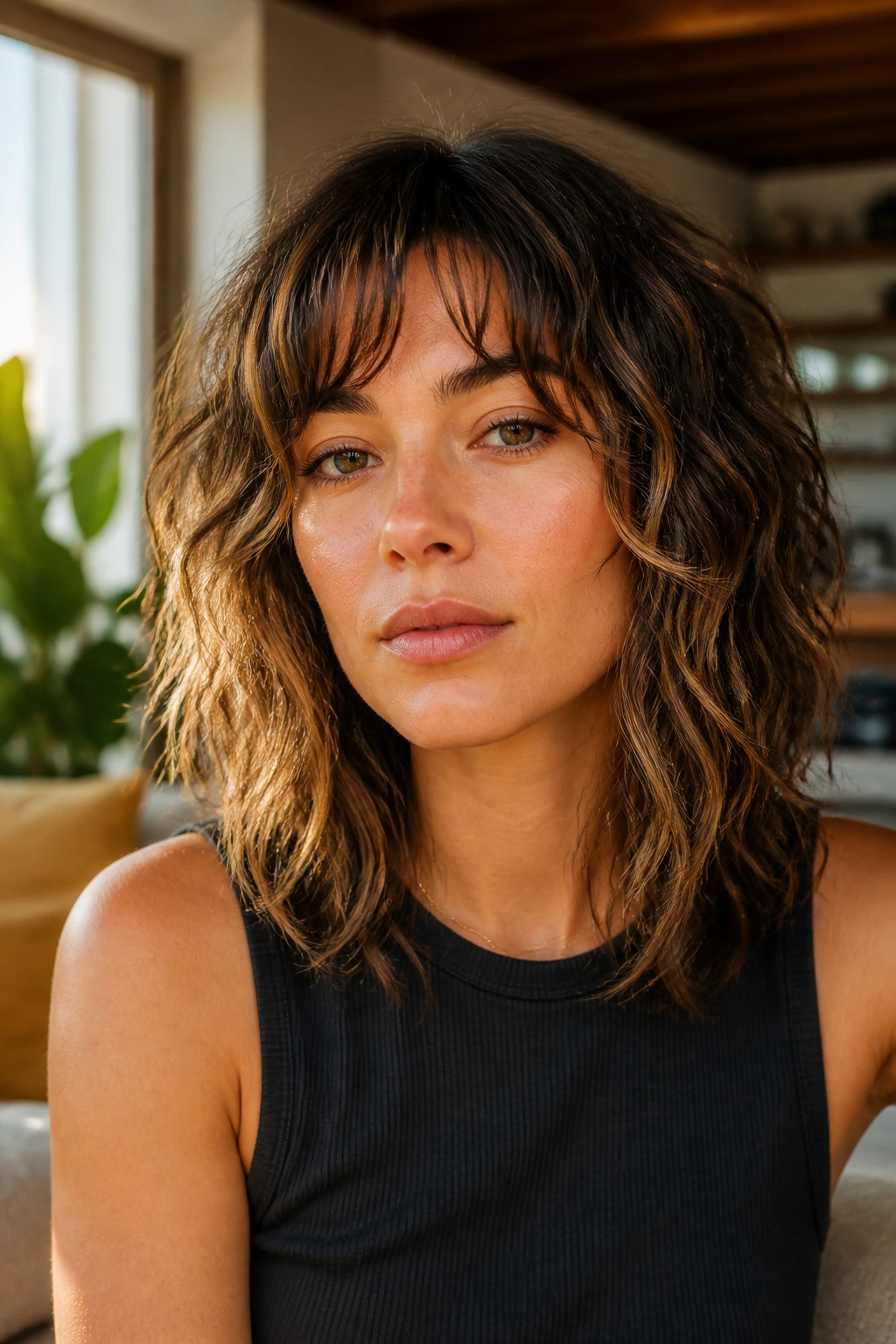
The best shag haircut for wavy hair is the one that works with your wave pattern instead of arguing with it. That sounds obvious, but it’s the part people skip when they bring in a vague reference photo and hope for the best.
Bring pictures of hair with the same density and bend as yours. Better yet, bring one photo of your hair when it’s fully dry in its normal state. That tells the stylist more than a polished salon shot ever will.
And if you’re torn between two versions, choose the one with slightly more length. Waves are easier to shorten later than to recover once they’ve been cut away.
