



A good long shag haircut with bangs for wavy hair doesn’t try to flatten the wave or bully it into place. It works with the bend, the lift, the little bends that show up around the cheekbones and neck, and that is why the shape feels so alive when it’s done well.
Wavy hair can be tricky. A cut that looks light in the chair can swell into a triangle after the first wash, and a fringe that looks cute when wet can turn stubborn once it dries. That’s the whole game here: keep the length, keep the movement, and put the weight in the right places so the hair falls in soft, uneven pieces instead of puffing out like a pyramid.
I’ve always thought shag cuts are at their best when they look a little unforced. Not sloppy. Just lived-in. The best versions for waves keep enough structure around the front to frame the face, but they leave the ends loose enough that your natural texture does half the styling for you.
The styles below cover the full range, from soft curtain bangs to heavier fringes, from airy layers to wolfier shapes. Some are easy and forgiving. Others have more bite. All of them make sense on wavy hair, which is the point.
1. Curtain Bangs and Soft Face-Framing Layers
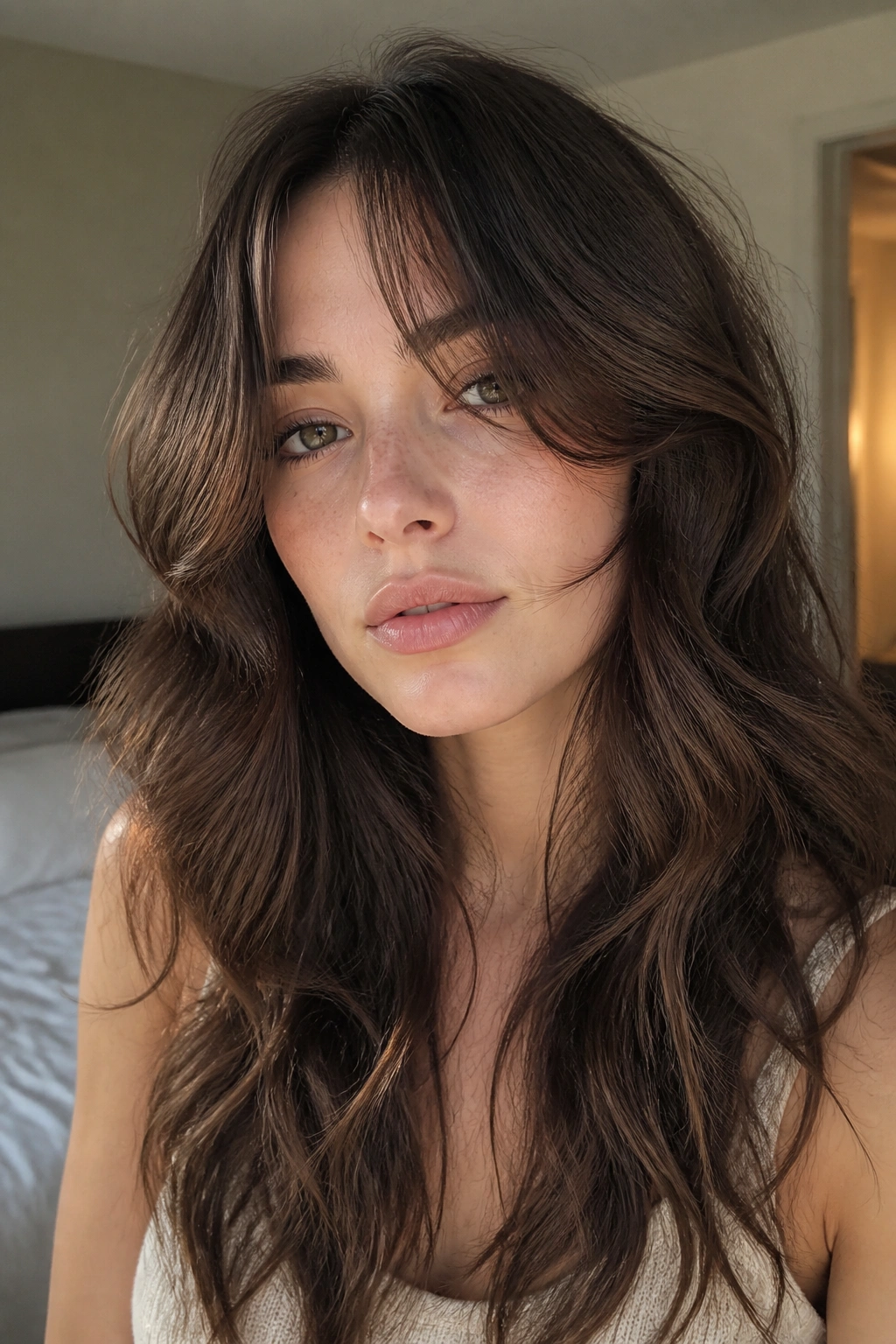
Curtain bangs are the safest place to start if you want a long shag haircut with bangs for wavy hair that still feels easy to wear. They split around the center, skim the cheekbones, and blend into longer layers instead of stopping in one blunt line.
Why It Works on Waves
Wavy hair likes a bit of slack at the front. Curtain bangs give you that slack. They move with the wave pattern instead of fighting it, which means you do not spend half the morning trying to make both sides match perfectly.
Tell your stylist to keep the shortest piece around cheekbone level, then let the outer edges fall toward the jaw. That soft taper matters. If the bangs are cut too short across the middle, they can spring up and sit awkwardly above the face once they dry.
- Shortest point: around the cheekbone
- Longest front pieces: near the jaw or upper lip
- Best styling move: a quick wrap around a round brush or a diffuser pass with a middle part
- Trim timing: every 6 to 8 weeks if you want the curtain shape to stay open
Best move: dry the bangs first, then let the rest of the hair air-dry or diffuse. That keeps the fringe from getting crimped into weird bends.
2. Brow-Grazing Fringe with Choppy Ends
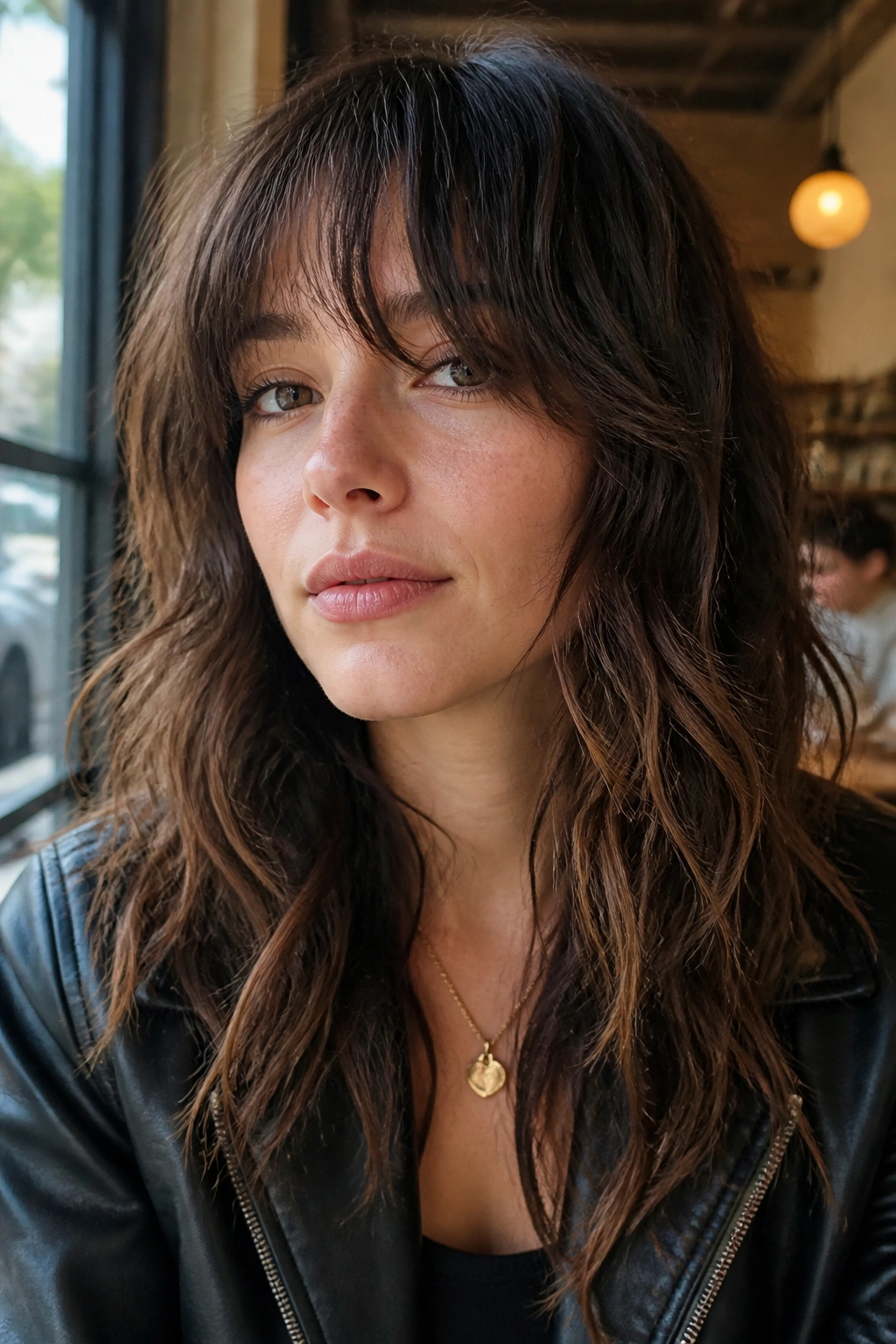
Want a fringe that has a little more attitude? Brow-grazing bangs give the cut a sharper edge without turning it into a blunt bob situation. The long ends and choppy layers keep the shape airy, which matters when your waves already bring a lot of texture.
A lot of people worry that heavier bangs will fight their waves. They can, if they’re cut too thick or too short. Brow-grazing fringe sits close enough to the face to feel deliberate, but it still leaves room for movement. On straight hair it reads neat. On wavy hair it reads cool and a little undone.
How to Wear It
The trick is to keep the fringe separate from the crown when you style it. Blow-dry the bangs with a small round brush, lifting the roots for a second or two before guiding them down. If you let the crown dry first, the fringe tends to fall in strange directions.
The choppy ends matter just as much. They stop the haircut from looking heavy at the bottom, which is a common problem with long layers on wavy hair. A soft texturizing cream through the mid-lengths is enough. No need to drown it in product. That only makes the wave clump in a bad way.
3. Feathered 70s Shag with Bottleneck Bangs
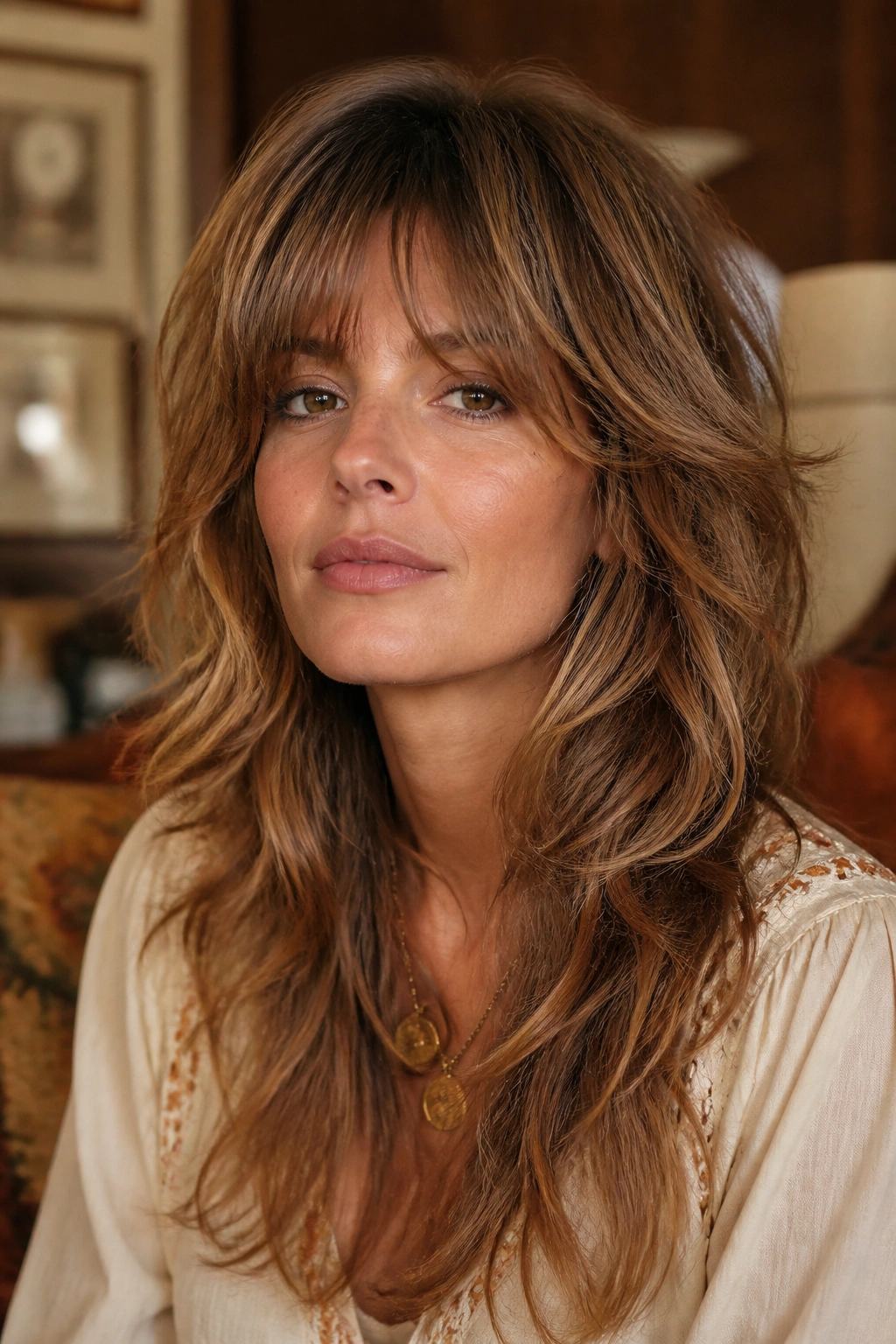
This one has more shape than people expect. Bottleneck bangs start a little narrower at the top, then open wider near the cheekbones, which gives the face a gentle frame without building a wall of hair across the forehead.
Feathered layers are the reason this cut feels so wearable on waves. They remove bulk in a smooth way, not in shredded chunks. That keeps the silhouette from turning harsh. If your hair is medium to thick, this shape is especially kind because it lets the ends swing instead of sticking out.
Why It Looks Better Than a Plain Layered Cut
A plain long layer can be forgettable. A feathered shag has movement at different heights, so the hair catches on itself in a way that looks full but not heavy. The bottleneck fringe also gives you more room to grow it out, which is useful if you get tired of having bangs in your eyes every few weeks.
Ask for layers that start around the chin and keep the interior soft. I’d skip aggressive thinning near the ends unless your hair is very dense. Too much texturizing can make wavy hair frizz at the tips, and that ruins the feathered effect fast.
4. Wispy Air Bangs and Disconnected Crown Layers
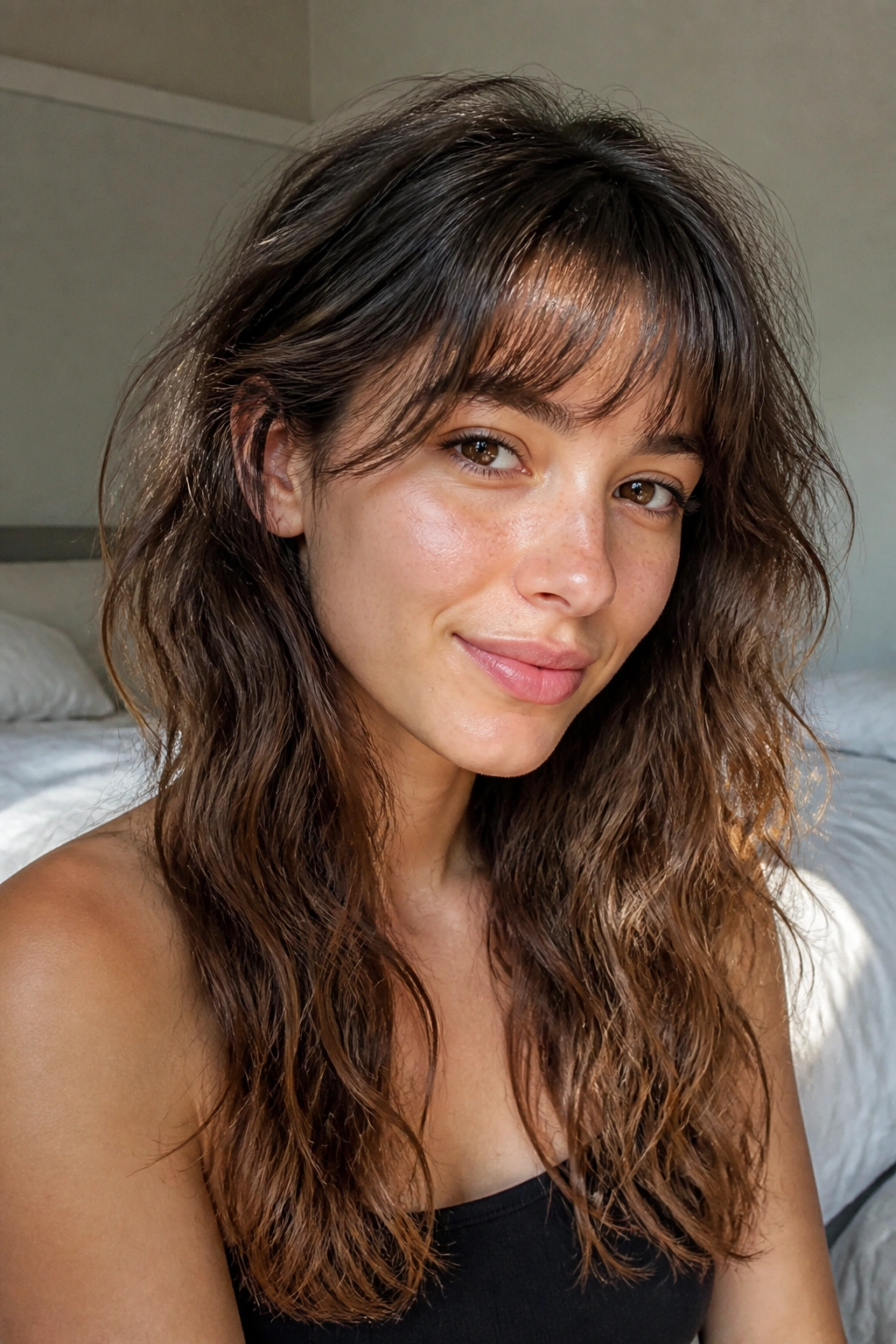
Wispy air bangs are for the person who likes bangs in theory but not the feeling of hair sitting on the whole forehead. They’re light, see-through, and easy to split with your fingers. On wavy hair, that softness keeps the cut from feeling too dense up top.
The disconnected crown layers are the quiet part people miss. They keep the top from collapsing while the length hangs loose underneath. That contrast gives the cut a bit of lift without making the whole shape look chopped up. It’s subtle, but it matters.
A fine-wave pattern can get swallowed by too much layering. This version avoids that trap. The bangs are light enough that they don’t steal volume from the rest of the cut, and the crown stays a little shorter so the waves have somewhere to sit.
Use a pea-sized amount of mousse at the roots, then scrunch from the ears down. That’s enough. Air bangs do not need heavy serum or they turn stringy. If you want them to stay soft, refresh them with dry shampoo at the roots instead of piling on more product.
5. Razor-Cut Rock Shag with Piecey Fringe
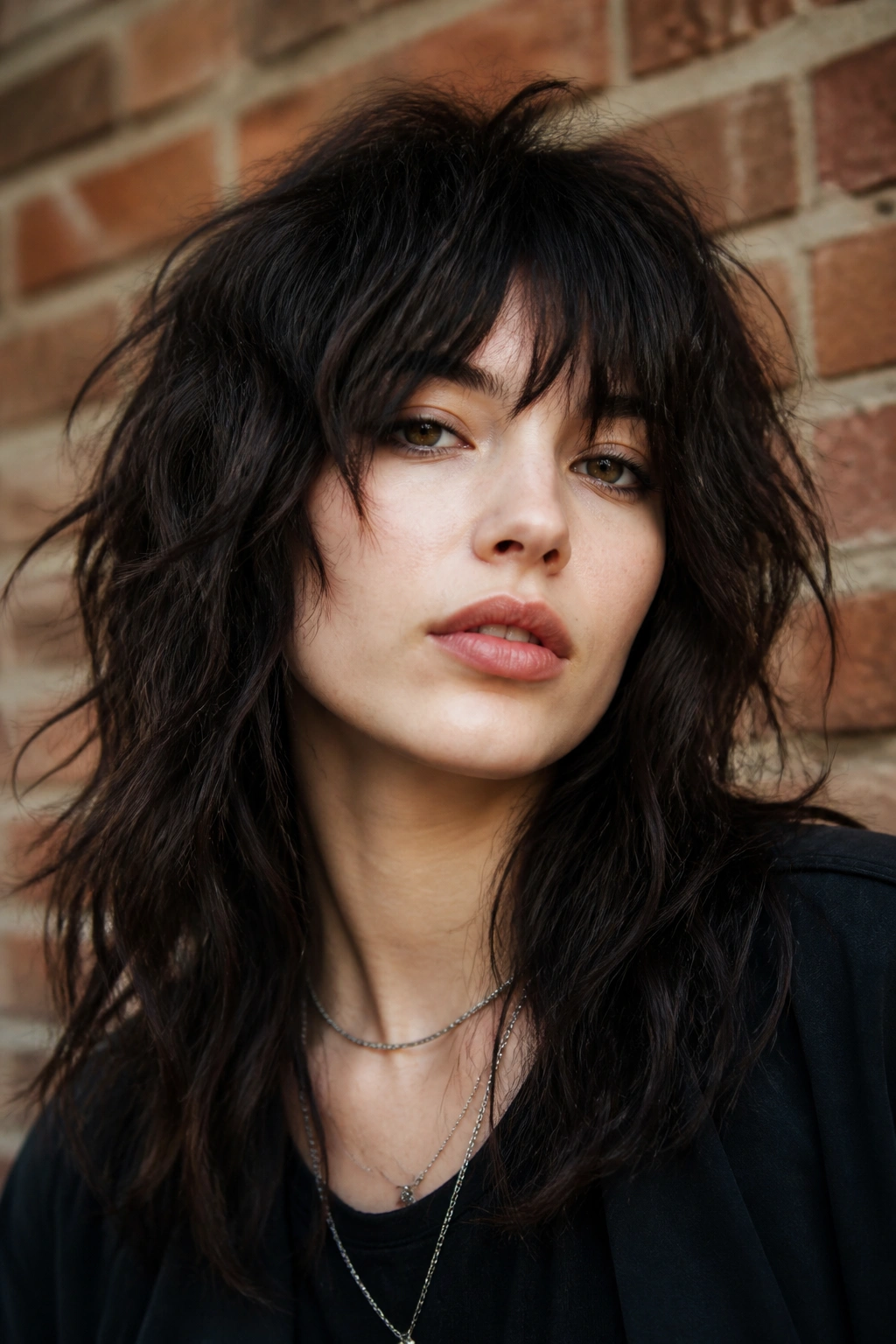
If you want the haircut to look like it has a bit of swagger, this is the one. Razor-cut layers create sharper ends and a more broken-up finish, which looks especially good when the waves are loose and irregular instead of perfectly uniform.
Picture a rock shirt, old boots, and hair that looks better after being tossed around a little. That’s the mood.
The piecey fringe gives this shag its attitude. It should fall in separated bits, not a thick sheet. That means the stylist needs to be careful with the razor. On thick, cooperative waves, it can create a lovely shattered finish. On fine hair that frizzes easily, it can go too far and make the ends look fuzzy.
- Best for medium to dense wavy hair
- Works well with a side part or soft middle part
- Style with a light texture spray, then scrunch once it’s dry
- Avoid heavy oils near the front pieces
A blunt finish would ruin this haircut. The point is movement. If the ends sit still, the whole style loses its edge.
6. Butterfly Shag with Long Curtain Bangs
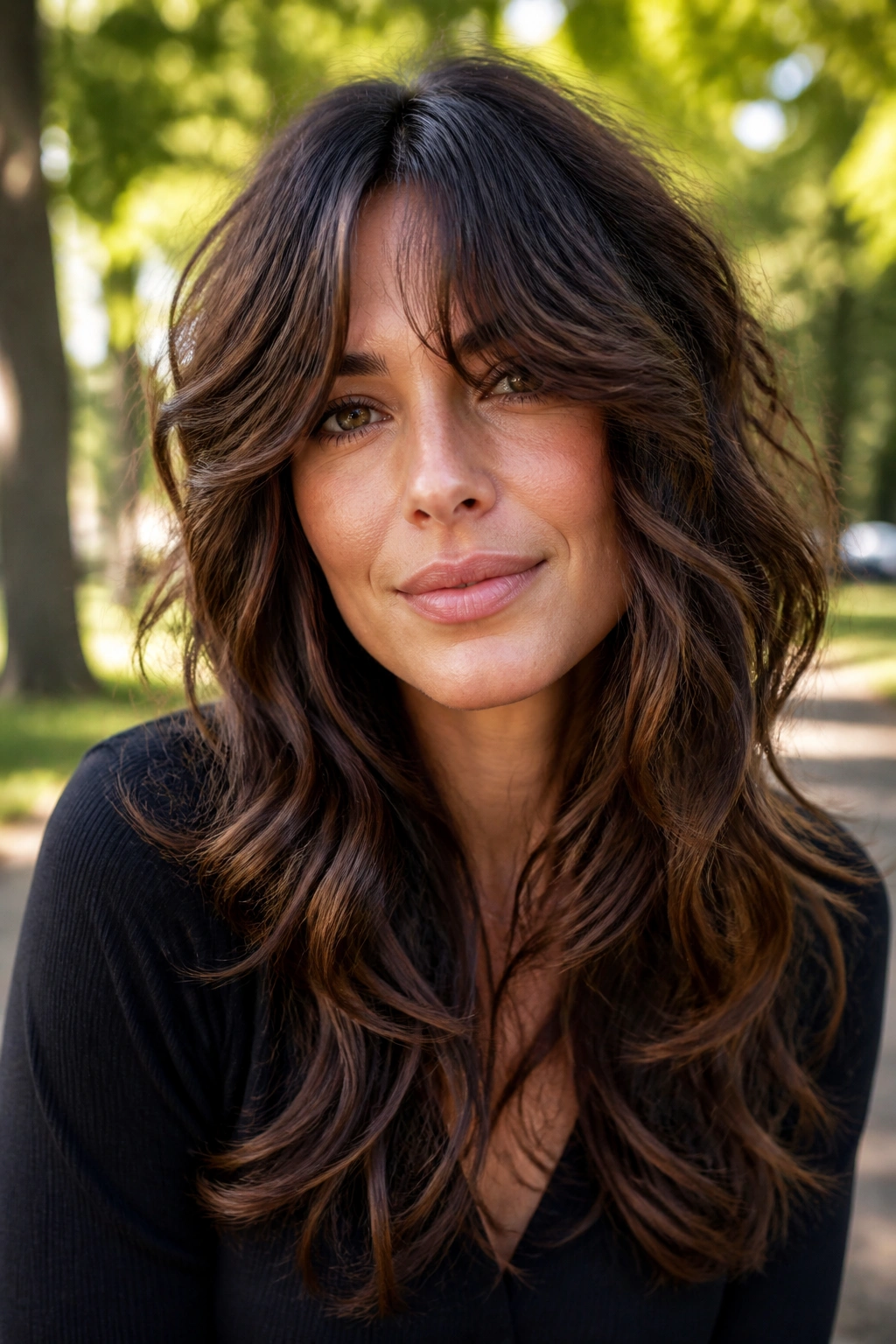
The butterfly shag has become popular because it gives you fullness near the face while keeping the length long and soft. On wavy hair, that shape can be flattering in a way that feels almost unfair. You get the bounce near the front and the length in the back, without the haircut looking stacked or bulky.
Long curtain bangs make the whole thing feel more grown-up. They skim the cheekbones, blend into the layers, and keep the front light enough that you can still tuck the hair behind one ear if you want.
What I like most here is the grow-out. It handles grow-out well. The front pieces can slide into face-framing layers, and the shape still makes sense once the bangs stop being bangs in the strict sense. That buys you time between trims.
Ask for the shortest face frame to start around the lip or chin, not the eyebrow. That keeps the butterfly shape soft and avoids too much lift around the temples. If your waves are loose, a large round brush at the crown can give the shape a nice float.
7. Long Wolf Cut with Choppy Bangs
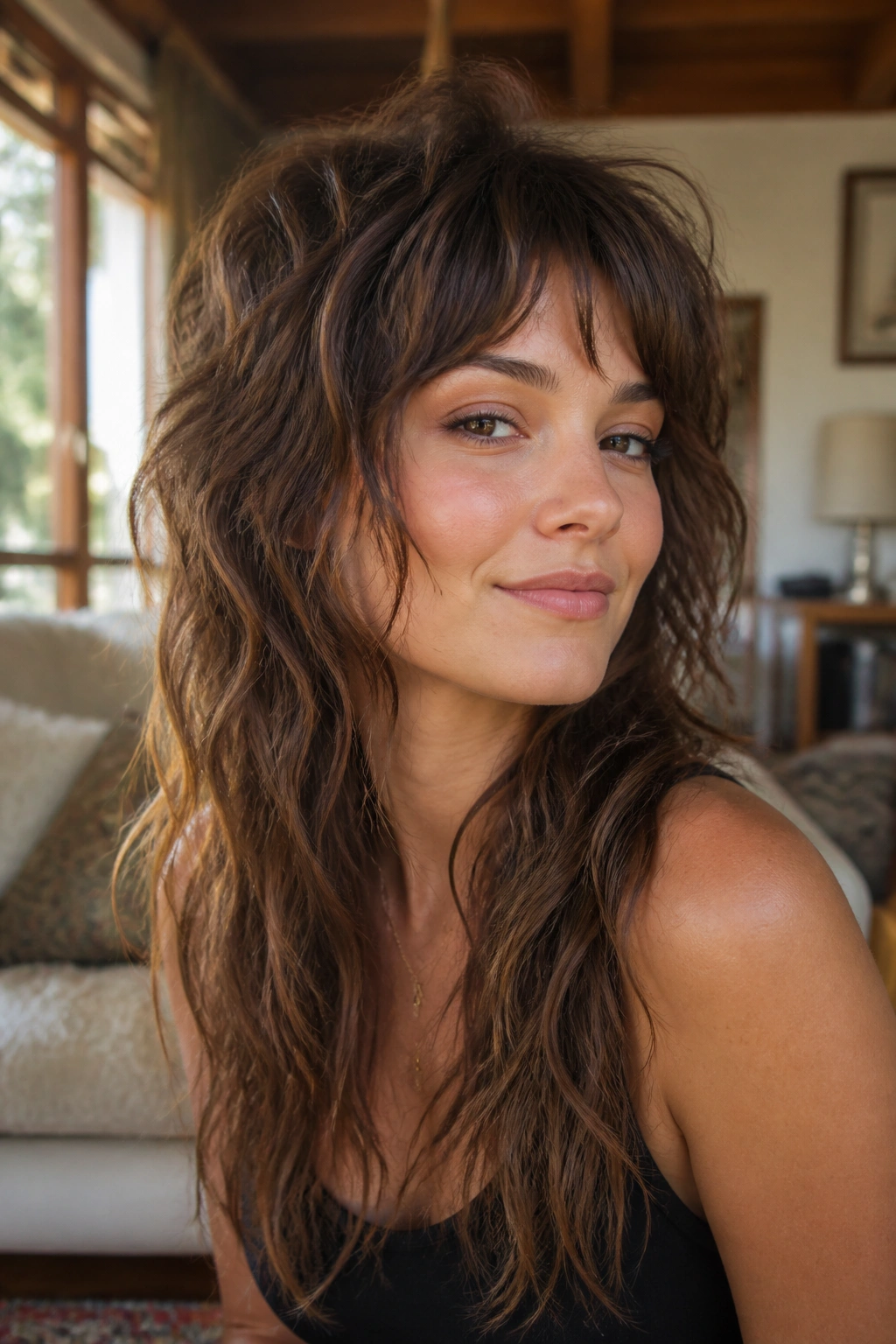
This one has bite. A long wolf cut keeps the length, but it pushes more volume toward the top and crown, which gives the style that slightly wild outline people either love immediately or need a minute to warm up to.
Choppy bangs are the right match because they echo the broken-up layers through the rest of the cut. If the fringe were smooth and polished, it would look out of place. Here, the uneven texture is the whole point.
The best version is not overdone. Too much disconnection can make wavy hair look like two separate haircuts pasted together. You want the crown to sit a little higher, the sides to stay soft, and the back to fall long enough that you still get that swinging shag line.
I’d style this with a diffuser and a small handful of curl cream, then stop touching it. The more you fuss, the more the texture separates in ugly ways. Let the hair dry in pieces. That slightly messy finish is the appeal.
8. Side-Swept Bangs on a Soft Layered Shag
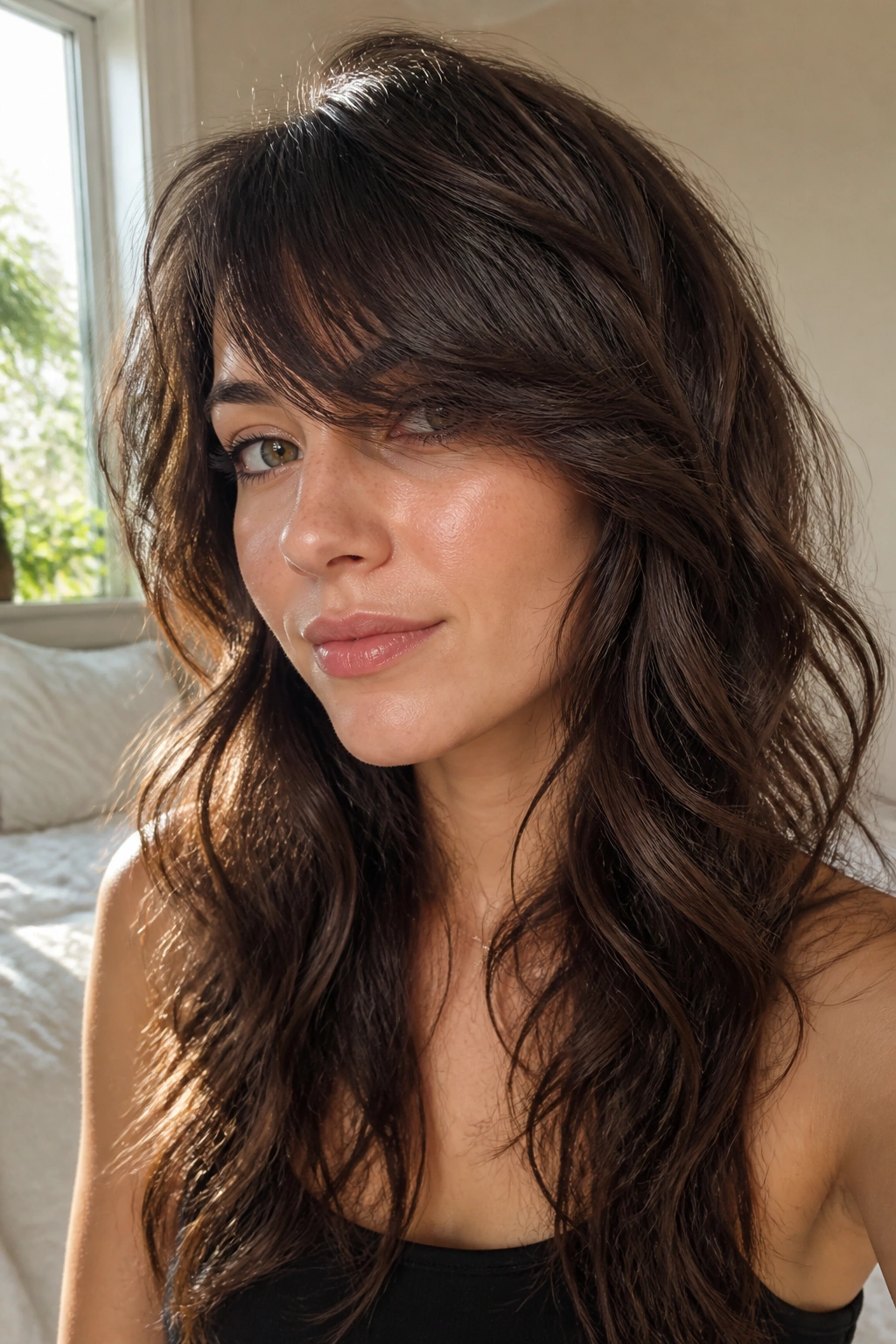
Side-swept bangs are underrated. They’re not as dramatic as a full fringe, but they can save you from the headache of straight-across bangs if your wave pattern has a mind of its own or a cowlick that refuses to cooperate.
This version feels softer than most shag cuts. The layers still move, but the side sweep gives the front a diagonal line that flatters a lot of face shapes. It also makes the cut easier to grow out. No awkward bang shelf. No harsh line to manage.
A lot of wavy-haired people end up here after trying a heavier fringe and deciding they want something lower-maintenance. Fair enough. The side sweep gives you the feeling of bangs without locking you into daily styling.
Tell your stylist to cut the bangs long enough to tuck behind the ear on a bad day. That little safety valve matters. If you like a bit more lift, use a medium round brush and direct the bangs away from the face while they cool.
9. Micro Bangs with Long Wavy Shag Layers

Micro bangs are not subtle. That’s the point. They sit high on the forehead and create a sharp contrast with the long, loose layers below, which makes the waves look even more relaxed by comparison.
This is a bolder choice than most people expect from a shag, but it can be brilliant on thick wavy hair. The layers soften the crop up top, while the short fringe gives the whole cut a graphic edge. It looks especially good if you like clothes with a little structure and do not want the hair to feel too soft or romantic.
What to Watch For
- Micro bangs need regular trims, often every 3 to 4 weeks
- They show cowlicks fast
- They do not hide much, so confidence helps
- They look best when the crown has a little lift, not a flat top
Keep the fringe clean and dry it separately. A tiny round brush or even a flat brush can keep the line from flipping around. The rest of the hair can stay loose and messy. That contrast is what makes the cut work.
10. Boho Shag with See-Through Bangs
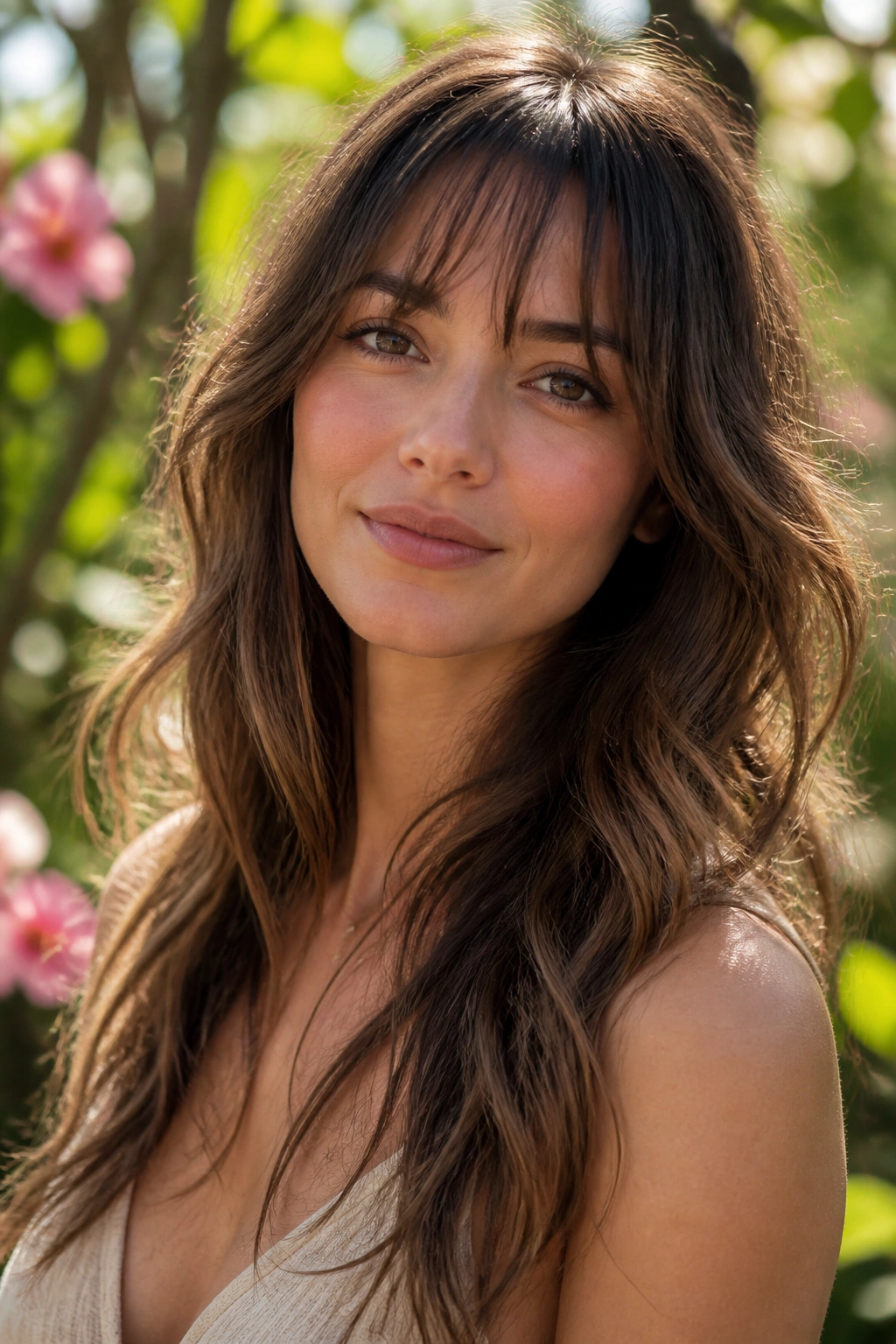
See-through bangs are exactly what they sound like: light enough that you can glimpse the forehead through them. On wavy hair, that softness keeps the front from taking over the whole face, which can happen fast with a fuller fringe.
The boho version leans into softness and movement. The layers are long, the ends are gently broken up, and the fringe sits in a loose veil instead of a solid block. It has a quieter feel than a rocker shag, but it still has plenty of shape.
A lot of people like this cut because it looks better when it’s not over-styled. A bit of bend through the mid-lengths, a little separation at the ends, and you’re done. It suits people who want a romantic finish without the polish of a salon blowout.
I’d use a lightweight wave cream and nothing too sticky. Heavy product clumps see-through bangs into little ropes, which is not the point. Keep the front soft, and let the rest of the haircut do the talking.
11. Tousled Glam Shag with Rounded Fringe
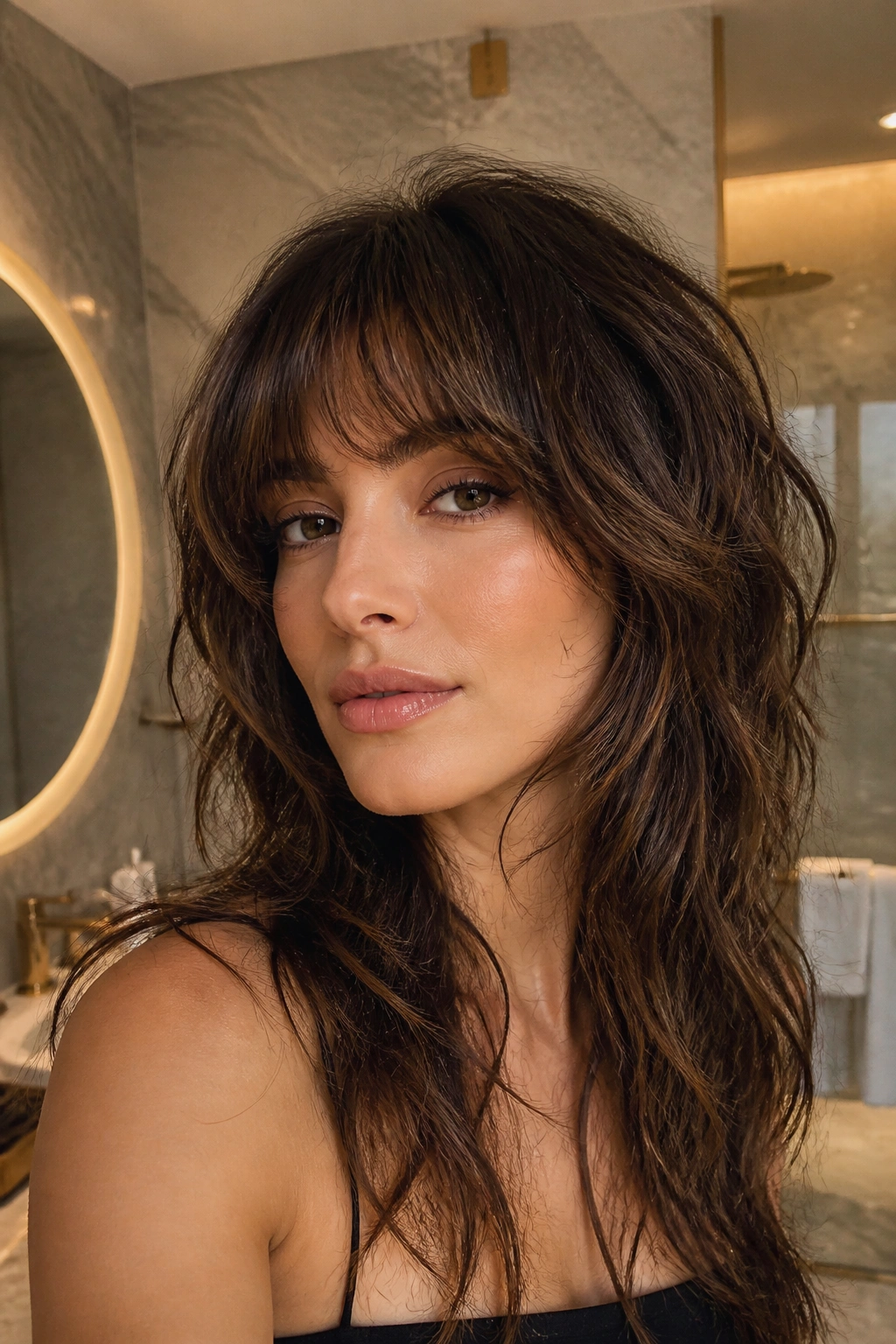
This is the shag for someone who likes a softer, more polished finish. Rounded fringe curves gently across the forehead instead of breaking apart into pieces, and the long layers carry a smoother wave through the sides.
The result feels a little dressier. Not stiff. Just more intentional. If your hair naturally bends into an S-shape, this cut takes that movement and makes it look expensive without trying too hard.
What changes the game here is the roundness of the fringe. Instead of cutting straight across, the bangs are shaped so the center sits a touch shorter and the sides drift longer. That small curve keeps the forehead from looking boxed in.
Use a blow dryer and a medium round brush if you want the fringe to sit neatly. Once the bang area cools, work a small amount of shine cream through the bottom half of the hair. The shine makes the layers look more deliberate, and the waves stop looking dry at the ends.
12. U-Shaped Long Shag with Barely-There Bangs
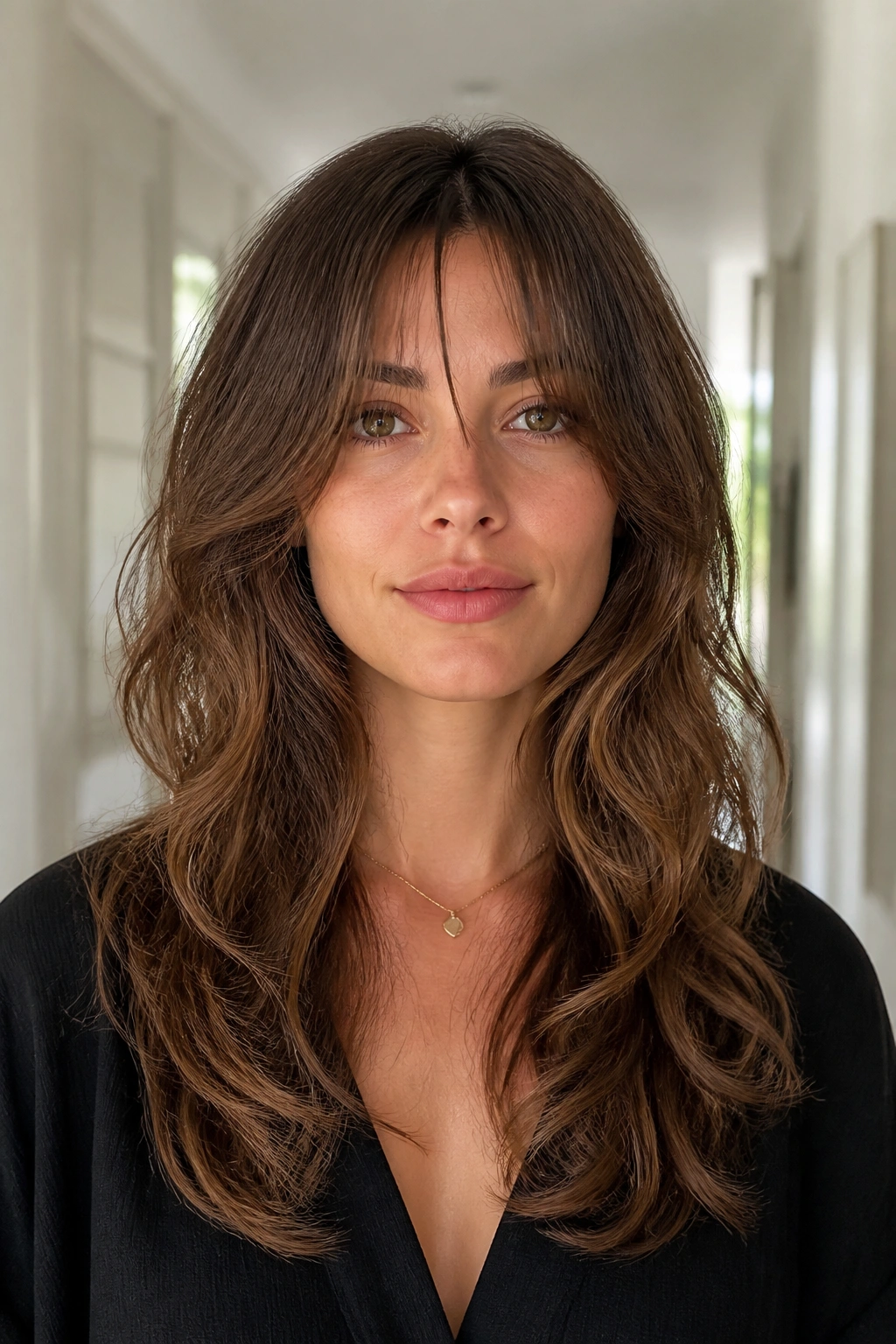
A U-shaped perimeter keeps the length fuller in back while the front opens up in a soft curve. It’s a nice shape if you want long hair that still feels light, not one single curtain hanging from the head.
The barely-there bangs are the quietest part of the cut. They sit near the brow line, but they’re light enough that you can sweep them aside in a second. That makes the whole haircut more flexible than a heavier fringe. Some days they read as bangs. Some days they disappear into the face frame. That’s useful.
This cut suits wavy hair that tends to get bulky at the bottom. The U-shape keeps the perimeter from feeling blunt, while the long layers break up the weight. A stylist who understands how to keep the outline soft will make a big difference here.
A clean center part gives it a calm look. A slightly off-center part gives it more movement. If you want extra lift at the crown, clip the roots for a few minutes while the hair dries. Old trick. Still works.
13. Grown-Out Shag with Split Fringe
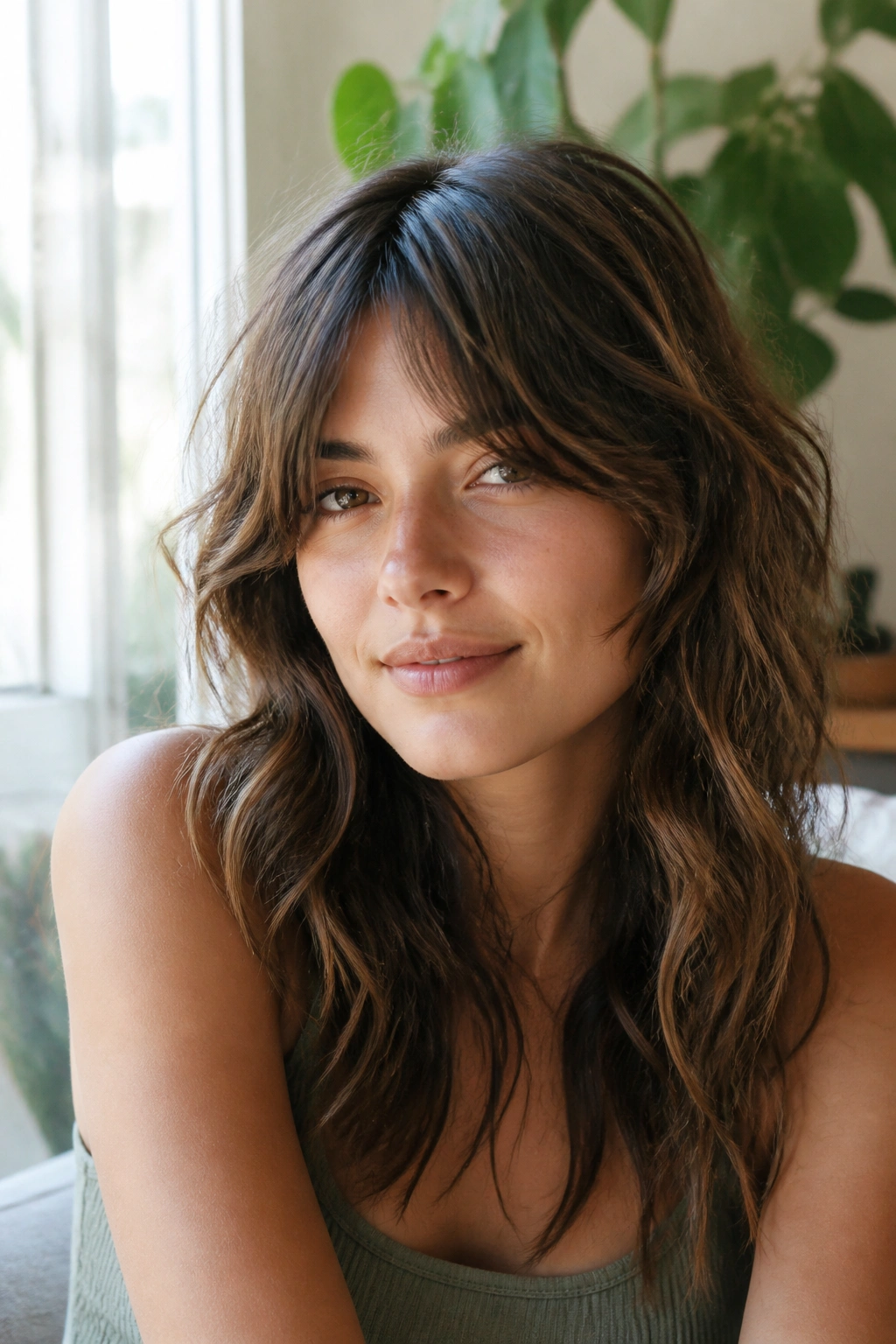
The grown-out shag is the haircut for people who want bangs but not the feeling of being trapped by them. The split fringe parts naturally in the center and blends into the sides, so it can read as bangs or just face-framing layers depending on how you wear it.
That flexibility is the whole appeal. On wavy hair, a split fringe can fall in a very flattering way because the waves naturally open the face. It also means the cut gets better as it grows, which is more than I can say for plenty of fringe-heavy styles.
How to Wear It
Wear the part a little off-center if your face is rounder and you want more vertical line. Keep it dead center if you like the softer, curtain-like effect. Both work.
A split fringe also plays nicely with second-day hair. A quick mist of water, a little scrunch, and the bangs usually fall back into place. No elaborate styling routine. That is one reason this cut has such loyal fans. It gives you the look of a shag without demanding a daily fight.
14. Long Shag with Thick Fringe and Undone Ends

Thick fringe on wavy hair can look expensive when it’s cut with enough softness through the ends. Without that softness, it can look heavy. So the shape matters here more than the drama of the bangs themselves.
The undone ends keep the haircut from tipping into helmet territory. You want the fringe to hold the eye, then the long layers should break apart and move. That contrast gives the style depth. One solid block up top and a whispery finish below is a smart pairing.
This version is especially good if your face is long or narrow, because the thicker fringe shortens the forehead a little. It also adds weight near the top, which can help if your waves are loose and the hair tends to fall flat at the roots.
A salon note helps here: ask for the fringe to be dense enough to hold its shape, but not cut in one blunt shelf. That tiny difference matters. Use a round brush only on the bangs and leave the ends slightly rough. The roughness is part of the charm.
15. Beachy Shag with Neck-Grazing Layers and Bangs

This haircut feels like it was made for hair that likes to dry with a bend and a bit of memory. The neck-grazing layers move freely around the collar area, which keeps the length from feeling trapped against the shoulders.
The bangs stay soft and broken up, so the face gets framed without looking heavily styled. It has a casual, easy finish that suits people who want a haircut to look good with a T-shirt and just as good with a sharper outfit.
One of the reasons this cut works is that the shortest layers are not too high. They sit low enough to keep the shape relaxed, which matters on wavy hair because too much lifting around the top can make the sides puff out. The neck length helps balance that.
A mist of salt spray through the mid-lengths can give it a beachy finish, but keep it away from the fringe if your hair dries frizzy. That’s the catch with salty products. They can give texture fast, and they can also dry the front into little frayed bits if you overdo it.
16. Long Shag with a Deep Side Part and Sweeping Bangs
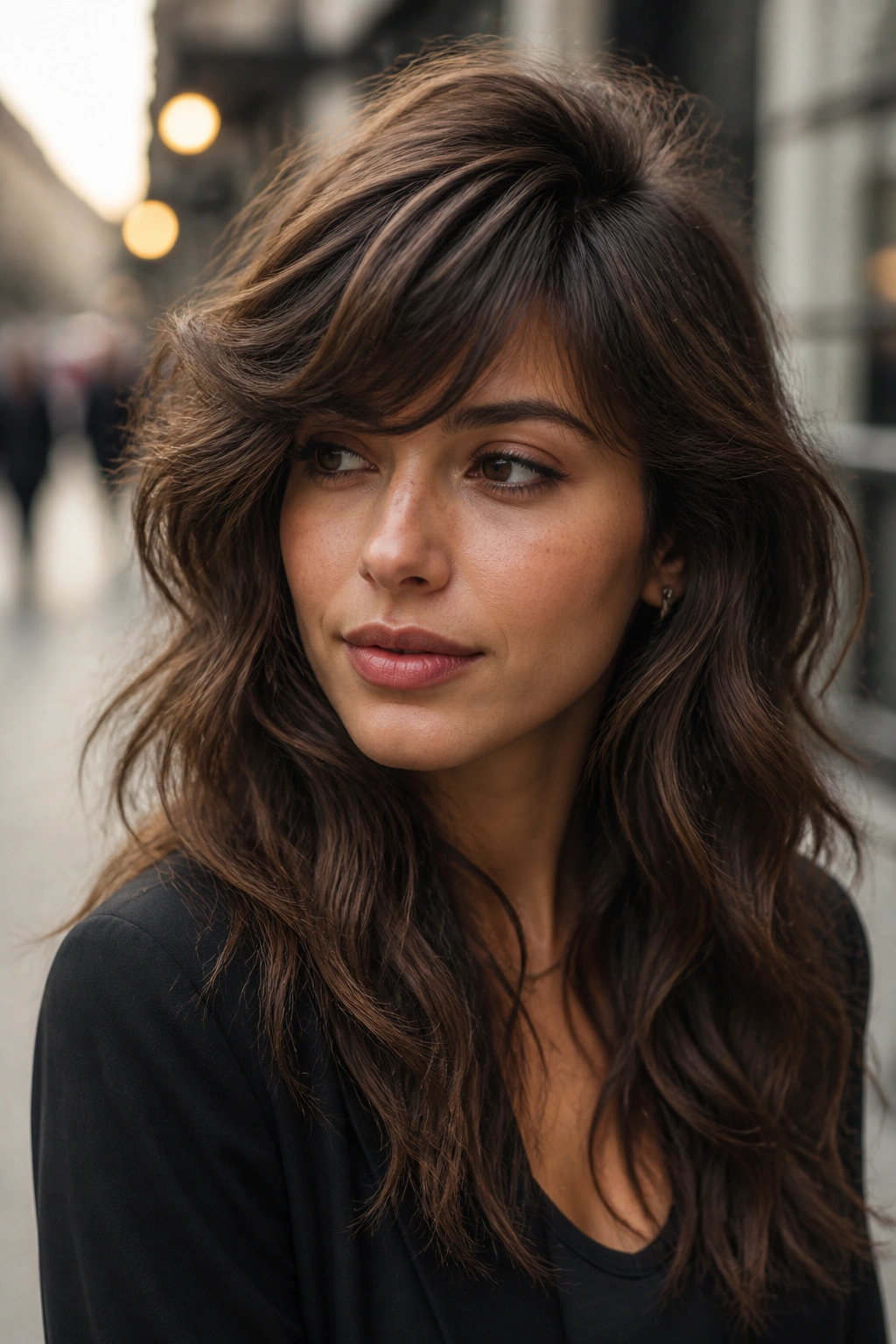
A deep side part changes the whole story. Instead of framing the face symmetrically, it lets the waves fall with a little drama across the forehead and down one side, which can be gorgeous on wavy hair that already bends in one direction.
Sweeping bangs are the key. They should glide into the rest of the cut instead of sitting as a separate piece. The asymmetry gives the haircut a softer, more grown-up feel, and it can be a smart choice if a center part makes your waves split awkwardly.
The shape also has a nice side effect: it creates instant lift at the roots on the heavier side, which helps if your hair tends to collapse near the scalp. That’s one of those practical details that matters more than it sounds like it should.
A round brush at the part line can help set the root direction. Then leave the rest alone. Seriously. If you keep reworking the sweeping bang, it loses the easy fall that makes the style good in the first place.
17. Collarbone-Clearing Shag with Curved Bangs
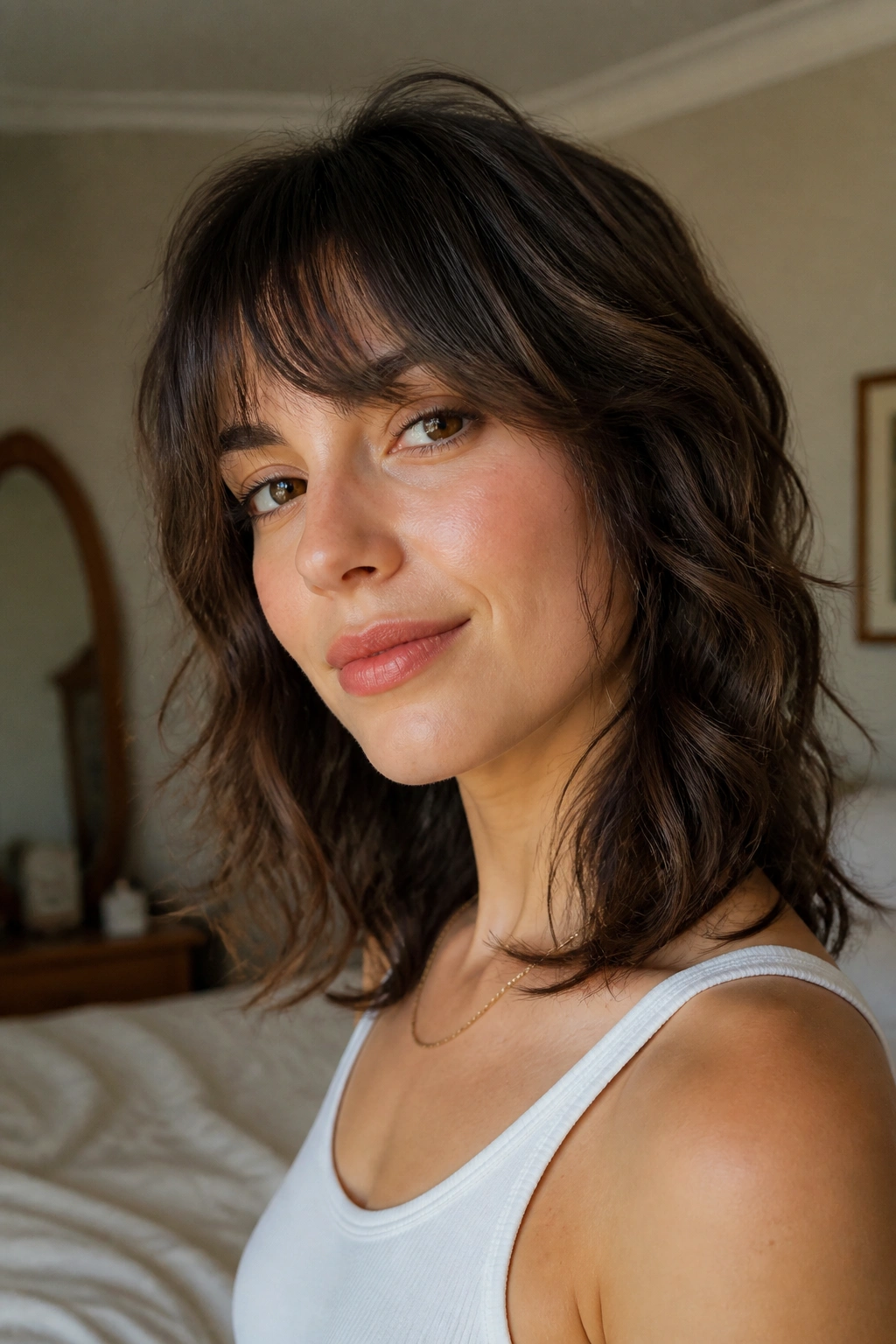
This cut sits in a sweet spot. The collarbone-clearing length is long enough to pull back, but short enough that the layers show up without effort. The curved bangs mirror the natural arc of the brow, so the front feels connected to the rest of the haircut.
I like this one for people growing out one-length hair. It gives movement fast, without forcing a huge change in overall length. The shag layers can start lower than in a shorter version, which keeps the outline smooth and avoids that over-chopped look some layered cuts get.
The curved bang also plays well with loose waves because it softens the forehead without pinning the face open too hard. If your hair is dense, ask for the fringe to be slightly thinner in the center so it doesn’t feel blocky when dry.
A quick bend with a blow dryer, then a cool shot, is enough here. You do not need a full blowout. The wave pattern should stay visible. If it looks too polished, you probably styled it too much.
18. Soft Mullet Shag with Face-Framing Bangs
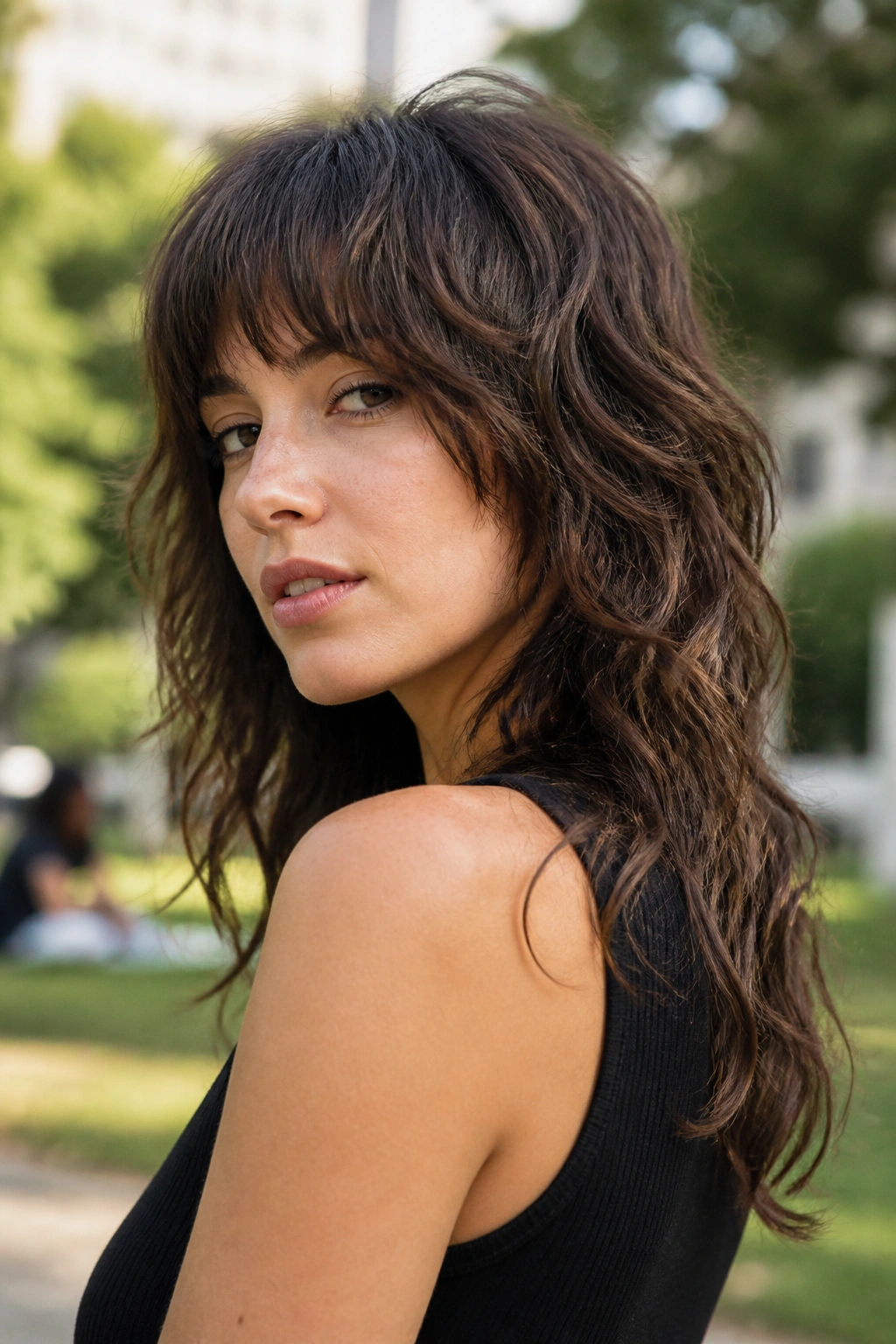
This is the bolder cousin in the family. A soft mullet shag keeps more length at the back and uses shorter layers through the crown and sides, which gives wavy hair a strong, modern shape without turning it into a costume.
Face-framing bangs are what keep it wearable. They soften the front, so the cut does not feel severe. The bangs should blend into the cheek and jaw area rather than stopping in one harsh line. That blend is what makes the style feel intentional instead of extreme.
It suits dense waves especially well. Dense hair often needs more interior removal, and this cut gives the stylist a chance to take out bulk where it sits best, then leave the bottom long enough to swing.
Use a diffuser and a little styling cream, then stop. The point is separation and shape, not sleekness. If you brush this cut too much, the whole thing loses the airy, shaggy line that gives it life.
19. Layered Shag for Dense Wavy Hair and Light Fringe
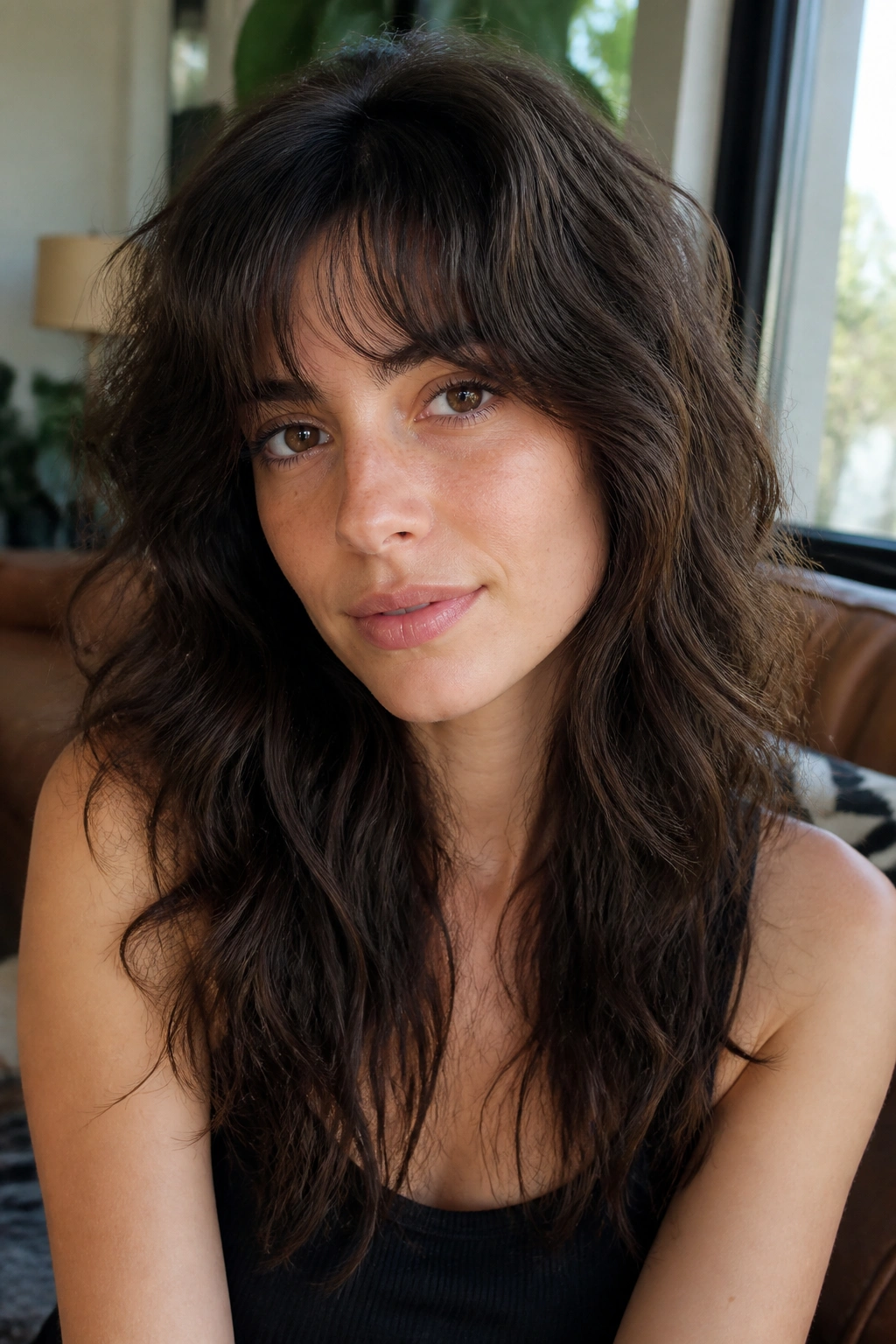
Dense wavy hair needs a haircut that knows when to back off. Too much bulk left at the bottom can make the shape sit heavy, and too much thinning can leave the ends fuzzy and thirsty. This version walks the line well.
The light fringe keeps the front from feeling crowded. It gives you the bang effect without adding another thick layer on top of already busy hair. That matters more than people think. Dense hair can swallow a fringe whole if the bangs are cut too full.
The Shape That Makes It Work
- Internal layers remove weight from inside the haircut
- The perimeter stays soft, not razor-thin
- The fringe should be light enough to move when you blink
- A point-cut finish helps the ends blend instead of sitting in a hard line
Tell your stylist you want the hair to move, not puff out. That distinction sounds small, but it changes the whole haircut. Dense waves usually need more structure than fine waves, and this shape gives you that structure without making the hair feel helmet-like.
20. Long Shag for Fine Wavy Hair and Airy Bangs
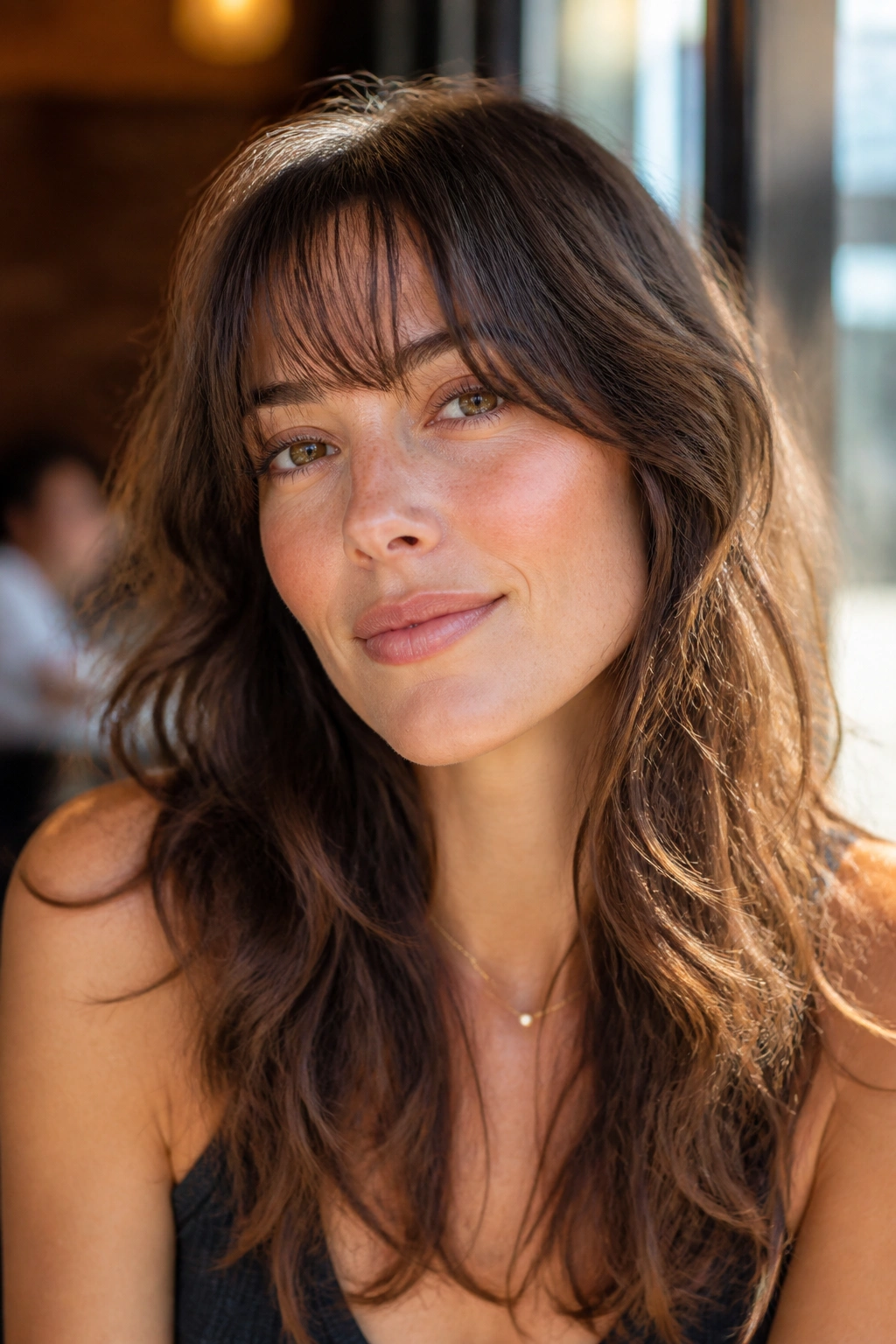
Fine wavy hair needs a gentler hand. If the layers are too short or too many, the cut can collapse into thin pieces that never look full no matter how much you scrunch them. This version keeps the length, adds movement, and leaves enough weight for the waves to hold shape.
Airy bangs help because they don’t eat up volume at the front. A heavy fringe on fine hair can flatten the whole top of the head, which is a fast way to make the haircut look tired by lunchtime. Light bangs keep the face framed without draining the rest of the cut.
A root-lifting mousse works well here. Apply it at the scalp only, then comb it through the top two inches. The lengths need less product than you think. Fine hair often gets greasy-looking faster than people expect, so restraint pays off.
If your waves are loose, ask for layers that start lower than the chin. That keeps the ends from looking wispy. Long, airy, and still full enough to move — that’s the goal.
21. Shag with Flipped Ends and Brow-Length Bangs

Flipped ends give the shag a playful finish that feels a little retro without becoming costume-y. On wavy hair, the natural bend often helps the ends turn outward on their own, which makes this a satisfying cut if you like a bit of motion at the bottom.
Brow-length bangs anchor the front. They’re short enough to read as a proper fringe, but long enough that they can still be brushed aside if you get tired of them. That makes the style easier to live with than a super-short bang.
This cut is especially good if your waves naturally bend away from the face. The flipped ends echo that movement and keep the haircut from falling flat. The shape looks best when the layers are kept soft through the sides and a little fuller through the lower half of the length.
A 1.25-inch curling iron can help if your hair won’t flip on its own, but use it lightly. You only need to touch a few face-framing pieces and the bottom inch or two. Over-curling the whole head ruins the easy feel.
22. Low-Maintenance Long Shag with Adjustable Bangs
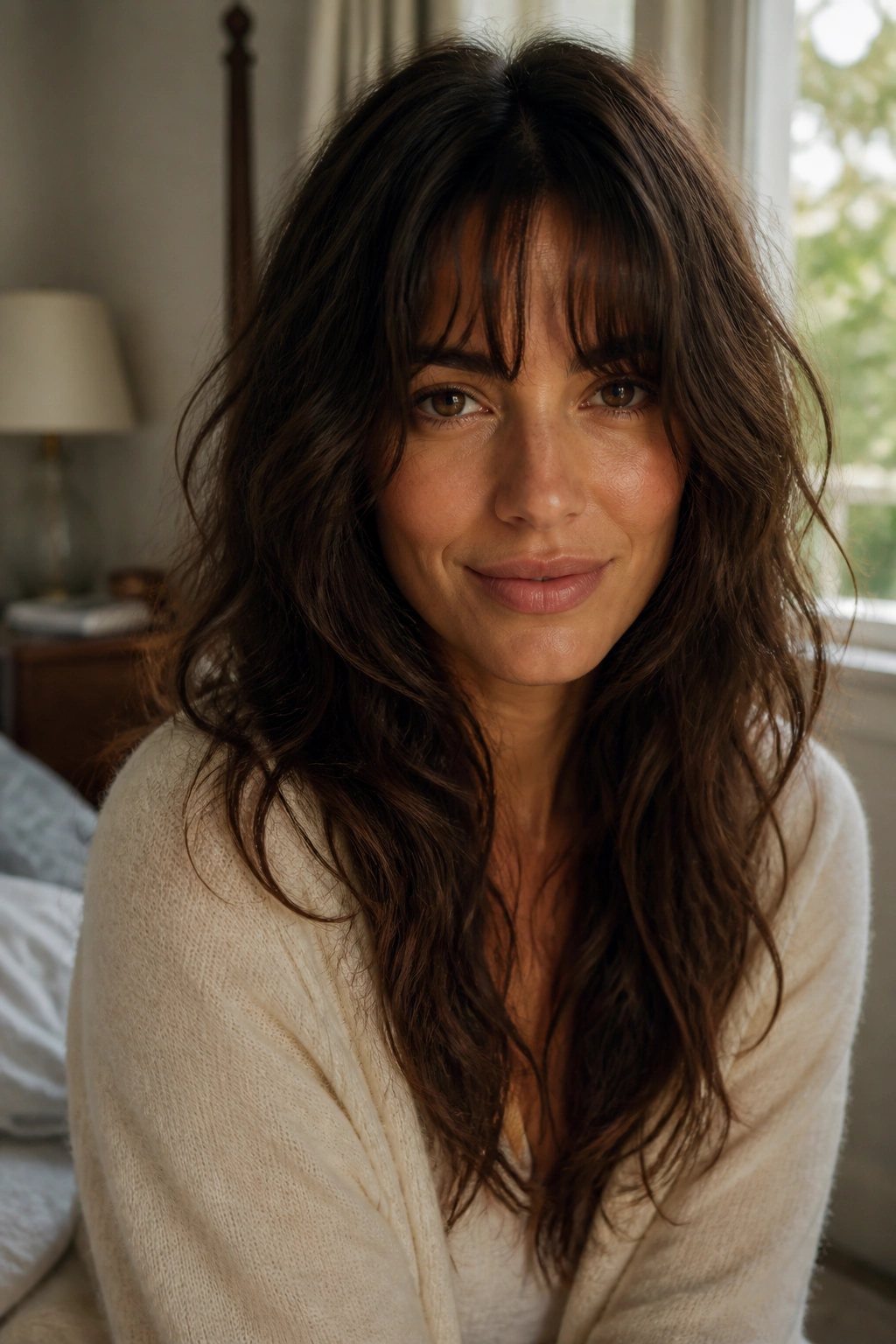
This is the version I’d point to if you want one shag that can survive a busy week without falling apart. Adjustable bangs can sit in the center, swing to one side, or break open naturally depending on how your wave pattern behaves that day.
The haircut is forgiving because the bangs are not locked into one strict shape. They grow out with less drama, and the layers are long enough to keep their line even when your styling routine is rushed. That makes it a smart choice if you like the shag look but do not want to babysit it.
A lot of people want bangs, then regret the maintenance. Fair. This version asks for less. It gives you the front interest without forcing daily precision, and that matters if your hair dries on its own or if you prefer air-drying most of the time.
Ask your stylist for a dry cut or at least a dry check on the fringe so the wave pattern is respected. Wavy hair can spring in strange ways once it dries, and a cut that looks balanced wet can shift hard once it settles. Get that part right, and the whole shape feels easier from day one.
