



Long layered Asian hairstyles for women work because they solve a stubborn problem: hair that’s long enough to feel heavy can turn flat at the roots and stringy at the ends. A good layer pattern fixes that without chopping off the length people actually want to keep.
That matters more than it sounds. Straight, thick, silky, and softly wavy textures all behave a little differently, but they share one headache: too much length can drag the whole shape down. The right cut changes where the hair bends, where it lifts, and how it frames the face. Tiny adjustments — one shorter face frame, a softer U-shaped outline, a few internal layers hidden inside the mass — can make the difference between “fine” and “why does this look so good?”
Some styles lean polished and glossy. Others look better with a little bend, a loose wave, or a blowout that leaves the ends flicking away from the shoulders. The best part is that long layered Asian hairstyles for women are not one narrow look; they’re a whole set of options, and the right one depends on your hair density, your styling habits, and how much movement you want around the face.
1. Sleek U-Shaped Long Layers
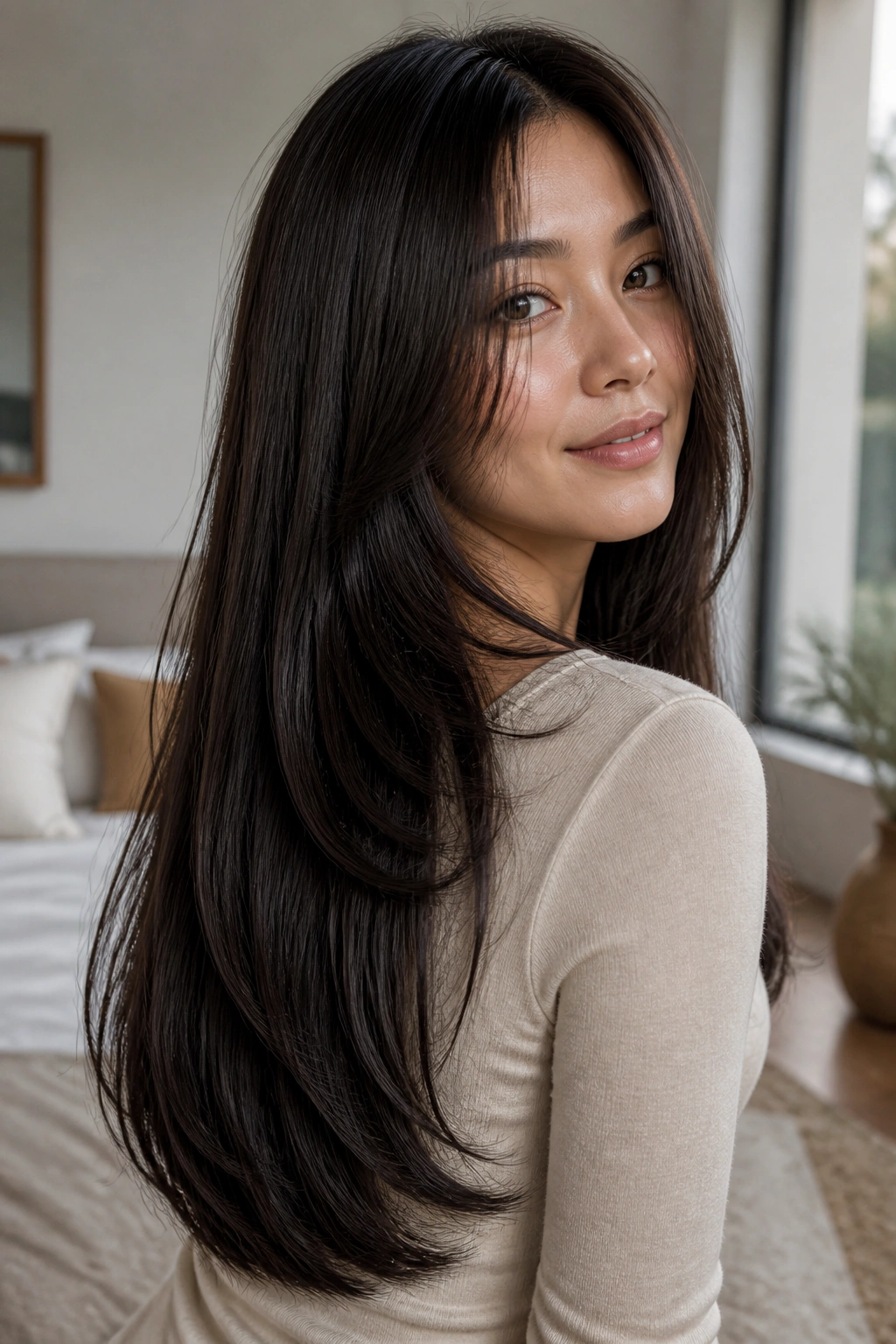
Sleek U-shaped long layers are the quiet workhorse of this whole category. The outline stays rounded at the back instead of chopped off flat, so the hair keeps its length and gets a soft drop that looks polished from every angle.
This cut is especially kind to straight, dense hair. The longest layer usually lands somewhere around mid-back, while the shorter layers start low enough to keep the ends from looking thin or ragged. If your hair tends to lie heavy, ask for long internal layers rather than short, choppy ones. You want movement, not holes.
Why It Works So Well
A U-shape keeps the silhouette soft. That matters when you wear your hair down most days, because the curve at the back stops the style from feeling boxy.
- Ask for the shortest visible layer to sit around the collarbone.
- Keep the outer line rounded, not blunt.
- Finish with a 1.5-inch round brush for a smooth bend.
- Use a light serum on the mids and ends, not the roots.
Best for: women who want length, shine, and a cut that still looks neat on lazy mornings.
2. Curtain Bangs With Face-Framing Layers
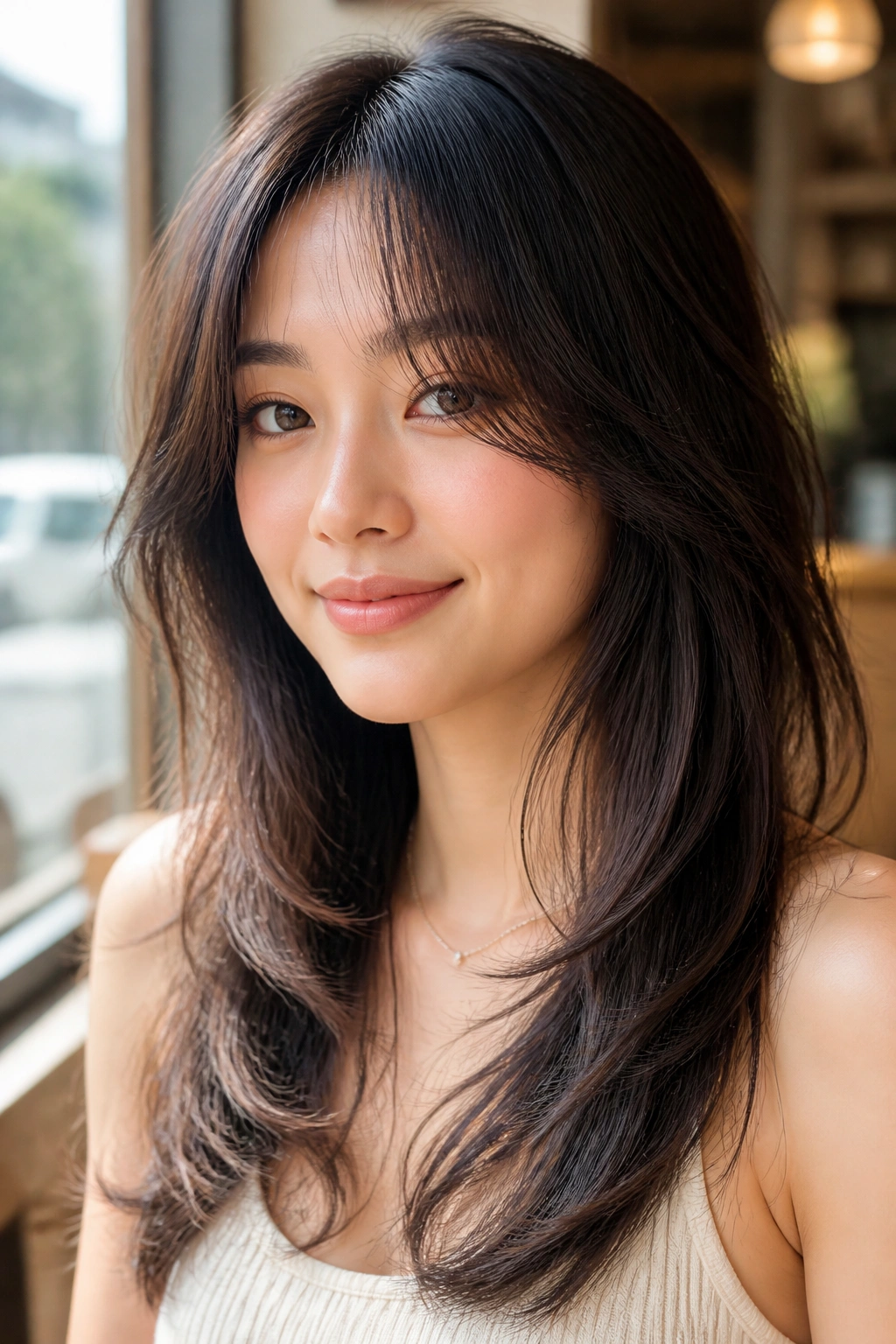
Curtain bangs can change the whole mood of long layered hair in one move. They open up the face, soften the forehead, and give the layers something to blend into instead of letting them fall all at once.
This is a smart choice if your hair is straight or only slightly wavy. The bangs should be parted from the center and feathered down toward the cheekbones, where they melt into longer pieces. That little connection matters. Without it, curtain bangs can look disconnected and fussy.
The style works especially well when you want a softer look around the eyes without committing to a full fringe. It also plays nicely with glasses, which is a detail a lot of haircut advice ignores. A clean center part, a quick blow-dry with a round brush, and a touch of bend at the ends is usually enough.
3. Butterfly Layers With Blowout Volume
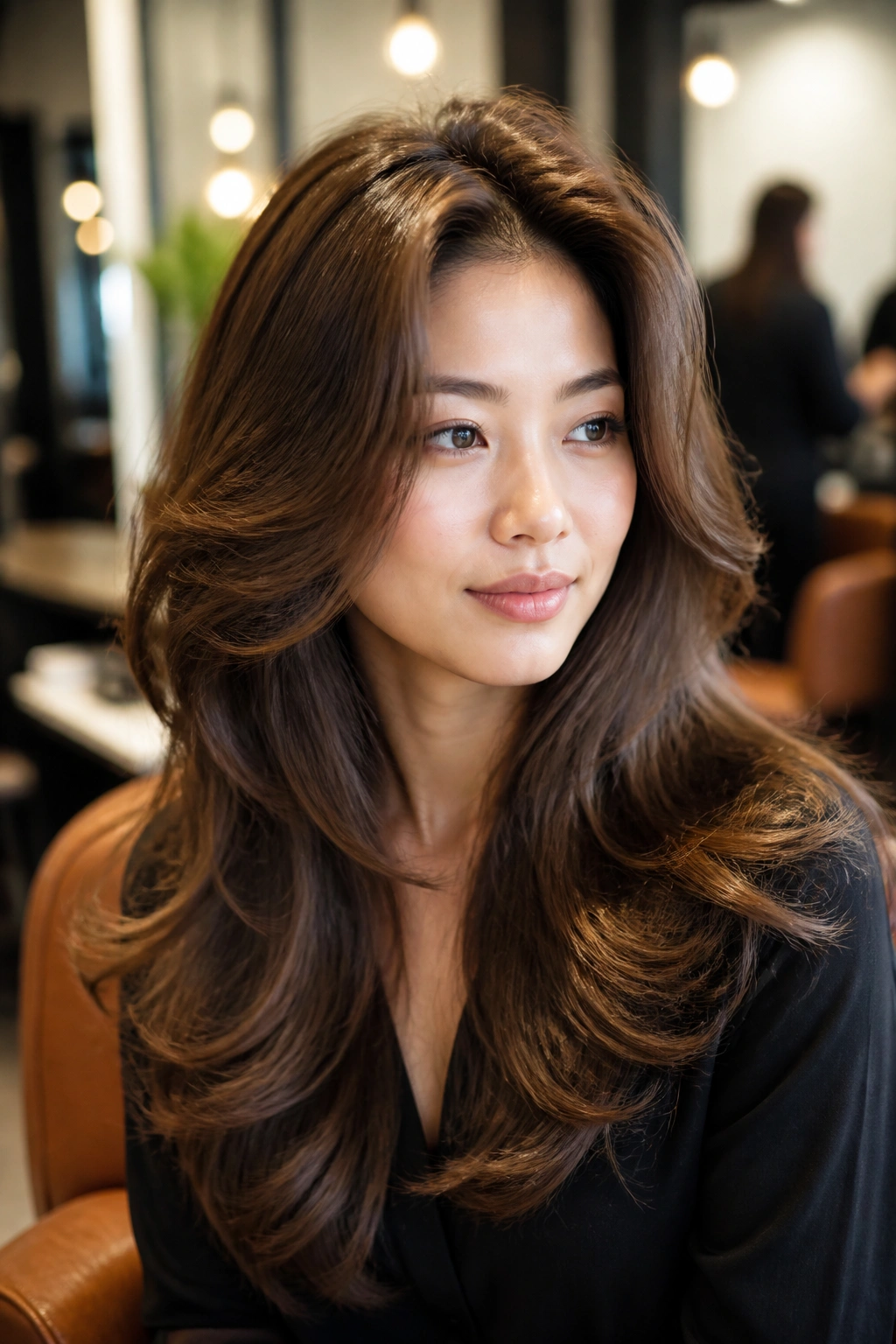
Why do butterfly layers keep showing up on long hair? Because they give you the drama of shorter layers without making you lose the long length in the back. The front pieces are lifted high, while the rest of the hair stays long and full.
This cut thrives on a blowout. The top layers flip away from the face, the lower lengths stay soft, and the whole shape looks airy instead of heavy. If your hair is thick, this is one of the best ways to remove bulk while still keeping a glamorous outline. Fine hair can wear it too, but the layers need to stay controlled so the ends do not go wispy.
How to Style It
Use a medium round brush and direct the front layers away from the face. Then curl the bottom half in large sections, about 1.25 to 1.5 inches wide. The goal is lift at the cheekbones and softness through the ends.
One more thing. Butterfly layers look best when the shortest pieces are not too short. If they land above the cheekbone, they can start to feel 2000s in a bad way. Keep them longer and softer.
4. V-Cut Layers That Keep Length in the Back
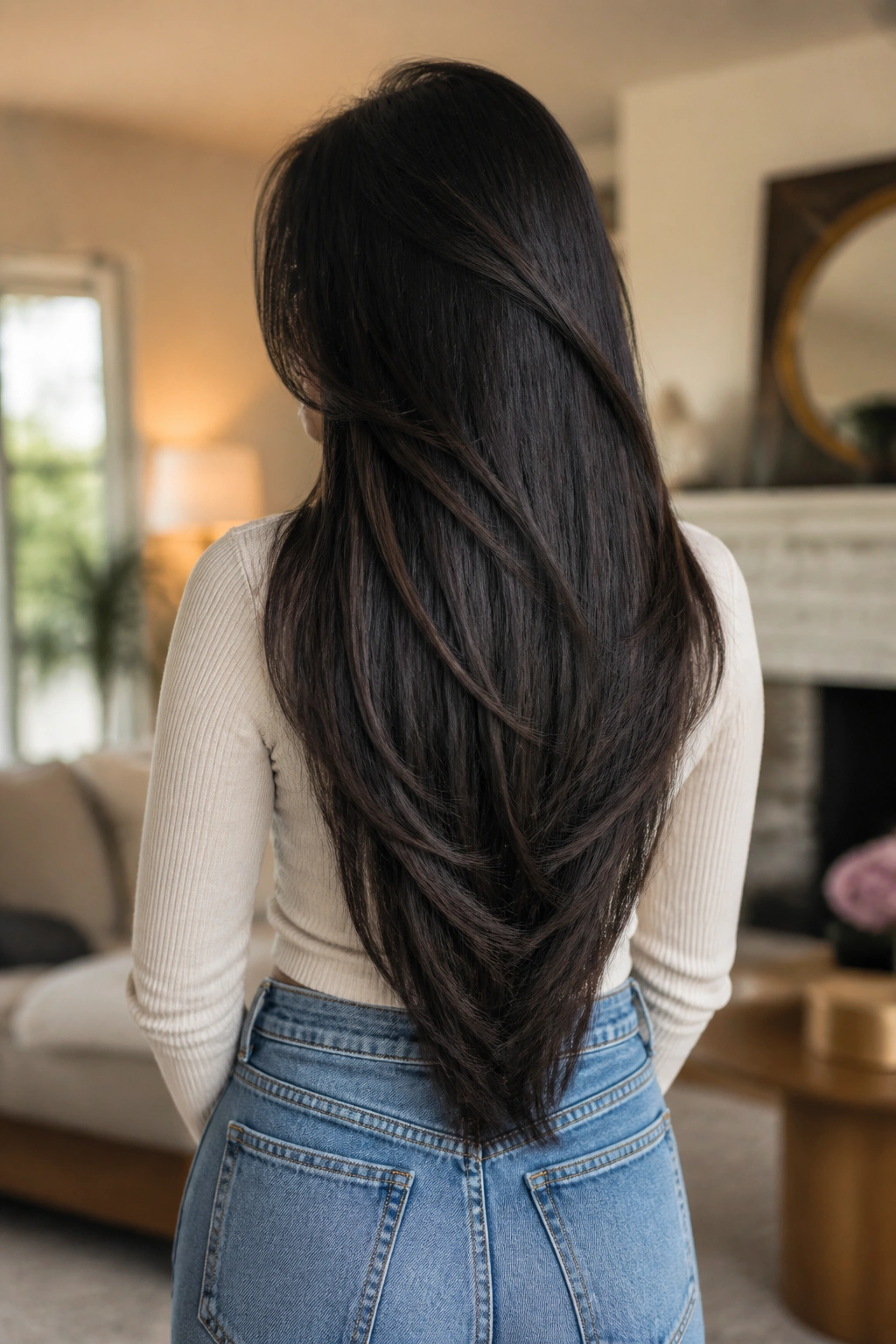
A V-cut is for women who like a little more edge in their long layers. The hair narrows toward the center back, which creates a pointed shape that looks sharp when the hair is straight and very pretty when it moves.
This cut is excellent for thick hair because it removes weight without making the sides look too thin. It also gives long hair a stronger shape when it’s worn in a ponytail or a half-up style. If your hair has a habit of looking like one giant curtain, the V-cut fixes that fast.
The downside is simple: the point can look too severe if the layers start too high. Keep the longest point low and the side layers soft. That way the shape stays clean instead of jagged.
5. Soft Shag on Long Hair

A long shag sounds loud. A soft shag is not loud at all.
This version keeps the length but adds airy layers around the crown, cheekbones, and jaw. The ends are usually broken up a little, which gives the hair that lived-in feel without turning it into a full rock-and-roll cut. It works best on wavy hair, though straight hair can wear it if you are willing to add a little texture with a curling wand or salt spray.
The real strength here is movement. Long straight hair can sometimes look almost too perfect, almost stiff. A soft shag changes that. It creates shape at the top and keeps the ends from hanging in one blunt line.
If you like air-dried hair, this cut makes sense. If you want a glossy, super-sleek finish every day, it may feel a bit too casual.
6. Invisible Layers for Thick Straight Hair
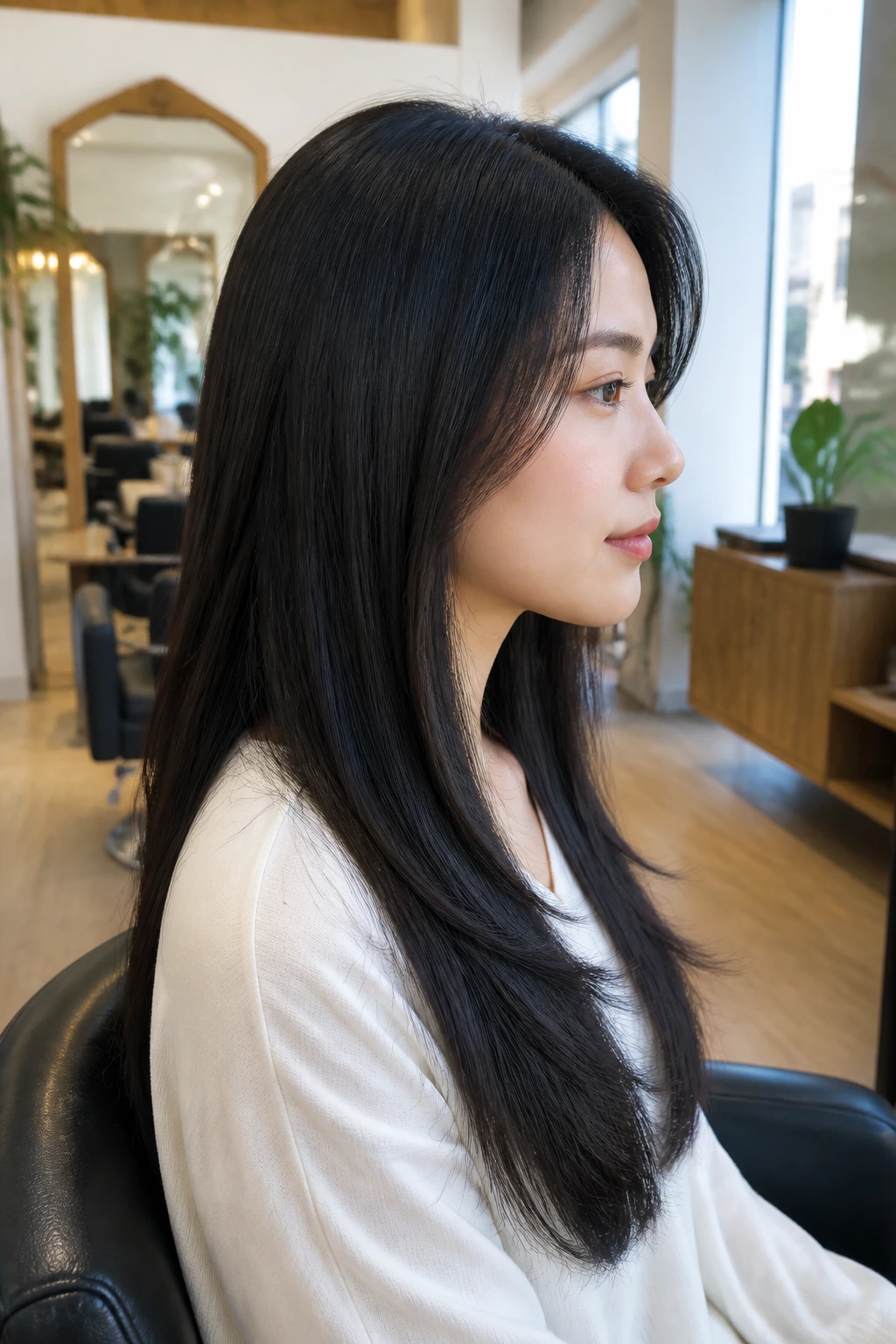
Invisible layers are sneaky in the best way. From the outside, the hair still looks smooth and long, but inside the shape, weight has been removed so the cut sits better and dries faster.
This is the haircut I’d point to for anyone with thick straight hair who says, “I don’t want layers to look like layers.” You get movement without obvious steps. That means fewer awkward gaps and less risk of the ends looking chopped up when you pull your hair back.
A stylist usually cuts these layers deeper inside the hair, not on the outer surface. That matters. It keeps the outline clean while lowering the bulk that makes long hair puff out at the sides. The result feels lighter on the head and easier to manage after washing.
7. Feathered Ends With Airy Movement

Feathered layers have a very specific charm: the ends flick softly away from the face and shoulders, so the whole cut feels lighter. Done well, they never look helmet-like.
This style works especially well when the hair is long enough to show the shape. The upper layers should fall with a gentle slope, not a sudden drop. Think of a soft taper from the cheekbones down. It’s a flattering choice if you want your hair to move when you walk, even if you do almost nothing to it.
What Makes It Different
Feathering is about direction. The layers are shaped to turn outward or inward with a little brush work, which means the cut looks styled even on a normal day.
- Best on medium to thick hair
- Looks good with side parts or center parts
- Needs a round brush or blow-dry brush to show the shape
- Can feel frizzy if the ends are over-thinned
Use a light cream, not a heavy oil. Feathered layers can collapse fast if they get weighed down.
8. C-Curl Layers With a Polished Bend
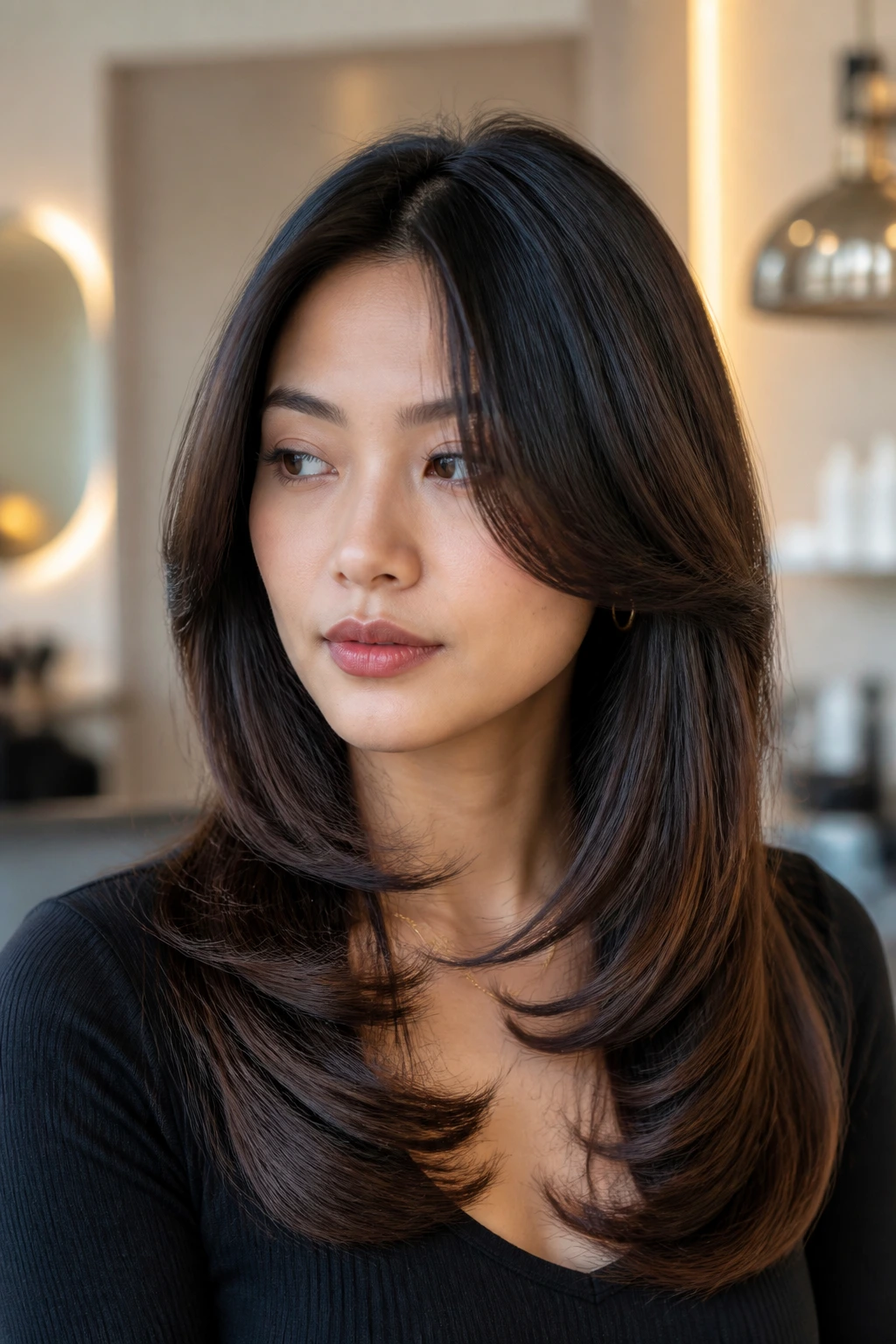
What’s the appeal of a C-curl cut? It makes long hair look intentional without needing big waves or a lot of teasing. The ends curve inward in a neat “C,” which gives the hair a tidy, salon-finished shape.
This style is a favorite for women who like a sleek look with a soft edge. The layers are usually kept long and rounded, so the bend lands at the jaw or collarbone rather than flipping out near the shoulders. On straight hair, that inward curve creates instant structure. On slightly wavy hair, it helps the natural bend look cleaner.
How to Get the Most From It
Blow-dry with a round brush, turning the ends under for the last few inches. A 32 mm curling iron can do the same job if your hair holds heat well. Keep the bend subtle. A sharp curl at the ends will fight the whole point.
C-curl layers are great for workwear and everyday polish. They do not scream for attention, but they still look finished.
9. Waterfall Layers With Loose Waves
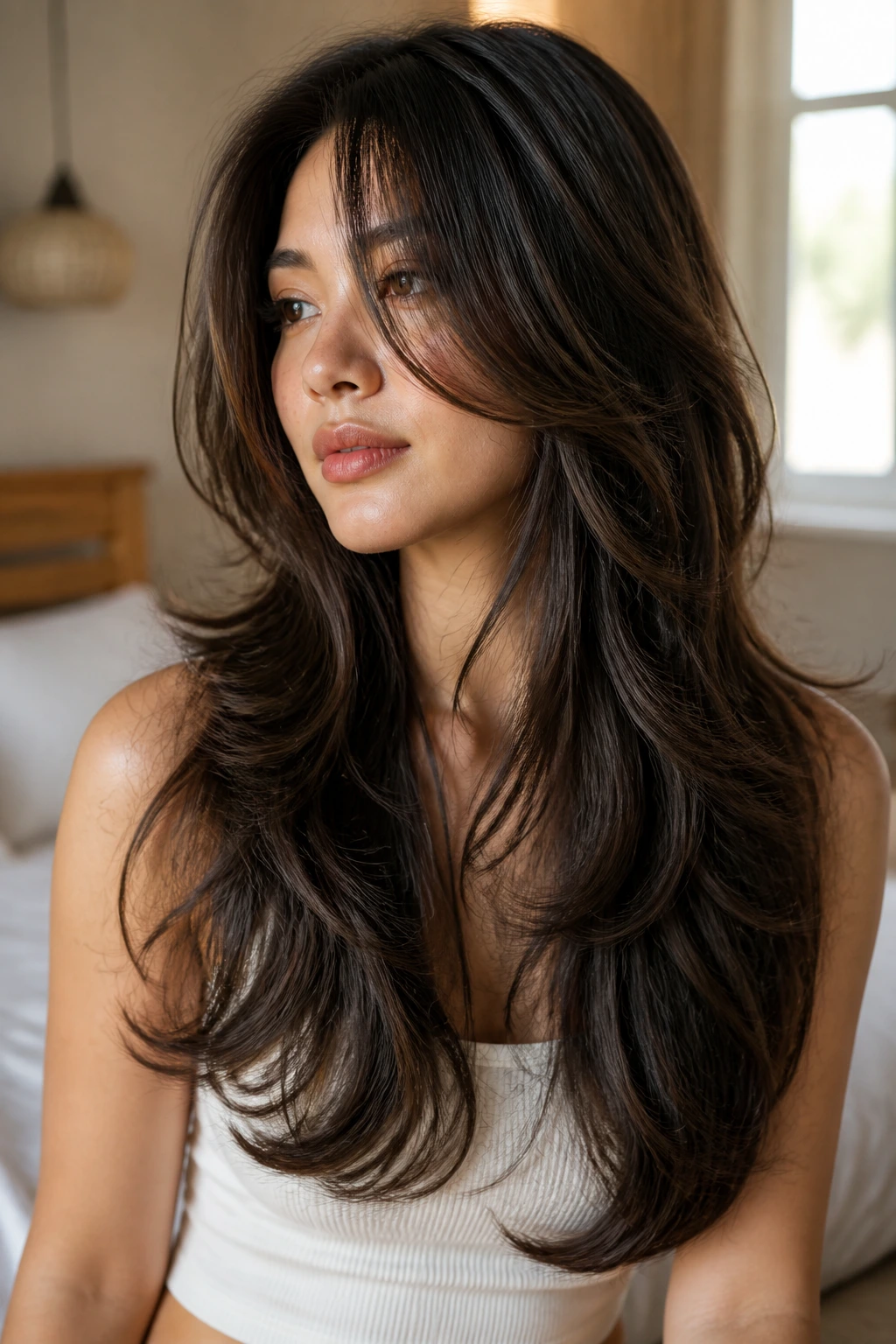
Waterfall layers are built to look like hair is cascading down in soft steps, which is exactly why they shine with loose waves. The effect is romantic without turning sugary.
This cut usually starts with face-framing pieces and then moves into longer layers through the mid-lengths and ends. The trick is keeping the transitions soft enough that the layers blend when the hair moves. If the layers are too blunt, the waterfall effect disappears.
A 1-inch curling wand works well here. Wrap sections away from the face, leave the last inch out, and brush the waves through once they cool. That gives you a softer wave instead of tight curls. The shape is especially flattering on long straight hair that needs a little life.
- Best for soft, feminine styling
- Works well with center parts
- Looks better with bend than with stiff curls
- Needs a little texture spray for hold
10. Hime-Inspired Long Layers
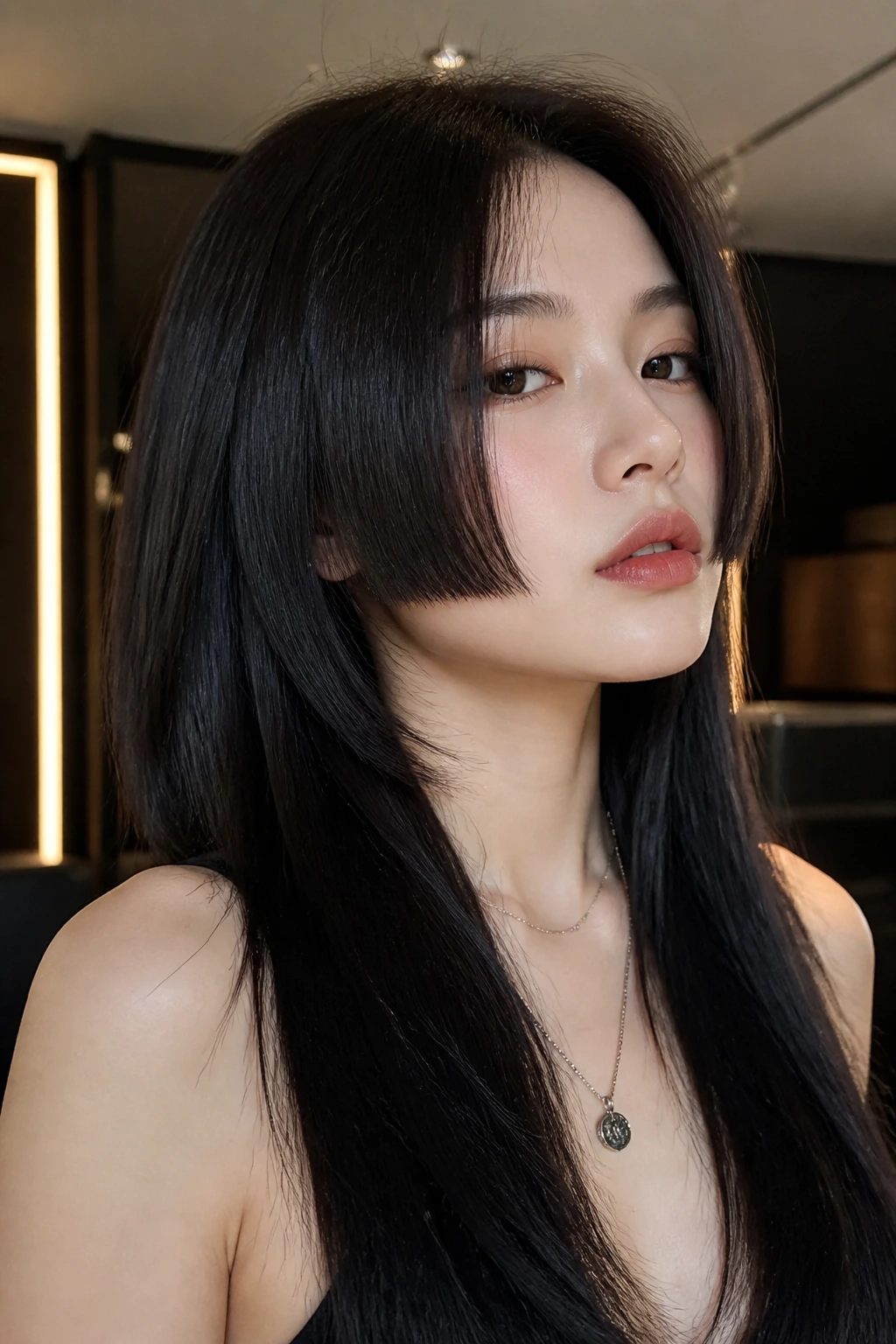
Hime-inspired hair is one of the few looks on this list that makes a bold shape statement right away. The cheek-length side pieces create a sharp frame, while the long lengths stay sleek underneath.
This style has a strong graphic feel, and that’s the point. It’s ideal if you like long hair but want a haircut that does more than “fall nicely.” The side pieces can be blunt or softly textured, and the rest of the hair can stay straight or lightly waved. Either way, the contrast is the draw.
It suits straight hair especially well because the clean lines stay visible. If your hair is very wavy, the shape can still work, but you’ll need more styling to keep the face-framing pieces distinct. The maintenance is not hard, but the trims matter. Those front sections grow out fast.
11. Airy Korean-Style Layers

Airy Korean-style layers are all about softness around the face and lightness through the ends. The cut usually looks relaxed, but it is more deliberate than it first appears. The layers are placed to make the hair float instead of sit heavy.
This style is a good fit for long, straight hair that can look flat when left alone. A little lift at the crown and a little curve near the cheekbones go a long way. The silhouette is gentle, not choppy, which is why it feels so wearable.
A lot of women like this cut because it gives shape without drama. You can wear it smooth, add a bend at the ends, or tuck one side behind the ear and still keep the line. It works best when the layers are soft enough to move, but not so short that they puff out.
12. Bottleneck Bangs With Long Layers

Bottleneck bangs are a smart middle ground. They start a little narrower at the center of the forehead, then open out toward the temples and melt into the layers below.
That shape makes them easier to wear than a blunt fringe. They soften the front of long hair and keep the cut from feeling too heavy at the top. If you like long layered Asian hairstyles for women that frame the face without hiding it, this is one of the strongest options.
How to Style It
Blow-dry the center pieces down first, then sweep the side pieces away from the face with a round brush. Keep the ends of the longer layers loose, not stiff.
- Great for oval and heart-shaped faces
- Easier to grow out than full bangs
- Needs regular trimming to stay open around the eyes
- Looks better with a soft bend than with a hard curl
The shape is subtle, but it changes the whole haircut.
13. Side-Swept Layers With a Deep Part

A deep side part can rescue long hair that sits too flat on top. It lifts one side, drops the other, and gives the layers a natural sweep that feels fuller right away.
This is one of those cuts that depends as much on styling as on the scissors. The layers themselves should be long and blended, with the shortest face-framing pieces starting around the cheekbone. Once the part shifts, those pieces fall into a soft diagonal that makes the face look longer and the crown look taller.
If your roots collapse by noon, this shape helps. A little mousse at the roots, a quick blow-dry with the hair moving over to one side, and you’re there. Not fancy. Just effective.
And yes, the side part can be dramatic. That’s part of the fun.
14. Razor-Cut Layers for Airy Ends

Razor-cut layers have a lighter, more piecey edge than scissor-cut layers. The ends look softer and a little feathered, which can be a nice fix for heavy, straight hair that refuses to move.
This cut is best when you want texture without obvious chunks. The razor removes weight in a way that makes the hair fall with more swing. The downside is that it can frizz if your hair is already dry or if the stylist goes too hard with the blade. So this one needs a light hand.
It suits medium to thick hair that can handle texture. Fine hair can use it too, but the layers should stay longer. Short, razor-thinned ends can look stringy fast.
Use a smoothing cream and a round brush if you want polish. Or air-dry it and let the broken-up ends do their thing. Either way, it has a little more attitude than a classic layered cut.
15. Loose-Wave Long Layers
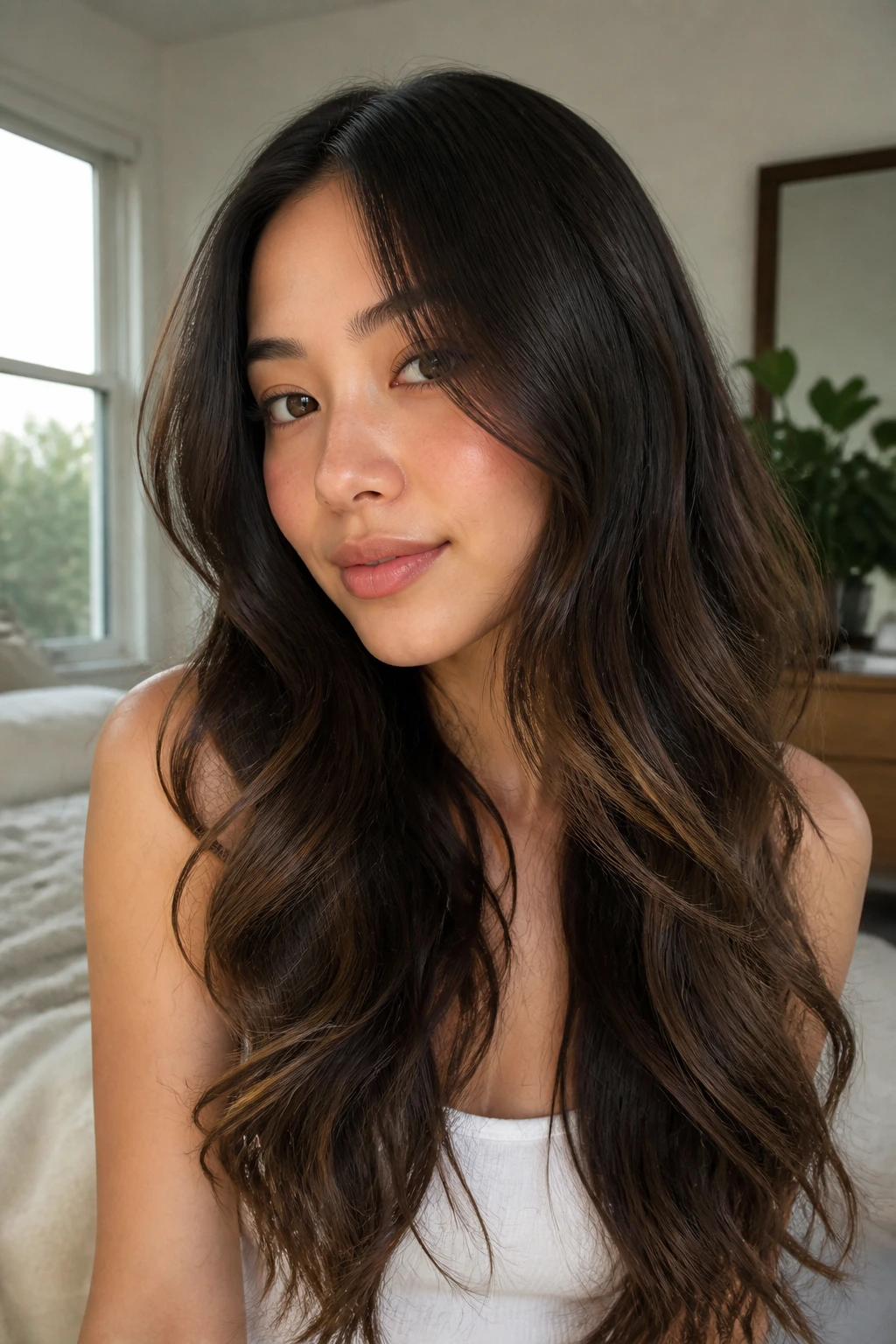
Loose waves and long layers are a natural pairing because the wave pattern shows off every bend in the haircut. Straight hair can still wear this look, but the styling really sells it.
The goal is not a tight curl. It’s a relaxed wave that starts around the cheek or jaw and keeps going through the ends. That’s why a larger barrel — around 1.25 inches — usually works better than a small iron. Small curls can make the layers look busy. Loose waves keep the line soft.
This is a good everyday style if you want your hair to look done without being stiff. It photographs well, sure, but more to the point, it moves nicely when you turn your head. That movement is what layers are for, after all.
16. Face-Framing Layers for Round Faces

Can long hair shape a round face without making it look wider? Yes, if the front pieces are placed with care. The shortest face-framing layers should start below the cheekbone, not right at the widest part of the face.
That placement draws the eye downward. It also keeps the sides from ballooning out near the cheeks, which is the mistake that ruins a lot of “soft” haircuts. A center part can work here, but a slightly off-center part often gives the face more length and keeps the layers from sitting too symmetrically.
What to Ask For
- Long front pieces that start below the cheekbone
- Blended layers through the mid-lengths
- Soft tapering at the ends, not a blunt shelf
- Styling that bends inward near the jaw
Skip very short side pieces. They can widen the face instead of slimming it. That’s the whole trap.
17. Blunt Perimeter With Interior Layers
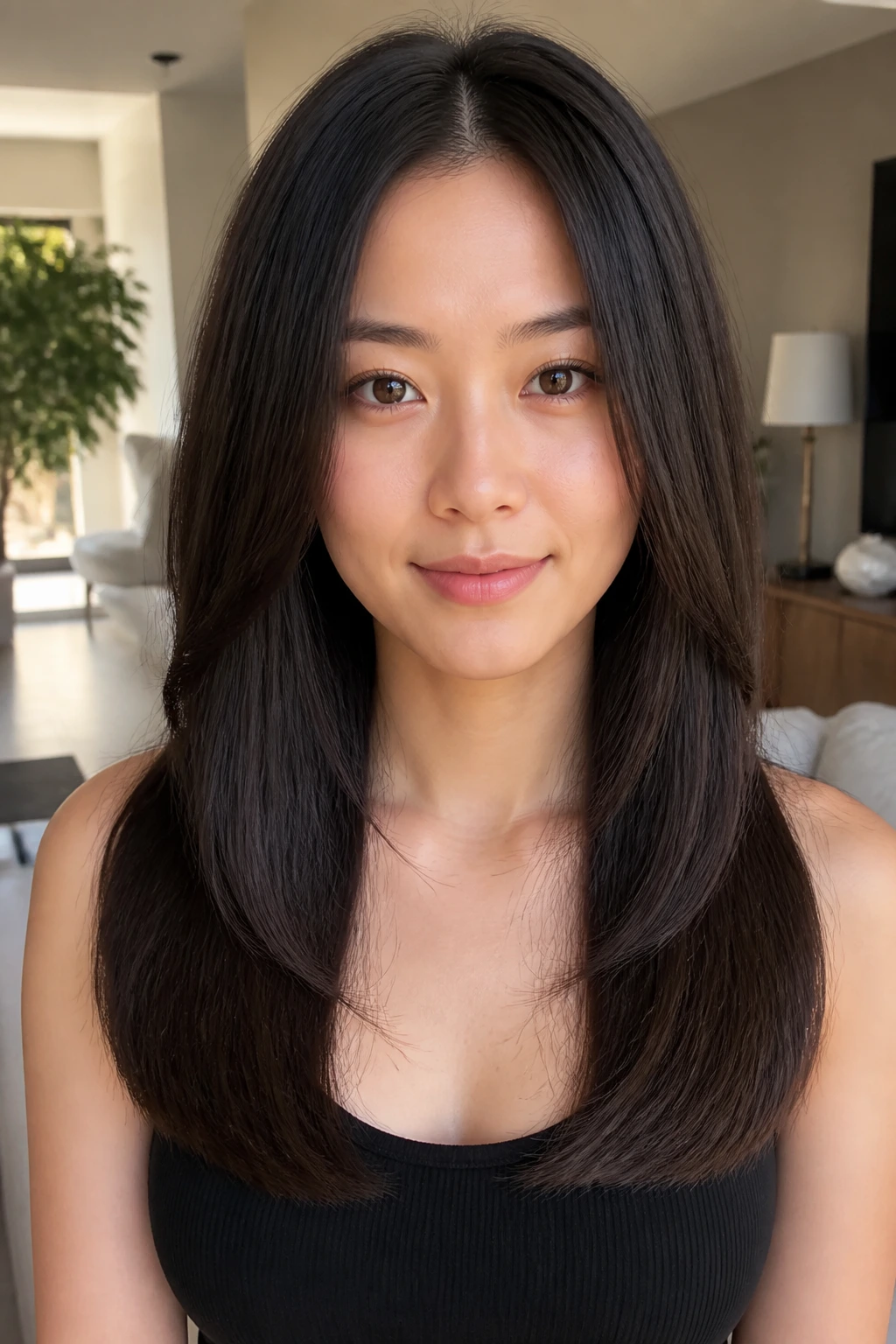
This cut is the best of both worlds if you like a strong bottom line but hate bulky hair. The outer edge stays blunt, while the inside gets layered so the length feels lighter.
The effect is clean. Very clean. Straight hair shows it off well, because the blunt ends create a neat border and the hidden layers stop the shape from looking boxy. This is a strong choice for women who want long hair that looks polished even when air-dried.
It’s also a sneaky fix for thick hair that never seems to fall right. The outside keeps its density, so the hair still looks full in photos and in a ponytail. Meanwhile, the inside layers take enough weight out that the shape sits better on the shoulders.
If you like a precise finish, this is a good one.
18. Deep Side-Part Glam Layers
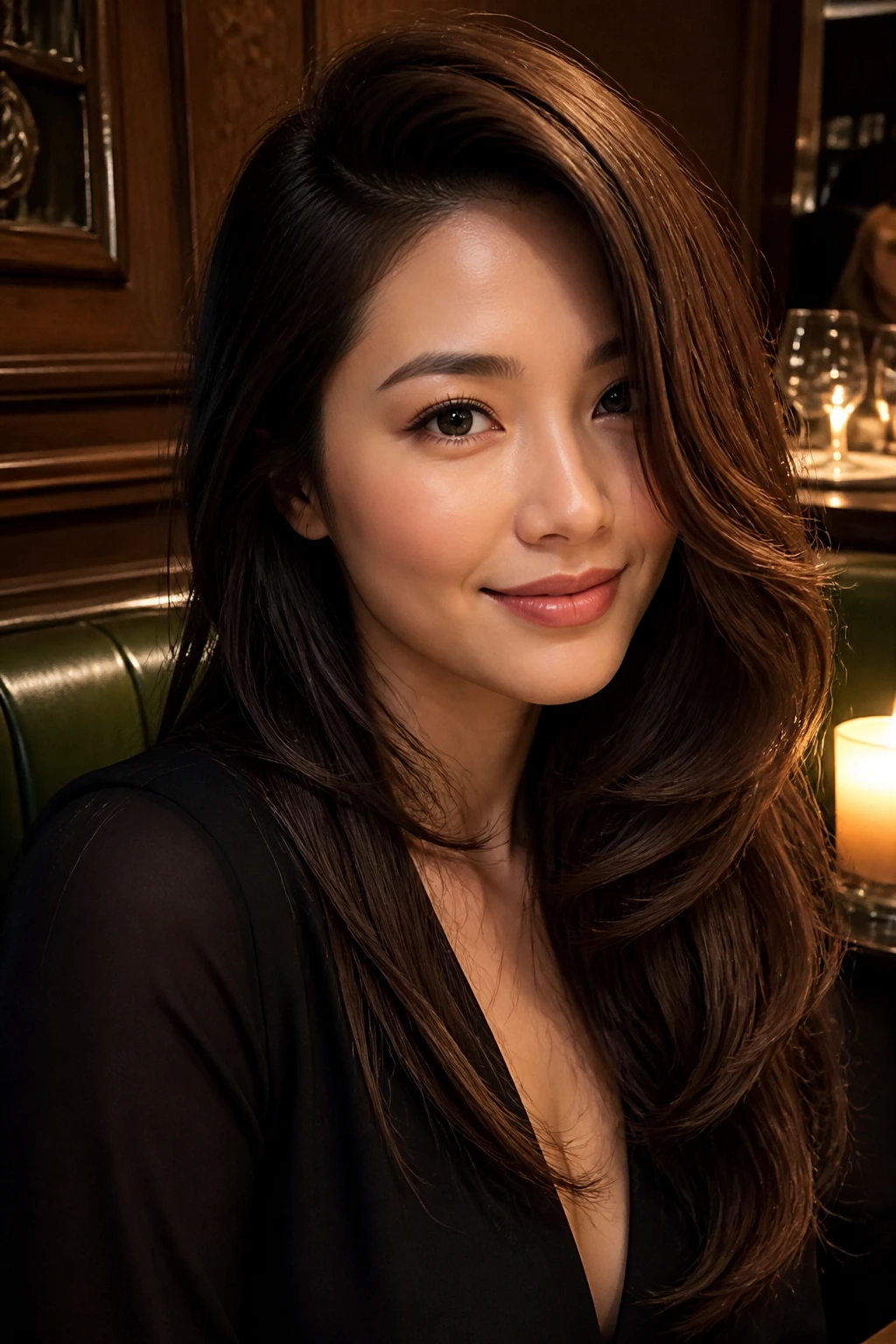
A deep side-part style feels a little more dramatic than a simple side sweep. The part itself builds height at the crown, while the layers fall in one strong curve over the shoulder.
This works beautifully with long waves or a soft blowout. The front pieces should be long enough to skim the cheekbone and jaw, which gives the style a clean line instead of a lopsided mess. A lot of haircuts lose shape when you move the part. This one gains it.
The key is balance. Keep the volume on top, but let the rest stay smooth. Too much curl on the heavy side can make the style look dated. A loose bend, a deep part, and a tucked-back side are enough.
It’s the kind of cut that looks polished at dinner and still holds up the next morning with a brush-through.
19. Perm-Friendly Long Layers
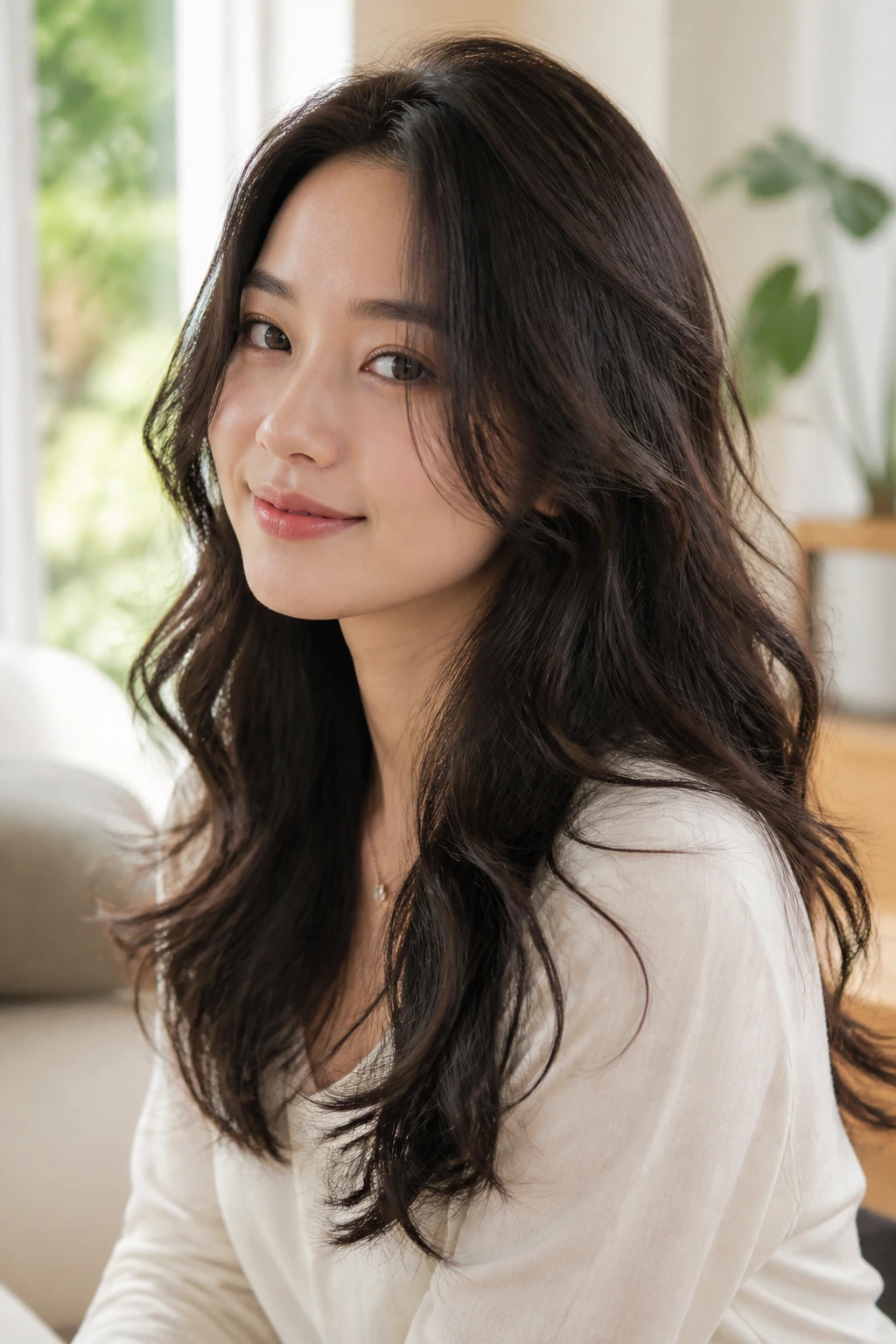
If your hair holds a bend well, long layers can make a perm or body wave look softer and less puffy. The layers keep the texture from expanding into a triangle, which is a real concern with dense hair.
Ask for long, blended pieces that support the wave pattern instead of fighting it. Too many short layers can make permed hair flare out in weird places. Longer layers let the wave fall in a cleaner line. That matters if you want body but still want movement around the face.
Styling Notes That Actually Help
- Use a curl cream on damp hair
- Scrunch with a microfiber towel, not a rough bath towel
- Let the hair set fully before brushing
- Refresh with a water mist and a tiny bit of leave-in conditioner
This kind of cut is practical. It does not need perfection; it just needs shape.
20. Braided Long Layers
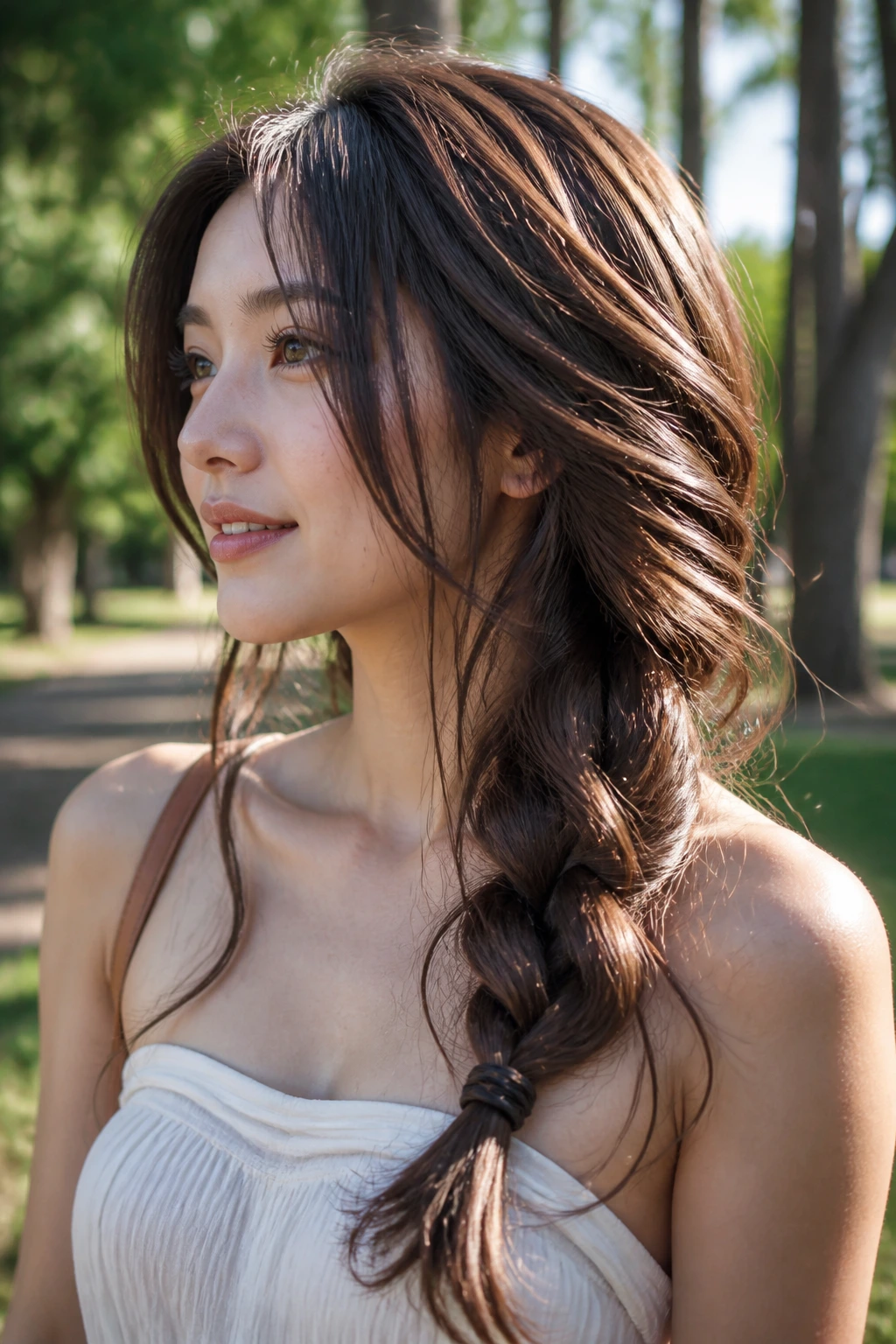
Braids expose everything, which is why layered hair can be tricky in them. The right cut keeps the braid soft and full without making the shorter pieces pop out in every direction.
For women who wear braids often — single braids, rope braids, half-braids, you name it — the layers should be long enough to stay tucked in. Face-framing pieces can still exist, but they need to blend rather than stop abruptly. That way the braid looks intentional instead of messy.
This style is especially nice if you like quick daytime styling. A long layered cut can look plain down, then turn interesting the second you pull it back. A few loose pieces around the face and the braid suddenly has shape.
And yes, the layer length matters. Too much chopping near the front makes braids fussy. Keep the layers long and the braid will thank you.
21. Half-Up Friendly Long Layers

Some cuts look better worn down. This one does both.
A half-up style shows off the crown, the face frame, and the layered ends all at once, so the haircut has to cooperate from every angle. Long layers make that easier because they keep the top from looking heavy when you pin it back. They also let the lower lengths fall with shape, which stops the style from feeling flat.
This is a good choice if you like clips, bows, or a simple half-pony. The layers should be soft enough to drape, not so short that they poke out awkwardly from the pinned section. Around the face, a few longer pieces keep it from looking too strict.
It’s one of those cuts that makes everyday styling easier. Toss the top half up, leave the rest down, and the hair still looks like it got some thought.
22. Pin-Straight Glossy Layers

Pin-straight hair can look striking when the layers are placed well. The shine becomes the main event, and the layers add shape without stealing the clean line.
This style depends on control. The layers need to be long and blended so the hair doesn’t look chopped up when flat ironed. A smoothing serum, a heat protectant, and a careful pass with a straightener are usually enough. The ends should fall softly, not flip in random directions.
A lot of people think straight hair means “no movement.” Not really. Movement can live in the way the layers separate at the shoulders and in the faint bend at the front. That small shift keeps the look from turning severe.
If you love glossy hair and minimal fuss, this one deserves attention.
23. Soft Curl Layers That Hold Shape

Soft curls need a haircut that respects the curl pattern. Long layers help the curls stack without ballooning, which is why this shape works so well for women who want definition with length.
How the Shape Should Fall
The layers should be long enough that each curl has room to form, but not so long that everything drags straight. Think of the cut as a frame for the curl, not a reduction of it.
A 1-inch iron or a large flexi-rod set can both work, depending on how much hold your hair has. If your hair drops curls fast, pin them while they cool. That little extra step makes a bigger difference than most people expect.
The style looks soft around the shoulders and face, with enough bounce to keep the length from feeling heavy. It’s romantic, sure, but more importantly, it stays readable. The layers keep the curl pattern from smearing into one big shape.
24. Root-Lift Volume Layers
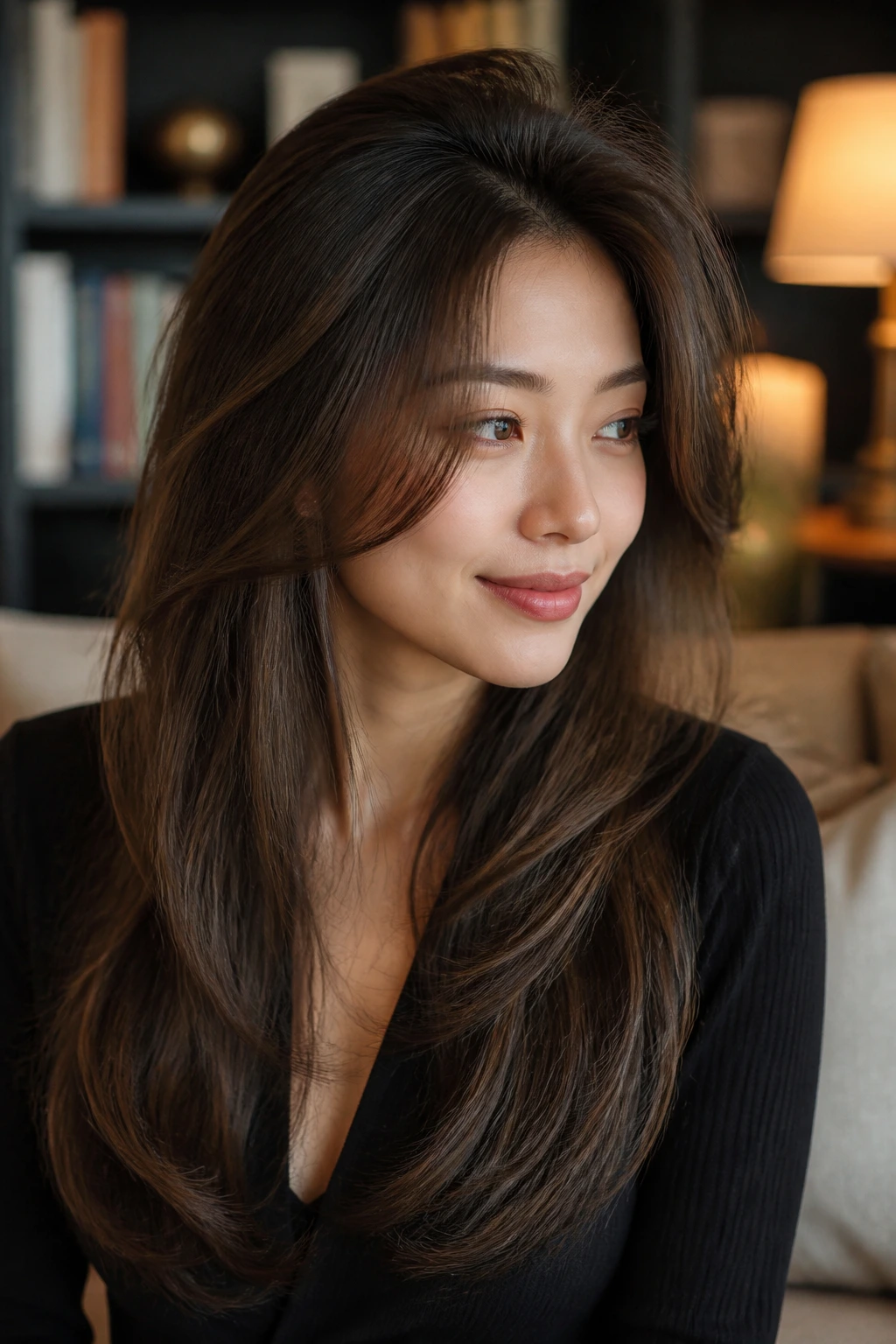
If the problem is flat roots, start there. A root-lift layered cut builds height near the crown and removes bulk in the right places so the hair does not collapse by lunchtime.
This is not about short layers all over the head. It’s about strategic shaping near the top and mid-lengths, with the ends left long enough to keep the silhouette balanced. Women with thick, straight hair often love this because the hair feels lighter without losing the long look.
Use a root-lifting mousse at the scalp, then blow-dry with the head flipped or with a round brush at the crown. That tiny bit of lift changes the whole cut. If the roots stay flat, the layers can’t do their job.
The haircut and the styling have to work together here. One without the other usually falls short.
25. Minimalist Long Layers

Not every long layered haircut needs to announce itself. Sometimes the smartest move is to keep the layers minimal, soft, and almost invisible.
This version suits women who want long hair that still has shape but don’t want to see obvious steps in the mirror. The face frame can be very slight, the ends can stay full, and the overall cut can look nearly one-length until the hair moves. That’s the beauty of it. It looks calm.
It’s also easy to live with. You can wear it straight, tuck it behind the ears, clip it half-up, or let it air-dry, and it still holds together. For busy mornings, that matters more than a dramatic shape that only looks good after 30 minutes of styling.
A minimalist cut is not boring. It just knows when to stop.
