



A short layered haircut can make mornings calm instead of combative. When the shape is built right, you can shake it out, add a little product, and get on with your day instead of wrestling with a flat iron and a bad mood.
The trick is that not every short cut actually behaves well. A blunt bob can look tidy for an hour, then puff out at the ends. A pixie with too much bulk can sit like a helmet. Layers change that balance. They remove weight where hair needs lift, keep the outline from feeling boxy, and give your hands something to work with even when you only have five minutes and a mirror over a sink.
Hair texture matters here. Fine hair needs light layering so it doesn’t turn wispy. Thick hair usually needs smarter internal shaping so it loses bulk without losing structure. Waves and curls need layers that let the pattern sit where it wants to sit. And if you’ve ever had a cut that looked cute at the salon but turned fussy at home, you already know the difference between a good short layered haircut and a merely decent one.
These 20 cuts are the ones I’d keep in rotation if the goal is less fuss, more shape, and a daily routine that doesn’t ask for much. Some are polished, some are messy on purpose, and a few live right in that sweet spot where air-drying actually works.
1. Feathered Pixie Cut

A feathered pixie is one of the easiest short layered haircuts to live with because it never asks for much from you. The top stays soft and airy, the sides stay close to the head, and the overall shape looks intentional even when you barely touch it.
What makes it so forgiving is the way the layers are cut. Instead of one heavy block of hair sitting on top, the crown has light, wispy movement that breaks up the shape. That means you can rough-dry it in under five minutes, pinch a little texture into the front, and walk away. Fine hair loves this cut. So does straight hair that tends to fall flat by lunch.
Use a pea-sized amount of matte paste or light cream, warm it between your fingers, and press it into the ends first. Then lift a few pieces at the crown. Skip heavy oils. They flatten the feathered texture fast.
2. Textured French Bob for Short Layered Hair
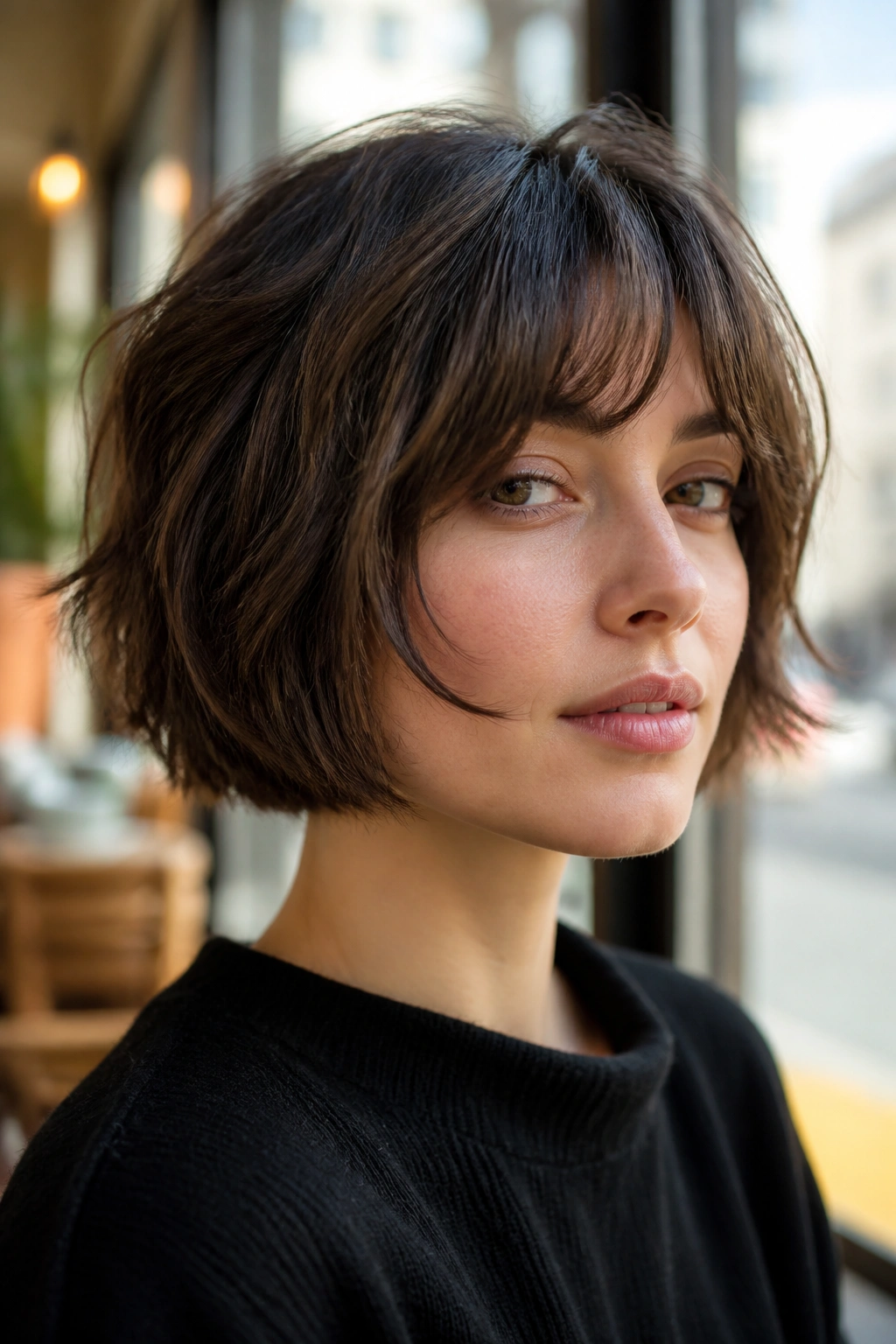
Why does this cut work so well on busy mornings? Because the French bob looks polished even when it’s a little messy. The length usually sits around the jaw, and the layers are soft enough to keep the edges from feeling blunt or stiff.
The real magic is in the movement. A textured French bob gives you enough shape to frame the face, but not so much hair that you need a full styling session. A quick bend with a 1-inch curling iron, or even a rough air-dry with mousse, is usually enough. It’s one of those cuts that looks better when the ends aren’t too perfect.
How to Style It
- Apply mousse to damp hair, from roots to ends.
- Scrunch lightly if your hair is wavy.
- If your hair is straight, wrap a few front pieces around a curling iron for 5 to 8 seconds each.
- Finish with a light mist of flexible hairspray.
Best on hair that falls somewhere between straight and slightly wavy. That texture gives the cut its quiet shape without much help.
3. Chin-Length Bob with Curtain Bangs
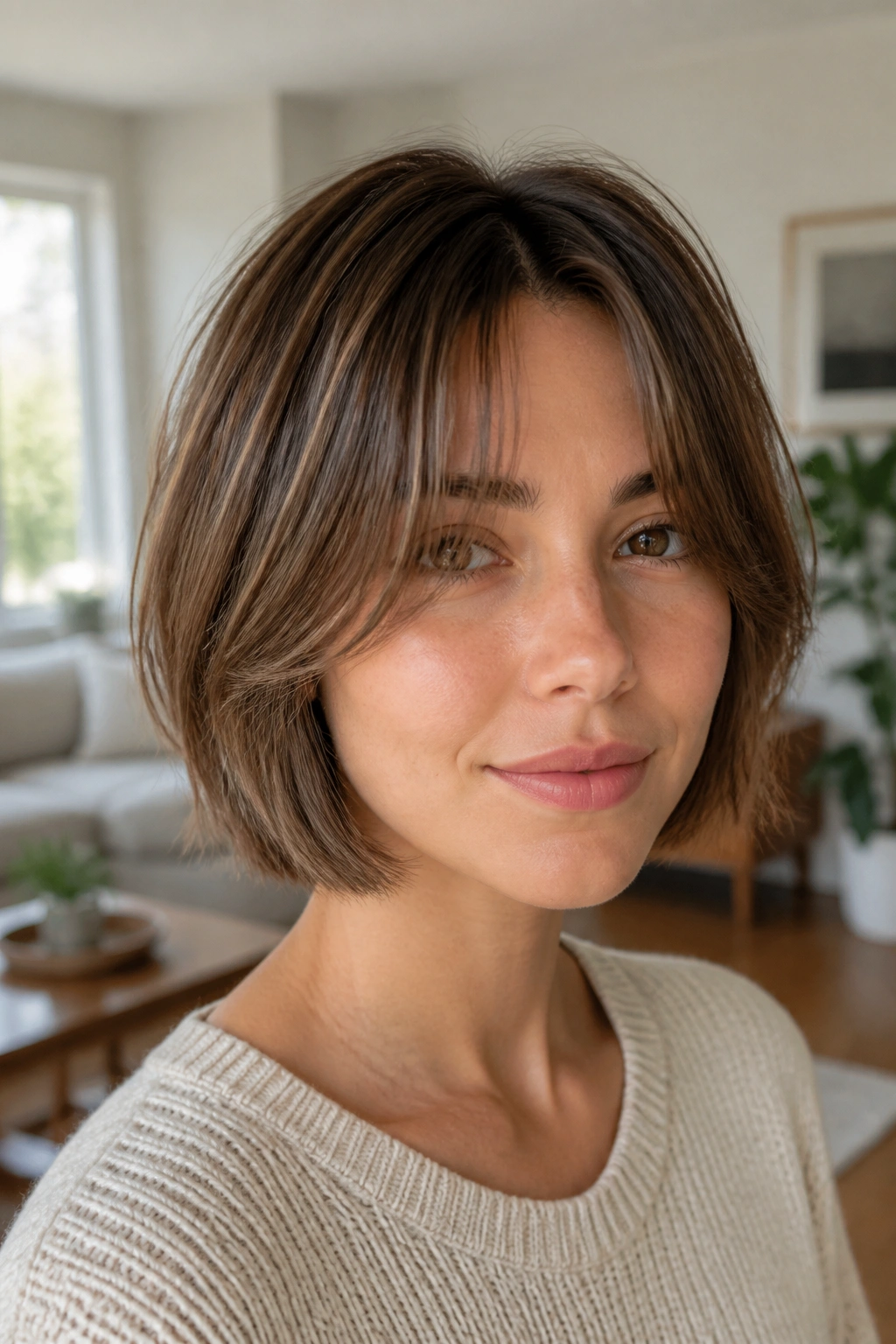
A chin-length bob with curtain bangs has a nice trick up its sleeve: it makes the face look open and balanced without requiring a lot of styling. The bangs blend into the layers instead of hanging there like a separate feature, which keeps the whole cut from feeling fussy.
This one works especially well if you want movement near the cheeks and jaw. The layers can be subtle, but they should still be there. Too little layering and the bangs can feel disconnected. Too much and the cut loses its clean line. The middle ground is where this style shines.
Blow-dry the bangs away from the face with a small round brush, then let the rest air-dry or rough-dry with your fingers. A center part helps the curtain shape fall naturally. If you keep trying to force the fringe straight down, it stops looking like curtain bangs and starts acting like a helmet fringe. No thanks.
4. Bixie Cut with Soft Crown Layers
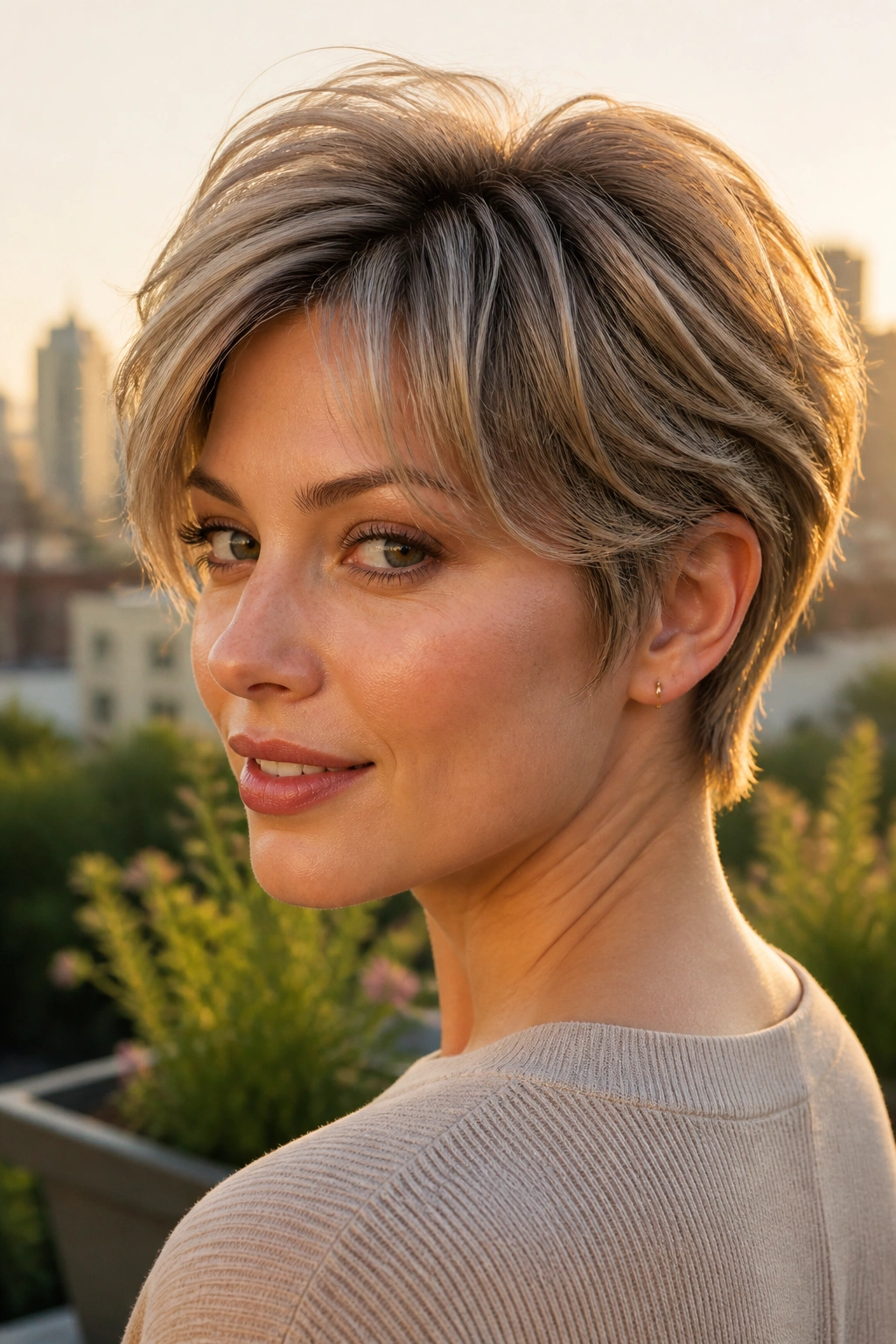
The bixie sits between a bob and a pixie, and that’s exactly why people keep coming back to it. You get the lightness of a pixie near the back and sides, but a little more length around the front and top, which makes the cut easier to shape on the fly.
Soft crown layers are what keep this from looking too choppy. They give the top some lift without making it spiky. If your hair tends to lie flat at the roots, this is the sort of cut that can wake it up with a bit of root spray and a quick finger-dry. You do not need a complicated routine here.
What Makes It Easy
- The nape stays neat.
- The top has enough length to move.
- The front pieces can be tucked, swept, or flipped.
- A dab of styling cream is often enough.
I like this cut for people who want short hair but still want options. It grows out better than a strict pixie, and that matters more than people think.
5. Stacked Bob with Nape Layers
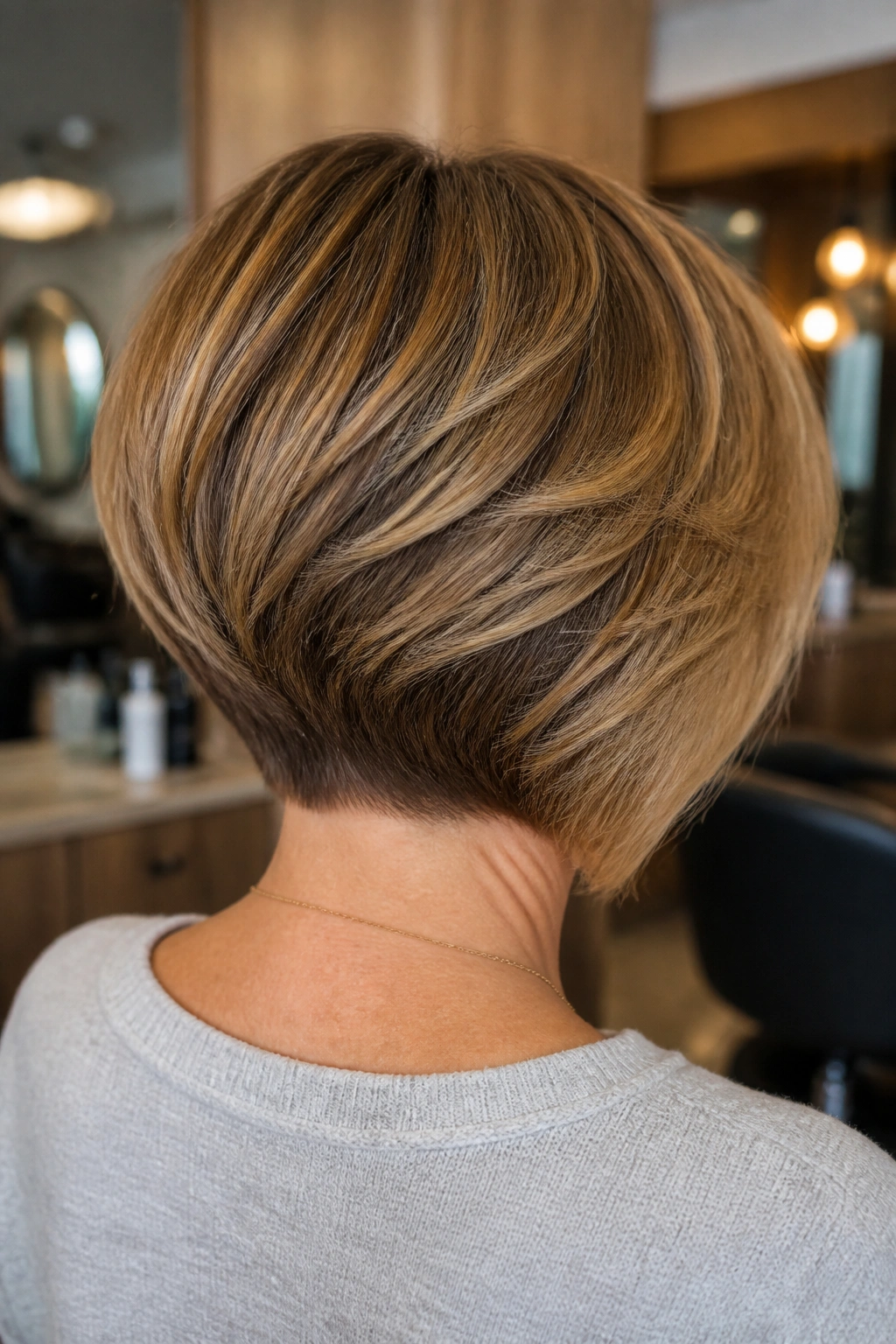
A stacked bob gives you structure in the back and softness around the face. The layers are concentrated near the nape, where they build a rounded shape and remove bulk, which means the cut keeps its body even if you don’t spend much time styling it.
This is a smart pick for fine hair that needs lift without teasing or heavy product. It’s also useful if your hair gets puffy at the ends when cut one-length. The stacking keeps the silhouette clean. From the side, the shape looks crisp. From the back, it has that neat curve people usually expect from a good salon bob.
Why It Helps on Busy Days
- The back sits in place with a quick blow-dry.
- The top doesn’t need much heat.
- The layers hide small styling mistakes.
- The cut keeps looking shaped as it grows.
A round brush at the nape helps, but you can get away with a paddle brush and a dryer nozzle. Don’t overflip the ends. A soft curve is enough.
6. Shaggy Crop with Piecey Ends

A shaggy crop is for the person who wants hair with some attitude and does not care if every strand is behaving politely. The layers are shorter and more irregular, which creates texture fast. You can scrunch it, toss it, and leave the house.
The piecey ends keep the crop from looking heavy. That matters because a short cut with too much bluntness can lose its shape fast. This one stays interesting because the layers break up the outline. It’s especially good on wavy hair, but straight hair can pull it off with a texturizing spray and a little finger work.
Do not overload it with shine serum. That’s the wrong move. A matte paste or sea-salt spray gives you separation, and separation is what makes the cut look modern instead of puffy. If your hair grows fast, this one needs regular trims. The shape depends on those uneven edges staying crisp.
7. Curly Short Layered Bob
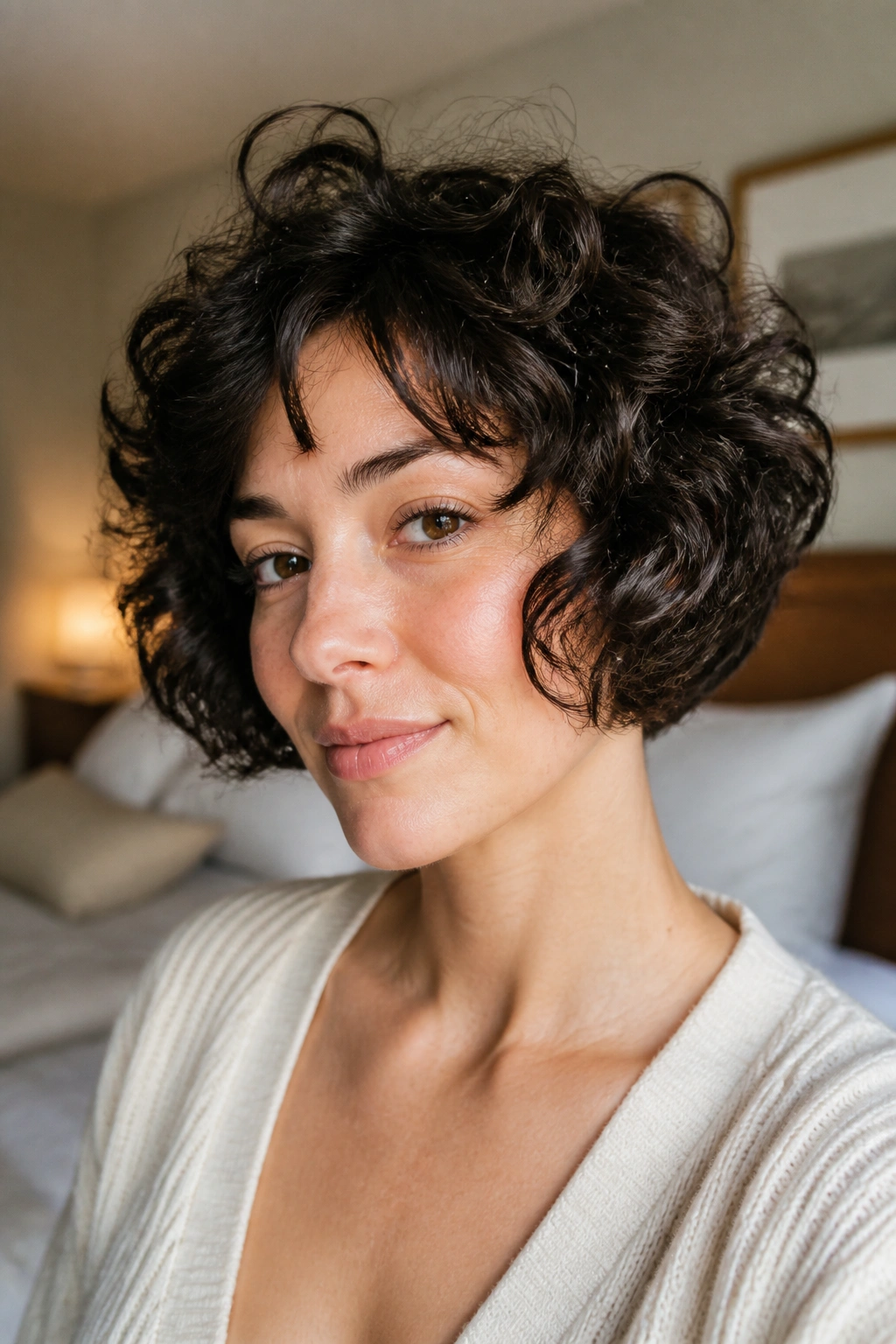
Why do curls and layers get along so well? Because curls want room. If you leave them one length, the shape can turn triangular or bulky at the bottom. A short layered bob lets the curl pattern stack more naturally, so the hair sits around the face instead of sitting on your shoulders like a mushroom cap.
The cut should be shaped with the curl in mind, not against it. That means the layers need to follow the way your curls spring up once dry. A good stylist will cut some curl types dry, or at least check the fall of the hair before deciding where to remove weight. That part matters. A lot.
How to Use It
- Apply gel or curl cream to soaking-wet hair.
- Scrunch upward with a microfiber towel or T-shirt.
- Diffuse on low heat, or air-dry if you have time.
- Don’t rake through the curls once they start to set.
Short curly layered haircuts work best when the layers are shaped, not hacked in. That’s the difference between bounce and frizz.
8. Angled Lob with Invisible Layers

An angled lob is one of those cuts that quietly does the job. It’s a little longer in front, a little shorter in back, and the layers are tucked inside the shape so they don’t announce themselves every time you turn your head.
That hidden layering is the point. You get movement and softness without losing the clean line that makes a lob look expensive even when it’s styled with a cheap drugstore cream and a fast blow-dry. It’s a strong choice if you want hair that can go sleek one day and loose the next.
The best version of this cut doesn’t scream “layered.” It just behaves better than a blunt cut. That’s the whole appeal. Run a flat iron only through the front pieces if they need a bend. The rest can fall on its own. If your mornings are chaotic, this cut is forgiving in a way that feels almost unfair.
9. Tapered Pixie with Side-Swept Fringe
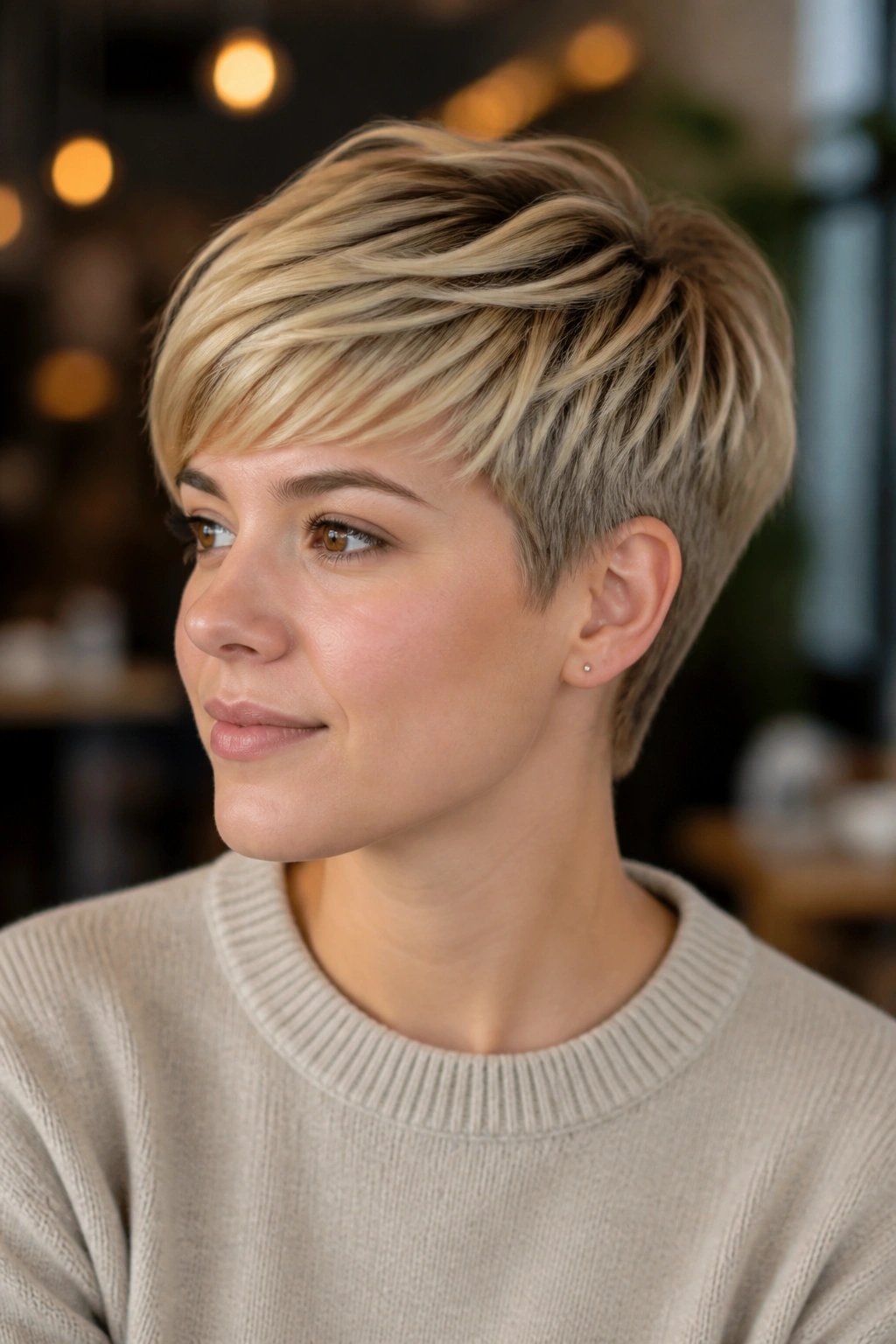
A tapered pixie with a side-swept fringe has a softer feel than a super-short crop, but it still keeps the back and sides close and clean. The fringe gives you something to style, which is useful if you want a short cut that still changes shape depending on how you push it.
The taper is what makes the silhouette tidy. Hair at the back and sides sits snugly against the head, while the top stays longer and more flexible. That balance matters. You get movement where people see it, not bulk where you don’t want it.
Where the Fringe Sits
The fringe should skim the brow or cheekbone, not hang in your eyes all day. A small round brush or even your fingers can push it to the side after a quick blow-dry.
A dab of wax on the ends helps keep the shape. Too much product will make the fringe separate in weird little chunks. A little goes a long way here, and a light hand is what keeps the cut from looking greasy by noon.
10. Wolf Cut Lite for Short Hair

A full wolf cut can be a lot. The short version is easier to live with because it keeps the shaggy energy without letting the layers grow wild in every direction. Think shorter crown layers, softer ends, and just enough mess to keep it interesting.
This is one of the better short layered haircuts for people who want movement without a lot of brushing. The shape works especially well if your hair has natural bend or wave. It also suits anyone who likes that slightly undone look that doesn’t need to be polished to make sense.
The key is restraint. If the top is too chopped up, you lose the shape. If the ends are too thin, the cut can look weak. A little mousse at the roots and a rough dry with your head upside down is usually enough. Don’t try to make it sleek. That misses the point.
11. Jaw-Length Layered Cut with Tucked Ends
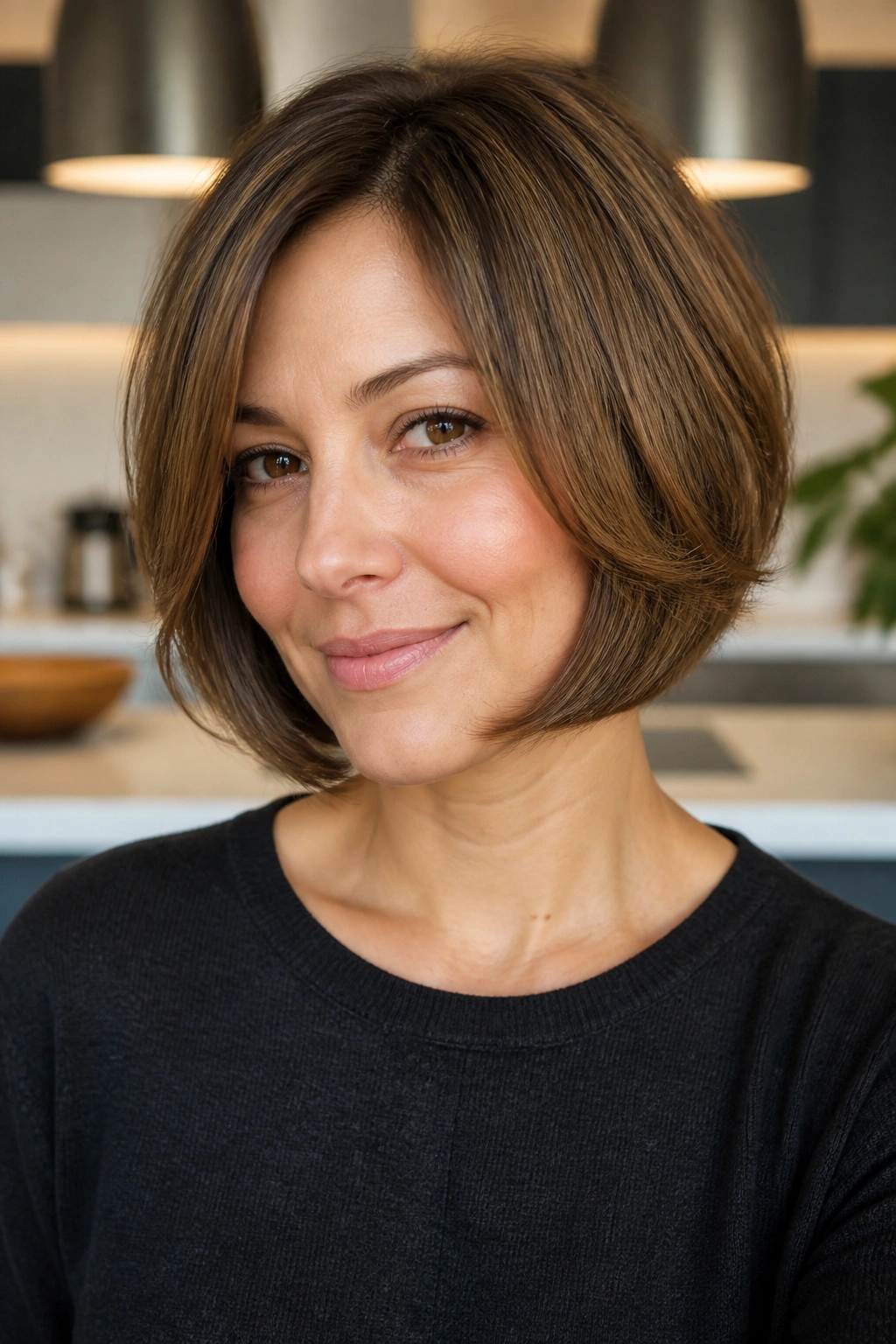
A jaw-length layered cut with tucked ends gives you a neat outline that still feels soft around the face. The layers are usually light and interior, which means the outside line stays tidy while the inside has enough movement to keep things from looking stiff.
This is a strong option if you like short hair but don’t want anything too obviously choppy. The tucked ends sit inward with a round brush or hot air brush, which makes the whole style look deliberate even when the rest of your routine is simple. It has a clean, slightly tailored feel.
A lot of people try to over-layer this shape and end up with ends that flick out in every direction. That’s the wrong road. Keep the layers soft and the perimeter controlled. A little bend under the jawline does more for the style than a lot of texture ever will.
12. Razored Crop with Micro Fringe
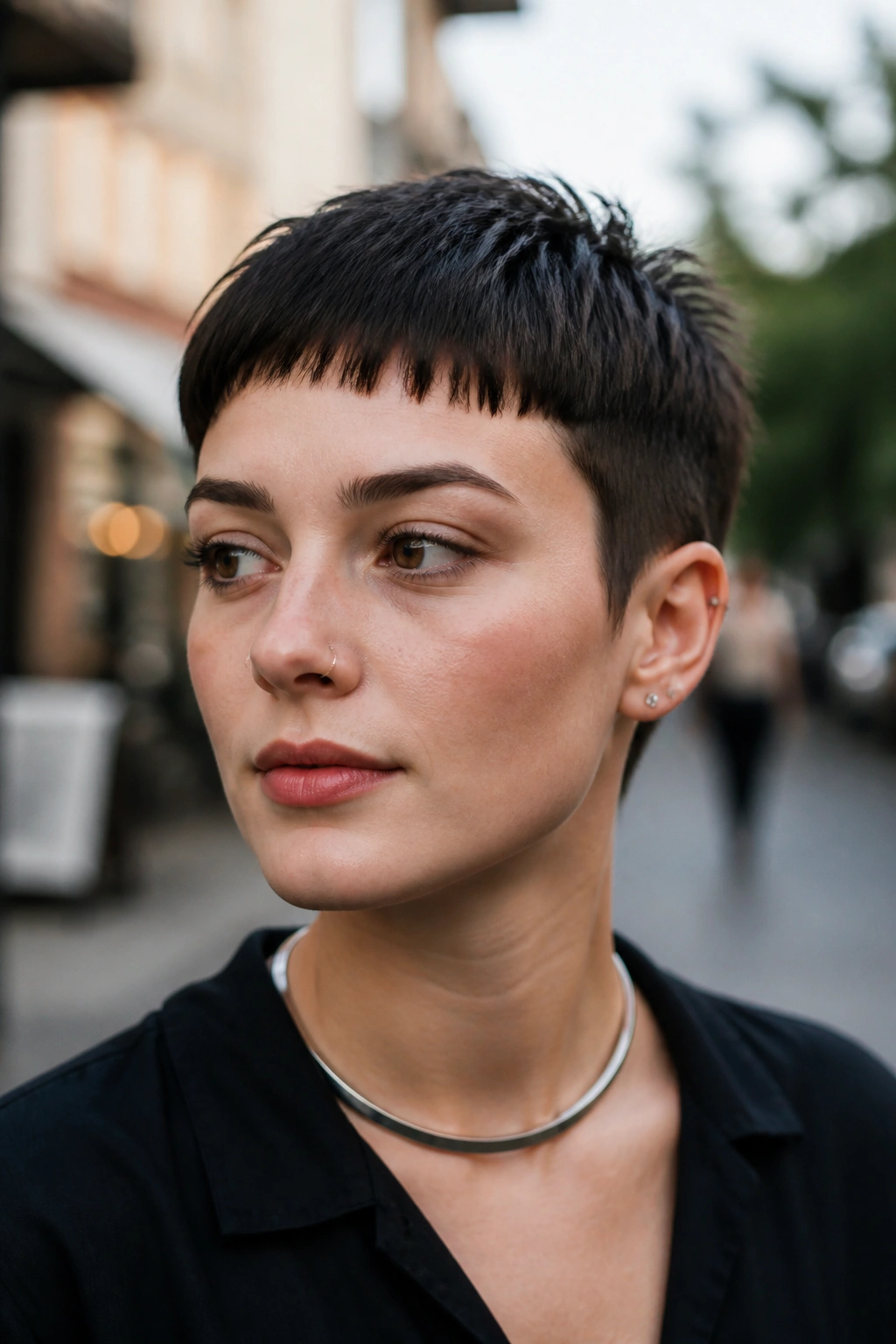
A razored crop is sharp, airy, and a little bit rebellious. The razor work gives the ends a softer edge than scissor cutting, so the hair falls in feather-light pieces rather than a heavy block. Add a micro fringe and the whole cut gets a graphic edge.
This one is not for someone who wants a sleepy, low-effort look with zero thought. It’s easy to style, yes, but it does have a point of view. Straight hair usually carries it best because the razor texture shows up clearly. If your hair is very curly, you may lose the sharpness that makes the shape work.
Use a tiny amount of paste, then separate a few pieces with your fingertips. The fringe should be short and blunt, not wispy and half-formed. That little strip across the forehead gives the crop its bite. Without it, the cut can feel unfinished.
13. Graduated Bob with Soft Undercut
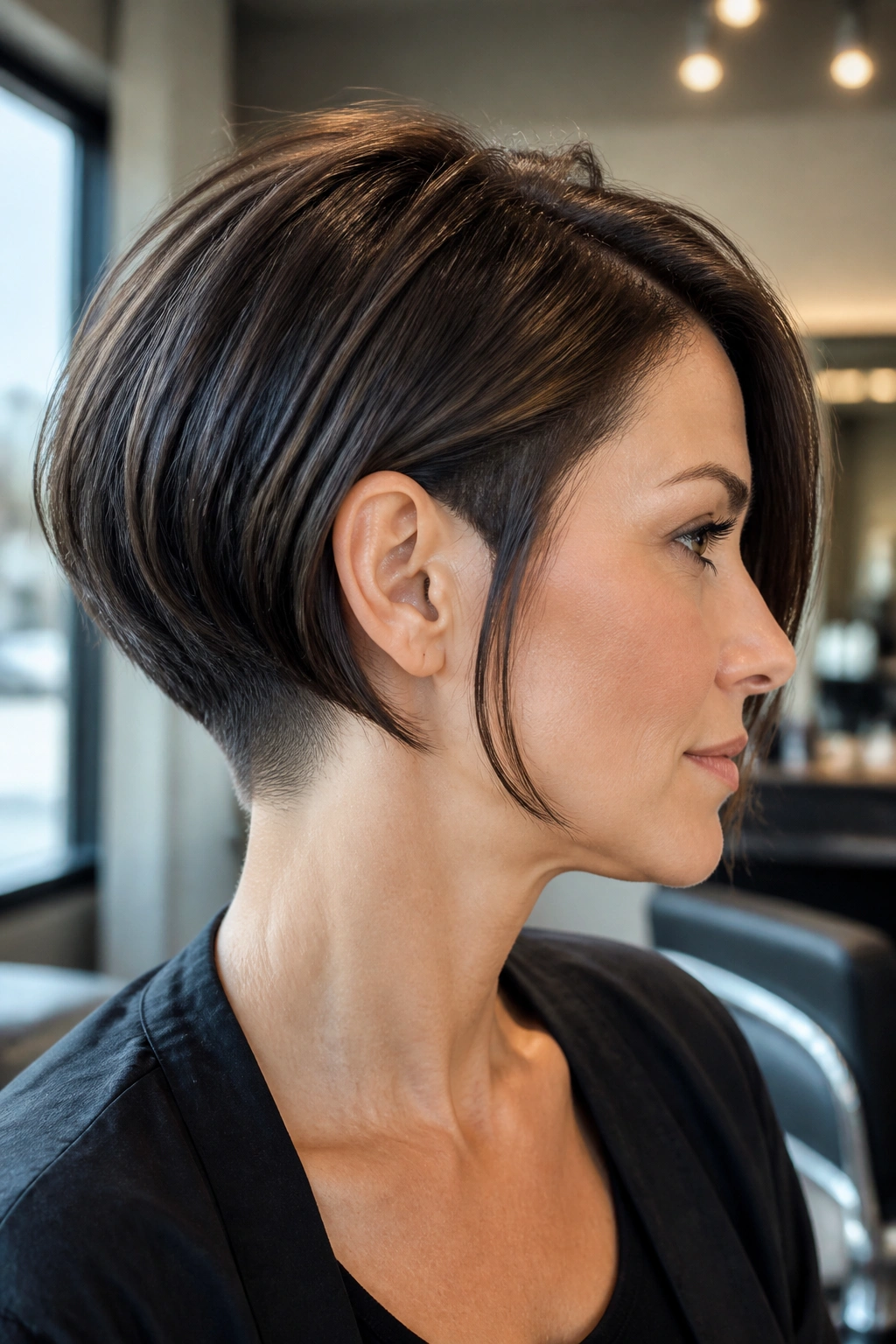
A graduated bob builds shape through the back, where the hair stacks more tightly toward the nape. A soft undercut takes some of that density away underneath, which is a blessing if your hair is thick, heavy, or prone to ballooning at the neck.
This cut is practical in the best way. It cuts down on drying time, keeps the silhouette neat, and prevents that triangle shape that thick hair can develop when it’s too blunt. You still get a full-looking bob from the outside, but the hidden removal of weight makes it easier to move and style.
A Few Things That Help
- Ask for the undercut to stay hidden, not shaved high.
- Blow-dry the nape first so the shape settles.
- Use a smoothing cream, not a heavy balm.
- Trim it before the back starts flipping out.
If your hair feels hot and bulky in the neck area, this cut is a relief. That alone makes it worth a serious look.
14. Layered Crop for Fine Hair

Fine hair needs a careful hand. Too many layers and the ends start to look stringy. Too few and the whole cut lies flat by lunch. A good layered crop sits in the middle, keeping enough fullness at the perimeter while adding lift where the roots need help.
This is one of the easiest short layered haircuts to style when the cut is done right. A little root spray at the crown, a quick blow-dry with your fingers, and maybe a couple of velcro rollers at the front are enough for many people. The goal is not volume everywhere. It’s controlled lift.
Fine hair usually does better with soft internal layers than with heavy chopping. Ask for texture that removes bulk without carving up the ends. Avoid thinning shears unless the stylist really knows your hair. They can make fine hair look even lighter than you wanted.
15. Layered Cut for Thick Hair
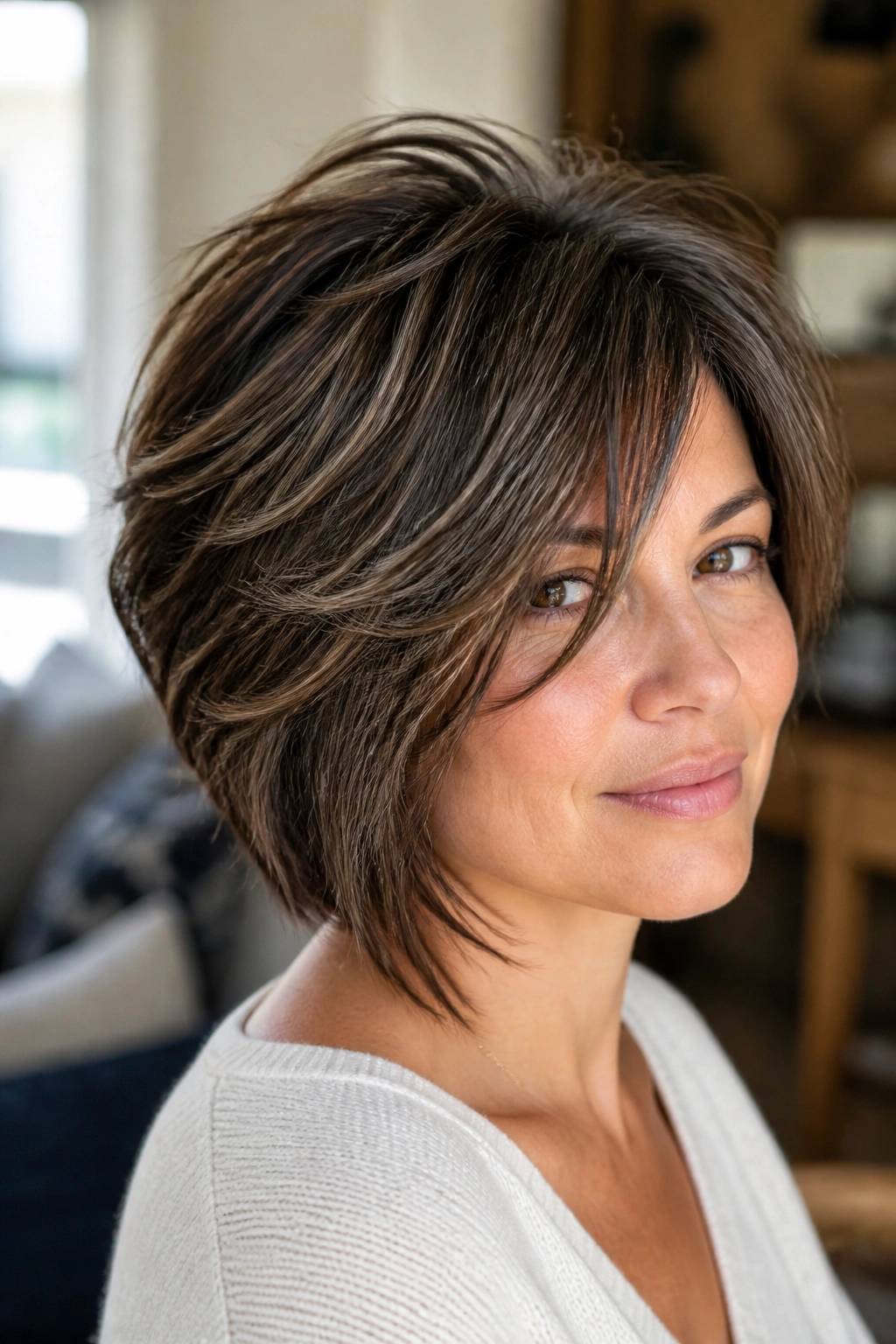
Thick hair is a blessing until it’s sitting in a triangle around your face. Then it becomes a job. A layered cut for thick hair solves that by removing weight from the interior and keeping the outline from swelling out too far from the head.
This type of cut needs more than just “some layers.” It needs real thought about where the density lives. The crown may need light lifting, the sides may need better balance, and the ends usually need enough bluntness to keep the shape from turning stringy. That’s the part people miss. Thick hair often needs both structure and release.
If your hair dries into a solid wall, this cut helps it move. Use a smoothing cream or light leave-in, then blow-dry in sections rather than attacking it all at once. The point is to control the bulk, not erase it. That difference matters when the cut grows out.
16. Short Wolf Bob with Face-Framing Pieces
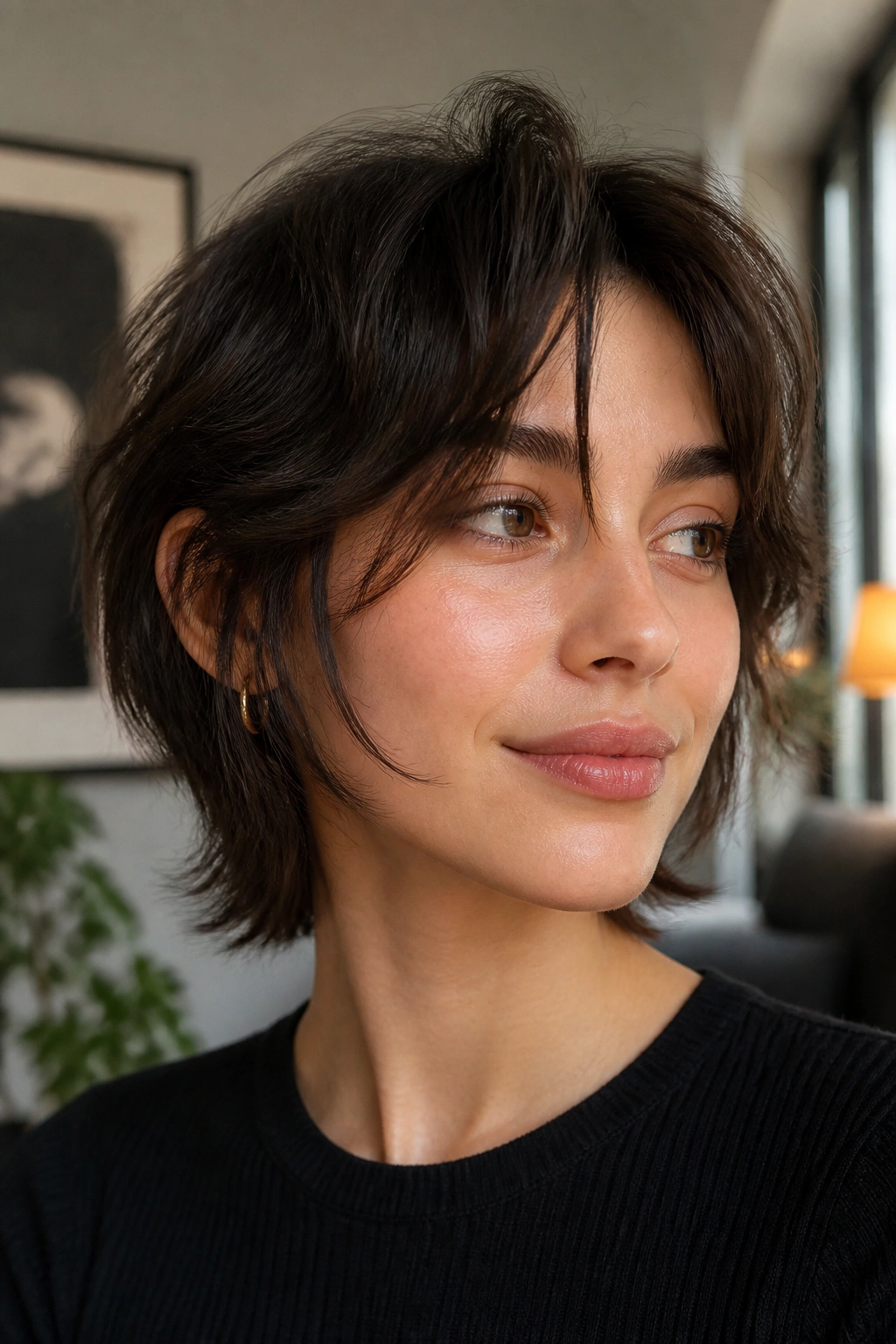
A short wolf bob takes the easy attitude of a shag and mashes it into a bob shape, which gives you something playful without going fully wild. The face-framing pieces are the secret sauce here. They soften the front, skim the cheekbones, and keep the cut from looking boxy.
This works beautifully on hair with some natural wave, but straight hair can wear it too if you like texture. The front should be a touch longer than the back, and the layers should feel feathered rather than choppy. That keeps the style from becoming a mullet with a better haircut story.
Best Way to Style It
Use mousse on damp hair, twist a few front sections away from the face, and let them set while the rest air-dries. If you prefer heat, wrap the front pieces around a large iron for just a few seconds.
The front pieces should land around the cheekbone or jaw. That’s where the cut gets its softness, and it makes the whole style easier to wear on a normal Tuesday.
17. Ear-Length Layered Pixie
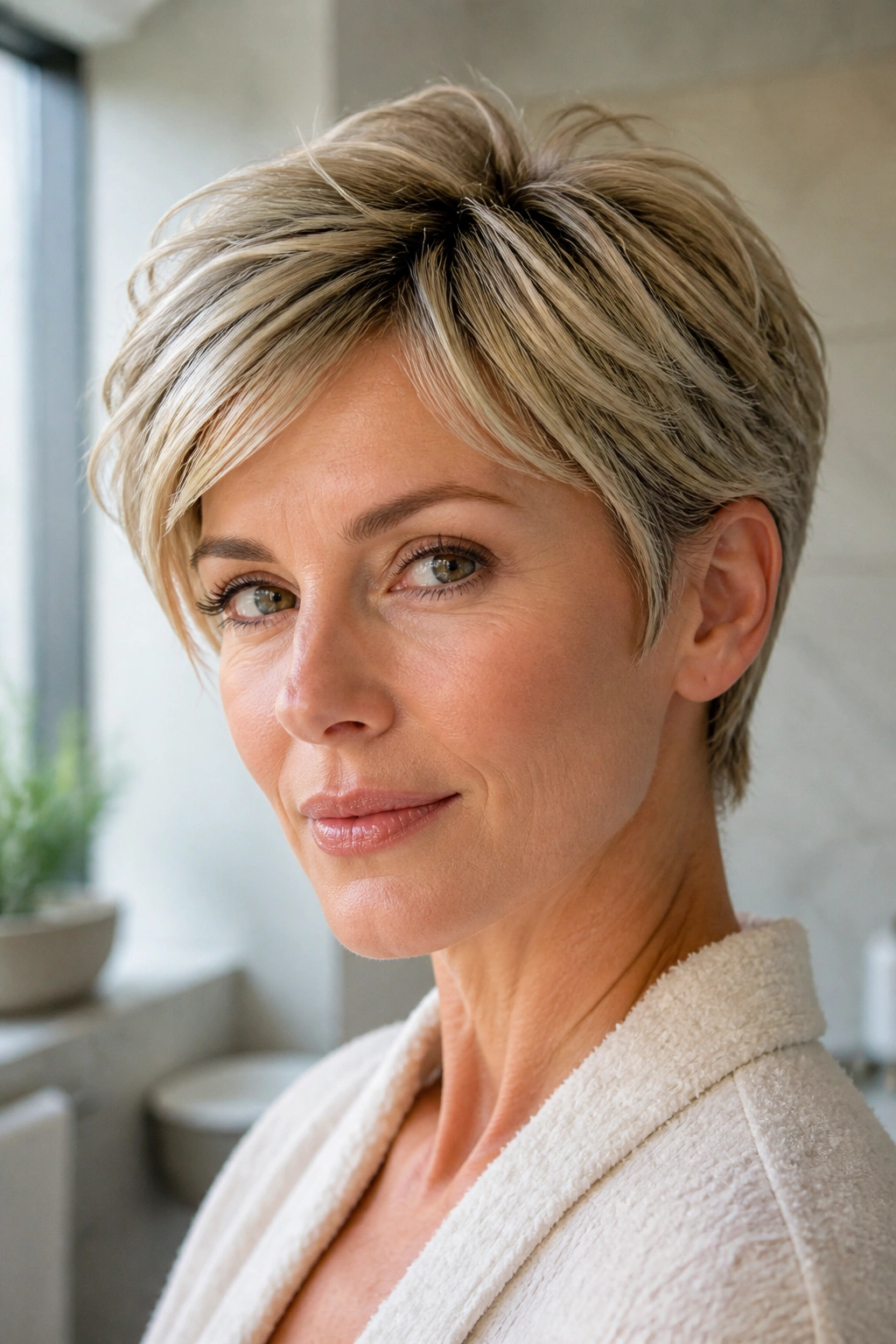
An ear-length layered pixie is for someone who likes short hair that stays off the neck and out of the way. The layers are short, but not flat. They create a little lift at the crown and movement around the ears, which keeps the shape from feeling severe.
The big advantage here is speed. A few fingers, a dab of styling cream, and maybe a minute with a dryer are often enough. You can wear it sleek, tousled, or slightly spiky depending on how you work the top. It’s one of the best short cuts if you want to get dressed and go without fussing over the mirror.
This style benefits from regular trims because the shape depends on clean edges around the ear and nape. Let it grow too far, and the cut loses its sharpness fast. Keep the top soft and the sides neat. That balance is what makes the pixie feel light instead of severe.
18. Feathered Bob with Side Part

A feathered bob with a side part has a softer, more relaxed feel than a center-parted version. The side part gives instant lift at the roots, and the feathering keeps the ends moving instead of hanging in one heavy curtain.
This is a nice choice if you like a polished look but don’t want to spend long in front of a mirror. A round brush can smooth the top in a couple of passes, and the feathered layers will do the rest. It works especially well for people whose hair tends to collapse at the crown.
The side part also changes the mood of the cut. It can look a little retro, a little modern, sometimes both. A deep side part adds height without teasing. That’s useful if your hair is fine or if your face shape benefits from a little diagonal movement across the forehead.
19. Choppy Mop Top Crop
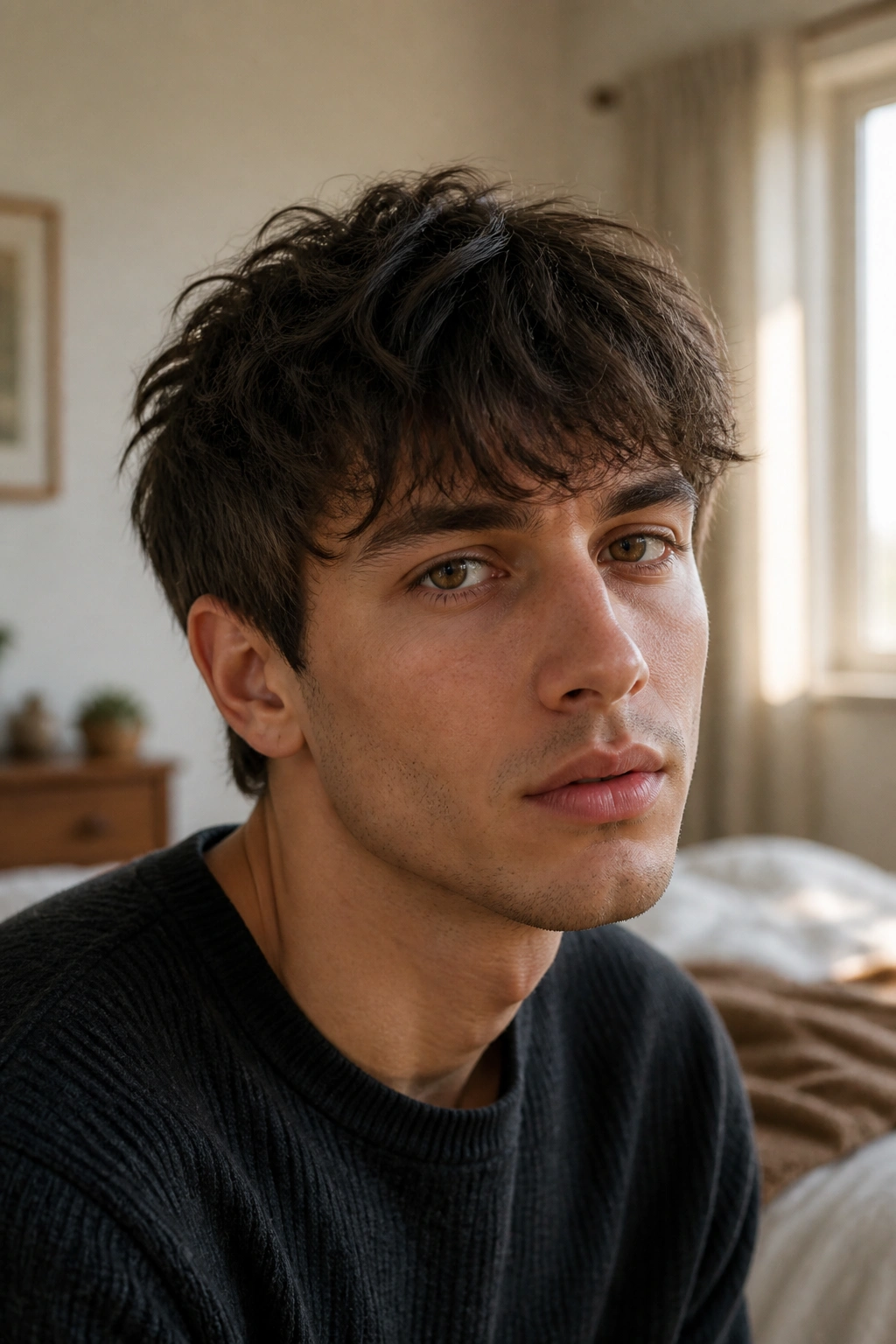
A choppy mop top crop sounds casual because it is. The cut stays short, but the top has enough uneven layers to create a loose, almost boyish shape that feels easy to wear. It’s a little messy in the best way.
This one works if you don’t want a polished salon finish every day. The top can be pushed forward, swept to the side, or finger-styled into random pieces with a matte cream. Straight hair and slightly wavy hair both handle it well. Curly hair can use the same idea, though the cut needs to be adapted to the curl pattern.
What to Keep in Mind
- Let the top stay longer than the sides.
- Use a tiny amount of matte product.
- Avoid shiny serums; they make the texture fall flat.
- Ask for soft, jagged ends rather than a blunt line.
The charm is in the unevenness. If everything is too neat, the whole cut loses its personality.
20. Tousled Short Layered Bob
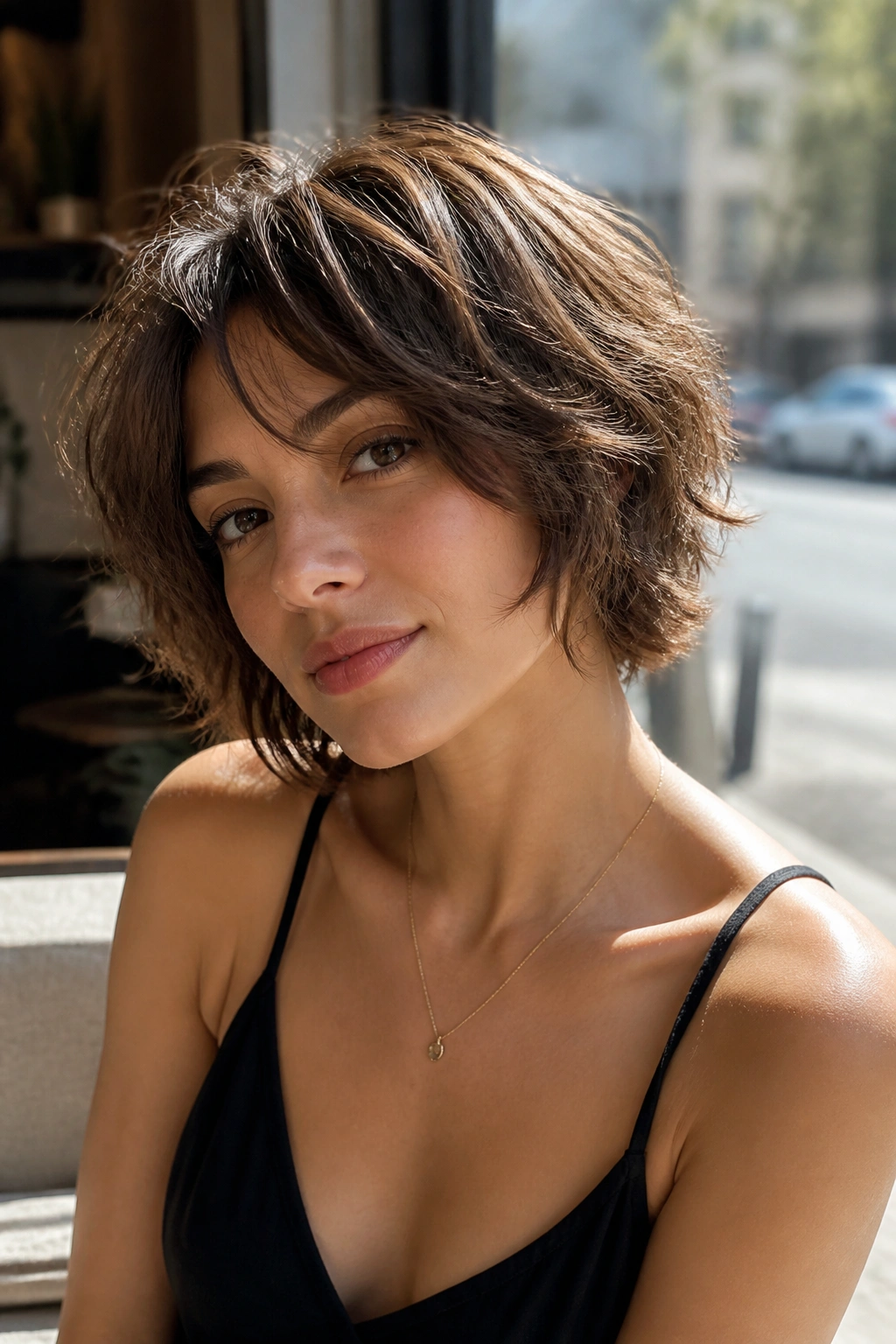
A tousled short layered bob is the one I’d point to if someone said, “I want short hair, but I don’t want a project.” It keeps enough length to tuck behind the ears, enough layering to move, and enough softness to look good when it air-dries on a decent day and still looks decent on a messy one.
The shape is not overly precise, which is part of the appeal. The ends can be a little bent, a little airy, a little undone. That gives the cut a lived-in feel that works with dry shampoo, texturizing spray, or nothing at all if your hair already has some bend. It’s the sort of cut that does not punish you for skipping a perfect blowout.
If you want the simplest daily routine, ask for layers that remove weight through the middle without shredding the perimeter. The outline should stay soft, not see-through. That keeps the bob looking full even when you’re in a hurry, which is really the whole point of choosing short layered hair in the first place.
