



Long hair can turn fussy fast. One blunt line and it hangs like a curtain; too many short chops and the ends start to look thin before you’ve even left the salon. The sweet spot is a layered haircut that changes the shape of the hair without stealing the length you actually want to keep.
That’s why layered haircuts for long hair work so well when they’re done with a plan. Good layers move. They lift the crown, soften the face, take some weight out of thick hair, and stop fine hair from looking like it has been ironed flat to the head. Bad layers do the opposite. They create weird shelves, frizzy ends, or that awkward “why does my hair have three personalities?” effect.
The trick is asking for a shape, not just “layers.” Where the shortest pieces start matters. So does the perimeter, the texture of your hair, and whether you wear it straight, wavy, curly, air-dried, or blasted out with a round brush. The styles below keep those details in view, because that is where the difference lives.
1. Curtain Bangs and Soft Face-Framing Layers

Curtain bangs are the easiest way to make long hair feel fresh without going anywhere near a dramatic chop. Paired with soft face-framing layers, they open up the front of the hair and keep the length looking airy instead of heavy. I like this cut on people who want movement around the cheekbones and jaw but still want to sweep everything into a ponytail.
Why It Works
The shortest pieces usually sit around the cheekbone or just below it, then slide longer toward the collarbone. That diagonal line gives the hair motion when it’s down and a little softness when it’s tied back. It also works because the fringe blends into the layers instead of sitting there like a separate feature.
A good version should not feel choppy. The bangs should part in the middle, bend away from the face, and sit like a loose frame rather than a heavy curtain.
- Ask for the shortest pieces to hit around the cheekbone.
- Keep the longest face-framing pieces near the collarbone.
- Style with a medium round brush or a large Velcro roller.
- Use a light mist of heat protectant, not a sticky spray.
Best for: long hair that needs shape around the face but not a major change in length.
2. Butterfly Layers With a Lifted Crown

Butterfly layers are the cut people ask for when they want their hair to feel bigger without losing the feeling of long hair. That is the whole appeal. The shorter layers sit high enough to create lift around the crown and cheekbones, while the bottom stays long and dramatic.
You get two looks in one. Down, the hair has volume and swing. Up, the shorter front pieces fall out in a flattering way instead of making your bun look severe. That’s why this cut has such staying power with long hair.
It does ask for some styling, though. If you air-dry it with no shaping at all, the top can collapse a bit and the lower section may feel disconnected. A blowout brush or a big curling brush helps the shorter layers flip away from the face and makes the whole thing read as intentional.
This is the cut I’d pick for someone who loves big hair but hates losing inches. The length stays. The drama moves up top.
3. U-Shaped Long Layers That Keep the Ends Thick

Why does a U-shape look so much better than a straight line on many long heads of hair? Because the curve at the back lets the eye follow the shape instead of landing on one hard edge. It’s subtle, but it changes everything when your hair reaches well past the shoulders.
The U-shaped layered cut keeps the perimeter fuller than a V-cut and softer than a blunt line. The layers usually start low, so the movement stays gentle. This is the haircut for someone who wants elegance, not a lot of visible chopping.
How to Ask for It
Tell your stylist you want long layers that preserve fullness at the bottom, with a soft U-shaped outline in back. If you have thick hair, this can remove some weight without making the ends look scraggly. If your hair is fine, keep the layering conservative so the shape doesn’t get wispy.
The result is calm and polished. No drama. No weird gaps. Just long hair that falls in a rounded shape and still swings when you move.
4. V-Cut Cascading Layers for Maximum Length
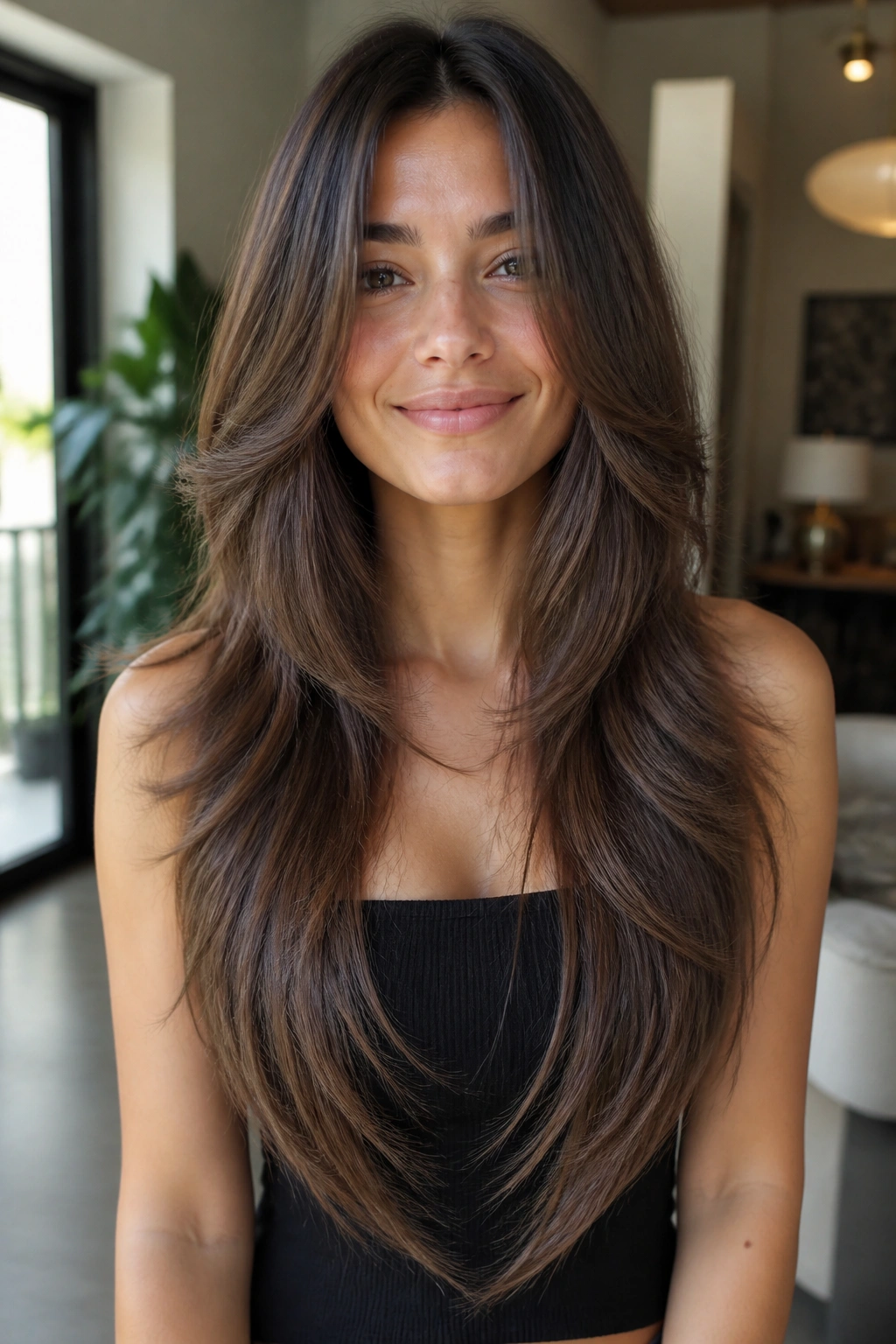
Picture thick long hair hanging straight down your back and turning into a heavy blanket at the ends. That’s the exact problem the V-cut fixes. The perimeter narrows into a point at the back, which makes the length look longer and the body of the hair feel lighter.
The layers in a V-cut usually cascade from the mid-lengths toward the center, then taper into that pointed outline. It’s a strong shape. Not delicate. And that’s why it works so well on dense hair that can take a lot of structure.
- Great if your hair feels bulky at the bottom.
- Helps the hair drape instead of puff out.
- Looks especially clean when worn straight.
- Needs a careful cut, because an uneven V shows fast.
Best for: very long, thick hair that needs shape and movement without losing the sense of length.
If you like hair that looks sleek and has a little edge, this one earns its keep. The shape does the talking.
5. Long Shag Layers With Airy Texture

A long shag is messy in the best way. Not sloppy. Messy enough to feel alive. The layers are often higher, more broken up, and more obvious than in a classic layered cut, which gives the hair that lived-in texture people keep trying to fake with sprays and irons.
This cut makes sense for hair that already has some natural bend or wave. Straight hair can wear it too, but you’ll want to commit to a bit of styling, because the shag looks much better when the pieces separate and move. A salt spray, diffuser, or loose wave with a curling wand helps the layers read correctly.
The one thing to watch is over-thinning. Too much razor work can make the ends go stringy, and then the shape starts to look tired instead of cool. A good shag should still have body through the bottom. It should feel chopped, yes, but not fragile.
I like this cut when long hair needs personality more than perfection.
6. Feathered Layers That Swing Instead of Hang
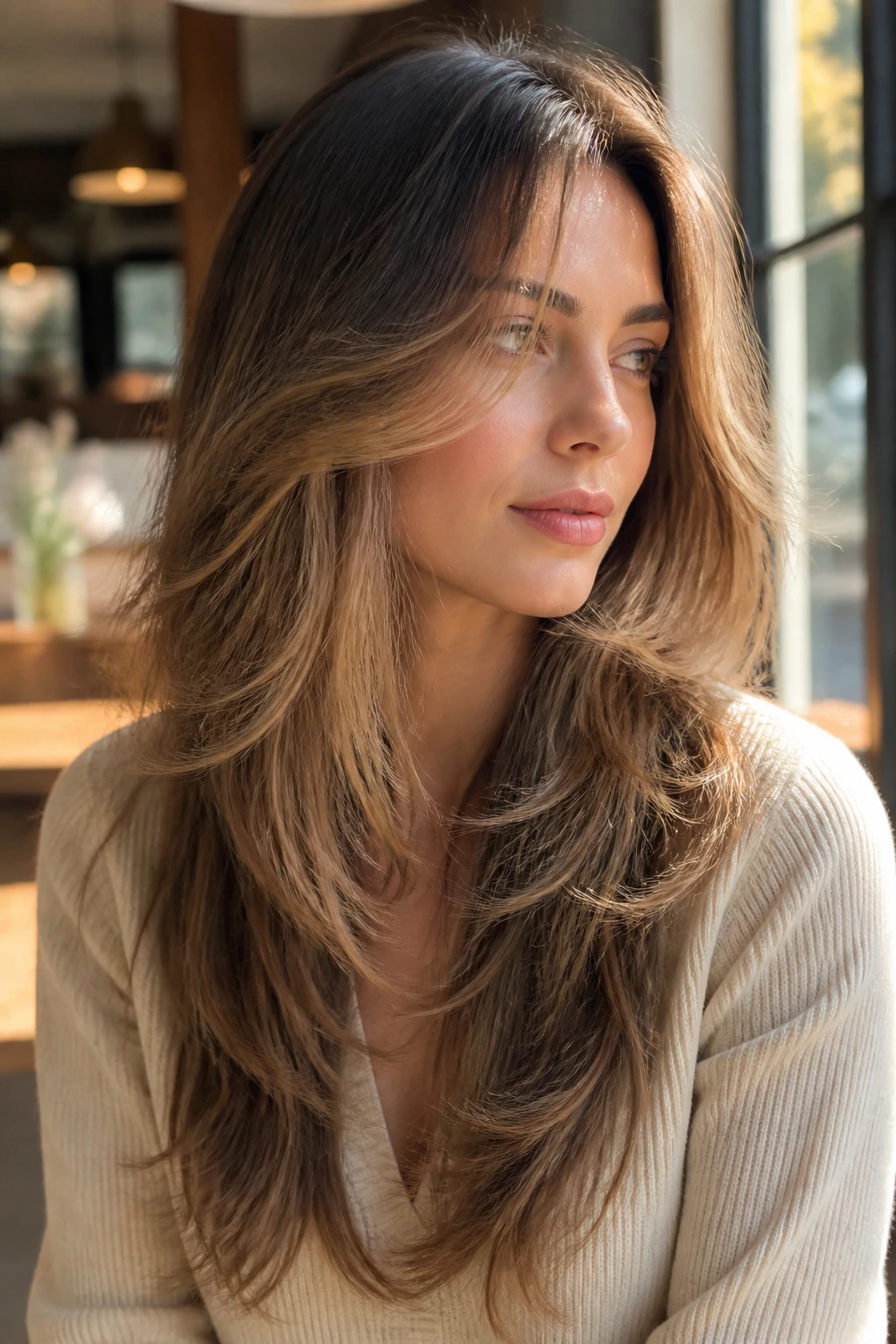
Compared with a shag, feathered layers are softer and more controlled. Compared with a blunt cut, they move. That’s the whole point. The hair is cut so the ends taper and flick away from the face instead of landing in one heavy block.
This style is especially nice if you want a little retro softness without going full throwback. The layers are usually blended well, and the styling matters almost as much as the cut. A round brush, a blow dryer, and a bit of patience give the ends that light, airy bend.
Feathered layers are a smart choice for long hair that feels too straight and too flat. They also help if your hair has a bit of natural wave and tends to puff out at the ends. The shape can make it behave.
If I were recommending one long-layer option for someone nervous about going too short, this would be near the top. It changes the hair without making a scene.
7. Soft Blended Layers for Fine Long Hair
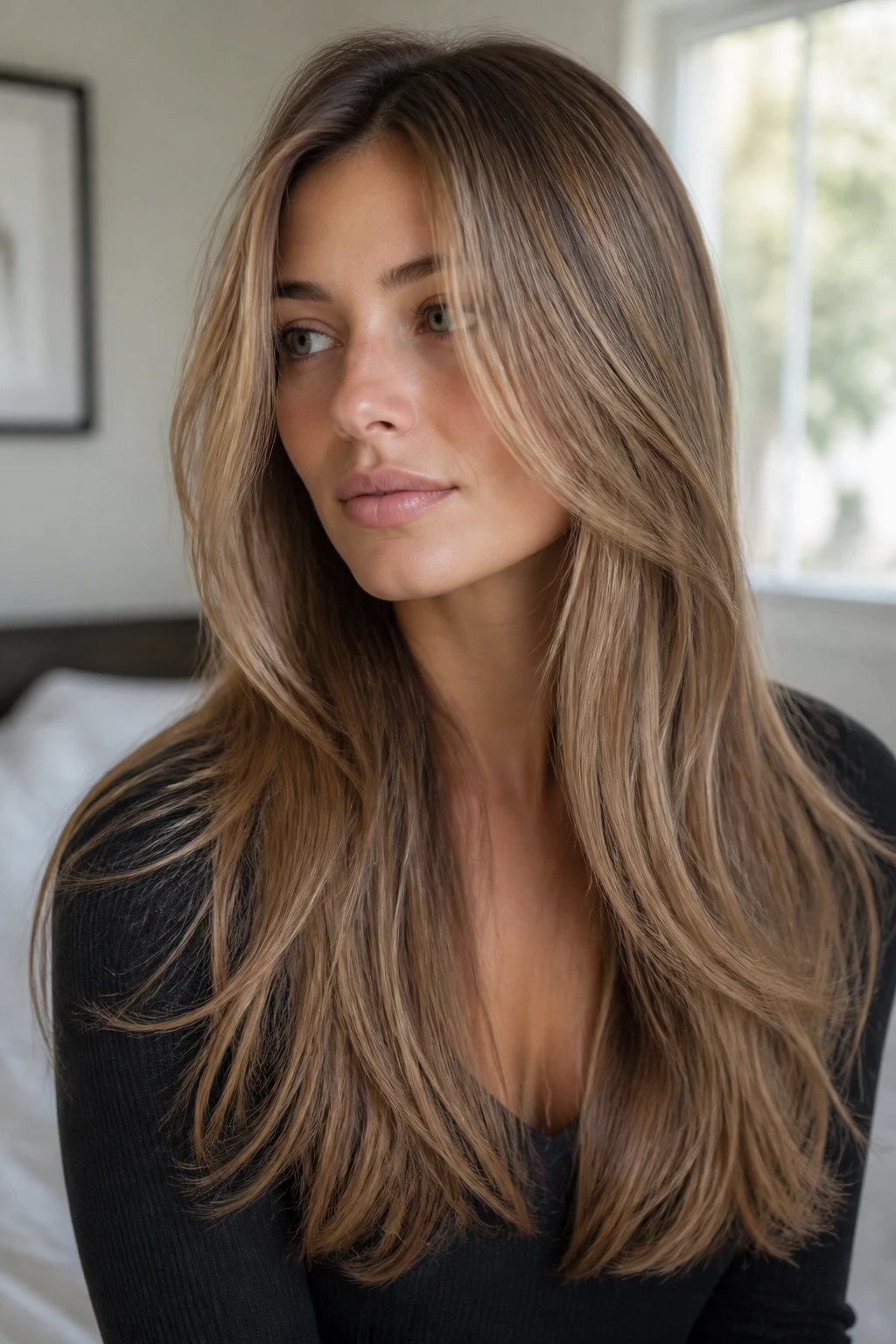
Fine hair does not need a lot of slicing. It needs restraint. Too many short pieces can leave the ends looking see-through, and once that happens, there’s no amount of round brushing that can fake thickness at the bottom.
What to Ask the Stylist For
Ask for long, soft layers that start low enough to keep density through the perimeter. The goal is movement, not a chopped-up finish. The shortest pieces can sit around the shoulders or just below, but the majority of the length should stay intact.
- Keep the layer starts low.
- Avoid heavy texturizing near the ends.
- Blow-dry with a paddle brush if you want smoother movement.
- Use mousse at the roots if your hair collapses by lunchtime.
The beauty of this cut is that it gives fine hair a little swing without stripping away the bulk that makes it look healthy. It’s one of those quiet cuts that looks simple until you compare it with a bad version and realize how much shape matters.
8. Choppy Layers for Thick Hair That Needs Room

Thick hair can carry a more aggressive cut. In fact, it usually looks better with one. If the hair is dense from roots to ends, blunt length often turns into a wall, and the only thing that moves is your frustration.
Choppy layers break that up. The ends are more visible, the shape has air in it, and the whole cut feels lighter around the shoulders and back. This is not the haircut for someone who wants a soft, polished curtain of hair. It’s for someone who wants separation, lift, and a little edge.
You do need a stylist who knows where to remove weight and where to leave it alone. Cut too much from the wrong place and thick hair goes puffy at the sides. Done well, though, it behaves better than most people expect.
I’d pair this with a blowout cream or a light wave spray. Not because the cut depends on products, but because the texture looks cleaner when the pieces have a bit of direction.
9. Invisible Internal Layers That Keep the Outside Smooth

Why do some layered cuts look full and shiny while others look like they’ve been nibbled at by scissors? Usually because the layers are hidden inside the haircut instead of carved into the surface. That’s the whole idea behind invisible layers.
The outside perimeter stays smooth and long, so you still get that one-length look when the hair is straight. Underneath, the internal layers take out weight and give the hair room to move. It’s a smart choice for people who want softness without a visibly layered finish.
How It Helps in Real Life
The hair dries faster, folds a little better around the shoulders, and doesn’t sit as flat against the back. You notice the movement most when you turn your head or tuck the hair behind your ears. That’s where the cut earns its keep.
It’s also a good option if you wear your hair in waves some days and sleek on others. The shape can handle both without looking too chopped or too plain.
10. Razor-Cut Layers With Wispy Ends

A razor cut has a different feel from a scissor cut. The ends come out softer, lighter, and a little more undone. On long hair, that can be a good thing if you want motion that doesn’t feel stiff or over-groomed.
This style works especially well when the hair has some natural bend. The razor helps the layers separate, and that separation is what makes the cut look airy. On very fine or damaged hair, though, I’d be careful. A razor can make weak ends look frayed if the hair is already in rough shape.
The best versions of this cut have just enough edge to keep the layers visible without making them look broken. You want whispery movement, not shredded ends. That distinction matters.
If your hair usually falls flat no matter what you do, this can change the game a little. Not because it creates volume magically, but because it lets the hair move more freely.
- Best on healthy to medium-textured hair.
- Works well with loose waves.
- Needs regular trims to stay clean at the ends.
11. Waterfall Layers That Flow From the Cheekbones Down
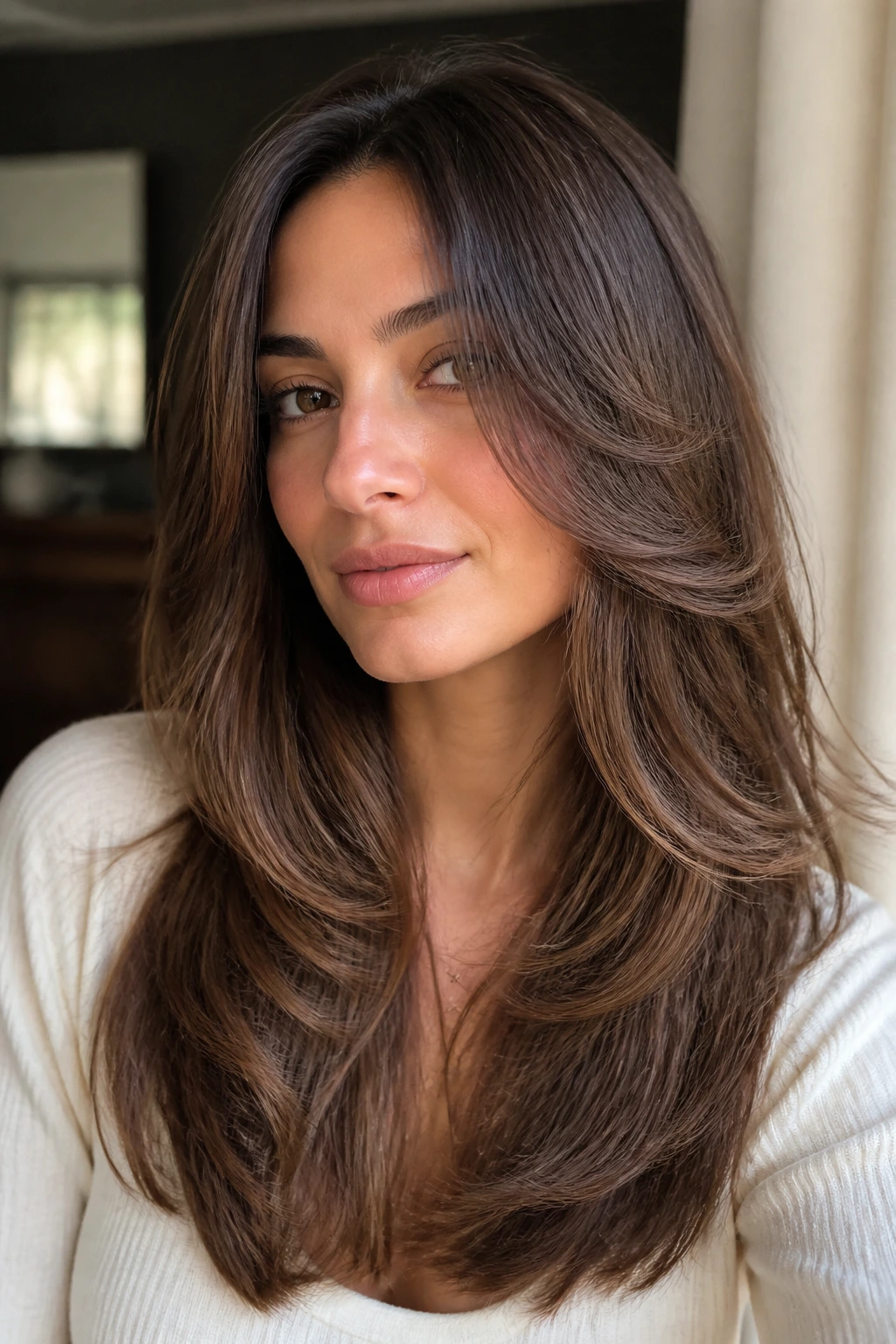
Waterfall layers are built to look like hair is spilling over itself in soft steps. The shortest pieces are usually around the face, then each layer drops longer as it moves back. It gives the cut a cascading look that feels graceful rather than chopped.
I like this shape on long hair that needs motion but not a big identity shift. It’s more romantic than edgy, more fluid than blunt. The hair falls in a way that makes the length feel even longer because the eye keeps moving downward.
The styling can be as simple as a loose bend through the mids and ends. If you curl every section the same way, the haircut can get too uniform and lose the point. Let the pieces move a little differently. That’s where the shape shows up.
There’s a nice side effect, too. Waterfall layers can make long hair look less dense at the sides without removing much from the bottom. That helps if your hair tends to triangle out when it grows.
12. Rounded Layers for Wavy or Curly Long Hair

Unlike a V-cut, which narrows hard toward the back, rounded layers keep the silhouette soft and circular. That matters if your hair has wave or curl, because curls need room to spring without being forced into a pointy outline.
The haircut usually follows the natural head shape and removes weight in a way that keeps the sides balanced. That can help avoid the dreaded triangle shape, where all the volume sits at the bottom and the top looks flat. Nobody needs that.
Rounded layers also make long curls look more deliberate. The hair moves as a shape instead of as separate heavy ribbons. On wash day, the curls stack more evenly. On day two, they still have enough structure to hang together instead of collapsing.
This is a good cut if you want softness around the face and fullness through the mid-lengths. It’s one of the few layered haircuts that can make very long hair feel lighter without looking thinned out.
13. Side-Swept Fringe With Long Layers

Side bangs are one of those choices people forget about until they see a good version. Then they remember why they liked them in the first place. On long hair, a side-swept fringe gives the front of the cut some shape, and the layers carry that motion backward.
Why It Flatters Long Hair
The fringe softens the forehead and gives the haircut a diagonal line, which keeps the eye moving. That angle is useful. It stops the hair from reading as one long sheet and adds a little lift near the face.
The rest of the layers should stay gentle so the fringe doesn’t compete with them. If the cut gets too choppy, the side bang can look separate and fussy. You want the pieces to blend.
- Blow-dry the fringe first while it’s still damp.
- Direct it across the forehead, then away from the face.
- Use a small round brush if the hair flips too hard.
- Keep the shortest point long enough to tuck back on lazy days.
This is a cut that plays nicely with a ponytail, which is a bigger deal than people admit.
14. Bottleneck Bangs With Soft Long Layers
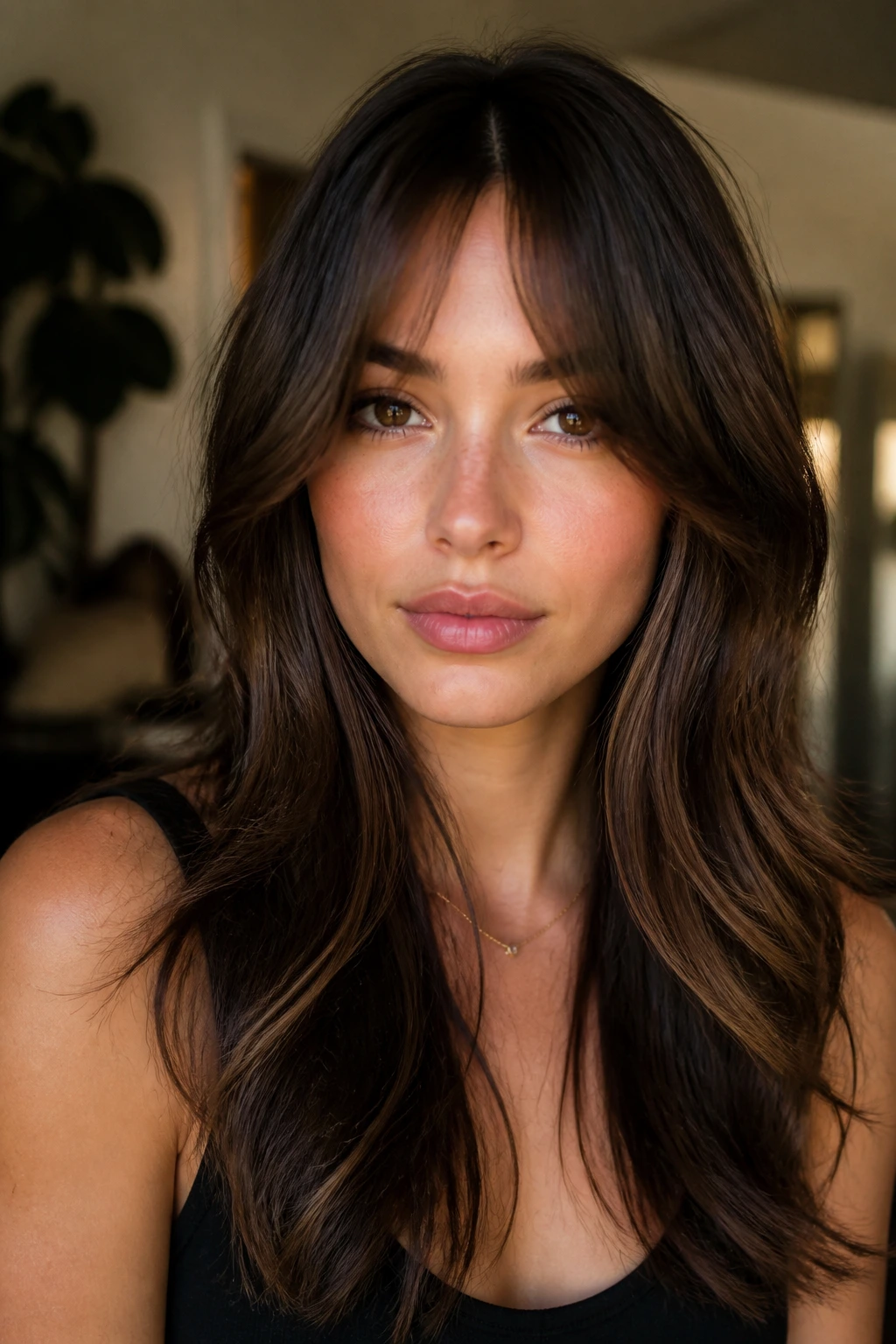
Bottleneck bangs sit somewhere between curtain bangs and a straight fringe. They’re a little shorter in the center, then lengthen toward the temples. On long hair, that shape gives the front a sculpted feel without taking over the whole haircut.
The layered lengths behind them should stay soft and blended. That balance is the point. The bangs create structure up front, and the long layers keep the rest from feeling heavy. It’s a good match if you want the face opening effect of bangs but don’t want a blunt line across the forehead.
This cut needs a bit of maintenance. Not constant, but enough that you’ll notice if you ignore it for months. The bangs grow out in a way that can either look chic or look like an accident. A trim every 5 to 7 weeks helps.
I like this one for long hair that feels too plain at the front. It adds shape fast. And because the bangs taper out at the sides, they slide nicely into the rest of the cut instead of sitting on top of it.
15. Long Layers With Blunt Ends for a Clean Line

Can long hair be layered and still look heavy at the bottom? Absolutely. That’s what makes this cut useful. The layers build movement through the interior, while the ends stay blunt and thick so the perimeter still feels solid.
The result is a good compromise for people who don’t want the wispy finish that some layered cuts create. You get lift and flow without sacrificing that dense, healthy-looking line at the bottom. It’s especially nice on straight hair, where a blunt edge really shows.
This style also ages well between trims. Even when it grows out, the ends keep their shape longer than more heavily textured cuts. That matters if you want a low-maintenance shape that still looks intentional.
It’s not the most dramatic layered haircut on the list. I actually think that’s why it works. The hair looks rich, full, and a little easier to live with.
16. Curly Long Layers Cut Curl by Curl
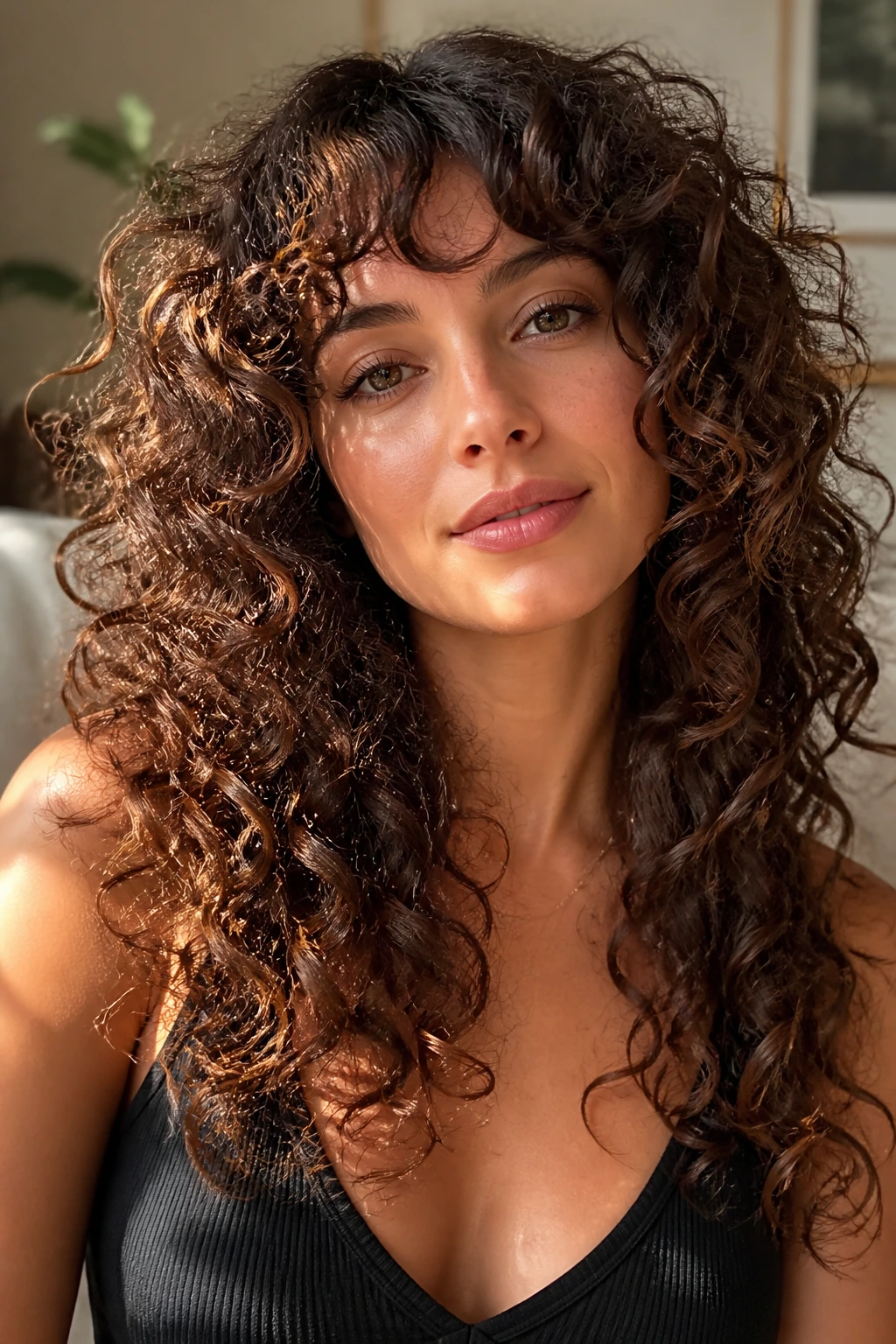
Curly hair changes the rules. A layered cut that looks balanced on straight hair can go completely sideways on curls if the shape is ignored. Curl-by-curl layering solves that by cutting the hair in its natural pattern so the curls stack properly.
The goal is to remove bulk where it’s needed and keep enough weight at the bottom so the curl pattern does not puff out. That balance makes long curls hang better and gives them more definition. The best versions respect the fact that each curl has its own bounce.
What to Watch For
A wet cut can be useful, but some curl types need dry shaping so the stylist can see how the hair actually lands. If the curls shrink a lot, the shortest layer can end up much shorter than expected. That’s not a small detail. It changes the whole haircut.
- Ask whether the cut will be done dry or damp.
- Bring your hair in its usual styled state if possible.
- Leave enough length at the sides to keep the shape balanced.
- Avoid heavy thinning shears unless your hair is very dense.
Long curly layers should make the curl pattern look cleaner, not thinner. That’s the target.
17. Straight-Hair Internal Layers With a Polished Finish

Straight hair is honest. It shows every line, every shelf, every uneven slice. That is a blessing and a curse. If the layers are good, the cut looks expensive in the plainest sense of the word: clean, smooth, and balanced. If the layers are bad, you see the mistakes instantly.
Internal layers help here because they create motion without cluttering the surface. The outside line stays sleek, which keeps the haircut looking polished when the hair is worn down or tucked behind the ears. It also means you can style it with a flat iron and still get movement.
This cut is useful for long hair that falls flat but doesn’t want to look textured in an obvious way. The best result is subtle. You feel the shape more than you see it. That’s not a cop-out. It’s the whole point.
If you hate frizz and do not want to spend time on styling, this version of long layers is worth a look. It behaves.
18. Deep Side-Part Layers That Sweep Across the Face
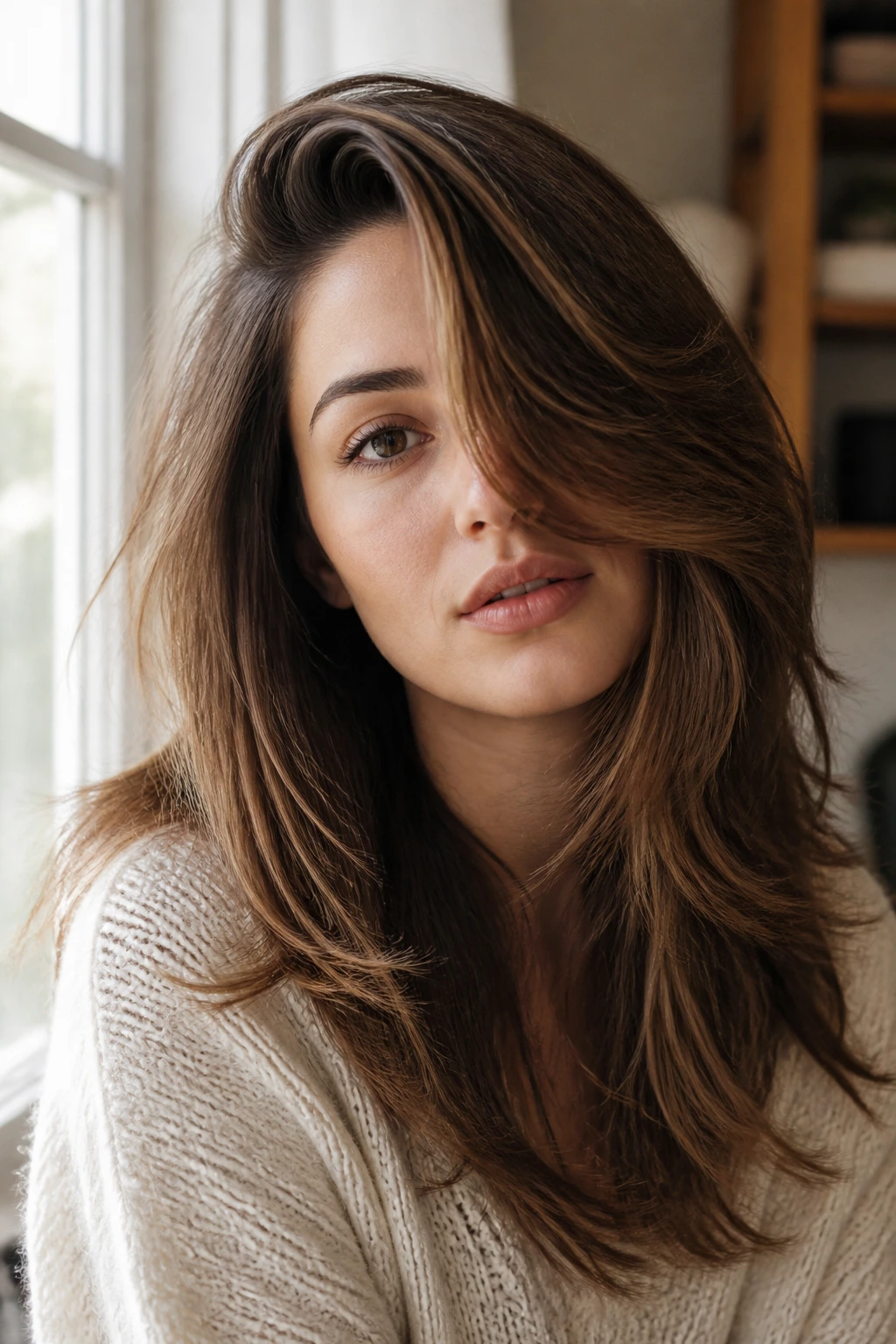
A deep side part changes long hair more than people expect. It gives the roots a lift on one side, a little drama on the other, and a longer-looking line through the rest of the length. Pair that with layered front pieces and the whole haircut gets stronger.
Unlike a center-parted style, this one leans into asymmetry. That is useful if your face feels rounder, your hair sits very evenly, or you want one side to carry more volume. The layers should follow the part rather than fight it.
This cut can look especially good when blown out with a round brush, because the front section sweeps across the forehead and connects to the rest of the length in one clean motion. It’s a small change that makes the haircut feel more styled.
Some people think a deep side part is old-school. Maybe. I still think it’s one of the fastest ways to make long layers look deliberate instead of generic.
19. Wispy Long Layers for Fragile Ends

Thin or damaged ends do not need a lot of aggressive layering. They need a gentler hand. Wispy long layers keep the hair light, but they don’t chew up the bottom into nothing, which is what you want if the ends already feel soft or delicate.
Why This Cut Helps
The layers should be long, blended, and low on the head. That way the perimeter stays thick enough to hold shape. The wispy effect comes from the movement of the layers, not from stripping away the whole bottom section.
- Trim the ends first before adding shape.
- Keep the layers below the cheekbone if the hair is fragile.
- Use a leave-in conditioner to keep the ends from fluffing up.
- Skip heavy razoring on damaged hair.
This is one of those cuts that looks better when it is understated. If the hair already struggles with split ends or breakage, the wrong layers will make the problem more visible, not less. Gentle shaping is the safer, smarter choice.
20. Long Hair With a Heavy Perimeter and Soft Interior Layers
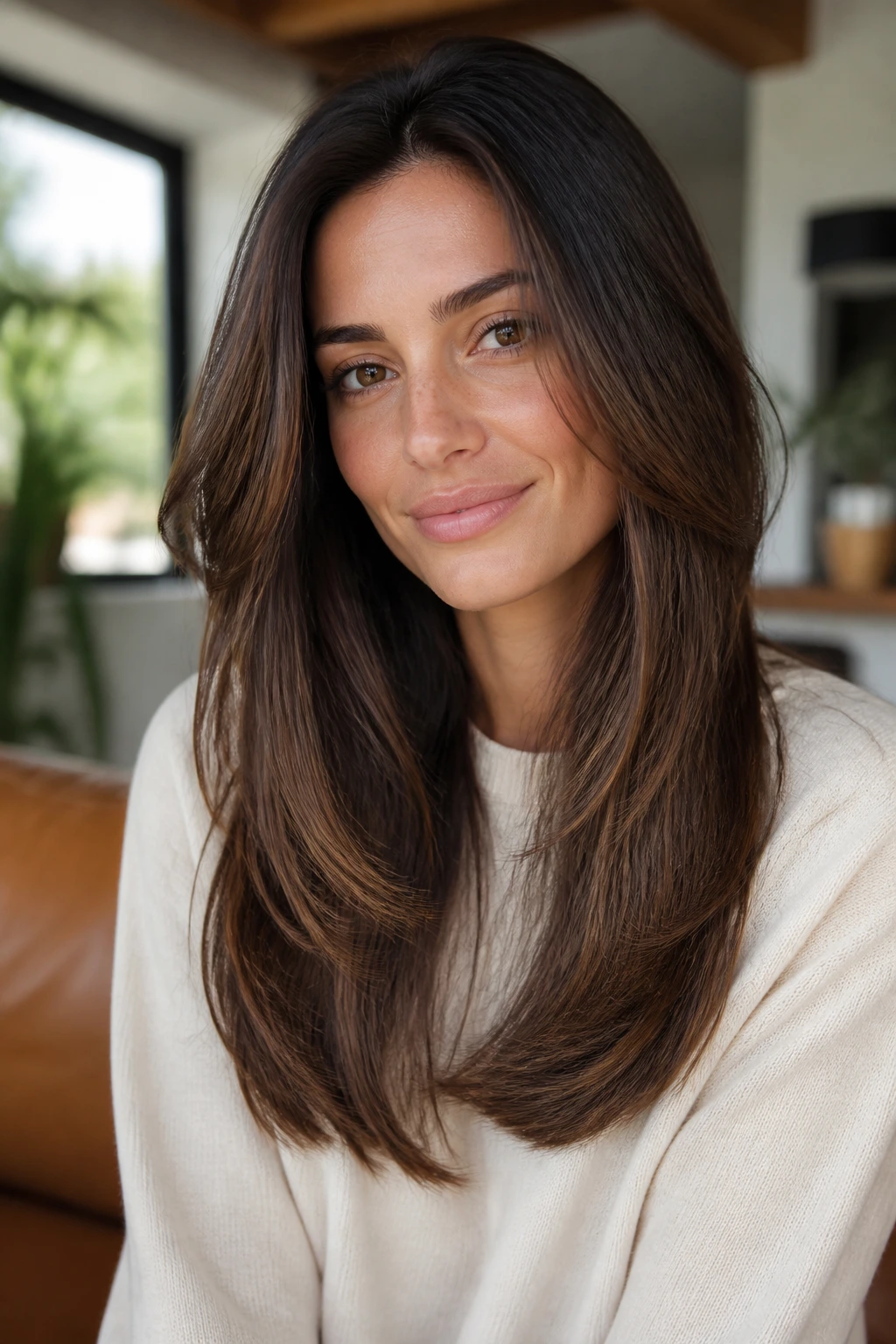
Fine? Thick? Wavy? Straight? This cut can work for all of them, which is why stylists reach for it so often. The perimeter stays heavy and full, while the inside gets a little movement removed so the hair doesn’t feel like a single dense block.
The magic is in the contrast. From the outside, the shape still looks solid. From the inside, the hair moves more easily and dries with less bulk. That makes it a strong option for people who want length to look rich, not stringy.
It’s also a practical haircut. The heavier bottom helps the hair hold its line between trims, and the soft interior layers keep it from feeling stiff. You can wear it air-dried or styled. Either way, the shape holds.
I’d call this one a quiet workhorse. Not flashy. Not fussy. Just a very good way to keep long hair from turning into a sheet.
21. Crown-Boosting Long Layers That Lift the Roots
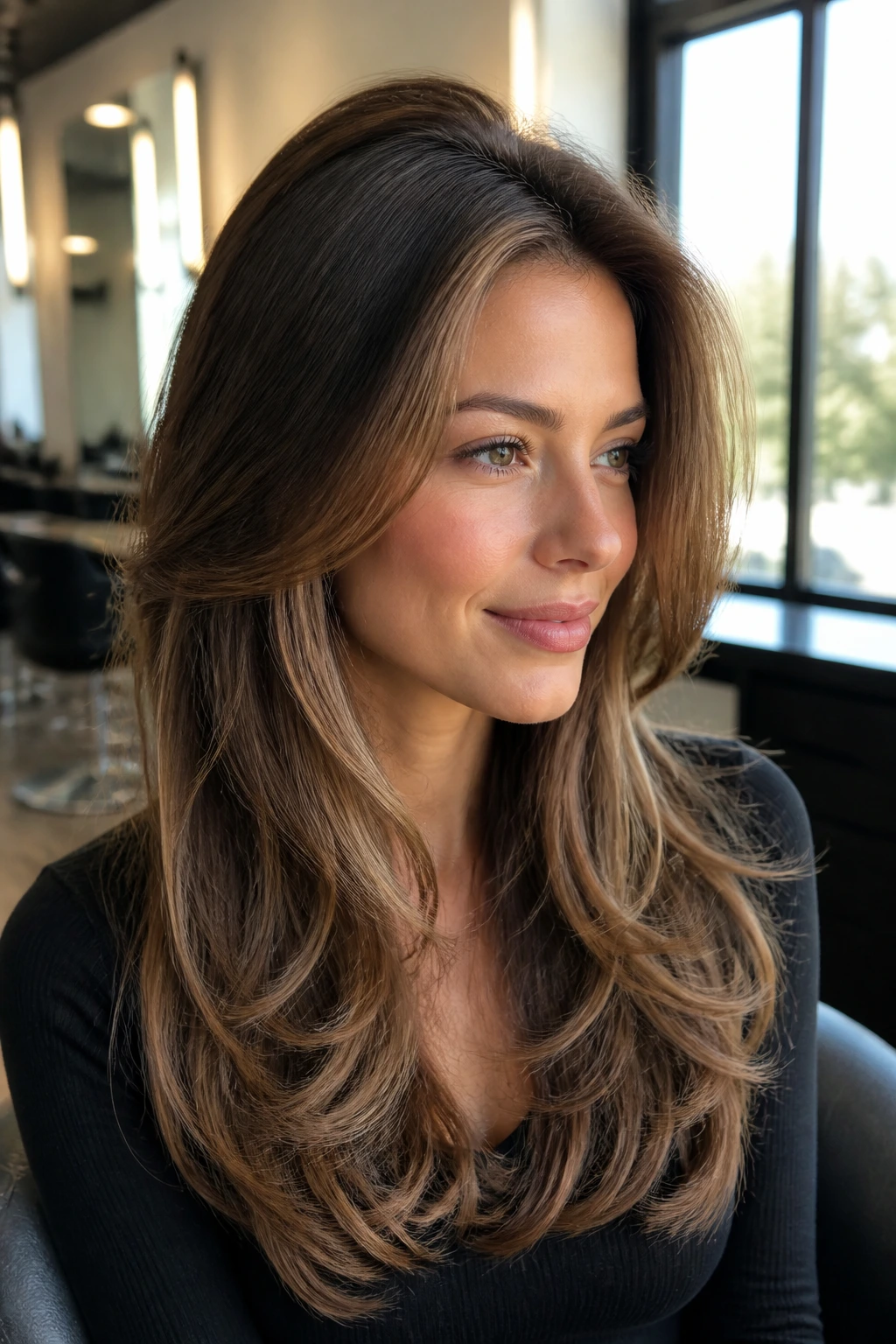
Why do some long cuts make the top of the head look bigger and better balanced? Because the layers are placed high enough to create lift where the hair often goes flat. Crown-boosting layers focus on that exact problem.
The shortest pieces sit around the upper back of the head and blend downward, which gives the cut a little rise near the roots. That helps if your hair is long enough to drag at the scalp or if the top always seems to collapse by midday.
The cut can be subtle or dramatic. I prefer subtle on long hair. Too much height around the crown can make the shape feel dated fast. A better version gives movement and a small lift, then lets the length do the rest.
This haircut looks especially good with a round brush blow-dry or root clips while the hair cools. Small effort. Big payoff.
22. Mermaid Layers With Extra-Long Taper

Mermaid layers are for long hair that is already making a statement. The layers are usually long, flowing, and spaced far enough apart that the hair keeps a dreamy length while still moving. Nothing about this cut feels choppy.
The taper is the key. Instead of short layers that jump out around the face, the pieces extend down the body of the hair and blend toward the ends. That keeps the silhouette soft and very long-looking. If you like hair that falls in loose sheets with movement underneath, this is the one.
It works well on hair that is thick enough to hold shape but long enough to show off the layers. It also loves a wave, whether natural or made with a big curling iron. Tight curls can hide the effect a little.
This is one of the prettiest layered haircuts for long hair when the goal is length first, movement second. It does not try to be loud. It just keeps going.
- Best when the length reaches the mid-back or lower.
- Looks strongest with loose bends rather than tight curls.
- Ask for long tapering, not short steps.
- Needs trimming to keep the ends from looking tired.
23. Collarbone Front Pieces With Long Length Everywhere Else
A cut can stay long and still change shape fast if the front is handled well. Collarbone-grazing pieces do exactly that. They frame the face, lighten the front, and leave the back feeling full and long.
This is a smart option when you want to test the waters before going harder into layers. The front pieces create a visible difference without changing the overall feel of the cut. That makes it a good choice for people who like to wear their hair parted in the center or slightly off-center.
The layers behind the front should stay soft so the haircut does not turn into two separate stories. The front needs to connect to the mid-lengths. When it does, the whole cut looks more expensive and less accidental.
I like this haircut because it plays nice with clip-ins, braids, and half-up styles. The face-framing pieces do their job, and the rest of the length stays available.
24. High-Elevation Layers for Big Movement
This is the opposite of a timid haircut. High-elevation layers are cut with more lift from the head, which removes a lot of weight and creates obvious movement through the mid-lengths and ends. On very long hair, that can be a relief.
Compared with low, blended layers, this cut is more visible and more playful. The pieces spring out more when the hair moves, and the overall shape feels lighter. It’s a good option if your hair is heavy, thick, or prone to lying flat against the back.
The risk is overdoing it. Too much elevation, and the layers start fighting each other. The hair can go fluffy at the sides or too short around the face. A good version keeps enough length in the longest pieces to hold the shape together.
If you want hair that swings when you walk, this is one of the strongest options on the list.
25. Tapered Long Layers With a Clean Finish
A clean tapered cut is what I suggest when someone says they want layers but still wants the hair to look smooth, expensive, and easy to wear. The taper keeps the ends neat, while the layers gradually shorten toward the front and interior so the length doesn’t feel frozen in place.
This is a good finishing shape for nearly every hair type. Thick hair gets relief from the weight. Fine hair keeps enough density. Straight hair keeps a polished line. Wavy hair gets a bit more motion without losing its structure. That range is why it earns a spot at the end of the list.
Ask for a soft taper rather than obvious steps. The best version looks like the hair simply falls better, not like it was chopped for effect. It is the sort of layered haircut that reads as effortless only because the cut underneath was handled with care.
And honestly, that is the whole lesson with long layers. The good ones don’t shout. They let the hair move the way it should.
