



Curly hair and layers have a messy little truce. Cut them wrong, and the shape goes wide at the sides, flat at the top, or both at once. Cut them well, and the curls stack, swing, and keep their length without looking heavy.
The best long curly haircut ideas with layers do not all chase the same finish. A loose wave needs weight in different spots than a springy ringlet, and dense curls need a different plan again. A blunt line can make the ends look strong for about ten minutes; after that, the whole shape can start to feel like a pyramid. Been there.
A good curly cut is often shaped dry, or at least partly dry, because shrinkage changes where the line lands. That one detail matters more than most people think. A curl that hangs at the collarbone when wet may bounce up several inches once it dries, and if the layers were cut too high, you end up chasing pieces with a diffuser and a round brush just to make peace with it.
The cuts below focus on shape, weight, and movement: shaggy, rounded, tapered, face-framing, crown-boosting, and a few that keep the perimeter clean while the inside gets lighter. Some are soft and easy. Some are a little bolder. All of them can work on long curly hair if the layer placement matches the curl pattern instead of fighting it.
1. Long Curly Shag With Curtain Bangs
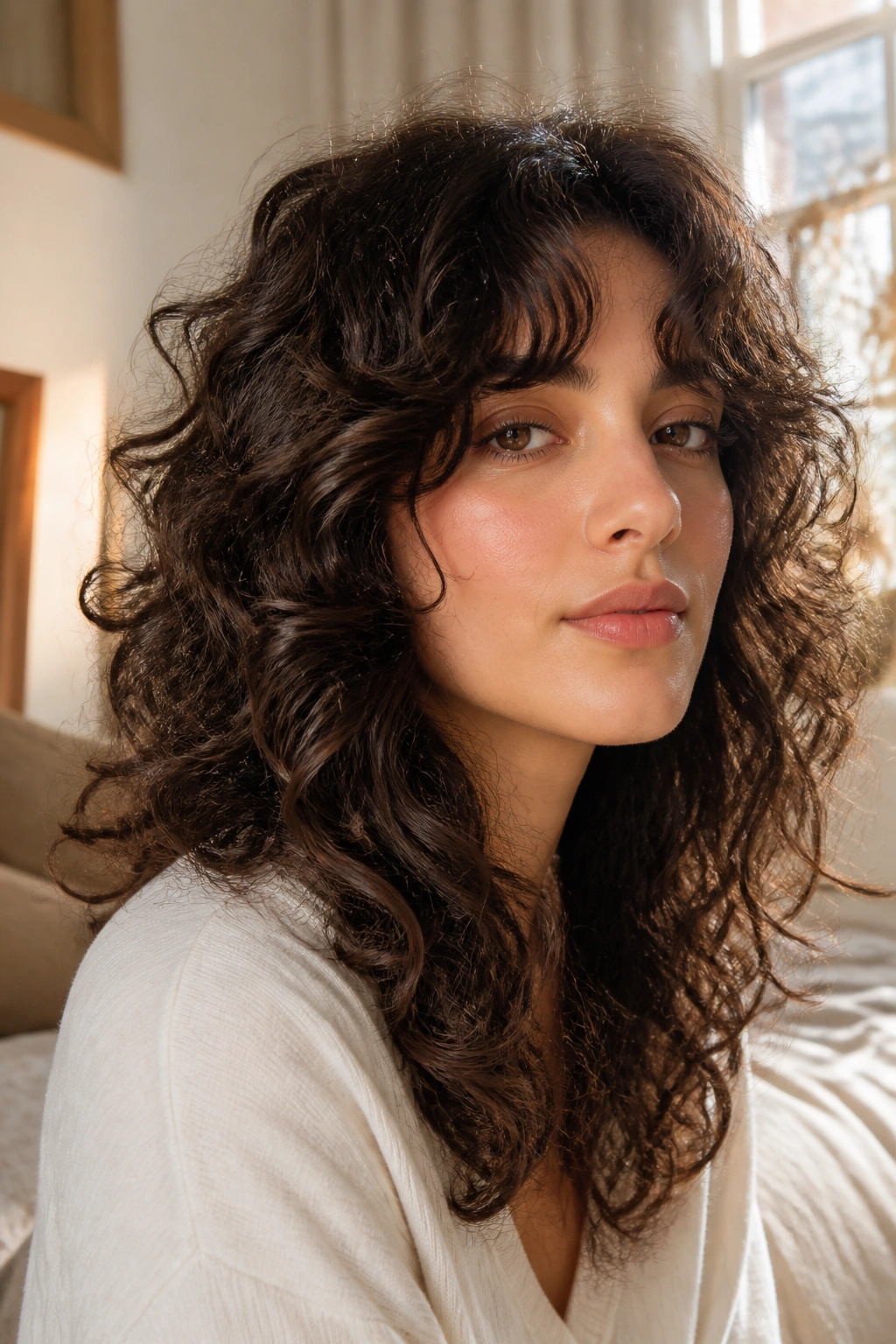
The shag works on curls because curls already like a bit of chaos. When the crown is shorter and the lower lengths stay long, the whole head gets lift without losing the dramatic swing that makes long curly hair feel like a statement.
Why It Works on Curls
This cut keeps the top pieces light, which helps stop that heavy triangle shape at the sides. Curtain bangs soften the front, and on curly hair they can sit right at the cheekbone or just below it, depending on shrinkage.
- Best for medium to dense curls that feel flat at the roots.
- Ask for layers that start around the cheekbone and get longer toward the back.
- Keep the fringe longer if your hair shrinks a lot.
- Style with a diffuser and a small amount of cream, not a heavy butter.
My favorite part: it grows out with less drama than a blunt cut, so you’re not racing back to the salon every few weeks.
2. Soft U-Shaped Layers That Keep the Length
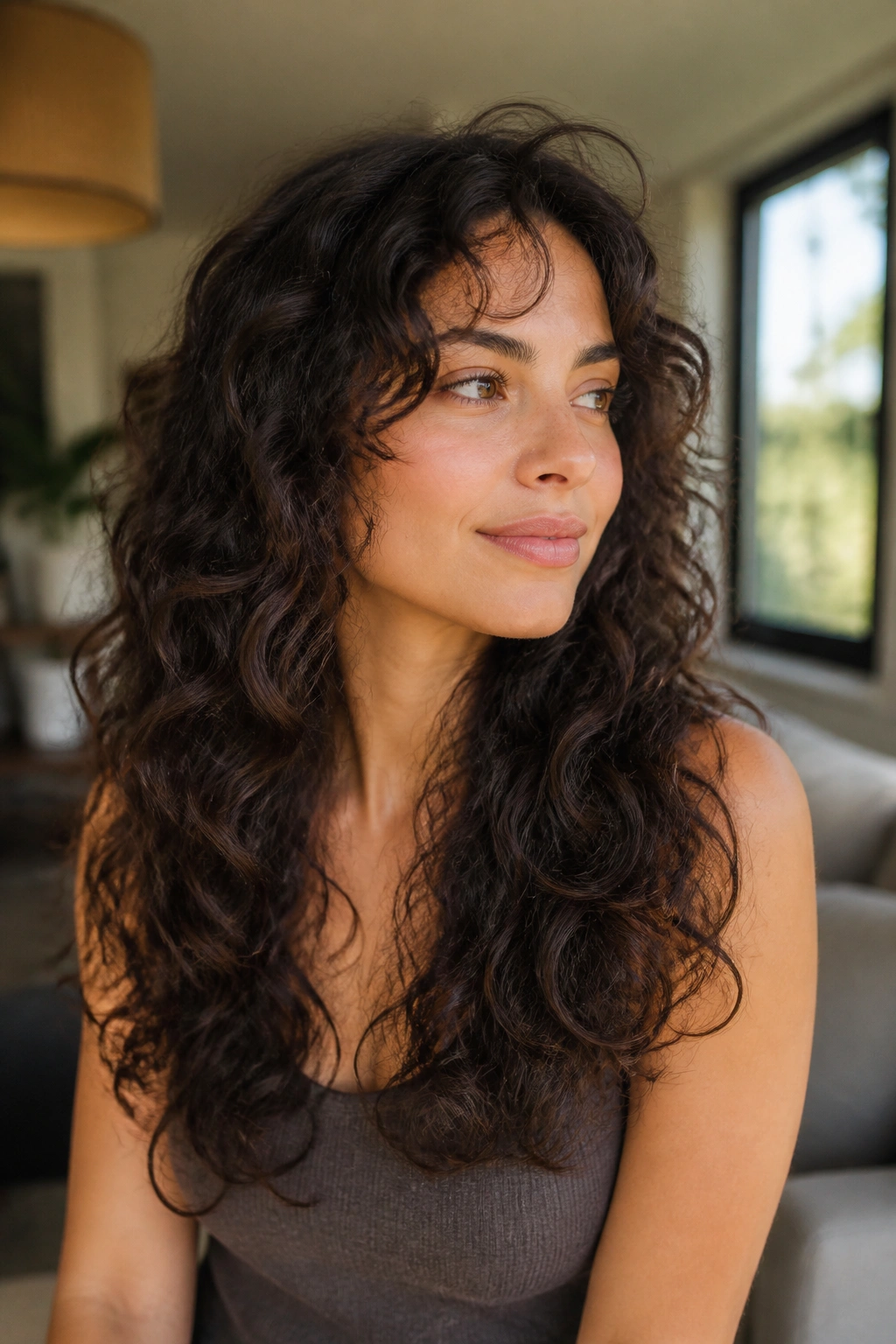
If you want movement but hate a choppy outline, the U-shape is the cut that keeps the ends full. It gives the hair a gentle curve at the bottom instead of a hard edge, which matters a lot when curls spring up and make the perimeter look shorter than expected.
A U-shaped layered cut keeps the longest pieces at the center back and lets the sides taper in a little. The result feels polished without looking stiff. It also plays nicely with long curly hair that’s being grown out, because the shape stays readable even when the roots start puffing up between trims.
The trick is not to lift the shortest layers too high. For curls with a lot of shrinkage, I’d keep the shortest visible layer below the chin. Anything shorter can start to balloon around the face, and nobody needs that fight.
What to Ask For
- A soft U-shaped outline.
- Long internal layers, not short choppy ones.
- Weight kept at the very ends.
- Face-framing pieces that blend, not stop.
Clean, not stiff. That’s the whole mood here.
3. V-Cut Layers for Dense Curls
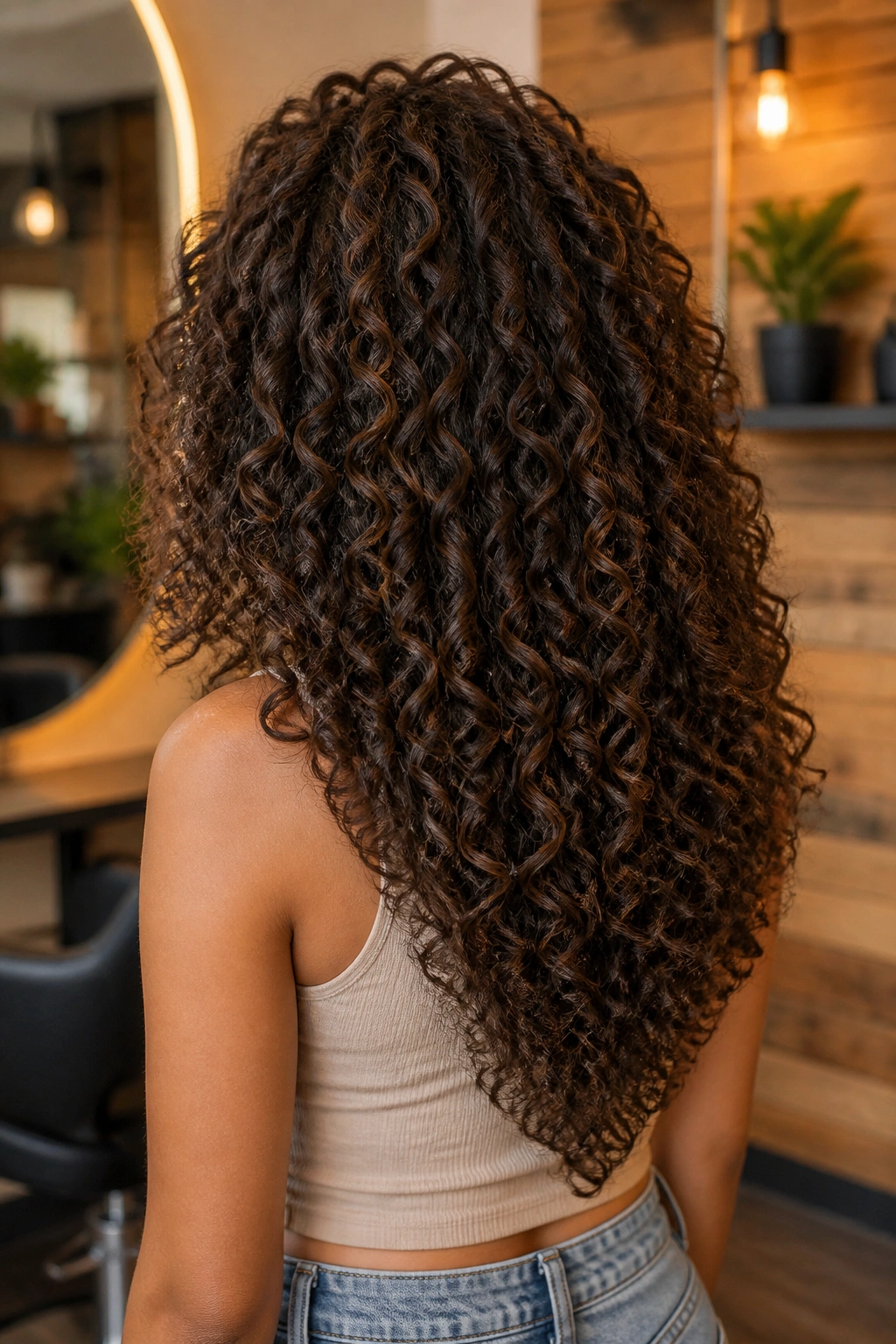
If your curls pile up like a blanket, a V-cut gives the shape somewhere to go. The back falls into a point, which takes bulk out of the bottom and lets the longest curls hang with a little more swing.
This cut is especially useful when the hair is thick enough to sit on your shoulders like a coat. The V shape keeps the center back longer while the sides angle in, so the silhouette feels lighter without losing much length. On long curly hair, that matters. Too much blunt width at the bottom can make the whole style look boxy.
Best When You Want This
- Less heaviness in the back.
- A clear shape from behind.
- Longer lengths that still feel airy.
Watch Out For
- Very fine curls can look stringy if the V is too deep.
- Over-layering the crown can make the top puff out.
- You’ll want to keep the angle soft, not sharp.
A shallow V is usually easier to live with than a dramatic one. The dramatic version can look cool in a photo and annoying at home.
4. Butterfly Layers for Big, Springy Volume

Butterfly layers are not only for blowouts and straight hair. On curls, they create that lifted, floating look at the top while leaving the bottom length intact, which is exactly why they deserve a spot on any list of long curly haircut ideas with layers.
The shorter top pieces sit around the cheekbone, jaw, or upper lip area, then the rest of the hair drops long underneath. That split gives the curls a stacked shape without making the cut feel chopped up. If your hair tends to collapse at the roots but you still love long ends, this is one of the smarter options.
It does ask for a little styling discipline. A diffuser helps the top layers separate instead of clumping into one heavy curtain, and a lighter mousse often works better than a rich cream here. Too much product can drag those airy layers down.
This one looks best when the top has lift and the bottom keeps its swing. If both sections sit flat, the whole point is lost.
5. Face-Framing Layers Starting at the Cheekbones
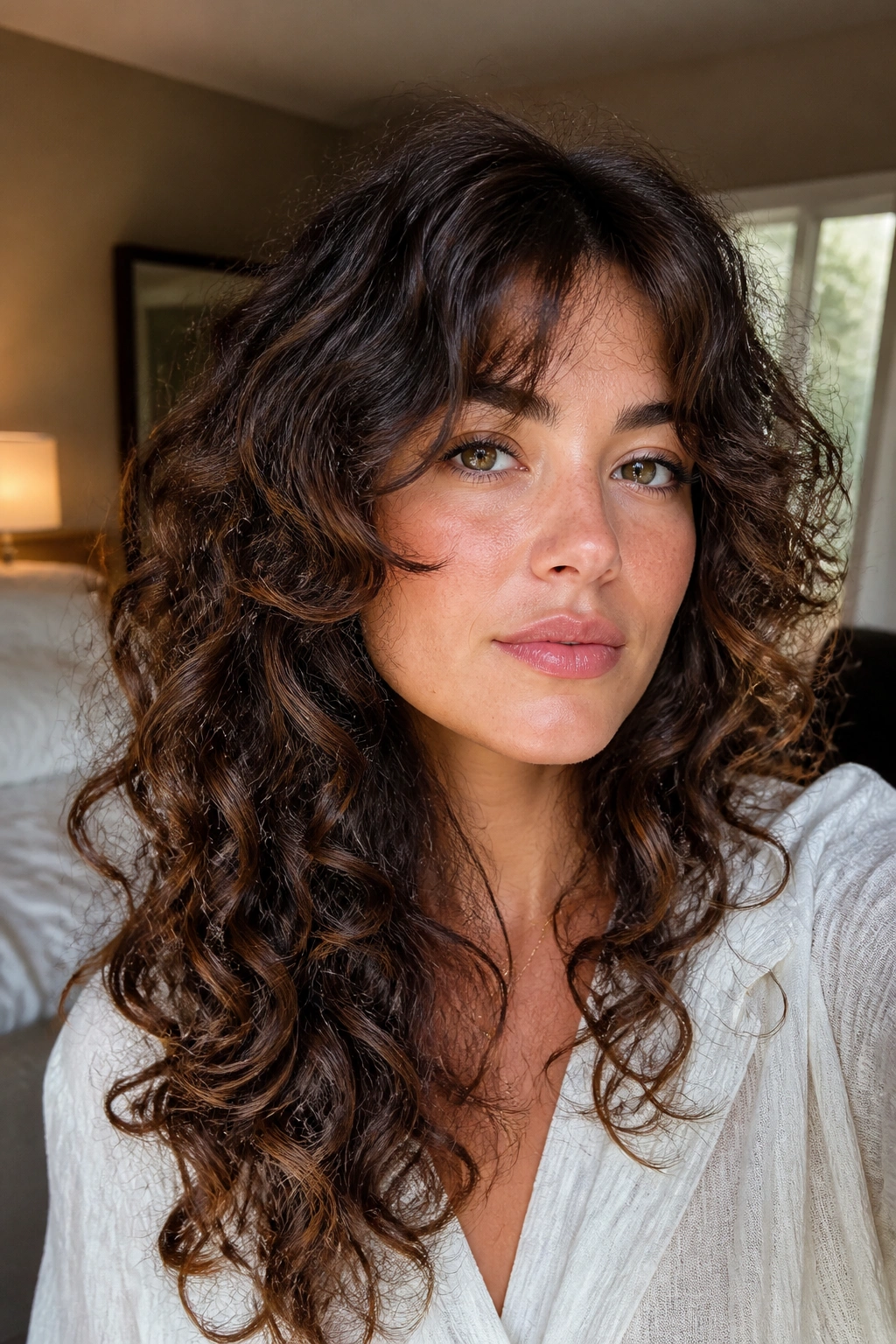
A few snips around the face can change how the whole cut reads. Cheekbone-starting layers make the curls open up around the face instead of sitting like a wall from temple to chin, which is a common issue on long curly hair.
The nice thing about this shape is that it works with glasses, strong brows, and rounder faces especially well. It softens the outline without asking for a big length change. If you’re nervous about layers, this is a very sane place to begin.
I’d keep the front pieces long enough to tuck behind the ear when needed. That sounds small, but it’s practical. Curls that are cut too short around the face can spring up and sit right in your eyes for weeks. Not charming.
The best version of this cut blends the front layers into the sides so the whole head still feels connected. You want framing, not little curly curtains hanging by themselves.
6. Invisible Internal Layers for Thick Curl Clumps

Think of the hair that looks long from the outside but feels heavy inside. That’s where invisible internal layers earn their keep.
These layers live underneath the top shape, so the outer outline stays long and healthy while the inside loses weight. On thick curly hair, that often means less bulk near the ears, less puff at the back of the head, and a shape that dries faster because air can move through it. Big difference. Seriously.
Good For
- Dense curls that feel hot and heavy.
- Hair that takes forever to dry.
- Styles that look wide from the side.
Be Careful With
- Over-thinning the top layer.
- Using aggressive texturizing shears on fine hair.
- Cutting so much interior weight that the curls lose their clump.
Point cutting and careful slide cutting usually beat a heavy hand with thinning shears. Curly hair shows bad thinning fast, and once those gaps show up, there’s no hiding them.
7. Long Curly Wolf Cut With Soft Edges

The wolf cut can work on curls, but only when the edges stay soft. A harsh wolf cut can turn curly hair into a shaggy box with an attitude problem. A softer version gives you the cool, lived-in shape without making the ends look chopped off.
This cut keeps a lot of length in the back, shortens the crown, and lets the front pieces fall forward with more texture. On curls, that means the crown gets lift while the lower lengths keep their drama. It suits people who want their hair to look a little wild on purpose, not by accident.
The grow-out phase matters here. If the shortest layers are too short, they can stick out around the temples and make the whole style feel awkward. Keep the transition soft and the perimeter long, and it stays wearable much longer.
A wolf cut is not for someone who wants tidy. It is for someone who likes motion, a bit of edge, and hair that looks better when it’s not overworked.
8. Rounded Layers for Ringlets and Spirals
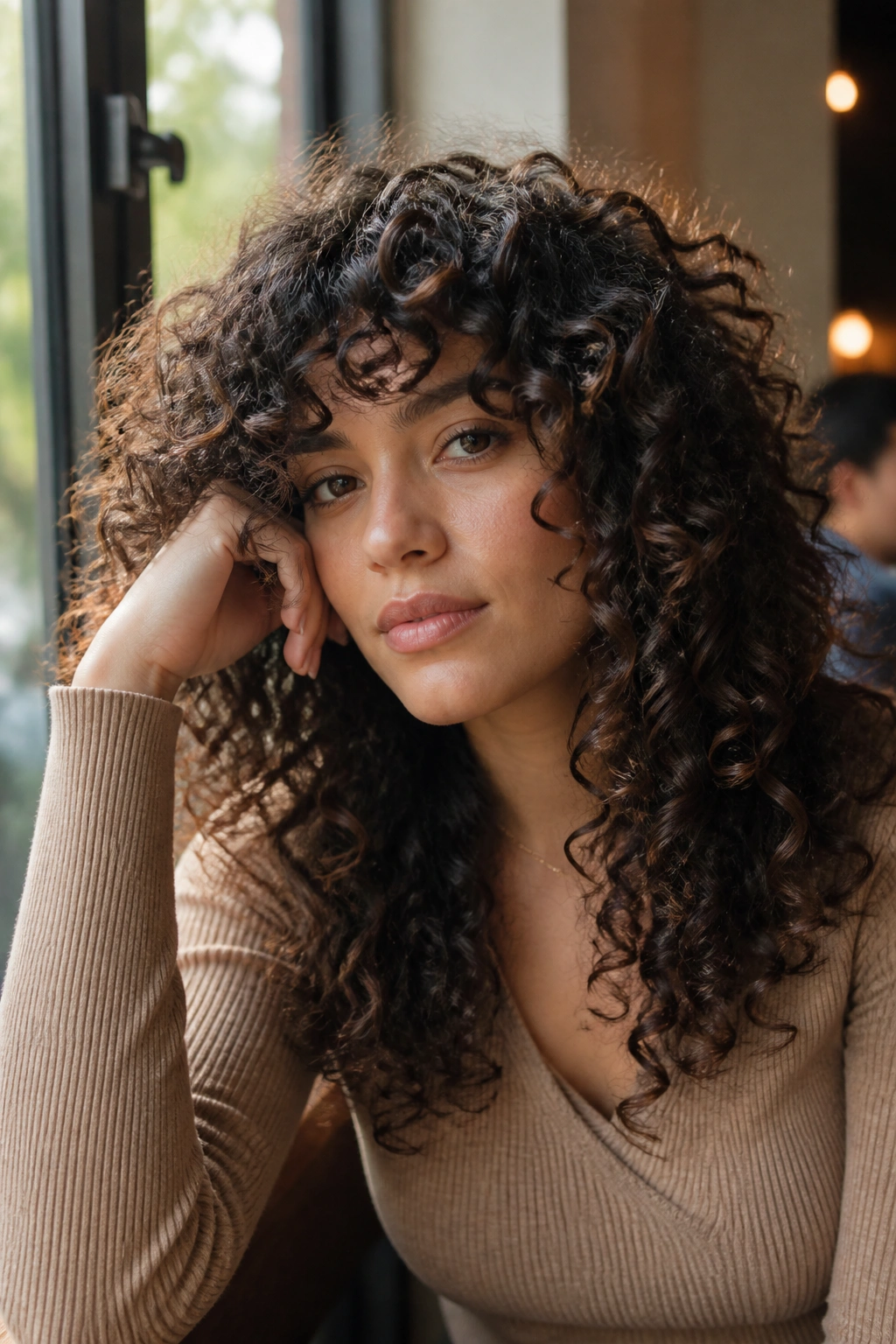
Why do some ringlets look neat while others puff out sideways? Usually, the shape around them is the reason. A rounded layered cut helps the curls follow a curve instead of pushing outward in a boxy line.
This shape is especially good for 3B and 3C curls, where the hair has enough spring to hold a rounded outline without collapsing. The key is to keep the silhouette soft all the way around the head, with the longest pieces around the perimeter and the shortest layers placed where they support lift at the top.
How to Keep It from Puffing
- Don’t cut the sides too high.
- Keep the crown layers long enough to blend.
- Use a diffuser from underneath, not blasting the top flat.
- Let curls dry fully before judging the shape.
Rounded layers are one of those cuts that look calm in a way people notice, even if they can’t name why. The shape feels finished without feeling stiff.
9. Waterfall Layers That Fall in Curly Ribbons
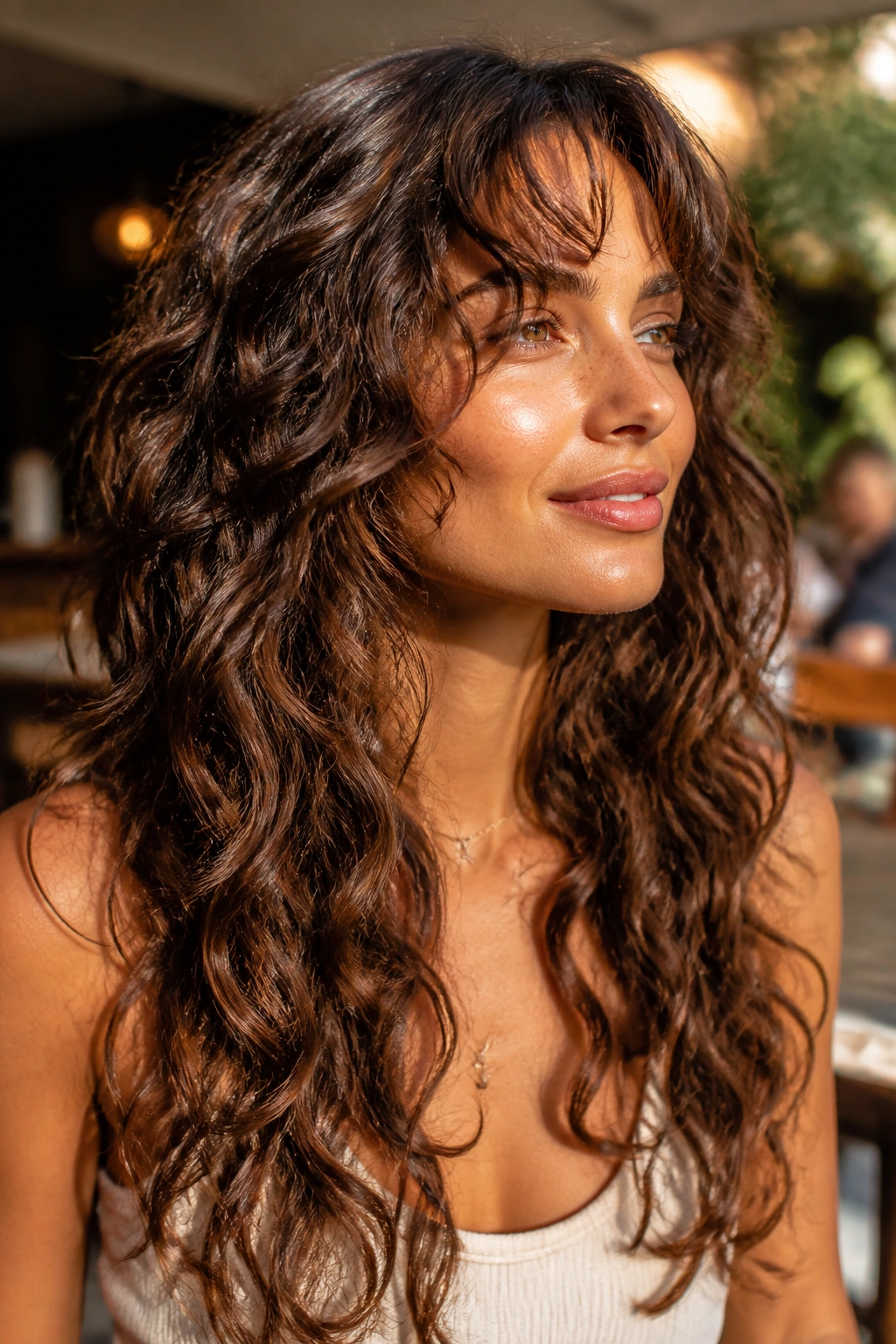
If you like hair that spills over the shoulders in soft pieces, waterfall layers are worth a serious look. The idea is simple: each layer drops into the next one, so the curl pattern reads like moving ribbons instead of one big curtain.
This cut gives long curly hair a lot of visual motion. When you turn your head, the layers shift at slightly different lengths, which keeps the style from looking heavy or static. It’s a good choice for people who wear their hair down often and want the cut to do some of the styling work for them.
A diffuser helps here, but so does restraint. Overloading the hair with product can make the layers cling together and hide the actual shape. A lighter gel or cream is usually enough if the cut itself is doing its job.
When It Looks Best
- On medium-density curls with good spring.
- On hair that’s long enough for the layers to separate visibly.
- On cuts that already have a clean perimeter.
There’s a graceful looseness to this one that I always like.
10. Long Curly Cut With a Soft Fringe

Bangs do not have to be a drama. A soft fringe on curly hair can be one of the easiest ways to refresh long layers without losing length in the back.
The key is softness. You want the fringe to blend into the rest of the cut, not sit like a separate little curtain on top of the forehead. On curls, that means cutting it longer than you think you need and letting the shape settle before making any big decisions. Shrinkage is sneaky.
A fringe also changes the whole mood of long curly hair. It can make a heavy style feel lighter, help balance a long face, or pull attention toward the eyes. And if you hate forehead hair in humid weather, fine, this may not be your favorite. Fair enough.
But when the cut is done well, the fringe doesn’t feel like an extra feature. It feels like the front edge of the haircut finally woke up.
11. Length-Preserving Layers for 3A to 3C Curls
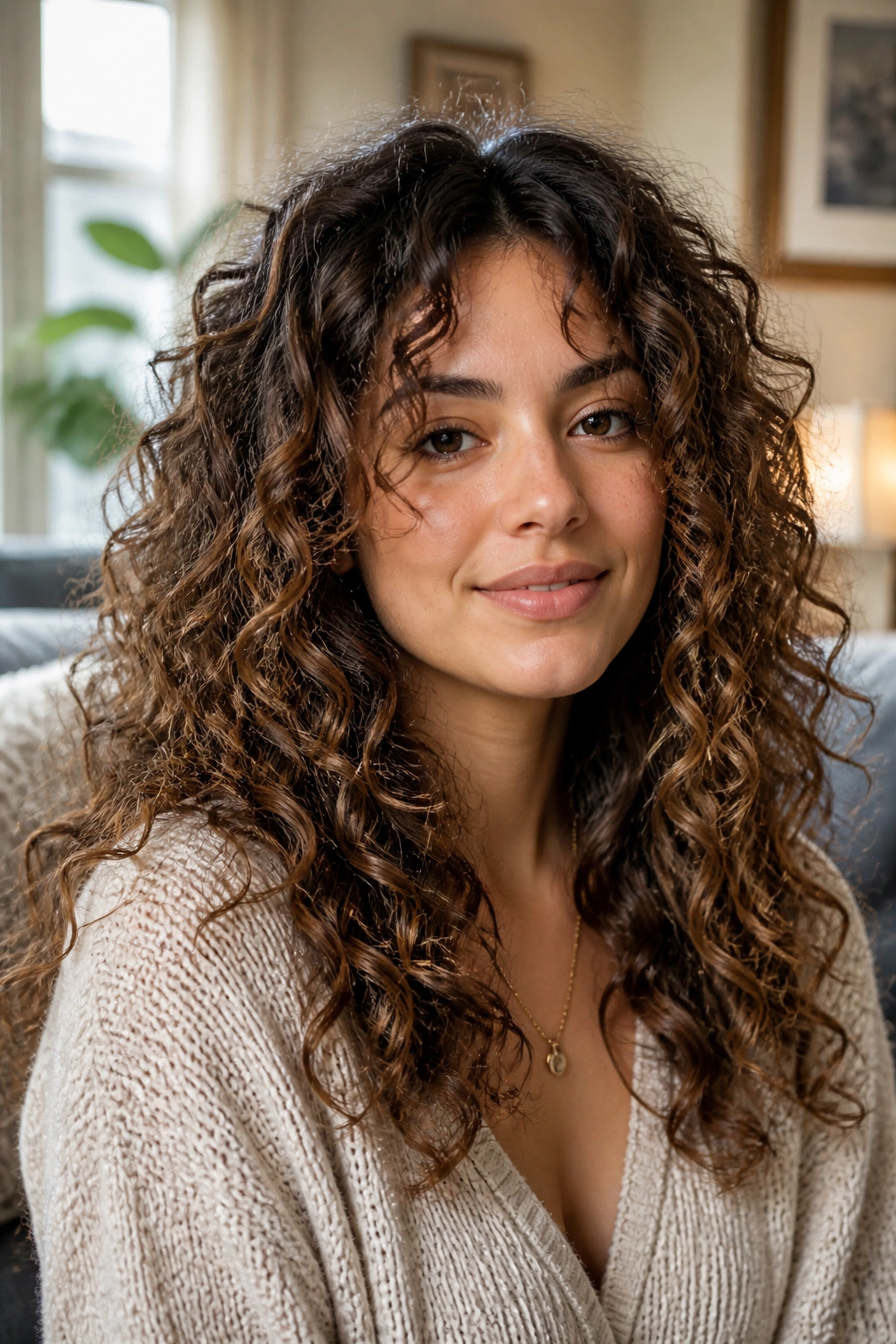
Three curl patterns, one common headache: the bottom gets heavy while the top goes flat. Length-preserving layers fix that by keeping most of the length intact and placing the shortest support pieces where they actually help the shape.
For 3A curls, the layers usually need to stay longer and more blended. For 3B, you can get a little more shape around the crown and cheekbones. For 3C, the interior weight often matters most, because the curl pattern is tight enough to hold volume all over.
- 3A curls: long layers below the shoulder line.
- 3B curls: soft layers that lift the sides without breaking up the outline.
- 3C curls: more internal removal, less emphasis on the outer edge.
The point is not to chase a trendy shape. It’s to keep the longest pieces long enough to matter while the rest of the haircut stops dragging them down. That makes the curls look fuller, not thinner.
12. Tapered Layers for Heavy, Dense Hair

Hair that feels hot at the neck and bulky at the sides needs a tapered cut. Not a skimpy one. A tapered layered cut gradually removes weight so the curl pattern can fall instead of sitting in one big mass.
This is the cut I’d reach for when someone says their hair takes forever to dry and always ends up poofy at the bottom. Tapering the layers helps the lower half move more freely, especially if the density is high and the curls are coarse.
You do not want the taper to start too high or become a harsh staircase. The whole thing should feel like a slope, not a series of shelves. A good stylist will cut enough to relieve the heaviness without turning the ends into wisps.
Hot tip? Bring your hair down fully when you’re discussing this one. If the cut is planned only from wet hair, the true bulk can be underestimated fast.
13. Deep Side-Part Layers That Swing With Movement
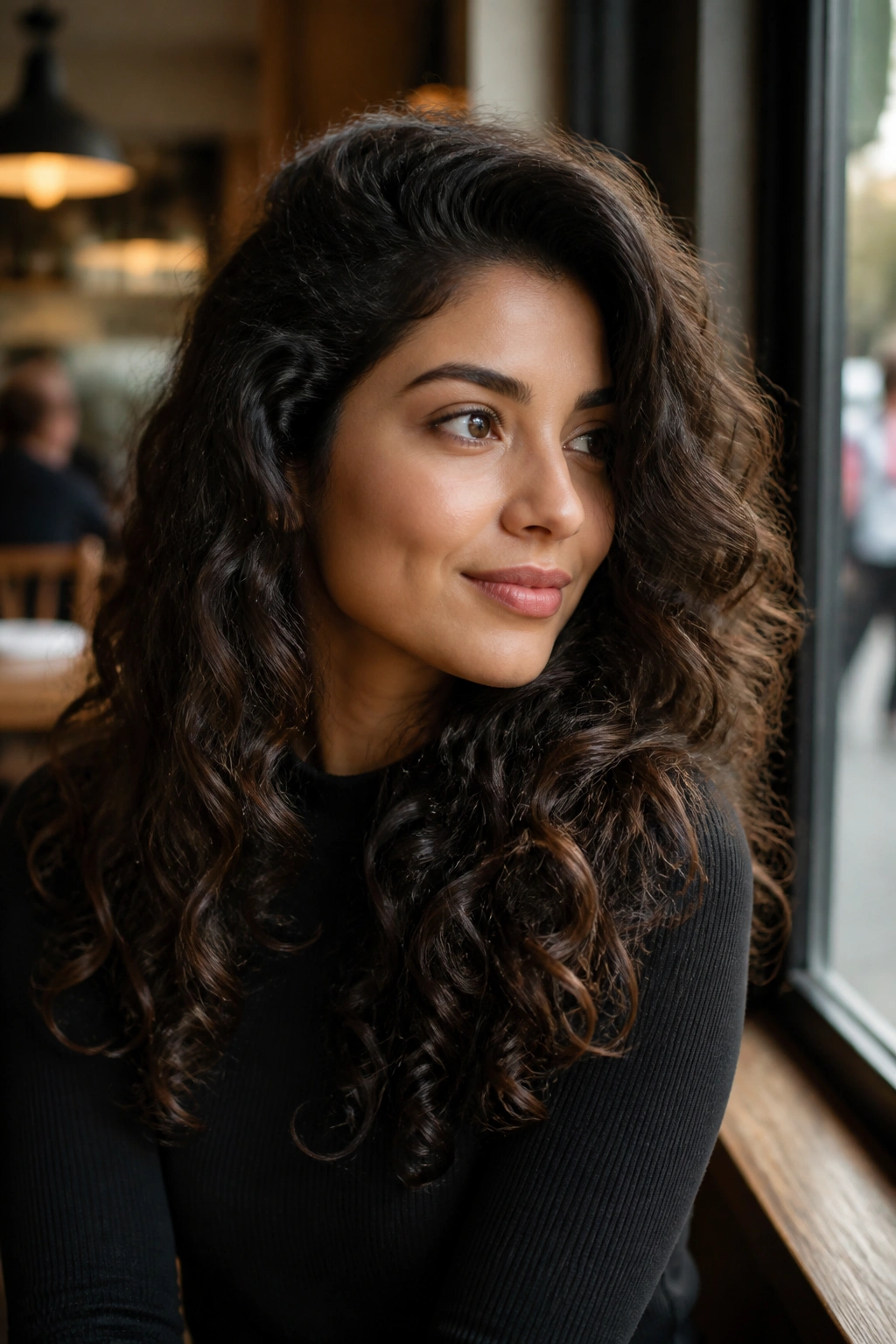
Move the part, and the whole haircut changes. That’s the charm of deep side-part layers on long curly hair.
This shape creates more volume on one side and a longer, sleeker sweep on the other. It can be a nice fix for curls that look a little flat in the center or for anyone who wants more movement without asking for a dramatic length change. The layers should follow the part, not fight it.
It’s also one of the easiest ways to make a familiar cut feel new. Same length. Different behavior. That’s often enough.
If your curls naturally lean one direction, a deep side part can work with that habit instead of against it. If they don’t, you may need a little root setting at the front or a deliberate flip while drying. Not hard, just a bit fussy.
The payoff is a haircut that feels alive when you walk. That matters more than people admit.
14. Asymmetrical Long Layers for a Modern Shape

Perfect symmetry can make curls look stiff. An asymmetrical layered cut loosens that up by letting one side sit a touch longer or carry more face-framing than the other.
This is not about a wild, obvious imbalance unless you want that. Most of the time, it’s subtle—just enough difference to keep the eye moving. On long curly hair, that small shift can stop the shape from looking too planned or too round.
It works well for people who like their hair with a little edge but still need it to ponytail cleanly. The longer side can skim the shoulder, while the shorter side gives lift and movement near the face. That contrast makes the curls look intentional without feeling rigid.
A tiny asymmetry is easier to wear than a dramatic one. If you want your cut to feel interesting but not high-maintenance, keep the difference small and let the texture do the talking.
15. Sliced Ends for Fine Curly Hair

Less bulk. More air. That is the whole appeal here.
Fine curly hair can look stringy if it gets over-thinned, so the safer move is to keep the layers long and refine the ends with careful slicing or point cutting. The goal is movement, not holes. When this is done well, the curls bounce instead of hanging in one flat line.
What to Ask For
- Long layers that keep the perimeter full.
- Soft point cutting at the ends.
- Minimal interior thinning.
- No heavy razor work near fragile ends.
This cut helps if your curls clump nicely but lose shape when they get too much weight. It can also make second-day hair easier, because the pieces fall back into place faster when the ends are not blunt and dense.
One warning: fine curls often get overcut by accident. A little shape is enough. A lot of texturizing is usually too much.
16. Interior Support Layers for Long Coils

Long coils can stretch down under their own weight and lose spring at the roots. Interior support layers help by removing some of that pull from the middle of the cut.
The outside still looks long. That matters. But inside, the structure gets lighter so the coils can spring upward instead of dragging everything down. On dense 3C and 4A textures, this can make the difference between a shaped silhouette and a heavy curtain.
This cut is a good fit if your hair looks best the day you wash it, then slowly sinks as the week goes on. A little support in the mid-lengths can help the shape stay lively longer. It can also make detangling less of a chore, because there’s less trapped weight inside the section.
I like this one when a client wants length on the body but lift at the top. That is a real thing, and not every cut understands it.
17. Rezo-Inspired Balanced Layers for Even Volume
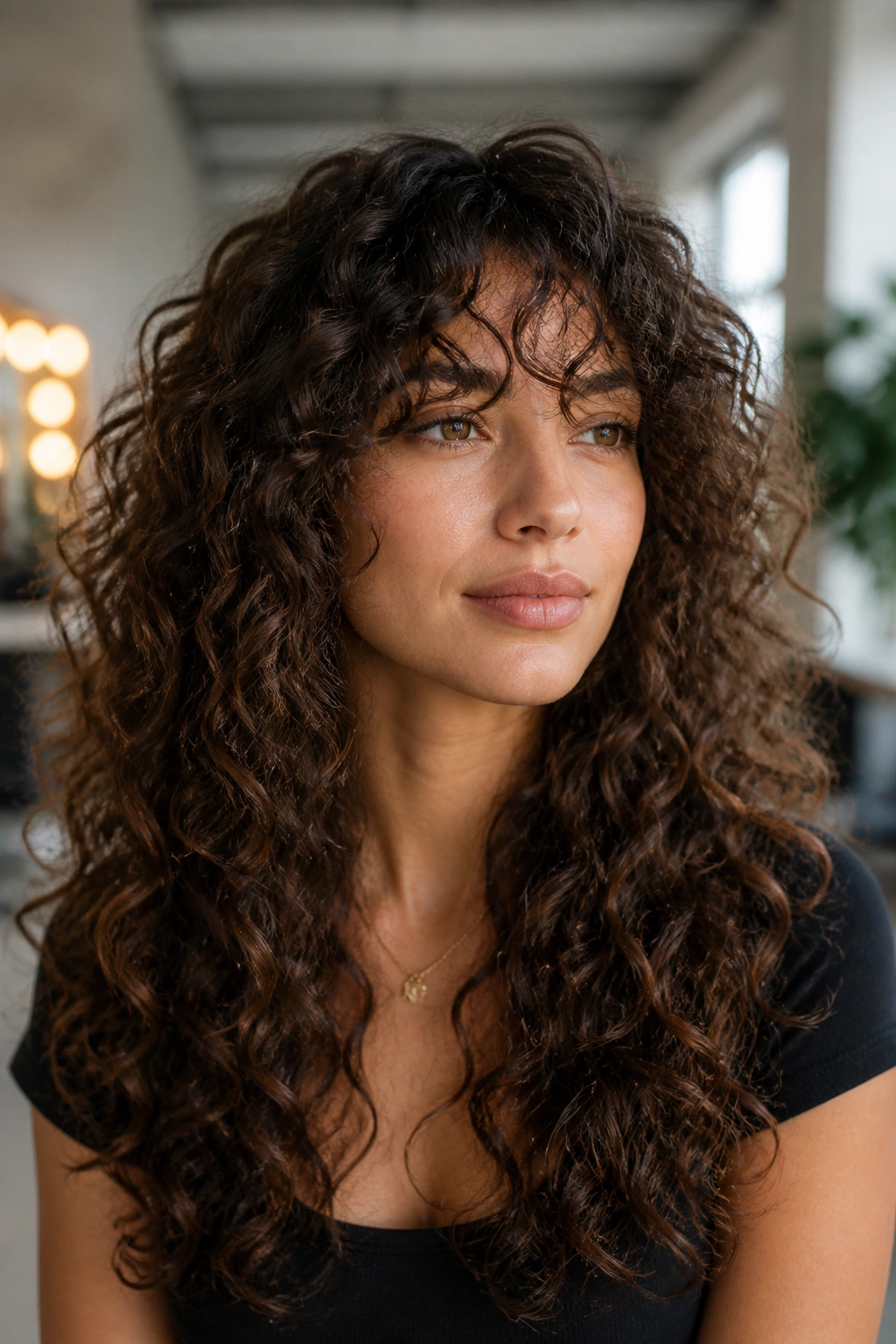
Want the shape to look balanced dry, not just wet? That’s where a Rezo-inspired cut comes in. The main idea is to keep the length around the outside while shaping the inside so the volume stays even from front to back.
What Makes It Different
Instead of stripping out a ton of interior weight, the stylist focuses on balance. The curls still have room to clump, but the shape doesn’t cave in at the crown or balloon at the sides.
- Keeps a cleaner perimeter.
- Helps curls fall evenly when air-dried.
- Works well for people who dislike obvious step layers.
This is a smart choice if you want a curly cut that reads polished without looking stiff. It tends to grow out nicely too, because the shape is built on balance rather than extreme contrast. That said, it needs a stylist who knows how curls behave when they dry. A dry curl behaves like a different animal than a wet one.
For a lot of long curly hair, that balance is the sweet spot.
18. Crown-Boosting Layers for Flat Tops

Some curly heads have gorgeous ends and a crown that lies down like it’s trying to avoid attention. Crown-boosting layers fix that by taking enough weight off the top to let the roots rise.
The shortest layers sit higher than the rest, but they should still blend. If the crown layers get too short, the hair can start to mushroom. That is the trap. A good crown boost looks airy, not round and puffy.
This cut is worth trying if your profile feels flat from the side or if your hair always looks prettier after it’s been flipped around. It can make the whole head look taller and more alive.
A little root lifting during styling helps, but the haircut is doing the main work. That’s the part people sometimes miss. You can tease curls into temporary volume, sure, but a shape that already lifts from the cut is easier to live with.
19. Defined Perimeter Layers for Sharp Curl Shape
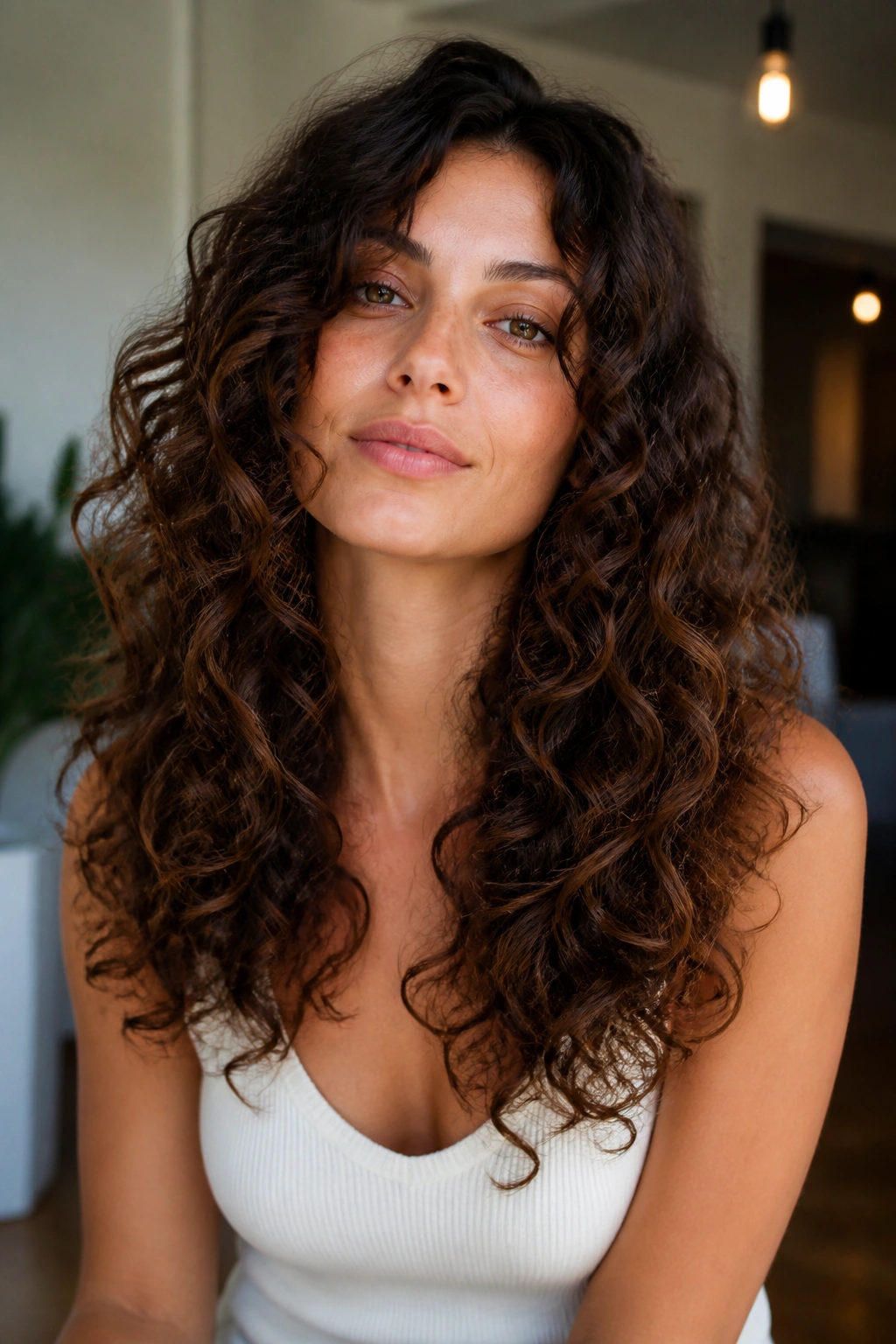
Unlike a shag, this cut keeps a clear outer line. The perimeter stays readable, while the inside gets soft enough to move.
That makes it a good choice for people who like their curls to look neat from a distance and textured up close. The layers are there, but they’re not shouting. The result feels cleaner than a wolf cut and less airy than a butterfly shape.
Defined perimeter layers can also be a relief if your hair has a habit of looking fuzzy when it’s over-layered. Keeping the outline strong gives the eye somewhere to land. The interior can still hold curl and bounce; it just doesn’t take over the shape.
This is one of the more wearable options on the list if you need your hair to work in a lot of settings. It does not ask for a lot of daily styling. Good cut, light product, leave it alone.
20. Growth-Friendly Layers That Stay Pretty as They Grow Out

A good layered haircut should look better at six weeks, not worse. That’s the real test, and it’s why growth-friendly layers matter so much on long curly hair.
This shape usually combines long face-framing pieces, soft interior layers, and a perimeter that still makes sense when the curls start stretching or shrinking in different weather. Nothing is cut so short that it turns weird fast. The haircut ages politely. I like that in a cut. A lot.
If you’re the kind of person who stretches salon visits, this is the one to think about first. It gives you movement now and shape later, which is rare enough to be worth respecting. You can still add a fringe or a deeper layer if you want more personality, but the base stays calm.
Bring reference photos, but also talk about shrinkage, density, and how much time you actually spend styling. That part tells the truth faster than pictures do.
Final Thoughts
The best layered cut for long curls is the one that respects where your hair naturally wants to fall. That sounds simple, but it rules out a lot of bad haircuts fast. If your curls are dense, weight removal matters. If they’re fine, over-thinning can backfire. If the crown collapses, the layers need to sit higher. If the ends already puff, keep the perimeter stronger.
One more thing: judge the cut on dry curls, not on wet promises. Wet hair lies. Dry hair tells the truth, and curls tell it loudly.
A good stylist can shape long curly haircut ideas with layers into something that feels easy instead of fussy. Once the cut is right, the styling gets quieter. That is usually the sign you picked the right shape.
