



Face framing layers can change a haircut faster than almost anything else. Shift the shortest pieces by an inch or two, and the whole face reads differently — eyes look more open, cheekbones look sharper, and heavy hair stops hanging like one long sheet.
That is why this cut keeps showing up in salons in so many forms. Some versions start high and airy near the cheekbone. Others slip in lower, brushing the jawline or collarbone. Some are soft enough to blend into a blowout. Others have a sharper edge and look better when they move around a little.
The tricky part is that “face framing layers” is not one haircut. It is a family of haircuts, and the starting point matters more than people think. Too short, and the front can feel choppy. Too long, and the shape disappears. The sweet spot depends on your texture, your length, and how much daily styling you’re willing to do.
These are the 20 versions I keep seeing make sense in real life — not just in photos. Some are polished, some are easy, and a few are the kind of low-effort shape that makes second-day hair look better than the first.
1. Cheekbone-Grazing Layers That Start High
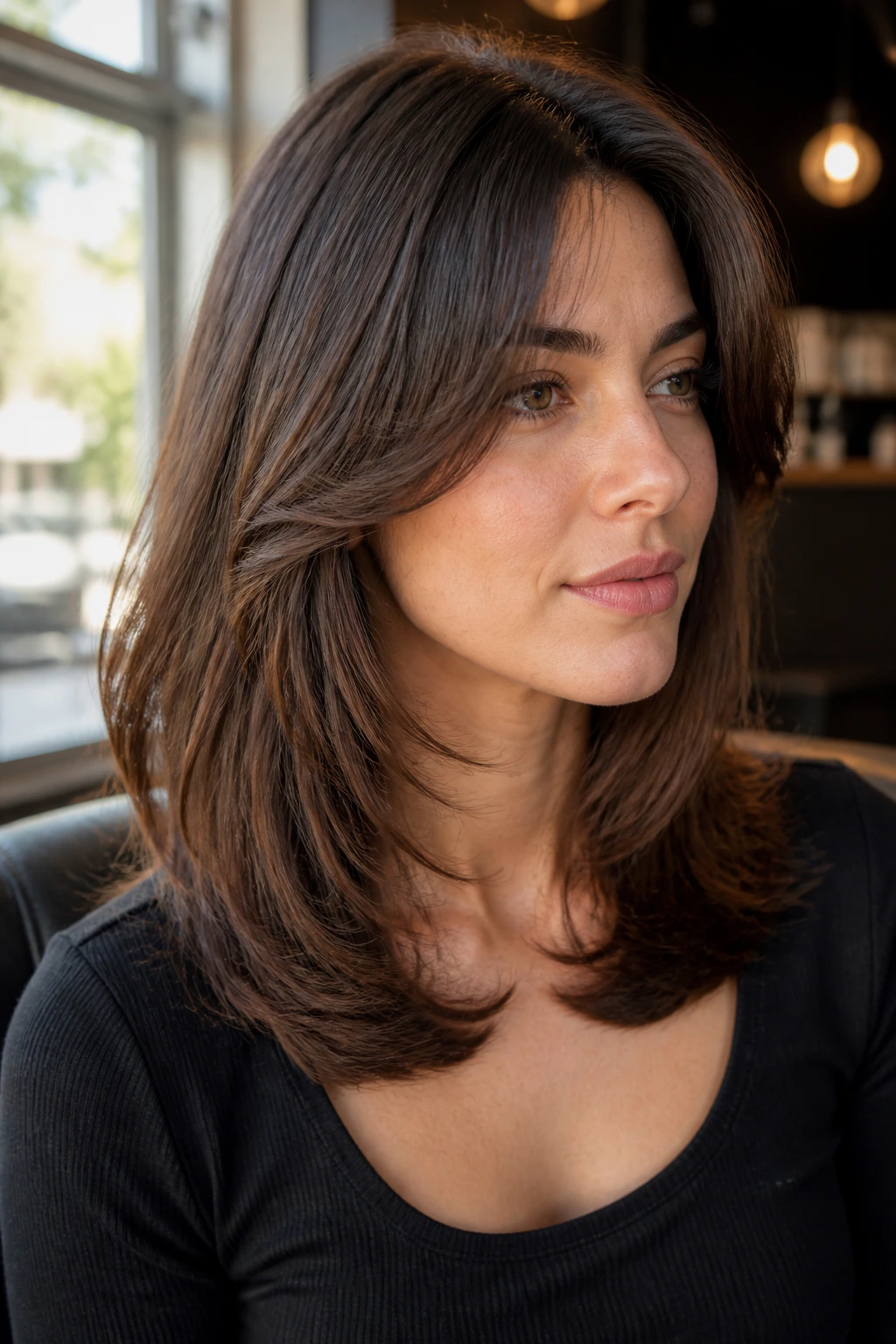
Cheekbone-grazing face framing layers are the quickest way to make hair look lighter without sacrificing length. The shortest piece usually sits right around the high point of the cheek, which pulls the eye upward and makes the whole cut feel more awake.
Why They Work
That placement matters. If the front layer starts too low, it sinks into the rest of the hair and loses its job. If it starts too high, the cut can turn sharp in a way that needs constant styling to stay soft.
A good cheekbone layer should move when you tilt your head, not sit there like a hard shelf. On straight or slightly wavy hair, I like this cut with a side of bend at the ends — a 1.5-inch round brush or a curling iron set on a loose wrap gives it that gentle curve.
- Best for oval, heart, and longer face shapes
- Works well with center parts and soft off-center parts
- Needs a trim about every 8 to 10 weeks if you want the line to stay clean
Tip: Ask for the shortest piece to hit the top of the cheek, not the middle of the cheek. That tiny difference changes the whole mood.
2. Curtain Bangs Blended Into Long Face Framing Layers
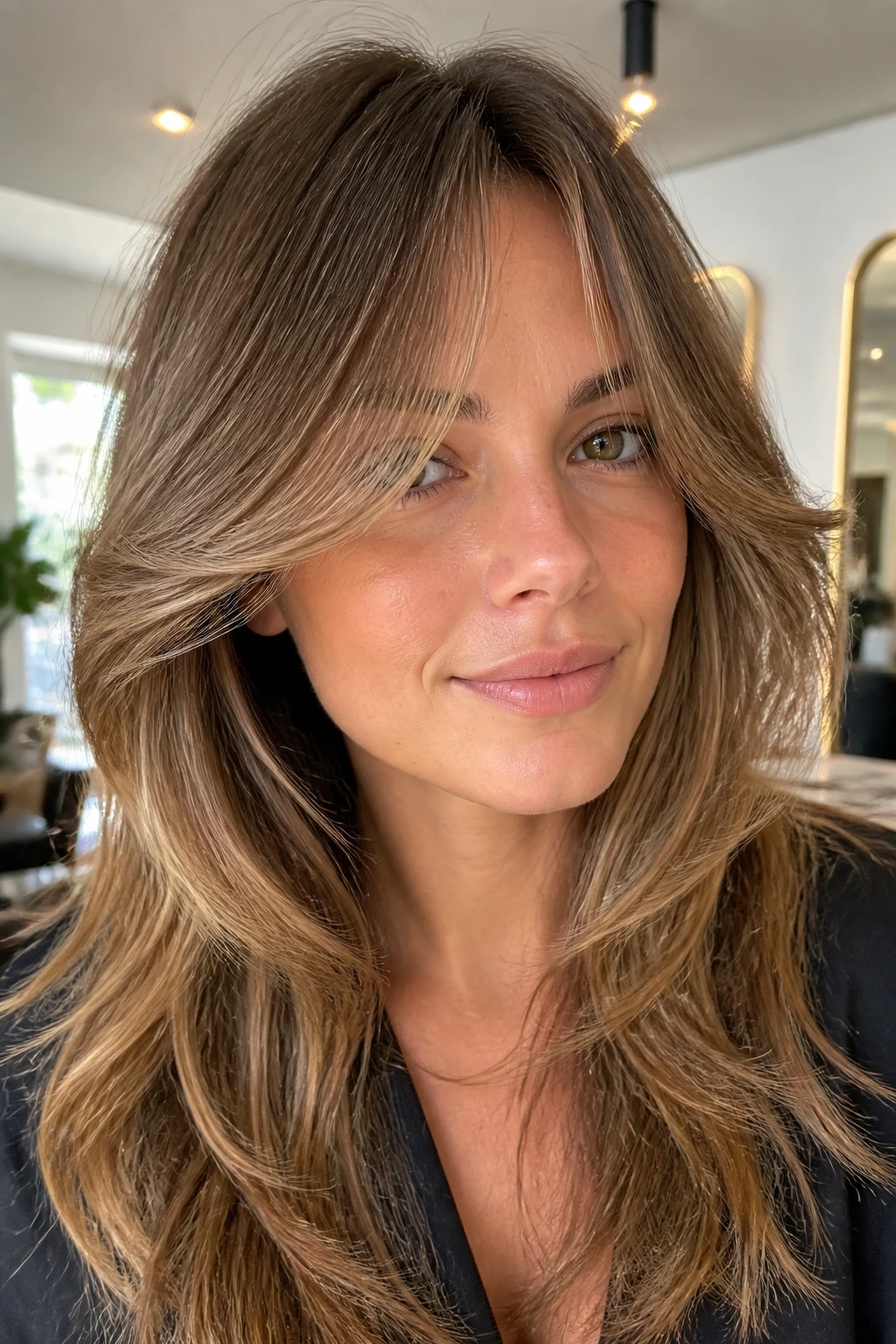
Curtain bangs are the easiest doorway into face framing layers if you want softness without a full fringe commitment. The center stays shorter, then the pieces angle out and melt into the rest of the cut near the cheek and jaw.
That shape is popular for a reason: it gives the front of the hair a job. The bangs break up a wide forehead, but the longer sides keep the style from feeling boxed in or overly styled.
The part I like most is the grow-out. A longer curtain bang does not scream for a trim every three weeks. It can live for a while, which matters if you do not want your hair schedule to run your life.
If you want this look to behave, ask for the shortest point to sit somewhere between the brow and the bridge of the nose, then have the sides taper past the cheekbone. Anything shorter can flip into full bangs faster than expected. A quick blow-dry with a round brush helps, but even an air-dried version looks good if the ends have a little bend.
3. Jawline Layers That Sharpen a Blunt Bob
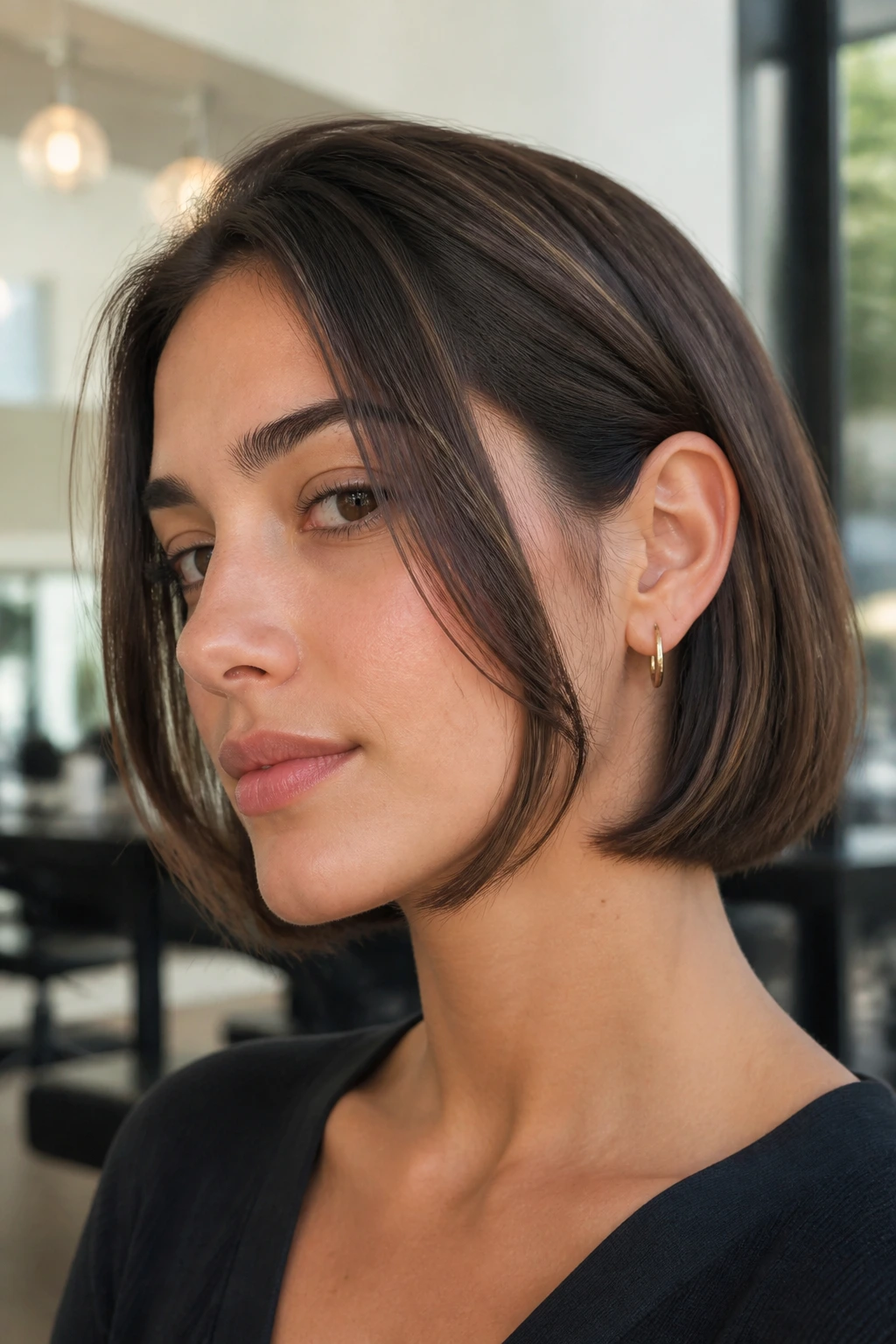
Why do some bobs suddenly look expensive with only a small change at the front? Because jawline face framing layers give a blunt cut shape without stealing the clean edge that makes a bob work.
This version usually keeps the back line solid and adds just enough softness at the front to frame the mouth and jaw. It is a smart move if you love structure but do not want your bob to feel severe.
How to Wear It
The best styling trick here is simple: tuck one side behind the ear and let the other fall forward. That little imbalance shows off the cut. A flat iron bend at the ends can help, but keep it subtle. You want a curve, not a curl.
Women with fine hair often like this because the bob still looks thick at the ends. Women with denser hair like it because the front stops the cut from feeling helmet-like. Both groups win, which is rare.
A jawline layer works best when the pieces stop right where the jaw turns. Too low and you lose the effect. Too high and it starts to read like bangs that changed their mind.
4. Chin-Length Face Framing Pieces on Long Hair
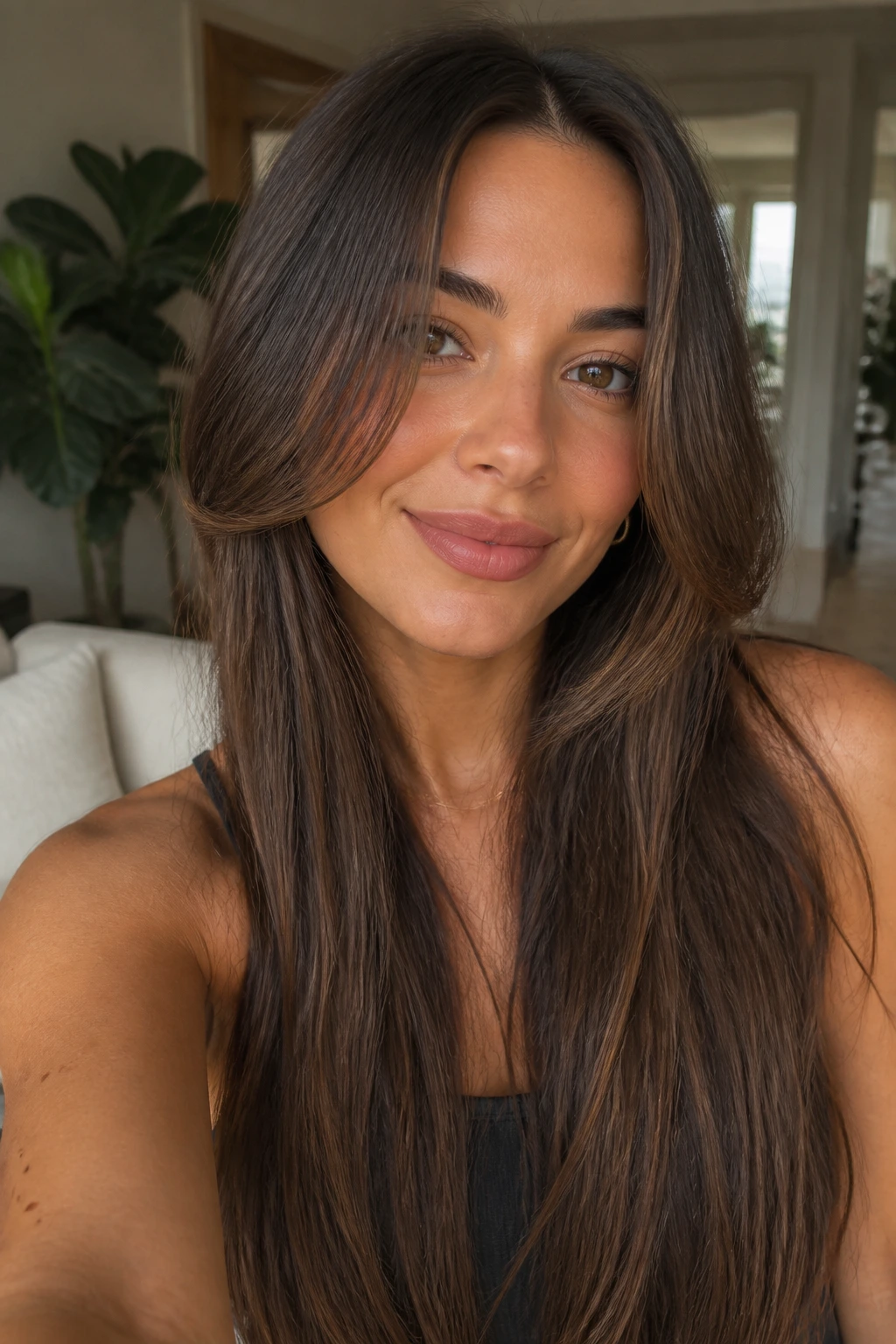
A woman with hair to the ribs can look like she made a dramatic change with only two face framing layers that hit the chin. That is the magic here. The length stays, but the front suddenly has a shape people notice.
The cut works because the chin is a natural stop point. It gives the eye somewhere to land before it moves down to the rest of the length. That makes the hair feel lighter, even if the back stays full and long.
- Great if you wear your hair down more than half the time
- Useful for pulling attention away from heavy ends
- Easy to style with a large round brush or a loose wave
- Looks especially good with tucked-behind-the-ear styling
If your hair is straight, a slight inward bend at the chin keeps the front pieces from hanging flat. If your hair is wavy, let the texture do the work and only define the front with a few passes of a brush or iron.
The catch is upkeep. Chin-length pieces grow out fast in your face. If you hate that feeling, ask for a slightly longer version that lands between the mouth and chin. Much easier.
5. The Butterfly Haircut With Floating Front Layers
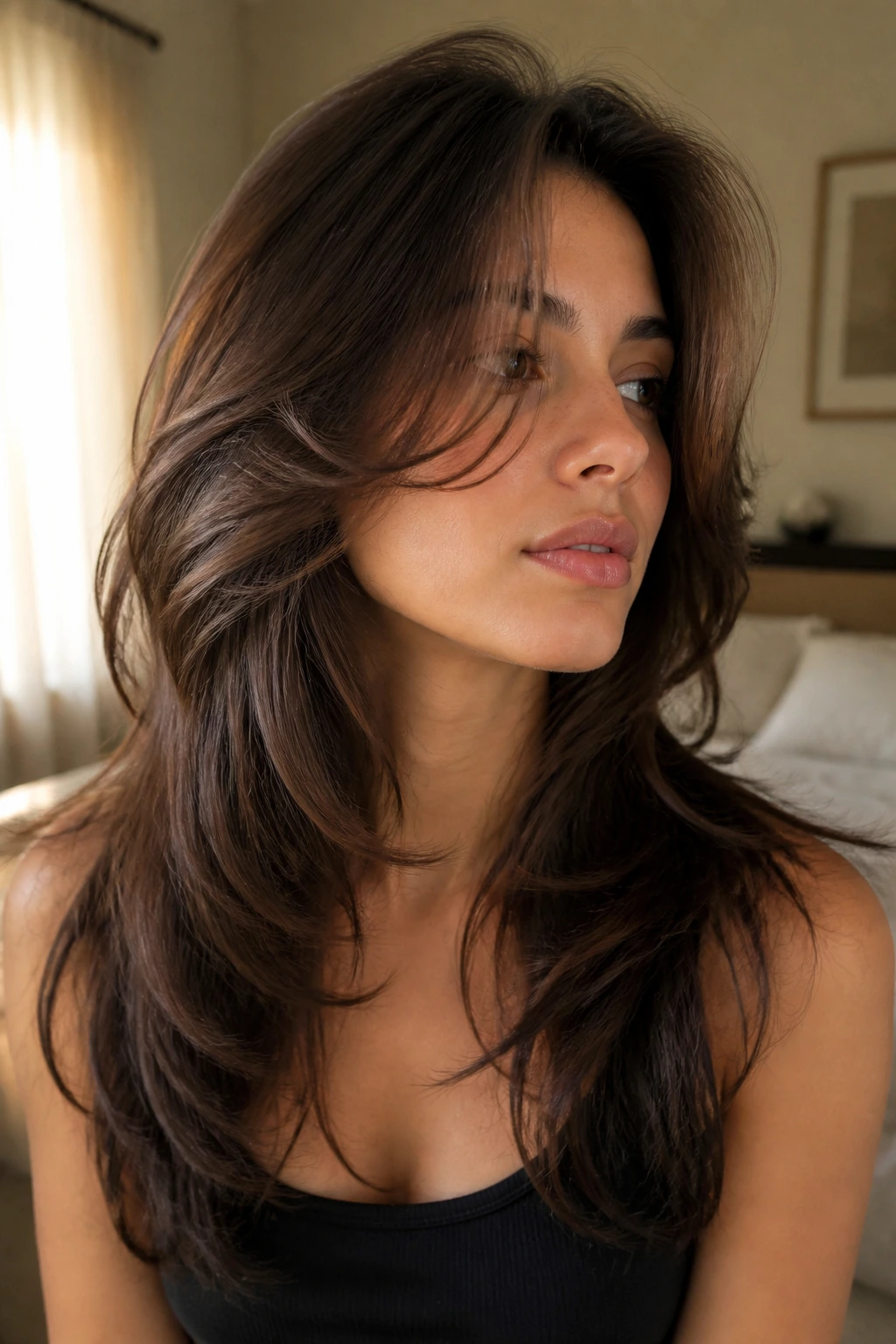
The butterfly haircut keeps hanging around because it gives you two things at once: lift around the face and length through the bottom. The short front layers create movement near the top, while the longer layers stay in place and keep the cut from feeling thin.
It is one of those styles that looks like more hair than it actually is. That sounds backwards, but it makes sense once you see it move. The shorter crown layers bounce, and the front pieces sweep away from the face instead of sticking to it.
I like this cut on thick hair most. The internal layering takes out weight, which helps the front pieces sit properly instead of collapsing. On finer hair, it can work too, but the layers need to be handled carefully or the ends can go see-through.
A big round brush sells the whole thing. Blow the front away from the face, then flip the ends under very slightly. If you wear it wavy, keep the top smooth and let the lower sections stay loose. That contrast is what gives the cut its shape.
6. The Collarbone Lob With a Soft Bevel
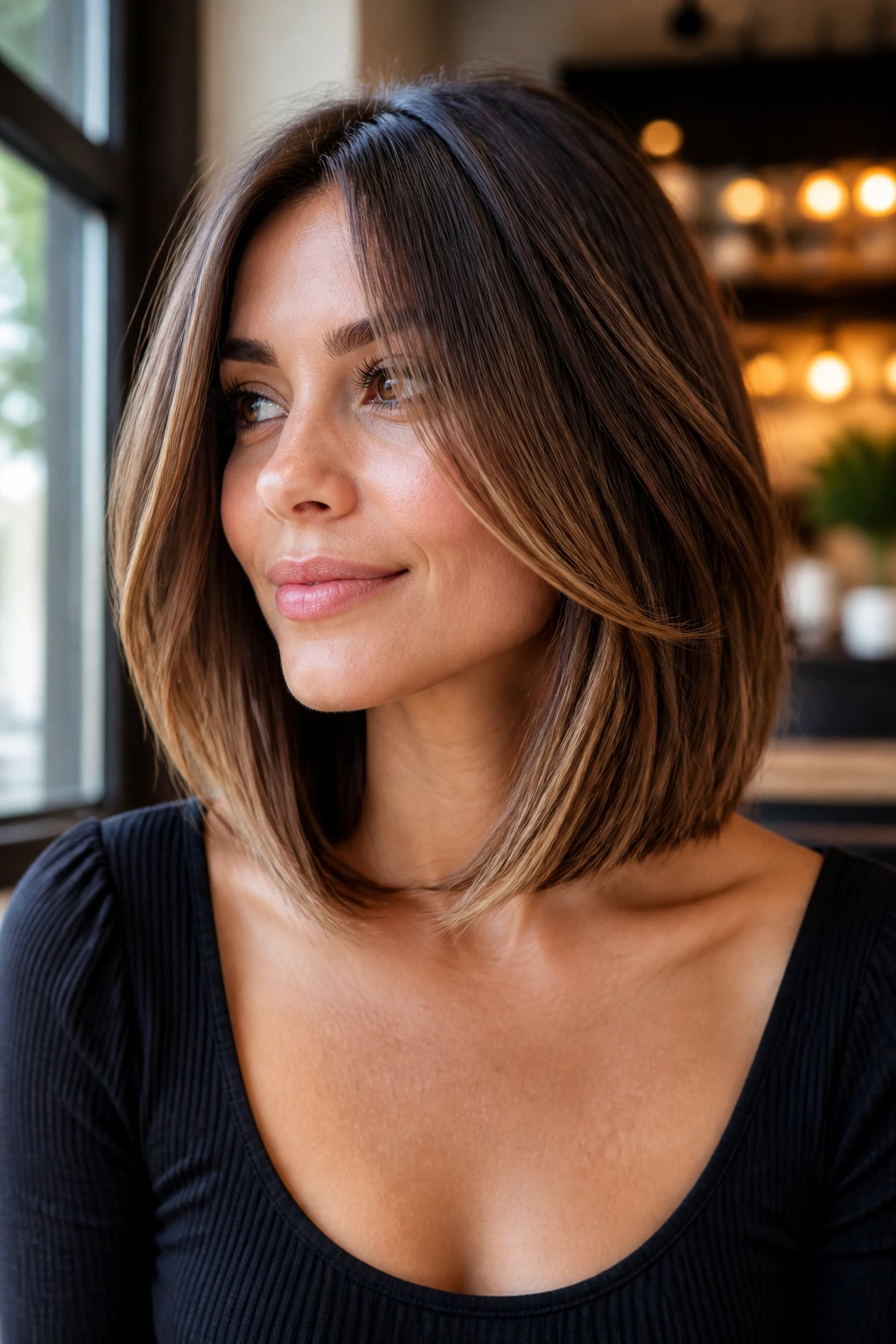
A collarbone lob with a bevel is the polished version of face framing layers. Nothing jagged. Nothing too broken up. The front pieces curve inward just enough to hug the collarbone and brush the sides of the face.
Compared with a straight lob, this one has more movement, but not so much that the haircut starts feeling busy. That is the sweet part. It looks intentional without looking overworked.
This cut tends to suit people who want hair that can go from air-dried to styled without a full remake. It also works well if you wear blazers, high necklines, or simple tops that need a little softness around the face. The hair does the balancing.
The bevel matters more than most people think. If the front falls straight down, the whole cut can go flat. If the ends turn too much, it starts to look dated. A gentle curve at the collarbone is enough. Nothing fussy. Just enough bend to show the line.
7. Razor-Cut Face Framing Layers for Thick Hair
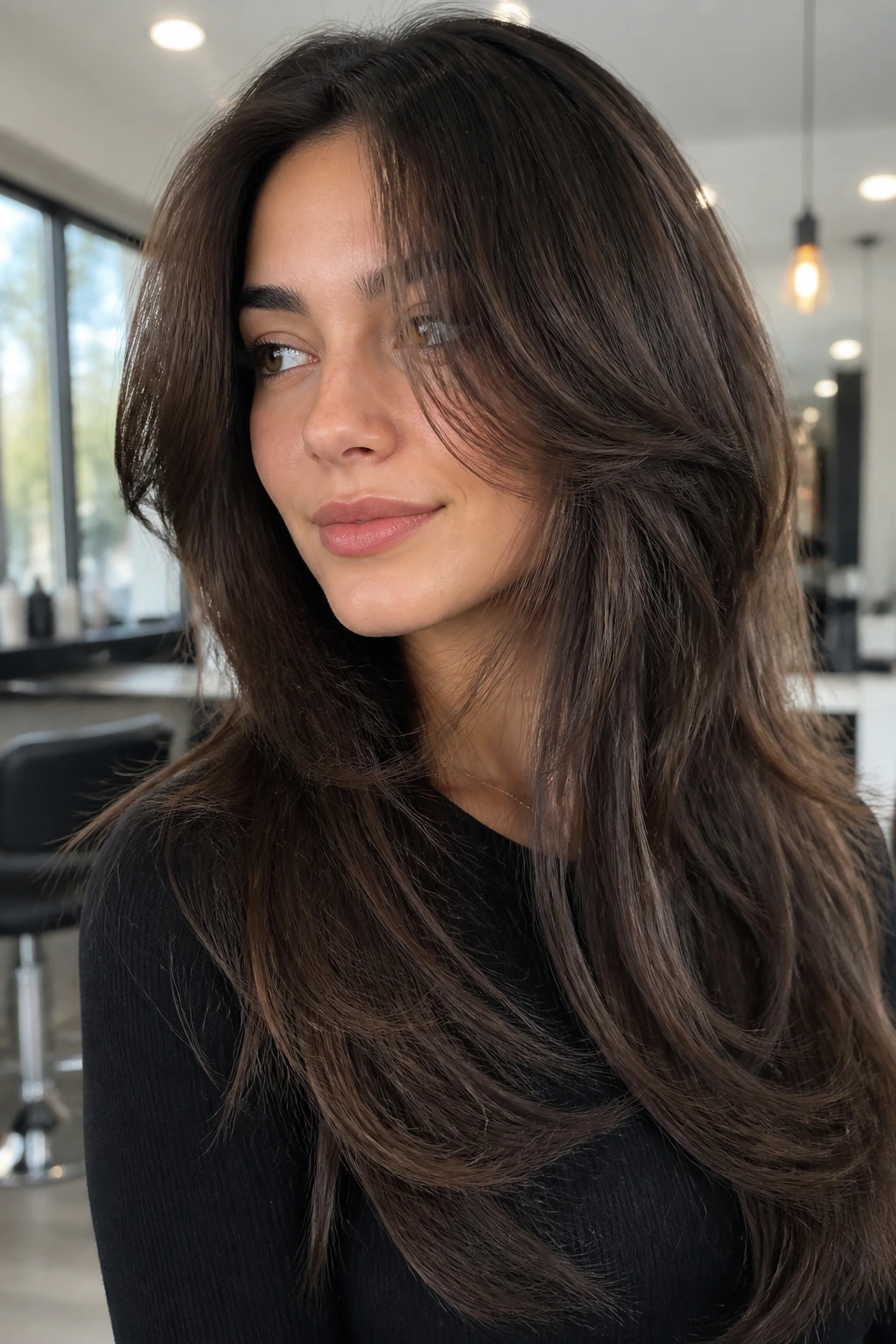
Razor-cut face framing layers are for hair that carries a lot of weight. A razor removes bulk in a way scissors do not, which makes the front pieces feel lighter and more mobile. On thick or coarse hair, that can be a huge relief.
The finish is softer and a little more broken up than a blunt scissor cut. That is the point. The front pieces do not sit as one solid block, so the hair moves around the face instead of sitting on it.
What to Watch For
Razor cutting is not the right move for every texture. If your hair is fine, damaged, or frizzy at the ends, the blade can make the finish look wispy in a bad way. On dense hair with decent condition, though, it can be a lifesaver.
This style usually looks best with a bit of texture spray or a light cream. Too much product weighs the pieces down and defeats the whole purpose. You want the front to lift and separate, not clump together.
A blunt fringe and a razor cut can fight each other. The better match is a soft side sweep or a long front piece that can fall naturally into the rest of the haircut.
8. Side-Swept Layers That Follow a Deep Part
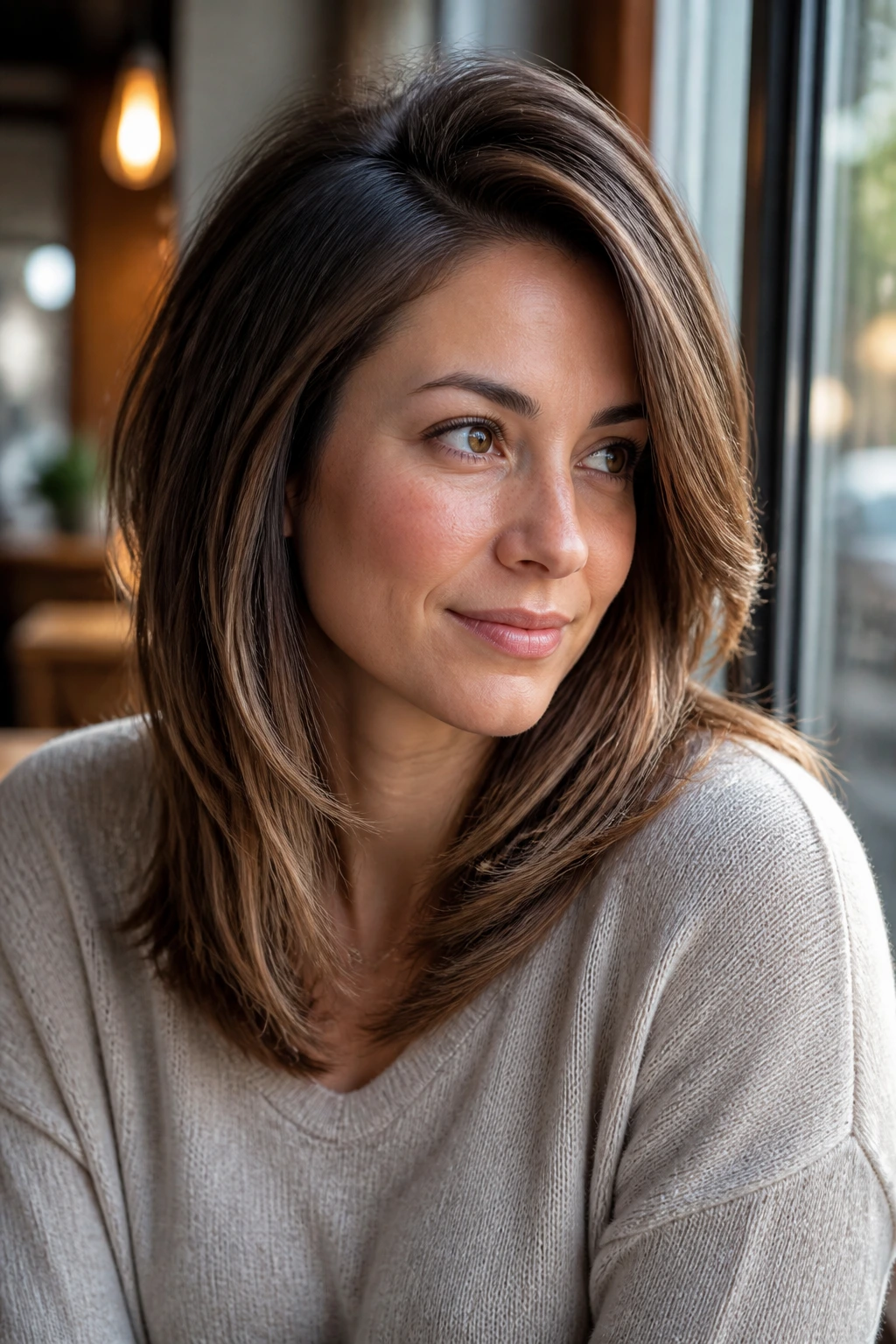
Why do side parts keep showing up in layered cuts? Because they give face framing layers a built-in direction. The hair already knows where to go, so the front pieces can sweep across the forehead and down the cheek without much effort.
This is a good choice if you never feel at home with a center part. The side-swept shape creates a diagonal line, and diagonal lines are flattering in the most practical sense — they move the eye instead of parking it in one spot.
The cut feels especially nice on medium-length hair. The front can start near the temple and drop toward the jaw, which gives the face a little softness without changing the whole outline of the haircut.
A quick root lift spray can help if the front wants to collapse. Blow-dry the part first, then direct the front pieces away from the face with your fingers or a paddle brush. You do not need a perfect swoop. You need movement, and a little unevenness actually helps.
9. Long U-Shaped Layers That Keep the Ends Full
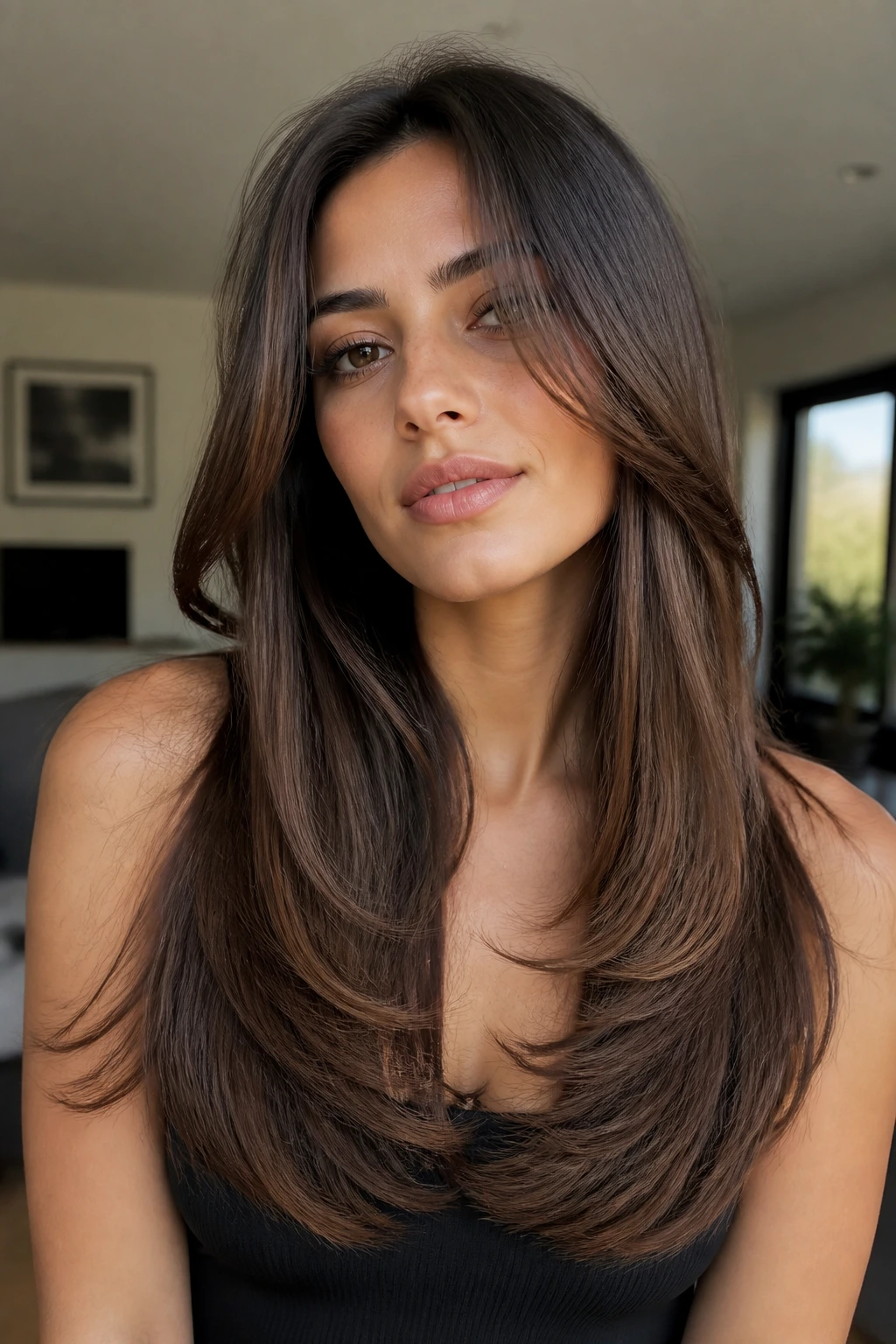
A long U-shape is the quiet one in the room. It does not shout, but it makes the whole haircut look better. The front pieces angle down gradually, the back stays full, and the result is a soft frame that does not eat the ends.
That shape is a good answer if you like long hair but hate the dead-flat look that can happen when everything is cut the same length. The U keeps the perimeter from feeling blocky, and the front layers give the face some air.
I prefer this on hair that already has some density. The curve at the front needs enough weight to show up. On very fine hair, a U can disappear unless the stylist keeps the layers restrained.
You can wear this straight, wavy, or brushed into a loose blowout. It is one of the easiest shapes to live with because it does not need constant fixing. It just needs the right start point and a clean line through the ends.
10. Shaggy Face Framing Layers With a Soft Fringe

A shag is what happens when face framing layers stop trying to behave and start moving. The front is choppy in a controlled way, the fringe is soft, and the whole cut has that slightly lived-in feel that looks better with some grit in it.
This is not the cut for someone who wants every strand in place. It works because it looks a little undone. The layers around the face break up the outline, which gives straight hair more texture and wavy hair more shape.
A light mousse at the roots and a rough dry with your fingers can be enough. If you over-smooth it, the character disappears. That is the trap. The cut wants lift, not polish.
- Best for medium to thick hair
- Good for natural wave and loose curl
- Easier to style with texture spray than with heavy cream
- Needs a stylist who knows how to remove weight without making holes
The soft fringe is what keeps this from turning into a full punk shag. A little fringe, a little bite, and the front pieces still land in a place you can tuck behind the ear when you want to.
11. Curly Face Framing Layers That Follow the Curl Pattern
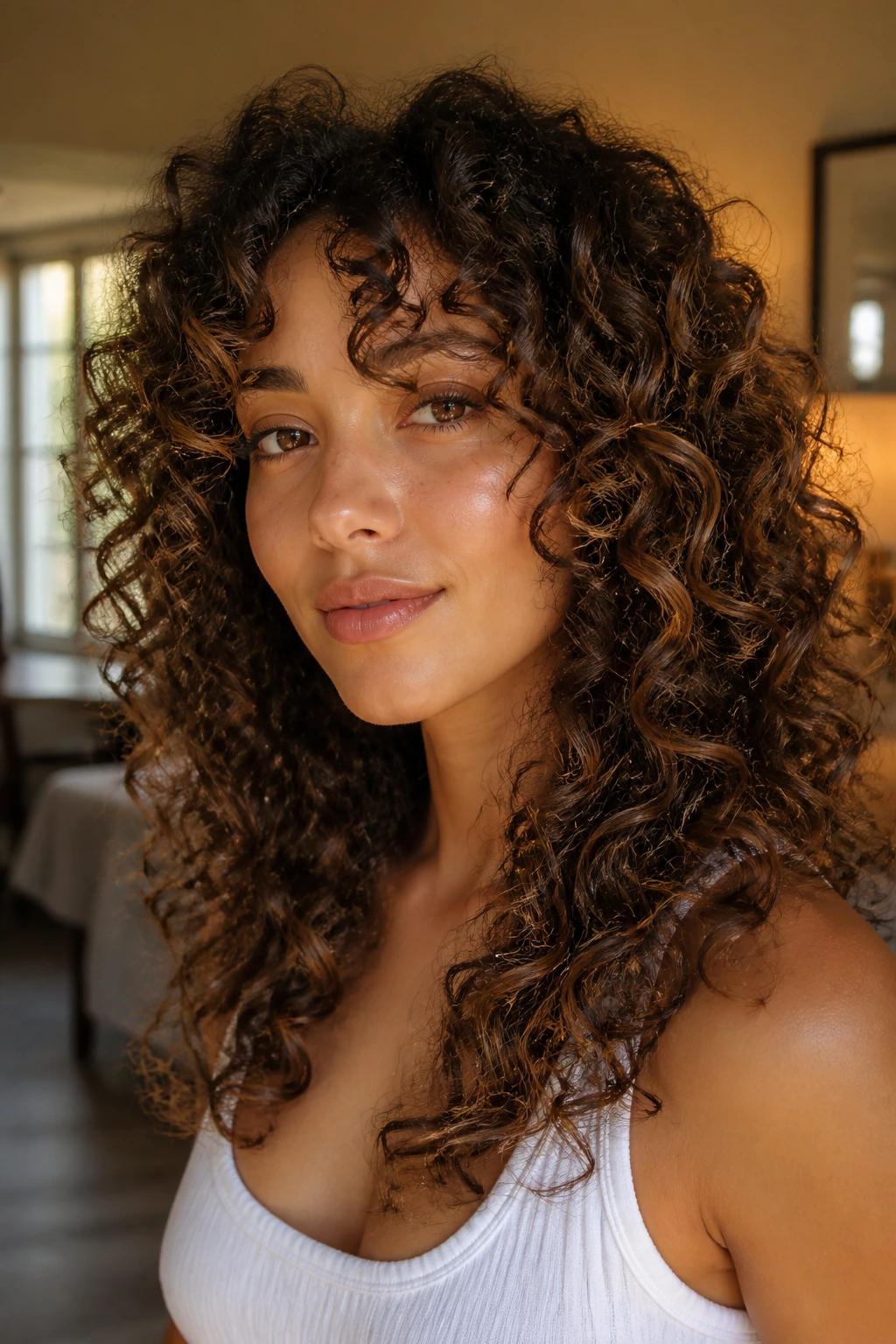
Do curly hair and face framing layers get along? Absolutely, but only when the cut respects the curl pattern. Chasing the curl after it dries is a mistake. The better move is to shape the front so the curls stack where you want them.
A good curly frame keeps the curl from forming a triangle around the face. Instead of hanging straight down, the layers should give the curl a place to spring outward and then fall back in. That keeps the shape round and soft.
What to Ask Your Stylist
Ask whether the cut will be done dry or curl-by-curl. Dry cutting can help the stylist see where each curl lives. That matters, because a curl at the cheek may spring up two inches higher than a curl at the chin.
- Bring your hair down in its natural pattern, not stretched
- Ask for the shortest layer to match the curl that sits closest to the cheekbone
- Avoid over-thinning if your curls are fine
- Use a diffuser on low heat if you want the front to keep its shape
Curly face framing layers are at their best when they look a little different from side to side. That is not a flaw. That is how curls behave.
12. Wavy Layers That Start at the Mouth and Fall to the Collarbone
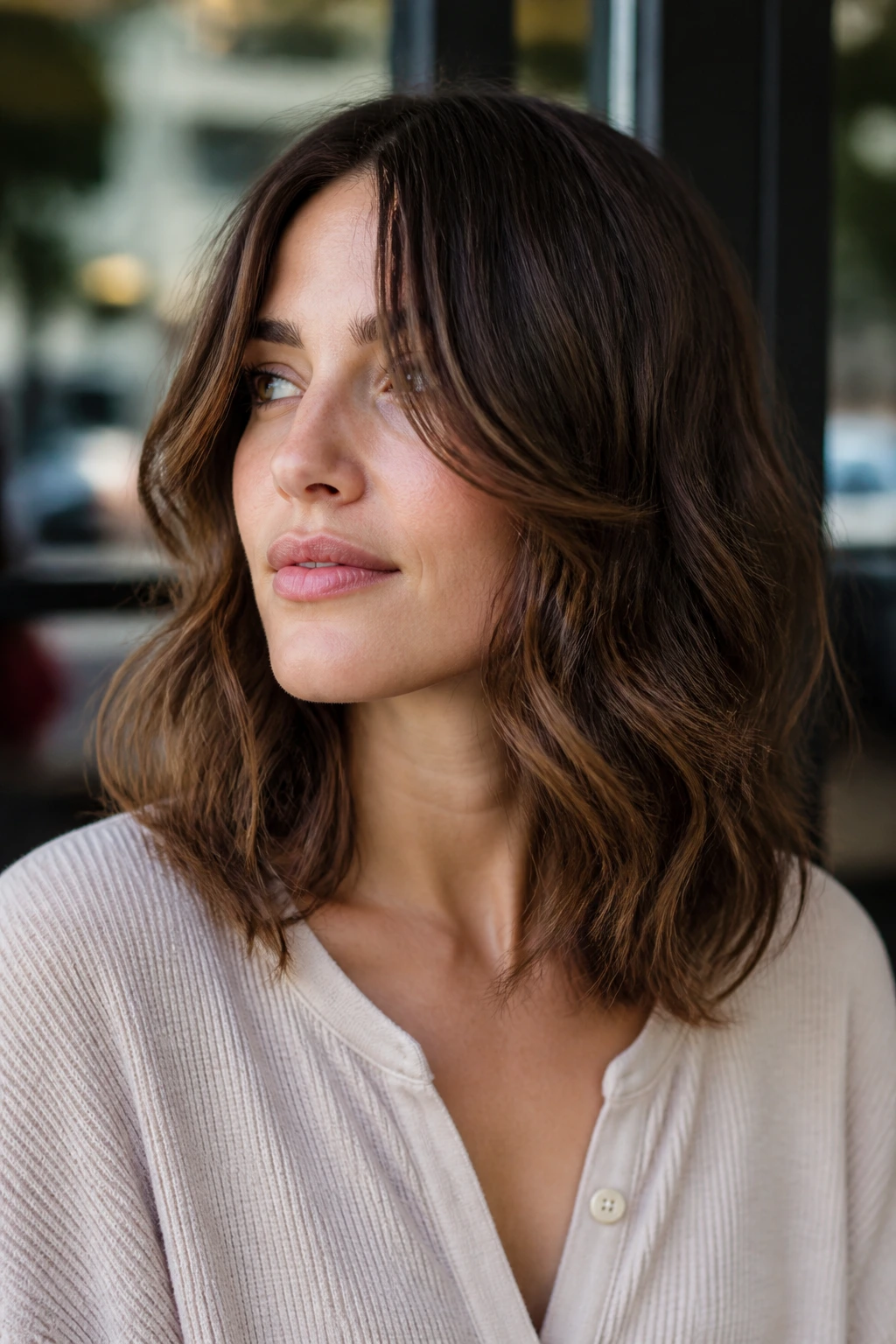
Soft waves and a mouth-length frame go together in a way that feels easy. The front pieces catch the bend of the wave, then slide down to the collarbone instead of stopping abruptly at the cheek or jaw.
That gives the haircut a relaxed, easy movement. Nothing severe. Nothing carved. The line is there, but it does not boss the rest of the hair around.
If you air-dry, this is one of the nicer shapes to live with. The layers can dry into their own loose curve. If you use a 1.25-inch curling iron, wrap away from the face, leave the last inch out, and brush through once the hair cools. That gives the front a softer fall.
The mouth-to-collarbone distance is a sweet middle ground. Shorter pieces can feel high maintenance. Longer pieces can vanish. This one sits in the middle and stays visible without screaming for attention.
13. Minimal Face Framing Layers for Fine Hair
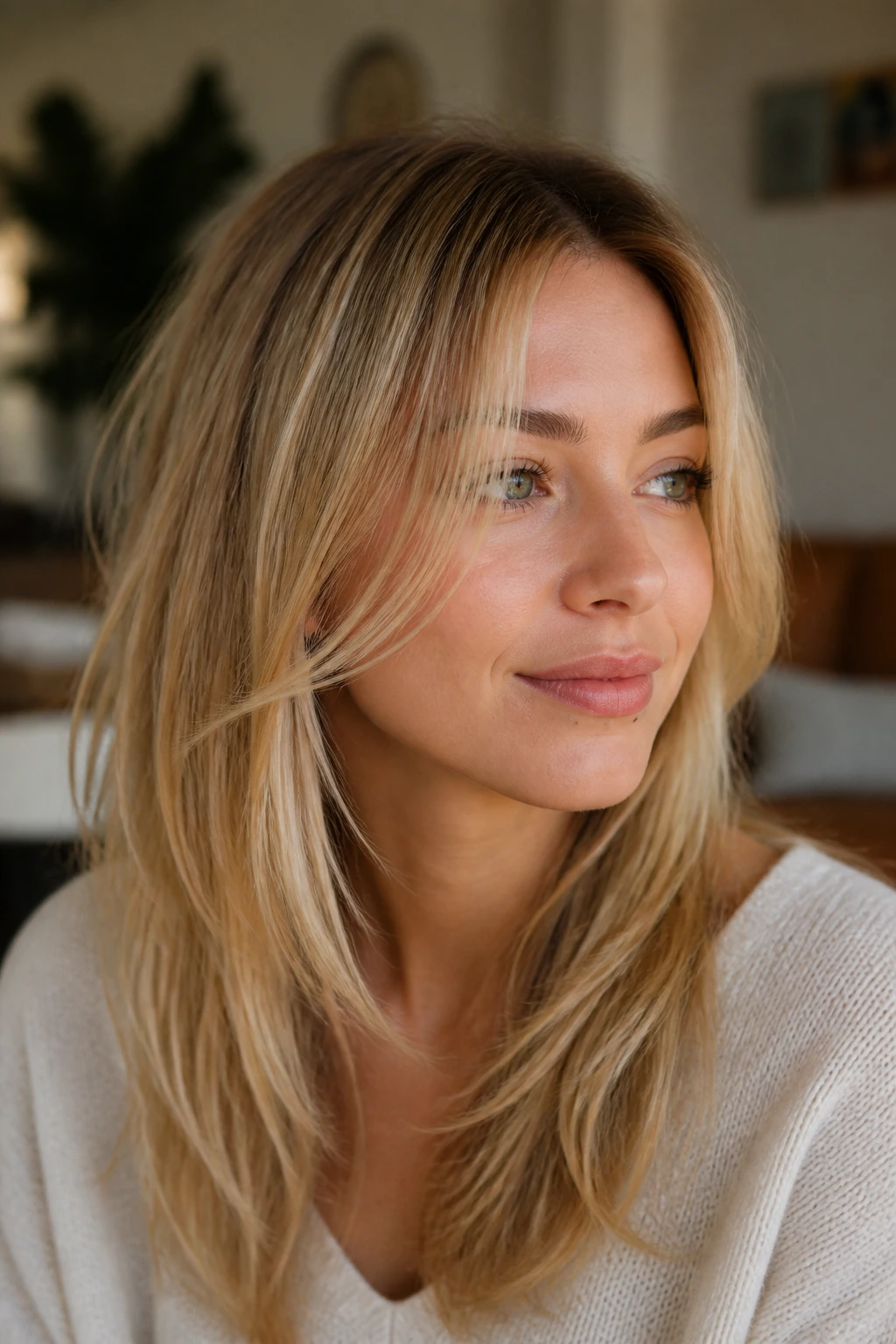
Too many layers can be a disaster on fine hair. Not always. But often enough that I say it plainly. Minimal face framing layers keep the front moving without taking so much weight that the ends go stringy.
The idea here is restraint. You still get shape around the face, but the stylist leaves more density through the rest of the cut. That means the front does the framing while the bottom still looks like hair, not strands.
A tiny bevel around the cheek or jaw can be enough. If the shortest piece is only a couple of inches shorter than the rest of the front, you get softness without a big jump in length. That matters when the hair itself is fine and every inch counts.
This cut is also a good match for people who like to wear their hair up. The layers fall out of a ponytail nicely without leaving huge gaps. If you want body, use a root spray at the crown and a small round brush at the front. Keep the product light. Fine hair gets cranky fast.
14. The Blowout Frame That Starts at the Temple
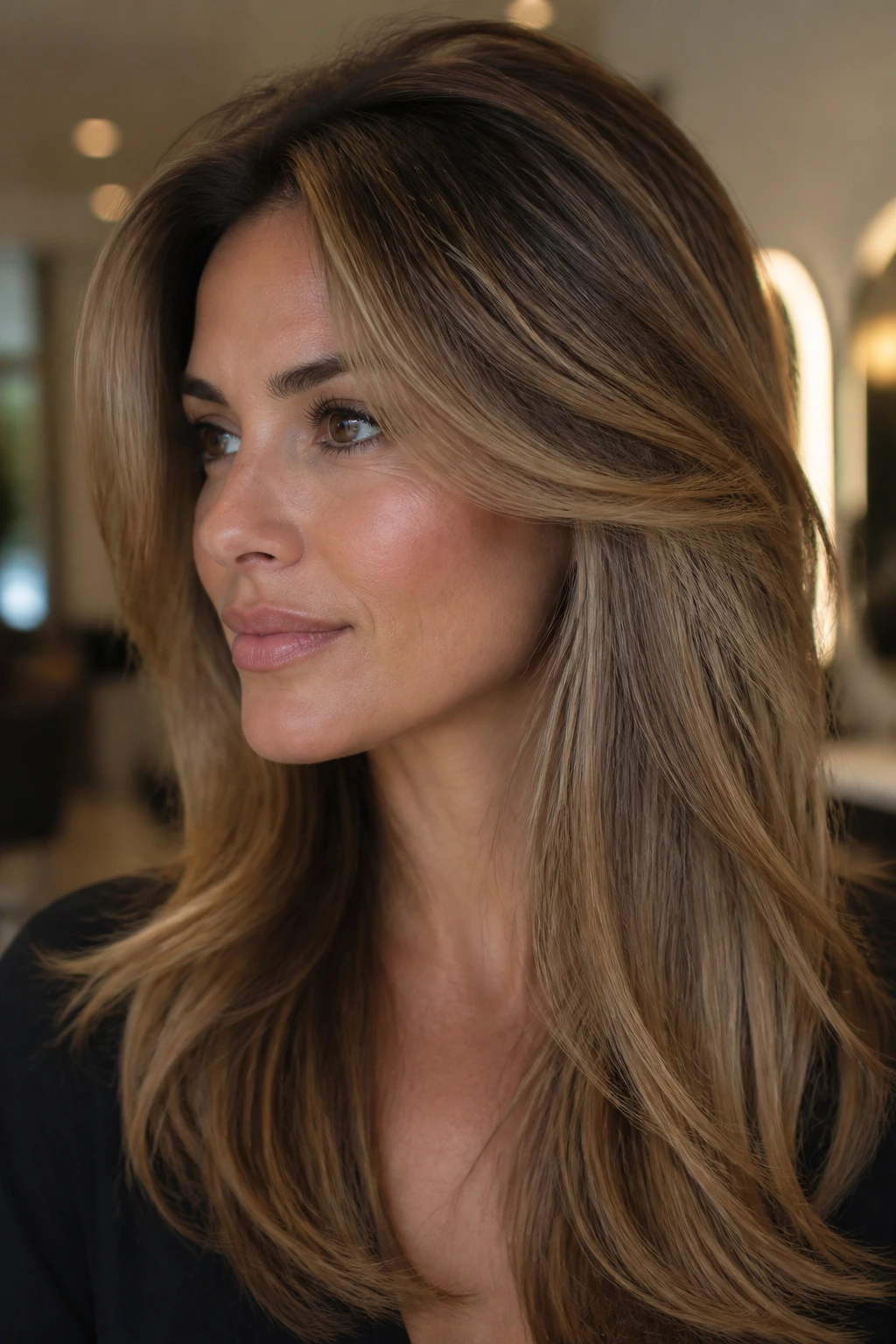
A salon blowout often looks expensive because the front pieces are doing the work. A temple-starting face frame lifts the eye line and gives the hair that swept-back shape people love when they leave the chair.
I think this cut is underrated on medium and long hair. It does not need a dramatic bang or a high layer to feel finished. The front starts at the temple, falls past the cheek, and keeps traveling until it meets the rest of the length.
The Feel of It
On fresh hair, this shape feels airy around the face. On second-day hair, it still holds because the front pieces have enough weight to settle back down instead of flipping out in odd places.
A round brush with a 2-inch barrel works well here if your hair is long. Wrap the front away from the face, pull up slightly at the root, and let the ends cool before touching them. If you rush, the bend drops out.
This is a favorite for people who like a blowout but do not want a haircut that only works when it is freshly styled. It keeps a little of that swing even when the day gets messy.
15. Wolf-Cut-Inspired Face Framing Layers

A softer wolf-cut approach gives you edge without the full shaggy commitment. The top is shorter, the front is broken up, and the layers around the face feel more detached than a classic layered cut.
What makes this different is the balance. The crown has movement, but the front pieces still connect enough to frame the face instead of making the hair look chopped to pieces. That connection matters. Without it, the cut can look more costume than style.
This shape works well on hair that likes texture. Air-dried wave, loose curls, even a little bend from a flat iron — all of it fits. The cut is happy when the hair has some attitude.
If you want this version to stay wearable, ask for softness at the ends and keep the shortest front pieces a little longer than you think. That leaves room for styling. A wolf cut that starts too high can be hard to grow out. This softer version gives you the flavor without the fight.
16. Face Framing Layers on a Pixie Bob
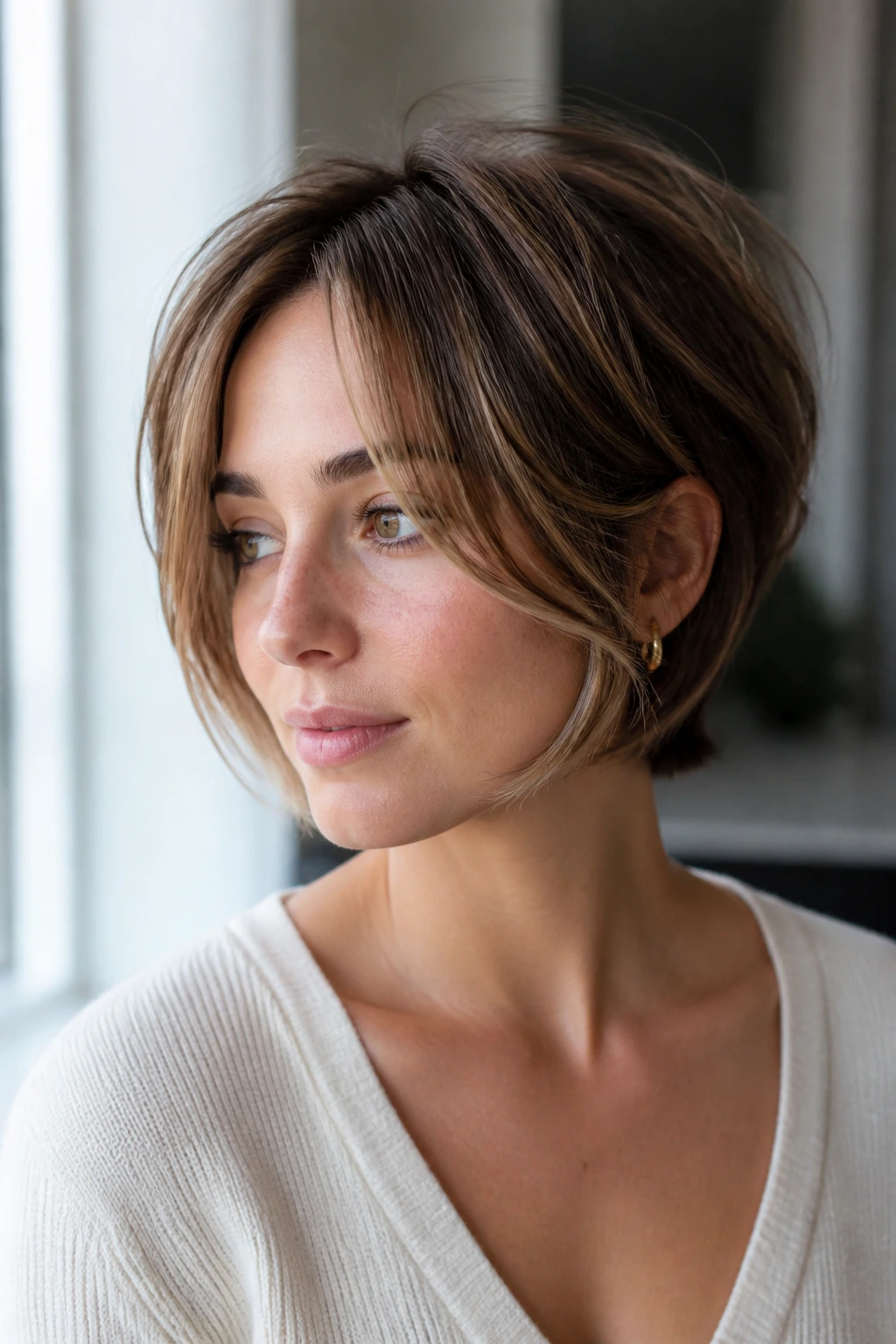
Short hair still needs shape around the face. A pixie bob with face framing layers softens the transition between the cheek, ear, and neckline so the cut does not feel like a block sitting on the head.
The front pieces may only be a few inches long, but they matter a lot. They create the line you see first. A piece that brushes the cheekbone can make the whole cut feel lighter, while a tucked side piece can show off the jaw in a clean way.
This kind of cut is great if you like short hair but hate the stiffness that sometimes comes with it. It works with a side part, a center part, or a messy push-back using a little styling cream. That flexibility is the real win.
One warning: tiny front layers grow out fast. If you want to keep the shape crisp, plan on small trim appointments rather than waiting until the whole cut has lost its line. Short hair is honest that way.
17. Grow-Out-Friendly Layers That Start Below the Chin
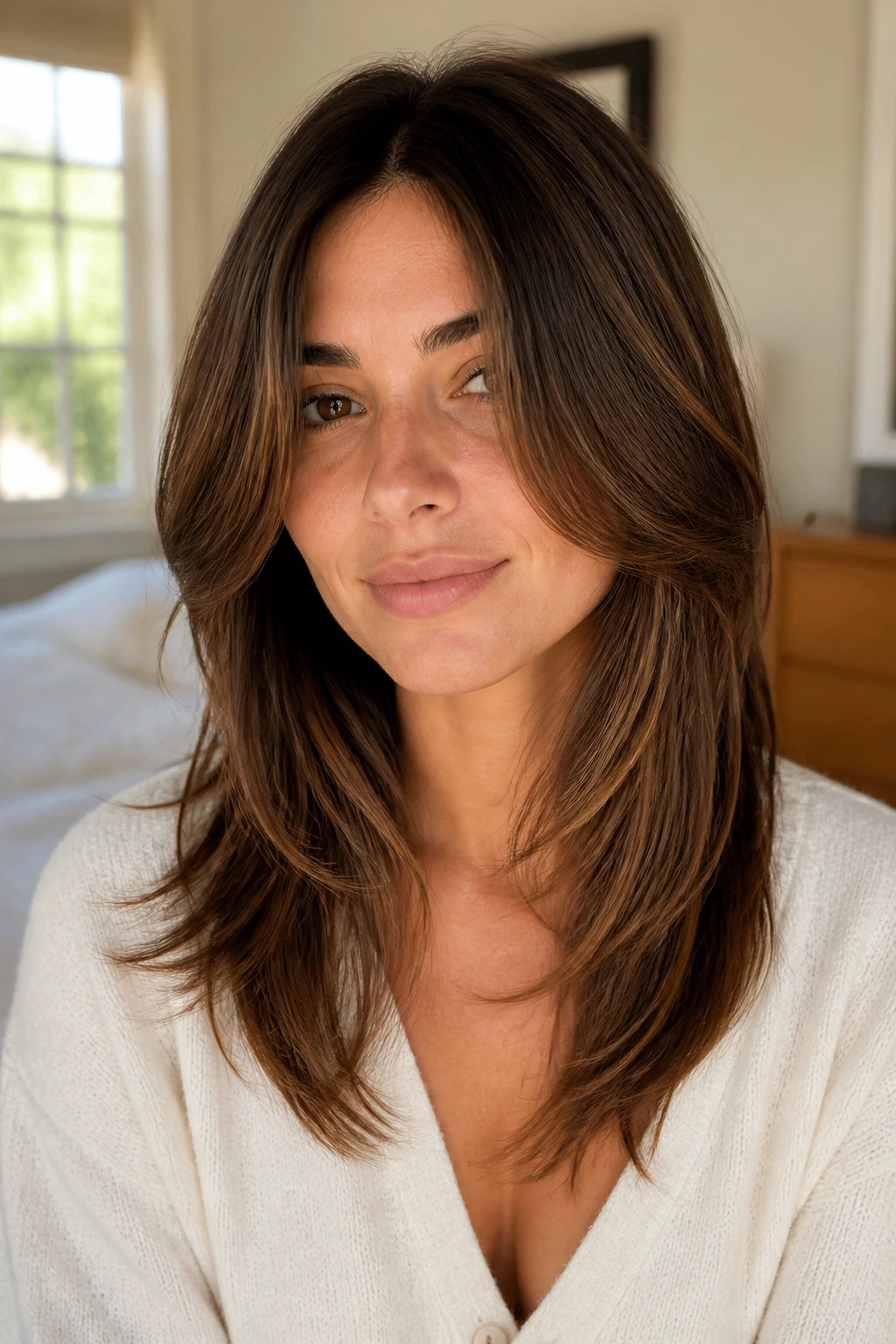
Some people want a frame that grows out cleanly instead of a cut that looks perfect for two weeks and then falls apart. Grow-out-friendly face framing layers start lower — often below the chin — and blend slowly into the length.
That makes them easier to live with. The layers do not interrupt the silhouette so sharply, which means they keep working even after a month or two of growth. If you are tired of watching your haircut change shape too quickly, this is the smarter route.
The shape also plays well with low-maintenance styling. A quick bend at the front, a center part, and a little smoothing cream can be enough. You do not need to fight the hair into submission every morning.
I like this version for people who wear their hair up a lot but still want some softness when it is down. The lower starting point keeps the front pieces from jumping out of ponytails in a weird way. You get shape now and grace later. That is worth a lot.
18. Diagonal Layers That Slim a Rounder Face Shape
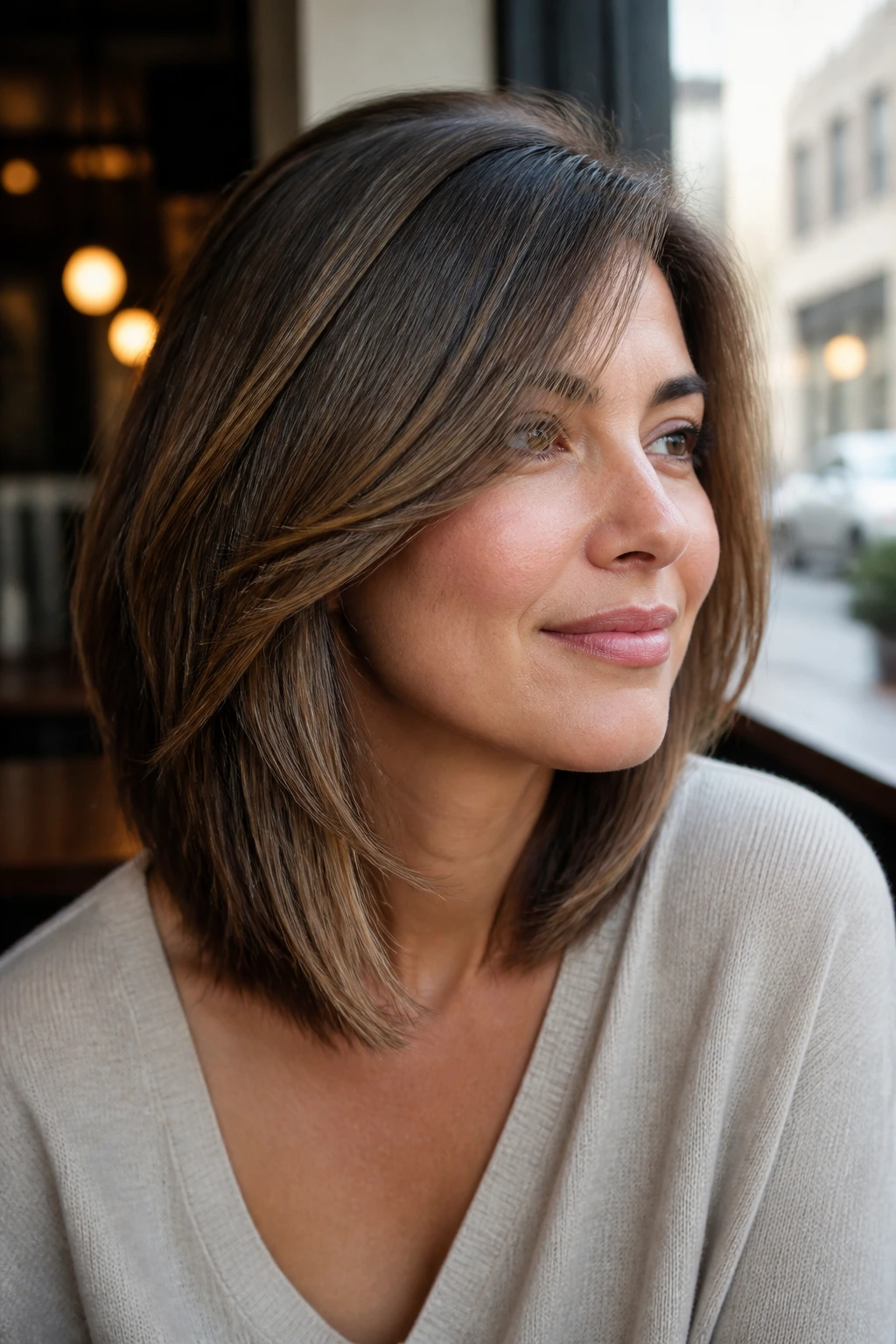
Can a haircut change how a face reads? Yes, and diagonal face framing layers are one of the cleanest ways to do it. The diagonal line pulls the eye down and across, which creates length where a round face can use it.
The trick is not about hiding the face. It is about guiding the eye. A piece that starts near the brow or temple and drops toward the jaw gives the front a lean, angled shape that feels lighter than a straight-across frame.
This works best when the layers are not too short. If the front piece stops above the cheek, the angle can look abrupt. If it falls too low, the shape gets lost. Somewhere between the cheekbone and jaw is usually the sweet zone.
A side part helps, but it is not mandatory. The cut does most of the work on its own. Keep the ends soft with a round brush or loose wave, and let the diagonal line do its thing. No need to over-style it into a perfect frame.
19. Face Framing Layers That Play With Bright Front Pieces
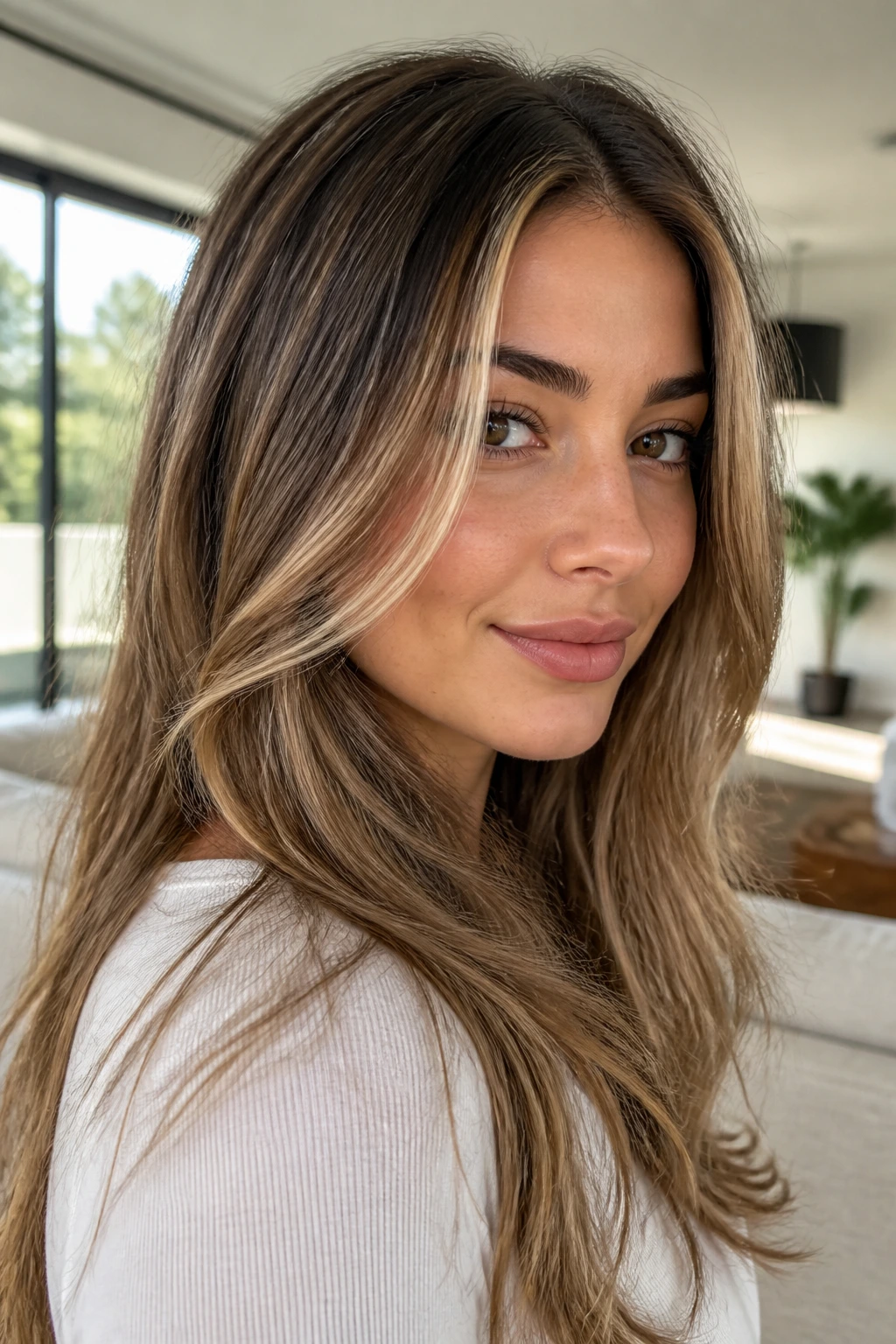
Color and cut often work together, and this is one of the places where that shows up plainly. Face framing layers paired with lighter front pieces create a shape that looks fuller around the face, even when the rest of the hair stays deeper or more natural.
The cut gives the color a place to live. The color gives the cut a reason to stand out. Without the layering, lighter pieces can feel flat and stripey. Without the lighter pieces, the layers can vanish a little if the hair is one solid tone.
This works especially well when the front section is cut to move away from the face and show the lighter strands underneath. A blowout helps, but even a loose air-dry can make the shape visible if the front pieces are placed well.
The key is restraint. Two bright pieces and a clean frame often look better than a heavy block of light color at the front. Too much and it starts to look like you meant to make a statement. Sometimes you do. But most women I see want a softer effect, not a loud one.
20. Tapered Layers That Blend Into the Ends
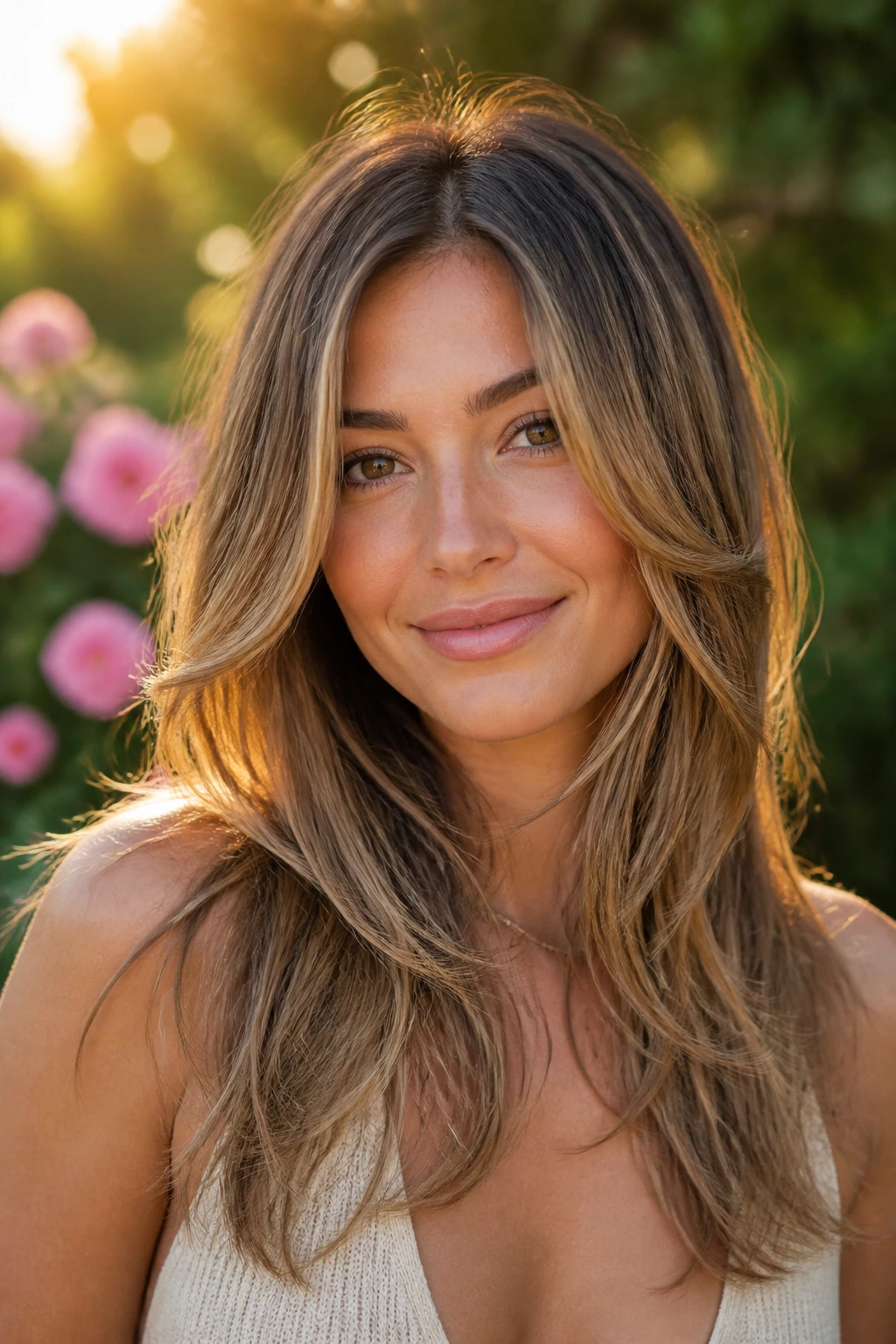
The most wearable version of face framing layers might be the one that looks the least dramatic at first glance. Tapered layers start near the front, then soften as they move into the ends, so the haircut keeps its length and still gets movement.
That makes this shape useful for a lot of situations. It works with a low ponytail. It works with a quick blow-dry. It works when you let your hair dry on its own and hope for the best. Not every haircut can say that.
The front pieces still frame the face, but they do it quietly. You can tuck them behind the ear, sweep them out with a brush, or let them fall forward when you want softness around the jaw. The line stays flexible, which is a nice thing to have in a haircut.
This is the version I’d hand to someone who wants movement without drama. Not too short. Not too fussy. Just enough shape to make the haircut feel finished when the rest of your life is not.
If you want, I can turn this into a salon-ready version next — something with a more polished magazine tone, a more casual beauty-blog voice, or a stricter SEO structure built for search.
