



Curly hair can look expensive when the shape is right. When the cut is wrong, it can look heavy, puffy, or flat in places that should have bounce.
Long layers for curly hair solve that mismatch better than almost any other haircut, because they remove weight without chopping the length off the ends. That matters more than people think. Curls do not fall like straight hair, and they do not shrink in one neat, polite way either.
The best long layered cut works with your curl pattern instead of arguing with it. Some versions add face framing and movement near the cheeks. Others hide the weight inside the shape, which is the smarter move if your hair is dense or your curls collapse under too much bulk.
And yes, the details matter. Where the shortest layer starts, whether the cut is done dry or damp, how much weight stays at the perimeter — all of that changes the final look more than a lot of salon chatter makes it sound. Start with the shape you want, then match it to what your curls actually do when they dry.
1. Soft face-framing layers that start at the cheekbones
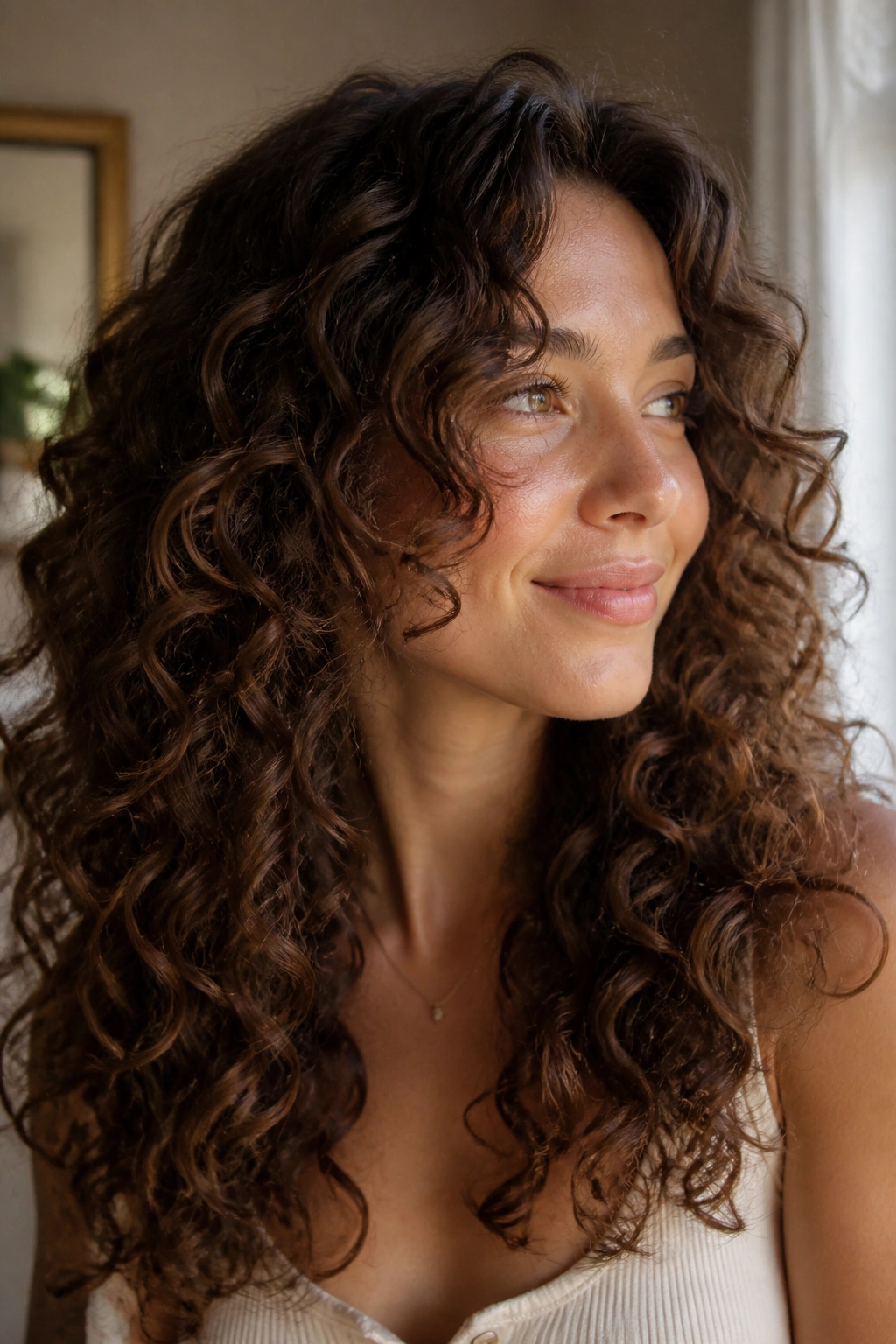
These are the easiest long layers to live with, and I say that without hesitation. Cheekbone-starting layers open up the face, pull some of the heaviness away from the front, and keep the rest of the length intact.
The trick is restraint. If the shortest pieces begin too high, the cut can turn frizzy and split-looking around the sides. If they start too low, you lose the lift that makes the whole style feel alive.
- Best for people who want movement without a dramatic haircut.
- Works especially well on medium to thick curls.
- Helps round or heart-shaped faces feel a little softer.
- Looks best when the front pieces land somewhere between the cheekbone and jaw.
My blunt take: this is the safest place to start if you are nervous about layers. It gives you shape without making the haircut shout.
2. Long U-shaped layers for soft length
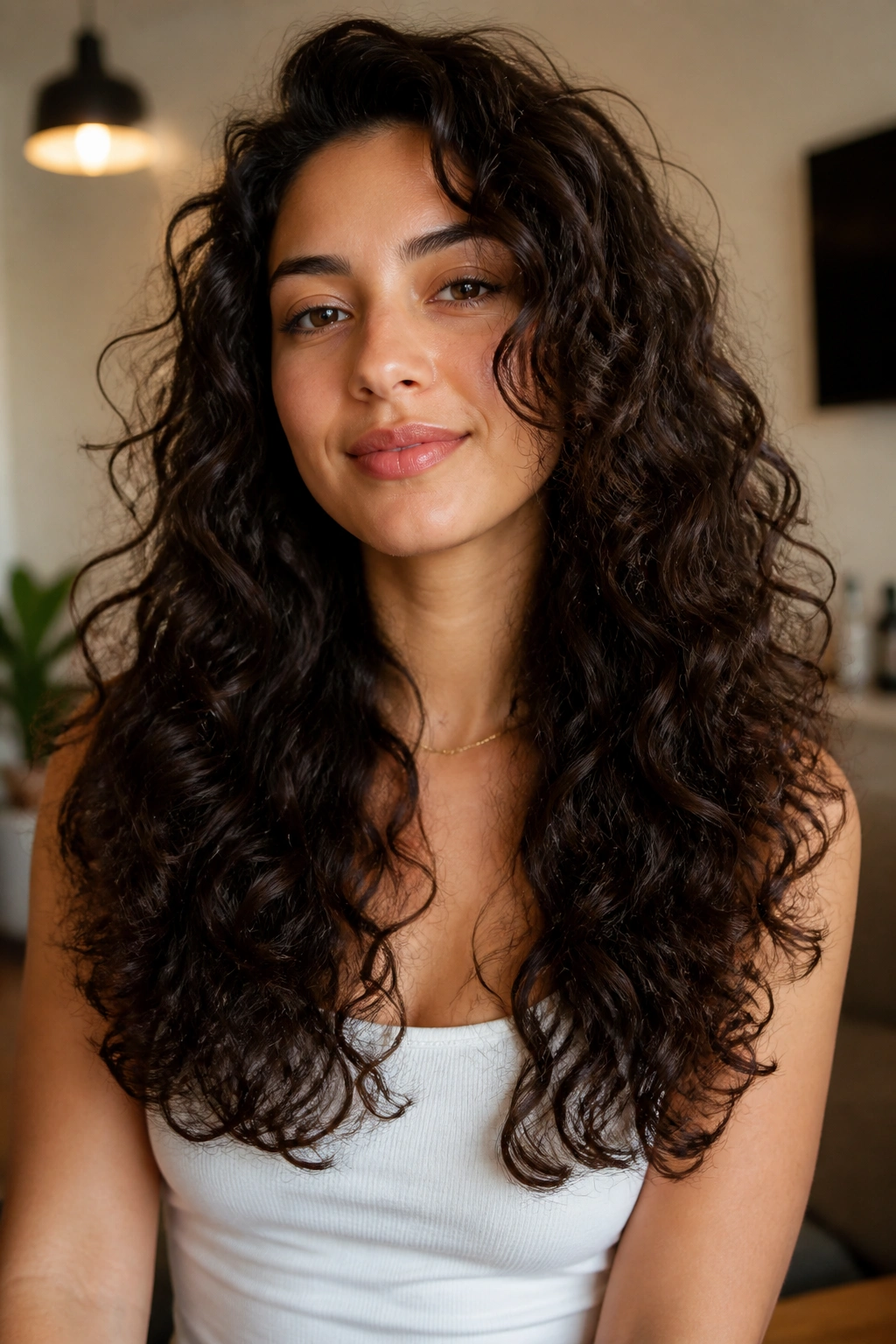
Why do U-shaped layers keep curly hair looking polished instead of chopped? Because the perimeter stays full while the interior gets a little breathing room.
The silhouette matters here. A U-shape gives you that long, curved edge at the bottom, so the curls still read as long and lush when they dry. It is a good choice if you like hair that moves, but you do not want the ends to look thin or see-through.
Why it works on curls
Curly hair tends to shrink unevenly, and a U-shape can make that unevenness feel intentional instead of messy. The back sits a little longer, the sides taper in gently, and the whole cut looks like it was designed to fall naturally.
A stylist should still check the curl pattern at the nape. If the bottom layer is too thick, the cut can feel bulky when it dries, so the interior may need a few small releases rather than a big chop.
3. V-cut layers for big movement
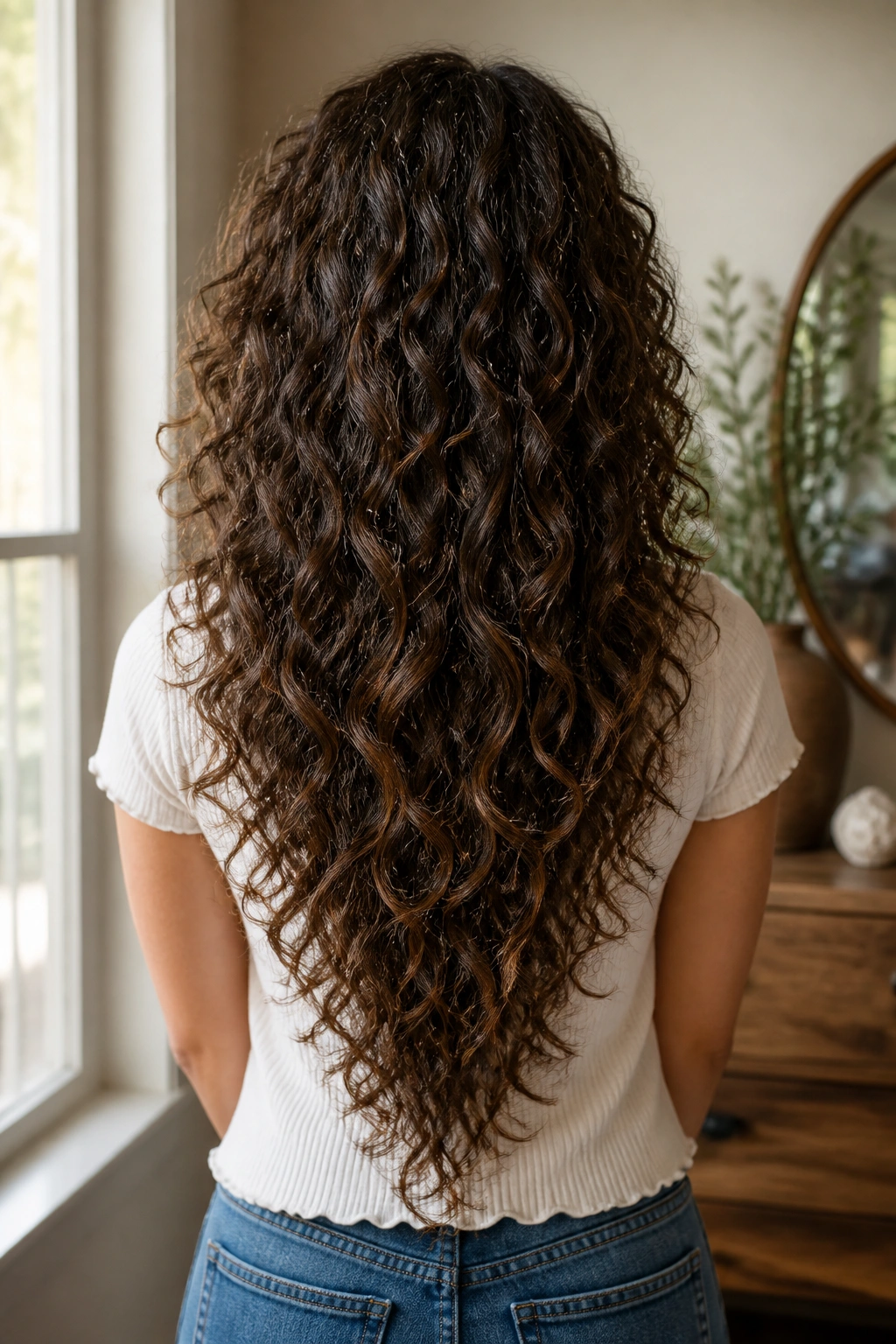
Picture curls that fall in a deep point at the back, almost like a waterfall shape. That is the V-cut, and on long curly hair it creates a lot of motion.
This cut looks especially good when you want the ends to feel lighter but still want a long back. The center section hangs longer than the sides, which gives the curl pattern room to stack and separate. When done well, it keeps heavy curls from sitting in one solid block.
A V-cut is not subtle. It has a bit of drama. That is the point.
- Strong choice for thick, dense curls.
- Gives more swing when you turn your head.
- Can make the back feel less weighty.
- Needs careful blending near the sides, or the point looks too sharp.
If you like your curls to look romantic rather than uniform, this shape delivers.
4. Rounded layers that follow the head shape
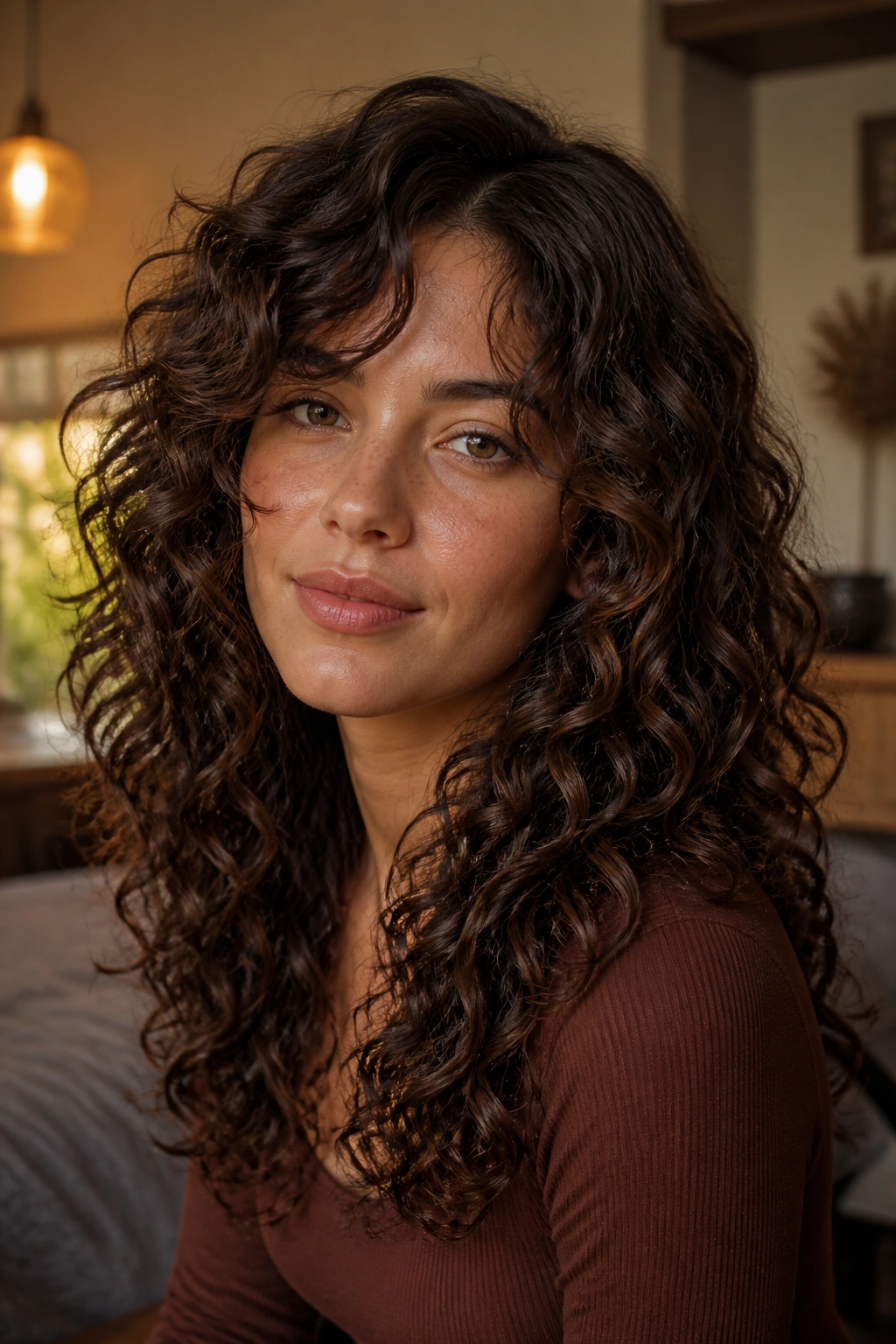
Rounded layers are one of those cuts people overlook until they see them on a real head of curls. Then they get it.
The shape follows the curve of the skull, which keeps the top from going flat and the sides from flaring out too far. That balance is useful if your hair tends to balloon at the bottom or sit limp at the crown. A rounded outline keeps the cut from feeling boxy.
The best version is soft, not helmet-like. You want the layers to blend into one another, with no obvious shelves. When curls dry, they should stack in a loose arc, not sit in neat little rows.
This cut can be a lifesaver for long curls that need polish without losing fullness. It is also one of the few layered shapes that still looks good when you toss it up in a claw clip and forget about it.
5. Invisible interior layers for airy curl definition

Invisible layers sound fancy. They are not. They are simply layers hidden inside the haircut so the outside line still looks long and clean.
That is what makes them so useful. Interior layers take weight out of the middle without announcing themselves from across the room. If your curls feel dense but you love a smooth perimeter, this is the move.
Where stylists hide the weight
Most of the action happens under the top layer, not on the surface. The stylist removes small sections inside the shape so the curls can spring up instead of hanging in one heavy curtain.
It works best when the goal is more bounce, not a whole new silhouette. And because the visible outline stays long, the cut usually grows out with less drama than a more aggressive layered shape.
A small warning: too many hidden layers can make the hair puff at the crown while the ends get wispy. That is not the goal. The goal is lift with control.
6. Curl-by-curl dry cutting for a more honest shape

Why do so many curly-haired people swear by a dry cut? Because wet curls lie.
When hair is soaked, it stretches, hides its true pattern, and can spring up three inches or more once it dries. Cutting curl by curl lets the stylist see where each piece actually lives. That means fewer surprises, especially around the face and the nape.
The shape can be beautiful. It can also be brutally honest.
How the cut is shaped
The stylist usually works with each curl in its natural state, snipping only when they can see the coil or wave sitting where it really belongs. That helps avoid the lopsided look you sometimes get from wet layering.
- Great for unpredictable shrinkage.
- Helpful if one side of your head curls tighter than the other.
- Reduces the chance of one layer landing awkwardly short.
- Makes the final outline easier to trust.
If you have been burned by “same haircut, different outcome,” this is the version worth asking about.
7. Long shag layers with a soft fringe

I have a soft spot for this one. Long shag layers keep the curls loose and touchable, and the fringe adds a little attitude without stealing the whole show.
Think of it as a curly haircut with a backbone. The top layers get some lift, the sides stay airy, and the fringe keeps the front from looking like it was forgotten. On long curly hair, that combination gives movement at every level instead of just near the ends.
The cut can feel messy in the best way. Not sloppy. Just alive.
A shag works especially well if your curls naturally want to spread outward and you do not fight that shape every morning. It can be styled with a diffuser for more definition or left to air-dry for a softer look. Either way, it likes texture, and it rewards people who are fine with a little wildness.
8. Wolf-inspired layers that keep the length
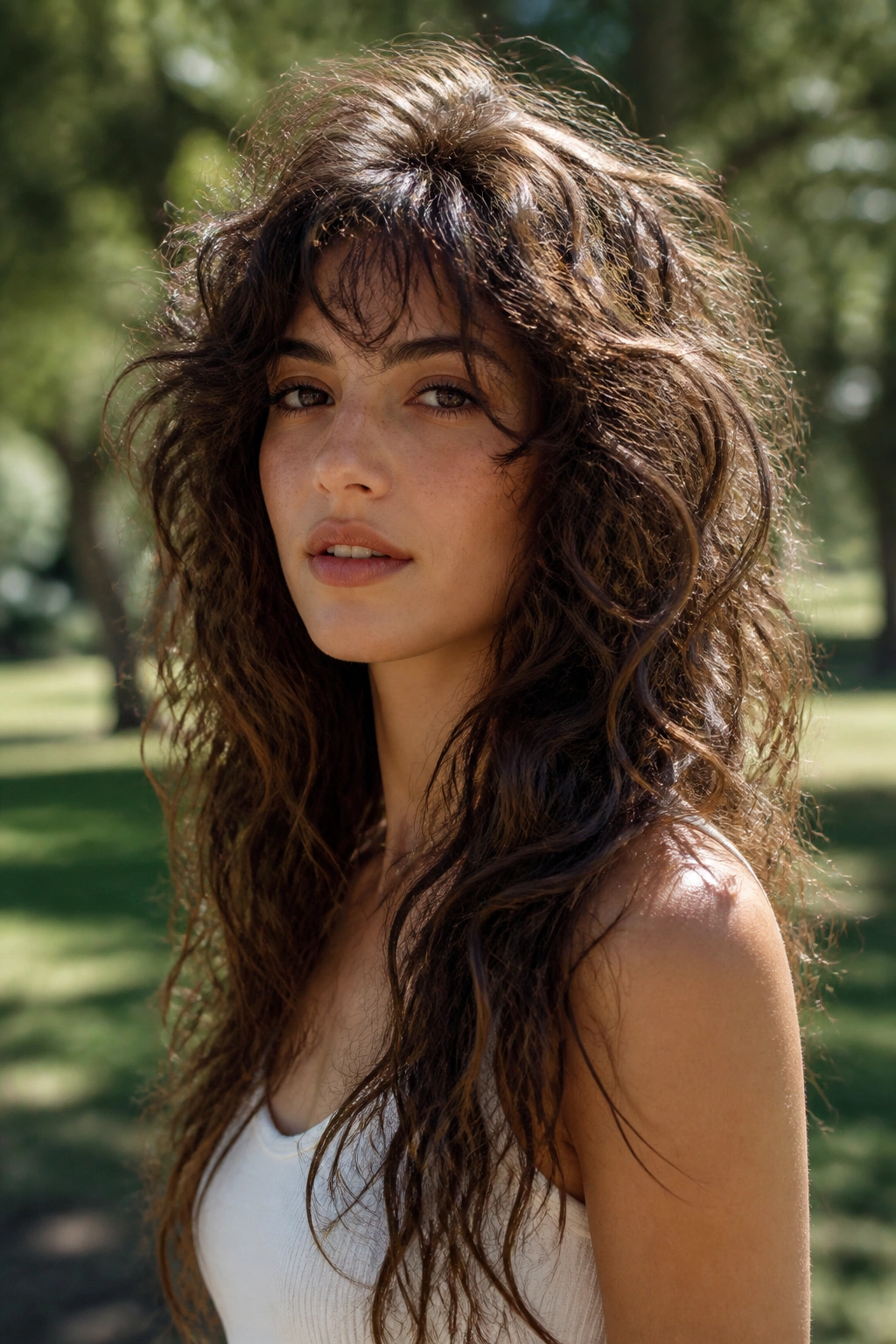
Unlike a classic shag, a wolf-inspired cut keeps more length in the back and pushes more texture up top. That difference matters a lot on curls.
The shape has edge, but it does not have to look severe. You get shorter pieces around the crown, longer pieces through the sides, and a loose, layered finish that still reads as long hair. On curly textures, that can be a smart middle ground when you want shape without losing the sense of length you have grown out for months.
This cut is best when you like volume at the top and movement through the ends. It is less friendly to people who want every curl to sit in a neat, classic form. The whole point is a little chaos.
If your curls are thick and your wardrobe leans simple, this haircut does a lot of the styling work for you.
9. Curtain bangs with long layers
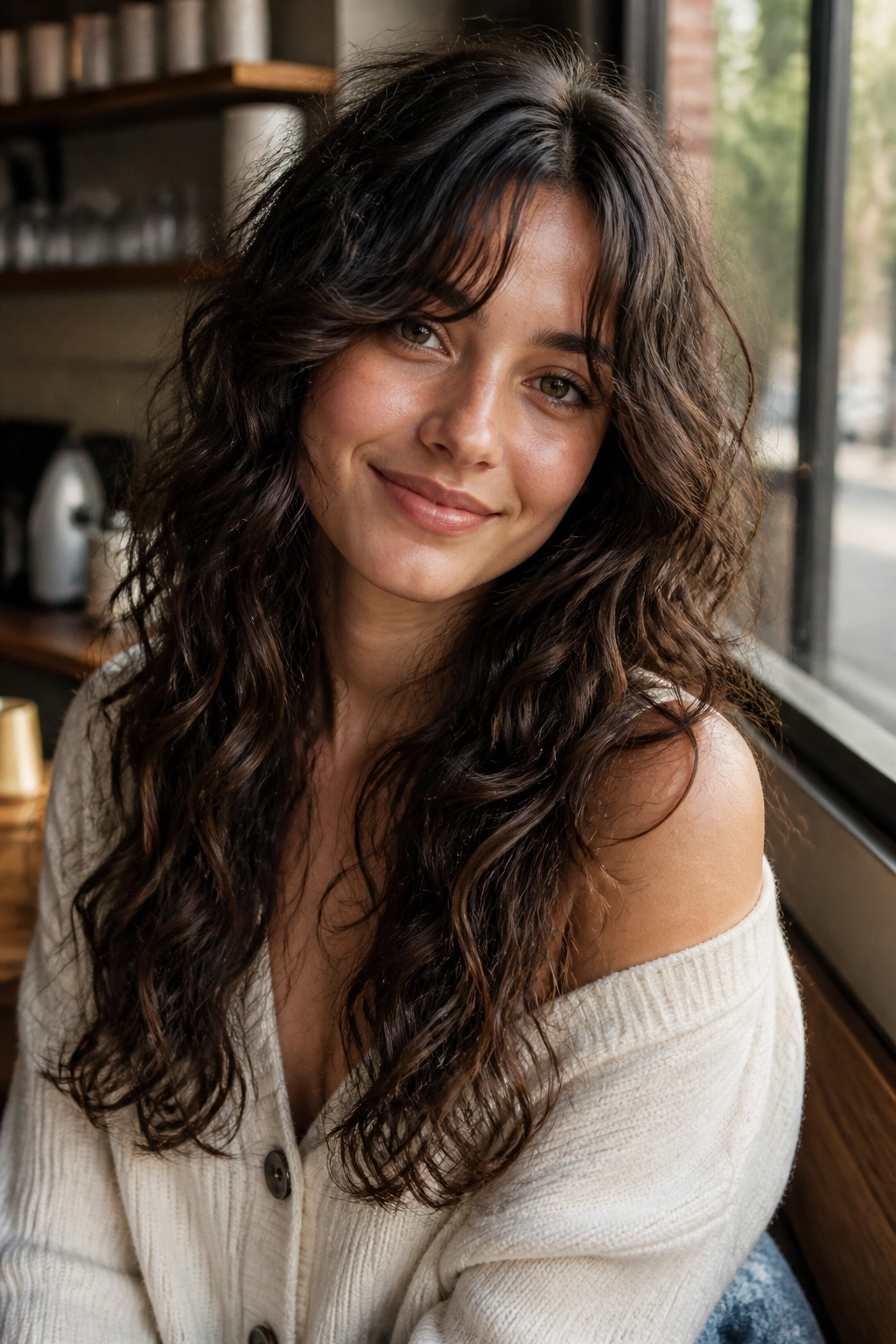
Curtain bangs change the whole mood of long curly hair. The bangs split at the center or slightly off-center, then melt into the longer layers around the face.
The beauty of this shape is that it gives the cut a front-facing frame without hard lines. That means the eye gets drawn upward, but the rest of the length stays in play. If you like seeing your curls move around your cheeks and collarbones, this one is worth a serious look.
The upkeep is not nothing. Bangs need attention, especially if your curl pattern tightens at the front or frizzes faster near the forehead. Still, the payoff is real. The haircut looks deliberate even on low-effort days.
Best of all, curtain bangs are one of the easiest ways to try a shorter piece without committing to a full fringe. They can grow out into layers if you change your mind.
10. Chin-to-chest cascading layers

What if you want layers, but you do not want a lot of short pieces near your face? Start lower.
Chin-to-chest cascading layers keep the haircut long and relaxed while still taking some weight out of the bottom half. This shape is especially useful when your curls look heavy at the ends but you like the top and front exactly where they are.
How to ask for it
Tell the stylist you want the first major layer to fall somewhere between the chin and the upper chest, then keep the rest soft and blended. That gives you movement without the obvious staircase effect.
The result is subtle when the hair is dry and a little more obvious when the curls separate. That is a good thing. The haircut changes with the styling, instead of looking frozen into one shape.
This is the choice for someone who likes long hair, period. No drama. Just better balance.
11. Long layers for 3A ringlets
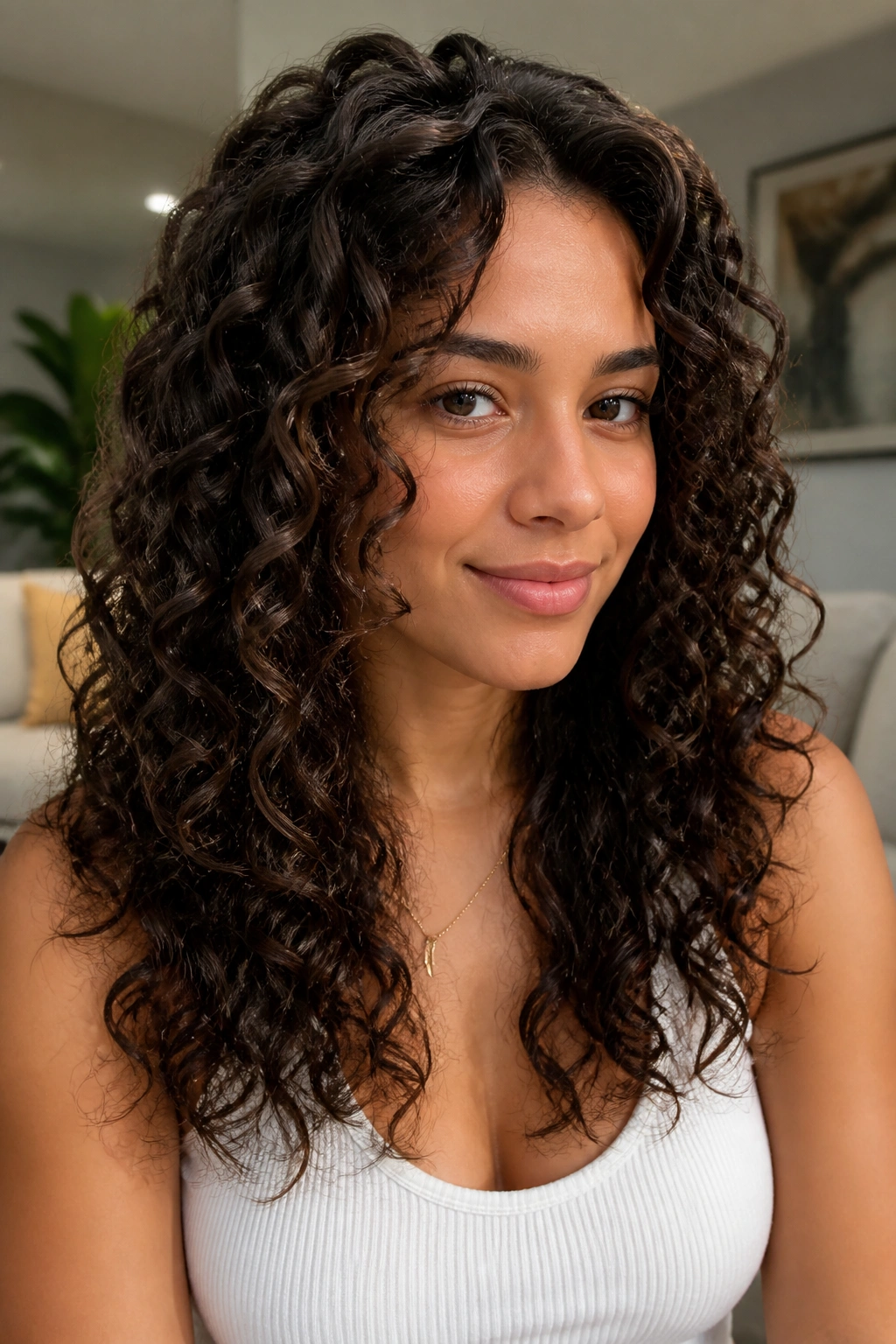
3A ringlets usually look best when the layers are gentle. Too much slicing can make them spring apart in weird places and lose that round, polished curl shape.
The ideal cut keeps the ringlets grouped in tidy clusters. You want the layers to encourage bounce, not chop the curls into separate little chunks that stop curling together. That is where long layers shine. They make the shape lighter while preserving the ringlet pattern.
Ringlets also show unevenness faster than many curl types, so placement matters. A bad line near the temples can stand out the second the hair dries. A good line disappears into the curl pattern and just makes the hair look fuller.
If your curls already form smooth spirals, keep the layering soft and measured. The haircut should feel like a little editing, not a rewrite.
12. Long layers for 3B curls
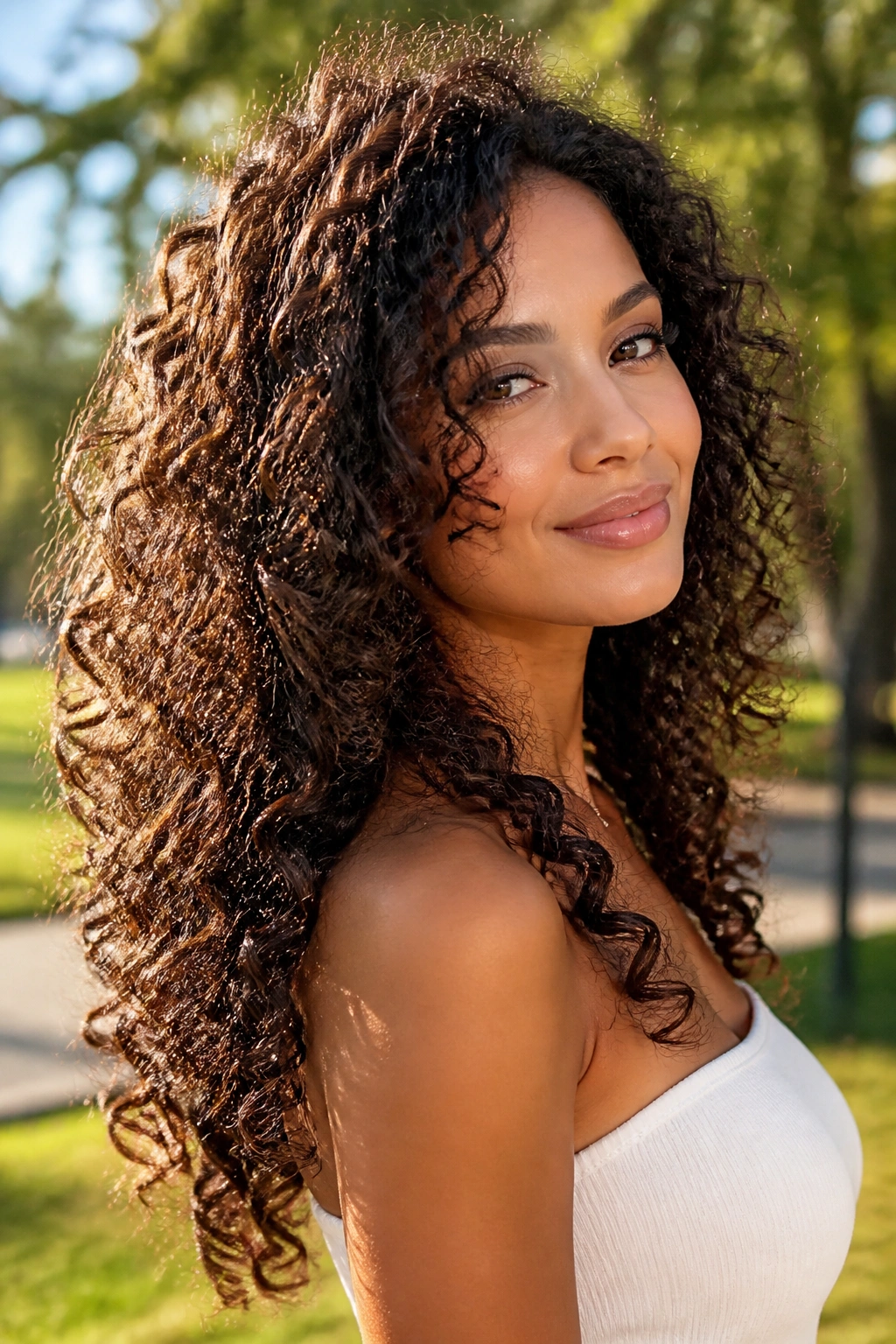
3B curls tend to want volume. They also tend to collapse if the cut is too heavy, which is why long layers can make such a difference.
The blunt truth is that a single long block of 3B hair can look dense at the bottom and flat at the top. Long layers break that block up and let the curls stack with more lift. You get shape at the crown, shape through the middle, and less of that shelf-like look at the ends.
What to watch for
- Do not over-thin the ends.
- Keep enough length in the back to avoid triangle shape.
- Ask for layers that support the curl groupings, not random snips.
- Check the cut dried and diffused, not just wet.
3B curls often look best when the layer pattern is slightly asymmetrical in the real world, because the hair itself is rarely perfectly even. That is fine. It looks human. Which is the point.
13. Long layers for 3C coils

3C coils ask for a different hand. They shrink more, they hold shape tightly, and they can turn into a cloud if the layers are too short or too many.
The smartest long-layer cut for 3C hair keeps the length visible while freeing up the interior. You want movement, yes, but you also want the coils to stay grouped and defined. If the stylist takes too much from the crown, the top can puff up while the bottom goes thin. That mismatch is hard to fix later.
A good 3C layered cut feels balanced when it dries. The silhouette should still read as long, even if the coils spring up several inches. That usually means longer face-framing pieces, careful interior shaping, and a perimeter that is not stripped down.
This is one of those cuts where patience pays off. Rushing the shape usually shows.
14. Layers that fix the triangle shape
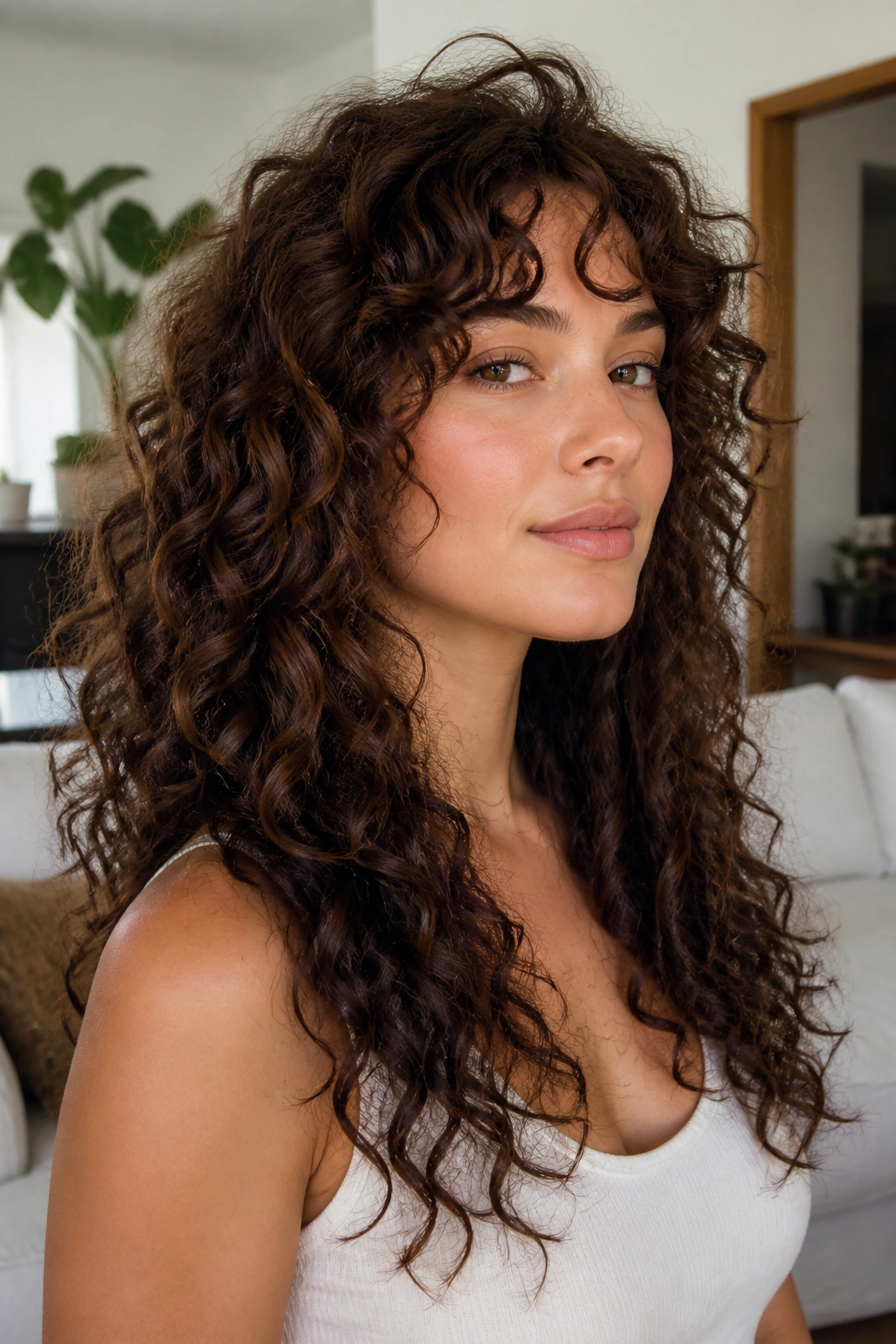
Triangle shape happens when the hair is flat near the top and wide near the bottom. Curly hair does this more often than people admit, and it is one of the biggest reasons long layers get recommended in the first place.
The fix is not always “more layers.” Sometimes the answer is better layers. You need lift where the head is narrow and less bulk where the silhouette starts to flare. That balance can come from crown layers, interior layers, or a softer outline through the lower third of the hair.
The shape cues that help
- More movement near the temples and crown.
- Less bulk stacked at the jawline.
- A perimeter that stays soft instead of square.
- Enough weight in the ends so the hair does not frizz outward.
Triangle shape can be sneaky. It looks fine in the mirror from the front and then turns into a wide cone in profile. Layers fix that profile issue better than they fix the front view, which is why people are often surprised by how different the haircut feels once it is done right.
15. Long layers that keep heavy hair lighter
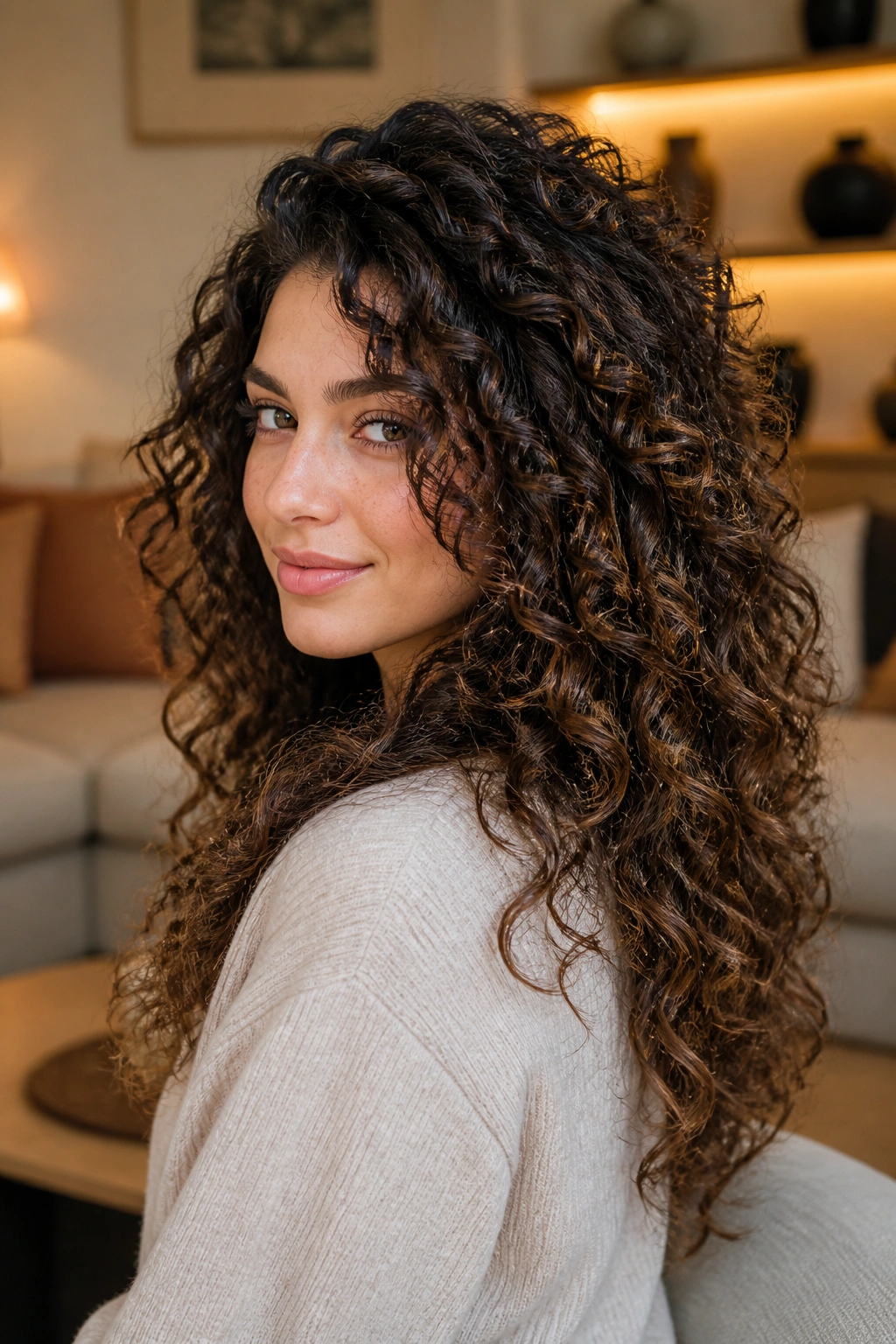
Some curly hair is beautiful and exhausting at the same time. Thick density can give you gorgeous fullness, but it can also make your head feel weighed down by noon.
Long layers help by removing drag. That matters not just for looks but for comfort. When the haircut is too heavy, curls stretch downward, the scalp can feel tugged, and the hair takes longer to dry. A layered cut cuts down on all three.
The key is not to chase thinness. Thinness is not the goal. Air and balance are the goal. You want the curls to lift and separate, not vanish into wispy ends.
This is where an experienced stylist earns their keep. Thick curly hair can look deceptively easy to cut, and then the final shape shows every shortcut. If the layers are placed well, the result feels lighter the second you shake it out.
16. Long layers for fine curly hair
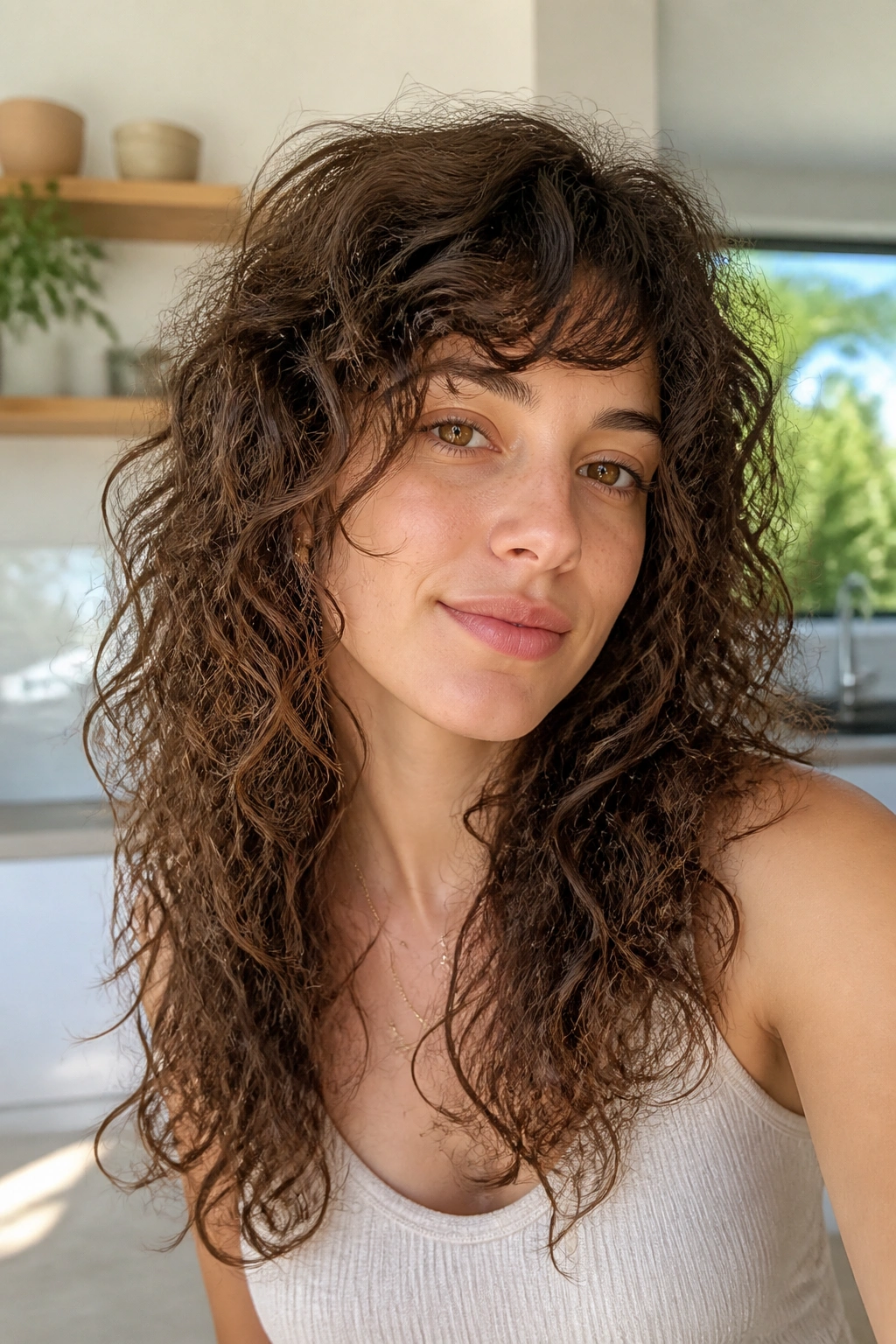
Fine curls need a gentler touch than thick curls do. Too many layers can leave the hair looking stringy, especially at the ends where fine strands show every gap.
The best long-layer cut for fine curly hair keeps the perimeter full and adds only enough shaping to create movement. Think of it as slimming the outline without shaving off the substance. You want the cut to look lifted, not sparse.
Why this version behaves differently
Fine curls do not have the same built-in bulk, so a heavy layer pattern can make them look smaller than they are. A softer cut keeps the illusion of density. That often means longer layers that start lower, fewer face pieces, and a careful check on the ends so they do not look feathery.
If your hair is both fine and curly, avoid anything that promises “lots of texture” without explaining how the length is preserved. Texture is nice. See-through ends are not.
17. Long layers for thick, dense curly hair
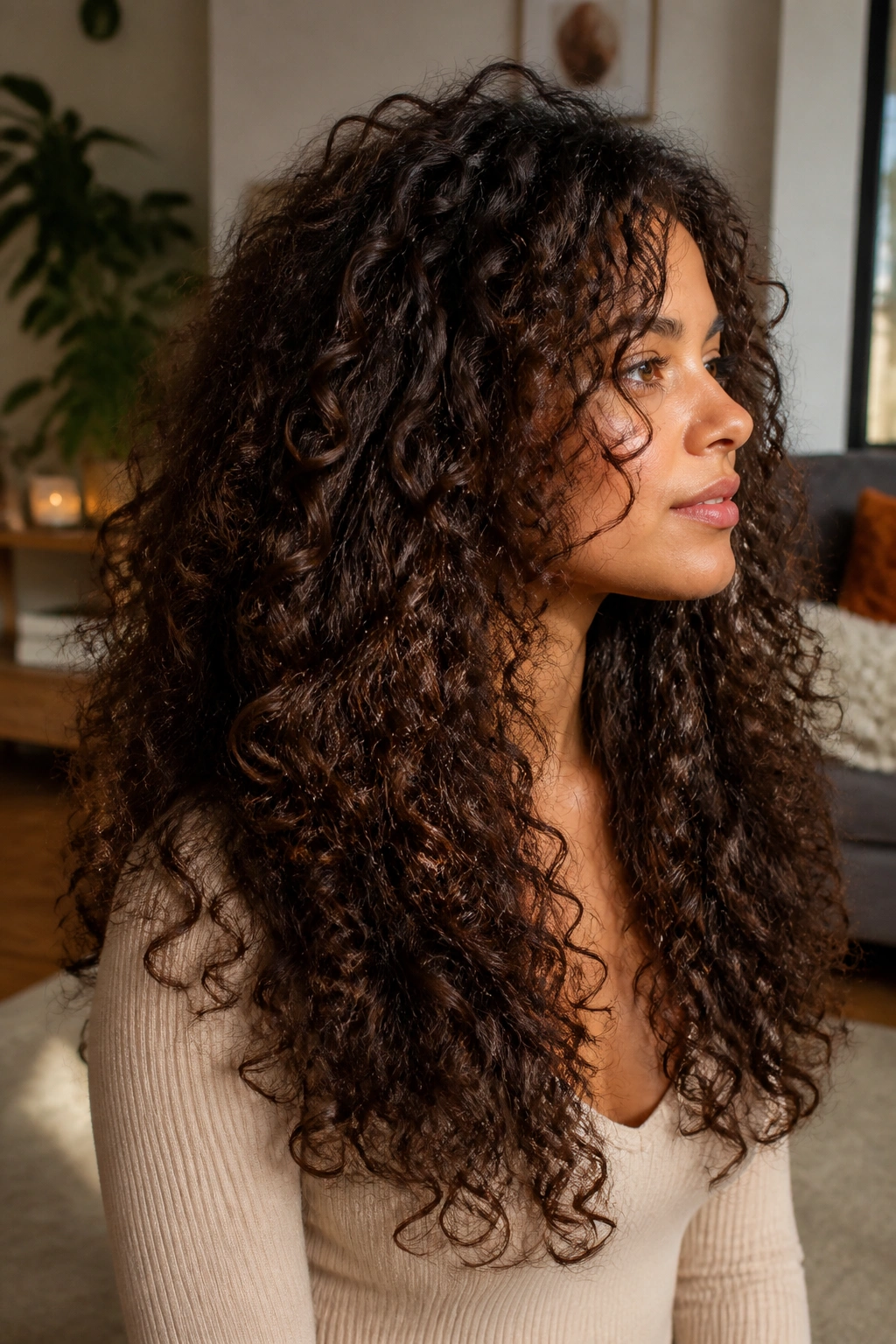
A friend once described dense curls as “a lot of hair with opinions.” She was not wrong.
Thick curly hair usually needs structure more than drama. Long layers give the hair room to move, but the real benefit is weight control. Without some internal shaping, dense curls can feel hot, heavy, and oddly stiff even when they are healthy.
- Reduces the helmet effect.
- Helps the scalp breathe a little more.
- Makes diffusing faster because less water sits trapped in the middle.
- Keeps the curl pattern from stacking into one giant mass.
The best version does not carve giant steps through the haircut. It trims the bulk in sensible places and leaves enough length for the curl pattern to do its own thing. If the layers are too aggressive, thick hair can expand outward in a way that is hard to tame. If they are too timid, you are back where you started.
18. Long layers for high-shrinkage curls

High-shrinkage curls can fool almost anyone at the salon chair. They look one way when stretched and a completely different way when dry.
That is why long layers for this curl type need to be cut with the finished shape in mind, not the wet shape on the cape. A curl that hangs near the collarbone can bounce up to the chin later. A stylist who ignores that will give you layers that are too short by a mile.
The safest approach is usually a dry or mostly dry cut, with a strong eye on where the curls actually sit when they are released. That lets the stylist judge how the layers stack instead of guessing. It also keeps the silhouette from getting choppy in the back.
If your hair shrinks a lot, ask for longer than you think you need. No, longer than that. Curls are not shy about taking back length after the wash.
19. Long layers with a deep side part

Can a part change the haircut? Absolutely. Sometimes more than the haircut changes the part.
A deep side part gives long curly layers a little asymmetry, which can be a gift if your crown sits flat or one side of your hair has more personality than the other. It also creates a natural sweep that shows off face-framing pieces without needing extra short layers.
How it changes the shape
The heavier side gets more visual weight, which can balance a wide cheek area or a narrow jaw. The lighter side opens up the face and makes the curl pattern look looser and more dimensional. The haircut itself may be the same, but the energy shifts fast.
This works best when the layers already have some movement built in. If the cut is too blunt, the side part will not do much. If the layers are there, the part becomes a styling trick you can change whenever the mood changes.
20. Long layers with a center part

A center part is the opposite of sneaky. It puts the shape right in your face and asks the curls to behave.
That makes it a smart match for long layers that are blended on both sides. The symmetry can look calm and clean, especially when the face-framing pieces fall evenly and the bottom keeps a soft curve. If your curls like to fall in curtains instead of bunching to one side, this shape can look almost tailored.
The downside is obvious: a center part shows imbalance fast. If one side is much heavier or the curl pattern differs a lot from left to right, you will notice it. Some people love that honesty. Others do not.
Center-parted layers work well when you want the haircut to feel open and balanced rather than playful or messy. It is a straightforward shape. No tricks needed.
21. Low-maintenance long layers for air-dry days

Not every curly haircut needs a diffuser and a half hour of coaxing. Some long layers are built for the days when you wash, scrunch, and get on with your life.
The best low-maintenance version has enough shape to look intentional even when dried alone. That means the layers should encourage the curl pattern to fall into place without constant fixing. A leave-in, a light gel or cream, and a clean scrunch are usually enough if the cut is right.
What makes this style work is not magic. It is balance. The layers should be long enough to stay soft, but shaped enough to stop the ends from dragging the whole head down. If you air-dry often, ask for a cut that looks good in its natural state first and polished second.
Some people want a haircut that performs under perfect styling. I prefer one that behaves on a Tuesday morning.
22. What to ask for in the salon chair
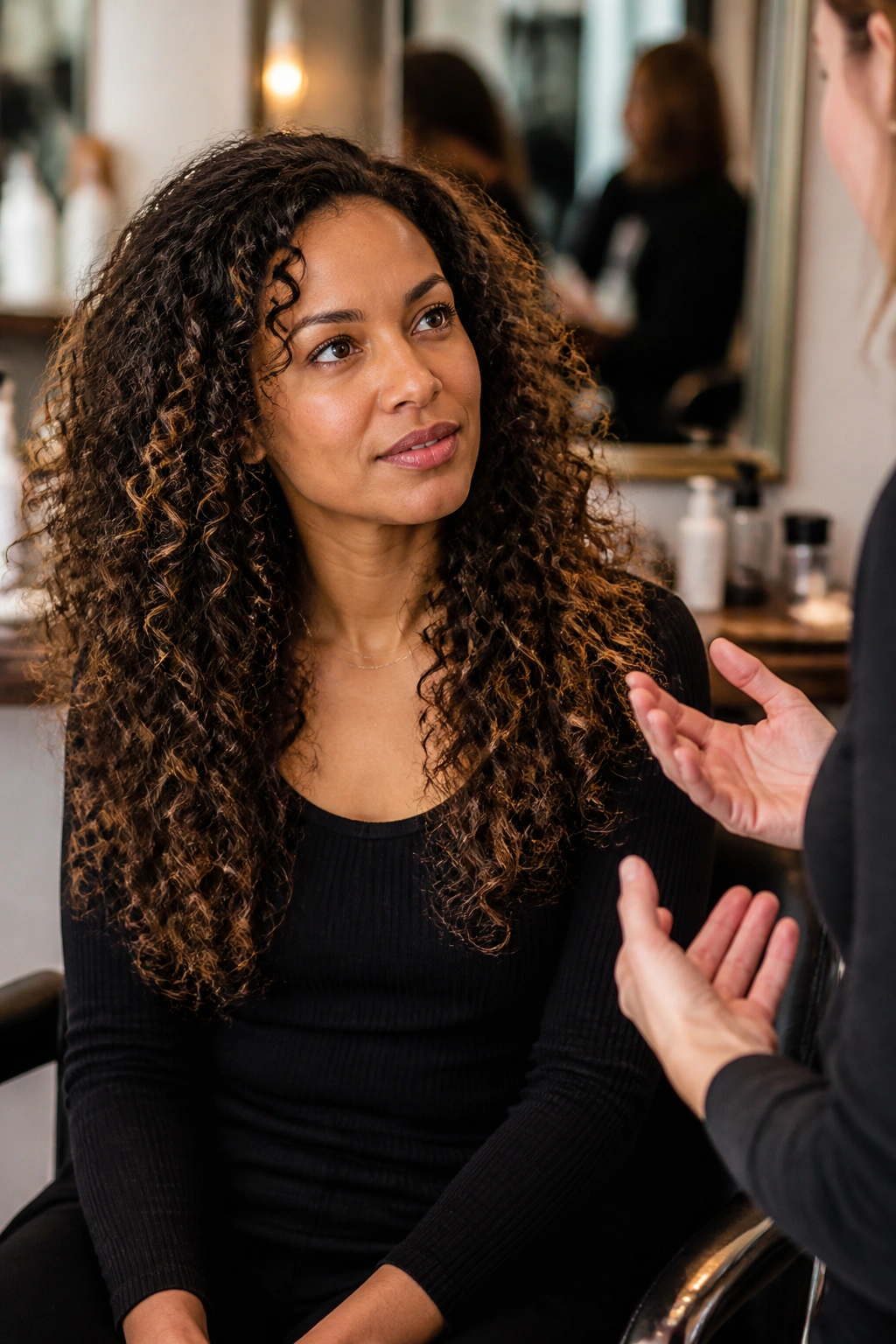
What should you actually say if you want long layers for curly hair and not a vague “make it move” moment? Be specific.
Tell the stylist how much length you want to keep, where your curls tend to get bulky, and whether you wear your hair with a center part, side part, or both. Mention shrinkage if your curls spring up a lot. If your front pieces always break away from the rest, say that too. Those little facts shape the cut more than the haircut name on its own.
A photo helps, but only if you explain what you like in it. Maybe it is the face frame. Maybe it is the crown volume. Maybe it is the fact that the ends still look full. Those are not the same thing, and a good stylist will hear the difference.
Ask these plain questions before the first snip:
- Will this be cut wet, dry, or partly dry?
- Where will the shortest layer land?
- How will the weight be removed in the back?
- How much shrinkage are you planning for?
- What will the cut look like after one or two wash days?
If you remember nothing else, remember this: the right long layers should make your curls look easier, not fussier. That is the real test.
