



A good short haircut should do more than sit there looking neat in the mirror. It should move. It should lift at the crown, soften around the jaw, and keep the whole shape from turning boxy by the second week. That’s why layered haircuts for short hair stay so useful: they remove weight where hair puffs up, add shape where it falls flat, and make a cropped cut feel alive instead of helmet-like.
Short hair can be tricky. One wrong snip and the whole thing looks too wide, too heavy, or too choppy in the wrong spots. But the right layers can fix that fast. A few carefully placed pieces around the cheeks, a stacked back, or some razor-soft ends can change how the cut sits on your head and how much work you need in the morning.
I’ve always thought short layered cuts work best when they respect the hair you already have. Fine hair needs lift, not bulk. Thick hair needs weight removed without creating frizz. Curly hair needs room for the curl pattern to spring up. Straight hair needs movement or it goes flat and blunt in a hurry. That’s the whole game.
And yes, the details matter. A side part can change a cut more than an extra half-inch off the back. So can the angle of the layers, the length of the fringe, and whether the stylist cuts with scissors or a razor. The 18 styles below cover the cuts that actually earn their keep.
1. Feathered Pixie with Side Sweep
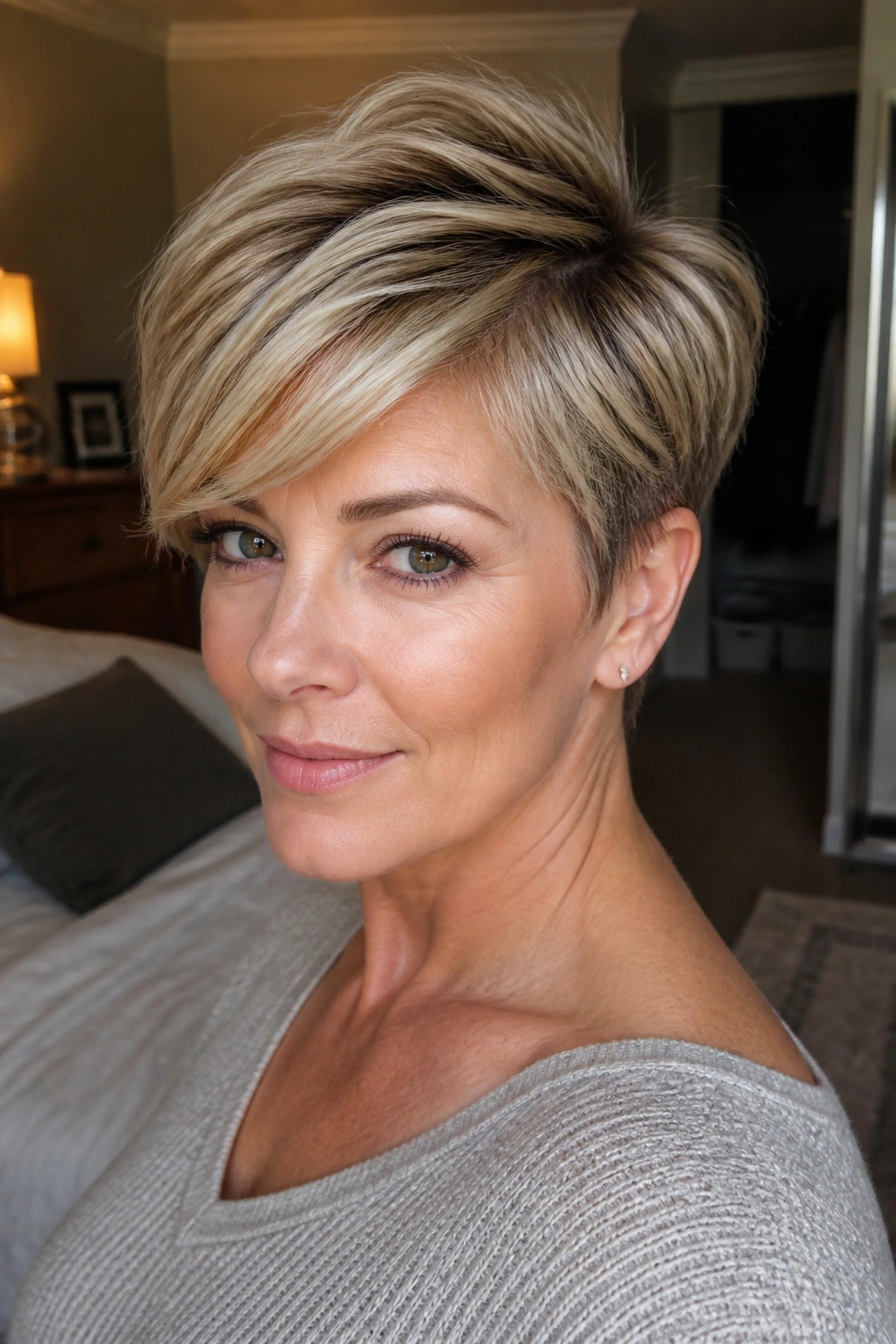
A feathered pixie is one of the easiest ways to make short hair look softer without losing the clean shape that makes a pixie so flattering. The layers are kept light through the top and crown, then blended into a side sweep that falls across the forehead instead of sitting stiffly upright.
Why It Works
The feathering breaks up weight, which is a big deal on short hair. Without it, a pixie can look chunky fast. With it, the cut has motion, and the side sweep gives the front some length to play with if you like tucking hair behind one ear.
This cut works especially well on fine to medium hair. A little mousse at the roots and a quick blow-dry with your fingers is usually enough. If your hair has a cowlick, keep the front a touch longer so the fringe can be directed instead of fighting you every morning.
Best tip: ask for the top layers to be cut piece by piece, not all at one length. That’s what keeps the shape airy instead of flat.
2. Choppy French Bob

The choppy French bob has a little attitude, and honestly, that is the appeal. It usually hits around the jaw or just above it, with broken-up ends and soft, uneven layering that keeps the cut from feeling too perfect.
A blunt bob can look sharp in a good way, but it can also sit like a block if your hair is thick or naturally straight. Choppy layers solve that by letting the bottom edge move. The result is less “helmet,” more effortless swing — though I’d skip the word effortless, because there is usually a quick pass with a round brush or flat iron bend involved.
How to Wear It
- Blow-dry with a 1-inch round brush for a slight inward curve.
- Use a pea-sized amount of styling cream on the ends.
- If your hair is thick, ask for internal removal, not heavy surface thinning.
- Keep the fringe soft, not severe.
This is a smart cut if you want short hair that feels polished but not strict.
3. Stacked Bob with Crown Lift

A stacked bob is built for people who want shape right away, with no arguing from the hair. The back is cut shorter and layered upward, which creates a lifted crown and a rounded silhouette through the nape.
That stacked shape is the whole point. Hair that tends to lie flat at the back gets a stronger base, while the longer front pieces keep it from looking too old-fashioned or too heavy. It’s also one of the better layered haircuts for short hair if you want your head to look a little slimmer from the side.
What Makes It Different
You’re not just removing length. You’re building architecture. The shorter back supports volume at the crown, and the front can be left sleek or a little undone, depending on how much styling you want to do.
How to Style It
Use a small round brush and lift the roots while blow-drying the back forward, then flip the ends under. A light spray wax at the crown helps the stacked section keep its shape without turning crunchy.
4. Curly Crop with Tapered Ends

Curly short hair needs a different kind of layering, and this crop gets that right. Instead of chopping the curls into random lengths, the layers are tapered so the curl pattern can stack naturally without building a triangle.
People often think curls should be cut dry only, and that can help, but the real trick is shape. A good curly crop keeps the sides neat and lets the top keep enough length for the curls to spring. Too much layering, and you get frizz. Too little, and the shape balloons outward.
A Few Things to Watch For
- Ask for curl-by-curl shaping if your pattern is loose to medium.
- Keep the nape shorter if you want the cut to feel lighter.
- Leave the front a bit longer for curl shrinkage.
- Use a cream or gel with hold, not just shine.
This cut is especially good if your curls get wider at the bottom and need a cleaner outline. It has enough structure to look intentional, which matters more than people admit.
5. Razor-Cut Shag
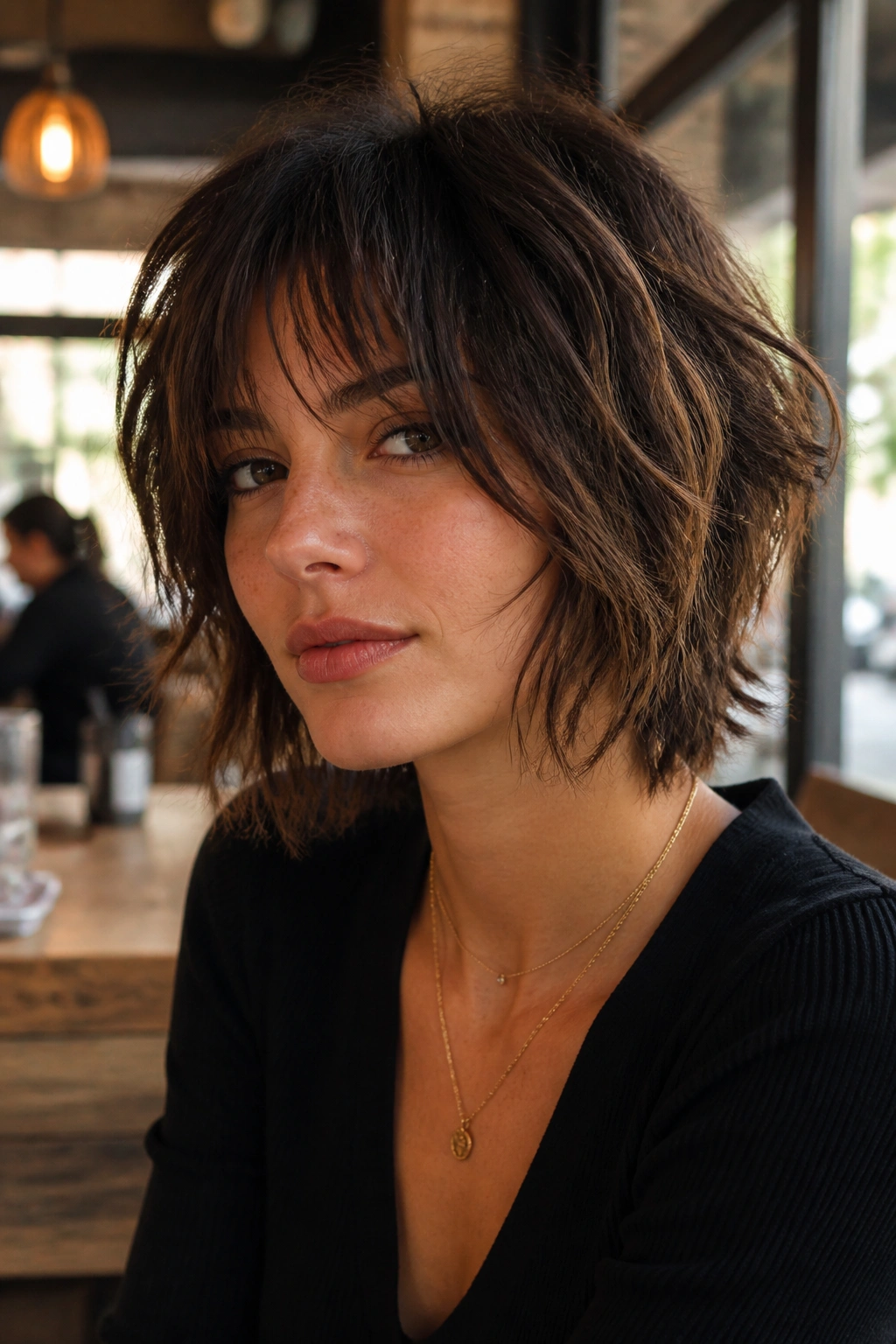
A razor-cut shag has edge, movement, and a little bit of mess in the best way. The layers are sliced with a razor or heavily textured with shears, which creates soft, wispy ends that fall apart instead of sitting in one blunt line.
This is the cut I recommend when someone wants short hair but hates the feeling of being “done” all the time. The shag works because it doesn’t demand perfection. You can rough-dry it, scrunch it, or twist a few sections with a curling wand, and it still makes sense.
The key is balance. Too much razor work on fine hair can leave the ends too thin. On thick hair, though, it can take out enough bulk to stop the shape from puffing out around the ears.
It looks especially good with a bit of bend at the front. Not curls. Just a soft bend. That tiny difference keeps the cut from looking too punk or too flat.
6. Side-Swept Crop with Long Fringe
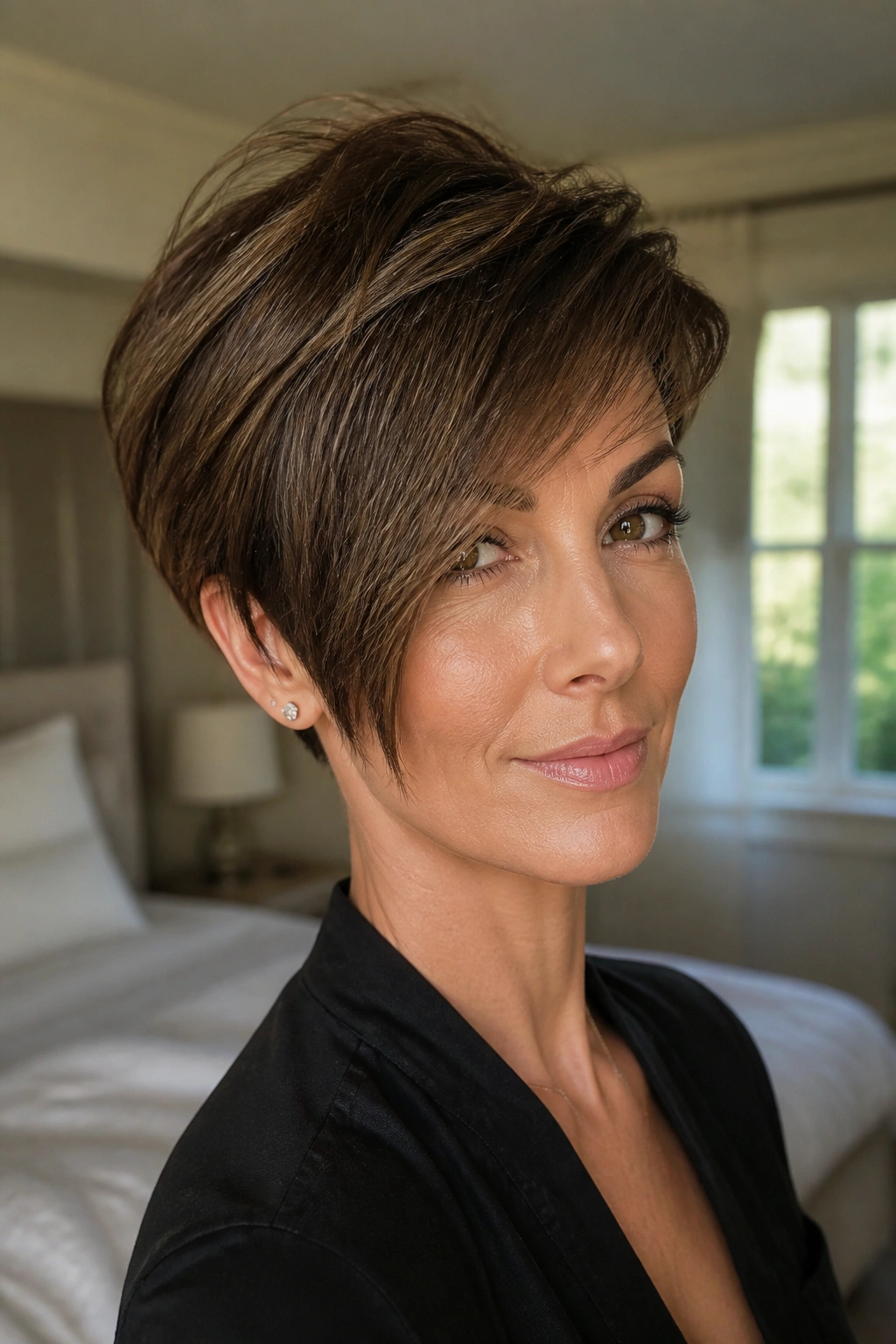
This cut lives or dies on the fringe. The sides stay short and neat, while the top is left long enough to sweep across the forehead and blend into the side layers.
The long fringe is useful because it gives you options. Wear it sleek for a sharper look. Push it back for more lift. Tuck part of it behind the ear if you want to open up the face. That kind of flexibility is one reason this shape works so well for short layered haircuts.
Who It Suits Best
It’s a strong choice for square or longer face shapes because the diagonal fringe softens the outline. It also helps if you want volume up top without cutting the sides too short. Hair with a little natural texture behaves especially well here, since the fringe can fall in a gentle curve rather than a hard line.
Styling note: use a small vent brush or your fingers to direct the fringe while blow-drying. If you let it dry in the wrong direction, it will fight back all day.
7. Soft Bowl Bob with Airy Layers

A bowl cut sounds harsh to people who remember the old version, but the modern version is softer and smarter. When the ends are lightly layered and the perimeter is broken up, the cut hugs the head without looking severe.
What makes this shape work is control. The curve around the head creates a clean outline, while the airy layers stop the helmet effect that ruins so many bowl-inspired cuts. On straight hair, it can look sleek and intentional. On slightly wavy hair, it gets more character and a little swing.
Where It Wins
- Short foreheads or delicate features.
- Fine hair that needs a stronger shape.
- Anyone who wants a fashion-forward cut without heavy styling time.
Keep the layers subtle. That’s the whole trick. If the ends get too shredded, the shape loses its line and starts looking unfinished. A smoothing cream and a quick flat-iron pass on the top section are usually enough.
8. A-Line Bob with Textured Ends

An A-line bob has that longer-front, shorter-back angle that gives short hair a cleaner profile. Add textured ends, and the whole thing starts moving instead of sitting in one heavy block.
The angle matters because it changes how the cut frames the face. Longer front pieces can slim the jaw a bit, while the shorter back keeps the style from dragging down the neck. Textured ends keep it from looking too stiff, which is where a lot of A-line bobs go wrong. They get precise, but not alive.
If your hair is straight and medium thick, this cut is especially easy to wear. It looks neat with minimal styling and still has enough edge to keep it from feeling plain. A light spritz of heat protectant and a quick bend under with a flat iron is usually all it needs.
Not every short cut needs drama. Some just need good angles.
9. Tapered Pixie with Long Top

A tapered pixie is all about contrast. The sides and nape are trimmed close to the head, while the top stays longer so you can push it up, sweep it over, or rough it into a piecey shape.
That contrast gives the cut its energy. Without the taper, a long-top pixie can look unbalanced. Without the longer top, it loses the styling options that make it useful in the first place. It’s a smart pick if you like short hair but don’t want one fixed look every day.
Styling Options
- Finger-comb with matte paste for a choppy finish.
- Blow-dry the top forward, then push it back for lift.
- Use a flat iron to bend just the ends of the top pieces.
- Keep the nape clean every 3 to 5 weeks.
This is one of those cuts that can look polished or a little punk depending on how you wear it. I like that flexibility. It makes the haircut feel personal instead of default.
10. Wolf Crop

The wolf crop is the shorter, leaner cousin of the full shag. It keeps the rough, layered top and the slightly tapered sides, but the overall length stays cropped enough to feel easy and sharp.
What people love about this cut is the texture. It gives fine hair more life and thick hair more movement. The crown layers are usually a touch shorter, which creates lift, while the ends are left a little ragged so the cut doesn’t sit like one solid shape.
This one does best when you lean into texture. Air-drying with a light mousse works well. So does diffusing, if you want more body. A tiny amount of dry texturizing spray at the roots can help, but don’t drown it. Too much product makes the layers stick together and lose that shaggy movement.
It’s a bit cooler in spirit than a classic bob. Less tidy. More personality.
11. Jaw-Length Bob with Hidden Layers

A jaw-length bob can look blunt from the outside and still have hidden layers tucked underneath. That’s what makes it such a good option for people who want a clean shape but not a heavy one.
The layers are usually cut through the interior, so the outside line stays smooth. That means you get movement without showing off the layering too much. It’s one of the easiest ways to keep short hair from puffing out at the bottom while still holding onto that crisp bob outline.
Why It’s Worth Asking For
Hidden layers are sneaky in the best way. They remove bulk where the hair needs it most, especially under the crown and around the back of the head, but they don’t chop the outer shape to bits.
This is a very good cut for office-friendly hair that still feels modern. Wear it tucked behind the ear, pin one side back, or add a loose wave through the front sections. Tiny details matter here. The cut does the heavy lifting, and the styling just nudges it along.
12. Rounded Layered Bob for Fine Hair

Fine hair can go flat fast, and a rounded layered bob is one of the better fixes. The shape is fuller at the sides and crown, with layers placed to make the hair look denser rather than thinner.
The mistake people make with fine hair is over-texturizing it. That usually backfires. You end up with see-through ends and a cut that feels wispy in the wrong way. A rounded bob keeps enough perimeter to make the hair look like it has substance, while the layers quietly add lift near the top.
What to Tell Your Stylist
- Keep the layers soft and controlled.
- Leave enough length at the bottom to hold a line.
- Avoid heavy thinning shears if your hair is sparse.
- Keep the front slightly longer if you want the face framed.
A root-lifting spray and a round brush are enough for most days. The point isn’t to fake volume everywhere. It’s to give the hair a better shape so it naturally stands a little taller.
13. Short Shag with Curtain Bangs

The short shag with curtain bangs is easy to love because it does a lot without looking fussy. The layers build movement through the crown and sides, while the curtain bangs split in the middle and soften the face.
Curtain bangs change the whole haircut. They draw the eye inward, then let the layers fall away from the cheeks. That matters on short hair because the face can otherwise feel exposed. With this cut, you get shape around the forehead and motion through the body of the hair.
It works best when the bangs are cut long enough to tuck into the side layers. Too short, and the shape gets jumpy. Too long, and you lose the open, airy effect that makes the style good in the first place.
A little dry shampoo at the roots helps this cut last between washes. So does a quick finger-style in the morning. Nothing fancy. The charm is that it looks a bit lived-in from day one.
14. Undercut Pixie with Piecey Top
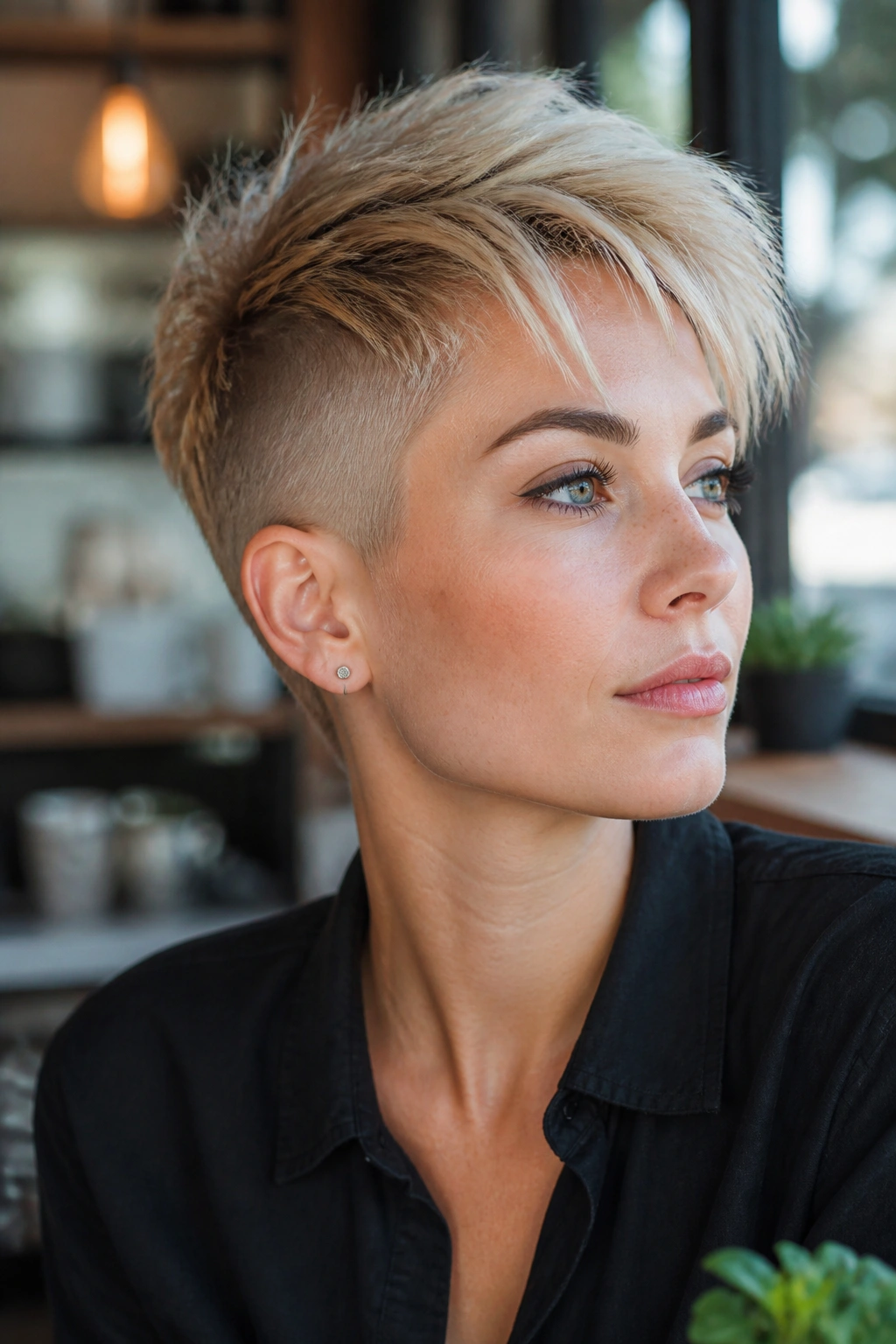
An undercut pixie is not shy, and that’s exactly why it works. The sides or nape are clipped very short, sometimes down to the skin, while the top is left longer and layered into separate, piecey sections.
That contrast creates a lot of shape with very little hair. It also takes bulk off the sides, which can be a blessing if your hair grows out wide or triangular. The top can be worn spiky, swept to one side, or softened with a light pomade for a more relaxed finish.
A Quick Reality Check
This is not the cut for someone who hates maintenance. The undercut needs regular clean-up, and the top needs some product if you want it to look intentional. But if you like a sharp outline and you enjoy changing the mood of your hair, it’s a strong option.
Try a matte paste for separation or a cream wax for a smoother finish. A pea-sized amount is usually enough. More than that, and the whole thing starts to look greasy.
15. Thick-Hair Crop with Internal Layers

Thick hair needs strategy. If you cut it blunt and short, it can mushroom out at the sides. Internal layers fix that by taking weight out from the middle of the cut without shredding the outside line.
This is one of the smartest layered haircuts for short hair if your hair feels heavy the second it dries. The trick is to reduce bulk from within, not all over. That keeps the shape controlled and stops the ends from turning feathery in a bad way.
What to Ask For
Say you want “hidden weight removal” or “internal layers for movement.” Those phrases help your stylist understand that you want the bulk reduced without a choppy perimeter.
Best Styling Moves
- Use a smoothing cream before blow-drying.
- Dry the roots first so the shape sets.
- Keep the ends soft, not over-textured.
- Trim every 6 to 8 weeks or the bulk returns fast.
Thick hair can carry a short cut beautifully. It just needs room to sit where it should.
16. Micro Fringe Crop

A micro fringe crop is tiny, sharp, and a little bit risky. The fringe sits high on the forehead, while the rest of the cut stays short and layered so the shape doesn’t feel too severe.
This cut has a strong face-framing effect. It draws attention to the eyes and cheekbones, which can be fantastic if you want something bold without growing your hair out. The layering through the top and sides softens the look enough to keep the fringe from feeling too graphic.
It’s best on straight to slightly wavy hair. Very curly hair can make the fringe shrink faster than you’d like. If you do have texture, ask for the fringe to be left a touch longer so it doesn’t bounce too high.
There’s also a practical side: a micro fringe shows cowlicks fast. If your forehead hair grows in different directions, you’ll need a bit of styling paste and some patience. Worth it if you love the look. Annoying if you don’t.
17. Graduated Nape Bob

A graduated nape bob is all about the back. The hair stacks up from a short, tight nape into longer layers through the crown and sides, which gives the cut a clean curve and a lifted profile.
That graduation makes the head shape look neat from behind, which sounds small until you see the difference in a mirror. Short hair shows the back more than people expect. A clean nape can make the whole style feel sharper and more expensive-looking, even when the front is kept soft.
Where It Shines
- Straight hair that needs a polished outline.
- Wavy hair that tends to puff at the back.
- Anyone who likes a tucked-under finish.
A small round brush helps the back curve inward, but the cut can also air-dry well if your hair has a bit of bend. Keep the nape trim every few weeks, because once that area grows out, the whole bob loses its crisp shape. Fast.
18. Tousled Crop with Face-Framing Layers

A tousled crop with face-framing layers is the cut I’d point to if someone says they want short hair that feels relaxed but still shaped. The layers are concentrated around the front and top, so the hair falls in soft bends around the face and looks broken up, not stiff.
The face-framing pieces matter more than people think. They can soften a strong jaw, shorten a long face visually, or just make a cropped cut feel less severe. The back stays short enough to keep the style easy, while the front does the flattering work.
This one loves texture spray. A little scrunching, a few bends with a small curling wand, and you’re there. Not too much, though. If every piece is curled the same way, the cut loses its looseness and starts acting like a prom style that forgot where it was going.
A short layered crop like this is the kind of haircut that still looks decent when you do almost nothing to it. That’s the real appeal. It has shape without demanding a daily performance.
Short layered cuts only fail when the layers fight the hair instead of working with it. Pick the one that matches your density, your texture, and how much styling you’re willing to do on an ordinary Tuesday morning. The right cut should make your hair easier to live with, not give you a new full-time job.
