



The medium-length shag remains one of the most reliable, visually interesting haircuts you can step into. It sits right in that sweet spot where you have enough length to pull your hair back when you need to, but enough structure to wear it down without spending forty minutes with a round brush and a blow dryer. People often think the shag is strictly for those with pin-straight hair, but I have found that the right layering technique creates movement for almost any texture, from tight coils to fine, limp strands.
Getting the right shag comes down to how your stylist approaches the weight. A heavy, blunt haircut can pull medium-length hair down, making it look dense and triangular. Shags, by contrast, remove weight through deliberate, choppy layers. This approach breathes life into hair that has been sitting flat on your shoulders for months. It is an honest, low-maintenance aesthetic that relies on your natural wave or texture to do the heavy lifting rather than forcing it into a submission that will not last past humidity exposure.
If you are tired of the same one-length trim and want to inject a bit of edge into your look, this collection of cuts offers a path forward. We are not talking about the extreme, mullet-leaning styles that dominate high-fashion runways, but rather wearable, textured shapes designed for everyday life. Let’s look at the specific variations that make the medium-length shag such a versatile choice.
1. Classic 1970s-Inspired Shag
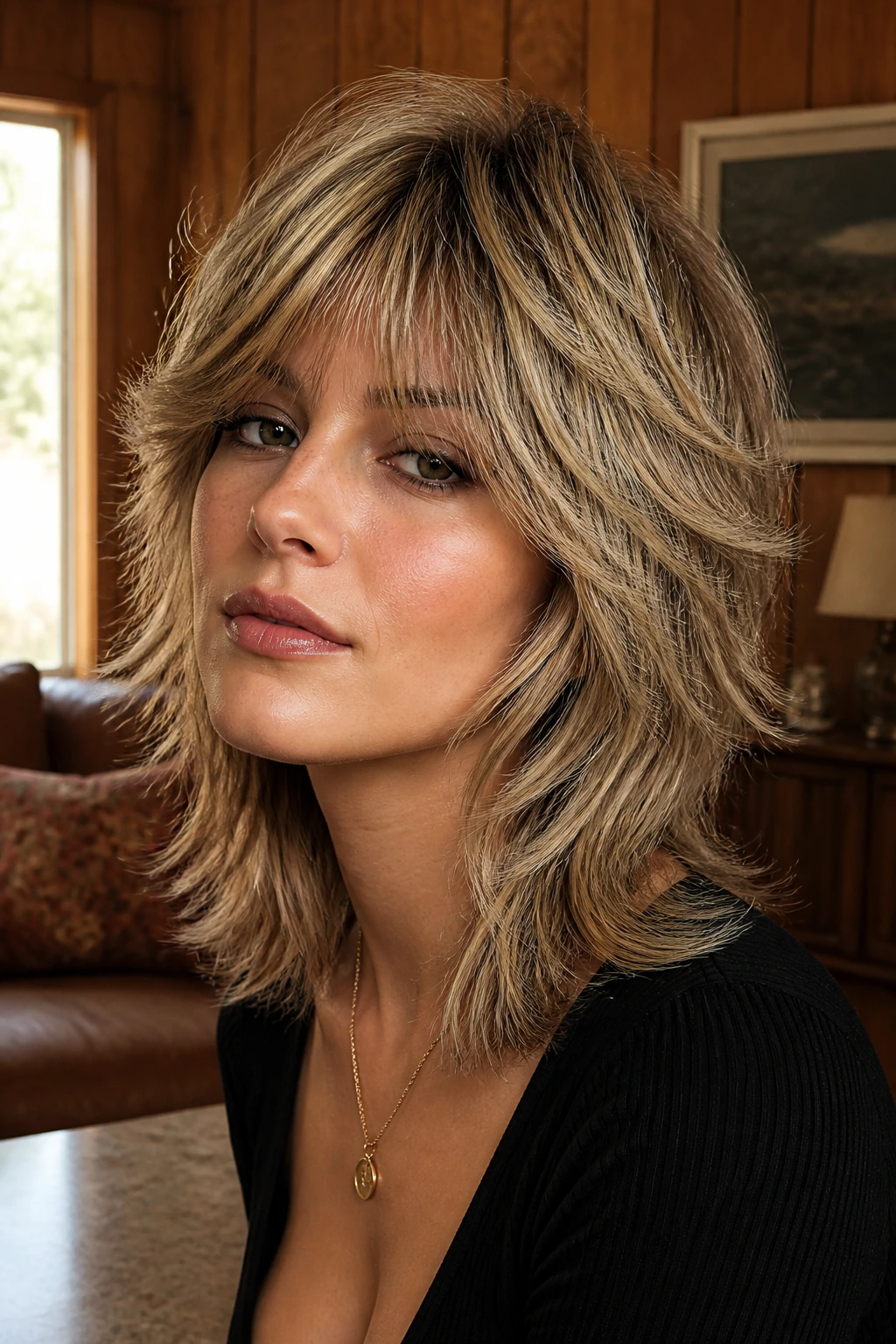
This is the archetype of the genre. Think heavy, feathered fringe meeting choppy, razored layers that hug the cheekbones and fall just past the collarbone. The key here is the volume—the crown is kept fuller, while the ends are thinned out to create that signature tapered effect.
Why It Works for Most Hair Types
If you have naturally wavy hair, this cut is almost effortless. The layers naturally stack to create that messy, intentional body without needing a curling iron. For those with straight hair, a light texture spray is your best friend to add the grit this cut demands.
Pro tip: Ask your stylist to keep the fringe long enough to graze your lashes; if it is too short, the whole vibe shifts from rock-and-roll to schoolgirl, which is a very different aesthetic.
2. Face-Framing Curtain Bang Shag
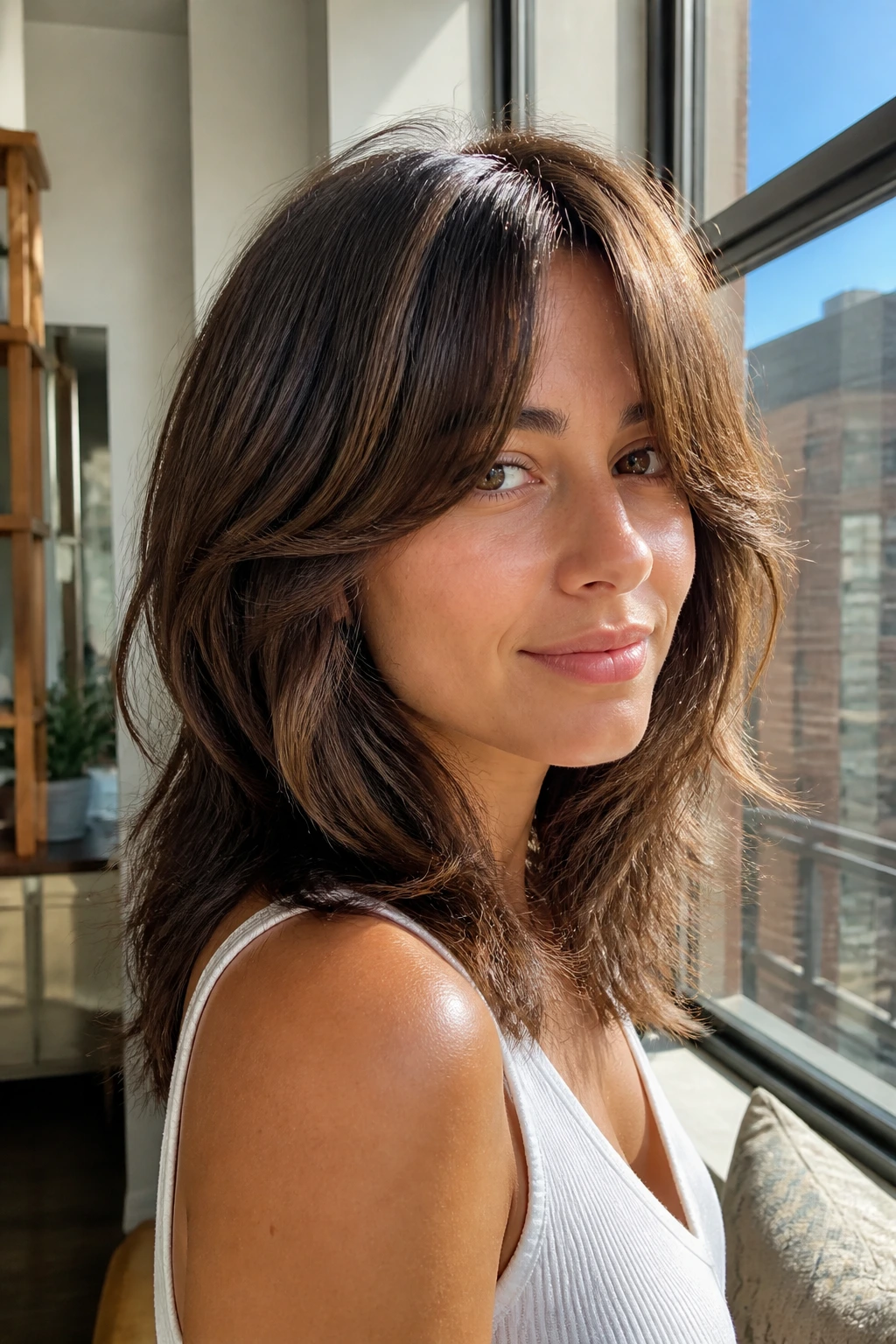
Sometimes you want the drama of a shag without committing to the full, choppy chaos. By keeping the back layers relatively soft and focusing the extreme, short layering around the face, you get a hybrid that feels incredibly wearable. The curtain bangs serve as the transition, softening the jump between the front pieces and the rest of the hair.
Styling for Daily Wear
You can blow-dry these bangs forward with a round brush for a bouncy, voluminous look, or let them air dry for a flatter, more relaxed texture. Because the layers are concentrated at the front, you can easily tuck the sides behind your ears when you need to keep your hair out of your face during the workday.
3. The Razored Razor-Cut Shag
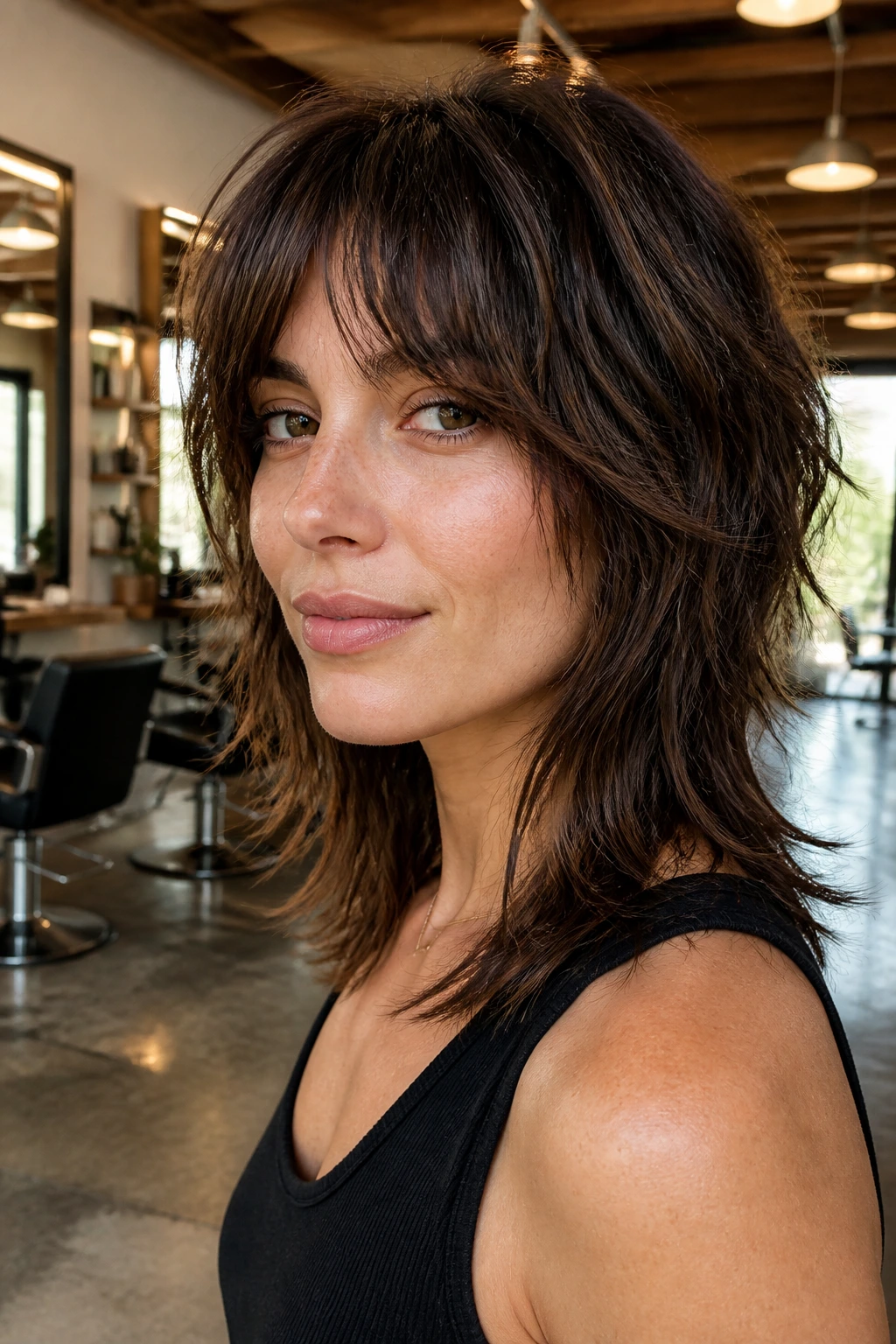
Scissors can sometimes leave layers looking too precise, almost shelf-like. A razor, in the right hands, shreds the ends, creating a soft, feathered finish that feels lived-in immediately. This is my favorite technique for thick hair that feels too heavy and “poofy” in a standard blunt cut.
- The benefit: It removes bulk without sacrificing overall length.
- The visual: Ends that look wispy and soft rather than blunt and solid.
- The maintenance: It grows out beautifully because there are no harsh lines to lose shape.
4. Wispy Feathered Shag
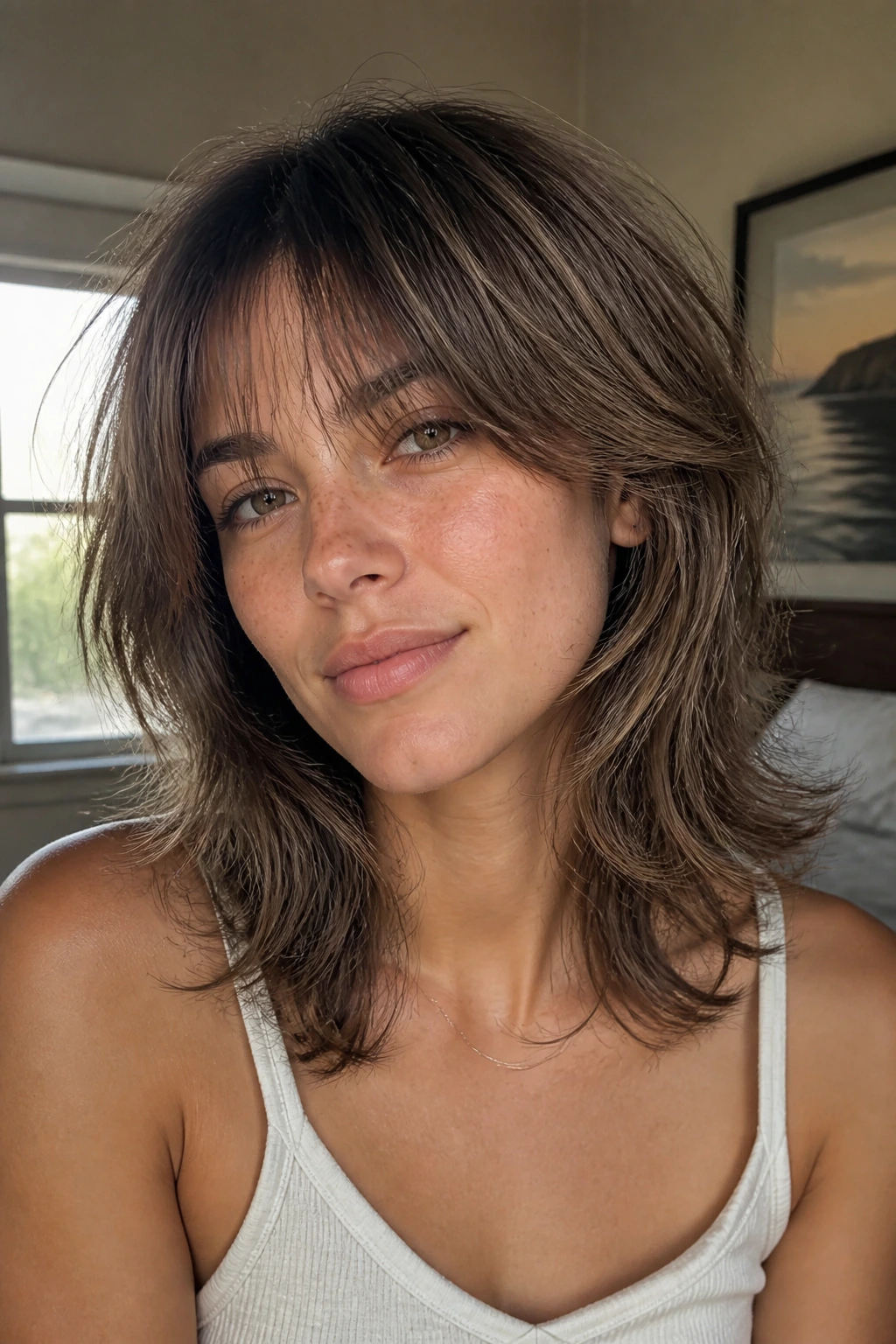
If you have fine, thin hair, you might be terrified of the word “layers,” thinking they will leave your ends looking stringy. A wispy shag is the exception. By keeping the internal layers minimal and focusing on texturizing the very tips, you create the illusion of density.
It feels airy and light, rather than heavy and dragging. You want to avoid over-layering the crown, which can take away the foundation of the hair. Instead, focus the movement in the bottom six inches of the cut, allowing the hair to flip out slightly at the shoulders for that classic retro flair.
5. Curly-Texture Shag
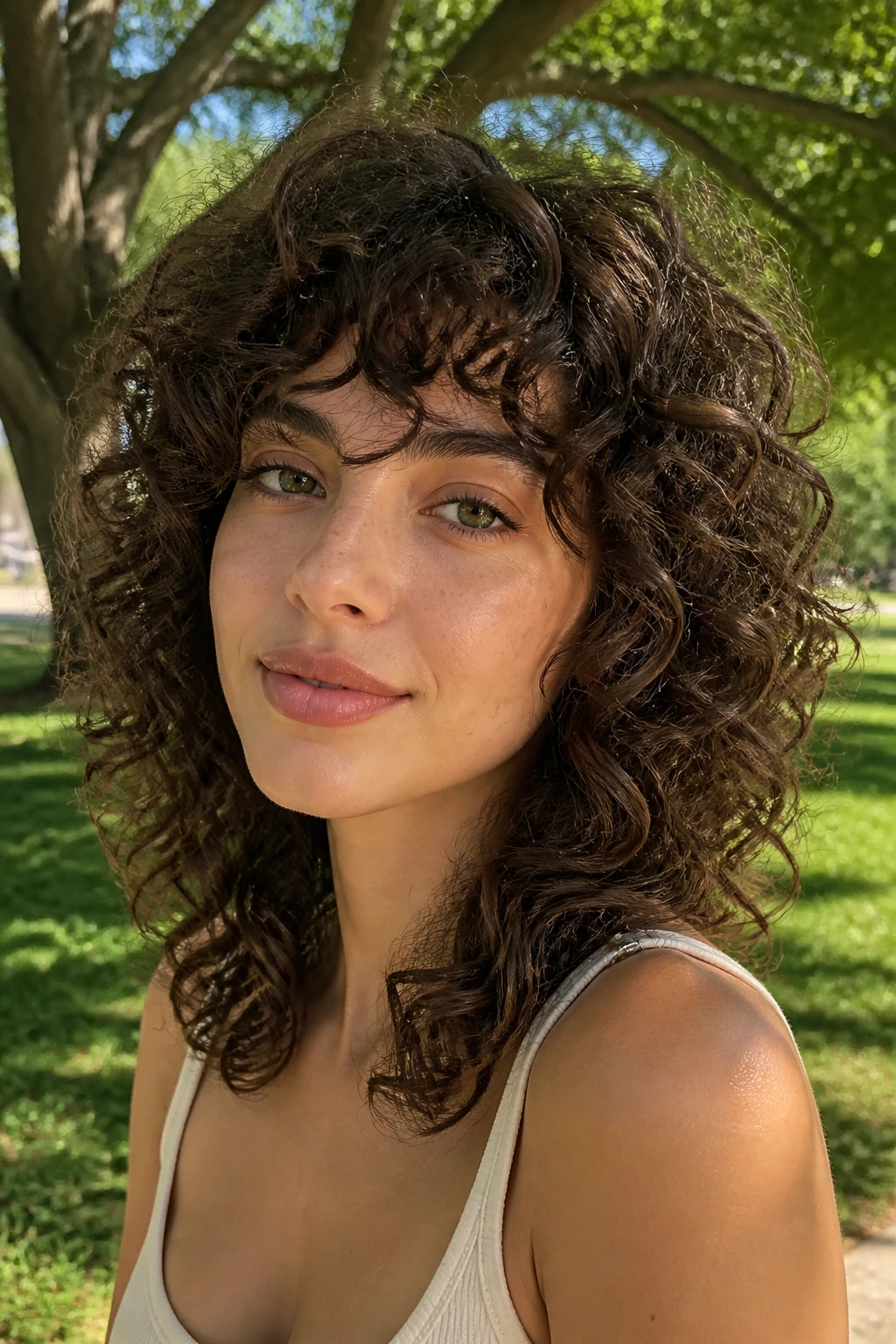
Curls need space to breathe. When you cut curly hair into a blunt medium length, you often end up with a pyramid shape. A shag, however, works with the physics of curls. By cutting shorter layers at the top, you reduce the weight that pulls the curls down, allowing the ringlets at your crown to spring up and frame your face.
How to Request This Cut
Do not ask for “thinning.” Ask for “internal shaping” or “de-bulking.” Your stylist needs to cut into the curls, not across them. A dry cut is usually the best approach here, as it allows the stylist to see exactly where each ringlet wants to sit once it is free from the weight of its neighbors.
6. The Long-Layered Hybrid
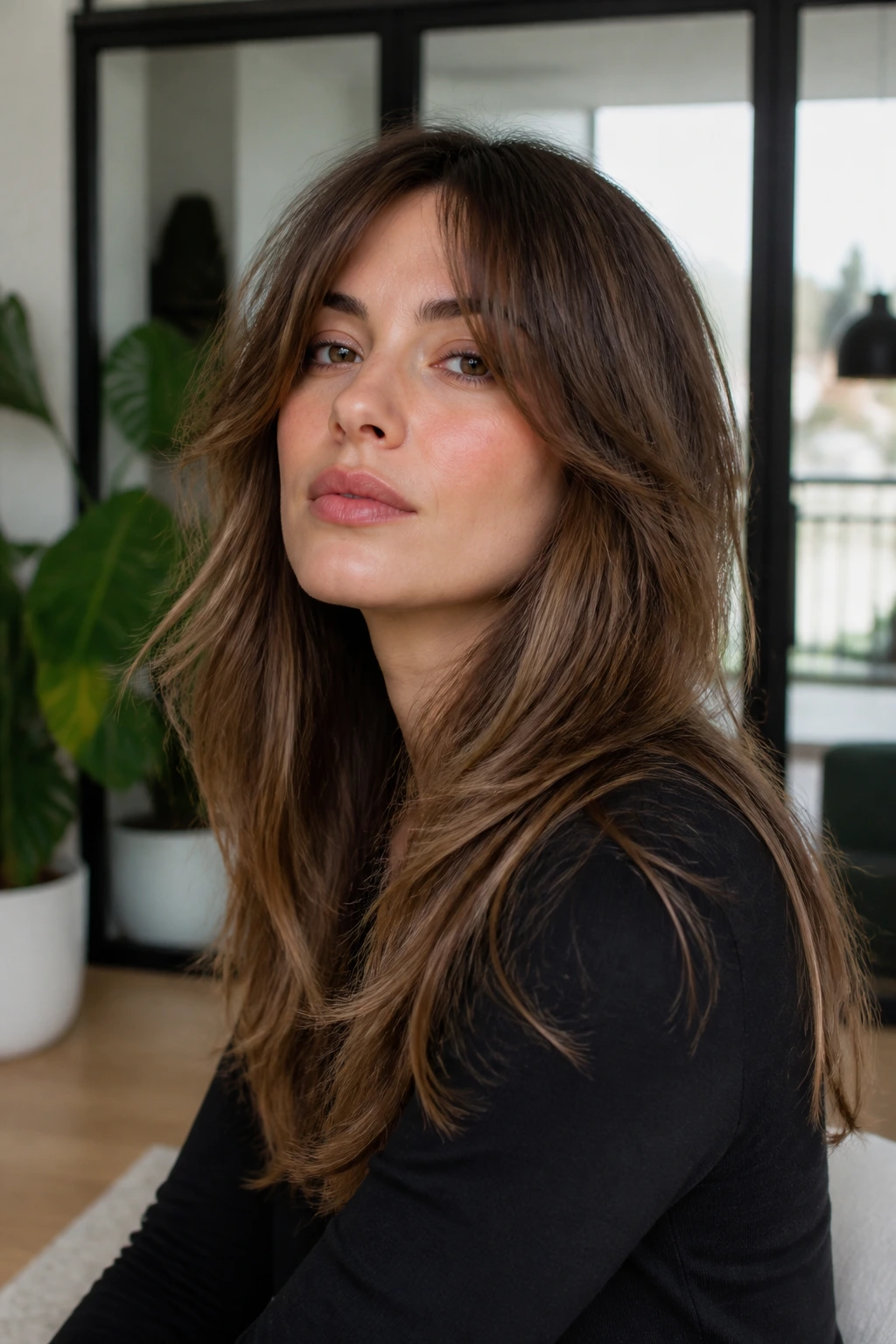
Not everyone wants to go full rocker. If you are hesitant about losing too much length, the long-layered shag is a gentle introduction. It keeps the bulk of your hair length but incorporates choppy, face-framing pieces that mimic the shag silhouette.
It is arguably the most versatile of the bunch. You can straighten it for a sleek, modern finish or use a sea salt spray to bring out the hidden texture in the choppy layers. It sits right in that sweet spot where you still have plenty of styling freedom.
7. Soft Blunt-Edge Shag
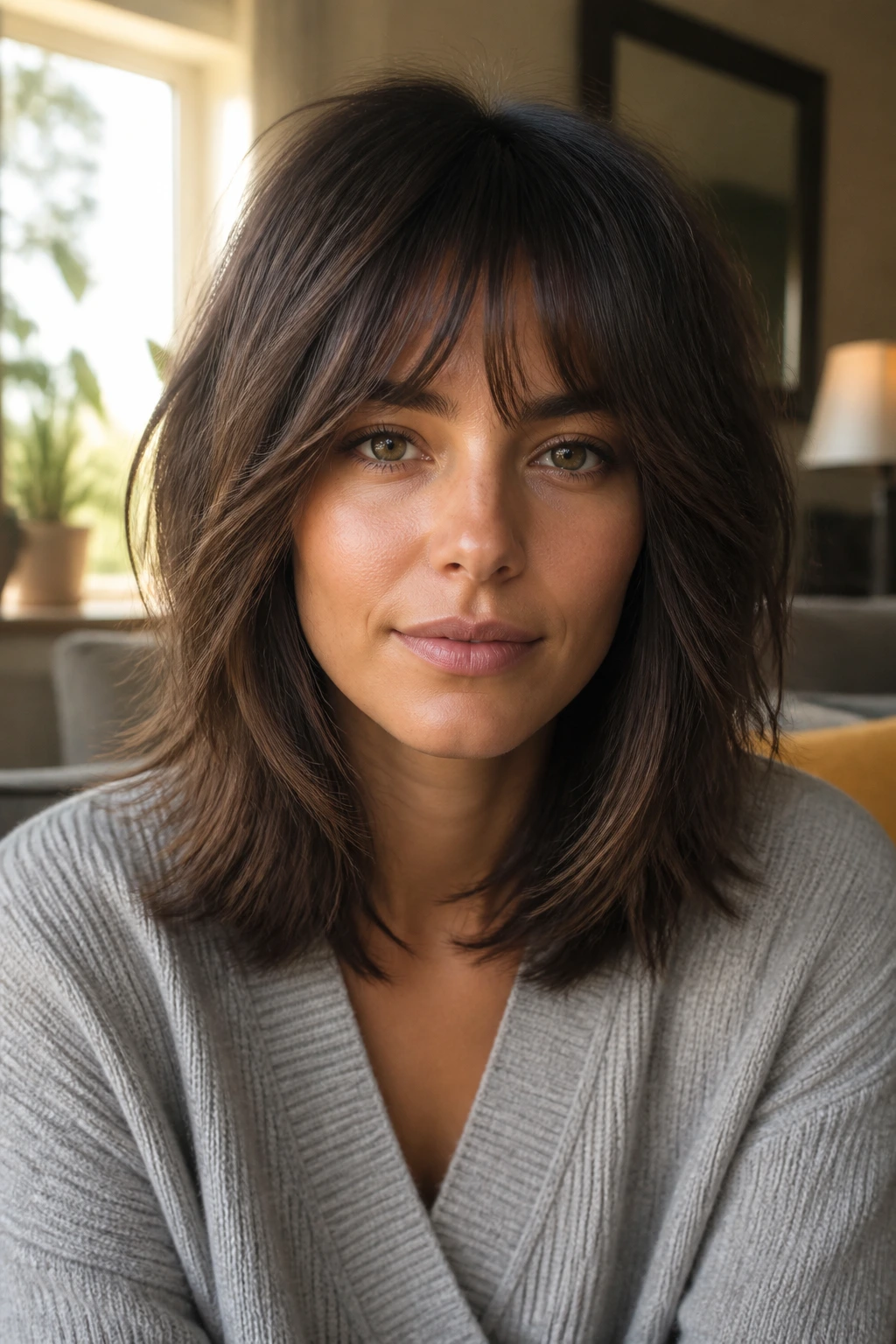
This cut sounds contradictory—how can a shag be blunt? The trick is to keep the perimeter line solid and thick, but then cut into the interior with deep point-cutting techniques. You get the weight of a blunt cut with the movement and messiness of a shag.
This is ideal for someone who loves the look of a heavy, thick haircut but hates the way it hangs flat. It gives you that polished, heavy-bottom look while still feeling like a modern, textured hairstyle. It is remarkably easy to style—just a quick rough-dry is usually enough to wake up the layers.
8. Shag with Micro-Bangs
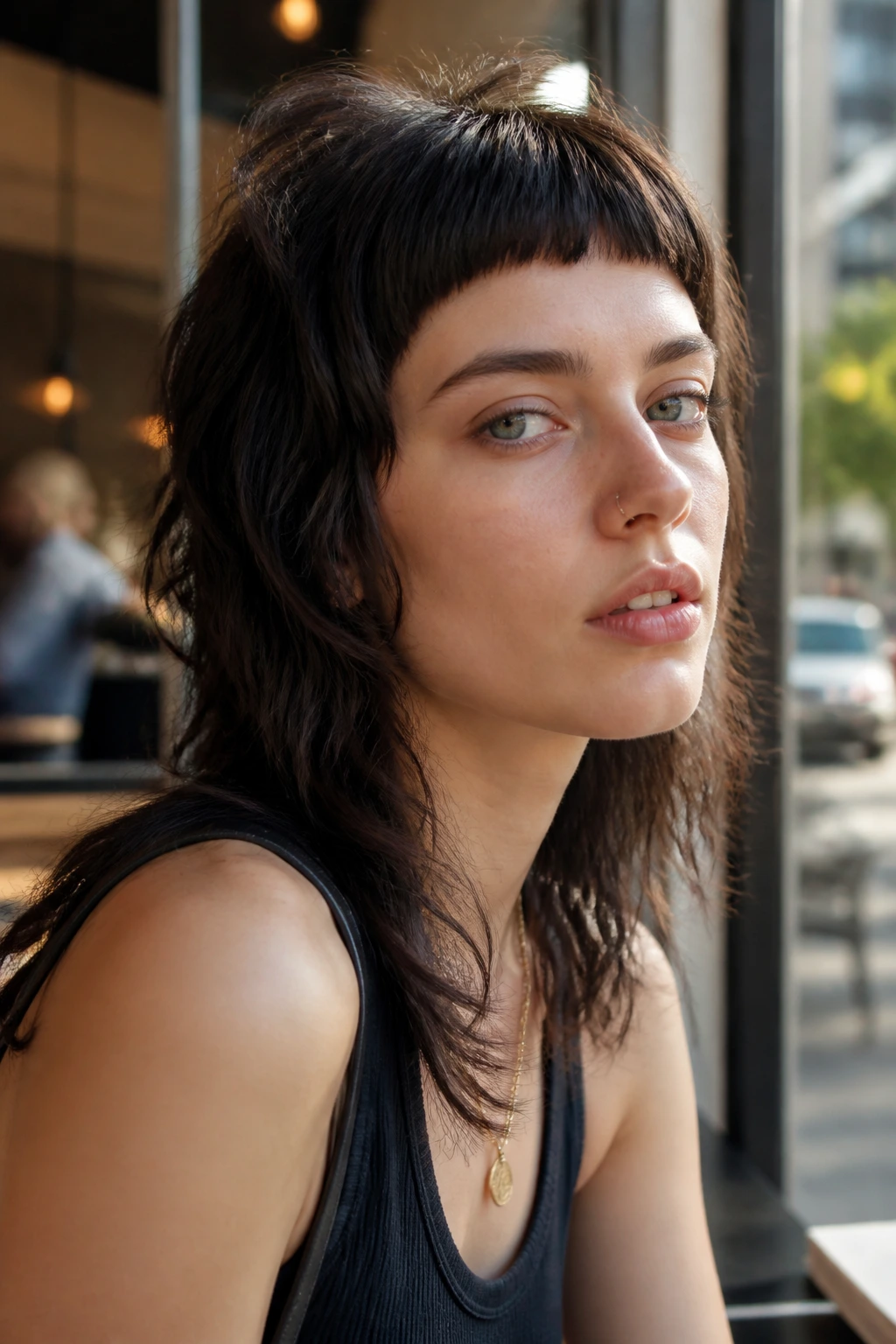
If you have a strong jawline or an oval face shape, micro-bangs can be incredibly striking. Paired with a medium-length shag, the look becomes high-fashion and intentional. The contrast between the severe, short fringe and the wild, messy lengths makes for a strong visual impact.
You have to be prepared for the maintenance, though. Micro-bangs require a trim every three weeks to stay looking crisp. If you are willing to keep up with the appointments, this style offers a bold personality that few other haircuts can match.
9. The Disconnected Shag
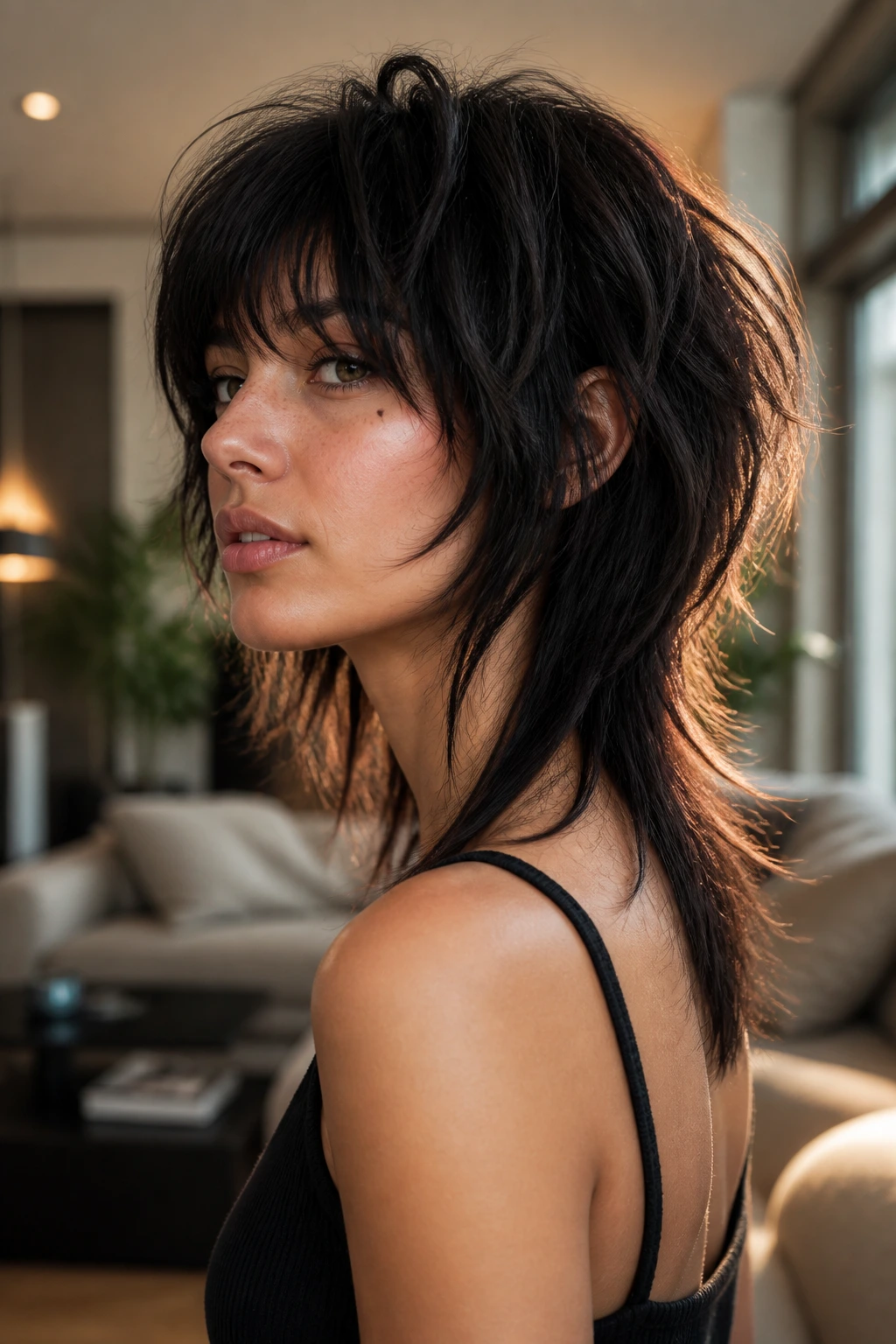
Disconnected layers mean there is a distinct gap between the top section and the bottom section of your hair. It is not a subtle, blended look; it is meant to be visible and edgy. This is a deliberate aesthetic choice, perfect for someone who wants a haircut that looks like it was styled even when it wasn’t.
Why It’s Unique
The disconnect creates a very specific silhouette—a rounded, voluminous top that drops into a leaner, sharper bottom. It is great for people who like to play with different products. Use a matte pomade on the top layers to play up the “shaggy” texture, and leave the ends more natural.
10. Shag with Sun-Kissed Highlights
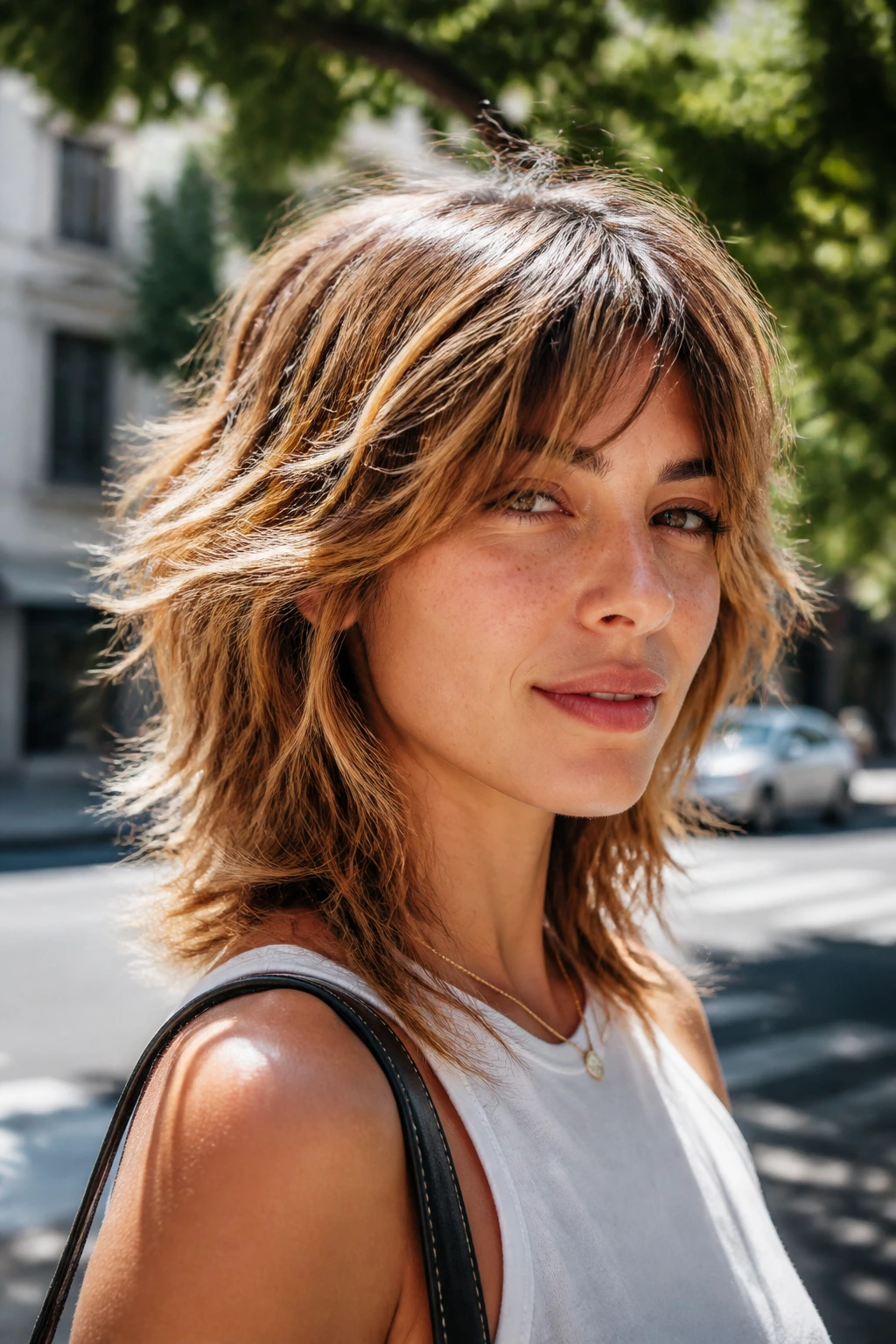
While this is technically a color choice, it is also a styling technique. A medium-length shag looks flat without variation in color. Strategically placed highlights (or babylights) accentuate the layers, making the movement of the hair much more visible.
Without the highlights, the layers in a dark-haired shag can get lost. The light picks up the texture, showing off the choppy ends and the face-framing fringe. If you are going for a shag, consider how your color will interact with the cut—the two are almost always better together.
11. The Beach-Wave Shag
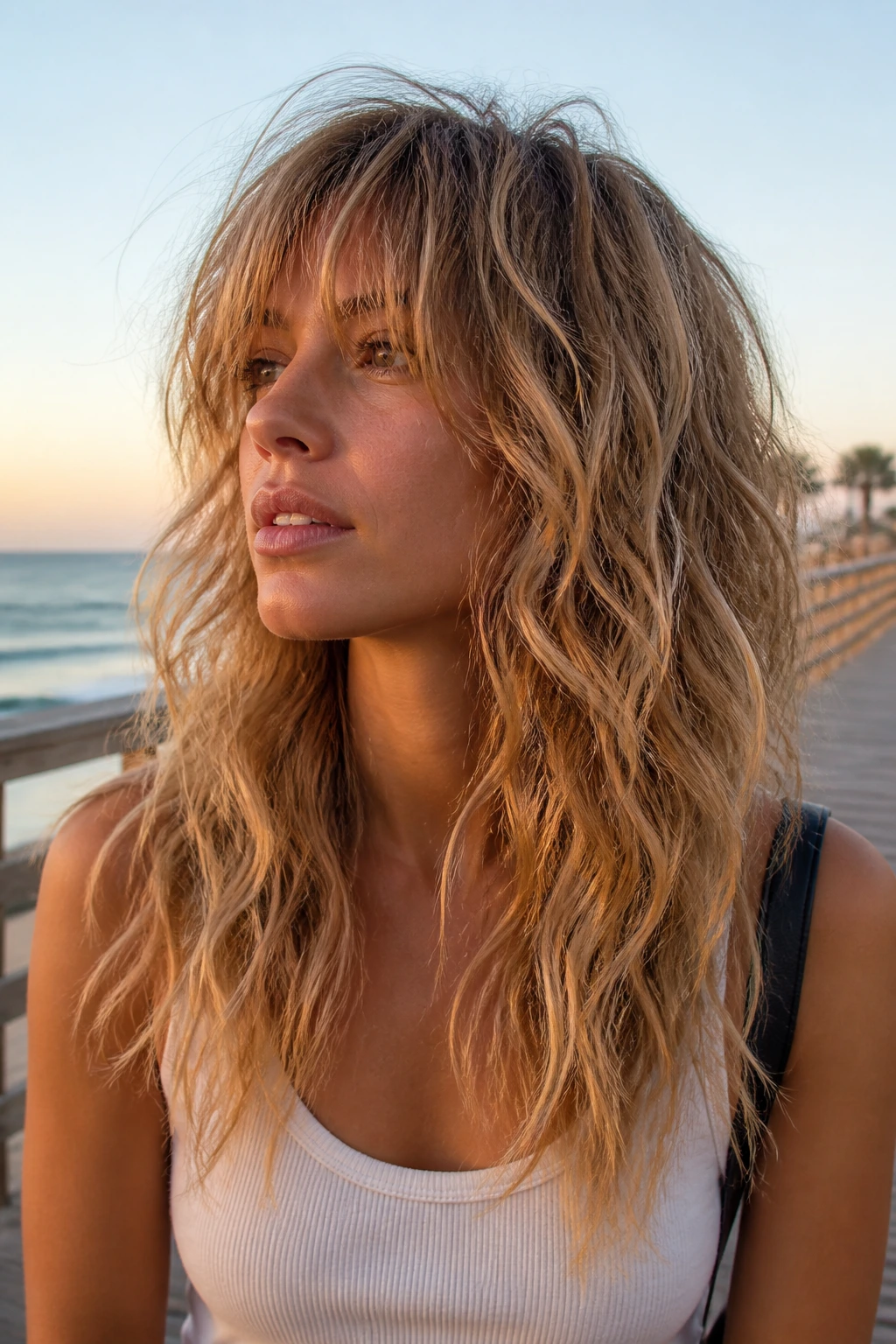
This is the “I just got off the surfboard” look, achieved through a specific cutting pattern that enhances natural waves. The layers are cut long and soft, avoiding that choppy, punk-rock vibe in favor of something more bohemian and relaxed.
- Styling: A light texturizing cream or mousse, applied to damp hair, followed by a quick scrunch-dry.
- The vibe: Effortless, sun-drenched, and very low-maintenance.
- Best for: Someone who wants a haircut that looks good at 8:00 AM without any real effort.
12. Deep-Point Cut Shag
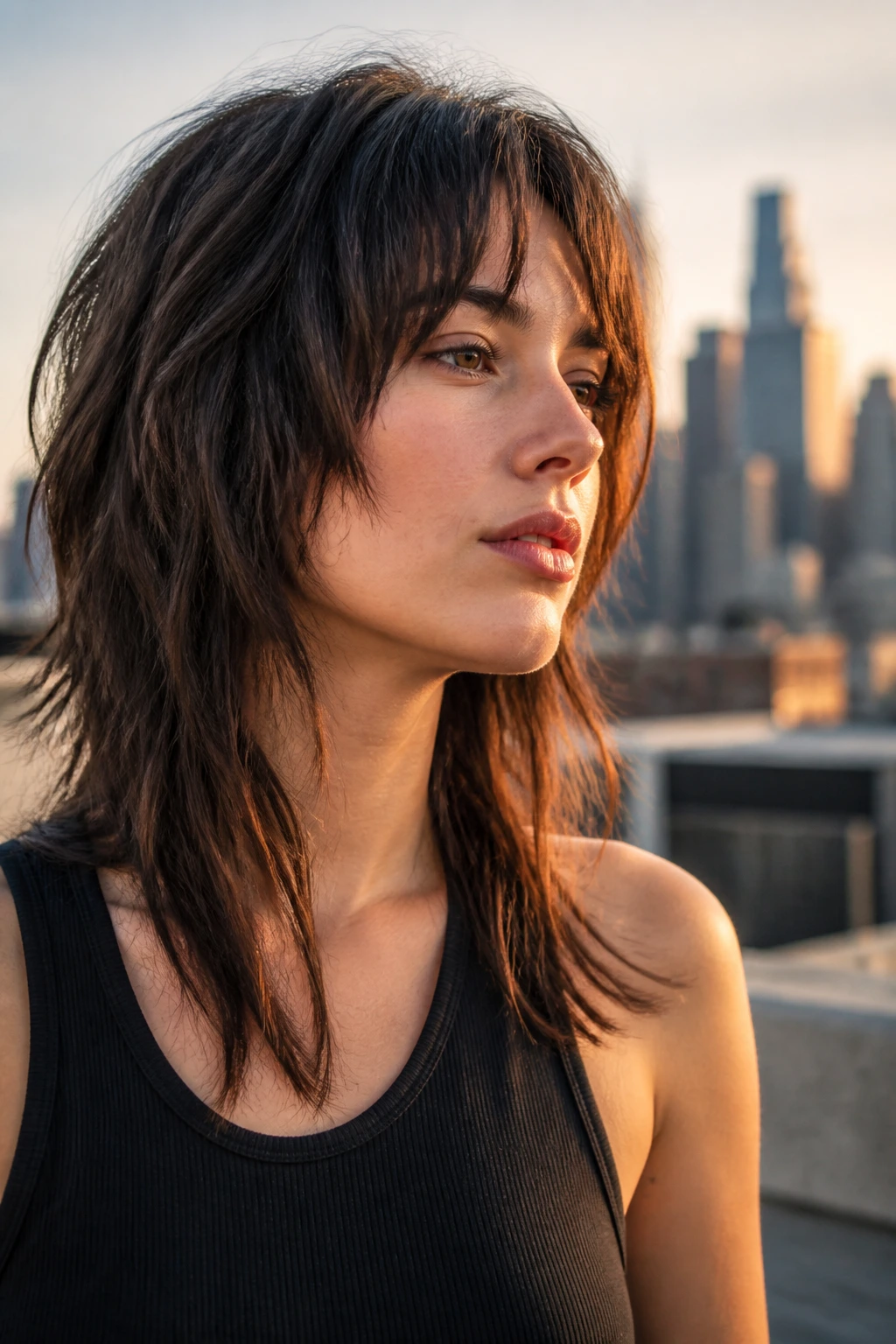
Deep point cutting involves taking the shears and cutting vertically into the hair shaft, rather than horizontally. This removes weight from the ends without creating sharp lines. When done throughout the mid-lengths, it creates a “shattered” look that feels soft and airy.
It is a great choice if you have dense, straight hair that tends to flip up in weird ways. The internal texture makes the hair behave differently—it tends to sit where you put it, rather than trying to snap back into a flat, straight line.
13. Rounded Layered Shag
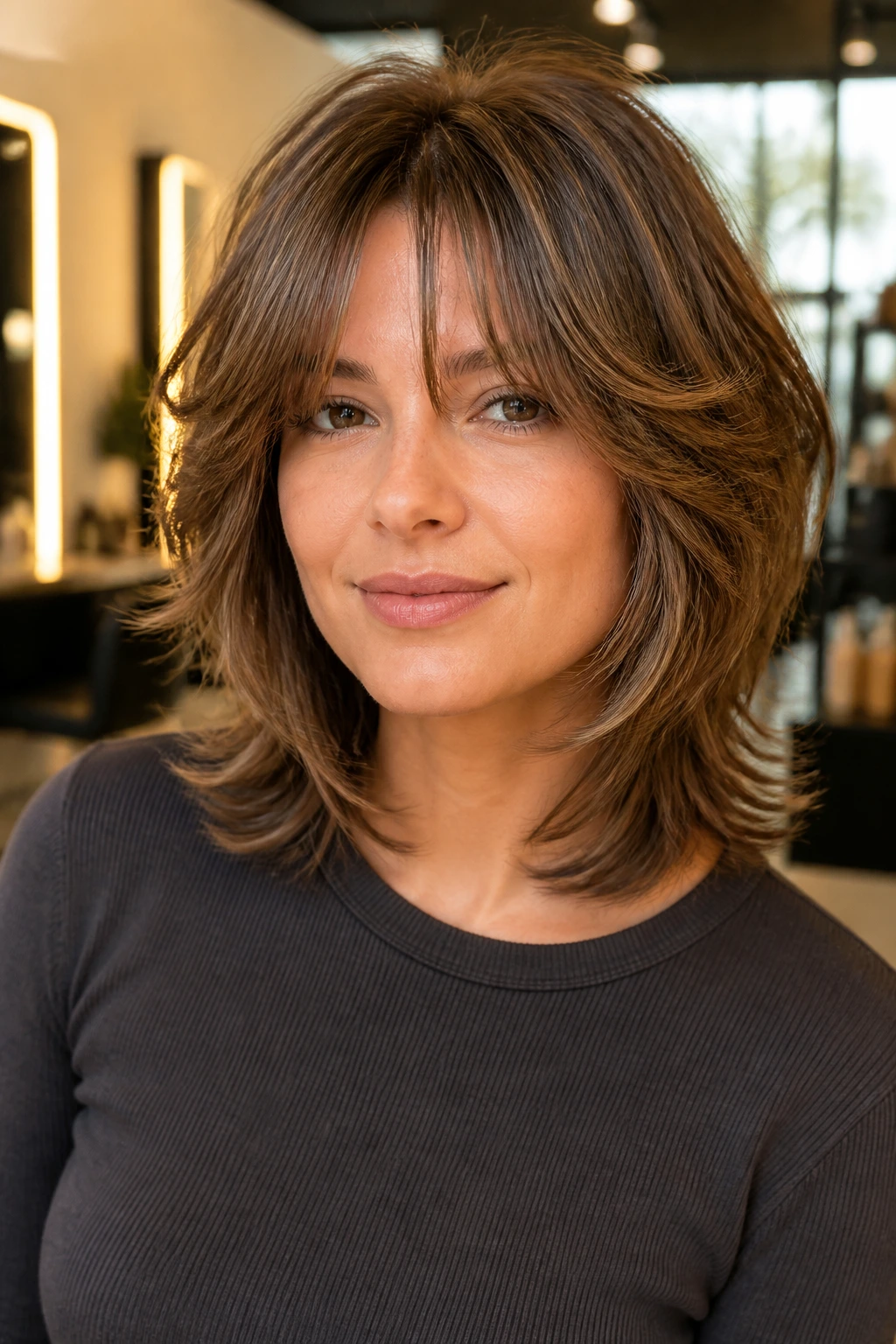
This cut takes the shag concept but softens the edges, aiming for a rounded, bouncy shape rather than a jagged one. It is reminiscent of the “butterfly” cuts that have gained popularity, but with more emphasis on internal layering rather than just front-facing layers.
How to Style It
You will need a large round brush for this one. By over-directing the hair when blow-drying, you encourage that rounded, voluminous shape. It is a more “done” look than the messy, rock-and-roll shags, making it a better choice for professional environments where you still want a bit of personality.
14. Choppy Ends Shag
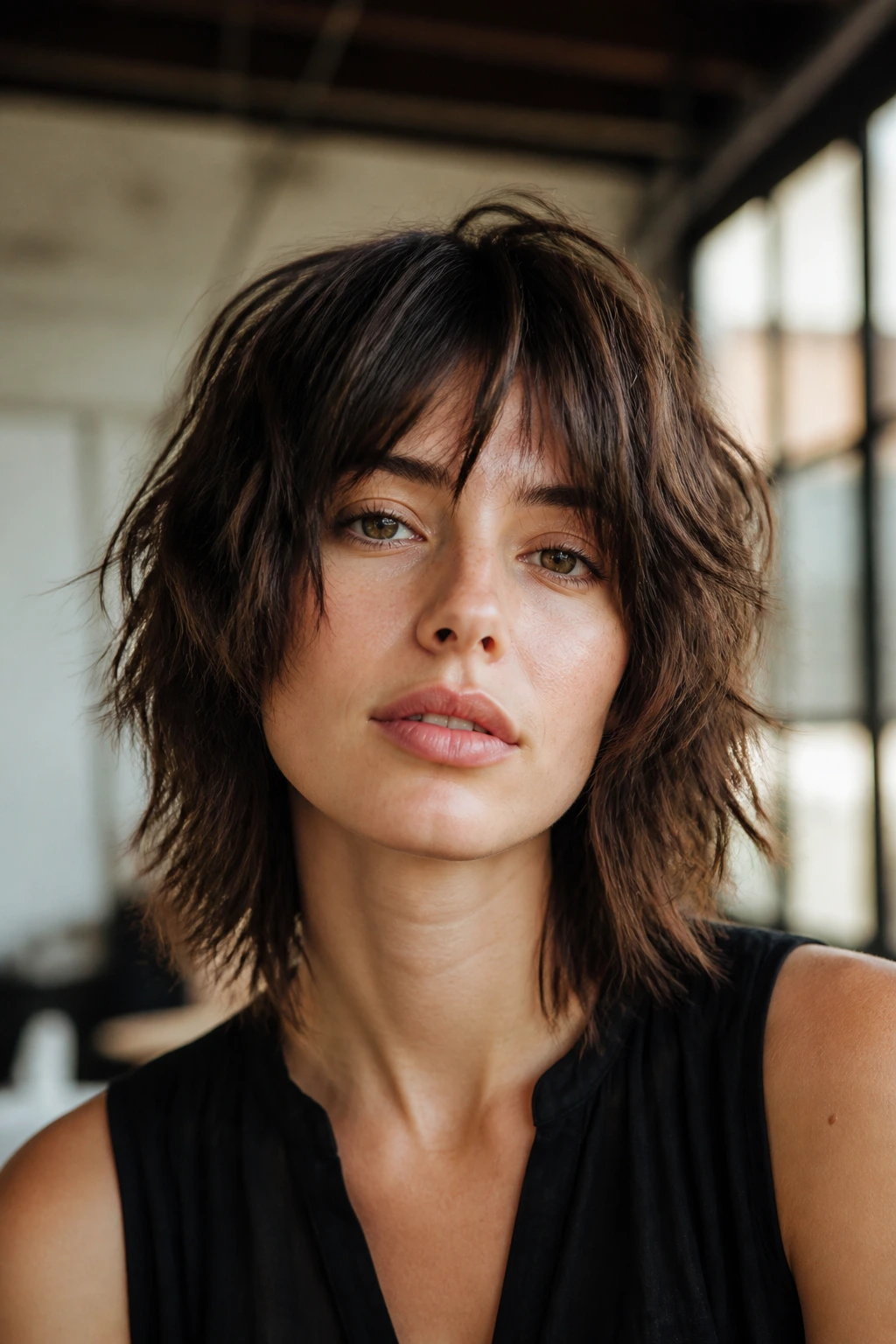
Sometimes the silhouette is fine, but the ends are the problem. If you feel like your haircut lacks “bite,” a choppy-ends shag is the answer. The stylist uses texturizing shears or a razor to aggressively thin out the bottom two inches.
The result is a look that feels intentionally unfinished and raw. It’s perfect for someone with a minimalist fashion sense—a simple white t-shirt and jeans look instantly cooler when your hair has that raw, textured edge.
15. The Grown-Out Wolf Cut
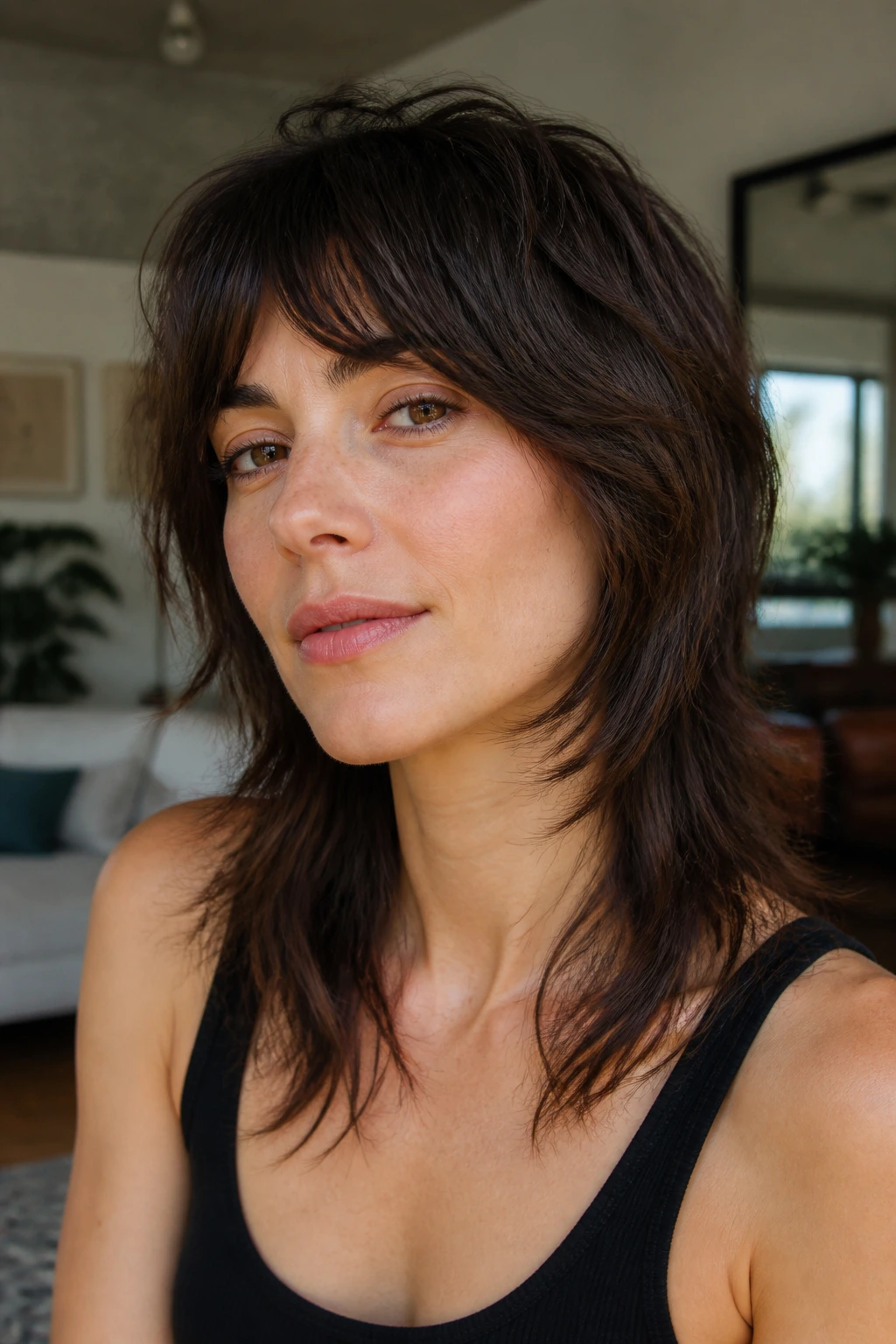
The wolf cut became a sensation, but the growth phase is often awkward. If you take a wolf cut and let it grow out to medium length, it naturally transitions into a beautiful, shaggy hybrid. The short layers at the crown grow out, blending into the longer layers in the back.
It is essentially a “blended” version of the wolf cut. It’s less extreme, more manageable, and grows out with a grace that most severe haircuts lack. If you have been living with a shorter, more aggressive cut and want to transition to something longer, this is your target shape.
16. Asymmetrical Shag
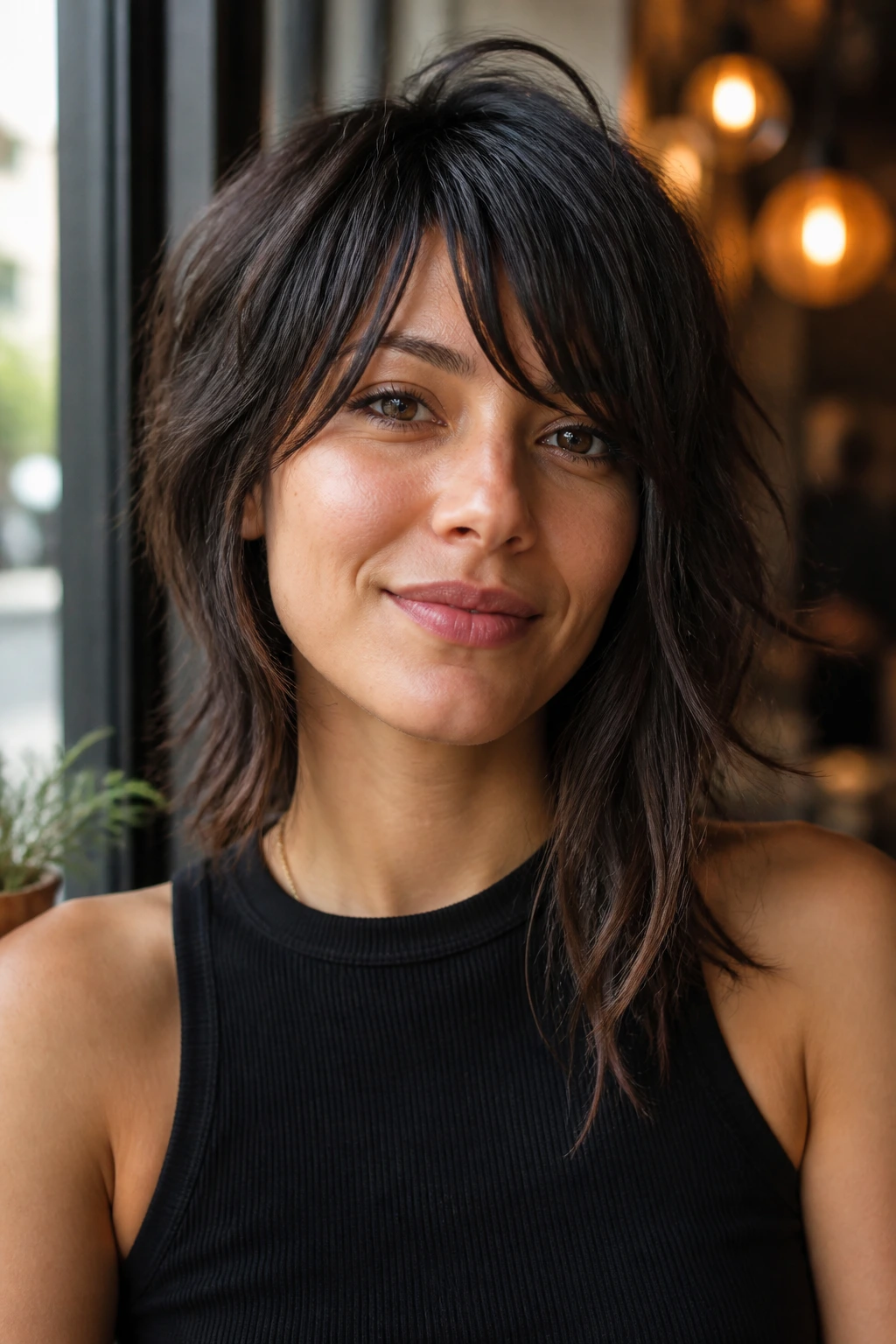
If you want to move away from the traditional, balanced shag, an asymmetrical cut is a great way to introduce some visual interest. Keep one side slightly longer, or perhaps the bangs slightly swept to one side, and let the layering follow that pattern.
It doesn’t have to be dramatic—even an inch of difference can change how the hair falls around your face. It adds a bit of mystery and edge to a look that can otherwise feel very safe.
17. Shag with Heavy Crown Volume
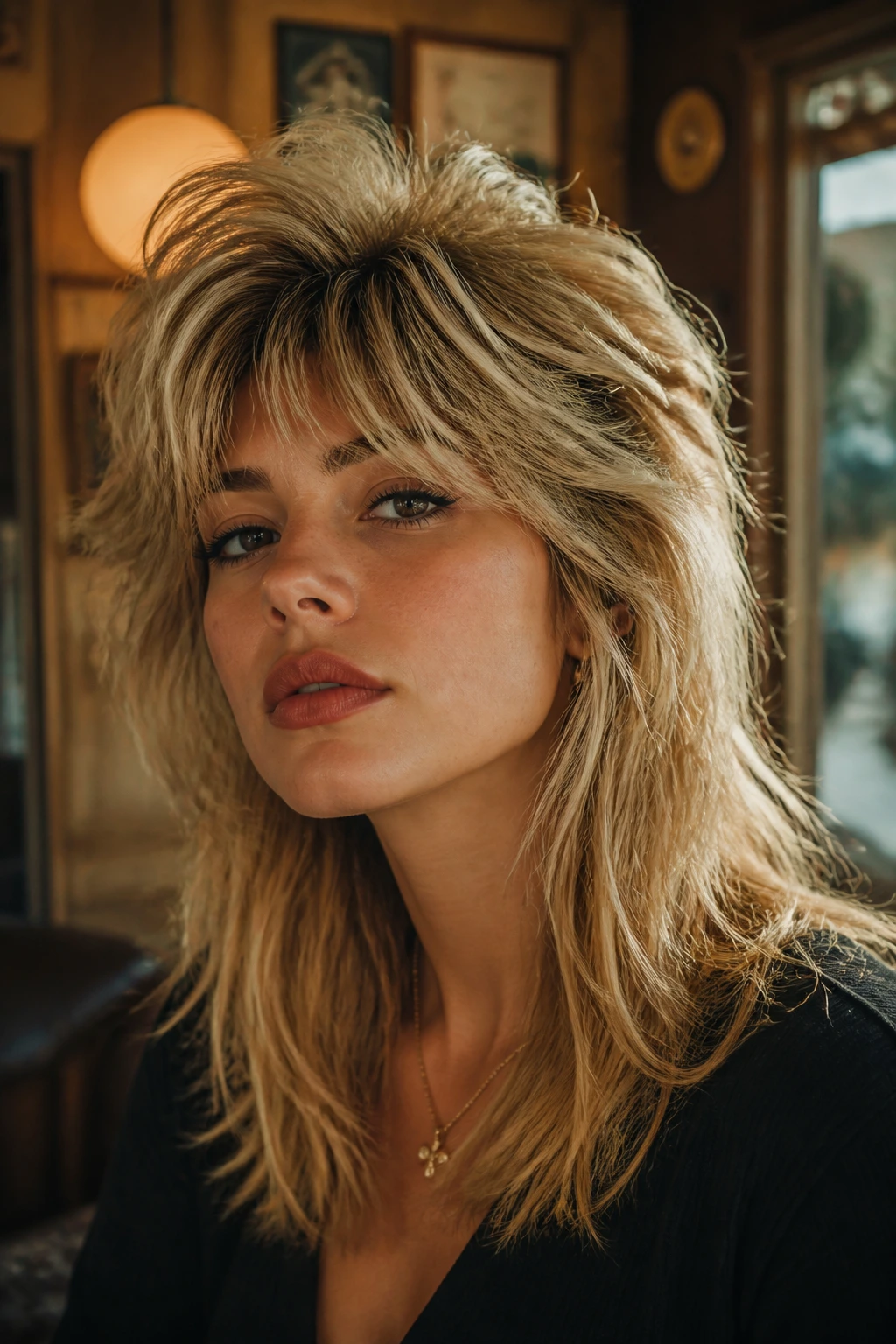
This version focuses on layering the top section of the hair heavily to create maximum height, leaving the rest of the length slightly thinner. It’s a bold look that calls back to 80s styles, but modernized with softer, less-sprayed textures.
It is excellent for hair that is naturally flat. By removing weight from the top layers, you allow the roots to lift naturally. Just be prepared to use a bit of dry shampoo or texturizing powder at the crown to keep that volume propped up throughout the day.
18. The “Undone” Lob Shag
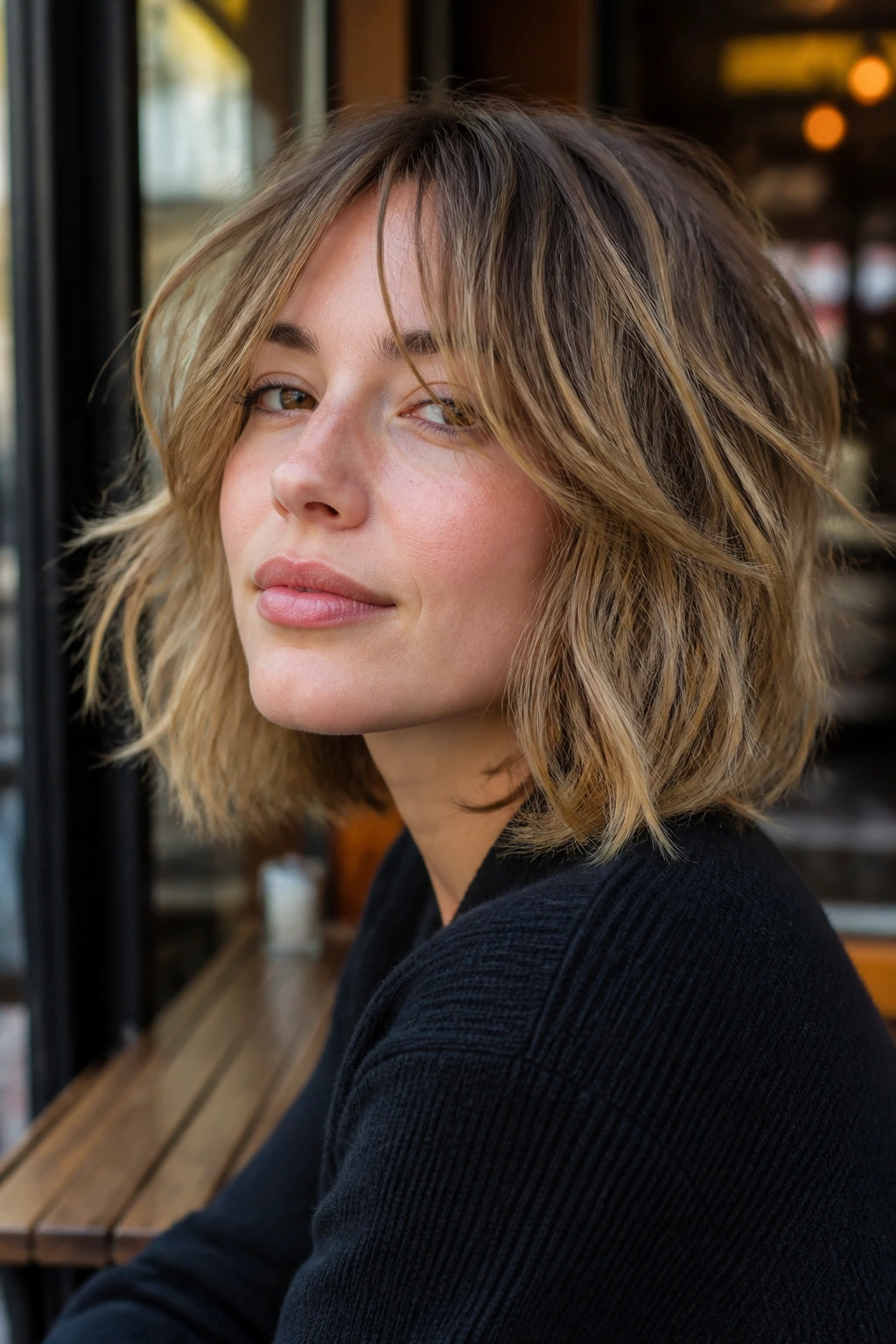
A lob (long bob) is a great medium-length canvas, but it can be boring. A lob-shag hybrid takes that same length and breaks it up with layers. It is the perfect entry point if you aren’t ready to commit to a full-blown, choppy shag.
- The benefit: You keep the sleekness of a bob but get the texture of a shag.
- The versatility: You can still pull it back, but you get plenty of movement when it’s down.
- The maintenance: Very low. It grows out cleanly and doesn’t require constant salon visits for shape maintenance.
19. Textured Shag with Center Part
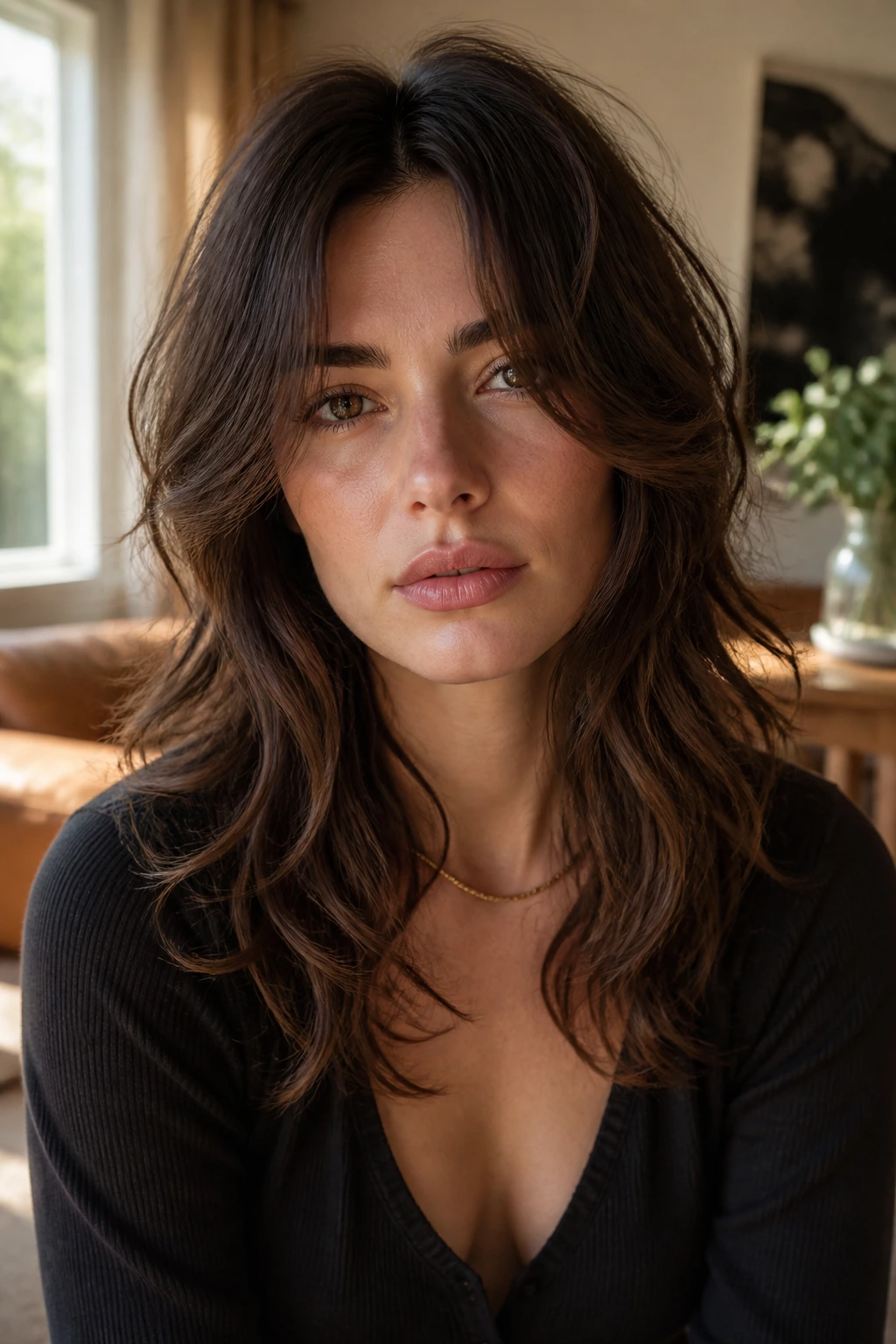
There is something undeniably cool about a center-parted shag. It frames the face symmetrically and lets the layers fall naturally away from your eyes. It’s a very “it-girl” aesthetic that works particularly well if you have a bit of natural wave or bend in your hair.
If your hair is stick-straight, you might need a curling wand to add a few bends, as a center part on straight hair can sometimes look a little too flat for a shaggy cut. A few quick twists with an iron will give you that texture you need.
20. Layered Shag for Thick Hair
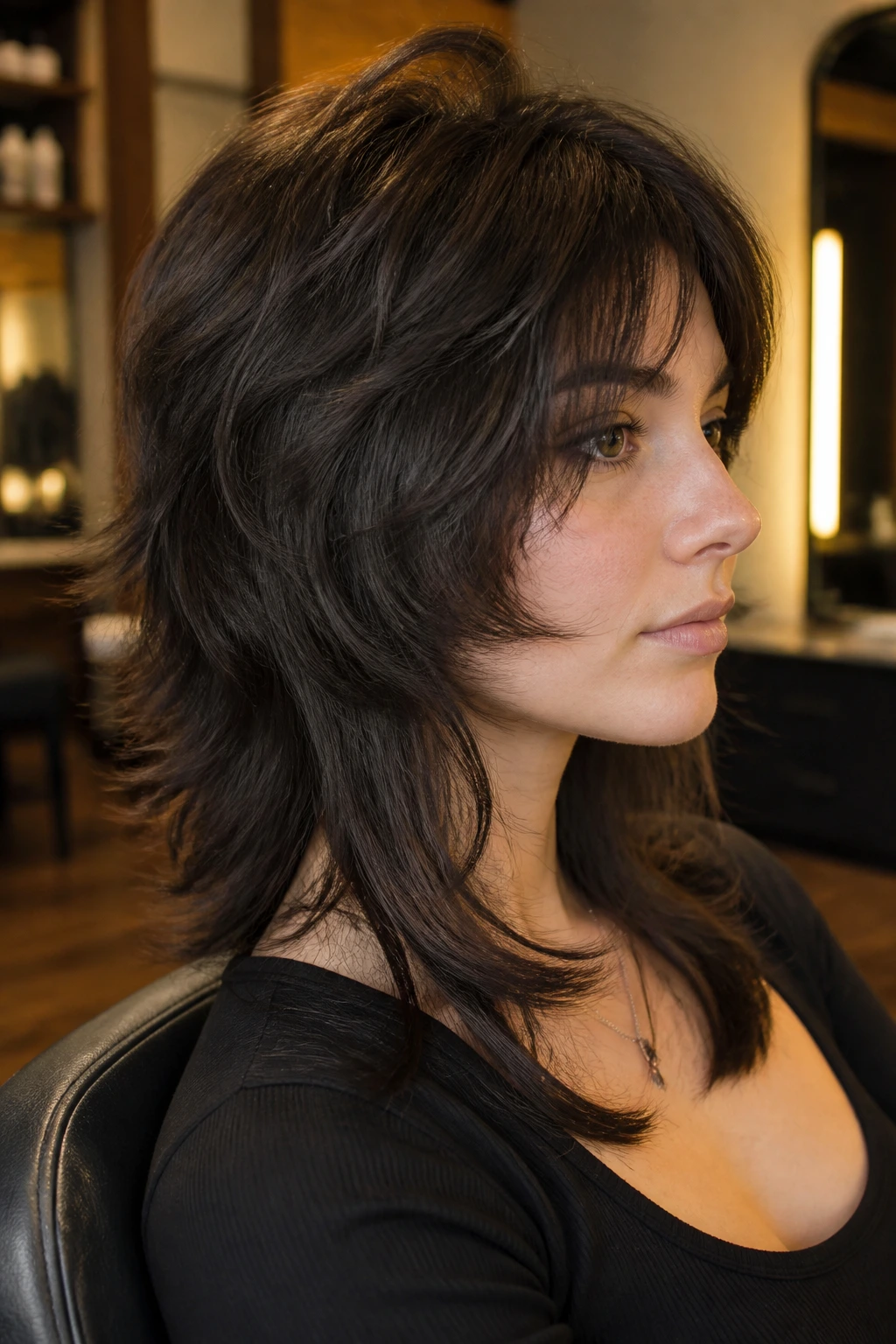
Thick hair is both a blessing and a curse. Too many layers can make it look like a poodle, but no layers make it look like a heavy block. The secret to a shag for thick hair is “internal” layers. These are layers hidden underneath the top layer of hair, designed to remove weight without affecting the visible shape.
This keeps the hair from “triangulating” at the ends. The top layer stays smooth and sleek, while the interior layers provide the movement and volume needed to keep it from feeling like a heavy curtain.
21. Shag with Piecey Fringe
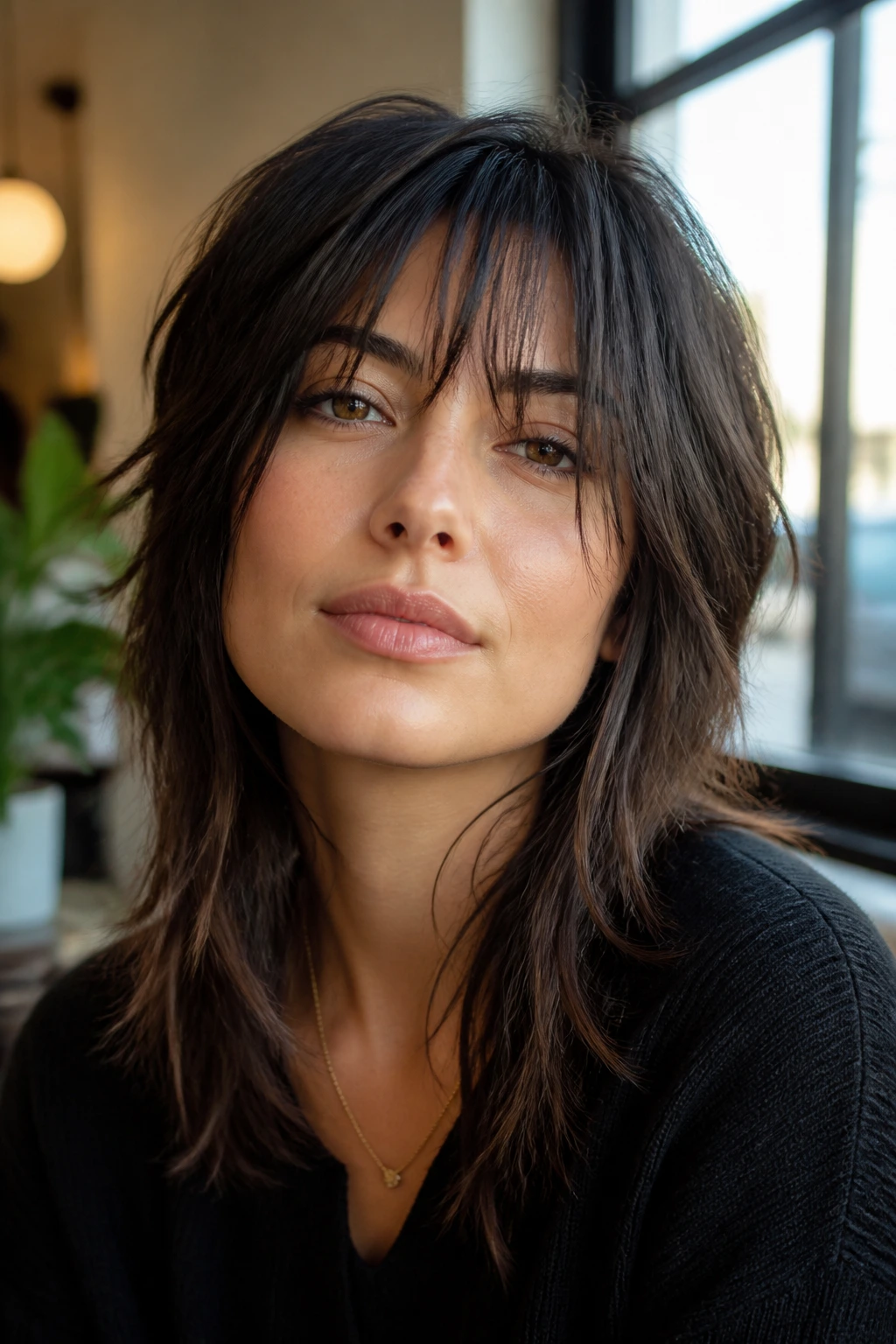
The fringe is often the centerpiece of a shag, and making it “piecey” is a deliberate styling choice. Instead of a solid, heavy block of bangs, a piecey fringe is thinner and separated, allowing your forehead to show through.
It feels much lighter and more modern than the heavy bangs of the past. It’s also easier to style—if it gets a bit messy, that’s actually the point. You don’t need to worry about keeping every hair in place.
22. The “Shaglet” (Soft Mullet-Shag)
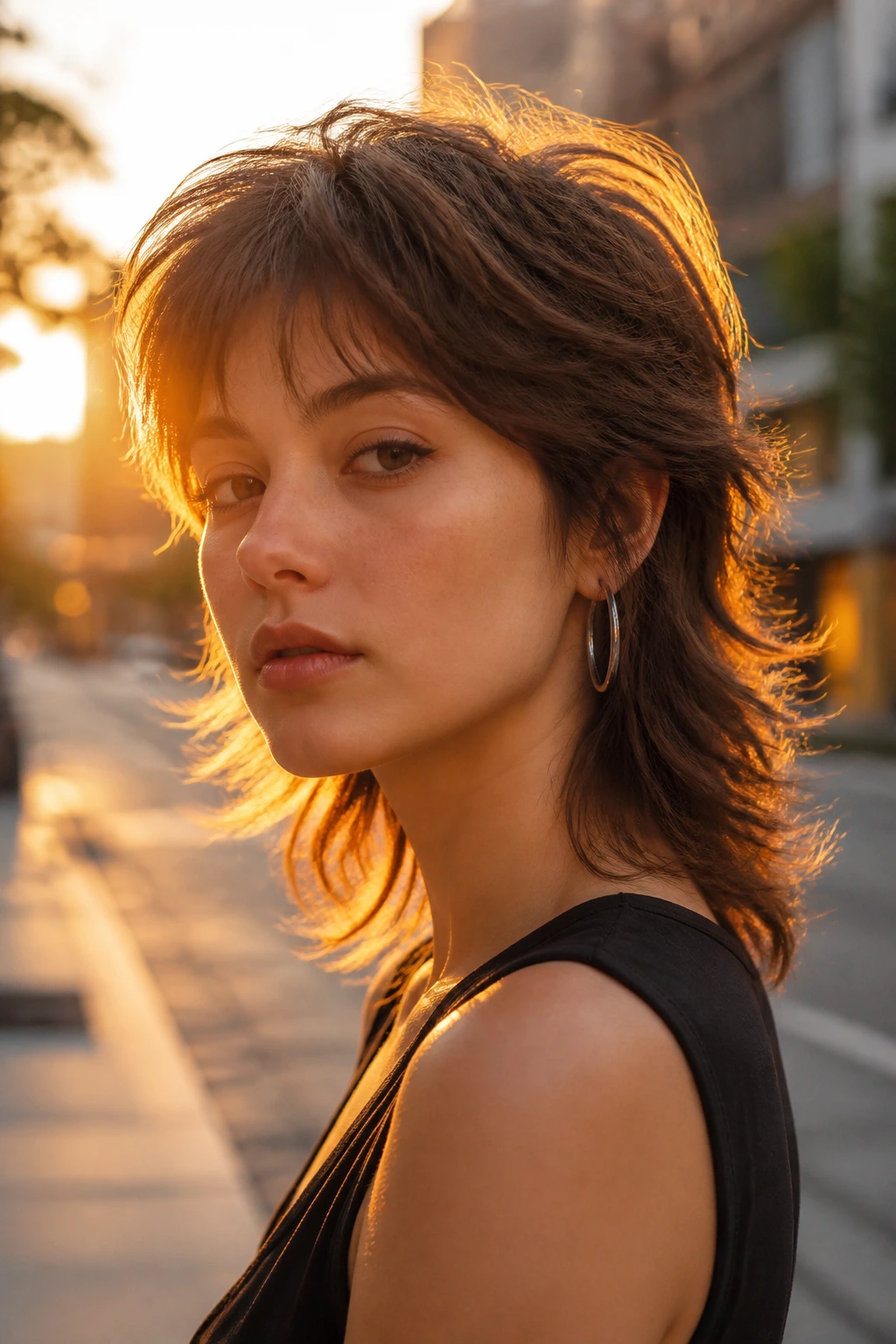
This is a softer, more feminine take on the mullet-shag craze. It features the shorter crown layers and face-framing pieces of a mullet but keeps the length and blending of a traditional shag. It is a very wearable, very “cool” cut.
It’s about balance. The key is to keep the transition between the shorter top layers and the longer back section as seamless as possible. You want movement, not a stark line of demarcation between the two lengths.
23. Shag with Subtle Waves
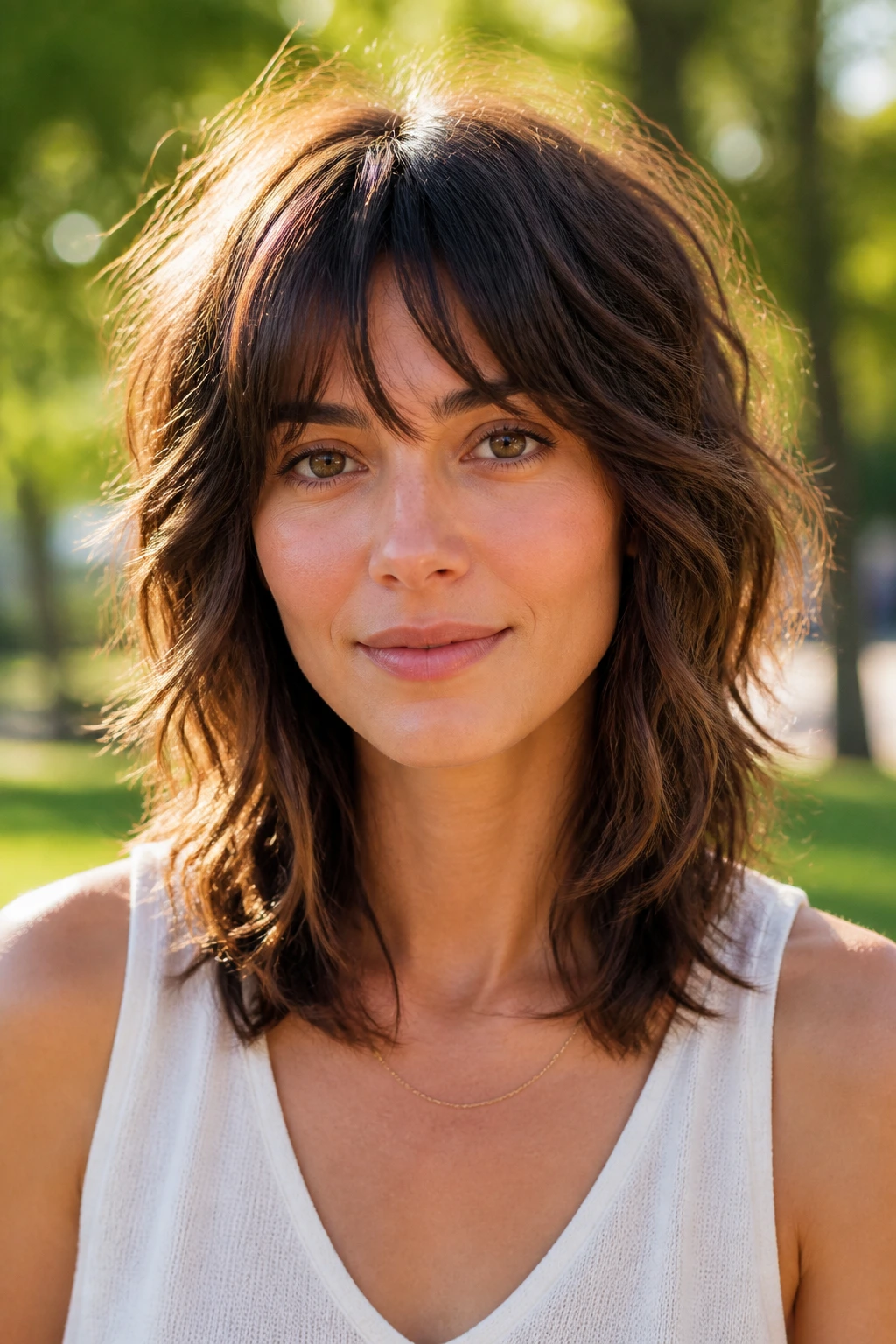
If you have naturally straight hair, you don’t have to settle for a straight shag. Adding a permanent wave (a modern perm) to a layered shag cut can completely change your styling routine. The layers provide the shape, and the wave provides the texture.
It is a commitment, yes, but for many, it is a life-changing one. Waking up with texture already built into the hair means you can spend five minutes styling and be out the door, rather than spending thirty minutes with hot tools.
24. Sleek and Polished Shag
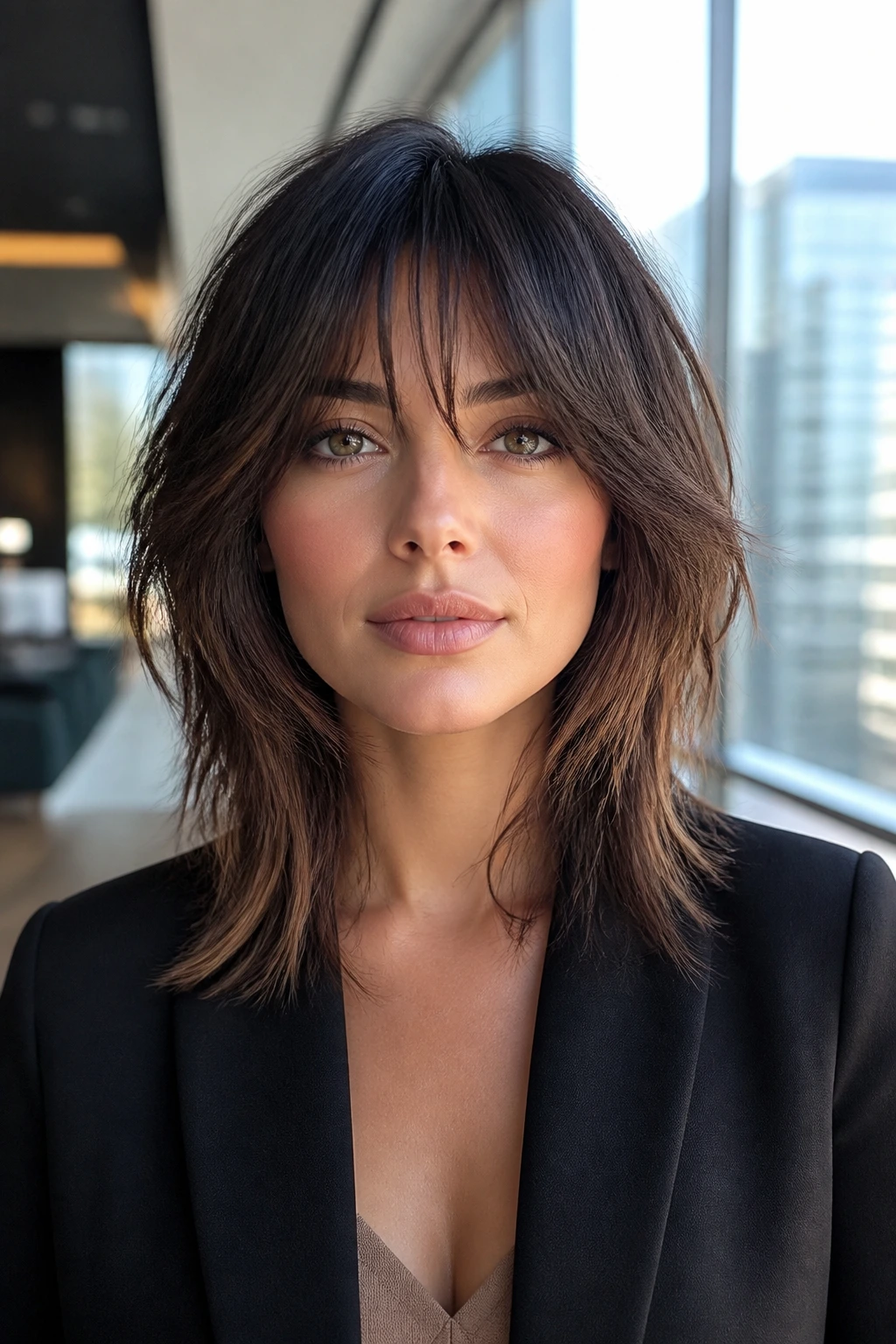
Who said a shag has to be messy? A sleek, polished shag is a great way to get texture while maintaining a sophisticated, “done” appearance. This is achieved by blow-drying the hair with a paddle brush, smoothing the layers rather than encouraging them to flip out.
It is a fantastic look for a business setting. You get the benefits of the cut—the weight removal, the face-framing—without the “I just rolled out of bed” aesthetic. It shows off the quality of your hair and the precision of the cut.
25. Shag with Face-Framing Tendrils
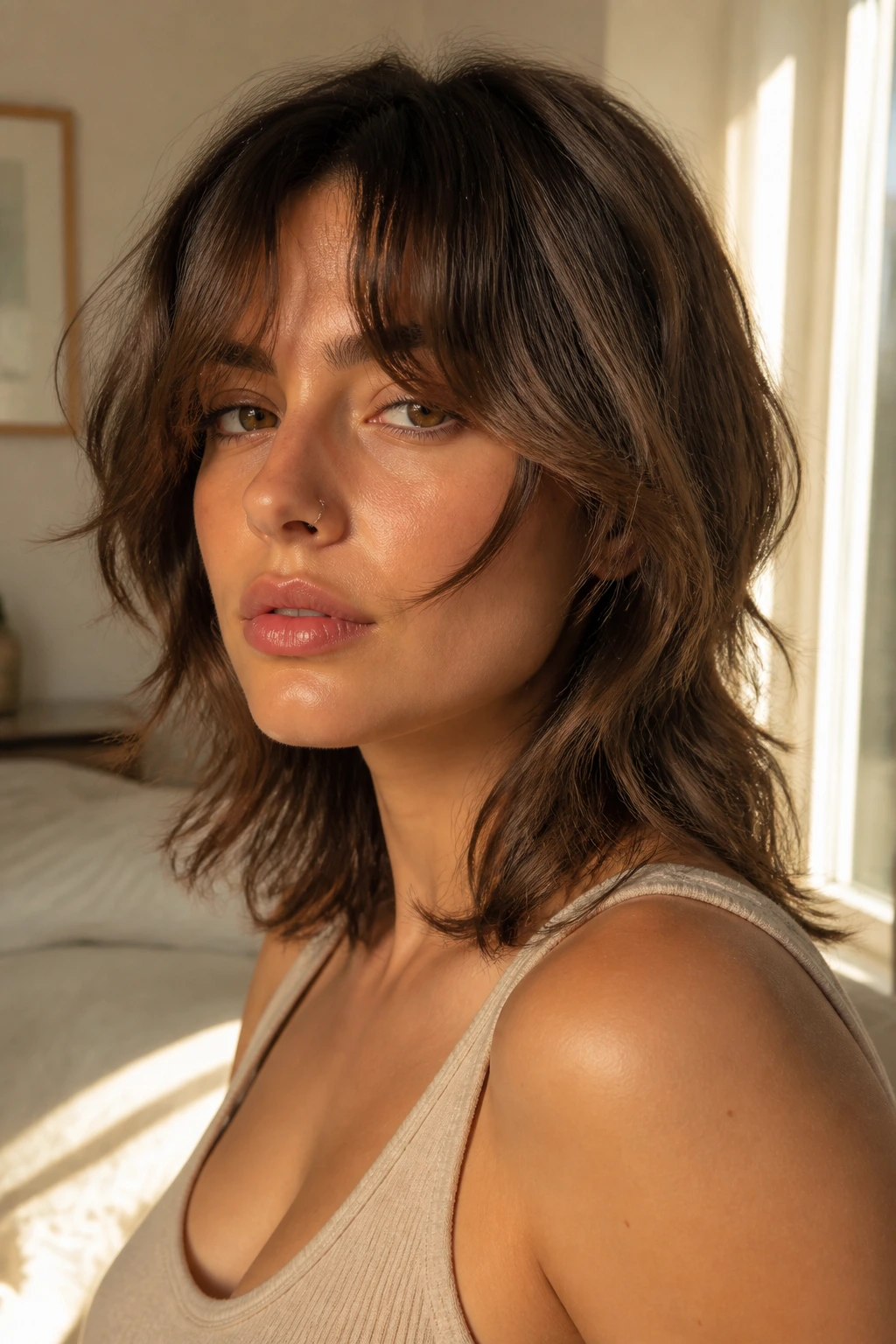
If you have a medium-length cut and want to keep it simple, focus all the energy on the very front pieces. Leave the rest of the hair with long, minimal layers, and cut the front section into a distinct, choppy, face-framing fringe that sits around your cheekbones.
It is subtle, it is effective, and it is incredibly easy to manage. You get the shaggy “vibe” without having to commit to layers throughout your entire head. It is the perfect low-risk way to test the waters of the shag trend.
Final Thoughts on Choosing Your Shag
Choosing the right shag for medium-length hair is not about picking the one that looks the coolest in a magazine; it is about finding the one that suits your hair’s texture and your daily maintenance commitment. If you have fine, straight hair, lean toward the wispy, long-layered versions to avoid losing too much density. If you have thick, curly hair, lean toward internal shaping and point-cutting to manage the volume.
Never be afraid to bring reference photos to your appointment, but also listen to your stylist if they suggest tweaks for your face shape. A truly great haircut is a collaboration. You want a shape that makes you feel confident the moment you step out of the salon chair, but more importantly, one that still looks like you—just a better, more textured version. Take your time, communicate your goals, and enjoy the new movement in your hair.
