



Choppy layers are the haircut version of tearing the neat edges off a page and making the whole thing feel alive. They strip out weight, break up a blunt line, and give hair that piecey, slightly undone movement that reads sharp instead of polished.
The trick is that good choppy layers are never random. They are placed with a plan: around the cheekbones, through the crown, at the nape, or tucked under a clean outer line, depending on how much attitude you want. If the cut is handled badly, the ends puff out, the shape caves in, and you end up with fuzz instead of texture.
The styles below range from soft face-framing pieces to a razor crop that barely brushes the ears. Some are easy to wear with air-drying, some need a round brush or a flat iron, and a few are for people who are done playing nice with their hair. Messy is the point. Not sloppy. That line matters.
1. Face-Framing Choppy Layers
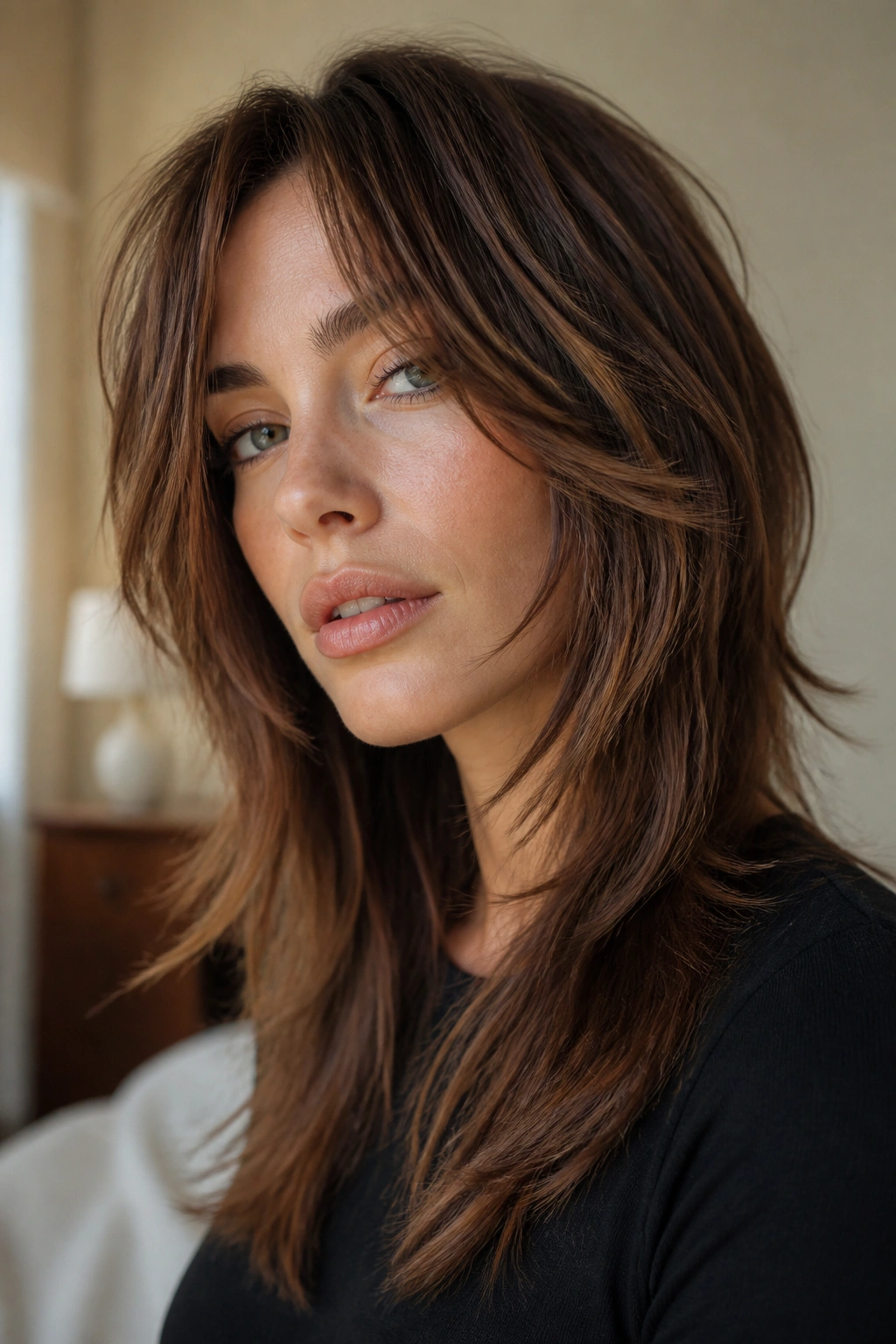
If you want edge without losing your length, face-framing choppy layers do a lot with a little. The cut keeps the perimeter fairly long, then breaks up the front with uneven pieces that hit the cheekbone, mouth, or jaw. That gives the face more shape fast.
Why the Shape Feels Sharper
The best version starts with a clean base and then uses point-cutting on the front sections, not heavy texturizing all over the head. That keeps the hair from looking shredded. You still get movement, but the line stays readable.
- Ask for the shortest face piece to start around the cheekbone if you want lift.
- Keep the longest front piece near the collarbone for a softer drop.
- Blow-dry the front away from the face so the layers fall with a bend, not a flip.
- Use a 1.25-inch round brush or a flat iron with a slight wrist turn.
Pro tip: Clip the front pieces back while they cool. That tiny pause helps the bend hold instead of collapsing flat two hours later.
2. Razor-Cut Shag Layers

A razor-cut shag is what happens when you want your hair to look like it has a little attitude from the second you wake up. The edges are softer and more broken than scissor-cut layers, so the whole cut gets that frayed, lived-in finish people keep asking for.
This style works best on straight to wavy hair with enough strength to take some texture. Thin, fragile ends can get rough fast if the razor is too aggressive. That is where a good stylist earns their money — they should remove weight without making the ends look chewed up.
The styling is half the fun. A little mousse at the roots, a rough dry with your fingers, then a texture spray through the mid-lengths usually does the trick. The cut should move when you turn your head. If it sits still, it was not layered enough.
3. Collarbone Bob With Choppy Ends
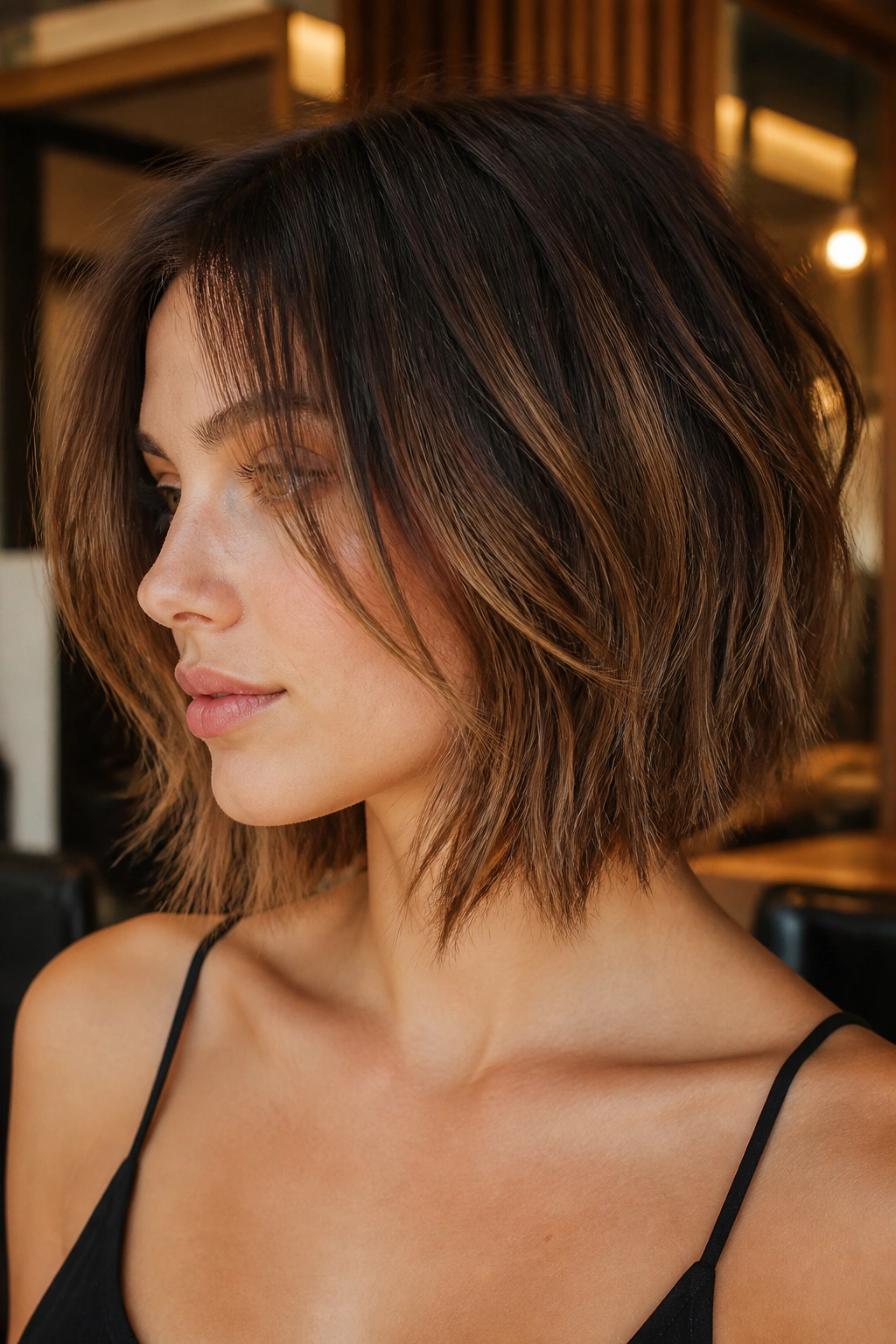
Why do some bobs look crisp and expensive while others feel like a helmet? Usually, it comes down to how much texture lives inside the shape. A collarbone bob with choppy ends keeps the strong outline but breaks the heaviness inside so it does not sit like a block.
This is a smart cut if you want something edgy but still easy to tuck behind your ear or wear with a side part. The best version uses internal layers, a bit of point-cutting through the bottom, and just enough softness around the jaw to stop the line from feeling severe. Too much thinning and the bob loses its body.
How to Wear It
Keep the ends slightly bent with a flat iron or a round brush. A clean curve at the bottom makes the choppy pieces look deliberate instead of accidental. A dab of light cream on the ends helps too, especially if your hair tends to puff in humidity.
4. Long Layers With Curtain Bangs

There’s a sweet spot where long hair stops looking heavy and starts looking sharp. Long choppy layers with curtain bangs live right there. The length stays intact, but the front opens up the face and the layers keep the lower half from dragging.
The bangs matter here. Curtain bangs should blend into the first layer, not sit on top like a separate piece. When they’re cut right, they push the eye outward and make the whole haircut feel wider at the cheekbones, which is often the effect people want without knowing how to ask for it.
- Ask for the first layer to start around the cheek or lip.
- Keep the longest layers moving through the chest or ribcage.
- Blow-dry the bangs with a round brush, then let them cool forward.
- Use a light mist of flexible hairspray, not a hard shell.
That last part saves the cut from feeling stiff. The best long choppy layers move when you walk. They should not look glued in place.
5. Wolf Cut Choppy Layers

The wolf cut is what happens when a shag and a mullet decide to meet halfway and make it stylish. It is short and airy near the crown, longer through the back, and full of jagged layers that feel a little wild in the best way.
What makes this cut different is the contrast. The top gets lift and texture, while the length underneath keeps the shape from turning into a pure short cut. That contrast is why it suits thicker hair so well. It removes bulk where you do not want it, then leaves enough weight so the ends still fall with purpose.
Air-drying usually gives the right mood. Scrunch in a cream or mousse, diffuse until the roots are about 80 percent dry, then mess it up with your fingers. A wolf cut looks better when it is not overworked. Honestly, that is half the appeal.
6. Blunt Perimeter, Choppy Interior
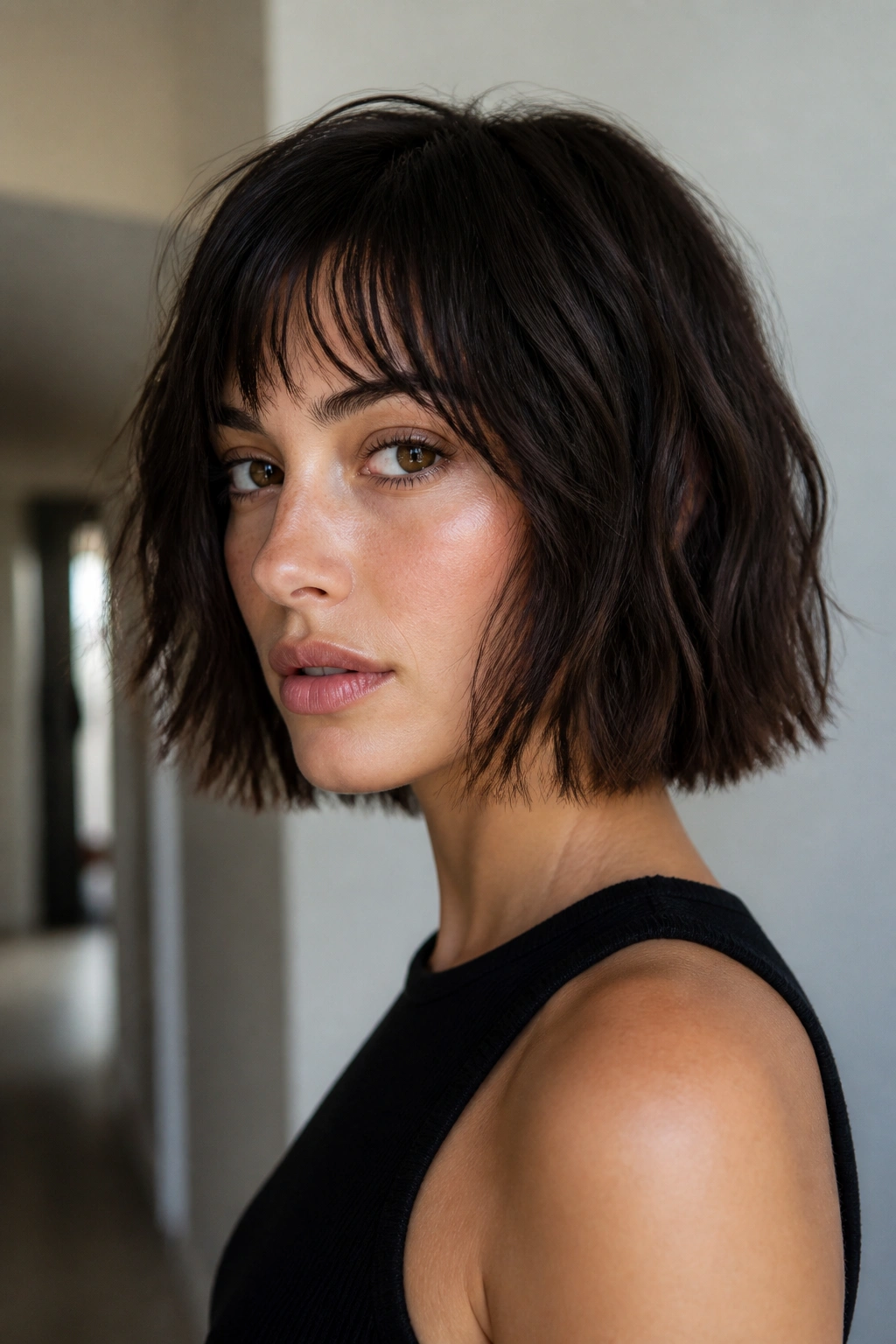
A blunt perimeter with a choppy interior is a clever trick. From the outside, the haircut still reads clean and solid. Inside, though, the weight has been broken up so the hair bends, swings, and moves instead of hanging like one flat sheet.
Unlike a full shag, this cut keeps the shape strong. That makes it easier to wear if you like a polished outline but still want some edge. It also gives fine to medium hair a fuller look at the bottom, because the blunt edge makes the ends look denser than a feathered finish would.
Who Should Ask for This
This is a good call if your hair feels too soft after too many layered cuts. Ask your stylist to leave the outside line intact and soften only the internal sections. A little underlayer texturing goes a long way. Too much, and you lose the whole point.
7. Piecey Pixie Layers
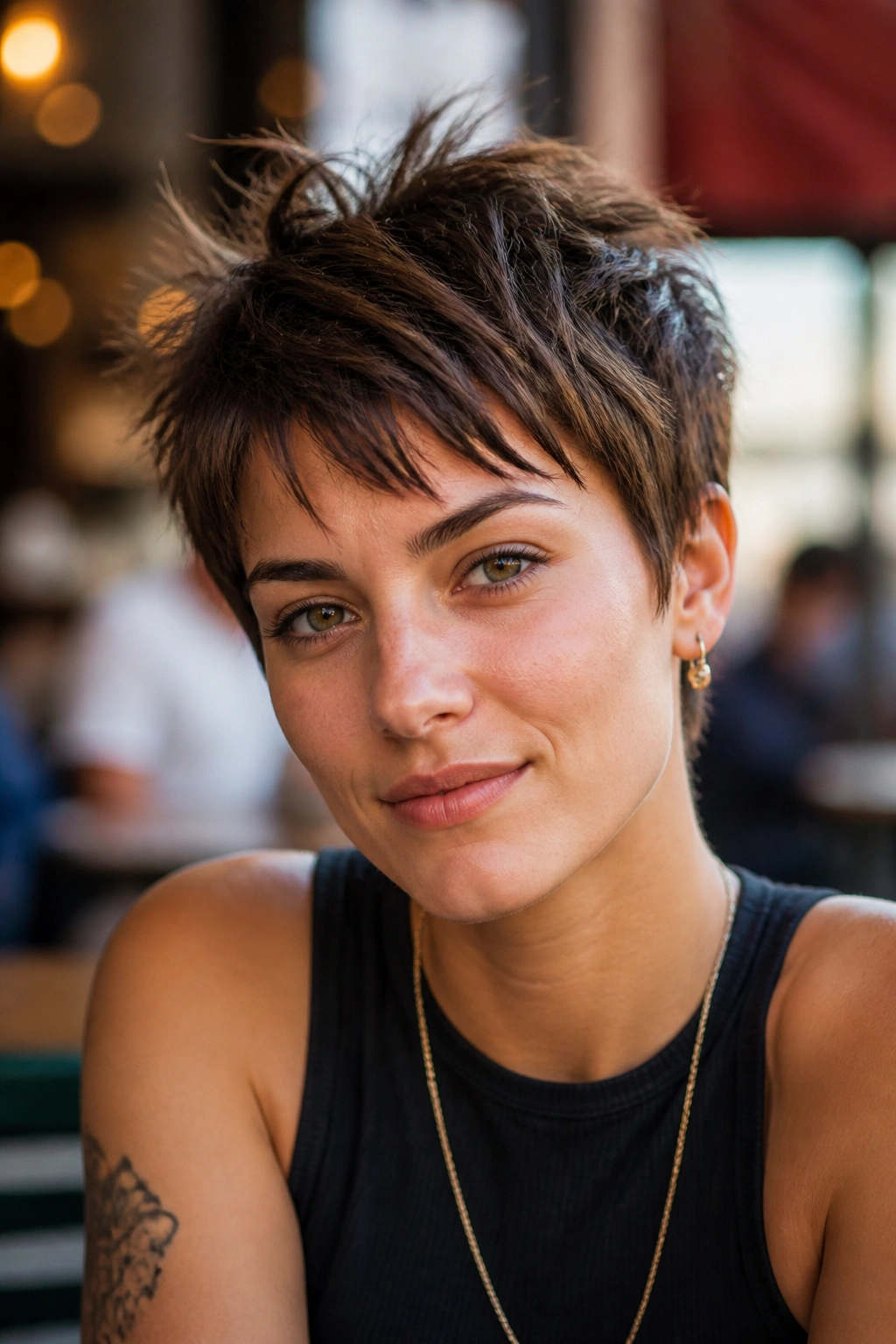
A pixie gets a lot more interesting when it stops looking perfectly smooth. Piecey pixie layers add direction, little spikes of movement, and that slightly rebellious finish people want from short hair without turning it into a full mess.
The Three Zones That Matter
The top should have the most texture. The sides need to stay close enough to keep the shape tidy. The fringe can be longer or shorter depending on how much face you want to show, but it should still break into small pieces rather than one solid curtain.
A pea-size dab of matte paste usually does the job. Warm it between your fingers, pinch the top into tiny sections, and leave the ends a little undone. You do not need much product here. Too much paste turns the cut into a helmet with a grudge.
Short hair shows every decision, which is why this version works. Nothing hides. That is the fun of it.
8. Choppy Layers for Thick Hair

Thick hair needs more than a few face pieces and a prayer. It needs internal removal — weight taken out where the bulk sits, usually through the mid-lengths, crown, and back. Without that, the layers just stack up and the shape swells.
The safest way to do this is with long, choppy sections that still connect. You want movement, not gaps. Razor work can help, but only if the hair is healthy and the stylist knows how to keep the ends from getting fuzzy. Thick hair can handle texture, but it does not forgive over-thinning.
Ask for pieces that are cut to sit on top of each other in a broken way, not chopped into short little steps everywhere. That keeps the hair from ballooning out. A blow-dry with a nozzle and a smoothing cream at the ends helps the cut fall instead of poof.
9. Choppy Layers for Fine Hair

Can fine hair wear choppy layers without looking sparse? Yes — if the cut is kept smart. The answer is not more thinning. It is better placement.
Fine hair usually looks strongest when the outer line still has some density. Choppy layers should sit inside that outline, mostly around the crown and front, so the hair gets lift without losing its edge. If the ends are overworked, the cut can turn stringy fast. Nobody wants that.
What to Ask For
Tell the stylist you want light internal texture, not a shredded finish. A blunt-ish bottom with soft movement through the top is the sweet spot. At home, a root-lifting spray and a quick round-brush blow-dry make a bigger difference than piling on heavy oils. Keep the finish light. Fine hair shows product fast.
10. Hidden Undercut Choppy Layers
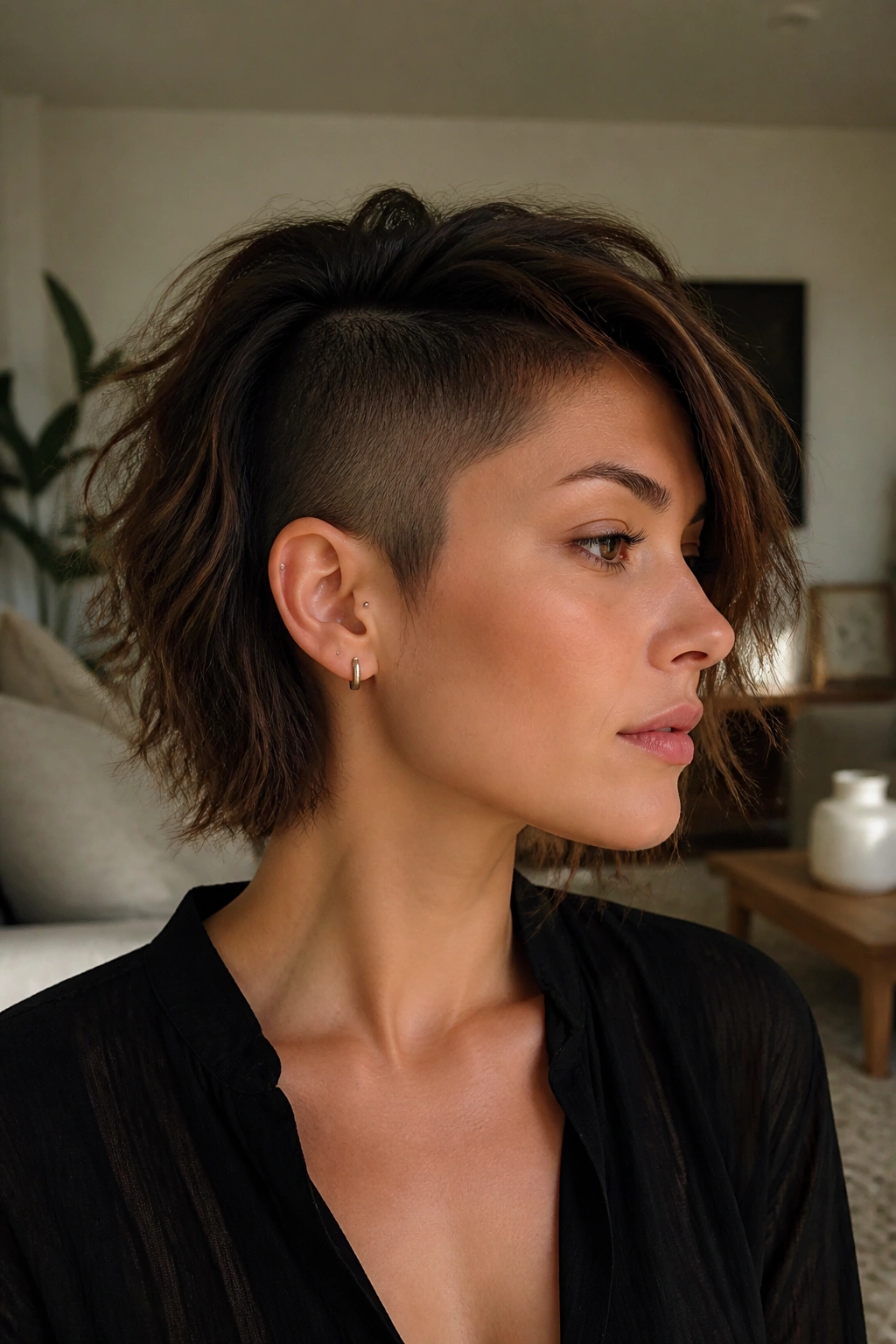
A hidden undercut is for people who are tired of fighting bulk in the back or sides. From the outside, the haircut still looks normal. Underneath, a section has been clipped shorter so the top layer can sit lighter and move more easily.
That trick is especially good for dense bobs, shaggy lobs, and longer cuts that keep puffing out at the nape. It takes the heavy base out without forcing you into a visibly shaved style. A lot of people like that compromise. Quiet on top, less weight underneath.
- Ask for the undercut to stay hidden when the hair lies flat.
- Keep the visible top layer at least 2 to 4 inches longer.
- Schedule touch-ups before the hidden section grows bulky again.
- Use a vent brush or diffuser so the top lifts off the scalp.
It is one of those cuts that feels small and lives large.
11. Choppy Layers on Wavy Hair

Wavy hair already does half the work for you. The job of the cut is to stop the wave from clumping into a heavy triangle or collapsing into a flat sheet. Choppy layers on wavy hair should follow the bend, not fight it.
The best version keeps enough length to let the wave form, then removes weight in the places where the hair starts to swell. That often means the lower half of the shape, plus a bit of movement around the face. If the layers are cut too short, the wave pops up in odd places and the cut starts looking uneven in daylight.
A cream and a small amount of sea salt spray usually cover the styling side. Scrunch, diffuse, stop touching it. Seriously. Wavy hair looks better when you leave some space between the hair and your hands.
12. Choppy Layers on Curly Hair

Curly hair and choppy layers can make a gorgeous pair, but only when the shape is planned around the curl pattern. Too many short pieces can create a halo of frizz. Too few layers can leave the hair heavy and triangular. The balance matters.
A strong curly cut usually keeps some length through the bottom while opening up the crown and sides just enough to stop the shape from collapsing. Curl-by-curl cutting, or cutting hair in its natural state, often gives the cleanest result because the stylist can see where each curl sits. That matters more than people think.
What Changes the Look
A choppy curly cut should give you bounce, not bulk in odd places. If your curls spring tighter near the face, the layers there need to stay a little longer. If the nape tends to puff, the weight there may need to come down. A leave-in conditioner plus a gel cast can hold the shape without making the curls crunchy.
13. Micro Bangs With Choppy Layers

Micro bangs change the whole tone of a haircut. They bring the eye straight to the forehead, which makes the rest of the layers feel sharper by comparison. Paired with choppy layers, the result is high-contrast and a little punk without needing to go full dramatic.
The fringe should sit short enough to clear the brows by about half an inch to an inch, depending on your face and your tolerance for upkeep. That small distance matters. Too long and it loses the point. Too short and it can read more costume than cool.
If you go this route, keep the layers around the ears and jaw soft enough to balance the front. A hard fringe with hard layers can feel harsh fast. A little breakup through the body of the hair keeps the cut wearable. It also gives you room to sweep the bangs aside on days when you want a break.
14. Shoulder-Length Layers With Flipped Ends

Shoulder-length hair can get awkward fast. It hits the shoulders, flips out in random places, and sometimes looks like it is trying to leave the room. Choppy layers give that length a plan.
The ends can be flipped outward for a retro edge or bent under for a cleaner line, but the layers are what stop the cut from feeling stubborn. A round brush or a 1-inch iron creates enough bend to show the texture without turning the hair into a curl set. Keep the movement loose. Tight barrel curls fight the choppy shape.
This style suits people who like some structure but not too much polish. The shoulder length makes it practical. The layered finish gives it personality. And yes, it still goes into a ponytail, which is the kind of detail that matters on a Tuesday morning.
15. Soft Mullet Choppy Layers

Why does the soft mullet keep coming back? Because it solves a real problem: how to keep length while still getting that lifted, broken-up shape near the top. It has short, textured layers around the crown and face, then leaves more length in the back so the haircut keeps its line.
The trick is softness. A harsh mullet can look like a dare. A soft one looks intentional because the transition is blended instead of chopped into a hard shelf. That makes it easier to wear with straight hair, waves, or loose curls. It still has edge. It just does not shout.
How to Keep It Wearable
Keep the top airy with mousse or a light cream, and let the back dry with a little natural bend. If the nape starts to look too heavy, a small trim there changes everything. This cut lives or dies by proportion, not by how wild the layers are.
16. Choppy Layers on Straight Hair
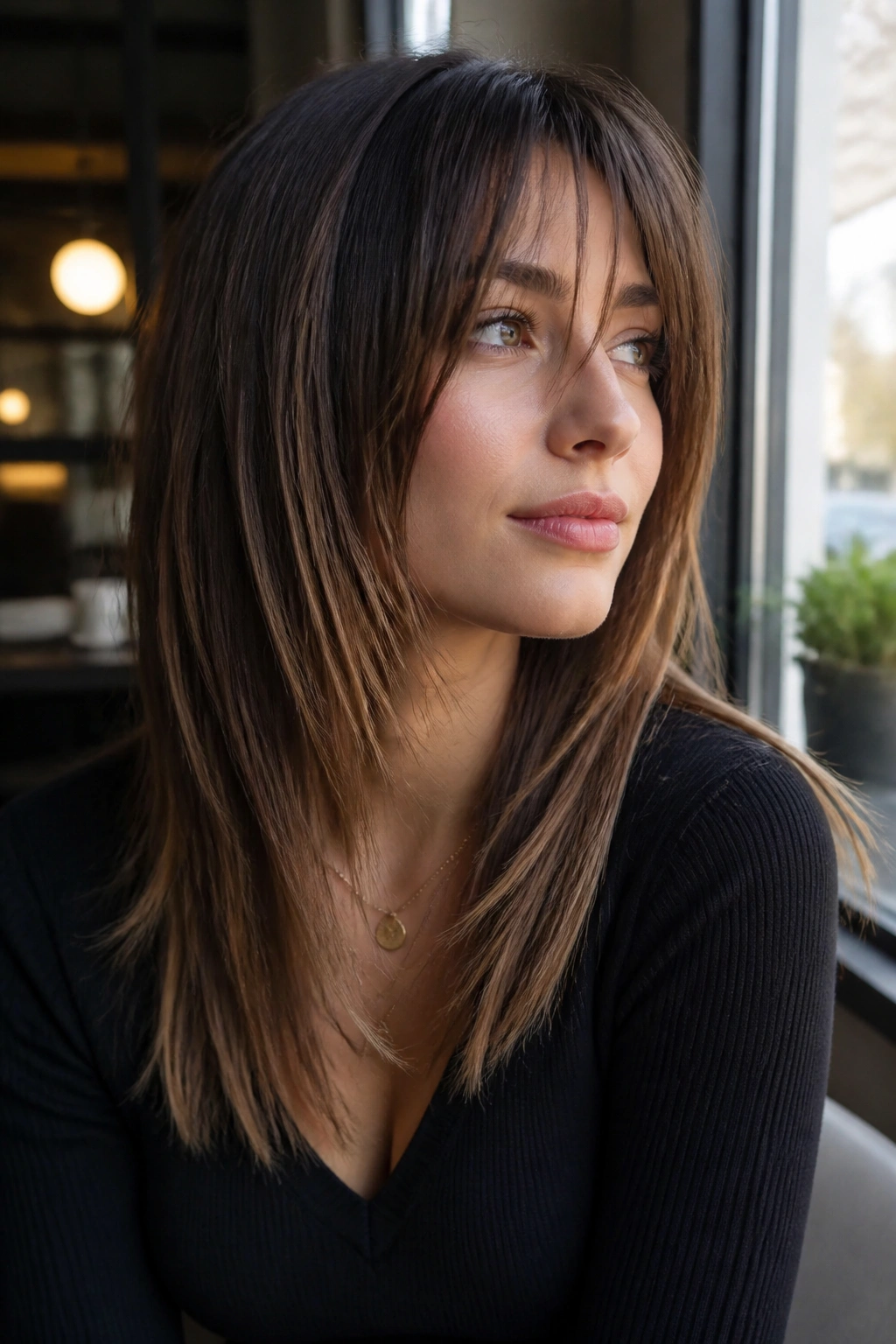
Straight hair tells the truth. Every line shows. Every weight change shows. That is why choppy layers on straight hair can look either very sharp or a little too blunt if the cut was rushed.
The good version relies on point-cutting and careful sectioning. The layers should break up the silhouette without leaving obvious steps. Straight hair benefits from a bit of surface texture near the ends and around the crown, but not so much that the shape turns thin and wispy. The goal is movement, not a busted outline.
A dry texturizing spray helps more than a heavy curl cream ever will. Use a small amount, lift the hair at the roots with your fingers, and let the pieces fall where they want. Straight hair tends to look best when the texture feels scattered, not over-sprayed.
17. Crown-Heavy Choppy Layers

If your roots lie flat, a crown-heavy choppy cut can change the whole profile of the hair. The shorter pieces live near the top and around the crown, which gives lift without forcing the ends to get too thin.
This is a smart move for people whose hair looks heavy at the scalp and limp through the top third. The cut moves weight upward, where it creates shape, while the lower lengths stay long enough to keep some swing. That makes the haircut feel airy without losing its backbone.
A root mousse or a small clip set while the hair cools can make the crown sit higher. Do not pile product into the mid-lengths or the top loses that lifted look. The effect should be visible when you turn your head — a little height, a little bend, no stiff shell.
18. Grow-Out Choppy Layers
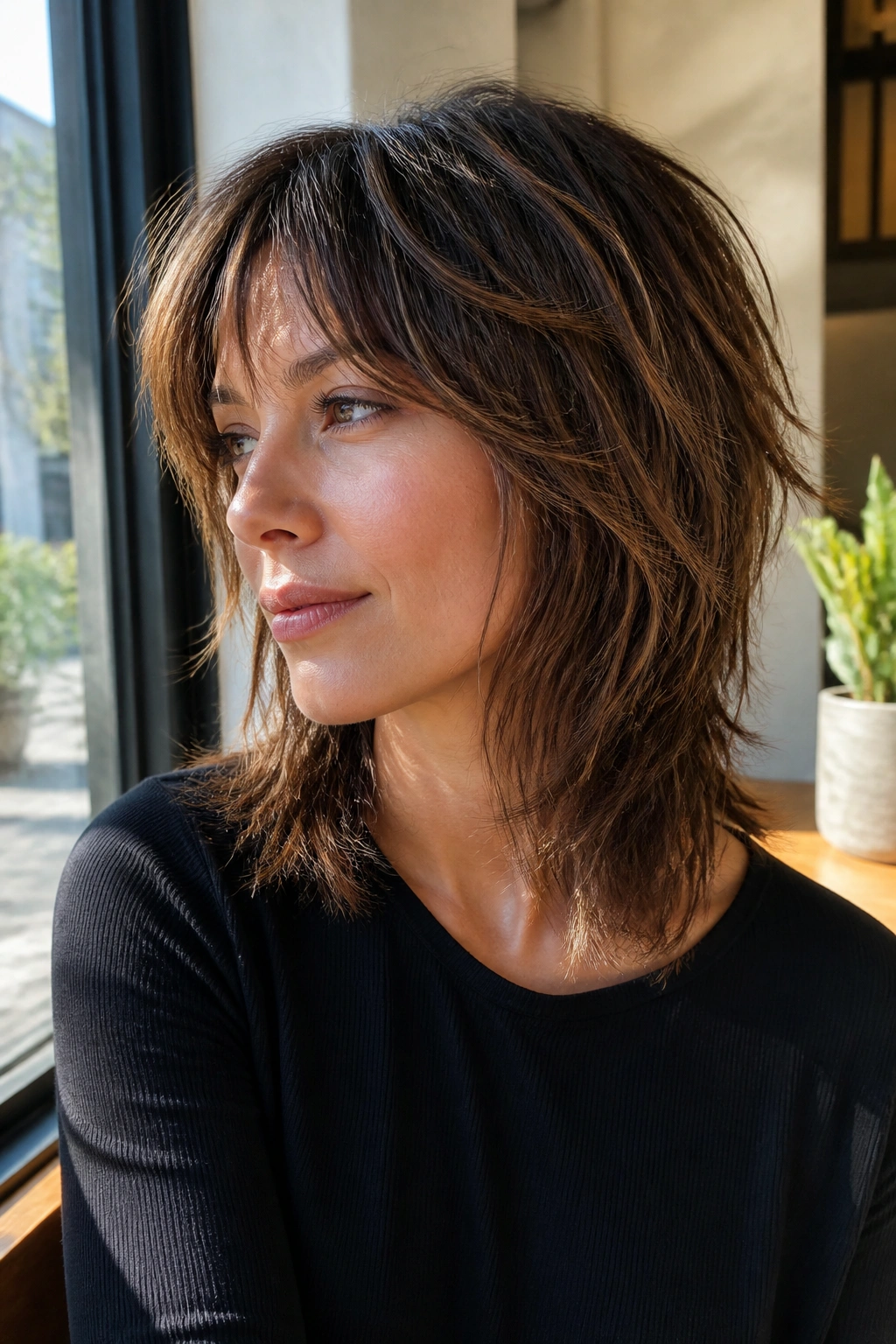
A good grow-out cut does not collapse after six weeks. It keeps its shape while the layers soften, which is why grow-out choppy layers are worth asking for if you do not love constant salon visits.
Unlike a high-maintenance short shag, this version keeps enough length in the front and perimeter that the haircut can stretch without looking accidental. The layers can relax into a softer, longer shape instead of turning into a mound of awkward pieces. That is the whole point.
Who This Helps Most
People who wear their hair up a lot, tuck it behind the ears, or prefer an easier trim schedule usually like this style. Ask for layers that are feathered enough to move but not so short that they disappear when the hair grows. A side part, loose wave, and a little texture spray are usually enough to keep the cut looking fresh between trims.
19. Side-Swept Fringe With Choppy Layers

A side-swept fringe changes the angle of the whole haircut. Instead of opening the face straight down the middle, it cuts across the forehead and gives the layers a more diagonal, lived-in feel. Pair that with choppy ends and the result looks softer and sharper at the same time.
Where It Helps
This works well if you want a bit of coverage around the forehead or temple area but do not want a heavy bang. The fringe should be long enough to sweep with one bend of the brush, then blend into the first layer around the cheek. If it sits too short, the cut can look busy. Too long, and it loses the edge.
Blow-dry the fringe in the opposite direction first, then sweep it back over. That little bit of overdirection adds lift at the root and keeps the front from falling flat by noon. A touch of dry shampoo at the base can help too, especially if your hair gets soft fast.
20. The Clean Razor Crop
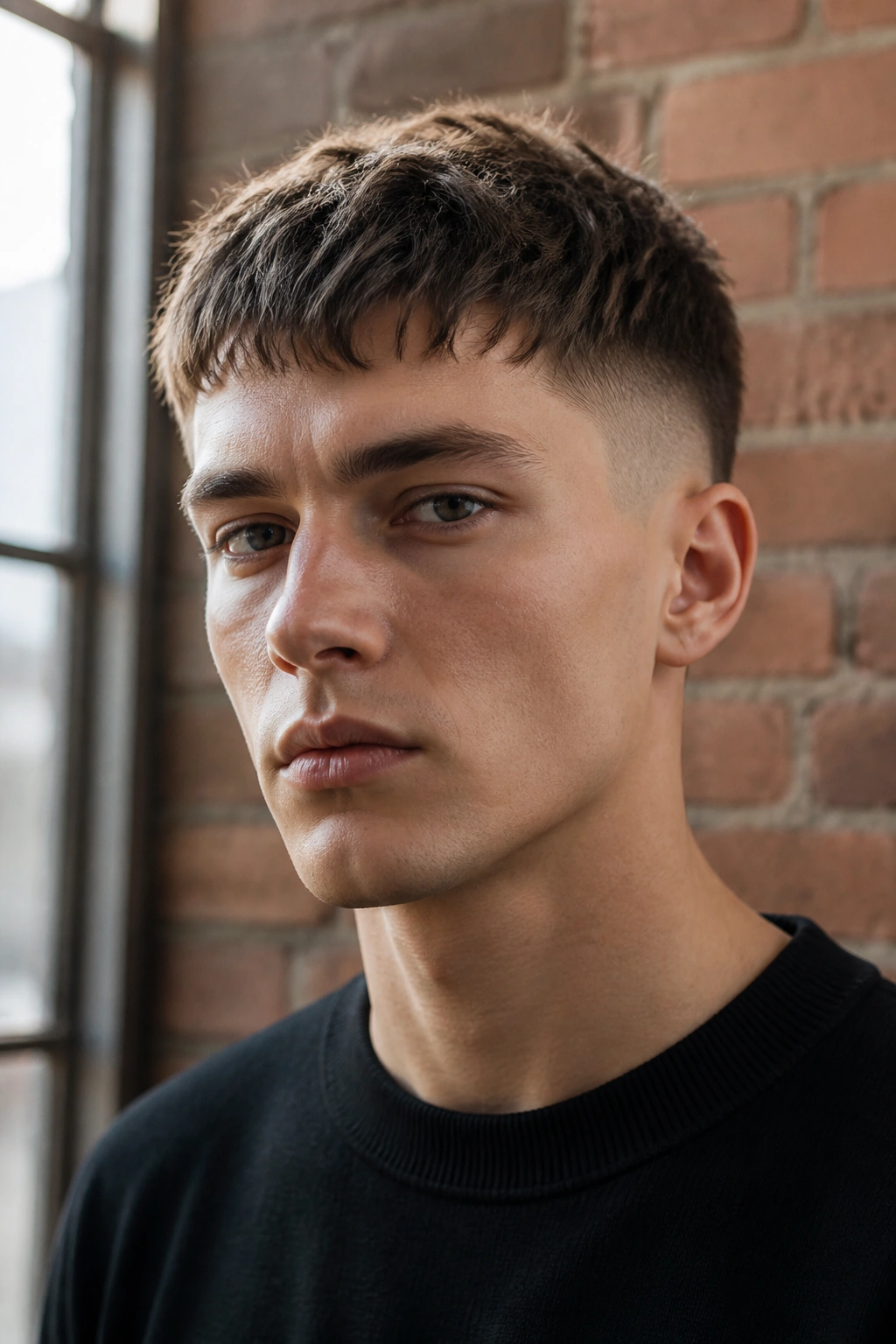
A clean razor crop is for people who want edge without dragging around a lot of hair. The top stays textured and slightly longer, the sides are kept close, and the nape is sharp enough to show the shape. It is tiny, fast, and a little bit rude in the best way.
The beauty of this cut is that it does not need much help. A pea-size amount of matte paste, worked through the top with your fingertips, is usually enough. The layers should separate into small pieces rather than forming one helmet-like shape. If the hair starts to look soft instead of crisp, the crop loses its punch.
This is also the easiest cut on the list for anyone who hates heat styling. Let it air-dry. Push it around with your hands. Done. If you want a look that feels sharp the second you wake up, this is the one I would put near the top of the pile.
