



Medium-length hair sits in a strange and useful place. It’s long enough to move, but not so long that every snip feels dramatic. That’s why layered haircuts for medium length hair can be such a smart choice: they change the shape fast, then keep paying off every time you wash, air-dry, or wrap the ends around a brush.
The catch is that “layers” is a very broad word. A few short pieces around the face can soften a square jaw. A stacked crown can wake up flat roots. A choppy perimeter can make a lob feel modern instead of stiff. And if the cut is wrong? You end up with awkward flips, stringy ends, or a shape that only works on the salon blowout chair.
I’ve always thought medium hair is easiest to make look expensive, if that word still means anything useful. You have room to build shape, but you don’t need a dramatic length sacrifice to do it. The trick is choosing a layer pattern that fits your hair’s thickness, bend, and daily routine instead of copying a photo that looks good only under perfect lighting.
1. Collarbone Butterfly Layers

The butterfly cut is still one of the smartest layered haircuts for medium length hair when you want movement and body in the same cut. The shape keeps the bottom length around the collarbone, then uses shorter upper layers to create that airy, blown-out look through the crown and sides.
Why It Works
The shorter top pieces lift the hair visually, which helps if your medium hair tends to lie flat near the roots. The longer bottom section keeps the cut from feeling wispy. That balance is why this style looks polished even when you throw it up in a claw clip later.
Ask for the shortest face-framing pieces to land around the cheekbone or just below it, then keep the lowest layer grazing the collarbone. That spacing gives the haircut its swing. If the shortest pieces are cut too high, the style starts to feel like a shag with better branding.
- Best on medium to thick hair
- Works well with round brushes and velcro rollers
- Grows out softly
- Looks especially good with a center part
One thing to watch: the layers should blend, not stack like shelves.
2. Soft Face-Framing Layers

Soft face-framing layers are the haircut I recommend when someone wants change but does not want to lose length. They sit quietly in the haircut, which is exactly the point. The shape nudges the eyes upward and opens the cheek area without making the whole cut feel choppy.
These layers usually start near the lips, chin, or collarbone, depending on your face shape and how much structure you want. On medium-length hair, that’s a sweet spot. You get movement where the eye lands first, and the rest of the hair stays full. No drama. No weird holes.
I like this style on people who wear their hair loose most days and want it to fall in a nicer way around the face. It also plays well with waves, because the front pieces bend a little and do half the styling work for you.
The downside is simple: if the front pieces are overcut, they stop being “soft” and start acting like bangs that never committed. Keep the transition gradual.
3. Choppy Lob with Broken Ends

A choppy lob is for someone who wants their medium haircut to look a little less polite. The ends are textured, the layers are visible, and the whole shape feels more lived-in than smooth. If your hair has always looked a bit too neat, this cut fixes that fast.
What Makes It Different
Unlike a blunt lob, this version uses broken-up ends and uneven internal layers to interrupt the line. That creates little pockets of movement when the hair swings. It also helps if your hair bends in odd places, because the shape already expects a bit of mess.
How to Wear It
A flat iron with a subtle bend at the ends works better than trying to curl every section. Rough-dry it, then hit the front pieces with a little bend away from the face. The result should look casual, not crunchy.
- Collarbone length is the sweet spot
- Best with a side or soft middle part
- Needs a trim every 8 to 10 weeks if you want the texture to stay sharp
- Good for straight to slightly wavy hair
My opinion: this is one of the easiest cuts to make feel current without becoming high-maintenance.
4. Long Shag for Wavy Hair

Wavy hair loves a shag when the cut is done with some restraint. Too much layering and the whole thing puffs out. Too little, and the waves get dragged down. The long shag sits in the middle, which is why it works so well on medium length hair.
The shape uses lots of internal layers to remove bulk and let the wave pattern show through. The perimeter stays long enough to feel like a real haircut, not a chopped-up experiment. If your waves have a loose S-shape, this cut tends to bring them forward instead of fighting them.
It’s also one of the few layered styles that looks better once it loosens up a little. The second-day bend, the bit of frizz at the crown, the pieces that fall forward after you tuck one side behind your ear — those all help. That’s part of the charm.
Skip this one if you want a sleek, one-length finish. Keep it if you want your hair to do more than sit there.
5. Feathered Layers with Curtain Bangs
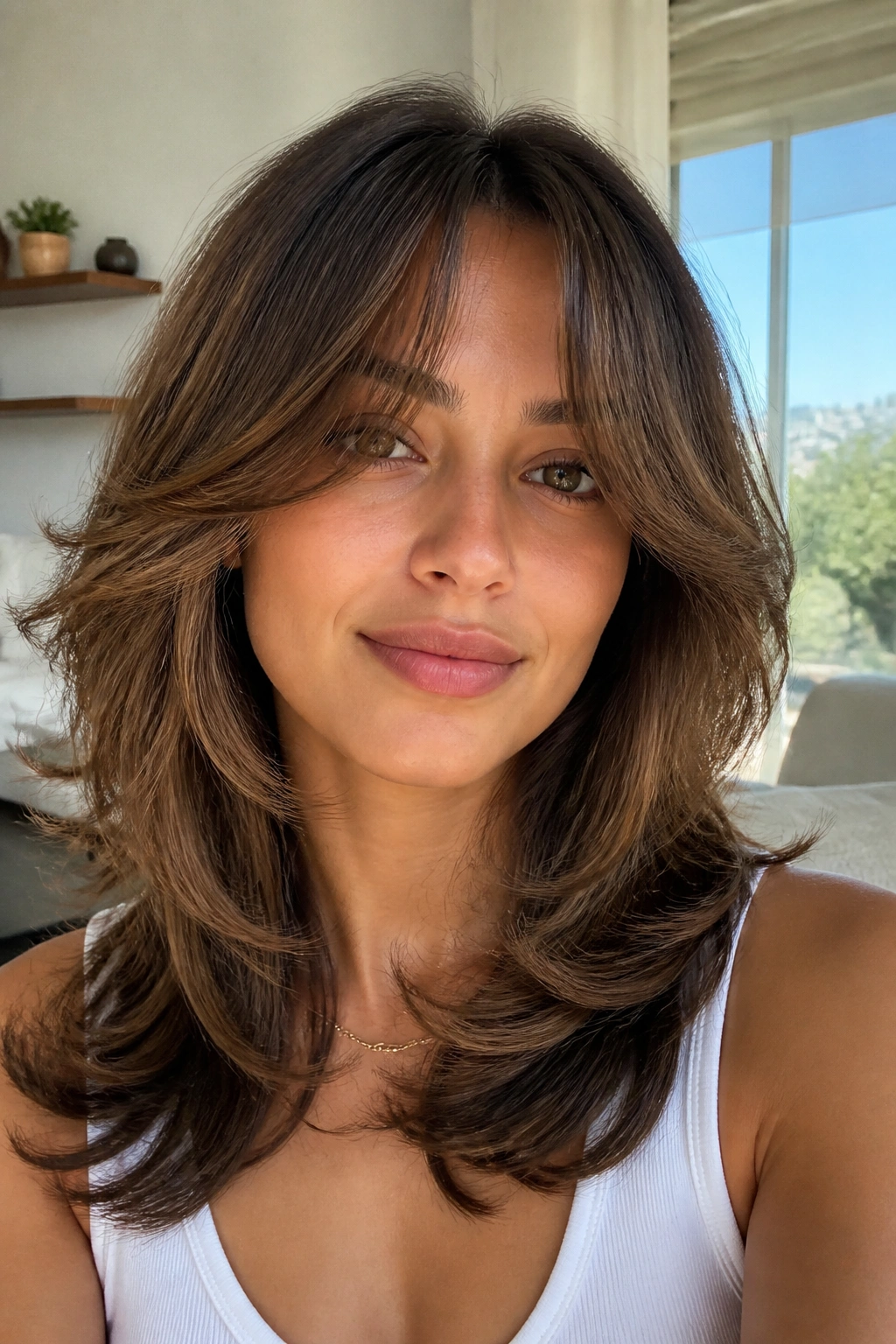
Why do feathered layers keep coming back? Because they solve an old problem in a very practical way: they remove weight from medium hair without making the cut feel jagged. Add curtain bangs, and the whole style gets a soft frame that can work on straight, wavy, or lightly curled hair.
The Shape Around the Face
Feathering means the ends are cut and styled to turn away from the face, so the hair looks light and airy at the edges. The curtain bangs blend into those layers instead of sitting as a separate feature. That matters. A hard divide between bangs and the rest of the cut can look clunky.
How to Get the Most From It
Ask for the bangs to start long enough to tuck behind the cheekbone. If they’re too short, they lose the sweep that makes this style so flattering. A medium round brush and a quick blow-dry at the front are usually enough.
The cut shines when you want shape near the face but still want the rest of the hair to feel easy. It’s a nice middle ground. Not precious, not boring.
6. U-Shaped Layers for Straight Hair

A U-shaped cut is one of those quietly smart choices that straight hair often needs. The outline curves slightly at the back, with the sides sitting a bit shorter than the center. That keeps the ends full while still giving the haircut some movement.
Straight medium hair can go flat fast if the shape is too blunt and heavy. A U-cut fixes that by keeping the perimeter soft and rounded. You still have enough weight at the bottom for a healthy-looking finish, which is the part people often miss when they chase layers too hard.
I prefer this shape when the goal is subtle polish. It looks clean after a blow-dry, but it also falls nicely when you let it air-dry and do nothing else. The layers don’t need to announce themselves. They just quietly improve the line.
If your ends tend to look thin, ask your stylist to keep the curve gentle. A deep U can start looking long-haired. That’s not the same thing.
7. Invisible Layers for Fine Hair

Invisible layers are the haircut equivalent of a good lighting trick. They create movement inside the shape, not on the outside of it, which is why fine hair often benefits from them more than from obvious choppy cuts.
What to Ask For
Tell your stylist you want internal layering, with the outer perimeter kept mostly intact. That means the bulk is removed from inside the haircut so the surface still looks full. It’s a neat fix for hair that collapses at the ends but doesn’t have enough density to lose a lot of weight.
What to Avoid
Do not ask for too many short pieces around the head. Fine hair can go see-through fast if the layers are aggressive. The goal is lift, not frizz-shaped regret.
- Best for shoulder-length hair that feels limp
- Keeps the outline thicker
- Works well with a light mousse at the roots
- Needs a soft trim, not heavy texturizing
Best part: it looks fuller on day two, which is rare and useful.
8. Heavy Layers for Thick Hair

Thick hair needs different treatment. Not less shape, exactly. Just smarter shape. Heavy layers remove bulk from the inside while keeping enough weight at the ends so the haircut still looks rich instead of wispy.
The mistake people make with thick hair is assuming layers always mean more movement. Sometimes they just mean less triangle. Heavy layering smooths the overall silhouette and stops the bottom from flaring out like a bell. That alone can change everything.
I like this cut on medium hair that feels dense from roots to ends. It keeps the hair from sitting like one big block, especially when the weather or humidity starts messing with your blowout. The layers should be long and deliberate, not feathered into nothing.
One warning: avoid overusing a razor on very coarse hair. It can make the ends puff. A clean shear cut with controlled internal removal usually behaves better.
9. Razored Layers with Movement

Razored layers have a very specific feel. The ends look softer, a little lighter, and a bit lived-in from the start. On medium-length hair, that can be a gift if you want movement without a heavy salon blowout every time.
This cut works best on hair that already has some bend. The razor takes the edge off the ends and lets the pieces separate more easily, which makes waves show up sooner. Straight hair can wear it too, but it usually needs a bit more styling to keep the shape from looking thin.
What I like here is the looseness. The haircut does not look overworked. It has a little edge, but not in a loud way. More like the hair decided to behave differently and nobody argued with it.
Best Use Cases
- Medium hair with a natural wave
- People who dislike blunt ends
- Cuts that need easier air-dry movement
- Styles that pair well with a texture cream
If your hair is fragile or already breaking at the ends, I’d be careful. Razor work can be a bit too much on stressed hair.
10. Angled Layers That Tilt Forward

Why does a forward-angled layer pattern feel so flattering? Because it guides the eye toward the face and collarbones instead of letting the hair drop straight down. That subtle tilt makes medium length hair look intentional, even when it’s barely styled.
The back stays a touch longer, while the front sections gradually shorten as they move toward the face. It’s a small shift, but it changes the whole line. The cut can sharpen a soft jaw, stretch a rounder face, or simply keep medium hair from looking boxy.
I reach for this idea when someone wants movement but hates the idea of obvious steps. The angle gives shape without shouting about it. That makes it easy to live with between appointments.
How to Get the Most From It
Ask for the angle to stay gradual. A steep front can look dated fast.
11. Curly Layers That Keep the Coil Shape
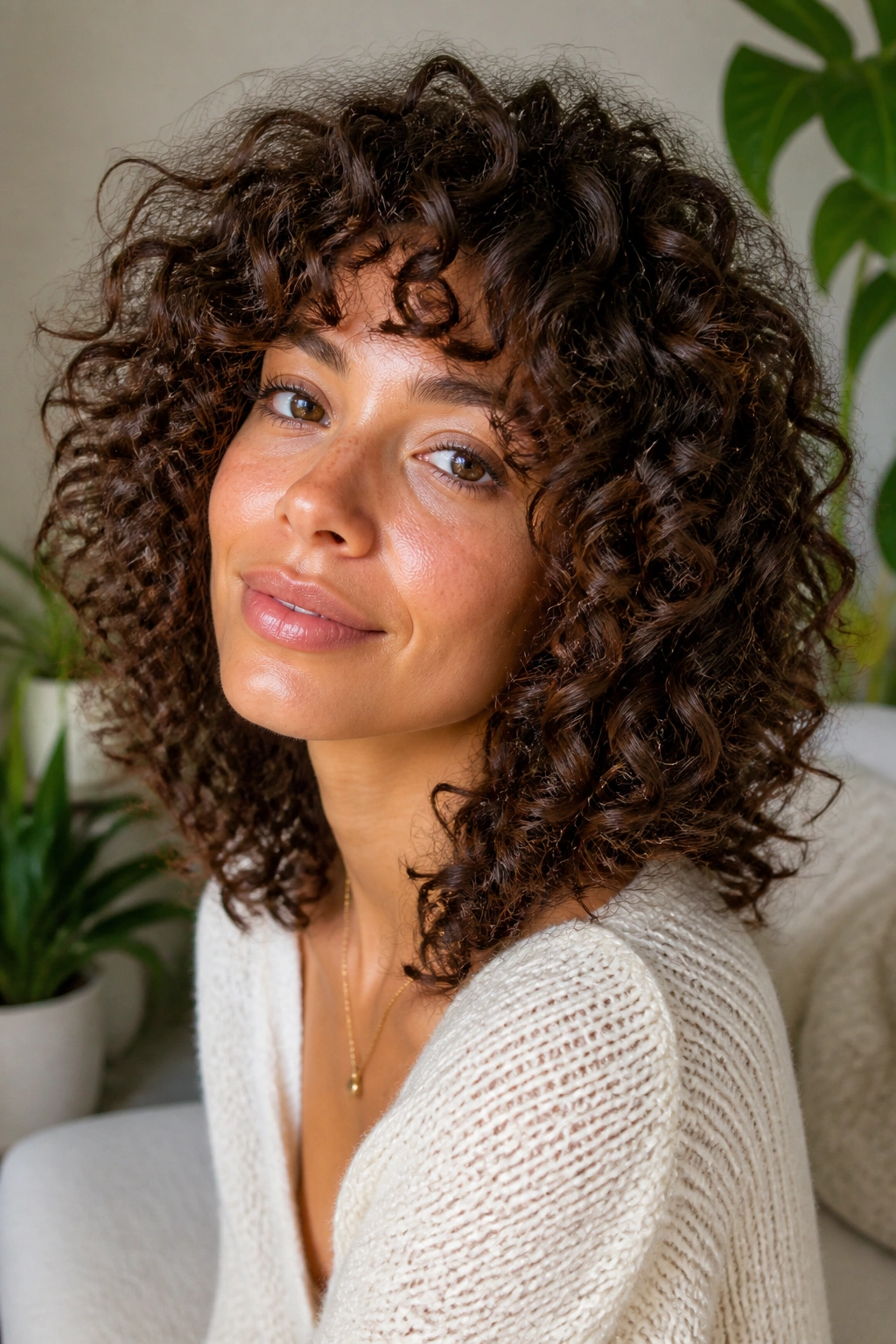
Curly hair should not be flattened into a compromise cut just because the length is medium. Proper layers let curls stack, spring, and move in the way they already want to move. That’s the whole point.
The best curly layered haircut is usually shaped around the curl pattern itself, not just the ruler. Some curls shrink three inches, some half an inch. Cutting them dry helps the stylist see where each curl sits, so the layers land in the right place once the hair dries.
Medium length is a great zone for curls because you can remove bulk without turning the cut into a triangle. The layers should support the curl cluster, not break it apart.
If your curls get wide at the sides, ask for layers that keep fullness at the bottom and reduce width where the hair starts to balloon. That tiny change can make the haircut sit much better on your shoulders.
12. Wavy Lob with Internal Layers

A wavy lob with internal layers gives you shape without making the haircut look obviously layered from the front. That’s a big deal if you like a clean outline but still want your wave pattern to show up. The visible shape stays tidy. The inside does the work.
Compared with a blunt lob, this version feels easier to move through the day. A few hidden layers keep the mids from dragging, so the waves don’t collapse into one flat sheet. You still get that collarbone-length polish, which is why this cut is such a safe bet for medium hair.
I’d call this the low-noise haircut. It doesn’t demand much, and it doesn’t get tired-looking fast. It can air-dry with a little sea-spray or get a quick bend from a curling iron and still look good by evening.
The main thing is restraint. Too many layers, and the lob loses its clean line. Too few, and the wave gets lazy.
13. C-Cut Layers Around the Face

A C-cut is built to curve around the face in a soft arc, almost like the hair is wrapping forward and then easing back toward the collarbone. It gives medium length hair a nice shape near the cheekbones without turning the whole cut into a heavy shag.
Why It Flatters So Many Faces
That curved front works because it softens the line from forehead to jaw. It also keeps the ends near the face from hanging straight down, which can make medium hair feel a little lifeless. The C-shape adds motion where people tend to notice it first.
What to Tell Your Stylist
Ask for the shortest front pieces to begin around the cheekbone and travel down in a slow curve. The back can stay longer and more stable. You want a visible shape, not a sharp angle.
- Good for straight or softly wavy hair
- Nice on round or square faces
- Needs a round brush if you want the curve to show
- Grows out in a flattering way
Small detail, big payoff: the curve should feel like a sweep, not a staircase.
14. Flipped-Out 90s Layers

Flipped-out layers are for someone who wants medium hair to have attitude. Not chaos. Just a little lift at the ends and a shape that nods to old blowout styling without looking costume-y.
The haircut usually keeps plenty of length at the bottom, then adds enough layering through the mids and ends to let the hair kick outward with a brush or flat iron. That flipped edge gives the cut personality fast. If you wear your hair tucked behind one ear, even better.
This is one of those styles that works best when the ends are finished on purpose. A quick blowout with the brush turned outward at the last 2 inches makes the whole look click. Air-drying alone won’t usually give you the same effect.
I’d avoid this if you want your hair to fall straight with zero effort. The cut wants a little styling. Not tons. Just enough to show the shape.
15. Modern Shullet for Medium Hair

A shullet sounds risky until you see a good one. Then it makes sense. It keeps the texture and cool of a shag, but leaves a bit more length in the back so the whole thing feels wearable on medium hair rather than extreme.
The key is proportion. The crown and sides carry more texture, while the back stays long enough to keep the style grounded. That makes it a strong choice for someone who wants edge but still needs their haircut to work at a desk, in a braid, or in a clip.
Who It Suits
The modern shullet tends to look best on hair with natural bend or a little roughness. Pin-straight hair can wear it, but you’ll probably need texture spray or a diffuser to keep it from falling flat.
What Makes It Different
It has the energy of a shag, but the outline is more deliberate. That’s why it feels less costume and more haircut. If you’ve been bored with safe medium styles, this one wakes things up fast.
16. Layered Cut with Bottleneck Bangs
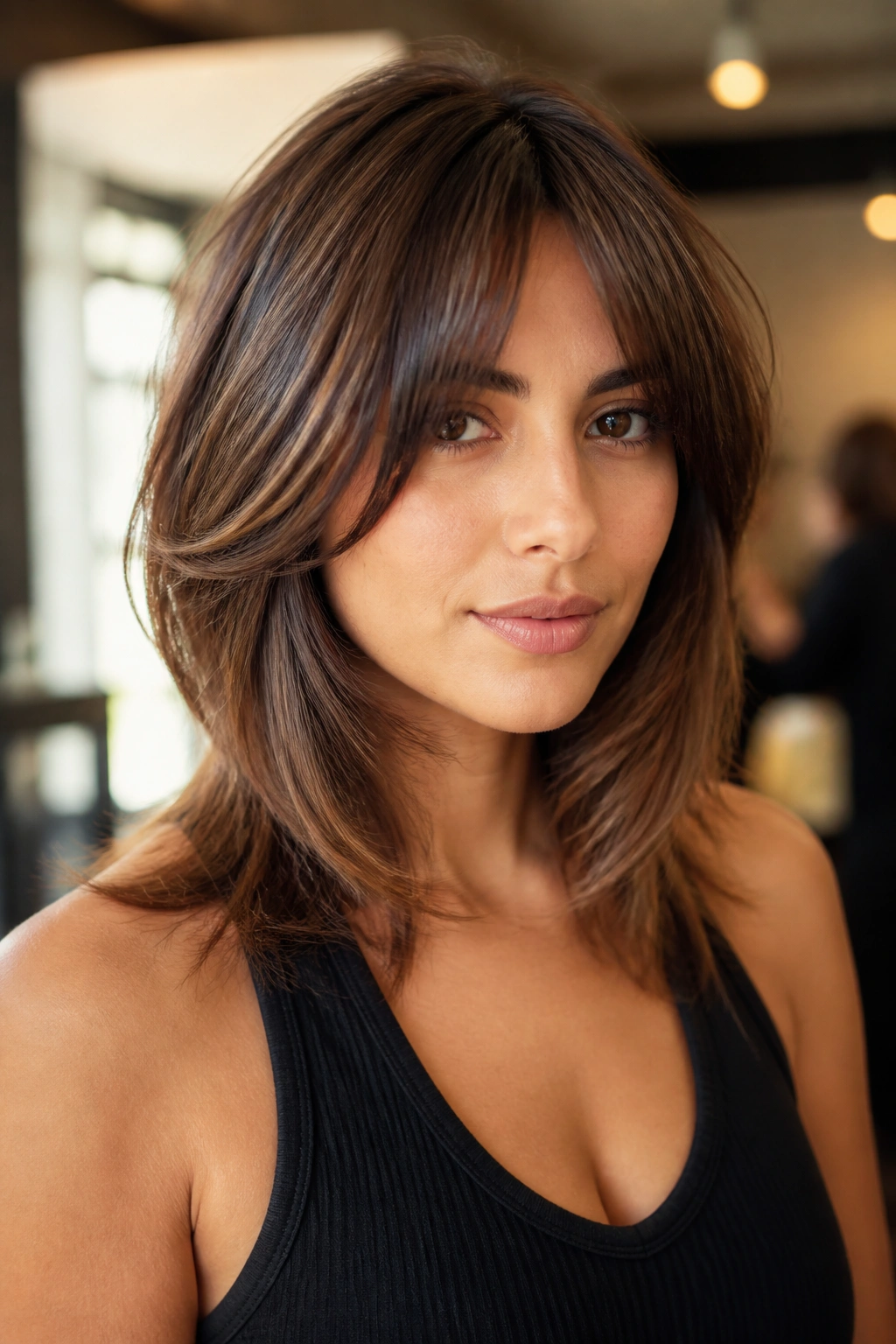
Bottleneck bangs are a nice bridge between fringe and face-framing layers. They’re shorter in the center, then lengthen at the sides so they melt into the rest of the haircut. On medium length hair, that transition matters. It keeps the front from looking chopped off.
The rest of the layers can stay soft and midlength, which means the bangs become the feature without taking over the whole head. That’s a useful balance if you want something noticeable but not high-drama. You still have room to pin the front back on lazy days.
This cut works especially well when you want the eyes drawn upward but don’t want a hard, blunt fringe. The shape is gentler. It also grows out more kindly than a straight-across bang, which saves some frustration between trims.
Styling Notes
A small round brush and a quick twist at the ends are usually enough. Keep the bangs light. Heavy blow-drying makes them split in annoying ways.
17. Rounded Volume Layers at the Crown
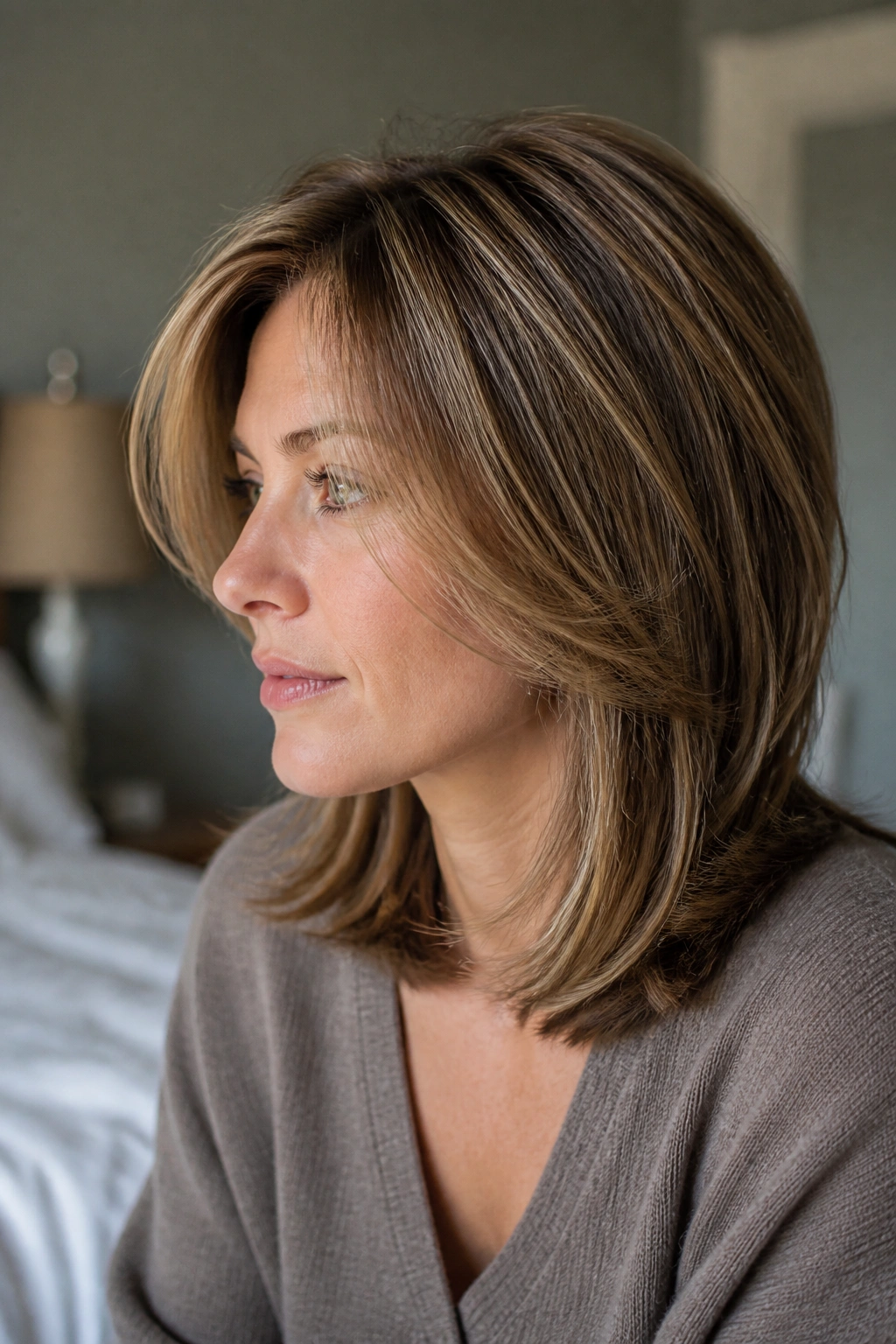
Rounded crown layers are a quiet fix for hair that falls flat at the top and puffs at the bottom. The idea is to build fullness through the upper section, then keep the sides and ends shaped so the haircut looks lifted rather than boxy.
This is not the same as a stack cut. The volume is softer, more dome-shaped, and more blended into the rest of the hair. On medium length hair, that rounded top can make the whole cut look healthier and more awake, especially if your natural part sits a little wide.
I like this cut on people who spend a few minutes styling their hair and want that time to show. A root-lift spray, a round brush, and a quick cool shot at the crown can make a real difference here. Not magic. Just honest structure.
If your hair is thick and heavy, keep the rounding subtle. Too much lift on top can make the haircut feel top-heavy fast.
18. Textured Midi Cut with Piecey Ends

A textured midi cut sits right in that sweet medium range and keeps the ends piecey enough to move. It’s a good choice if you like a haircut that looks done, but not overdone. The texture is visible, but the silhouette stays neat.
Unlike a blunt midi, this version uses point-cutting or soft texturizing at the perimeter to break up the line. That keeps the ends from looking like one solid shelf. The result is a haircut that can be worn sleek one day and a little tousled the next.
This is one of my favorite options for people who want something easy to dress up or down. It does not demand a perfect blowout. A quick pass with a flat iron, or even a little scrunching with mousse, is often enough to show the shape.
The one mistake to avoid is over-texturizing. Too much and the ends start to look hungry.
19. Shoulder-Skimming Layers with a Blunt Perimeter

A blunt perimeter with soft layers inside is a very good compromise if you want movement but still care about fullness. The ends keep a strong line at the shoulders, while the hidden layers stop the cut from feeling helmet-like.
Why This Cut Is So Useful
Medium hair can get thin-looking at the tips when layers are too heavy. A blunt edge solves that. The internal layers add the softness and bend you need, but the outside line stays solid. That combination is especially helpful on fine hair or hair that has been trimmed too aggressively in the past.
How It Feels to Wear
The haircut looks polished even when you air-dry it. A little flip at the ends is fine. A little wave is fine too. The shape does the heavy lifting.
- Best for shoulder-length hair
- Helps ends look thicker
- Nice balance for fine to medium density
- Easy to grow out
My take: this is one of the smartest cuts if you want a layered look but hate see-through ends.
20. Soft, Grow-Out-Friendly Medium Layers

A haircut should still look like itself six weeks later. That’s my main test, honestly. Soft, grow-out-friendly medium layers pass it because they keep the shape gentle from the start, so the style shifts instead of falling apart as it grows.
The layers are usually long enough that they blend into the rest of the cut instead of separating into obvious steps. That makes the haircut easy to live with if you do not book trims every month. It also means the style can move between sleek, wavy, and tied-back without fighting you.
This is the quiet winner for people who want layers but not maintenance drama. Keep the shortest pieces around the cheek or lip area, leave enough length at the back to hold the outline, and ask for soft blending rather than aggressive thinning. That gives you room to wear the haircut many ways.
If you want one layered shape that stays useful from the first day to the last, this is probably the one.
