



Thick hair at shoulder length can be the best haircut in the room or the one that makes you want to throw it into a clip by lunch. The difference is usually the layers. In the right places, shoulder length layered cuts for thick hair give shape, stop the ends from looking bulky, and keep the cut from ballooning out at the sides.
That sounds simple. It isn’t. Thick hair has weight, and weight behaves differently once the length hits the collarbone. Too many short layers and the top puffs up; too few and the whole shape hangs like a heavy curtain. The sweet spot sits somewhere between “nothing happens” and “I look like I was attacked by thinning shears.”
Anyone who has watched a fresh blowout collapse into a triangle by day two knows the problem. The hair is not the enemy. The cut is.
The styles below lean into different ways of handling that weight — some soften the outline, some lift the crown, some give you movement without sacrificing fullness. That matters more than people think. Thick hair can wear shape beautifully, but only if the shape is built with some restraint.
1. Shoulder Length Layered Cuts for Thick Hair With a Soft U-Shape
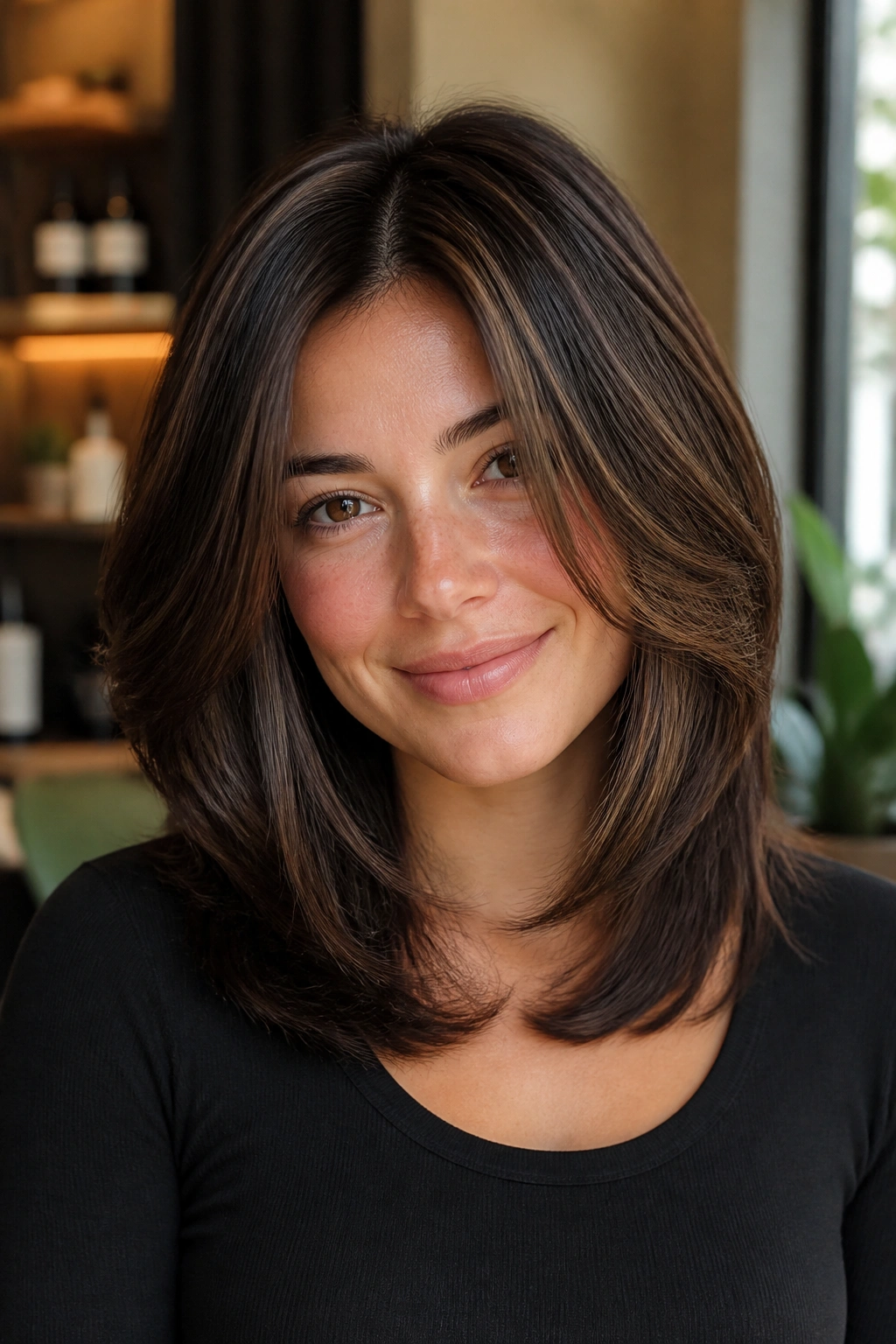
A soft U-shape is one of the easiest wins for thick hair. The perimeter stays long enough to keep the haircut grounded, while the front opens up just enough to stop the whole thing from feeling square. It’s a good choice when you want movement without losing that satisfying, full curtain of hair.
Why the U-Shape Works
The longest point sits in the center back, and the sides drift slightly shorter as they move toward the face. That small change does a lot. It keeps thick hair from forming a blunt shelf at the bottom, and it helps the ends curve inward instead of jutting out at the shoulders.
This shape also plays well with natural density. You’re not stripping away half the hair just to make it lighter. You’re guiding it. That’s a different thing, and a better one.
- Ask for the shortest front pieces to land around the chin or just below it.
- Keep the back heavy enough to hold a clean outline.
- Use long, blended layers rather than sharp steps.
- Finish with a round brush if you want the curve to show more clearly.
Best for: thick straight hair, loose waves, and anyone who hates a boxy edge.
One warning: if the front layers start too high, the whole cut can spring outward. That’s the line to avoid.
2. Butterfly Layers That Lift the Crown
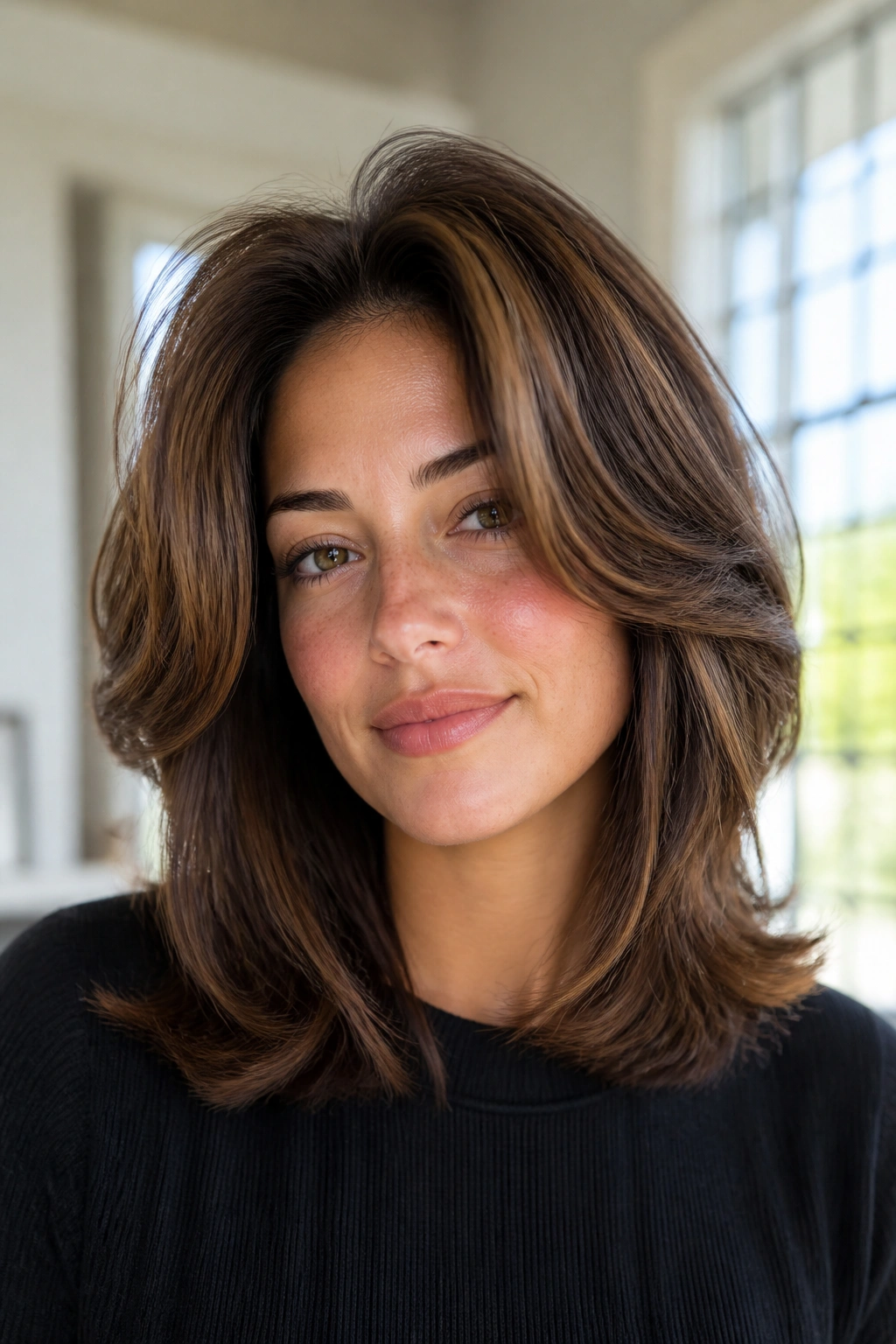
Why do butterfly layers work so well on thick hair? Because they give you two jobs at once: volume where you want it and softness where you don’t. The shorter top layers create lift around the crown and cheekbones, while the longer length below stays shoulder-grazing and full.
That split is the whole point. Thick hair often feels heavy through the mid-lengths, especially once it reaches the shoulders. Butterfly layers break that mass into two visible zones, so the haircut feels lighter without looking thin. You still get the presence of thick hair. You just lose the drag.
The look is especially good if your hair tends to flatten on top but puff at the ends. The crown gets a little air. The lower section keeps the silhouette from looking stringy. It’s a very civilized haircut, honestly.
If you style with a blow-dryer and a large round brush, the top layers pop up just enough to make the cut feel expensive. Air-drying works too, but the effect is softer and less dramatic. That can be a good thing if you prefer hair that looks lived-in instead of polished.
3. The Soft Shag That Breaks Up Dense Hair
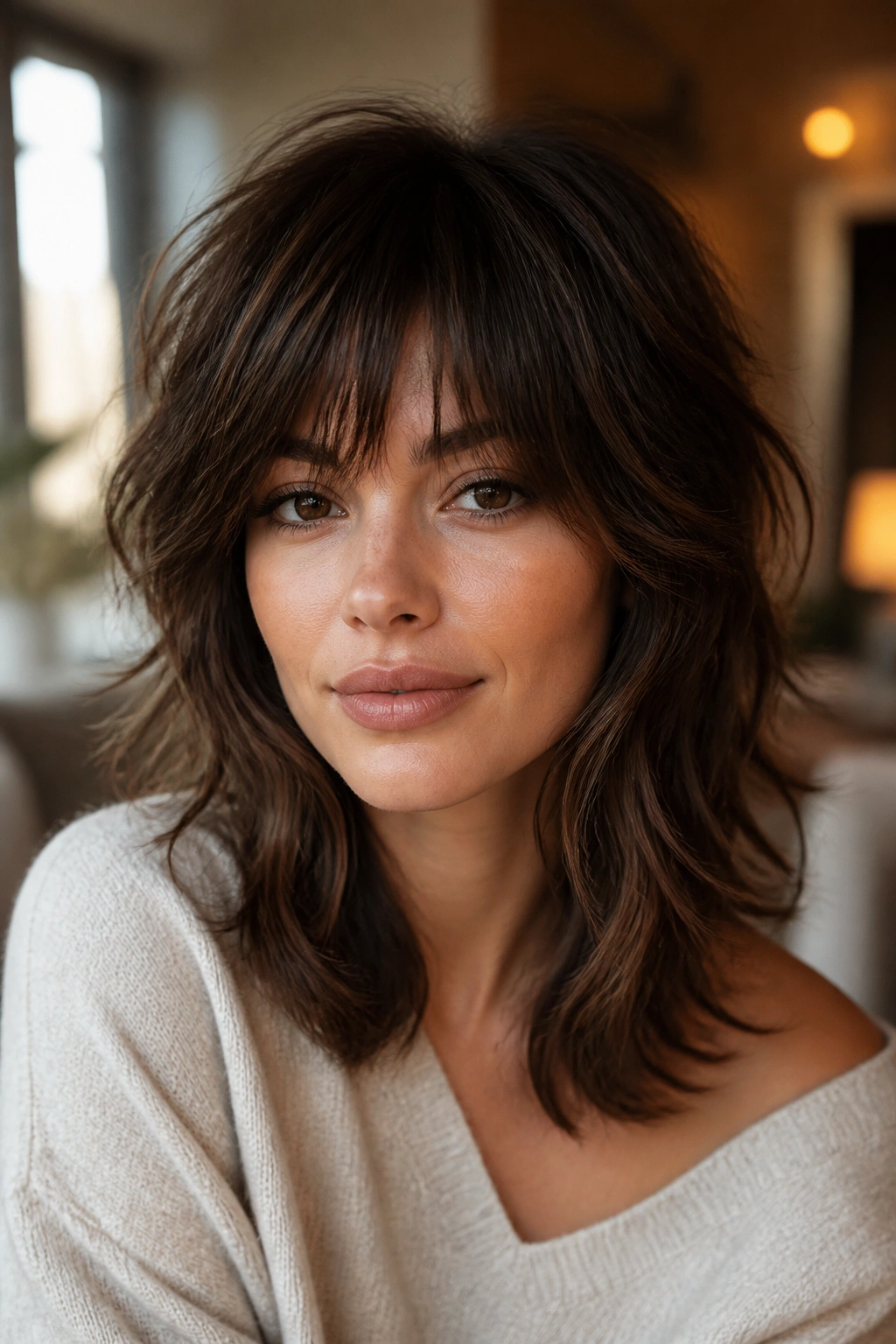
If thick hair ever feels too earnest, a soft shag gives it some edge without going full rock-show. The shape is choppy, sure, but not reckless. It uses layers to remove bulk through the crown and mid-lengths, then lets the ends fall in a way that still looks touchable.
This cut shines on hair that has wave or a little bend. On pin-straight thick hair, it can still work, but you’ll want a stylist who knows how to keep the layers blended instead of jagged. The goal is not a pile of broken pieces. The goal is movement.
What to Ask for in the Chair
- Keep the shortest layers around the cheekbone, not up by the forehead.
- Ask for soft texturing at the ends, not aggressive thinning.
- Leave enough length at the perimeter to hit the shoulders cleanly.
- If your hair is coarse, ask for the layers to be point-cut rather than sliced bluntly.
A soft shag does something a blunt cut never will: it gives thick hair a little swagger. Not too much. Just enough.
The maintenance is refreshingly easy. A salt spray, a light mousse, or a pea-sized amount of curl cream can help the layers separate without turning frizzy. If you like hair that looks better after a bit of chaos, this one deserves a spot near the top of your list.
4. Curtain Bangs That Melt Into Shoulder Layers

Curtain bangs can be a smart move for thick hair, but only when the rest of the cut is doing its job. Thick bangs cut too bluntly can feel heavy fast. Curtain bangs solve that by splitting the front and opening the face while the shoulder-length layers keep the body of the haircut balanced.
The beauty here is the flow. The bang area doesn’t end in a hard line. It blends into face-framing pieces that skim the cheekbones and fall into the rest of the cut. That keeps thick hair from building up too much weight around the forehead and temples.
A good curtain bang on thick hair usually starts longer than people expect. That matters. Too short and you get a puffed-up fringe that needs constant styling. Too long and it collapses into the face. Somewhere around the cheekbone is the sweet spot for many people, though a stylist should still adjust for your hairline and growth pattern.
- Blow-dry the fringe forward first, then sweep it apart with a round brush.
- Keep a dry shampoo on hand if your roots get oily quickly.
- Avoid heavy creams near the bangs unless your hair is very coarse.
- Trim the fringe before it starts hitting your lashes, not after.
The whole style feels relaxed, but it is not lazy. There’s a little upkeep. Still worth it.
5. The Rounded Layered Lob That Keeps the Sides Tame

A rounded lob is one of my favorite answers for thick hair that keeps flaring outward at the shoulders. The shape is fuller through the middle and slightly tucked around the edges, so it looks soft instead of square. That rounded outline matters. It stops the haircut from reading as a block.
Thick hair often needs a perimeter that behaves. A lob with subtle layering gives you that without making the cut feel overworked. The layers are there to move the hair, not expose every strand. When the outline stays rounded, the result feels calm.
This is the haircut I’d pick for someone who wants polished hair that still has body. It works well with a side part, a center part, or a loose bend from a flat iron. The cut does not depend on one styling trick to survive. That’s a blessing on busy mornings.
One little detail makes a big difference: keep the ends softly beveled under instead of letting them sit blunt and wide. That tiny bend helps the hair hug the neck and shoulders instead of sitting out in space. Boxy ends are the enemy here.
6. Choppy Piecey Layers for Hair That Feels Too Heavy

Sometimes thick hair does not need elegance. It needs relief. Choppy, piecey layers give it that by breaking up the density into visible sections, so the whole cut feels lighter and a little more playful. This is the kind of haircut that looks better when it moves.
The risk, of course, is going too far. Too much chopping and the hair starts to look rough instead of textured. That’s why the best versions keep the layers controlled. You want separated pieces, not a shredded mess. Big difference.
How to Keep Choppy from Turning Frizzy
A choppy cut needs a careful hand in the chair and a light hand at home. Use just enough product to show the layers, not enough to glue them together.
- A pea-sized amount of styling cream is enough for most shoulder-length thick hair.
- Point-cutting at the ends gives the haircut more softness than blunt cutting.
- A texturizing spray works better than a heavy balm if your hair gets puffy.
- Let some sections dry naturally instead of brushing every piece flat.
This cut suits people who like hair with a little grit. If your style leans sleek and shiny, it may feel too broken up. If you like a lived-in finish and don’t mind a bit of edge, it can be a good one.
7. Deep Side-Part Layers That Build Shape Without More Length
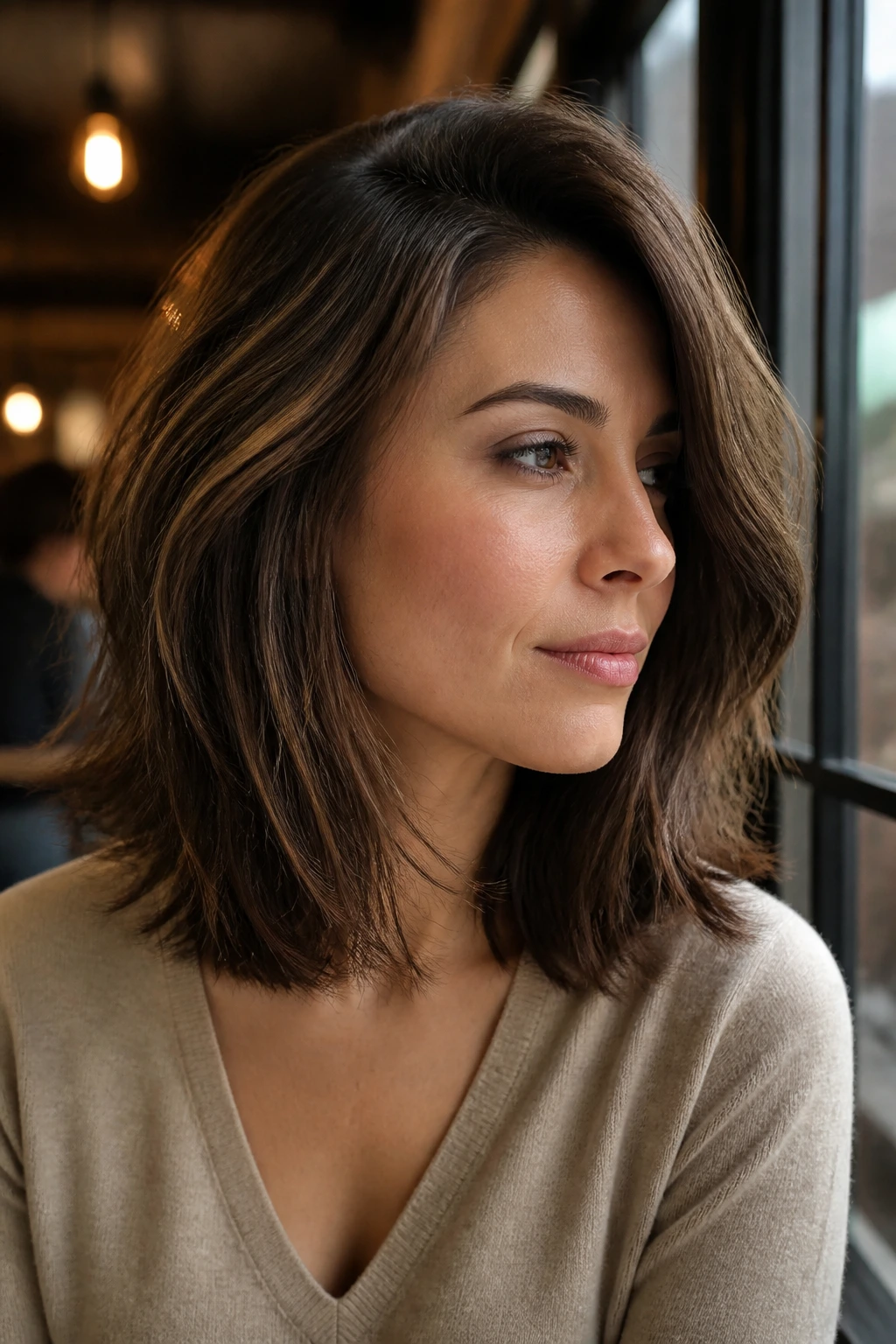
A deep side part can change the whole personality of thick hair. Same haircut, different direction, and suddenly the crown has lift while the heavier side falls in a softer sweep. That makes this a smart choice when you want shape without chopping in more layers.
The side part redirects weight. Instead of everything falling straight down from the middle, the hair moves across the head and creates a little built-in volume at the root. For thick hair that goes flat on top, that’s a useful trick. It gives the cut architecture without making it fussy.
This style also plays nicely with shoulder-length layers because the longest parts still skim the collarbone, which keeps the haircut from spreading outward like a triangle. The side sweep adds motion. The layers support it. It’s tidy without feeling stiff.
If your face tends to look wider with a center part, this is a good thing to try. The diagonal line softens the outline and pulls the eye up. Nothing dramatic. Just enough to make the whole cut feel more alive.
8. Shoulder Length Layered Cuts for Thick Hair With Invisible Internal Layers

Invisible internal layers are the answer when someone wants less bulk but hates the idea of visible choppiness. The outside shape stays polished. The hair on the inside gets the weight removed. That means the haircut can feel lighter without advertising every snip.
This technique is especially useful for thick hair that looks fine from the outside and huge from the inside. You know the kind. It seems manageable until you try to dry the back, and suddenly the whole head takes twice as long as it should. Internal layers help with that.
What to Ask for at the Chair
- Ask for weight removal inside the haircut, not all over the surface.
- Keep the outer perimeter blunt or softly rounded.
- Use the shortest internal layers around the mid-lengths, not the crown.
- Avoid heavy thinning shears near the bottom edge if your hair frizzes easily.
These layers are a good compromise for people who want movement but still like a cleaner silhouette. The cut keeps its shape when you tuck it behind the ears, pull it into a half-up style, or let it air-dry into its natural wave.
Invisible layers are not flashy. That’s their strength. The haircut feels easier, but no one can quite point to why.
9. Feathered Blowout Layers for a Soft, Swingy Finish
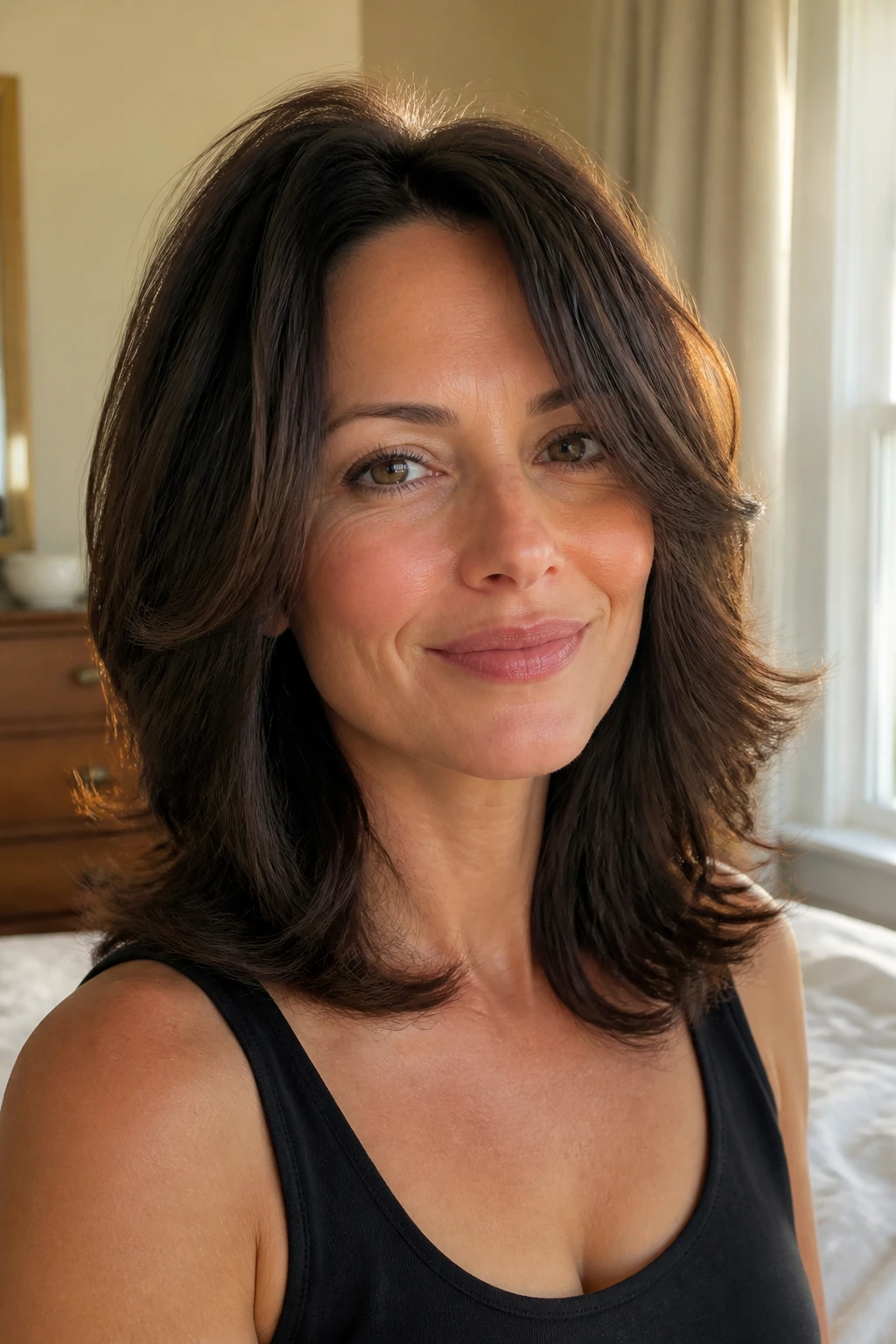
Feathered layers are for thick hair that you want to look airy without losing fullness. The ends get tapered so they move like fabric instead of sitting in one heavy line. When the blowout lands right, the hair flips softly away from the face and brushes the shoulders with a lot less bulk.
The key is direction. Feathered layers should curve, not stick out. A round brush or a large blow-dry brush helps the ends bend under or away from the face in a controlled way. The result is smooth, but not flat. That’s the line you want to hit.
This cut is especially good if your thick hair holds a style well once it’s set. It can look almost too neat when freshly done, then loosen into something prettier over the day. The movement shows in the ends first — a little swing, a little bend, nothing stiff.
If you have coarse hair, ask for the feathering to stay soft. Too much slicing can fray the ends and make them look dry. The best feathered cut still feels plush in your hands.
10. The Wolf Cut Lite That Keeps the Edge but Removes the Drama

You do not need a full wolf cut to get that messy, modern shape. A softer version works better for a lot of thick hair. The crown gets shorter layers, the perimeter stays shoulder length, and the overall look keeps some edge without tipping into chaos.
This is the cut for someone who wants movement and doesn’t mind a little wildness, but also wants hair that can be brushed and worn to work without a full styling session. The shorter layers up top create volume, while the longer layers below stop the shape from getting too shaggy.
The trick is restraint. A wolf cut that’s too aggressive on thick hair can explode outward and feel hard to control. A wolf cut lite keeps the attitude but trims back the drama. That means more wearable volume, fewer triangle moments, and a much better chance of making it past day one.
I like this version most on wavy hair. Straight thick hair can wear it too, but the style needs a little texture spray or a bend from a curling wand to show the layer pattern. Otherwise it can read as “hair that needs a trim” instead of “intentional shape.” Small difference. Big one.
11. Face-Framing Layers That Start at the Cheekbones
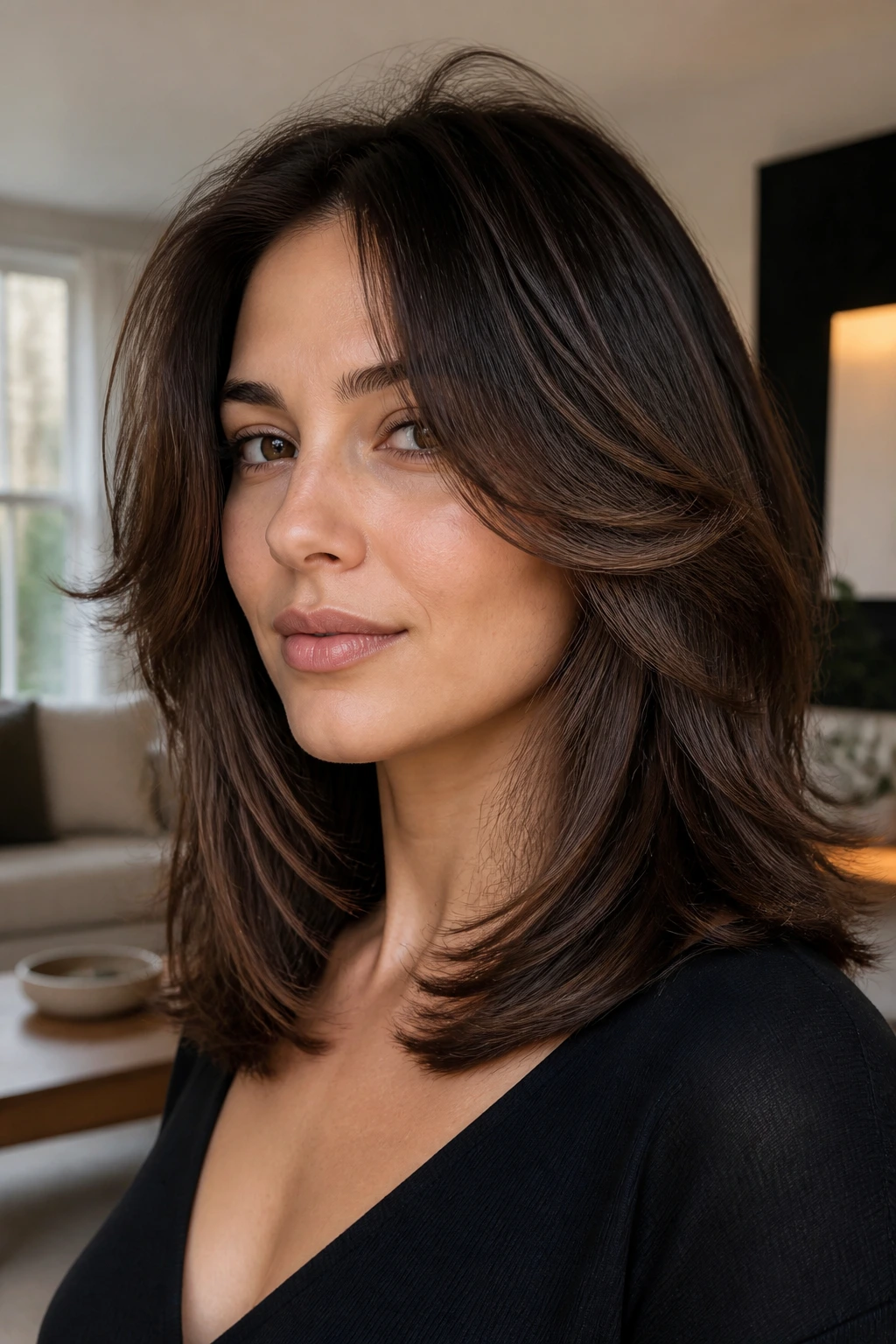
If thick hair tends to swallow your face, face-framing layers are the fastest fix. Start them around the cheekbones and let them taper down toward the collarbone. That gives the haircut a visible line near the face without shortening the rest of the hair too much.
The placement is everything. Layers that start too low just disappear. Layers that start too high can create a fluffy triangle near the ears. Cheekbone level is often the sweet spot because it brightens the face and breaks up density right where thick hair tends to feel heaviest.
Key Placement Points
- Shortest piece: around the cheekbone or just under it.
- Next piece: near the mouth or jaw, depending on face shape.
- Longest front piece: collarbone or slightly below.
- Back length: keep enough weight to anchor the whole cut.
This style is strong if you wear your hair down most days. It’s also one of the easier options to grow out, because the layers melt into the rest of the haircut instead of looking chopped off halfway down the head.
The cut should move when you turn your head. Not fly apart. Move.
12. Shoulder Length Layered Cuts for Thick Hair With Curtain Bangs
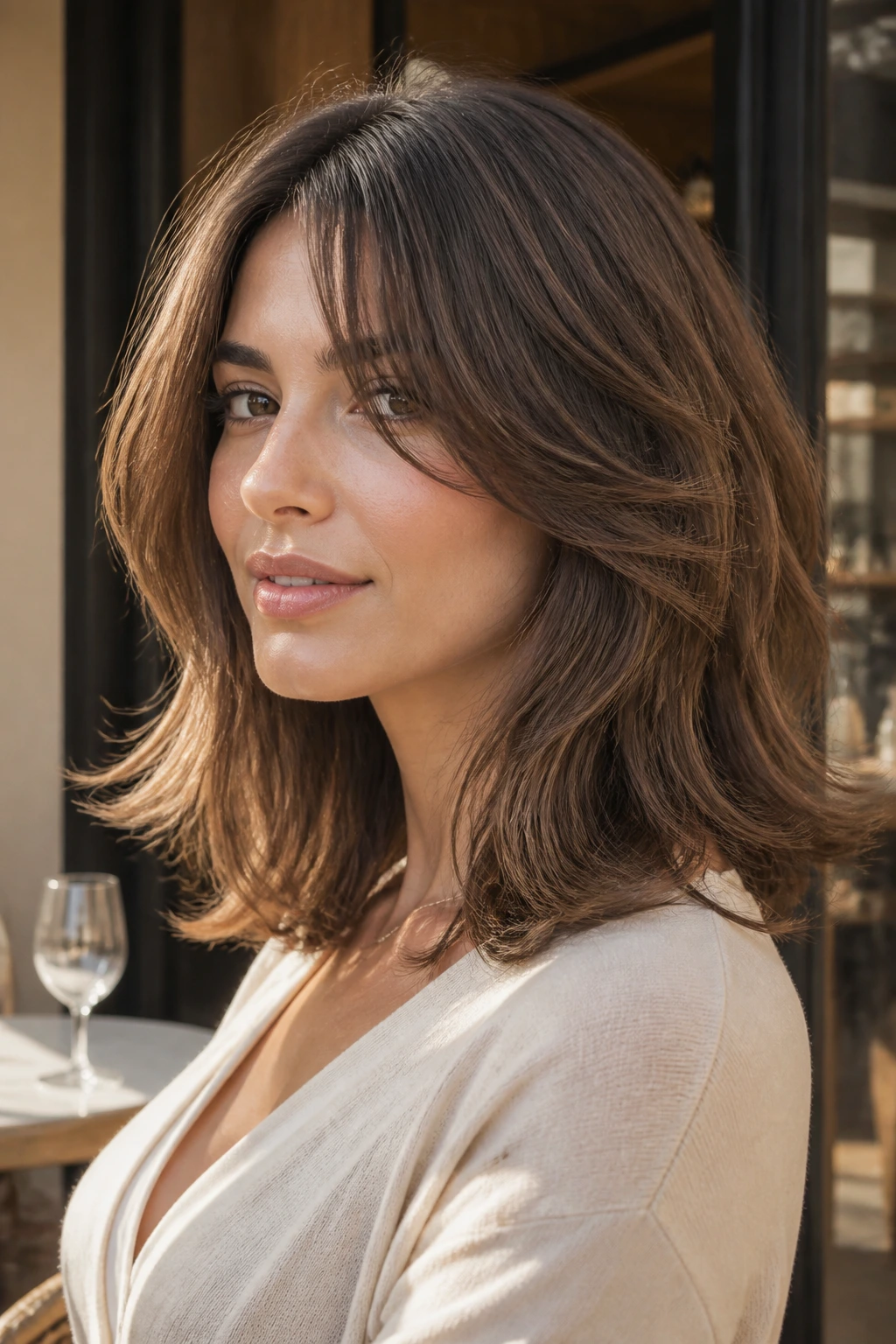
Why do curtain bangs keep showing up with thick hair? Because they solve a real problem. Thick hair can feel heavy at the front, and curtain bangs pull some of that weight apart without forcing you into a blunt fringe that needs constant babysitting. Paired with shoulder-length layers, they make the haircut feel open and intentional.
The middle part between the bangs matters. It gives the style breathing room and lets the hair fall away from the face instead of camping there. If the rest of the haircut has long layers, the bangs can blend into the side pieces and stop looking like a separate event. That’s what makes the cut feel finished.
This combo works best when the bangs are long enough to brush the cheekbones, not sit high on the forehead. Thick hair usually needs that extra length because the fringe has more body and less natural collapse. Short curtain bangs can spring up. Longer ones drape better and are easier to style with a round brush or even a large velcro roller.
How to Style Them Fast
- Dry the bangs first, while they’re still damp.
- Direct them away from the face for a few seconds, then let them fall open.
- Use a light mist of heat protectant, not a heavy cream.
- If they puff at the roots, pin them down while they cool.
The shape is soft, but it still needs a little direction. That’s true of almost every good haircut for thick hair.
13. C-Shape Layers That Curve In Around the Jaw
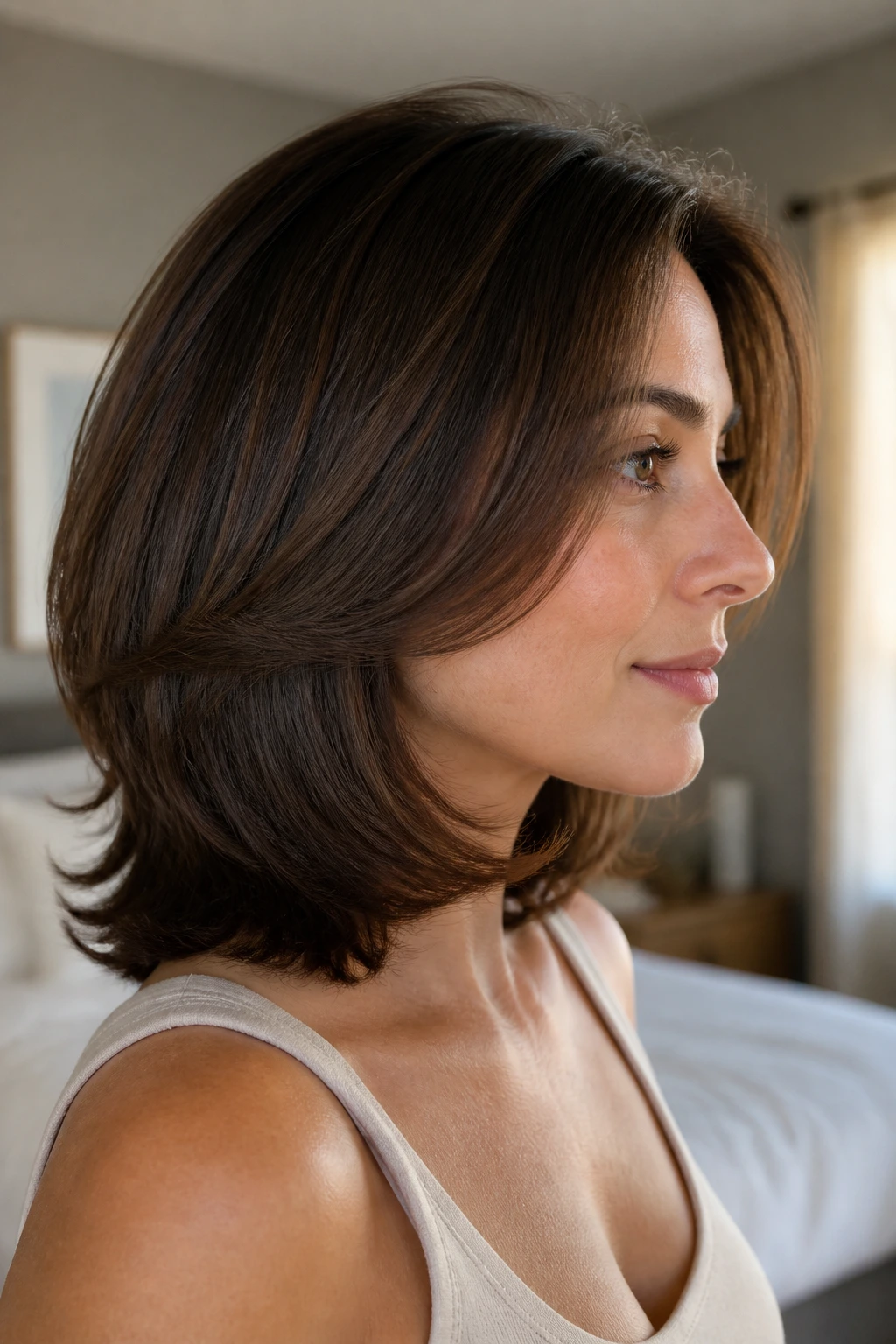
A C-shape layer cut gives thick hair a smoother outline than a straight-across shape. The layers arc gently around the jaw and collarbone, so the hair wraps the face instead of sitting beside it like a wall. It’s subtle. That’s the point.
This shape is especially nice if your hair tends to flare outward at the sides. The curve brings the perimeter back toward the neck and softens the feeling of bulk. You still have volume, but it reads as shape rather than width.
The C-shape also looks good when you tuck one side behind the ear. The layered curve stays visible, which gives you that easy, slightly polished look without much effort. A center part works. A slight off-center part works too. The cut is flexible in a way that a blunt lob often isn’t.
One small thing to watch: if the layers are too short, the curve can become too round and lose length. Keep the bend soft. You want a line that feels natural, not a bowl.
14. Razor-Textured Layers for a Softer Edge
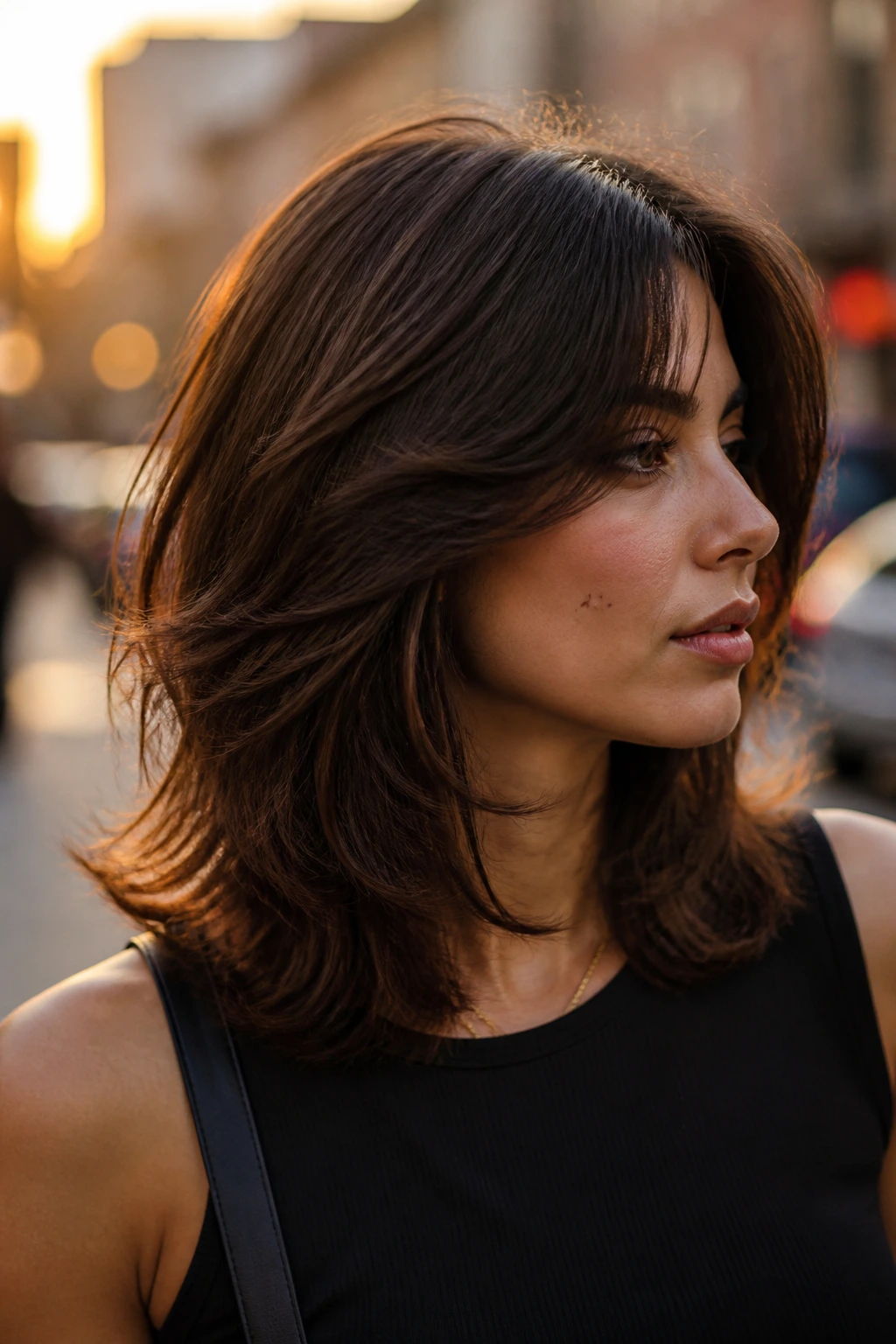
A razor cut can be brilliant on thick hair, but only when the hair itself can take it. On straight-to-wavy hair with a healthy feel, a razor softens the ends and makes the layer edges less chunky. The result is a shoulder-length cut that looks airy instead of heavy.
The danger is fray. Coarse or dry hair can look rough if it’s razored too hard. That’s why I’m picky about this technique. It should remove the visual heaviness, not make the ends look thirsty. A skilled stylist will know how much texture the hair can handle.
Who Should Skip It
- Hair that is very dry or split at the ends.
- Curl patterns that already expand a lot on their own.
- Anyone who wants a very blunt, glossy outline.
- Hair that tangles easily when it gets textured too much.
When it works, it works beautifully. The layers separate without looking piecey in a bad way, and the haircut moves when you shake it out with your fingers. Pair it with a light leave-in conditioner and a touch of serum on the ends. Nothing heavier. Heavy product drags the shape down.
15. Full Fringe With Long Shoulder Layers
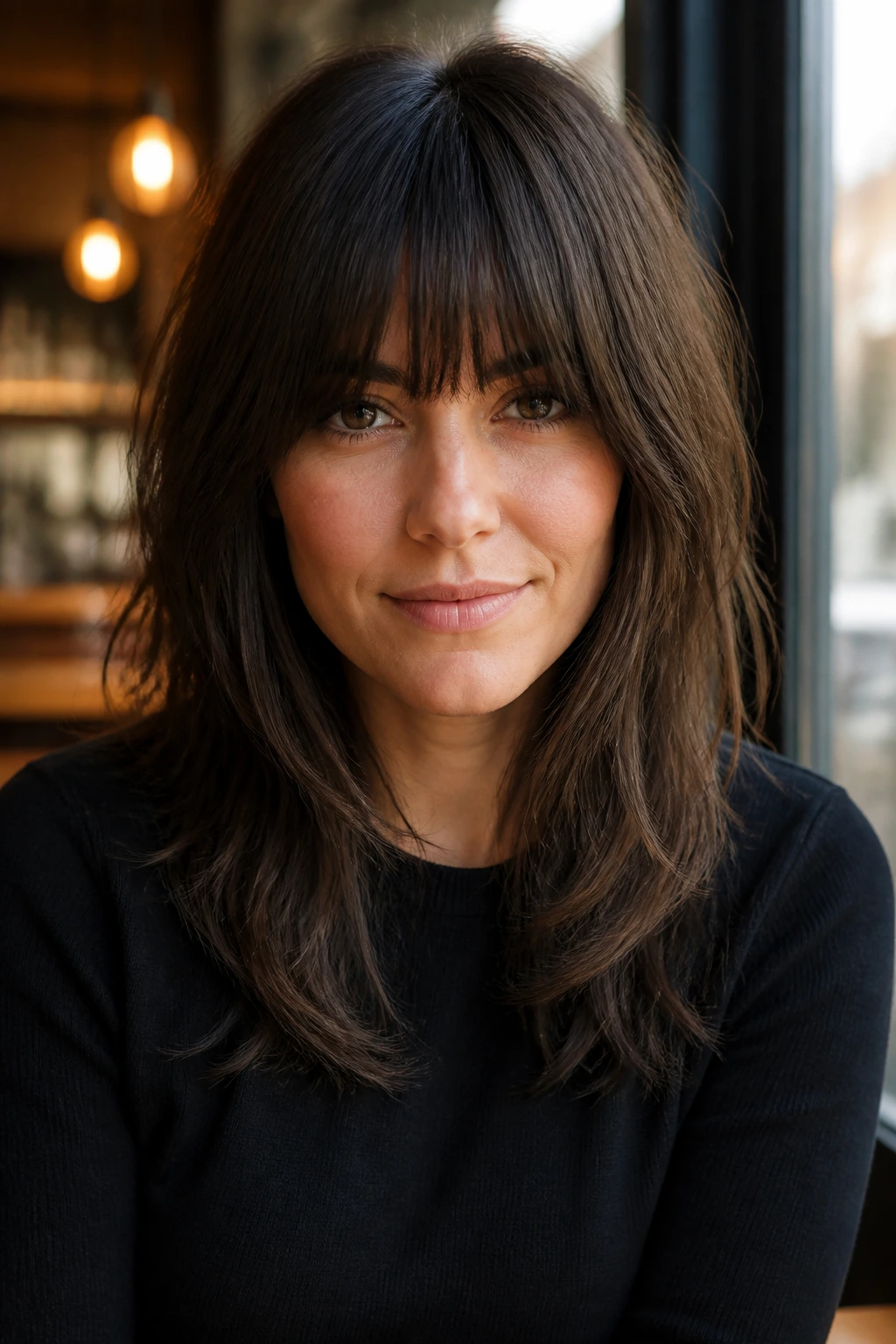
A full fringe on thick hair can be excellent, but it needs enough density to look intentional. Thin bangs on thick hair often split and misbehave. A fuller fringe, cut cleanly and blended into shoulder-length layers, can bring balance to a heavy cut and make the whole style feel sharper.
This is one of those haircuts that looks confident when it’s done well. The fringe draws attention upward, while the longer layers stop the haircut from feeling boxed in. If your hairline is cooperative and your front section is strong enough, the result can be striking without being fussy.
The catch is maintenance. Full fringes need more drying attention than most people want to admit. They also pick up humidity faster than the rest of the hair. If you hate restyling your front pieces, this may not be your friend.
- Ask for the fringe to be slightly longer at the temples.
- Keep the shoulder layers soft so the front line does not look disconnected.
- Use dry shampoo at the roots if the fringe separates too fast.
- Trim before the bangs start poking your eyes.
It is a high-reward haircut. Not a low-effort one.
16. Mid-Shaft Weight-Removal Layers for Very Dense Hair
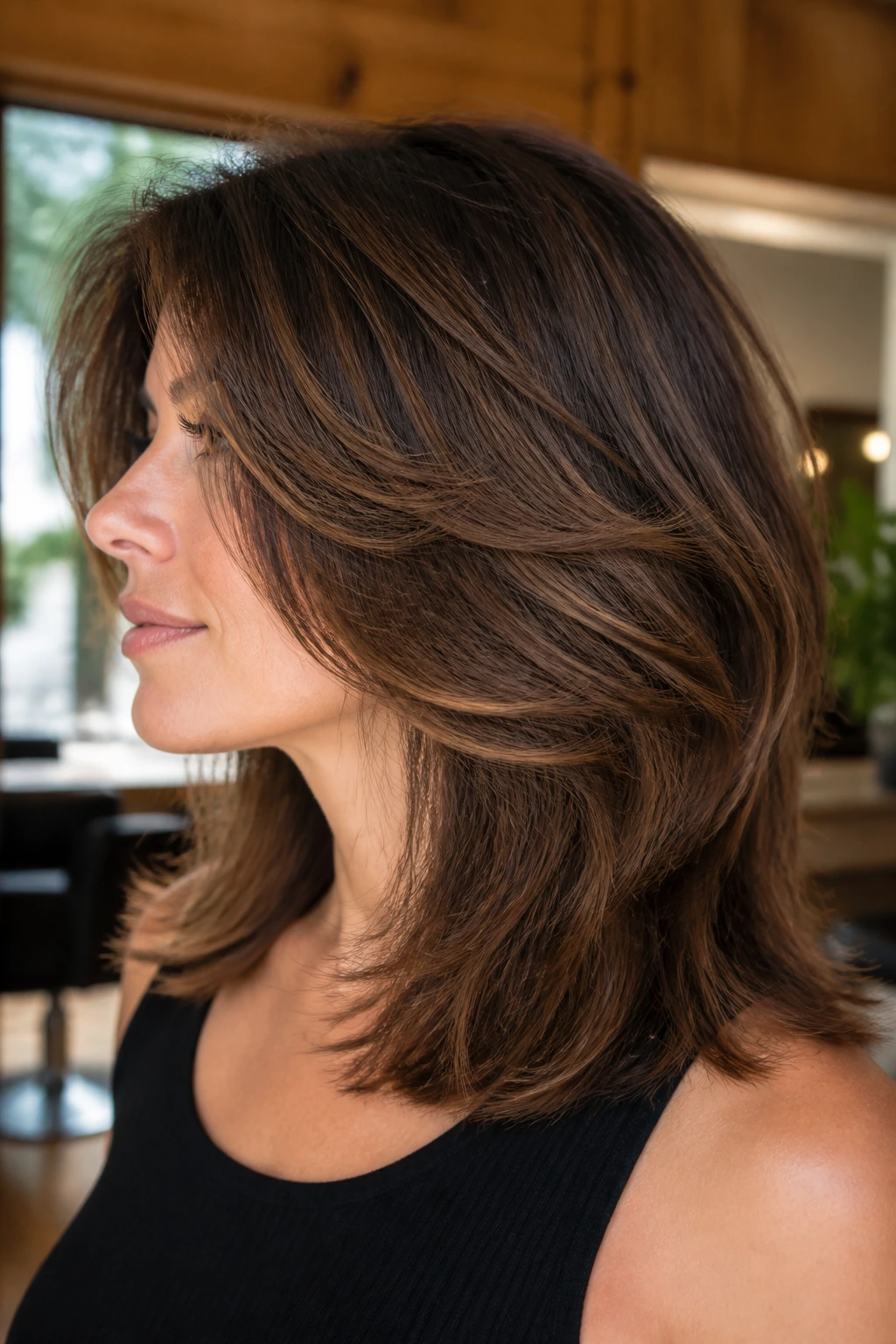
Some thick hair does not need more obvious layers. It needs the weight lifted from the middle. Mid-shaft layers do exactly that. They start lower than a cheekbone layer and remove bulk where the hair stacks up, while the outer shape stays full and fairly calm.
This is the move for very dense hair that feels hot, heavy, or slow to dry. The cut reduces that middle mass without turning the head into a cloud of short pieces. You keep a strong perimeter, but the inside is less dense and easier to manage.
Signs This Cut Makes Sense
- Your hair takes forever to dry through the middle.
- The ends feel fine, but the bulk sits above them.
- You get a wide shape at the shoulders.
- A normal layered cut leaves the top flat and the bottom huge.
This is not the easiest cut to explain to a stylist if they are used to working fast. Be direct. Ask for weight removal in the mid-lengths, not around the crown and not at the ends. That precision matters. It keeps the haircut from turning fluffy.
It is one of the most practical cuts on the list, even if it sounds a little technical. Hair that feels easier to wash, dry, and clip back is not a small thing.
17. Tucked-Under Beveled Ends

Some thick hair flips out at shoulder length no matter what you do. Tucked-under beveled ends are the answer when you want the haircut to sit closer to the neck and shoulders instead of kicking outward. The perimeter is shaped so the ends curve under, which gives the whole cut a cleaner line.
This works especially well on straight hair and loose waves. The bevel keeps the bottom from looking blunt, but it does not chop away length the way some heavily layered cuts do. You still get fullness. You just lose that boxy edge.
A round brush, a hot brush, or even a large curling iron can help encourage the bend. Keep the motion under control. You are not trying to curl the ends into ringlets. You’re just giving them a reason to tuck inward and behave.
The haircut feels tidy in a way that thick hair doesn’t always manage on its own. That’s what makes it useful. Not flashy. Useful.
18. Soft Asymmetrical Layered Lob
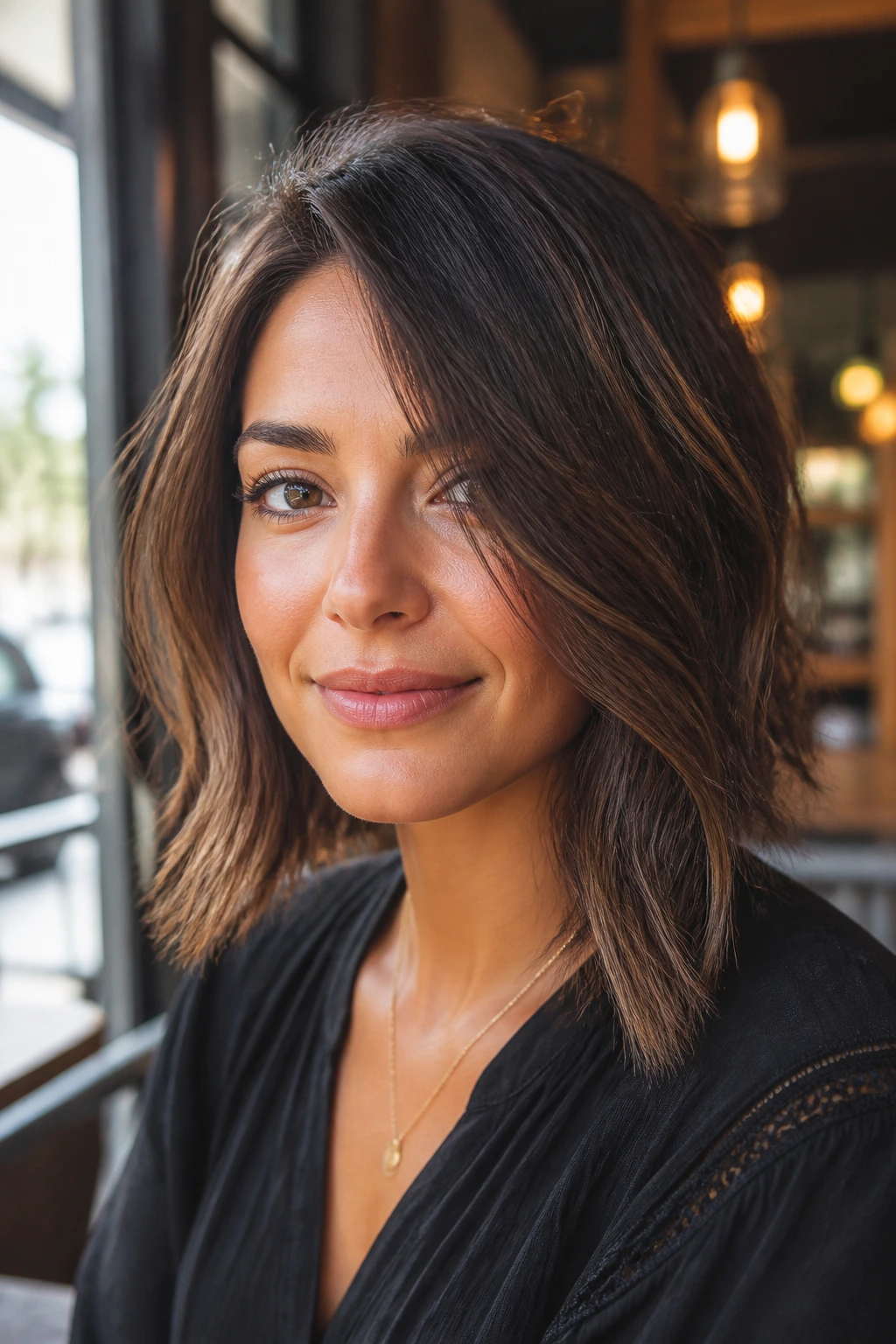
A soft asymmetrical lob gives thick hair a little more attitude without pushing it into a severe shape. One side sits slightly longer than the other, and the layers keep the line from feeling heavy or rigid. It’s a good choice when you want the haircut to look deliberate from every angle.
The asymmetry does a sneaky bit of work. It draws the eye down one side, which breaks up the visual weight of thick hair and keeps the cut from looking too broad at the shoulders. Because the difference is subtle, it still wears like a normal lob most of the time. It just has more character.
This one is especially good for people who keep their hair tucked behind one ear or who like a side part with a little lift. The uneven line gives you movement even when the rest of the hair is quiet. It can be sleek, wavy, or a little tousled. The cut takes on the finish you give it.
If you want a shoulder-length style that feels a touch sharper than the rest of this list, this is the one I’d point to first.
Final Thoughts
Thick hair does not need to be fought into submission. It needs shape, a little breathing room, and a cut that respects its weight. That is why shoulder length layered cuts for thick hair stay such a good choice: they keep the fullness, but they stop the ends from behaving like a brick.
The best version for you depends on what bothers you most. Too much width at the sides? Start with a rounded lob or a soft U-shape. Too much bulk at the crown? Butterfly layers or internal layering will probably make more sense. Want something with more personality? The soft shag, wolf cut lite, or asymmetrical lob bring it without wrecking the shape.
What I would not do is ask for random thinning and hope for the best. Thick hair usually looks better when the weight is placed carefully, not stripped away everywhere. That’s the whole game.
