



Thick hair is a blessing until the cut starts fighting back. One blunt line in the wrong place can turn all that density into a shelf, a triangle, or a heavy shape that looks bigger at the ends than it does at the crown. The right layers do the opposite. They take weight out where it’s crowding the shape, let the hair move, and keep the volume from feeling boxy.
That’s why layered cuts for thick hair volume are not about hacking hair to pieces. They’re about where the layers begin, how deep they go, and how much length stays on the perimeter. A layer that sits too high can make the top puff up and the bottom disappear. A layer that sits too low can leave the whole head wide and immovable. Timing matters too, in the sense that the cut has to match the way your hair dries, bends, and expands.
Thick hair also plays by its own rules. It can swallow small details and turn them invisible, which is useful when you want a cut with softness. It can also explode a little when it’s over-thinned, especially if the hair is coarse or frizzy. That’s why the same layered haircut can look airy on one person and lumpy on another. The shape is doing a lot of work behind the scenes.
The cuts below lean into that reality instead of pretending every thick head of hair wants the same thing. Some keep the length and remove bulk quietly. Some go bolder and build lift right into the crown. Start with the shape that matches how you wear your hair most days, not the one that looks clever on a salon wall.
1. Long Feathered Layers
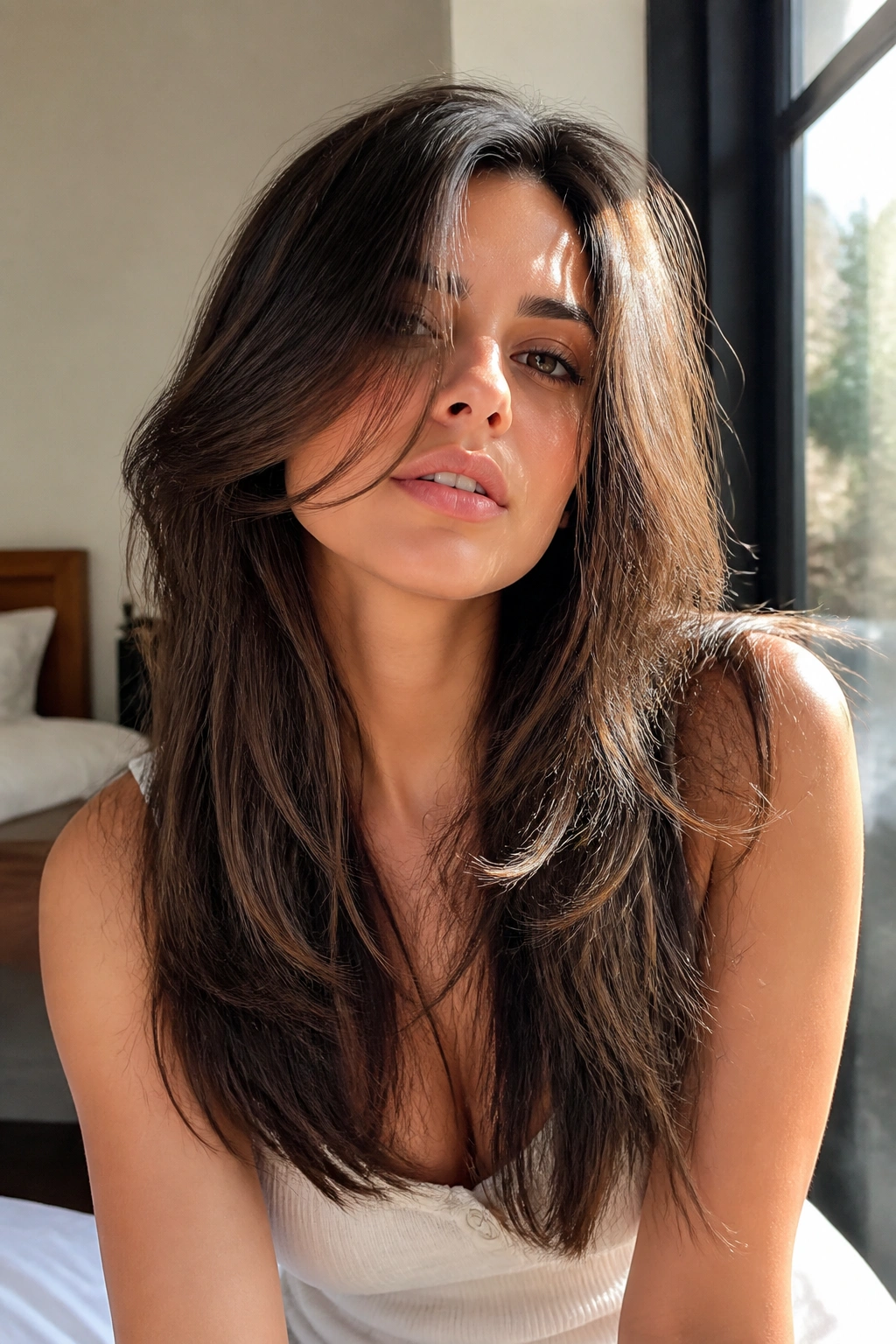
Long feathered layers are the safest place to start if you want movement without losing the heavy, lush feel that thick hair gives you. The cut keeps most of the length intact, then softens the outline with light feathering through the mid-lengths and around the face. That keeps the hair from sitting like a single block.
Why It Works
Feathering breaks up the weight line. The ends don’t all land in the same place, so the hair swings instead of hanging. On thick hair, that small difference matters a lot.
I like this cut when someone wants volume that moves rather than volume that just sits there. It’s especially good if your hair is long, straight, or only slightly wavy, because the feathering shows up without needing a big styling routine.
- Ask for the shortest face-framing pieces to start around the cheekbone or upper lip.
- Keep the bottom length blunt enough to hold density.
- Use a 1.5-inch round brush or large rollers if you want the feathering to show.
- A light mousse at the roots helps the top lift instead of collapsing.
Pro tip: If your hair frizzes fast, keep the feathering soft and avoid over-texturizing the ends. Too much slicing can make the outline look dry.
2. Butterfly Layers
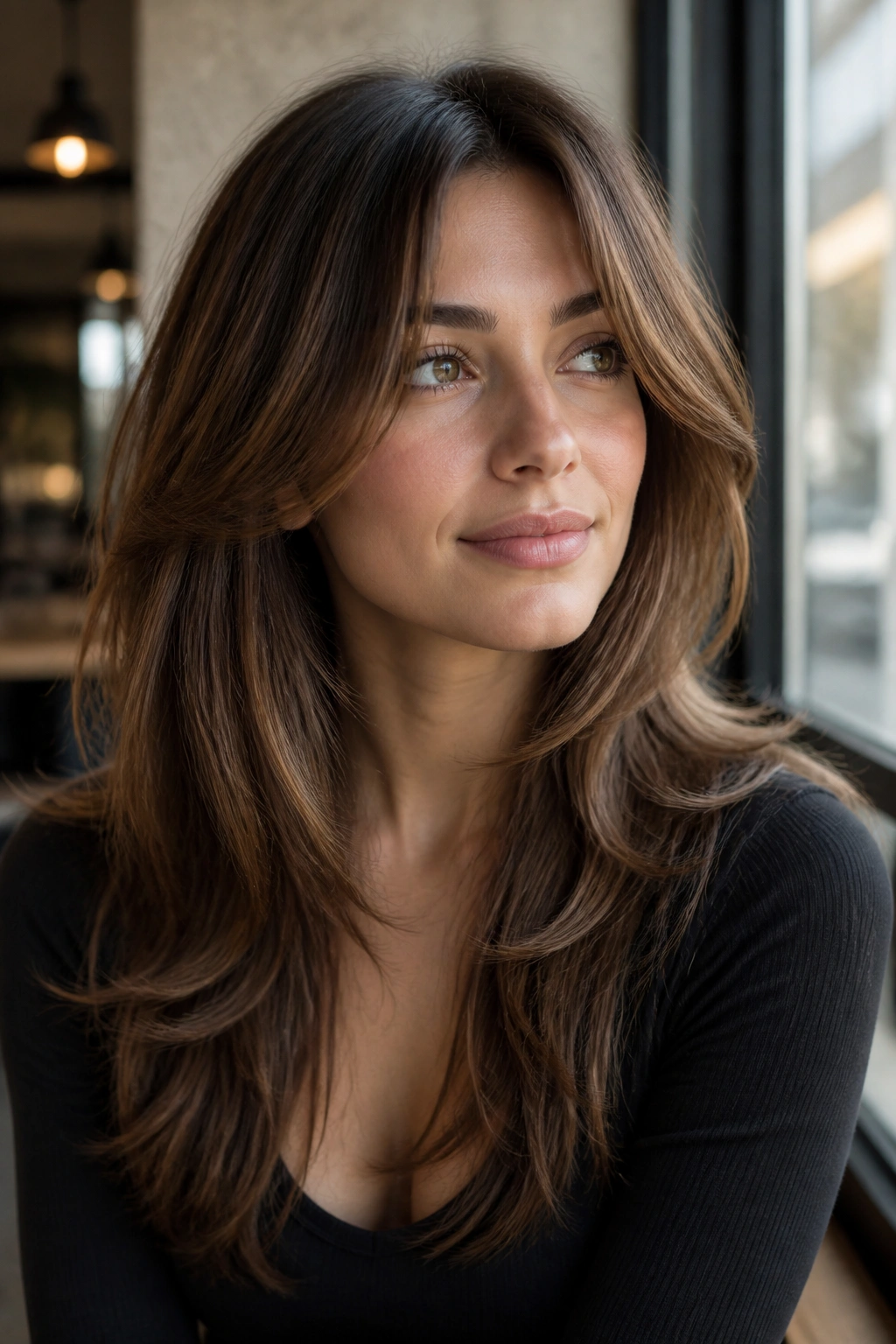
The butterfly cut gives thick hair two personalities in one shape. The top layers sit shorter, often around the collarbone or just above it, while the longer bottom layers stay in place underneath. The result is lightness at the top and length below, which is a smart trade when your hair feels heavy but you still want the drama of long hair.
This cut earns its reputation because it creates the illusion of a fuller blowout without removing all the weight from the ends. The shorter pieces around the face and crown lift the whole style. The longer layers keep the bulk from vanishing completely.
It works best when you like some styling time. A round brush or large barrel brush brings the shape to life fast, because the shorter top sections kick out and frame the face.
If your hair is very coarse and you never heat-style it, the butterfly shape can lose some of its charm in air-dry mode. Still nice. Just softer, less pronounced. And that’s not a bad thing.
3. The Modern Shag
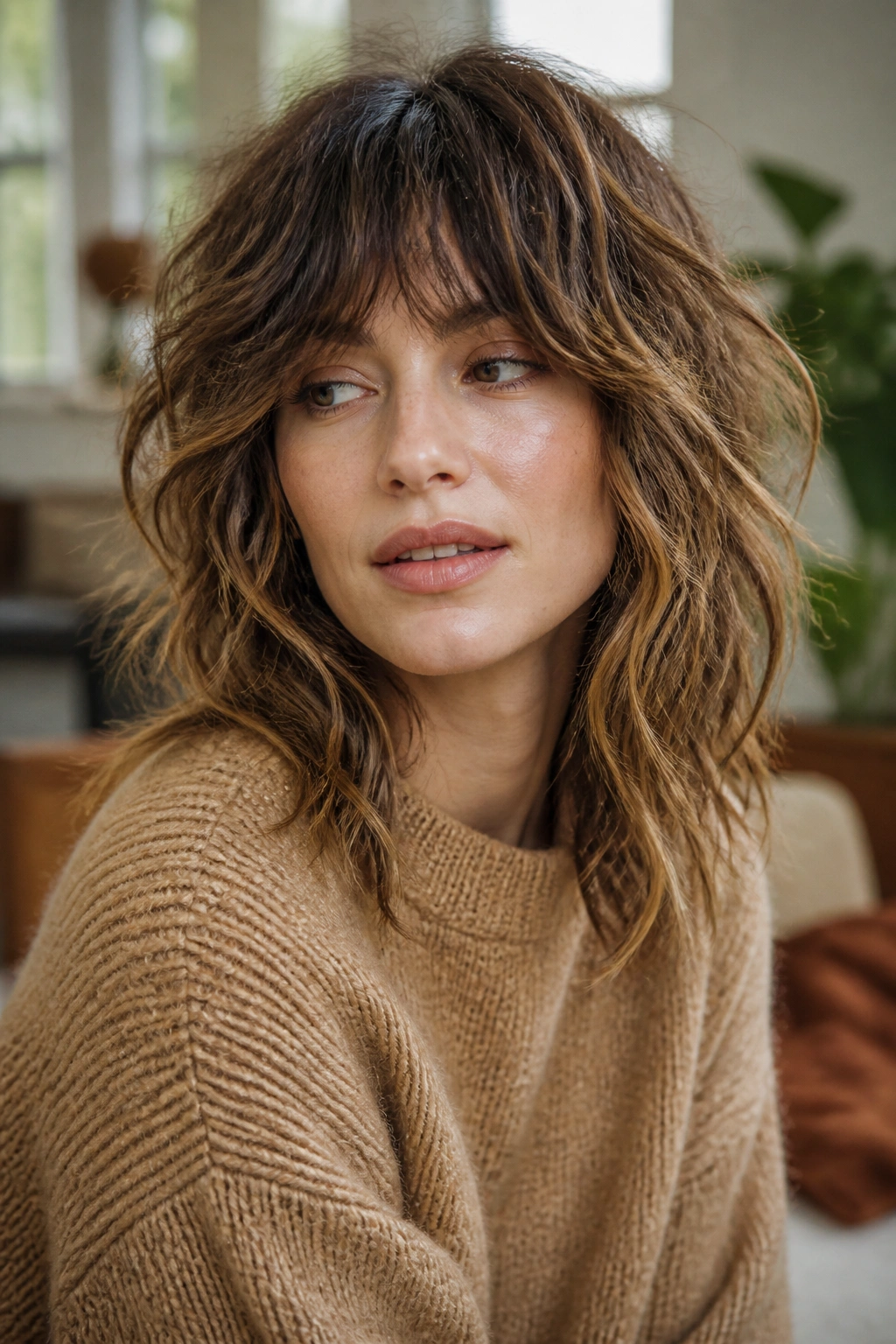
Why does the shag work so well on thick hair? Because it treats bulk like a shape problem instead of a problem problem. A modern shag uses broken texture, uneven lengths, and a little bit of edge to stop thick hair from forming one heavy curtain. The cut creates lift at the crown and movement through the sides, which is exactly where dense hair tends to get stubborn.
How to Ask for It
Tell your stylist you want layers that can live with your natural texture. That phrase matters. It keeps the cut from getting too polished or too overworked.
- Ask for point cutting instead of blunt chopping.
- Keep a fringe only if you’re willing to style it.
- Let the longest layers hit past the shoulders if you want to hold length.
- Use a diffuser or scrunching cream if your hair bends naturally.
The best shags on thick hair don’t look shredded. They look lived-in, a little messy, and full of air. I’d avoid this one if you hate a bit of fringe maintenance, because the whole shape depends on the top layers behaving.
4. U-Shaped Layers
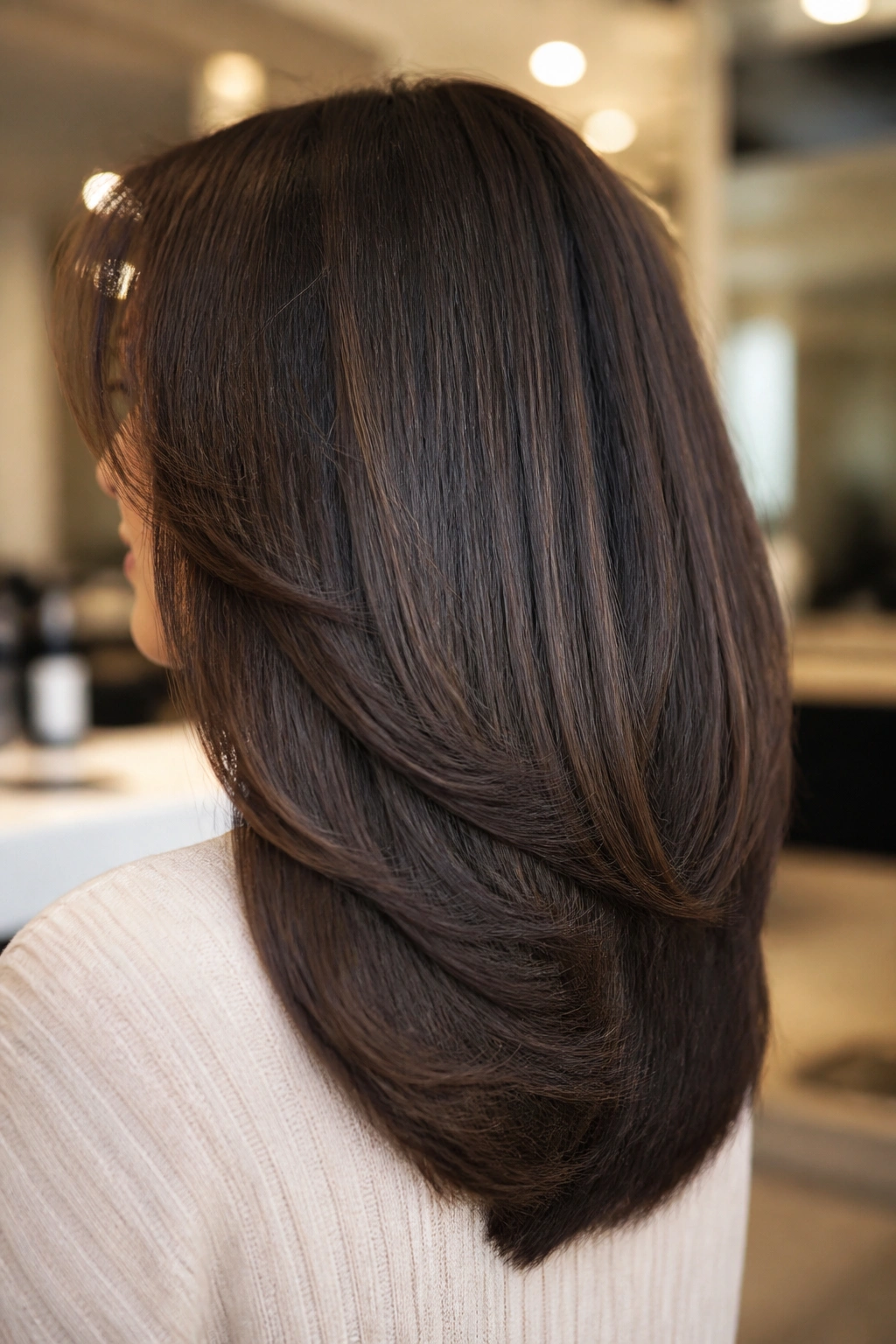
If your hair turns boxy by the end of the day, a U-shape fixes the line without shouting about it. The cut leaves the center back a little longer and lets the sides fall in a soft curve, almost like the perimeter was drawn with a gentle hand instead of a ruler.
That shape matters on thick hair because it keeps the bottom looking full while still easing the weight away from the sides. You don’t get the hard shelf that a straight cut can create, but you also don’t lose the dense, rich bottom edge that makes thick hair look expensive in the first place.
- Best for medium to long lengths.
- Ask for the curve to stay subtle, not dramatic.
- Works especially well if your hair goes into a ponytail often.
- Keep the face frame long enough that the front doesn’t feel chopped.
The U-shape is a quiet cut. Not flashy. That’s why I like it. It gives thick hair a cleaner fall, and it does it without changing the personality of the hair too much.
5. V-Cut Layers
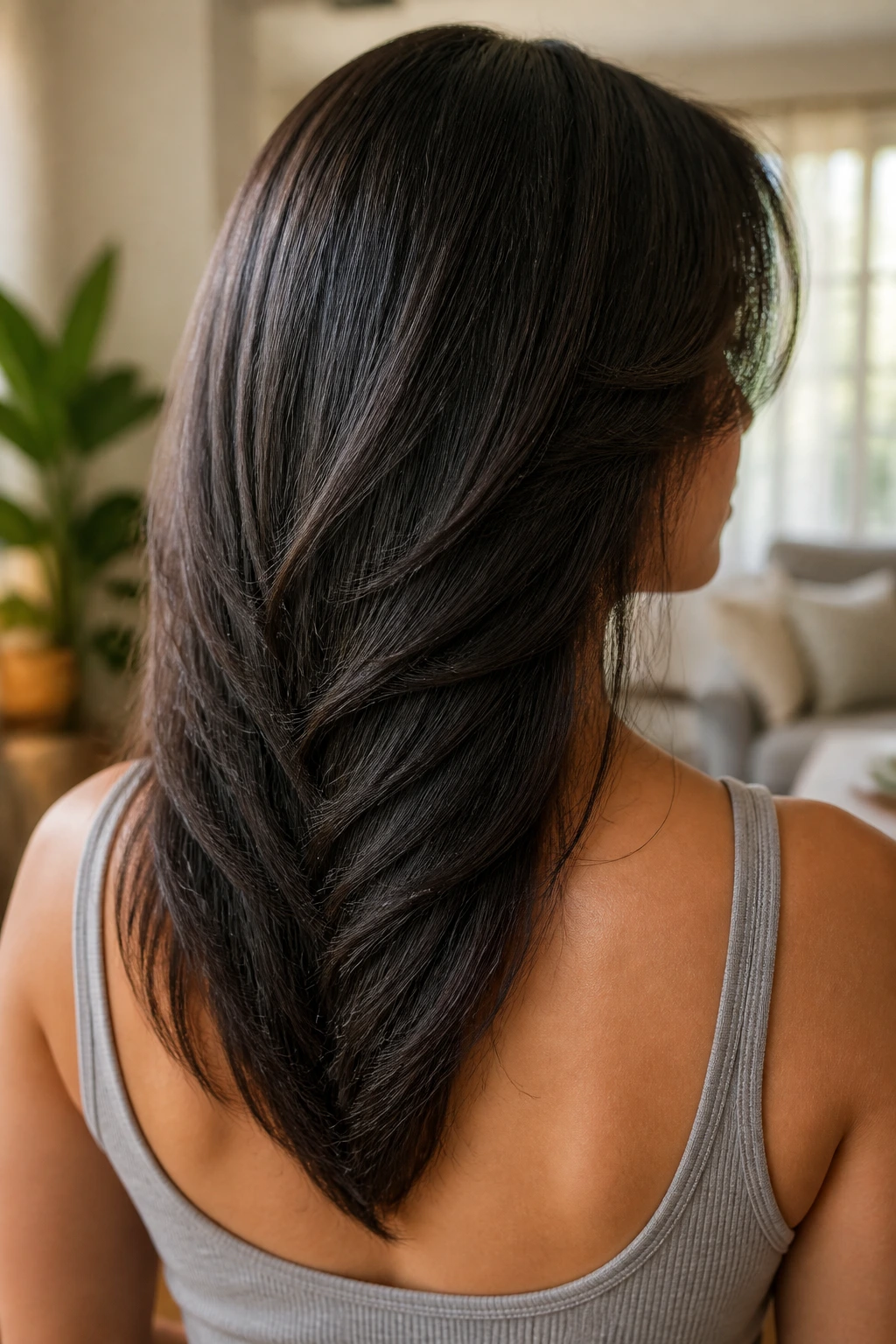
A V-cut is the sharper cousin of the U-shape, and thick hair can handle the drama. The center back forms a point, while the sides angle down into that point, which creates a long, tapered look through the back. It’s a strong choice if you want your hair to feel lighter in motion but still keep the visual weight of long length.
The V shape shows off thickness instead of hiding it. That’s the interesting part. On very straight hair, it can look crisp and sleek. On wavy hair, it reads softer and more romantic, with the point becoming more of a suggestion than a hard line.
This is a good cut if you wear your hair down often and like the way it looks from the back. It also works nicely with low ponytails, because the shape still shows a little even when the hair is tied up.
One caution: if the point gets too sharp, the ends can look thin at the center while the sides stay bulky. Keep the angle moderate and the cut stays elegant.
6. Collarbone Lob with Internal Layers
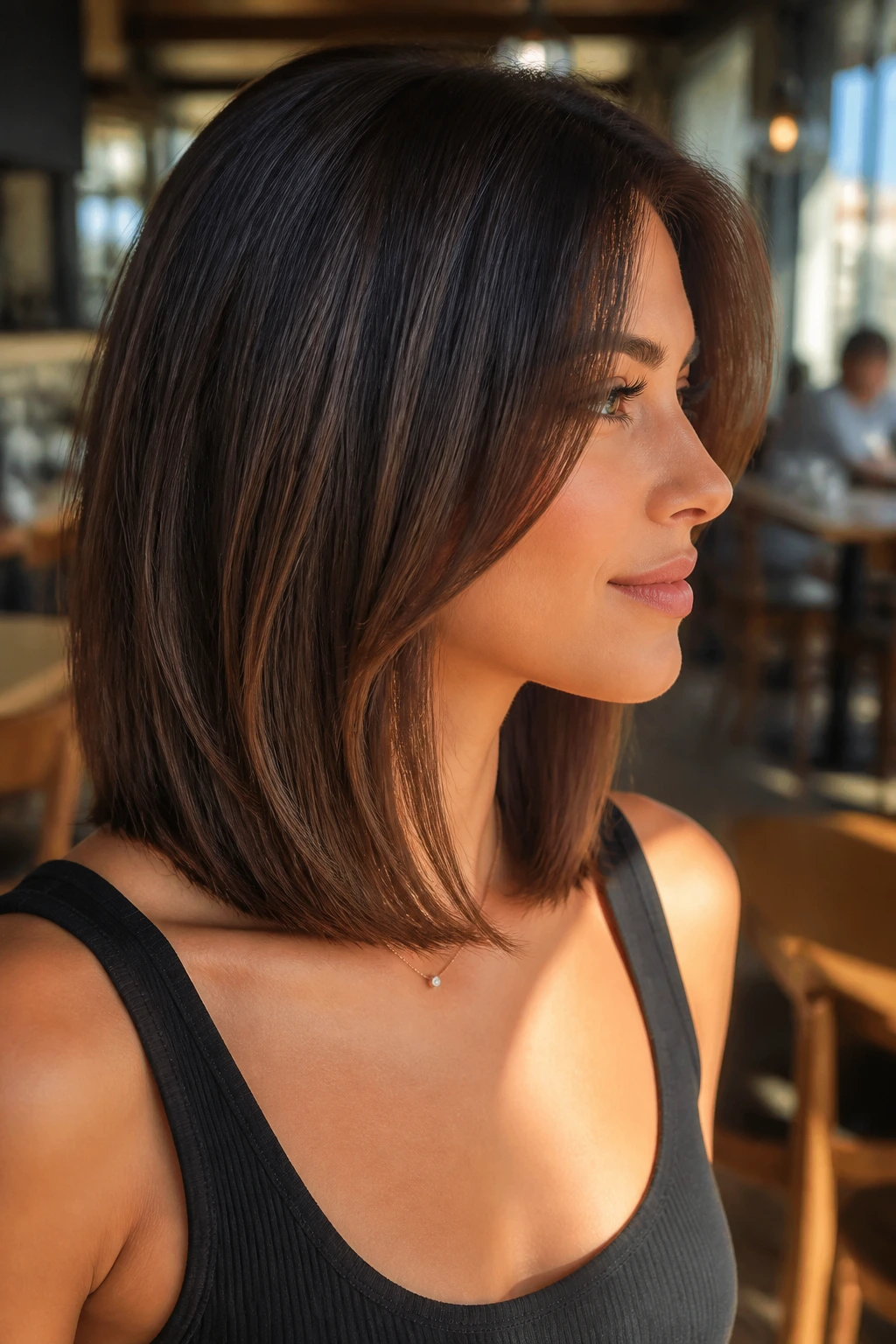
A blunt lob sounds safe until thick hair turns it into a box. The collarbone lob with internal layers solves that by keeping the outer line clean while removing weight inside the shape. From the outside, it still looks polished. Underneath, the hair has room to breathe.
That hidden layering is the real trick. It keeps the lob from puffing out at the jaw or flipping into a triangle, which thick hair loves to do when left alone. The perimeter stays strong, so the haircut still looks intentional and neat, but the density is redistributed where it counts.
This is one of my favorite layered cuts for thick hair volume if you want something easy to wear and easy to style. It doesn’t need a lot of effort to look finished. A quick blow-dry with a paddle brush can be enough.
Ask your stylist to keep the face frame at the jaw or just below it, and to avoid over-thinning the bottom. The goal is movement, not wispy ends.
7. Curly Dry-Cut Layers
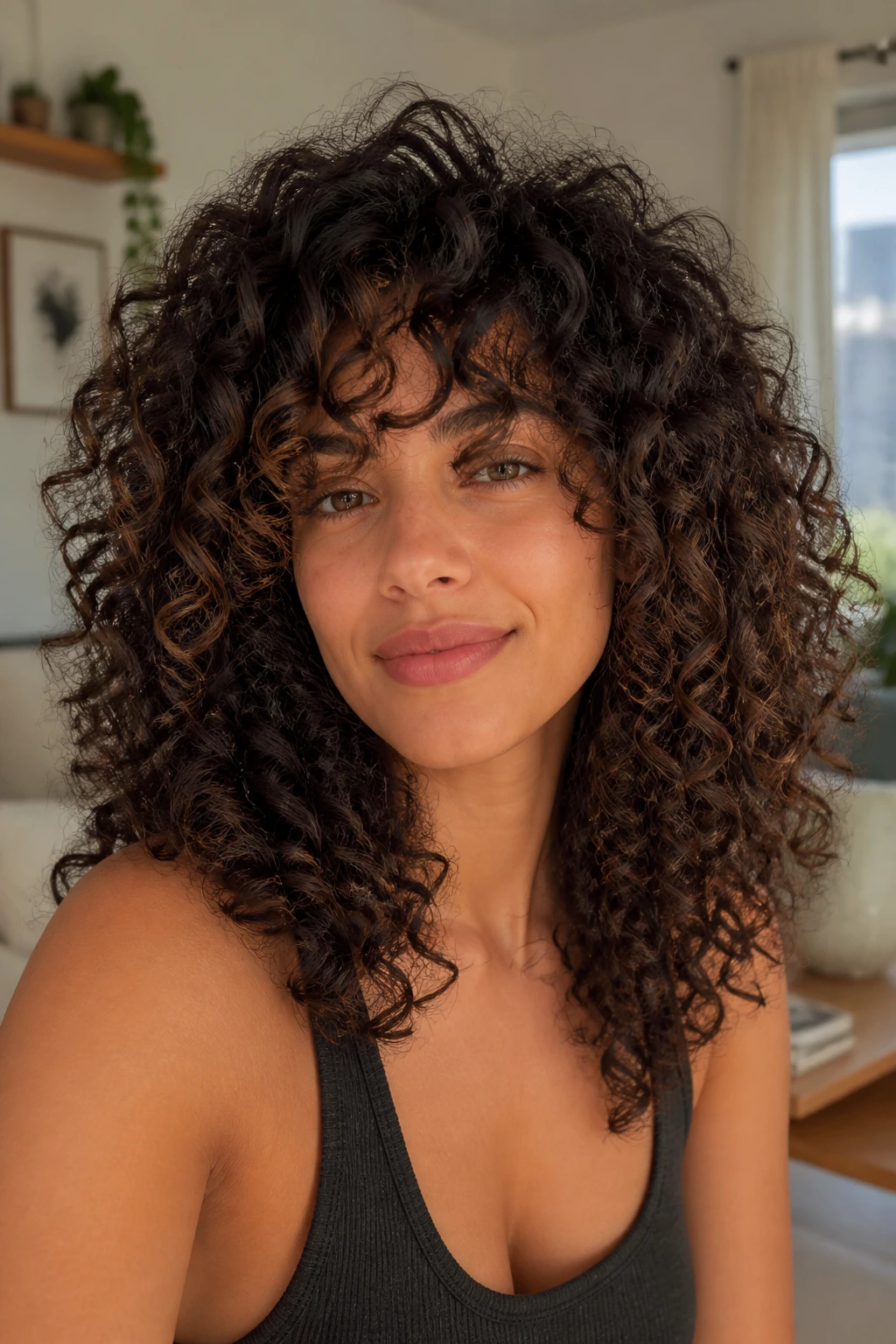
Curly thick hair needs a different kind of respect. Dry cutting matters because curls shrink, and shrinkage can turn a sensible layer into a surprise chop if the hair is cut wet and stretched. A dry cut lets the stylist see where each curl lives in its natural state, which makes the shape more honest.
Why Dry Cutting Matters
A curl-by-curl approach keeps the layers from stacking too high in one spot. That’s the whole game. Thick curls can balloon fast if the cut ignores how the curl falls and clumps.
- Go in with your hair worn the way you usually wear it.
- Ask for layers that respect your curl pattern and shrinkage.
- Keep the perimeter strong so the shape doesn’t go fuzzy.
- Use a diffuser on low heat and low speed.
This cut is not the place to chase perfect symmetry. Curls move. They bunch. They spring in their own direction. A good dry cut works with that instead of trying to flatten it into obedience.
8. Razor-Cut Choppy Layers
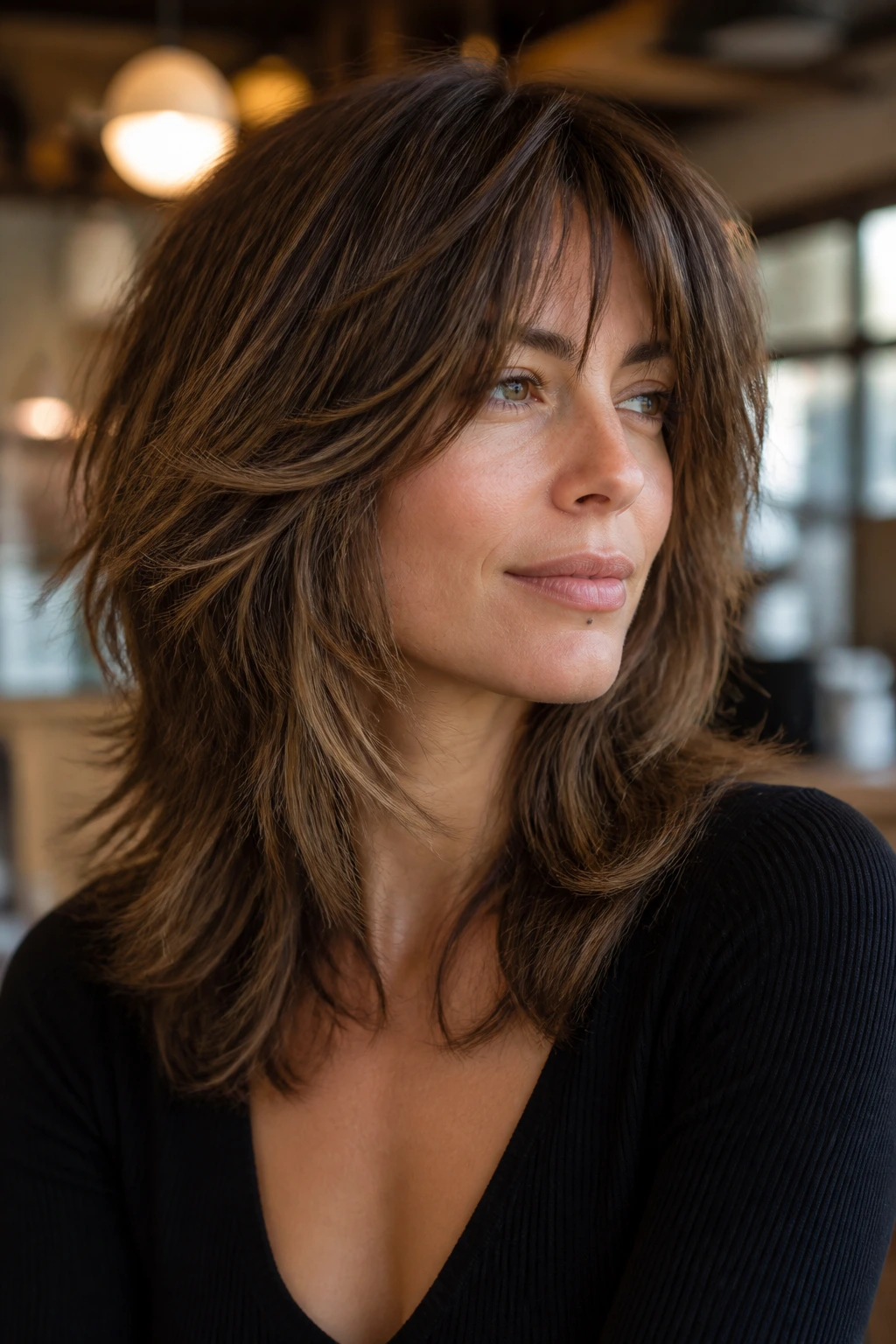
A razor can make thick hair feel lighter fast, but it needs a hand that knows when to stop. Razor-cut choppy layers soften the edges of the hair, creating a piecey, airy look that can be really good on dense straight or wavy hair. The finish feels less solid, more broken up, and often a little more casual.
That casual part is the point. Thick hair sometimes benefits from looking a bit undone, because too much precision can make it feel stiff. A razor cut lets the ends separate, which can keep the style from looking too heavy around the face or collarbone.
I would not hand this to just anyone if your hair is coarse or frizz-prone. Over-razored thick hair can get fuzzy at the ends and lose shape quickly. A good stylist will use the razor only where it adds air, not as a shortcut for removing bulk everywhere.
If you like texture spray, finger styling, and a little mess, this cut has real charm. If you want sleek and tidy every day, skip it.
9. Soft Round Layers
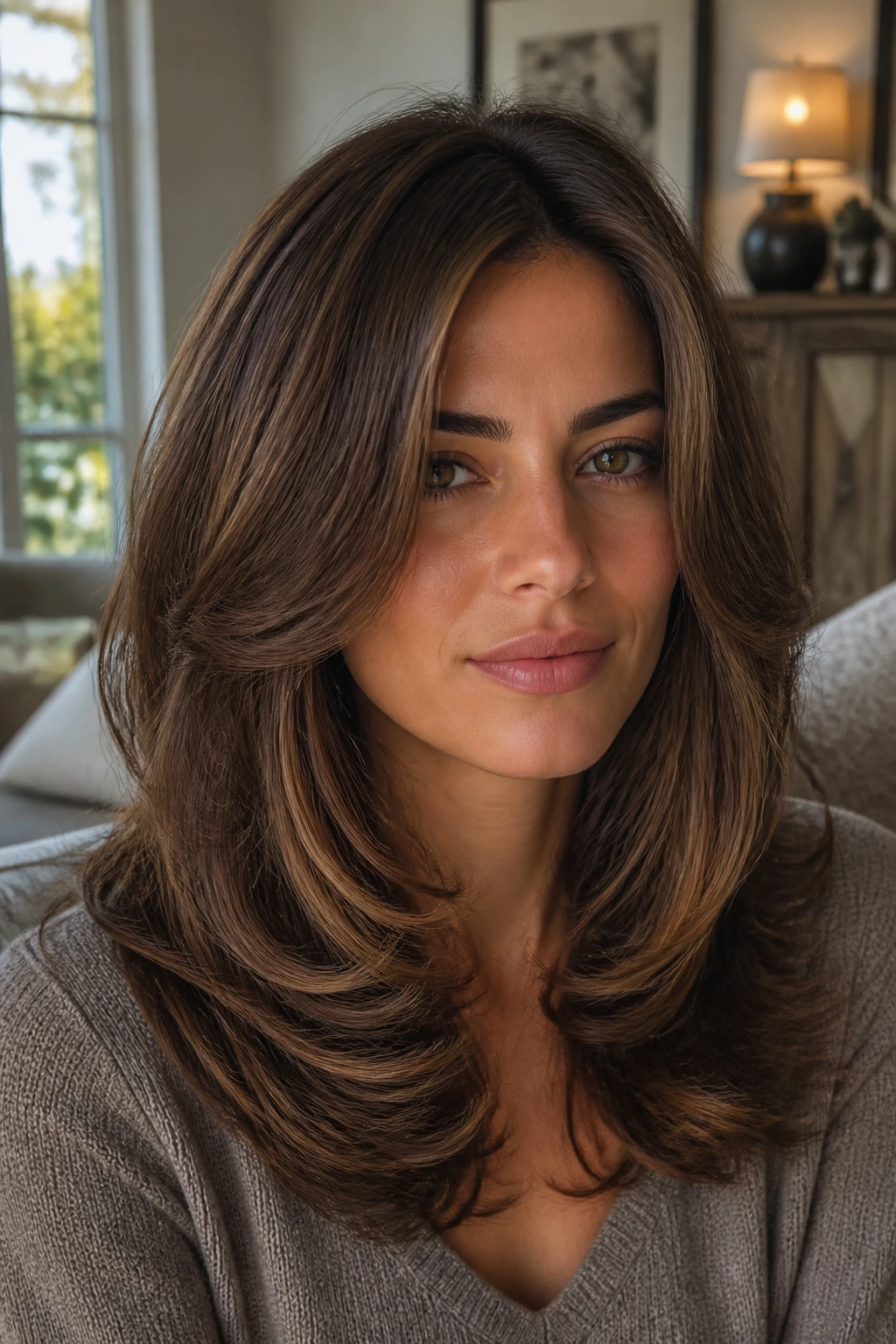
Want volume without hard corners? Soft round layers are the move. The shape follows the curve of the head and the natural fall of the hair, so the whole cut feels lifted but gentle. Thick hair likes this because the roundness stops the ends from jutting out in a blunt line.
How to Get the Curve Right
Ask for the shortest pieces to sit around the mouth or chin, then let the layers grow longer in a smooth arc toward the back. That creates a rounded silhouette instead of a boxy one.
This style is especially good if your hair is straight and heavy, because straight thick hair can look stubborn when the cut is too geometric. A round shape gives it softness without taking away the density that makes the hair look full.
A medium round brush or jumbo rollers can bring the shape forward nicely. But even air-dried, the cut should read as balanced rather than wide. That is the real test.
10. Invisible Layers
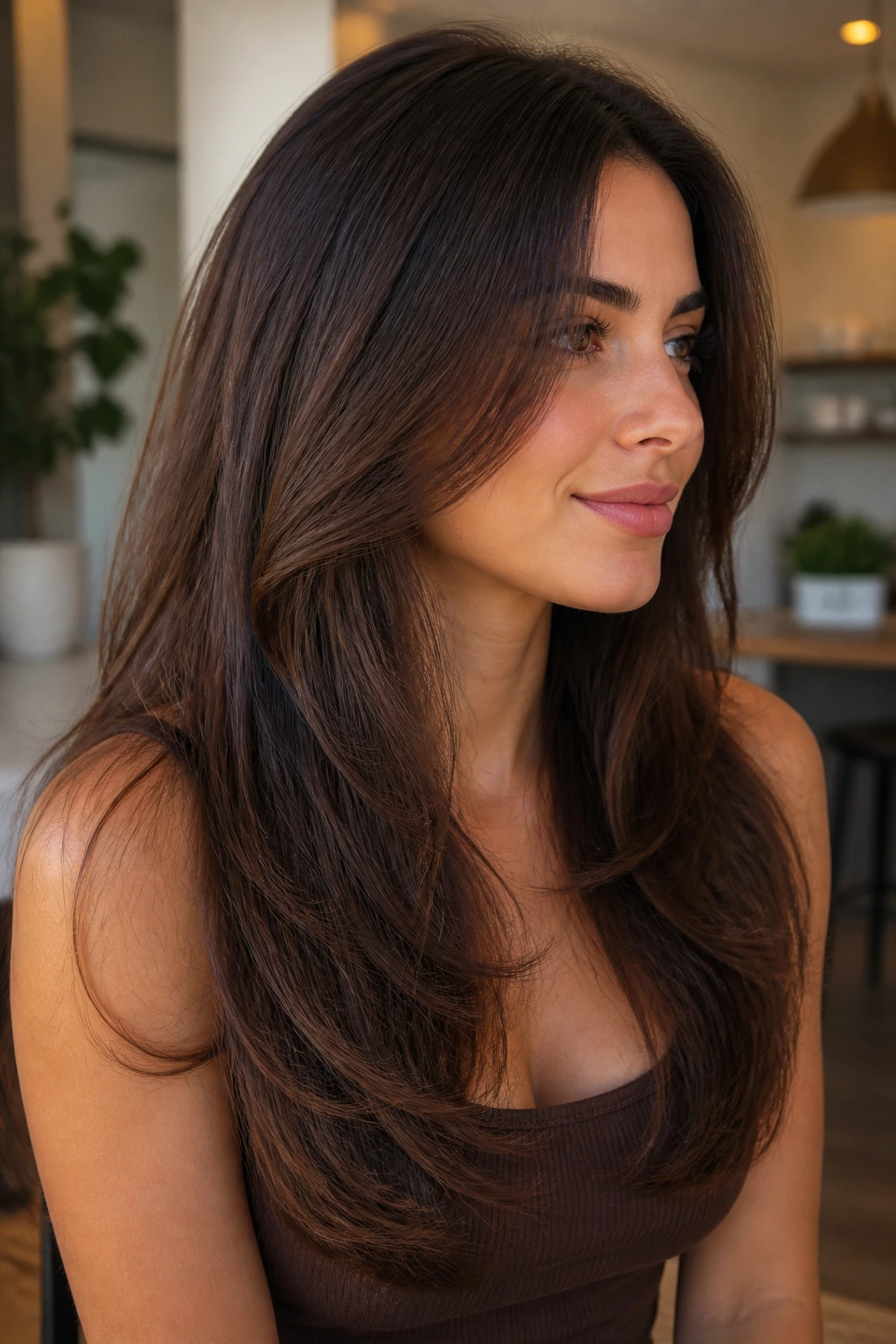
Invisible layers are the cut people don’t notice until the hair starts moving. The surface can still look blunt and sleek, but the inside has weight removed in a way that keeps the outline cleaner. That makes them a smart option if you want thick hair to look smooth instead of obviously chopped.
The beauty of invisible layers is that they reduce bulk without advertising the fact. Hair stays full at the ends, which matters if you like a polished finish or don’t want every layer to shout for attention. The shape is subtle, but the comfort is not.
- Great for people who like a clean outer line.
- Ask for internal layering rather than aggressive texturizing.
- Works well on hair that is thick at the ends but flat on top.
- Keep styling simple: smoothing cream, blow-dry, done.
I especially like this approach for people who wear their hair to work, to dinner, and to everything in between. It doesn’t ask much. It just makes the hair behave better.
11. Curtain Bangs with Cascading Layers
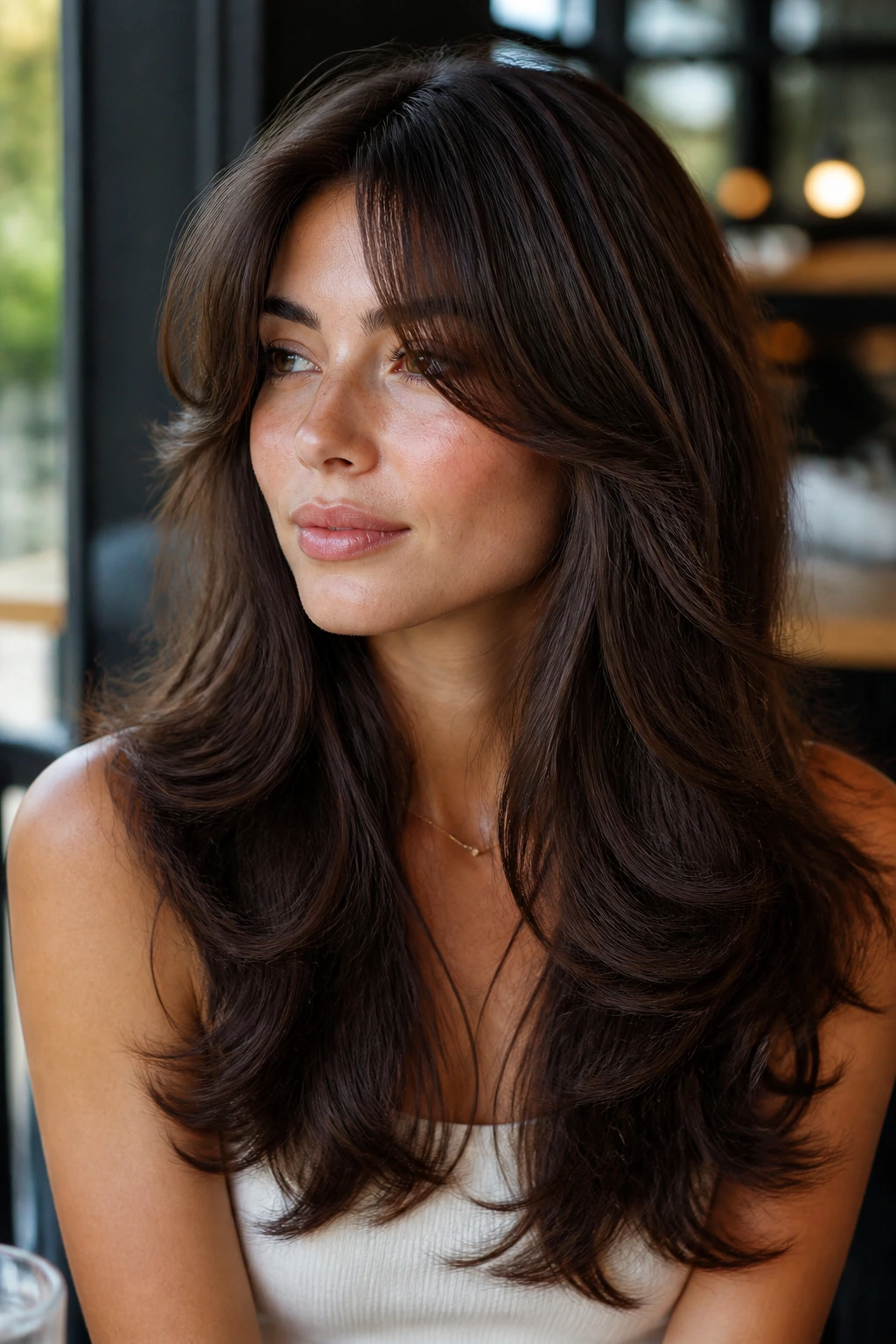
Curtain bangs can be a smart move for thick hair because they break up the front without forcing you into a full fringe. The parting falls away from the face, and the bangs blend into longer layers that drape down the sides. That keeps the front light and soft while the back keeps its length and body.
This cut lives or dies by the blend. If the bangs are too short or too disconnected, the front can look choppy. If they’re too long, they disappear. The sweet spot is usually somewhere between the cheekbone and the lip, depending on your face shape and how much forehead you want to show.
I like curtain bangs on thick hair when someone wants change without giving up options. You can wear them parted, pinned, swept, or trained into a blowout. They do need a bit of styling, though. A round brush and a quick bend at the front keep them from sitting flat or splitting in a sad way.
Not a low-effort cut. Still worth it.
12. Angled Face-Framing Layers
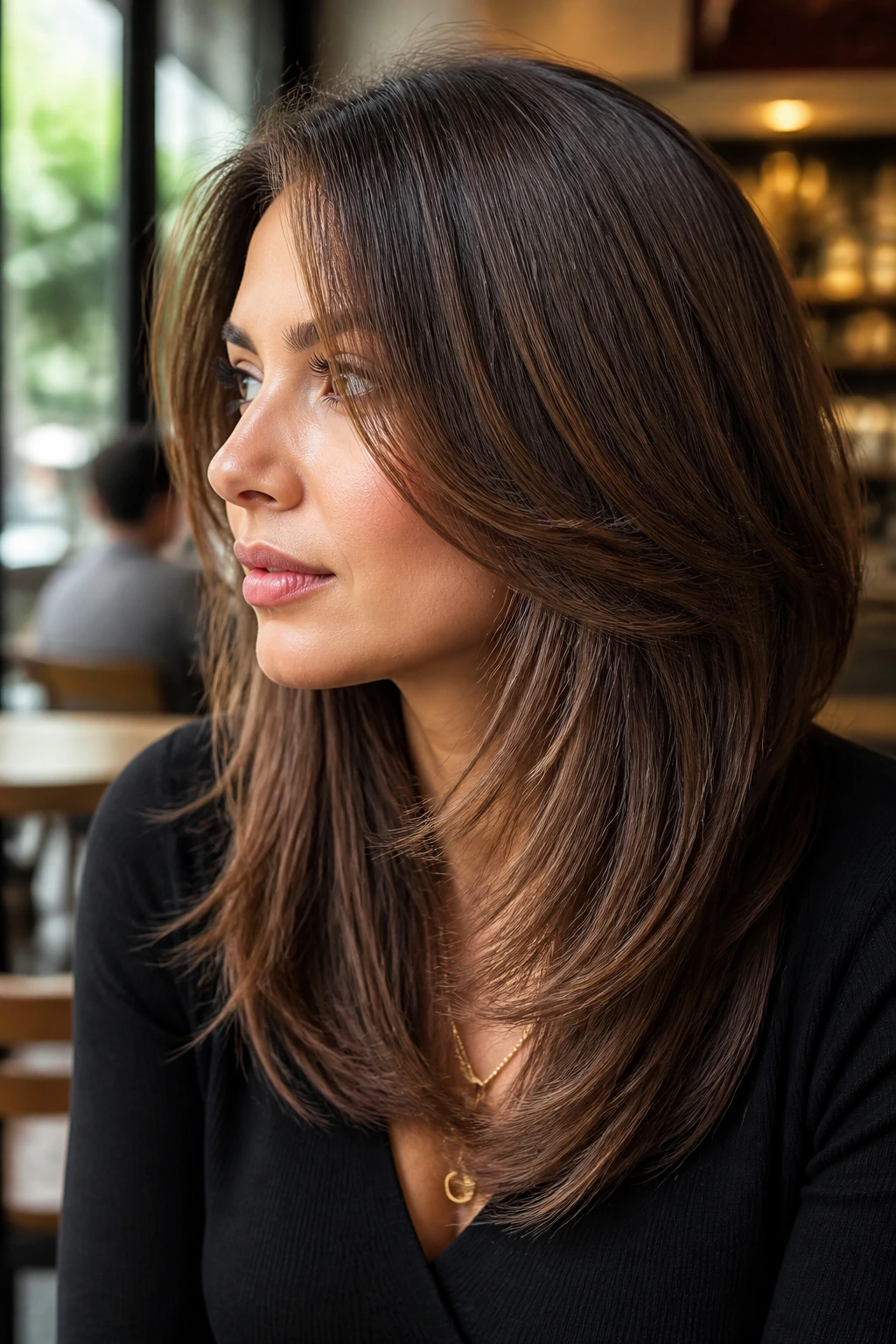
Unlike bangs, angled face-framing layers stay out of your eyes and still soften a heavy outline. They start higher near the cheekbone, then slide down toward the jaw, collarbone, or even lower. On thick hair, that angle can pull attention inward and make the whole cut feel lighter at the front.
This is a good choice if you wear your hair in ponytails, half-up styles, or clips a lot. The front still has shape when the hair is down, and it still has movement when it’s pulled back. That’s a nice trade. Some layers only look good loose; these keep their job no matter what you do with them.
I’d ask for the shortest piece to land where you want the eye to go first. Higher if you want drama. Lower if you want softness. And keep the angle gradual, not steep, or the front can feel too chopped for thick hair that already has a lot of presence.
Simple. Useful. Hard to mess up if the stylist respects the line.
13. Stacked Mid-Length Layers
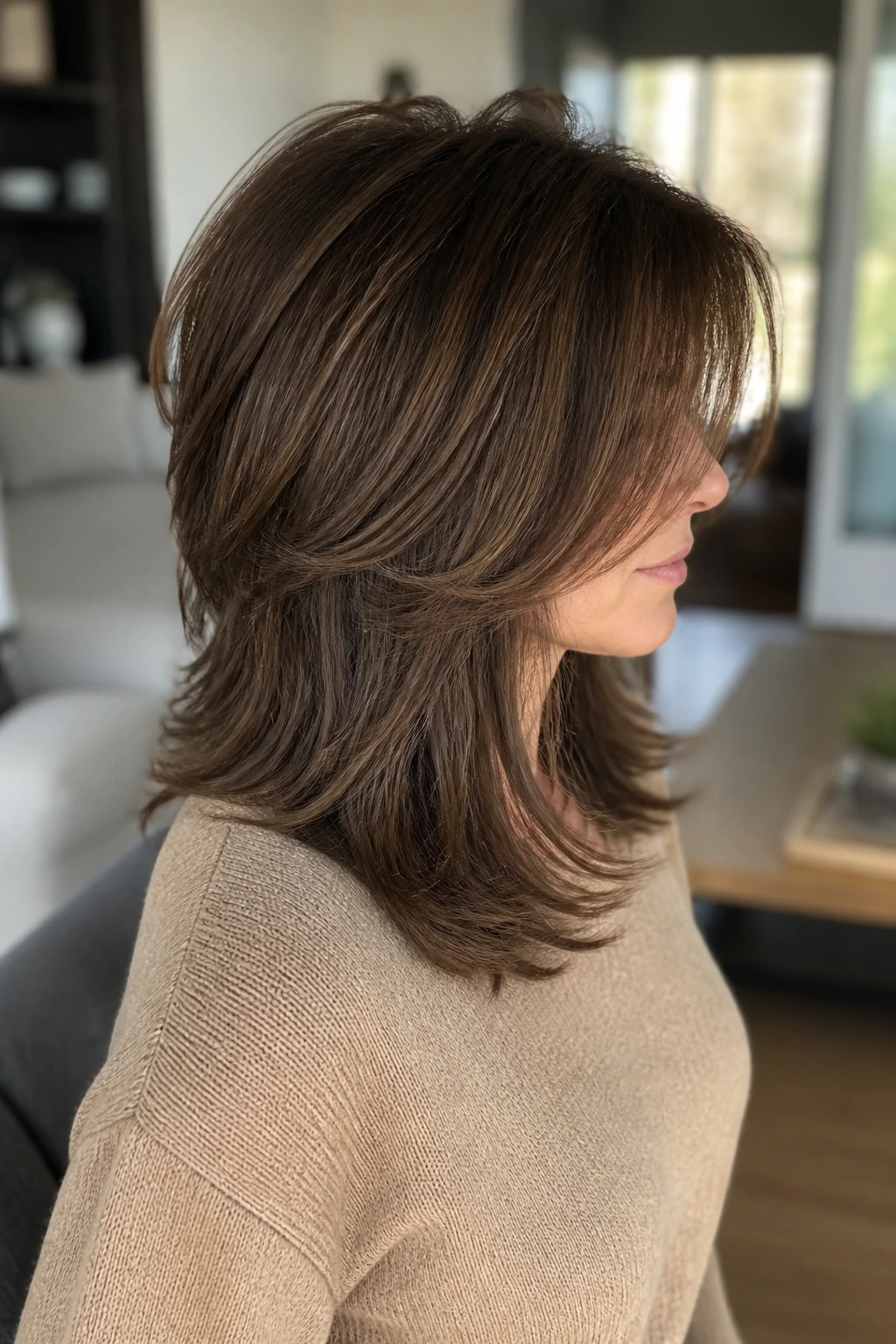
A stacked mid-length cut is one of the best fixes for thick hair that goes flat at the crown and puffs out at the bottom. The stacking lives in the back, where the hair is lifted in small steps so the crown gets more air and the lower sections lose some bulk.
The Lift Lives in the Crown
This is the cut you reach for when your hair feels heavy at the back of the head. The short-to-long progression creates shape where density tends to sit like a weight belt.
- Ask for stacking through the upper back and crown only.
- Keep the bottom perimeter long enough to avoid a mushroom shape.
- Use root-lift spray before blow-drying.
- Round-brush the crown upward, not backward.
The nice thing about this shape is that it doesn’t need a dramatic face frame to work. The structure is doing the heavy lifting behind your head, where people often forget to look. That’s also why it feels more tailored than trendy. It solves a problem without making a fuss.
14. Bouncy Shoulder-Length Layers
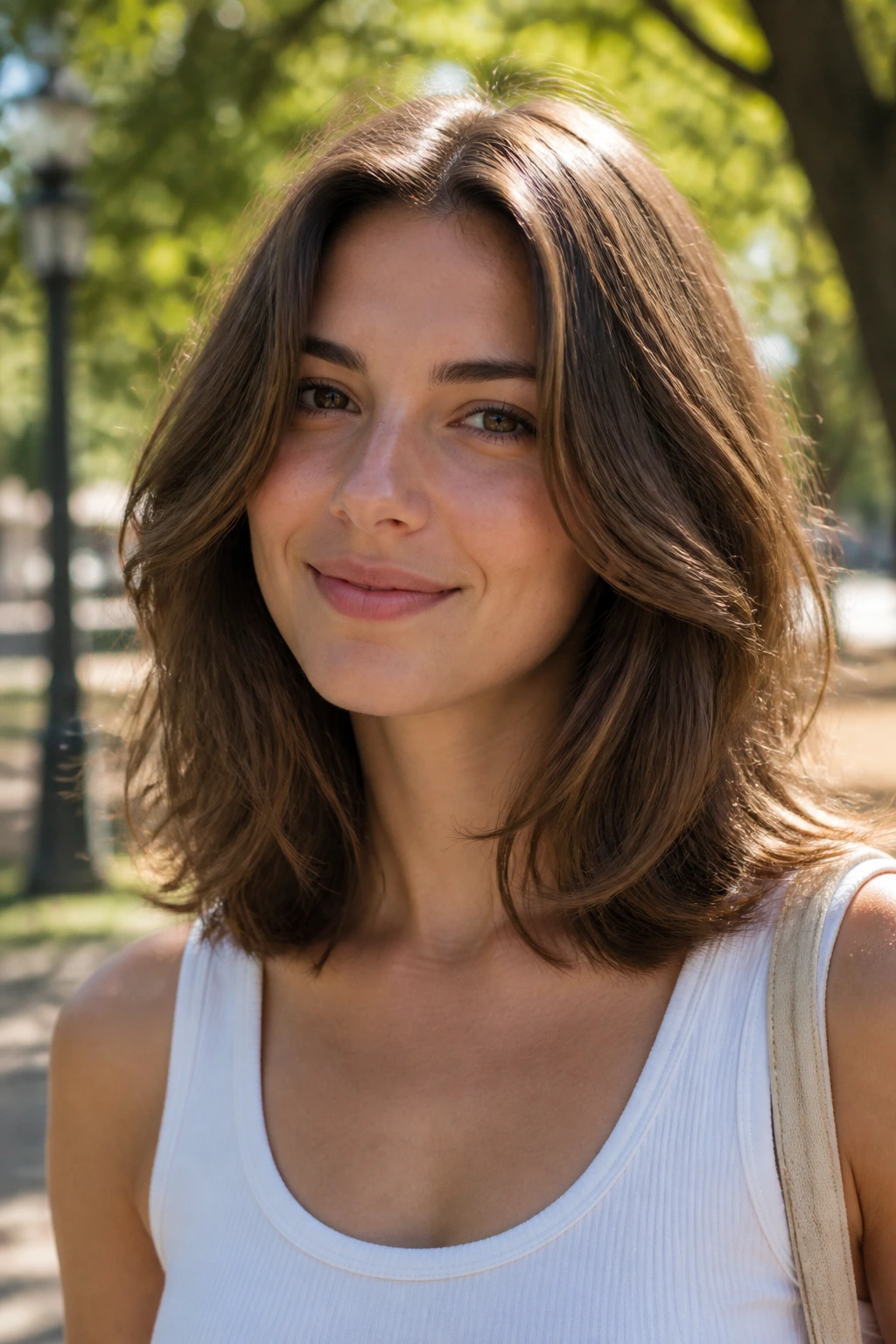
Shoulder length can be tricky on thick hair because the ends hit that awkward zone where they kick out, flip under, or sit in a heavy shelf. Layers change the story. Once the cut has movement built in, shoulder-length hair can bounce instead of swelling.
This is one of those cuts that looks simple until you see how much better the hair behaves. The layers let the ends separate a little, so the whole shape feels airier. I especially like it for thick hair that has some wave, because the movement shows up fast and the style can still be worn straight, curled, or rough-dried.
Ask for the longest pieces to skim the shoulders and the inner layers to start just above that line. If the cut ends exactly at the shoulder with no shaping, the hair can flip in a way that feels accidental. A little softness solves that.
It’s a dependable haircut. Not flashy. Very useful.
15. Wolf Cut
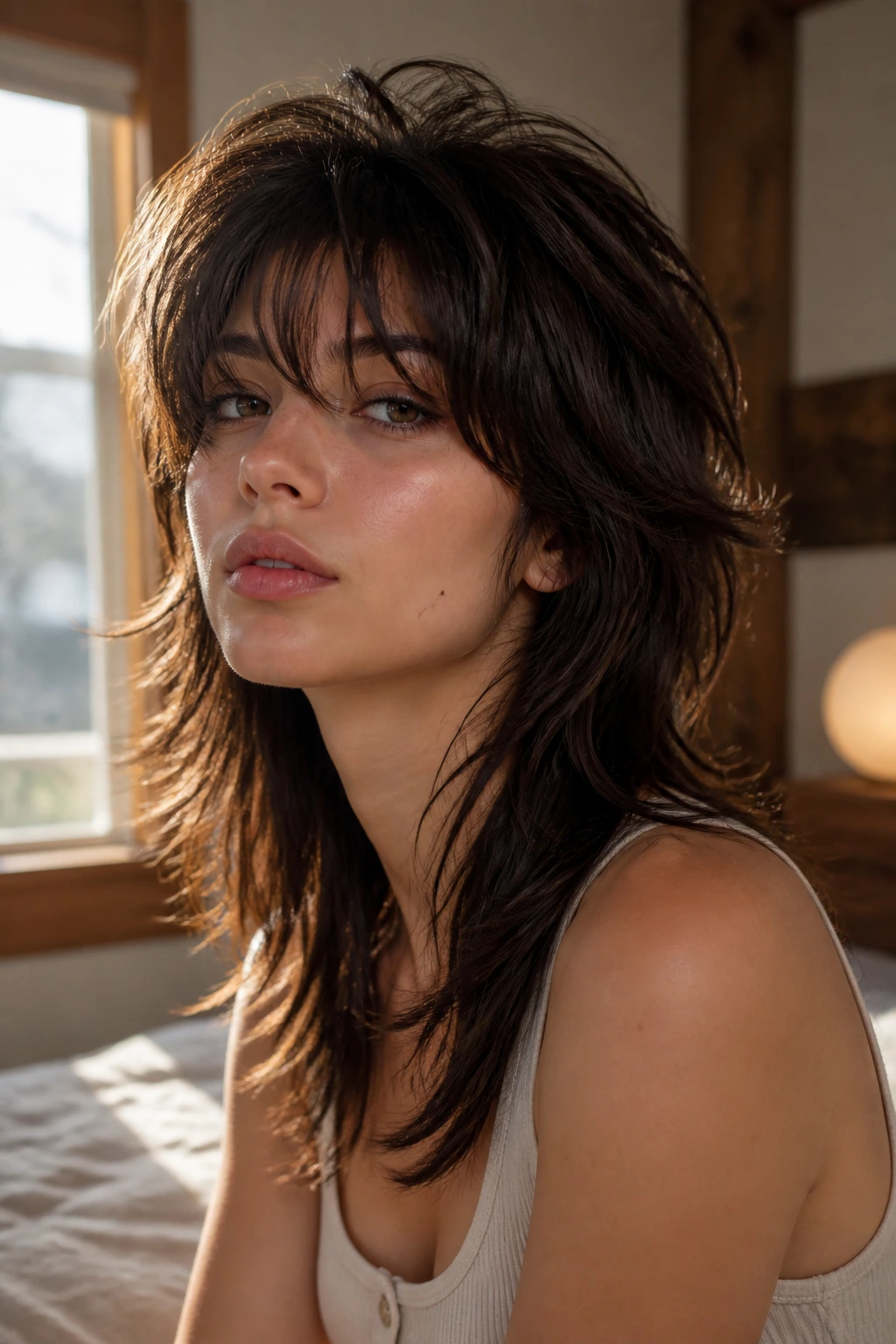
Can a wolf cut work on thick hair without looking wild for the sake of it? Yes, but only if the shape is controlled. The wolf cut mixes shag energy with a longer, looser back, so the crown gets volume and the ends keep a little length. On thick hair, that can be a real advantage, because the cut uses density as part of the style instead of trying to remove it all.
How to Keep It Wearable
The mistake is taking too much off the top and leaving the rest disconnected. That makes the cut look lopsided. Better to keep the crown textured, not over-shorn.
- Keep the back length longer than you think.
- Ask for softer blending around the sides.
- Use a texturizing cream, not a crunchy paste.
- Let the haircut look a little messy. That’s part of the point.
I’d recommend this cut to someone who likes air-dried hair with personality. If you want neat edges and tidy polish every day, this is probably not your shape. If you like a little chaos, it can be a lot of fun.
16. Long Layers with Tapered Ends
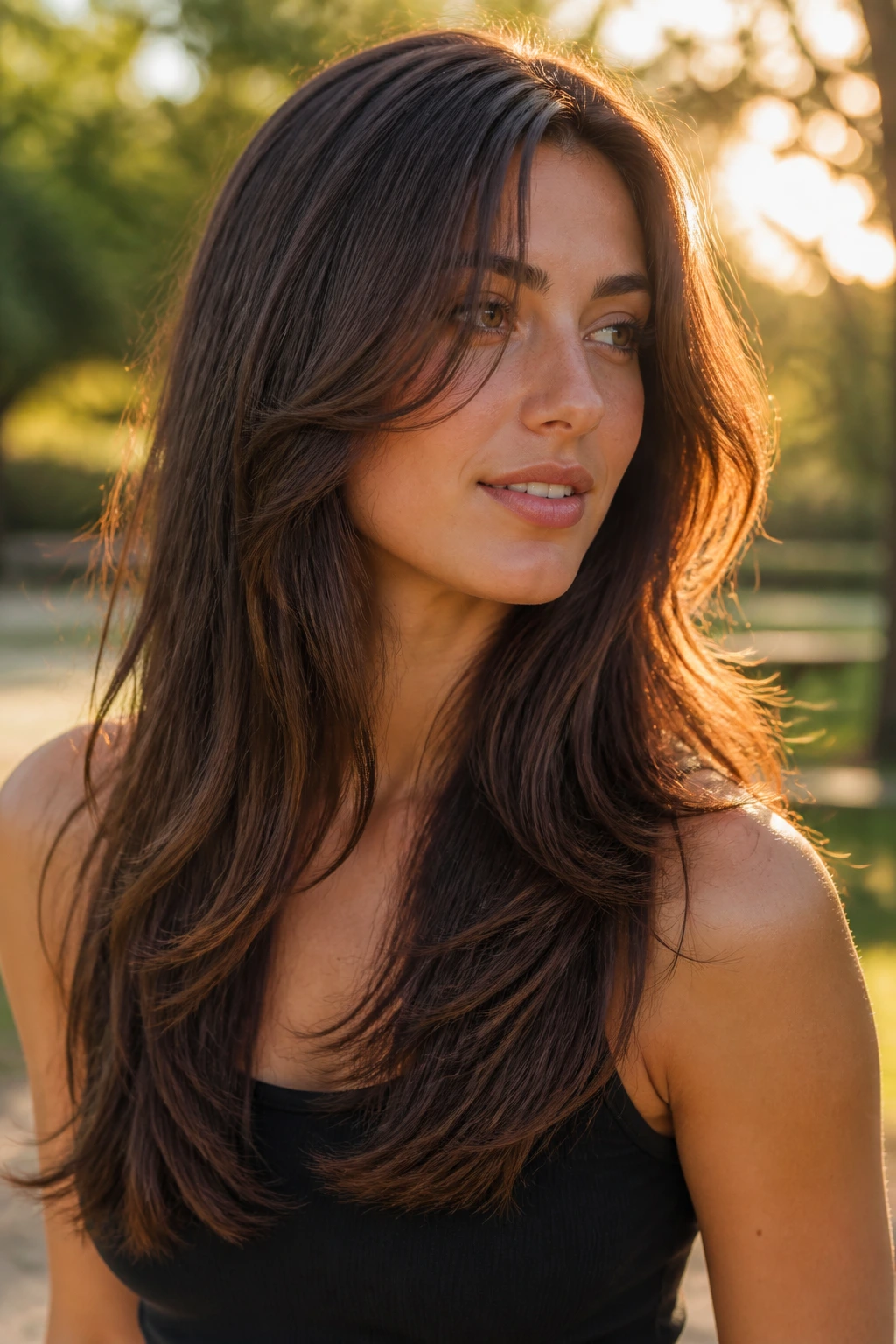
Some thick hair needs less drama, not more. Long layers with tapered ends keep the length and trim away the heaviness little by little, especially near the bottom two or three inches. The effect is subtle, but thick hair often looks better when the change is subtle.
This cut is great if you wear your hair up often or want the longest possible look without the blunt heaviness at the ends. Tapering helps the hair fall more softly over the shoulders, and it keeps the lower line from looking like a wall. That matters more than people think.
- Keep the perimeter long and full.
- Taper the last 2 to 3 inches instead of carving into the whole shape.
- Add a slight face frame if the front feels too dense.
- Best for low-maintenance styling and length preservation.
This is the haircut I’d hand to someone who says, “I want a change, but not a lot of change.” Fair request. Good haircut.
17. Layered Bob with Underlayers Removed
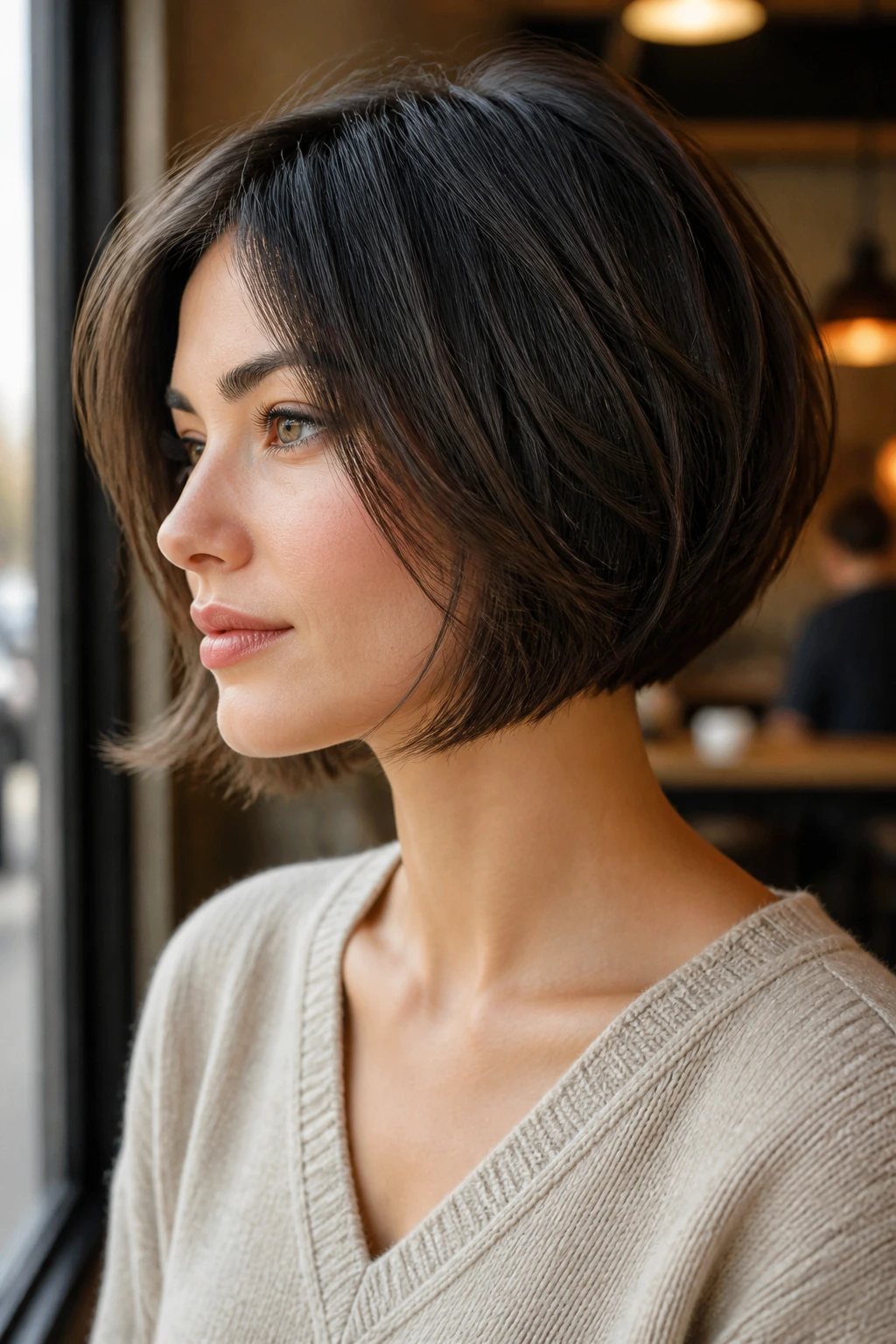
A layered bob with underlayers removed is a sharp answer for thick hair that feels too heavy at the neck. The outside can still read as a bob, clean and compact, while the inside has enough weight taken out to let the hair sit closer to the head. That stops the puff-out effect that makes some bobs look wider than they should.
The beauty of this cut is the contrast. The line looks controlled. The movement feels freer. Thick hair gets to keep its richness, but it loses the bulky center that can make short hair feel stiff. I like it best at jaw length or just below the chin, depending on how much neck you want to show.
This cut does ask for upkeep. Short hair always does. But the payoff is big if you’re tired of long thick hair dragging you down or turning every humid day into a shape puzzle.
A strong blow-dry helps, though the cut should still behave without a perfect finish.
18. Piecey Midlength Layers
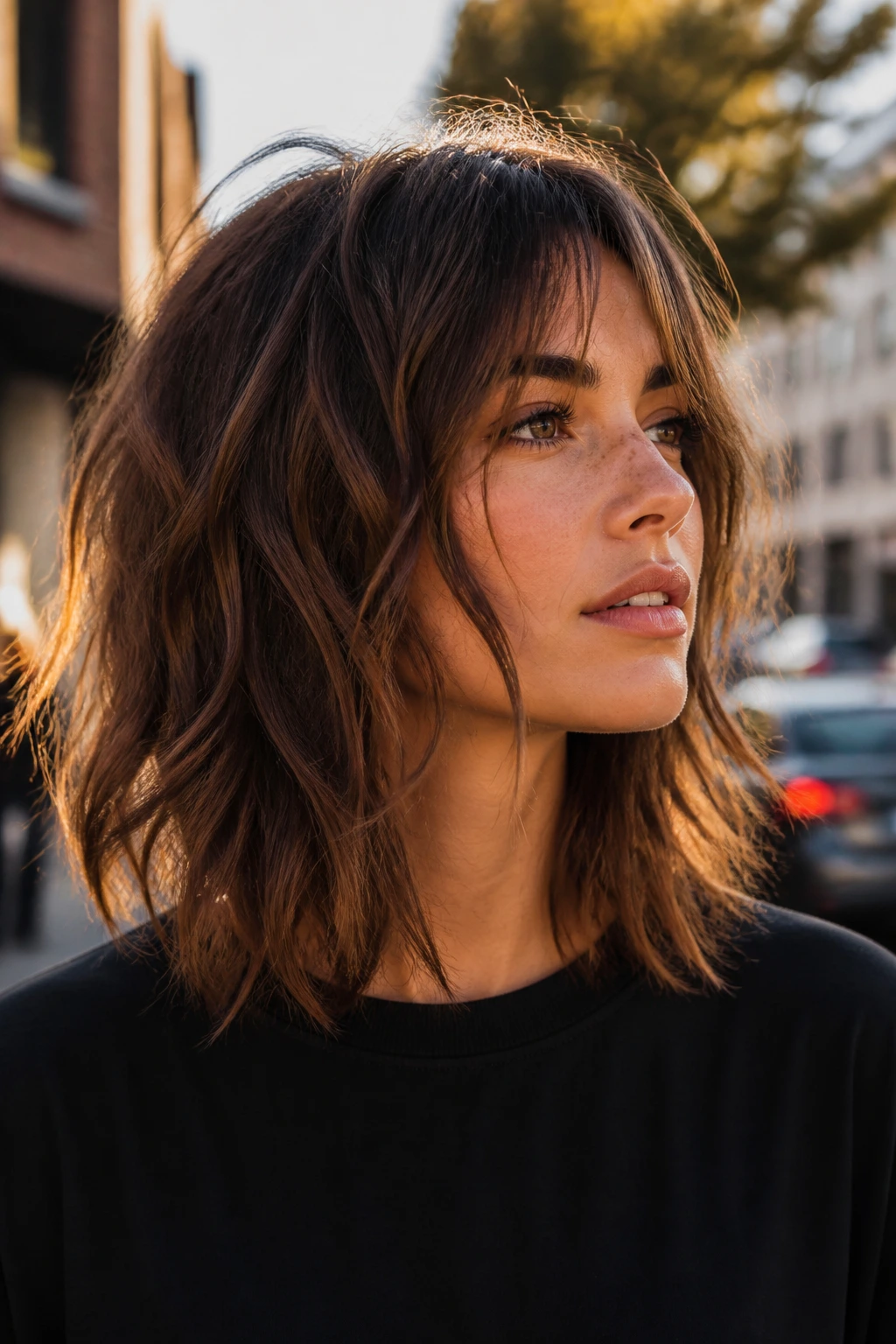
Piecey is not the same as feathered. Feathered softens the whole shape; piecey layers break the hair into separate sections that read as texture first and softness second. Thick hair can handle that separation because the density keeps the pieces from disappearing.
This cut works especially well if your hair already has some wave or bend. The layers can fall into visible chunks, which gives the style a little grit and a little movement. It’s also a good match for hair that looks too smooth and heavy when left alone. A piecey cut gives the hair edges to grip.
I’d use a light cream or paste on damp hair, then scrunch or twist a few sections with your fingers. A brush can flatten the effect fast, so this one likes hand styling more than fussing. If you want a haircut that feels relaxed but still shaped, this is a strong contender.
It’s a little cooler, a little less polite. I mean that in the nicest way.
19. S-Curve Layers
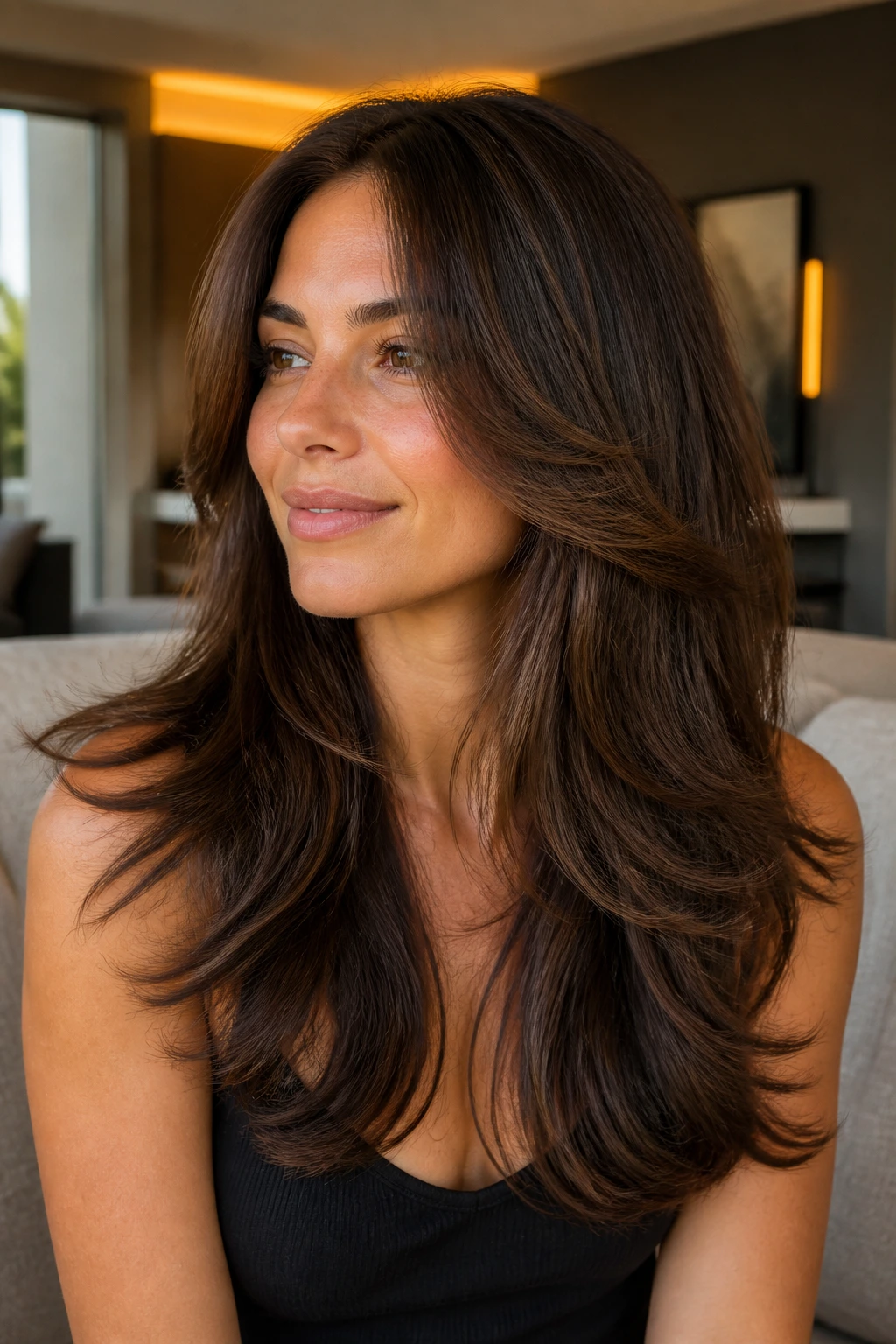
S-curve layers create a bend that starts soft near the cheek and flows down through the mid-lengths instead of dropping in one straight line. On thick hair, that curve keeps the outline from feeling stiff or too wide. The hair moves in a shape that feels lived-in, not forced.
Why the Bend Matters
Straight thick hair can look heavy because it lacks a change in direction. The S-curve adds that change without needing curls or a strong blowout.
- Ask for layers that fall in an S-shaped line around the front.
- Keep the back longer so the curve has somewhere to flow.
- Style with a 1.25-inch iron or large rollers if you want the bend to show.
- A light glossing cream helps the finish stay smooth.
This cut is a good middle ground between soft and polished. It doesn’t scream “layered,” but it also doesn’t sit there like a sheet. That restraint is part of the appeal.
20. Graduated Layers for Maximum Lift
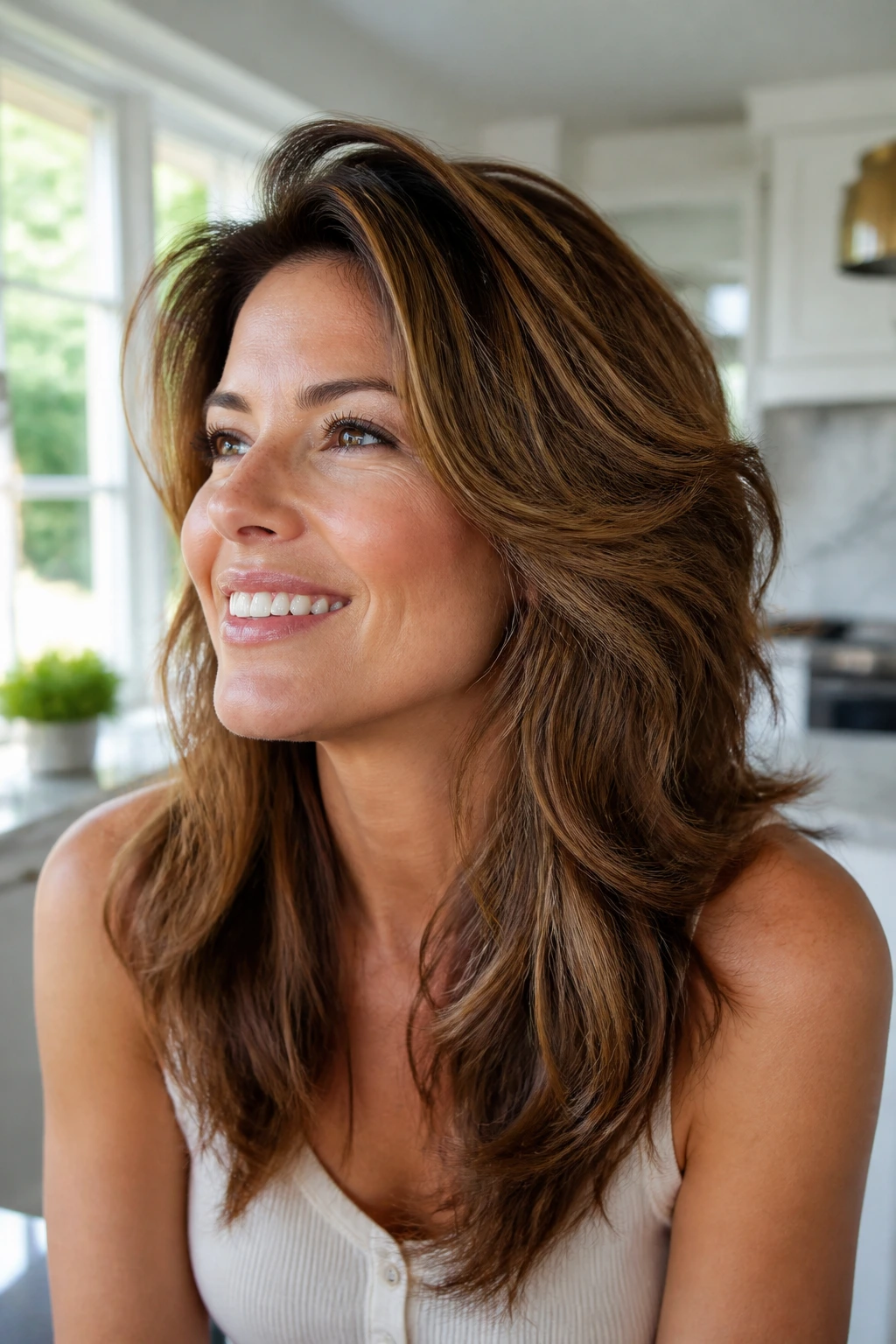
Graduated layers are the most direct answer when thick hair feels heavy at the crown and too solid through the back. The shorter layers build up toward the top, then blend into longer pieces below, so the cut has lift built into it from the start. It’s a stronger shape than invisible layering, and that’s the point.
The danger is overdoing it. Too much graduation can make thick hair puff out like a helmet, especially if the top layers are cut too short or too bluntly. The sweet spot is a soft rise through the back with enough length left at the perimeter to keep the shape grounded.
This is the cut I’d choose for someone who wants the hair off the neck, wants real volume at the crown, and does not mind styling. A root-lift mousse, a round brush, and a few minutes of drying make a difference. Without that, the shape can lose some of its lift.
When graduation is done well, thick hair stops feeling like a weight and starts feeling like architecture. That’s the whole trick.
And if you want the shortest route to a better haircut, start by choosing the cut that respects where your hair is heaviest. That one choice changes everything else.
