



Thick hair and a blunt bob can be a messy marriage. For about ten minutes, it looks sharp. Then the bulk kicks in, the ends puff out, and the whole shape starts behaving like a helmet with opinions.
A good layered bob changes that fast. It takes weight out where the hair needs to breathe, keeps enough length to feel polished, and gives the cut room to move instead of sitting there in one heavy block. The difference is not subtle. The right layering can make dense hair swing, bend, and sit closer to the head without making it look thin or fussy.
The catch is that layering thick hair is not a one-size-fits-all job. Too much slicing and you get frayed ends, especially if the hair is coarse or wavy. Too little and the bob grows out into a triangle before you’ve had time to enjoy it. Placement matters more than drama. A few inches of weight removal in the crown can lift the whole shape, while softer layers around the jaw can stop the cut from ballooning at the sides.
Some of the styles below lean sleek. Others are messy in the good way. All 25 are built to work with thick hair, not fight it.
1. The Chin-Length Layered Bob That Keeps Bulk Away From the Jaw

A chin-length layered bob is one of those cuts that makes thick hair look more expensive than it has any right to. The length lands right where the jaw starts to narrow, so the hair doesn’t drag everything downward or puff out at the bottom. That’s the sweet spot.
Why it works on dense hair
The trick is controlled layering, not a lot of chopping. Ask for soft internal layers through the mid-lengths and a perimeter that still feels full. That keeps the bob from turning see-through at the ends, which is where a lot of thick-hair cuts go wrong.
- Best for straight, wavy, or barely curly textures
- Ask for 1 to 2 inches of weight removal through the interior
- Keep the bottom line blunt enough to hold shape
- Style with a 1-inch or 1.25-inch brush for a slight bend
Pro tip: If your hair grows wide at the sides, tuck the front pieces slightly forward when blow-drying. It narrows the outline without making the cut look severe.
2. The Stacked Bob With a Lifted Crown

If your hair feels heavy at the back, this is the cut that gets that weight under control. A stacked bob uses shorter graduation in the back to build a lifted shape at the crown, which is a smart move when thick hair wants to collapse into one block. You get height without having to tease it into place every morning.
The back should not be choppy. That’s where people get into trouble. Ask for a clean, graduated stack that starts low at the nape and rises gradually toward the occipital bone. If the top is cut too short, the whole style can look puffy instead of sculpted.
This version shines on hair that feels dense through the back of the head and flatter on top. It gives you a neat curve from crown to nape and keeps the sides from spreading too wide. On straight thick hair, it can look crisp. On a slight wave, it looks fuller in a good way.
3. The Collarbone Lob With Hidden Internal Layers

Why do some thick-haired lobs look sleek while others look like they’re trying to escape the head? Usually, the answer is where the layers live. A collarbone lob with internal layers keeps the outside line long and smooth, while the inside loses enough bulk to let the hair move.
What makes it different
This cut does not shout. That’s the point. The outer edge stays almost one-length, which is useful if you like a clean outline, but the interior has careful removal through the mid-shaft. You get a lighter feel without losing the weight that makes thick hair look rich.
It’s a solid choice if you want a cut that can be tucked behind the ear, worn sleek, or bent with a round brush. The collarbone length also gives you a little insurance. If you hate how short bobs kick out at the ends, this length calms that down fast.
How to style it
A middle part makes the shape feel calm. A soft side part gives it a little lift at the root. Either way, keep the ends controlled with a light cream, not a heavy oil that makes the cut sit flat.
4. The French Bob With Soft Fringe

Picture thick hair cut to lip or cheekbone length, with a soft fringe brushing the brow. That’s the French bob, and it has a nice way of turning a lot of hair into something airy and deliberate instead of bulky.
The fringe matters here. It should be soft enough to move, not cut into a hard shelf across the forehead. Point-cutting the ends helps, especially if your hair grows dense around the front hairline. A blunt bang on thick hair can feel like a wall. Nobody needs that.
- Keep the length around the chin or slightly above
- Ask for fringe that skims the brows, not a solid block
- Use a blow-dryer nozzle and a small round brush at the front
- Finish with a light spray so the ends stay piecey
This cut is especially good if you like makeup, earrings, or a little neck exposure. It frames the face without swallowing it.
5. The Angled Bob With Longer Front Pieces
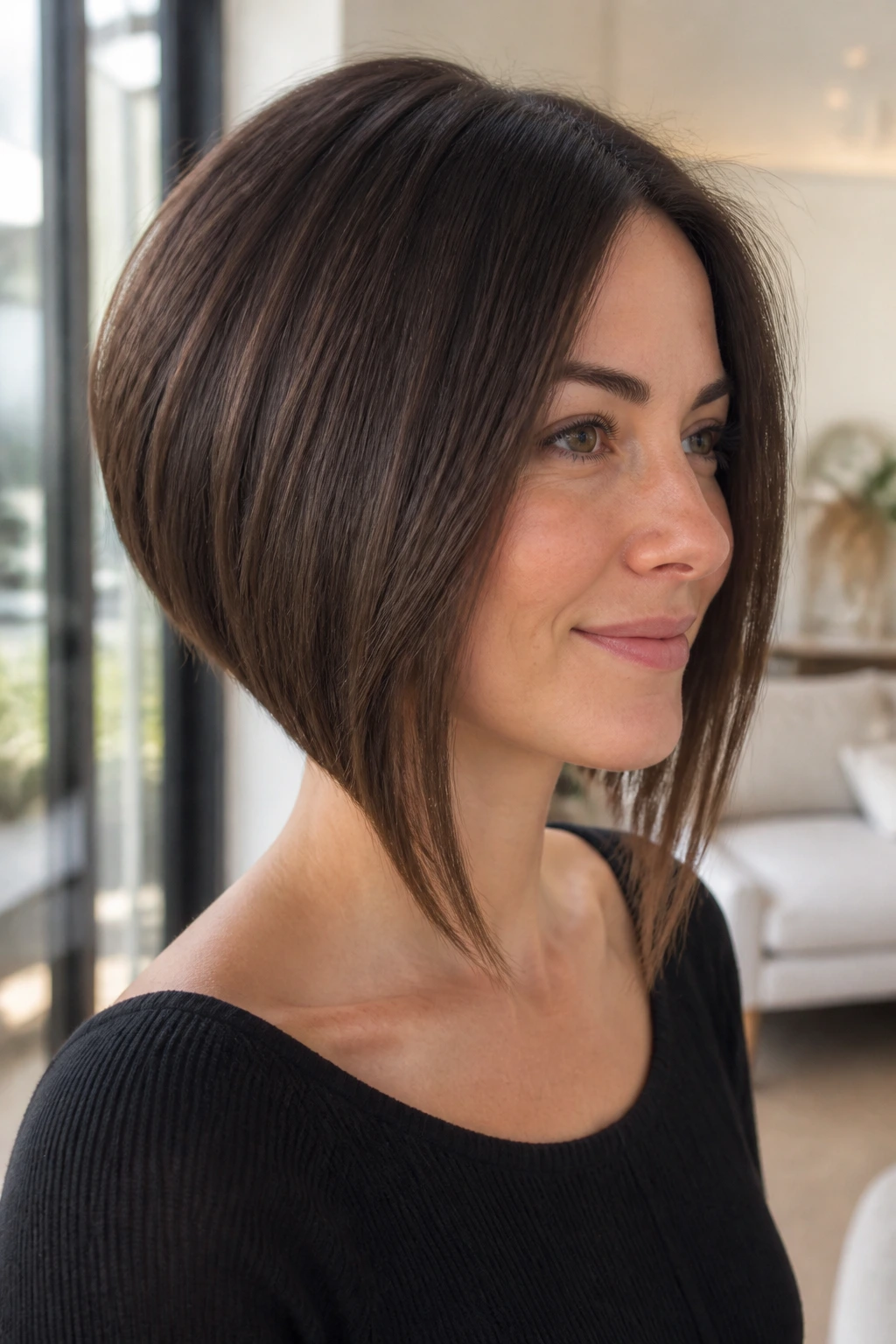
An angled bob does a lot of quiet work. The back sits shorter, the front drifts longer, and that diagonal line helps thick hair lie flatter instead of flaring out around the shoulders. It is one of the best shapes for anyone who wants structure but hates anything too boxy.
The angle should be noticeable, not extreme. A dramatic slope can look sharp in photos and awkward in daylight, especially if your hair is dense and holds shape with a bit too much enthusiasm. A gentle angle is easier to wear and less fussy when it grows out.
This cut also plays well with jawlines that feel broad or square. The longer front pieces pull the eye downward, which softens the width at the sides. If the hair around your face is the heaviest part, this is one of the smartest ways to cut it down without going short-short.
6. The Shaggy Bob With Curtain Bangs

Unlike a neat classic bob, this one is meant to look a little undone. The shaggy bob with curtain bangs breaks up thick hair into softer pieces, and the bangs help open the face so the style doesn’t feel heavy across the top.
Curtain bangs are doing a lot here. They split the front weight and create movement around the eyes and cheekbones. On thick hair, that can be a relief, because one solid fringe can turn hot and dense fast. The shag layers should be light enough to move, but not so short that the cut frizzes at the first hint of humidity.
This is a good pick if you wear your hair wavy or if you like scrunching it with mousse and letting it do its thing. It also forgives a rough blow-dry better than a sleek bob. That matters. Not every cut needs a perfect hand every morning.
7. The Blunt Bob With Invisible Layers
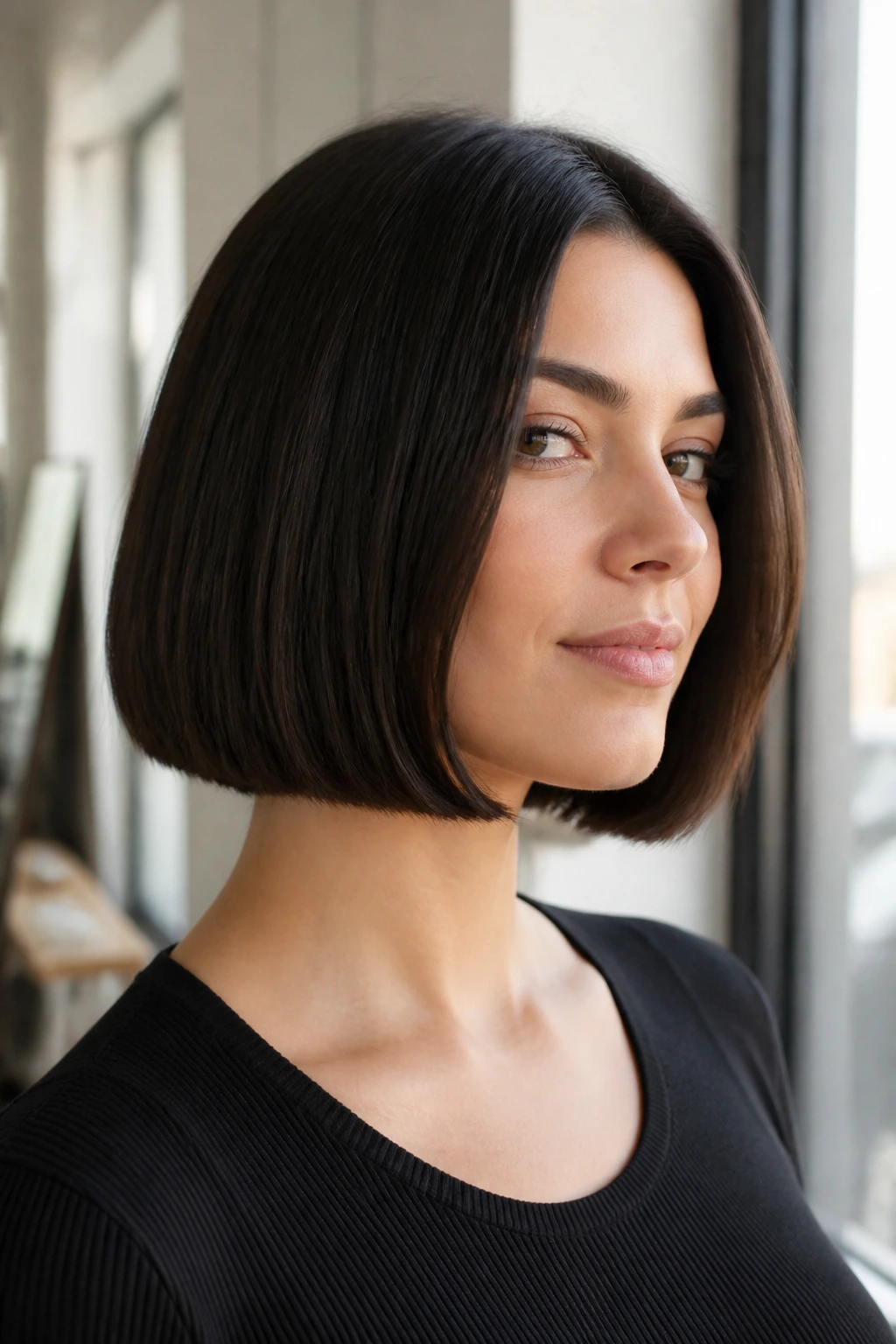
A blunt bob does not have to mean heavy. That’s the misconception. Thick hair can handle a strong outline, but it usually needs subtle internal shaping so the base stays clean and the crown doesn’t bulge out like a bell.
What to ask for
- A blunt perimeter at the bottom
- Very light interior debulking, especially through the mid-lengths
- Layers kept long enough that the ends still look solid
- A razor-free finish if your hair frizzes easily
The appeal here is the contrast. From the outside, you get that crisp bob line people love. Inside, the bulk has been loosened a little so the cut lays better and dries faster. It is a smart choice if you want a sleek look for work but still want the hair to move when you turn your head.
This is one of the easiest styles to dress up or down. A flat iron gives it a sharp edge. A quick bend with a round brush makes it feel softer.
8. The Inverted Bob With a Tight Nape
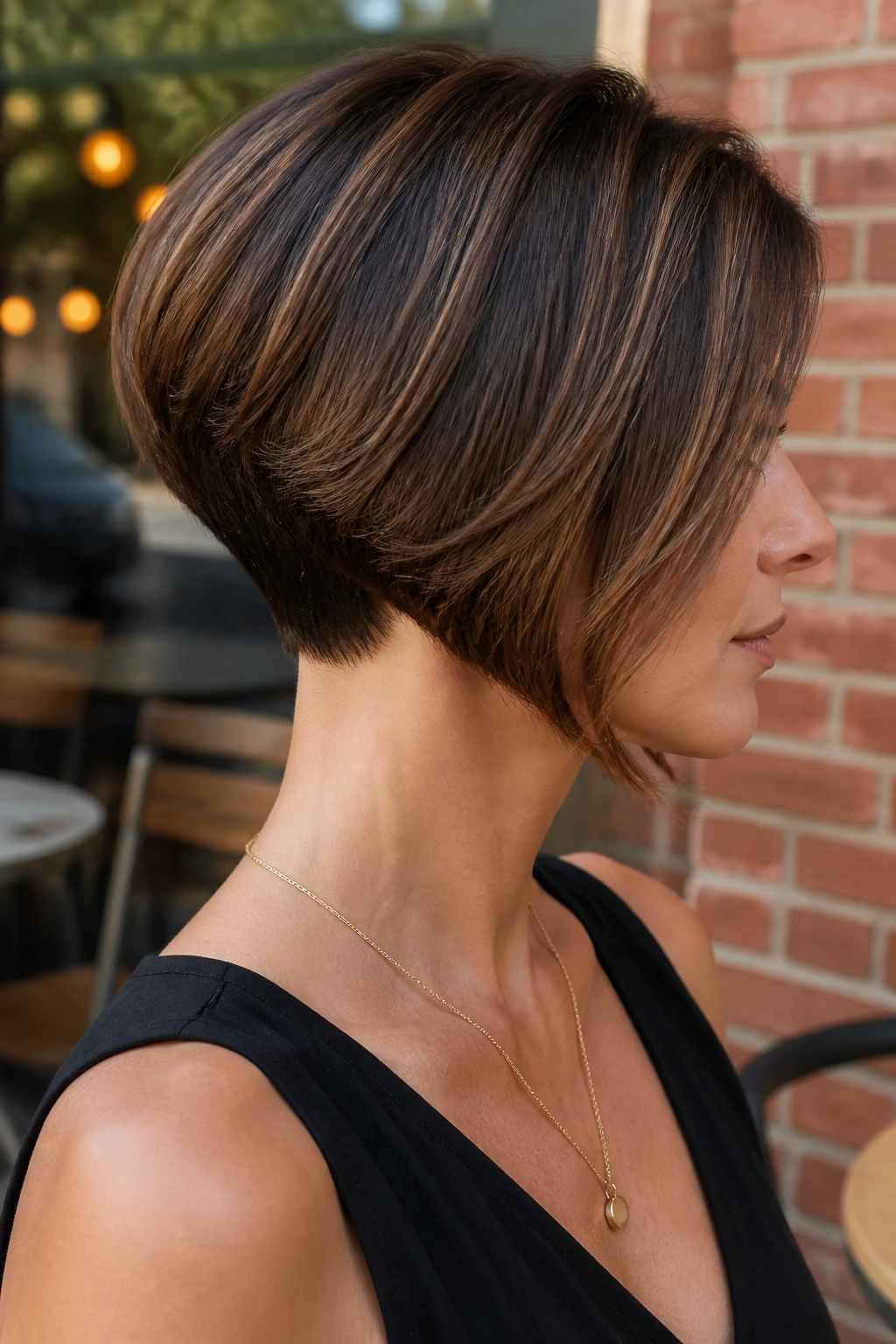
If your hair grows thickest at the back of the head, the inverted bob can feel like a miracle. The nape sits short and neat, while the front gets longer in a smooth curve, which keeps the silhouette from ballooning in the wrong places.
The real job is the graduation. The shorter layers at the back should follow the head shape, not sit on top of it. When that line is done well, the hair hugs the neck and stays tidy even when it gets a little air-dried. That is a big deal for dense hair, which tends to resist anything that asks it to lie down politely.
This cut has a little attitude. Good. Thick hair can handle it. It looks especially sharp on straight or slightly wavy textures and makes the profile look clean from the side, which is often the best angle anyway.
9. The Side-Part Bob With a Sweeping Fringe
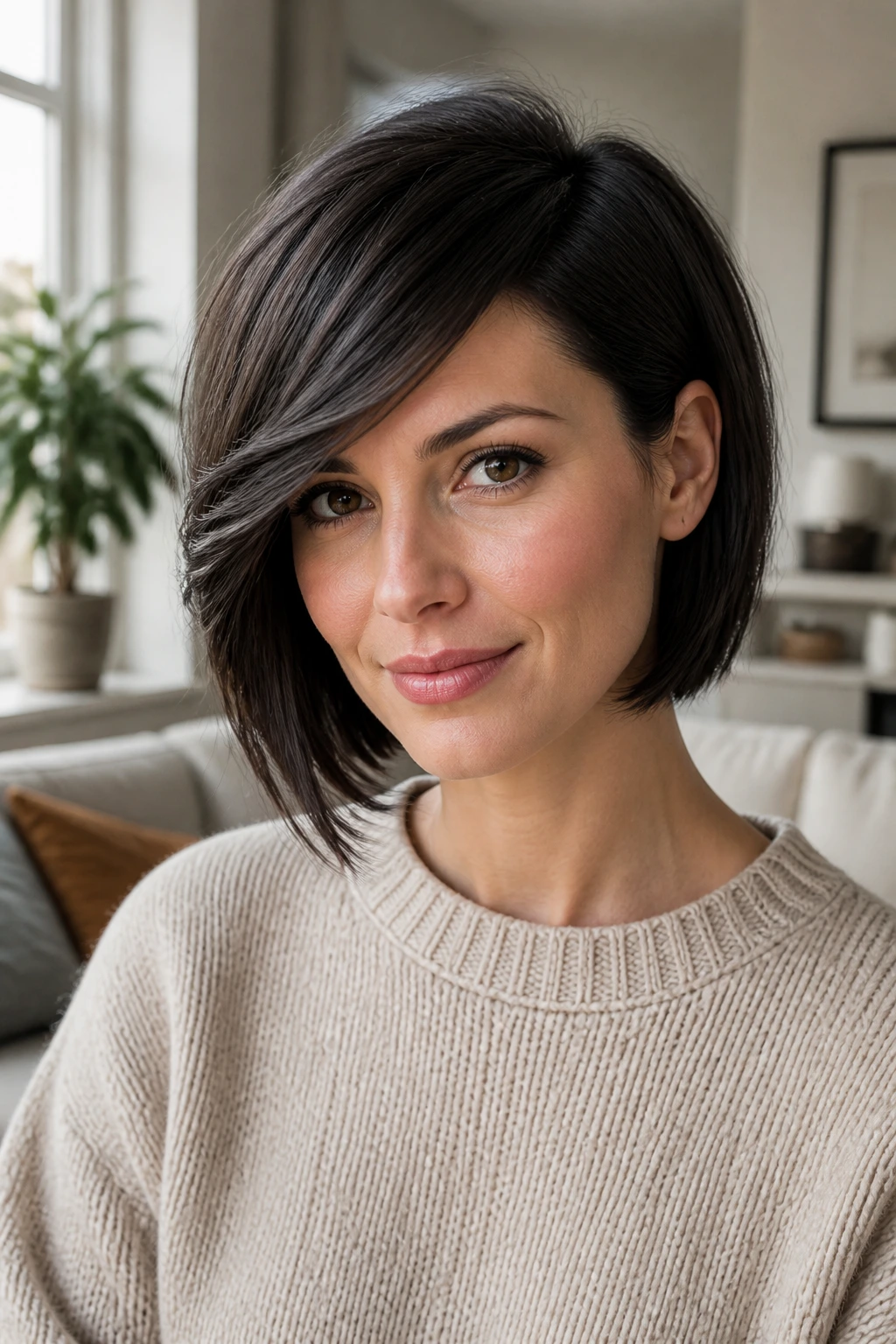
A deep side part changes everything. It takes one side of the bob and gives it more height, while the other side sits lower and closer to the face. That shift can be a lifesaver when thick hair looks too symmetrical and starts reading as wide.
How to wear it
- Part the hair about 2 to 3 inches off center
- Blow-dry the heavier side up and over
- Use a medium round brush for the fringe area
- Set the bend with a light mist, not a crunchy spray
The sweeping fringe helps soften a strong forehead and breaks up fullness at the front hairline. On thick hair, that matters more than people think. A center part can sometimes show every ounce of density in the wrong way. The side part gives the cut a little movement and keeps it from looking too uniform.
It’s a good choice if you like one side tucked behind the ear. That tiny gesture changes the whole shape.
10. The Feathered Bob With Softly Razored Ends

I’ve always had a soft spot for feathered ends on thick hair, provided they’re done with restraint. Done well, the bob feels lighter around the edges and still looks full. Done badly, it looks chewed up. There’s not much middle ground.
The feathering should happen at the bottom and along a few interior sections, not all over the place. That keeps the cut from fraying. A sharp razor can help if the hair is coarse and holds too much density, but only if the stylist knows how your texture behaves when it dries. Wet hair and dry hair are not the same animal.
- Best on medium-thick to very thick straight hair
- Good for anyone who dislikes a hard perimeter
- Works with a round brush or loose bend iron
- Needs a light serum on the ends
This style moves nicely when you walk. It never looks frozen. That’s the payoff.
11. The Razored Bob With Piecey Texture
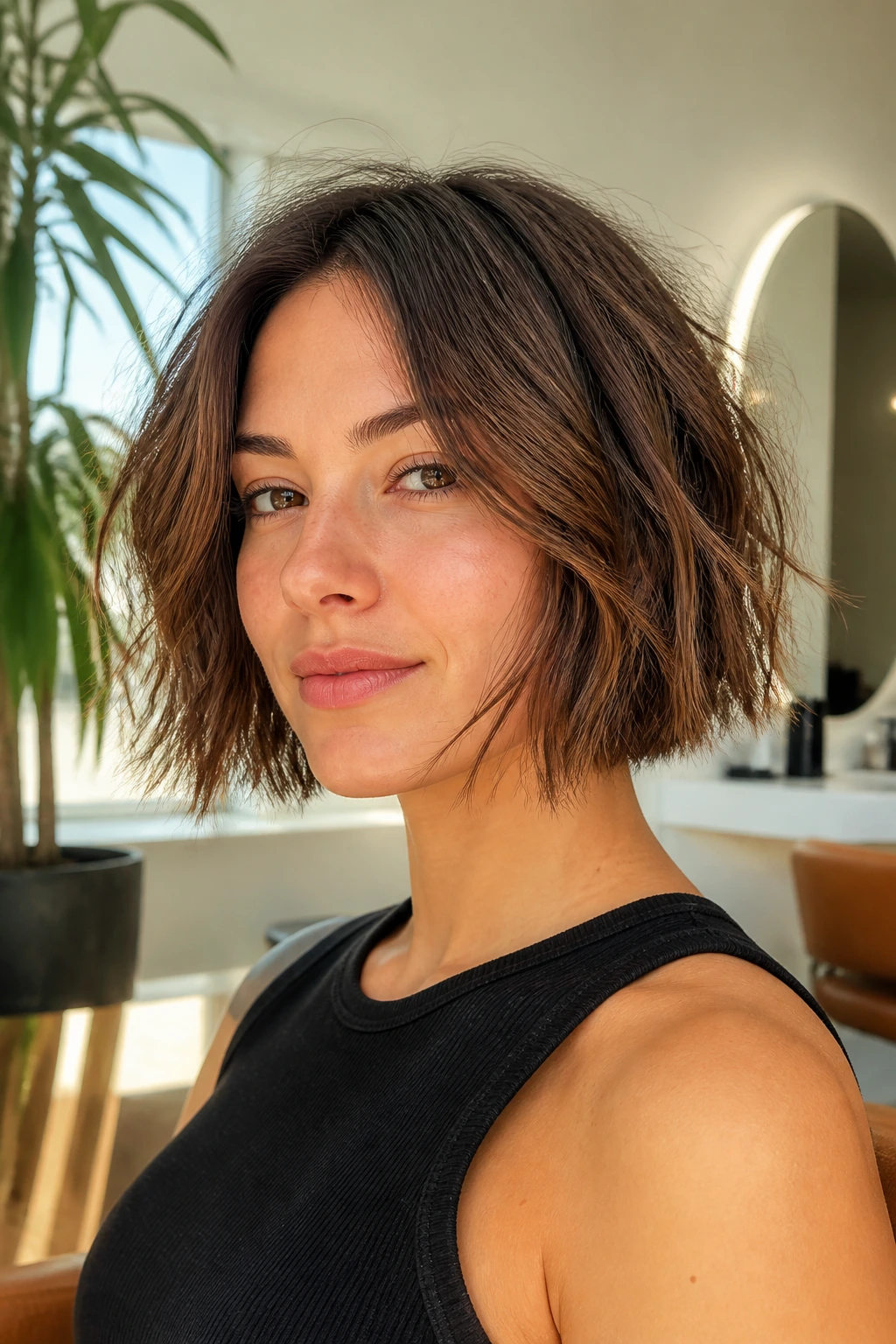
A razored bob is not the same thing as a feathered bob, and thick hair can tell the difference fast. Razoring creates softer separation through the ends and can help dense hair avoid that blunt, chunky look that makes some bobs sit like a shelf.
The catch is texture. If your hair already frizzes or expands in humidity, too much razor work can make the ends feel dry and unruly. The answer is moderation. The best razored bob has a bit of edge but still leaves enough weight for the shape to hold together.
This cut suits someone who likes a lived-in finish. You do not need perfect blow-drying. A little mousse, a diffuser, and a quick scrunch are often enough. If your hair has a loose wave, the piecey separation looks intentional. If it is pin-straight and very coarse, you may want to keep the razor work subtle and let the scissors do more of the work.
12. The Curly Layered Bob That Lets Texture Breathe

Curly thick hair needs a different kind of bob. If the layers are cut like straight hair, the shape can spring into a triangle or lose too much length at the wrong points. A curly layered bob respects shrinkage and gives the curls space to stack without choking each other.
This is one place where dry cutting can make sense. Curls show their shape better when the stylist can see where each ringlet falls. The shortest pieces should support the curl pattern, not fight it. If the cut is too short near the temples or too heavy at the bottom, the whole bob loses balance.
The payoff is bounce. Real bounce. The shape should feel airy, not puffy, and the ends should keep enough weight to stop the curls from expanding outward. A curl cream and a diffuser help, but the cut does most of the work here. That’s the part people sometimes skip.
13. The Face-Framing Bob With Cheekbone Layers

Want the haircut to do the contouring for you? This is the one. A face-framing bob with cheekbone layers pulls attention upward, softens heavier cheeks, and gives thick hair a little architecture around the front.
Where the shortest layer should land
The shortest pieces should usually sit around the cheekbone or just below it. Too high and the cut can feel dated. Too low and the face-framing effect disappears. That placement matters because thick hair carries weight, and weight wants to pull everything down.
The back can stay fairly simple here. The front does the talking. That makes the style easy to wear with a tuck, a clip, or loose waves. It also grows out nicely, which is a practical bonus because some face-framing cuts become awkward within weeks. This one usually doesn’t, as long as the layers are kept soft.
A little bend away from the face is enough. You do not need ringlets or a lot of product.
14. The Asymmetrical Bob With a Strong Diagonal Line

An asymmetrical bob works because thick hair already has presence. You do not need to invent drama; you just need to shape it. One side longer than the other gives the haircut a clean line that feels modern without leaning too hard into trend territory.
The longer side should not be wildly longer. A subtle difference of an inch or two can be enough. That small shift helps the hair fall in a more interesting way and can make the whole face look slimmer from the front. With thick hair, the asymmetry should feel controlled. If it gets too extreme, the bulk starts to show in awkward places.
This cut is best on hair that lies fairly smooth or can be blown out straight. It also pairs well with a deep side part, though that is not required. If you want the bob to feel sharp but wearable, this is a strong option.
15. The Neck-Length Bob With Tapered Ends
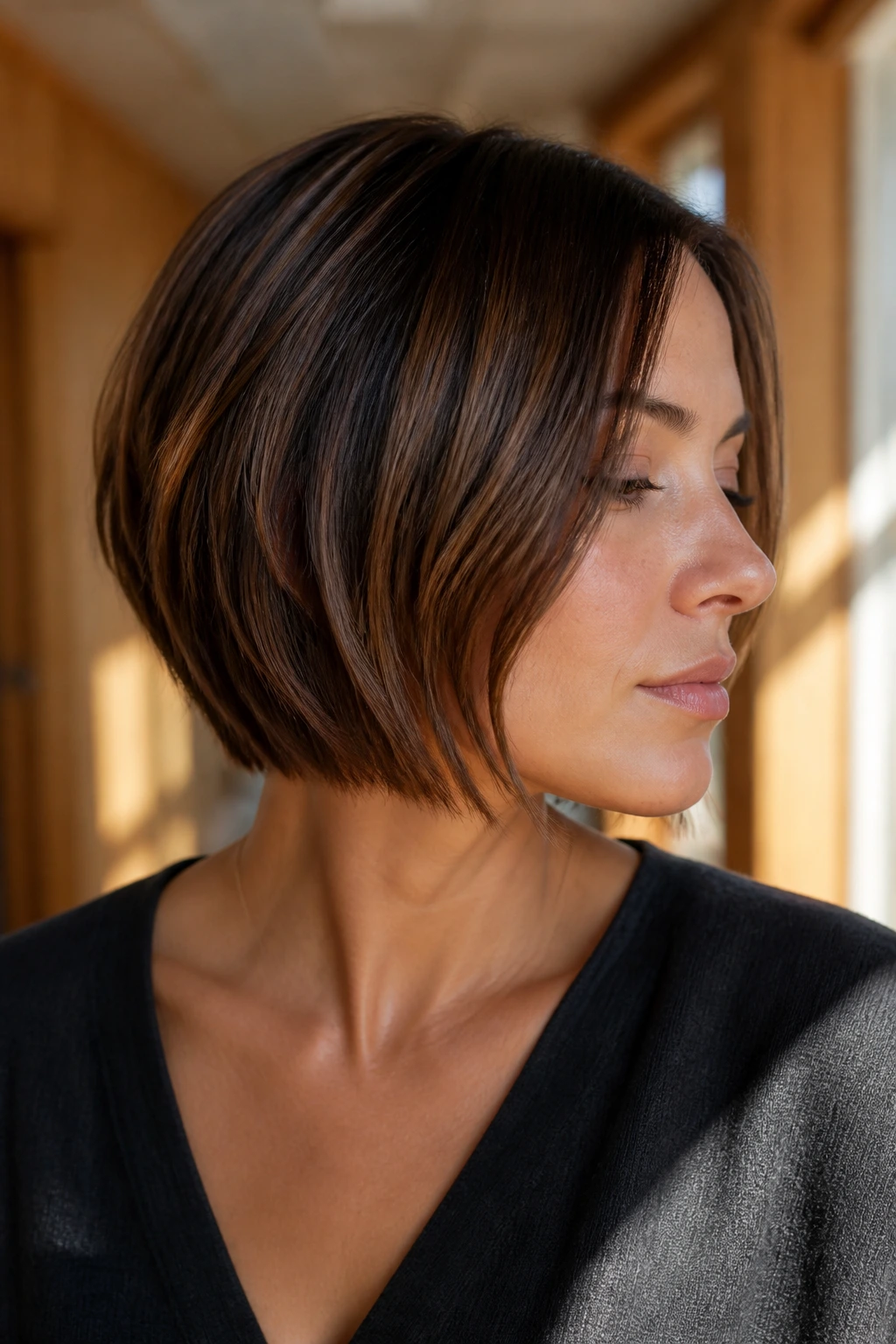
A neck-length bob is a little easier to live with than a chin cut, and thick hair often likes that extra inch or two. The length sits right around the neck, which keeps the hair off the shoulders but still gives enough weight for the shape to stay grounded.
Why it’s a smart length for thick hair
- It removes some of the bulk without going too short
- The tapered ends prevent the shape from kicking outward
- It’s long enough to clip back on rushed mornings
- It works well with both air-drying and a quick blowout
The taper matters more than people think. Even a small amount of soft graduation at the ends can keep the bob from looking boxy. If your hair swells at the collar line, ask for the perimeter to be softened just enough to move.
This cut is practical. Not glamorous in a flashy way, but good-looking in daily life, which is usually the better test.
16. The Layered Bob With Bottleneck Bangs

Bottleneck bangs have a narrow center and wider sides, and on thick hair that shape can be a relief. They break up the forehead without cutting a heavy wall across it, which is exactly what a lot of dense-haired bobs need.
The transition from short to long is the point. The center sits closer to the brows, then the pieces open out toward the cheekbones. That gives the face some softness while keeping the top of the haircut from feeling too full. If your hairline is dense or your forehead is shorter, this fringe shape is usually easier to wear than a straight bang.
The rest of the bob should stay fairly simple. Bottleneck bangs already add enough detail. A few soft layers through the body of the hair keep the cut from looking too compact. This is one of those styles that looks casual but actually takes careful cutting. Cheap cuts show fast here.
17. The Rounded Bob With Crown Volume
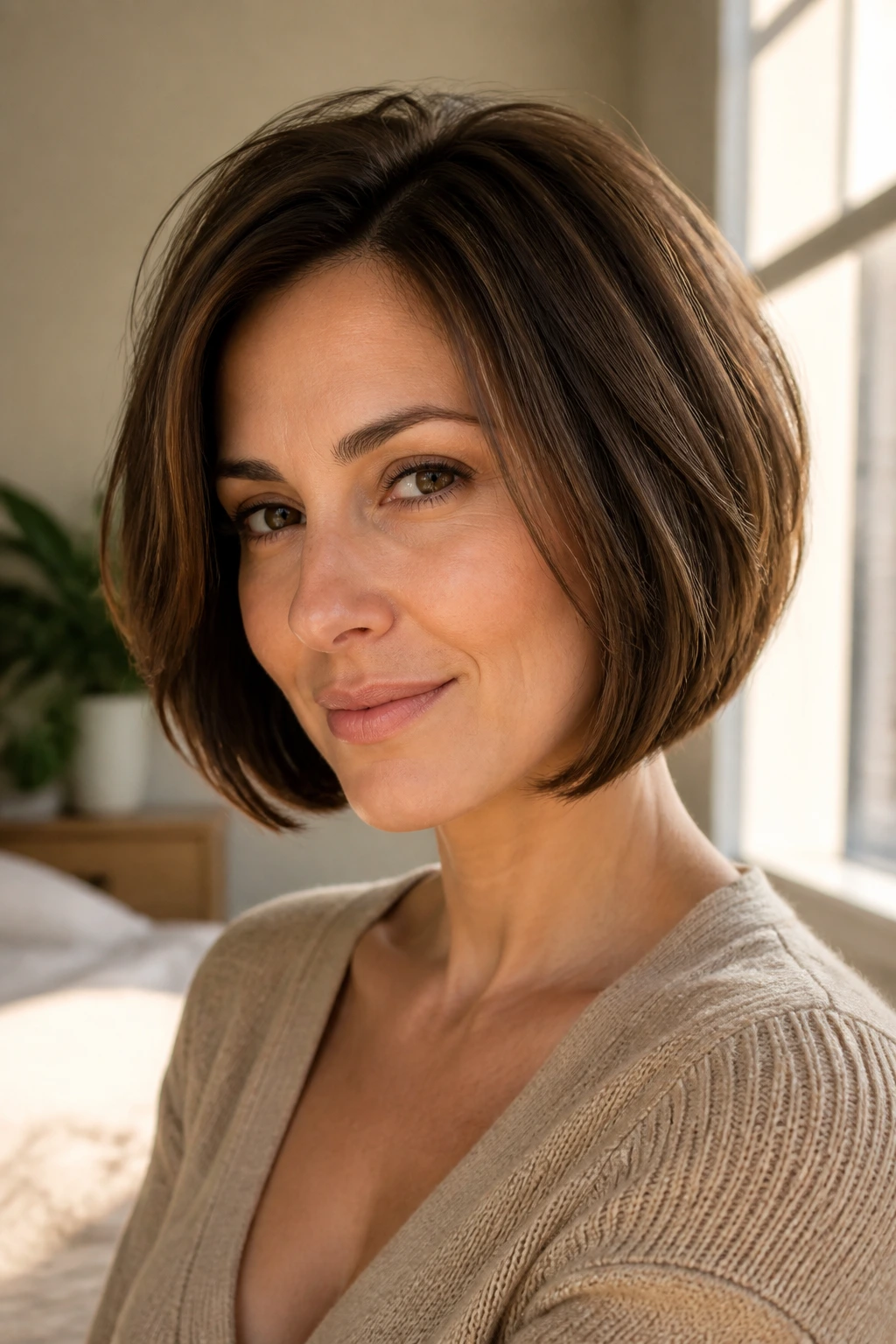
Can thick hair look soft and rounded instead of square? Yes, if the layers are placed with the crown in mind. A rounded bob lifts slightly at the top and curves inward toward the jaw, which keeps dense hair from widening out at the sides.
How it differs from a stacked bob
A stacked bob builds a stronger angle in the back. A rounded bob is gentler. The goal is a smooth arc, not a visible slope. That makes it a nice choice if you want fullness, but not bulk.
The style works well when the crown feels flat and the bottom half of the hair carries most of the density. A little lift at the top balances that out. It also plays nicely with blow-drying, since the round shape almost asks for a brush and a bit of root direction. If you leave it to air-dry, it can still work, but the curve is stronger with a little heat.
This cut feels polished without being severe. A rare thing.
18. The Shoulder-Grazing Lob With a Soft Flip
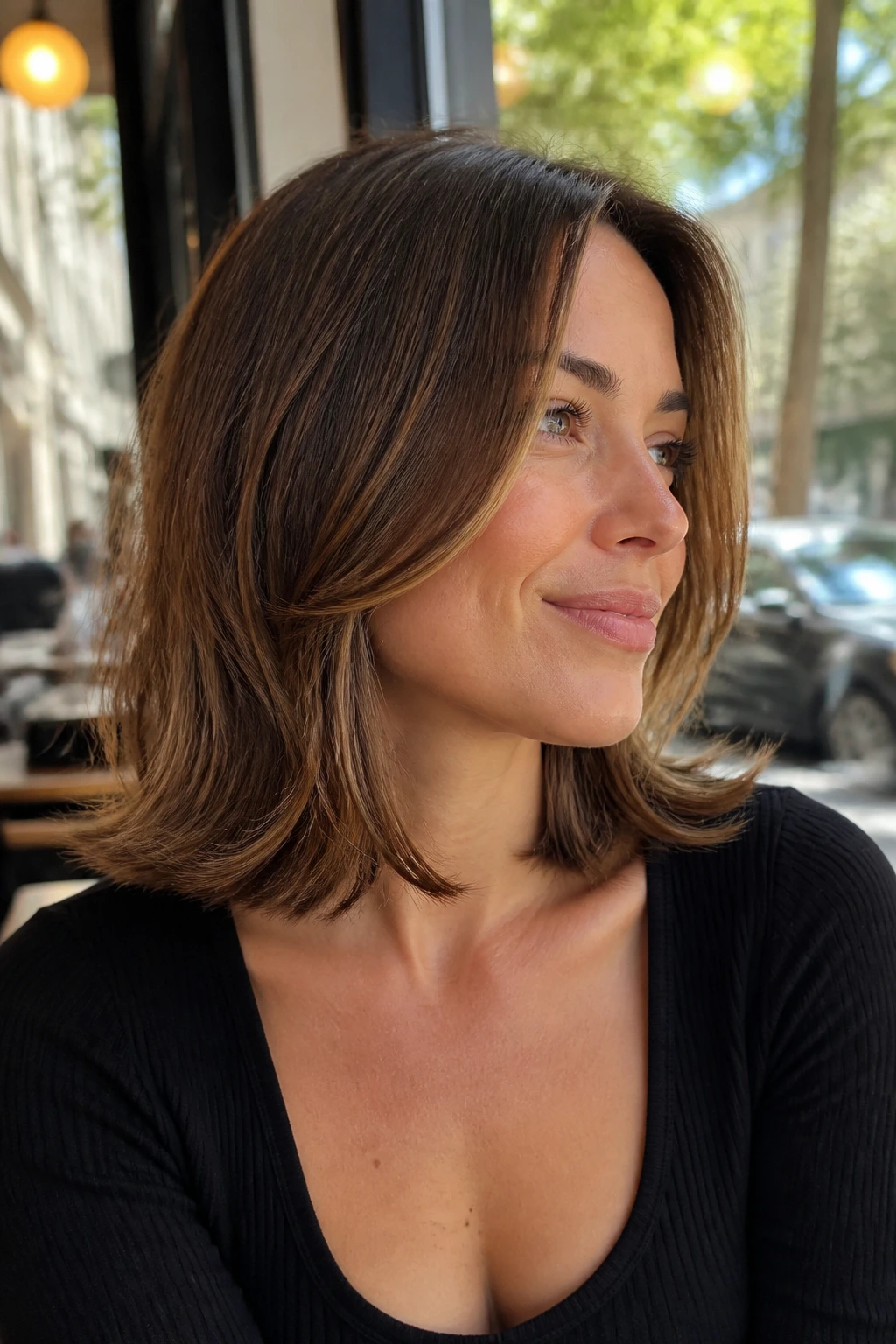
A shoulder-grazing lob gives thick hair somewhere to land. It is long enough to move, short enough to stay light, and that middle ground is useful if you’re tired of heavy ends but not ready for a short bob.
The soft flip at the ends keeps the shape from falling flat. A large round brush or 1.5-inch iron can turn the bottom out by a half-inch or so, which is enough to keep the cut from looking stiff. The idea is not to create curls. It’s to give the hair a little bend so it doesn’t hang like a sheet.
This style is a good match for anyone who wants to tie the hair back sometimes, wear it loose other times, and avoid a cut that feels precious. Thick hair can get bulky at the shoulders. A lob like this sidesteps that while keeping enough length to feel familiar.
19. The Bouncy Bob With Soft Curls
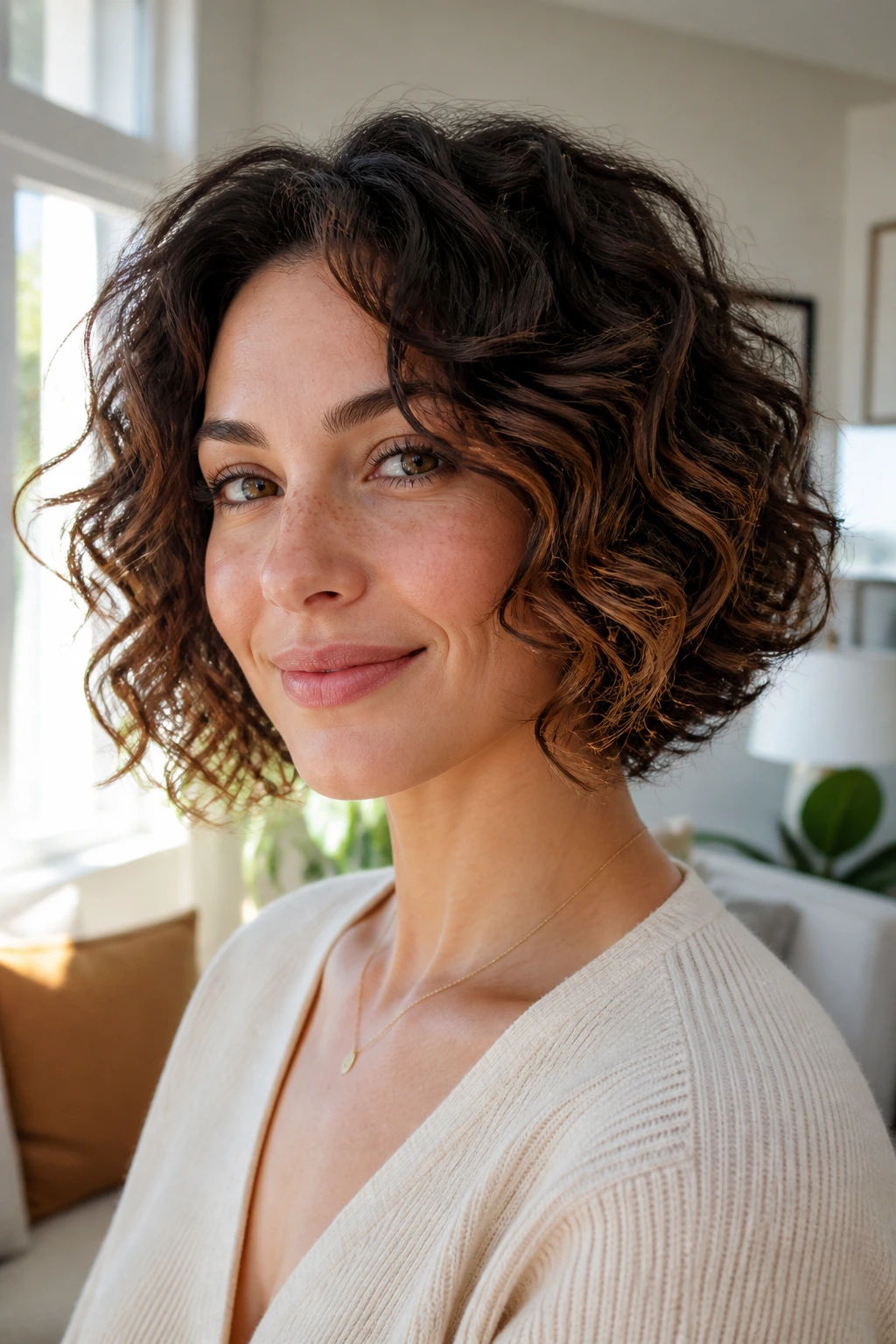
This is the bob for thick hair that loves movement. If your texture naturally bends, curls, or waves, a bouncy bob can make the hair feel lighter without forcing it into a sleek shape it never wanted in the first place.
The curl pattern should be soft, not tight. Think loose spirals or polished waves, usually created with a 1 to 1.25-inch iron or by setting sections with a diffuser. The layers need to support bounce at different points, especially around the cheekbones and mid-lengths, so the shape doesn’t collapse into one dense mass.
- Use a curl cream or mousse with a light hold
- Alternate curl direction for a less uniform finish
- Leave the ends out on a few sections for softness
- Break the curls apart with fingers once they cool
This cut looks best when it still has touchable movement. Hard shellac hair would ruin the point.
20. The Choppy Bob With Broken-Up Layers
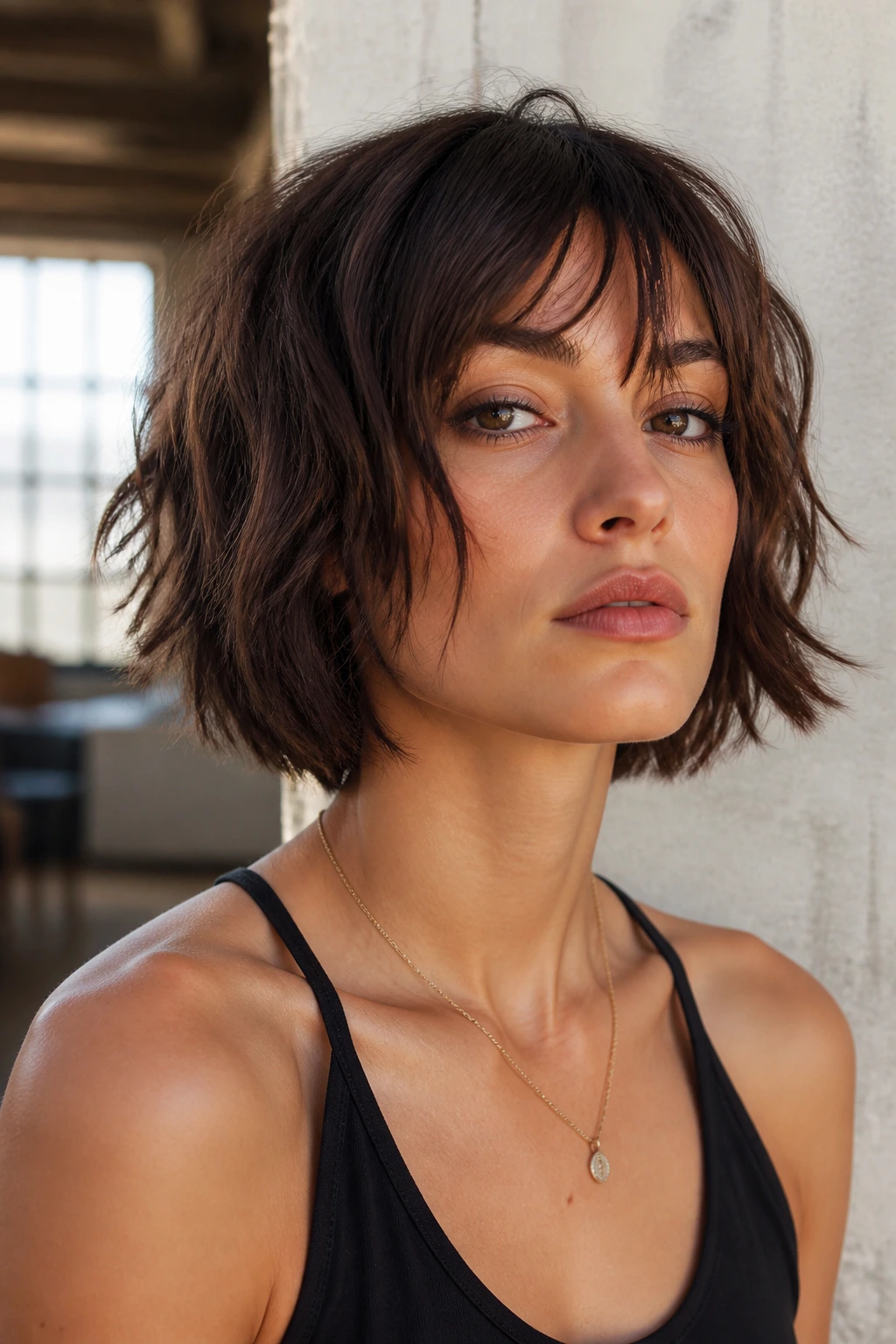
A choppy bob can be a good match for thick hair that feels too solid in one shape. The layers are deliberately uneven, which breaks up the bulk and gives the haircut some edge without asking it to behave too neatly.
This style has a little grit. That’s the appeal. It does not need to be polished to work. In fact, too much polish can flatten the whole point. The layers should land at different points around the head so the hair falls in pieces instead of one heavy curtain. That makes the bob feel lighter and more active.
It suits people who like dry texture spray, rough-drying, or a quick bend with a flat iron. If your hair is coarse and frizzes easily, keep the ends a touch longer so the choppiness does not tip into chaos. There’s a line there. Easy to cross.
21. The A-Line Bob With Gentle Graduation
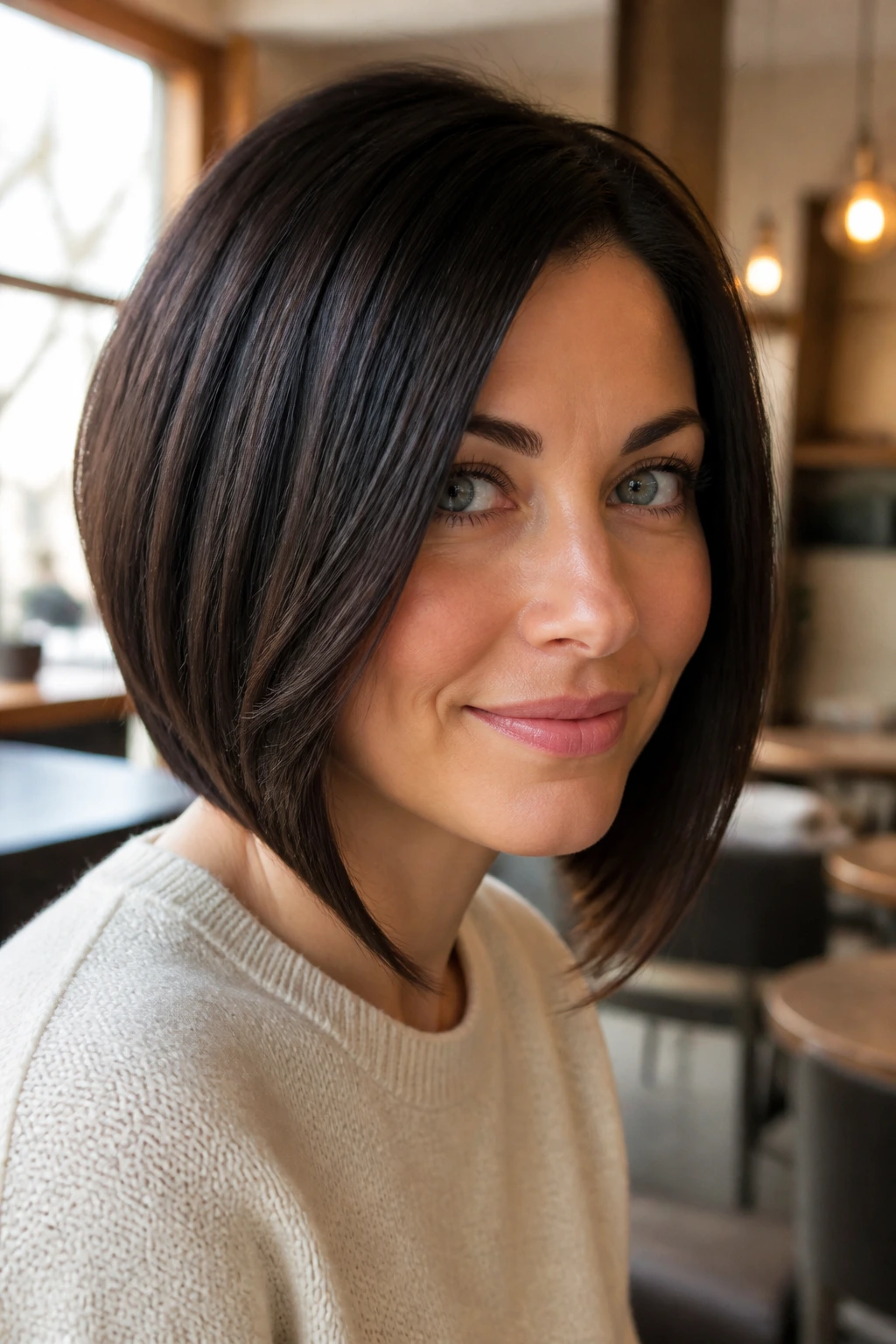
An A-line bob is the cousin of the inverted cut, but softer. The front is longer than the back, yet the angle is more gradual, which can be a nicer fit for thick hair that needs shape without a sharp corner.
The reason it works is simple: the shorter back removes bulk where the hair is densest, while the longer front keeps the cut from looking too severe. That diagonal length also helps slim the face a bit, especially if the hair tends to fan wide at the jaw.
What to ask for
- A soft A-line, not a dramatic wedge
- Clean ends with light internal layering
- Front pieces that brush the chin or slightly below
- A blow-dry that follows the diagonal instead of fighting it
This bob looks good on straight hair and on loose waves. It is one of the easier styles to grow out, too, which matters more than people admit.
22. The Layered Bob With Micro Bangs

Micro bangs are not for everyone, and thick hair makes them even more specific. But when they work, they work. The short fringe gives the bob a sharp, graphic edge, while the layers below keep the rest of the hair from feeling too heavy.
The key is softness. On dense hair, micro bangs should not be cut into a hard little wall. A slight texture at the ends keeps them from feeling severe. The bob itself should stay layered enough to offset the visual weight sitting at the forehead. Otherwise the style can look top-heavy.
This is a bold choice, sure. It suits someone who likes shape and does not mind a little attention. It also pairs well with sleek styling, because micro bangs already carry so much visual weight that the rest of the hair can stay simpler. If you want low-drama hair, skip this one. If you like a sharp line, keep reading.
23. The Middle-Part Lob With Soft S-Curve Layers

A middle part can be tricky on thick hair, but a middle-part lob with soft S-curve layers keeps it from feeling too rigid. The layers start lower, usually below the cheekbone, and bend gently around the face so the part does not sit there like a seam.
The center part shows symmetry. That can be flattering if your hair is dense on both sides and you want the weight distributed evenly. The S-curve layers help the cut fall away from the face instead of hanging straight down, which keeps the lob from reading as flat or blocky.
This style is especially good if you like a clean, calm finish. It works with a straight blowout, but it also looks nice with a soft wave. If your face feels longer, the layers can add width. If your face is rounder, keep the front pieces a little longer. That tiny adjustment changes the whole effect.
24. The Deep Side-Part Bob With One-Sided Volume
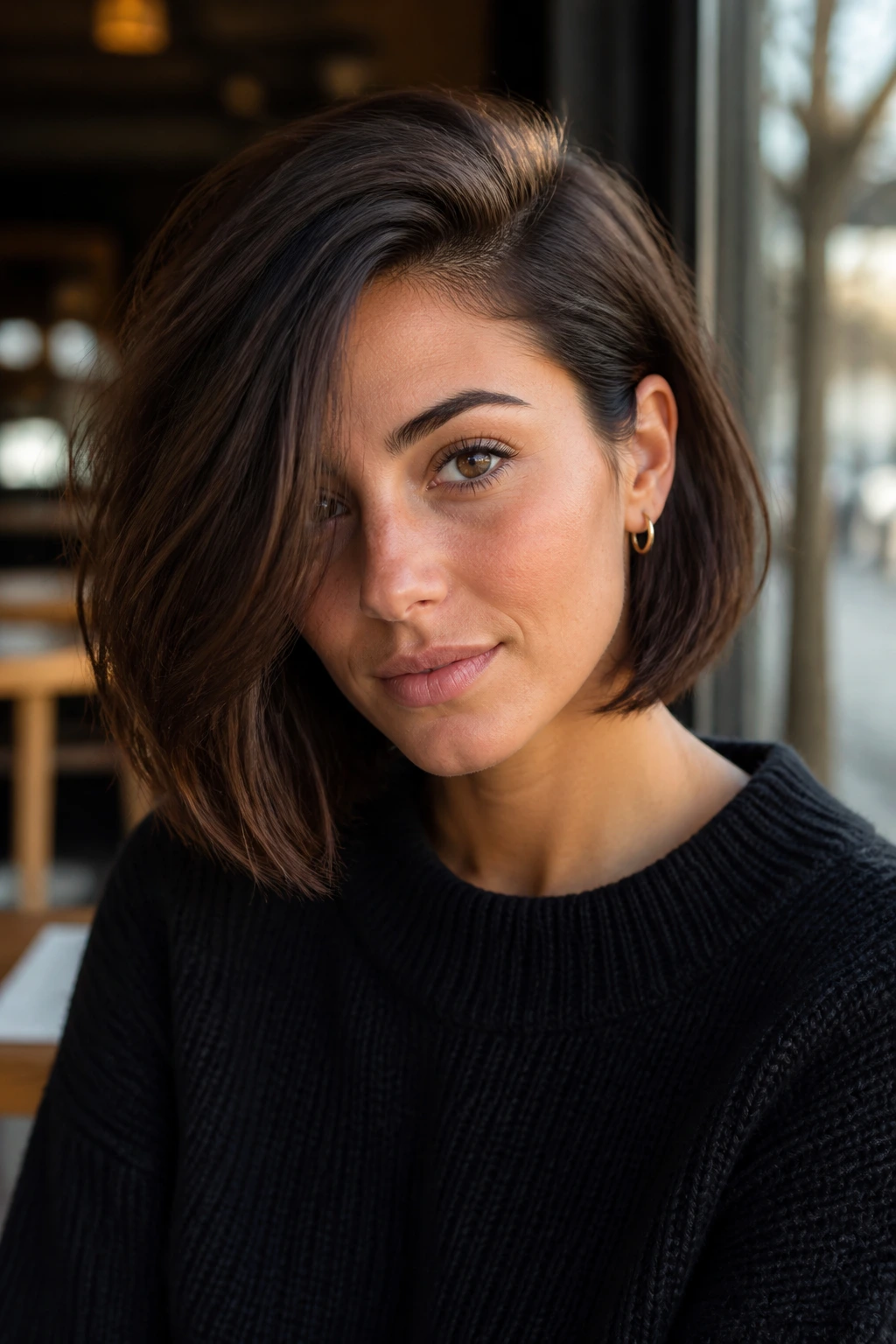
Some thick hair looks better when it stops trying to be symmetrical. A deep side part creates volume on one side and a sleek fall on the other, which gives the bob some shape without asking the hair to do too much at once.
The lifted side should be blown up at the root, then curved gently back. The flatter side can be tucked behind the ear or left to swing forward. That contrast is what makes the style work. It gives the illusion of movement, even if the hair is naturally heavy.
This cut is a nice answer for people whose hair falls flat at the crown but puffs around the sides. The part shifts the balance. It also photographs well in real life because it creates a clear shape from the front and profile. That said, it still needs a decent cut underneath. A great part cannot rescue a bad shape.
25. The Invisible-Layer Lob With Airy Movement
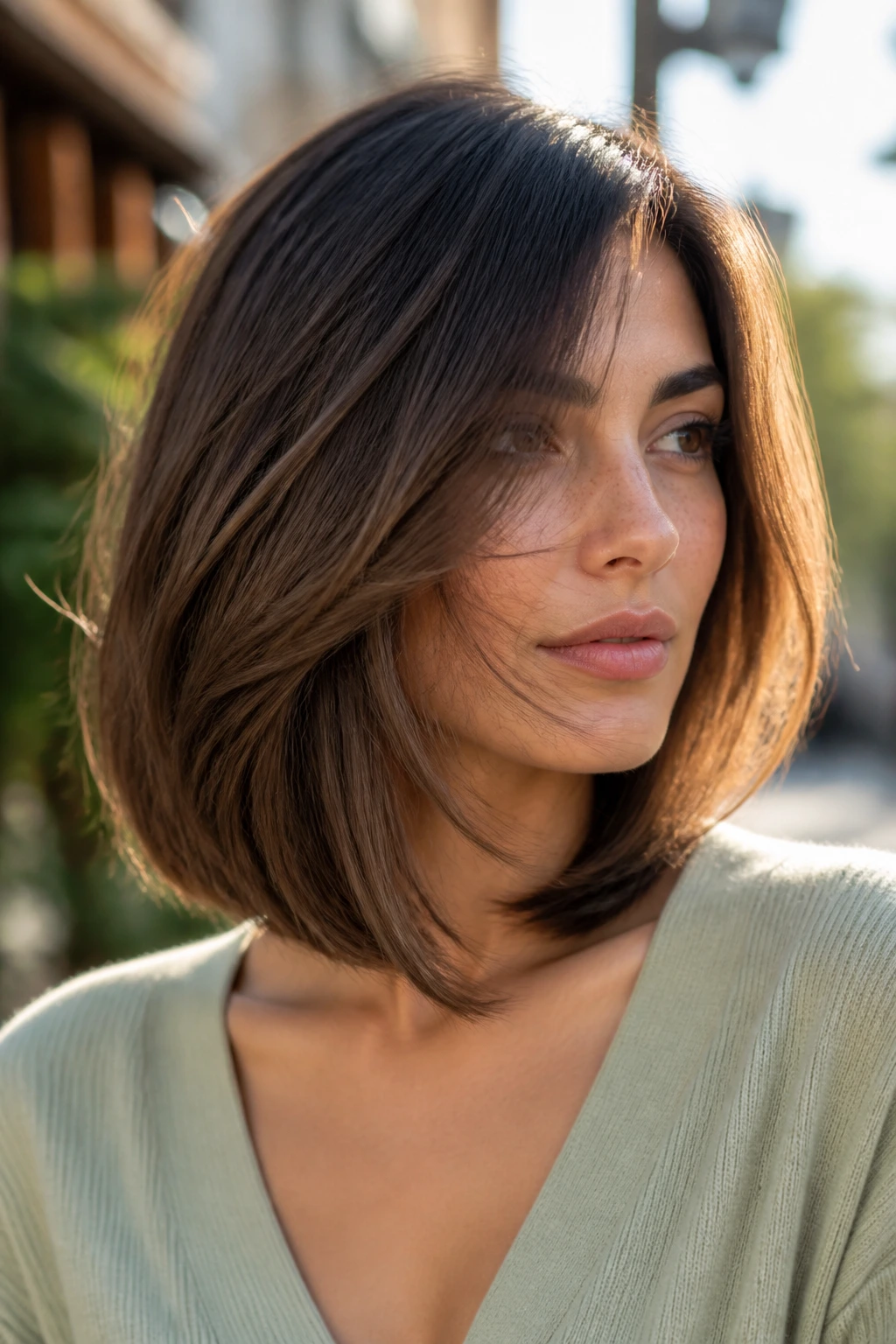
Some of the best layered bobs are the ones you can barely see as layers. An invisible-layer lob keeps the outline smooth while lightening the inside enough for thick hair to move instead of sitting like a block.
That makes it one of the easiest long-term choices. The haircut grows out cleanly, the ends stay full, and the styling is flexible. You can wear it straight, bent, clipped, or tucked, and it still reads as intentional. The layers live inside the shape, so the eye sees polish first and detail second.
This is the cut I’d point to if someone said, “I want thick hair to feel lighter, but I do not want it to look chopped up.” It is the least flashy option on the list, and maybe the most wearable. If you like a haircut that behaves on day one and still makes sense six weeks later, this is the one to circle back to.
Final Thoughts
Thick hair does not need to be thinned into submission. It needs shape, good weight removal, and a perimeter that knows where to stop.
The smartest layered bob is the one that answers a practical question: do you want lift, softness, movement, or a stronger outline? Pick the cut that fixes the part of your hair that gives you the most trouble. That is usually the part that matters.
And if a bob only looks good after forty minutes with a curling iron, it is the wrong bob. The better ones hold their shape after a shake of the head, a quick blast of heat, or even a plain air-dry on a busy morning.
