



A blunt bob on wavy hair can go two ways. Chic. Or puffed out at the sides like it had a fight with a humid afternoon and lost.
The difference isn’t magic. It’s weight placement, where the layers start, and whether the ends are cut with enough softness to let the wave bend instead of kick outward. Wavy hair likes shape, but it hates being boxed in.
That’s why textured bobs work so well: they give the wave room without turning the haircut into a shaggy mess. Some keep the line crisp and the movement hidden inside; others lean into broken ends, curtain bangs, or a little stack at the nape. The useful part is in the details. A few millimeters too much weight in the wrong spot, and the whole thing goes triangle-shaped by lunch.
Some of the cuts below sit right at the chin, some skim the collarbone, and some use almost no layering at all. The trick is choosing the one that matches how your waves actually behave, not how they look in a flat photo.
1. Chin-Length French Bob With Soft Interior Texture
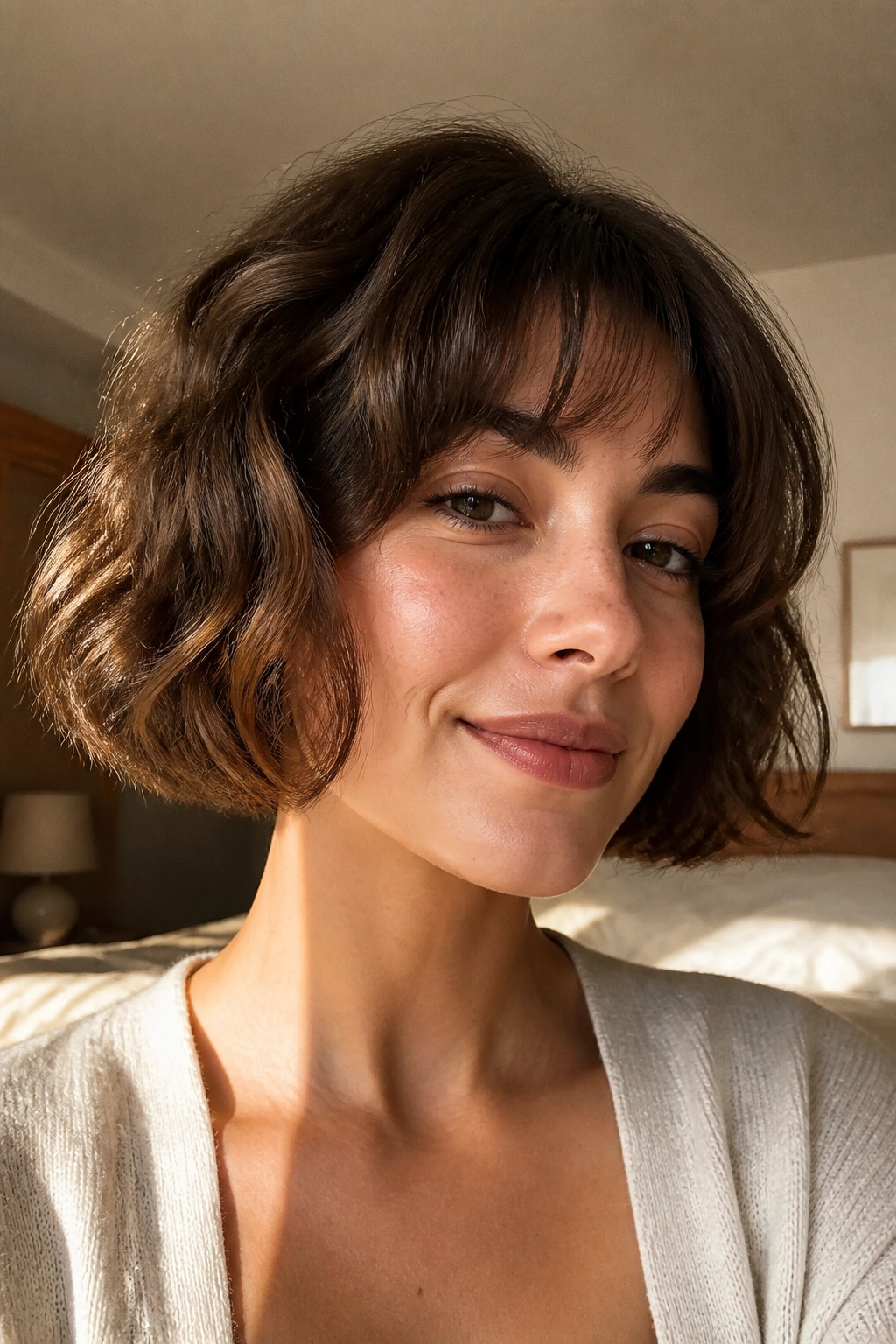
Short, but not severe. That’s the charm here.
A chin-length French bob gives wavy hair a clean edge without stealing the movement. The perimeter lands around the jaw, which keeps the shape tidy, while the inside gets a little softening so the wave can do its thing. If your hair bends naturally and has a bit of spring, this cut can look expensive in that quiet, unfussy way people keep chasing.
Why It Works on Wavy Hair
The chin-length line keeps the hair from dragging down your face, which is useful if your waves puff out once they dry. The small amount of internal texture stops the bottom from looking like a block. You still get weight, just not the heavy shelf that makes wavy hair feel stiff.
- Best for fine to medium wavy hair
- Ask for the line to sit at the jaw, not above it
- Keep the interior lightly point-cut, not thinned to bits
- Style with a palmful of mousse and a quick finger-dry
Pro tip: leave the front pieces a touch longer than the back. That tiny bit of length helps the bob fall instead of flipping out at the corners.
2. Jaw-Length Bob With a Deep Side Part

Why do some bob haircuts make wavy hair look fuller, while others make it look wide? The side part is a big part of that answer.
A deep side part shifts the weight of the hair and gives the crown a little lift right where wavy hair often goes flat. The jaw-length cut keeps the shape compact, so the waves don’t spread too far outward. It feels cleaner than a shag, but it still has movement. And that matters. A lot.
Ask for a line that lands just below the jaw and a side part that starts farther over than you normally wear it. That slight offset changes the whole mood of the cut. The heavier side creates a swing, while the lighter side opens the face. If your waves have a loose bend, they’ll fall into this shape with less effort than you’d think.
Best of all, this one behaves well on second-day hair. A mist of water, a dab of curl cream, and a few scrunched sections near the temple usually bring it back. Not perfect. Better. Which is usually enough.
3. Collarbone Textured Lob With Long Layers
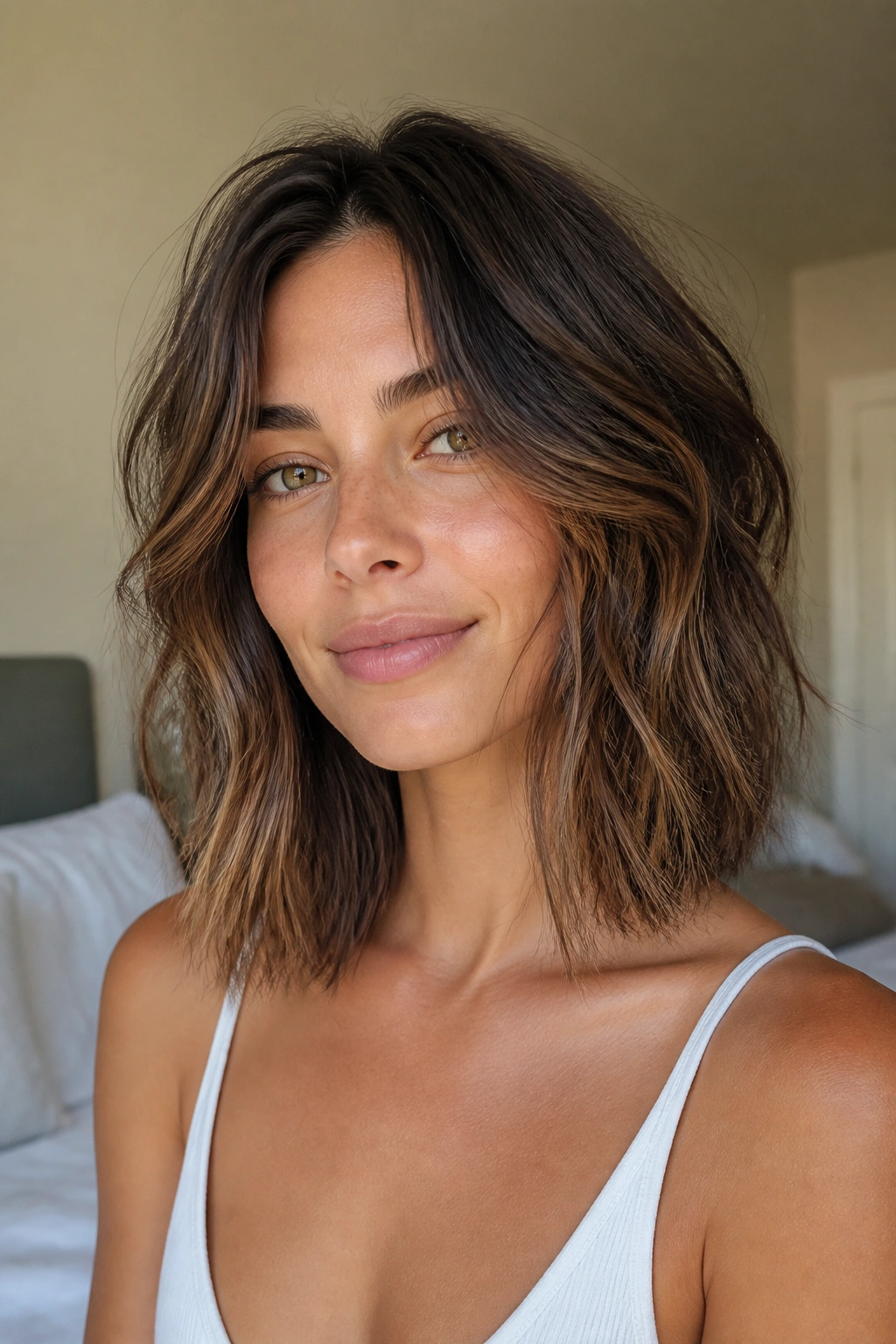
If you’re nervous about going short, start here. The collarbone textured lob is the easiest doorway into bob territory for wavy hair, because it leaves enough length for the wave to settle before it hits the ends.
A good lob should skim the collarbone, not sit stuck in the middle of the neck. That little difference keeps it from ballooning out. Long layers begin around the chin or lower cheek, so the shape opens up without losing density at the ends. The result feels relaxed, but not lazy.
What to Ask For at the Salon
- Length: collarbone or a touch above
- Layers: long, soft, and blended
- Ends: point-cut or slide-cut, not razor-thin
- Front: a small face frame if you want more movement
This cut is also a smart pick if your waves change from loose to puffy depending on the weather. You’ve got room to wear it down, tuck it behind one ear, or throw it into a clipped-up half style without the whole thing falling apart. I like that it gives you options without needing a lot of product. A light cream, a scrunch, maybe a quick pass with a diffuser, and that’s usually enough.
4. Shaggy Bob With Curtain Bangs

This is the one that saves flat roots.
A shaggy bob with curtain bangs adds movement in two places at once: through the body of the cut and right around the face. That makes it a strong choice when wavy hair looks limp at the top but goes wide at the bottom. The bangs break up the forehead, and the layers keep the perimeter from feeling too heavy. It sounds messy. It isn’t, if the cut is handled with some care.
The danger is overdoing it. Too many layers, and wavy hair can start to frizz out and lose its shape. Curtain bangs need to blend into the bob, not sit on top of it like a separate haircut. Long bangs that split around the cheekbones work better than short, choppy ones here. They move with the wave instead of fighting it.
I’d ask for a shaggy bob with soft interior layers and bangs that start long enough to tuck behind the ears. Then air-dry with a curl cream or foam, twist the front pieces once or twice, and leave them alone. The less you keep touching it, the better the shape stays.
5. Inverted Bob With a Lifted Nape

If your hair collapses at the back by noon, this is the cut that fixes the problem.
An inverted bob uses a shorter nape and a slightly longer front, so the back has built-in lift. On wavy hair, that matters. The shorter back helps the hair spring away from the neck, while the longer front keeps the outline from looking too sharp. It’s not a dramatic wedge unless you ask for one. It can be subtle, and honestly, subtle usually wears better.
The best version for waves keeps the stack soft. You want shape, not a hard staircase in the back. A little graduation at the nape creates the lift. A little longer piece near the cheek keeps the front flattering. That balance is what makes the haircut feel polished instead of old-school.
If your hair is fine and wavy, this cut can make it look denser at the crown. If your hair is thick, it can remove some of the bulk that tends to sit at the base of the skull. Either way, the silhouette is doing the heavy lifting.
6. Razored Bob With Piecey Ends

A razor can be the right tool here. It can also ruin the ends if the hair is already fragile.
That’s the honest version. Razored texture gives wavy hair that broken, piecey finish people love when they want movement without obvious layering. The ends don’t sit as one solid line. They separate a little, which lets the wave show through. On thicker hair, that can be a gift. On fragile hair, it can look frayed fast.
The Difference Is Where the Blade Touches
A skilled stylist uses a razor to soften the interior and the perimeter, not to shred the whole head into strips. The cut should feel airy, not crunchy. If your ends already split easily, a point-cut with shears may be the better call. Cleaner, safer, less drama.
This version suits medium to thick waves that like a little rebellion. It looks good when the hair is air-dried and then scrunched once at the end with a light styling cream. Don’t pile on too much product. The texture should read as shape, not residue.
The best part is how fast it wakes up in the morning. Shake it out, mist it with water, work in a pea-size amount of cream, and let the wave find the pieces it wants to keep.
7. Asymmetrical Bob With a Deep Side Part
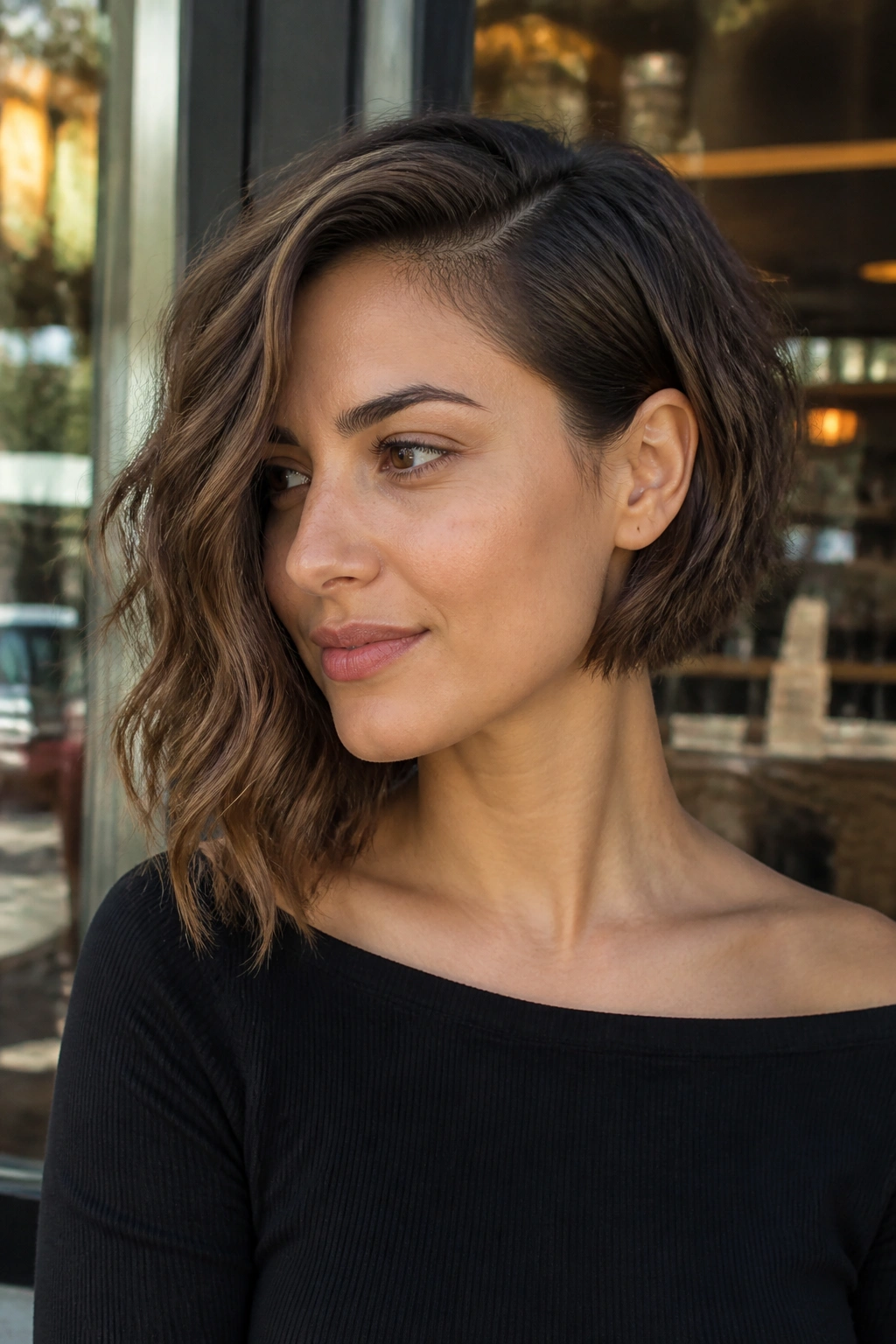
Pull more length to one side, and the whole haircut stops looking generic.
That’s the appeal of an asymmetrical bob on wavy hair. One side sits a little longer, the part shifts farther over, and the wave gets a built-in direction. If your hair has a stubborn bend or one side always falls better than the other, this cut can make that quirk look intentional instead of annoying.
It works because the eye doesn’t read both sides equally. The longer side gives a little drama, the shorter side keeps the neck line clean. On waves, that imbalance looks lively. Not fussy. Just alive.
This is a good cut if you like tucking hair behind one ear, wearing one side pinned back, or showing off earrings. It does ask for a bit more maintenance than a blunt bob, because the line has to stay clean or the shape gets muddy. But the payoff is real. You can rough-dry it, bend the front pieces with your fingers, and walk out the door without needing a barrel full of tools.
8. Rounded Bob With Soft Crown Volume

A rounded bob follows the shape of the head instead of squaring it off.
That sounds small, but on wavy hair it changes everything. A square bob can make the sides flare. A rounded one keeps the hair hugging the head a little more closely, which is a gift if your wave pattern is broad or if your hair has a lot of body in the mid-lengths. The top gets a touch of lift, the sides stay soft, and the whole cut looks finished without looking stiff.
Who It Flatters Best
- Oval faces that can handle softness around the cheeks
- Heart-shaped faces that need a bit of balance at the jaw
- Medium-density hair that can hold a curve without puffing out
The styling is gentler than it sounds. You’re not trying to force a curl here. Dry the roots with a round brush or a diffuser just enough to set the crown, then let the lengths fall naturally. If the wave wants to break up a little at the ends, that’s fine. That’s the point. The rounded shape does the controlling so the texture can stay loose.
9. Blunt Bob With Hidden Interior Texture
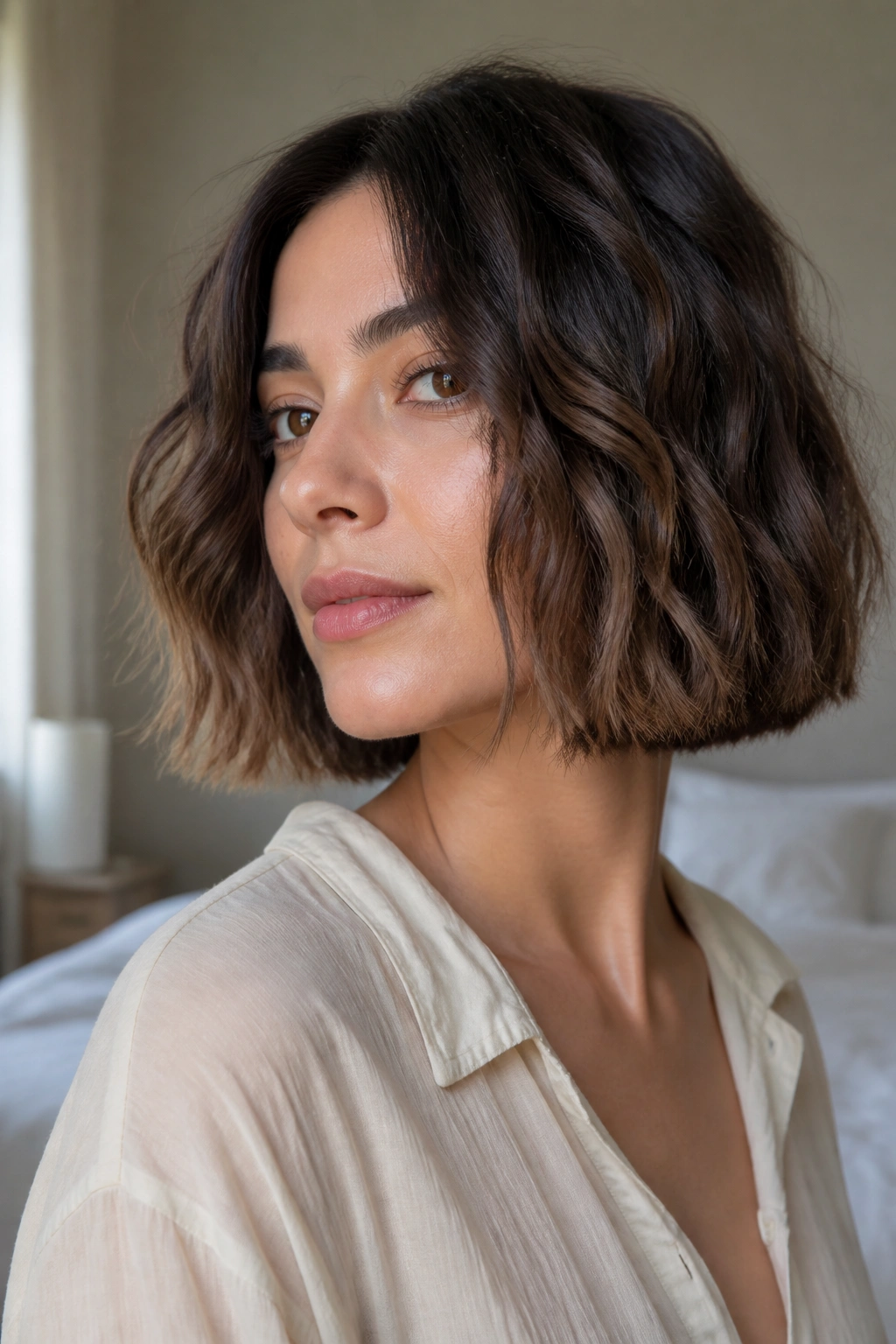
Blunt on the outside. Soft underneath.
That’s the whole trick, and it’s a good one for wavy hair that looks thin when too many layers get removed. A blunt perimeter makes the ends appear fuller, while hidden internal texture keeps the shape from turning heavy or boxy. The result feels clean, but not flat. It’s a smarter bob than it looks at first glance.
The cut should usually be made with the hair in its natural wave pattern, or at least close to it. That way the stylist can see where the ends swing, where they kick, and where a little weight needs to stay. If the line is cut too aggressively on wet hair, the final shape can shrink up and sit shorter than planned. Not fun.
This style is especially good if you want a bob that still looks decent when you don’t style it much. A quick squeeze with leave-in conditioner, a tiny bit of mousse, and air drying are often enough. The perimeter holds the shape, so the inside doesn’t have to work as hard.
10. Boxy Bob With Softened Corners
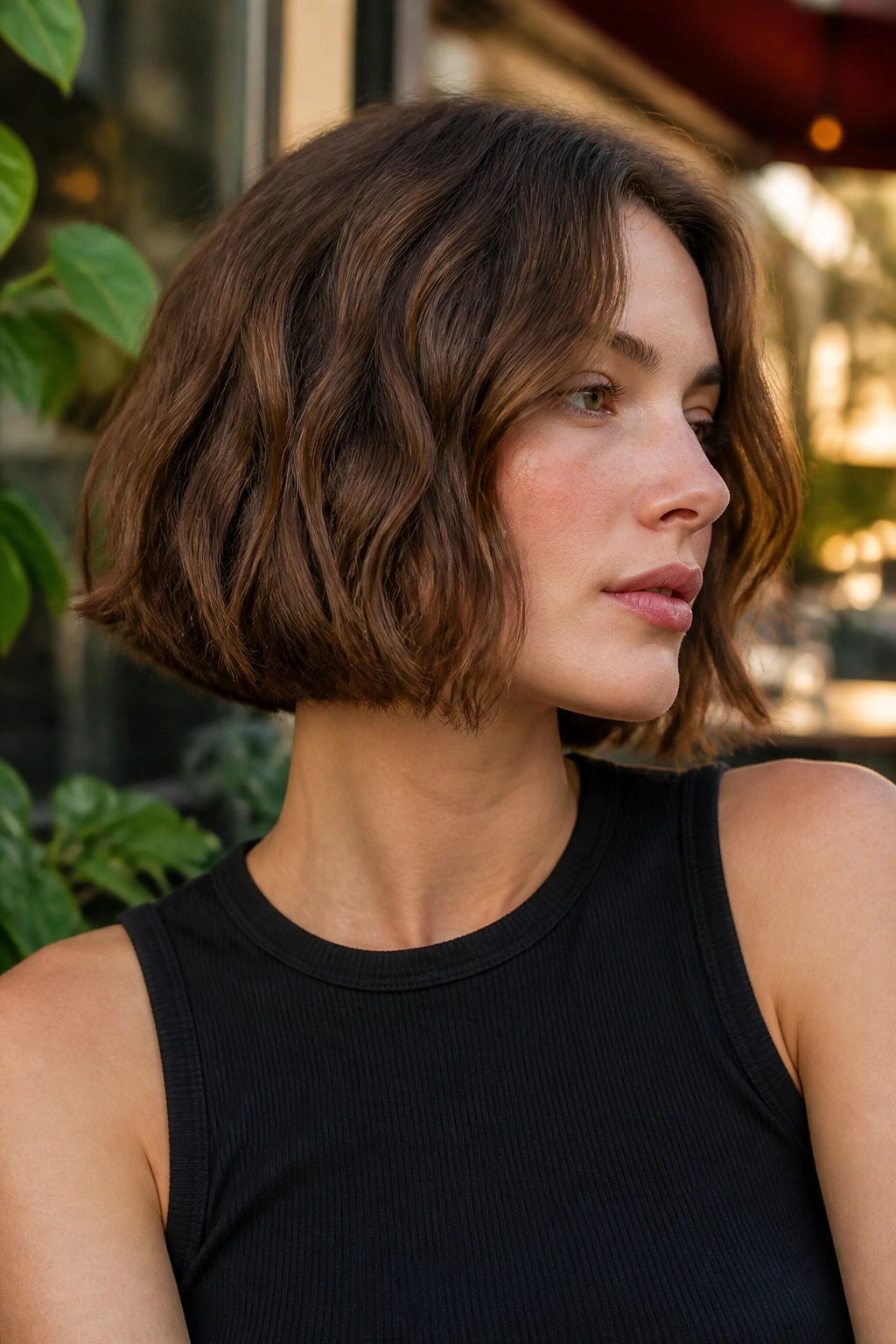
Can a boxy bob work on wavy hair? Yes, if the corners are softened.
The key is not to make the cut too architectural. A true box bob can look sharp on straight hair, but waves need a little release at the edges or they start to flip outward in a way that feels accidental. Softened corners keep the shape modern and prevent the bottom line from looking like a shelf. You still get the crisp outline, but it bends instead of bracing itself.
This cut works well on thick waves and strong jawlines, because the square-ish shape adds definition. It also looks good on people who like a slightly fashion-forward cut without going into full editorial territory. There’s a difference. One looks like a hairstyle; the other looks like it needs a wind machine. This stays in real life.
The request to make at the salon is simple: keep the outline blunt, but slightly round the corners and leave enough interior movement that the wave can separate at the ends. That tiny tweak keeps the haircut from feeling severe.
11. Face-Framing Bob With Cheekbone Layers

If your face needs more lift than your hair needs more texture, go here.
A face-framing bob puts the shortest pieces near the cheekbones or just below them, which gives wavy hair a nice visual break right where the face benefits most. The back can stay fairly full, while the front opens up. It’s a smart shape for round faces, long faces, and anyone who likes hair to swing away from the cheeks instead of sitting straight across them.
Where the Shortest Layer Should Land
The shortest face-framing piece usually works best somewhere between the cheekbone and the corner of the mouth. Too high, and it can feel abrupt. Too low, and you lose the lift. That small window matters more than people think.
I like this version because it avoids the over-layered look that some wavy bobs fall into. The haircut keeps its body, but the front pieces do a bit of the visual work. If you tuck one side behind the ear, the shape changes again. That kind of flexibility is useful. Real people move around. Their hair should keep up.
Styling is easy: smooth the front with your fingers after scrunching the back, and let the face-framing pieces fall where they want. If they curve under a little, even better.
12. Tousled Bob With an Underlayer Cut Out
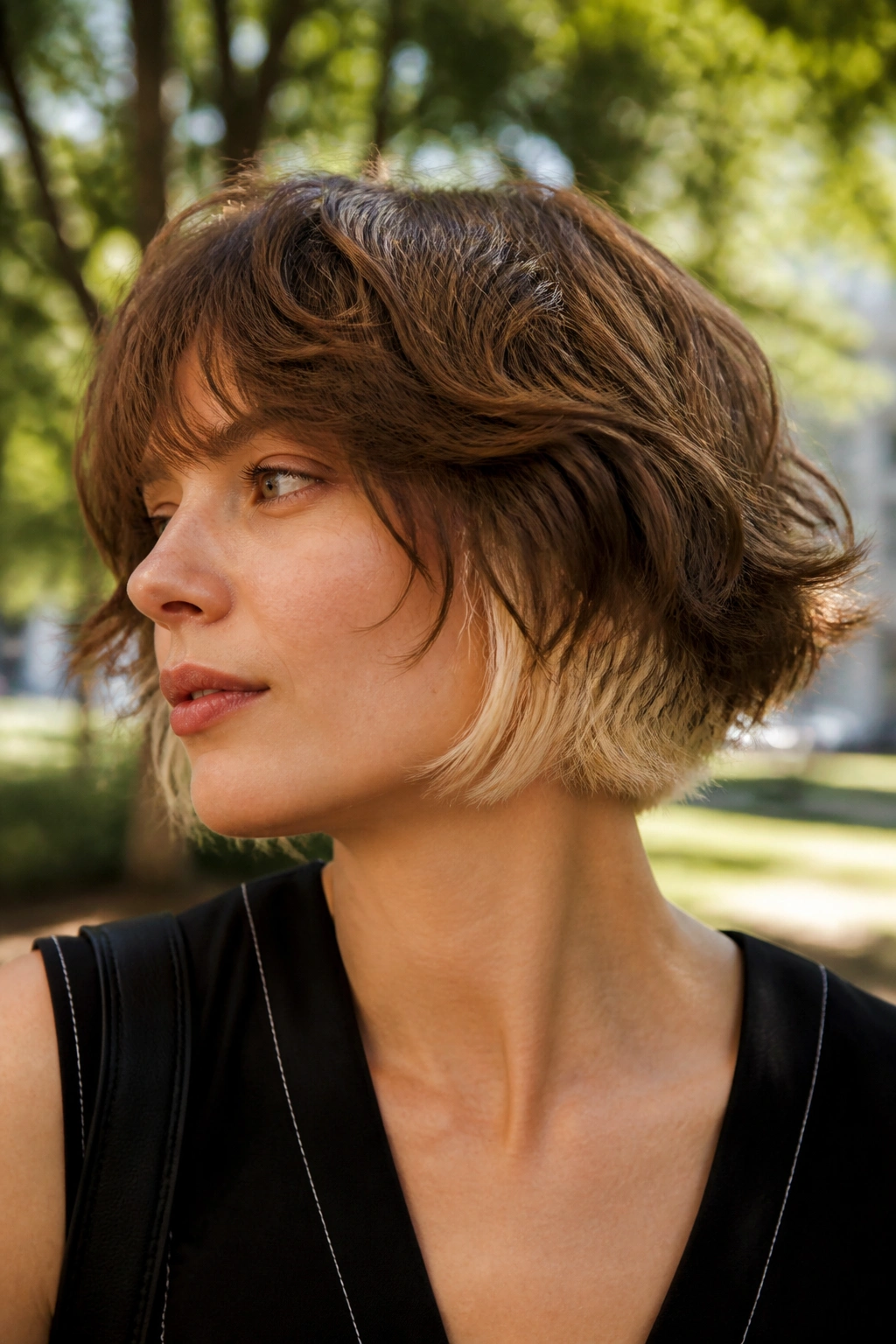
Thick waves can turn a bob into a pyramid fast.
That’s where an underlayer cut-out earns its keep. The top layer keeps the look of a full bob, while the hidden lower section removes weight from underneath. From the outside, the haircut still looks rich and full. Underneath, it’s lighter and easier to move. You don’t see the engineering, but you definitely feel it when the hair dries.
This works best on dense hair that gets bulky around the mid-lengths and lower back of the head. It’s also useful if you live with a lot of humidity or your hair tends to swell by the afternoon. Less hidden bulk means less puff.
The downside is upkeep. A cut like this grows out with more attitude than a simple one-length bob, so it needs regular shaping to keep the outline clean. Still, if your hair has been fighting itself for years, the tradeoff is worth it. The top can stay tousled and soft while the weight underneath quietly disappears.
A lightweight mousse at the roots and a diffused dry are usually enough. Don’t chase perfection here. The whole point is to let the top layer fall over the lighter underlayer so the wave can move.
13. Grown-Out Pixie Bob for Short, Loose Waves

This isn’t a classic bob, and that’s the point.
A grown-out pixie bob sits in that useful middle ground between short hair and a true bob length. On loose waves, it can look airy and modern, especially if the nape is kept short and the top layers stay longer. The result is playful without feeling too styled. It’s the kind of cut that looks like it has a personality.
Why It Feels Different From a Standard Bob
- The back is shorter, so the neck stays open
- The top keeps enough length for wave pattern
- The shape reads softer than a cropped cut
- It grows out without falling apart overnight
This is a strong pick if you want easy styling and don’t mind showing more neck and cheekbone. It can also help very fine wavy hair feel fuller, because shorter lengths don’t drag the wave down. You can work a small amount of styling cream through damp hair, pinch the ends, and let it dry with a messy, piecey finish.
It is not the best choice if you want a lot of ponytail length. Obvious enough. But if you want your hair to feel light and fast without losing shape, it’s a good one.
14. Air-Dried Lob With Minimal Layers

Some wavy hair wants less intervention, not more.
That’s the whole philosophy behind an air-dried lob with minimal layers. The length gives the wave enough room to fall naturally, and the cut stays clean enough that you can wash it, add product, and walk away. No elaborate brush work. No coaxing every strand into place. Just a shape that respects what the hair already does.
The Styling Routine That Keeps It Honest
Start with a leave-in conditioner on damp hair. Use a small amount, not a heavy coat. Then add a light mousse or wave cream from mid-lengths to ends, scrunching the hair upward with your hands. If the roots need a touch of lift, clip them at the crown while the hair dries. That’s it.
Minimal layers are useful here because they preserve the bigger wave clumps. Too many layers can break those clumps apart and leave the hair fluffy. Less interruption usually means better texture. If your wave pattern is loose and a little irregular, this is often the most forgiving way to wear a bob.
It also grows out nicely. That matters more than people admit. A good haircut should still look decent when life gets busy and you skip a styling day.
15. The Soft Grown-Out Bob With Broken Ends

If I had to pick one textured bob for wavy hair that rarely feels fussy, it would be this kind of shape.
The soft grown-out bob sits somewhere between a strict bob and a lob. The ends are broken up just enough to move, the line is loose enough to avoid that hard blocky look, and the overall feel is relaxed without slipping into shapeless. It’s the haircut that looks like it belongs on a person who actually has somewhere to be. Very useful. Very honest.
What makes it work is restraint. The length usually lands between the chin and the upper collarbone, and the texture is placed where it counts: around the interior and the front, not scattered everywhere. If your waves are uneven, that’s fine. The haircut can absorb a little chaos. In fact, it usually looks better with a little imperfection.
This is the one I’d point people toward if they like their hair to air-dry, tuck behind the ears, and survive a day of being touched by the wind. The shape holds up because it doesn’t overpromise. It gives the wave room, then gets out of the way.
And that’s the real lesson with textured bobs for wavy hair. The best ones do not force the hair into a shape it has to fight all day. They leave enough structure to feel intentional, then leave enough softness for the wave to show up on its own. That’s the sweet spot. Small details. Big difference.
