



Layered chin bob haircuts can rescue a cut that would otherwise sit flat, boxy, or a little too строг? No — scratch that. Too stiff. The point is simple: once a bob lands right at the chin, every millimeter matters. The layers can make it swing, soften the jaw, and keep it from looking like a helmet.
That length is a tricky one. It sits on the most visible line of the face, so the shape has to earn its place. A blunt edge can look sharp and polished, sure, but the minute the cut gets heavy, it starts to fight your features instead of framing them. A good layered chin bob changes that fast.
What I like about this haircut category is how different the results can be. A few hidden layers can make thick hair behave. Feathering can help a square jaw feel softer. A stacked back can give fine hair some lift without turning the whole thing into a triangle. And if you wear waves or curls, the right layer placement can mean the difference between “cute bob” and “why does my hair suddenly have opinions?”
Some of these cuts are soft and easy. Some are sharper and more fashion-forward. A few are the kind you can air-dry in a hurry and still leave the house without a hat. The details are where the magic lives, so let’s get specific.
1. Feathered Layered Chin Bob with Soft Ends

A feathered chin bob is the version I’d hand to someone who wants movement without looking like they begged for it. The layers stay light near the bottom, almost like the ends were gently brushed apart instead of chopped into pieces. That keeps the line at the chin, but it stops the cut from feeling heavy or blunt.
This shape works especially well if your hair falls straight or has only a slight bend. The feathering adds air around the jaw, which helps soften stronger facial angles. It’s also a smart choice if you like to tuck one side behind your ear, because the cut still looks balanced when one side gets flattened.
What to ask for:
- A chin-length base with soft, feathered ends
- Light internal texture, not chunky layers
- A little softness around the cheekbone, if you want face framing
- Minimal bulk removal at the crown
Use a round brush or a medium curling iron if you want a smoother finish. If you air-dry this cut, the ends should still move a little instead of sitting in one hard line. No helmet effect. That’s the goal.
2. French Layered Chin Bob with Airy, Invisible Movement

The French version is all about looking casual without feeling sloppy. The layers are there, but they hide inside the shape, so the cut keeps a clean outline while the body of the hair gets a little lift. It’s the bob that looks like you didn’t fuss, even if you spent eight minutes with a brush and a small dab of styling cream.
This is a good fit for hair that’s naturally fine to medium, especially if it tends to collapse at the sides. The cut keeps the chin length crisp, but the invisible layering lets the hair swing a little when you turn your head. That motion matters. Without it, the whole thing can read as flat and fussy.
It also plays nicely with a center part or a slightly off-center part. I prefer it with a bit of bend at the ends rather than pin-straight perfection. Perfection can make this cut feel severe. A tiny bit of mess gives it life.
Best for:
- Fine hair that needs lift without obvious choppiness
- Oval and heart-shaped faces
- People who want a bob that grows out gracefully
- Quick blow-dry routines
3. Razor-Shag Layered Chin Bob with Piecey Texture

Why does a razor-cut chin bob feel so different from a scissor-cut one? Because the edges don’t land with the same heaviness. A razor slices through the ends and creates a softer, more broken-up finish, which makes the hair look lighter and a little more undone. Done well, it feels cool. Done badly, it just looks thin and frayed. There’s a line there.
This style suits hair that already has some texture — wavy, slightly coarse, or medium density. The razor gives the ends a piecey finish, and those little separated tips are what keep the cut from looking blocky at chin length. If your hair is extremely fine, you need a careful hand here. Too much razor work and you can lose the shape entirely.
How to style it
- Mist damp hair with a light leave-in spray or soft mousse
- Scrunch the ends with your hands, then let the hair dry about 80% before touching it again
- Bend a few face-framing pieces with a flat iron if you want extra movement
- Skip heavy oils; they flatten the texture fast
This is the bob for people who want a little attitude. Not a lot. Just enough to keep the haircut from acting polite all the time.
4. Stacked Chin Bob That Builds Lift at the Crown

If your hair collapses by lunchtime, stacking is the move. A stacked chin bob keeps the back shorter and slightly fuller at the crown, then lets the front land right at the chin. The result is a shape that looks lifted from behind and clean from the front. It can make fine or limp hair look far more awake.
The important part is balance. A stacked bob should build volume without turning into a mushroom. The back needs enough graduation to support the shape, but the front should still feel intentional and smooth. I’ve seen too many stacked cuts where the crown gets puffed up and the face line gets forgotten. That’s not the point.
- Shorter layers through the nape
- A firmer line at the chin
- Slight length in front to keep the shape from looking boxy
- Best results on straight to lightly wavy hair
Ask for a stacked back, not a heavily angled one, if you want the effect to stay subtle. And if you wear glasses, this cut can work beautifully because the shape sits just above the frames instead of fighting them.
5. Curly Layered Chin Bob with Internal Shape

Curly hair at chin length can be gorgeous, but it has no patience for bad layering. Too little shaping and the bob turns into a triangle. Too much shaping and the curls puff apart and lose their pattern. The sweet spot is internal layering — enough to remove bulk from the middle, but not so much that the curl clumps fall apart.
This is one of those cuts that should almost always be shaped with the curl pattern in mind, not against it. A chin bob on loose curls behaves differently from one on tighter coils, and the layer placement changes a lot. The goal is to let the curls stack in a way that follows the jaw rather than sitting out from the face like a halo.
Dry cutting is often smarter here because it shows how each curl springs. Wet curls lie to you. They shrink, stretch, and shift in ways that can fool even a good stylist.
A diffuser helps, but only if you keep your hands out of the hair long enough for the curls to set. Once the shape is right, this cut can look fresh for days.
6. Chin Bob with Curtain Bangs and Face-Framing Layers

Unlike a plain chin bob, this one bends around the face instead of stopping at it. Curtain bangs open the center and sweep outward, while the layers at the front guide the eye down to the chin. That makes the haircut feel softer, especially if you don’t love the idea of a sharp line sitting right under your face.
The cut works well on medium density hair because the bangs and front layers need enough weight to fall correctly. If the hair is too wispy, curtain bangs can separate in a way that feels fussy. If the hair is too thick, the front needs careful thinning so the fringe doesn’t sit like a shelf.
Why it flatters
The shape breaks up a long forehead, softens a strong jaw, and gives a chin bob a little more motion when you wear it behind one ear. It’s also one of the easier ways to make a short bob feel less severe. The haircut does part of the styling for you.
I’d ask for the bangs to start around the cheekbone rather than too high. That keeps the front from jumping up and taking over the whole cut. Subtle is better here.
7. Asymmetrical Chin Bob with a Side-Swept Line

Asymmetry does the heavy lifting here. One side sits a touch longer, the part shifts off center, and the whole haircut gets more shape without needing a lot of obvious layering. It’s a clean way to make a chin bob feel sharper and a little more directional.
This is a smart cut if your face is round or if you like tucking hair behind one ear. The longer side pulls the eye downward and creates a line that feels intentional, not accidental. It also helps if one side of your hair has a stubborn cowlick. A slight asymmetry can work with that instead of fighting it.
The trick is not to go too dramatic. A full-on extreme angle can be a headache to grow out, and it usually needs more styling than people expect. A subtle difference — maybe half an inch to an inch between sides — is often enough.
Watch for:
- A soft side part
- One side skimming the jaw a little longer
- Layers that stay close to the base line
- A flat iron bend at the ends if the hair flips out too much
8. Blunt Chin Bob with Hidden Layers for Thick Hair

A blunt chin bob can still have layers. Hidden ones, anyway. That’s the part people miss. On thick hair, the outside line can stay clean and strong while the inside gets debulked so the cut doesn’t sit like a block on the head.
This style is good when you want the tidy look of a blunt bob but do not want the weight of a full blunt bob. Thick hair can get triangular at chin length if every section is the same length. Internal layering fixes that without destroying the crisp edge people usually want from a bob.
The best version keeps the perimeter firm and the inside lighter. Too much thinning on the ends can make thick hair frizz out, which is annoying and avoidable. Ask for point cutting or interior texturing rather than aggressive slicing, unless your stylist knows your hair well and can control it.
It’s a great compromise cut. Sharp on the outside, practical on the inside. That balance matters more than people admit.
9. Fine-Hair Chin Bob with Micro-Layers

Fine hair does not need a pile of choppy layers. It needs a little help in the right places, and that’s not the same thing. Micro-layers give the chin bob some bend and lift without stripping away the density that makes the ends look full.
I like this approach because it keeps the outline solid. Fine hair often looks best when the shape is clean and the texture work stays hidden. If the layers are too visible, the hair can start to look see-through at the bottom, and nobody wants a wispy chin line unless that’s the actual goal.
The shortest layers should sit just inside the outer shape, not floating up near the crown. That gives you movement without losing the weight you need for the bob to look intentional. A light root spray helps, but the cut has to do most of the work.
One-sentence truth: less is more here.
If you wear this with a side part and a quick bend under the ends, it can look fuller than a more dramatic layered cut that was overdone from the start.
10. Wavy Chin Bob with Broken-Up Ends

On wavy hair, the right chin bob looks like it already knows what to do. The shape lands at the jaw, the ends move in little bends, and the layers break up the line just enough that it never feels too polished. It’s one of the easiest versions to live with if your hair has a natural bend and you don’t want to force it straight every morning.
The best part is how forgiving it is. A few pieces can dry flatter than others and the haircut still works, because the texture is part of the point. Broken-up ends help the wave pattern show up instead of collapsing into one flat block around the chin.
I’d keep the layers soft, not razor-heavy, if your wave is loose. Loose waves can go poofy when they’re over-cut. A little leave-in cream and a diffused dry are usually enough. If you like a more tousled finish, a small amount of sea salt spray can work, but use it sparingly. Too much and the hair gets crunchy fast.
This is the kind of bob that looks good both neat and messy. That’s rare.
11. Inverted Chin Bob with a Clean Nape
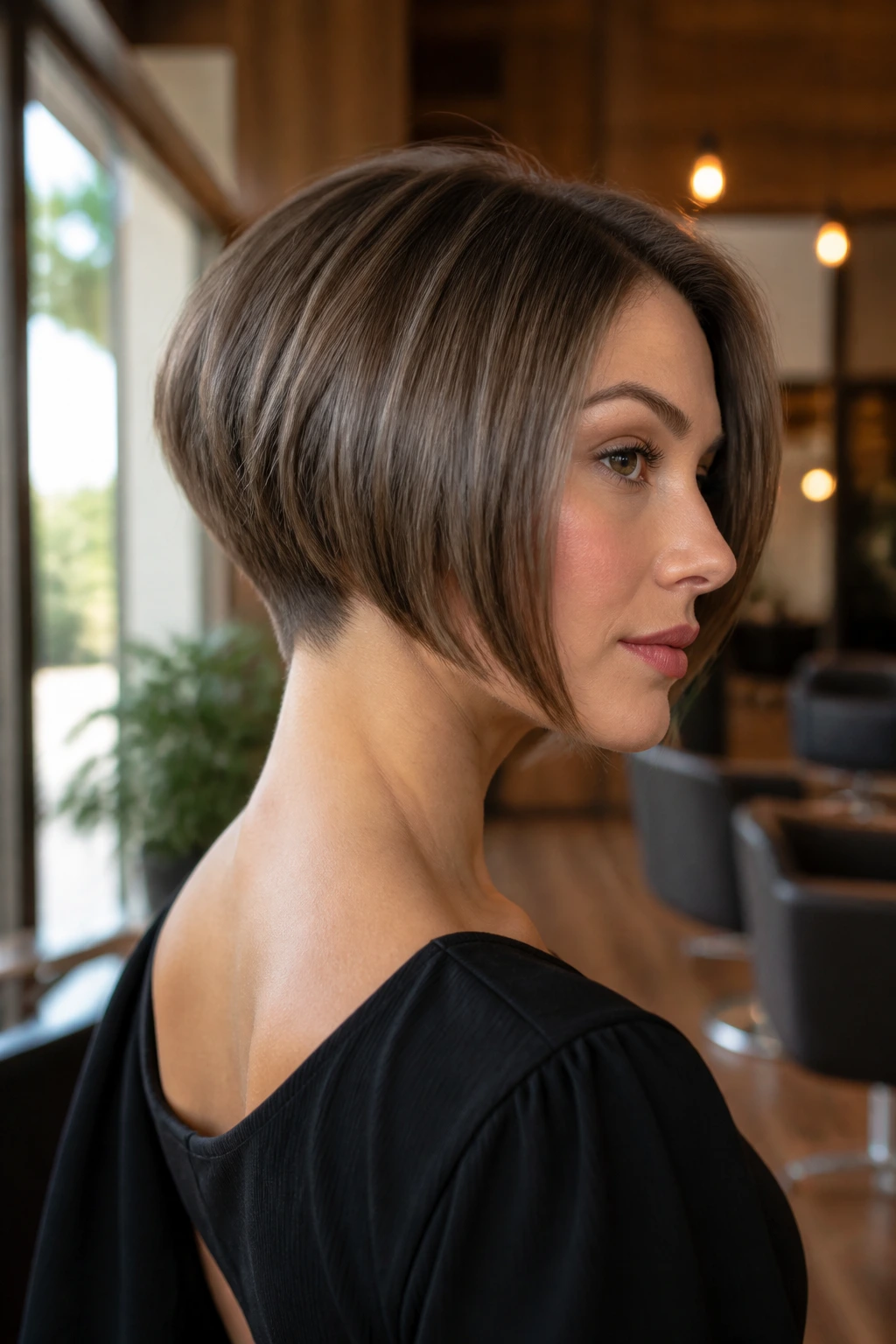
Picture a bob that hugs the nape closely, then opens out toward the chin. That’s the inverted version, and it’s a good choice when you want structure with a little drama. The back is shorter and tighter, while the front keeps enough length to frame the face without dragging the whole cut down.
This shape can make the neck look longer and the jaw look more defined. It also gives the illusion of more volume at the back, which is useful if your hair sits flat there. The angle is the whole story, so the cut has to be precise. A sloppy inverted bob looks awkward fast.
What to ask your stylist for
- Tight graduation through the nape
- A clean, tapered back
- Longer front pieces that graze the chin
- Soft texturizing only if the hair is thick
The clean nape is what gives this cut its edge. Keep that part neat and the whole style feels sharper. If you want a bob that looks tidy from every angle, this is one of the strongest options.
12. Side-Part Chin Bob with Long Framing Pieces
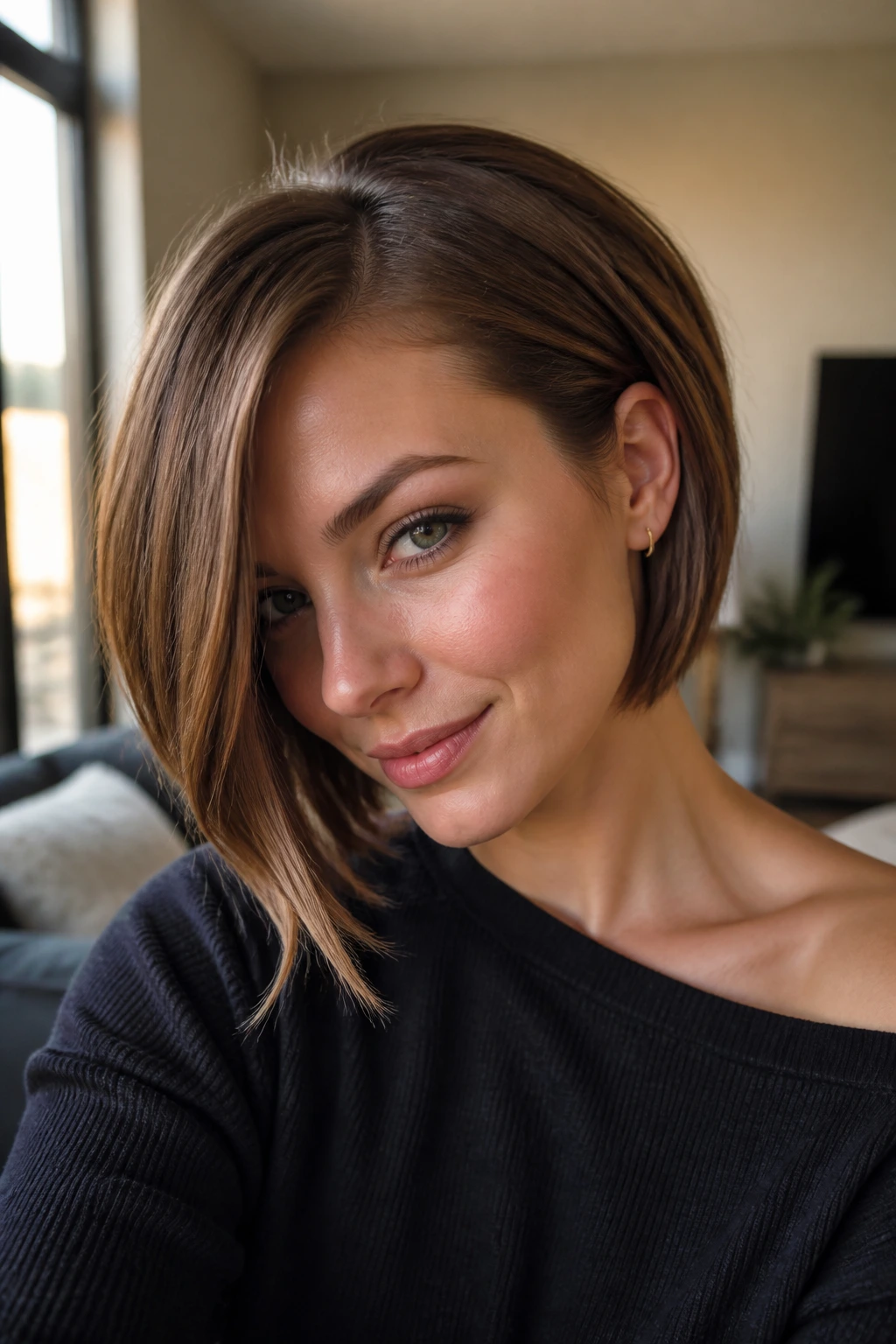
Want the chin bob to feel softer around the eyes? Shift the part. A side-parted version changes the way the layers fall, and that alone can make the cut feel less symmetrical and a little more flattering if you prefer movement over crisp balance.
This works especially well if you have a cowlick near the front hairline, because the side part can help the hair settle where it wants to go. Long framing pieces on the heavier side of the part also create a nice sweep across the cheek. That can be useful on long or narrow faces, where a center part sometimes feels too severe.
How it behaves
The deeper side gets more volume, and the shorter side gets a neater line behind the ear or along the jaw. That contrast keeps the haircut from looking flat. It also makes the layers more visible when the hair moves.
I’d keep the front pieces a little longer than the chin if you want a softer grow-out. A chin bob with long framing pieces can feel a touch less formal than a strict one-length cut, and that looseness is often the point.
13. Choppy Chin Bob with Chunky Layers

Choppy does not have to mean messy. Done right, chunky layers give a chin bob a more lived-in texture that feels a little bold without becoming overstyled. The pieces are more separated, the edges look broken up, and the haircut gets a bit of attitude.
This is the one I’d steer toward people who want to see the layers, not hide them. It works on medium to thick hair, especially if your hair likes to hold shape. The texture keeps the cut from sitting in one solid block, which is exactly what a chin-length bob should avoid if you want movement.
A dry finish helps here. So does a matte paste or light texturizing spray on the ends. You do not need much. Use a pea-sized amount first, rub it between your palms, and press it into the lower half of the hair rather than raking it from roots to tips.
The main caution? Don’t overdo the choppiness near the front. If the face-framing pieces get too jagged, the haircut can start looking rough instead of stylish. There’s a difference.
14. Chin Bob with Soft Layered Bangs

If you keep pinning your bangs back two days after a trim, this is probably your lane. Soft layered bangs sit more lightly than a blunt fringe, and they blend into a chin bob instead of sitting on top of it like a separate feature. The whole cut feels easier because the bangs don’t dominate the face.
This style is useful if you want some forehead coverage but not the commitment of straight-across bangs. The layers in the fringe help them split naturally, which makes styling less annoying on busy mornings. A quick blow-dry with a small round brush is usually enough to keep them from sticking to the forehead.
It’s also kinder to growth. Soft bangs can grow out into face-framing pieces without looking like you gave up halfway through. That matters more than people think. A haircut you can live with for six weeks straight is worth more than one that looks perfect for three days and then turns fussy.
I like this version on straight, wavy, and even slightly curly hair, as long as the fringe is cut to respect the texture. That part matters. A lot.
15. Air-Dry Chin Bob with Invisible Interior Layers
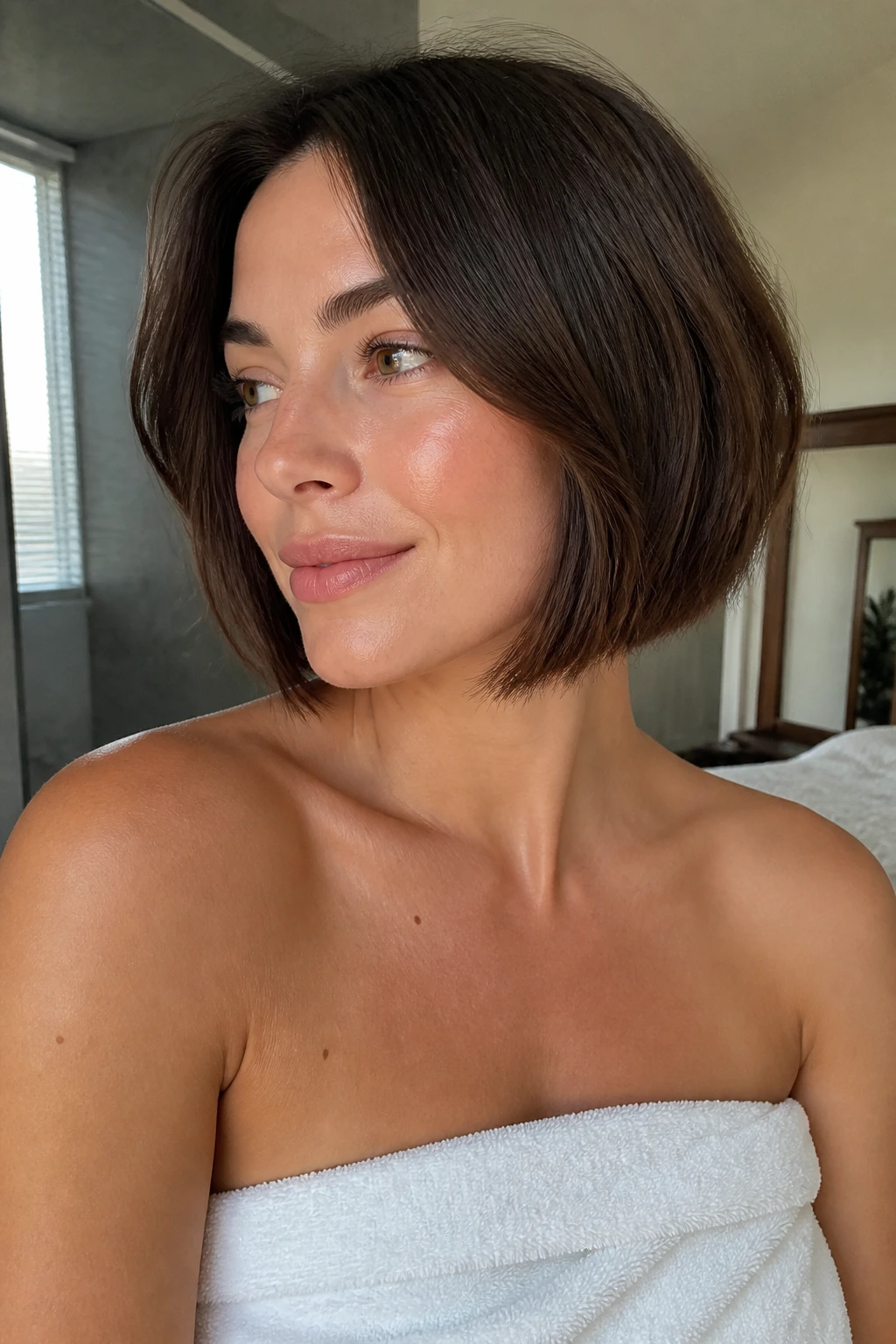
The smartest chin bob is often the one that looks good after a towel squeeze and a little cream. Invisible interior layers make that possible. They keep the hair from puffing out at the sides, but the outside shape still reads as clean and full.
This cut is ideal if you do not want to spend ten minutes with a brush every day. The layers sit inside the haircut, so the ends keep their line while the body of the hair settles naturally. That makes it a good fit for slightly wavy hair, medium density hair, or anyone who likes a low-effort finish that still looks thought out.
A light leave-in conditioner, a dab of curl cream, or a soft mousse can help, depending on your texture. The key is not loading the hair up with product. Chin-length cuts get greasy faster than longer ones, and heavy styling cream can make the whole thing collapse by noon.
Ask for:
- Interior layers, not visible choppiness
- A chin-length perimeter with gentle movement
- Dry-cut shaping if your texture is unpredictable
- Soft cleanup around the face, not a heavy fringe
This is the one that grows out well, too. That’s a real perk, not a tiny bonus.
Final Thoughts
A good chin bob should feel like it was made for your hair, not just borrowed from a photo. The shape matters, but the layer placement matters more. That’s the part that decides whether the cut hugs the jaw, flips out at the wrong place, or falls flat and moody by lunchtime.
If you’re choosing between styles, start with your hair density and how much work you want to do in the morning. Bring photos, yes, but bring ones that match your texture too. A picture of a model with thick wavy hair is not much help if your own hair is fine and straight. Haircuts behave on real heads, not mood boards.
One good chin bob can do a lot. The wrong one can keep getting in your way until it grows out. Pick the version that makes your hair easier to live with, and the rest tends to fall into place.
