



A wavy bob on medium length hair can look sharp, soft, or a little undone in the best possible way, and the difference usually comes down to the cut under the wave. If the shape is wrong, the bends puff out at the sides or collapse at the ends. If the shape is right, the hair falls with that easy swing people always seem to want but rarely get on the first try.
Medium-length hair is a sweet spot for this. There’s enough length for a bend, a tuck, a claw clip, or a quick twist behind the ear, but not so much that the style starts feeling heavy by midday. I’ve always liked this length because it can handle blunt edges, soft layers, curtain bangs, or a rougher texture without turning into a styling project that eats your morning.
The real trick is matching the haircut to how your hair behaves on a normal Tuesday. Some wavy bobs need almost nothing beyond a bit of cream and air-drying. Others look better with a diffuser, a round brush, or a single pass of a curling wand to tighten the shape near the face. The styles below all live in bob-and-lob territory, but they solve different problems: flat roots, bulky ends, awkward grow-out, heavy bangs, and that in-between length that can either look chic or look ignored.
1. Soft Layered Wavy Bob for Medium Length Hair
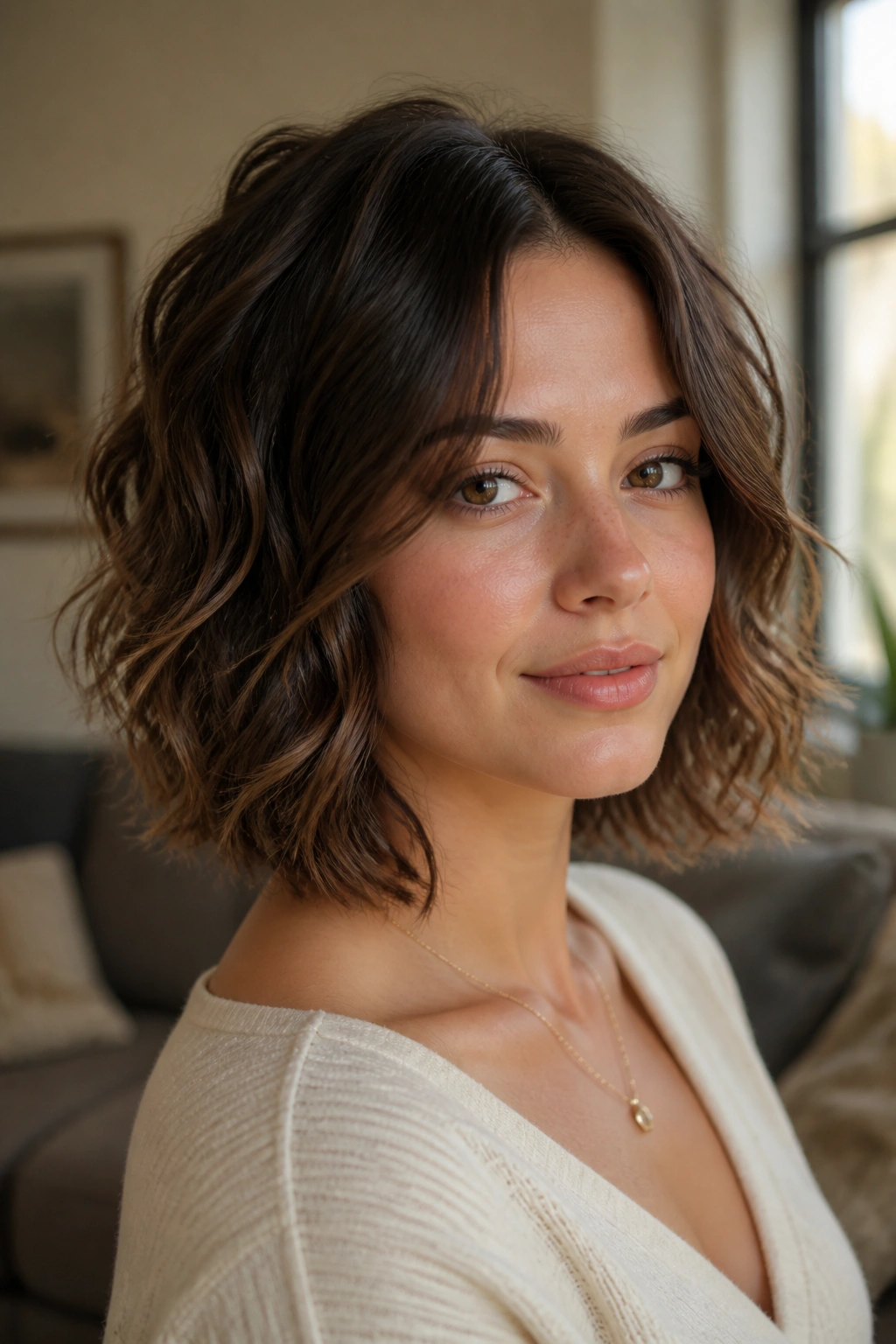
Soft layers are the easiest way to keep a wavy bob from sitting like one solid block. When the cut has gentle internal movement, the wave can bend without turning the whole shape fuzzy or wide.
Why the layers matter
Ask for long, invisible layers rather than choppy chunks. That phrasing matters more than people think. You want the ends to move, not disappear.
This version works especially well if your hair sits somewhere between fine and medium or if your waves loosen out by the afternoon. A blunt edge alone can make the style feel heavy. Soft layering gives the cut a little air around the cheeks and jaw, which is where medium-length hair tends to look most flattering.
Best for: round faces, thick waves that need lightening, and anyone who wants bounce without obvious texture lines.
Styling note: a pea-sized amount of curl cream on damp hair is usually enough. Scrunch, let it dry, then break the cast with dry hands once the waves feel set.
Ask your stylist for: a collarbone-length bob with soft face-framing pieces, no hard stacking in the back, and ends that are point-cut instead of chopped bluntly.
A one-length cut can work, but this one is kinder to real life.
2. Blunt Wavy Lob With Ends That Flick

A blunt line can make waves look cleaner, not heavier. That’s the part people miss when they assume a wavy bob must always be layered to behave.
The beauty of this cut is the contrast. The perimeter stays strong and tidy, while the waves just kiss the edge and bend outward slightly at the last inch or two. That little flick keeps the style from looking rigid. It also gives medium length hair a more deliberate shape, especially if your waves are loose rather than springy.
I like this one for hair that gets puffy when it’s over-layered. A blunt lob can hold its own weight and still show movement, which means you spend less time fighting frizz at the ends. Use a 1.25-inch curling iron or wand only on the mid-lengths, then leave the final inch straight so the finish feels modern, not curled-to-death.
One sentence matters here: do not overbend the ends.
A blunt wavy lob looks best when the root stays calm, the mid-lengths have a soft wave, and the ends barely turn. If you want polish without stiffness, this is one of the strongest options on the page.
3. Collarbone Wavy Bob With Curtain Bangs
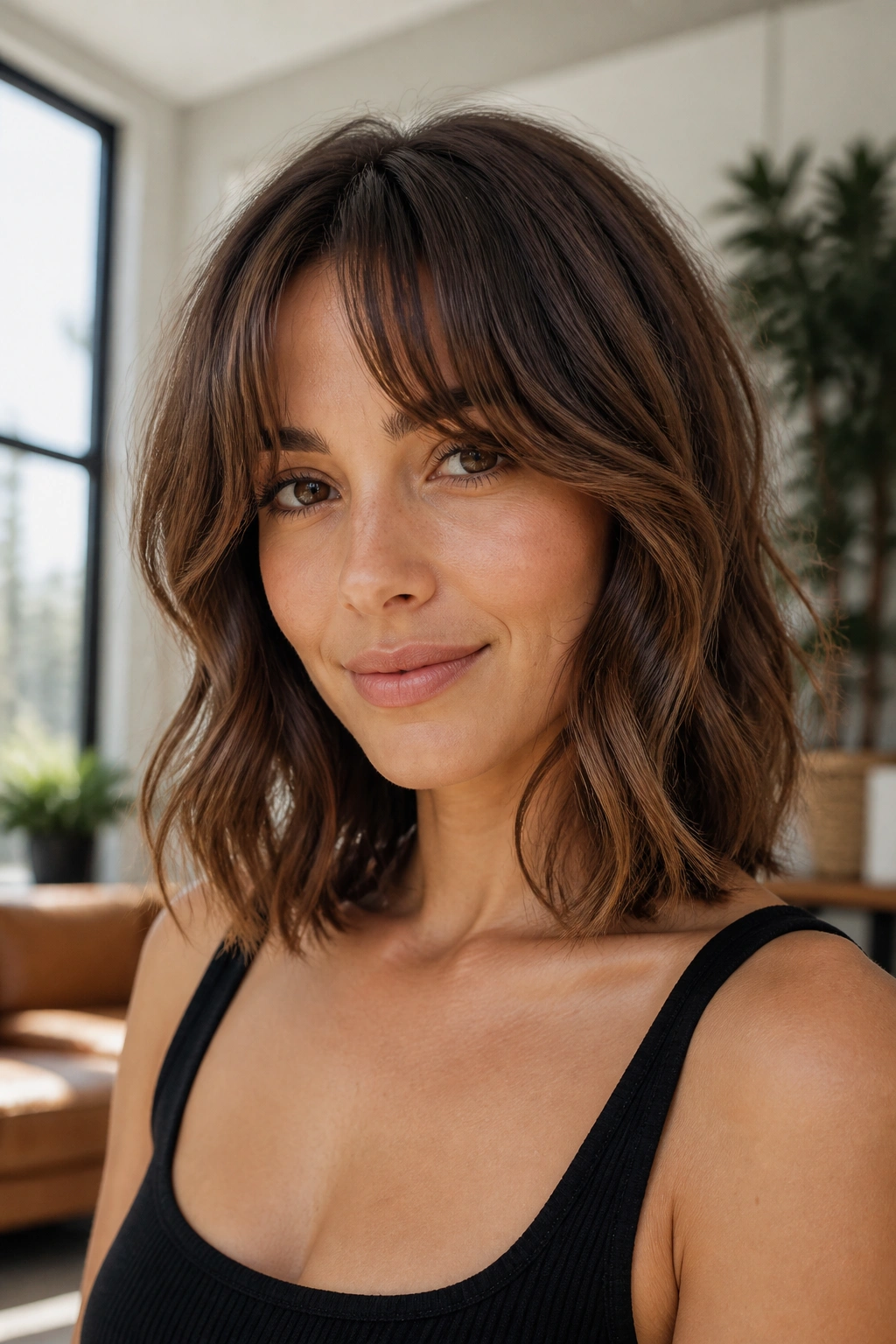
Can curtain bangs and waves live together without turning into a face curtain? Absolutely — if the fringe stays light and the main length keeps enough movement to balance it out.
This cut sits right at the collarbone, which is a smart place for medium hair because it leaves room for the bangs to fall forward without swallowing your whole face. The waves give the fringe a softer landing, and the fringe gives the rest of the bob a little personality. It’s a good match for someone who wants shape around the face but doesn’t want a heavy bang that needs wrestling every morning.
How to style the fringe
Blow-dry the bangs with a small round brush or a medium boar-bristle brush, aiming them away from the face first, then letting them fall naturally. That keeps them from splitting in odd places.
A tiny bit of cream or serum on the ends helps, but keep product off the roots. Curtain bangs get greasy fast if you’re heavy-handed. If your waves are loose, a quick bend with a flat iron through the front pieces can help them connect to the fringe instead of sitting apart from it.
This one looks especially good when the layers start around the cheekbone rather than at the chin. The movement lands in the right spot, and the whole cut feels soft instead of overworked.
4. Shaggy Wavy Bob With Broken-Up Ends
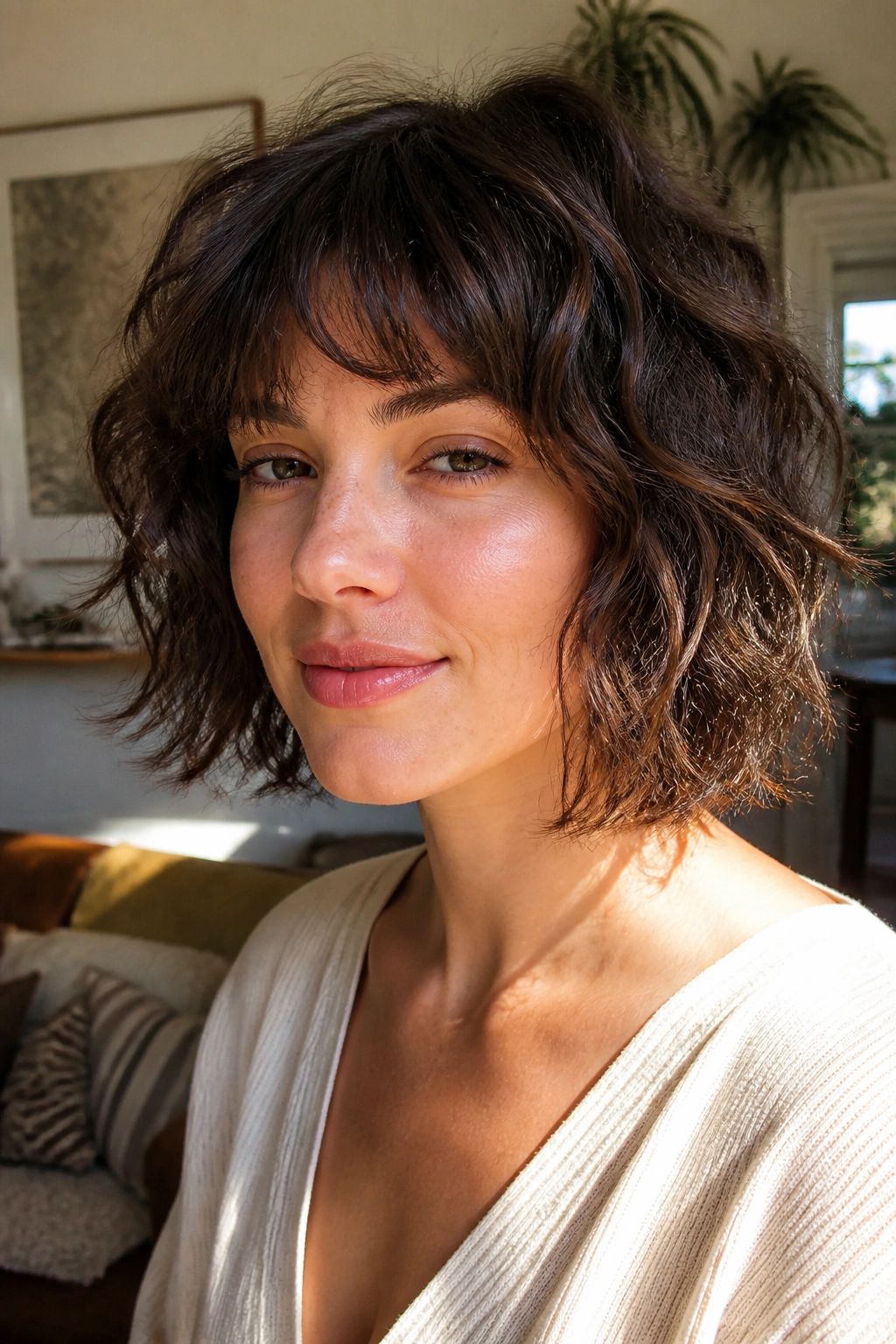
Picture hair that air-dries in twenty minutes and still looks like it was done on purpose. That is the appeal of a shaggy wavy bob.
The shape is looser than a classic lob, and that matters. Instead of one clean line, you get chipped-up ends, a little separation through the middle, and enough irregularity to make the wave pattern look casual rather than styled. It’s the cut I reach for mentally when hair feels too controlled and needs some life back in it.
What makes this version work
- The layers start higher, usually around the cheek or lip line.
- The ends are texturized, not blunt.
- The crown stays slightly flatter so the cut doesn’t balloon.
- A diffuser helps, but finger-drying can work too.
If your hair is thick and wavy, this cut can be a relief. If your hair is fine, it can still work, but the layers need to be softer so you do not lose too much density. A sea-salt spray can help the piecey finish, though I’d use it sparingly; too much and the hair can feel rough by the second day.
Best trick: scrunch with a towel, not a brush.
That sounds simple because it is. The whole point is to keep the texture a little messy, not make it perfect.
5. Deep Side-Part Wavy Bob

A deep side part changes everything. The cut itself can be simple, but the asymmetry gives the waves a fuller look at the crown and a stronger sweep across the face.
This is one of the easiest ways to wake up a medium-length bob that has started feeling too symmetrical. A side part builds height where the hair wants to lie flat, which is useful if your roots collapse fast or if your face shape benefits from a little lengthening along one side. The effect is subtle at first glance, but it makes the haircut look more deliberate.
I like this version for days when hair looks tired. A side part hides a lot of that exhaustion.
If you want the result to feel current without trying too hard, tuck one side behind the ear and let the other side fall forward with a loose wave. The contrast is small, but it keeps the shape from reading as too neat. Use a light mousse at the roots before drying, then set the part while the hair is still warm so it keeps its direction.
This is also one of the better medium-length wavy bobs for second-day hair. A quick mist of water, a little scrunching, and the part usually falls back into place.
6. Inverted Wavy Bob With a Shorter Back
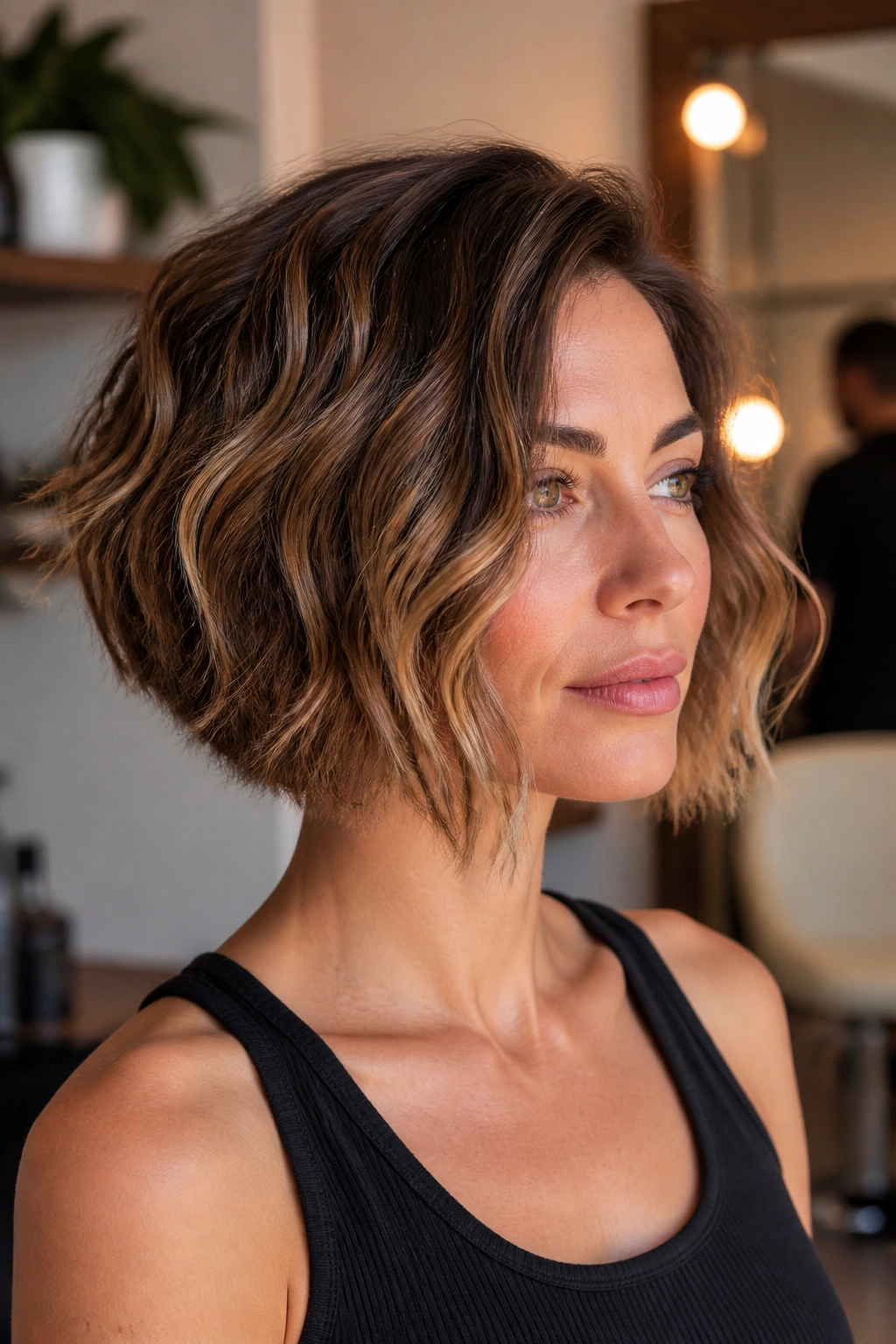
Unlike a classic lob, an inverted wavy bob gives you lift at the nape and a little swing toward the front. That front-weighted shape can make waves feel sharper and less boxy.
The key is restraint. A dramatic stack in the back can look dated fast, and it tends to fight the softness that makes wavy hair so good in the first place. A gentle inversion is much better: shorter at the back, longer through the front, but still soft enough that the wave can move naturally. Think curve, not helmet.
This cut is especially useful if your neck feels hidden under a one-length bob. The shorter back opens the shape and gives the front pieces a clean line near the jaw. It also works nicely on medium-thick hair because the angle removes weight without making the cut look thin at the bottom.
Too much graduation is a problem.
When the back is pushed too high, the whole style can puff up around the crown and lose the swing that makes the bob interesting. Ask for a subtle angle, a clean perimeter, and texture only where the hair actually needs it.
7. French-Inspired Wavy Bob That Skims the Jaw

A French-inspired wavy bob is less about perfection and more about attitude. It sits a touch shorter, usually around the jaw or just below it, and it looks better when the wave is a little loose and a little imperfect.
The shape is compact, which is what gives it that crisp, face-framing feel. Medium-length hair can carry it well because there’s enough density to keep the line clean, but not so much length that the style sinks. If you like hair that feels airy around the neck and cheekbones, this cut has a nice amount of lift without trying to be flashy.
Shape
Keep the perimeter blunt or only lightly textured. If the ends are over-thinned, the bob loses the graphic edge that gives it character.
Styling notes
A dab of styling balm on dry hands can tame the surface, but don’t smooth every wave out. The charm is in the slight bend. If you want a little bend near the front, wrap the top sections around a curling iron for just 5 to 8 seconds each, then let them cool before touching.
Best for
This works well on oval and heart-shaped faces, though plenty of others can wear it too if the jawline pieces are balanced correctly. It is also a smart choice when you want a shorter bob that still has enough length for a small clip or a side tuck.
8. Piecey Beach-Wave Bob With Airy Ends
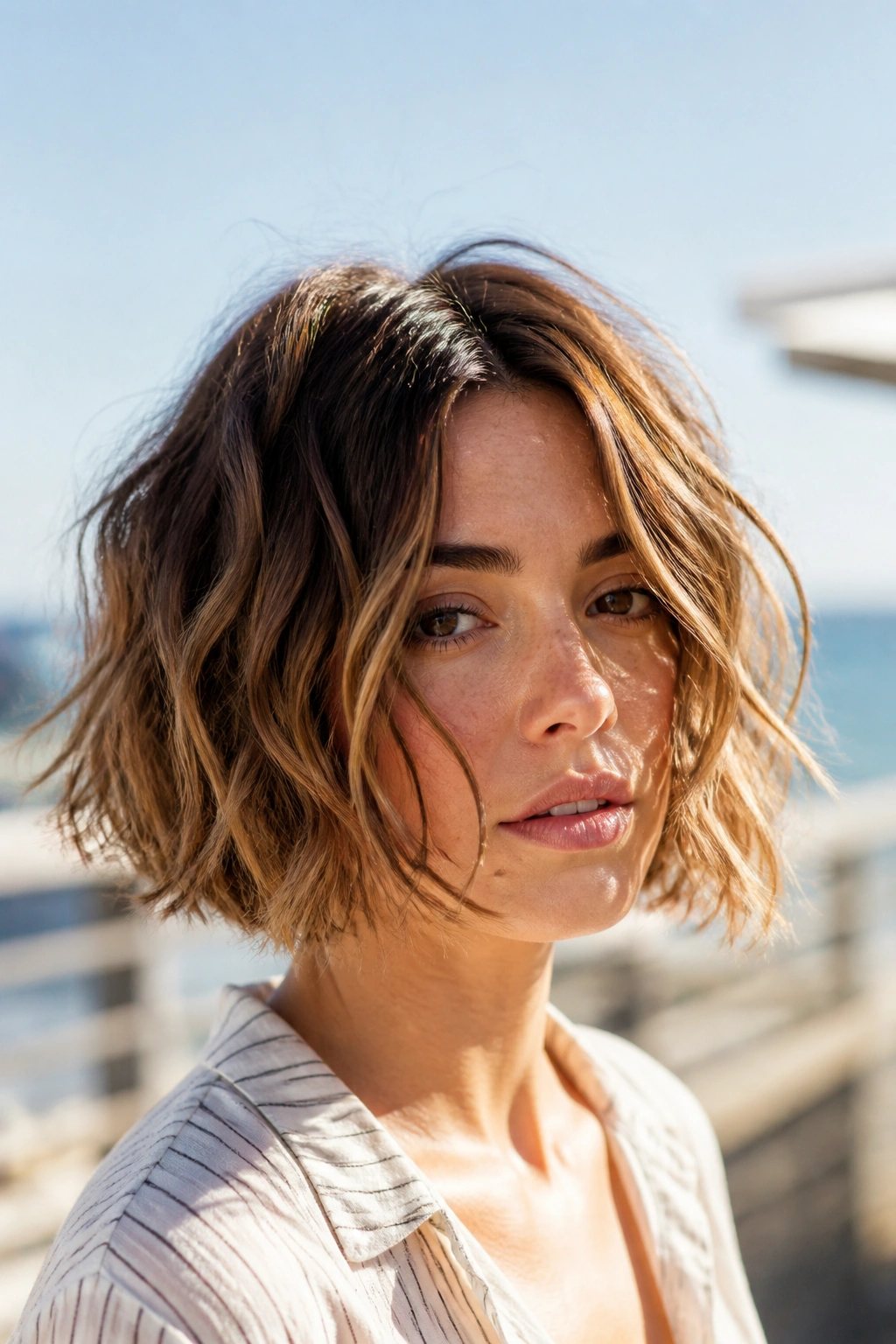
You know that bob that looks like you slept in it on purpose? This is that haircut, only cleaner and less random.
The piecey beach-wave bob depends on separation. Each wave should have a little room to breathe, which means the product choice matters almost as much as the cut. A lightweight mousse or wave spray is usually better than a heavy cream here, because you want the ends to stay soft and airy instead of sticking together.
- Use a salt spray only if your hair can handle it.
- Keep the wave irregular, not identical from section to section.
- Leave the bottom inch straighter for a lighter finish.
- Scrunch upward, then stop touching it.
That last point sounds boring, but it saves the style. The more you fuss with piecey waves, the more likely they are to turn fuzzy.
I like this version on medium hair that sits somewhere between straight and wavy. It gives shape without pretending the hair is curlier than it is. And if your hair gets flattened by hats, clips, or car seats, this style bounces back better than a more polished blowout bob.
9. Rounded Wavy Bob With Soft Volume at the Crown

If your hair grows wide at the sides, a rounded bob can fix that without making the cut feel strict. The curve pulls the eye upward and keeps the silhouette close to the head where it should be.
This version works especially well when the wave pattern is soft and the top layers are slightly shorter than the lengths below. That subtle rounding helps the cut sit in a smoother arc, which is handy if you do not want the triangle effect that shows up when waves expand at the jaw. You still get texture. You just don’t get the bulk.
A round brush at the roots can help, but you do not need a salon blowout every time. Lift the crown while drying, then let the rest of the hair fall naturally. The ends should tuck inward a little, not curl under in a stiff way. If they do, the style starts looking too neat, and that is not the point.
This cut flatters square faces especially well because the rounded outline softens the edges. It also gives fine or medium hair a fuller look without requiring a ton of product. A small amount of root-lifting foam is usually enough.
10. Angled Wavy Bob That Lengthens the Neck
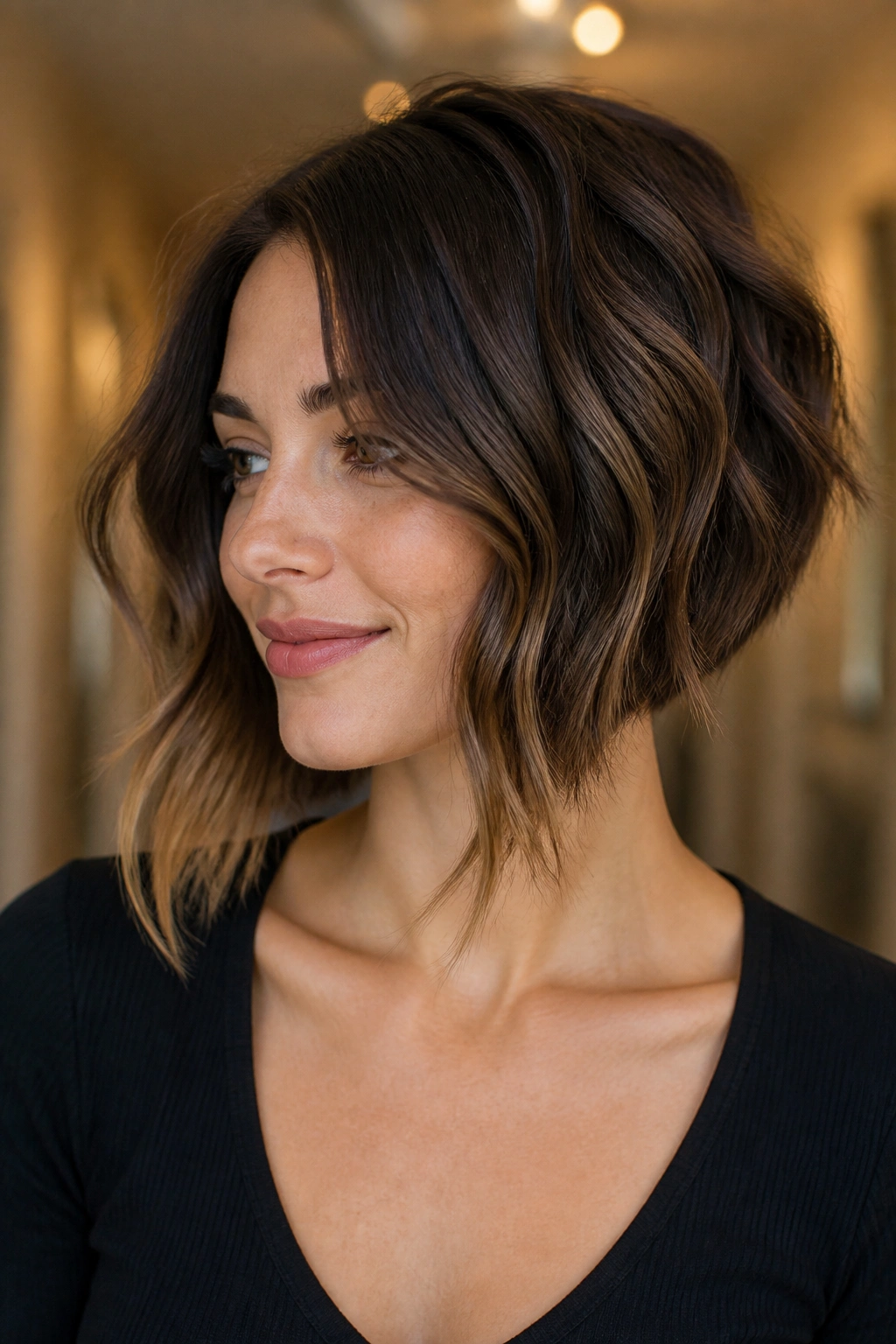
A gentle angle does more than you’d expect. The front pieces sit longer, the back stays tighter, and the whole haircut feels leaner through the neck.
This is not a dramatic A-line bob with a hard edge. That would be too sharp for most wavy hair. A softer angle is cleaner and easier to live with because it lets the wave move while still giving the cut a directional shape. The result is a bob that feels pulled together without being stiff.
If you want the neck to look longer, this is one of the smartest choices. The shorter back keeps the bulk off the nape, and the longer front pieces draw the eye downward in a flattering way. It also pairs well with side parts or tucked-behind-the-ear styling, which makes the angle more obvious.
What I would avoid: a lot of thick layering at the front. That can chew up the angle and make the haircut lose its shape.
Ask for a subtle drop from back to front, soft texturing through the mid-lengths, and ends that are cleaned up rather than heavily razored. That keeps the movement smooth and the line readable.
11. Wavy Bob With Wispy Bangs

Do bangs and waves turn into a mess? They can, if the fringe is too heavy. Wispy bangs solve that problem by letting the forehead breathe a little.
This cut is lighter than curtain bangs and shorter than a full fringe, which gives it a nice in-between feel. On medium-length hair, that matters because the bob already carries enough shape on its own. The bangs should feel like a detail, not the whole story. When they’re cut softly, the waves around the face can frame them instead of fighting them.
Bang maintenance
Wispy bangs need trims more often than the rest of the haircut. Even when the bob grows out nicely, the fringe can start poking into the eyes and losing its shape.
A small round brush or even a flat brush can be enough to reset them after washing. Dry the bangs first so they don’t dry bent in a weird direction while the rest of the hair is still damp. If you let them air-dry on their own, they often split in the middle or curl too high on one side.
This cut works especially well if your forehead is longer or you like hair that breaks up the face without hiding it. It also has a nice softness around glasses, which is not something every bob handles well. The lighter fringe keeps the look fresh instead of heavy.
12. Asymmetrical Wavy Bob With One-Side Sweep

An asymmetrical bob gives you a little tension, and that tension is what makes the style interesting. One side sits longer, the other side stays tighter, and the wave ties the whole thing together.
The best part is that the asymmetry does not have to be dramatic. Even a difference of about an inch can change the feel of the cut, especially when the waves are loose and the hair is medium length. That small imbalance makes the face look less boxed in and gives the bob a more lived-in edge.
If you like a side tuck, this cut is unusually flattering. The longer side falls forward enough to brush the collarbone, while the shorter side opens the face and shows off earrings or a strong jawline. It is a good choice when you want a bob that has character without screaming for attention.
A blunt asymmetrical line can feel too sharp. Soft waves keep it wearable.
I’d ask the stylist to keep the difference subtle unless you want a clearly fashion-forward shape. Too much contrast can make it harder to style on ordinary days, and medium-length hair usually looks better when the asymmetry feels intentional but not severe.
13. Textured Lob for Thick, Wavy Hair

More hair is not the problem. Too much weight in the wrong places is.
Thick, wavy hair needs a cut that removes bulk without hollowing out the ends. A textured lob does that well when the layers are placed inside the shape rather than sprayed all over the head. You want movement through the body of the hair, not gaps that make the perimeter look thin and scraggly.
What to ask for
- Internal layers to remove weight near the crown and sides.
- A perimeter that stays fairly solid.
- Light point-cutting at the ends, not aggressive razoring.
- Face-framing pieces that start below the cheekbone if you want softness.
That last part matters. If the shortest pieces sit too high, thick waves can puff out in a triangle, and nobody wants that.
Styling this cut is easier than people think. A curl cream on damp hair, then a diffuse-dry on low speed, usually gives enough shape. If the waves are coarse, a touch of serum on the ends keeps the surface from looking dry. I’d stay away from too much dry shampoo on day one because it can make thick waves feel gritty before they even get a chance to settle.
This is one of the most forgiving wavy bobs for medium length hair, and it wears well as it grows.
14. Fine-Hair Wavy Bob With Internal Layers
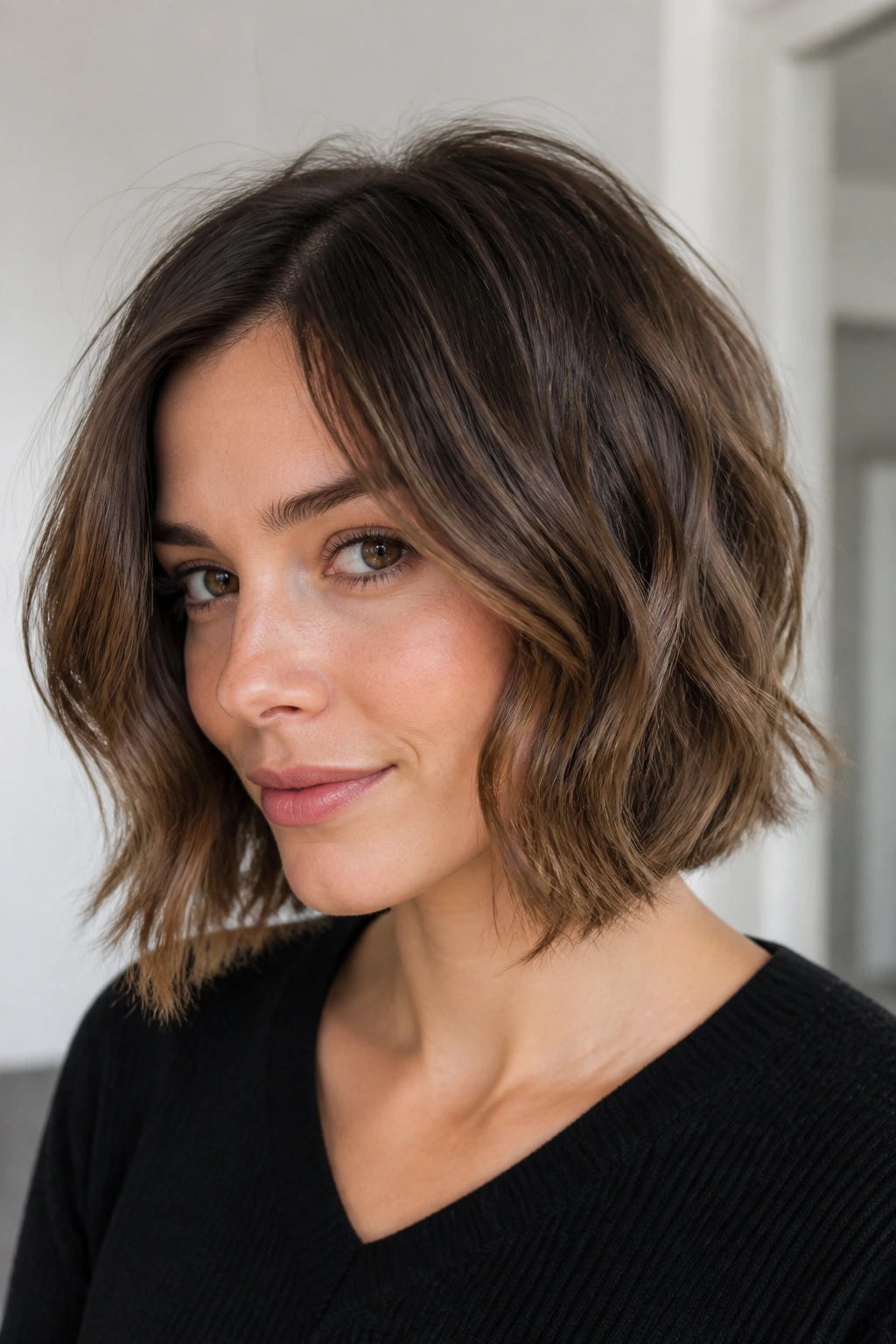
Fine hair and waves can look limp by noon, which is why the cut has to do most of the work. A good bob gives the illusion of thickness without sacrificing movement.
The safest version for fine hair keeps the perimeter blunt and uses internal layers sparingly. That means the outside line stays solid, while the inside gets just enough shaping to stop the ends from hanging flat. If you over-layer fine hair, it can go see-through fast. Then the wave has nowhere to land.
A little root lift helps a lot here. Mousse at the crown, a quick blast of heat, and a round brush at the top sections can give the bob a bit of architecture. You don’t need huge volume. You need enough lift so the hair does not glue itself to the head.
What not to ask for
Do not ask for heavy thinning. Do not ask for lots of razor work unless your stylist is very careful. And do not let the shortest layers climb too high unless you enjoy chasing volume all day.
This cut looks best when it feels tidy at the bottom and softly airy through the middle. The wave should support the shape, not replace it.
15. Grown-Out Wavy Bob That Hits the Collarbone

The easiest one to live with.
A grown-out bob that lands at the collarbone gives you all the movement of a shorter cut without the maintenance of a sharp line. It is the haircut you end up with when a bob grows past its first appointment, but that is not a bad thing. In fact, it is often where the style starts looking richest.
This version works because the length gives waves enough room to form a clean bend before they hit the ends. The collarbone acts like a built-in resting point, so the hair does not kick out awkwardly at the bottom. That makes it a smart choice for people who want a wavy bob for medium length hair but do not want to visit the salon constantly.
How to ask for it
Ask for a soft collarbone cut with minimal layering, a clean perimeter, and face-framing pieces that connect instead of hanging separately. That keeps the grow-out nice.
How to wear it between cuts
A half-up clip, a low twist, or a loose tuck behind one ear all work well here. If the ends start feeling blunt in a boring way, a quick wave refresh with a curling wand on just the front sections usually brings it back.
This is the style for anyone who likes hair that can be polished on good days and a little messy on the rest.
Final Thoughts
A good wavy bob is never only about the wave. The line underneath matters, the weight balance matters, and the way the cut grows out matters even more than people want to admit.
For medium length hair, that gives you a lot of room to choose. You can go blunt, layered, shaggy, rounded, angled, or asymmetrical, and each one changes how the wave sits against your face and neck. Some versions ask for more styling. Some barely need any. That’s the real decision.
If I had to give one piece of practical advice, it would be this: pick the bob that matches your texture on an ordinary day, not on your best hair day. The haircut that works when you’re rushed will always beat the one that only behaves after forty minutes, a diffuser, and a good mood.
