



Wavy hair and a blunt bob can have a small civil war on your head. One wants movement; the other wants a clean line.
An asymmetric bob solves that faster than people think.
Shift the weight a little, keep one side longer, and the wave pattern stops puffing into a triangle. The trick is not chasing drama for its own sake — it is placing the longest point where your hair actually bends, then letting the shorter side lift the face instead of dragging it down. Some asymmetric bob haircuts for wavy hair look sharp and editorial, while others sit softer and almost casual, but the best ones always respect the wave.
That balance matters more than the photo. If the cut is too short in the wrong place, waves spring up and steal the shape; if it is too long and too layered, the whole thing turns floppy. The options below cover the useful range, from barely-there slants to full-on one-side drama.
1. Jaw-Grazing A-Line With Soft Undone Waves
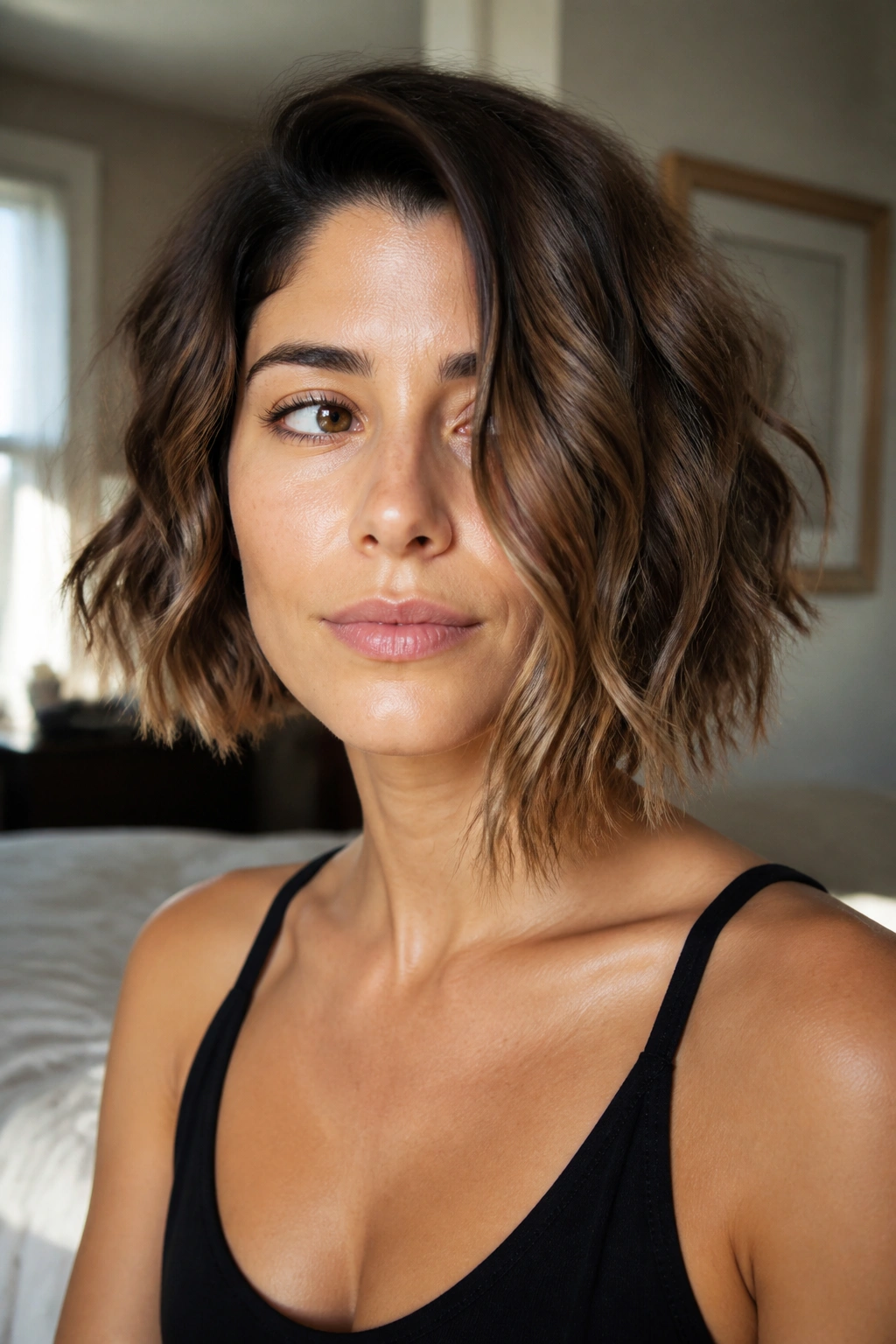
This is the one I’d hand to someone who wants movement without looking like they tried to negotiate with their own hair. The shorter side sits close to the jaw, while the longer side brushes past it by an inch or two, which gives wavy hair enough room to bend instead of balloon.
Why It Sits So Well
The A-line angle does two things at once: it sharpens the outline and keeps the front pieces from collapsing into the face. On loose waves, that matters a lot. If your hair bends from mid-length down, this cut lets the wave show without making the ends look ragged.
A dab of mousse on damp hair is usually enough. Scrunch, diffuse for a few minutes, then stop touching it. The shape should look a little imperfect. That is the point.
- Best for loose to medium waves
- Works well on fine hair that needs a cleaner outline
- Ask for the longest point to hit the top of the neck or just under the jaw
- Finish with a pea-size cream on the ends only
One clean edge and one soft bend. That combination is doing most of the work here.
2. Side-Swept Bob With a Deep Part
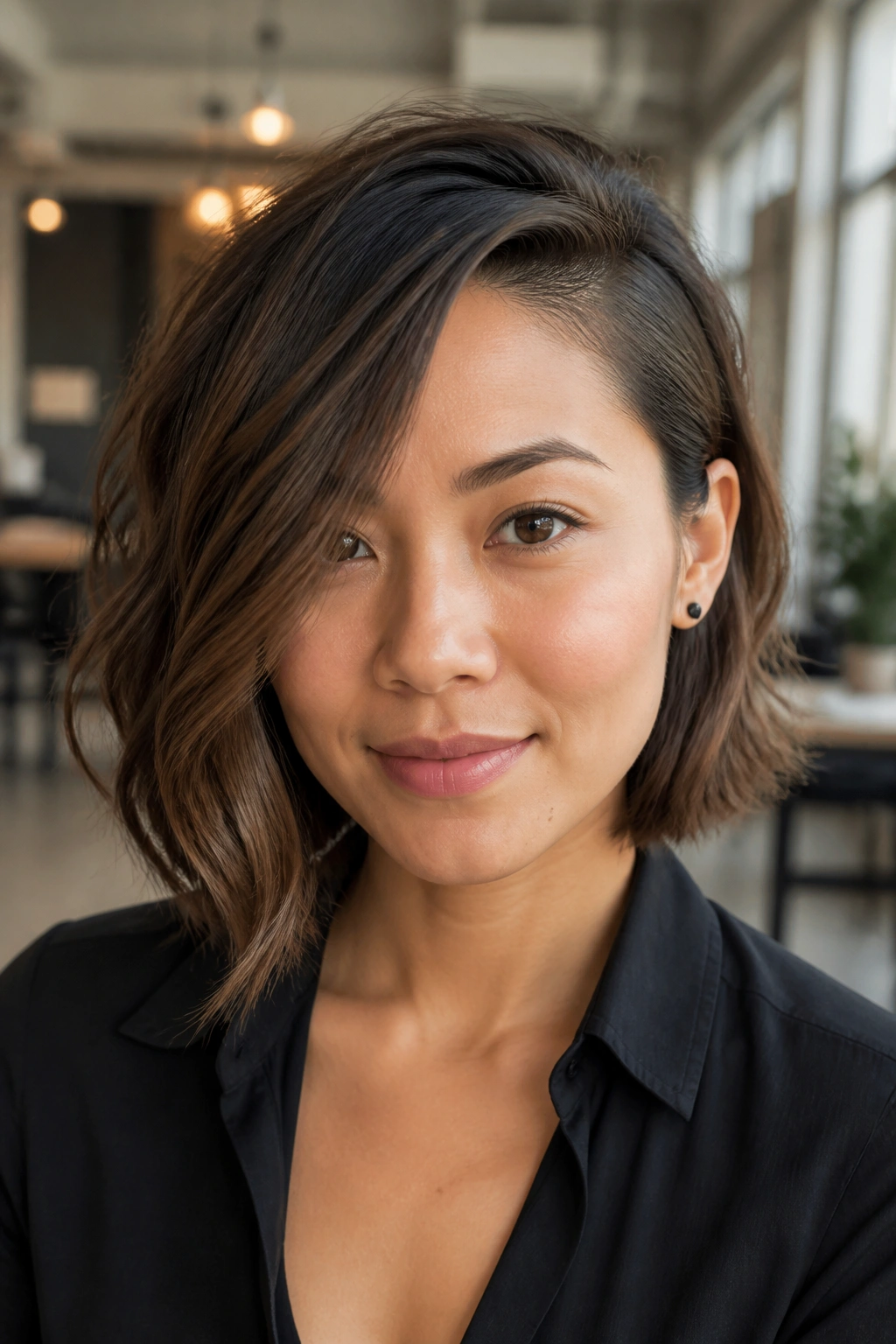
A deep side part changes everything in about ten seconds. It gives the longer side more weight, creates a little lift at the crown, and makes even soft waves look deliberate instead of accidental.
The nice part is that this style does not need a dramatic cut to feel dramatic. A bob that only leans asymmetrical by half an inch can look bolder once the part shifts and the front wave falls across the forehead. Keep the roots smooth, bend only the ends with a 1-inch iron if they need help, and let the rest air-dry.
This version suits people who like a little edge but still need the cut to work in a normal day. It’s tidy enough for a blazer, loose enough for a sweater, and a lot less fussy than it sounds.
3. Chin-Length Cut With One Longer Front Corner
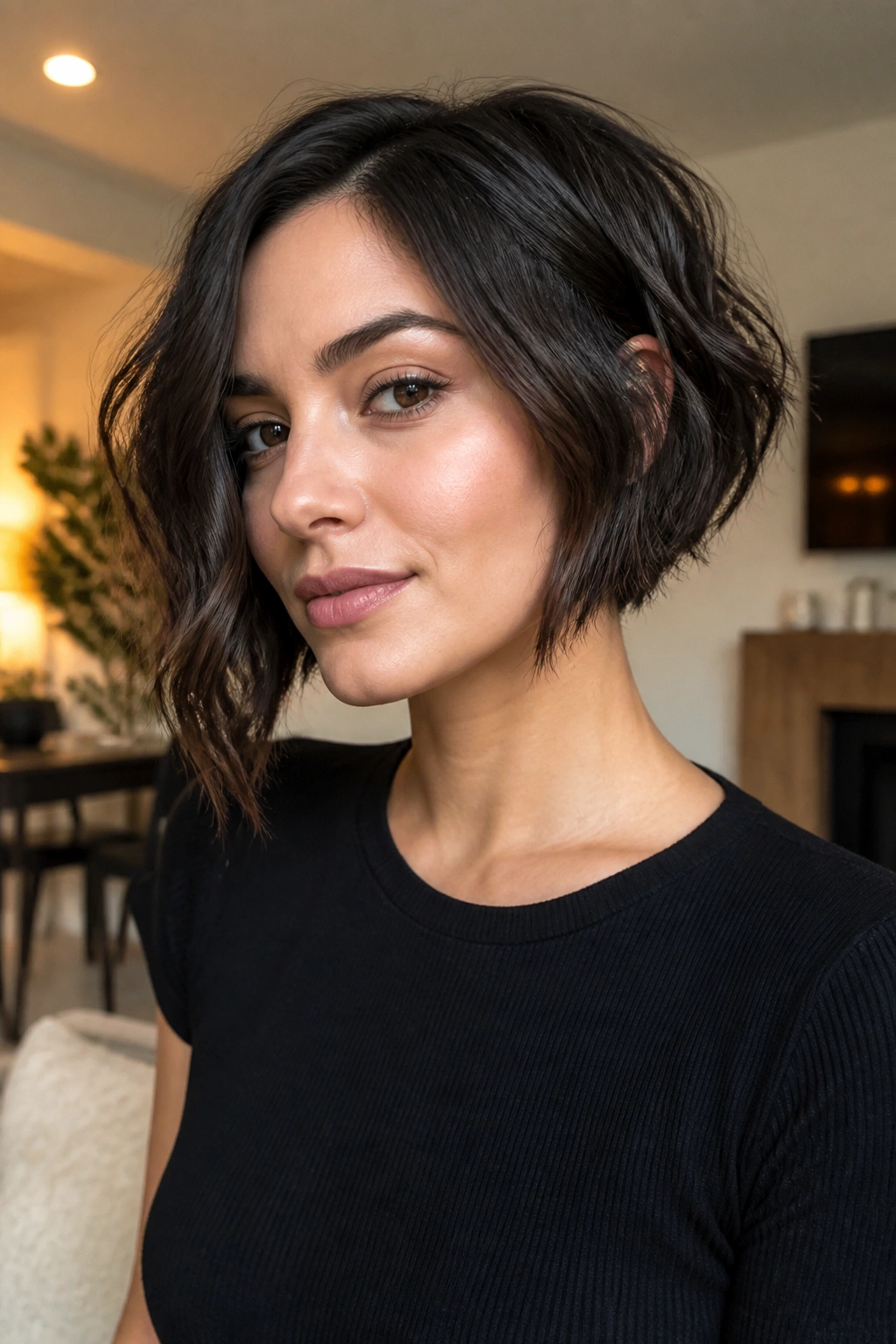
Does chin length sound risky on wavy hair? Sometimes. But if the front corner is left a little longer, the shape stops puffing out and starts framing the face.
How to Style It
Ask for the shorter side to skim the chin, then let the longer corner fall one to one-and-a-half inches lower. That tiny difference is what keeps the cut from reading as a plain bob. It also gives your waves a direction to follow, which helps if your texture is more S-shaped than curly.
Use a diffuser on low heat and cup the ends upward for a few seconds at a time. Don’t chase perfect symmetry. The point is to keep the front corner visible and let the bend show.
A chin-length asymmetrical bob looks especially good on sharper jawlines because it softens the edges without hiding the bone structure. That is a nice balance, and not one every haircut pulls off.
4. Collarbone Bob With Beachy Texture
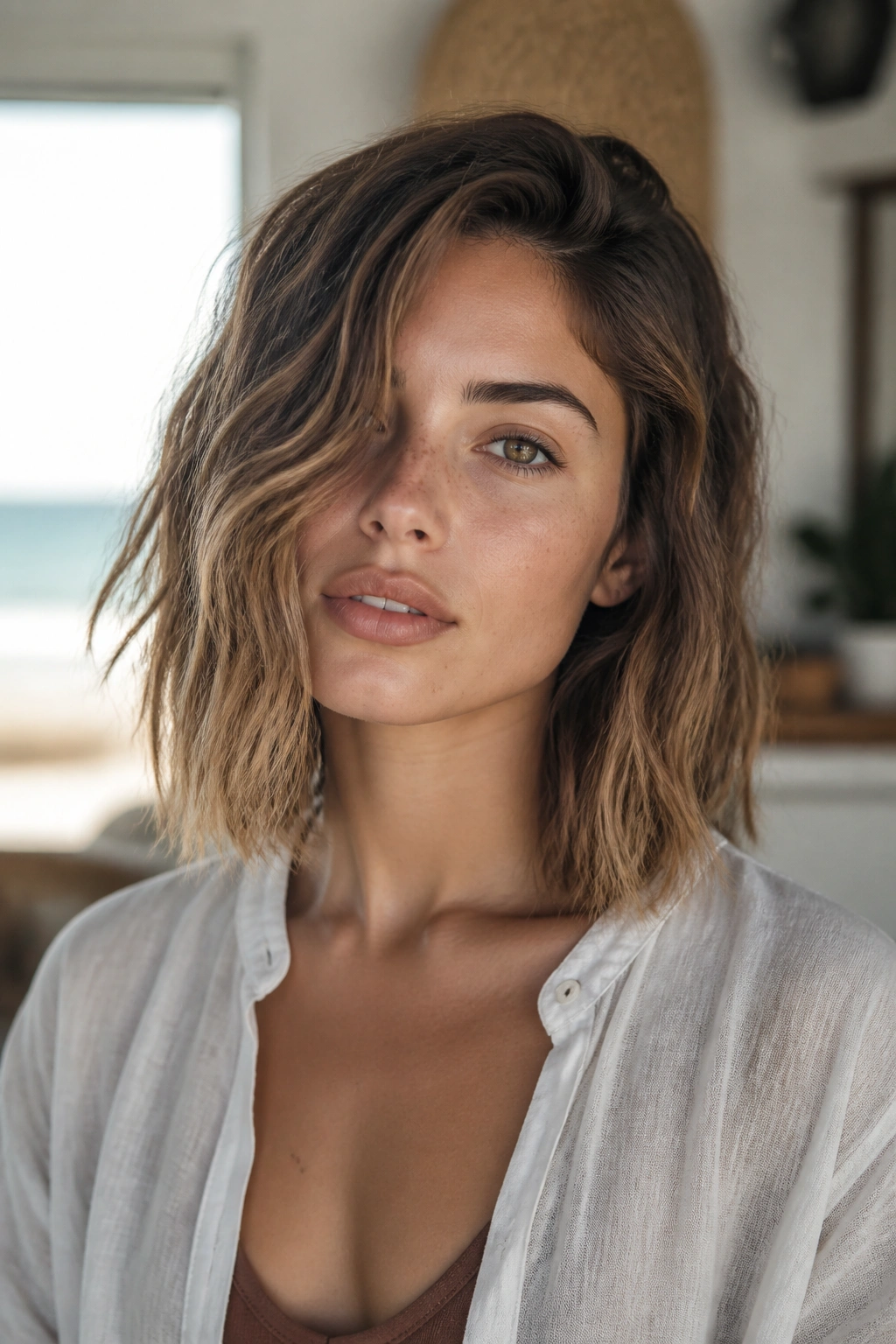
If you hate hair getting stuck under a coat collar, this is the cut I’d put near the top of your list.
The longest piece grazes the collarbone, which gives wavy hair room to settle, while the shorter side lands closer to the jaw and keeps the shape lifted. That little stretch in the front means the waves can break up naturally instead of swelling outward.
- Use sea-salt spray on damp hair, not wet hair
- Scrunch the mid-lengths, then leave the crown alone
- Keep the shortest side tucked slightly behind the ear for a clean line
- A wide-tooth comb is enough if your waves are prone to frizz
This version looks best when it is not overworked. Air-dry it to about 80 percent, then finish with a few twists around your fingers. Done well, it has that easy, wind-tossed shape without the crunchy feel that people always seem to regret.
5. Stacked Bob With Gentle Crown Lift
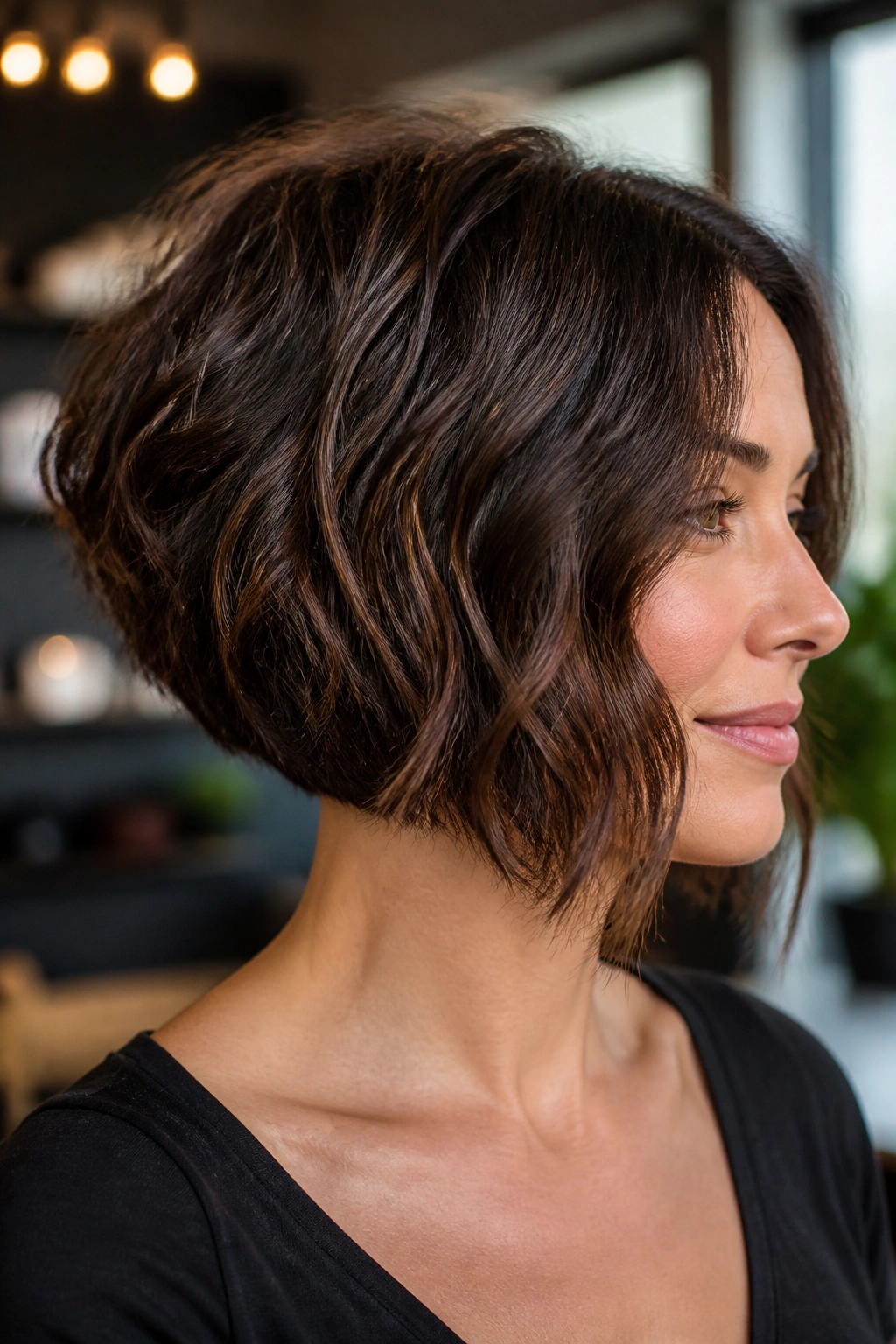
Stacking at the back can be a blessing or a mess. The difference is restraint.
A gentle stacked bob lifts the crown just enough to keep wavy hair from sitting flat, especially if your hair is dense or grows outward at the nape. The shorter back creates a little shelf of volume, while the longer front side drapes forward and keeps the bob from feeling boxy.
The mistake to avoid is heavy stacking. Too much and the back starts looking like a helmet. That’s not a cute surprise. Ask for soft graduation, not sharp layers, and keep the transition smooth from the crown down to the neck.
A small round brush at the roots can help on wash day, but you do not need to blow-dry the whole head into submission. A quick lift at the crown and a little bend at the ends is enough.
6. Sleek Side-Part Bob With Wavy Ends
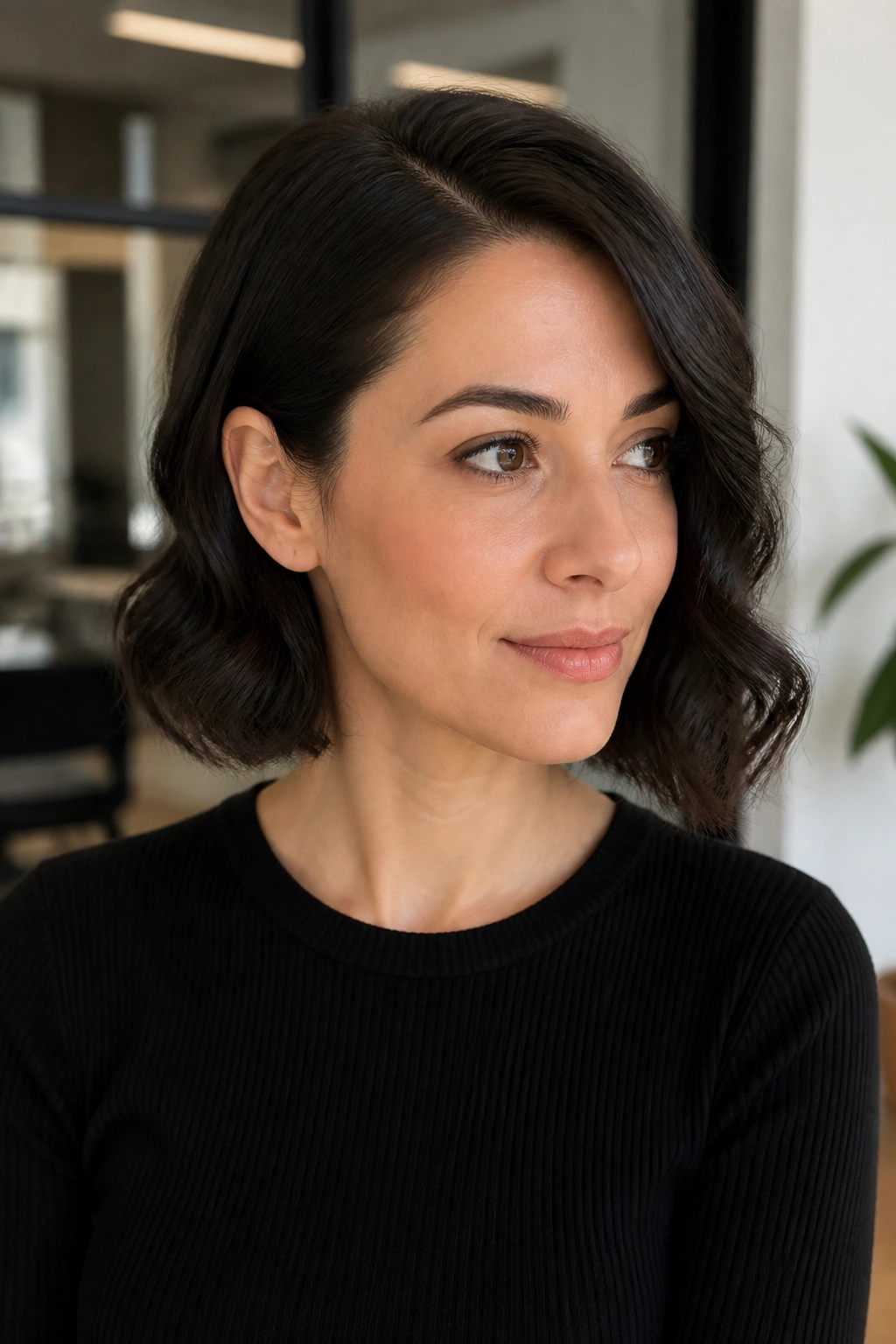
This one is for the person who likes a little polish at the root and softness where the hair moves.
Unlike a tousled bob, the sleek side-part version keeps the top calm and controlled. The asymmetry shows up more clearly because the waves are saved for the ends, where they curve under or flick out just a bit. That contrast makes the haircut look cleaner, not stiffer.
It works especially well on thicker waves that can get fuzzy when air-dried all over. Smooth a light cream through the mid-lengths, brush the root area flat while damp, then let the ends dry with their natural bend. If you want extra shape, twist the front sections once or twice while they are still warm from the dryer.
Best for people who need a bob that can handle work, dinner, and not much else in between. It has order. It also has personality, which is the part most sleek cuts forget.
7. Cropped Bob With a Long Fringe Sweep
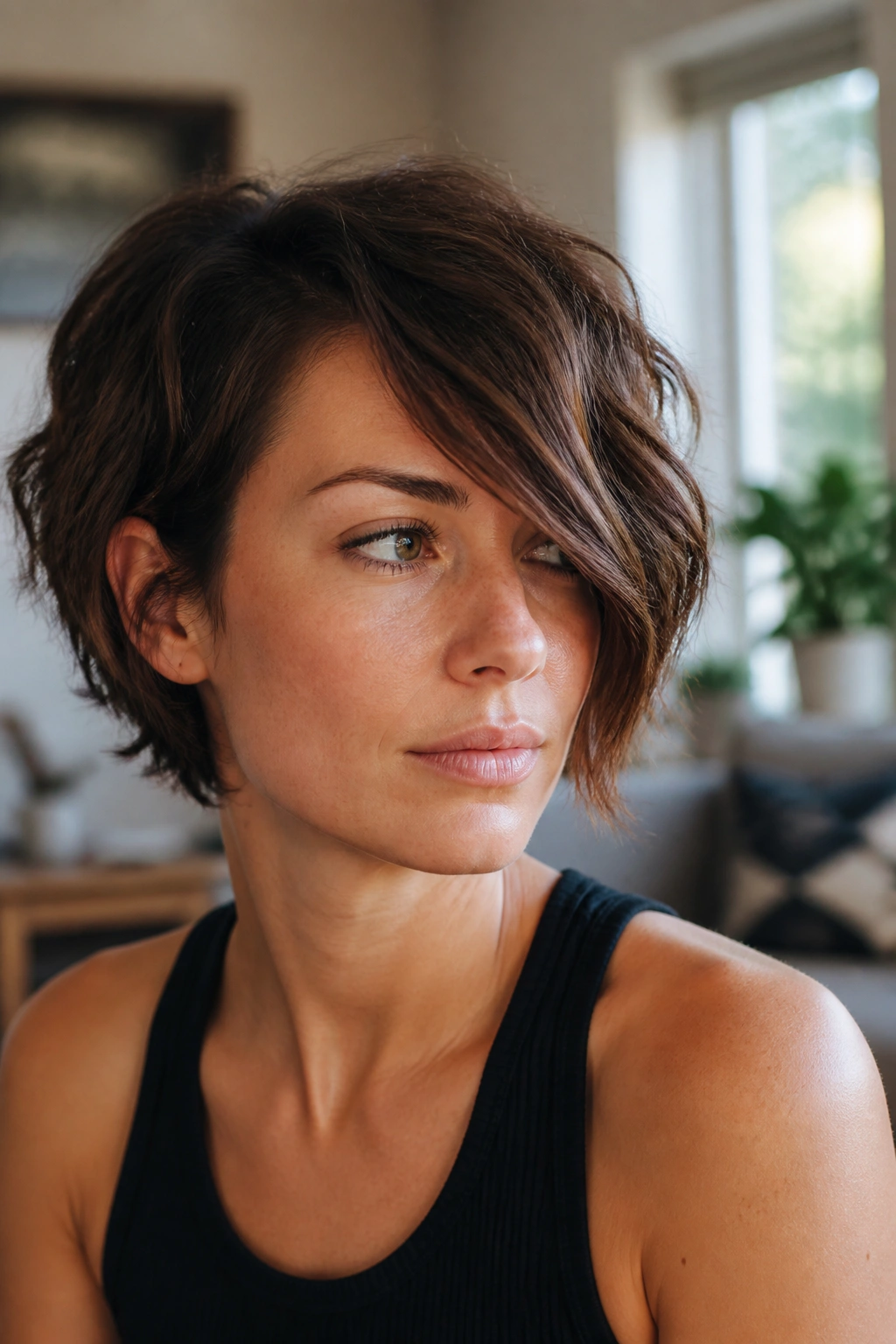
A short bob gets a lot more interesting when the front fringe sweeps across one side like it has somewhere to be.
The longer fringe creates an easy diagonal that pulls the eye from the cheekbone down toward the jaw. That keeps the cropped length from looking too abrupt on wavy hair, which can sometimes spring upward and make short cuts feel smaller than expected. If your waves are loose, this is a nice way to keep air in the shape.
What to Watch For
- Keep the fringe soft, not blunt
- Ask for the shortest side to stay above the cheekbone only if your hair is not too springy
- Use lightweight mousse, because heavy cream can collapse the fringe
- A quick bend with a flat iron at the front is enough on rough days
This is the sort of cut that looks best when it is slightly undone. If the fringe falls a little differently each day, that is part of the charm.
8. Hidden Undercut Bob For Extra Shape
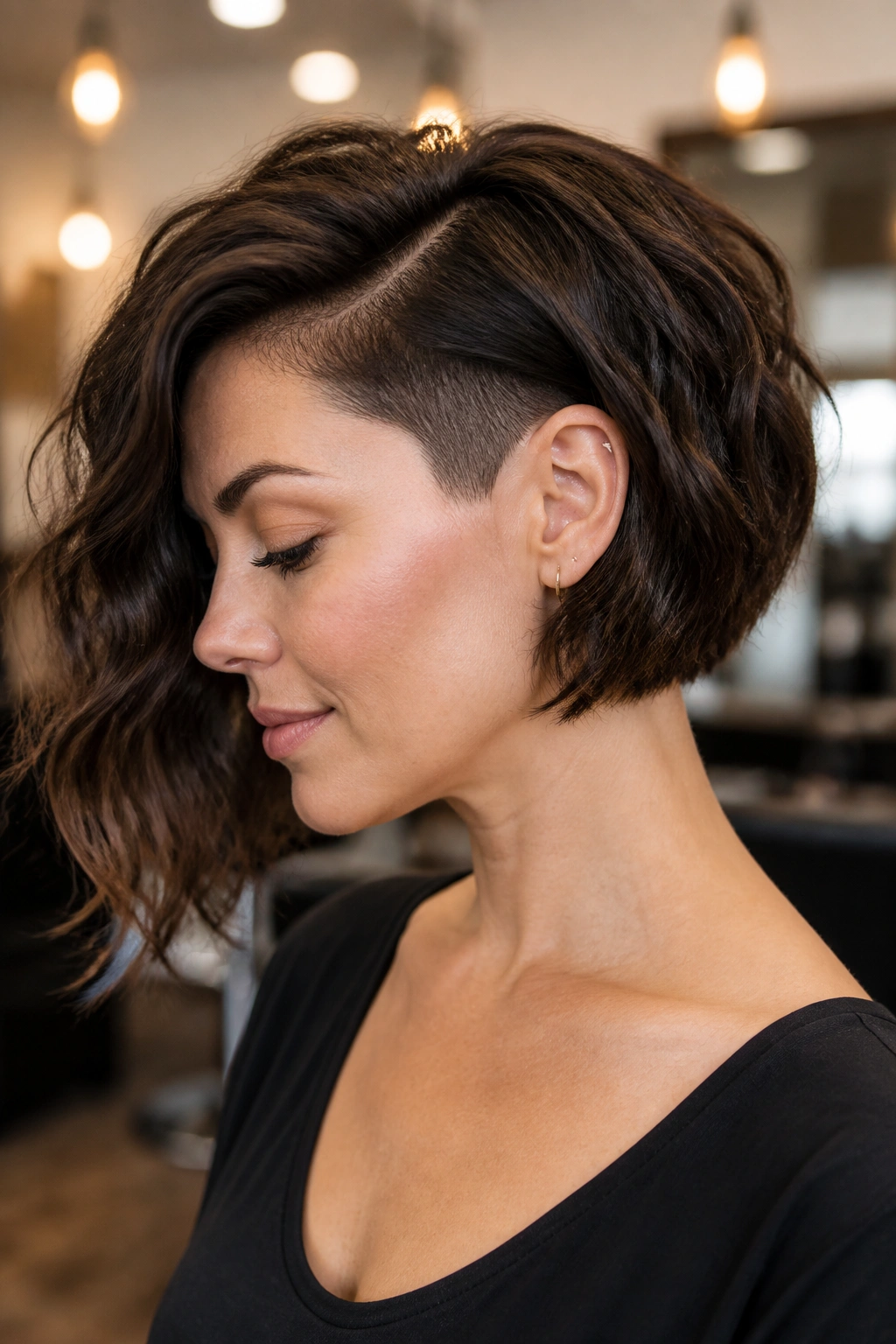
This cut is a quiet fix for a loud problem: too much hair. If your waves are thick, the interior bulk can make an asymmetrical bob puff out instead of falling into shape.
A hidden undercut removes weight underneath the longer side or along the nape, so the outer layer can sit closer to the head. From the outside, it still reads as a bob. From the inside, it behaves much better. That makes it a smart option for dense hair that refuses to lie down.
It is not the right move for very fine hair. Fine waves need body, not subtraction. But for heavy hair, this can be the difference between a cut that flips out everywhere and one that stays neat from morning to night.
Ask for the undercut to stay concealed unless you specifically want it visible. Subtlety is the whole trick here.
9. Razor-Cut Asymmetrical Lob

Razor cutting softens the edge of an asymmetrical lob and makes the wave pattern look airy instead of chopped. That is why this version works so well on loose S-waves.
A straight line can look too hard when the hair bends naturally, especially if the texture is medium to thick. A razor-cut finish loosens the perimeter and lets the lob move. You still want the longest side to reach the collarbone or just below it, but the ends should feel feathered, not blunt.
Best Styling Products
- A light curl cream for damp hair
- A medium-hold mousse if your waves fall flat
- A touch of finishing oil on the very ends, and only the ends
- A diffuser on low speed for 8 to 12 minutes if you need shape fast
This cut is good for people who want motion first and precision second. It looks especially nice when the front piece drapes over one shoulder and the shorter side stays tucked behind the ear.
10. Center-Part Bob With Uneven Lengths

A center part usually feels balanced. That is exactly why it’s interesting here.
When the part sits in the middle, the asymmetry has to come from the cut itself, not from styling tricks. One side can be only a little longer — maybe half an inch to an inch — but the result reads calmer and more modern than a deep part with a big swing. The waves fall in both directions, which gives the whole bob a softer, more even rhythm.
This version suits people who want asymmetry without shouting about it. It also works well if you wear glasses, because the middle part keeps the face open and doesn’t fight the frames.
The key is to keep the shape clean at the bottom. If the ends get too frayed, the center part can make the bob look tired instead of intentional.
11. Tousled Bob With Micro Highlights
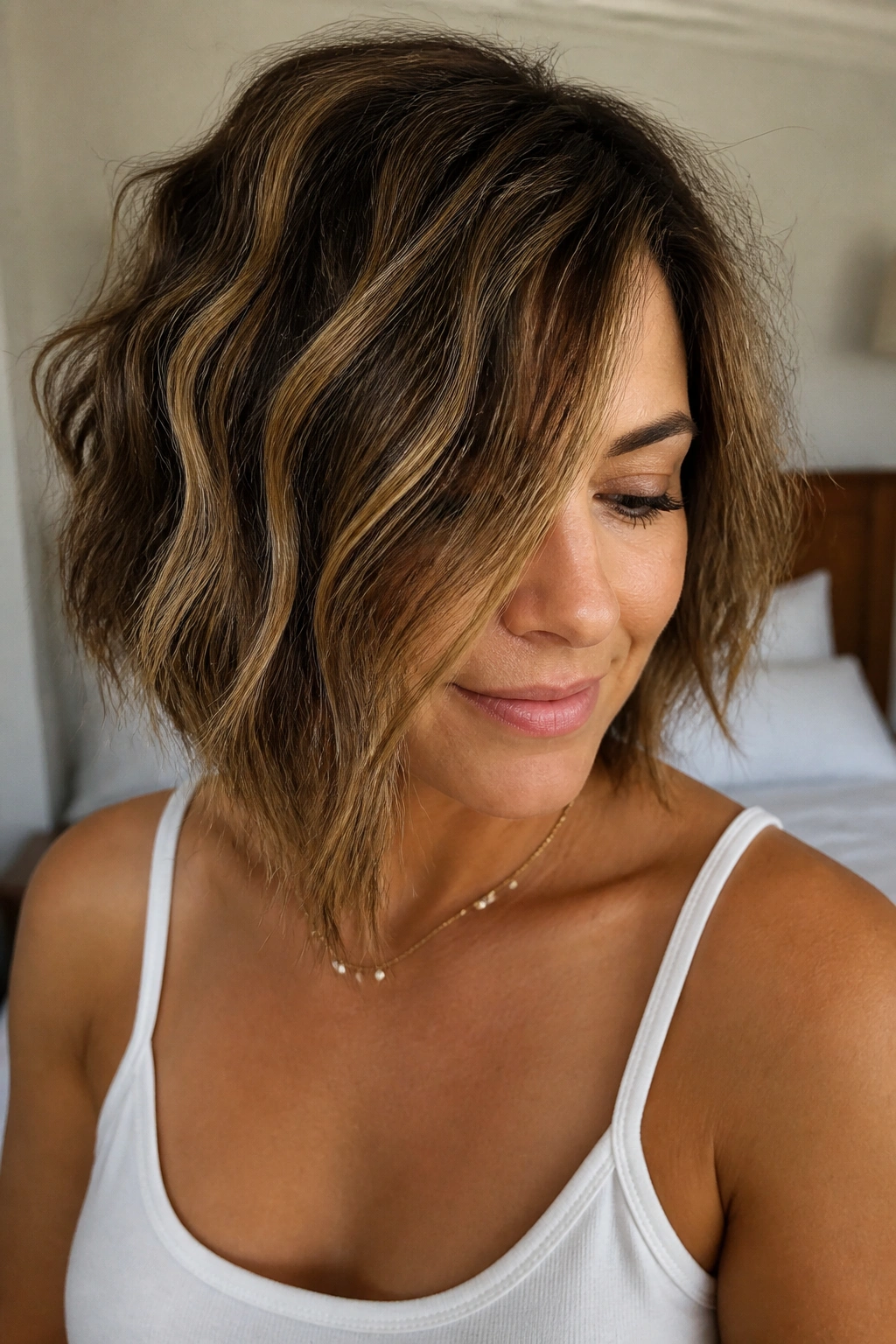
Small highlights can make a wavy asymmetric bob look sharper because they show where each bend starts and stops.
You do not need bright streaks. Tiny ribbons of lighter color around the face and along the longest side are enough to catch the wave pattern and make the angle easier to read. On naturally dark hair, even a subtle caramel tone can help the cut show its shape. On lighter hair, a few face-framing pieces do the job.
The haircut itself should stay easy. Ask for loose internal layers and a slight length difference from one side to the other, then style with fingers instead of a brush. That keeps the texture piecey and avoids the helmet effect that too much brushing can cause.
This is one of those styles that looks better on the second day. The texture settles, the highlights show more clearly, and the angle gets a little more relaxed.
12. Angled Bob With Curtain Bangs
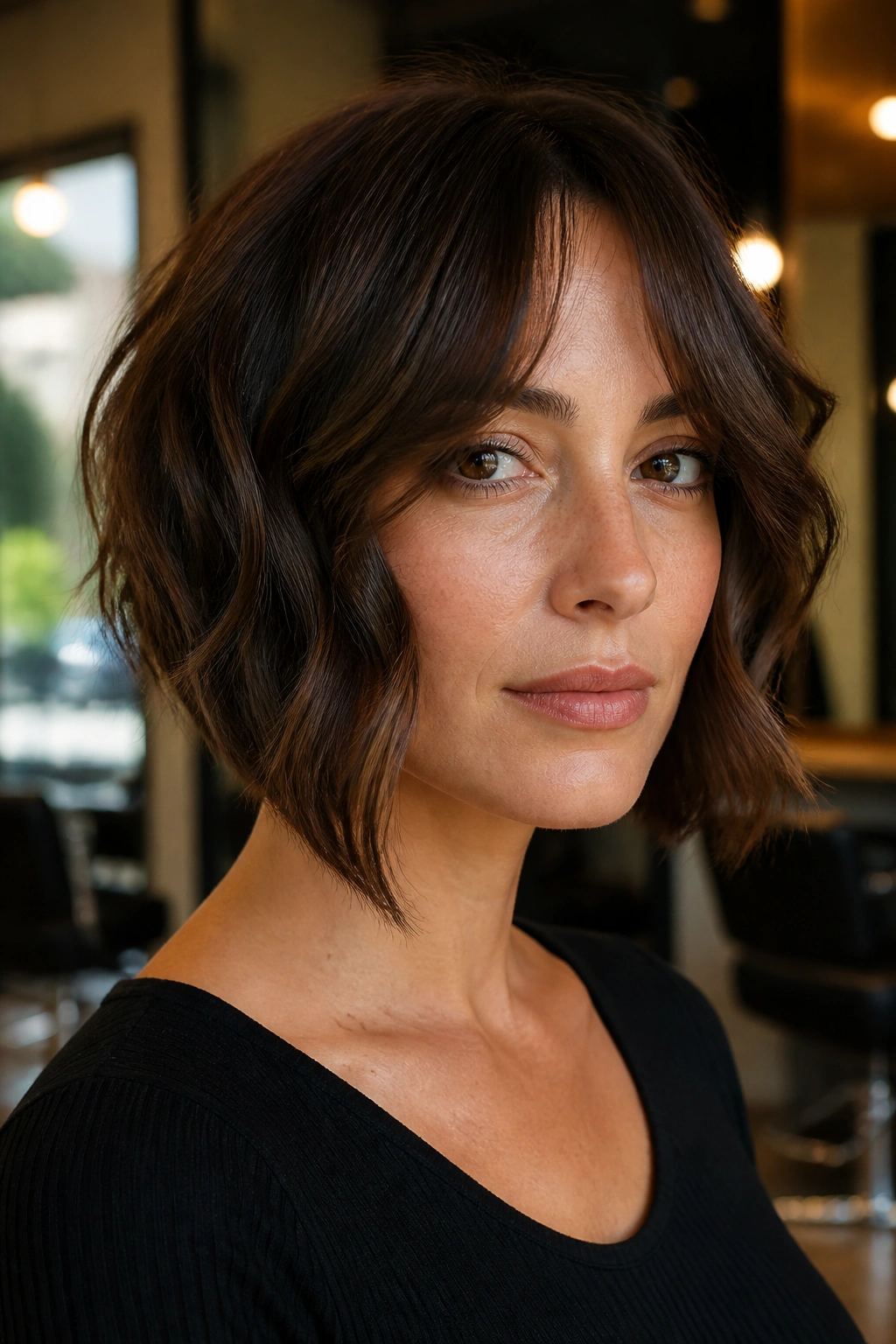
Curtain bangs and an asymmetrical bob make a good pair when the bangs are soft enough to move with the waves.
The angle in the bob gives the cut structure. The bangs soften the top half of the face. Together, they keep wavy hair from feeling too heavy at the cheeks or too flat at the forehead. If your waves are loose, ask for the bangs to start around the cheekbone and open out toward the temples.
- Keep the longest side brushing the collarbone
- Blow-dry the bangs away from the face on medium heat
- Let the bangs cool before touching them
- Use a round brush only at the roots if the fringe wants to split
This is a very forgiving haircut. Even on messy days, the fringe drops into place faster than a blunt bang would, which saves a lot of fuss.
13. Messy French Bob With One-Side Drop

A French bob gets a little more attitude when one side drops lower than the other.
Why It Feels French
The shape stays short, cheek-grazing, and slightly cool in the shoulders-shrugging way French bobs tend to have. The asymmetry stops it from feeling too sweet. On wavy hair, that is a welcome thing, because waves already bring softness.
How to Keep It From Puffing
Keep the crown light and the ends slightly choppy. A matte texture spray works better than shiny serum here, because shine can make a short bob feel more styled than you want. Dry the hair about 70 percent, pinch the front pieces with your fingers, and let the rest fall where it wants.
This cut is good for someone who likes a little mess and does not want every strand lined up. If you enjoy hair that looks better after you’ve walked around in it for an hour, this one has a lot going for it.
14. Graduated Bob With Diffused Waves
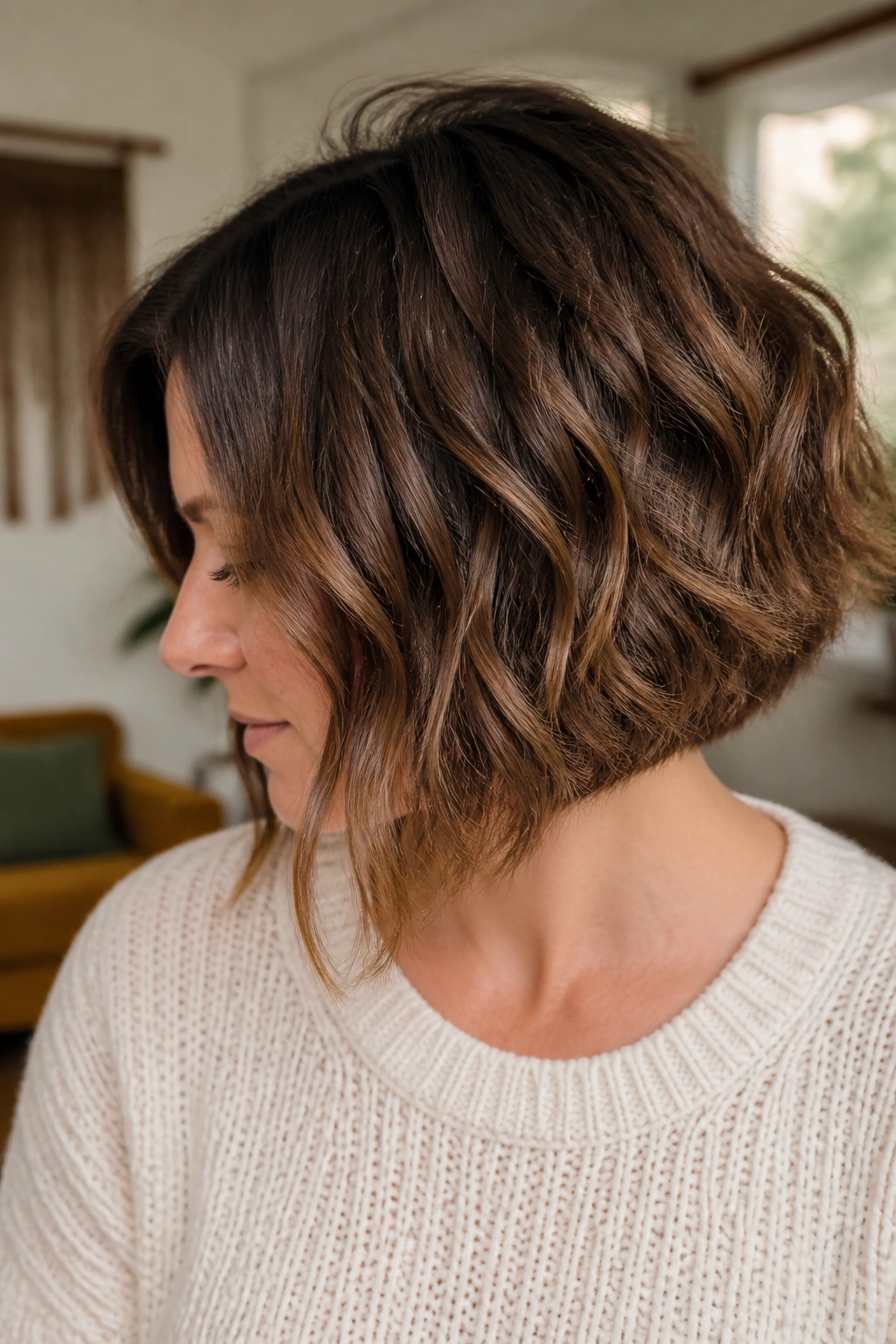
Graduation gives thick wavy hair a place to go.
The back is cut shorter and slightly fuller through the nape, then the length increases as it moves forward. That shape keeps the bob from collapsing into a flat blob at the back, which is one of the most annoying things a wavy bob can do. A diffuser helps because it lifts the roots without blowing the wave apart.
Ask for soft graduation, not a dramatic stack. You want the shape to curve, not sit on a hard ledge. The front side can be longer by an inch or more, depending on how bold you want the asymmetry to feel.
This is a strong choice if your hair has a lot of natural body and you need a cut that works with it instead of trying to tame it. It tends to hold its shape for a full day with minimal fuss.
15. Soft Shag Bob With an Asymmetric Outline
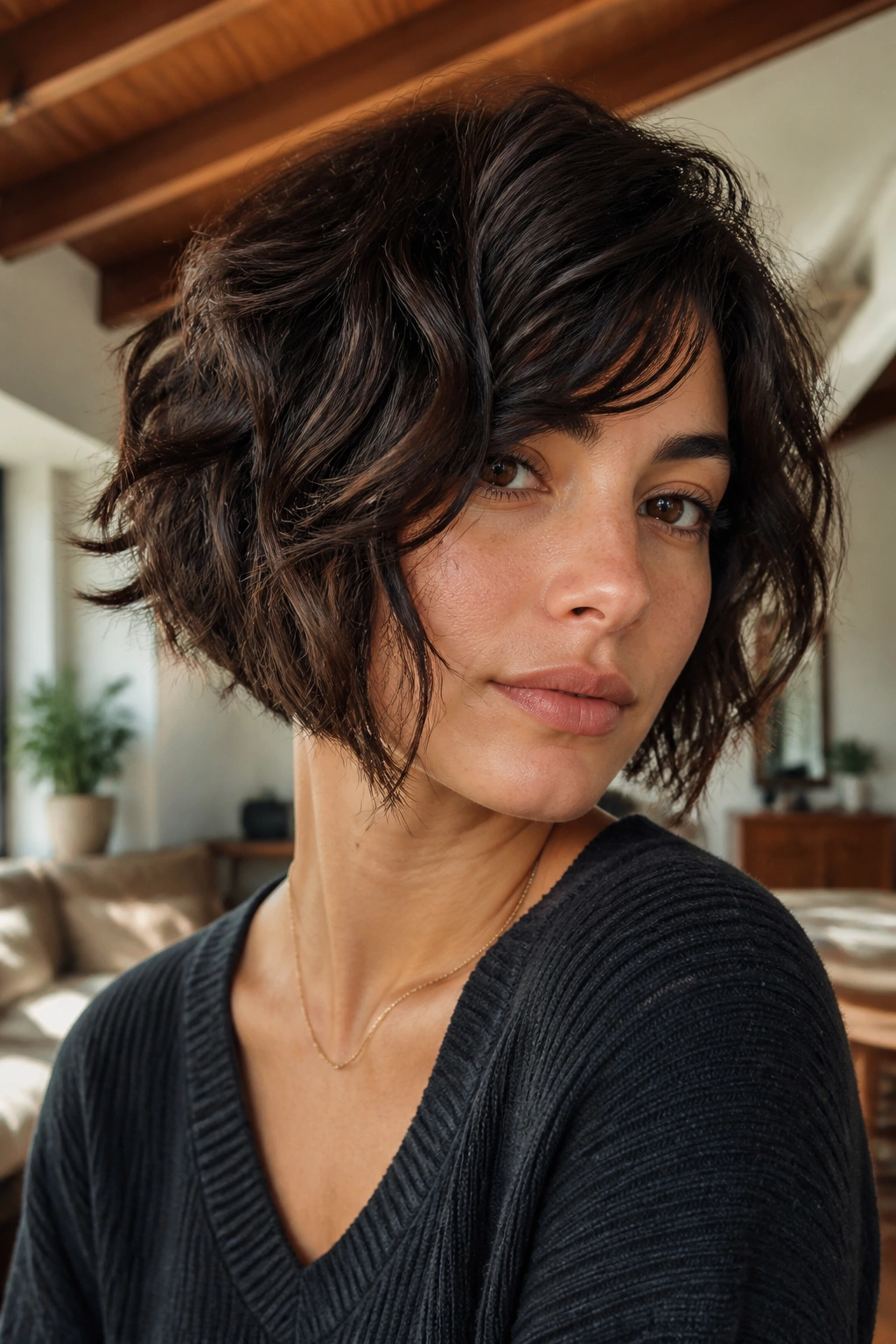
The shag gives, the bob grounds it. That is the whole appeal.
Unlike a plain bob, a soft shag bob lets the ends break into little pieces, which keeps wavy hair from sitting in one heavy block. The asymmetric outline still gives you a clean direction — one side longer, one side shorter — but the layers inside make the whole thing feel looser and more lived-in.
This cut is best for people who want movement more than sharpness. The layers should begin below the cheekbone so the face doesn’t get swallowed by texture. Use curl cream on damp hair, then add a touch of sea-salt spray only at the ends if they need more separation.
It can look a little wild on the first day, and I say that as a compliment. A shag bob usually gets better once the hair has settled and the wave has had a chance to make its own shape.
16. Copper Bob With a Sculpted Side Bend
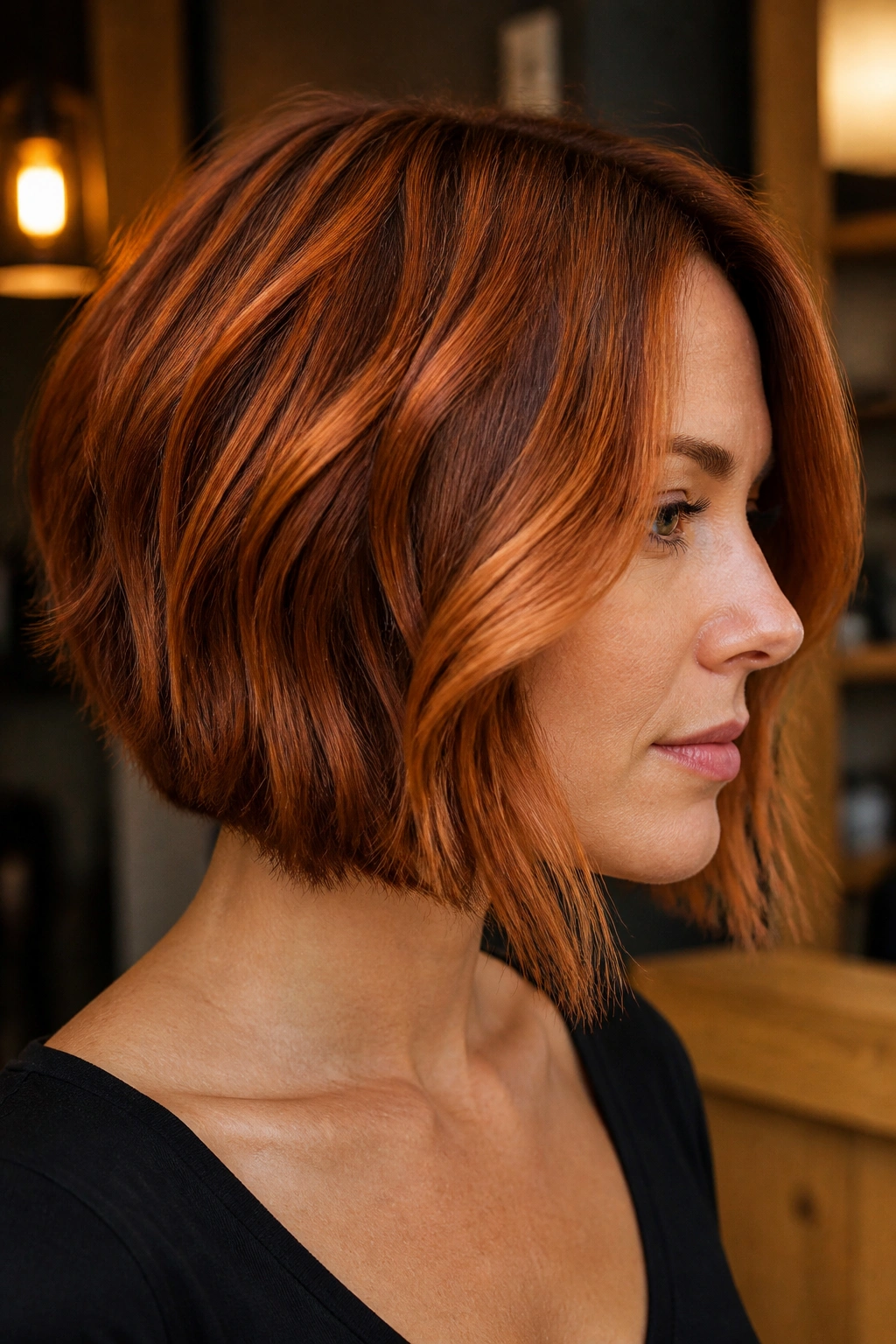
Color can change the whole mood of an asymmetric bob, and copper is especially good at that because it shows off every bend.
Does the haircut need to be fancy to work? Not really. What makes this version stand out is the side bend — the longer side should sweep gently forward, then tuck under near the collarbone or jaw. That line looks stronger when the hair has a warm tone, because the light plays across the curve.
If your waves are loose, a large-barrel wand on just the front section can help define the bend. Keep the rest soft. The worst mistake here is curling everything into the same shape. That kills the asymmetry fast.
This is a good pick for anyone who wants the bob to feel a little richer and more intentional without becoming stiff. Warm tones and angled lines get along well.
17. Curly-Wavy Bob With a Tucked Ear Side
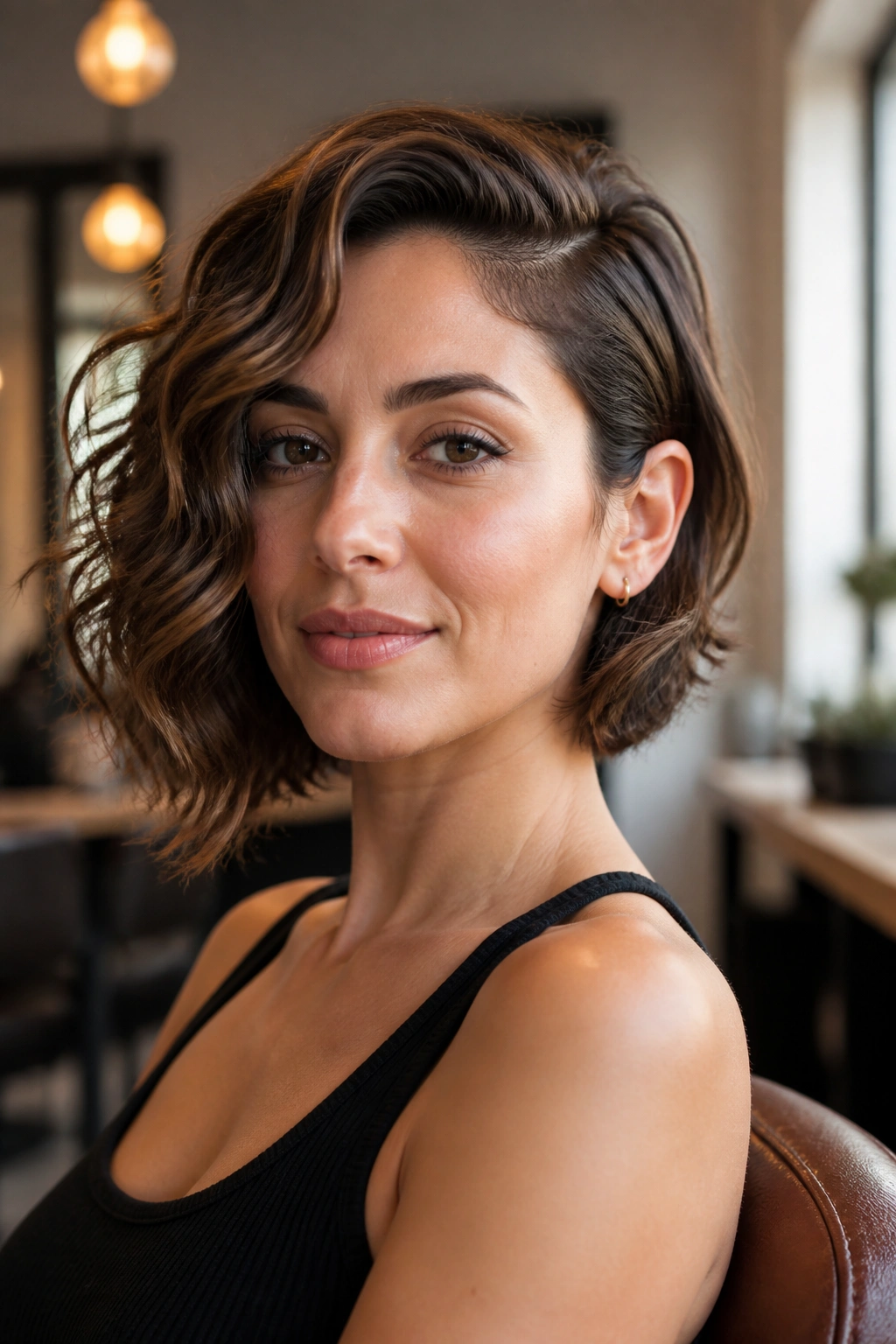
When waves lean closer to curls, the asymmetrical bob needs a bit more room to breathe.
The side that sits behind the ear can be shorter and cleaner, while the other side keeps enough length to show the curl pattern without puffing out. That tucked-ear move matters. It opens the face and gives the shorter side a little polish, which balances the extra volume that curly-wavy hair naturally carries.
A gel cast can help on this cut. Apply it to soaking wet hair, scrunch upward, diffuse until 85 percent dry, then scrunch out the stiffness once the hair is fully dry. That keeps the waves defined and stops the longer side from frizzing away.
This is not the haircut for someone who wants zero styling. It is for people who enjoy a bit of shape and know their texture has a mind of its own.
18. Piecey Bob With Choppy Ends
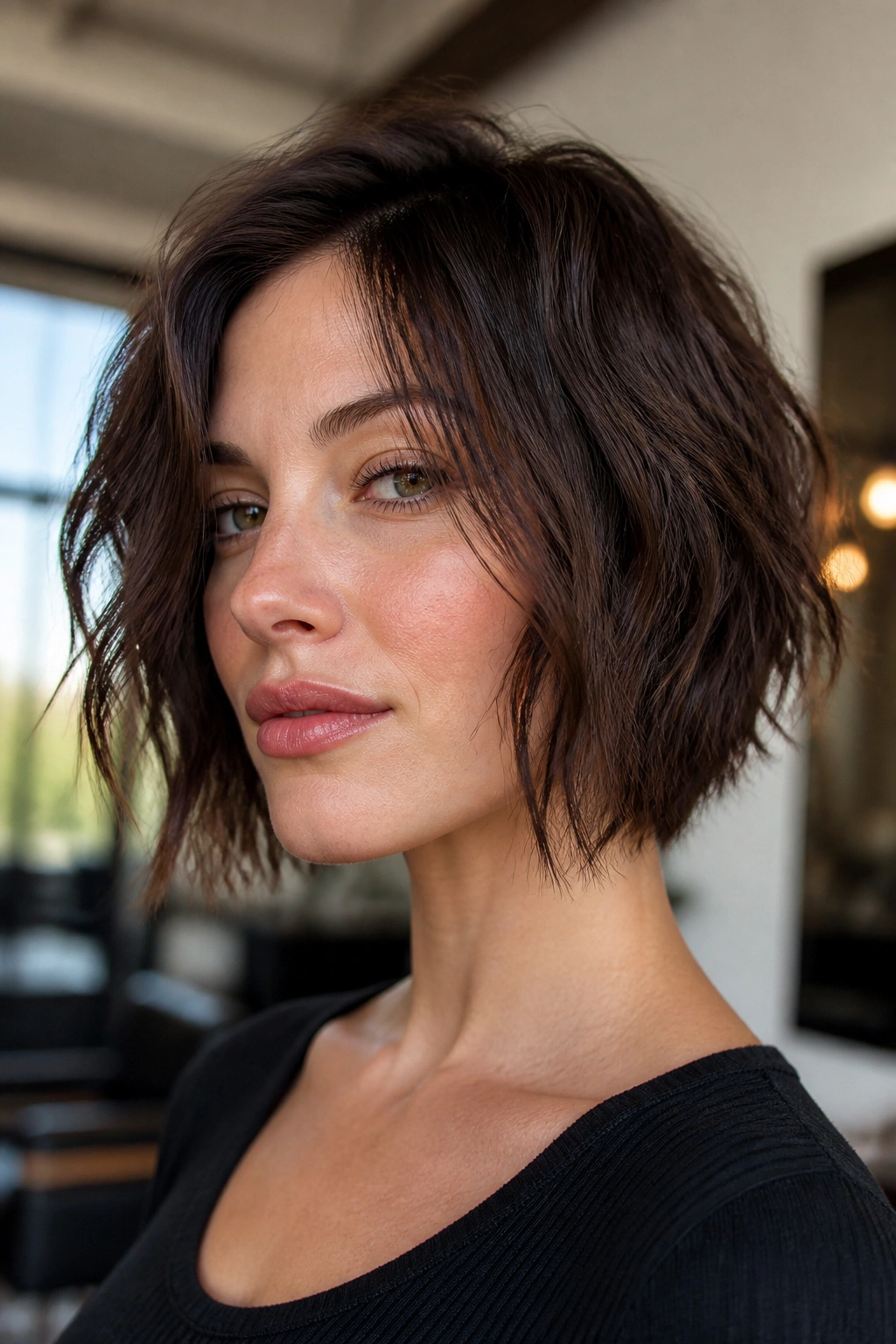
Piecey ends are a lifesaver if your waves tend to clump or puff in odd places.
The choppiness adds little breaks along the perimeter, which stops the bob from feeling too solid. Ask your stylist to point-cut the ends in small vertical sections rather than slicing a flat line across the bottom. That small detail changes how the waves fall, especially when the longer side meets the shorter side at the front.
- Best on medium-density hair
- Good when you want texture without a heavy shag
- Use a pea-size paste on dry ends to separate the pieces
- Avoid brushing it once it’s dry, because the chunks will disappear
This style has a bit of attitude. Not a lot. Enough. It reads relaxed, but there is enough structure to keep it from turning into bedroom hair.
19. Blunt Perimeter Bob With Soft Asymmetry
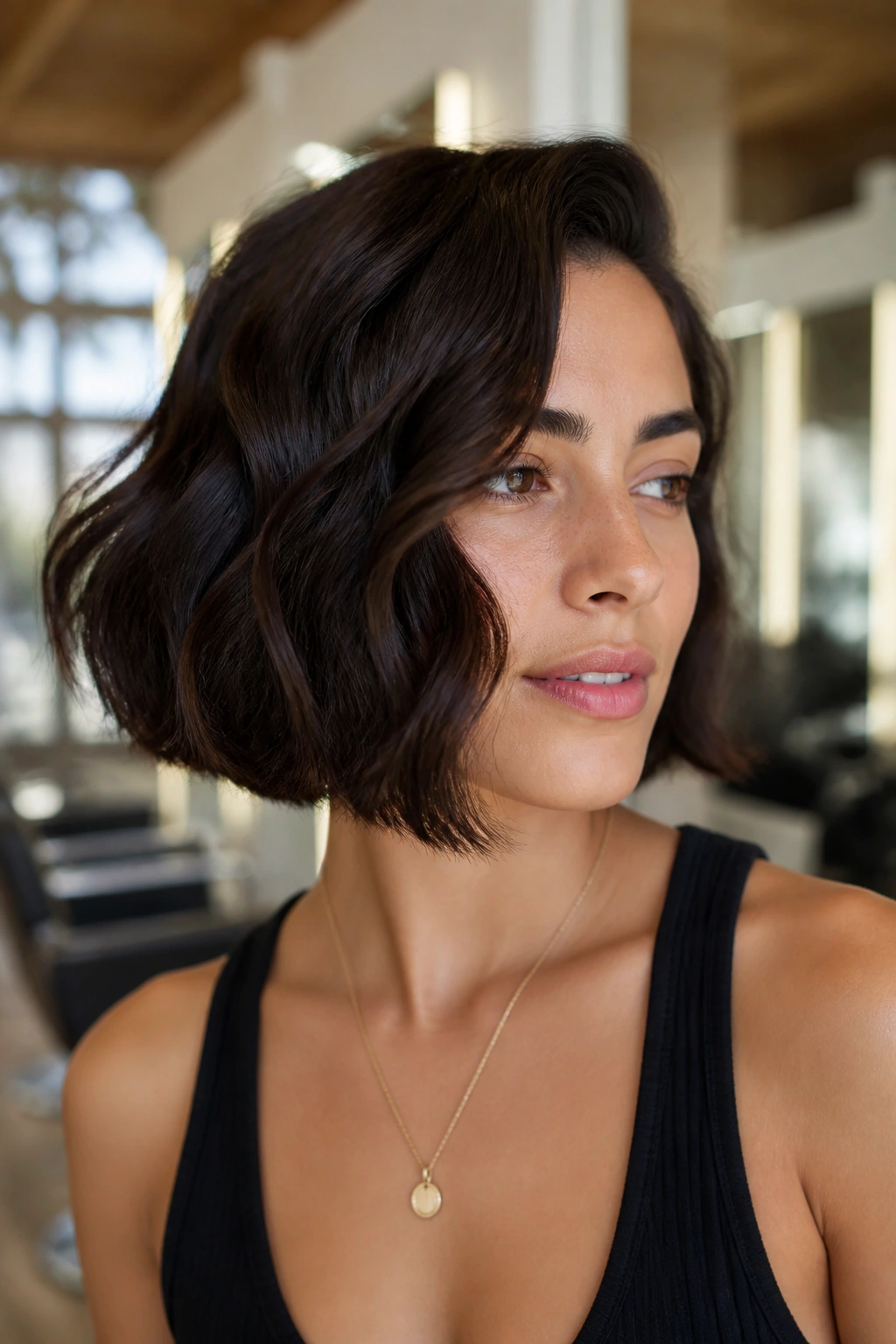
A blunt edge can look surprisingly good on waves if the asymmetry stays soft.
The perimeter is the star here. The ends are kept clean and thick, which makes the hair appear fuller, while one side is left slightly longer to avoid the cut feeling boxy. On wavy hair, that blunt line gives the texture something strong to rest against.
This works best if your hair is fine to medium. Very thick waves can turn the blunt edge into a wall unless the interior is lightened a little. Keep the styling simple: a heat-protective cream, a quick bend at the ends with a flat iron, and a finger comb through the top.
I like this style because it looks controlled even when the waves are doing their own thing. It gives you shape without lots of layers, which can be a relief if your hair gets puffy when overcut.
20. Side-Heavy Bob With a Neck-Grazing Finish
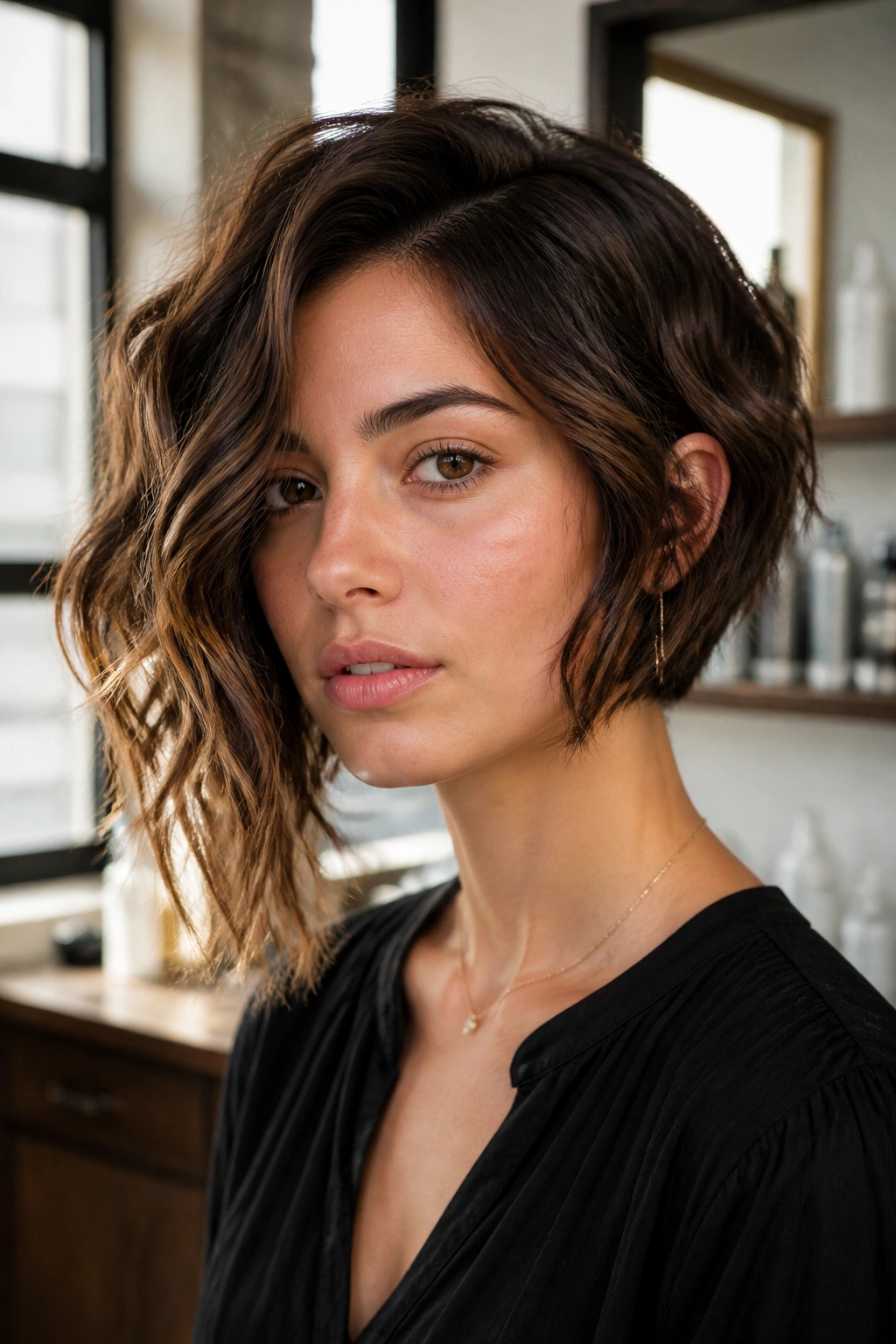
This cut puts more length on one side and lets that side sit low against the neck, which gives the whole bob a little tension.
The shorter side usually lands near the jaw or just above it. The longer side grazes the neck and sometimes touches the collarbone. That difference makes the wave pattern look more dramatic, even if the length gap is only an inch and a half. It also has the nice side effect of making the neck look longer.
It is a strong choice for people with a defined jaw or a longer neck, because the weight can be placed exactly where the face needs softness. Keep the waves loose and touchable. If you go too curly here, the side-heavy shape can get busy fast.
A lightweight cream and a slow air-dry are usually enough. The haircut does the hard part.
21. Layered Lob With Face-Framing Angle
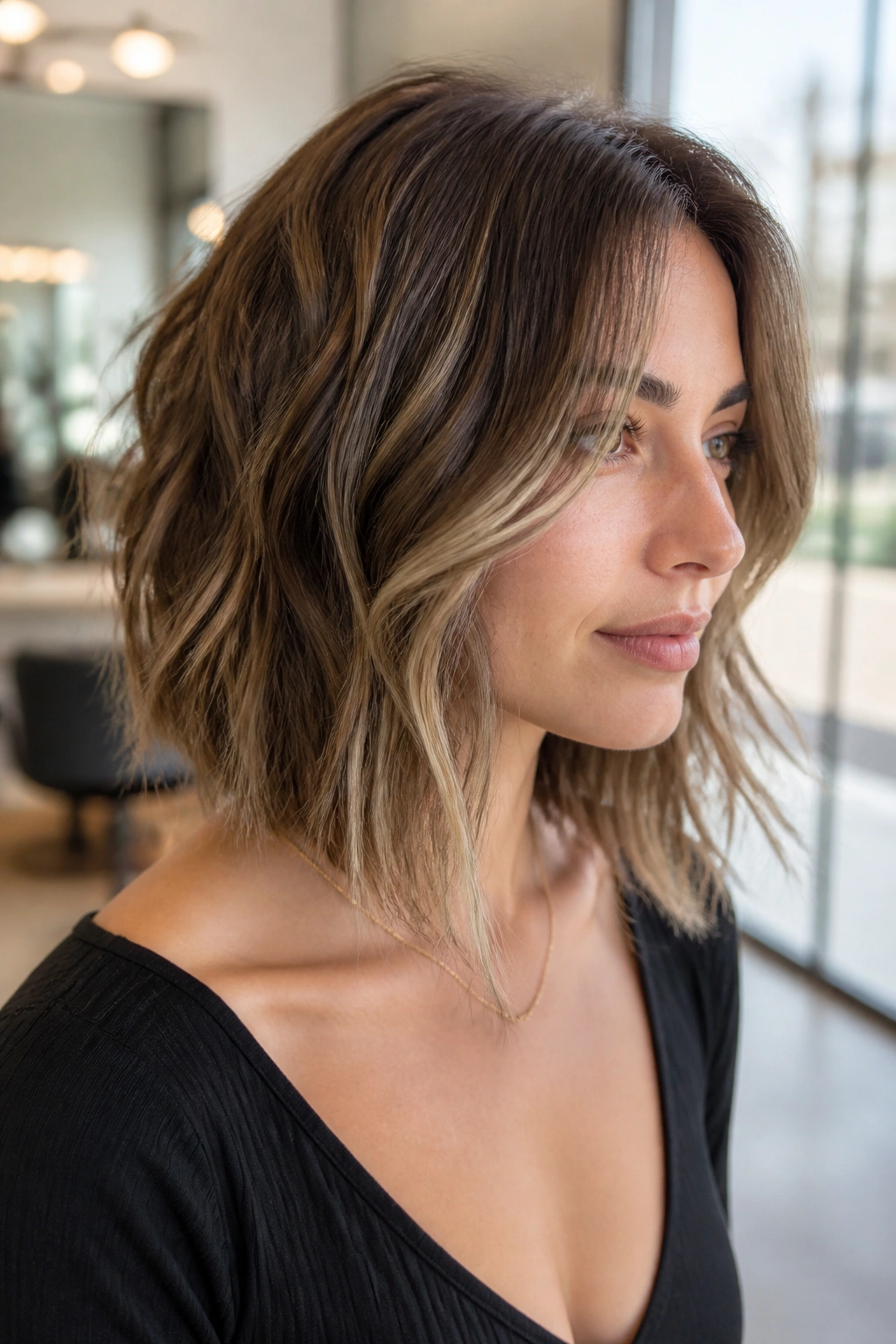
A lob gives you breathing room, and the face-framing angle gives it personality.
Is this the safest asymmetric option? Pretty much. The length usually sits between the jaw and collarbone, which makes the cut easy to wear while still showing the angle. The front pieces can start framing the cheekbone and step down gradually toward the longer side, which keeps the waves from looking blunt or choppy.
How to Wear It Well
Use a 1.25-inch curling iron only on the front sections if you need more bend. Leave the ends a little straight so the cut doesn’t look too “done.” That half-curled, half-natural mix suits wavy hair better than a full set of curls.
This is the lob for people who want to feel hair off the shoulders but don’t want to lose the softness of a bob. It works in a ponytail too, which sounds boring until you appreciate how useful that is.
22. Asymmetric Bob With a Rounded Back
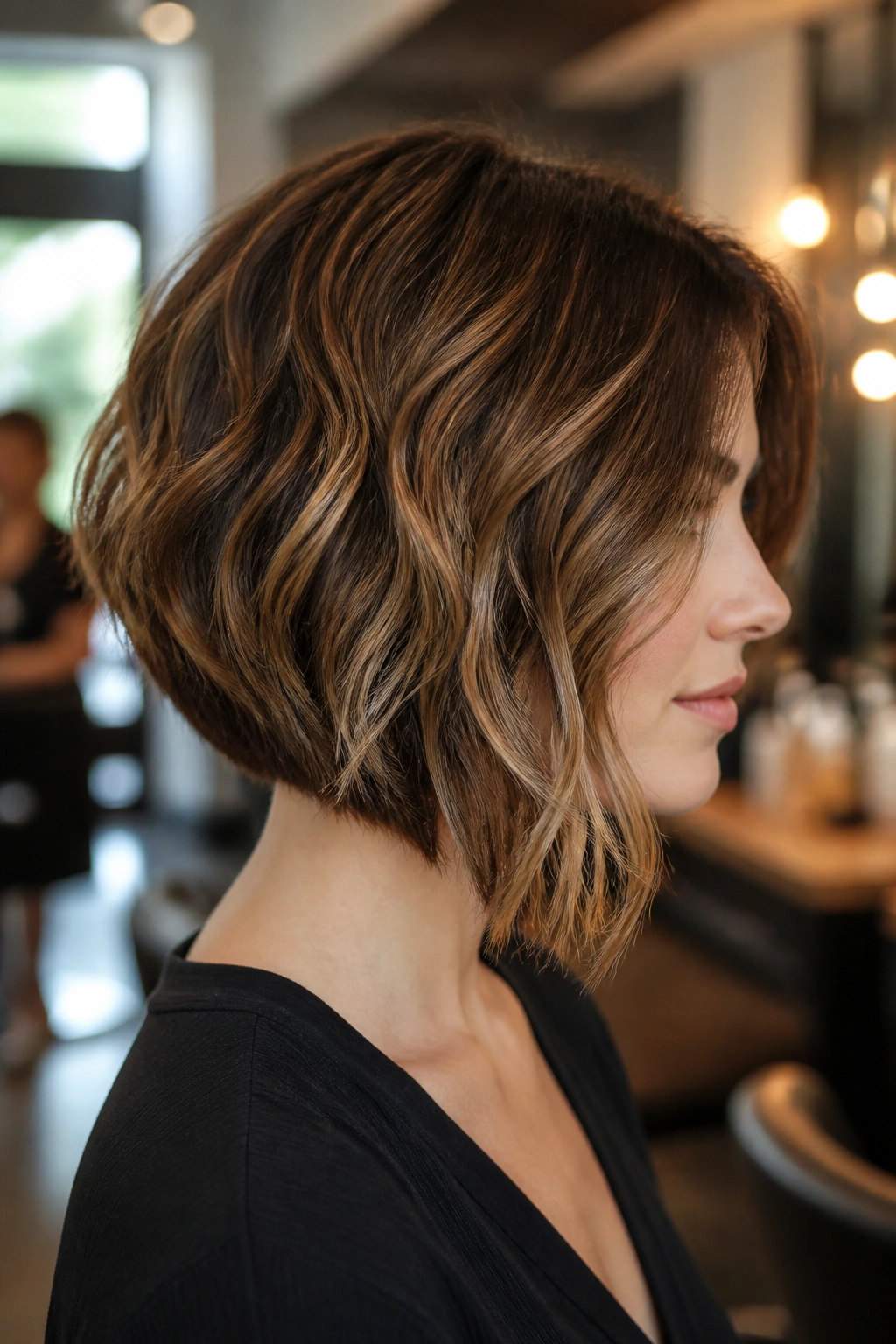
Rounded backs are underrated.
A lot of asymmetrical bobs focus on the front and forget the back, which is how you end up with a cut that looks good from the mirror and strange from the side. A rounded back keeps the shape following the curve of the head, so the waves fall naturally instead of sticking out at the nape. The front still stays longer on one side, but the overall feeling is smoother and fuller.
This is a good match for fine waves that need help looking thick. The rounded back gives the illusion of body without adding too many layers. Ask for the longest point to fall below the jaw and the back to stay softly curved, not stacked.
If you like your hair to feel neat even when it’s worn loose, this is one of the better choices in the bunch.
23. Wet-Look Bob For Wavy Texture
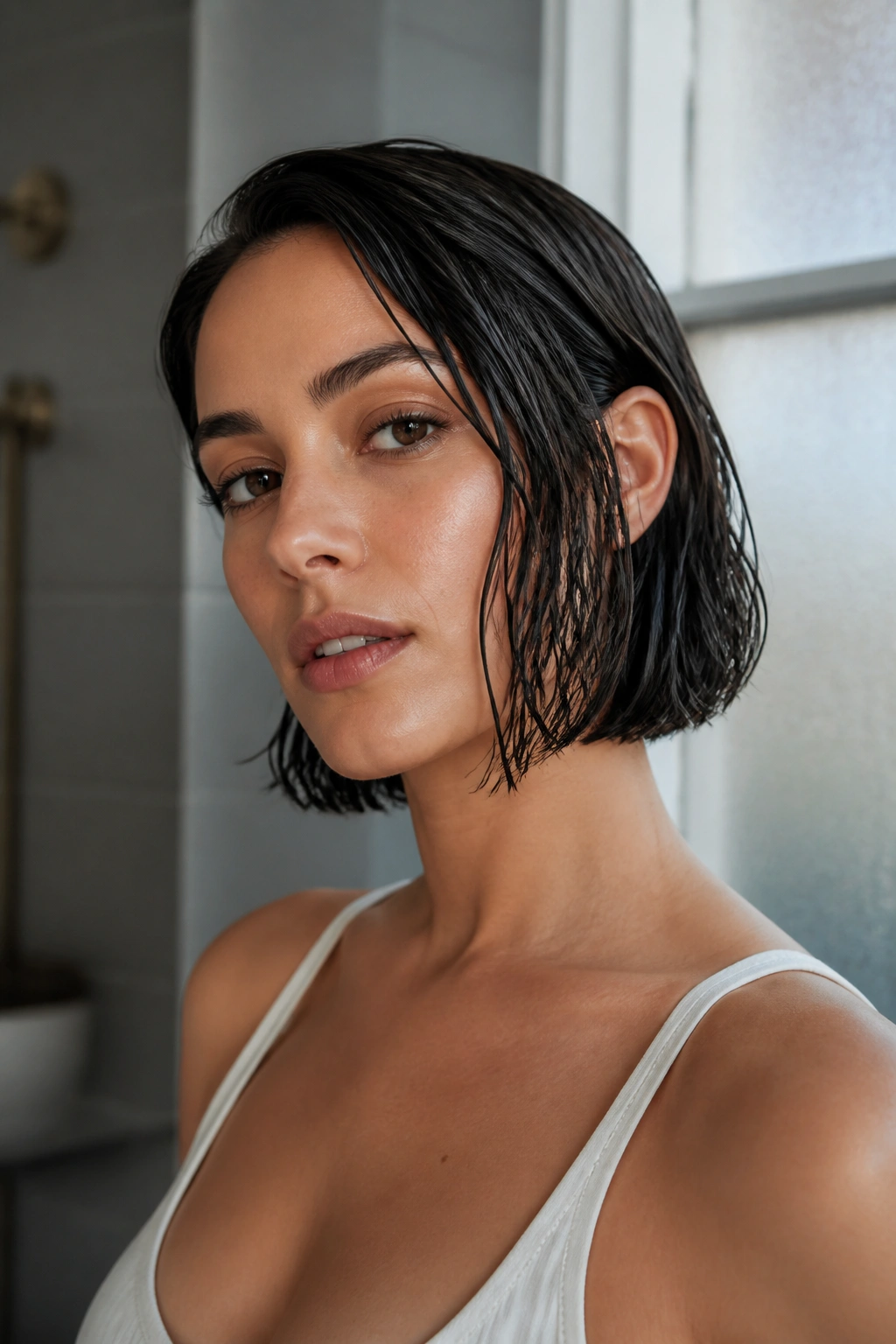
Wet-look styling changes the mood from soft to sharp in a hurry.
The haircut itself can be only lightly asymmetrical, but the product choice makes it read bolder. A gel with strong hold, applied to damp hair, gives the bob a sleek surface while the waves underneath keep some movement. That contrast is the whole reason this style works.
- Comb the gel through with fingers or a wide-tooth comb
- Set a deep side part while the hair is wet
- Diffuse just until the outer layer sets
- Leave the ends slightly damp if you want a glossy finish
This version is not for everyone. It is a little more fashion-forward, and if you use too much gel the hair can go crunchy fast. But on the right wave pattern, it looks sharp in a way that regular air-dried texture never quite reaches.
24. Air-Dried Bob With a Sweeping Front
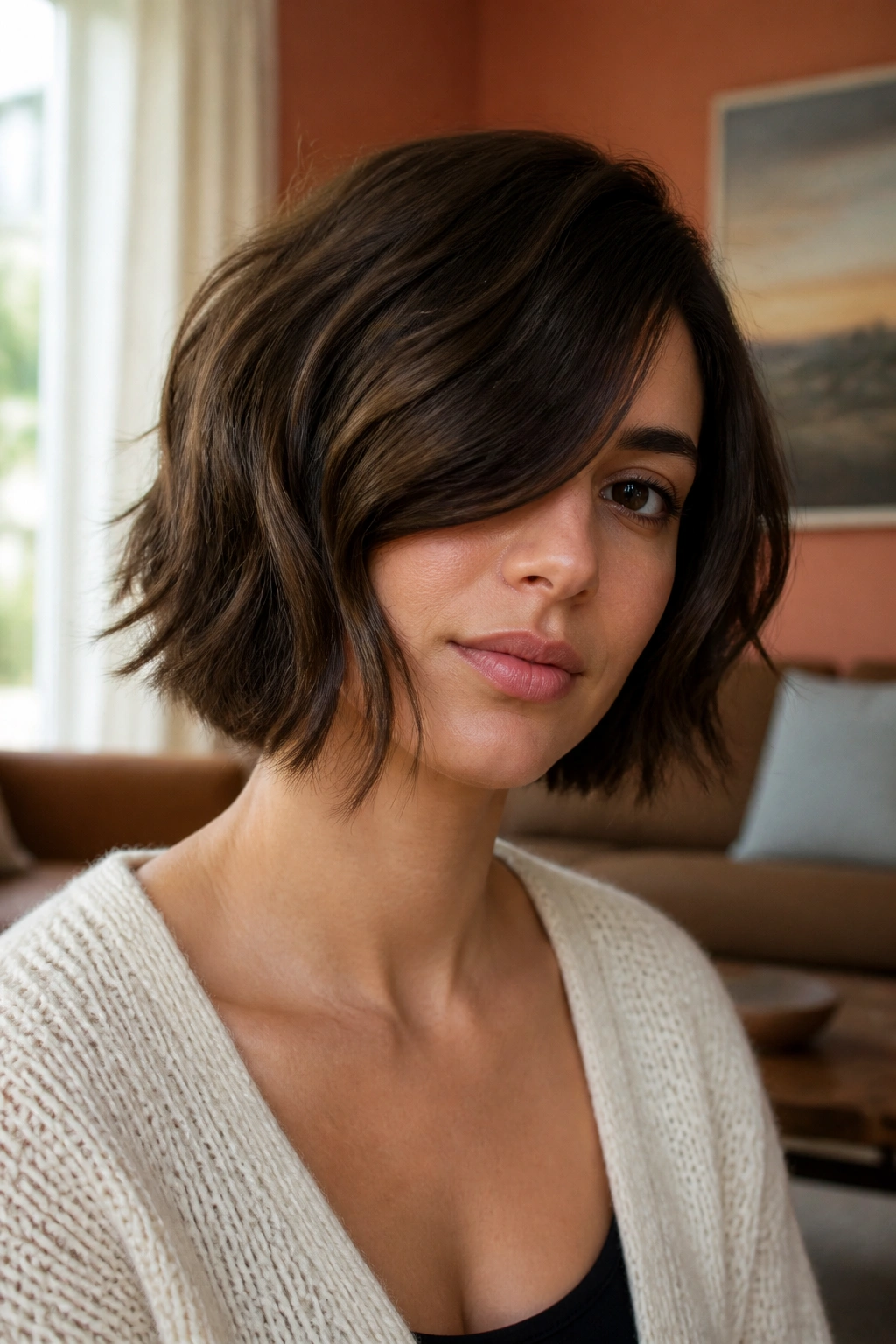
If you want the easiest possible asymmetric bob for wavy hair, this is it.
Unlike a polished blowout, the air-dried version lets the natural wave pattern create the shape. The front piece sweeps across one side because the cut gives it permission to, not because you spent twenty minutes wrangling it. A little curl cream, a microfiber towel, and a twist at the front are enough for most hair types.
The important bit is restraint. Too much product makes the wave clump. Too little makes the ends dry out and frizz. A nickel-size amount for medium hair is a decent place to start, then adjust from there.
This style is especially good for people who want an asymmetric bob that does not look overly styled on a Tuesday morning. It has a relaxed feel, but the angle still shows.
25. Bob With Long Side Bangs
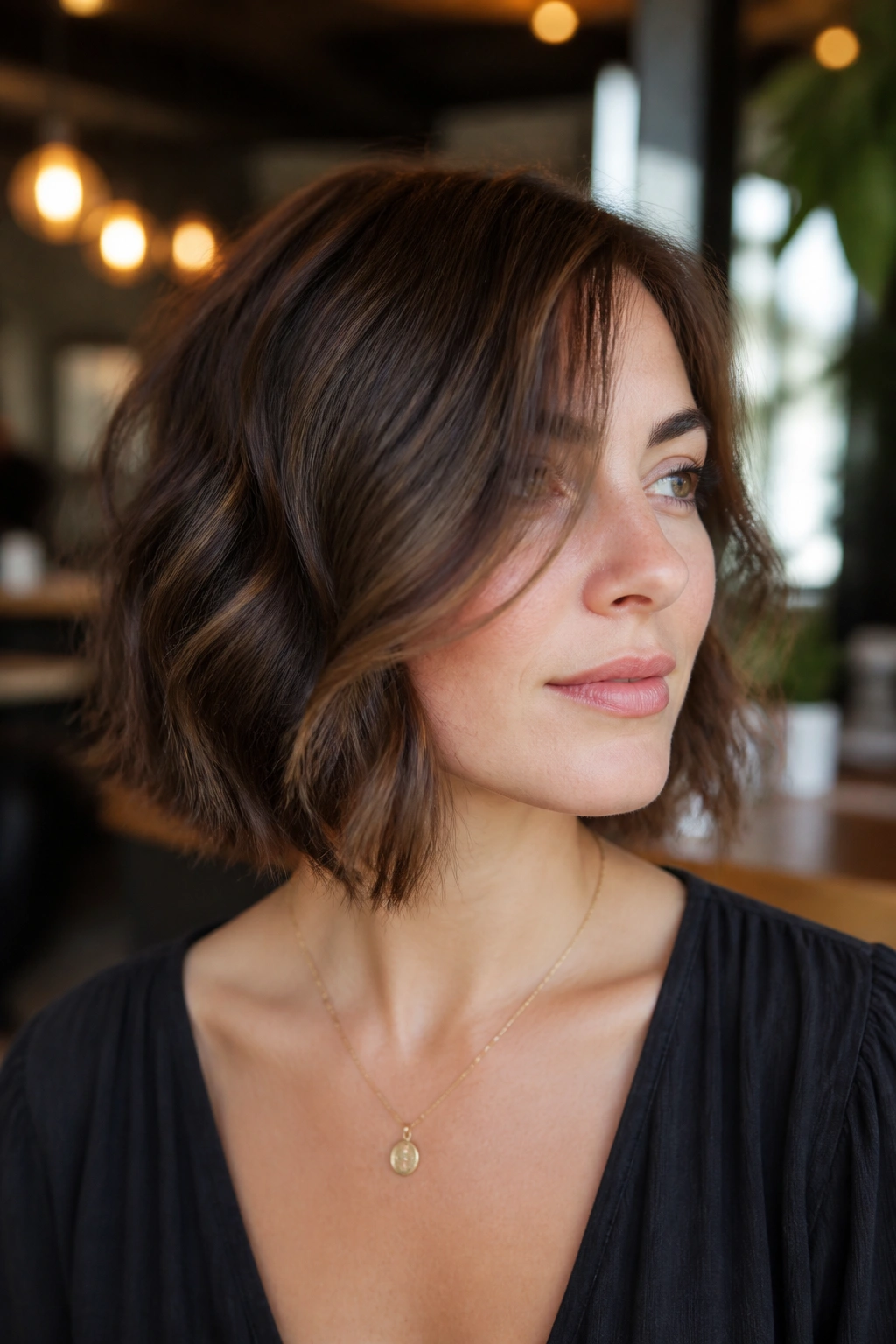
Long side bangs can soften the entire cut in a way that a hard front line never will.
Who It Flatters
This works well if you have a higher forehead, strong cheekbones, or waves that naturally fall forward. The bangs should begin near the temple and sweep toward the cheekbone, then blend into the longer side of the bob. If the bangs are cut too short, the asymmetry can get noisy. Keep them long enough to tuck or pin back when needed.
How to Style It
Blow-dry the bang area first so it does not dry in a split shape. Use a round brush only at the roots, then let the rest fall. A light spray wax can help if the front keeps separating into random strands.
I like this version because it gives the cut a face-framing job to do. That keeps the bob from just sitting there looking pretty. It has a purpose.
26. Bob With Internal Layers
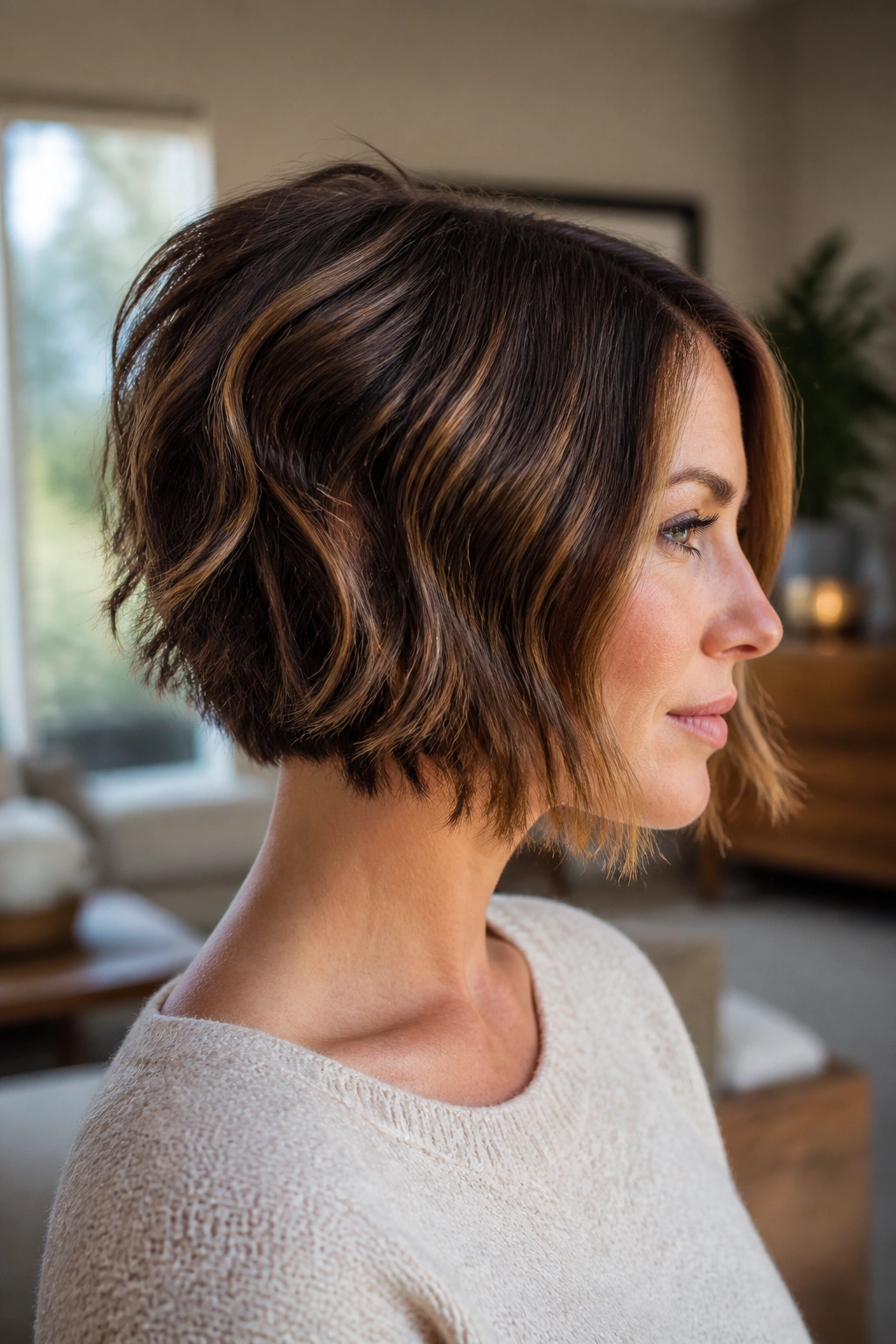
Internal layers are the quiet hero of a wavy asymmetric bob.
The outer line can stay smooth and clean, which is what most people want from a bob, while the inside gets reduced just enough to release bulk. That matters if your waves are dense or coarse, because all that weight can force the cut to sit too low and wide. Internal layers fix the problem without making the surface look shredded.
Ask your stylist not to overlayer the perimeter. The shape should still look like a bob from the outside. The change should happen inside the haircut, where the hair can move more freely. That creates softer bends and keeps the ends from flipping out in ugly ways.
This is a smart choice if you like structure but hate the feeling of heavy hair on your neck. It keeps the silhouette neat and the styling time short.
27. Vintage-Inspired Wave Bob
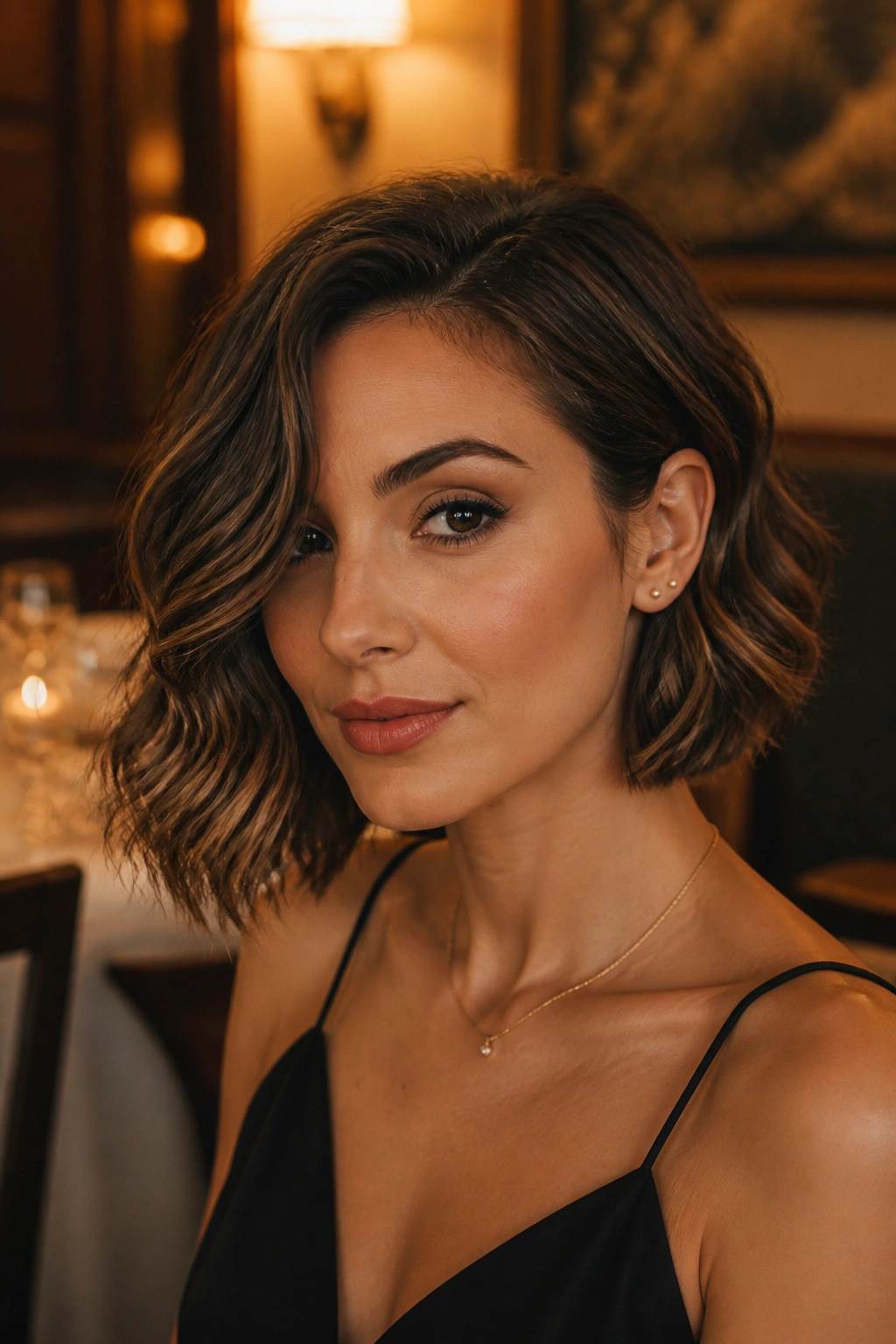
There’s a little old-Hollywood energy here, but it works best when the waves are not too perfect.
The asymmetry gives the vintage shape a modern edge. One side can tuck behind the ear while the other side sweeps low across the cheek, which feels a bit like a soft finger wave without the full ceremony. On wavy hair, that balance is easier to wear than a strict retro set.
A side part helps, and so does a large roller or barrel brush on the front section. Do not curl the whole head into identical loops. That makes the style too formal and robs it of the casual bend that keeps it alive.
This is the bob I’d pick for a dinner, a party, or any day you want your hair to feel a touch dressed up. It has polish, but not the stiff kind.
28. Asymmetric Bob With a Deep Under-Curve
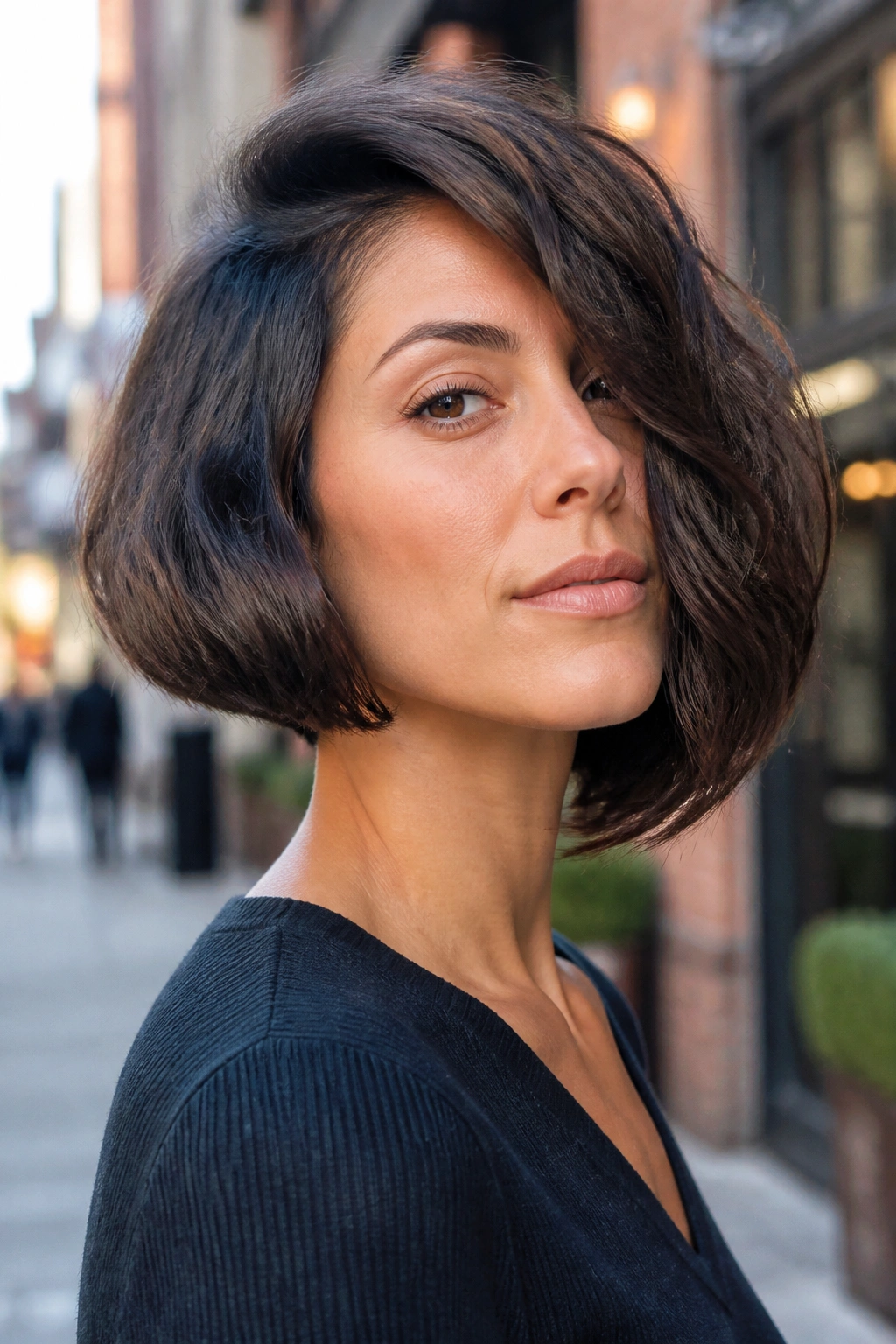
The under-curve is subtle, but it changes the silhouette more than people expect.
Instead of letting the ends kick outward, the cut curves them gently inward toward the neck. That soft scoop makes the asymmetry feel smoother, especially on straight-to-wavy hair. The longer side still stretches lower, but the under-curve keeps it from looking like a sharp diagonal line drawn with a ruler.
This style benefits from a round brush or a large paddle brush with a little bend at the ends. You only need to shape the bottom inch or two. The rest should stay loose and easy.
It is a good option if you want the bob to feel neat from every angle. The curve adds refinement without making the cut precious, which is a nice thing to say about a haircut and a rare one to mean.
29. Minimalist Bob With Barely-There Angle
Not every asymmetric bob needs to announce itself.
A barely-there angle is often the most wearable choice, especially if your waves already have their own movement. One side is only a half-inch to an inch longer, but that small shift keeps the cut from looking blunt and helps the waves fall in a more natural line. The result is understated, but not boring.
This works well for people who want to try asymmetry without committing to a big shape change. It also grows out cleanly, which matters more than people admit. A low-maintenance bob is not glamorous in theory. In practice, it is the one you actually keep.
If your hair is medium density and your waves are loose, this might be the sweet spot. It gives you just enough difference to notice in the mirror, then disappears into your day.
30. Dramatic One-Side Bob
Here’s the bold one. One side stops near the jaw, the other side drops toward the collarbone or even a bit lower, and the whole cut leans into the angle instead of softening it.
This shape works best when the wave pattern is strong enough to support the contrast. Loose waves can do it, but tighter waves may need extra smoothing on the shorter side so the haircut doesn’t feel too wide. Ask for the shortest point and the longest point in inches, not in vague language. That detail matters. Hairdressers work better with numbers than with gestures in the mirror.
The styling should stay simple. Keep the roots calm, define only a few front pieces, and let the long side fall where it wants. Too much product will flatten the drama. Too little and the shorter side can frizz away from the outline.
This is the version for someone who likes a haircut with a point of view. Not loud, not soft, just committed. If you want the asymmetry to read from across the room and still work with natural waves, this is the one that earns the most attention — and it does not need to apologize for it.
