



A layered bob with bangs can do a surprising amount of work for one haircut. It can sharpen a jaw, soften a strong forehead, lift fine hair, and take weight out of thick hair without making the whole shape feel blunt or boxy. That is the appeal: the cut changes with the fringe.
The catch is that bangs are not decorative add-ons. They change the whole balance of the haircut. A curtain fringe over a cheekbone layer behaves differently from a blunt line over a stacked bob, and a wispy bang on wavy hair is a different animal altogether. Small details matter here — where the shortest layer starts, how the ends are textured, and whether the bangs are cut dry or wet all change the result.
I keep coming back to that because it is the difference between a cut that looks good in the salon mirror and one that still behaves after two washes and a windy day. Good layered bobs with bangs do not scream for styling; they settle into place with a little bend and movement.
The 15 styles below cover the smartest versions of the look: polished, airy, shaggy, curly, face-framing, and a few bolder cuts for anyone who wants more edge. Pick the one that fits your texture, your patience level, and how much time you want to spend in front of a mirror.
1. Chin-Grazing Layered Bob With Soft Curtain Bangs

This is the easiest place to start, and I mean that in the best way. A chin-grazing layered bob with soft curtain bangs gives you shape without making the haircut feel precious, which is why it works on so many different faces and hair types.
Why It Flatters So Many Face Shapes
The magic is in the middle split and the way the fringe drapes outward. Instead of closing the face off, curtain bangs open the center and skim the cheekbones, while the bob’s layers keep the ends from looking like a hard shelf. On straight hair, it looks tidy. On wavy hair, it looks relaxed in a nice way.
Ask for the shortest bang piece to land around eyebrow level when dry, then let the side pieces curve toward the cheekbones. That keeps the fringe soft instead of heavy. If you want the cut to feel modern instead of dated, keep the ends a little beveled, not razor-straight.
- Best for straight to softly wavy hair
- Layer start: around cheekbone height
- Fringe shape: center shorter, sides longer
- Trim schedule: bangs every 4 to 5 weeks, bob every 6 to 8 weeks
Pro tip: Blow-dry the bangs first, away from the face, before the rest of the head dries into its natural bend. That one habit saves a lot of wrestling later.
2. Sleek Layered Bob With Blunt Bangs

Blunt bangs are not harsh when the bob underneath is built right. They look graphic, yes, but not severe if the length sits cleanly at the jaw and the layers stay tucked inside the shape instead of fuzzing out from the perimeter.
This cut works best on hair that already has some straightness or only a soft wave. The blunt fringe gives you a strong horizontal line, so the layers need to do the quiet work of softening the sides. I like this cut when the bob is just a little longer in front than in back — not dramatic, just enough to keep the face from feeling boxed in.
A flat brush, a nozzle on the dryer, and a light smoothing cream are usually enough. Skip heavy oils near the roots; they collapse the whole point of the shape. And if your hair has a stubborn cowlick at the front, do not fight it with a too-short bang. Leave the fringe a touch longer, then trim it once you see how it sits after a few washes.
One thing. This cut looks best when it’s precise.
3. Airy French Bob With Wispy Fringe
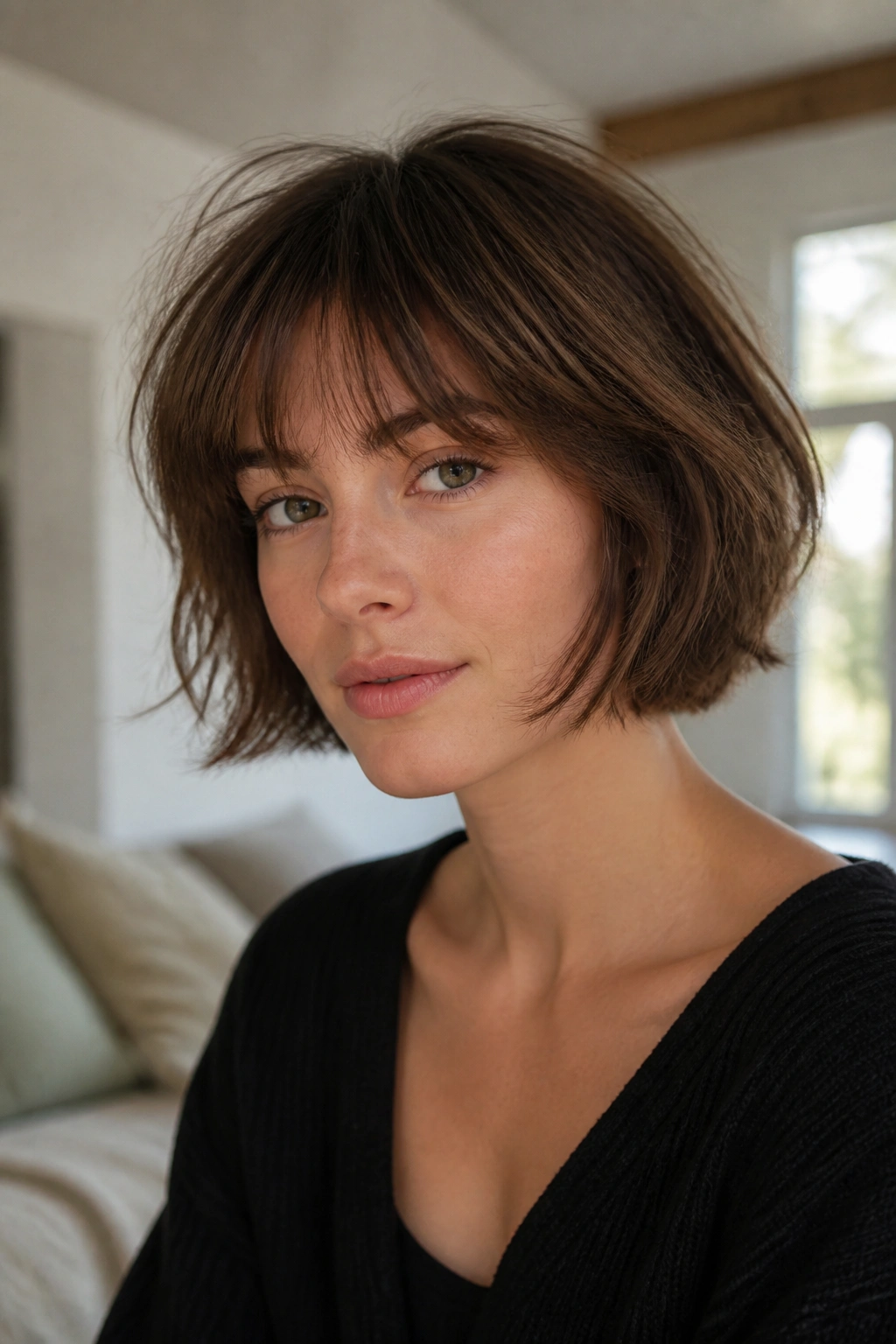
Why does this cut feel lighter than the rest? Because it never asks the eye to settle on one hard line. The French bob sits around cheekbone to jaw level, and the wispy fringe breaks up the front in a way that feels easy rather than fussy.
The layers are gentle here. You want movement, not chop. The ends should turn in or flick out depending on your hair’s natural bend, and the fringe should look feathered at the tips rather than sliced into tiny spikes. That is where point-cutting earns its keep.
How to Style It
A little mousse at the roots goes a long way. Work it through towel-dried hair, then rough-dry until about 80 percent dry before using your fingers or a small round brush to shape the bang area. Too much heat makes wispy bangs stick to the forehead, and that ruins the airy effect fast.
A middle part helps, but it is not mandatory. If your face reads long, a slight off-center part can keep the fringe from feeling too symmetrical. I also like this cut on people who want a bob that can look polished with almost no effort on the second day.
4. Collarbone Lob With Side-Swept Bangs

If you still want to tuck your hair behind one ear, this is the shape to ask for. A collarbone lob gives you the length to play with, and side-swept bangs keep the front moving instead of hanging there like a curtain.
What makes this one smart is how forgiving it is. Side bangs can grow out gracefully, which matters if you do not want to visit the salon every month. The layers should start around the cheekbone and drift down toward the collarbone, so the whole cut feels connected rather than chopped into separate pieces.
- Ask for a deep side part if you want more drama
- Keep the longest front pieces at or just below the collarbone
- Use a 1.25-inch curling iron for a soft bend, not a full curl
- Trim the fringe area every 5 weeks so it does not lose shape
This is one of those cuts that can look office-clean one day and loose the next. A little dry shampoo at the roots gives the bangs more lift if they start collapsing midweek. That’s usually the difference between “fine” and “good” in real life.
5. Shaggy Layered Bob With Piecey Bangs

A shaggy layered bob with piecey bangs has attitude, and it does not pretend otherwise. The cut is built for movement, so the whole point is a little edge at the ends and a fringe that breaks apart instead of sitting in one flat sheet.
The best versions keep weight off the crown and let the layers fall in uneven, lived-in sections. That does not mean sloppy. It means the shape has enough texture to move when you shake it out with your hands. On wave and loose curl patterns, this cut is almost unfairly easy because the hair does half the styling for you.
Use a texture cream or a salt spray, but not both in heavy amounts. Too much product turns the fringe greasy and the ends sticky, which is the fastest way to make a shag look tired. The sweet spot is soft separation, not crunchy definition.
I like this cut best when the bangs are cut long enough to brush the lashes and then broken up at the tips. Shorter fringe can work, but it changes the mood fast. If you want something messy, cool, and not too sweet, this is one of the strongest options on the list.
6. Inverted Bob With Feathered Bangs

Unlike a straight bob that sits evenly all the way around, an inverted bob gives you a shorter back and longer front pieces, and that changes the whole face shape. The angle pulls the eye forward, which can make the neck look longer and the jawline look cleaner.
Feathered bangs are the right partner for that shape because they soften the angle instead of fighting it. You want the fringe to move with the rest of the cut, not sit there like a separate idea. The front layers can start around lip level and sweep down toward the collarbone, while the back stays lifted and compact.
This is a good choice if you like structure but do not want stiffness. It also behaves well on thicker hair, because the shorter back removes weight where it tends to puff up. A round brush at the crown and a slight bend through the ends is usually enough.
My honest take: this cut looks strongest when it is tailored. If the angle is too extreme, the front can swallow the face. Keep the difference between back and front noticeable, but not cartoonish.
7. Rounded Bob With Bottleneck Bangs
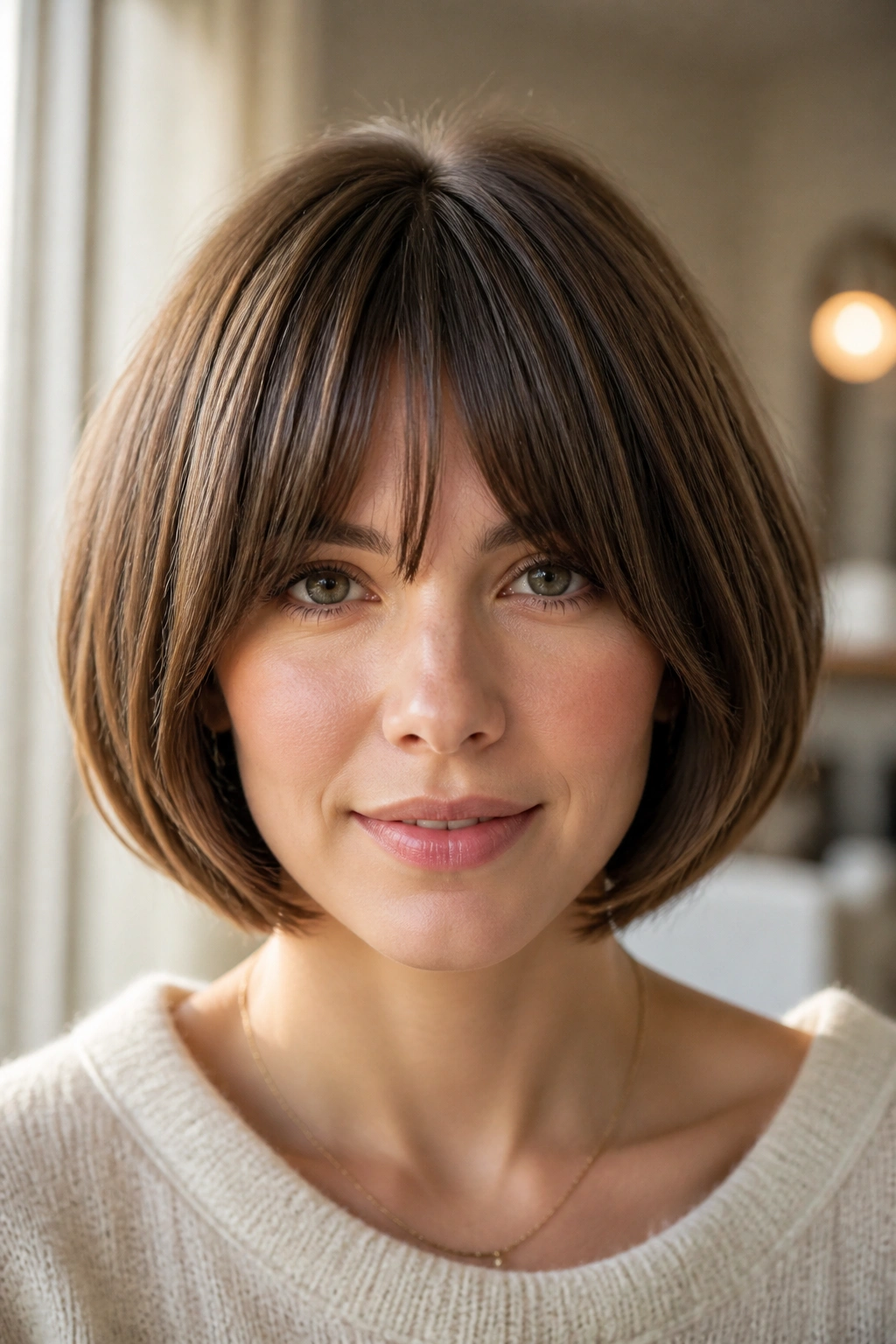
Bottleneck bangs are the most forgiving fringe in the room. The center starts a little shorter, then widens and tapers outward near the temples, which gives the forehead room without losing the frame that bangs provide.
That shape works especially well with a rounded bob because both pieces echo each other. The bob curves gently around the head, and the bangs mimic that curve instead of slicing across it. If you have a strong cowlick or a forehead that needs some breathing room, this is a very kind option.
Where the Shape Starts
Have your stylist begin the center of the fringe around the upper forehead, then keep the sides long enough to blend into the cheekbone layers. The bob itself should stay full around the middle and slightly tucked under at the ends. Too much thinning at the perimeter will make the shape look narrow, and that is not what you want here.
This is the cut I point to when someone wants softness without giving up structure. It is tidy, but not hard. And the grown-out stage still looks decent, which counts for a lot.
8. A-Line Bob With Long Side Bangs
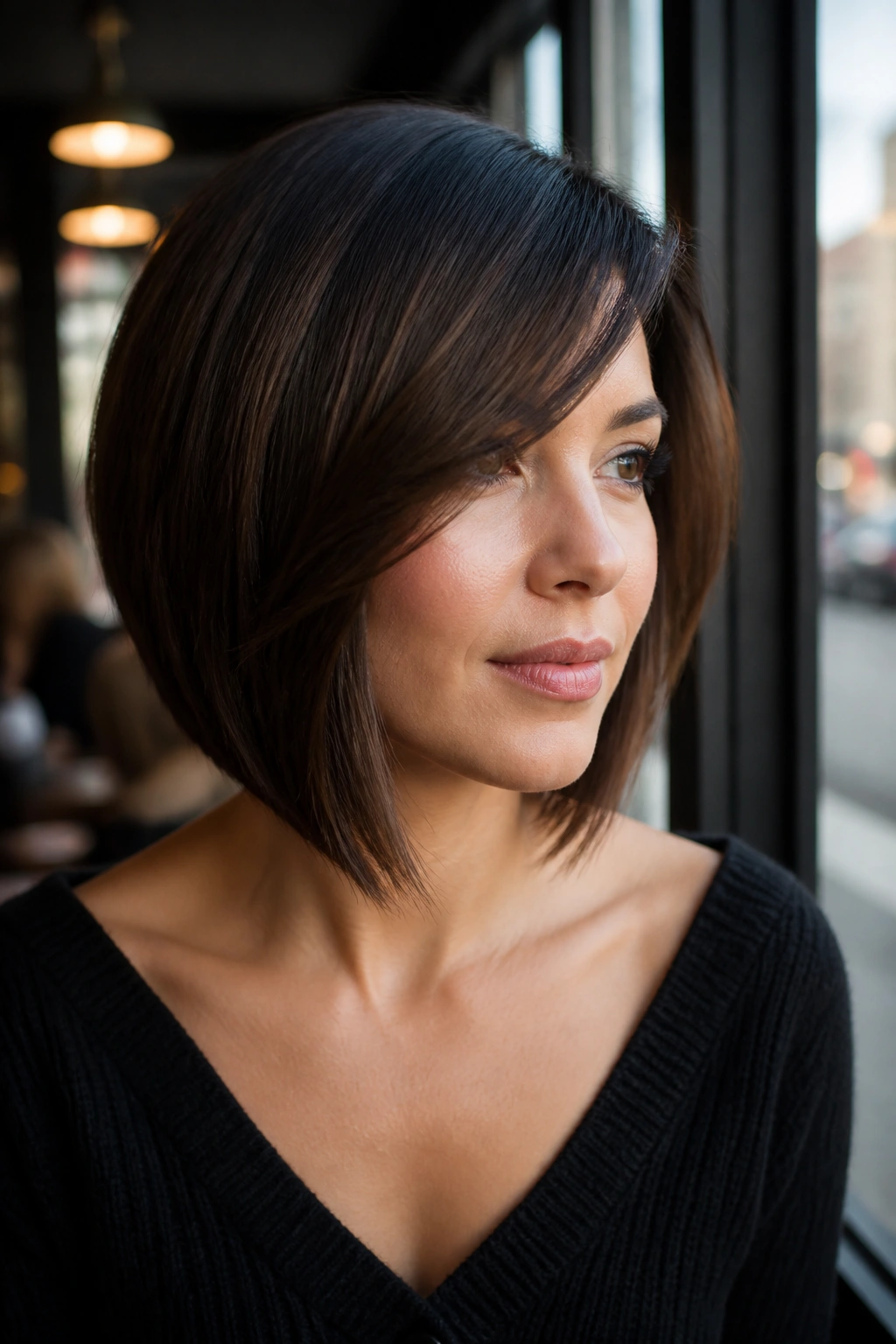
A-line bobs can look severe on paper, but a long side bang changes the mood fast. The front length gives the cut swing, while the side fringe draws the eye diagonally instead of straight across.
That diagonal line matters more than people think. It softens the transition from forehead to cheek and keeps the cut from looking like a helmet. I like this shape on hair that has a little density, because the angled perimeter needs enough body to show off the line. Very fine hair can wear it too, but it needs careful layering so the ends do not look sparse.
The bang should start somewhere near the arch of the brow and sweep down toward the cheekbone or just below it. Anything shorter can fight the angle of the bob. If you wear glasses, this cut can be especially good, since the fringe can tuck around the frames instead of crowding them.
One-sentence truth: the extra length in front is the whole trick.
9. Curly Layered Bob With Curly Bangs

If your curls spring up the second they dry, cutting them like straight hair is the fastest way to regret the haircut. A curly layered bob with curly bangs works when the cut follows the curl pattern instead of trying to flatten it.
The layers should be placed to remove bulk and help the curl stack, not to chop random holes through the shape. Bangs need to be cut longer than you think, because curl shrinkage is real and annoying. I usually prefer fringe that lands around the upper cheek or just above the brows when dry, depending on curl tightness.
What Makes It Work
- Cut the curls dry, or nearly dry, so the shape reflects the real spring
- Keep the bang area a touch longer than the final target length
- Ask for face-framing pieces that blend into the first layer
- Diffuse on low heat to keep the curl clumps intact
A lightweight cream or gel works better than a heavy butter here. Heavy products stretch the curl out and make the fringe hang. The goal is bounce and separation, not weight. This cut can look polished, playful, and a little undone all at once, which is exactly why I keep seeing people return to it.
10. Razored Bob With Micro Bangs

This is the boldest cut on the list, and I say that without apology. A razored bob with micro bangs has edge from the first glance, but the razor texture keeps it from feeling too blocky or hard.
Micro bangs sit well above the brows, so the face stays open. The bob underneath should be short and airy enough to match that energy, usually around the cheekbone or jaw, with piecey ends instead of a blunt wall. On straight hair, this can look almost architectural. On softly wavy hair, it gets a little more rebellious.
It is not a shy haircut. If your style leans quiet and classic, this may feel like a leap. But if you like a sharp outline and do not mind a fringe trim every 2 to 3 weeks, it has a lot of personality without needing much styling once the cut is right.
I’d keep the rest of the hair simple. The fringe is the statement, so let it be the loudest thing in the room.
11. Wavy Lob With Long Curtain Fringe

If a chin-length bob feels too sharp, the lob gives you breathing room. A wavy lob with a long curtain fringe keeps the softness of bangs but adds enough length that you can still gather the hair, pin it, or let it fall in easy bends.
The longer fringe is what saves this look from feeling too heavy. It should split near the center and graze the cheekbones, then blend into the front layers as they drop toward the collarbone. That makes the whole cut feel stretchy — not literally, but visually. It can shift with your part, your wave pattern, and even the way you tuck it behind your ears.
This is a solid choice if you are growing out a shorter bob and do not want that awkward in-between stage to drag on forever. It also suits anyone who likes low drama in the morning. A quick pass with a 1.25-inch iron or a diffuser with a little curl cream is usually enough.
The best part is the range. It can look dressed up or almost casual, and it never feels trapped in one lane.
12. Angled Bob With Swoopy Bangs
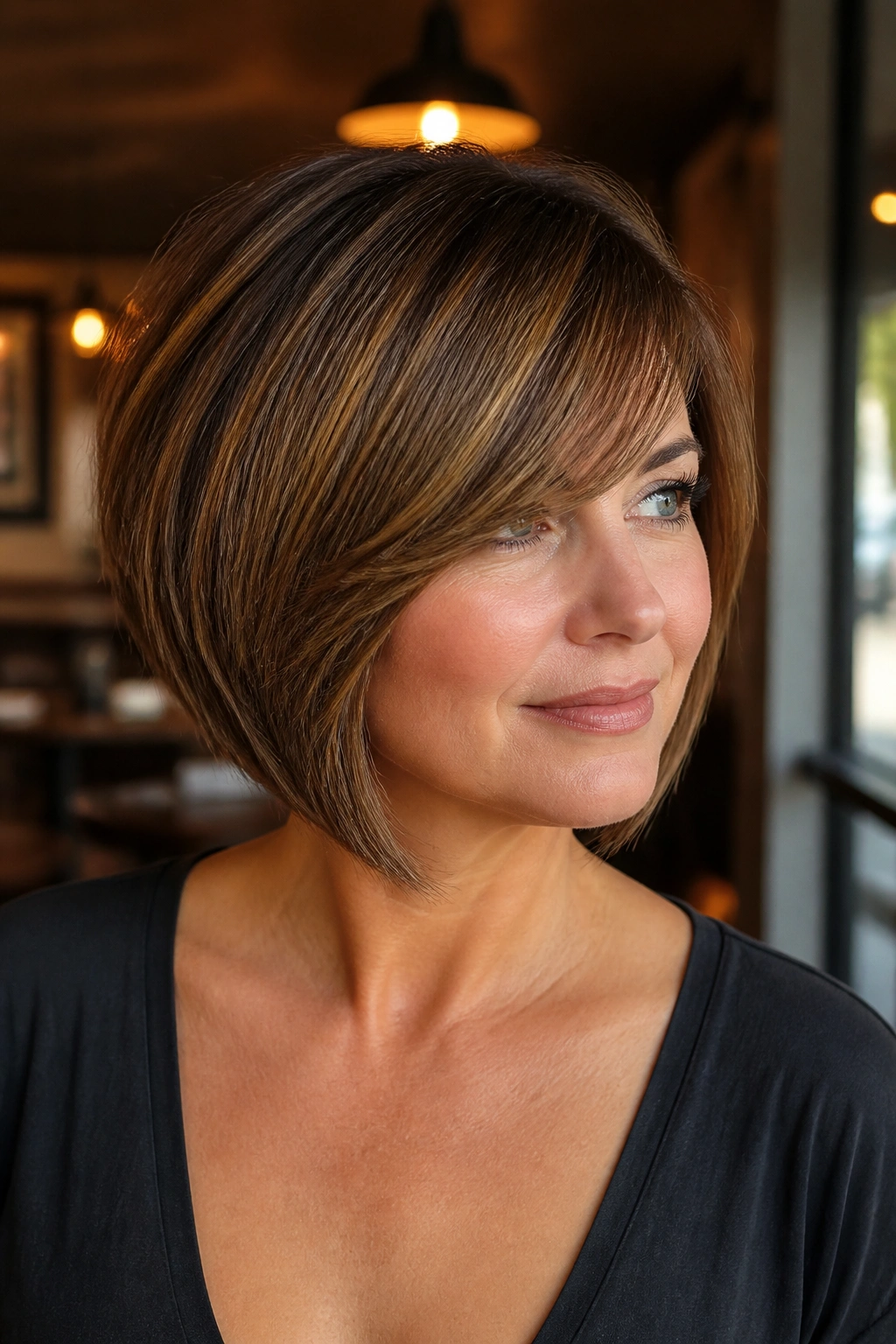
An angled bob with swoopy bangs has a neat trick: it looks structured from the back and soft from the front. That contrast keeps the haircut from getting stale, which is why I think it belongs on this list.
The angle should be visible, but not severe. Shorter at the nape, longer toward the chin or just past it — enough to show shape, not enough to create a wedge. The bangs then sweep across the forehead in one fluid arc, often starting deep at the part and falling toward the cheekbone.
This cut really shines when the blowout has a little bend. Use a medium round brush at the roots and a flat brush through the ends if you want more control. A large velcro roller at the fringe area can also help if your bangs collapse the minute you stop drying them.
I like this shape on hair that needs movement but not a full shag. It gives you swing without too much texture, which is a nice middle ground when you want polish with a bit of softness.
13. Layered Bob for Fine Hair With Airy Bangs
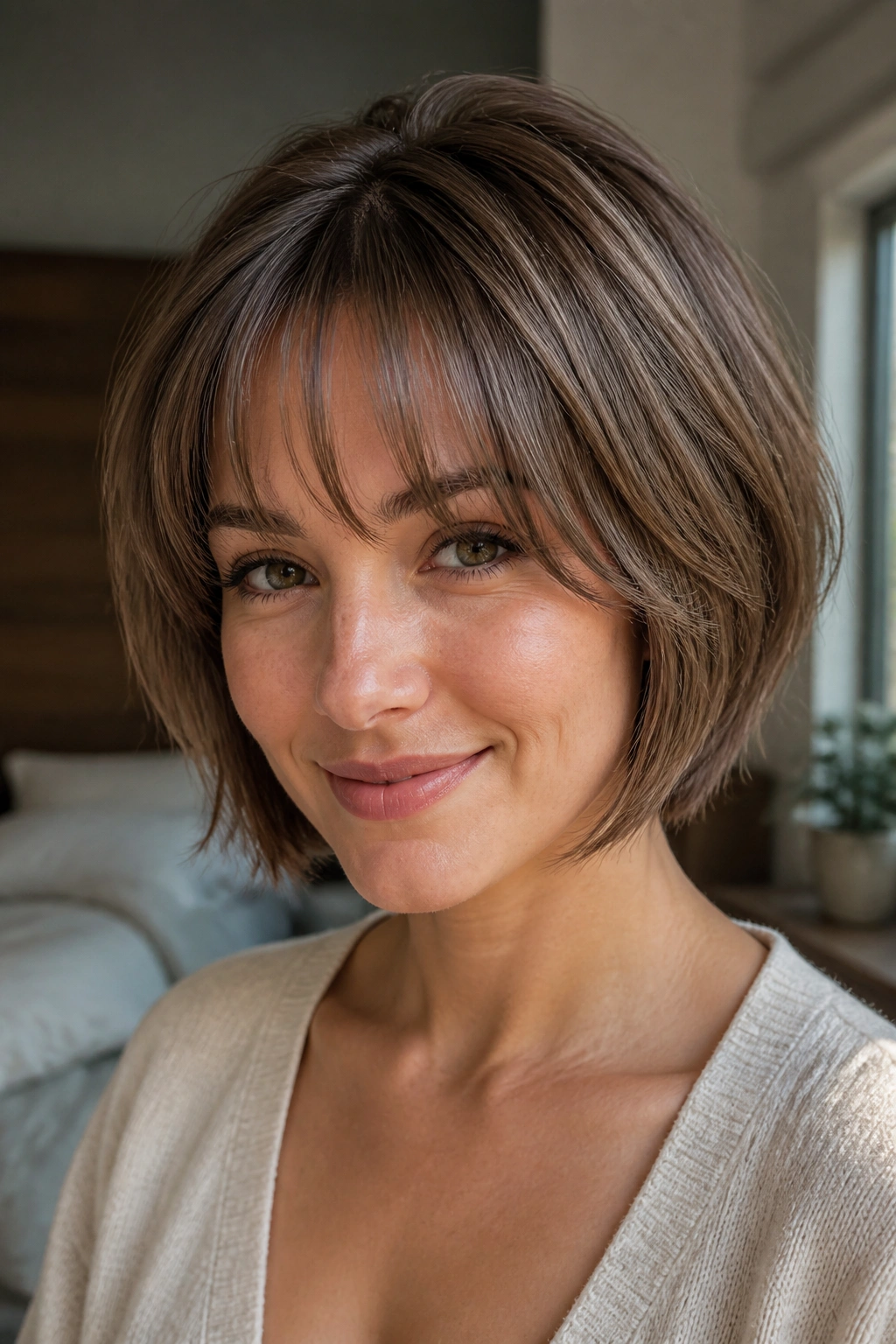
Can fine hair wear layers and bangs without looking thin? Yes — if the cut is careful and the layers do not start too high. A layered bob for fine hair needs lift, not a lot of chopping.
The airy bang is the key. It should be light enough to move, but full enough to hold a line at the front. Too many short layers near the crown can expose the scalp and make the top look see-through by day two. I’d rather see a full perimeter with subtle internal layers than a heavily thinned shape that disappears after the first wash.
How to Keep It From Collapsing
- Ask for the shortest layers to begin below the ear, not at the crown
- Use a pea-sized amount of volumizing mousse at the roots
- Blow-dry the bang area first with a small round brush
- Avoid heavy leave-in creams near the front
Dry shampoo can help on day two, but use it sparingly. A little goes a long way. Fine hair usually looks best when the ends stay clean and the root area gets the lift.
This is one of those haircuts where restraint matters more than drama. Less can be better here, and usually is.
14. Layered Bob for Thick Hair With a Full Fringe
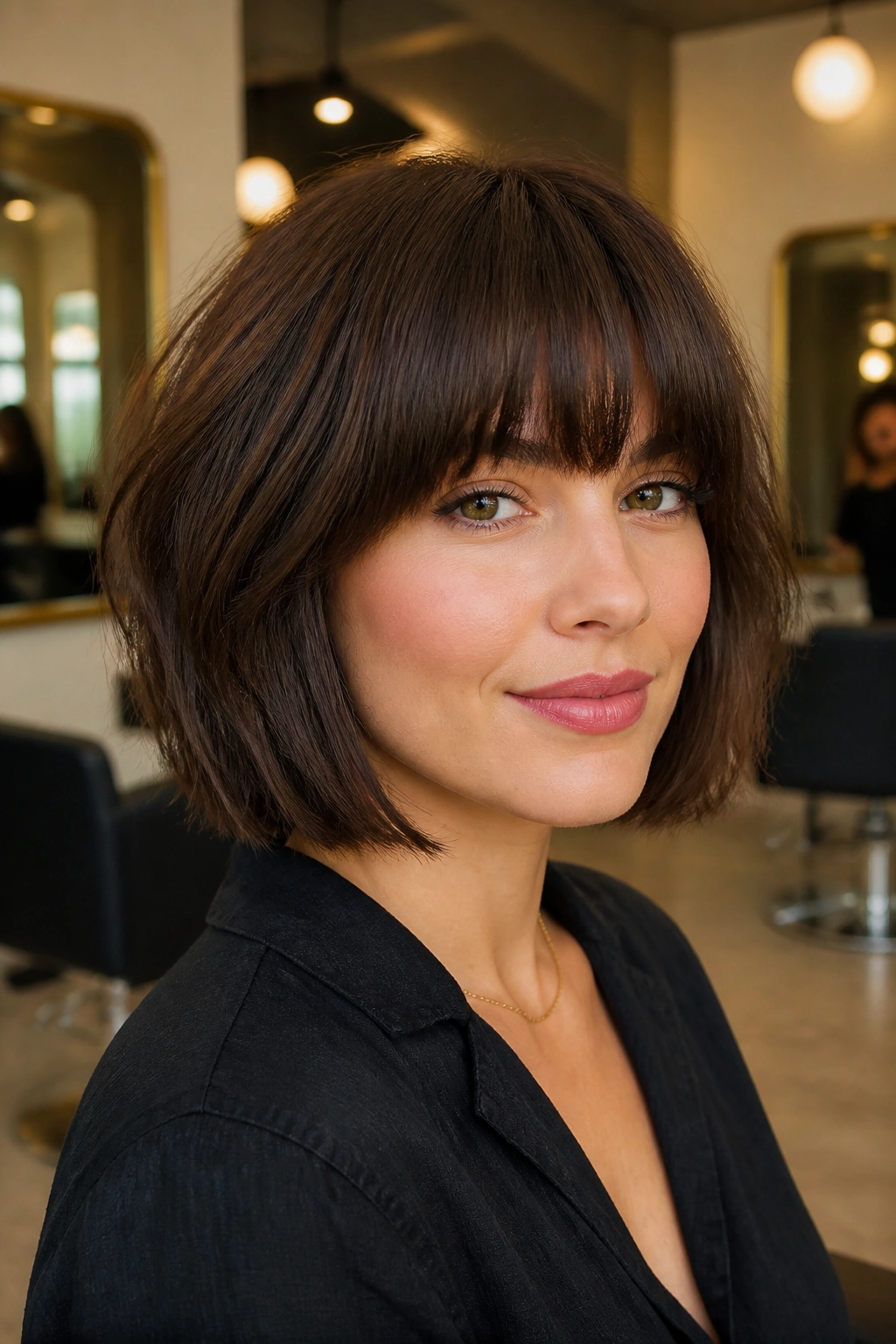
Thick hair can swallow a bob if the bulk is not handled early. That is why a layered bob for thick hair with a full fringe needs smart shaping from the start, not just a quick snip and a prayer.
The layers should remove weight underneath while keeping enough length on top to preserve shape. If you thin the ends too hard, the cut can puff out weirdly. If you do not thin enough, the bob turns into a triangle. There is a narrow sweet spot, and a good stylist will work inside the shape instead of hacking at the perimeter.
A full fringe looks best when it is cut blunt but softened at the corners. That lets the bangs read as full without turning rigid. Blow-drying the fringe in two sections — left and right — helps keep it flat and balanced, especially if your hair has a strong wave or a little bend at the root.
- Use smoothing cream on mid-lengths, not the roots
- Keep the fringe slightly longer in humid weather if your hair frizzes easily
- Ask for internal texture, not heavy thinning shears all over
- Finish with a cool shot to help the bangs settle
This is a strong, polished look when the density is managed well. Without that balance, it gets bulky fast.
15. Low-Maintenance Layered Bob With Soft, Grown-Out Bangs

The easiest layered bob is the one that already looks a little grown in. Soft, grown-out bangs remove some of the pressure that comes with a fresh blunt fringe, and the whole haircut stays friendlier between trims.
The bangs should graze the lashes or just skim the top of the cheekbone, then drift into the front layers instead of stopping in one hard line. That makes the style look intentional even when you air-dry it and walk out the door. I like this shape for busy people, people who hate weekly styling, and anyone who wants a bob that does not look fussy by the second day.
The layers themselves should be understated. Not boring — just not so chopped that they require a blowout every morning. A little bend at the ends, a side part or soft middle part, and a trim every 6 to 8 weeks are usually enough. If your hair grows fast, bangs may need a tiny clean-up sooner, but the overall shape stays forgiving.
If you want one layered bob with bangs that can handle real life, this is the one I’d hand over first. It is soft, easy to live with, and still looks like a haircut with a point of view.
