



A bob can make a short neck look longer in a hurry, but only if the cut creates space where you need it. A hard line that lands right at the widest part of the jaw does the opposite. It chops the silhouette in half and makes the neck disappear.
The fix is not some magic length. It is shape. You want clean vertical lines, a little air at the nape, and a front edge that pulls the eye downward instead of sideways. A side part helps. So does a touch of asymmetry. Even the way the ends are textured matters more than most people realize.
I have a soft spot for bobs that do a lot with a little. They look polished without trying too hard, and they can be tuned for straight, wavy, thick, fine, or curly hair. That is the real trick with a short neck: the best bob is not the shortest one. It is the one that leaves enough neck visible and gives the whole haircut some lift.
Below, each cut earns its place for a reason. Some slim the silhouette. Some open up the neckline. A few are quietly better for short necks than the classic chin-length bob people keep asking for. If you’ve ever left the salon feeling like your hair made your neck look shorter, this is where the smarter options start.
1. Chin-Length Blunt Bob With Soft Underbevel

A chin-length bob can work on a short neck, but the blunt version needs a little softness at the ends. Straight-across, boxy edges sit heavy on the face and make the neck feel crowded. Add a subtle underbevel — just enough curve under the jaw — and the whole cut starts to breathe.
The reason this works is simple. Your eye follows the line of the hair. If that line sits flat and wide, the face looks shorter. If the ends curl slightly inward and the weight stays off the nape, the neck shows more clearly and the jaw gets a cleaner frame.
What to ask for
- Length that sits at the chin or just a hair below it, not on the chin itself
- Soft beveling at the ends instead of a hard shelf
- Light internal weight removal so the bob does not sit like a helmet
- A center or slight off-center part, depending on where your face opens best
This is a good pick if your hair is fine to medium and you want something neat without a lot of daily fuss. It is also one of the easier bobs to tuck behind the ears when you want even more neck showing. That tiny move matters more than people think.
2. Slightly A-Line Bob That Leaves the Front Longer

Why does a longer front help so much? Because it creates a diagonal line, and diagonal lines are flattering in the least fussy way possible. They pull the eye down and forward, which gives a short neck more room to look longer.
A slight A-line bob is not dramatic. It does not need to be sharp or severe. The back sits a bit higher, the front drifts a little longer, and the whole shape narrows as it moves forward. That small difference changes the way the haircut sits on the body.
How to style it
- Blow-dry with a flat brush, directing the front pieces slightly forward
- Keep the ends smooth, not puffy
- Use a pea-size amount of cream or serum on the mid-lengths only
- Ask your stylist to keep the front just below the jawline, especially if your neck is short and your jaw is broad
A mild A-line bob is especially good if you like structure but hate harsh lines. It gives you shape without making the haircut feel stiff. And yes, it works on straight hair beautifully — though wavy hair can wear it well too if the ends are controlled.
3. Stacked Bob With Lift at the Nape

People often think a stacked bob is too old-school. I disagree. On a short neck, it can be one of the smartest cuts in the room.
The back is cut shorter and layered so it lifts away from the neck, while the front stays longer and softer. That means the bulk moves upward instead of sitting on the nape. The neck looks more open, and the crown gets a little height for free. No teasing needed. No drama.
Best for thick or heavy hair
- Removes weight where thick hair tends to balloon
- Keeps the nape from looking dense or boxed in
- Gives the back of the head a rounded shape
- Helps the profile look taller, not wider
This cut needs a good hand, though. Too much stacking and it turns into a wedge. Too little and you lose the lift that makes it useful in the first place. Ask for a clean graduation in the back, then keep the top smooth rather than over-layered.
On wash day, a round brush and a quick blow-dry at the roots do most of the work. The shape should feel buoyant, not puffy. That distinction matters.
4. Deep Side-Part Bob With a Diagonal Sweep

When hair falls from a deep side part, it makes a diagonal line across the face. That line is your friend. It breaks up the width around the jaw and opens the neck area without requiring a drastic cut.
This style has a nice trick to it. One side feels lighter and lifted, while the other side drops a little lower and creates length. That contrast is what keeps the cut from looking too square. It also gives you instant height at the crown, which helps the whole upper body look a little longer.
A deep side part is especially kind to short necks if your hair tends to lie flat. The lift near the roots creates room around the face, and the longer side gives the eye somewhere to travel. It is a small change with a big payoff.
If you want even more lengthening, tuck the lighter side behind the ear and let the longer side brush the jaw. That’s it. Easy, but effective.
5. French Bob That Sits Above the Widest Part of the Neck
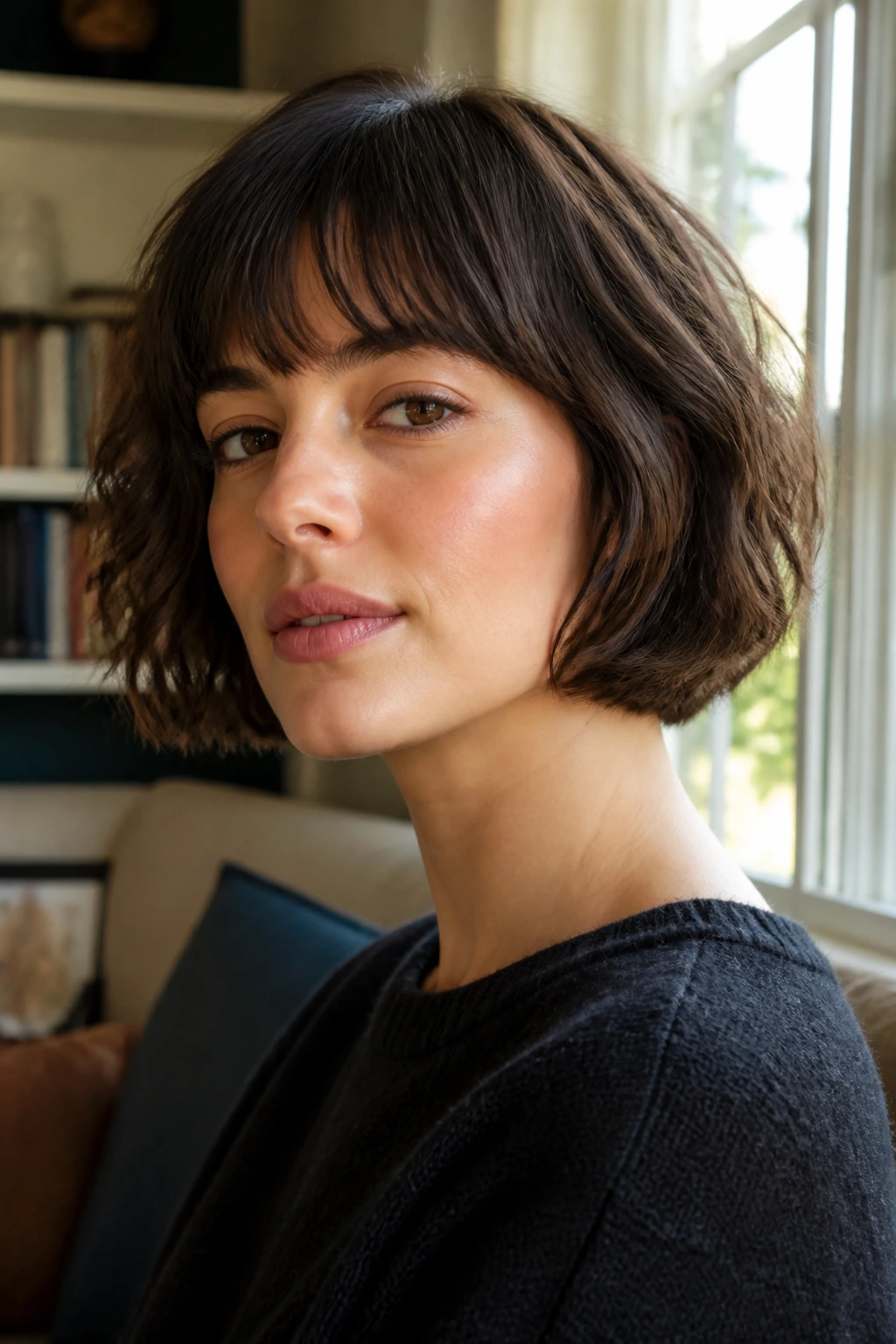
A French bob can be gorgeous on a short neck, but the placement has to be right. If it lands too low, it crowds the jaw. If it sits too high and gets too blunt, it can look severe. The sweet spot is just above the widest part of the neck, with enough softness around the face to keep it from feeling boxy.
This cut lives on attitude. A bit of bend, a little texture, and a fringe that doesn’t fight your features — that’s the whole thing. A hard, full fringe can close down the face fast, while a lighter brow-skimming bang keeps the upper half of the look open.
The bangs matter more than people admit
- Soft fringe: good for short necks because it keeps the face from feeling crowded
- Heavy straight fringe: risky unless your hair is very fine and your features are small
- Piecey bangs: often the easiest version to wear day to day
The French bob works best when the edges feel a little undone. Not sloppy. Just not overly polished. If it is too exact, it can shorten the neck visually. A bit of texture gives the face more room to exist.
6. Collarbone Bob That Skims the Top of the Shoulders

If you have a short neck and you’re nervous about going too short, the collarbone bob is the safe bet I usually trust. It creates length by not ending right at the jaw. Instead, it gives the eye a place to keep moving downward, which makes the neck look longer even when the hair is not dramatically layered.
This cut is especially useful if you like to tie your hair back sometimes. A collarbone length still feels bob-like when worn down, but it is long enough to tuck, pin, or wave depending on the day. It also works nicely with a slight bend at the ends, which keeps it from looking flat and heavy.
A lot of people assume a shorter bob always lengthens the neck more. Not true. On some faces, the extra inch or two is what stops the style from sitting right on the throat. That tiny difference can make the whole haircut feel less crowded.
This is one of those styles that is quietly flattering in pictures and in real life. The line is soft, the shoulders get some space, and the neck does not get boxed in. Good haircut. No tricks.
7. Rounded Bob With Curved Ends
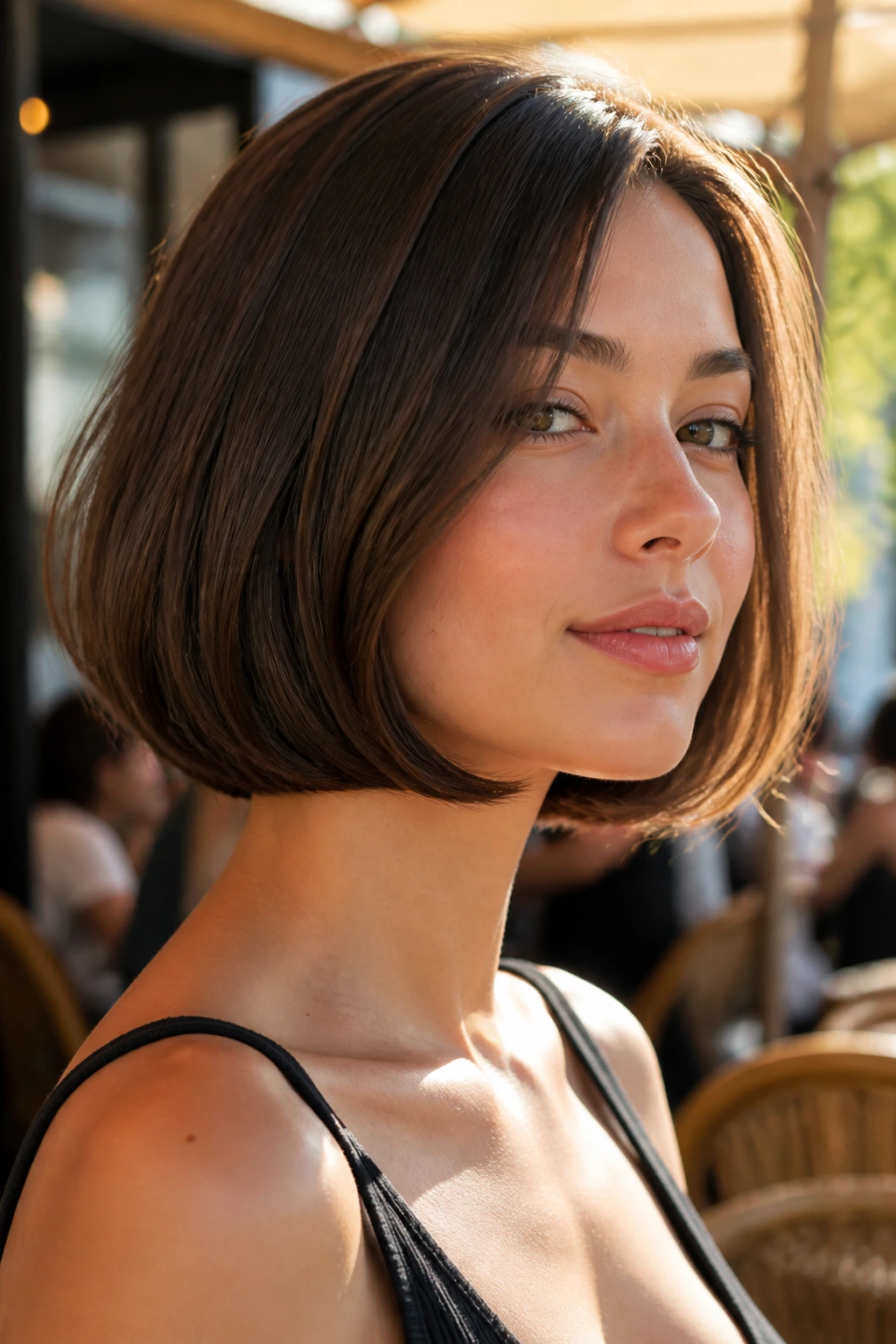
A rounded bob is one of those cuts that looks gentle from every angle. The shape curves inward, following the jawline without sitting on it. For a short neck, that inward curve can create a cleaner outline because it avoids the blunt horizontal shelf that tends to shorten everything.
Picture the ends turning under just a touch. Not a pageboy. Not a hard flip. Just enough bend to keep the outline smooth and controlled. That shape leaves the nape visible and makes the silhouette feel taller.
This cut is especially good on straight or slightly wavy hair that tends to lose shape by mid-day. The rounded finish keeps the outline tidy even when the texture softens a bit. If your hair is thicker, ask for light debulking near the ends so the curve does not puff out.
A round brush helps here, but you do not need to spend twenty minutes on a blowout. Dry the roots first, then shape the ends inward while they are still warm. That is usually enough. The haircut does the heavy lifting.
8. Bob With Curtain Bangs and Open Sides

Curtain bangs are one of the easiest ways to soften a bob without losing the lengthening effect. They part in the middle and sweep outward, which opens a space right in the center of the face. That open space matters. It keeps the eye from getting stuck on a blunt front edge and draws attention upward instead.
This is a particularly smart move if your neck is short and your forehead or cheekbones can handle a little framing. The sides should stay airy, not dense. The whole point is to make the haircut feel light around the face while the bob itself stays clean below.
A few practical notes help here:
- Keep the bangs longer at the sides so they blend into the bob
- Avoid over-thickening the fringe at the center
- Let the ends of the bob sit just below the jaw for a longer look
- Use a small round brush to bend the bang away from the face, not straight down
Curtain bangs can be a little annoying on day one if they are cut too short. That happens often. Ask for a length that still moves, even when tucked behind the ear. The haircut should frame, not trap.
9. Asymmetrical Bob With One Side Slightly Longer
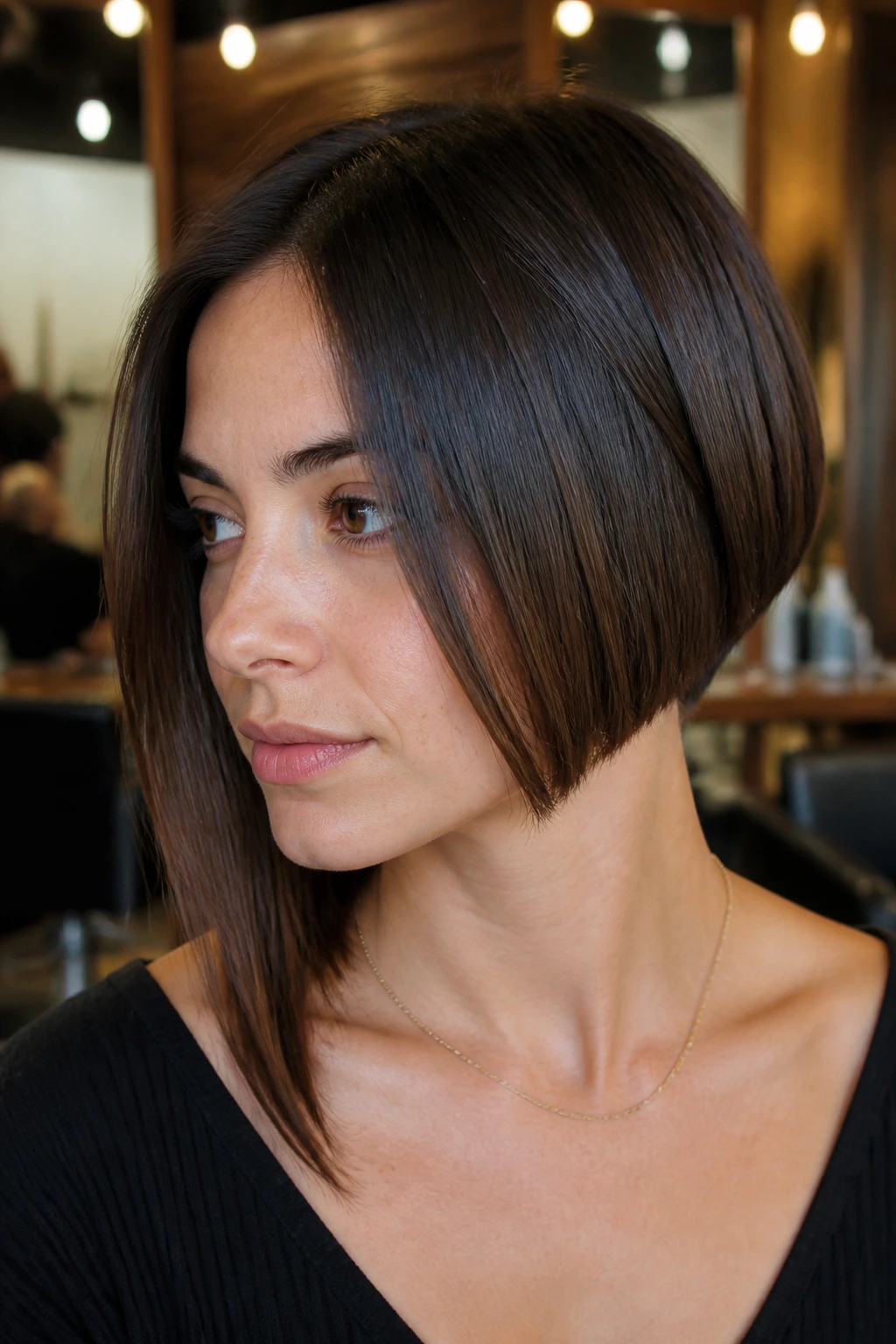
A slight asymmetry can do more for a short neck than a perfectly even cut. One side being a little longer creates motion, and motion keeps the eye from stopping at a single horizontal line. That alone can change the whole feel of the haircut.
The difference does not need to be dramatic. Half an inch to an inch is enough. If the longer side falls near the collarbone while the shorter side stays closer to the jaw, you get a gentle angle that lengthens the neck without shouting about it.
Why it works so well
- The eye follows the longer side downward
- The face looks a little narrower from the front
- The neckline gets more visual space
- The style feels modern without being fussy
This bob is a favorite for people who want a little edge but not a harsh geometric shape. It also gives you more options on how to wear it. Tuck the shorter side. Let the longer side swing. Flip your part and the whole haircut changes mood.
If you like clean lines but hate anything that feels too rigid, this is the one to try. It is not loud. It just quietly changes the proportions in your favor.
10. Choppy Textured Bob With Piecey Ends

A choppy bob can be a lifesaver for short necks, especially if your hair is thick or naturally bulky. The reason is simple: texture breaks up the solid block of hair that tends to widen the lower face and crowd the neck.
When the ends are piecey, the haircut doesn’t read as one wide line. It reads as movement. That movement keeps the neck area lighter. It also gives a bit of lift around the cheeks, which helps balance a shorter neck more than people expect.
This is not the place for over-thinning, though. Choppy does not mean shredded. You want controlled separation, not a stringy mess. A good stylist will point-cut the ends and keep the bulk where the shape needs it, not everywhere else.
If your hair is straight, a texturizing spray can help bring out the separation. If it is wavy, a little scrunching is enough. The cut should look deliberate even when it is a bit messy. That’s the charm of it. A little roughness keeps the neckline from feeling trapped.
11. Sleek Glass Bob With a Tucked Side
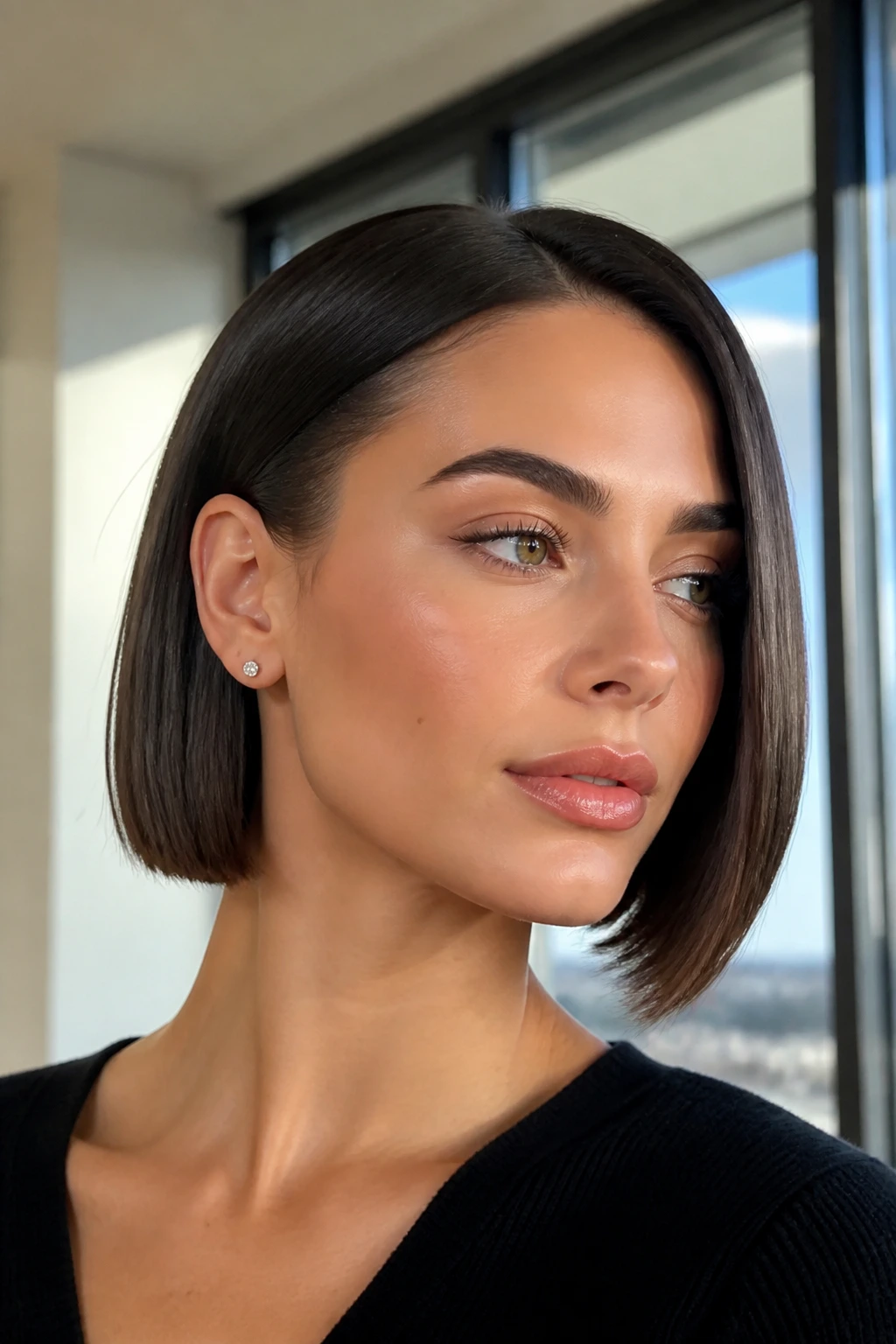
Can a very sleek bob lengthen a short neck? Yes, if the shape is right. The key is keeping the line long enough to clear the jaw and styling one side behind the ear so the neck stays visible on at least one side.
This is a clean, glossy look. The hair lies flat, the finish is smooth, and the shape feels controlled. That can go wrong fast if the bob ends too high or the front is too blunt. It can start to look severe. But when the cut sits just below the jaw and the part is slightly off center, the sleekness works in your favor.
What to watch for
- Keep the perimeter soft enough to avoid a boxy shape
- Use a light serum, not a heavy oil
- Blow-dry the roots flat, then polish the ends with a brush or flat iron
- Tuck one side behind the ear so the neck and jawline are not hidden
I like this style on people who wear sharp collars, simple earrings, or structured clothes. It has a crispness that pairs nicely with clean lines. And when the light hits it, the whole haircut looks more deliberate. Not fussy. Deliberate.
12. Wavy Bob With Cheekbone-Lifting Texture
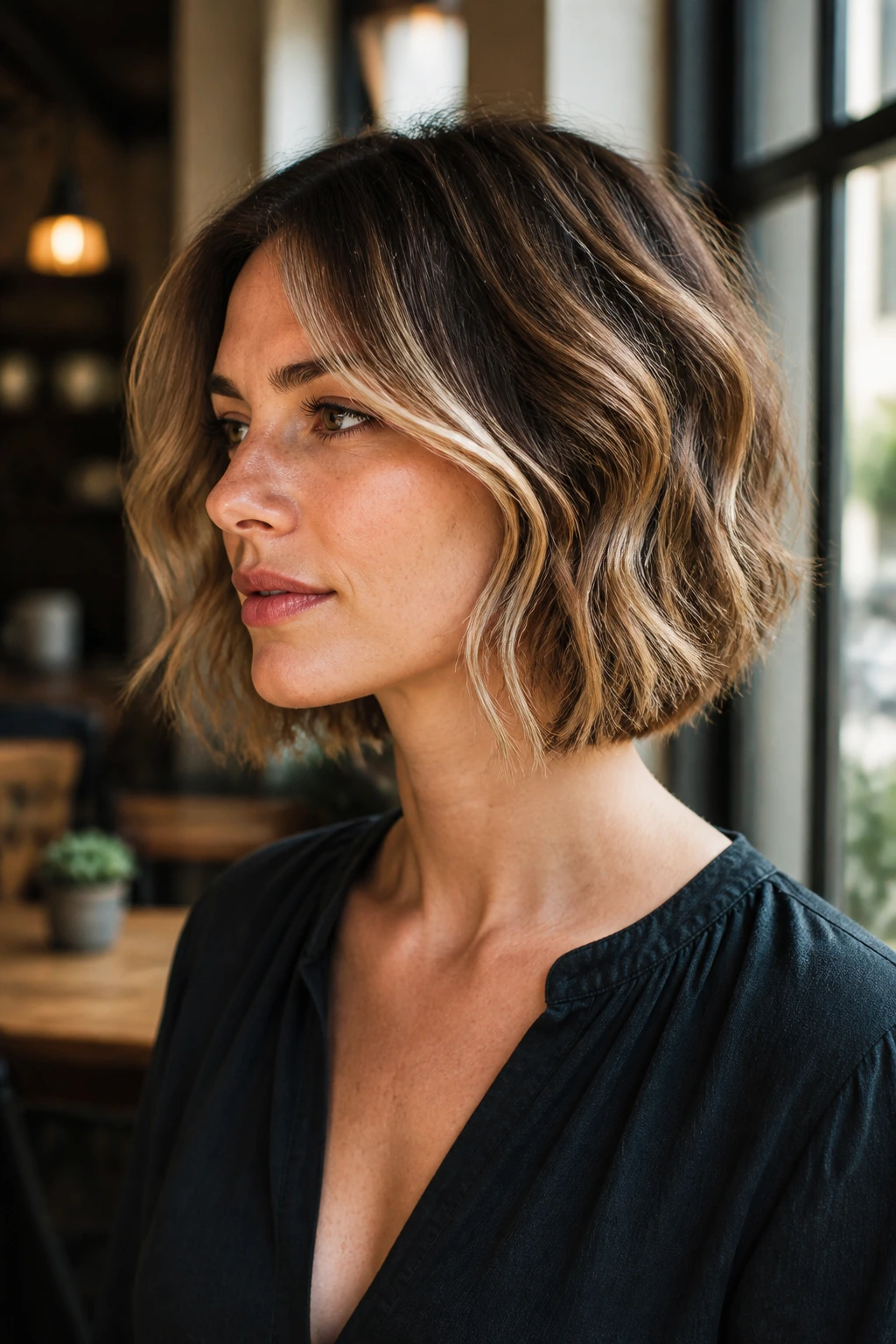
Waves can be a gift for a short neck when they’re placed with some restraint. If the curl pattern starts too low and piles around the neck, the result gets heavy fast. But if the waves begin around the cheekbones and stay loose through the ends, the face looks lifted and the neck looks longer.
The best version of this bob keeps the top smooth and lets the body happen from the mid-lengths down. That way the wave adds width higher up on the face, not right at the neckline. It is a small shift, but it changes the whole balance.
A one-inch curling iron or a flat iron wave works well here. Leave the last inch of the ends straighter so the style does not puff outward. Then break the wave up with your fingers. Not a brush. Fingers. Brushes can turn a good wave into a mushroom.
This cut is forgiving, which I like. It can look polished on clean hair or a little softer on second-day hair. That flexibility makes it one of the easiest bobs to live with, especially if you do not want to restyle every morning.
13. Undercut Nape Bob for Extra Neck Room
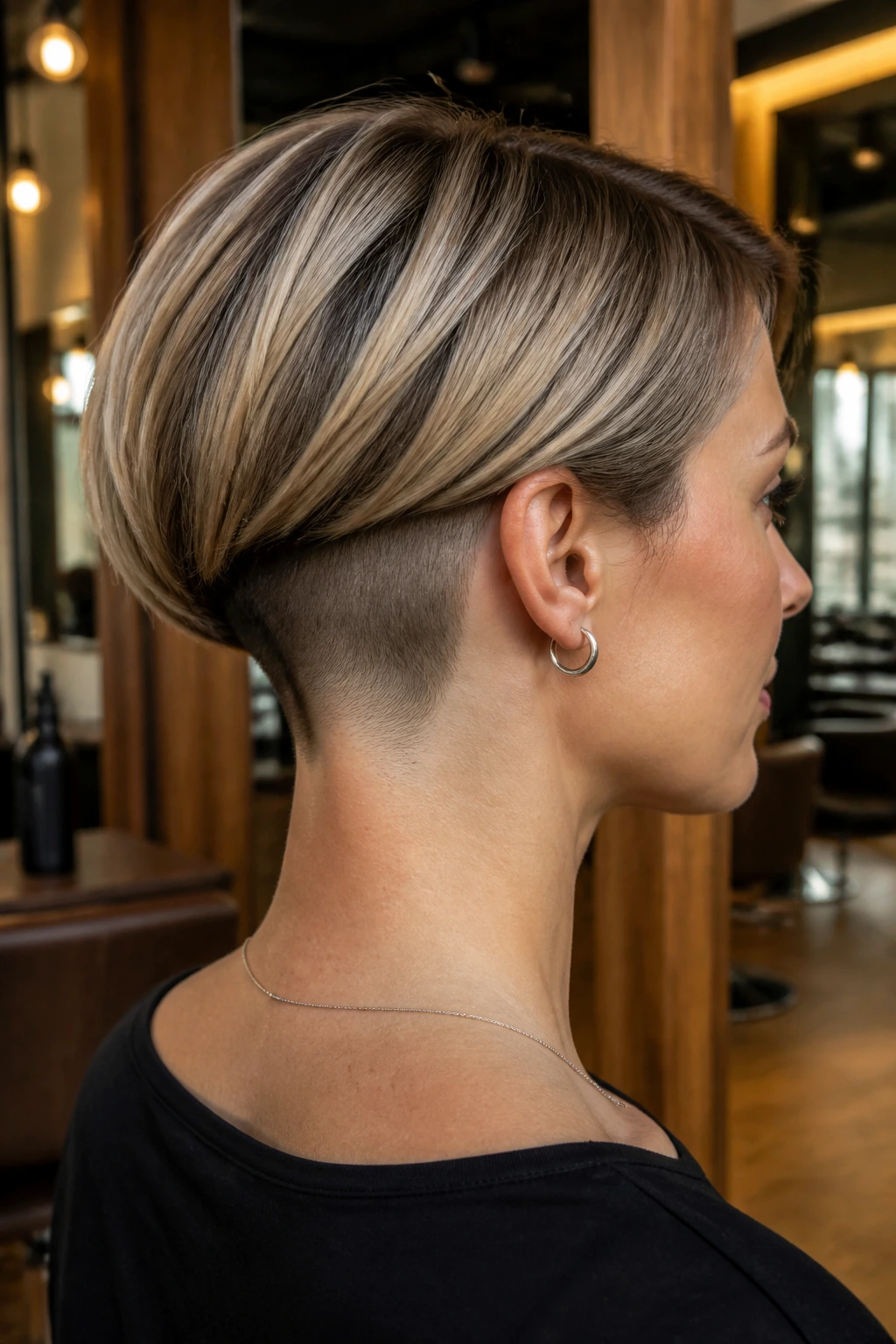
An undercut nape bob sounds dramatic, and sometimes it is. But for thick hair and short necks, it can be a cheat code. By removing bulk underneath, you free up the neck area and let the top layer fall more cleanly.
The beauty of it is hidden. From the outside, you still get a full bob. Underneath, though, there is less weight pressing against the neck. That makes the haircut sit higher and move better. The neck looks less crowded. The head looks a little taller. It’s practical, not flashy.
Good reasons to consider it
- Cuts down bulk at the nape
- Helps thick hair dry faster
- Prevents the lower half of the bob from flaring outward
- Makes the profile look cleaner from the side
This is not the best pick if you love constant ponytails or if you are nervous about upkeep. It does need a tidy trim to keep the underlayer from growing out awkwardly. Still, if your hair is dense and you always feel like it swallows your neck, this is one of the most useful options on the list.
14. Feathered Bob With Soft Face-Framing Layers
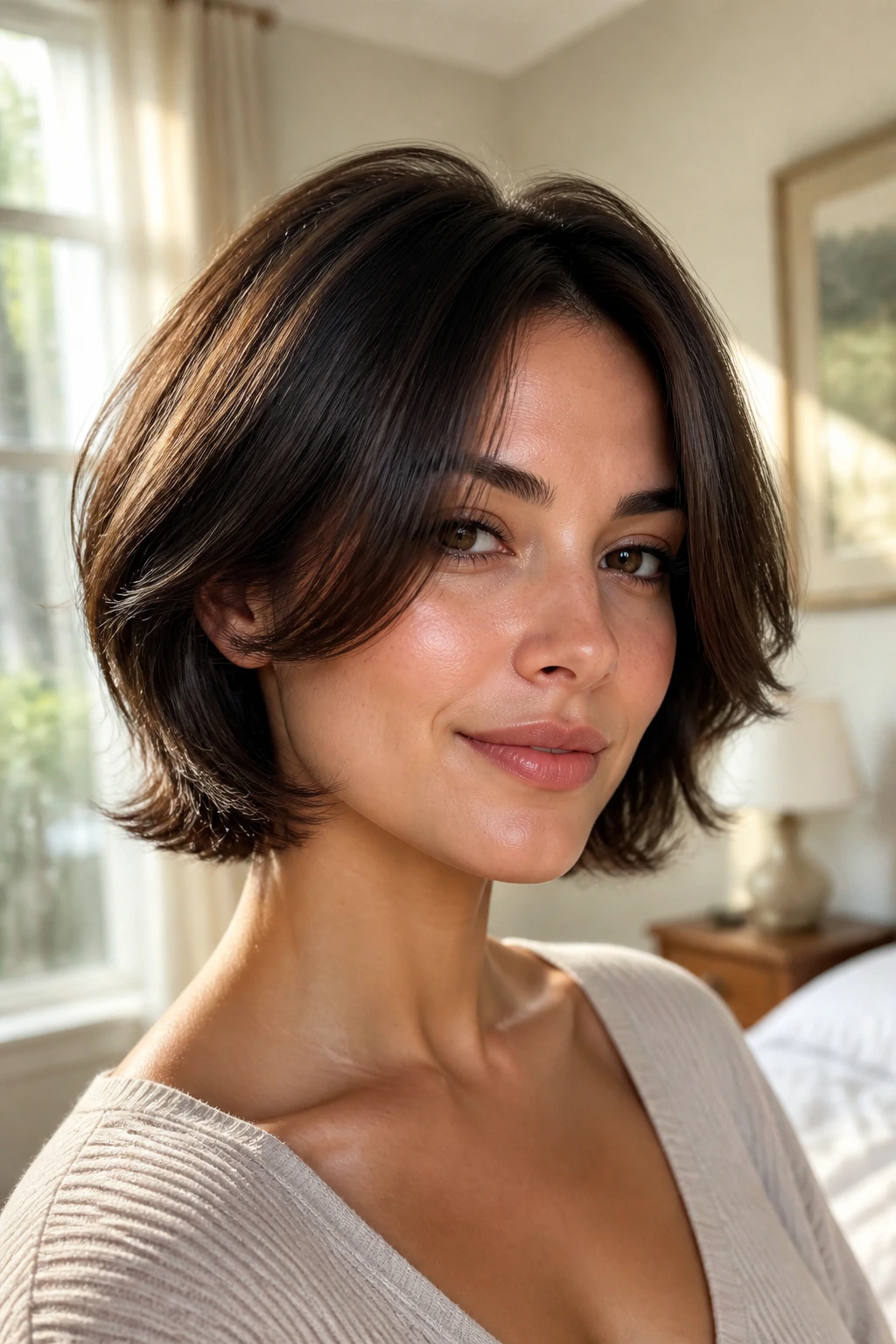
A feathered bob brings back movement in a way that feels lighter than blunt layers. The ends are softened, the front pieces slide away from the face, and the neckline stays visible instead of getting buried under one flat sheet of hair.
This works especially well when you want the bob to feel airy. The feathering removes visual weight near the bottom, which helps the neck look longer and the shoulders look less crowded. It also keeps the style from feeling too hard around the jaw, which is a common problem on short necks.
The best feathered bobs do not look over-layered. They look brushed, softened, and gently broken up at the ends. That’s the point. Too much feathering and the cut starts to look flimsy. Too little and you lose the lift.
Ask for face-framing pieces that begin near the cheekbone, not the chin. That keeps the front open and gives the haircut a little swing. If your hair is fine, this can add a nice sense of movement. If it’s thick, it takes the edge off the bulk. Either way, the neck gets more breathing room.
15. Soft-Tapered Bob That Narrows Toward the Nape
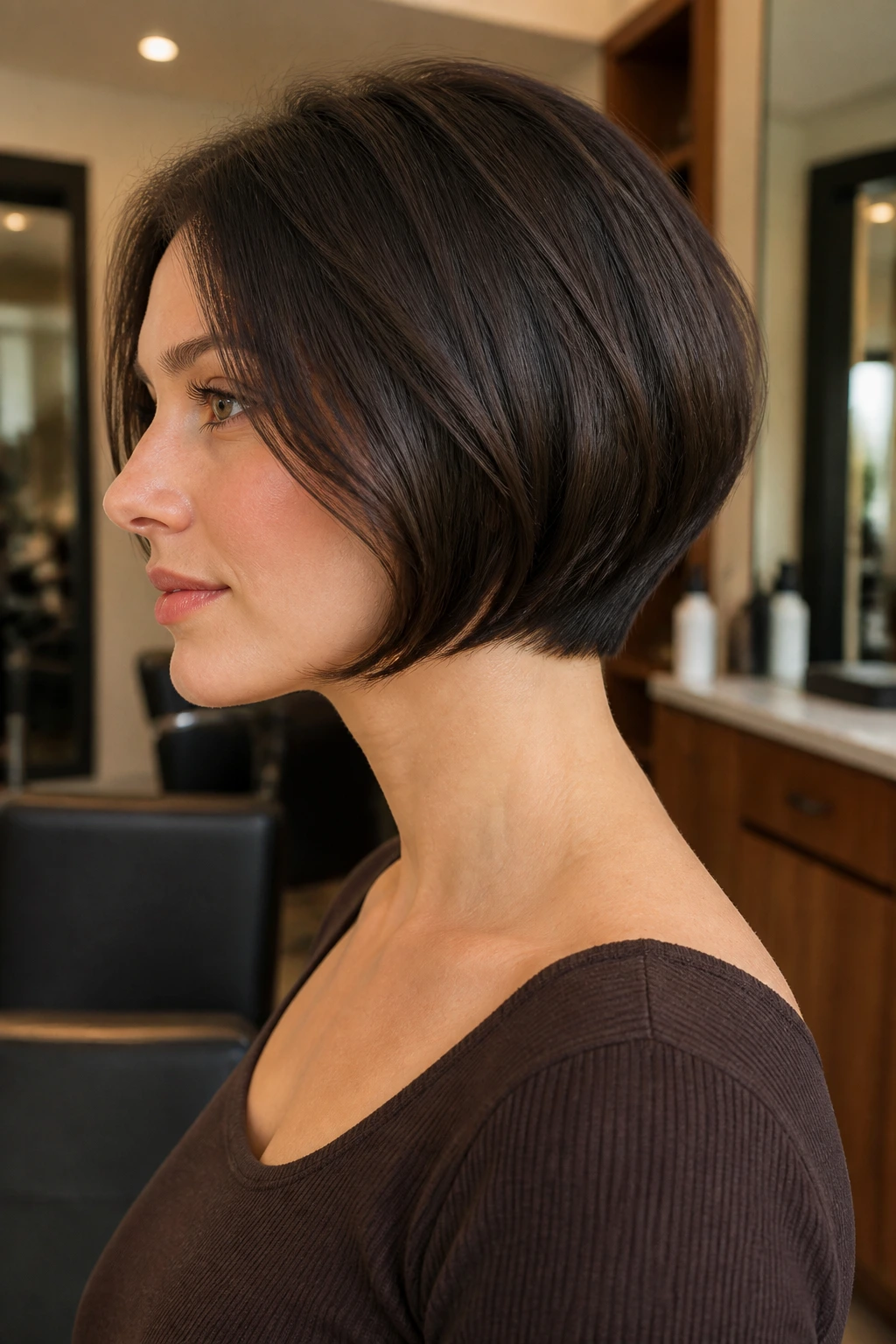
The soft-tapered bob is one of the most reliable choices for a short neck because it narrows as it moves downward. That narrowing effect makes the neck seem longer without forcing the haircut to be very short. It is tidy, but not severe.
I like this shape because it feels controlled from the back and easy from the front. The ends taper slightly inward, the nape stays clean, and the sides are long enough to frame the face. Nothing sits too wide. Nothing piles up where it shouldn’t. That sounds simple, but simple is often the smartest answer.
This cut also ages well between salon visits. Even when it grows a little, the taper still holds some shape. A blunt bob can start looking blocky fast. A tapered one softens more gracefully. That matters if you want a cut that keeps flattering your neck as it grows.
If you only remember one thing, remember this: length alone does not lengthen the neck — shape does. A bob that narrows, lifts, or angles away from the neckline will almost always look better on a short neck than a strict one-length cut that lands in the wrong spot. The best version is the one that leaves a little air around the throat and lets the jaw do its job. That’s the whole game.
