



An angled bob can do more for a round face than people expect. The right version pulls the eye downward, sharpens the jawline, and keeps the cheeks from being the loudest thing in the room.
The trick is in the line of the cut. A bob that sits all one length can make a round face feel broader, especially if it ends right at the widest part of the cheek. An angled bob changes that story with a front section that’s longer than the back, so the shape has direction instead of a neat little circle around the face.
Hair texture changes the result more than most people admit. Fine hair needs enough structure to hold the angle; thick hair needs weight removed in the right places so it doesn’t puff out at the sides; curly hair needs the perimeter cut with shrinkage in mind or the whole thing jumps shorter than you planned. Small differences matter. A lot.
That’s why the best angled bob is never just “shorter in back, longer in front.” It’s a shape decision. A good stylist looks at where your face is widest, where your hair bends, and how much time you’ll actually spend styling it, then cuts the angle around that reality. The 15 versions below cover sleek, textured, layered, soft, and sharp options so you can match the haircut to your hair instead of fighting it.
1. Collarbone Angled Lob for Round Faces

This is the version I reach for when someone wants the safest flattering move without losing length. The front grazes the collarbone, the back sits shorter at the nape, and the whole cut falls in a clean diagonal that makes a round face look a little longer without trying too hard.
Why it works
A deep side part is the secret weapon here. It pushes volume off the widest part of the face and gives the top section a little lift, which matters more than people think. The angle also keeps the eye moving from shorter back to longer front instead of stopping at the cheeks.
What to ask for
- Keep the front about 1.5 to 2 inches longer than the back.
- Let the shortest point hit just above the nape, not high on the head.
- Soften the ends with point cutting so the line doesn’t look stiff.
- Ask for a side part if your hair lies flat at the crown.
Best for: medium to thick hair that needs shape but not a heavy stack.
Watch out for: a blunt line at the chin. That’s the one detail that can make the face feel wider fast.
A quick blow-dry with a round brush and a little root spray is enough. Easy. Clean. No drama.
2. Chin-Skimming A-Line Bob With Feathered Ends
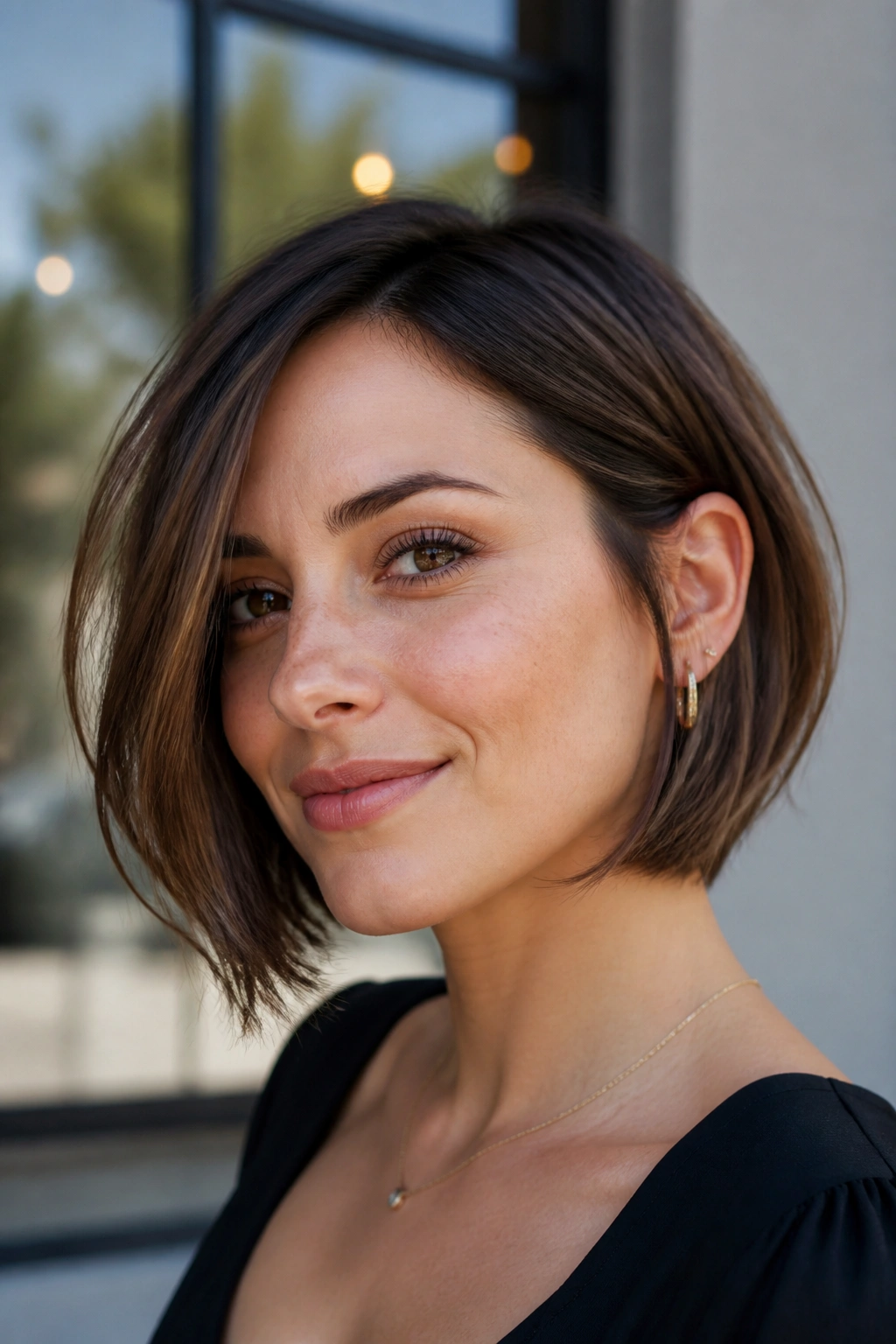
Can a chin-length bob work on a round face? Yes, if the front keeps moving and the ends don’t sit like a hard shelf. The goal here is not to hide the face. It’s to give the face a bit of vertical pull, which a clean A-line does better than most people expect.
The cut should skim the chin, not sit squarely on it. That tiny difference changes everything. Feathered ends help too, because they break up the edge of the bob and keep it from looking too compact around the lower face.
I like this version for someone who wants a lighter, more open feeling around the neck and jaw. It has a little swing when you walk, which sounds like a small thing until you see it in the mirror. Then it makes sense.
If your hair is straight or only slightly wavy, tuck one side behind the ear and leave the front loose. That asymmetry helps the cut read longer. If your hair is thick, ask for internal weight removal near the back so the shape doesn’t balloon out at the sides.
3. Stacked Angled Bob With a Tapered Nape

If your hair is heavy at the back, this cut can be a lifesaver. A stacked angled bob builds lift through the crown and occipital area, then narrows toward the nape so the shape feels deliberate instead of bulky. On a round face, that height matters.
Why it changes the silhouette
The stack adds volume where you want it — on top and slightly behind the crown — not at the cheeks. That’s the whole point. A round face looks more balanced when the haircut gives some structure above and below the widest part of the face.
Ask your stylist for
- Graduated layers at the back, with the shortest pieces tucked into the nape.
- Front sections that stay longer and slightly softer.
- Weight removal through the lower back if your hair is thick.
- A clean edge that still moves when you turn your head.
This cut does need maintenance. Not constant, but enough. If the stack grows out unevenly, the shape gets slouchy fast. Still, when it’s fresh, it has real presence.
A root-lifting mousse at the crown and a quick blow-dry with a small round brush make the stack do what it’s supposed to do. Skip heavy oils near the roots. They drag the whole thing down.
4. Textured Angled Bob With Piecey Layers

Texture is the difference between a bob that sits there and a bob that works. A piecey angled cut breaks up the roundness around the face and keeps the hair from forming one smooth, wide curve from cheek to cheek.
This version is especially good if your hair has a natural bend. The layers should be soft, not chopped to bits. Too much layering near the sides can create a halo effect, and nobody wants that. The sweet spot is subtle texture through the mids and lighter ends, so the perimeter still keeps its angle.
What makes it different
A blunt angled bob gives shape through line. A textured angled bob gives shape through movement. Both can flatter a round face, but this one feels looser and easier if you like hair that looks a little undone.
How to style it
- Work a pea-sized amount of light cream through damp hair.
- Rough-dry until about 80 percent dry.
- Twist 1-inch sections around your fingers while drying the ends.
- Finish with a touch of dry texture spray at the mid-lengths.
That’s enough. Seriously.
If your hair tends to puff at the sides, keep the layers longer and closer to the ends. The cut should feel airy, not shaggy.
5. Sleek Blunt Angled Bob for Round Faces

Blunt does not have to mean boxy. That’s the mistake people make. A blunt angled bob can be one of the sharpest, cleanest shapes for a round face if the front is long enough and the line falls with intention.
The crisp edge gives the eye something straight to follow. That matters. Round faces already have soft curves, so a precise perimeter adds contrast. The angle keeps it from turning into a helmet.
If your hair is fine, this is one of the smartest choices because you don’t need a pile of layers to create shape. You need shine, clean edges, and a controlled line. Keep the back shorter, but don’t push the front too high. A front that lands just below the jaw works better than one that stops right at it.
Flat iron the ends only if your hair bends wildly. Otherwise, a round brush and a smoothing cream are enough. And don’t overload it with serum. Too much shine product makes the shape collapse into your face.
Best if you want
- a polished finish
- a low-layer haircut
- a neat shape that still feels modern
- a bob that looks good tucked behind one ear
6. Angled Bob With Curtain Bangs
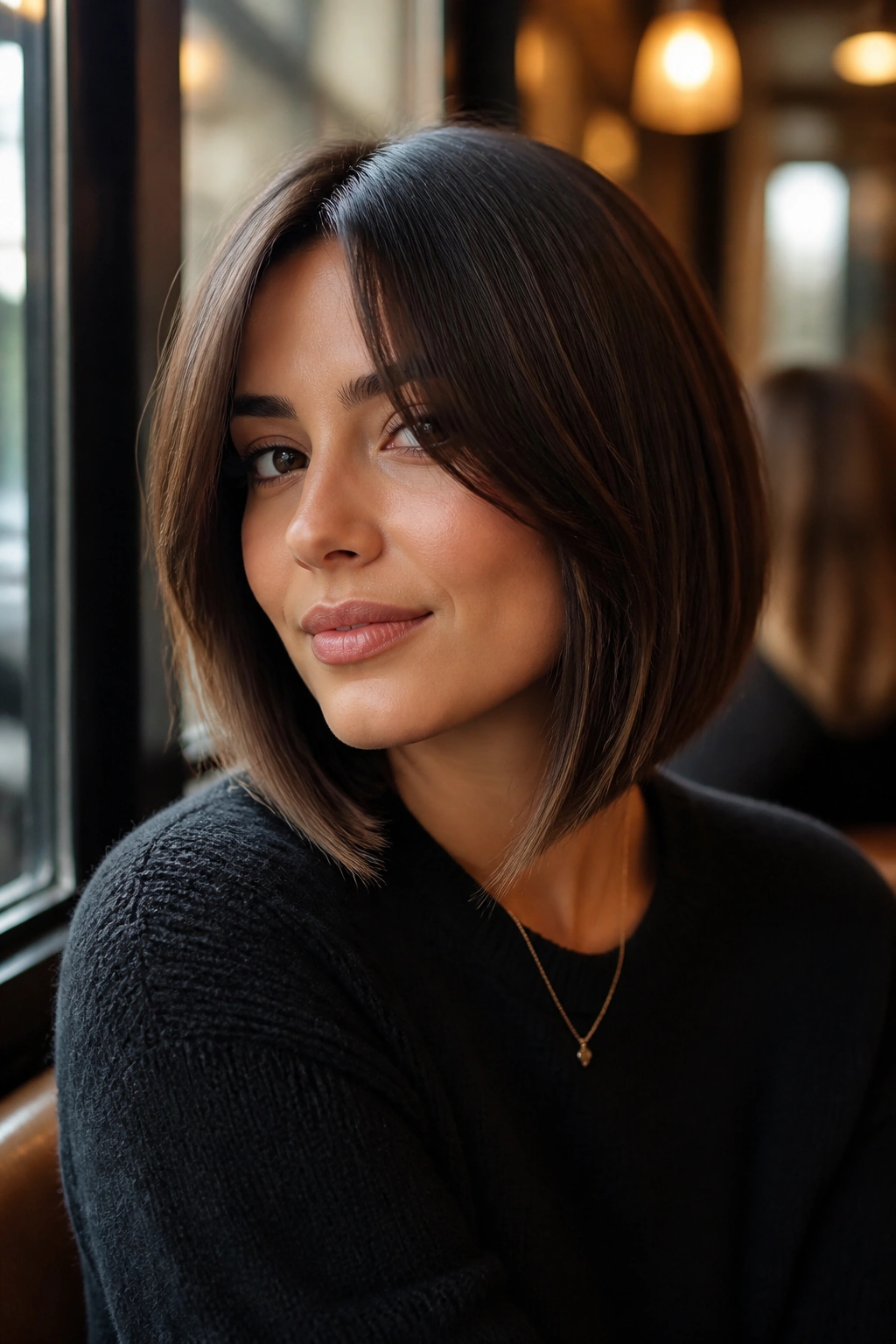
Curtain bangs can soften a round face without swallowing it. The center part opens the forehead, while the longer side pieces fall away from the cheeks and slide into the angled bob underneath. It’s a good pairing when you want movement up top and structure below.
The fringe should not be heavy. That’s the whole game. Long curtain bangs that graze the cheekbones or sit just below them give you shape without boxing in the face. If they’re cut too short, they bounce right back into the widest part of the cheeks and start working against you.
A good curtain bang on this cut feels airy. The pieces separate a little, one side may sit slightly higher than the other, and the whole thing moves when you turn your head. That softness matters more than perfect symmetry.
What to ask for
- Bangs that start around the bridge of the nose and open into cheekbone length.
- A bob that stays angled, with the front longer than the back by at least an inch.
- Soft blending at the temple so the fringe doesn’t look pasted on.
This cut looks especially nice with a round brush and a little bend at the ends. Not curled. Just bent. That difference keeps it relaxed.
7. Wavy Angled Bob With Mid-Length Layers
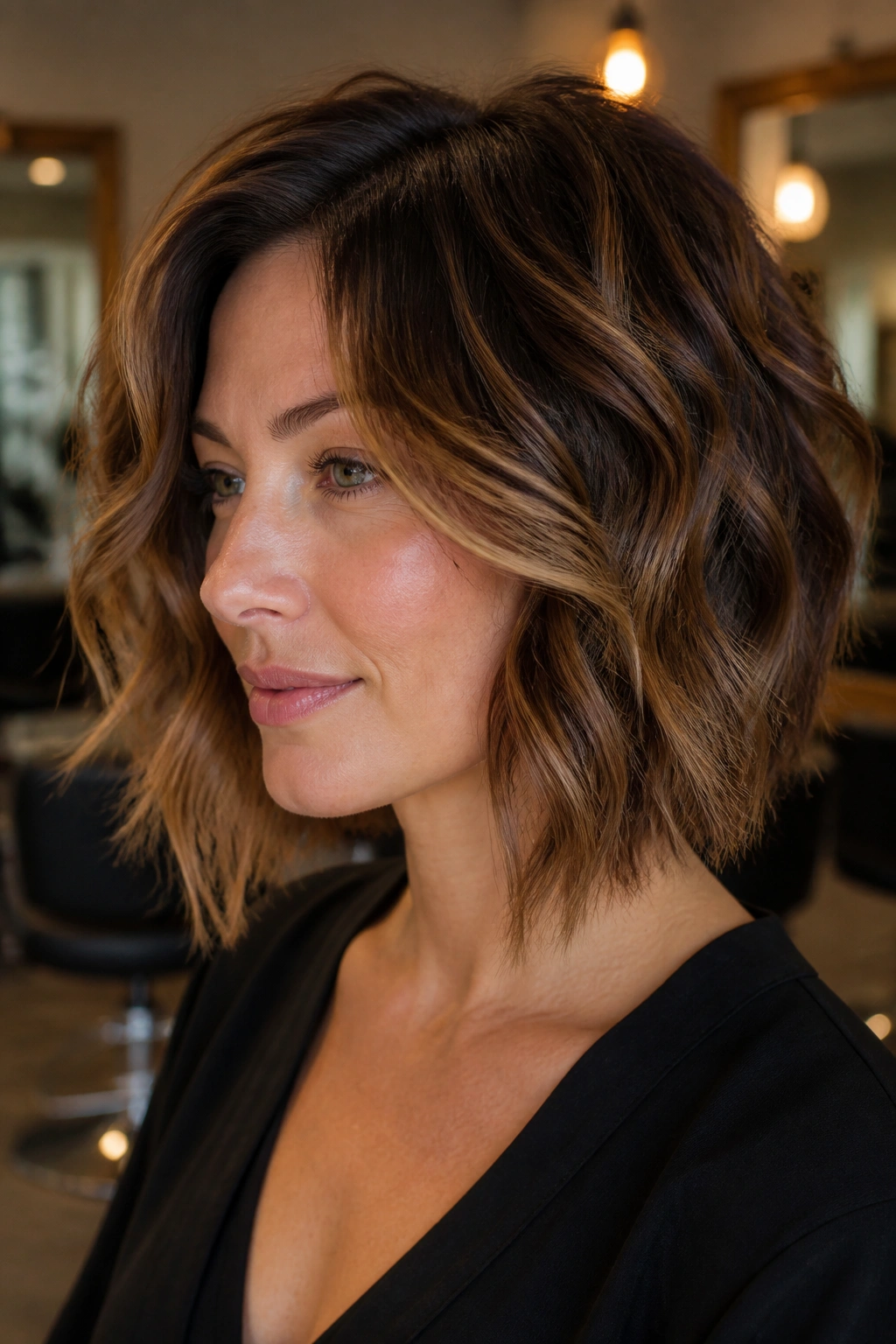
Loose wave changes the whole mood of an angled bob. Instead of sitting close to the face, the shape gets a little lift and sway, which is useful when your cheeks are full and you want the haircut to move away from them rather than wrap around them.
I like this version on medium hair because it gives enough body without turning puffy. The layers should live through the mids, not start too high. If the cut is too layered near the cheekbones, the wave can spread outward and do the opposite of what you want.
Styling notes
- Use a 1-inch curling iron or wand.
- Wrap sections away from the face for the front pieces.
- Leave the ends out on a few sections so the wave looks softer.
- Finger-comb after cooling; don’t brush it out into a giant cloud.
A little salt spray helps, but don’t drench the hair. A light mist is enough. Heavy spray turns soft movement into crunch, and that’s a bad trade.
This is a good choice if you like hair that looks a little casual, even on a clean haircut. The angle gives the structure. The wave gives the lift. That combination is hard to beat.
8. Asymmetrical Angled Bob With One Longer Side

Want the face to read less even and more sculpted? Push the asymmetry a little farther. An angled bob already carries direction, but one side being slightly longer creates a stronger diagonal, and that’s useful on a round face because the eye has somewhere to go.
The key is moderation. You do not need a dramatic one-side-longer cut that looks staged from across the room. A difference of 1 to 2.5 inches between sides is often enough. More than that starts changing the haircut into a statement piece, which may be the point for some people, but not for everyone.
This cut works especially well if you always part your hair on the same side. The longer side can sit where the face needs elongation, while the shorter side opens the neck and cheek. It also plays well with glasses, since the asymmetry keeps the frame shape from feeling too repetitive.
The real benefit is the line itself. It keeps the haircut from settling into a circle. Round faces need motion, and asymmetry gives it without forcing height or volume in the wrong places.
9. French-Inspired Angled Bob With Airy Fringe
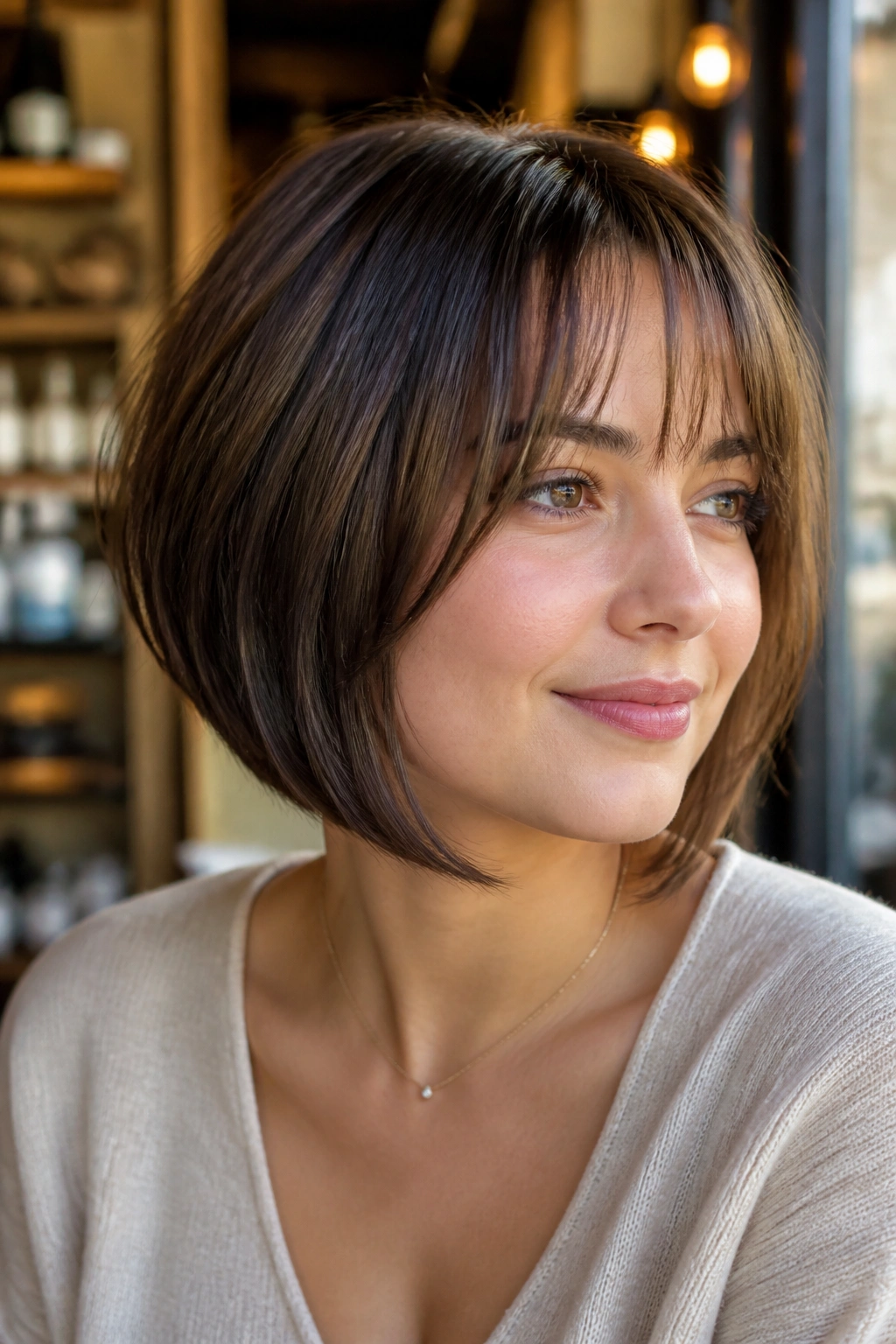
Loose. Light. A little unfinished. That is the charm here. A French-inspired angled bob brings in a shorter, softer fringe and a lived-in shape, but the angle keeps it from turning boxy on a round face.
The fringe should be airy, not dense. Think separated pieces, a bit of movement at the brow, maybe a light sweep toward one side if your hair wants to fall that way. The bob underneath should hold its diagonal line, with the front pieces just brushing the jaw or sitting slightly below it.
What keeps it from looking heavy
A French-inspired cut works because the fringe and bob do not compete. The bangs break up the forehead, the angle breaks up the cheeks, and neither part tries to do too much on its own.
I’d avoid this version if your hair is very thick and hard to move. It can still work, but the fringe needs lighter handling and more texture control. On medium-density hair, though, it’s easy to wear and easy to mess up in a good way — the kind of haircut that looks better when it isn’t over-styled.
Use a small round brush on the fringe and let the rest air-dry with a touch of cream. That slight bend is enough.
10. Soft A-Line Angled Bob for Round Faces
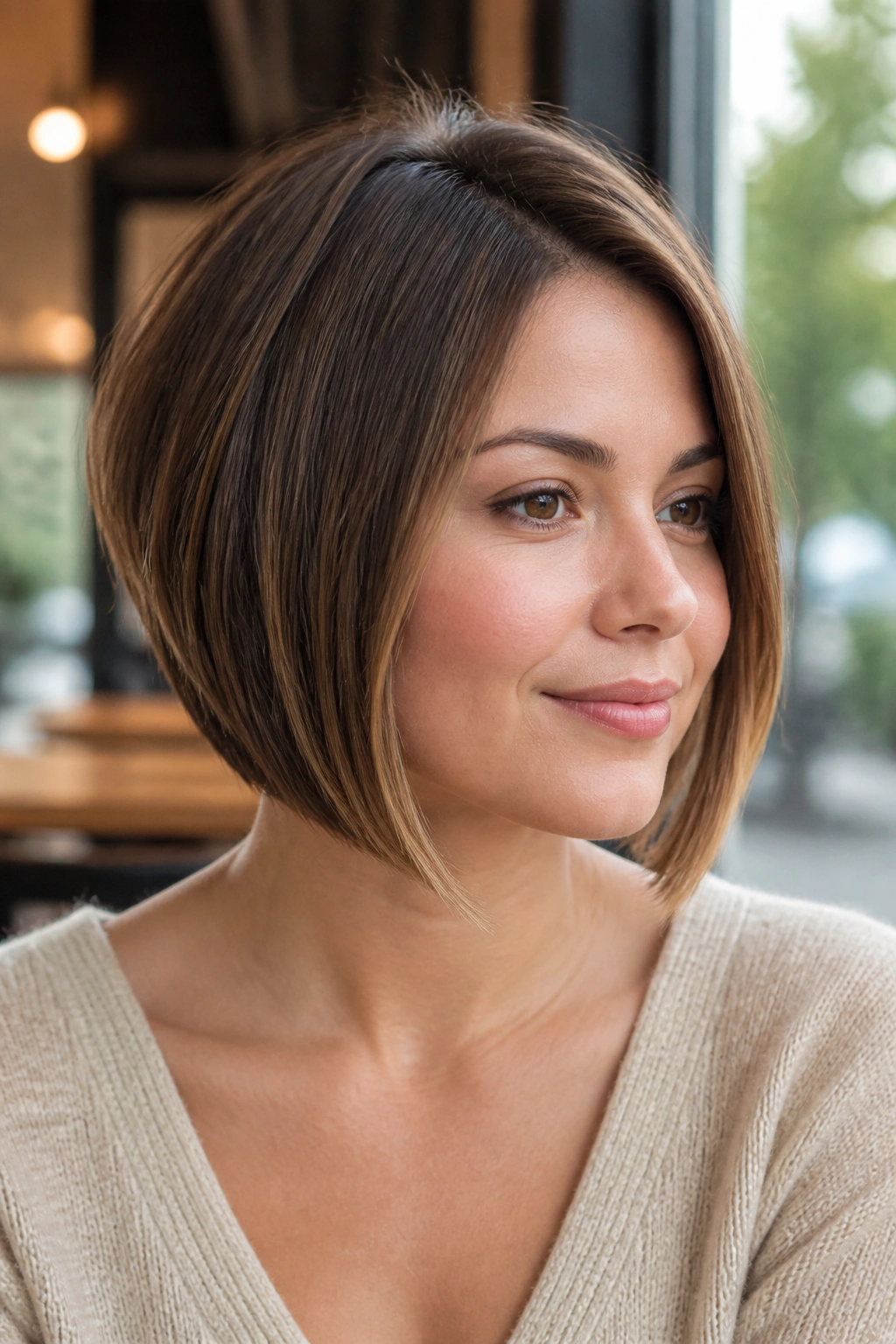
This is the version for anyone who wants shape without sharpness. Unlike the stacked bob, the soft A-line keeps the perimeter gentle, so the cut leans sleek instead of built-up. On a round face, that softness can be a relief, especially if your features are already naturally full.
The front should land at or just below the jaw. Not at the chin. That small shift changes the visual weight of the haircut. The back can sit shorter at the nape, but it should never pop up so high that the silhouette feels triangular from the side.
A good match if you have
- fine hair that needs a clear outline
- a round face with a soft jaw
- a strong parting preference
- a low-styling routine
The face-framing pieces matter more than people think. Start them below the cheekbone if your face is widest there. That keeps the line from hitting the widest point and gives the haircut a longer, cleaner fall.
This is one of the easiest angled bobs to live with. It grows out neatly. It can be worn straight, tucked, or slightly bent. And it does not ask for a whole morning of styling products to hold its shape.
11. Side-Swept Angled Bob That Skims the Brow
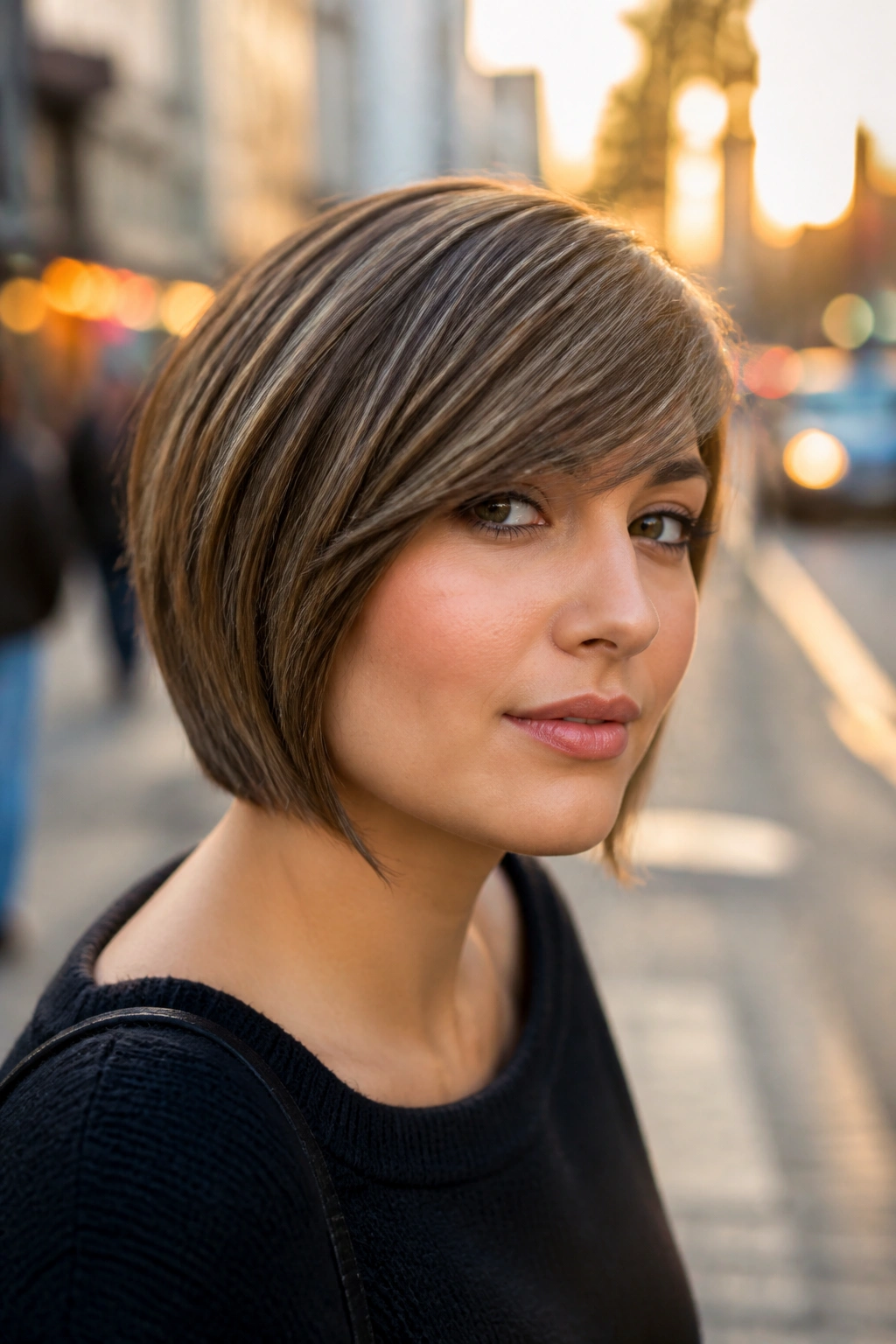
A side-swept fringe changes the mood of a bob fast. Instead of opening the face dead center, it sends the eye across the forehead and down into the angled length, which is exactly the kind of visual line that flatters a round face.
The bob itself can be fairly simple. The fringe does the lifting. Keep the sweep long enough to graze the brow or upper cheek, and let it blend into the front pieces so there isn’t a hard corner where the bang ends. That corner is where a lot of side fringe cuts go wrong.
I like this on people who do not want full bangs but still want something to soften the top third of the face. The sweep adds interest, but it doesn’t block the forehead the way a blunt fringe would. That openness helps the face feel longer.
Blow-dry the fringe in the direction it wears. Not against it. If you force it the wrong way, it will spring back and sit awkwardly over the eyes. A little root lift at the crown makes the side sweep look intentional instead of flat.
12. Razor-Cut Angled Bob With Shattered Ends
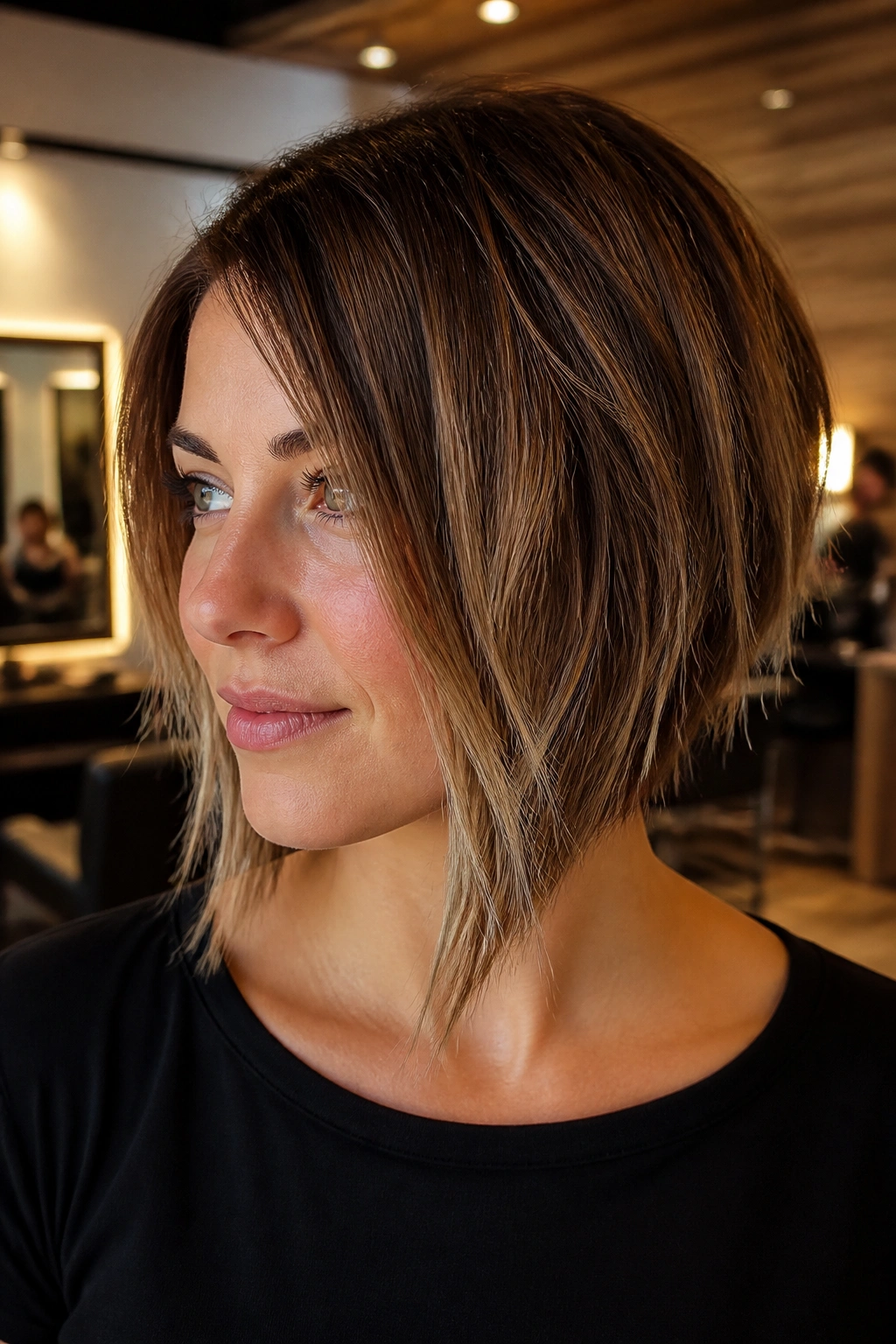
This cut lives on movement. A razor-cut angled bob breaks up dense hair so the ends feel lighter, the line feels softer, and the whole shape stops looking like one solid block around the face. That can be a very good thing on a round face.
The trick is knowing when razor work helps and when it hurts. On thick, straight, resistant hair, shattered ends can remove too much weight and give the hair swing. On frizzy or very porous hair, the same technique can make the ends look frayed in a way that never settles down.
What to tell the stylist
- Keep the angle visible through the front.
- Use razor work only where the hair needs softening.
- Leave enough bulk around the perimeter to hold the shape.
- Avoid over-thinning near the cheeks.
A razor-cut bob should not feel thin at the ends. It should feel light. That’s a different thing. If you can see every strand breaking apart, the cut may have gone too far.
Style it with a smoothing cream and a blow-dry nozzle, then finish with a tiny bit of wax on the ends. Tiny. Too much and the shattered texture clumps up and looks messy in the wrong way.
13. Shoulder-Skimming Angled Lob With Hidden Layers
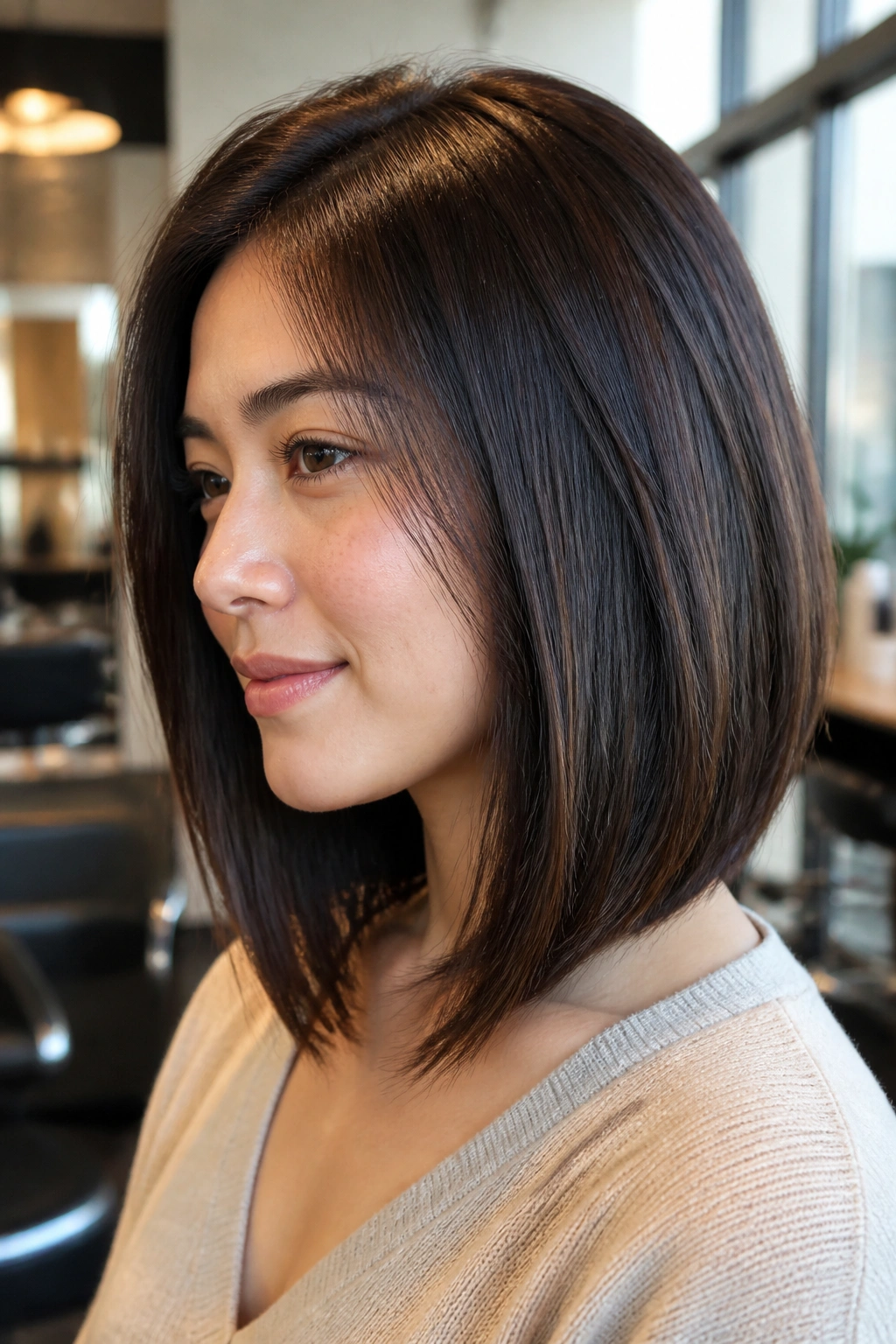
Need something longer but still face-flattering? This is the one. A shoulder-skimming angled lob keeps enough length to feel safe, while hidden layers take the bulk out of the interior so the shape doesn’t sit wide around a round face.
The beauty of hidden layers is that they do their job quietly. You do not see choppy steps around the outside. You just notice that the hair falls better, moves better, and does not puff at the sides. That matters if you want something polished without looking over-cut.
Why hidden layers matter
They let the perimeter stay smooth while the inside of the haircut gets lighter. So the lob keeps its line, but your hair stops behaving like a triangle. For thick hair, that is a gift.
If your face is widest at the cheeks, ask for the front pieces to begin just below that point. Not right on top of it. The length should slide past the widest area and keep going. That is what makes the cut feel longer and calmer.
This version also grows out kindly. It can be pinned back, waved, or worn straight. If you’re nervous about going short, start here. It gives you the angled shape without the commitment of a sharper bob.
14. Curly Angled Bob That Keeps Volume Below the Cheekbones
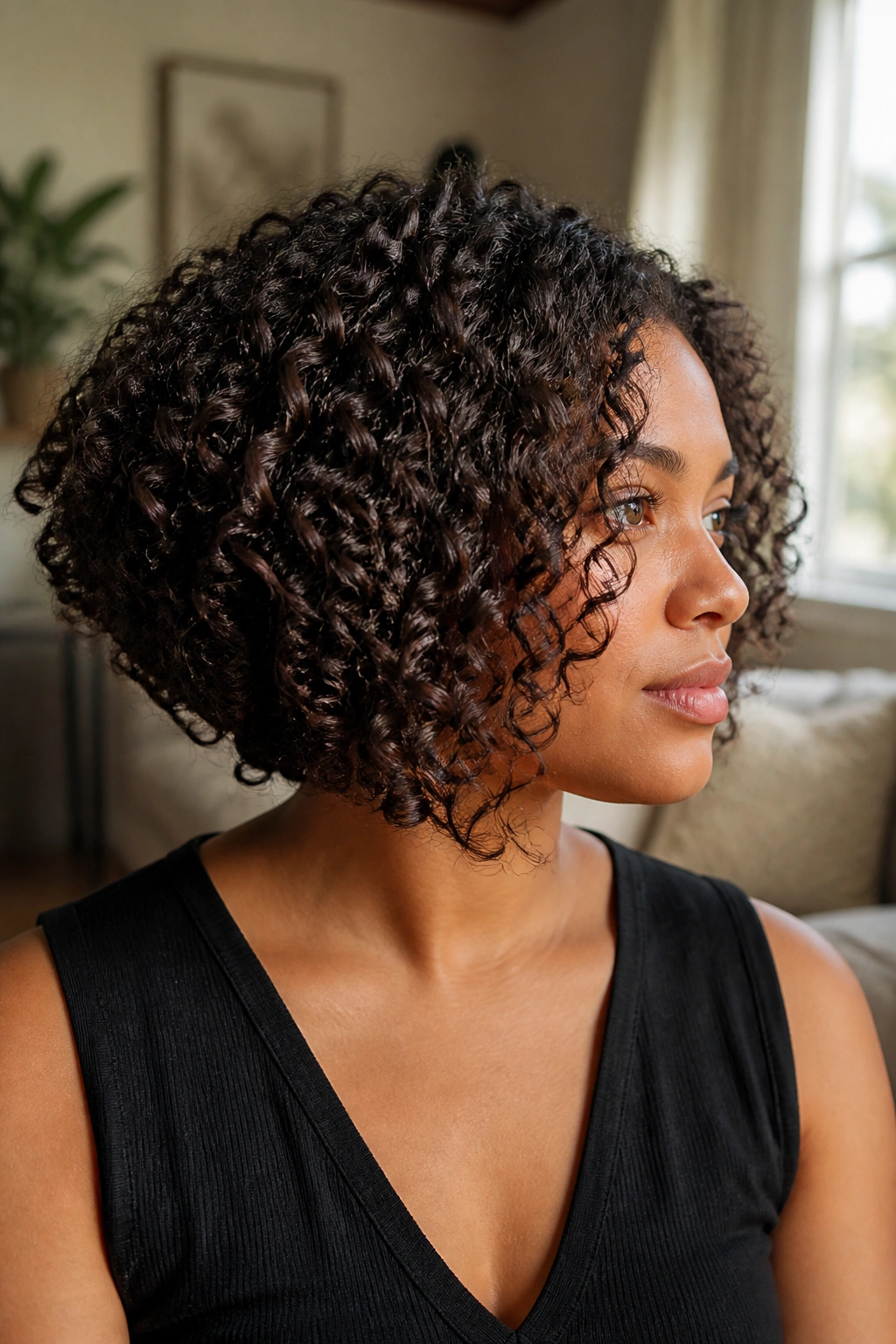
Curly hair can wear an angled bob beautifully, but the cut has to respect shrinkage. A curl that looks collarbone-length when wet may jump to the jaw when dry, so the stylist needs to cut with the curl pattern in mind, not against it.
The best curly angled bob keeps the bulk lower than the cheekbones. That way the haircut doesn’t mushroom out at the middle of the face. Instead, the curl stack sits lower, and the angle still shows through when the hair settles.
What to ask for
- A dry or curl-by-curl cut, depending on the stylist’s method.
- Length that stays longer in front to account for shrinkage.
- Lighter shaping near the crown, not at the sides.
- No heavy thinning through the temples.
That last point matters. Too much thinning at the wrong place can make curls puff and frizz in a round halo. Not good.
Diffusing upside down can help, but don’t overdo the root lift. You want volume, yes, just not volume that spreads sideways. Curl cream, a light gel, and gentle scrunching are usually enough. Let the angle do the rest.
15. Graduated Angled Bob With Jawline Contouring

This is the cleanest structural option in the group. The graduation in back creates lift, the front length draws the face down, and the overall shape wraps the jaw in a way that feels intentional rather than soft and shapeless. On a round face, that contouring effect is hard to beat.
A graduated cut is especially good if your hair is dense or resistant to styling. The back carries enough structure to hold its shape even on an air-dry day, while the front keeps the face from feeling boxed in. If the bob stops right at the jaw, it can widen the lower face. If it slides past the jaw, the eye reads length instead.
I like this version when someone wants a haircut that looks polished with minimal fuss. It has enough shape to stand on its own, but it doesn’t need a hot tool every single morning. A quick round-brush blowout or a hand-scrunched finish can both work.
If you want the most slimming effect, keep the front slightly longer than the jaw and the back neatly graduated, not stacked to the point of puffiness. That balance is the whole cut. Not too hard. Not too soft. Just enough edge to make the roundness feel intentional instead of fixed.
If I had to narrow the choices fast, I’d start with the collarbone lob for low risk, the soft A-line for easy wear, and the graduated bob for the strongest shape. The right one depends on how much length you want to keep and how much styling you’ll tolerate before coffee. Haircuts should fit real life. Otherwise they stay good for about a week, then annoy you in the mirror.
