



There is a specific kind of freedom that comes with having long hair. It is a canvas, a statement, and occasionally, a full-time commitment. For Black women, long hair—whether natural, relaxed, or extensions—often feels like a balancing act between maintenance and the sheer desire to express personal style. You know the weight of it, the way it shifts how you move, and the undeniable power of a well-executed updo that stays put from morning until night. Styling that length is never just about looking good; it is about protecting the integrity of your strands while playing with volume, texture, and silhouette.
Finding a go-to style that fits into a busy schedule without sacrificing health or aesthetic is a pursuit that takes time. Some days call for sleek, low-maintenance minimalism, while other days demand intricate braids that showcase artistry. Whether you are working with natural coils, blown-out lengths, or protective extensions, the following styles offer a range of solutions for every mood, occasion, and hair need.
1. Box Braids
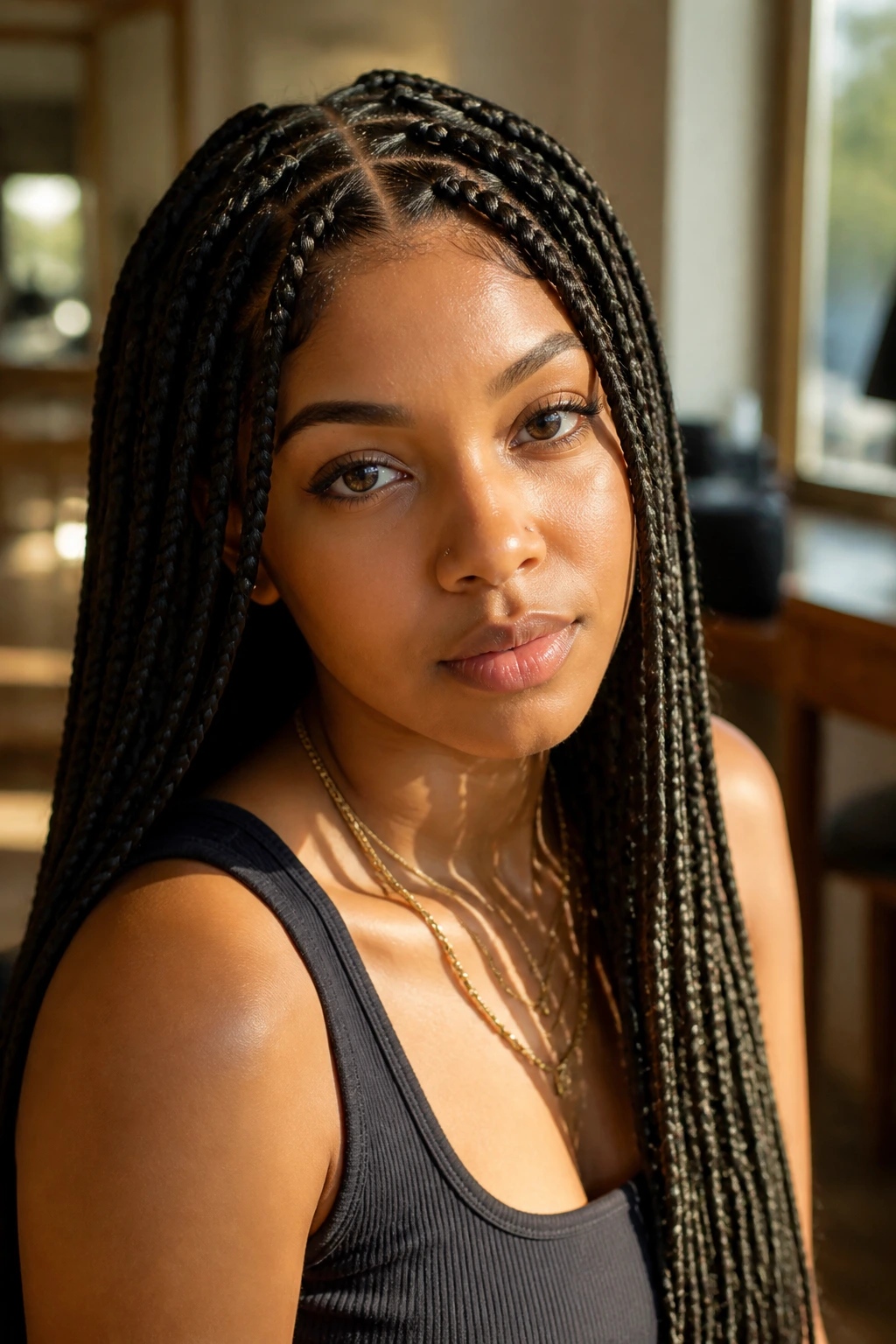
Box braids remain the gold standard for protective styling, and for good reason. They offer a clean, uniform look that takes the pressure of daily styling off your hands for weeks at a time. The secret to a great set lies in the base—the parts need to be crisp, and the tension must be consistent. Too tight, and you risk traction alopecia; too loose, and they won’t last.
Why They Work
The structure allows your natural hair to rest, provided you do not load the braids with heavy synthetic hair that pulls on your roots. Because the hair is sectioned into individual squares, you can easily access your scalp for oiling and cleaning.
Maintenance Tip: Always wrap your braids in a silk or satin scarf at night to prevent frizz. If you find your edges getting dry, a light mist of water and leave-in conditioner works wonders, but avoid heavy creams that can cause buildup at the base of the braid.
2. Fulani Braids
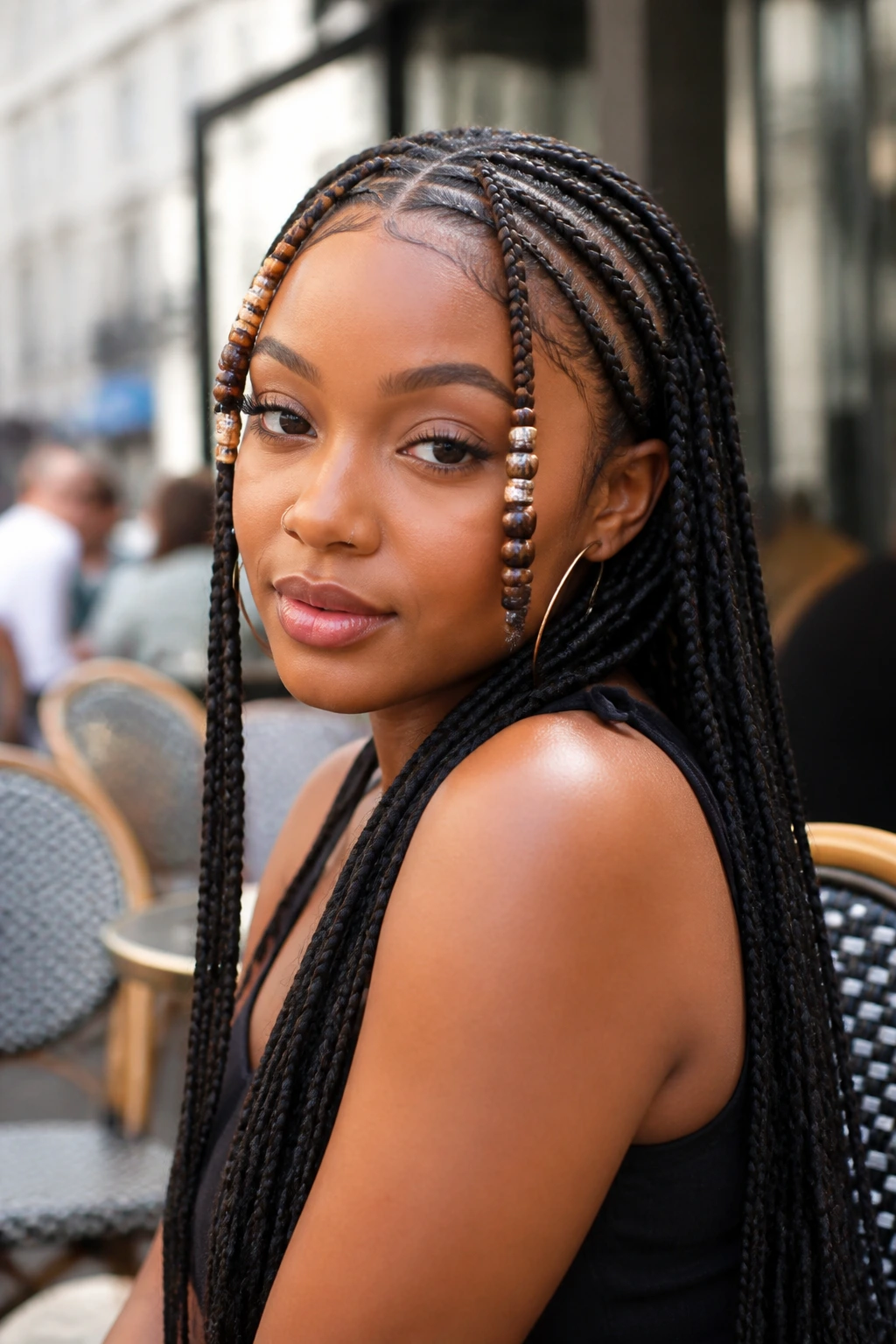
Fulani braids bring a historical and decorative element that elevates a standard braided look into something far more artistic. Originating from the Fula people, these braids typically feature a cornrowed pattern toward the front, often with a central part, and individual braids in the back. The inclusion of beads and gold cuffs is not just decoration; it is a nod to cultural significance.
Because this style involves a mix of cornrows and individual braids, the pressure is distributed differently across the scalp. The front sections are usually flatter, which can feel quite secure, while the back gives you the movement and swing of traditional braids. It is a style that commands attention. When choosing beads or cuffs, keep them lightweight. You do not want the extra weight pulling on your natural hair, especially around the hairline where the hair is typically more fragile.
3. Knotless Braids

If the base of traditional box braids feels too heavy or causes immediate tension, knotless braids are the remedy. Instead of starting with a tight knot at the root, your stylist weaves your natural hair with the extension hair a few inches down. This creates a seamless, flat, and weightless look that feels like your own hair from day one.
The lack of a knot at the root means you can pull your hair into a high ponytail or a bun immediately without that stiff, uncomfortable sensation. Many women find that knotless braids allow for a more natural-looking hairline, which is vital if you are conscious of protecting your edges. Just remember that because they are installed with less initial tension, they might not stay “fresh” for quite as long as traditional knotted braids. Plan on a touch-up around the six-week mark.
4. Goddess Braids
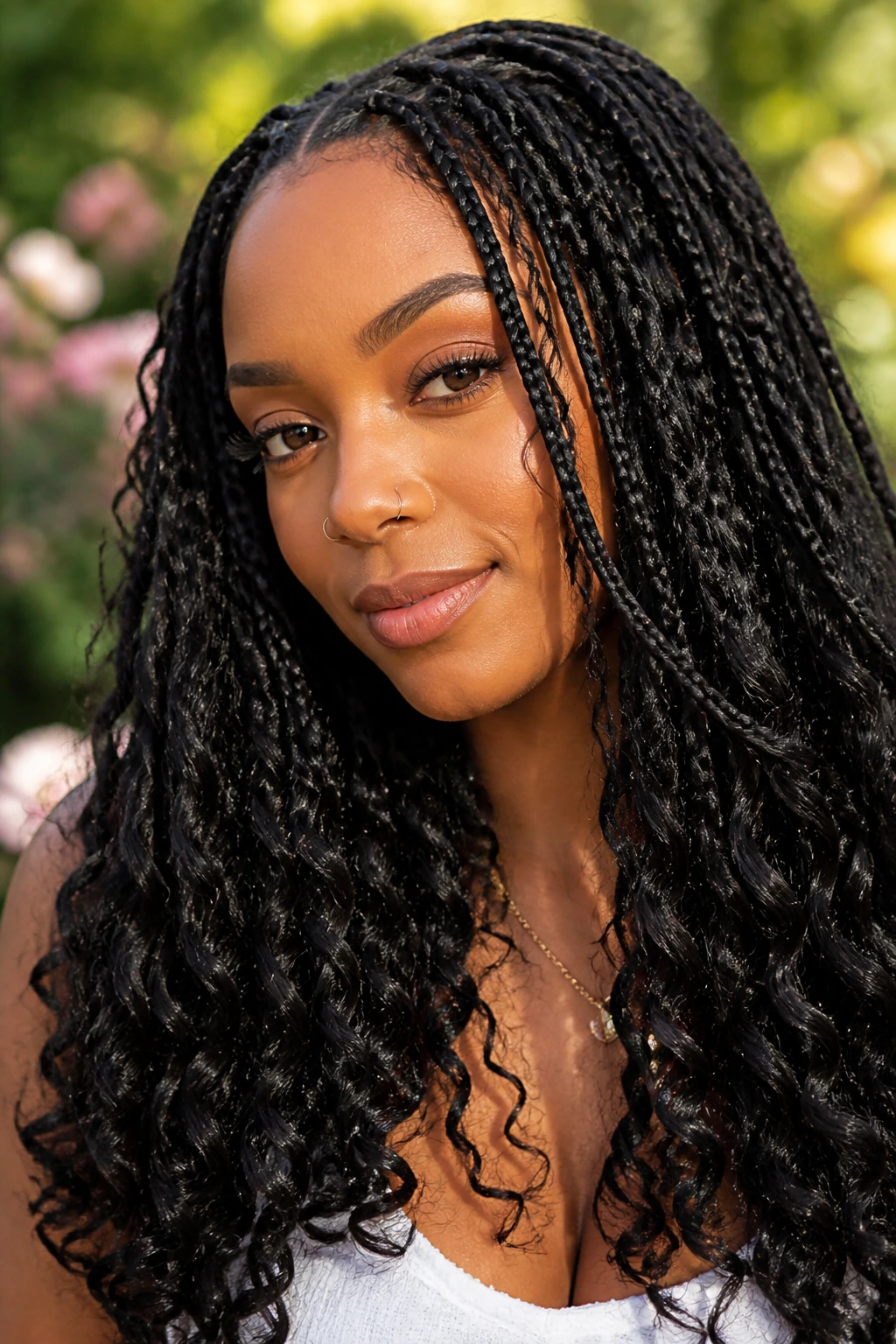
Goddess braids are characterized by their ethereal, curly ends. Whether you are wearing them in a feed-in style or as individual box braids, the defining feature is the loose, wavy strands of hair left out at the ends or woven into the body of the braid. This look adds softness to the face and gives the style a romantic, whimsical quality.
Key Considerations for Longevity
The curly bits are prone to tangling, as they are often made from synthetic material that behaves differently than your natural hair. To keep the look polished, carry a small spray bottle with a mix of water and a dab of mousse. Run your fingers through the curls gently every morning to prevent matting. If the ends begin to look frizzy after a few weeks, don’t be afraid to trim them slightly. A clean cut can make the entire style look brand new again.
5. High Puff
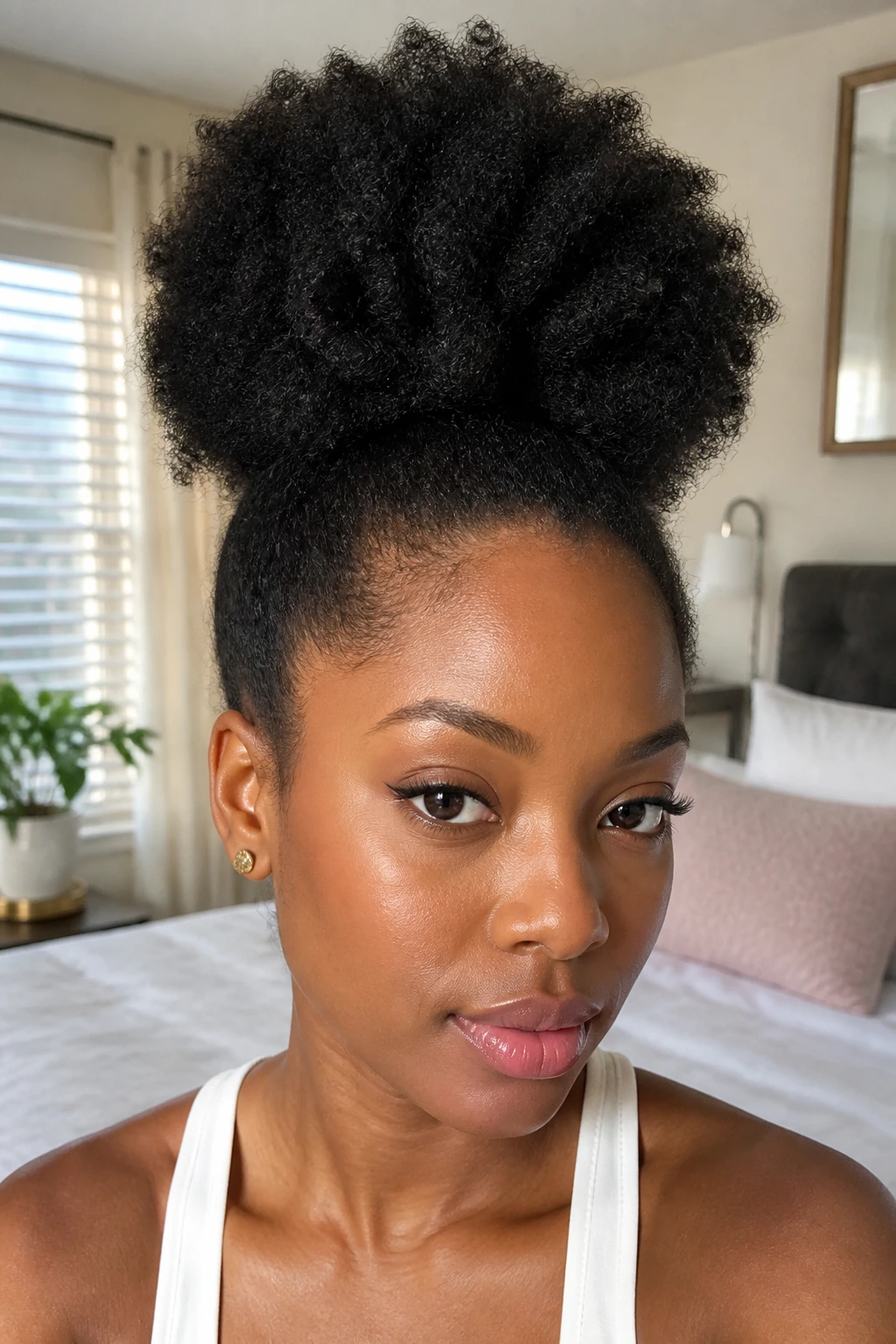
The high puff is the quintessential “I need to get out the door” style that somehow looks intentional and elegant. It works best on stretched hair or hair that has been blown out. You create it by gathering all your hair at the crown and securing it with a sturdy, snag-free elastic band or a DIY drawstring made from a stocking or a long shoelace.
The beauty of the puff lies in the texture. If you have tight curls, the puff will have natural volume. If your hair is straight, you might need to backcomb the ponytail slightly to build body. Use a boar bristle brush and a bit of edge control to smooth the perimeter for that sleek, polished finish. This style keeps your ends tucked away and protected if you fold them into the puff, making it a functional choice for preserving length.
6. Flat Twist Updo
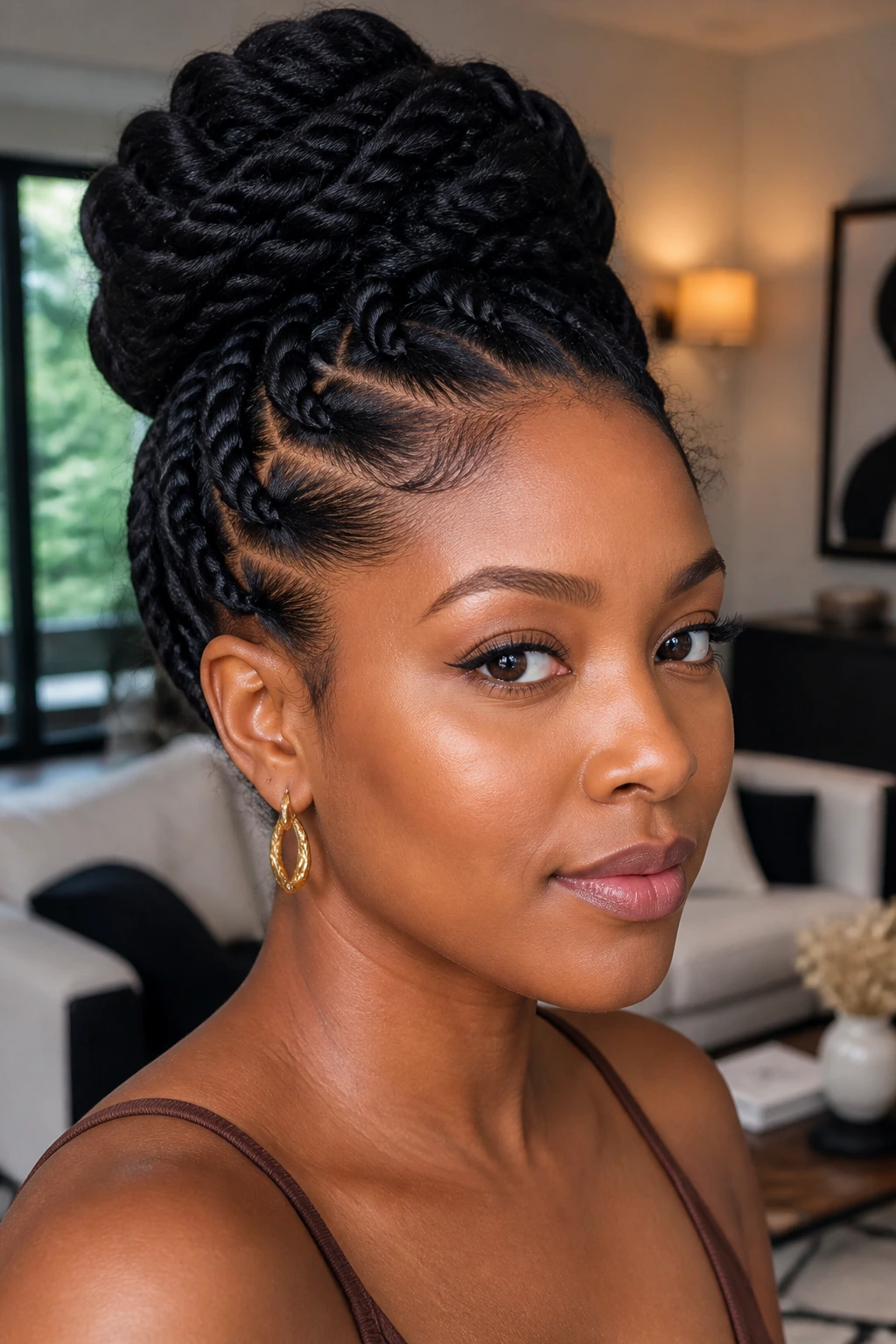
Flat twists are often overlooked in favor of cornrows, but they offer a distinct, softer aesthetic. An updo created entirely from flat twists can look incredibly sophisticated, mimicking the look of complex braided patterns without the same level of pulling on the scalp. It is also much easier to install on your own if you have a bit of patience with your fingers.
To achieve this, section your hair in the direction you want the twists to travel. Start at the hairline and twist toward the nape of the neck or the crown. Once you have a series of twists, you can pin the ends into a bun or a chignon. This style is excellent for those who want to keep their natural hair texture contained and protected for a week or two. It is also very easy to take down, which saves your hair from the stress of a long detangling session.
7. Bantu Knots
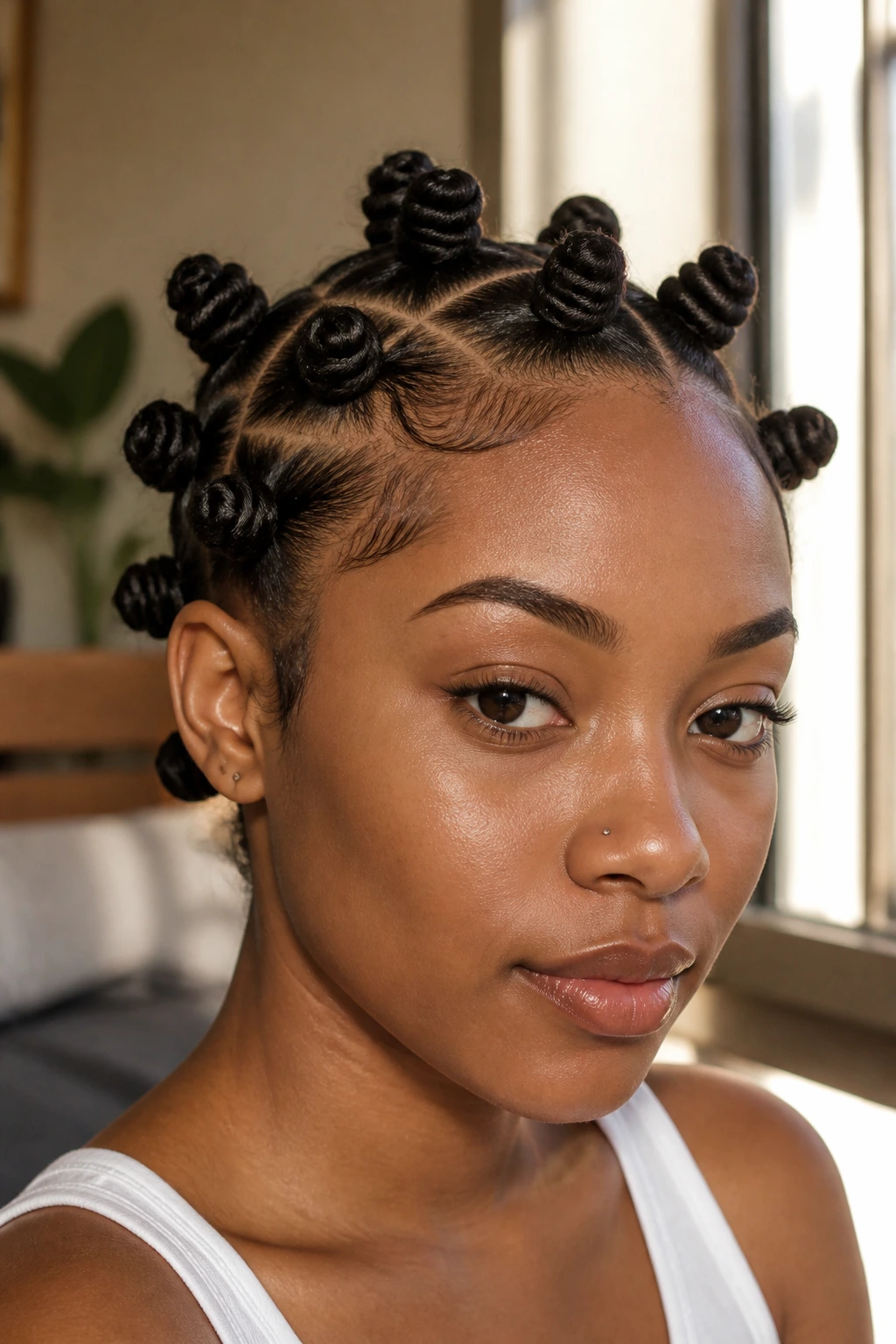
Bantu knots are both a stunning protective style and a functional way to achieve heatless curls. By sectioning your hair into small squares or triangles and twisting each section until it coils around itself, you create a series of knots that look like small, uniform sculptures. It is a bold, high-fashion look that works beautifully on long, thick hair.
The key to preventing pain is sectioning. Make sure the base of each knot is not too tight. If you pull too hard while twisting, you will definitely feel it by the end of the day. Once the knots are installed, you can wear them as-is for a few days. When you take them down, you are left with a massive, defined, and voluminous twist-out that can last another week. It is essentially a two-for-one style.
8. Cornrow Ponytail
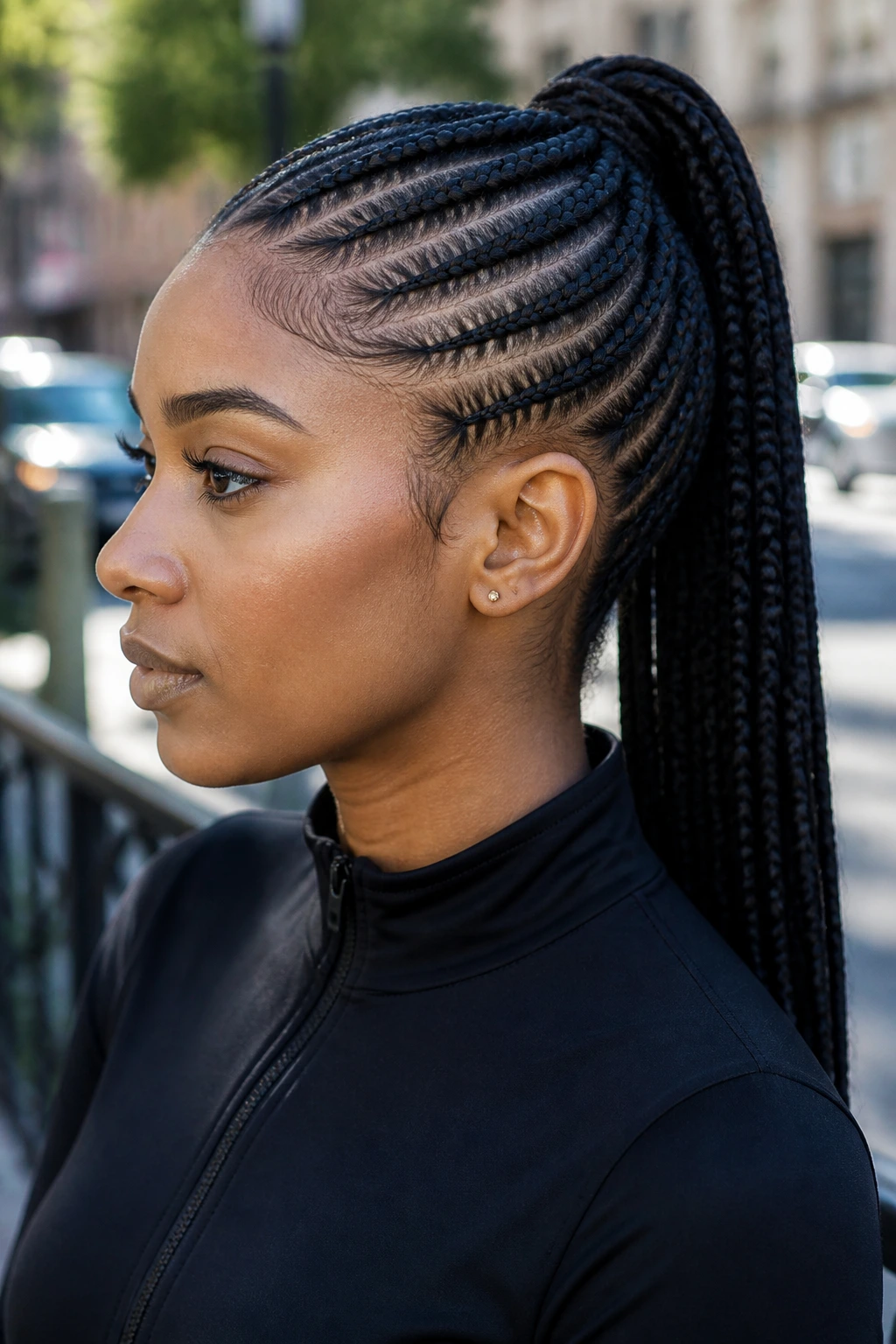
A sleek, cornrowed ponytail is a power move. It is clean, it is sharp, and it stays out of your face completely. The technique involves braiding the hair straight back into a ponytail base, often using additional extension hair to give the pony length and thickness. It is a look that highlights your bone structure and allows your makeup and jewelry to take center stage.
For a truly professional finish, the braiding pattern needs to be impeccable. Using a small amount of pomade or edge wax during the braiding process ensures that no stray hairs pop out, which creates a flawless, uniform surface. Many people add a wrap of hair around the base of the ponytail to hide the elastic, which instantly elevates the style from casual to formal.
9. Faux Locs
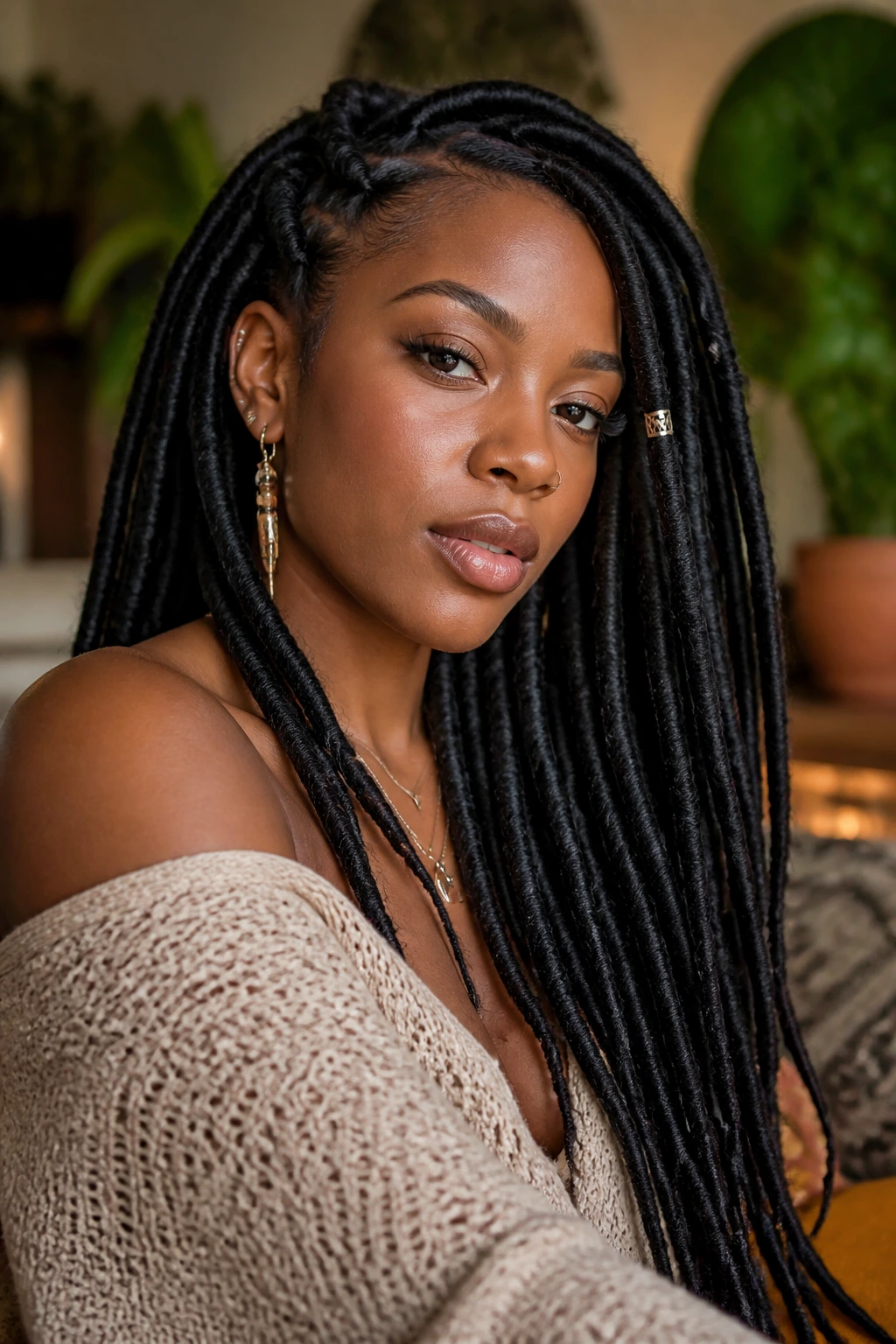
If you have ever wanted the look of locs without the years of commitment, faux locs are the answer. They provide a heavy, dramatic, and bohemian aesthetic that looks better the longer you wear it. By wrapping synthetic hair around a base braid or a twist, you create a thick, textured strand that feels substantial.
The biggest challenge with faux locs is the weight. Because you are essentially wrapping layers of hair, the final style can become quite heavy on the head. To mitigate this, opt for lighter synthetic materials like crochet faux locs if you want the look without the neck strain. If you go for the individual wrap method, ensure your stylist keeps the base braids tight but the wrapping tension moderate so you do not experience headaches.
10. Crochet Braids
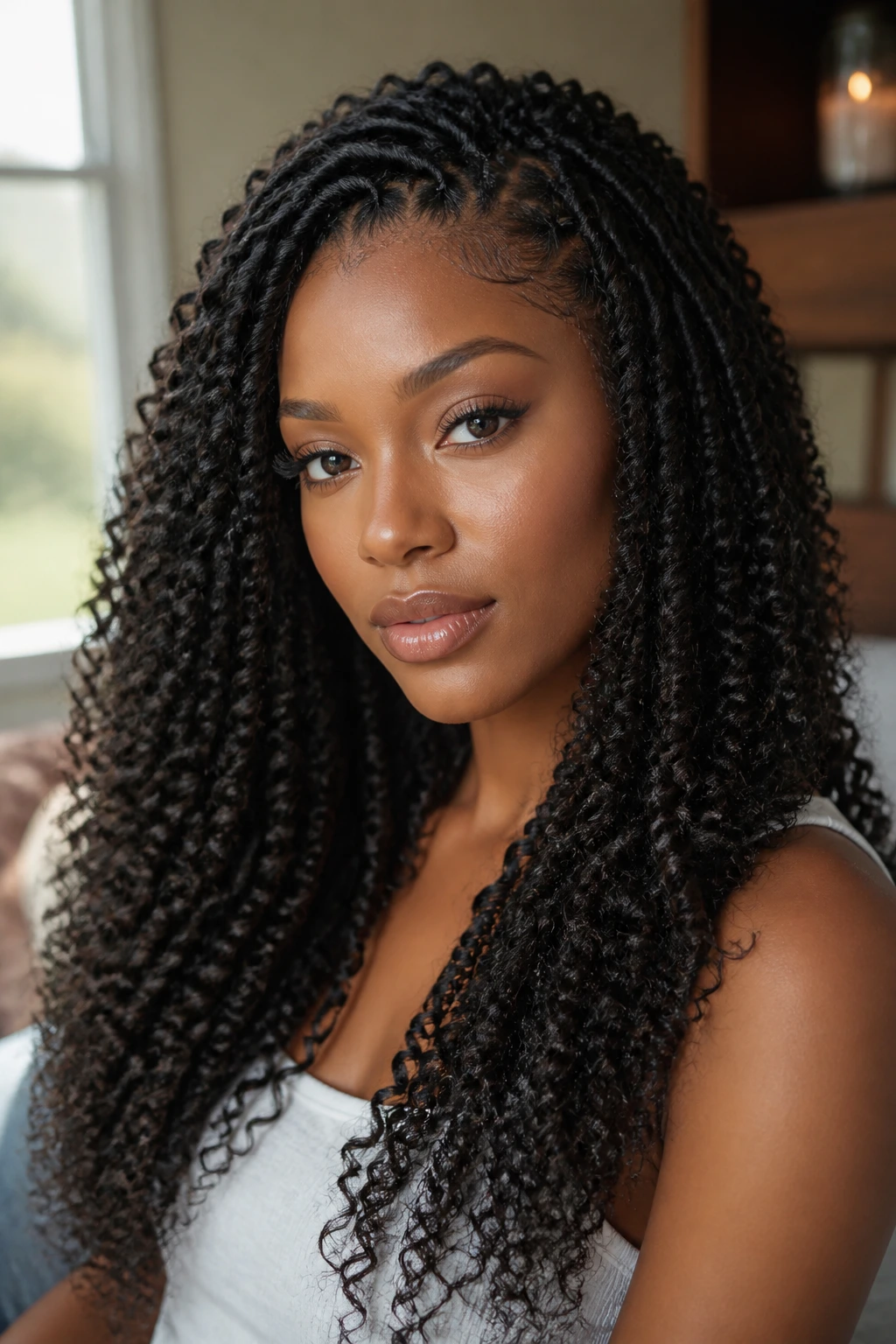
Crochet braids are the ultimate time-saver. You start by braiding your natural hair into a simple cornrow pattern, and then you use a crochet hook to loop pre-styled hair extensions through the braids. It is fast, efficient, and protects your natural hair underneath entirely, as there is zero heat and minimal tension involved.
The variety here is endless. You can buy pre-looped hair in anything from deep waves to tight coils to straight, flat textures. Because your natural hair is hidden underneath, this style is a fantastic way to experiment with colors or textures you wouldn’t normally try with your own hair. Just keep your scalp clean by using a witch hazel spray or a specialized scalp rinse to avoid itchiness while the style is installed.
11. Silk Press
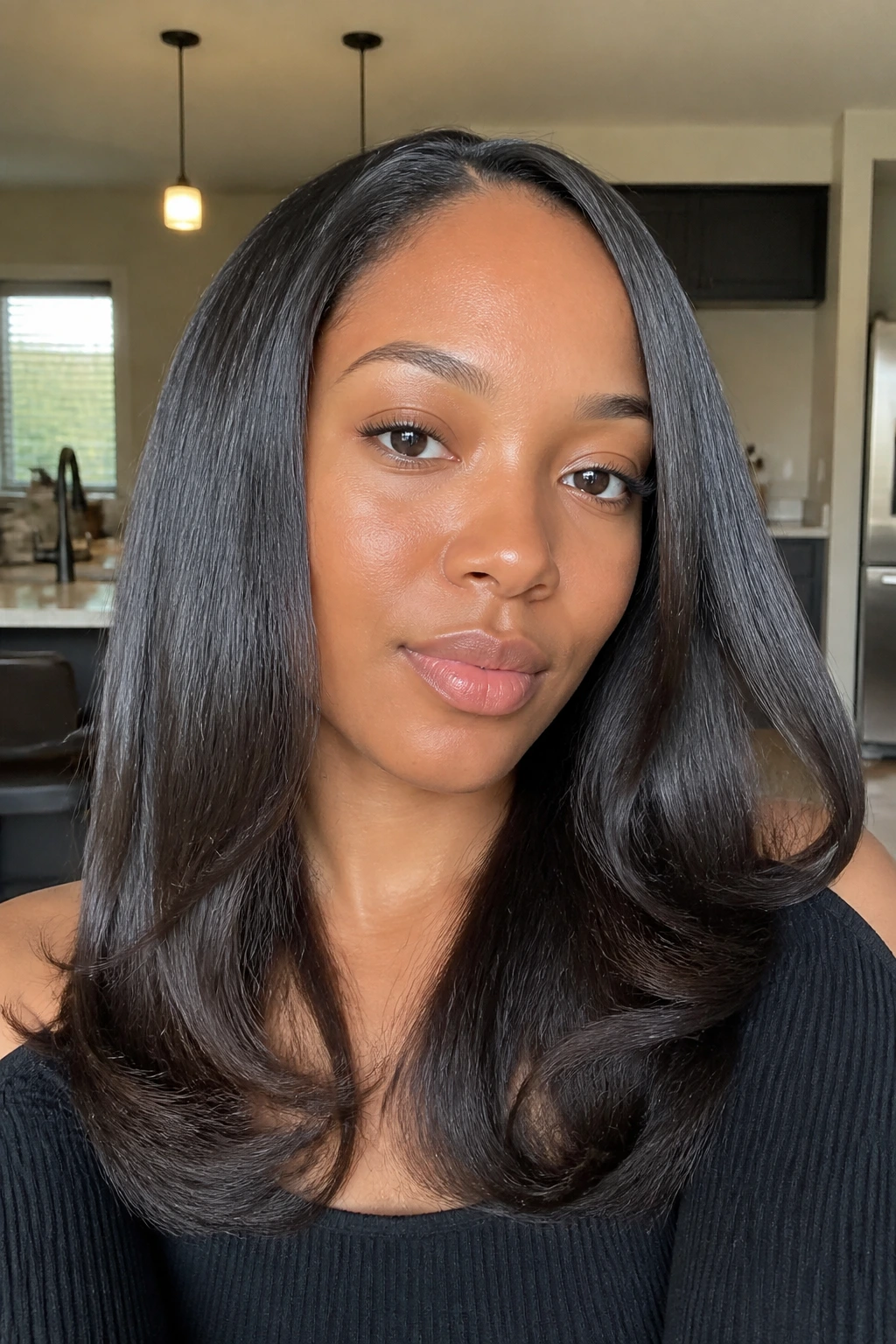
There is something undeniably satisfying about a perfectly executed silk press. It is a style that allows you to see the true length of your hair, providing that smooth, flowing movement that feels like a fresh start. A good silk press shouldn’t just be straight; it should be bouncy, shiny, and full of life.
The secret to a successful silk press that doesn’t damage your curl pattern is proper heat management. You must ensure your hair is thoroughly hydrated before any heat touches it. Use a high-quality heat protectant, and work in small, thin sections so you only need one or two passes of the flat iron. If you have long, thick hair, this process takes time—do not rush it. The goal is a sleek finish that retains some body, not a pin-straight, lifeless look.
12. Passion Twists
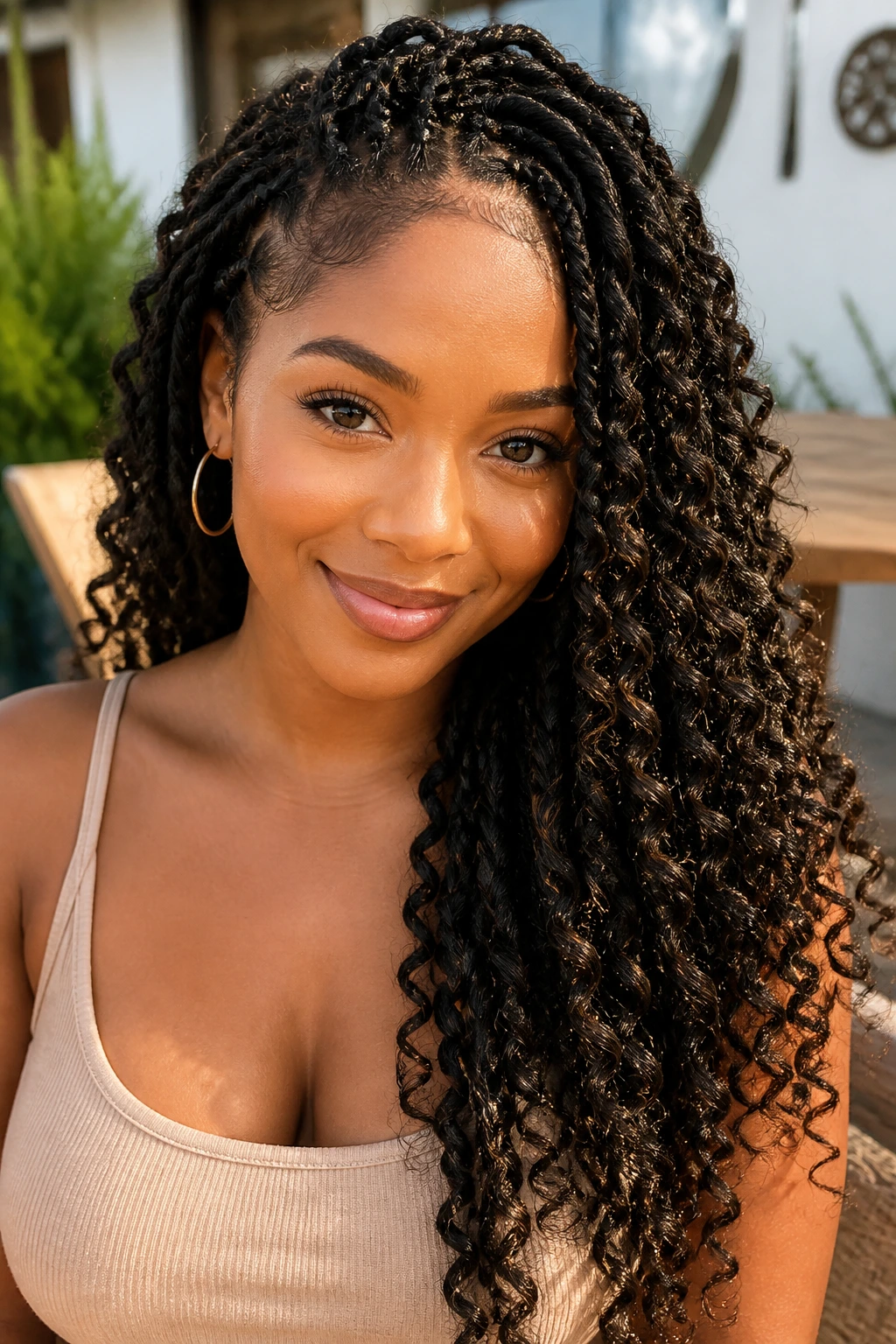
Passion twists are like the relaxed, boho cousin of the Senegalese twist. They are created using a specific type of wavy, curly extension hair that provides a lot of texture and volume without feeling too rigid. They have a messy-chic appearance that is very forgiving; as they get older, they tend to look better.
When you install these, the key is the hair choice. You need a curly, synthetic hair that won’t tangle easily. Some stylists mix strands of different textures to create a more natural, multi-dimensional look. Because these are generally installed as individual twists, you can style them in a bun, a half-up look, or let them hang loose. They are surprisingly light, making them a great choice for long-term wear if you like a lot of volume.
13. Half-Up Half-Down Bun
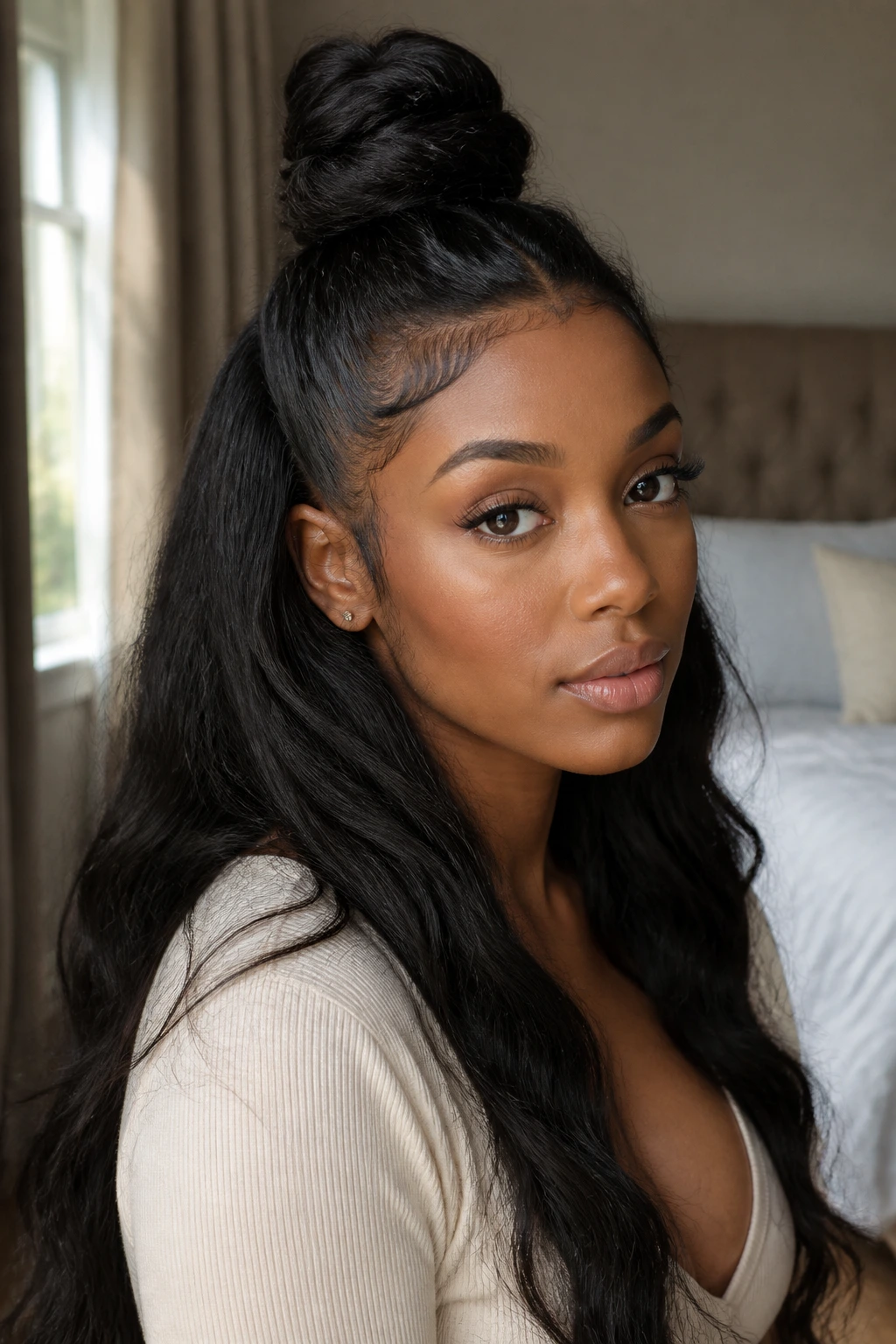
This style is a life-saver when you want the benefits of a protective style but still want your hair down to show off your length. By securing the top portion of your hair into a bun or a high ponytail and leaving the bottom loose, you strike a balance between neatness and freedom. It is a versatile look that transitions easily from a gym session to a dinner date.
You can modify this style based on your hair’s current state. If you are wearing braids, a half-up bun is a great way to style them differently. If you are rocking your natural texture, this keeps the hair out of your eyes while letting your curls or coils frame your face. For a bit of extra flair, try adding a scrunchie or a gold hair cuff to the bun.
14. Marley Twists
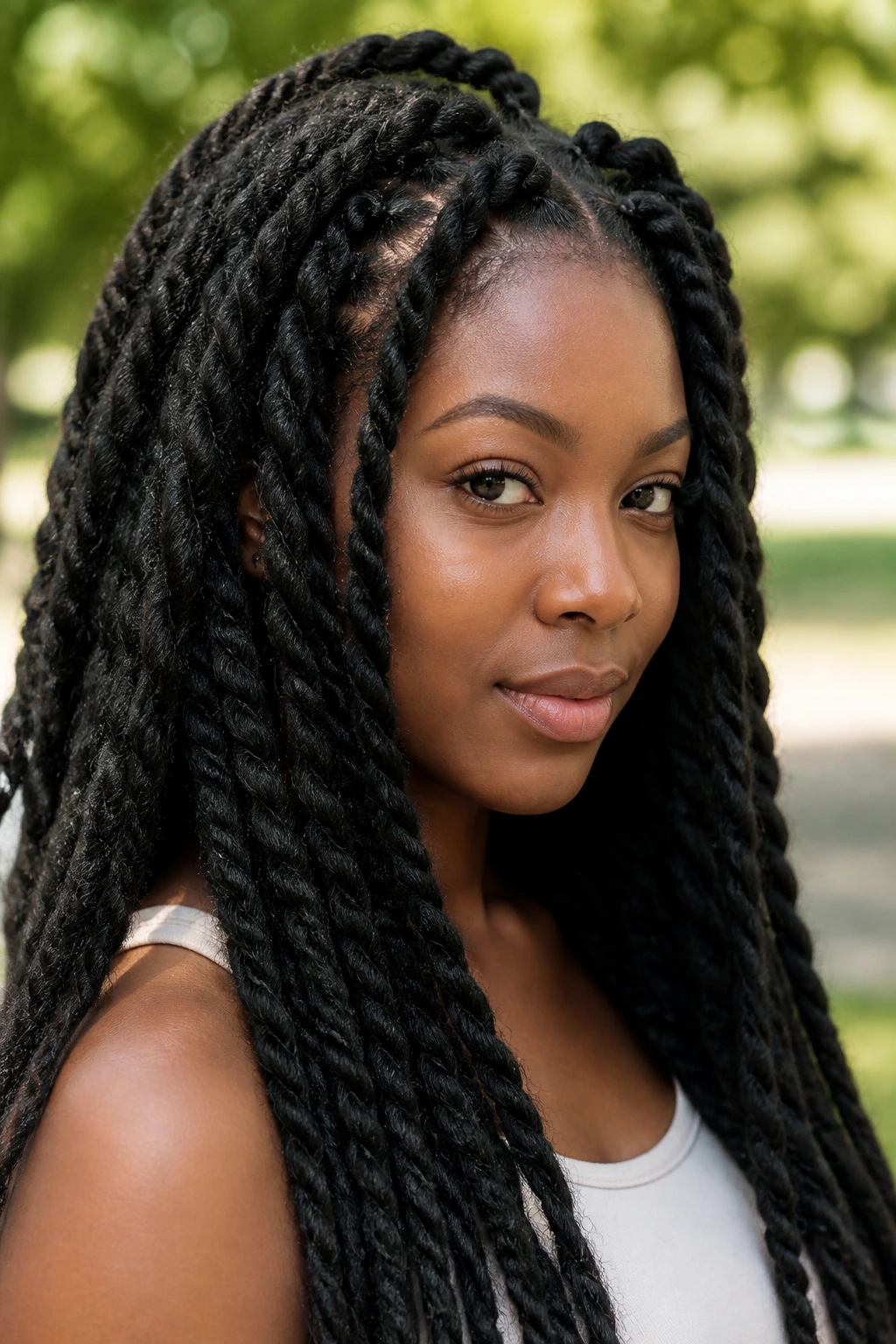
Marley twists are similar to other two-strand twists, but they use a coarser, rougher type of extension hair that mimics the texture of natural Black hair. This makes them look incredibly realistic and blends perfectly with your own hair at the root. They are sturdy, long-lasting, and offer a rugged, natural aesthetic that many people find more appealing than the super-slick, glossy look of synthetic braids.
Because the hair is textured, Marley twists don’t unravel easily. This makes them a lower-maintenance option than smoother twists. However, they can be a bit heavier, so pay attention to the density of the twists you choose. If you find them too heavy, reduce the number of individual twists or keep them at a medium length rather than waist-length.
15. Feed-In Braids
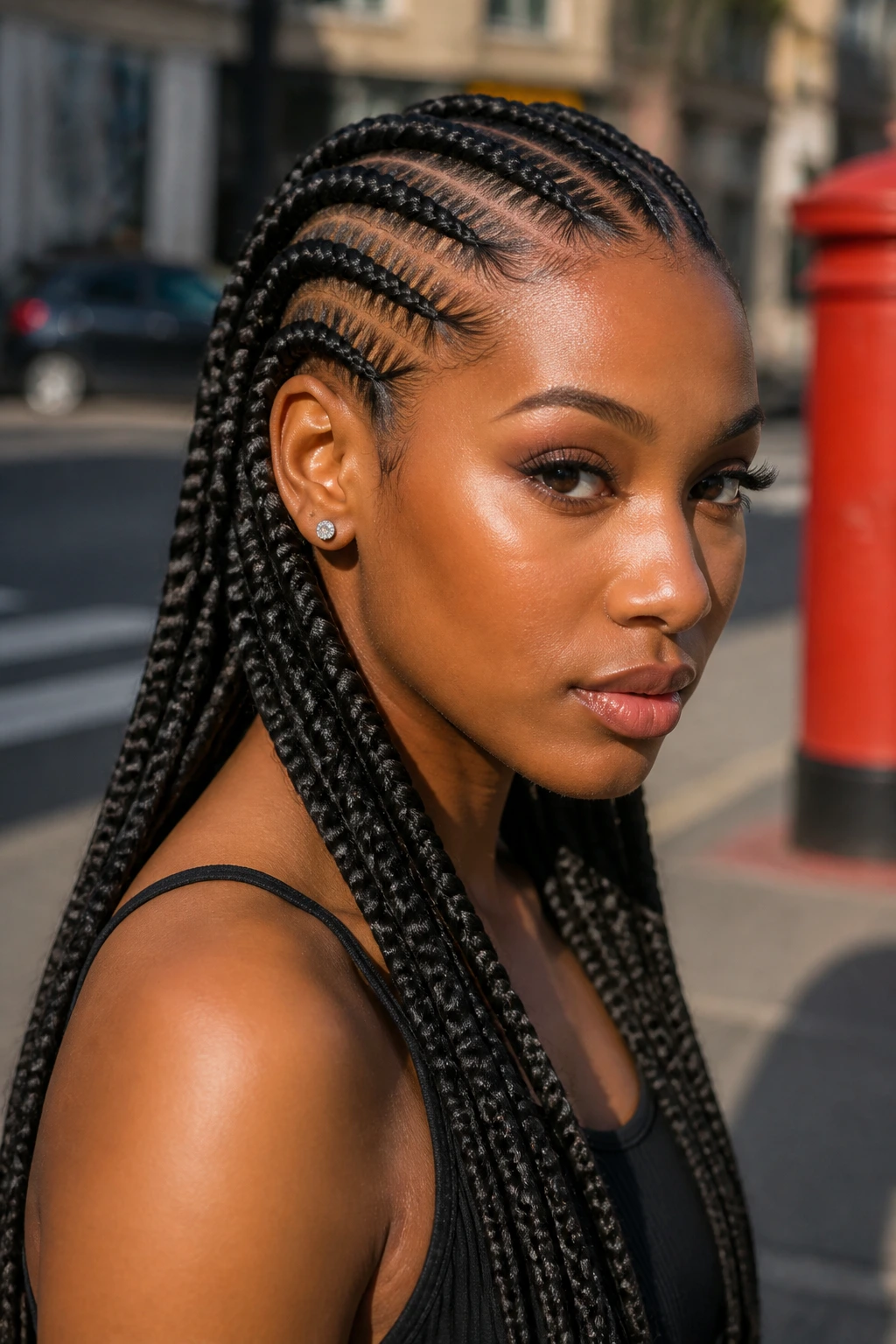
Feed-in braids have revolutionized the world of cornrows. By “feeding” the extension hair into your natural braid gradually, the braid starts thin at the hairline and gets progressively thicker. This mimics the look of a natural braid that is growing out of your scalp, which is why it looks so much more natural than the traditional “tuck and cover” method.
This style is perfect for those who want their edges to remain protected. Because there is no knot of heavy hair sitting right at the front, there is very little tension on your hairline. It is also a very versatile technique; you can do them straight back, in a zig-zag pattern, or even as a high ponytail. The key is in the technique—you want a stylist who knows how to blend the extension hair seamlessly so you cannot tell where your natural hair ends and the synthetic hair begins.
16. Twist-Out
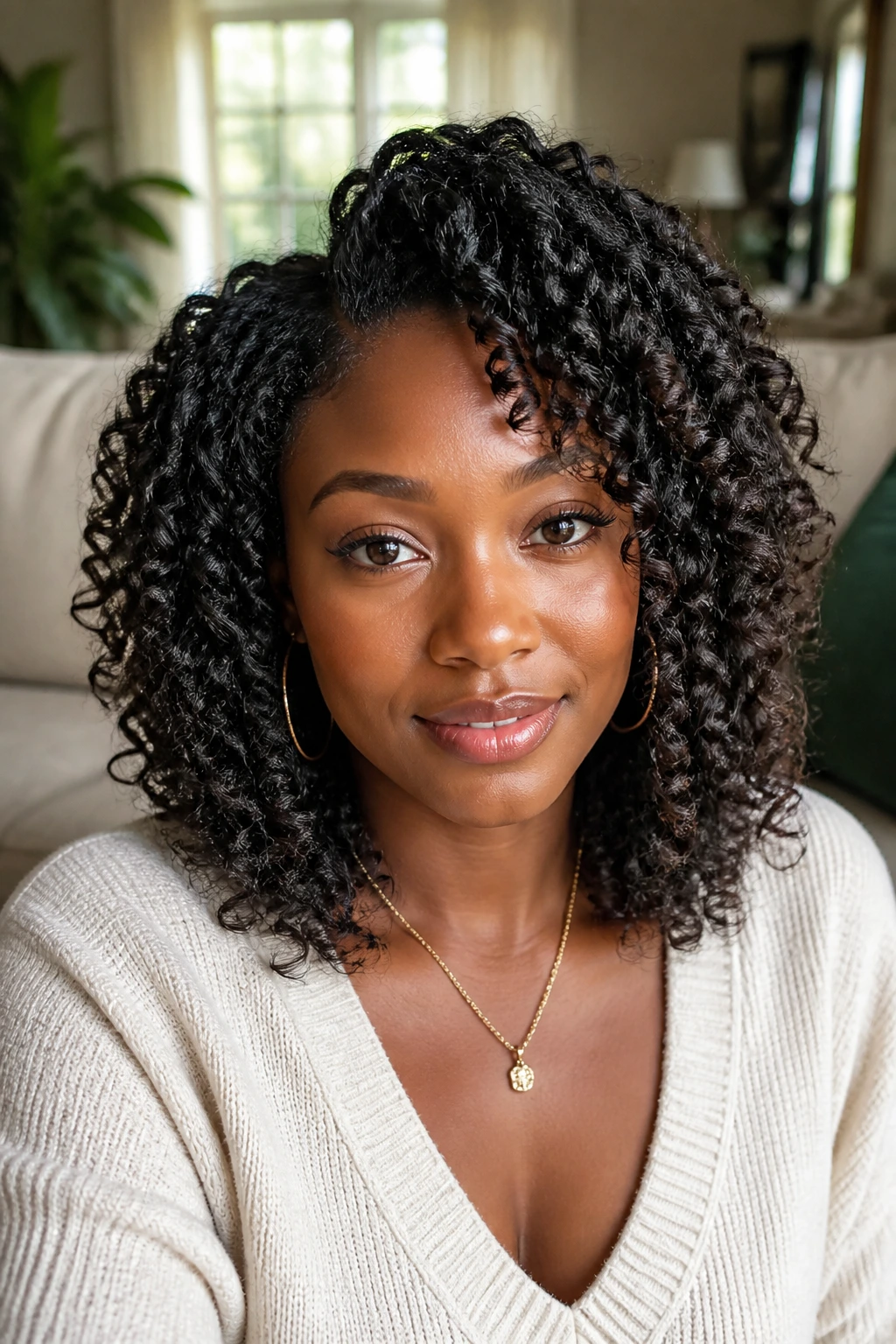
A twist-out is the gold standard for defining natural hair texture without using heat. By taking damp, product-coated hair and twisting it into small, uniform two-strand twists, you allow the hair to dry in a pattern that creates a beautiful, defined wave or curl once the twists are taken down.
The secret to a great twist-out is 100% dryness. If you take your twists down while there is even a hint of moisture, the hair will frizz immediately. Use a high-quality setting lotion or butter that provides hold and shine. Once you take the twists down, be gentle. Use a little bit of oil on your fingertips to separate the sections, and fluff at the roots with a pick to achieve maximum volume. It is a labor of love, but the results are unmatched.
17. Bantu Knot-Out
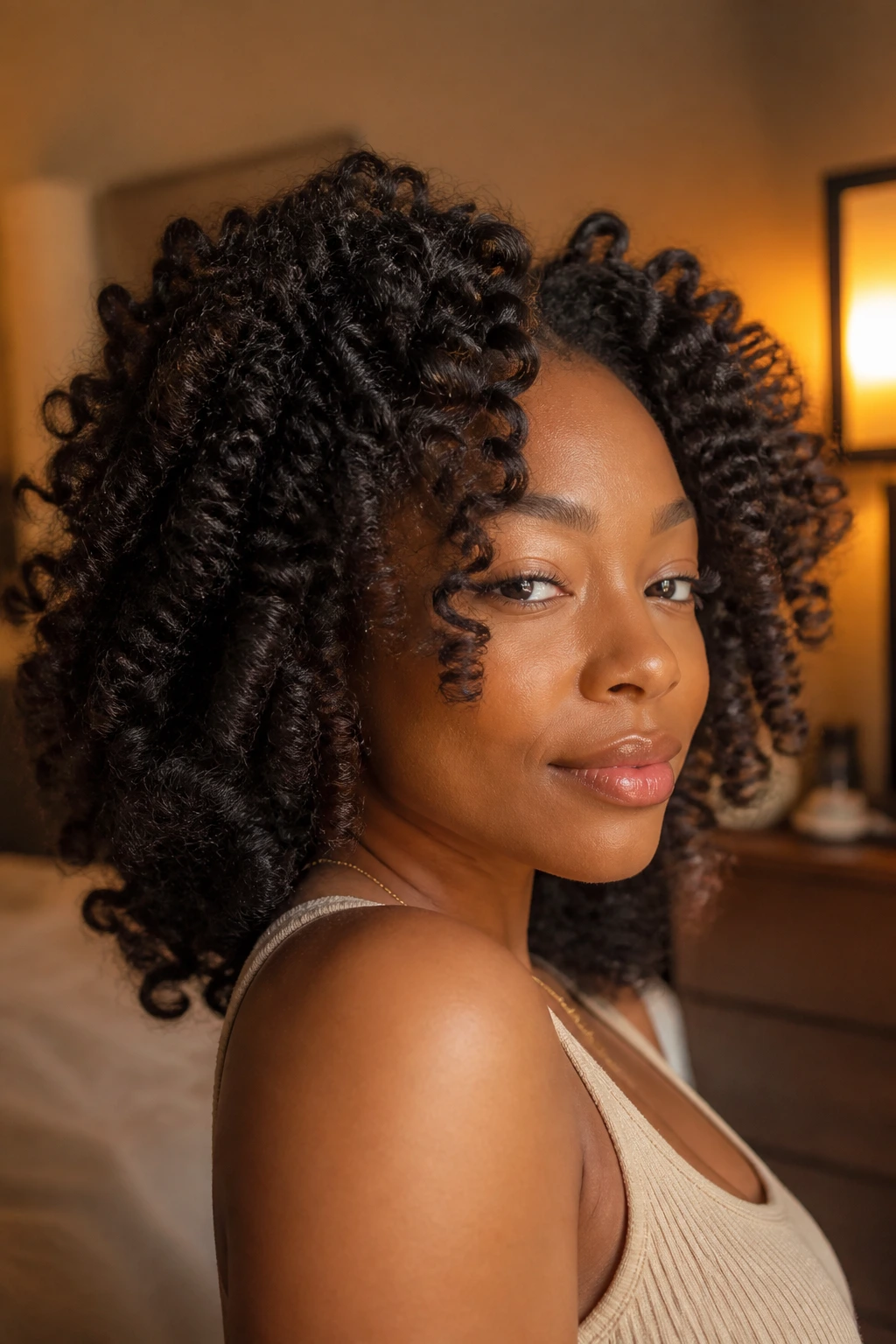
If you like the idea of a twist-out but want something with a bit more volume and a tighter curl pattern, try a Bantu knot-out. Instead of twisting the hair, you wrap it into small Bantu knots while damp. When you take them down, the hair expands into a voluminous, springy texture that looks like a fresh blowout, but with significantly more definition.
This style is particularly great for long hair because the knots keep the hair stretched as it dries. You get a combination of length and volume that is hard to achieve with other methods. To make this style last longer, wrap your hair in a silk scarf at night and avoid humidity. If the definition starts to fade after a few days, you can re-twist sections to refresh the pattern.
18. Sleek Low Bun

When in doubt, a sleek low bun is the answer. It is sophisticated, timeless, and takes less than five minutes to achieve if you have the right products. You need a reliable, firm-hold gel or pomade and a good boar bristle brush to lay those edges and ensure every strand is perfectly aligned.
The trick to elevating a simple low bun is the finish. Wrap a section of hair around the base of the bun to hide your hair tie. For a bit of texture, you can add a braid to the ponytail before you wrap it into the bun. This style is the ultimate protective measure; it keeps your ends tucked away and protected from the elements, which is vital for long-term hair health and length retention.
19. Side-Swept Curls

Sometimes, you just want to feel glamorous. A side-swept look, whether achieved with a silk press, a high-quality wig, or a set of curls, instantly adds a touch of red-carpet drama. Pulling all your hair to one side draws attention to your neckline and gives you a soft, romantic silhouette.
To achieve this, use a large-barrel curling iron to create loose, cascading waves. Pin the hair on the opposite side behind your ear or use a decorative hair comb to hold it in place. This style works best for special occasions or when you want to feel a little extra confident. It is also a great way to showcase the length of your hair without needing to do an elaborate updo.
20. Senegalese Twists
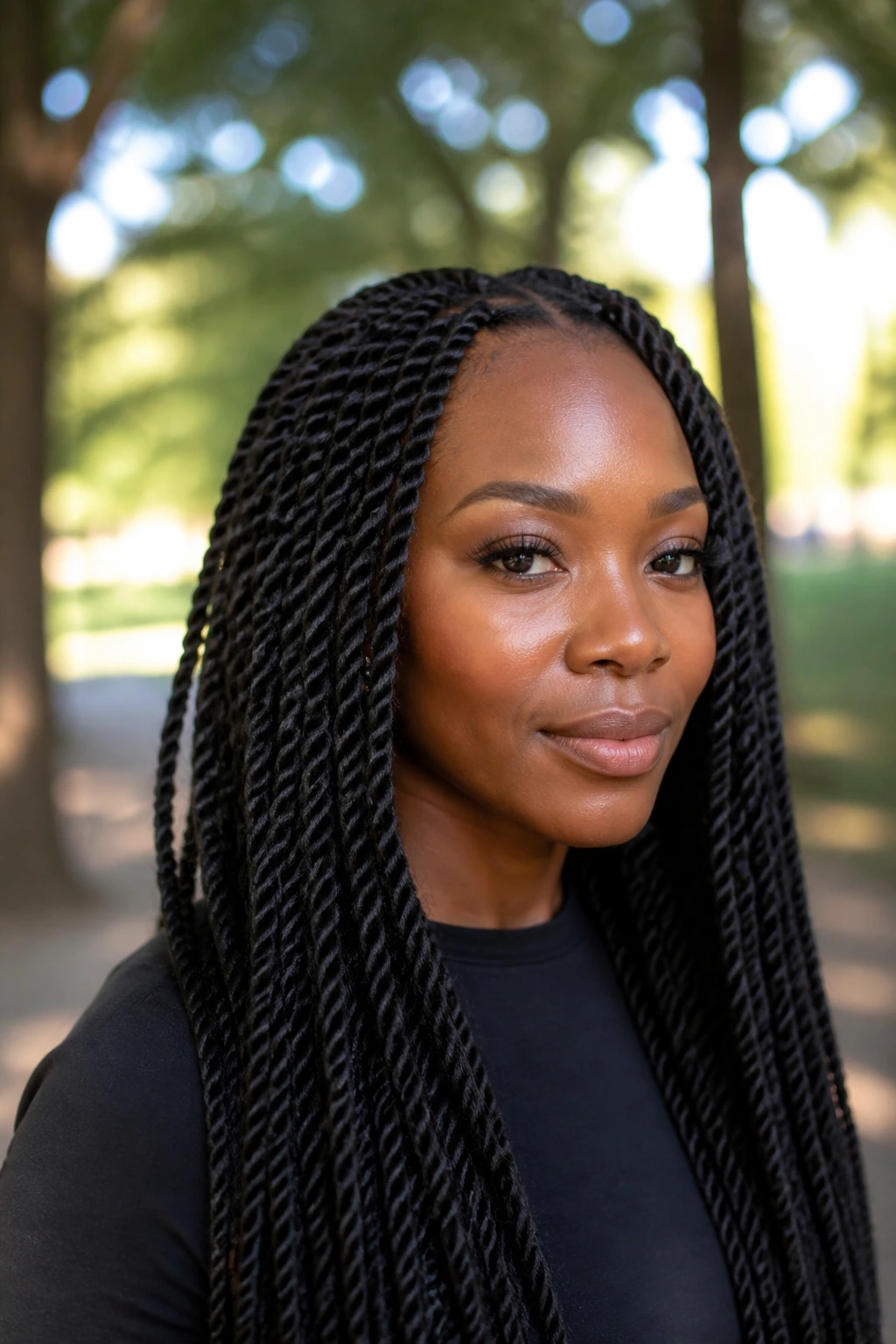
Senegalese twists are the sleek, polished version of two-strand twists. Using a silky synthetic hair, they provide a very clean, uniform look that hangs straight and loose. They are lightweight, flexible, and very easy to style, as they behave almost like rope—you can tie them in a knot, wrap them in a bun, or let them fall wherever they please.
Because they are so smooth, they can be a bit slippery, which means they might unravel if the ends aren’t sealed properly. A quick dip in hot water is the standard method for sealing the ends of these twists. If you are looking for a protective style that doesn’t feel like you’re carrying a ton of weight on your head, this is one of the best options available.
21. Tribal Braids
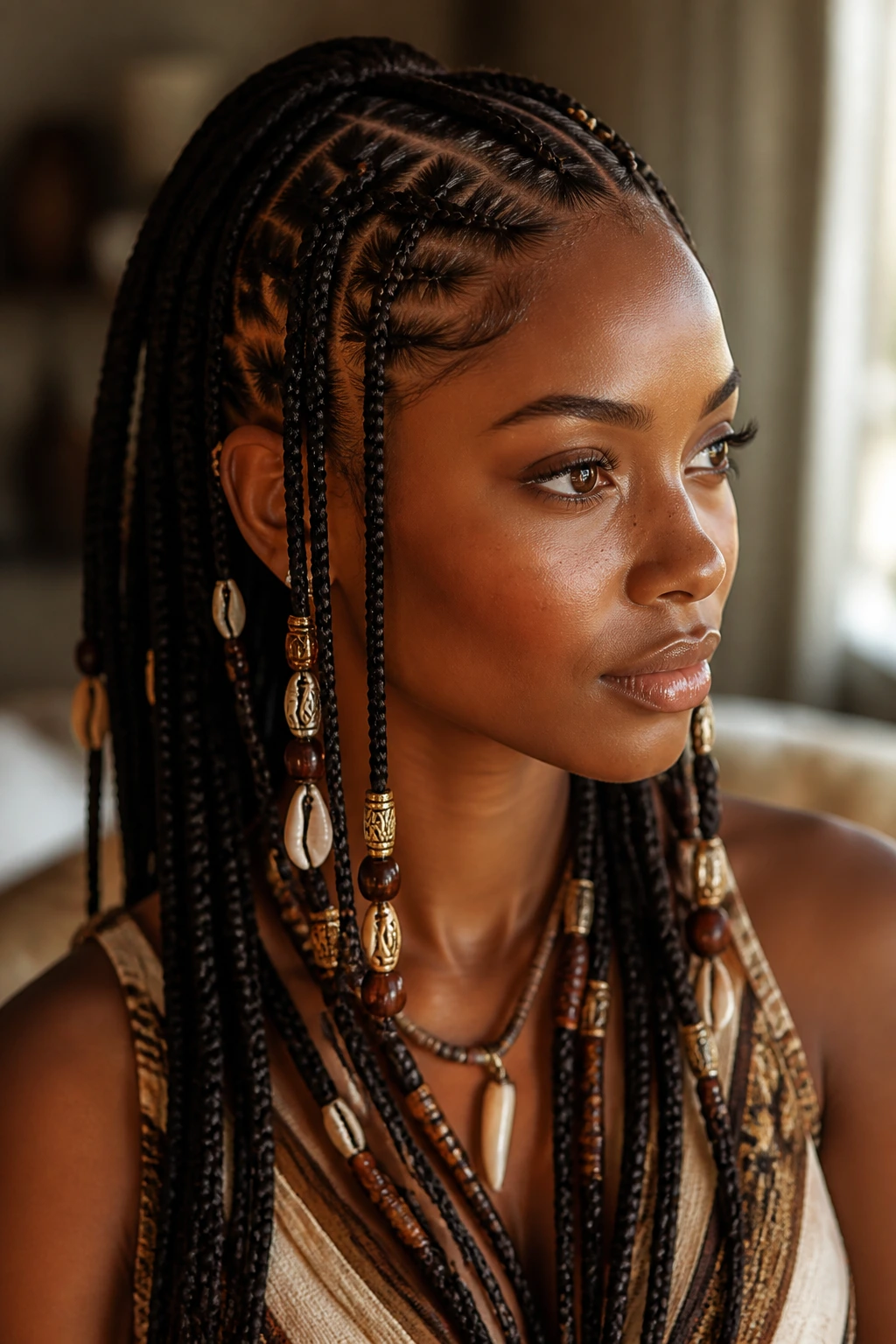
Tribal braids encompass a wide variety of styles, but they generally feature a mix of braid patterns—often including a center part, intricate cornrow designs on the sides, and a specific arrangement of braids toward the back. It is a look that feels deeply rooted in tradition but can be styled in very modern, fresh ways.
The complexity of tribal braids means they often take a long time to install, but the result is a work of art. They are highly customizable; you can add beads, cowrie shells, or gold rings to highlight specific braid patterns. Because the hair is usually braided very close to the scalp in complex designs, make sure your stylist is gentle. The visual impact is incredible, but the health of your scalp should always come first.
22. Butterfly Locs
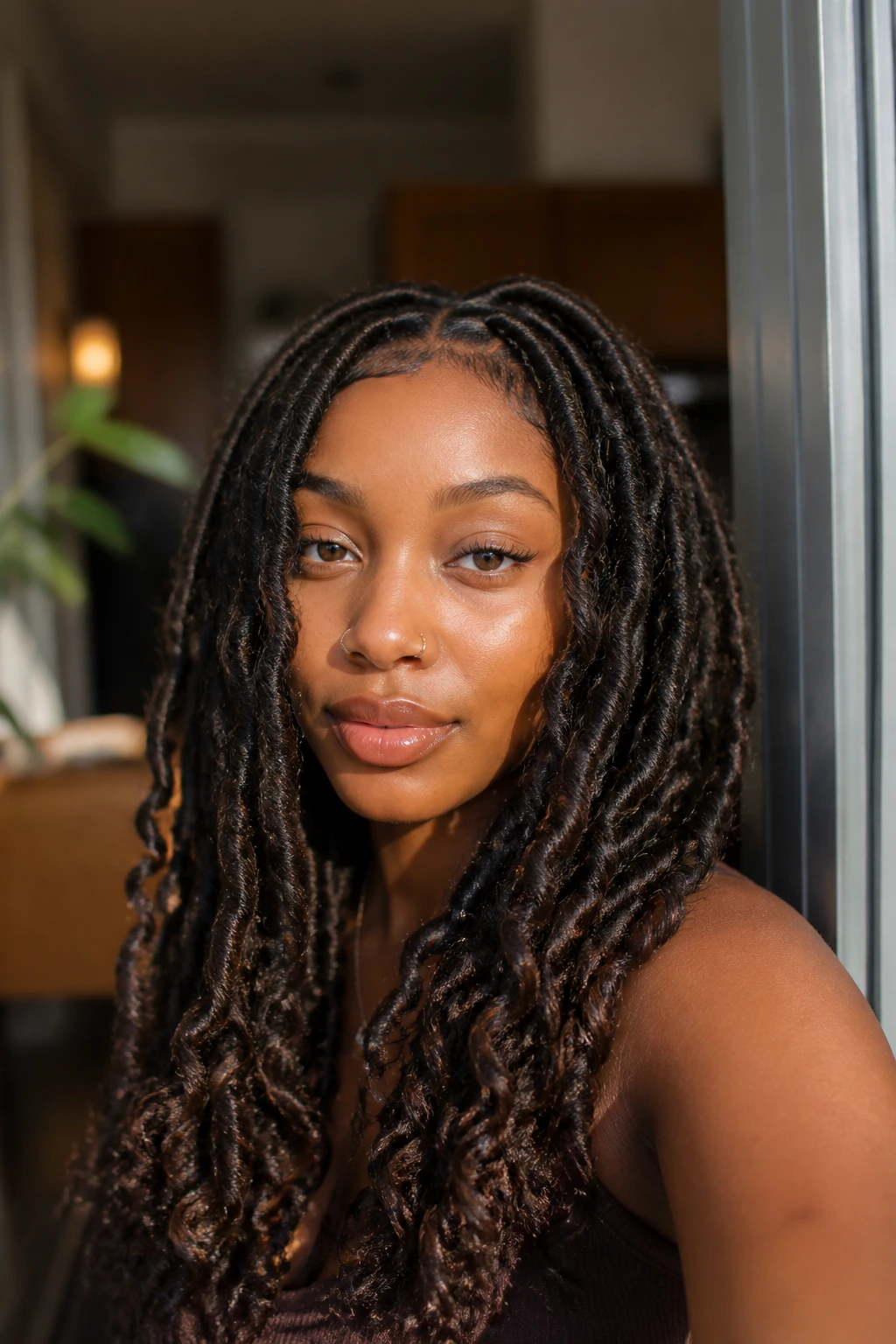
Butterfly locs have taken the beauty world by storm, and it is easy to see why. They are a variation of faux locs that incorporate loops and “wings” throughout the length of the strand, giving them a loose, distressed, and bohemian texture. They look like locs that have been worn for a long time—perfectly imperfect and full of personality.
The key to butterfly locs is the hair used to wrap the locs. It needs to be soft and easy to manipulate so you can create those signature loops. They are definitely more “effortlessly cool” than “neat and polished.” If you like a style that feels a bit more edgy and less rigid, this is a fantastic choice. They also hold up very well over time, often looking better after two or three weeks when the hair has settled.
23. Bubble Ponytail
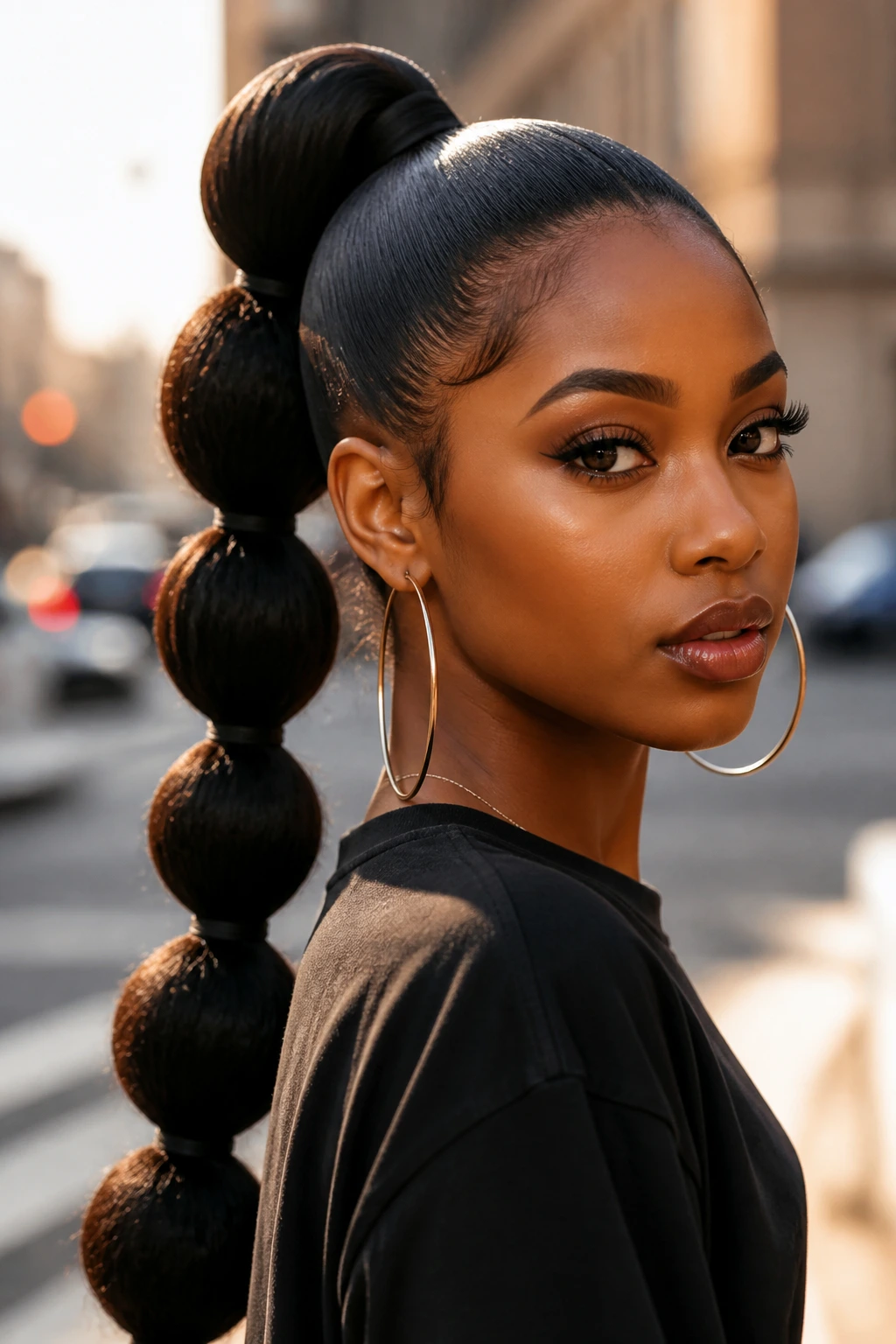
The bubble ponytail is a playful, modern style that is surprisingly easy to create. You start with a sleek, high ponytail and then place hair ties at even intervals down the length of the tail. Between each tie, you gently tug at the hair to create a “bubble” shape. It is a fun, youthful look that works incredibly well on long hair.
To make the bubbles look full and round, you might need to backcomb the hair between the ties slightly. If you want a more polished look, use clear elastics or elastics that match your hair color so they are less visible. This style is great for showing off length while adding a bit of architectural interest to your hair. It is also very customizable—you can do one big bubble, several small ones, or even have the ponytail go all the way down to the ends.
24. Half-Up Top Knot
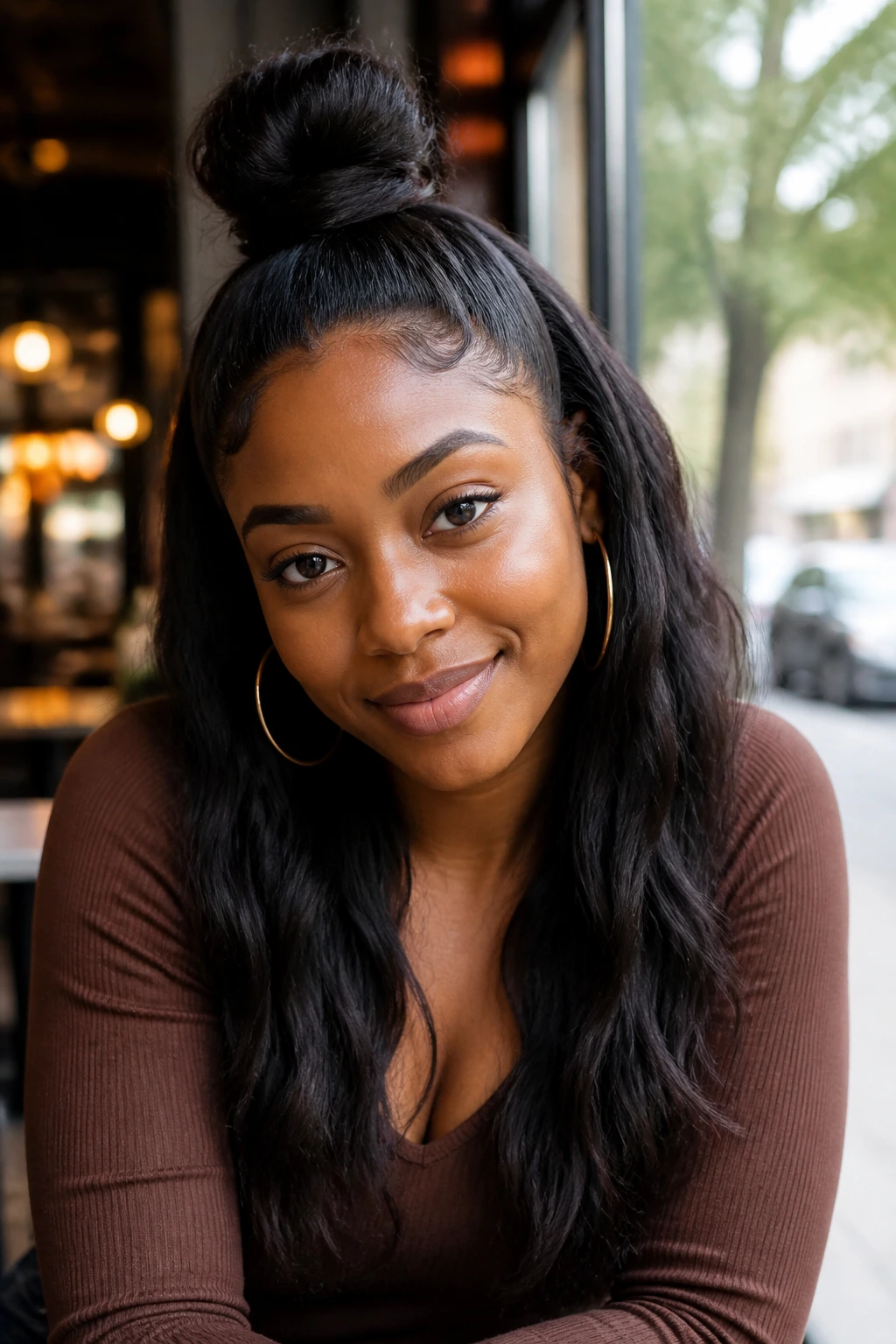
The half-up top knot is the go-to style for when you want to look put-together but don’t want to spend an hour on your hair. It keeps the hair out of your face, gives you a bit of height, and allows the rest of your hair to flow freely. It is essentially the more casual, funkier version of the half-up bun.
You can style the top knot as a small bun, a loose loop, or even a messy knot held in place with a pin. This style looks great with natural texture, braids, or straightened hair. If you are feeling extra, you can add two small face-framing braids or twists at the front to give it a bit more dimension. It is an effortless, go-to style that feels very current and works for almost any casual occasion.
25. Two-Strand Twist Protective Style
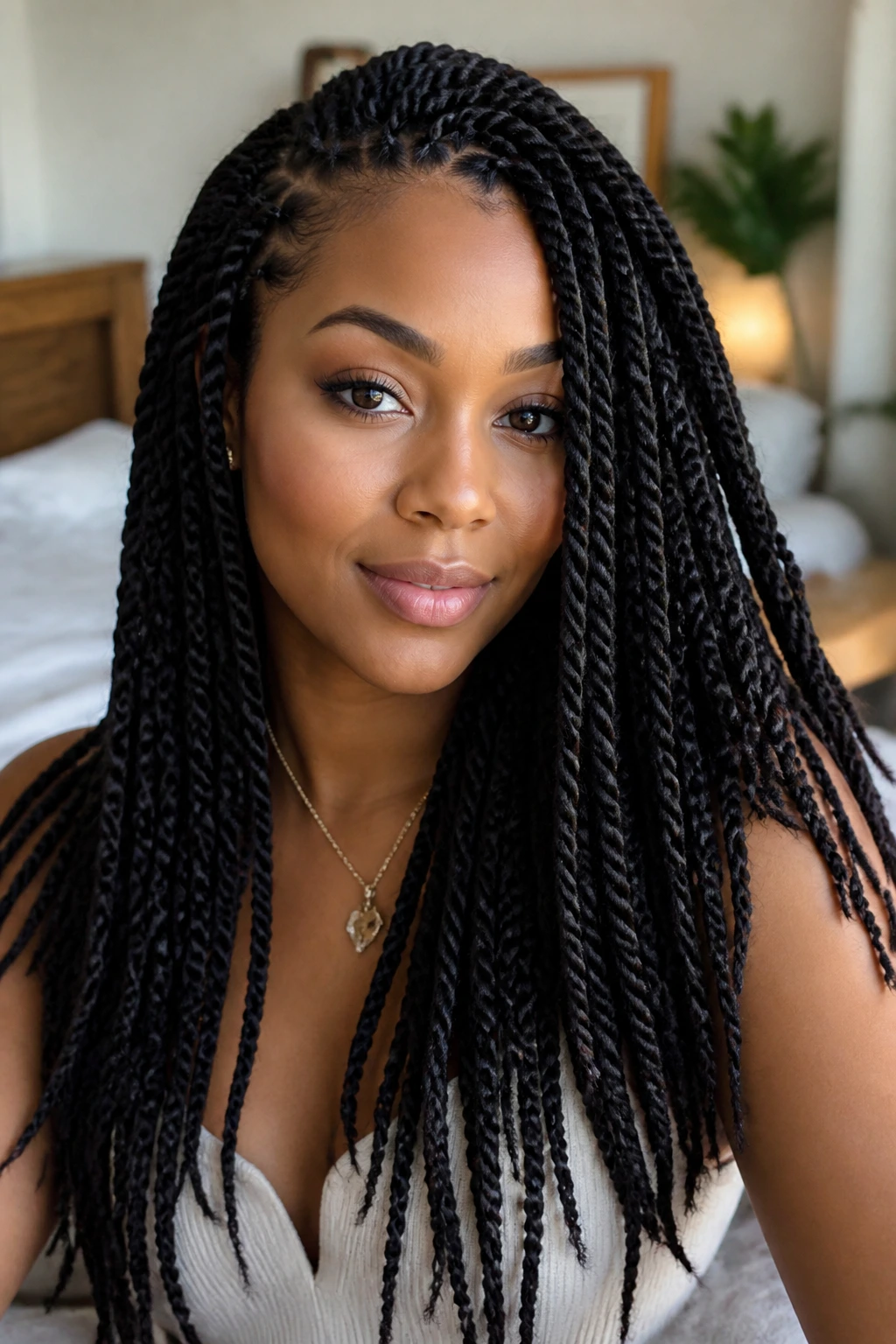
Never underestimate the power of a simple two-strand twist. While it is often used as a method to achieve a twist-out, wearing the twists themselves as a long-term protective style is an underrated move. It is the easiest style to do yourself, requires minimal product, and puts almost zero tension on your hair.
To keep them looking fresh, make sure your parts are neat. You can do thick, chunky twists for a more relaxed look or small, tight twists for something that lasts longer. If you have very long hair, these twists will hang beautifully. You can wear them loose, pull them into a half-up style, or even pin them into an updo. They are the ultimate low-maintenance style that keeps your hair moisturized and protected from breakage.
Final Thoughts
The journey with long hair is rarely linear. Some days, you will want the sleek, high-fashion impact of a cornrowed ponytail, and other days, you will just want the ease of a loose, protective two-strand twist. The most important thing is to remember that these styles exist to serve your hair, not the other way around.
Pay attention to how your scalp feels, prioritize moisture above all else, and never be afraid to take a style down early if it’s causing unnecessary tension. Protective styling is about preserving your hair’s length and health so you can continue to enjoy it in whatever form you choose. Experiment, find what makes you feel the most confident, and enjoy the process of turning your hair into your own personal signature.
