



Loc styles with extensions for length can change the whole feel of hair in one sitting. Add a few extra inches, and the style stops reading as basic upkeep and starts moving with you — swinging at the ends, framing the face differently, even changing how heavy the whole look feels on the scalp.
That extra length is not free, though. Long locs ask for smarter parting, better balance, and a little more honesty about weight. A style that looks easy on a mannequin can feel fussy on real hair if the base is too tight or the finish is too bulky.
I like styles that know what to do with all that added hair. Clean center parts, low ponytails, wrapped buns, side sweeps — they make the length look intentional instead of like it was added just for the sake of adding it. A little restraint goes a long way.
And some styles lean soft. Some go polished. Some are playful enough to keep things from feeling too serious. The point is not to hide the extensions. It is to let the length do a job.
1. Waist-Length Faux Locs With a Clean Center Part
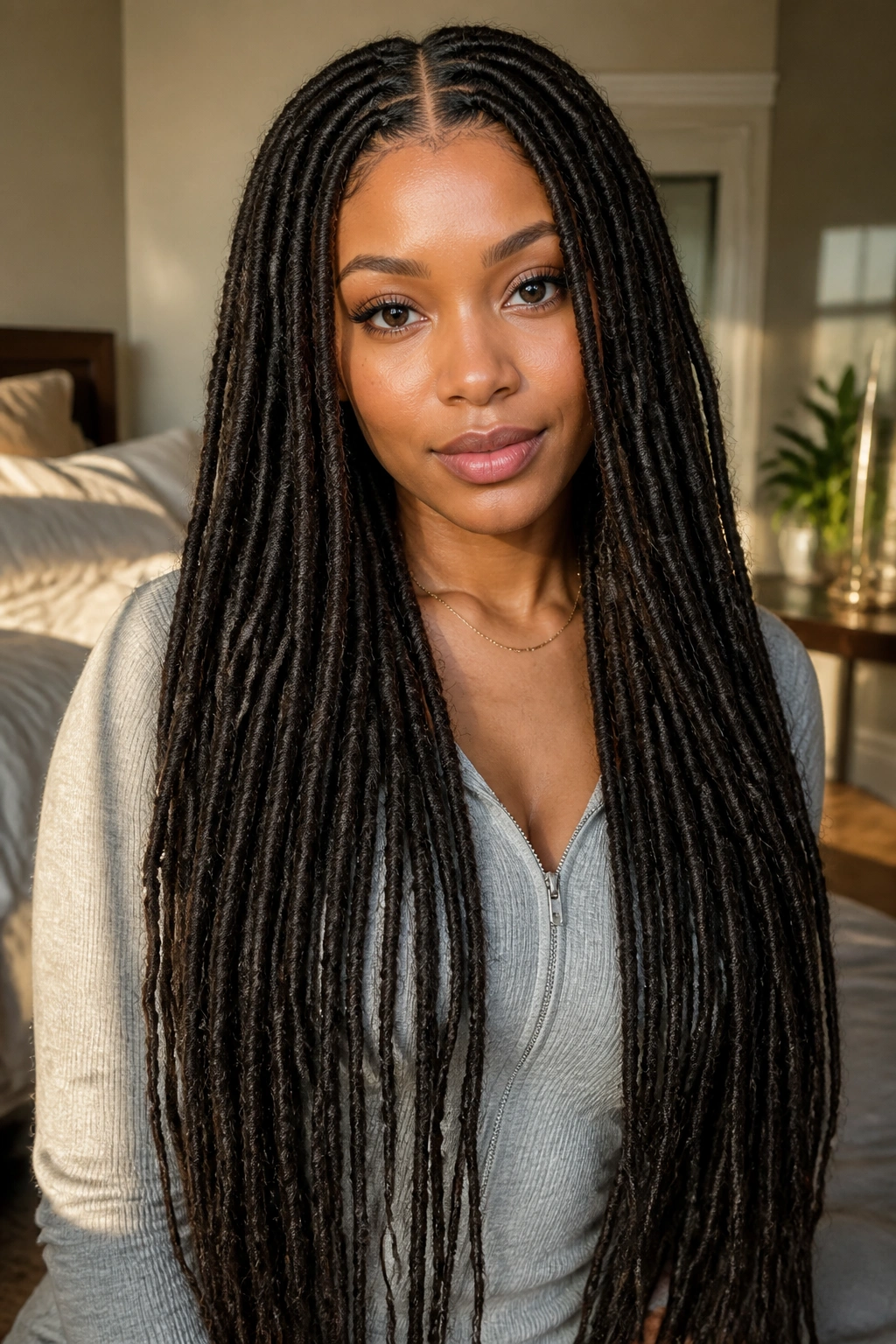
Waist-length faux locs are the look most people picture when they want long locs that make a statement without needing much extra styling. The clean center part keeps the whole install from looking crowded at the roots, and that matters when the added hair starts to build real weight.
A center part also gives the style a calm shape. Long locs can turn messy fast if every row fights for attention, but a straight part gives your eye one line to follow. The rest of the style can fall freely. That’s the beauty of it.
Why the Center Part Helps
A middle part works especially well when the locs are thick, because it breaks the hair into two balanced halves. That balance keeps the style from leaning too hard to one side, which can happen with longer extensions. It also makes a long install easier to wear with sunglasses, scarves, or big hoops.
- Best with 24-inch to 30-inch loc extensions if you want the length to read clearly.
- Looks neat when the front rows are a little slimmer than the back rows.
- Works well with crochet faux locs or hand-wrapped locs.
- Stays smoother longer when the roots are set flat and not overstuffed.
My favorite part: you do not need extra decoration here. The length is the decoration.
If your edges are sensitive, keep the first row soft and low-tension. That tiny choice can make a big difference by day three, when styles usually start telling the truth.
2. Butterfly Locs With Curly Ends
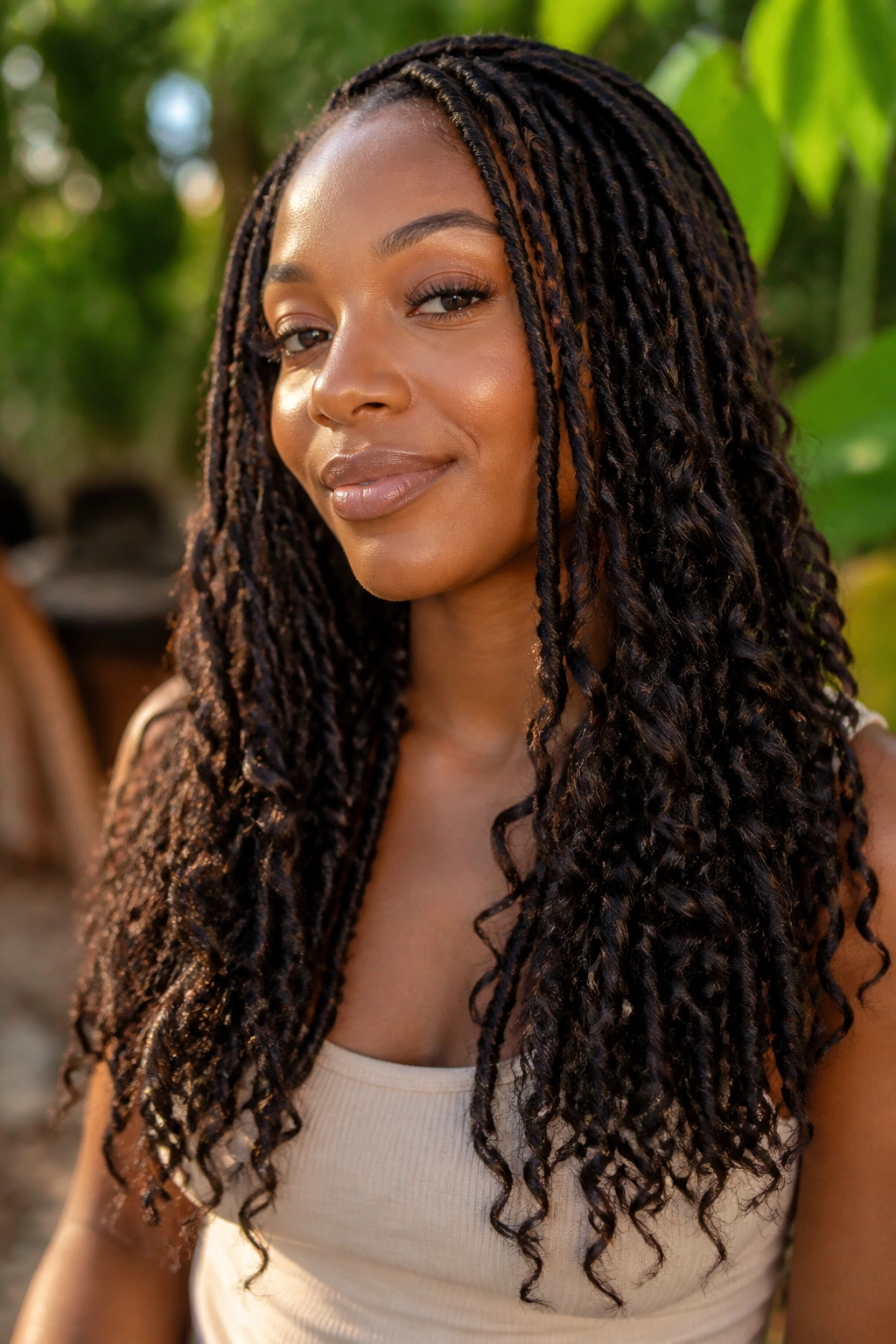
Why do butterfly locs look so good once the length gets serious? Because the texture breaks up the weight. Instead of one solid curtain of locs falling straight down, you get loops, bends, and soft loose ends that keep the style from feeling stiff.
The longer the install, the more helpful that broken-up texture becomes. Butterfly locs have movement built in. They do not just hang; they shift. That makes them a smart pick if you want long locs that still feel relaxed and wearable.
Keeping the Look Light
The trick is not stuffing the wrap so tightly that the locs turn heavy and thick at the root. A good butterfly loc has enough body to look full, but still has air inside the texture. That air is what keeps the style from looking like a dense rope pile.
If you add curly strands at the ends, keep them uneven on purpose. A little irregularity makes the style feel softer and more natural. I would rather see a few loose curls moving at shoulder level than a perfect set of identical ends that look frozen in place.
Butterfly locs also age in a flattering way. The loops relax a bit, the curls frizz slightly, and the whole style starts to look lived in rather than overdone. That is the sweet spot.
3. Goddess Locs With Loose Face-Framing Strands

If you want long locs that still move like hair, goddess locs are hard to beat. The loose curl strands soften the whole shape, especially when the extension length is enough to fall past the shoulders and settle around the chest or back.
What makes goddess locs work is contrast. The loc itself gives structure, but the curly pieces keep it from looking too rigid. That mix is especially nice on longer installs, where a fully solid finish can start to feel heavy around the face.
Stiff ends ruin the whole thing.
The best version of this style has a few strategically placed curls around the cheekbones and jawline, not curly chaos everywhere. Too many loose strands can make the style look tangled before it has even had a chance to settle. A few, placed well, do the job.
What Makes Them Stand Out
Use a curl pattern that still has spring after a day or two of wear. Water-wave hair and soft human-hair curls both work if you want the ends to move naturally without looking crunchy. The goal is movement, not frizz for its own sake.
This style looks especially good when the locs are long enough to be worn down most of the time. You get the body of the loc and the softness of the curl in one shot. That combination feels less severe than a straight faux loc install, and I think that is why so many people keep coming back to it.
4. Shoulder-Grazing Loc Bob With Hidden Extension Length
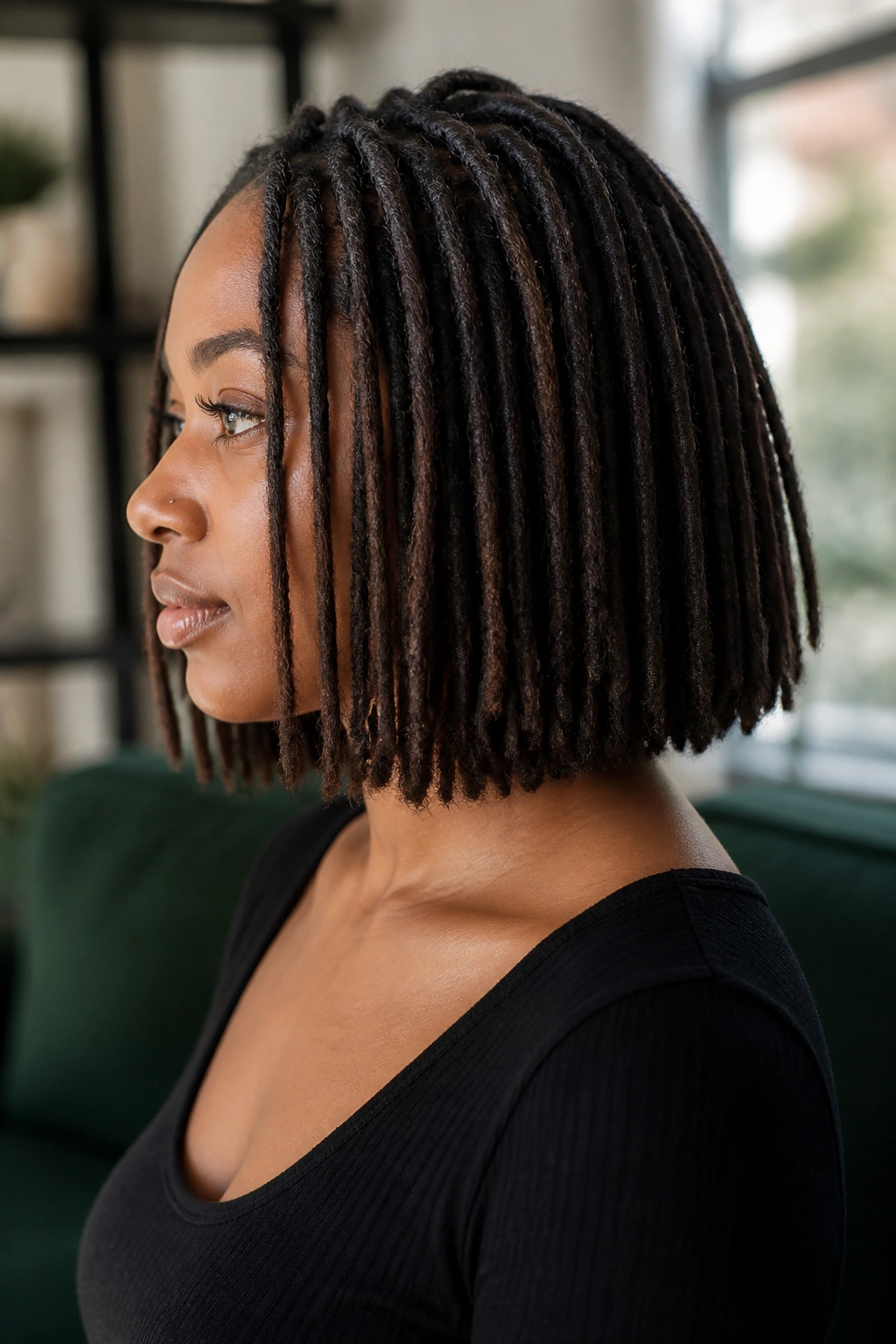
A lot of people think extension length has to hit the waist to count. Not even close. A shoulder-grazing loc bob can carry plenty of added length under a sharper outer shape, and that makes the style feel lighter while still giving you the drama of longer hair.
The outer line stays blunt or slightly rounded, but the hidden length underneath gives the bob more body than a regular cut would have. That means you get swing without the same neck load. Smart, honestly.
- Good for fine hair that gets overwhelmed by heavy installs.
- Easier to wash and dry than a waist-length set.
- Works well if you want a style that fits under jackets and scarves.
- Looks especially neat with a slightly stacked back.
A bob like this is also a nice middle ground if you want to try long loc energy without committing to hair that brushes your ribcage. It still feels styled. It still feels intentional. It just does not demand as much from your shoulders.
The best version keeps the ends blunt enough to read as a bob, not as a chopped-off afterthought. That line matters more than people think.
5. Half-Up Loc Styles With Extensions for Length

Half-up styles are not a fallback. On long locs, they are one of the smartest ways to show off extension length while keeping the front out of your face. The back can swing freely, and the top section gives you room to play.
The reason this works so well is simple: it separates function from show. The top half handles the lift. The bottom half shows the length. You get both at once, and neither has to carry the whole style alone.
How to Keep the Shape Balanced
The top section should be gathered with enough hair to look intentional, not so much that it starts pulling hard at the crown. If the install is very long, use two small elastics or a secure clip so the weight is spread out a bit.
- Leave 1 to 2 locs loose at each temple if you want a softer face frame.
- Keep the top knot, puff, or clip centered slightly behind the hairline.
- Use a wrap loc or one loose loc to hide the elastic.
- Let the back fall in a clean line so the extension length is visible.
Half-up locs also age well over a long wear day. If the top section loosens a little, the style still looks fine. That is part of the appeal. It does not need to stay flawless to keep working.
6. High Ponytail Faux Locs With a Wrapped Base
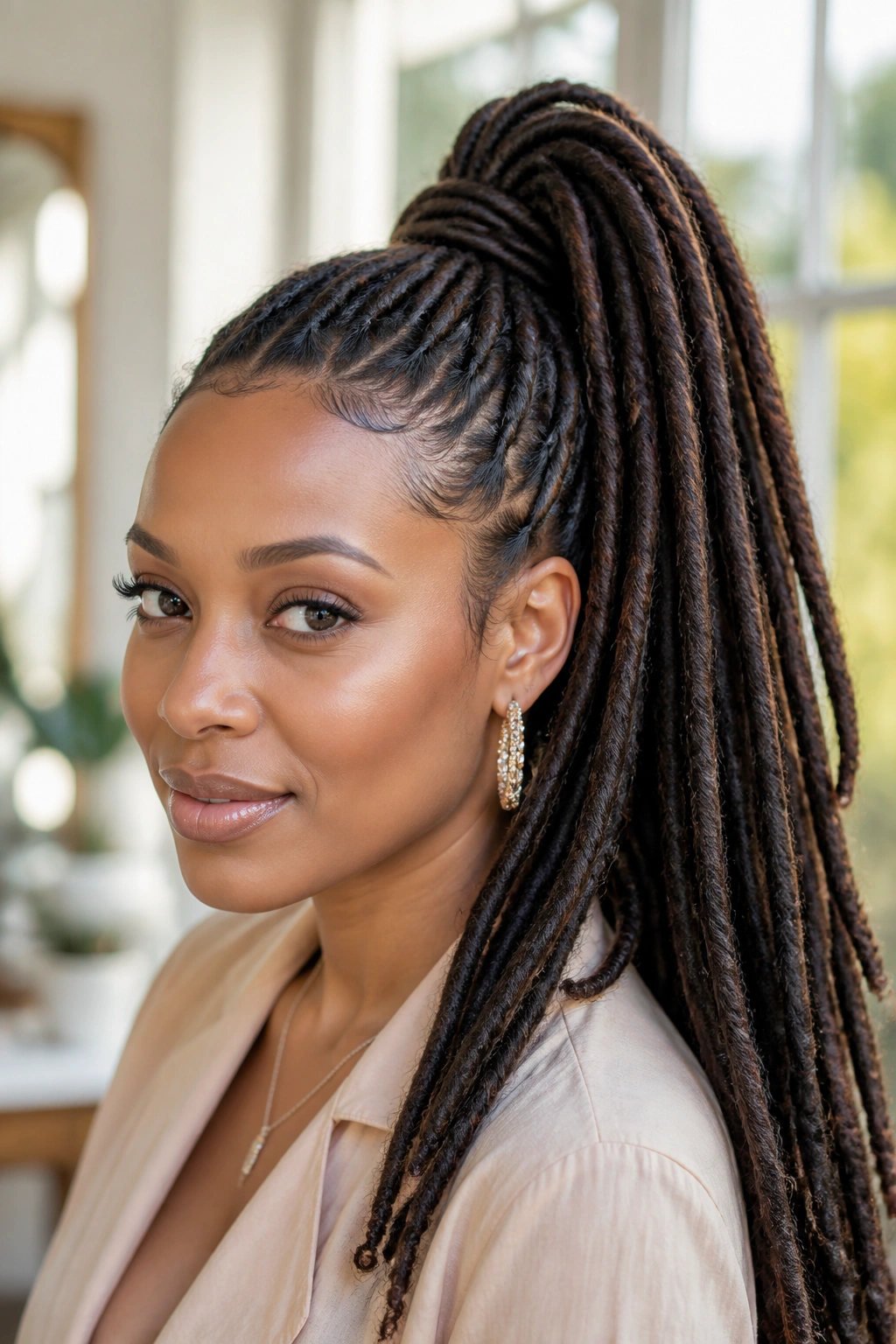
Pull long locs high, and the whole face changes shape. A high ponytail lifts the eyes, shows off the neck, and makes the extension length fall in one long line instead of spreading across the back. It is a clean look, but it still has energy.
The wrapped base is what keeps it from looking unfinished. A single loc or a small section of hair around the elastic makes the whole ponytail look deliberate. Without that wrap, the style can read a little rough, especially if the extensions are thick.
One caution: too much tension shows fast.
If the ponytail sits too high and too tight, the scalp tells on you by the end of the day. You want lift, not strain. A firm hold at the base is enough. There is no prize for making the ponytail feel like a headache.
This style works best when the extensions are long enough to fall past the upper back. Shorter lengths can still do it, but the swing is different. Long faux locs in a high ponytail have a sharp kind of movement — the kind that makes the whole style look awake.
7. Low Ponytail Locs With Face-Framing Pieces
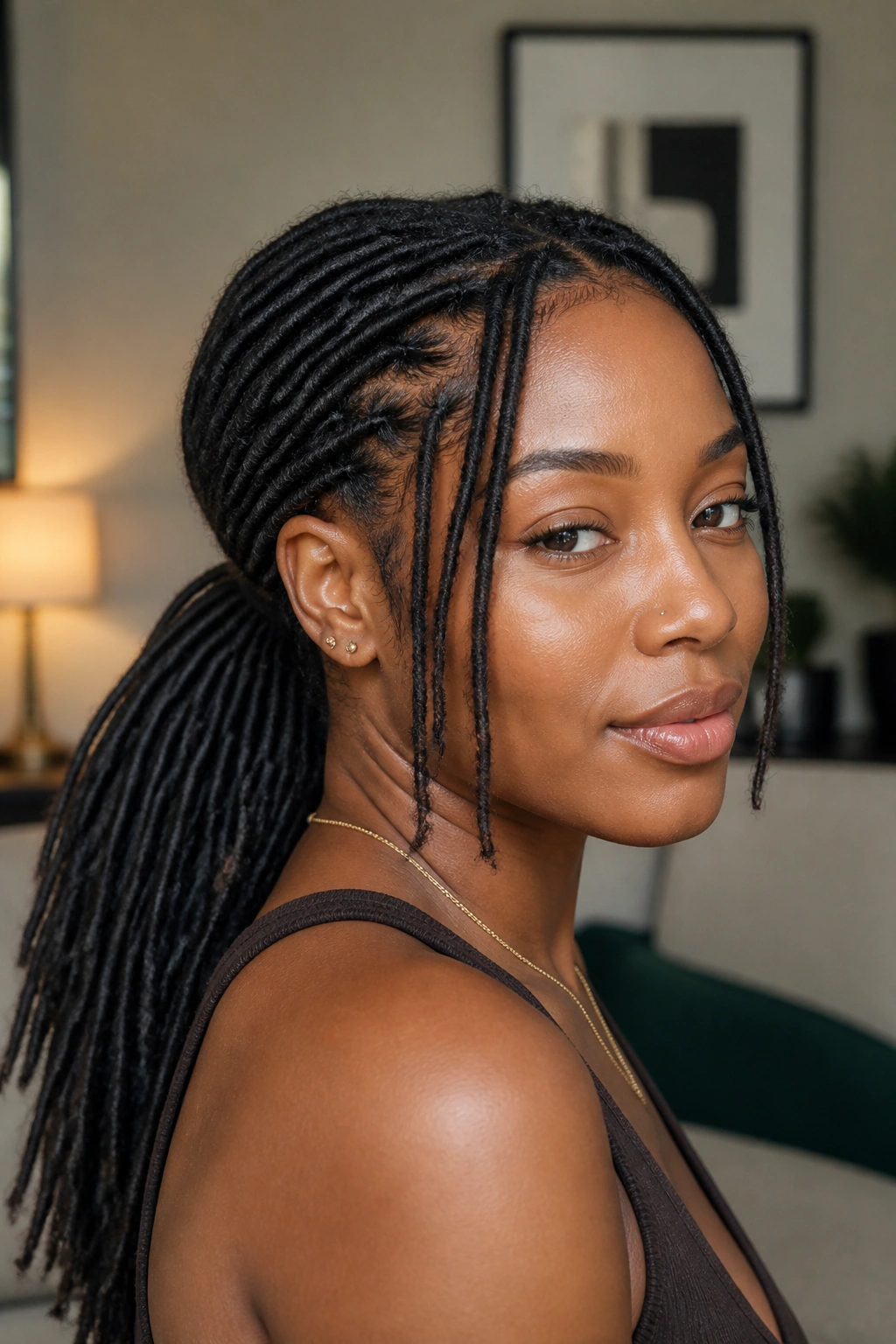
Keep the ponytail low if you want the length to feel calm instead of loud. A low ponytail lets long locs sit at the nape or upper back, which gives the style a clean line and keeps the head shape from looking top-heavy.
It is also one of the easiest styles to wear for a long day. The scalp usually gets less strain than it would in a high ponytail, and the face-framing pieces soften the front without stealing attention from the length.
A Better Fit for Long Days
A low ponytail works best when the part is neat and the base sits just above the collar line or right at it. That placement keeps the style elegant without making the ponytail feel droopy. If the locs are very long, let the ends fall straight down instead of twisting them into more bulk.
- Leave two thin locs loose in front for softness.
- Wrap the base with a loc of similar thickness.
- Keep the ponytail holder low and snug, not tight enough to dent the roots.
- Brush or smooth the front only as much as needed.
I like this style for long locs that need to look tidy but not severe. It has restraint. It also gives the extensions room to move, which is half the point of paying for extra length in the first place.
8. Side-Swept Locs Over One Shoulder

If your locs reach one shoulder and stay there, you already have a style. The side sweep turns all that length into a single shape, instead of letting it spread across the back where it can disappear. That one-side fall gives the hair more drama without asking for more work.
Side-swept locs also play nicely with asymmetry. A deep side part, a tucked ear, or a few pinned locs on the opposite side can change the whole mood. It feels less formal than a centered style, and less heavy than a full down-back look.
Unlike a centered fall, this one stacks the length together. That makes the ends look fuller. It also keeps the locs from tangling against both shoulders at once, which is a tiny practical bonus people notice quickly.
This is a strong choice if your extensions are chest-length or longer. Shorter lengths can still sweep across, but the shoulder just does not hold the shape the same way. When the hair is long enough to settle and stay put, the whole style starts to feel easy.
9. Double Space Buns With Long Hanging Length
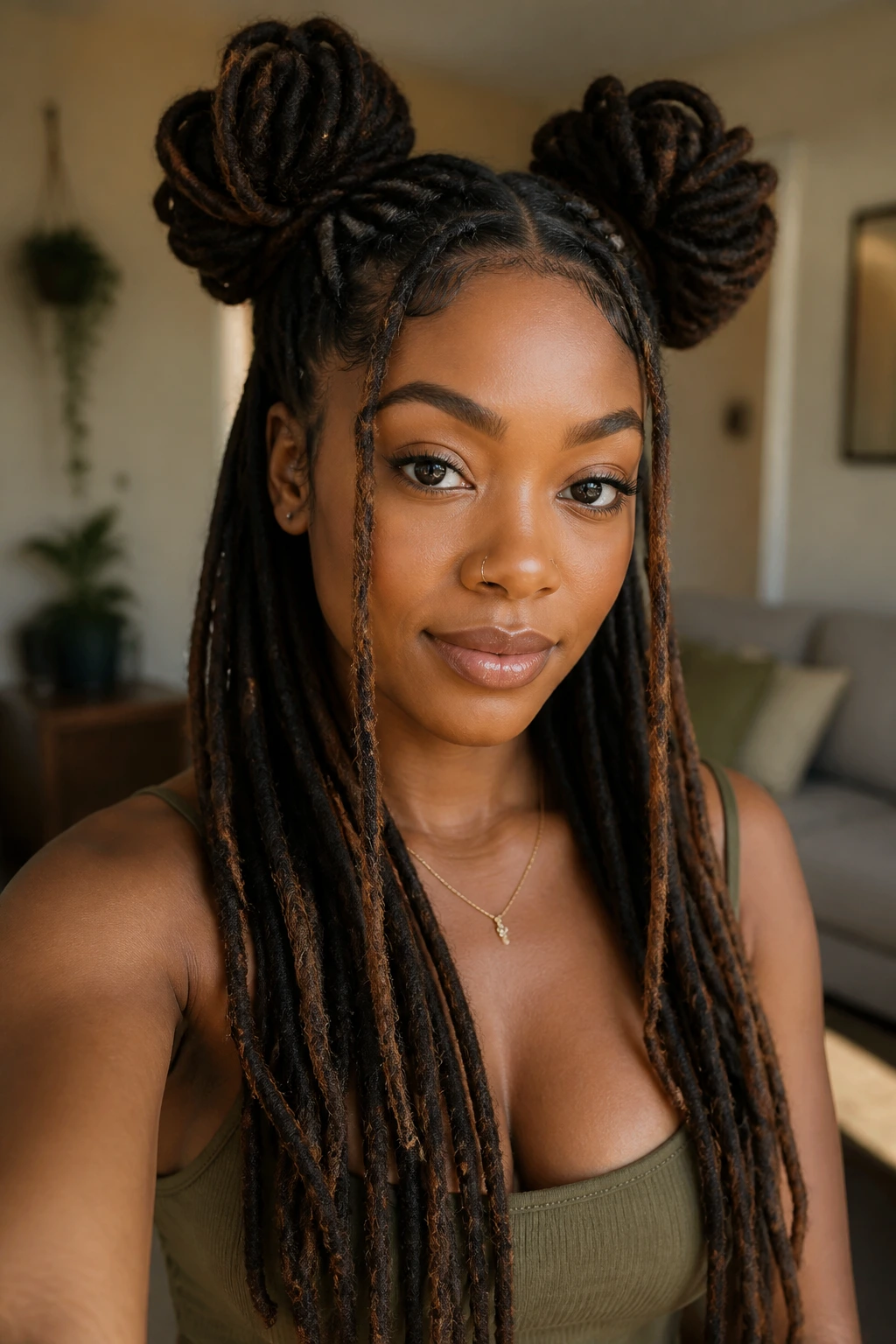
Want playfulness without giving up length? Double space buns do that job well. The buns keep the top of the style compact, while the long sections hanging below show off the extra inches. It is a good balance of fun and structure.
The style works because the buns create two high points on the head, which breaks up the length visually. That matters when the locs are long enough to feel heavy. Splitting the shape keeps it from turning into one blunt mass.
Balancing the Two Sides
The two buns need to be matched carefully. If one bun is much bigger, the style starts to look accidental. Use a clean middle part, section each side evenly, and leave enough length below to keep the style from feeling too tiny.
- Keep the buns about the same diameter.
- Leave a few locs out at the back if you want more movement.
- Secure each bun with pins crossed in an X rather than piling them all in one place.
- Avoid making the buns so tight that the base flattens out.
I like this style for long locs that need a little lift on top. It gives the hair a more playful shape without hiding the length completely, which is a nicer compromise than people usually give it credit for.
10. Jumbo Loc Bun With Tucked Ends

A big bun makes long locs look intentional, not just long. That is the real reason this style keeps showing up. It gathers the weight, clears the neck, and turns all that extension length into one sculptural shape.
The bun can sit high or low, but it always needs enough structure at the base. Long locs tend to pull the bun downward if the pins are weak, so the foundation has to be firm. Not painful. Just firm.
- Secure the ponytail with 2 strong elastics if the hair is very long.
- Cross 3 to 4 U-pins around the bun instead of dumping them all in one spot.
- Tuck the ends clockwise or counterclockwise in the same direction so the bun lies flat.
- Keep the edges smooth, but do not flatten them hard.
A jumbo bun is one of the best styles for days when you want long locs out of the way and still visible. It has presence. It also works for formal settings, gym days, or any moment when the length needs to behave for a few hours.
One detail that matters: the bun should look full from the side, not just from the front. Otherwise, the whole shape loses depth. Easy fix. Just give the wrapped hair a little room.
11. Braided Crown Locs With Extension Length

Crown styles love extra inches. A braided crown or halo look needs enough length to travel across the head and still tuck neatly behind the opposite ear. Without that, the braid can feel clipped short. With it, the whole style opens up.
The beauty of this shape is that it keeps the face and neck open while still using the locs as decoration. You can wear it plain or add cuffs at the crossing points. Either way, the length does the heavy lifting.
Where the Length Does the Work
The extra hair matters most at the back and behind the ears. That is where the crown has to hide its ends and stay smooth. If the locs are too short, the crossing sections start to show gaps. If they are long enough, the braid looks like it was built into the head.
A few practical notes help here:
- Start the braid behind one ear and move across in a steady line.
- Pin the hidden parts under the crown, not through the same spot over and over.
- Keep the front hair flat enough to show the shape, but not so tight that it feels pasted down.
- Use lighter locs near the temples if the style is going to stay up all day.
This is one of those styles that looks more complex than it is. The work sits in the sectioning. Once that part is right, the rest almost takes care of itself.
12. Layered Loc Styles With Extensions for Length
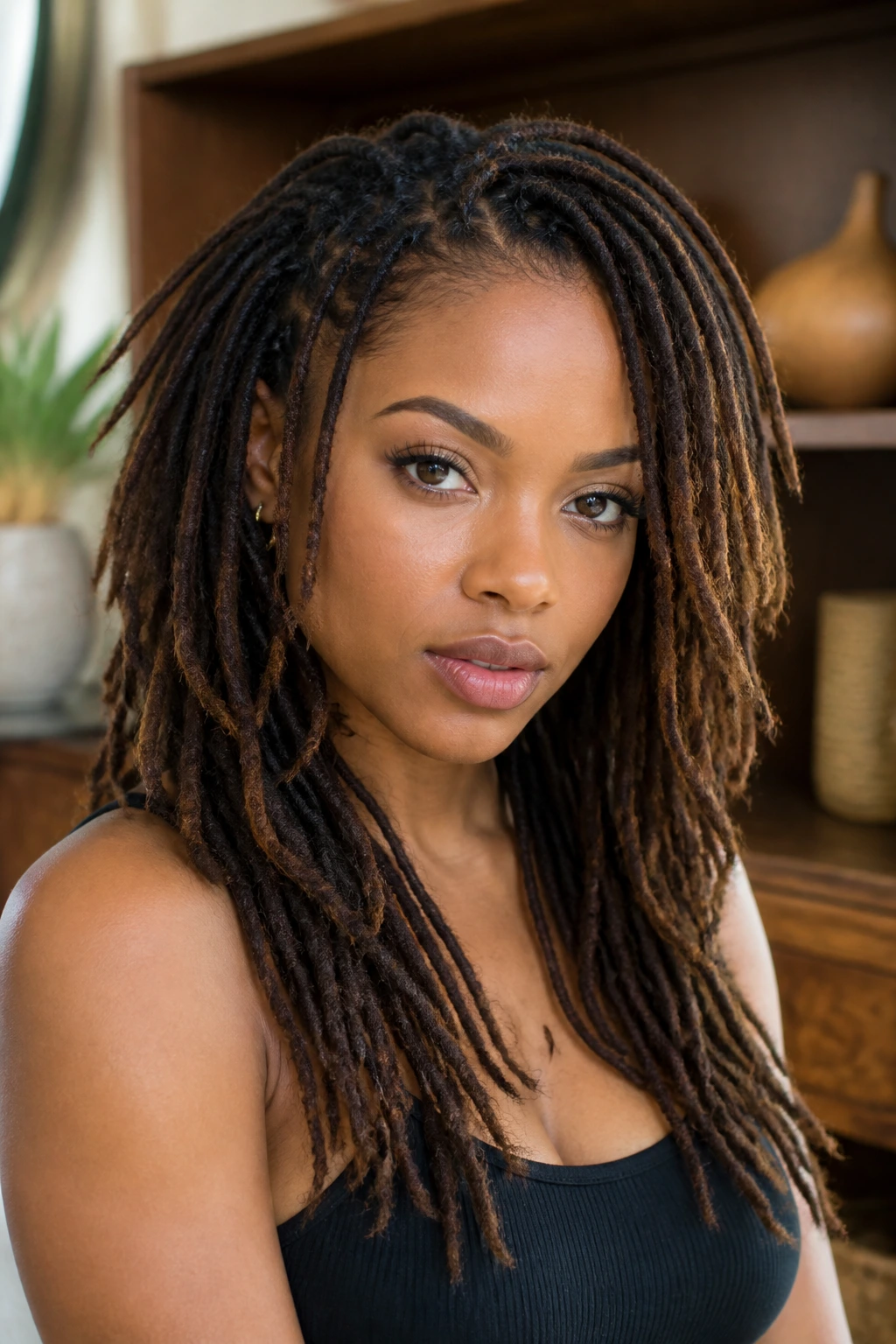
Unlike one blunt wall of hair, layers break the length into pieces that move at different speeds. That is why layered locs look so good. They keep long extensions from hanging like a curtain and make the silhouette feel more alive.
Layers also help when you add extension hair, because every strand does not need to land at the same point. If the shortest pieces stop around the collarbone and the longest ones fall near the waist, the style gets depth without looking choppy. A spread of about 4 inches between layers can change the whole shape.
I especially like layered locs on people who wear their hair down most of the time. The movement shows up every time they turn their head. And if the locs are thick, layers stop the style from feeling like a solid block.
There is a tradeoff, of course. Layers need cleaner upkeep at the ends, because the shorter pieces will fray first if the style is rough on them. Still, the payoff is worth it. Long locs with layers look lighter, even when the actual weight is nearly the same.
13. Crisscross Top Knot With Sleek Edges
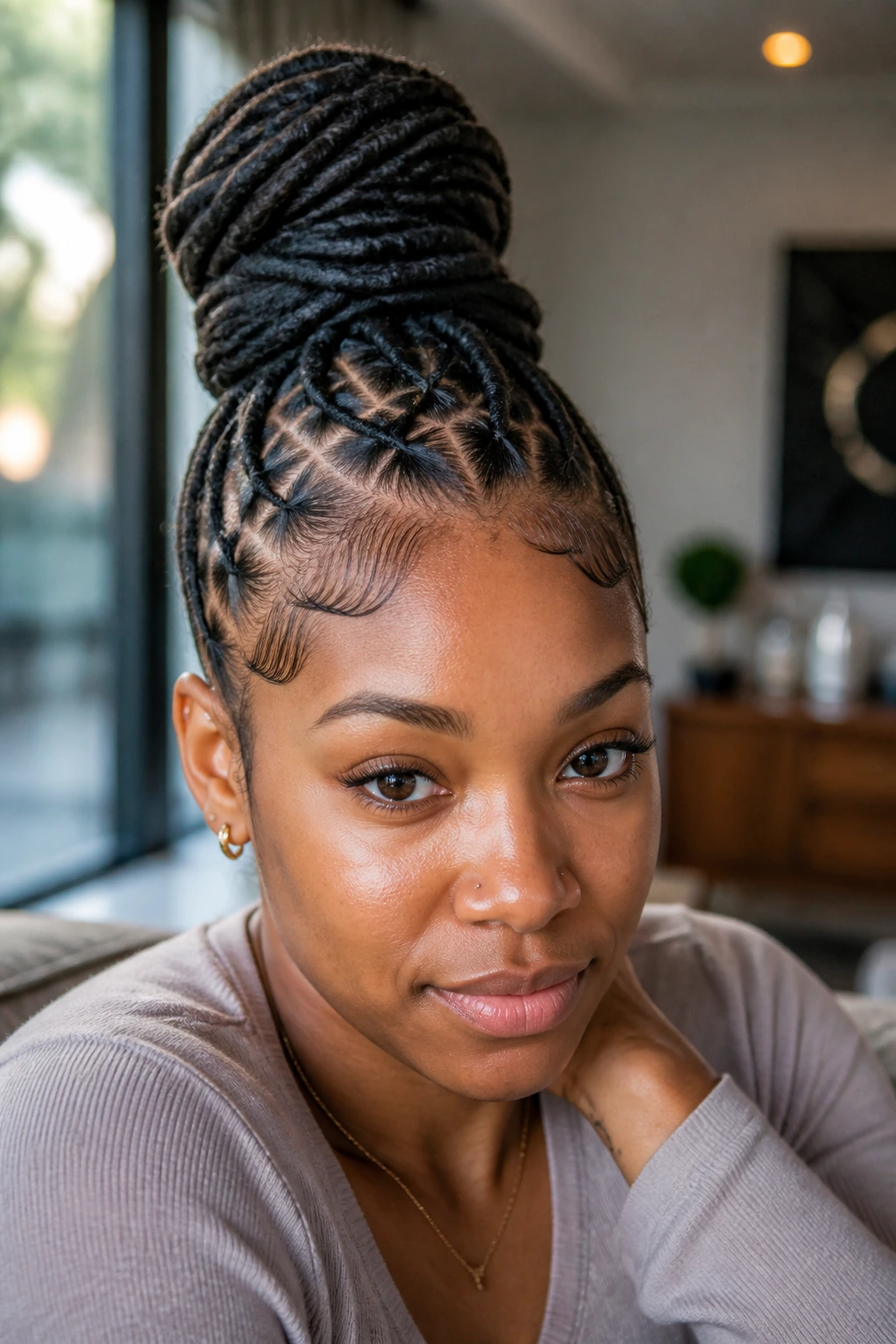
If the front locs are long enough to cross, pin, and hold, the style already has structure. That is the whole appeal of a crisscross top knot. The front sections create lines that lead into the bun, and the added length keeps those lines visible instead of disappearing into a tiny knot.
The look starts with a neat front section. From there, the locs are crossed over one another before they meet the bun or twist at the crown. The effect is sharp without being fussy. It gives the top of the head a bit of shape, which long locs sometimes need.
How to Map the Sections
The sections do not need to be tiny, but they do need to be even. Uneven crosses make the front look crowded. A clean grid keeps the style readable.
- Divide the front into 4 sections if the hair is dense.
- Cross each side toward the center before pinning.
- Place the knot about 1 to 2 inches above the crown.
- Keep the edges smooth with a light touch, not a hard shell of product.
I like this style when the length needs a little lift at the root. It keeps the locs from flattening out along the scalp and gives the whole style a clear point of focus. The rest can fall straight or be tucked, depending on the mood.
14. Barrel-Twisted Updo With a Soft Shape

Need an updo that does not look stiff? Barrel twists solve that problem well. They use the length of the locs to roll across the head in wide sections, which gives the style a soft shape instead of a locked-down finish.
The big advantage here is room. Barrel twists need space to show their curves, and long loc extensions give them that room. Shorter lengths can still work, but the twist does not have the same sweep.
A clean barrel twist should feel secure at the base and loose enough through the body to keep the roll visible. Too tight, and it loses the soft shape that makes it worth wearing. Too loose, and it starts to sag. Middle ground is the whole point.
This style is good for work, events, or any day when you want the neck open but do not want a tiny bun doing all the work. It sits somewhere between formal and relaxed, which makes it more useful than people expect.
15. Beaded Locs With Shells and Metal Accents
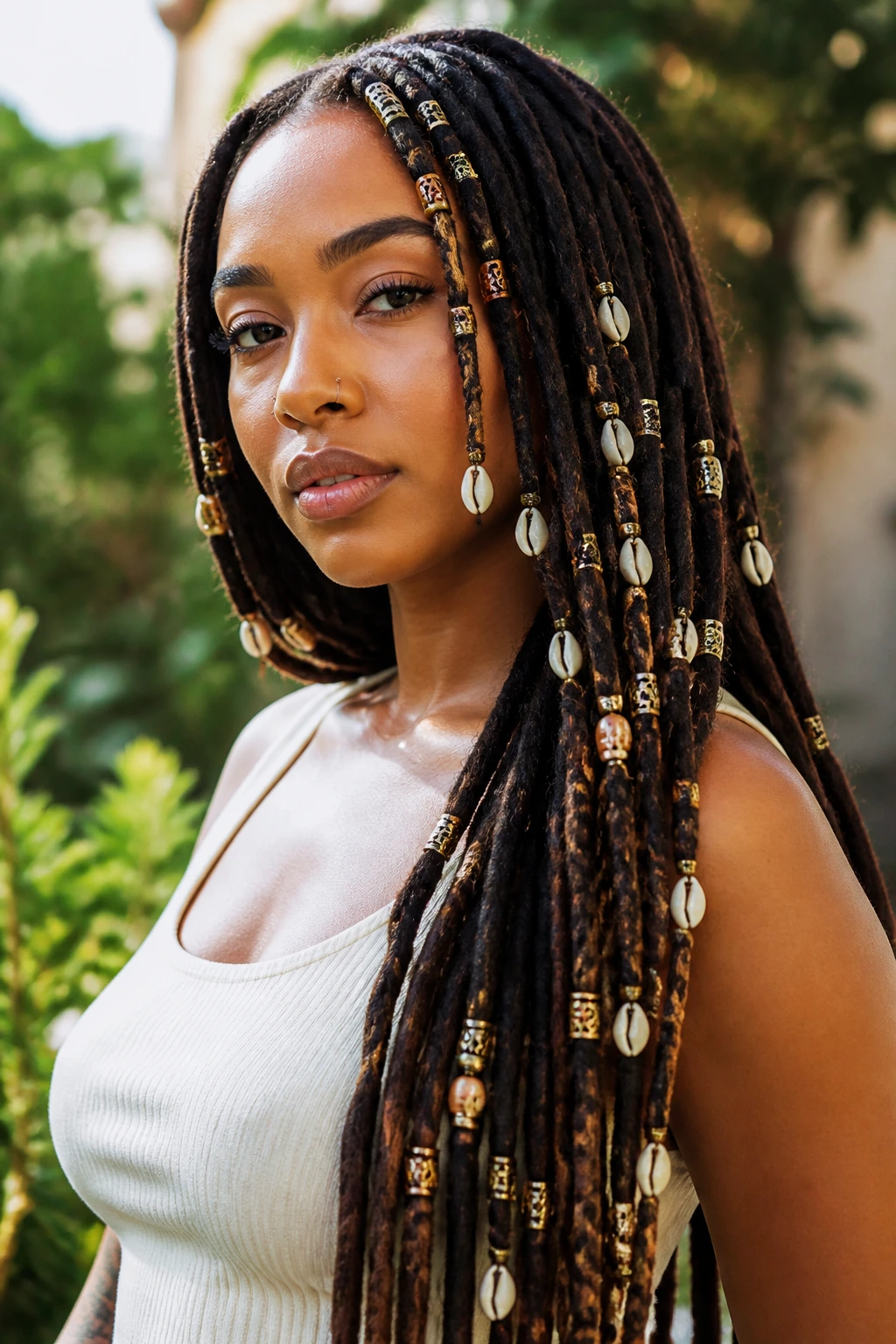
Accessories matter more when the locs are long, because they read along the whole strand. A few beads or cuffs on waist-length or chest-length locs can change the rhythm of the style without touching the base at all.
The main mistake people make is loading the hair with too many accents near the roots. That gets heavy fast. It also clutters the front of the style, which defeats the point. Better to place the details lower down where the length can carry them.
- Use one bead cluster for every 3 to 4 locs if you want a clean pattern.
- Put heavier shells or metal cuffs lower on the strand, not right at the scalp.
- Mix textures carefully — wood, metal, and shell look better when they are spaced apart.
- Choose bead holes that fit the loc without forcing it through.
I’m partial to accents that move a little when you walk. That tiny sound and motion keeps long locs from feeling static. It also lets the length show itself in pieces instead of all at once, which is a better look than a crowded one.
16. Headband-Wrapped Locs With a Scarf Finish
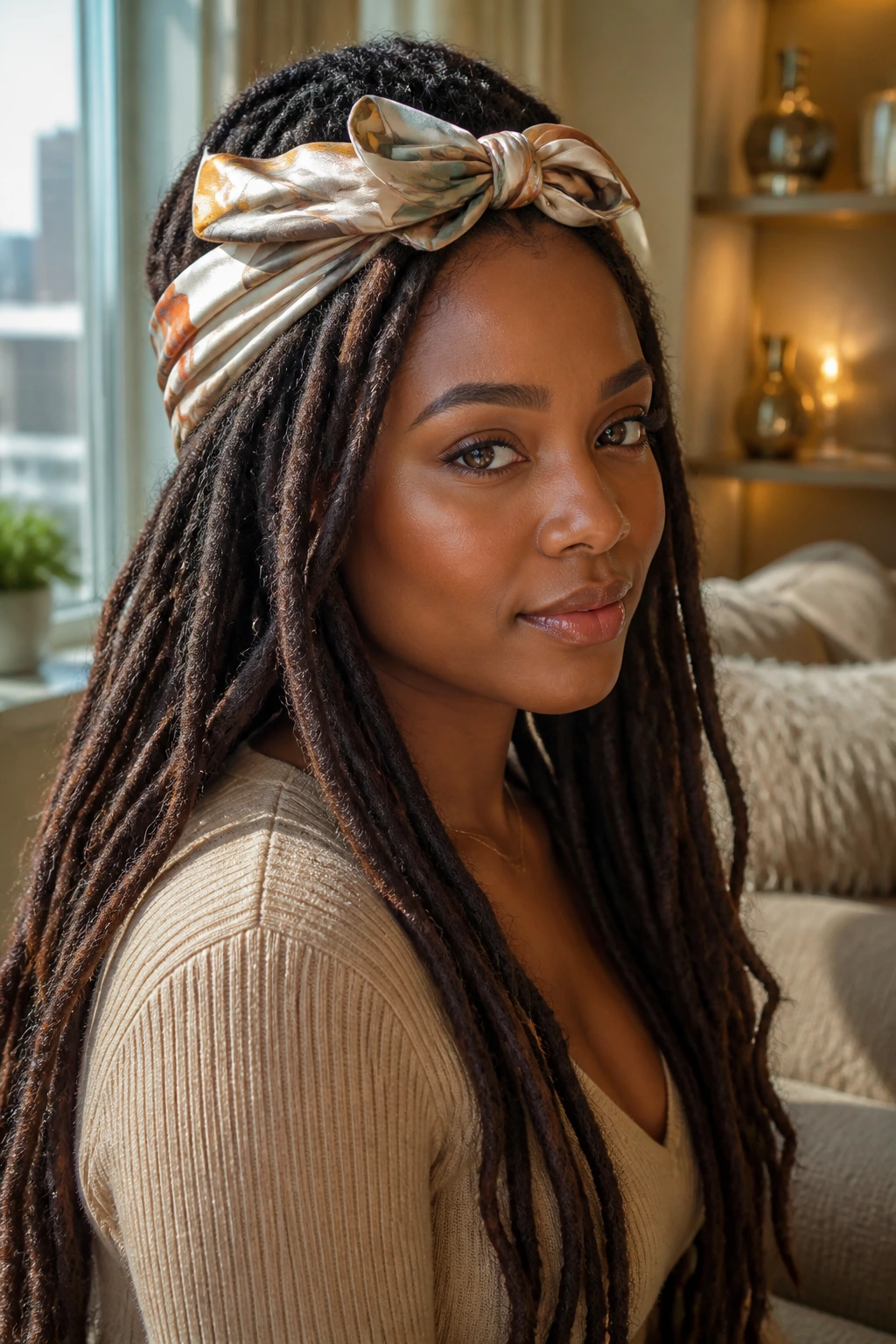
Unlike styles that ask for perfect sectioning, this one lets fabric do half the framing. A headband-wrapped look uses a scarf, band, or wrap to shape the front while the long locs fall loose or get tucked lightly at the sides.
It is one of the easiest ways to reset a set of loc extensions without redoing the whole style. The wrap hides the roots, smooths the hairline, and gives the length a clean starting point. That can save a tired style on days when the roots need a break.
Choosing the Right Fabric
I like satin or silk at the hairline because it slides instead of snagging. A knit or cotton scarf can work as the visible outer layer, but the part touching the scalp should be smooth if you want the style to stay comfortable.
A few details make a difference:
- Place the wrap about 1 inch behind the hairline so it does not crowd the edges.
- Keep the knot off-center if you want the length to fall more naturally.
- Use a wide band for thicker locs and a thinner tie for sleeker installs.
- Tuck stray ends of the scarf under the band so they do not poke out.
This style is one of my favorites for long locs because it solves more than one problem at once. It looks styled, it protects the front, and it gives the extensions a neat frame without stealing the show.
17. Tucked French Roll Loc Style With a Smooth Back
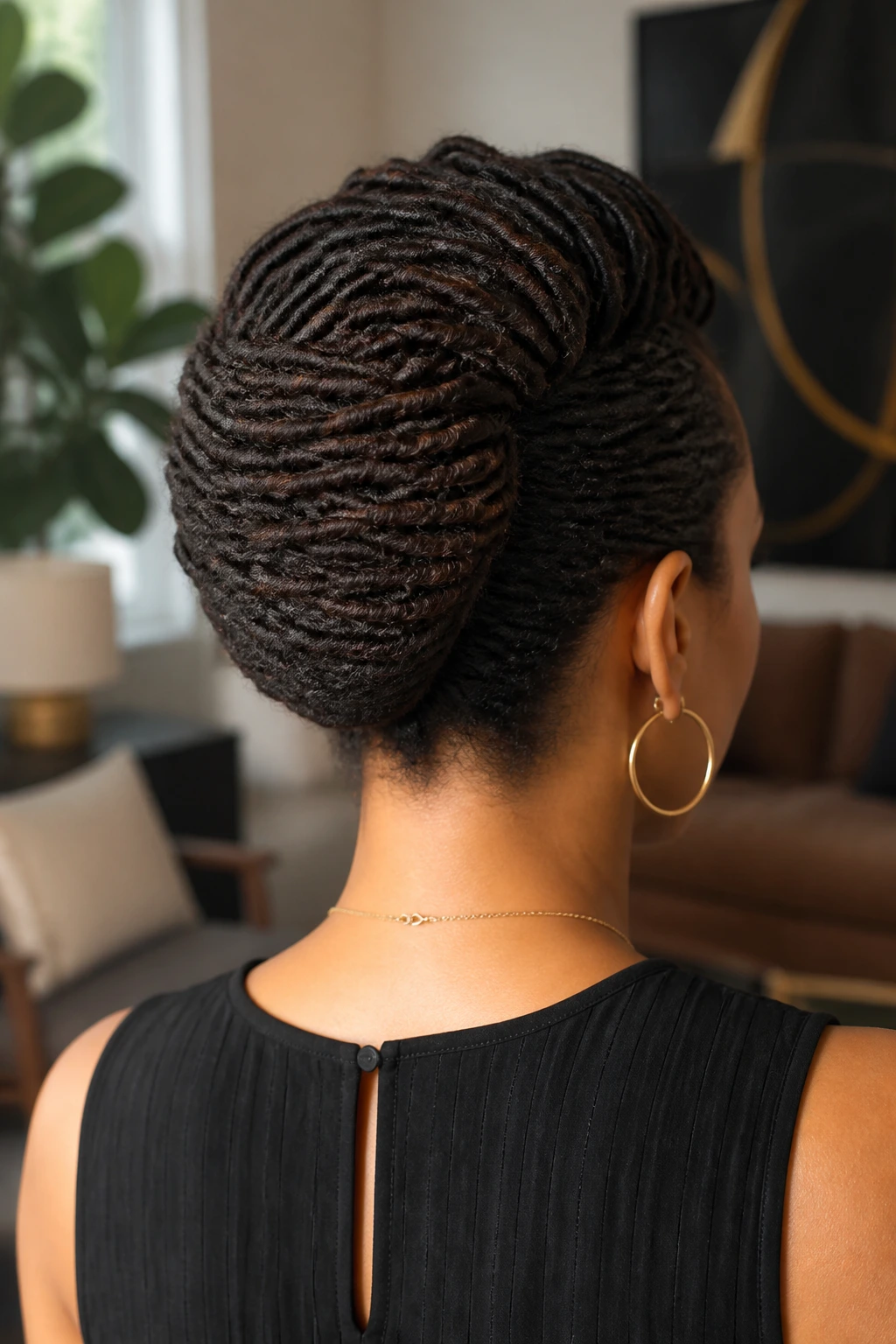
A French roll is the style that makes long loc extensions behave. It pulls the length upward, tucks the ends inside, and gives the back a smooth line that feels tidy without looking severe.
The roll works best when the locs are long enough to fold neatly from shoulder blade length down. If the hair is too short, the tuck starts to fight the shape. If it is long enough, the roll gets a clean seam and the whole style sits close to the head.
The best version leaves a little softness at the top. A roll that is too tight can look flat and hard, which is not the point here. A tiny bit of volume at the crown keeps the shape human.
This is the style I’d reach for when the length needs to feel controlled. Not hidden. Controlled. It shows off the size of the install by making it part of the structure, not the problem to solve. And that, honestly, is what good loc styling does best: it gives the hair a reason to be long.
