



Fine locs can look flatter than you want when they hang straight down. They do not have to.
The whole trick is shape. A style that lifts the crown, bends the line of the hair, or leaves a little movement around the face can make fine loc hairstyles read fuller without pretending the hair is something it isn’t. I care a lot less about fake bulk and a lot more about silhouette. That’s where the magic lives.
A clean center part can be ruthless on smaller locs. So can a low ponytail pulled too tight, or a bun that sits like a golf ball at the back of the head with every strand smoothed into one flat sheet. The better styles break up that long line. They give the eye places to pause.
Small tools help, too. Snag-free elastics, matte bobby pins, a light mousse, and a steady hand do more than a jar of heavy gel ever will. Fine locs usually look best when they’re supported, not drowned.
1. High Crown Bun with Face-Framing Locs
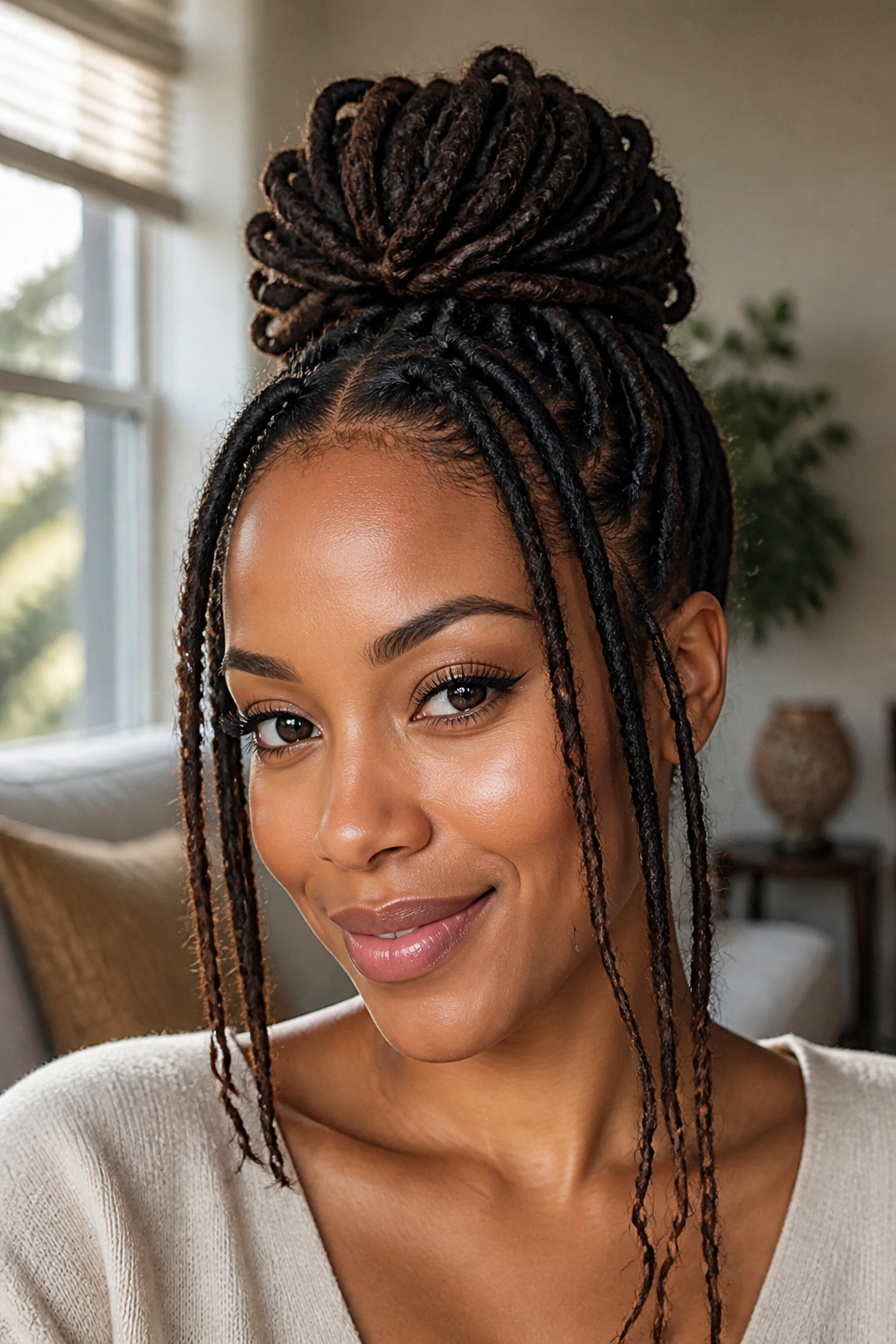
A high crown bun is one of the fastest ways to make fine locs look thicker than they are. The height pulls the eye upward, and the loose locs around the cheeks stop the style from shrinking into one neat little knot.
Why the crown matters
A bun placed near the top of the head gives you vertical lift right away. That matters more with small locs than people think, because the upper part of the style can carry the whole look. If the bun sits too low, the style can read narrow. If it sits high and a little loose, it feels larger and softer.
Leave 2 to 4 locs free near the temples. That small detail changes everything. Those pieces create movement, and movement makes hair look fuller.
- Best on medium-length locs
- Use 2 or 3 pins tucked under the bun
- Wrap one loc around the base to hide the elastic
- Leave the front edges soft, not slicked to the scalp
Keep the bun slightly loose at the top. If you flatten every inch down, you lose the lift that makes the style work.
2. Half-Up, Half-Down with Lift at the Crown

A half-up, half-down style is the easiest cheat code for fine locs. It gives you two zones of interest instead of one, and that split alone makes the hair read denser.
The top half acts like a frame. The bottom half keeps length and movement. Put those together and the style looks fuller than a simple ponytail ever will, because the eye is too busy taking in shape to notice every single strand. If your roots are freshly retwisted, this looks crisp. If they’re a little fuzzy, that texture adds body rather than taking it away.
I like the top section placed 1 to 2 inches above the occipital bone so it has real lift. Then I loosen the crown with my fingers, not a comb. A comb can make the top too neat and a little severe.
One small tug at the crown. That’s enough.
3. Side-Swept Loc Ponytail

Why does a side-swept ponytail look denser than one pulled straight back? Because the hair stops behaving like a flat line and starts acting like a shape.
How to wear it
Sweep the locs to one side and secure them just behind the ear or slightly below it. That offset creates width across the face and makes the ponytail look longer and thicker at the same time. If your locs are fine, that little asymmetry helps a lot. A center pony can expose too much scalp. A side sweep softens the whole picture.
Keep a few front locs loose if your face shape likes softness around the jaw. If you want a sharper look, pin the front section back on the heavy side and let the ponytail fall over one shoulder. Either way, the style gains volume because it has direction.
A side-swept ponytail is also a good choice on days when your roots are not cooperating. Strange as it sounds, a little texture at the root line makes the sweep look more natural.
4. Barrel Twists Along the Hairline
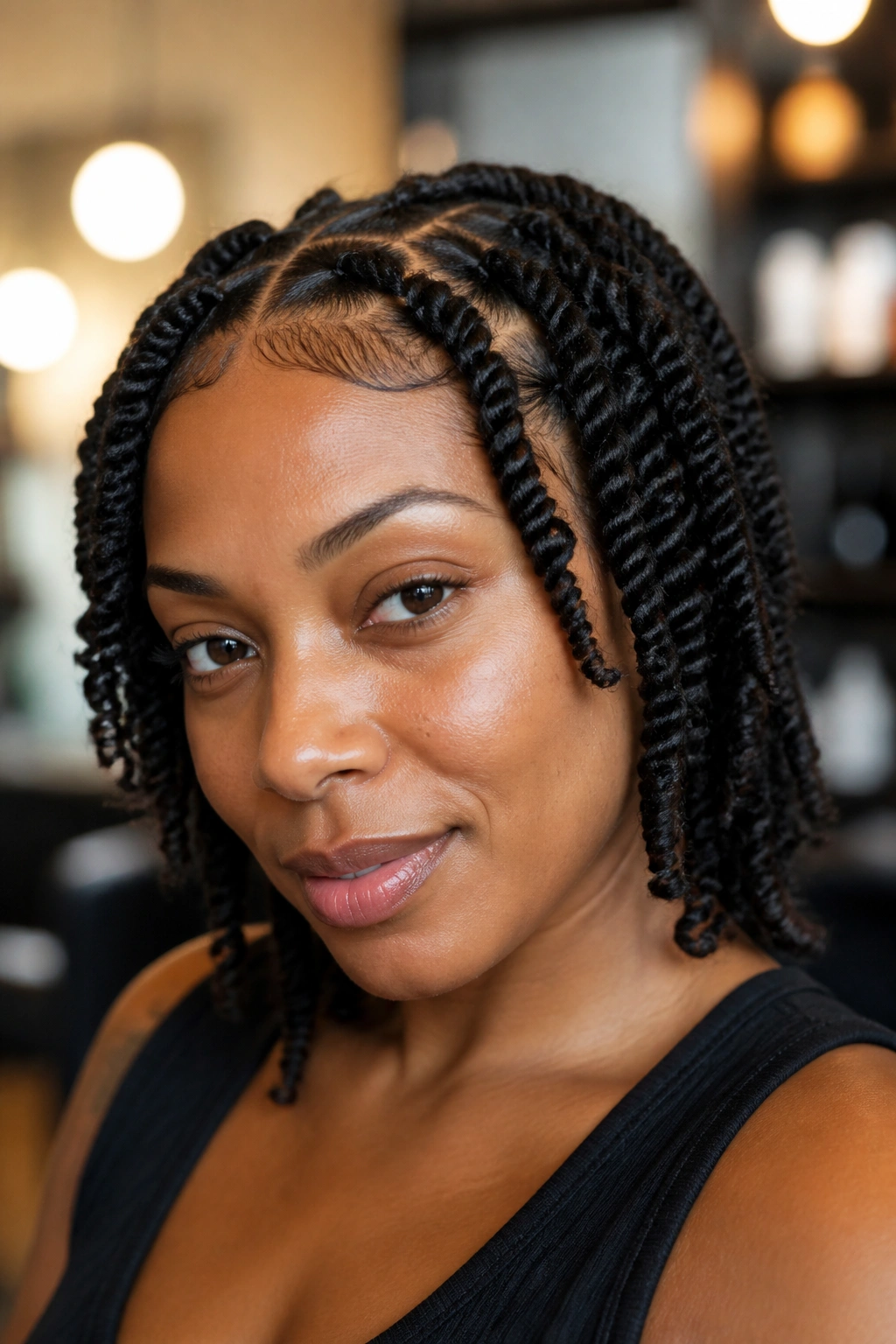
If your hairline tends to look sparse, barrel twists at the front are a smart move. They build a thick-looking border without forcing the rest of the locs into a stiff style.
The first thing you notice is the framing. Barrel twists curve along the hairline and temples, which gives the front of the style more visual weight. That matters for fine locs because the edge of the style is often where fullness disappears first. A good barrel twist pattern fixes that by making the front look layered.
What to keep in mind
- Start with lightly stretched locs or dry locs
- Use small clips while you twist so the pattern stays clean
- Keep the twists close to the scalp, but not tight
- Finish the ends into a bun, ponytail, or tucked roll
The best part is that the style does not need to be huge to read full. A few thick-looking twists near the front do most of the work. Everything else can stay quiet.
5. Rope-Twist Low Ponytail
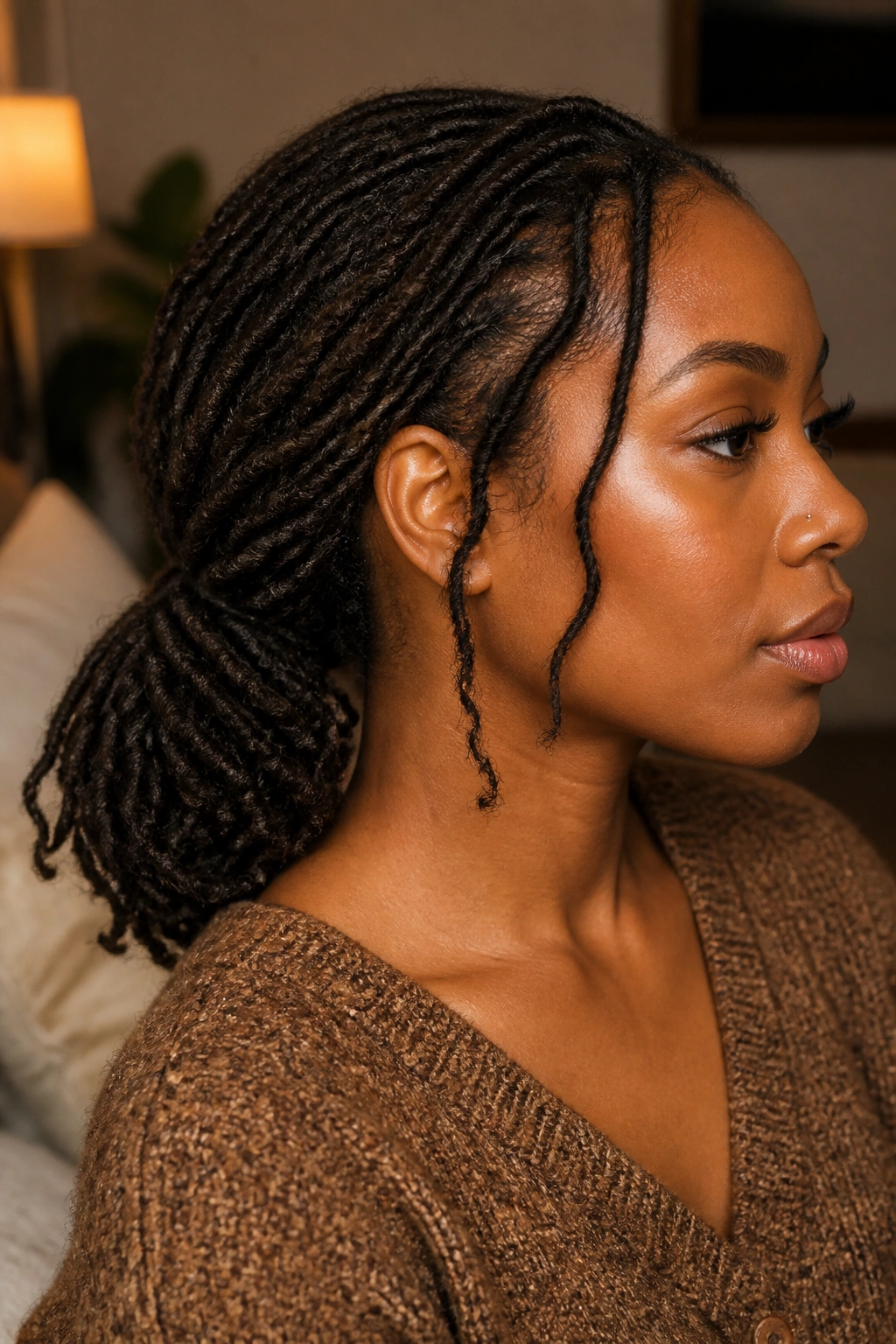
A rope-twist low ponytail is one of those styles that looks more involved than it is. That is exactly why it works so well for fine locs. The twist adds texture, and texture is the quickest way to fake density.
Instead of tying the ponytail and leaving it alone, split the gathered hair into two sections and twist them around each other until the rope feels firm. Then let the twisted length drop over one shoulder or coil it into a low curve at the nape. The twist itself becomes the volume. You are not relying on a big pile of locs; you are creating shape with the structure of the style.
I like this one when the ends are a little frizzy, because the texture actually helps the rope look thicker. If the locs are very smooth, a light mist of mousse at the length can give the rope more grip. Do not soak it. Fine locs can collapse if they get too wet or too slick.
Simple style. Strong shape.
6. Double Space Buns
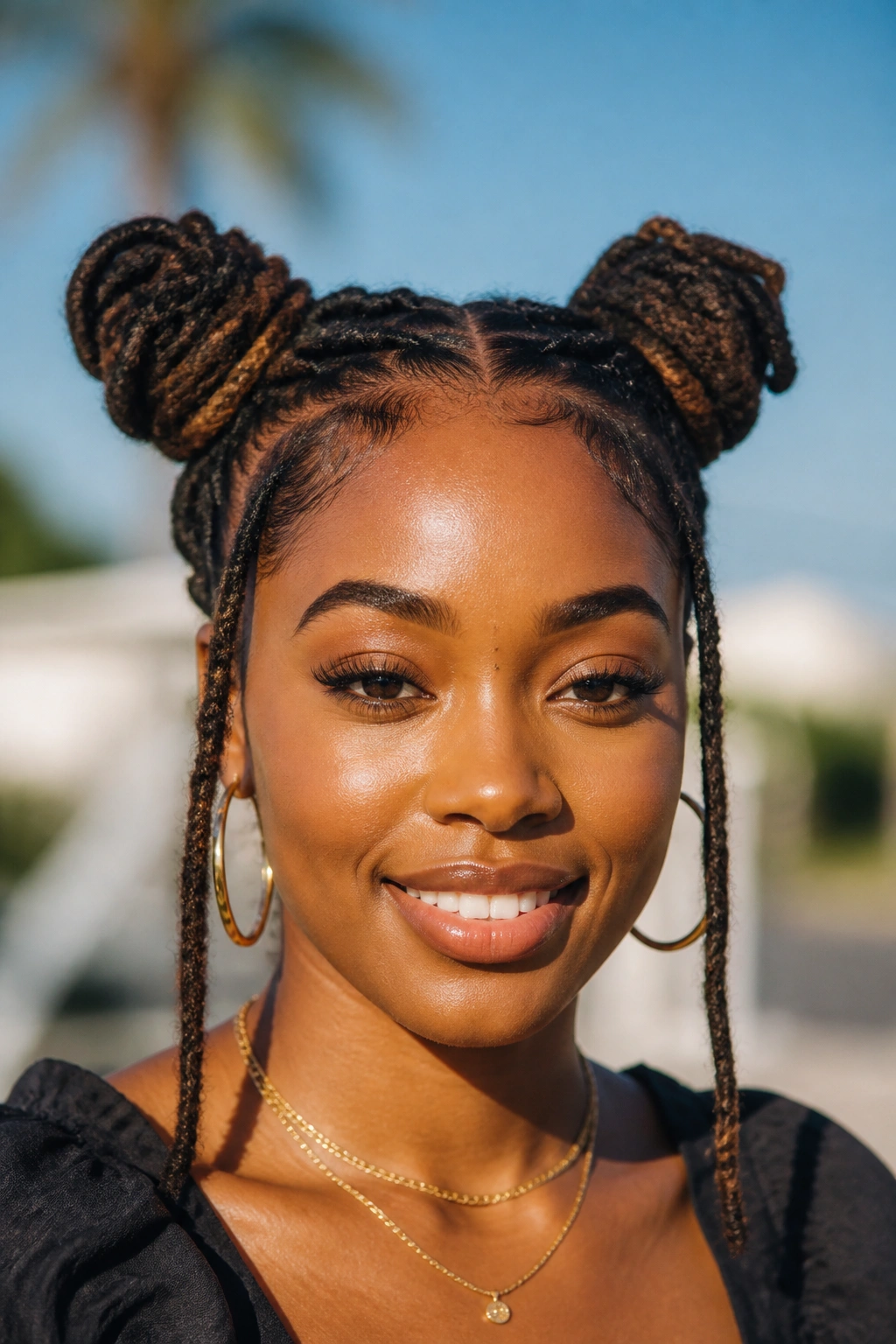
Two buns do more for thin locs than one oversized bun because they split the eye line. A single bun can look tiny if the locs are fine. Two buns make the head read wider and more playful.
This style is best when you want fullness without pretending to be formal about it. Space buns work on casual days, travel days, and any day when you want your locs to feel fun instead of heavy. Place the buns a little above ear level so they do not sink into the head. If they sit too low, the style loses its lift.
Leave a few locs free near the nape or around the temples if you want the style to soften a bit. I would not make the buns mirror-perfect. Slightly uneven buns often look more alive and a little bigger. Perfect symmetry can make fine locs look smaller than they really are.
This is a good style for shorter locs, too. You do not need a mountain of hair to make it work.
7. Faux Hawk with Pinned Sides

A faux hawk is one of my favorite fine loc hairstyles that look full because it forces the hair to stand in a strong line down the center of the head. That line creates height fast.
What makes it different
The sides get pinned back tight enough to stay put, but not so tight that the style goes flat and lifeless. The center section stays loose, fluffed, and a little taller than you think it should be. That contrast is the whole point. If the sides are smooth and the middle has lift, the style looks fuller from every angle.
- Pin the sides in small sections, not one huge lump
- Keep the center strip slightly puffed at the roots
- Use 4 to 8 bobby pins, depending on length
- Finish with a light spray, not a heavy coating
The faux hawk works especially well when your locs are finer at the temples. It turns a spot that might otherwise disappear into the style into part of the design. That’s smart styling, not camouflage.
8. Wrapped Low Chignon
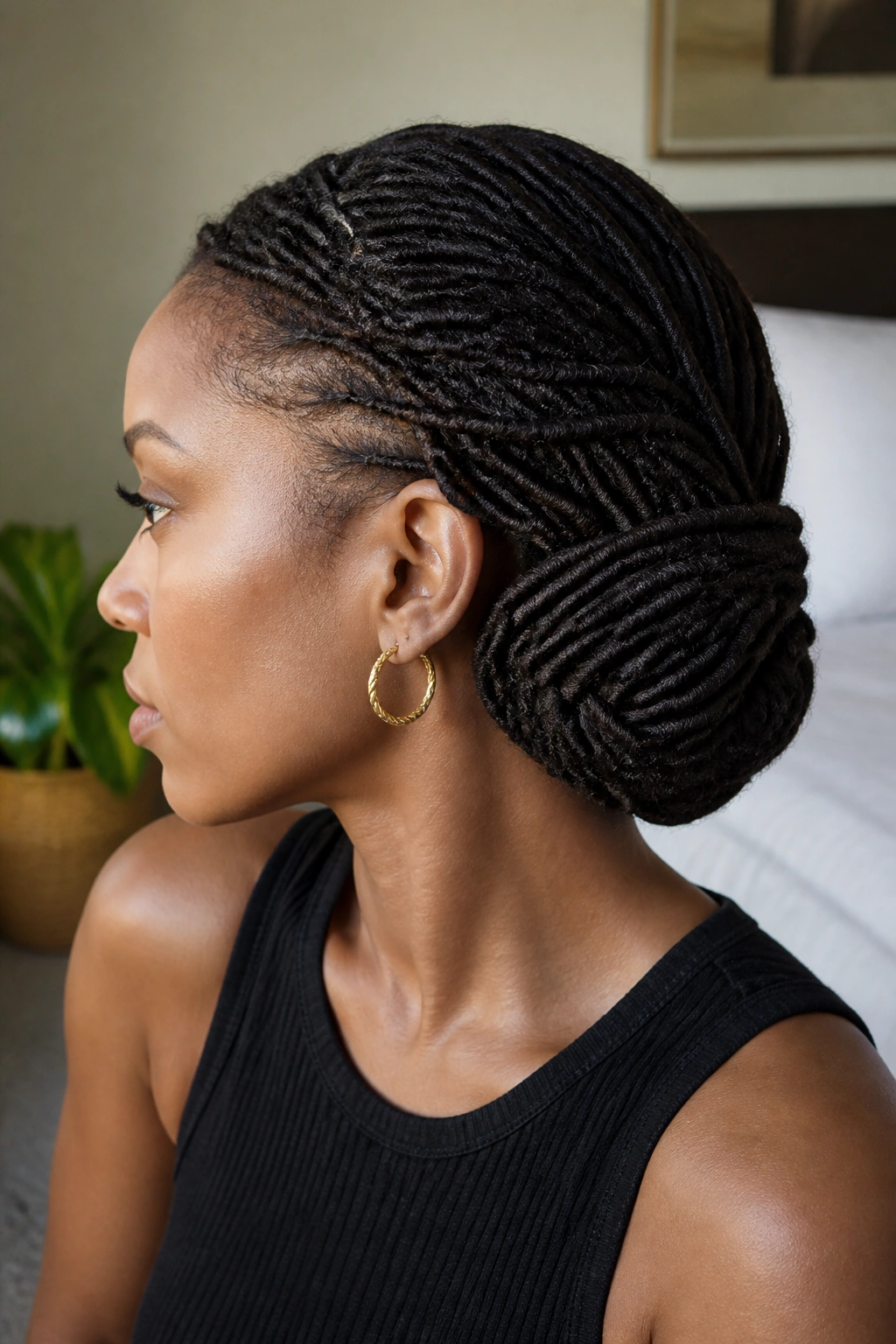
A wrapped low chignon looks dense because it folds the locs back over themselves. The eye sees layers, and layers always feel fuller than a straight hanging line.
This style sits close to the nape and gathers the ends inward, which is useful if your locs are fine and tend to look wispy at the bottom. The wrapping action hides the narrow bits. It also gives the bun a cleaner edge, which I like on days when you want polish without a stiff finish.
I usually prefer a slightly off-center chignon for finer locs. Dead-center can feel too small. A chignon placed a touch to one side looks more intentional and less compact. Use matte pins if you can. Shiny pins show up fast and can make the style look messy in a weird way.
Plain? Sure. Boring? Not even close.
9. Curled Ends Loc Style

Why do curled ends make fine locs look fuller? Because curls take up space. Straight ends drop in a narrow line, while curled ends spread out and catch the eye.
How to use it
Set the last 3 to 4 inches of the locs on perm rods, flexi rods, or another gentle setting tool. Let them dry all the way before taking the rods out. If the ends are even a little damp, they fall flat and the whole style loses that lifted finish.
You can wear the curls loose, pin part of the hair up, or tuck the front back and let the ends do the talking. I like this best on shoulder-length locs and longer lengths because the shape is easy to see. Shorter locs can still work with rod-set ends, but the curl pattern needs enough length to show.
Do not brush the curl out too much. A little separation is good. Too much and the ends turn fuzzy in a tired way.
10. Criss-Cross Crown Updo

A criss-cross crown updo is one of those styles that looks far fuller than the amount of hair suggests. The crossing pattern creates built-in texture, and texture is what fine locs need most.
Picture the front sections looping over one another instead of sitting flat against the scalp. That overlap creates a wider crown and makes the style feel richer. It also pulls attention away from the idea of strand count, which is the whole game with smaller locs.
Key details to get right
- Cross the front sections in small, even pieces
- Pin each overlap as soon as it sits where you want it
- Keep the back tucked low so the crown stays the star
- Finish with a few face-framing locs if the style feels too severe
The style works best when the crossing pattern is visible. If you smooth it so much that the detail disappears, you lose the benefit. Let the pattern show. That is what gives it body.
11. Deep Side Part with Volume at the Top
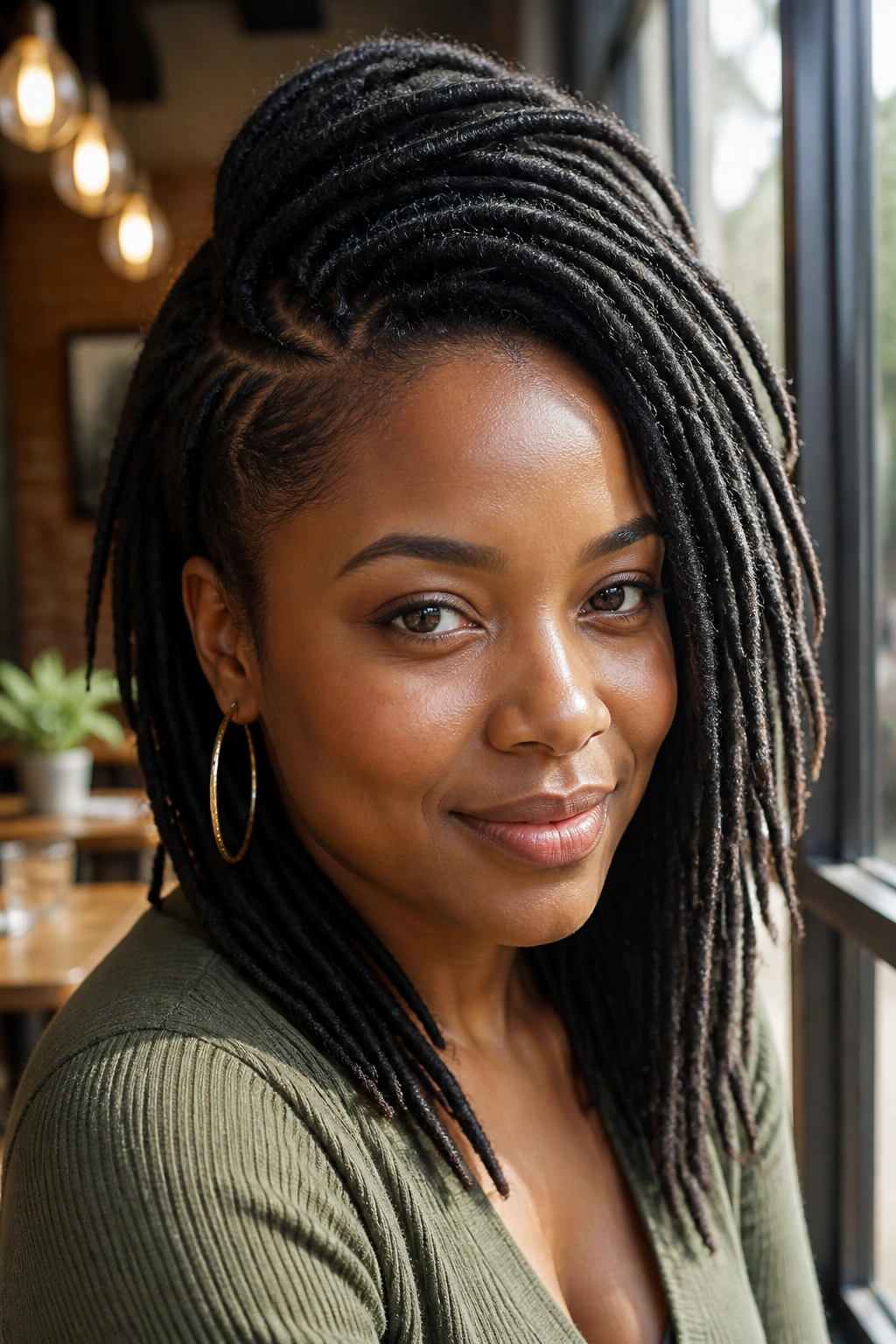
A deep side part does more for fine locs than most people expect. It shifts the weight of the style to one side and gives the crown a little lift, which makes the whole head of locs look thicker.
The real reason it works is simple: a side part breaks up the scalp line. A center part can draw a straight path through thinner locs and make them feel narrower. A deep part, though, turns the style into two uneven masses, and that unevenness reads as fullness. It also gives you a natural place to tuck or pin one side without flattening the whole head.
I like to keep the part clean but not razor-sharp. A soft line has a little more life to it. Too crisp, and the style can feel severe. If the roots are a touch fuzzy, even better. That soft fuzz helps the part settle without looking bare.
This is one of those styles that looks effortless only after you pay attention to the details.
12. Braided Loc Bun with Tucked Ends
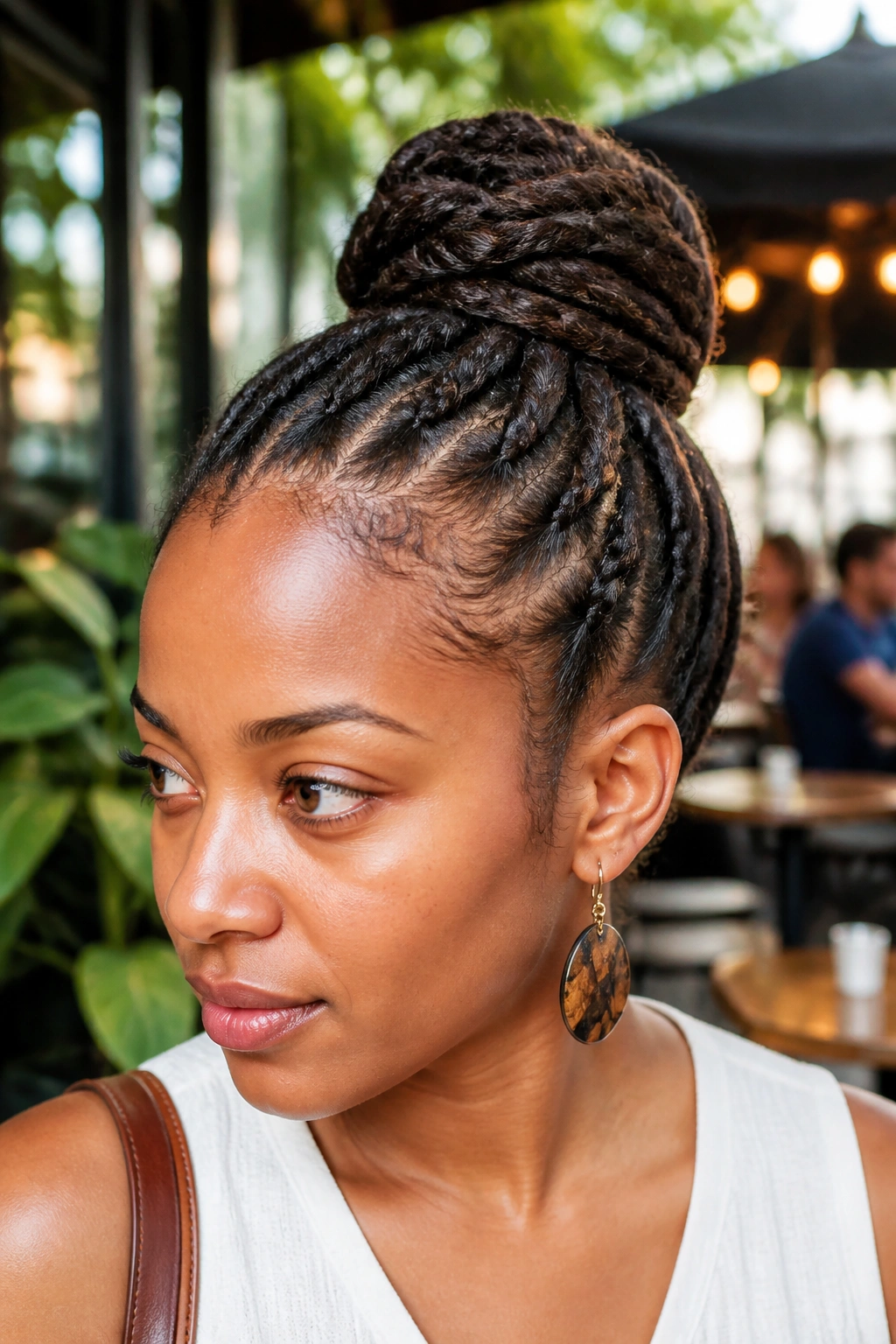
A braided loc bun beats a plain bun when you want fine locs to look thicker, because the braid gives the gathered hair more texture before it becomes the bun. That one extra layer changes the whole silhouette.
Instead of coiling loose locs straight into a knot, braid the tail first, then wrap the braid into a bun or tuck it into itself. The braid creates a rope-like body that makes the bun feel bigger. It also helps the style stay put longer, which is useful if your locs are fine and tend to slip out of simpler updos.
This style suits medium-length locs especially well. Very short locs may not braid neatly, and very long locs can make the bun heavier than you want. If you have long locs, split the tail into two braids and wrap them together. That keeps the bun from sagging.
I reach for this one when I want a clean look that still has some heft. It does the job without shouting.
13. Halo Braid Over Loose Locs
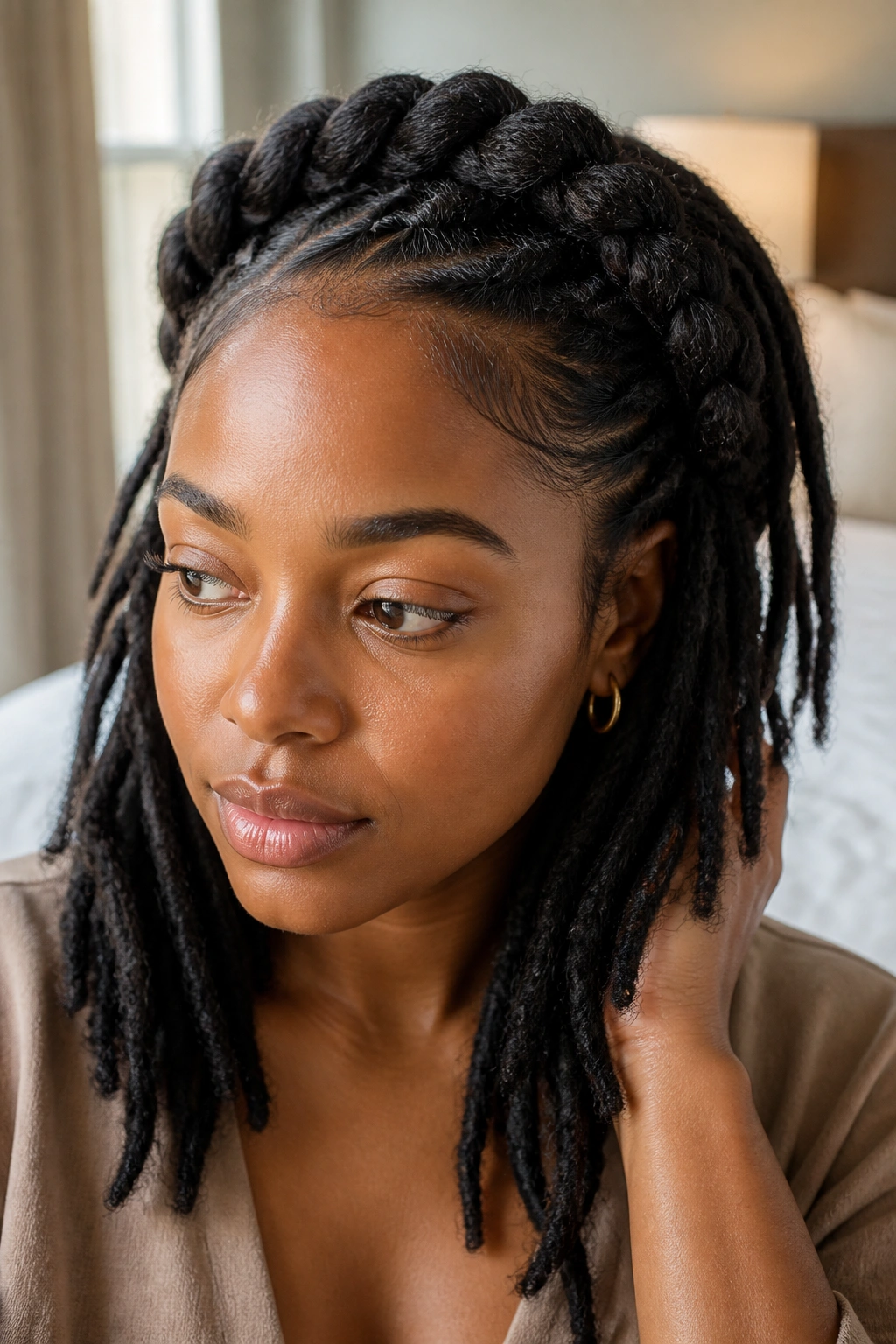
A halo braid gives fine locs a thick-looking frame right at the hairline, and that matters. A full-looking frame makes the rest of the hair seem denser by comparison.
Where the fullness shows up
The braid sits close to the scalp and circles the head like a crown, while the rest of the locs stay loose underneath. That split does something clever: it makes the front look structured and the back look abundant. Even if the locs themselves are fine, the braid claims enough visual space that the style feels larger.
- Braid 2 to 3 inches back from the hairline
- Keep the loose locs underneath soft and separated
- Pin the braid under the ears so the shape stays clean
- Add one or two cuffs if you want the frame to stand out
The halo braid works nicely when you want protection and polish at the same time. It keeps the front secure and gives the loose length room to move. I like that it feels calm, not overworked.
14. Loose Flat-Twist Crown into a Bun
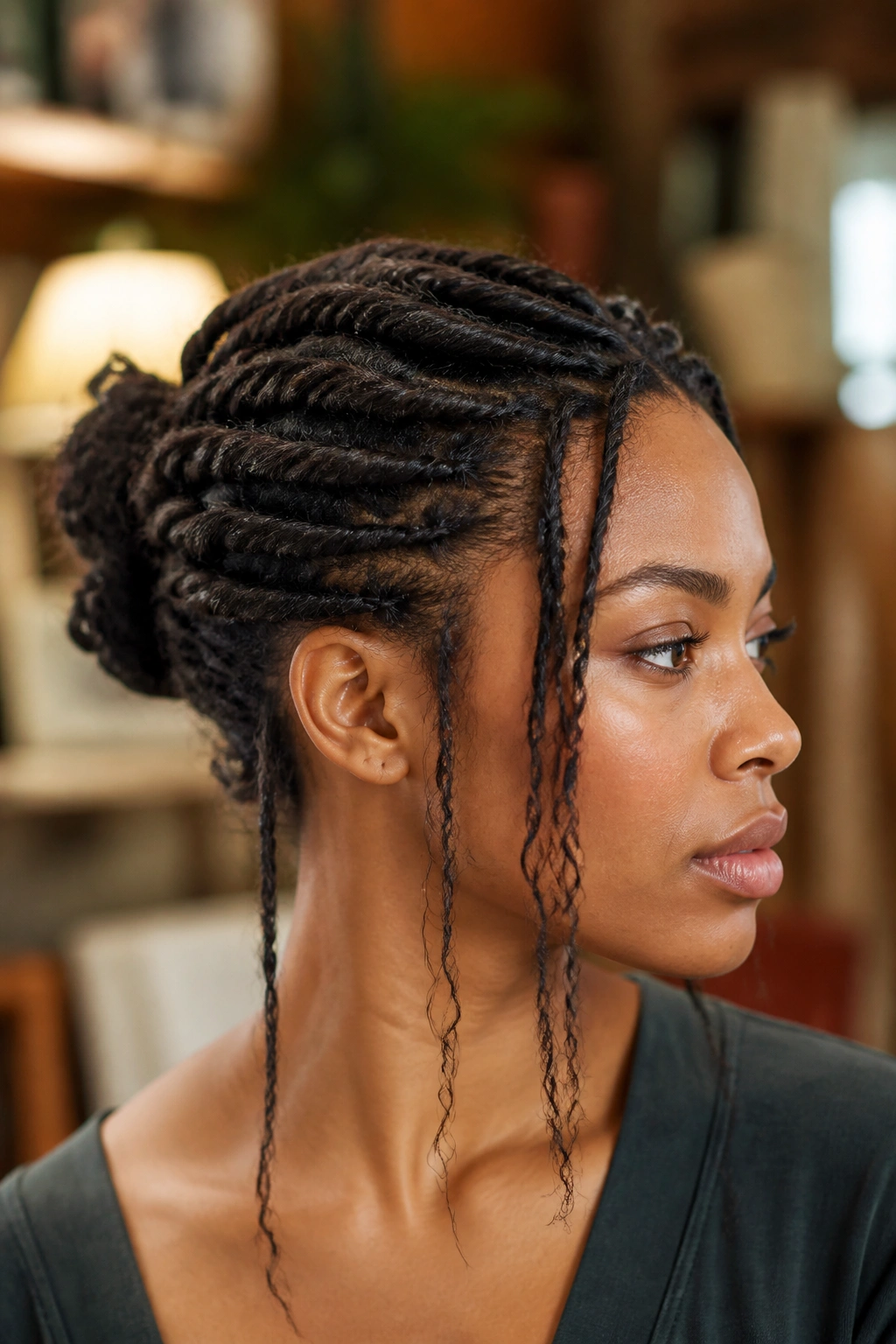
A loose flat-twist crown gives fine locs a thicker front than slicking everything straight back. That front texture is the point. It creates a soft ridge that looks fuller than a bare scalp line.
Start the twists at the temples and work them back toward the crown. Keep them neat enough to hold, but not so tight that the style goes stiff. Once the twists meet near the back, tuck the ends into a bun. The bun can be small. The crown is doing the heavy lifting here.
This style is one of the better choices for days when your locs have a little frizz and you’re tempted to fight it. Don’t. That texture helps the twists look richer. Freshly twisted roots can work too, but a tiny bit of softness keeps the style from looking too hard around the face.
It’s a good mix of tidy and full. That’s rare.
15. Bubble Ponytail
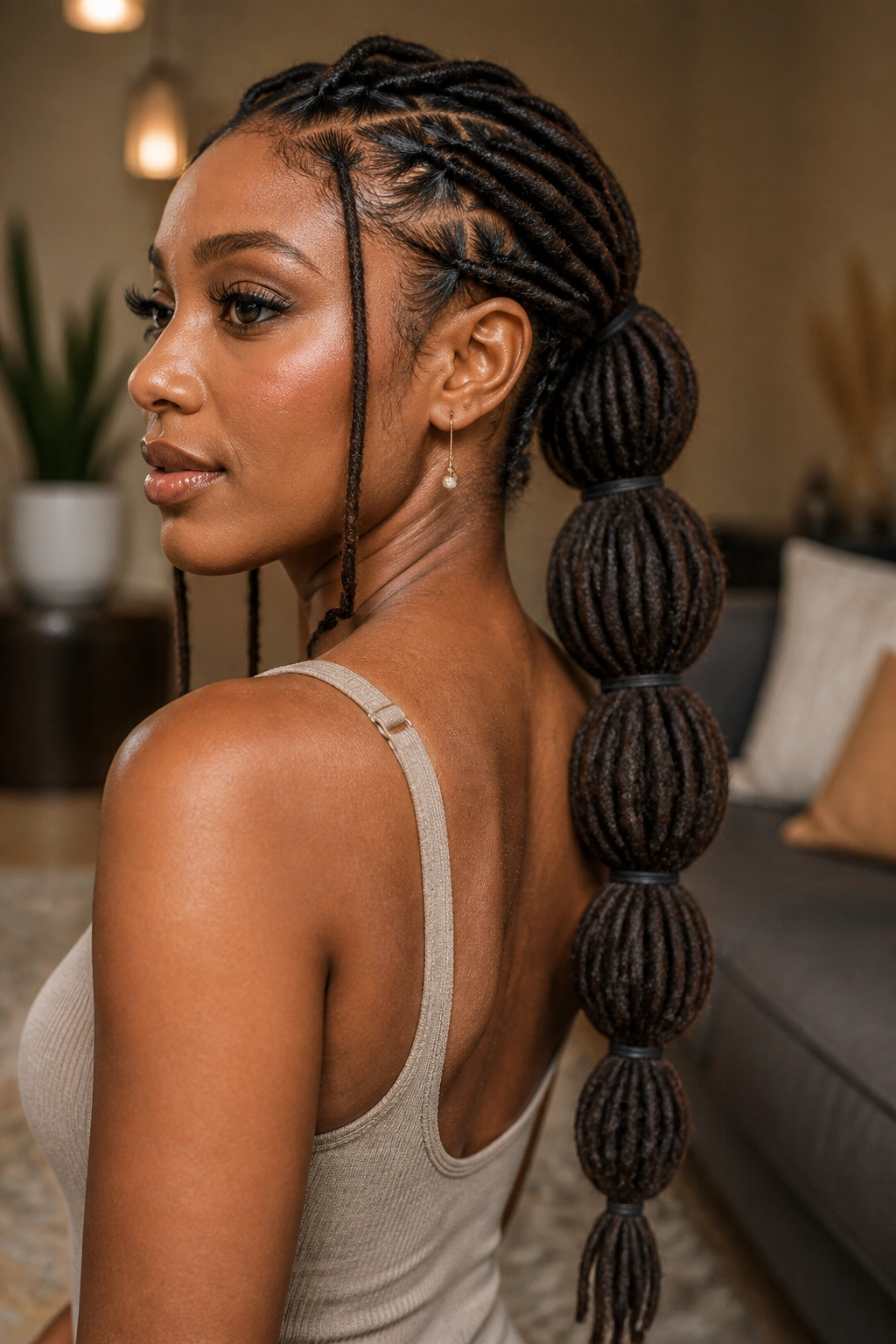
A bubble ponytail makes fine locs look fuller because it breaks one long narrow pony into a chain of rounded sections. Each bubble adds width.
How to get the bubbles
Tie the ponytail low or mid-height with a snag-free elastic, then place another elastic every 2 to 3 inches down the length. Gently pull each section apart with your fingers until it rounds out. Don’t yank. You want plump bubbles, not stretched loops that look stressed.
- Start with a smooth but not glassy crown
- Use clear or matte elastics
- Keep each bubble about the same size
- Fluff from the middle of the section, not the ends
I like bubble ponytails on fine locs because they turn length into structure. Instead of one thin line, you get several fuller shapes in a row. That creates the illusion of more hair without adding anything fake. It also wears well with cuffs on two or three bubbles if you want a little shine.
16. Layered Top Knot with a Few Left Out
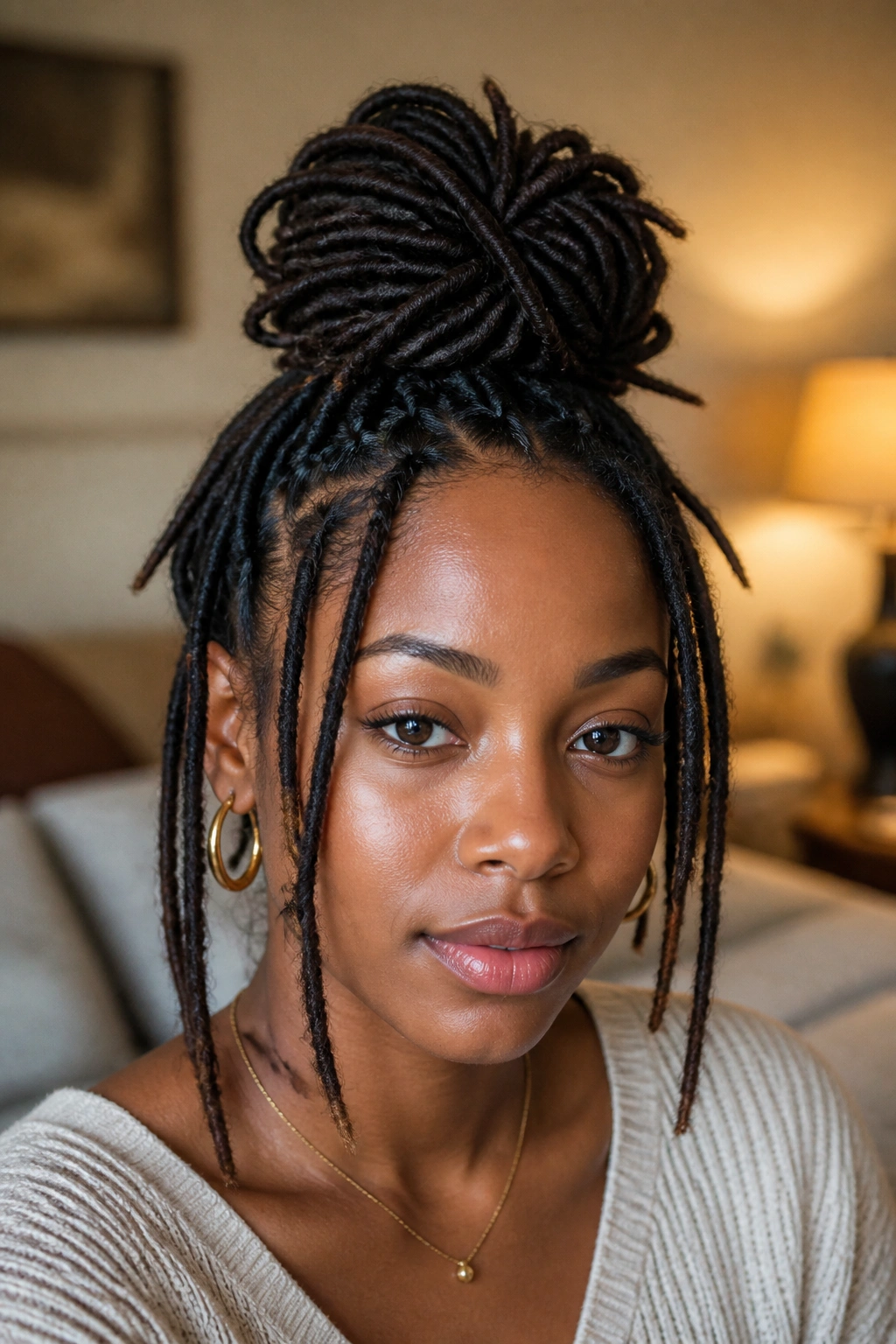
If one top knot looks too small, layer it. That is the whole idea here, and it works much better than trying to force more hair into a single tight knot.
Think of the style as two parts: a compact knot at the crown and a few locs left out around the sides or nape to give the silhouette more width. Those loose locs stop the top knot from looking like a tiny knob at the top of the head. They also make the style feel softer and less severe.
Key details
- Place the knot at the crown, not the very top edge
- Leave 2 locs per side loose if the face needs softness
- Pin the knot from below so the base stays hidden
- Let a few ends stick out on purpose
This style is good when you want your locs to look styled without looking pinned to death. That polished-but-not-frozen effect is hard to get with fine hair. A layered knot does it with almost no drama.
17. Asymmetrical Side Bun

An asymmetrical side bun is a quiet bully: it makes fine locs look fuller because all the volume gets pushed into one corner of the head.
Instead of centering the bun, place it above one ear or just behind the jawline on one side. That off-balance placement makes the style read larger, because the eye sees a bigger mass in one area instead of one small lump sitting in the middle. It also gives the face a strong line, which helps when the locs are fine and need a little visual help.
I prefer this style with a few locs left loose around the front. A single loose loc near the cheek can make the whole thing look softer. If you want a cleaner finish, tuck the front back and let the bun stay the hero.
One caveat: do not pin the bun so flat that it loses its shape. The side bun needs a little lift to earn its job.
18. Rolled Updo with Hair Jewelry
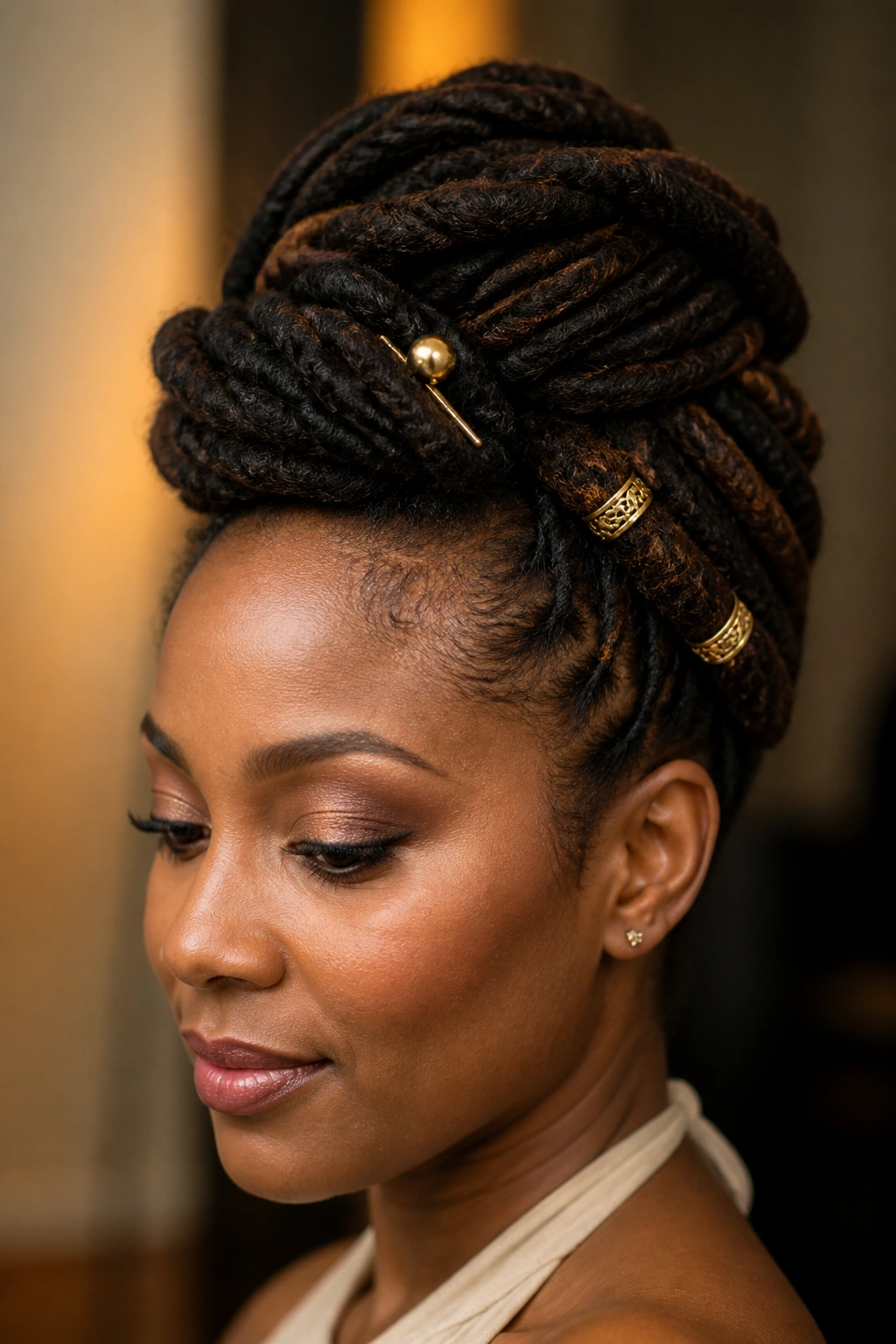
A rolled updo gains body from the folds. Add a few pieces of hair jewelry, and the style suddenly looks more complex, which is handy when the loc count is modest.
Unlike a plain roll, this one uses the eye-catching bits to pull attention across the head. You roll sections back on themselves, pin them into place, and then place one metal tone only—gold or silver, not both—so the style stays clean. A couple of cuffs, a slim pin, maybe one decorative comb. That’s enough. Too much jewelry starts to fight the hair.
This works well for dressy events because it gives fine locs presence without needing a huge bun or a lot of length. It also photographs in a calmer way, which matters more than people admit. The roll gives the updo shape. The jewelry gives it punctuation.
Three accents is plenty. Four starts to feel crowded.
19. Half-Up Top Knot with Hanging Locs
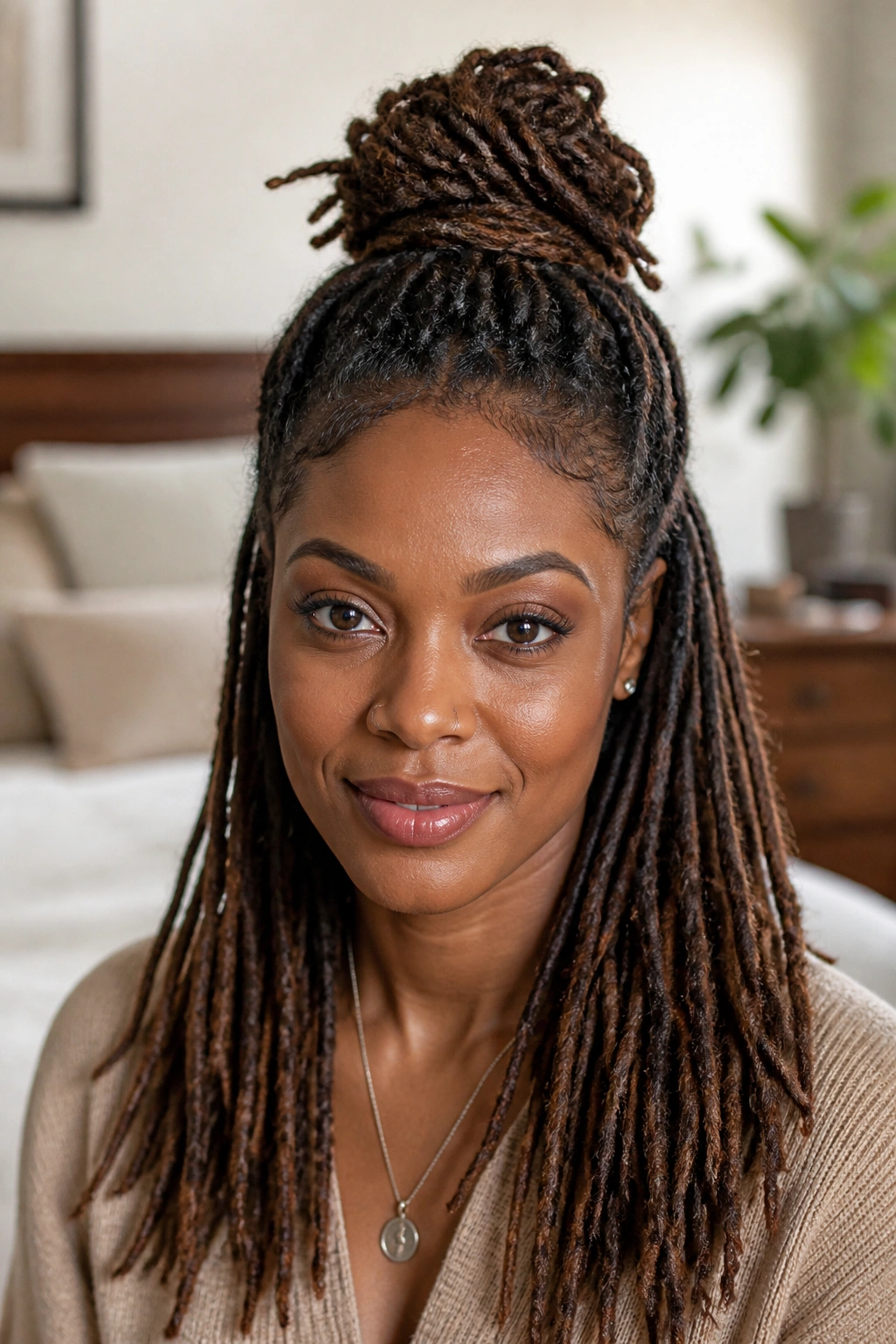
A half-up top knot is basically a shortcut to fullness. The knot gives height, and the hanging locs give the lower half of the head some movement, so the style reads larger from every angle.
Why the top knot works
The top knot takes the eye straight to the crown, which is where fine locs often need help most. Then the loose bottom section carries the length. That split keeps the style from looking flat and also saves you from having to build one giant bun out of not enough hair.
- Secure the knot with a soft elastic or small scrunchie
- Leave the bottom section loose and separated
- Pull the crown up with your fingers before you pin
- Keep the knot slightly off-center if the hairline looks thin
This is one of the easiest styles to wear on repeat because it can be clean, messy, or somewhere in between. Fine locs like that flexibility. So do I.
20. Cross-Pinned Low Ponytail
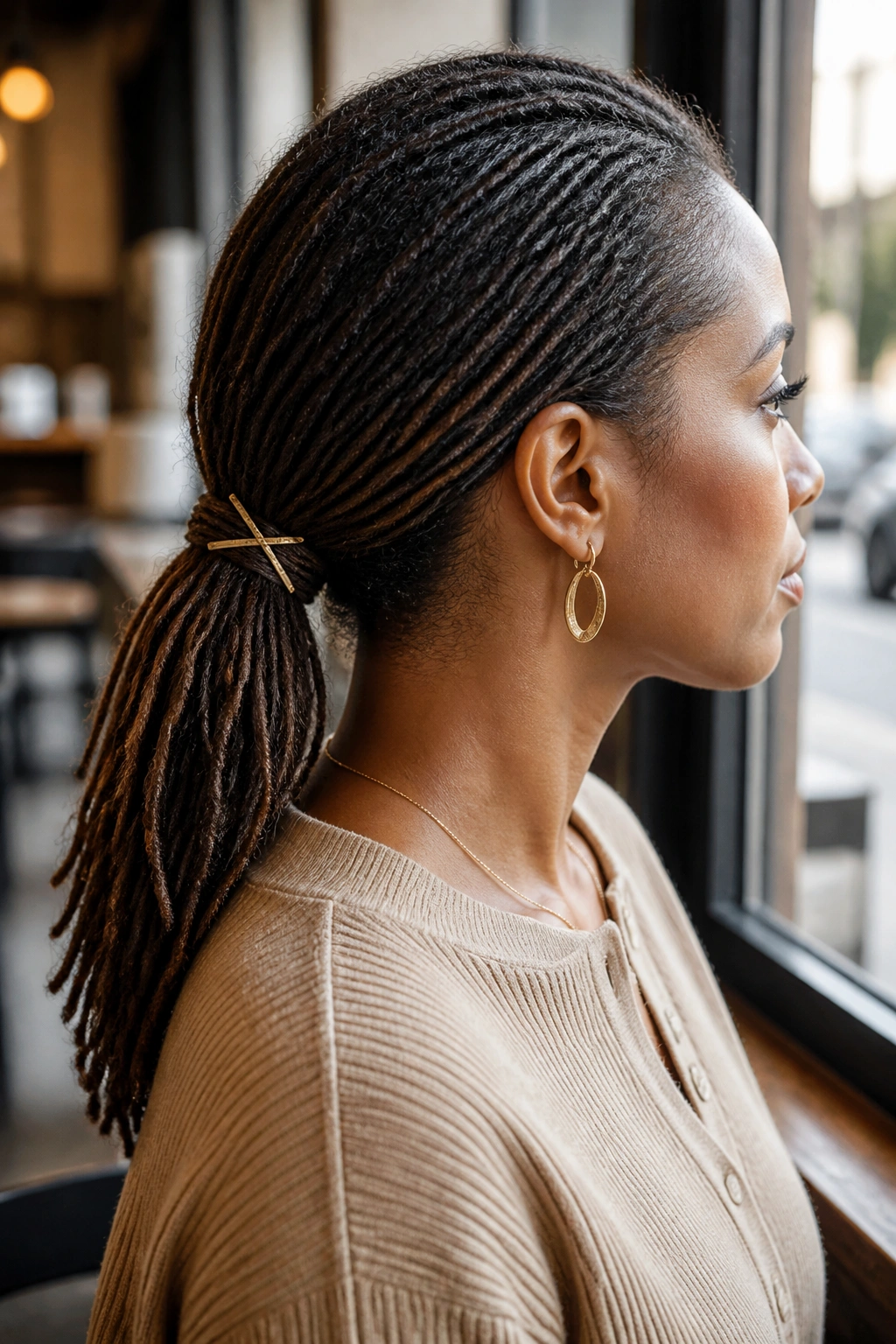
A cross-pinned low ponytail solves a problem fast: it makes a slim ponytail look thicker at the base.
The trick is in the pins. After you secure the ponytail low at the nape, place two bobby pins in an X shape over the base. That little cross creates a tucked center and gives the ponytail more visual weight. It also hides the elastic, which helps the style look finished instead of thrown together.
I like this on days when the locs are clean but not especially full. It does not need a lot of hair to work. It just needs a neat base and a bit of structure. If the ends are curled or lightly bent, even better. The style gets extra movement and stops looking too straight down the back.
Keep the crown slightly lifted before you pin. If you flatten that area, the ponytail loses half its charm.
21. Petal Bun Updo
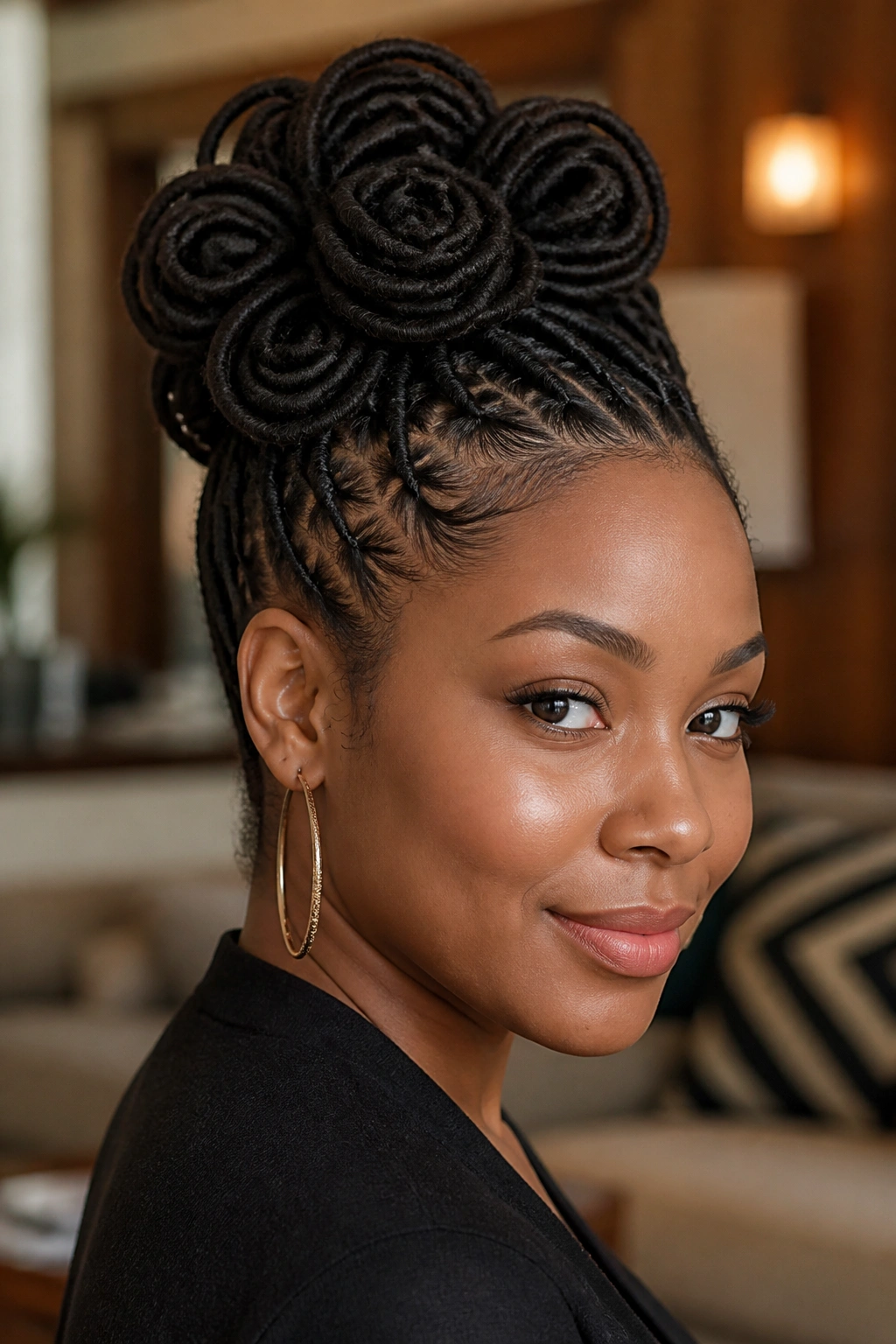
Why does a petal bun make fine locs look fuller? Because it turns a small amount of hair into a round, layered shape that feels much bigger than a plain knot.
How to use it
Divide the locs into several small sections, then loop each section around the center one by one so the shape starts to look like petals around a flower. Pin each loop as you go. The bun does not have to be huge; it just has to be layered and balanced.
- Use 5 to 7 loops for a full-looking shape
- Keep each loop soft, not smashed flat
- Hide the ends under the center
- Add cuffs only after the bun is secure
This style is one of the better choices when you want something dressy that does not swallow the head. It gives fine locs a graceful outline and a little depth at the back. The petal shape does the heavy lifting, not the length.
22. Forward-Swept Crown Style with Beads or Cuffs

If your locs disappear when you wear them straight back, sweep them forward and decorate the front. That shift can change the whole read of the style.
The forward sweep puts motion near the face, where the eye goes first. Add a few beads or cuffs near the front section and the style gains punctuation without needing more hair. I like this especially on fine locs because the accessory placement draws attention to the outline instead of the strand count. It works best when the locs are guided diagonally across the crown, not plastered flat from ear to ear.
What to keep in mind
- Sweep the front section forward before you pin the back
- Use 2 or 3 accents, not a row of them
- Keep the crown a little lifted so the sweep has room
- Place beads near the face, not all the way at the ends
This one has a lot of personality. It also holds up when you want your fine locs to look full in bright light, where sparse styles tend to give themselves away.
