



Long hair changes the Ghana braid conversation. Ghana braid styles for long hair can look sharp, soft, dramatic, or almost architectural, and the extra length gives you room to play with shape instead of fighting every strand into place.
The catch is tension. A braid set can look perfect in the chair and feel miserable by the next morning if the front is pulled too tight, the feed-in hair is too heavy, or the parting is off by even a little. Long hair hides a lot, but it does not hide scalp pain.
What makes Ghana braids so useful on longer hair is the way they hold structure at the root and movement at the ends. The braid can start slim near the hairline, then build into fuller lengths that lie flat at the scalp and swing when you turn your head. That balance is the whole reason people keep coming back to the style. Some versions feel clean and polished. Others bring curls, beads, ponytails, or deep side sweeps that change the whole mood.
And because long hair gives the braids more body to work with, the smallest decisions start to matter more: part size, braid size, edge shape, and how much extension hair gets fed in at the front. The right choice is not the loudest one. It’s the one that fits your hairline, your routine, and how much time you want to spend wrapping a scarf at night.
1. Classic Straight-Back Ghana Braids
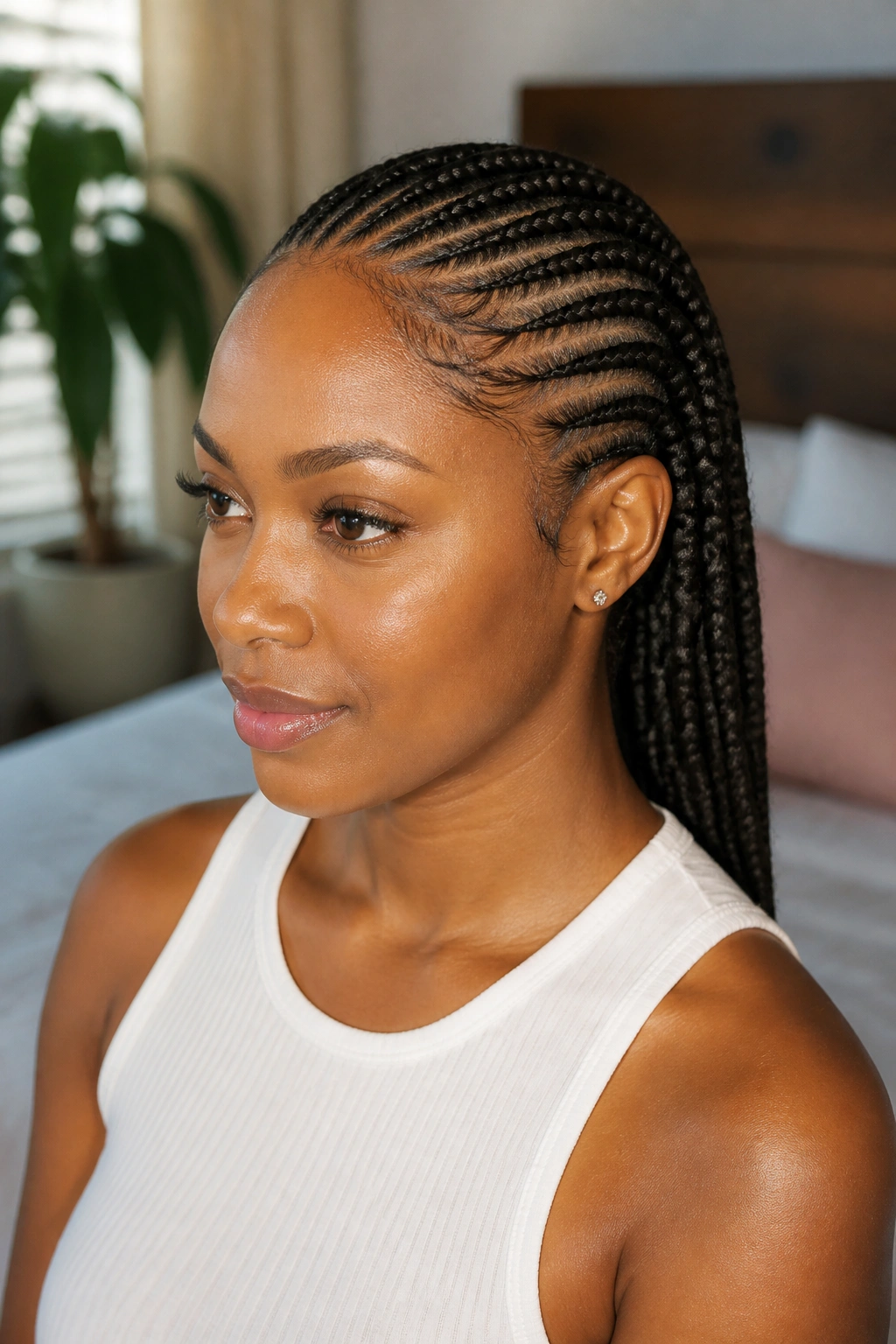
Start with the plain version. Straight-back Ghana braids are the backbone of the whole style family because they give you clean lines, fast styling, and a shape that works whether your hair reaches your shoulders or your waist. On long hair, they sit especially neatly since the extra length helps the braids fall in a smooth curtain down the back.
I like this style when the goal is polish without fuss. The rows go straight from the hairline to the nape, and the feed-in method keeps the front from looking bulky. If your braider keeps the parts even and the first inch of each braid neat, the style looks calm and expensive without trying too hard.
One small thing matters here: do not let the front be overfed. A thick front section can make the braid feel heavy and can tug where your edges are most delicate. Ask for a gradual feed-in at the hairline, then let the width build once the braid is a little farther back.
A good straight-back set should feel secure, not sharp. That’s the difference.
2. Center-Part Ghana Braids That Frame the Face
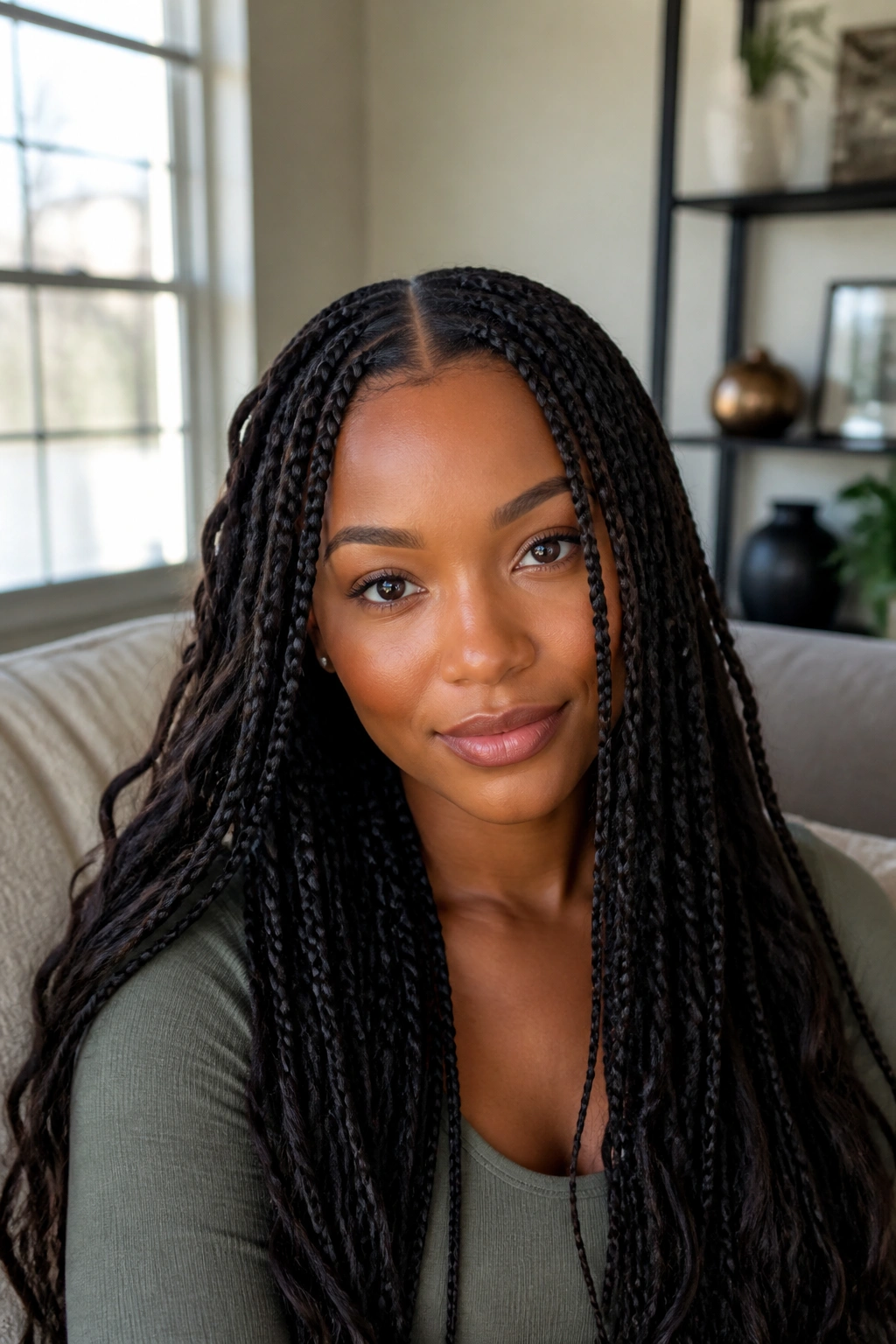
Why does a center part work so well on long hair? Because it gives the braids a built-in frame. Center-part Ghana braids split the head neatly down the middle, then let each side fall like two long panels that can be tucked, pinned, or worn loose over the shoulders.
Why It Flatters Long Hair
The longer the hair, the more that center line matters. On short hair, the part can disappear into the style. On long hair, it becomes part of the design, and that design reads as tidy from the front even when the back is full and heavy. It also helps balance a wide forehead or a strong jawline without needing extra styling tricks.
What to Ask For
- Keep the part precise from front hairline to nape.
- Ask for medium-width braids so the center part does not look crowded.
- Leave enough length so the braids can tuck behind the shoulders without flipping out.
- Use a light edge gel only at the front; too much product can make the part look greasy.
My favorite part: this style stays neat even when the ends get a little fuzzy. The center line does a lot of the visual work for you.
3. Deep Side-Swept Ghana Braids

A deep side part changes the mood fast. Side-swept Ghana braids feel less formal than straight-back rows, and on long hair they create a soft diagonal flow that lands on one shoulder instead of dropping evenly down the back. It’s a small shift, but it changes the whole face shape.
This style is a good move if your hairline is stronger on one side or if you want the front to feel lighter. The side with fewer braids gets a little breathing room, while the fuller side gives you drama without needing extra hair accessories. I also like it for people who wear glasses or earrings often, because the hair clears the face nicely.
The part should be deep enough to look intentional, not accidental. If the sweep is shallow, the style can look half-finished. If it’s too deep, the weight may pull in a way that feels awkward after a few days. The sweet spot is a clean diagonal that starts at the front crown and drops smoothly toward the opposite ear.
Short answer: this is the style to pick when you want movement without chaos.
4. Curved Feed-In Braids Around the Crown

Curves beat straight lines when you want the scalp pattern to feel more tailored. Curved Ghana braids follow the natural shape of the head instead of marching in rigid rows, and that makes them especially flattering on long hair because the braid path itself becomes part of the look.
What Makes the Shape Work
The braid lines arc gently around the crown and toward the back, which softens the top of the style and keeps the front from feeling boxy. On long hair, that curve is easier to see because the braids have length to show off the pattern. Straight-back styles can be lovely, but curves give you a little more personality without needing beads or color.
What to Watch For
- The front curve should stay smooth, not jagged.
- The side braids should mirror each other closely.
- The parting needs to be crisp, because curved lines show mistakes fast.
- If your hairline is sensitive, ask for smaller front feeds and a looser finish at the temples.
A curved set looks best when the braids are medium size and the parts are clean. Too many curves can make the style look busy. One strong sweep is usually enough.
5. Zigzag Part Ghana Braids
A zigzag part gives the scalp some attitude. Zigzag Ghana braids are the style you pick when you want the parting itself to do the talking, and long hair makes the pattern easier to read because the braids keep the eye moving from scalp to length.
This one reminds me of the styles people wear when they want structure but do not want to look too serious. The braids can be straight-backed, side-swept, or even ponytailed, but the zigzag lines add a little edge before the first braid even starts. It works best when the zigzags are clean and not too tiny. Tiny zigzags can get lost once the hair grows out.
The trick is to keep the rest of the style simple. If the parts are already doing a lot, the braid size should stay moderate and the accessories should stay minimal. A single cuff here and there is enough. More than that and the whole thing starts to feel crowded.
Best use: date night, concerts, photos, or any day you want the parting to look intentional.
6. Ghana Braids Pulled into a High Ponytail

A high ponytail changes the whole silhouette. High ponytail Ghana braids pull the braids up and away from the face, which can look strong and clean on long hair, but it also puts more stress on the crown and front if the base is too tight. That part matters.
Why Long Hair Helps Here
Long hair gives the ponytail swing. The tails do not just hang there — they move, fan out, and create a stronger shape behind the head. If you leave the tail long enough, the style feels deliberate rather than clipped off.
Keep the Base Smart
- Ask for a slightly wider base if your hair is dense.
- Wrap the ponytail base with a braid or a small extension piece to hide the tie point.
- Avoid a super-snug pull if your edges are fine.
- Check the feel at your temples before you leave the chair.
I’m blunt about this one: it looks gorgeous, but it can be a bad choice if your scalp is tender. The style should lift the face, not punish it.
7. Low Ponytail Ghana Braids

Why do I keep coming back to the low ponytail? Because it’s one of the easiest long-hair Ghana braid styles to live with. Low ponytail Ghana braids sit near the nape, which usually means less pull on the crown and a calmer feel at the hairline.
The shape is neat, but not stiff. Long hair helps the ponytail trail down the back in a way that looks controlled without looking severe. If you want the braids to feel work-friendly, travel-friendly, or just easier to sleep in, this is the one I’d point to first.
It also makes a good base for add-ons. You can keep the tail plain, curl the ends, or wrap a braid around the elastic for a cleaner finish. A low pony is one of those styles that looks modest from the front and polished from the side, which is more useful than people give it credit for.
Tiny detail: if the nape feels sore after day one, the base is too tight. Don’t ignore that.
8. Half-Up, Half-Down Ghana Braids
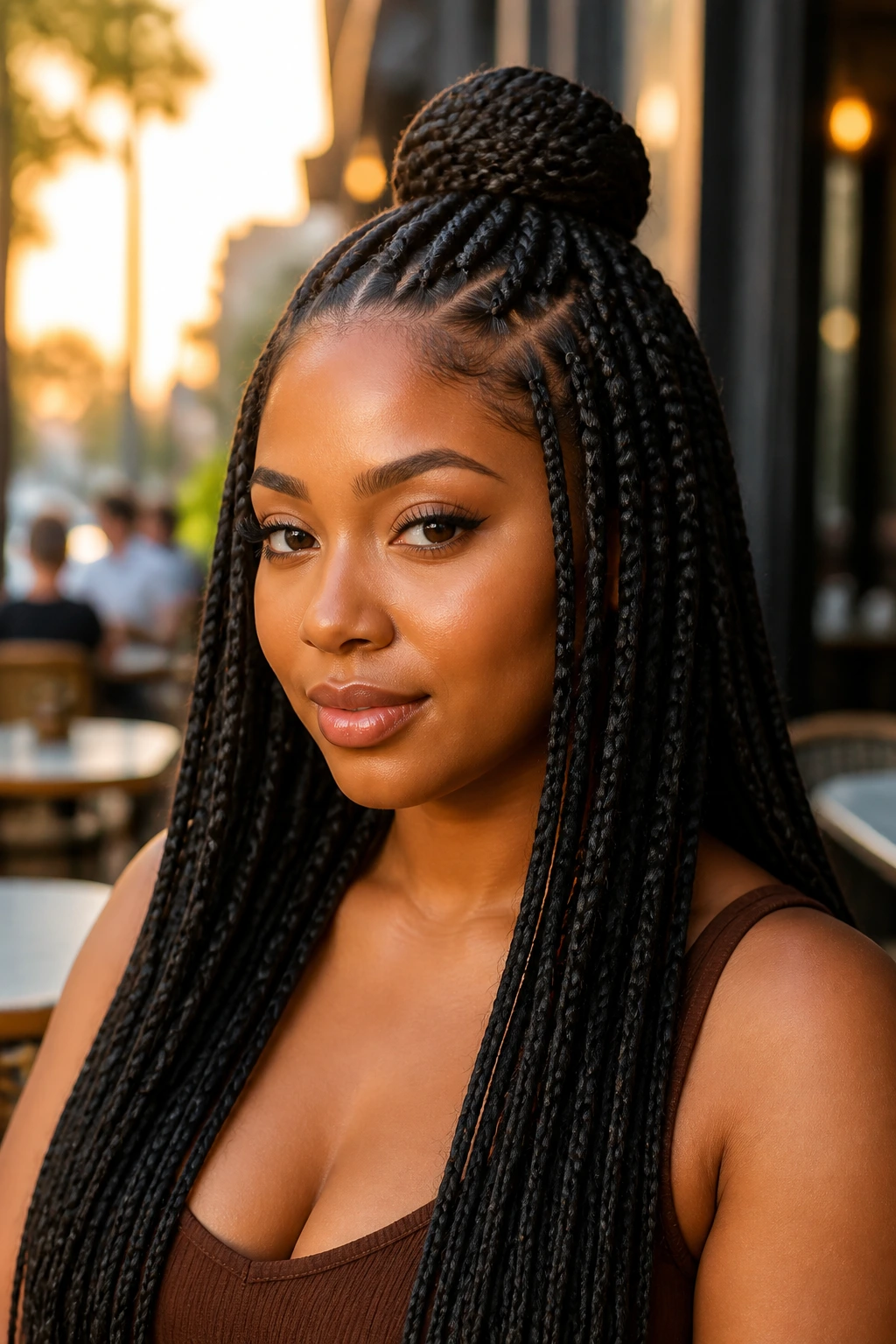
Half-up styles work because they give you two jobs at once: lift around the face and movement down the back. Half-up, half-down Ghana braids are especially good on long hair since you still get to show length while pulling some of the weight off the front.
The top section can be gathered into a small bun, a knot, or a short ponytail. The lower braids stay loose, which keeps the style from feeling severe. That balance is the whole appeal. It looks styled, but it still breathes.
I like this one when you want to wear the braids for a while without getting bored. Some days the top section can be puffed a little. Some days it can sit sleek. The base style stays the same, but the mood changes with one hand movement. That’s useful, especially if you do not want to keep restyling the whole head.
A small warning: if the top section is too tight, the half-up style can feel heavier than a full down style. Keep the lift soft.
9. Jumbo Ghana Braids with Thick Rows
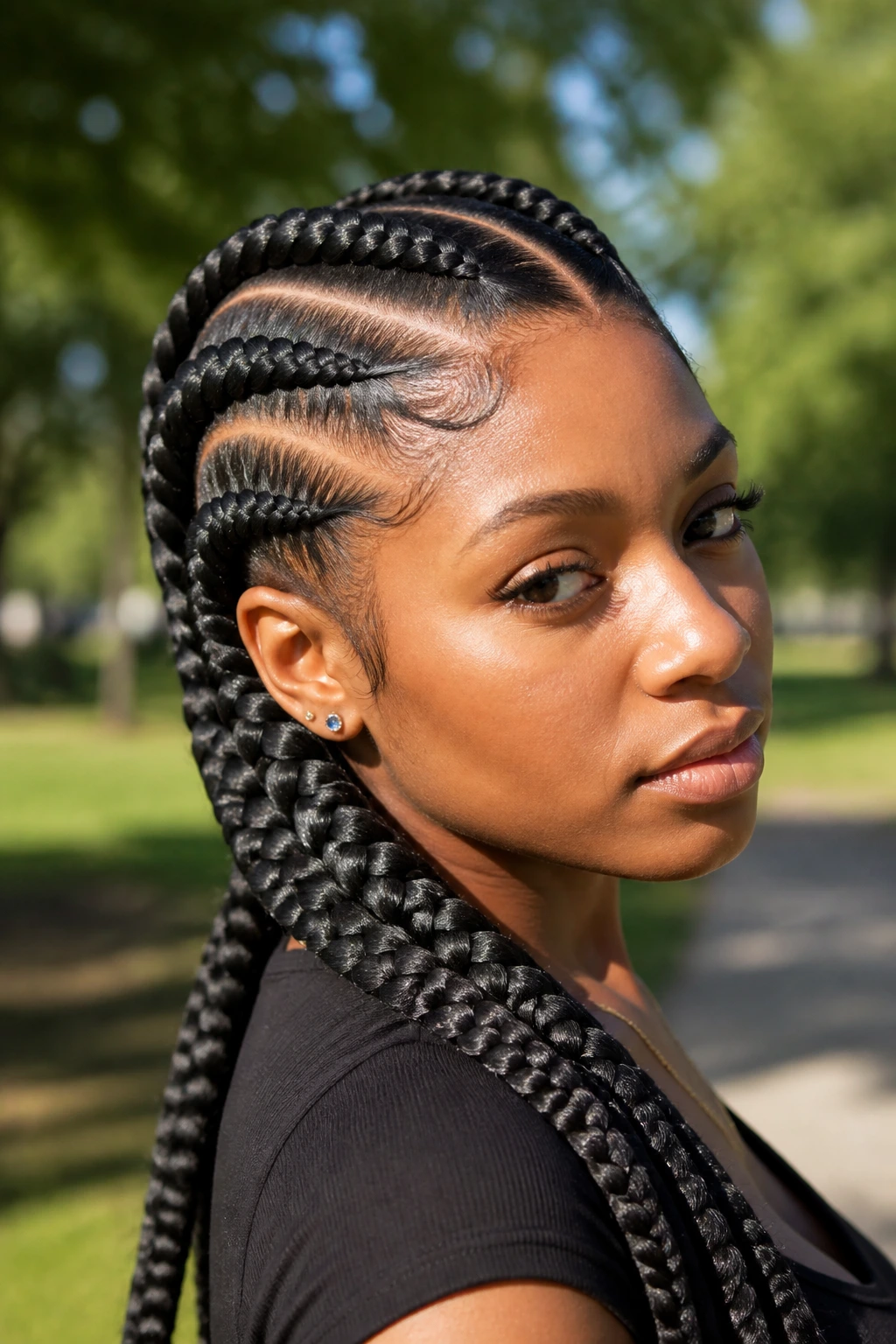
Jumbo Ghana braids are blunt, bold, and fast enough to make sense when you do not want to sit for hours. Because the rows are thicker, the style reads from a distance, which can be a good thing on long hair where you want the length to feel full without having dozens of tiny parts.
Why People Reach for Them
- They usually install faster than slimmer braids.
- They give the scalp a cleaner, less busy look.
- They can make thick long hair feel more controlled.
- They take fewer section changes, which some people find easier to maintain.
The downside is weight. Big braids look great, but they can feel heavy if the front is overdone or if the extensions are too long for your neck and shoulders. I prefer jumbo braids when the parting is crisp and the first few inches at the hairline are still light. Chunky should not mean clumsy.
Rule of thumb: if the braids make your head feel top-heavy the minute you stand up, they are too much.
10. Slim Micro Ghana Braids
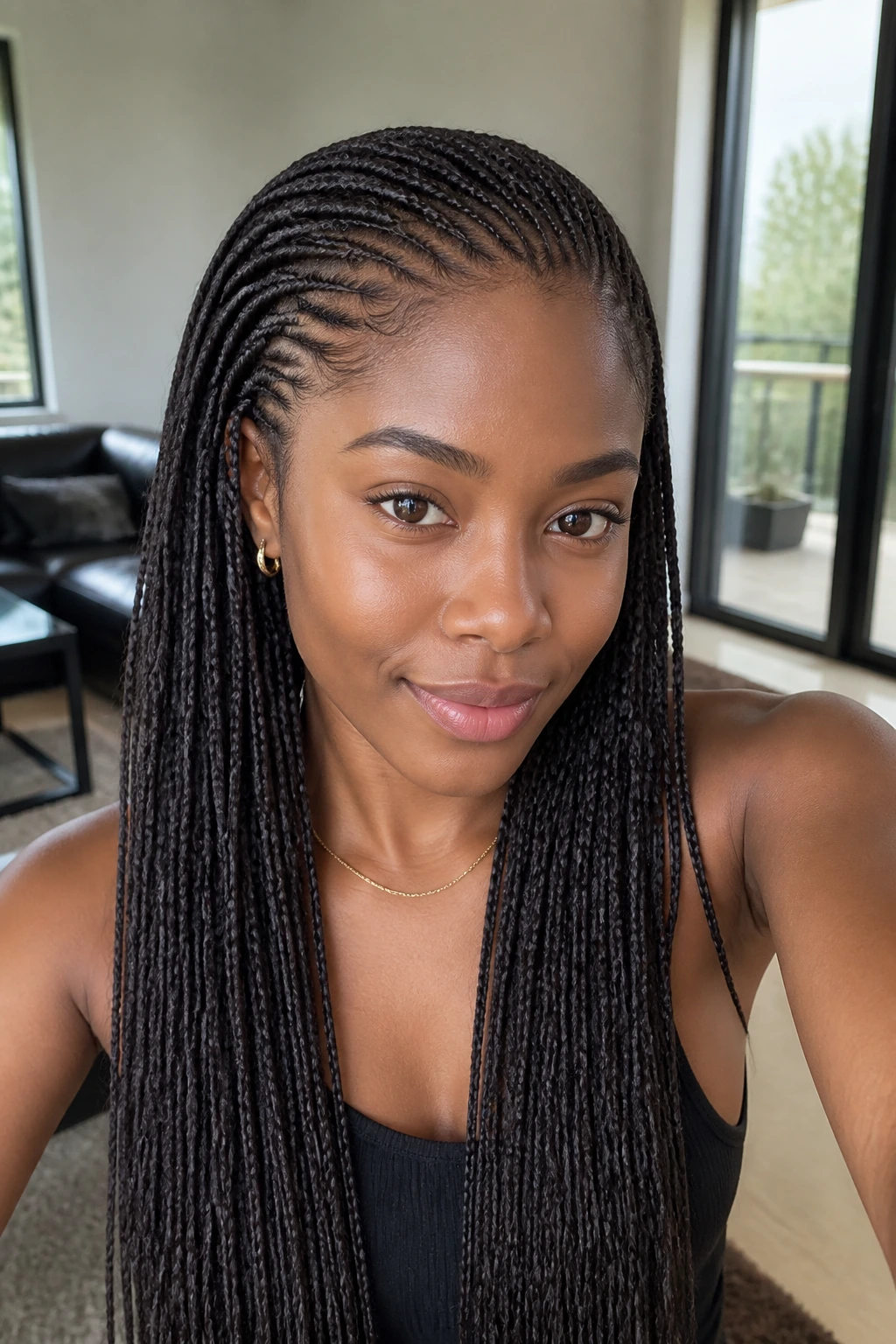
Tiny braids have their own energy. Micro Ghana braids are the quieter cousin of the jumbo look, and on long hair they move in a way that feels almost liquid. They catch motion, lay flatter against the head, and give you a softer curtain of braids instead of a few strong ropes.
This style takes more time, plain and simple. You pay for that extra detail with patience. The payoff is a lighter visual finish and more styling options, because small braids are easier to gather into buns, ponytails, or half-up shapes without looking bulky.
The one thing I always tell people is to keep the front especially gentle. Small braids can still be too tight if the feed-in is rushed. The fact that they’re slim does not make them harmless. The front hairline still needs room.
If jumbo braids are a bold jacket, micro braids are a fitted shirt. Different mood. Different feel.
11. Stitch-Part Ghana Braids
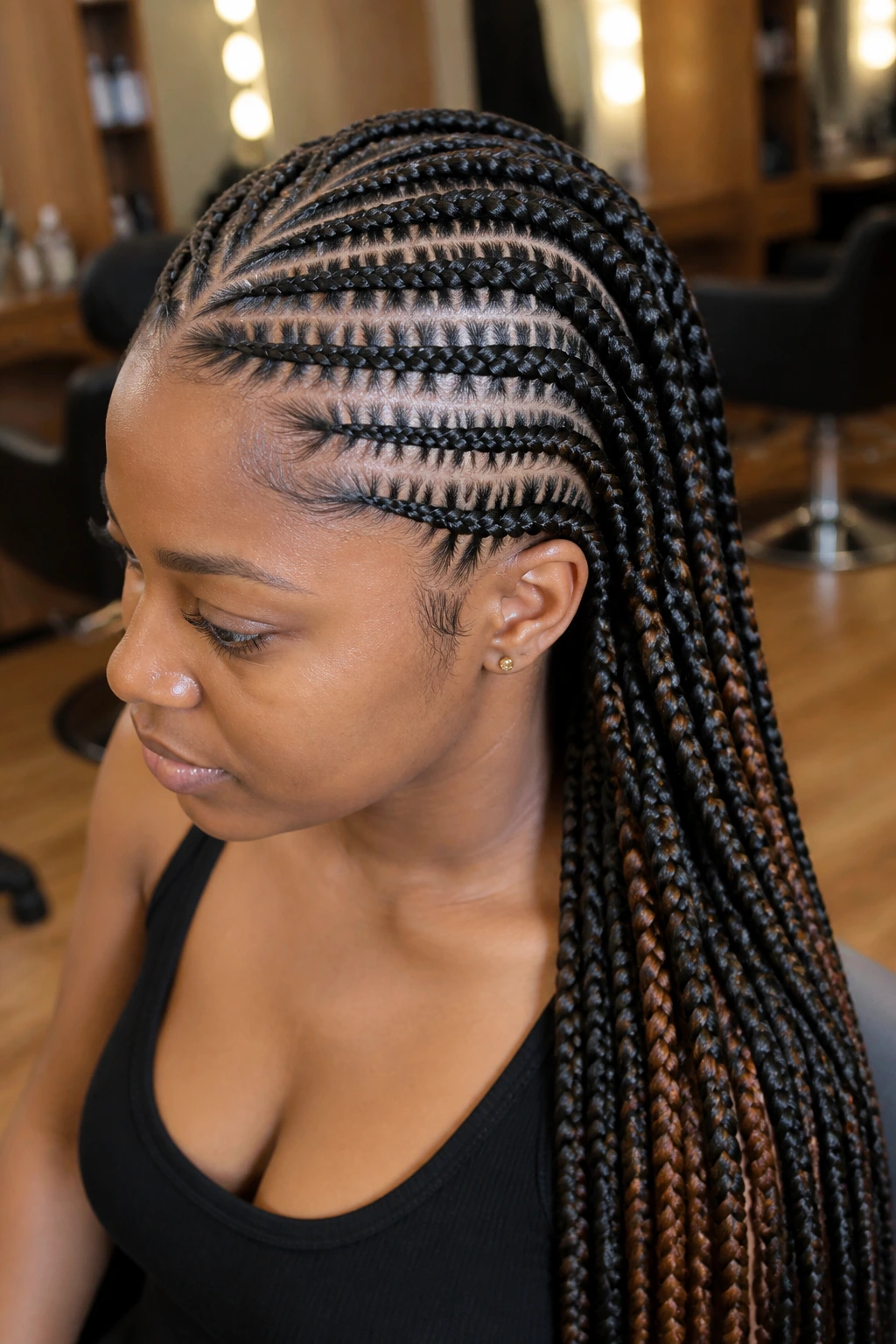
What makes stitch parts so satisfying to look at? The scalp lines are crisp and segmented, almost like little marks laid down with a ruler. Stitch-part Ghana braids use that pattern to create a clean, graphic finish that looks sharp on long hair because the parting stays visible even after the braids drop down the back.
The Look in Practice
The scalp sections are built with precise horizontal or slightly angled lines, which gives the braid set a polished, almost sculpted feel. If you like neatness, this style is a treat. If you don’t, it can feel a little too exact. There’s no hiding here.
What to Ask Your Braider
- Keep the stitches consistent in width.
- Ask for medium braids if you want the pattern to stand out.
- Use a fine-tooth tail comb for clean sectioning.
- Leave the edges soft around the temples so the style does not feel harsh.
This is one of those styles where parting skill matters as much as braiding skill. A sloppy stitch pattern ruins the whole thing. A good one looks expensive without needing extra decoration.
12. Heart-Part Ghana Braids
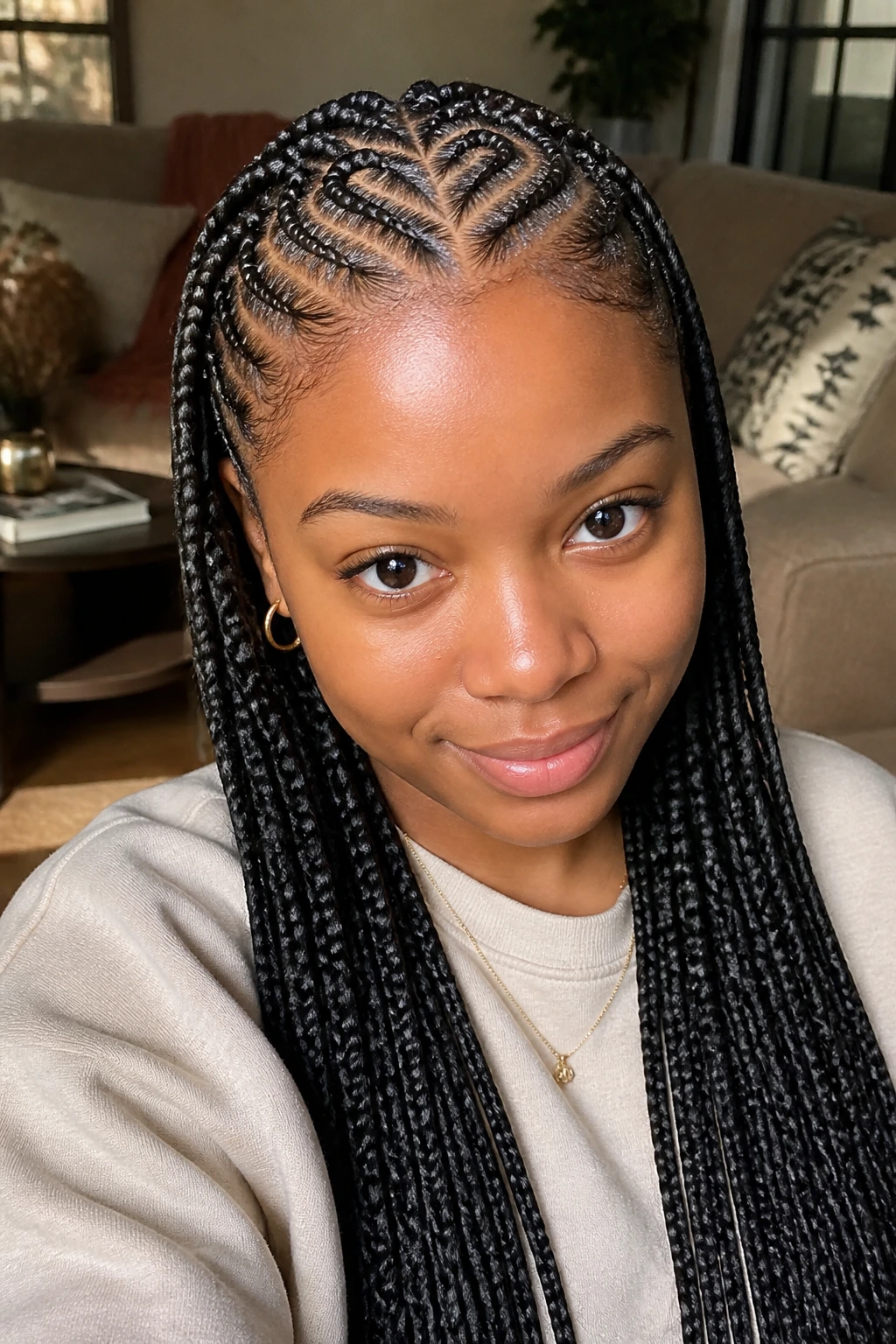
A heart part sounds playful because it is. Heart-part Ghana braids bring a little personality to the scalp, and long hair makes the shape easier to spot because the heart sits at the top like a small signature before the rest of the braids fall away.
This style is one of my favorites for birthdays, photos, or any day when you want the install to feel a little less everyday. The heart can sit at the crown, slightly off-center, or paired with simple straight-back rows so the shape stays the star. That’s the trick. If you add too many extra patterns, the heart gets lost.
Best Way to Wear It
- Keep the rest of the braids simple.
- Choose medium or small braids so the heart stands out.
- Add one or two beads, not ten.
- Pair it with soft baby hairs only if that matches your usual look.
The style is cute, sure. More useful than cute, though, is the fact that it gives long hair a focal point without adding bulk.
13. Criss-Cross Ghana Braids

Criss-cross braids feel like woven ribbon work on the scalp. Criss-cross Ghana braids use crossing section lines to build texture before the braids even reach their full length, and long hair gives the pattern time to breathe instead of looking cramped.
This is a good pick when straight rows feel too predictable. The braid path can cross over itself near the front or through the top section, which creates movement without relying on curls or heavy accessories. I like this style when the goal is visual detail, but not clutter.
A lot depends on balance. If the criss-cross pattern is too dense, the head can look busy from the front. If it’s too loose, the whole effect disappears once the hair is down. Medium spacing is usually the sweet spot. You want to notice the pattern, not have it shout at you.
Quiet but not boring. That’s the whole point here.
14. Lemonade-Style Side Ghana Braids
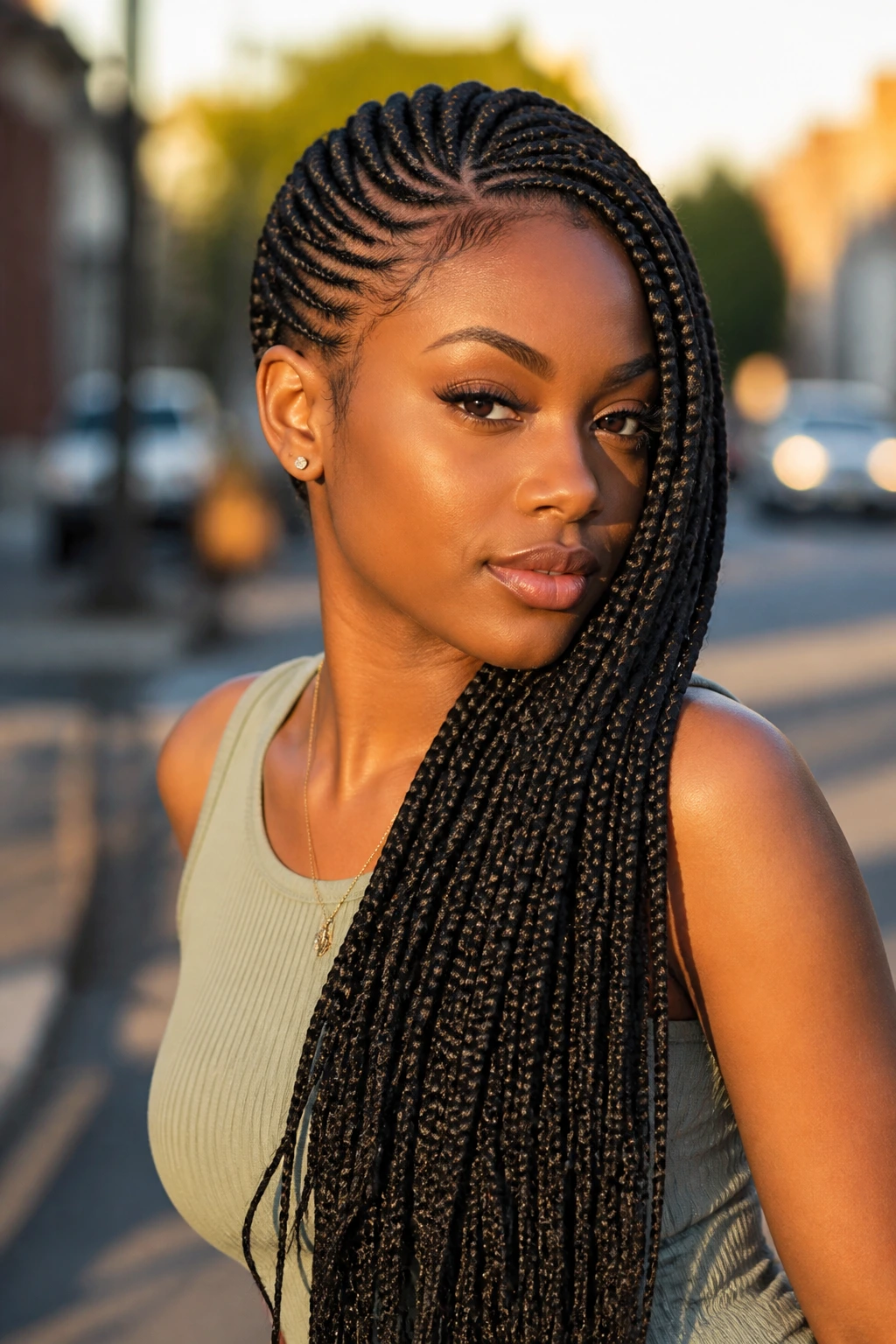
Side-swept braids have a swagger that straight-back styles don’t always carry. Lemonade-style Ghana braids fall to one side, and long hair makes them especially useful because the extra length gives the side a heavy, draped look that feels intentional from the first braid to the last.
This shape works well if you want the face open on one side and framed on the other. It also lets you show earrings, a sharp jawline, or a strong cheekbone without pushing everything back. I like it more than people expect, mainly because it does not need much help. The parting and the direction do most of the work.
The catch is maintenance. Side styles can fray faster on the side that rubs against coats, seat backs, and pillow edges. A silk scarf helps. So does tucking the longer side under your shoulder at night instead of letting it fold awkwardly.
If you want a style with motion and a little attitude, this is the one.
15. Ghana Braids with Curly Ends
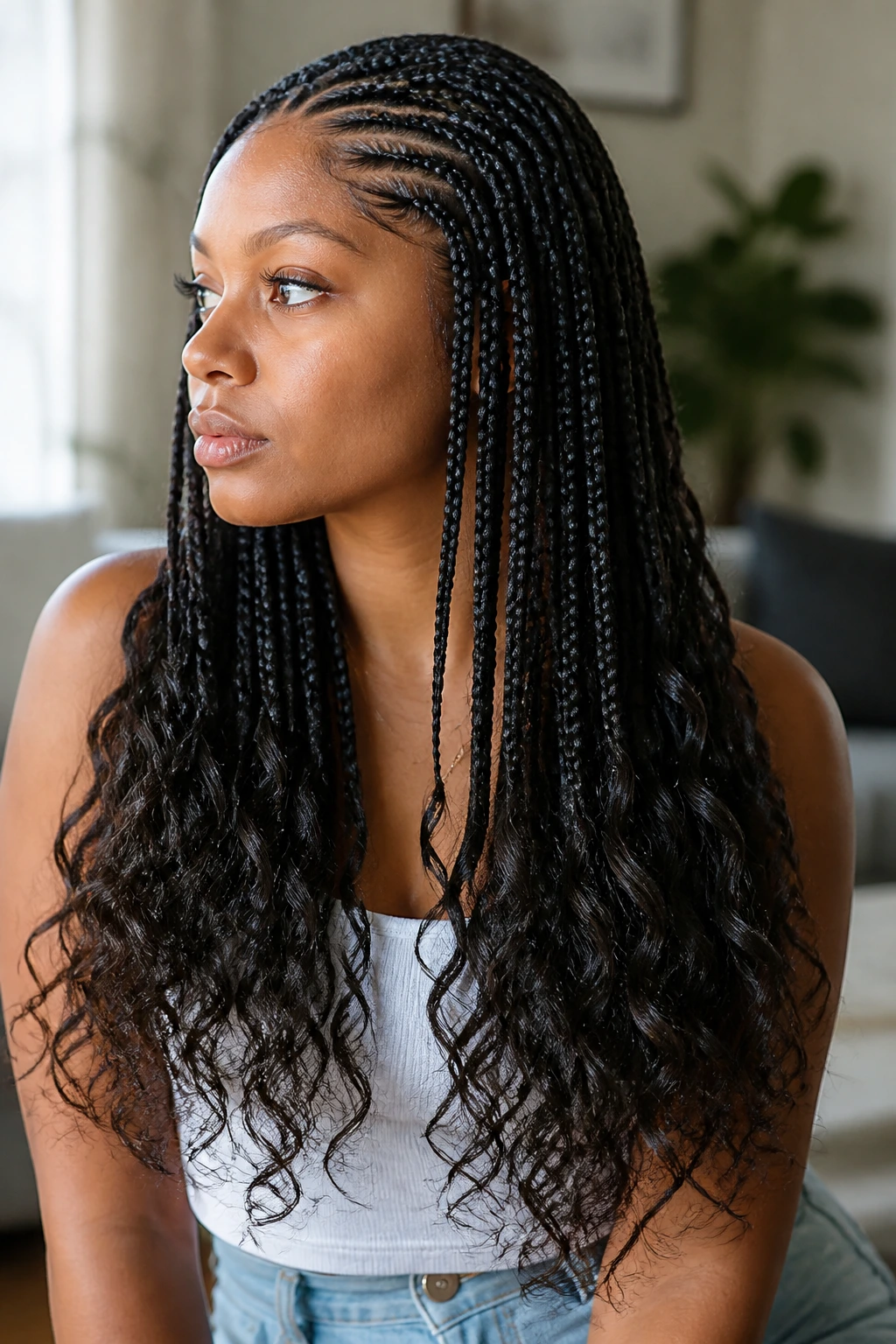
Braids and curls together can look messy or rich, depending on how they’re handled. Ghana braids with curly ends lean rich when the curls are left soft and the braid section stays neat. On long hair, that contrast is the fun part: sleek at the scalp, airy at the bottom.
Why the Texture Mix Works
The braid gives structure. The curl gives life. Together, they stop the style from feeling too severe, which matters when the braids are worn long enough to sit well below the shoulders. If you’ve ever wanted braids that still move like loose hair when you walk, this is where to look.
How to Keep It Looking Good
- Ask for the curls to start at the same point on each braid.
- Keep the curl length even across the head.
- Use mousse lightly on the ends, not the roots.
- Sleep with the curls gathered in a loose bonnet or scarf fold so they do not frizz into a cloud.
I like this style when the hair needs softness. It reads polished, but not hard.
16. Ghana Braids with Beads and Cuffs
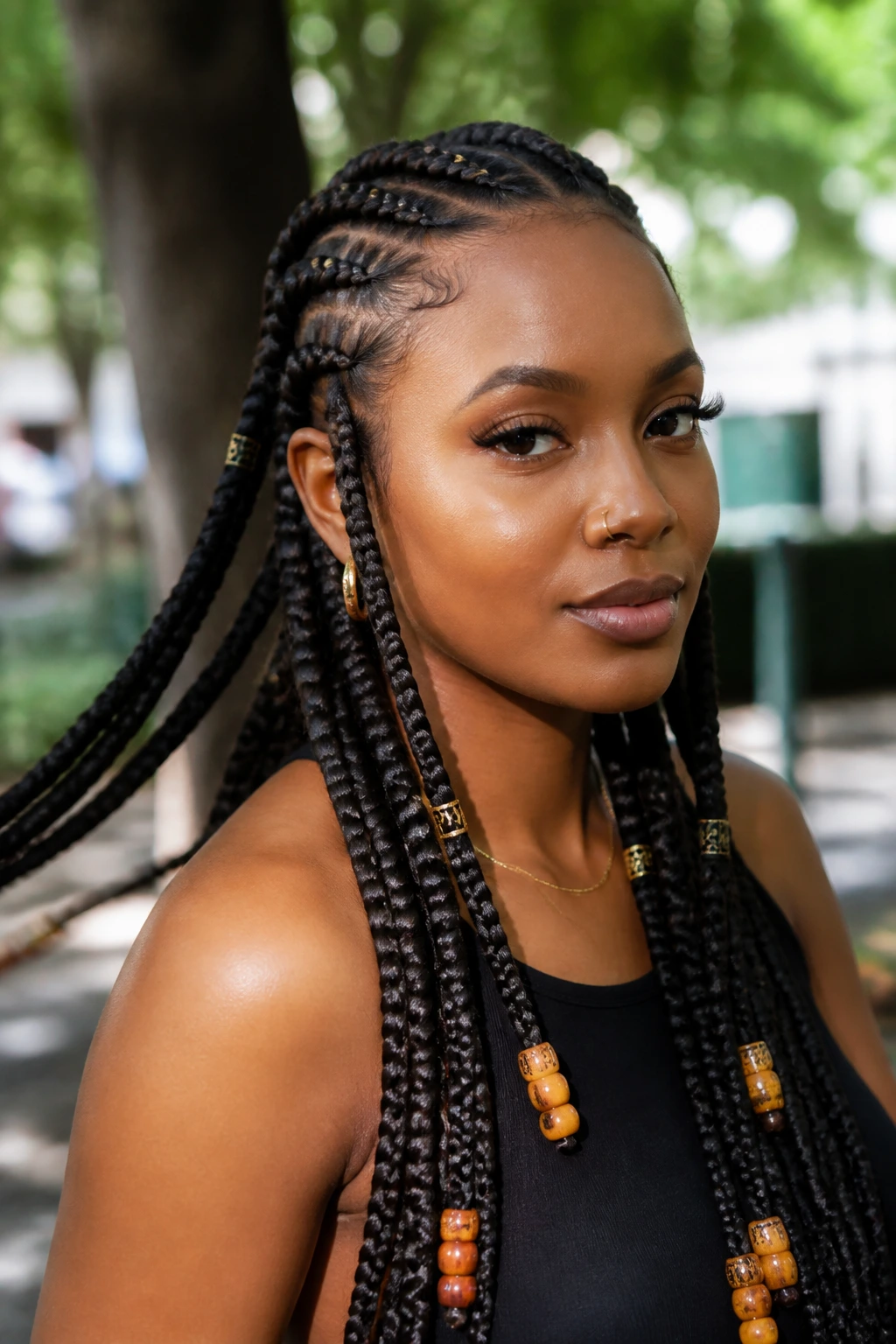
Beads change the sound and the mood. Ghana braids with beads and cuffs have movement you can hear, and long hair gives the decorations more room to sit at the ends without taking over the whole braid set.
A few well-placed beads go a long way. I’d rather see four or six thoughtful accents than a dozen pieces scattered everywhere. Too many accessories can drag the braid and make the ends feel awkward. The metal cuffs are a little easier to wear because they add shine without much weight, while beads bring more swing and a more playful feel.
A Good Balance Looks Like This
- Put beads on the front or the longest outer braids.
- Keep the middle rows cleaner so the style can breathe.
- Mix one bead size, not three or four.
- Match the accessory color to your clothes if you want the set to feel coordinated.
This style is not subtle. That is the point. Long hair gives it room to sparkle instead of looking crowded.
17. Crown Halo Ghana Braids
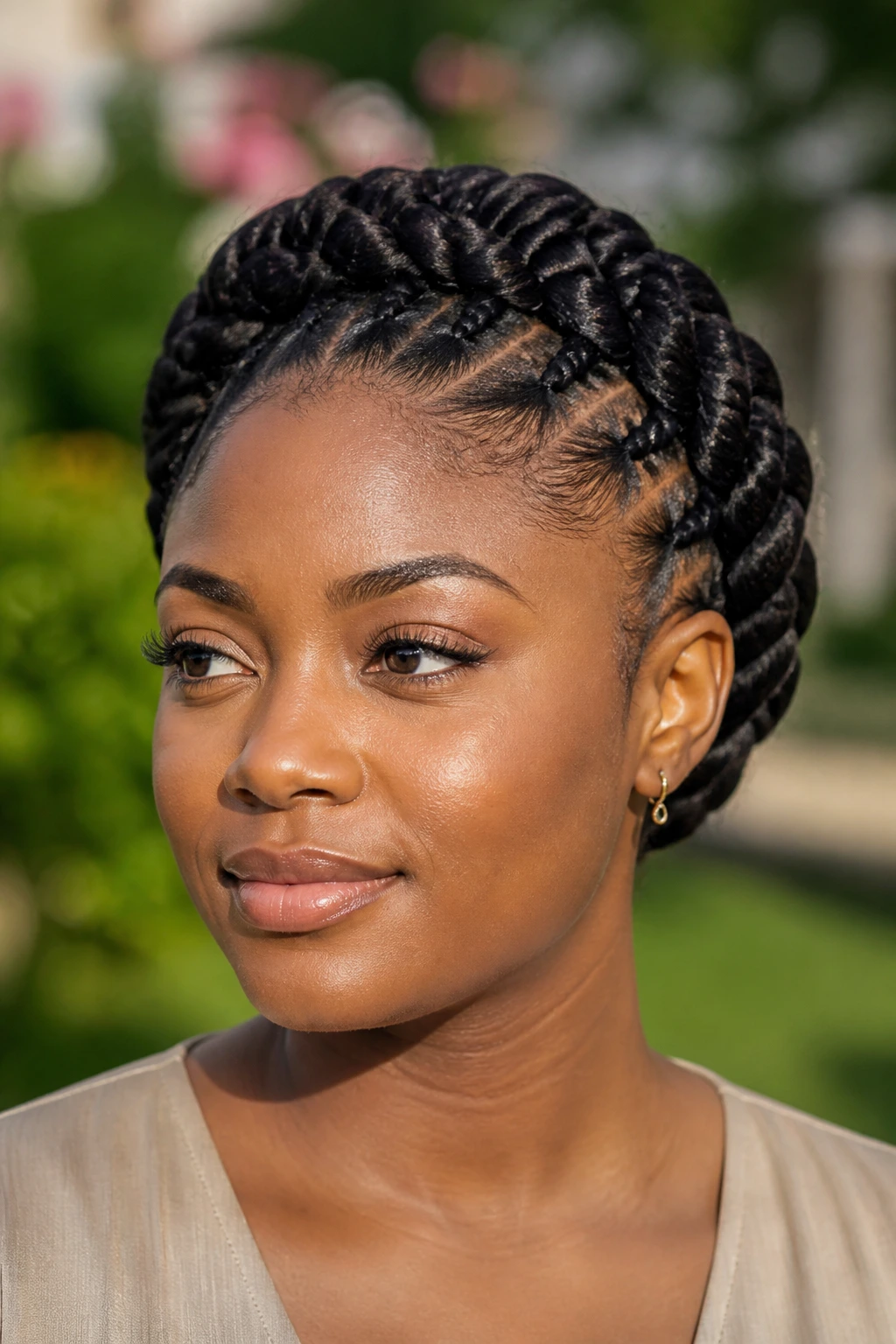
Can a protective style look soft and regal at the same time? Crown halo Ghana braids say yes. The braids wrap around the head in a way that echoes a halo or a braided crown, and long hair helps the style keep its round shape instead of collapsing flat.
Where It Shines
This is one of those styles that looks especially good when you want the hair off your neck but still want the braids to feel decorative. The crown line lifts the face, while the length can be tucked, coiled, or left to fall at the back depending on how much drama you want.
Ask for These Details
- A smooth arc around the front and sides.
- Enough braiding hair to keep the crown full.
- A tucked finish at the back so the shape stays clean.
- Soft, balanced parts so the halo does not look lopsided.
The crown style can feel formal without being stiff. That is rare. It also behaves well in photos because the shape is readable from the front, side, and back.
18. Mohawk Ghana Braids

Mohawk braids are for people who like a bit of edge in their hair. Mohawk Ghana braids keep the sides tighter or flatter and leave the center section raised, which makes long hair look fuller right down the middle. It’s a strong silhouette.
I’m a fan when the goal is height. The center ridge gives the style lift, and long hair adds enough length to make the whole thing feel dramatic instead of narrow. A mohawk braid set can be worn with a bun at the top, loose lengths down the back, or even with curled ends if you want the shape to soften a little.
A small warning: the mohawk layout can put extra pressure on the sides if the braids are pulled too hard toward the middle. Keep the side tension low and check the temple area before leaving the chair. You should feel supported, not pinned.
This one has presence. It does not try to blend in.
19. Diagonal Back Ghana Braids
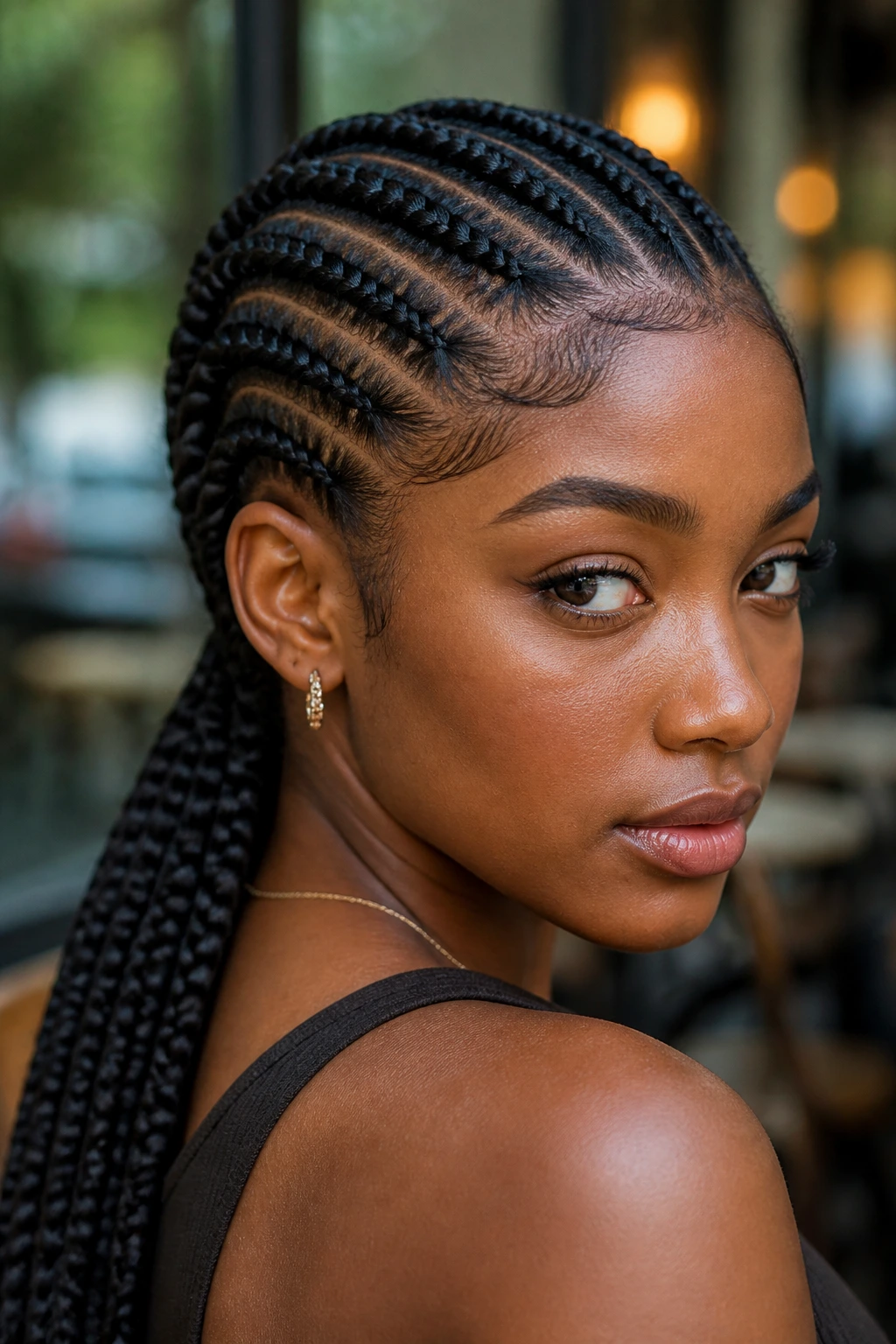
Diagonal rows are one of those simple changes that make a style feel custom. Diagonal back Ghana braids run from the front hairline toward the opposite side of the nape, creating a slant that breaks up the usual straight-back pattern and looks especially nice on long hair because the angle stays visible all the way down.
The shape can slim a broad forehead, soften a round face, or just make a familiar braid style feel less ordinary. I like it when a client wants something restrained but not boring. It’s not flashy. It’s sharper than plain rows, though, and that’s enough.
The key is consistency. The diagonals need to travel at the same angle so the back does not turn into a messy fan. If one row slants hard and the next one barely moves, the whole style loses its clean line.
A diagonal set is one of the easiest ways to make long braids look planned instead of default.
20. Wrapped Ponytail Ghana Braids

A wrapped ponytail cleans up the base in a way that matters more than people think. Wrapped Ghana braid ponytails use a braid or extension piece to cover the elastic, which gives the style a finished look and keeps the tie point from staring you in the face.
That’s the difference between a ponytail that looks thrown up and one that looks set. Long hair helps here because the tail can stay long enough to feel balanced after it’s pulled back. If the tail is too short, the wrap can look chunky. If it’s long, the whole thing sits like it belongs there.
Good Signs to Ask For
- A firm but not painful base.
- A braid wrap that hides the band fully.
- A tail long enough to move.
- Enough space at the crown so the pony doesn’t tug upward all day.
I prefer this version when you want the practicality of a ponytail but less visual clutter than a regular tie-back.
21. Waist-Length Layered Ghana Braids

Length is the point here, but not one flat sheet of it. Waist-length layered Ghana braids use staggered lengths so the ends do not all stop in one hard line. That matters on long hair because a blunt wall of braids can feel heavy and a little boxy.
Layering breaks up the mass. Some braids can end a little higher, some a little lower, and the result is movement without losing that long-braid feel. It also helps when you want the set to sit nicer under coats or sweaters, because the lengths are not all fighting the same space.
How to Ask for It
- Keep a few front braids slightly shorter.
- Let the back rows carry the longest lengths.
- Choose a medium braid size so the layers read clearly.
- Ask your braider to stagger the ends by a few inches instead of cutting everything blunt.
This is a good choice if you love long braids but hate the feeling of one heavy block down your back.
22. Triangle-Part Ghana Braids with Mixed Sizes
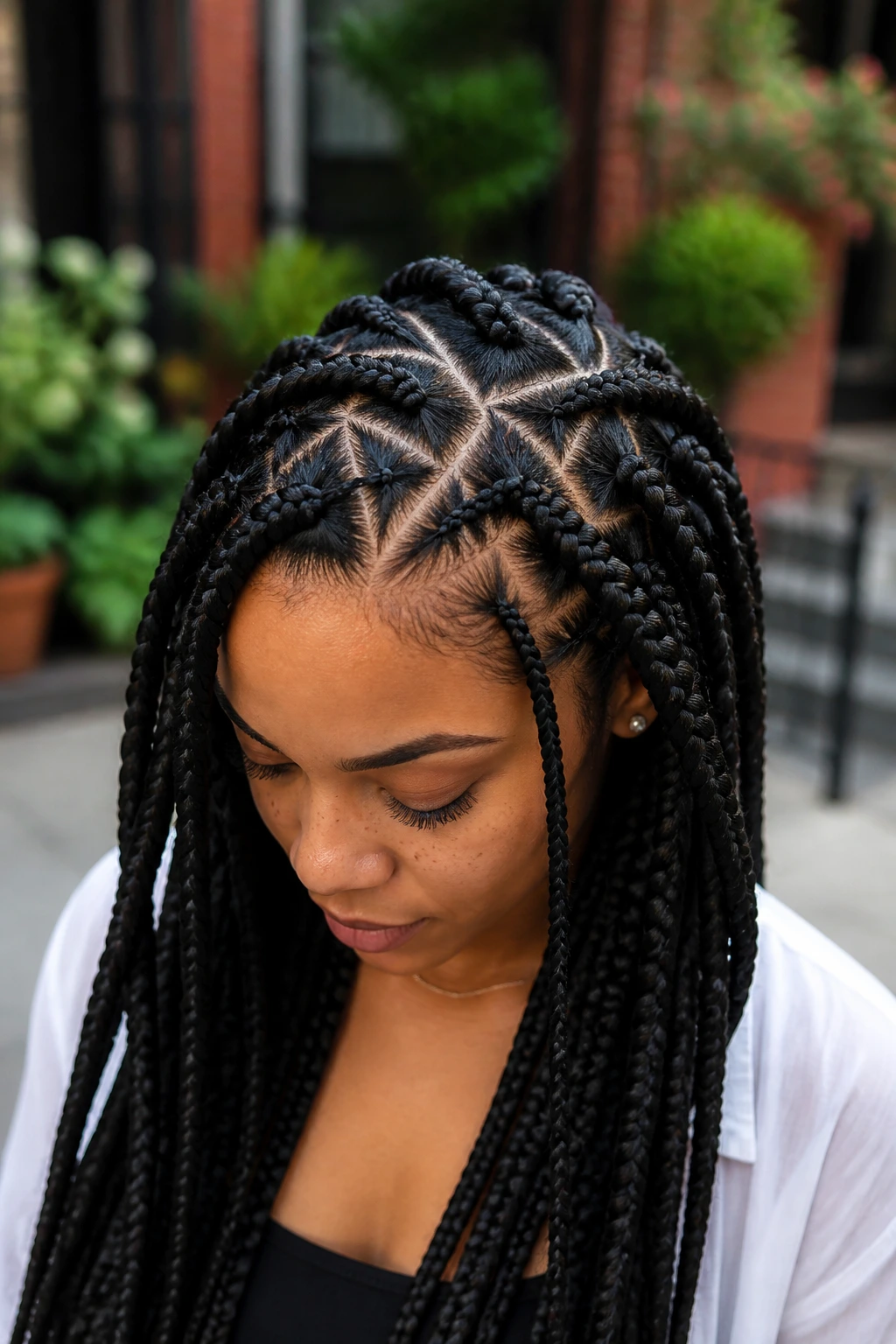
Triangle parts bring shape before the braid even starts. Triangle-part Ghana braids use geometric sectioning, and when you mix in different braid sizes, the whole style feels more designed than routine. On long hair, that pattern matters because the braids stay on display long enough for people to actually notice the parts.
Why This Style Stands Out
The triangle sectioning breaks the grid effect you get from standard square parts. It also gives the style a little depth from the scalp down, which keeps long braids from looking flat or repetitive. Mixed sizes help too. A few medium braids next to slimmer ones create rhythm without needing extra color or accessories.
What I’d Ask For
- Clean triangles, not uneven wedges.
- A mix of two braid sizes, not four.
- Neat spacing around the crown so the pattern reads from the front.
- Simple ends if you want the parting to stay the main feature.
This style is a good fit if you like clean geometry and want your braid set to look different without turning it into a costume.
Final Thoughts
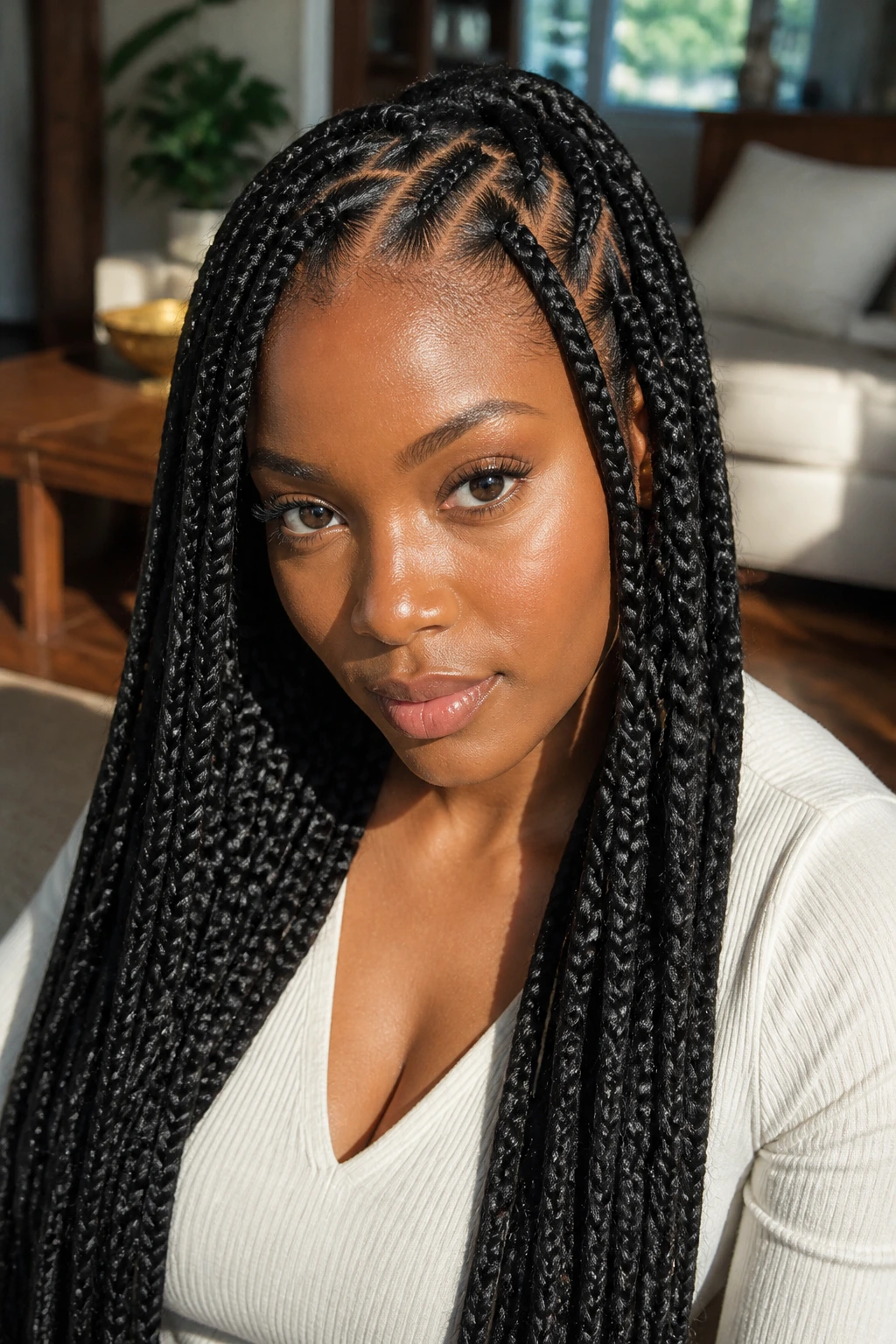
The strongest Ghana braid styles for long hair usually do one of two things well: they shape the face, or they manage weight. The styles that look best in a photo are not always the easiest to wear for a full week, and that’s worth keeping in mind before you sit down in the chair.
If your scalp is sensitive, lean toward lower ponytails, side sweeps, or diagonal rows. If you want drama, go for a high pony, a mohawk, or a crown shape, but keep the front feeds soft. The front is where trouble starts. It also happens to be where the style either feels clean or looks overworked.
The good braid sets are the ones you stop noticing in a bad way. They hold, they lie flat, and they still look good when the scarf comes off the next morning.
