



Face framing haircuts do more than make hair look styled. They change the way your face sits inside the hair.
A few well-placed layers can soften a sharp jaw, make a broad forehead feel less exposed, and add movement where a blunt line would feel a little harsh. That is the whole appeal of face framing haircuts: they don’t hide your features, they give them a softer edge.
Blunt cuts have their place. I like a clean line as much as the next person. But if you want your hair to feel lighter around the face, the cut has to do more than sit there. It needs to bend, swing, or fall in a way that breaks up strong angles.
The best face shape hairstyles pay attention to where the first layer starts, how the fringe falls, and how much width lands at the cheek versus the jaw. A bob that stops dead at the jaw can look severe. The same bob, cut with a curve or a little internal movement, can feel much friendlier. That difference matters more than people think.
1. Curtain Bangs with Long Layers

Curtain bangs are the easiest way to soften a face without sacrificing length. The middle stays short enough to open up the forehead, while the sides sweep down toward the cheekbones and blend into long layers. That little drop in length does a lot of work.
Why It Softens the Face
The shortest point should sit around the bridge of the nose or just below the brows, then taper longer as it moves outward. That shape breaks up a wide forehead and pulls attention toward the eyes instead of straight across the face.
Ask for soft point-cut ends, not chunky steps. Choppy curtain bangs can look heavy fast. The cleaner version moves like fabric.
- Best for oval, heart, and longer face shapes
- Easiest to style with a 1.25-inch round brush
- Keep the center a little shorter than the sides for that open, parted shape
Pro tip: Blow-dry the bangs side to side for 20 to 30 seconds before setting them apart in the center. They’ll sit with more bend and less puff.
2. Bottleneck Bangs and Shoulder-Length Layers

Why do bottleneck bangs work so well on sharp features? Because they start narrow, then open out gently, which means the forehead doesn’t get chopped in half by a straight fringe. The result feels softer and a little more lived-in.
This cut sits beautifully at shoulder length, where the layers can move without looking thin. The bangs should curve from a tighter center section into longer edges that kiss the cheekbones. That shape is flattering on square faces, but it also helps round faces by adding a vertical line down the middle.
How to Wear It
Blow-dry the fringe with a small round brush and keep the heat low near the roots. Too much lift at the center makes the whole thing look puffy. The rest of the cut can air-dry with a little leave-in cream and a touch of mousse at the mids.
If your hair is very straight, ask for the sides to be slightly broken up with point cutting. If it’s wavy, keep the layers soft and let the natural bend do the rest. This one looks best when it doesn’t look overworked.
3. Side-Swept Fringe with a Lob

If you tuck your hair behind one ear all day, a side-swept fringe is the cut that keeps the front from going flat. It gives you a diagonal line across the forehead, and diagonal lines are great at softening anything that feels too square or too wide.
The trick is keeping the fringe long enough to move. Short side bangs can get annoying fast. Longer ones, cut to the outer corner of one eye, can sweep across the forehead and blend into a lob that lands somewhere between the chin and collarbone.
What Makes It Work
- Part the hair about 1 to 2 inches off center
- Keep the fringe long enough to tuck behind the ear
- Use a flat brush or a paddle brush for a smoother fall
- Add a slight bend with a 1-inch curling iron if your hair lies too flat
This cut is one of my favorites for anyone who wants softness but does not want actual bangs. It gives shape without feeling committed.
4. Cheekbone-Grazing Face-Framing Layers
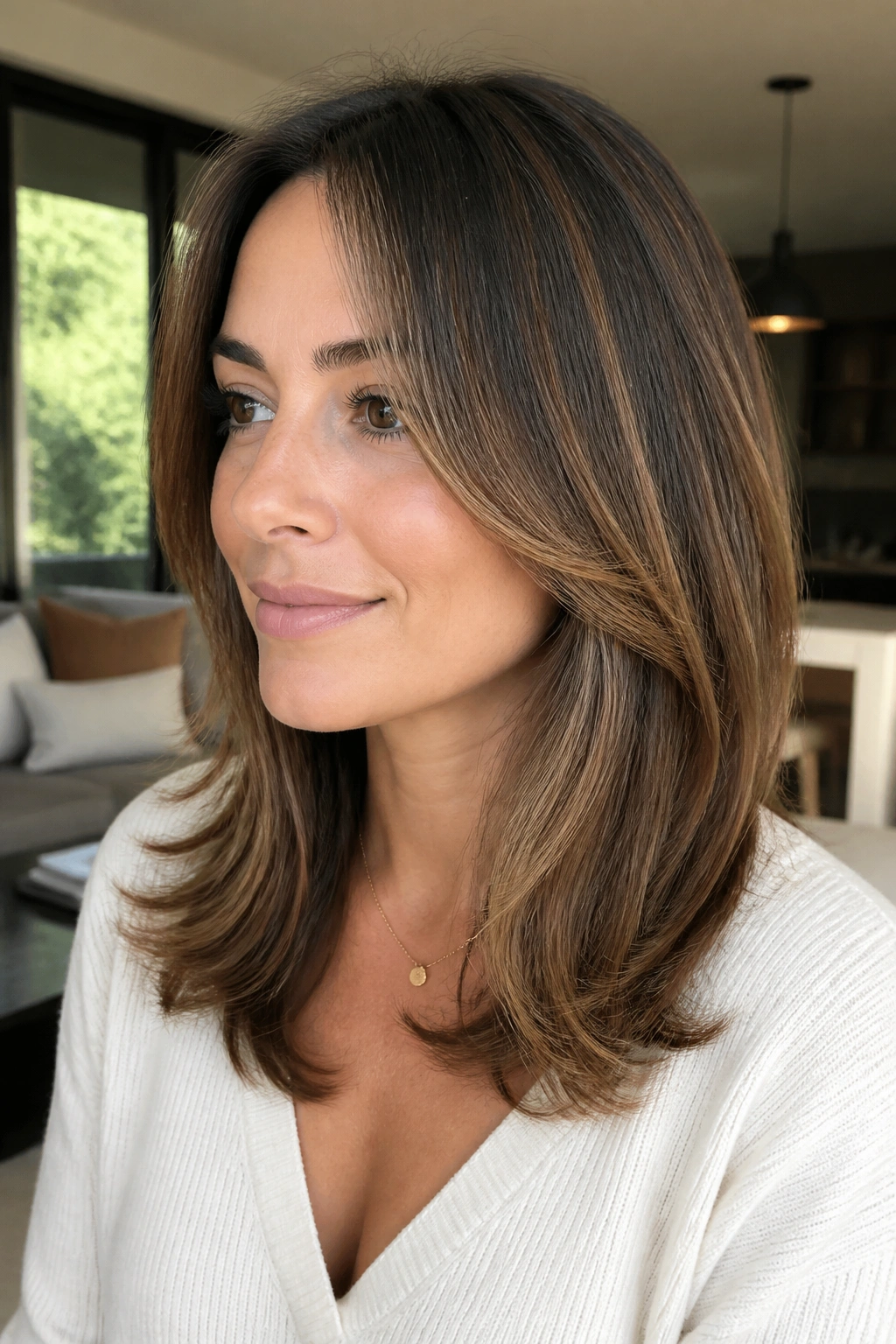
Cheekbone-grazing layers are the quiet achiever of the whole group. They do not scream for attention, which is exactly why they work. The first layer starts right around the cheekbone, then melts into longer lengths as it drops toward the collarbone.
That placement changes the eye line. Instead of pulling everything down toward the jaw, the hair catches right where the face is usually strongest: the cheek area. On a square face, that takes some of the edge off. On a round face, it adds a little length without looking severe.
The best version is soft at the ends. No hard shelf. No obvious step. Just a bend that feels natural when the hair moves.
A small detail matters here: ask your stylist to check the cut both dry and damp if your hair has a wave. Cheekbone layers can sit too high when wet, then shrink up once they dry. That is how a flattering cut turns into an awkward one.
5. The Butterfly Cut

The butterfly cut has staying power because it gives you two things at once: short layers around the face and long length everywhere else. That makes it ideal if you want movement without giving up the security of long hair.
Unlike one-length hair, which can hang straight down and make the face look more rectangular, the butterfly cut lifts the top layer and breaks the front into soft wings. The shorter pieces usually begin around the chin or lips, then fall into longer layers that hit the chest or lower.
Where It Shines
This is the cut I’d send to someone with thick hair who feels buried under it. The shorter layers lighten the front, and the long length keeps the cut from looking fluffy. It also works nicely if you wear your hair in a blowout or a loose bend, because the shape shows up best when the ends move.
For the cleanest effect, ask for minimal thinning at the ends. Too much texturizing makes the bottom look wispy. The butterfly cut should feel airy, not hollow.
6. A Soft Shag with Piecey Ends

A soft shag is what you want when you need movement more than polish. It softens features by breaking up the silhouette around the face and adding that slightly undone texture that keeps hair from sitting like a helmet.
What Keeps It from Looking Too Choppy
The difference between a good shag and a bad one comes down to restraint. The layers should be visible, yes, but not ragged. The front pieces can start around the cheekbone and fall into softer ends at the neck and shoulders. If the haircut looks too broken up, the face can get lost inside it.
Use a texturizing spray on dry hair, not wet hair, if you want the piecey finish to show up. Wet product tends to clump everything together. A dry spray or a tiny bit of pomade on the very ends gives you separation without stiffness.
- Best on wavy hair or lightly curly hair
- Strong choice for softening a longer face
- Avoid over-thinning if your hair is fine
It’s a little messy by nature. That is the point.
7. U-Shaped Long Layers

Can long hair still soften the face without looking stringy? Absolutely, if the cut is shaped in a U instead of hanging straight across the bottom. The longer center back keeps weight where you want it, while the front angles fall away gently from the face.
That curve matters. A blunt edge at the bottom of long hair can make the whole style feel heavy. A U-shape adds enough contour to keep the hair moving and makes the front layers show up without a harsh line.
How to Ask for It
Ask for the shortest face-framing pieces to start around the chin or just below it, then let the layers lengthen toward the back. If the hair is dense, the stylist can remove a little bulk from the interior so the shape does not puff out at the sides.
This cut is especially good if you like to wear hair down most of the time. It won’t shout for attention, but it will stop the front from feeling flat and boxy.
8. Collarbone Lob with Bent Ends

I keep coming back to the collarbone lob when someone wants polish but does not want anything severe. It lands in that sweet spot where the hair still feels substantial, but the face gets a soft frame from the first bend at the ends.
The real trick is the finish. If the ends are left dead straight, the cut can feel a little hard. If they’re bent under slightly with a round brush or a blow-dry brush, the whole shape turns gentler. That small inward curve changes everything around the jawline.
A collarbone lob also gives you room to style. You can tuck one side, part it in the middle, or wear it with a slight off-center part and let the front pieces swing.
One sentence, because it matters: don’t cut this too blunt if your jaw is already strong.
9. French Bob with Airy Fringe

A French bob can be surprisingly soft if it is cut with enough movement at the front. Keep it around jaw length, give it a little texture, and pair it with an airy fringe that barely grazes the brows. That’s the version that flatters.
The fringe should not sit thick and heavy. It needs air between the strands, which keeps the forehead from feeling boxed in. The bob itself should curve slightly inward or sit with a natural bend, not a hard shelf at the jaw.
This works especially well on fine to medium hair, where the softness comes from the shape rather than from a ton of volume. A rough-dry with a small amount of mousse is usually enough. If you blow it out too smoothly, the cut loses its charm.
There is a reason this cut keeps showing up on people with strong features. It gives structure, but not rigidity.
10. Chin-Length Bob with Curved Under Ends

A chin-length bob can look boxy if the line is too blunt. Give it a curve under the jaw, though, and it turns into one of the cleanest ways to soften a face while still keeping a crisp silhouette.
The length matters here. Hit too high on the chin and the shape can feel sharp. Go a touch lower, and the cut starts to graze the jaw in a friendlier way. That tiny difference changes how the face reads from the front and in profile.
Best If You Want a Defined Shape
This is a smart choice for people with narrow faces who want more width around the lower half, or for anyone with a strong jaw who wants the line softened instead of emphasized. A deep side part can make it even gentler.
Ask for the ends to be beveled, not left flat. Beveling gives the bob that soft roll under the face, which is what keeps it from feeling severe.
11. Feathered Layers for Long Hair
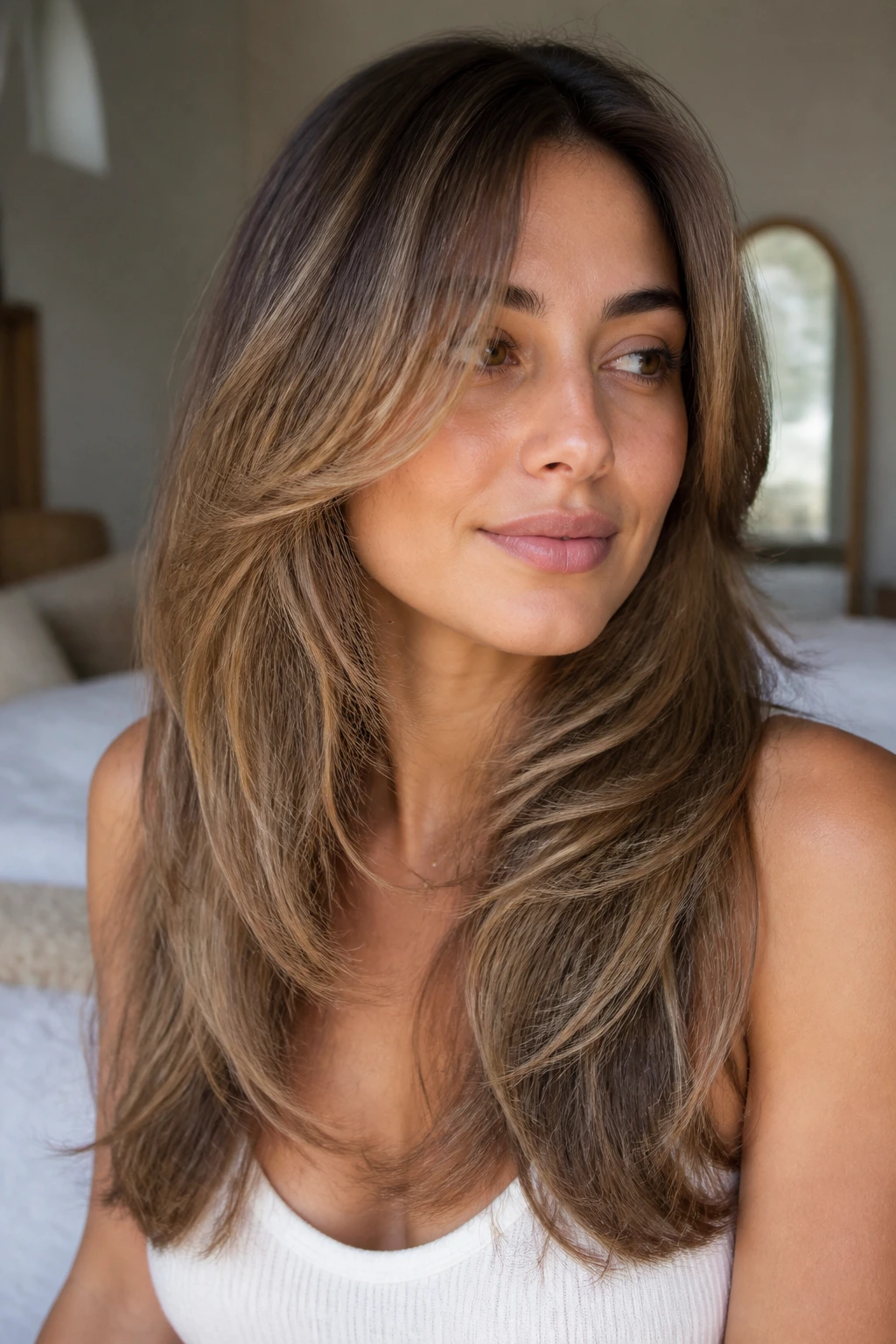
Feathered layers are one of those old-school ideas that still works because the logic is solid. Hair is cut so the ends taper and separate, which keeps long lengths from hanging in one heavy curtain around the face.
What to Ask For
Ask for feathering through the front and mids, with the shortest pieces beginning around the cheekbone or lip line. The ends should stay light enough to move, but not so shredded that they look weak.
- Good for thick or coarse hair
- Helps long layers sit closer to the face
- Works well with a round brush and a quick blowout
- Looks best when the ends are soft, not razor-thin
Feathered layers are especially useful if your hair tends to sit flat at the top and bulky at the bottom. They redistribute that weight. The shape around the face feels lighter, and the whole cut becomes easier to wear down without a ton of styling.
12. Wispy Bangs with a Midlength Cut
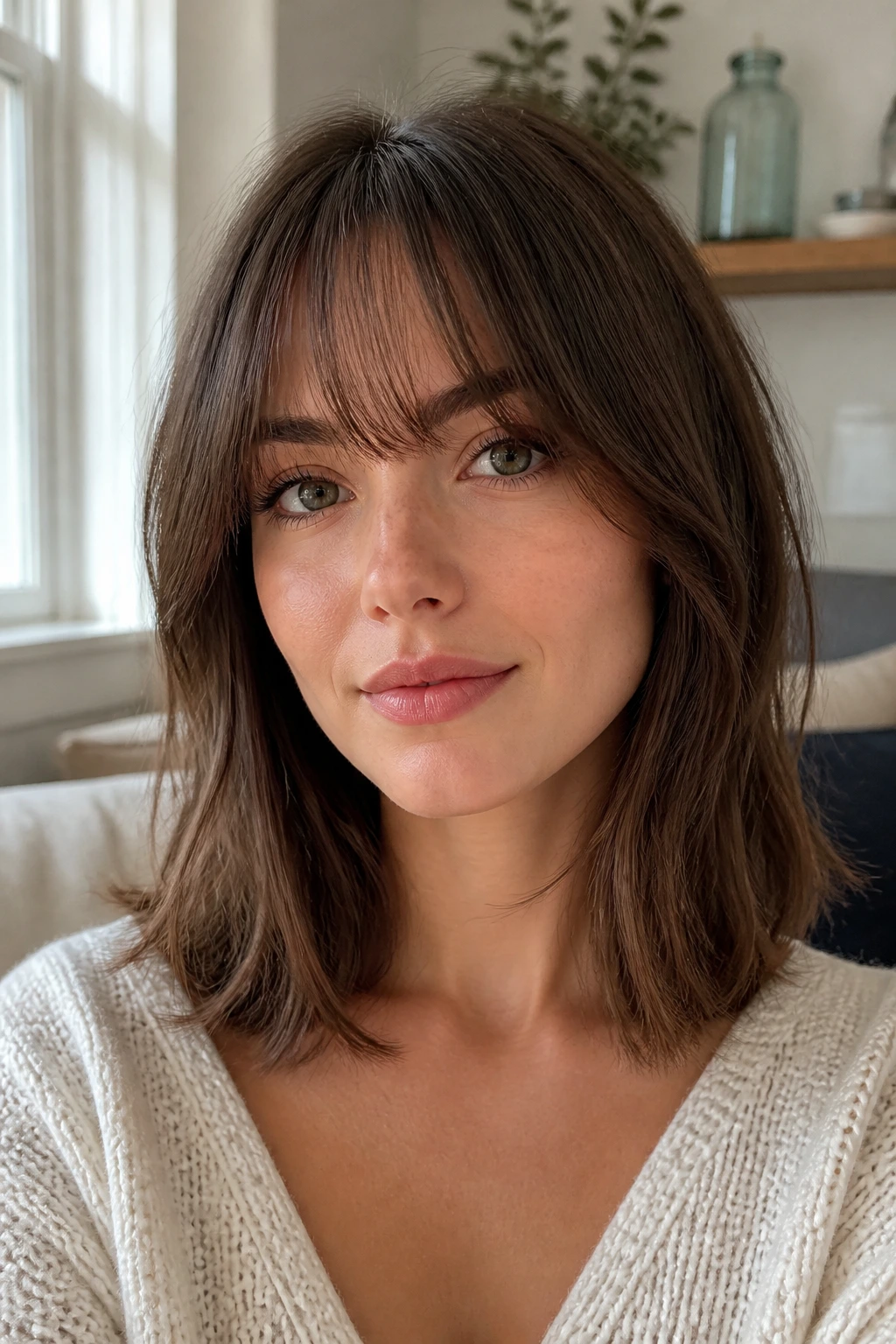
Do wispy bangs really soften features? Yes, if they’re thin enough to show some forehead through them. Thick fringe can make the face feel boxed in. Wispy fringe does the opposite: it adds a little shadow, a little movement, and not much weight.
A midlength cut works best here because it keeps the overall look light. Think collarbone to upper chest, with face-framing pieces that start around the cheekbones and slide into the rest of the hair. The fringe should feel almost airy when it moves.
How to Style It
Use a small round brush or your fingers and a blow dryer set on medium heat. Then stop before the bangs get too perfect. Slight separation is the point. A touch of dry shampoo at the roots can keep them from sticking together on warm days.
This cut is a good answer if you want softness around the forehead without committing to a full curtain bang.
13. Textured Pixie with a Side Fringe
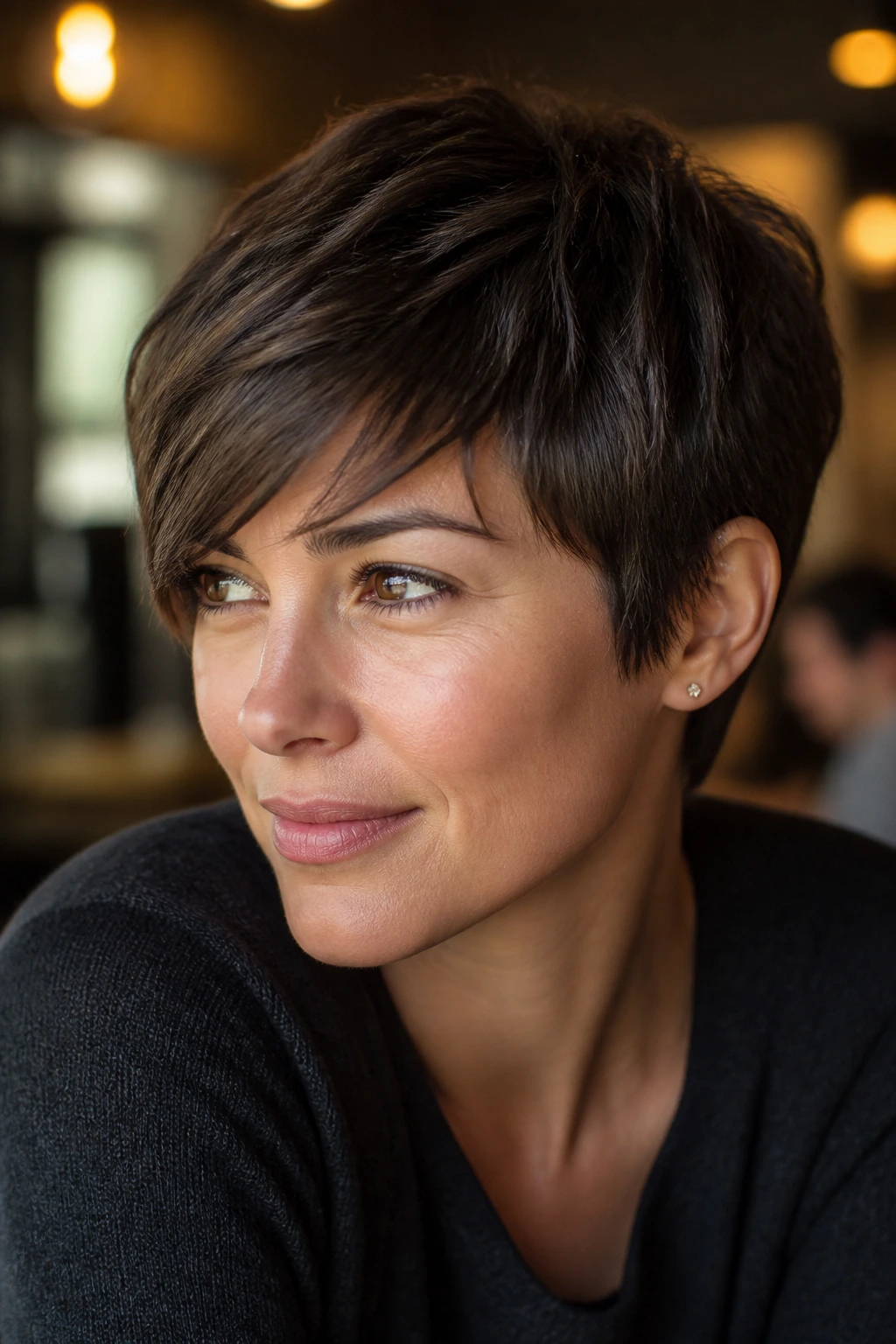
A pixie can soften features when it keeps enough length on top and around the fringe. That’s the version I prefer. Too short everywhere, and the cut can feel severe. Leave a side fringe, some texture at the crown, and a little softness near the ears, and the whole thing changes.
The side fringe should sweep across one brow, not sit straight across the forehead. That diagonal line keeps the face from looking too exposed. Around the back and sides, the cut can stay close, but not sharp. A soft nape and piecey top make it feel deliberate instead of clipped.
A pea-sized amount of styling paste is usually enough. Rub it between your palms first. Then press it lightly into the top and fringe, using your fingers to separate the strands.
Short hair can be gentle. It just needs the right shape.
14. Bixie Cut with Soft Sideburns
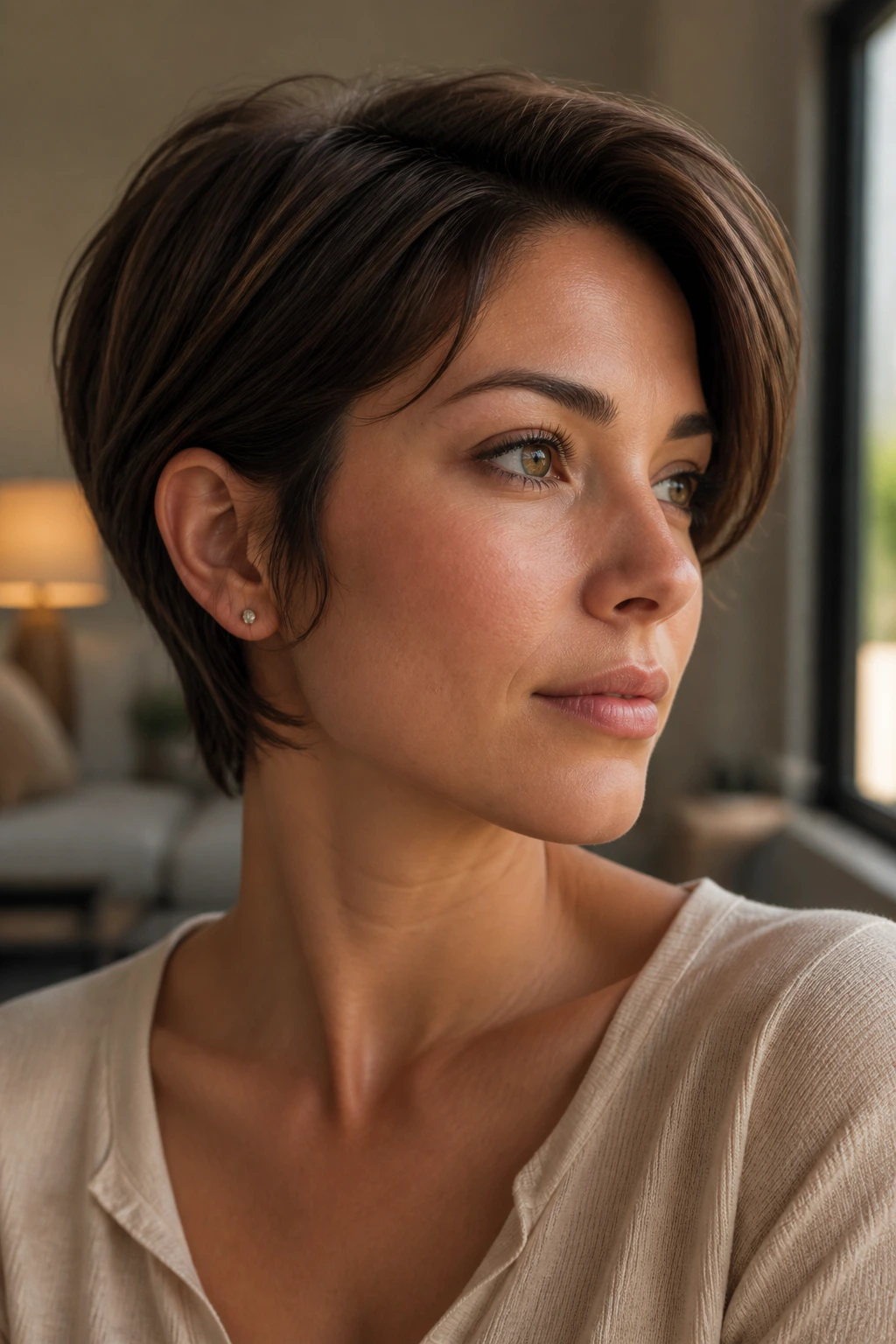
The bixie is the middle ground between a bob and a pixie, and that in-between length is exactly what makes it good at softening features. It gives you some face coverage, some neck, and enough shape to keep the cut from feeling too neat.
Soft sideburns are the key detail. Those little pieces near the cheek and jaw keep the sides from looking abrupt. They can be left a bit longer than the rest of the cut so the face gets a clean frame without a hard edge.
What Makes It Easy to Wear
- Better for people who want short hair without going full pixie
- Easy to air-dry with a bit of mousse
- Looks especially nice with a side part
- Can be tucked behind the ear without losing shape
If your hair grows out fast, this is a forgiving cut because the bob side of it helps the shape hold longer. That makes it more practical than people expect.
15. Wolf Cut with a Softer Crown

A wolf cut does not need to look wild. The softer version keeps the crown lifted and the front layers loose, which means the haircut still has edge without turning into a pile of choppy pieces.
The face-framing part usually starts around the cheekbone and falls into longer, broken layers through the neck and shoulders. That layered movement distracts from sharp features in a good way. It draws the eye up and out instead of locking everything into a single heavy line.
What to Ask Your Stylist
Ask for less disconnection at the top if you want a softer result. The classic wolf cut can get a bit extreme. A gentler version keeps the same spirit but avoids the overdone, mullet-like jump between top and bottom.
This cut works best on hair with some natural bend. Straight hair can wear it too, but it needs a little styling to keep the layers from lying flat.
16. Rounded Layers for Curly Hair

Curly hair often looks best when the cut respects its shape instead of fighting it. Rounded layers do that. They keep the silhouette soft around the face and stop curls from forming a square outline at the jaw.
Should curly layers be cut dry? Usually, yes, or at least checked dry. Curls spring up in their own way, and a wet cut can fool even a good stylist if the shrinkage is strong. The goal is a rounded outline that follows the cheek and chin, not a pyramid.
How It Softer the Face
The top stays balanced, the sides don’t flare too wide, and the curls around the front can fall in a gentle arc. That arc is what softens the features.
If you wear your curls natural, ask for face-framing pieces that start where your curls open up best — for a lot of people, that means around the cheekbone or just below it. Too short, and the curls can spring up into a shelf.
17. Invisible Layers for Fine Hair
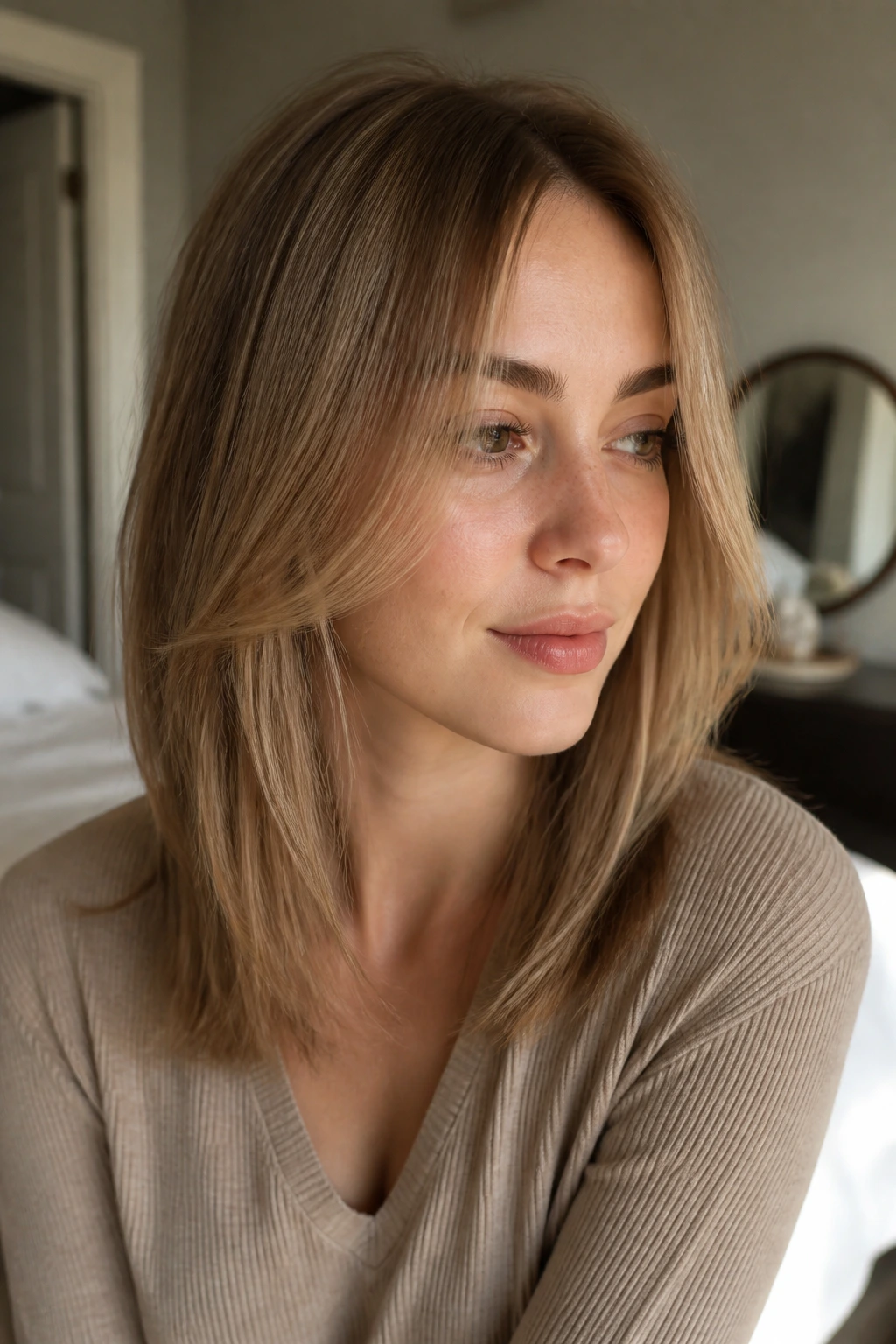
Unlike choppy layers that announce themselves, invisible layers work from the inside. They remove weight without making the ends look thin, which is a much smarter move for fine hair.
That’s why this cut is so useful if you want softness around the face but hate seeing obvious steps in the mirror. The front pieces still frame the cheek and jaw, but the layering stays tucked under the surface. The outside line remains clean.
Best For
- Straight or slightly wavy fine hair
- People who want movement without losing fullness
- Cuts that sit around the collarbone or a little longer
- Anyone who dislikes a highly layered look
Ask for layers that start at least 2 to 3 inches below the chin if the hair is very fine. That keeps the front from collapsing. The result is subtle, but it changes the way the face sits inside the hair.
18. Razor-Cut Shag Bob
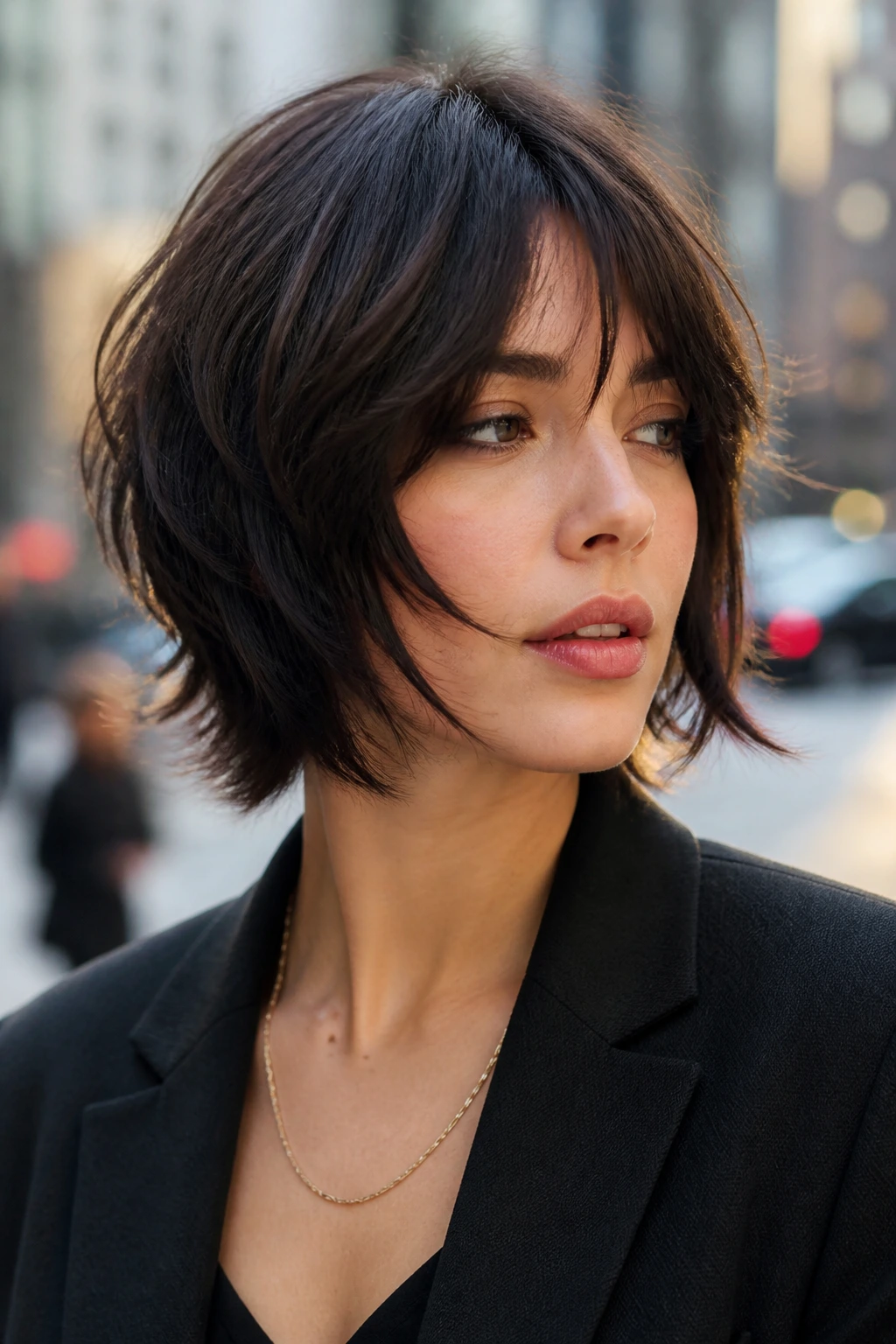
A razor-cut shag bob has a softer edge than a precision bob, and that softness is the whole reason it works on so many face shapes. The razor takes some of the bluntness out of the outline, so the ends move instead of sitting like a line.
This haircut is especially good when you want the front to feel broken up a little. Shorter face-framing pieces can begin near the cheekbones and taper toward the neck. That gives the jawline some breathing room.
What to Watch For
- Razor cutting can be too much for fragile or overprocessed ends
- It works best on healthy hair with some density
- Styling is easier with a light cream than with heavy oil
- A quick bend from a flat iron can keep the shape alive
I like this cut most on wavy hair that needs a little shape without looking too polished. It has edge, but not the stiff kind.
19. C-Shaped Layers Around the Face

C-shaped layers are one of those little details that make a haircut feel finished. The front pieces curve from the temple area down around the cheek and toward the chin, creating a soft arc that surrounds the face instead of cutting across it.
That curve matters because the eye follows it naturally. Straight lines stop the eye. Curves keep it moving. If you want to soften a long face, this is a strong choice because it adds width where the face feels narrow. If you want to soften a square jaw, it blunts the corners in a gentle way.
The best part is how natural it looks when the hair moves. The pieces sweep against the neck, brush the collarbone, and fall back into place without needing much fuss. It’s one of the least dramatic cuts on this list, which is exactly why it works.
20. Soft Mullet with Tapered Ends

A soft mullet is not the loud, spiky version people picture first. The better version keeps the crown light, the front pieces soft, and the back tapered rather than shaggy for the sake of being shaggy.
Why It Works on Features That Feel Too Strong
The short top and face-framing sides create lift, while the tapered back keeps the haircut from turning bulky at the neck. That balance takes pressure off a heavy jawline and can make a wide face feel a little longer.
Ask for the shortest layers to stay around the cheekbone rather than cutting them high into the temple. That keeps the shape softer. A bit of movement around the sideburn area helps too, especially if you usually wear one side tucked back.
This is a cut with personality. It is not trying to disappear.
21. Graduated A-Line Bob with a Deep Side Part
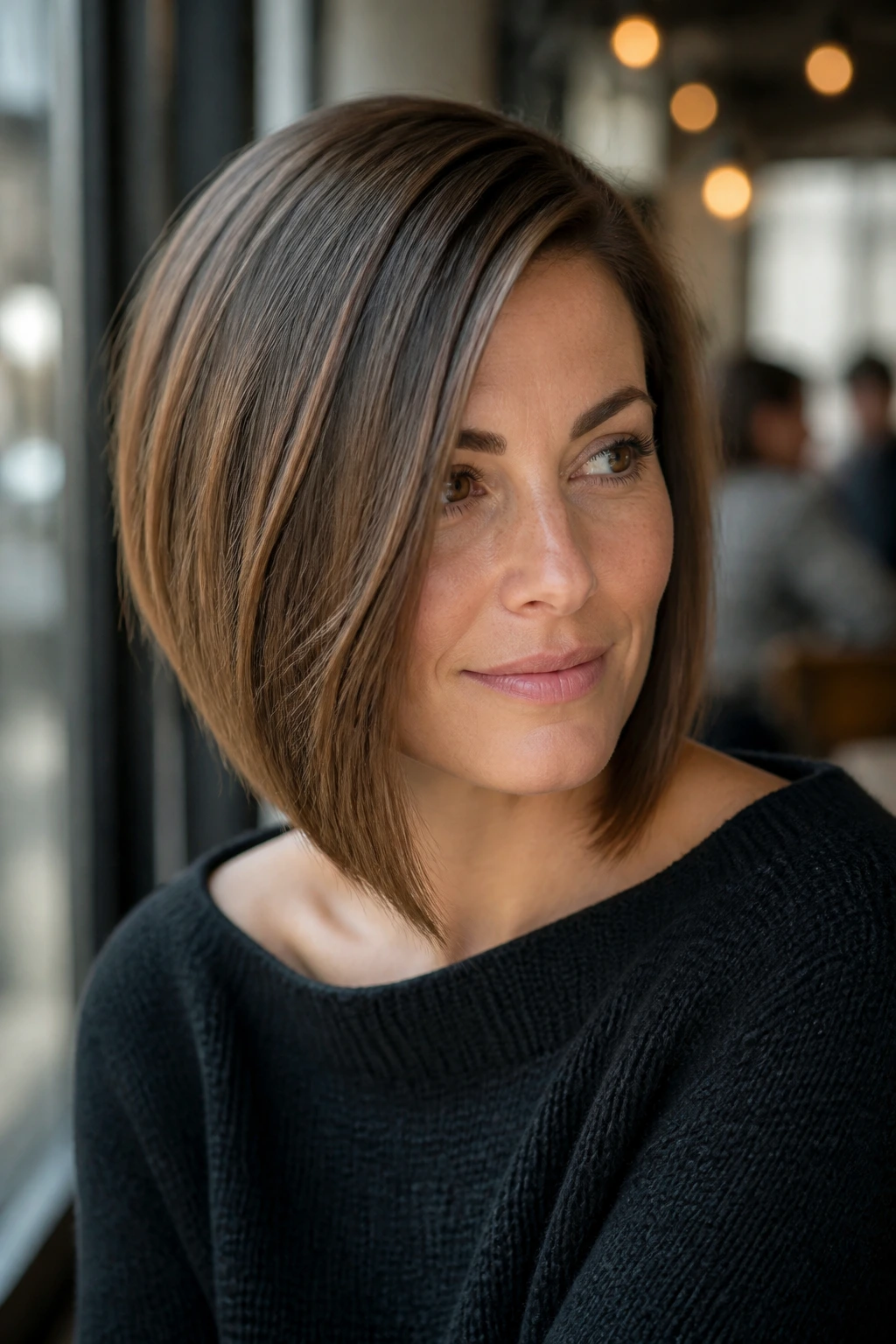
Can a bob still soften the face if it has a strong shape? Yes, if the line is angled forward and the part is deep enough to break the symmetry. The A-line shape gives the haircut direction, while the side part keeps the front from looking flat or severe.
The front pieces should sit a touch longer than the nape, usually landing somewhere around the jaw or just below it. That length lets the hair skim the face instead of stopping dead against it. A deep side part also gives the root a little lift, which helps if your hair falls flat near the crown.
Good Match For
- Round faces that need a longer diagonal line
- Straight hair that wants some visual shape
- People who like structure but not blunt heaviness
Style it with a paddle brush for smoothness or a small round brush for a softer bend. Either way, the angle should be visible but not sharp.
22. One-Length Cut with Interior Face Framing

A one-length cut sounds plain, but it can be a smart choice if you hate obvious layers. The trick is adding interior face framing — pieces cut inside the shape so the outside line stays full while the front gets a little movement.
That is a good compromise for people who want softness without seeing a lot of slicing or choppiness. The hair still looks thick, but the front isn’t a wall. Pieces around the cheek and jaw can be cut to fall forward slightly, then tuck back into the main length.
This works especially well on medium to thick hair. Fine hair can lose too much body if the internal shaping is overdone.
If your hair is straight, this cut can look especially clean with a center part and a slight bend at the ends. If it’s wavy, the front pieces do half the work for you.
23. Deep Side-Part Layers for Thick Hair
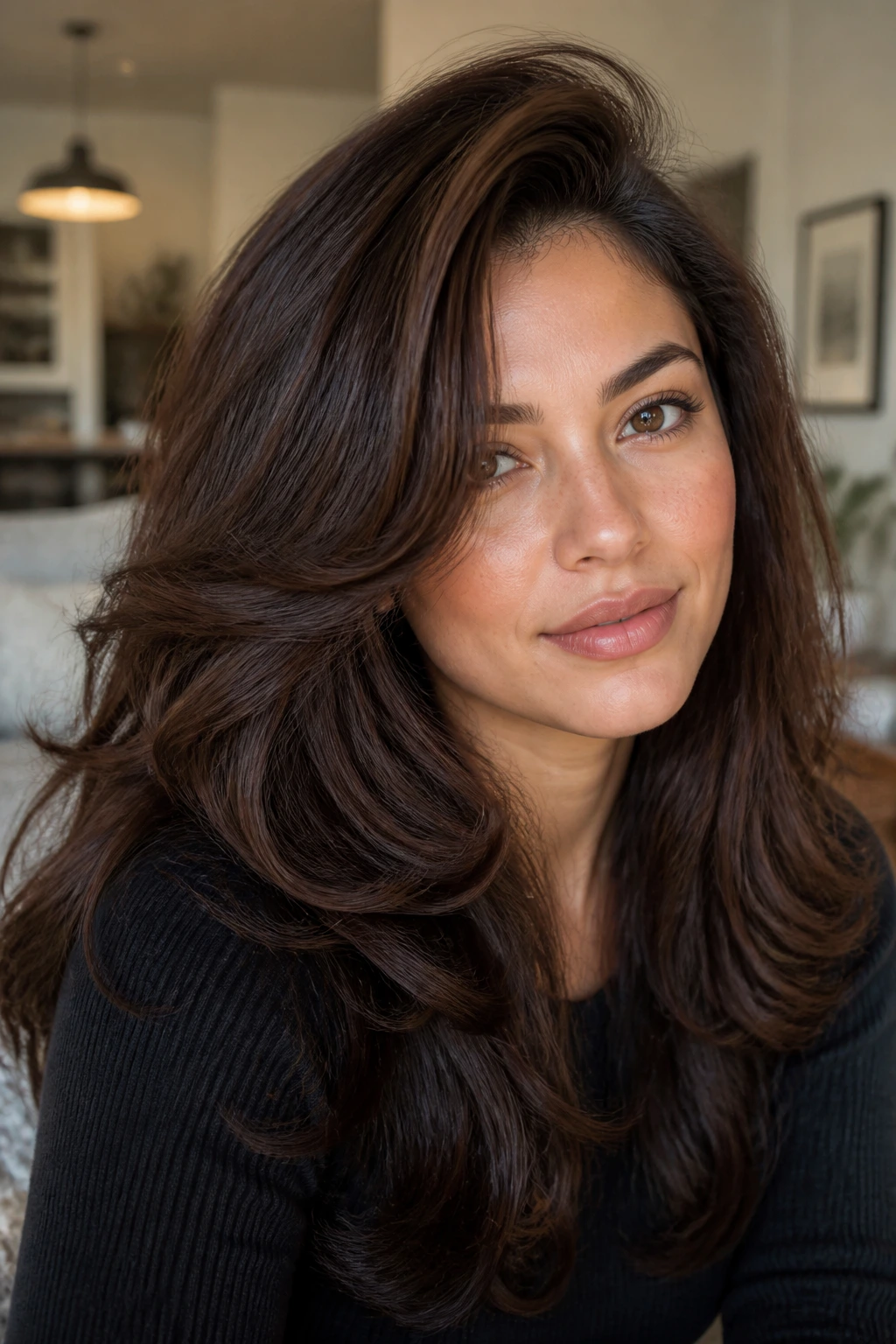
Thick hair can overwhelm a face fast if it falls straight from the part with no break in the shape. A deep side part changes that immediately. It moves weight off the center, creates a soft diagonal across the forehead, and lets the front layers drape in a more flattering way.
The point is not just to add volume. It’s to place the volume in a better spot. A little lift at the roots and a soft bend through the first few inches of hair can make the face feel less boxed in, especially if the hair tends to grow outward at the sides.
Use a root clip or a quick blast with the blow dryer while the hair is still damp. That gives the part some staying power without making it look stiff. Thick hair often needs the simplest styling to work well — not more product, just better placement.
24. Tapered Curly Crop with a Long Fringe

A tapered curly crop works because it keeps the sides and back controlled while letting the fringe stay long enough to soften the forehead. That long fringe is the part that changes the whole cut. Without it, short curly hair can feel too open at the face.
Unlike a tightly cropped shape that exposes everything, this version gives the curls a place to fall forward. The taper around the ears and nape keeps the cut neat, while the fringe can land around the brows or cheekbones depending on your curl pattern.
Best Way to Wear It
Ask for the fringe to be cut a little longer than you think you need. Curls spring up after they dry. A fringe that looks perfect wet can end up half an inch too short once it settles.
This cut flatters people who want the face to stay visible but not fully bare. It has shape, movement, and enough softness to take the edge off strong features.
25. The Soft Layered Lob

If you only save one haircut photo, make it this one. A soft layered lob is the safest bet when you want face framing haircuts that still feel easy to live with. It hits around the collarbone, keeps enough length to tuck or tie back, and adds just enough layering at the front to soften the eyes, cheeks, and jaw.
The best version is not overly feathered. The front layers should begin around the chin or cheekbone, then slide into a clean body at the ends. That keeps the shape grown-up and flexible instead of overstyled. It works on straight hair, wavy hair, and even curls if the layers are cut with restraint.
What I like most is how forgiving it is. You can air-dry it, blow it out, or give it a loose bend with a 1-inch iron, and it still reads well. That is rare. A lot of haircuts depend on a perfect styling routine. This one does not.
A soft layered lob is the haircut you come back to when you want your features to look calmer, your hair to feel lighter, and your mornings to stay sane.
