



Diamond face shapes are the easy ones to flatter and the easy ones to mess up. That sounds dramatic, but if you’ve ever had a cut that made your cheekbones look sharp in a bad way, you know exactly what I mean.
The shape itself gives you a lot to work with: a narrower forehead, the widest point sitting at the cheekbones, and a jaw that tapers a bit more cleanly than the rest of the face. That’s a gorgeous structure. It just asks for the right framing. The most forgiving hairstyles for diamond face shapes usually do one of two things — they soften the width at the cheekbones, or they add a little balance lower down near the jaw and chin.
A lot of people get tripped up because they focus only on length. Length helps, sure, but placement matters more. A blunt line sitting right at the cheekbones can feel harsh. So can a slicked-back style with all the volume piled on top. The better move is usually to shift attention around the face with side parts, face-framing layers, soft bangs, or texture that bends the eye away from the widest point.
And yes, there’s plenty of room for short hair, curls, updos, and blunt shapes here. The trick is in the details — where the layers start, how much softness you leave around the temples, whether the ends turn in or flip out, and how much crown height you create. Some styles need only a tiny adjustment to go from “fine” to “really good.”
1. Shoulder-Length Layers for Diamond Face Shapes
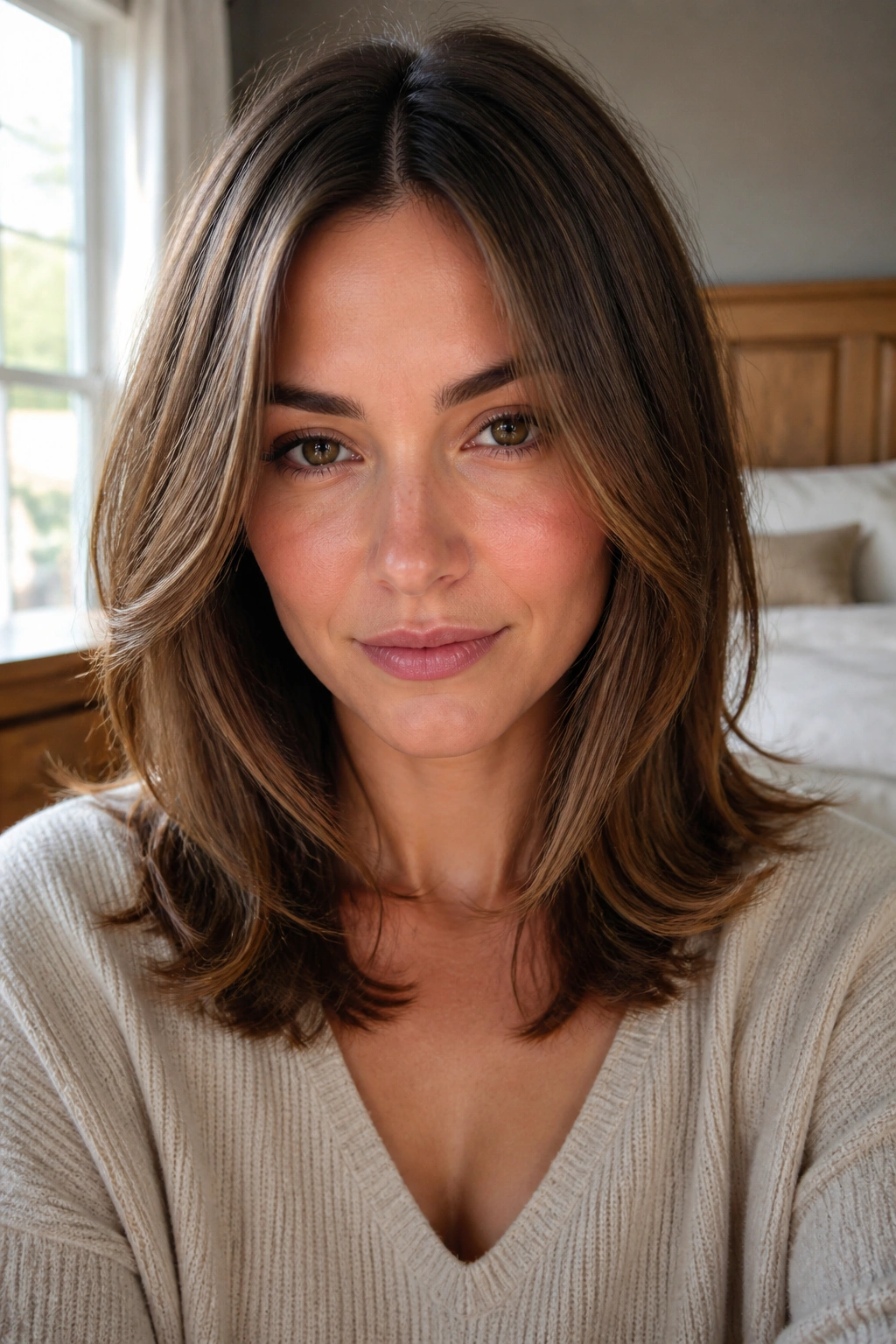
Shoulder-length layers are the first cut I’d hand to someone with a diamond face shape who wants an easy daily style. The reason is simple: they sit below the cheekbones, which means they do not keep cutting straight across the widest part of the face. That little bit of extra length changes the whole feel.
Keep the front pieces a touch longer than the rest — usually somewhere between the mouth and collarbone — so they skim past the cheekbones instead of landing right on them. That small difference matters more than people think. If the shortest layer lands at the exact width of the face, you can get a boxy look. If it falls lower, the face opens up.
I like this cut with a center part or a soft off-center part. A hard side part can work too, but shoulder-length layers already do a lot of the balancing on their own. Add a blowout with a round brush, and let the ends bend inward just a little. Not curled. Just curved.
Best for: straight, wavy, and medium-density hair.
Ask for: face-framing layers that start below the cheekbone, not at it.
Avoid: a blunt, one-length line that stops exactly at chin level. That tends to make the cheekbones shout.
2. A Deep Side-Part Lob
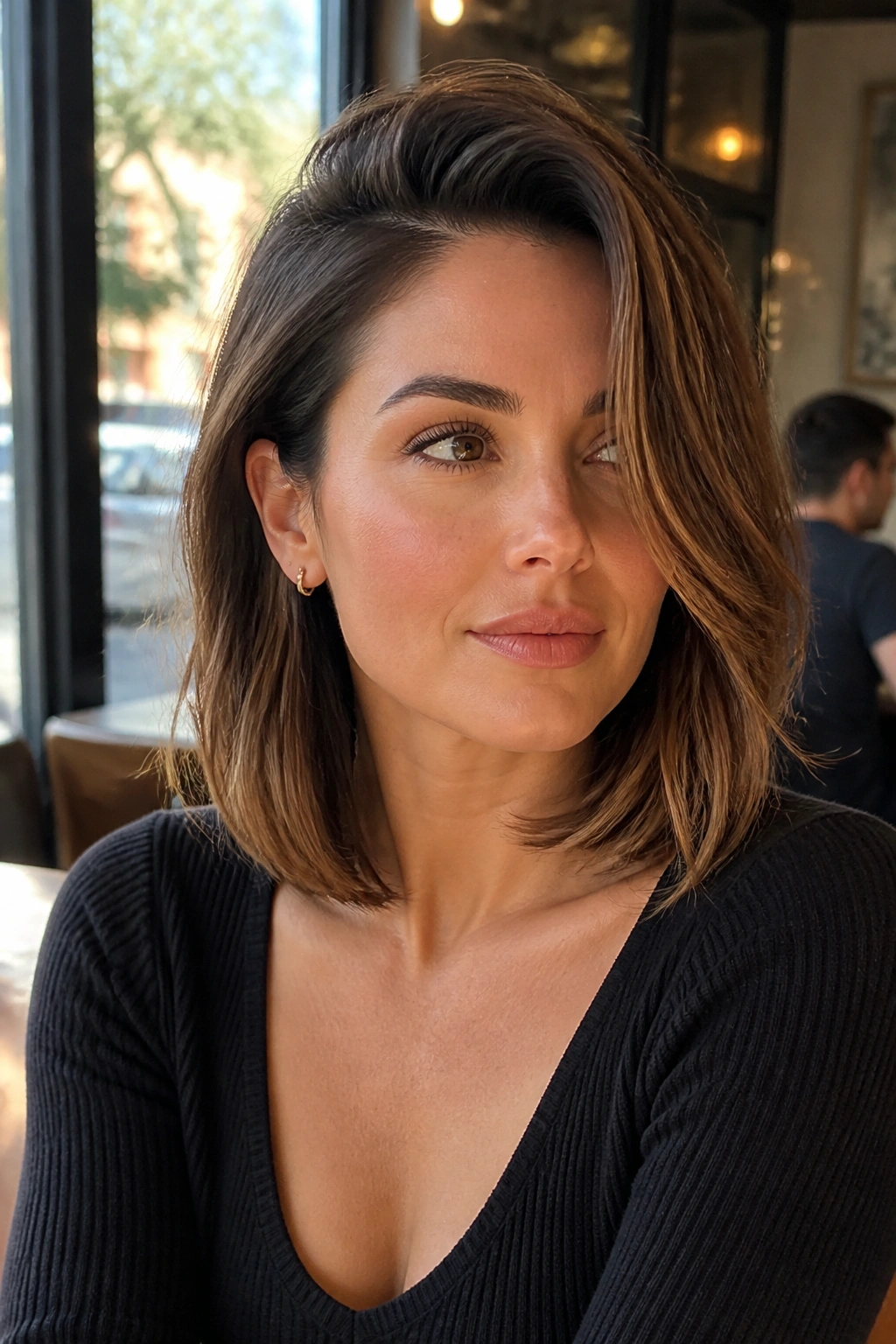
Why do so many stylists reach for a deep side-part lob with diamond faces? Because it shifts the whole visual weight of the haircut away from the center of the face. A lob — usually hitting somewhere between the jaw and collarbone — gives you enough length to soften the cheekbones without dragging the whole look down.
The deep side part matters almost as much as the cut. It breaks up symmetry in a way that flatters sharp bone structure. One side gets a little lift at the roots, the other side drapes across the forehead and cheek. That diagonal line is your friend. It’s a tiny trick, but tiny tricks add up fast in hair.
Why It Works
The best version isn’t stiff or overly sleek. It has movement. The ends should feel soft, not chopped into a hard shelf. If your hair is fine, ask for light internal layers so the shape has body without looking thin.
- Part the hair about 2 to 3 inches off center.
- Blow-dry with a paddle brush first, then bend the ends under with a round brush.
- Keep the front pieces around chin to collarbone length.
- Add a light mist of texture spray if the hair falls flat by noon.
Pro tip: if your cheekbones already carry a lot of visual weight, keep the deeper side part on the opposite side of your strongest cheekbone. It sounds fussy. It isn’t. It works.
3. Curtain Bangs and Loose Waves

Curtain bangs can be a dream on diamond face shapes, but only when they’re cut with enough softness. The fringe should open at the center and graze the temples, not sit as one heavy block across the forehead. That’s the part people get wrong.
Loose waves finish the job. They add width where the face tends to narrow — around the forehead and jaw — without camping out right on top of the cheekbones. I prefer waves that start below the ear rather than all the way up near the roots. Otherwise, the face can end up looking wider at exactly the wrong spot.
What to Ask For
- Curtain bangs that hit around the brow and cheekbone, then drift into longer side pieces.
- Layers that begin below the cheekbone line.
- A little face curve, not a razor-thin edge.
How to Style It
Use a 1-inch curling iron or wand and wrap only the mid-lengths and ends. Leave the first inch or two near the roots alone. That keeps the wave soft instead of puffy. Then rake the curls apart with your fingers and let the bangs fall where they want to. Usually, they’ll split in the right place on their own after a minute.
This style has a slightly undone feel. Good. That’s the point.
4. The Chin-Length Textured Bob

A chin-length bob can be beautiful on a diamond face shape, but it has to be textured. A dead-straight bob that lands exactly at the cheekbones can make the face look angular in a way that feels harsh. Texture fixes that.
I like the cut to sit just under the chin, or slightly above it if the hair is thick. That creates a clean line without slicing through the widest part of the face. Then you want the ends to be a little piecey, not blunt like a ruler. A point-cut finish or a soft razor finish can help, depending on the hair type.
The styling matters just as much as the cut. A touch of bend through the mid-lengths keeps the silhouette from feeling too rigid. And if your hair naturally poufs at the sides, tuck one side behind the ear and leave the other loose. It breaks up the shape in a nice way.
- Best on straight to wavy hair.
- Works especially well if your jawline is narrow and you want a little visual fullness there.
- Needs regular trims, usually every 6 to 8 weeks, to keep the line clean.
This one is crisp. Not severe.
5. The Soft Shag With Airy Fringe

The soft shag is one of those cuts that sounds messy and ends up looking oddly polished when it’s done right. For diamond face shapes, that airy fringe and those broken-up layers are gold, because they stop the cheekbones from being the only thing people notice.
The secret is restraint. You do not want the shag to turn into a choppy mop around the cheekbones. The shortest pieces should lift at the brow and temple, then melt down toward the jaw. That creates movement without pinning the face into a harsh frame. A heavier shag can be too much. A soft shag has air in it.
I also like this cut because it doesn’t demand perfect styling. A little mousse at the roots, a quick rough-dry, and a few bends with a medium barrel iron are often enough. The best version looks better when it’s not overworked.
Hair that’s a bit wavy tends to love this shape. Fine hair can wear it too, but the layers should stay longer so the ends don’t vanish. Thick hair? Great. Ask for internal shaping so the bulk is removed without turning the cut fluffy.
A shag can be cool. It can also be a little ridiculous. The soft version avoids the circus.
6. Long Curls With Volume Set Low

Long curls are underrated for diamond faces, mostly because people assume curls always add width in the wrong place. They can, if the curl starts too high. But when the volume sits lower — around the jaw, mouth, and collarbone — the shape becomes far more flattering.
That lower volume balances the narrowness of the forehead and jaw without making the cheekbones look wider. The curl pattern should stay loose near the top and open up a little at the ends. Tight ringlets right at cheek level can feel crowded. Bigger, softer curls breathe.
The Science Behind the Shape
Curls naturally add horizontal movement. On a diamond face, that movement is best used below the cheekbone line. That’s why I’d rather see a curl that begins at the lips than one that starts at the temples. It’s a small shift, but it changes the whole silhouette.
How to Wear It
- Use a 1.25-inch iron for loose curls.
- Curl away from the face on the top layers.
- Leave the last inch out for a softer finish.
- Break up the curls with a wide-tooth comb once they cool.
If you’ve got naturally curly hair, ask your stylist to shape the cut so the density falls lower, not higher. That keeps the face from feeling too wide in the middle. Simple. Smart. Done.
7. A Pixie With Crown Lift and Side Fringe
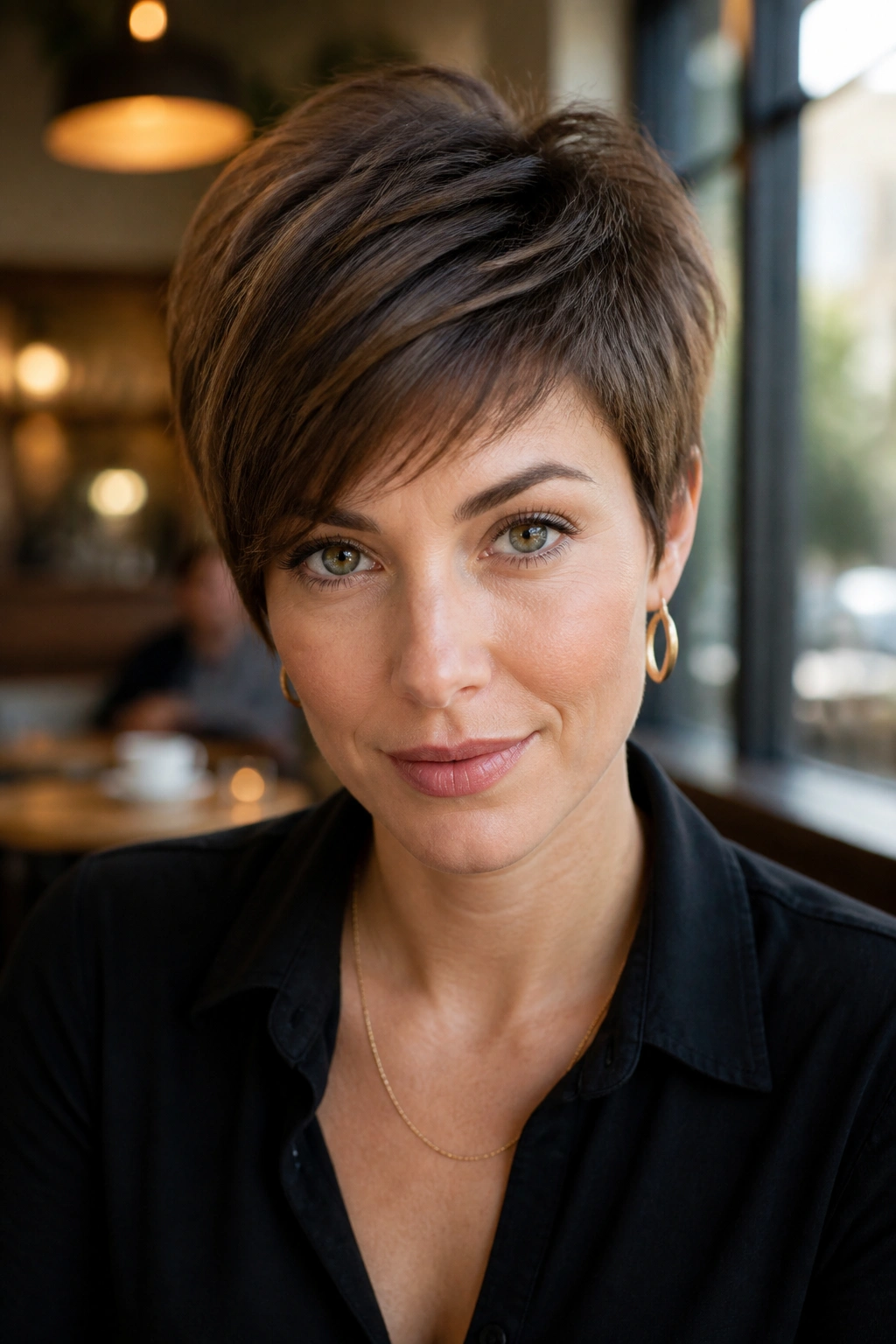
Short hair is not off-limits for diamond face shapes. That myth hangs around forever, and I’m not sure why. A pixie can look sharp in the best way when it’s cut with crown lift and a side fringe that softens the forehead.
The key is to keep the top a little longer than the sides — usually around 2 to 3 inches on top, depending on texture — so you can brush it slightly forward or sideways. You want shape, not a stiff helmet. If the sides are clipped too tight and the top is flat, the face can look longer and more angular. A small amount of lift at the crown helps, but too much makes the cheekbones feel even stronger. Balance is the whole game.
Keep the Edges Soft
A wispy side fringe is your best friend here. It can skim the brow or cheekbone and make the whole cut feel gentler. Sideburns should not be carved into hard little points unless you want the look to feel edgy on purpose.
- Ask for tapered sides, not buzzed skin close to the ear.
- Keep texture through the top.
- Use a pea-sized amount of matte paste, not a heavy cream.
- Style with fingers instead of a brush for the most natural finish.
A pixie on a diamond face works when it looks lived-in, not armored.
8. The Collarbone Cut for Diamond Face Shapes
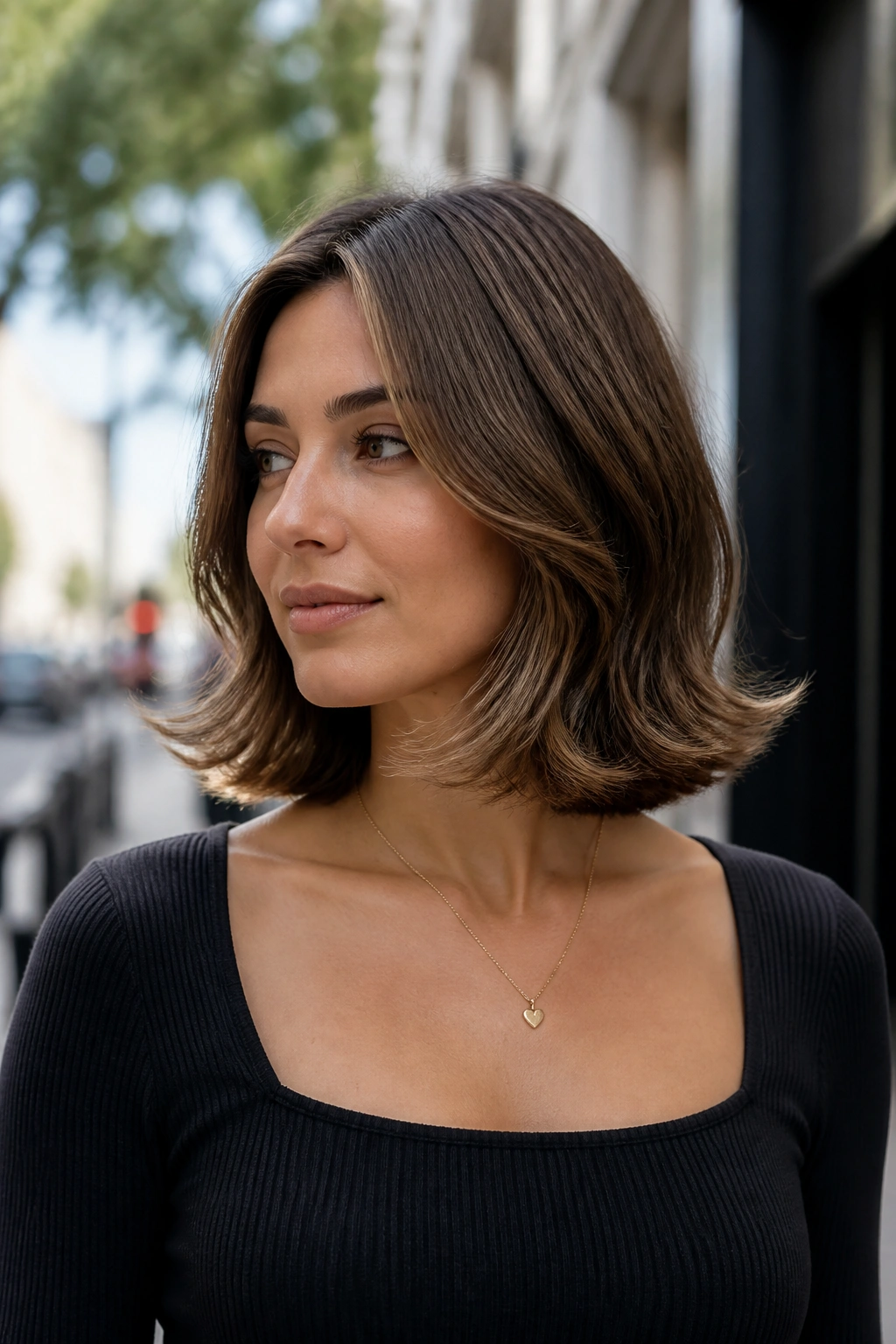
A collarbone cut is one of the safest, smartest choices for diamond faces because the length lands in a sweet spot. It’s long enough to soften the cheekbones, but short enough to keep the hair from dragging everything down. That’s a hard balance to beat.
I especially like it with ends that flip out a little. The outward bend gives width near the jaw, which helps because diamond faces can feel narrow there. A tiny flip at the bottom does more than people expect. It stops the cut from sitting flat against the face like a curtain.
If you want the style to feel modern, keep the layers subtle. You do not need a heavily layered cut unless your hair is thick or bulky. Sometimes the best move is a clean length with just enough movement to keep it from falling straight.
This cut also behaves well with a center part or a side part. That makes it easy. Not lazy — easy. There’s a difference.
Try a blow-dry with a 1.5-inch round brush and twist the ends out for the last 10 seconds on each side. That little bend gives the cut life without turning it into a full-on flip from another decade.
9. Half-Up Styles With Face-Framing Pieces
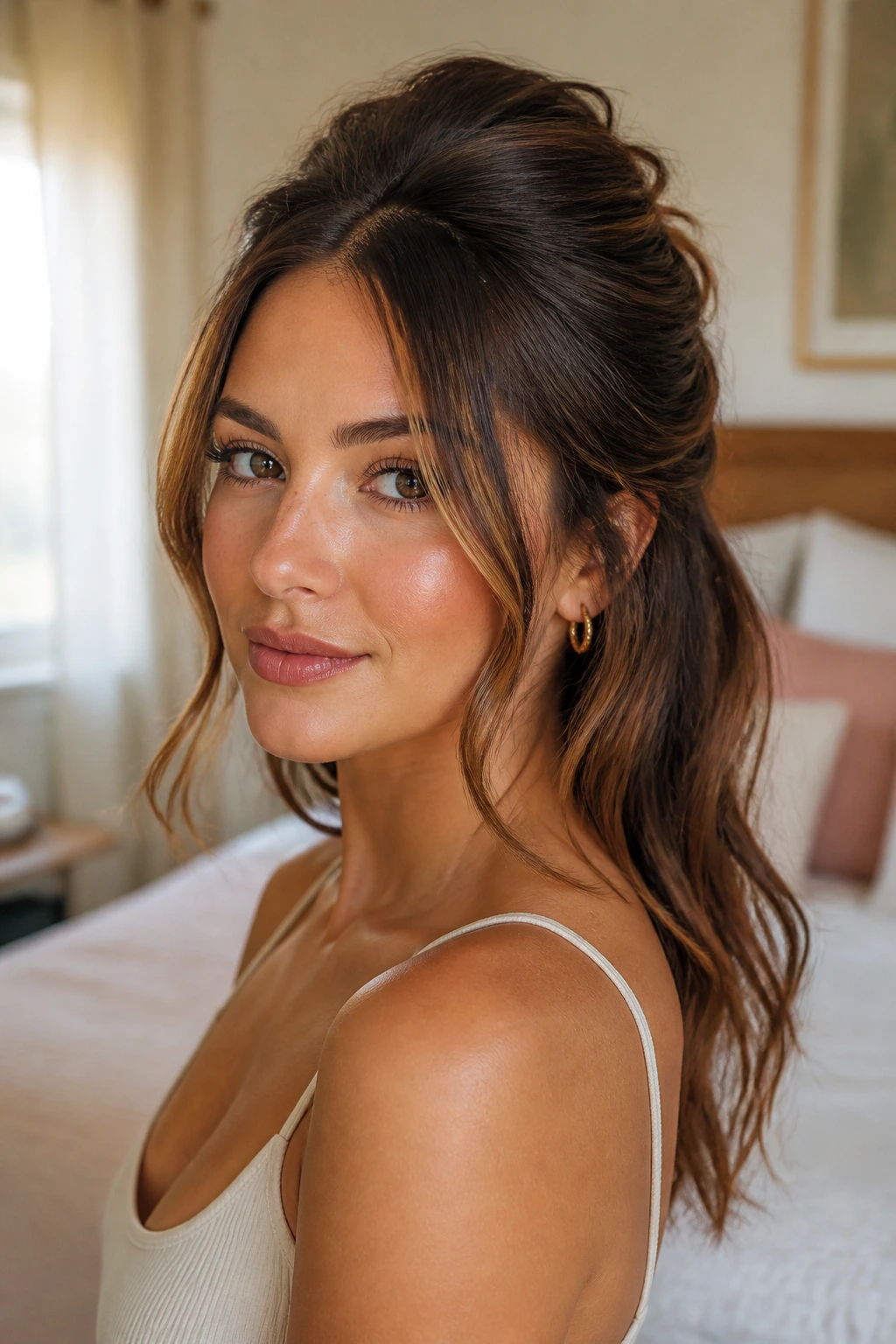
Can a half-up style flatter a diamond face shape? Absolutely — if you do not pull every strand back like you’re clearing the deck. The problem with a tight half-up is that it exposes the cheekbones, forehead, and jaw all at once. That can feel a little severe.
The fix is easy. Leave two face-framing pieces out in front, and keep a little volume at the crown instead of flattening it. The top section should be secured gently, then loosened with your fingers until it feels soft. Not sloppy. Soft.
How to Get the Most From It
A half-up works best when the loose front pieces start somewhere between the temples and the cheekbones. Too short, and they puff out in an awkward way. Too long, and they lose the framing effect. If your hair is layered, let the shortest front layer fall free; it usually does the most work.
- Tease the crown lightly with a rat-tail comb.
- Use a small clip or elastic that won’t collapse the shape.
- Curl the loose front pieces away from the face.
- Leave the bottom half with a bit of wave, not a straight sheet.
This is one of those styles that looks casual in the best sense. It takes five minutes. It also saves a diamond face from looking too exposed.
10. A Blunt Bob With a Soft Bend
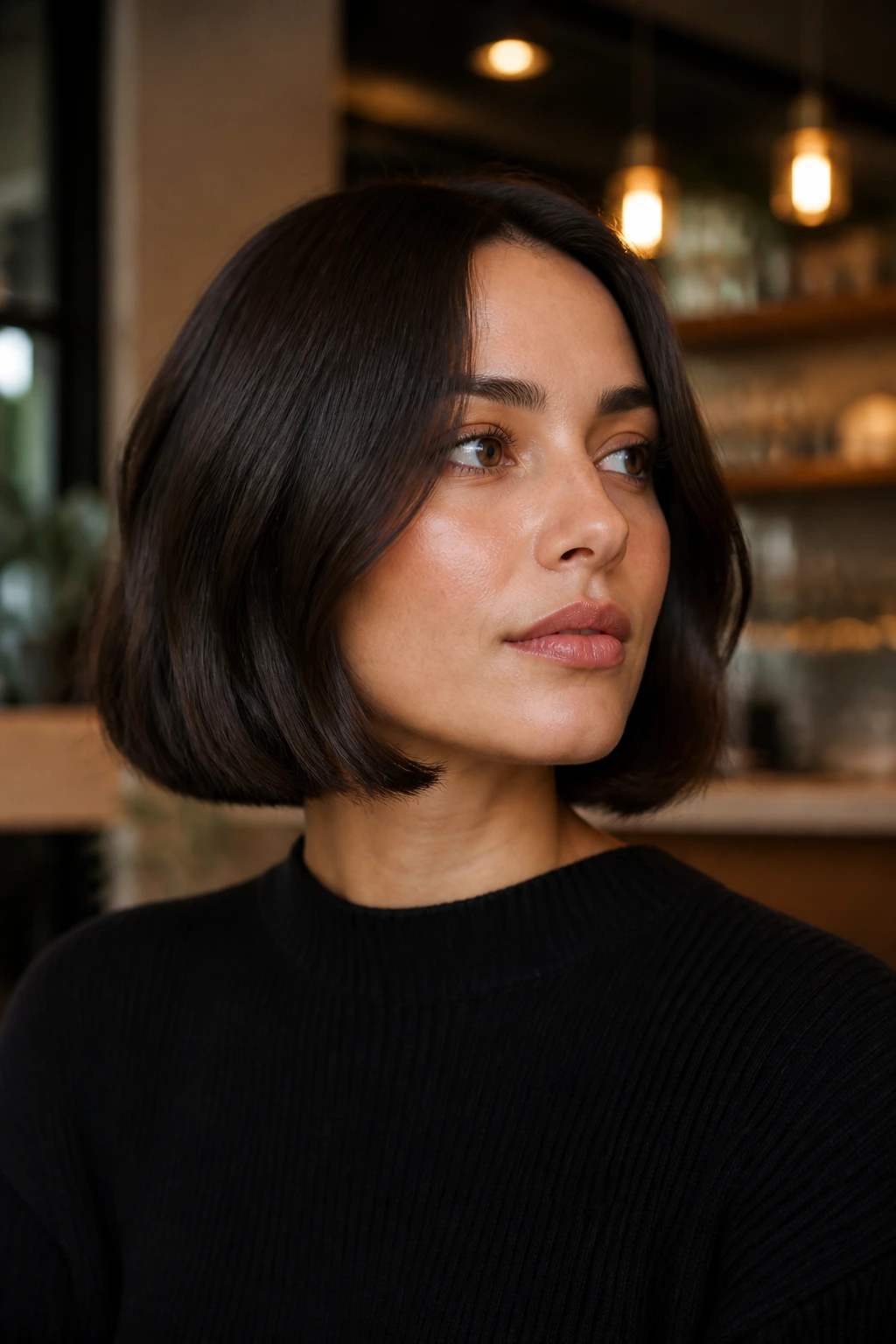
A blunt bob can work on diamond face shapes, but I would only recommend it if there’s some softness in the styling. The shape itself is direct. That’s the point. But a straight, hard edge at the cheekbone line can feel too severe, and that’s the version to avoid.
The better move is a blunt line that sits just below the jaw or slightly above it, paired with a small bend through the ends. That keeps the cut strong without making it boxy. You get structure, but not rigidity.
The hair texture matters here. Thick hair can carry a blunt bob beautifully because the line looks plush and clean. Fine hair can still wear it, but it needs either a soft underbend or a bit of texture spray so it doesn’t fall flat against the face. A bob that lies too close to the skin can make the cheekbones look even wider.
Use a flat iron or round brush to turn the ends under by half an inch. That’s enough. You don’t need a pageboy effect unless that’s what you want. And if you do want that, fine — own it.
Best when you want:
- A cleaner, more graphic shape.
- Less fuss in the morning.
- A cut that makes earrings and necklines pop.
11. The Low Ponytail With Crown Volume

A low ponytail sounds plain until you add the right shape at the crown and around the face. Then it becomes one of the easiest hairstyles for diamond face shapes, because it keeps the face open without pulling everything backward too tightly.
I like a low ponytail with a little lift at the crown and a soft part — center, side, or slightly off-center all work. The top should not be plastered down. That’s where people go wrong. A flat crown can make the cheekbones dominate, while a bit of height above the temples balances the face.
Leave a few thin pieces loose around the front. Thin pieces, not bulky chunks. They should skim the cheekbone or jaw, then fall into the rest of the style. If the loose pieces are too thick, the ponytail starts looking heavy. If they’re too short, they stick out. A little discipline helps.
This is a good style for work, dinner, or anything where you want to look pulled together without trying too hard. Wrap a small section of hair around the elastic and pin it underneath. It takes 30 seconds and makes the ponytail look finished.
12. Braids That Leave Room Around the Face
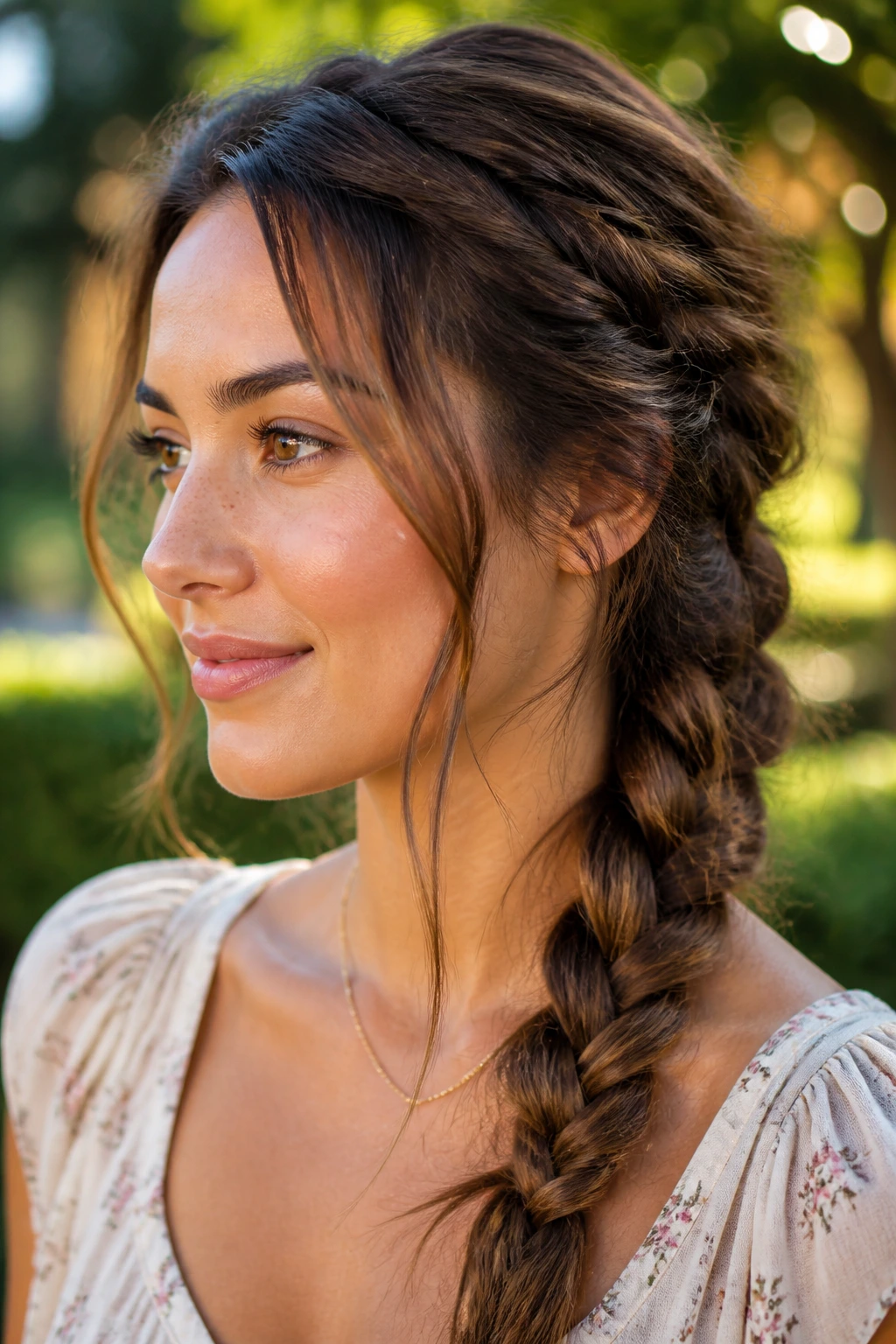
Braids can be lovely on diamond faces, but tight braids can also be a little unforgiving. The reason is obvious once you see it in the mirror: when every strand is pulled straight back, the cheekbones become the loudest thing in the room.
So leave room. That’s the whole trick.
A loose side braid, a softly pulled-apart Dutch braid, or even two braids with face-framing layers left out can all work. The braid itself does not need to be complicated. What matters is the spacing around the face and the looseness near the front. A small bit of lift at the crown helps too, especially if you want the forehead to feel more balanced.
The best braid styles for diamond face shapes also tend to have some texture. Sleek braids can look elegant, but they need softness somewhere else — a bit of volume at the roots, a loose tail, or wispy pieces around the hairline. Otherwise the face can look very sharp, very fast.
Pull the braid apart gently after you secure it. Not too much. Just enough to make it look fuller and less rigid. That little tug changes everything.
13. A Soft Updo With a Side-Swept Front Section
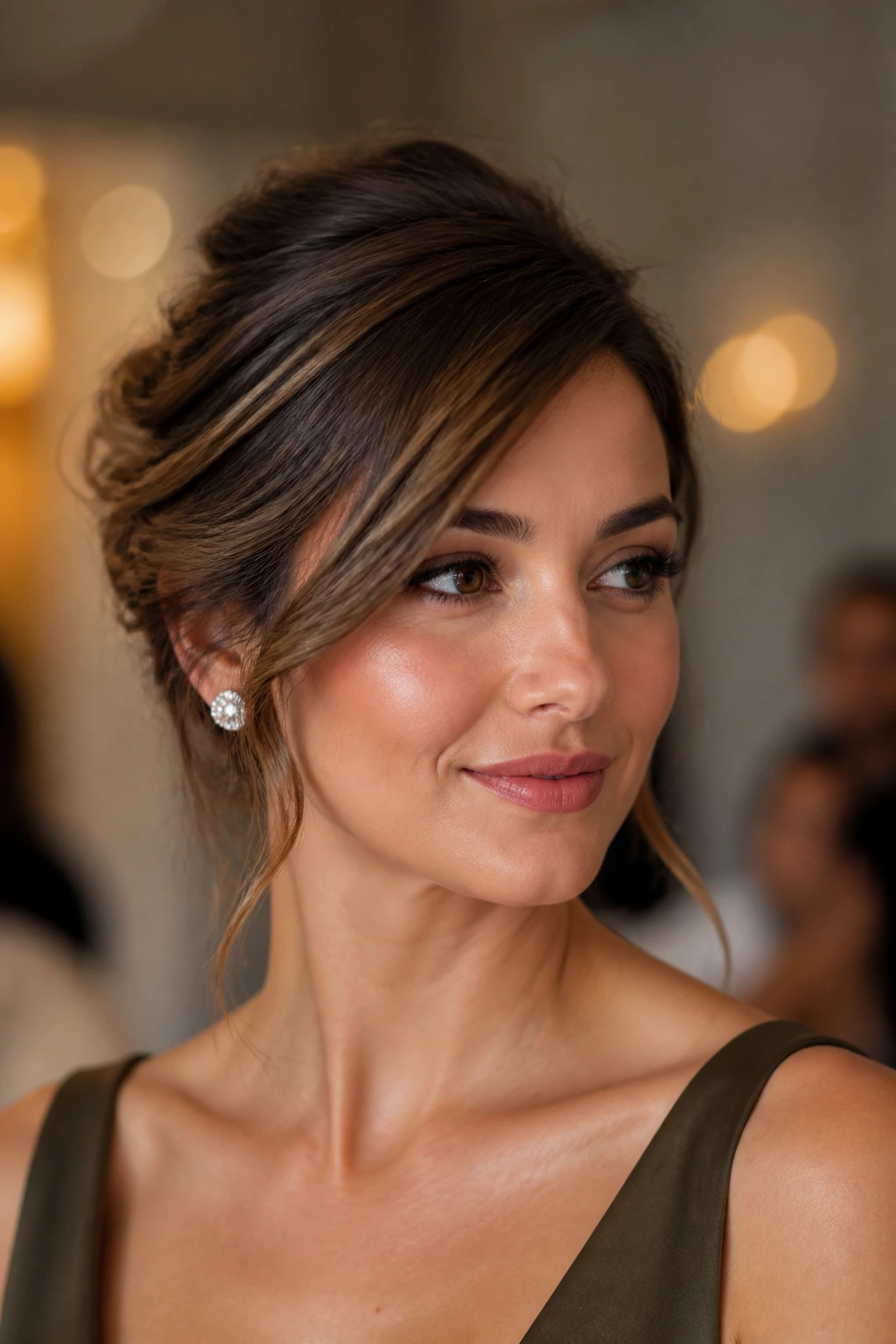
A formal updo does not need to feel severe, and that’s good news for diamond face shapes. If the hair is pinned too tightly and all the front pieces are slicked back, the face can look longer and narrower than it really is. A soft updo with one side-swept front section fixes that.
Best Version
A low chignon, loose French twist, or softly pinned knot works especially well when the front section is swept across the forehead and temple. That diagonal line breaks up the hard lines around the cheekbones. You get elegance, but with movement.
What to Avoid
A super tight bun at the crown. It’s not your friend here.
- Keep a bit of lift around the crown before pinning.
- Leave one side of the front section broader than the other.
- Let a few short pieces escape near the temples.
- Use bobby pins under the top layer, not all over the surface.
I’d choose this style for weddings, dinners, or any event where you want your face to look clean but not stripped bare. It’s one of those styles that rewards a little mess. Too polished and it loses the point.
14. The Longer Wolf Cut

The wolf cut gets a mixed reputation because people picture an overdone shag with a lot of attitude and not much shape. A longer version is different. For diamond face shapes, that longer perimeter can be a smart choice because it keeps movement high while still leaving enough weight around the jaw and collarbone.
What makes it work is the ratio. The top layers can be lively, even choppy, but the bottom length should stay intact. That way the cut does not flare out at the cheekbones like a triangle. You want the longest pieces to sit below the face’s widest point. Easy rule, huge payoff.
This style is best if your hair has some natural bend or if you’re willing to rough-dry with texture cream. Straight hair can wear it too, but it needs a little grit. Otherwise the layers can separate in a way that feels thin instead of cool.
If you like your hair to feel a little messy in the morning and a little wild by lunch, this cut will probably make you happy. If you want sleek and controlled, skip it. That honesty saves a lot of regret.
15. Center-Part Layers That Curve Inward

A center part is not off-limits for diamond face shapes. I know that’s not the old rule people repeat, but old rules about face shape haircuts are often too blunt. The real question is whether the hair around the center part adds softness where you need it.
That’s where inward-curving layers come in. The front sections should fall past the cheekbones and then bend slightly toward the jaw. You’re trying to create a frame that eases the face shape instead of emphasizing the widest point. If the hair drops straight and flat, the center part can feel stark. If the layers curve, it softens the whole thing.
How to Get the Shape Right
- Ask for long front layers that start below the cheekbone.
- Blow-dry the front pieces forward first, then curve them under.
- Keep the part clean and the ends soft.
- Use a light serum on the mids and ends, not the roots.
This works especially well on medium to long hair. The length gives the layers room to do their job. Shorter hair can still wear a center part, but it usually needs more help from volume or fringe.
16. The Rounded Blowout With Airy Ends

A rounded blowout is one of my favorite styles for diamond faces because it does something subtle and useful: it adds fullness around the mid-lengths and ends without making the cheekbones the center of attention. That matters. A lot.
The shape should feel buoyant, not helmet-like. Roots get a lift, yes, but the magic lives in the round brush work through the middle and bottom sections. If the blowout is too flat at the sides, the face can look narrow. If it’s too puffy at the temples, it goes the other direction. The sweet spot is a soft curve that opens around the jaw.
This style loves shoulder length or a little longer. On shorter hair, the roundness can feel too compact. On longer hair, it can drift into a plain smooth blowout unless you keep the ends airy and slightly separated.
Use a 1.5-inch round brush and roll the hair under for a classic finish, or flip the ends out a touch if you want a looser feel. Either way, let the hair cool in shape before touching it. That part is boring. It also matters.
17. The Tousled Midi for Diamond Face Shapes

If I had to pick one shape that quietly does a lot of work for diamond face shapes, this would be it. A tousled midi — usually somewhere between the chin and collarbone — gives enough length to soften the cheeks, enough movement to keep the face from looking too strict, and enough versatility to wear it straight, wavy, tucked, or half-up.
The best version is rarely perfect. It looks better with a little bend, a little break in the ends, and a part that is not welded to the exact center of the head. That looseness is what keeps the style flattering. A smooth, straight midi can work too, but it needs soft face-framing pieces or the whole shape can feel a bit severe.
I also like this cut because it doesn’t box you into one styling habit. On busy days, let it air-dry with a touch of cream and call it done. When you want more polish, add a few turns with a curling iron and push the front pieces away from the face. When you want a sharper look, tuck one side behind the ear and leave the other side loose.
It’s the kind of cut that keeps behaving itself without getting boring. That’s rarer than it sounds.
