



A diamond face shape can make a haircut look sharp and expensive—or a little too severe—depending on where the volume falls.
Wide cheekbones, a narrower forehead, and a narrower jawline. That’s the basic map. The best hairstyles for diamond faces do not fight that structure. They soften the width at the cheeks, add a touch of fullness at the forehead or jaw, and keep the eye moving instead of locking onto the widest point.
I’ve seen the same person look softened by a side part, framed nicely by curtain bangs, and oddly boxed in by a blunt cut that hit right at the cheekbones. Small changes matter. A half-inch in the wrong place can throw the whole shape off.
1. Side-Swept Lob for Diamond Faces
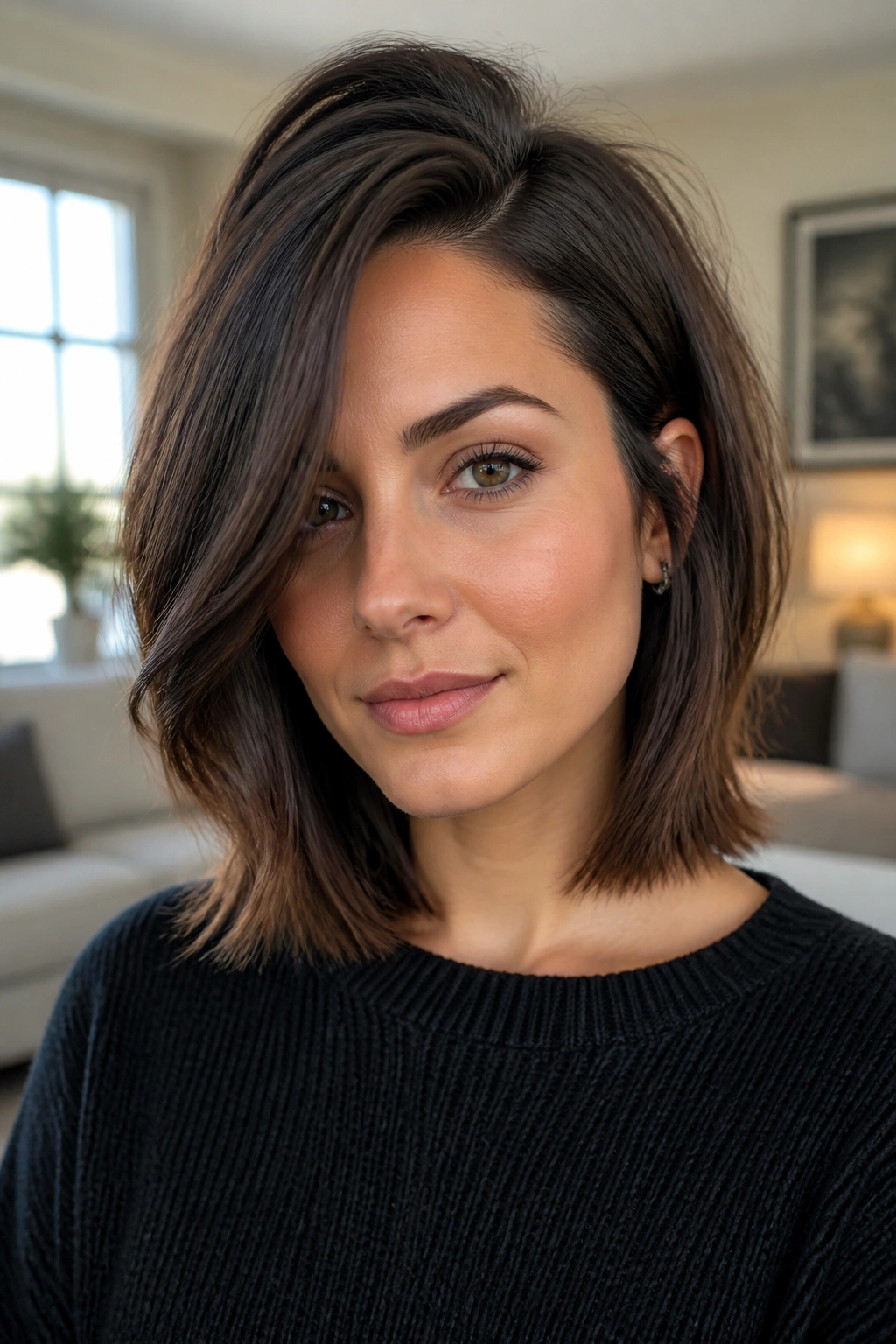
A side-swept lob is one of those cuts that quietly does a lot of work. The length usually lands between the chin and collarbone, which gives the jawline more presence, while the side part keeps the top from feeling too narrow.
Why It Flatters the Face
The side sweep pulls attention away from the center of the face and gives you a softer diagonal line. That diagonal matters. It breaks up the strong width at the cheekbones and keeps the shape from looking too angular.
- Ask for ends that skim the collarbone or sit a finger-width below it.
- Keep the part deep enough to create lift at the crown.
- Add a slight bend at the ends with a 1¼-inch curling iron or a round brush.
- Tuck one side behind the ear if you want more shape around the jaw.
Best tip: Don’t let the cut hover right at cheekbone level. That’s the danger zone.
2. Curtain Bangs With Collarbone Layers

Curtain bangs can be a dream on diamond faces. Not the short, stiff kind. The softer version, parted down the middle and feathered away from the cheeks, opens the forehead and lightens the whole center of the face.
The collarbone layers matter just as much. They keep the lower half from feeling narrow, which is a common problem with diamond faces when the hair is all one length. This combination gives a little movement near the top and a little width lower down, which is exactly the kind of balance that works.
I like this style on medium to thick hair because the layers can actually move. Fine hair can wear it too, but the bangs need a gentle blow-dry with a round brush so they don’t collapse into the face.
It’s a clean, flattering look. Also, it grows out decently.
3. Textured Pixie With Side Volume
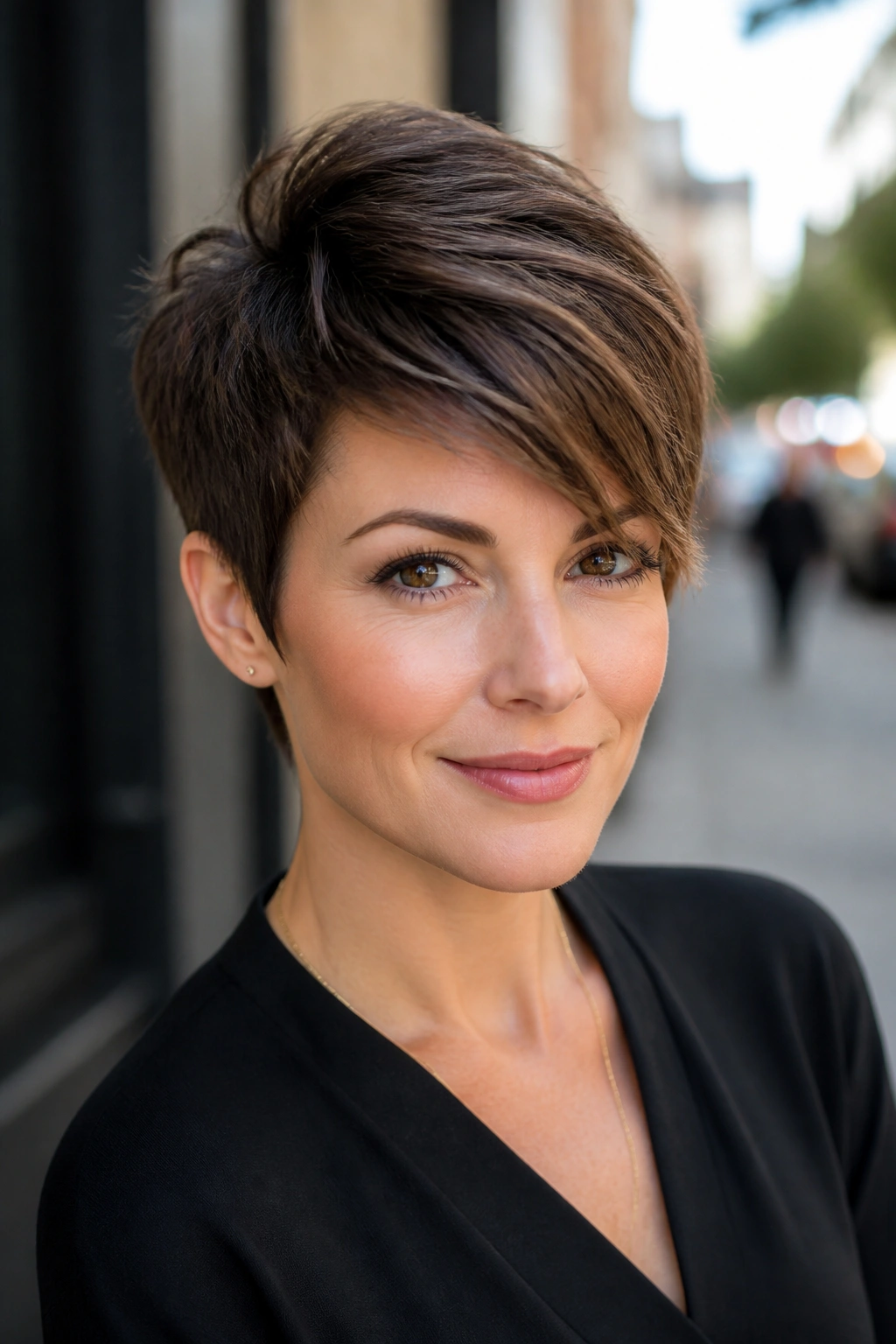
Can a pixie work on a diamond face? Absolutely. It just needs the right shape.
The mistake people make is cutting the sides too tight and leaving the top flat. That leaves the cheekbones doing all the heavy lifting. A better pixie keeps a little height at the crown, some softness around the temples, and a side-swept fringe that falls diagonally across the forehead.
How to Wear It
Use a small amount of matte paste or lightweight cream, then push the hair up and slightly to one side with your fingers. You want lift, not helmet hair. The top should look touchable.
- Keep the fringe long enough to sweep.
- Leave some texture around the ears.
- Avoid a hard line at the hairline.
- Ask for softness, not a sharp fade.
This cut suits people who want to show off cheekbones without making them look dominant. And yes, it is low-maintenance if you like to keep styling simple.
4. Chin-Length Wavy Bob

A chin-length bob can be tricky on diamond faces, but a wavy version gets around the problem nicely. The key is movement. Straight, blunt chin-length hair can make the face feel boxy in a bad way. A little wave changes the story.
Picture the ends sitting at the jaw and flipping in different directions. That breaks the width at the cheekbones and gives the lower face more shape. If the bob has a slight off-center part, even better. It keeps the style from looking too fixed.
I’d ask for soft internal layering rather than heavy thinning. You want the hair to bounce, not fray. A 1-inch curling iron or hot rollers works well here, especially if you brush the curls out once they cool.
A chin-length bob like this feels fresh, but it still has enough structure to look polished at work.
5. High Ponytail With Face-Framing Pieces

A high ponytail can be flattering on diamond faces when it is not pulled back like a rescue operation. That sounds blunt, but it matters. If everything is scraped straight back, the cheekbones and chin can look sharper than they need to.
Leave a few loose pieces around the temples and cheekbones. Not a curtain of hair. Just enough to soften the front. Then lift the ponytail at the crown so the face gets some height on top, which balances the width through the middle.
A little teasing at the crown helps. So does wrapping a strand of hair around the elastic. I also like this style with slightly curled front pieces because the bend breaks the line next to the face.
It’s one of the easiest hairstyles for diamond faces when you want something fast, neat, and not too severe.
6. Deep Side Part for Diamond Faces
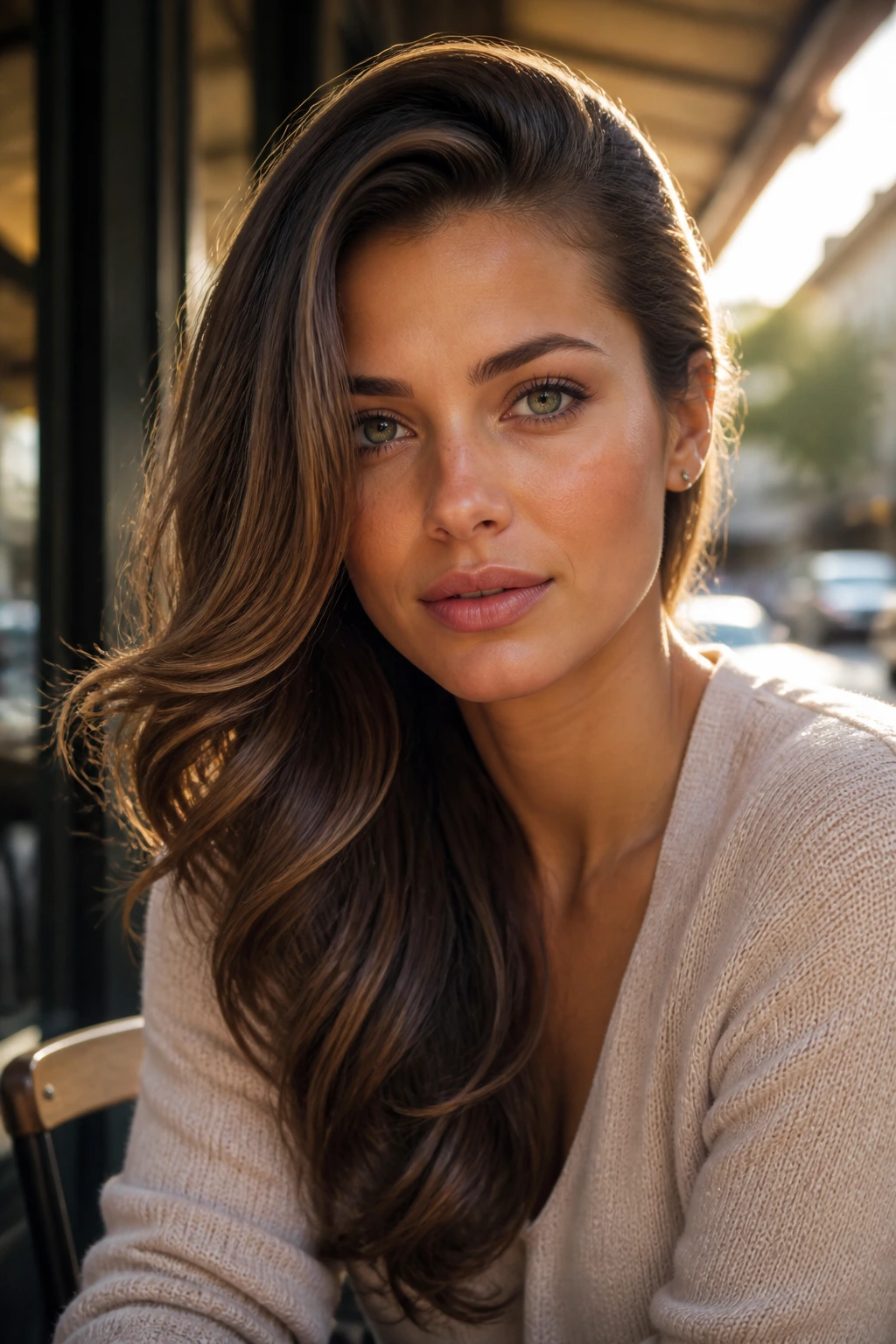
A deep side part changes everything. Seriously.
Unlike a middle part, which can make the forehead look narrower and put too much attention on the cheekbones, a deep side part shifts the visual weight off-center. That small move adds width where the face needs it and makes the whole shape feel less strict.
What Makes It Different
This style works especially well with long layers, because the hair can fall over one side and create a soft frame. If your hair is thick, the part gives you a little drama without needing extra cutting. If your hair is fine, it helps create volume at the root, which is half the battle.
- Start the part above the highest point of your eyebrow.
- Blow-dry the roots in the opposite direction first for lift.
- Keep the longest layers below the cheekbones.
- Finish with a light spray, not a stiff lacquer.
If you like simple hair that still looks intentional, this one is hard to beat.
7. Soft Shag With Airy Fringe

The soft shag is one of my favorite answers for diamond faces because it refuses to sit still. The layers break up the cheekbone width, and the airy fringe keeps the forehead from looking too narrow.
Why It Works
A shag is all about movement around the face, not one heavy block of hair. On a diamond face, that matters. The top can use a little softness, the sides can use some breakup, and the ends can stay light enough to move instead of hanging in a straight line.
This version works best when the fringe is feathered, not dense. Think brows-grazing pieces that separate a little when dry. If your hair has a natural wave, even better. Let it do half the work.
A few quick details:
- Ask for choppy layers that start below the cheekbones.
- Use mousse at the roots for lift.
- Scrunch in a bit of texturizing spray.
- Skip heavy oils near the front.
Best tip: If the fringe feels too heavy, it will fight your face shape. Keep it soft.
8. Half-Up Top Knot With Loose Length
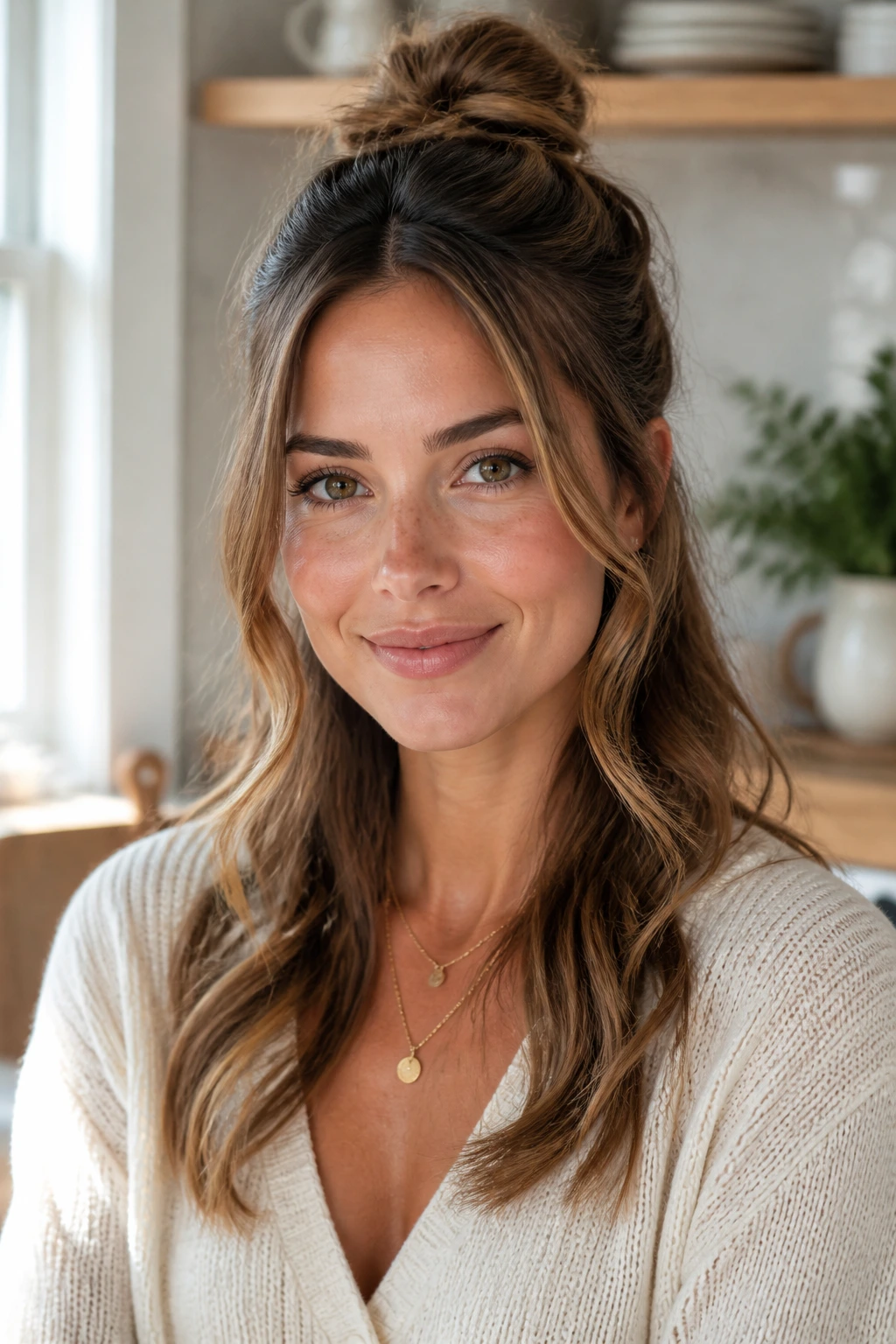
The half-up top knot earns its place because it creates height right where diamond faces benefit from it. The crown gets a lift, the lower half stays visible, and the face-frame pieces keep the style from turning rigid.
That lift at the top matters more than people think. A diamond face already has width in the middle, so adding a little vertical length changes the proportions in a good way. The trick is to keep the knot loose and the base slightly messy. Tight and polished can look severe. Soft and a bit undone looks better.
I’d leave two front pieces out and bend them away from the face with a flat iron or curling iron. That tiny curve softens the cheekbone area without hiding it.
This is a good school-run hairstyle, gym hairstyle, or “I have ten minutes” hairstyle. Which is to say: useful.
9. Sleek Shoulder-Length Blowout

Why does a sleek blowout work on diamond faces? Because it gives shape without adding bulk exactly where you do not want it.
Shoulder-length hair sits in a useful spot. It gives the jaw some presence, but it doesn’t trap the face in a hard line. If the ends are lightly beveled under or out, the cut feels finished rather than flat. A round brush and a medium heat setting are usually enough to get that smooth curve.
How to Ask for It
Ask for shoulder-length layers with soft movement around the face, not a blunt edge at the cheekbones. That distinction matters. A blunt edge can sharpen the widest part of the face; a feathered edge can soften it.
This style is especially good if you like a clean look for work or formal settings. It is neat, a little glossy, and less fussy than people expect. The key is volume at the roots and calmness through the ends.
10. Bouncy Curls With Rounded Shape

Bouncy curls can be brilliant on diamond faces, but only if the curl pattern is placed well. If every curl starts right at the cheekbone, the face can look wider in the middle. If the curls begin a little lower and spread out through the jaw and shoulders, the effect is much better.
This is where roundness helps. A softer, rounded silhouette balances the sharper angles of the face. It does not have to be big hair. It just needs enough fullness in the right places.
For curling, a 1-inch or 1¼-inch iron usually gives a nice shape without turning the hair into a corkscrew. Pin the curls while they cool if you want them to last longer, then separate them gently with your fingers. Brush too hard and they go flat. Too little, and they look dated.
Diamond faces often look excellent with curls that feel alive, not stiff.
11. Long Straight Hair With Subtle Bends
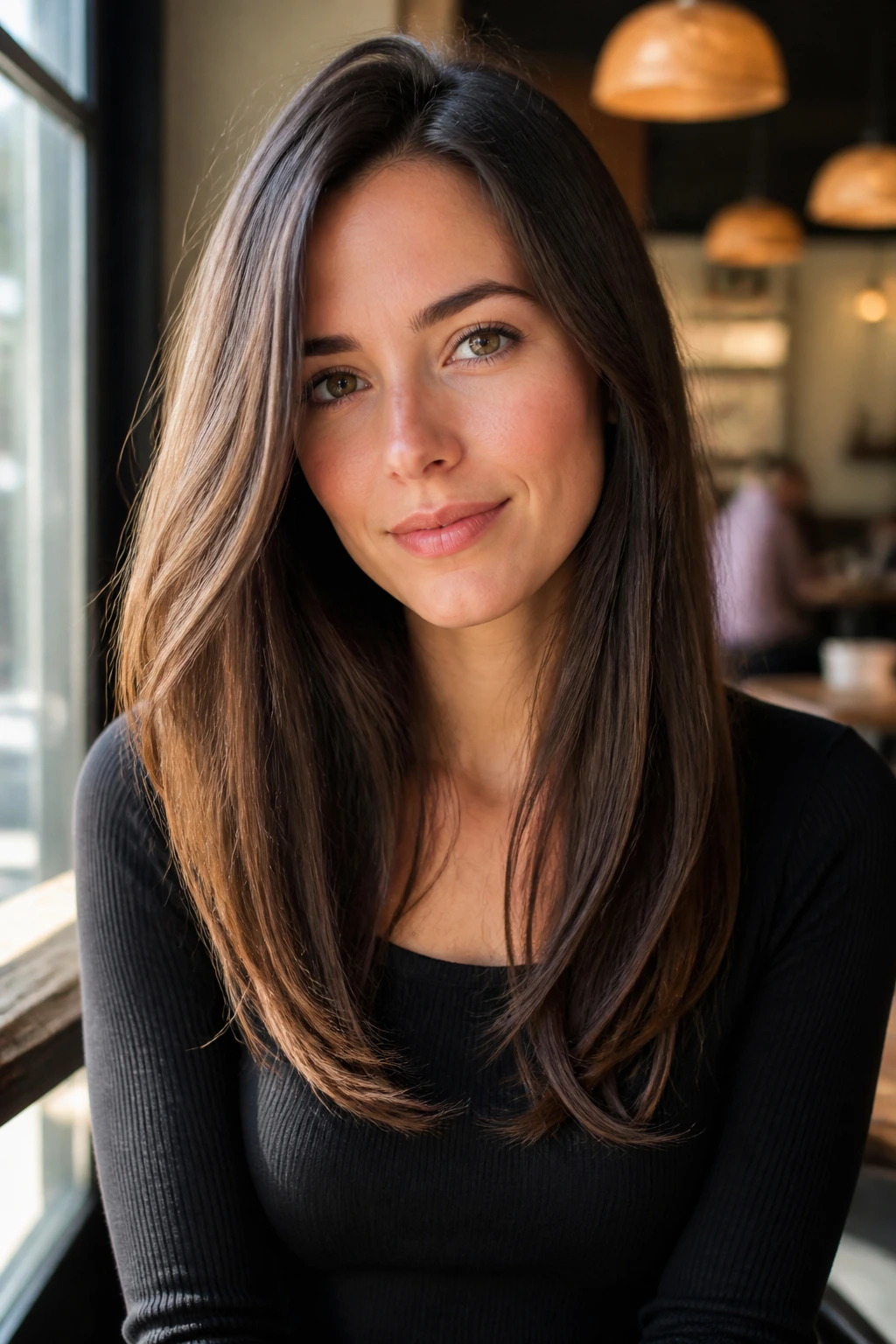
Long straight hair can absolutely suit diamond faces. The catch is that it cannot be dead flat from root to tip. That just throws all the attention onto the cheekbones and makes the lower face vanish.
A few subtle bends through the mid-lengths change the whole thing. You do not need waves everywhere. A soft bend around the collarbone and another near the ends is enough to give the style some shape. I also like a slight side part here because it stops the look from feeling too symmetrical.
If your hair is naturally straight, ask for long layers that begin around the chin and fall away from the face. If it is thick, a little internal layering helps the shape move. If it is fine, use a root-lifting spray and a large round brush so the front does not lie plastered to the scalp.
This style looks easy because it is. That’s the appeal.
12. Low Bun With Volume at the Crown
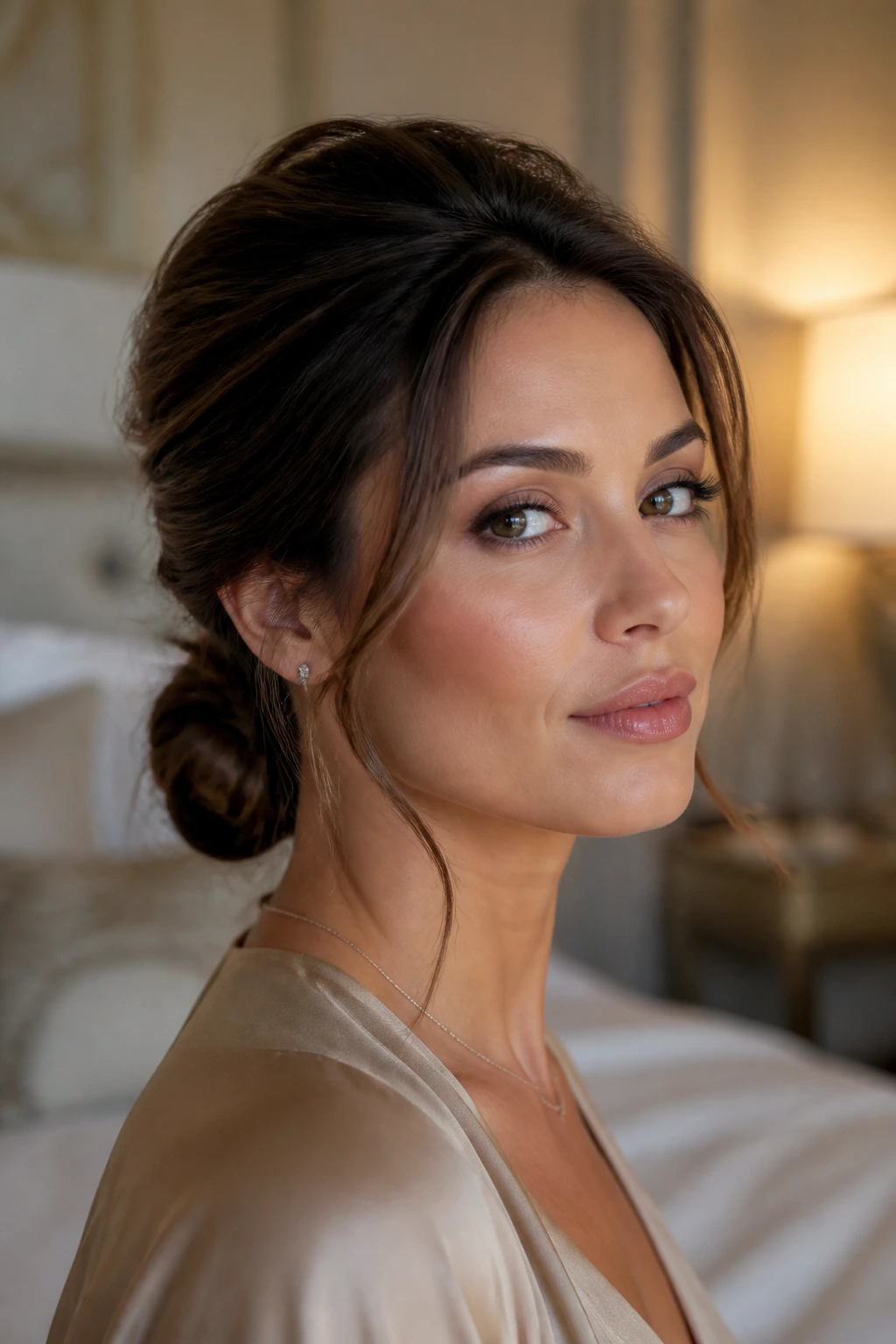
A low bun can be elegant on diamond faces, but the placement has to be right. If the bun sits too low and too tight, the face can look longer and sharper. If the crown has a little lift, the whole thing softens.
That crown volume is doing quiet work. It gives the upper half of the face some presence and keeps the eye from going straight to the cheekbones. Leave a few pieces loose near the temples if you want even more softness. A part off to one side can help too.
I prefer a bun that sits at the nape, not glued to the head. It feels less severe. A few face-framing strands around the jaw can also make the style read less formal, which is useful if you want something polished but not stiff.
No need to overcomplicate it. Volume on top. Softness around the edges.
13. Asymmetrical Bob for Diamond Faces
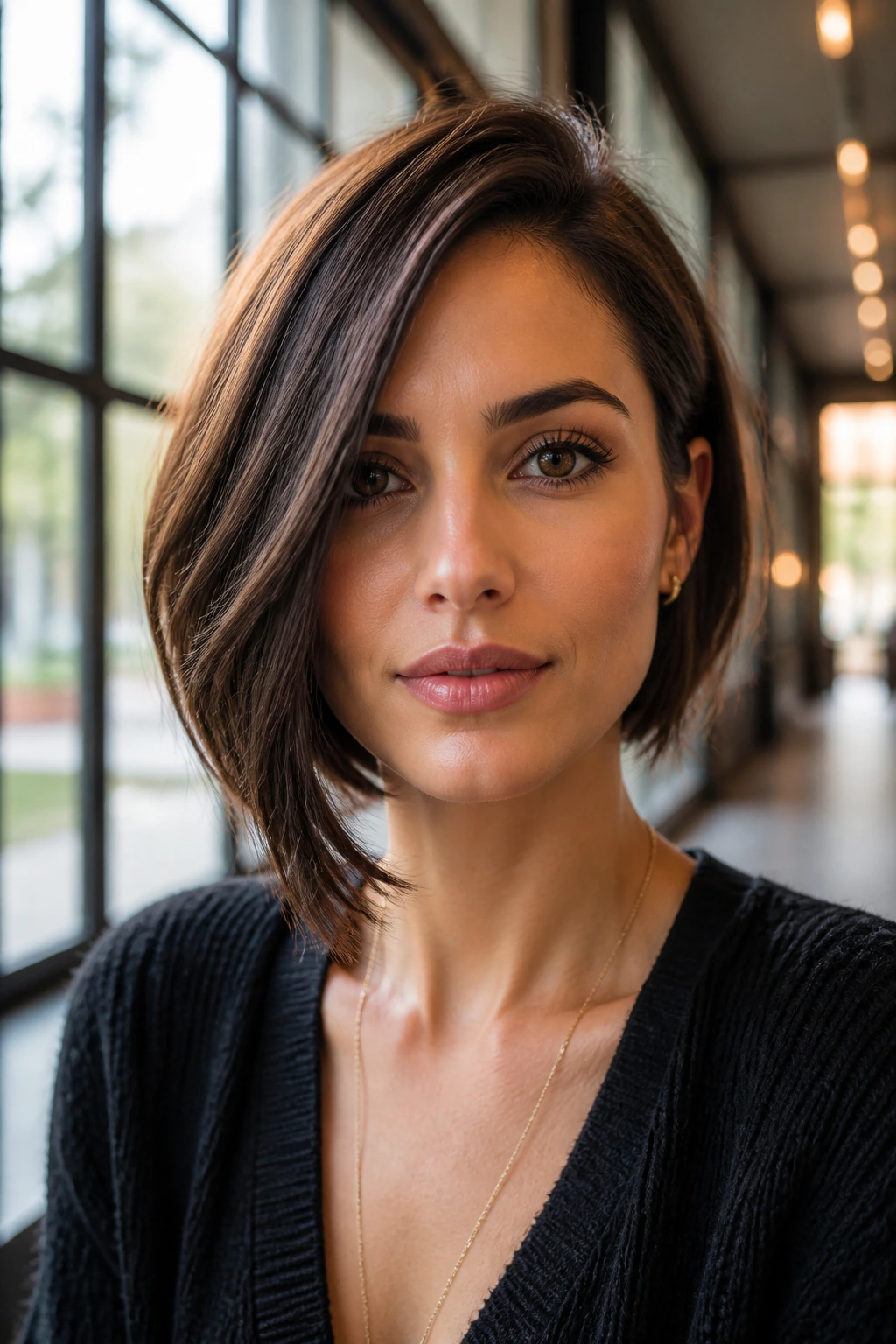
An asymmetrical bob is one of the most interesting haircuts for diamond faces because it changes the map of the face instead of just covering it. One side is slightly longer than the other, which creates movement and keeps the widest part from dominating the whole look.
What to Watch For
This cut looks best when the difference in length is obvious enough to matter, but not so sharp that it feels costume-like. A subtle asymmetry—maybe an inch or two—usually does the job. Add a side part, and the shape becomes even more flattering.
- Keep the longer side near the jawline or collarbone.
- Leave enough front length to soften the cheeks.
- Use a flat iron lightly on the ends for a clean line.
- Ask for texture only if your hair is thick enough to hold it.
It is a little bolder than a standard bob, which is exactly why it works. Diamond faces can wear a bit of edge.
14. Braided Crown With Loose Front Pieces
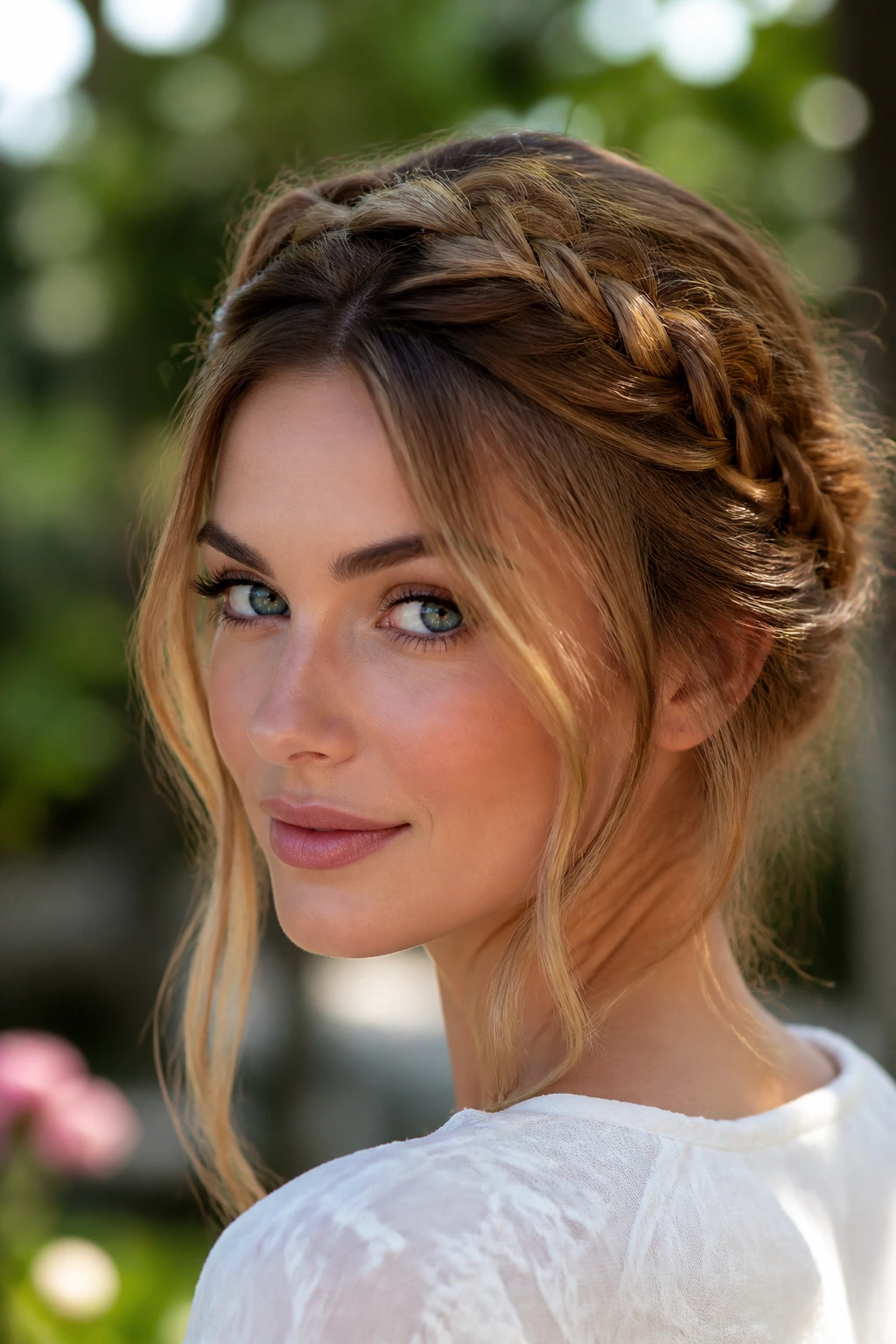
A braided crown can be surprisingly good on diamond faces because it creates interest at the hairline and temples, which balances the wider center of the face.
If the braid is pulled too tight, though, it can turn harsh fast. Keep it a little loose. Let the braid sit softly rather than pressed flat to the scalp. Then leave a few front pieces out near the cheeks and jaw to break up the outline. That mix of structure and softness is the whole point.
This is a strong choice for weddings, parties, or any day when you want the face to look framed instead of exposed. It also works well with wavy hair because the braid has more texture and less slip.
A tiny bit of texture spray before braiding helps. So does gently pancaking the braid once it is set. Not too much. Just enough to soften the shape.
15. Wolf Cut With Jaw-Length Layers
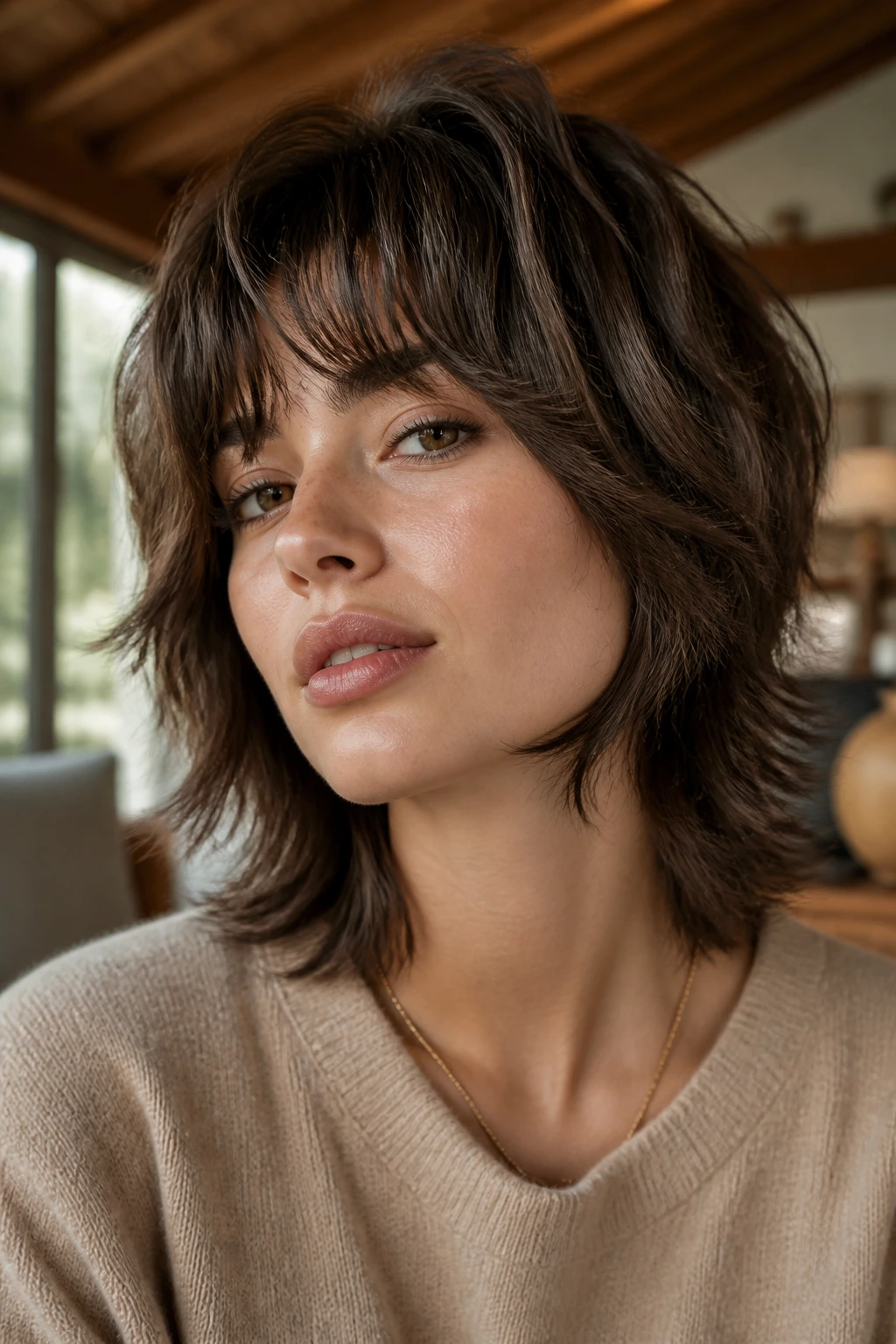
Can a wolf cut suit diamond faces? Yes, but only when the layers are cut with restraint.
The heavy texture of a wolf cut can be useful because it breaks up the strong cheekbone line. The danger is going too short through the sides and leaving the top too wild. Then the face can look top-heavy. A better version keeps some length around the jaw and lets the shaggy layers do the visual softening.
How to Get the Most From It
This cut likes wave, bend, and a bit of natural mess. If your hair is pin-straight, you’ll need more styling. A diffuser, a little mousse, or a texturizing cream can help the layers separate.
It suits people who do not want a neat, tidy look. It has attitude. It also gives diamond faces a casual frame that feels less geometric than a blunt cut.
16. Slick-Back Wet Look

The slick-back wet look is not soft, and that is exactly why it can work.
When the hair is pulled back cleanly, the face takes center stage. On a diamond face, that means the cheekbones can look sculpted instead of dominant. The style does need care, though. If the forehead is narrow, leave a touch of height at the crown. If the hair is pulled flat from the hairline all the way back, the proportions can look severe.
Use a strong gel or styling cream on damp hair, comb it back, and lock it in with a little spray once it’s set. A tucked ear or statement earring can make the whole thing feel deliberate.
This is not an everyday errand hairstyle. It is a sharp, dressy choice for evenings or events. Clean, bold, direct. No fluff.
17. Shoulder-Grazing Flips

Shoulder-grazing flips have an old-school charm that works beautifully on diamond faces because the ends turn outward and create width low on the face. That little flip at the shoulder line pulls the eye away from the center and gives the lower half more presence.
The cut itself should land just at or below the shoulders. Too short, and the shape can get boxy. Too long, and the flip loses its point. A medium round brush during blow-drying helps the ends bend outward. If you prefer heat styling, a flat iron can create the bend just as well.
This style is especially kind to fine hair, because the flipped ends make the hair look fuller. Thick hair can wear it too, but it needs a clean finish so the shape does not bulk out at the ends.
I like this one because it feels polished without being stiff. That’s rare.
18. French Bob With Wispy Fringe

A French bob can look excellent on diamond faces, but the version that works best is softer than the classic sharp one. A wispy fringe helps a lot. It loosens the top half of the face and keeps the forehead from feeling too small.
Unlike a blunt jaw-length cut, this version should sit just a touch below the jaw, or the line can get too rigid. The fringe should break up across the forehead rather than forming one solid block. That little bit of air around the bangs makes a big difference.
This style is best on straight to lightly wavy hair. If your hair has a strong cowlick at the front, you may spend too much time fighting it. But if your hair falls naturally into place, it is a lovely cut—smart, soft, and low-fuss.
The best French bob does not look “done” in a heavy way. It looks like the hair belongs there.
19. Old-Hollywood Waves for Diamond Faces

Old-Hollywood waves are one of the most flattering hairstyles for diamond faces because the wave pattern builds softness around the chin and jaw while keeping the cheekbones from feeling too stark.
The Shape Matters
The waves should start below the widest part of the face, not right at it. That way the hair doesn’t exaggerate the middle of the face. A side part helps, and so does a polished finish through the top. It gives the style a controlled curve instead of a puffy one.
- Set the hair with a medium-barrel iron or hot rollers.
- Let the curls cool completely before brushing.
- Brush the waves into one smooth shape.
- Use a light shine spray, not heavy oil.
This is a dressier style, yes, but it also works when you want your hair to feel intentional at a formal dinner or event. It has structure, and that structure flatters strong bone lines.
20. Messy High Bun With Texture

A messy high bun can look great on diamond faces as long as it has texture and a little looseness around the hairline.
A tight, polished bun tends to make the face look more angular. A softer bun lifts the eyes upward and keeps the style from feeling severe. Pull a few strands loose at the temples. Tug the crown a little. Leave the bun itself full rather than pinned flat against the head.
This is one of those styles that looks better when it is a little imperfect. That is not a flaw. It is the point. The texture makes the face seem softer, and the height keeps the proportions balanced.
If your hair is slippery, a dry texture spray before gathering it helps the bun hold. If your hair is thick, a second elastic can keep the shape from sagging by midday. Small details, big difference.
21. Bubble Ponytail With Tapered Ends
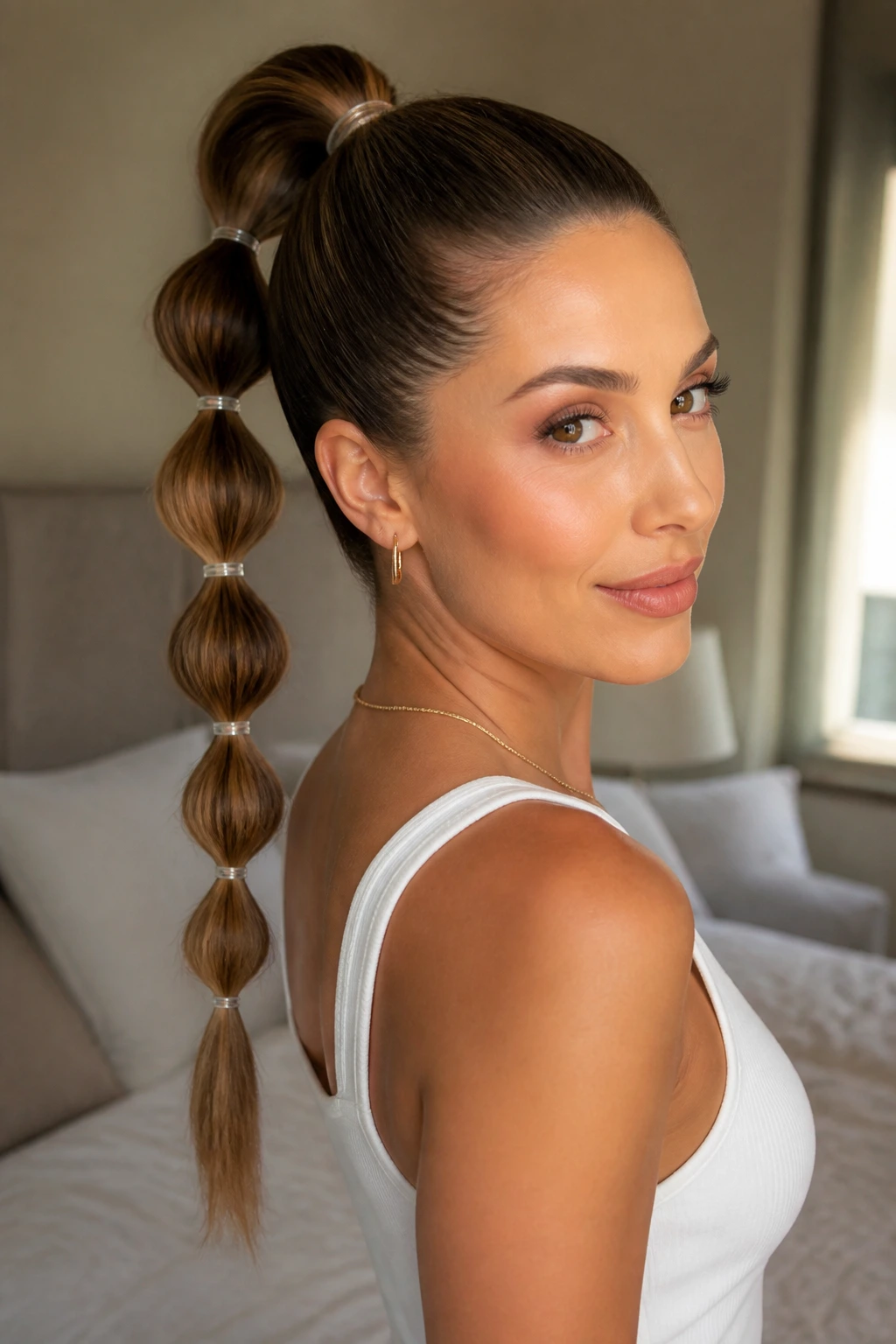
Why does a bubble ponytail work on diamond faces? Because it adds shape along the length of the hair instead of leaving all the emphasis at the cheeks.
Each bubble creates a little visual pause. That spacing breaks up the line of the ponytail and gives the style a playful, balanced look. It is especially handy if your hair is long and your face feels widest through the middle. The bubbles add interest lower down, where the face needs it.
How to Style It
Use small clear elastics every 2 to 3 inches, then gently pull each section outward so it rounds into a bubble. Keep the crown smooth but not flat. A tiny bit of height on top is enough.
This style reads fun and modern, but the logic behind it is simple. It redistributes attention. That’s the whole game with diamond faces.
22. Claw-Clip Twist With Volume
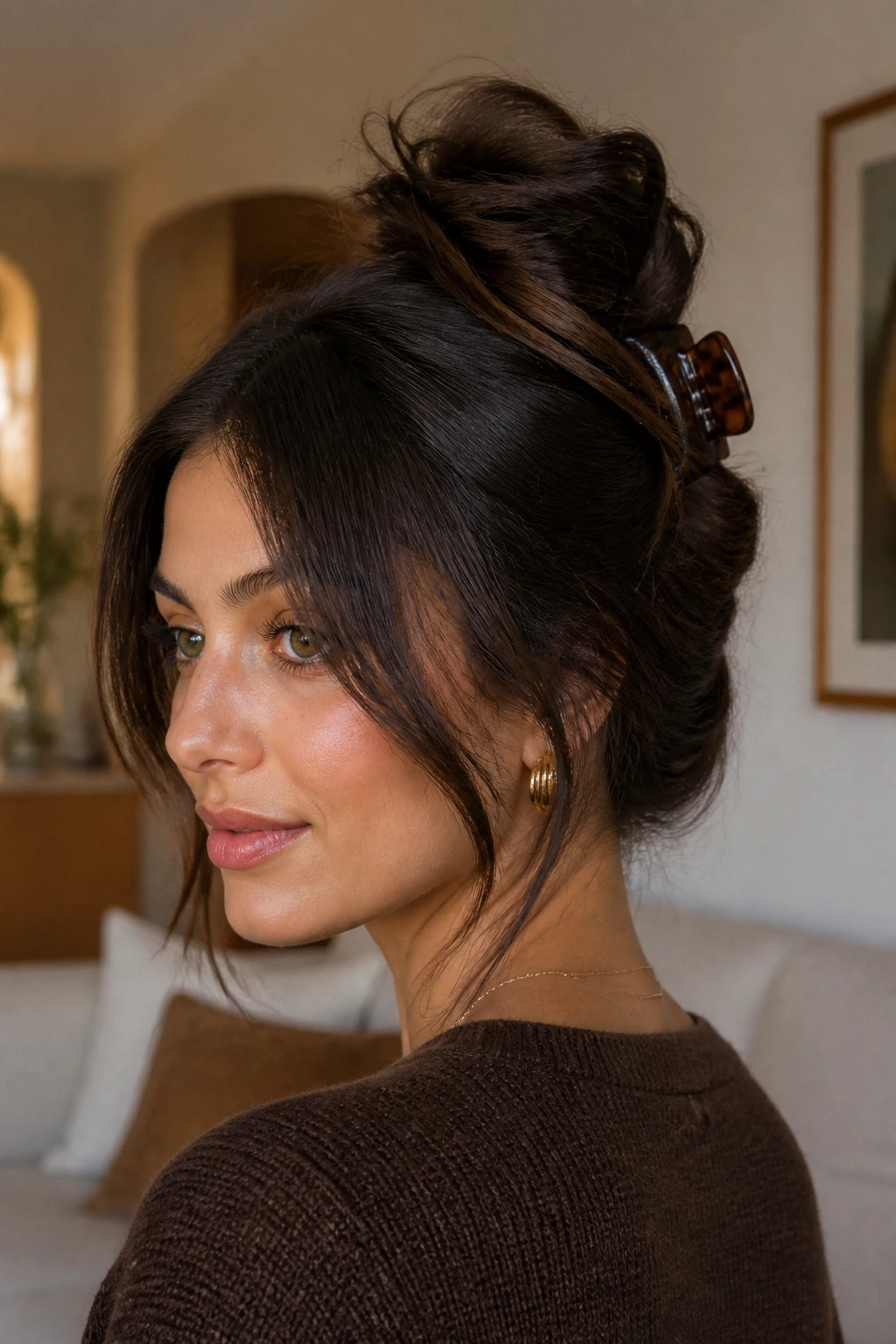
A claw-clip twist is one of the easiest ways to make diamond-face proportions look softer without doing much at all.
The trick is placement. Twist the hair loosely, clip it high enough to create lift, and leave a few pieces at the front instead of pulling every strand back. If the twist sits too low and too tight, the cheekbones can dominate. If it sits a little higher with some air underneath, the shape feels gentler.
I reach for this style on second-day hair because it works with natural texture. A little grit helps the clip hold. Fine hair benefits from a bit of dry shampoo at the roots, and thicker hair usually needs a larger clip that can actually grip.
It is not fancy. That is why people use it. Fast, soft, done.
23. Layered Cut With Beveled Ends

A layered cut with beveled ends is one of the safest bets for diamond faces, especially if your hair is thick or naturally full.
The layers stop the hair from sitting as one heavy mass around the cheekbones, and the beveled ends curve the bottom of the cut slightly inward or under. That keeps the shape neat and helps the jawline look more balanced. A blunt finish can feel hard; a beveled finish feels softer.
This is a good choice if you want movement but do not want bangs. Ask for long layers that begin below the cheekbones, then let the stylist soften the perimeter. You want enough edge to keep the shape, but not so much that it turns triangular.
Blow-drying with a large round brush gives the ends a smooth turn. If you skip that step, the cut can lose some of its polish, especially on thick hair.
24. Tucked-Behind-Ear Lob

A tucked-behind-ear lob is simple, but it solves a real problem for diamond faces: too much width in the middle with nowhere for the eye to go.
By tucking one side behind the ear, you open up the face and show the cheekbone line on purpose. That prevents the shape from feeling hidden or crowded. Leave the other side loose with a slight bend so the style still has softness. The contrast helps a lot.
This cut is also useful if you like earrings, because the ear tuck creates a clean frame. I prefer it with a side part or an off-center part rather than a dead-center one. That keeps the look from getting too symmetrical.
It is a small styling move, not a dramatic one. Small moves are often the ones that make the haircut work.
25. Butterfly Cut With Cheekbone-Length Pieces for Diamond Faces

A butterfly cut can be excellent for diamond faces because it gives you movement at two levels: shorter face-framing pieces near the cheekbones and longer layers through the body of the hair. That dual shape softens the middle of the face without sacrificing length.
Why It Stands Out
The shorter front pieces act like a frame, but they should not sit exactly on the widest part of the cheeks. Keep them a little lower or angle them toward the jaw. The longer layers below keep the style from feeling chopped up. Done well, it looks airy, not stringy.
- Ask for the first frame around the cheekbone, then the next around the chin.
- Keep the perimeter soft, not blunt.
- Style away from the face first, then bend the ends under.
- Use a lightweight volumizing spray if your hair falls flat fast.
This is the one I’d hand to someone who wants movement, length, and a shape that does not fight the face. It earns its place.
