



Oval faces are annoyingly forgiving, which is both a gift and a trap. If your proportions are balanced, almost any medium haircut can work—until it doesn’t, because the shape is wrong for your texture, your part, or how much time you actually spend with a brush in your hand. That is why medium length haircuts for oval faces sound simple but aren’t.
The sweet spot usually sits somewhere between the chin and the collarbone. Short enough to show off the neck and cheekbones, long enough to give movement, blunt edges, or fringe when you want it. A good cut for an oval face doesn’t fight the shape; it decides what to highlight.
I like medium cuts for oval faces because they can look polished without getting stiff. A collarbone lob can sharpen the face, a shag can make it feel more alive, and a set of curtain bangs can change the whole mood in ten seconds. Same face. Different story.
The trick is matching the haircut to your hair texture, not chasing a style that only looks good in one flat photo. Straight hair, waves, curls, thick strands, fine strands—each one falls differently, and the same length can read sleek on one head and heavy on another. Start with the shape that suits your daily routine, then add the detail that gives it personality.
1. Collarbone Blunt Lob
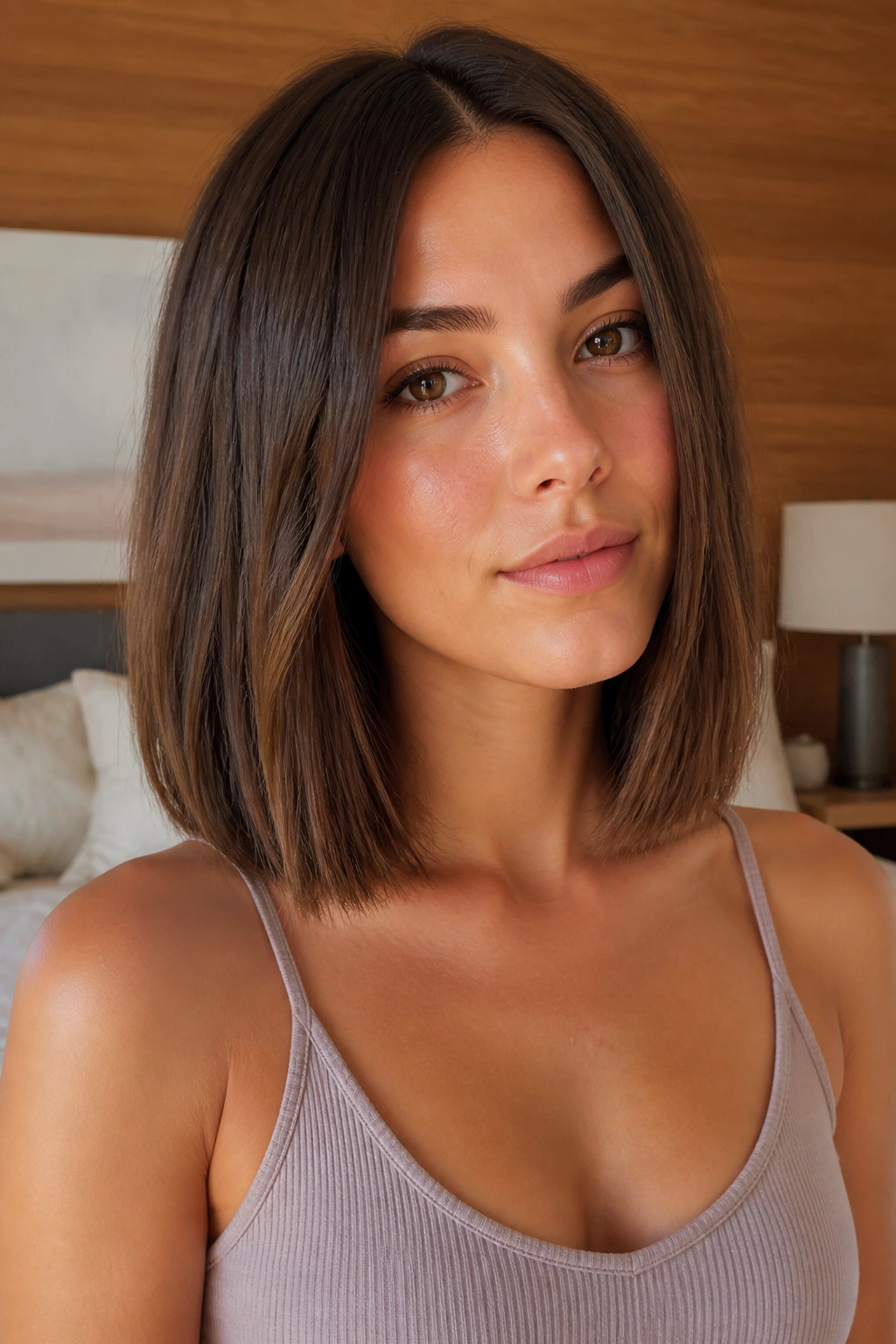
A collarbone blunt lob is the haircut I reach for when someone wants their oval face to look cleaner, sharper, and a little more deliberate. The line sits right at the collarbone, so it gives the neck room and keeps the face from feeling swallowed by hair.
Why It Works on an Oval Face
The blunt edge creates a strong horizontal line, which balances the longer length of an oval face without making it look wider. That matters more than people think. A soft face can sometimes disappear into layers; a blunt lob gives it a frame.
It also looks good from almost every angle. Straight, bent with a flat iron, tucked behind one ear—none of that fights the cut. If your hair is fine, the blunt edge can make it look thicker. If your hair is thick, it stops the whole shape from turning fuzzy at the ends.
- Ask for the length to land 1 to 2 inches below the collarbone.
- Keep the perimeter blunt, with only light dusting at the ends.
- Wear it with a center part for symmetry or a slight off-center part for a little attitude.
- Style it with a 1-inch flat iron bend if you want movement without obvious curls.
Tip: If your hair is very thick, ask for internal weight removal, not thinning shears through the ends. Those shears can leave the bottom looking wispy fast.
2. Soft Layered Lob
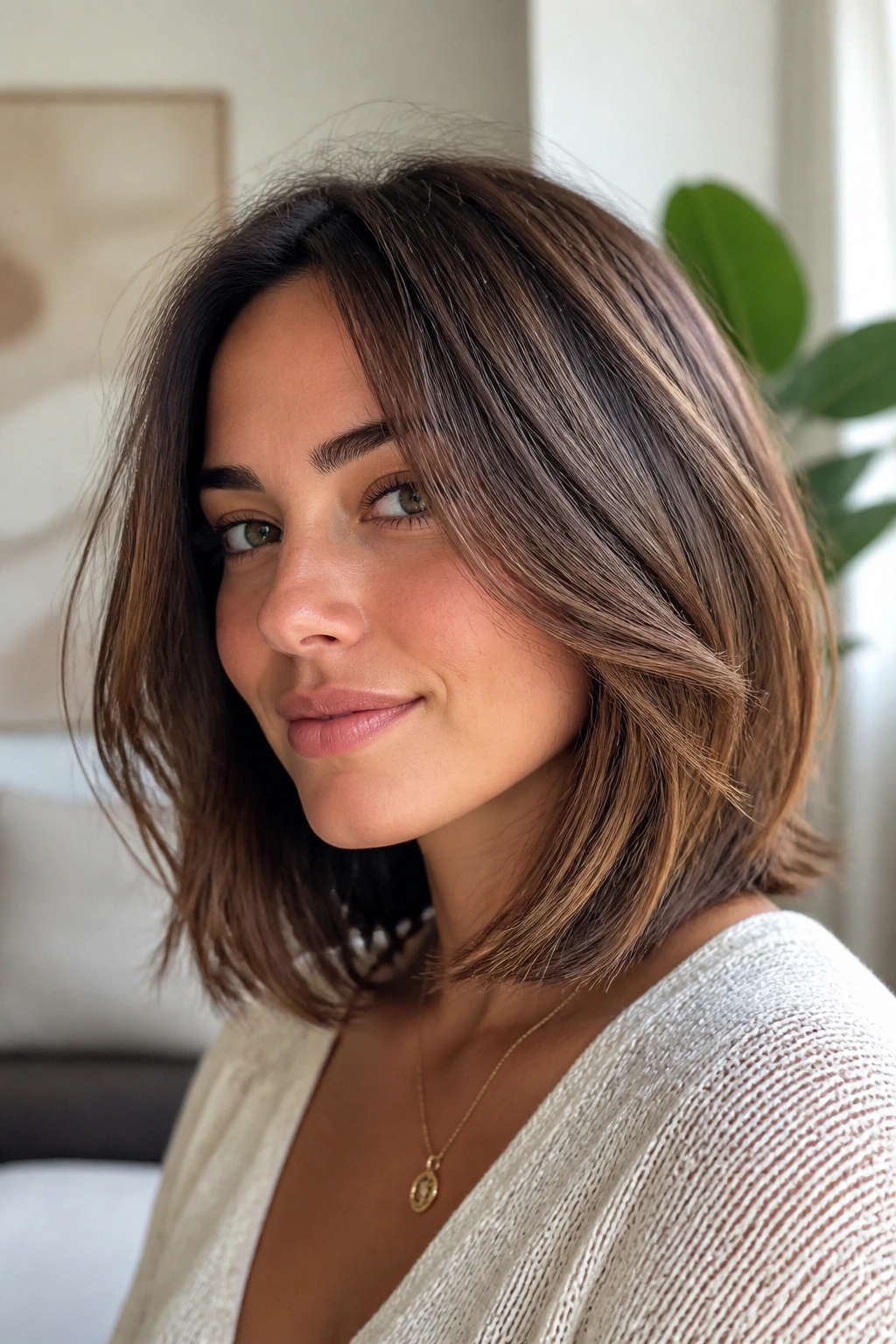
A soft layered lob is the answer when you want movement without obvious chop marks. It has enough shape to keep hair from falling flat, but it does not shout for attention every time the wind hits it.
The best version starts with layers that live below the cheekbones and taper gently toward the ends. On an oval face, that keeps the eye moving down the length of the hair instead of stopping at one heavy line. It feels relaxed, not forced.
This cut is especially kind to medium-density hair. Too many short layers and the whole shape can puff out around the crown. Too few and you lose the point. The middle ground is where this one shines.
If you like hair that looks better after a little shake than after a lot of brushing, this is a good choice. A round brush, a little mousse, and a five-minute blow-dry are enough. That’s the charm. It behaves.
3. Curtain Bangs With Face-Framing Layers
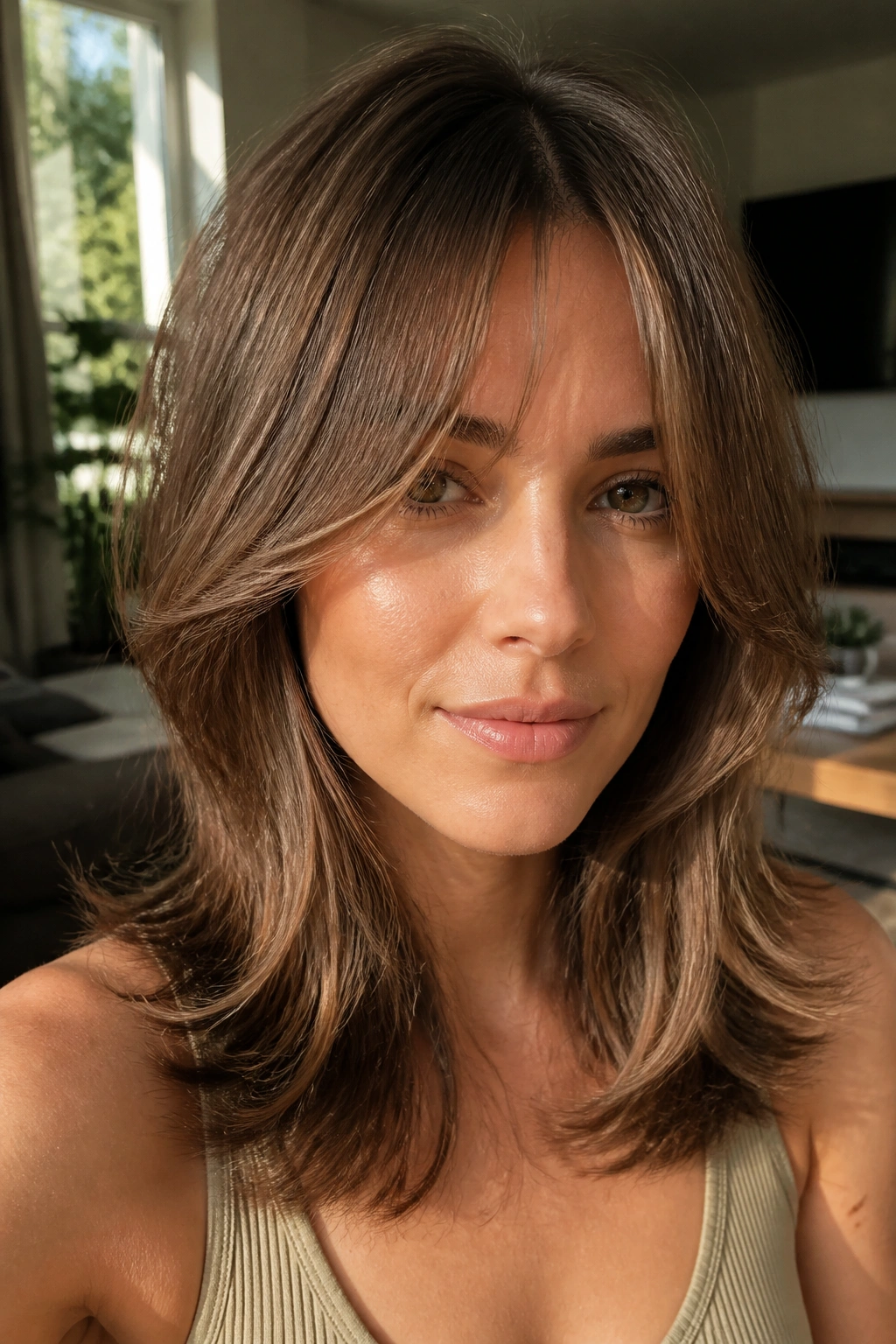
Why do curtain bangs keep making oval faces look balanced instead of busy? Because they split the forehead softly and drag the eye back to the cheekbones, where an oval face already has a lot going on. The result feels flattering without looking fussy.
The bang shape matters. You want the shortest point to sit somewhere around the eyebrow or just above it, then open out toward the cheekbones and jaw. If they’re cut too short, the whole look turns blunt. Too long, and they stop feeling like bangs at all.
How to Style It
Curtain bangs need a bit of root lift. Not a lot. Dry them with a small round brush, rolling the front away from the face, then let the ends fall where they want. A quick pass with a medium-barrel curling iron can help if your hair refuses to cooperate.
- Ask for the center to open around the bridge of the nose.
- Keep the side pieces long enough to tuck behind the ears.
- Blend the layers into the front, not just the bangs alone.
- Use a light styling cream, not a heavy balm.
The nice thing is that this cut grows out well. That matters. Bangs that look cute for three days and awkward for three weeks are not worth the trouble.
4. Shaggy Midi Cut

Picture hair that looks like it moved on purpose, even when you barely touched it. That’s the shaggy midi cut, and it suits oval faces because it adds texture where the face might otherwise read too neat.
This cut works by breaking up the outline. Instead of one clean line, you get layers, bends, and little bits of movement around the cheeks and jaw. On an oval face, that keeps the proportions from feeling too symmetrical. Symmetry is useful. Too much of it can be boring.
Key Details to Ask For
- Keep the shortest front layers around lip length or slightly below.
- Leave enough length at the back so the cut still feels medium, not short.
- Ask for soft razoring or point cutting, not chunky slices.
- Style with a diffuser or air-dry cream if you have waves.
The shag looks better with a bit of texture in it. If you love sleek hair and hate anything messy, skip it. If you want something with personality that still sits in the medium-length range, this is a strong option.
5. Textured Long Bob With a Side Part

A side part changes the mood of an oval face faster than people expect. It throws a little asymmetry into a shape that is naturally balanced, and that imbalance can be the whole point.
The textured long bob works because the side part gives one side a little lift while the other side falls lower across the cheek. That creates a soft diagonal line, which is flattering without being precious about it. It’s also good if your face reads a little long and you want the haircut to add some width without actual bulk.
Texture matters here. Without it, the side part can look flat and formal. With a few broken ends and some loose bend through the mid-lengths, the cut feels lived-in. Not messy. Lived-in.
I like this on medium-density hair that needs movement but not a full layer job. If you over-layer it, the side part loses structure. Keep the ends light, not shredded, and let the part do some of the work. That’s the quiet trick.
6. One-Length Midi With Tucked Ends
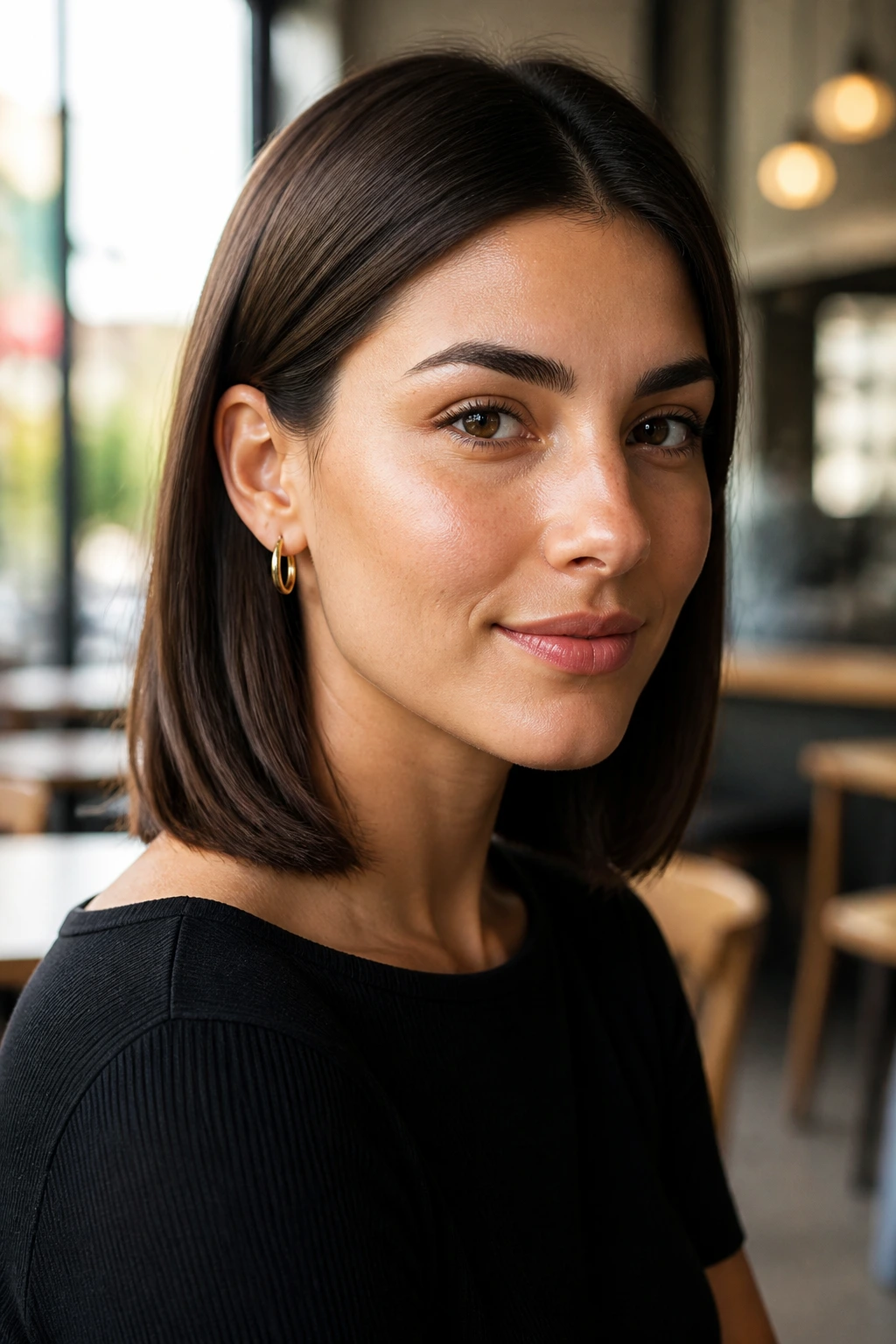
If you like a clean line, the one-length midi is the least fussy cut on this list. It sits around the shoulders or just below them, and the shape does most of the talking.
Compared with layered styles, this one uses the edge of the cut itself to frame the face. On an oval face, that can look calm and grown-up without feeling severe. The hair doesn’t fight your features. It just sits there, neat and steady.
It’s especially good for straight hair or soft waves that don’t need a lot of help. The tucked-end version gives you another layer of ease—behind the ears for the office, loose for dinner, half-tucked when you want a little shape around the cheekbones.
If you go this route, ask for the front to be barely longer than the back. That small detail keeps the cut from turning boxy. And no, it does not need a bunch of face-framing layers to work. Sometimes a clean line is the point.
7. Butterfly Haircut at Medium Length

The butterfly haircut can look dramatic, but the medium-length version is more wearable than people think. It keeps the face-framing layers short enough to create lift, while the lower length stays long enough to hold the shape together.
Where the Layers Should Start
The shorter top layers should begin around the cheekbones or just above the lips. The longer layers can fall to the collarbone or a little lower. That difference is what gives the haircut its fluttery shape. Without it, the whole thing loses the airy effect.
Oval faces handle this style well because the layers don’t need to correct the face shape. They just add motion. You get the illusion of more hair around the face without actually sacrificing length. That matters if you want volume but hate losing inches.
- Short layers: around cheekbone to lip length.
- Long layers: collarbone length or slightly below.
- Blow-dry the front pieces with a round brush for lift.
- Use a light volumizing spray at the roots.
Tip: If your hair is thin, keep the shortest layers soft. Too much separation can make the ends look stringy fast.
8. Swoopy Side-Part Layers

A deep side part does more for an oval face than a lot of bangs do. It creates lift at the crown, movement at the cheek, and a little drama without locking you into a heavy fringe.
The layers in this cut should curve away from the face instead of sitting flat against it. That swoop is the whole point. It turns a plain medium cut into something with shape, and it works especially well if your hair tends to collapse at the roots.
This is one of those styles that looks polished in a hurry. A round brush at the roots, a quick bend through the front section, and you’re done. If you over-smooth it, the cut loses its energy. If you leave it too flat, the side part starts looking accidental. There’s a narrow middle zone here, and it’s worth finding.
Best of all, this cut doesn’t scream for attention. It just makes the face look a little more lifted. Quiet, but not boring. That’s a rare combo.
9. Modern Rachel Cut

Why does the modern Rachel keep showing up on oval faces? Because it gives shape without dragging the face downward. The layers bring in movement around the chin and collarbone, which is exactly where medium-length hair can start looking flat.
The updated version is softer than the old-school version. The layers are blended, not chopped. The ends have bend, not helmet shape. And the front pieces should skim the jawline instead of stopping abruptly at the cheekbones.
What to Tell Your Stylist
Ask for layers that start around the chin and continue into the collarbone area. If your hair is thick, keep the longest top layers a little lighter so the shape does not feel bulky. If your hair is fine, avoid over-texturizing the ends; the cut can go thin at the bottom fast.
The styling is half the fun here. Blow-dry the front sections away from the face, then bend the ends under just a little. You want movement, not a flip that looks like a costume. This cut has personality, but it still behaves in real life.
10. U-Shaped Medium Cut
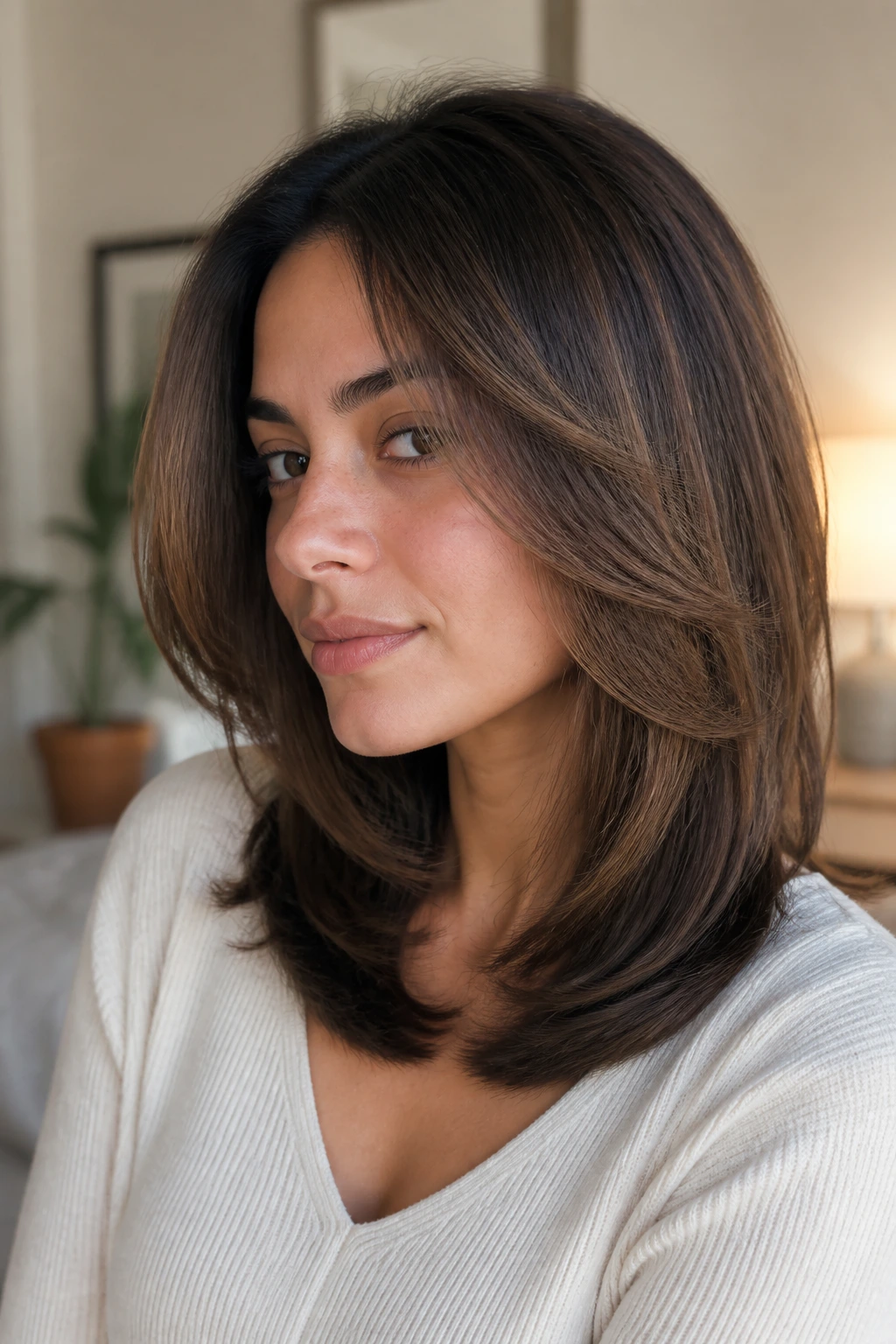
If you like hair that falls like a curtain but does not feel square, the U-shape is underrated. It keeps the back slightly longer than the front, which gives the ends a soft arc instead of a blunt wall.
That arc flatters oval faces because it mirrors the natural curve of the jaw and neck. The shape feels gentle, but not weak. It also works well if you often wear your hair down and want it to move when you turn your head.
The Shape in Real Life
The front should graze the collarbone or sit a touch above it. The back should stay a little longer—often by an inch or two—so the overall outline curves. A deep U can look dramatic; a shallow one is safer and easier to wear every day.
This cut is nice for people who want a middle part but still want softness around the face. It gives structure without the hard line of a blunt bob. And if you’re tired of hair that looks the same from every angle, the U-shape quietly fixes that.
11. C-Cut Layers

A C-cut is one of those haircuts that sounds minor until you see what it does. The layers sweep inward around the face in a soft curve, almost like the edge of a letter C, and that shape can make medium hair look finished without looking overworked.
On an oval face, the curve adds shape around the cheekbones and jaw without hiding them. That’s the balance I like. You still see the face, but the hair gives it a little architecture.
This cut is especially good if you like a middle part and want your hair to fall in a controlled way. It is less obvious than a shag and less blunt than a one-length cut. The whole thing sits in that useful middle ground where it looks intentional but not formal.
A good C-cut also behaves well when air-dried. The front pieces bend toward the face, the ends stay soft, and the shape does most of the styling for you. I’ve always liked cuts like that. They don’t need a committee.
12. Wavy Lob With Invisible Layers
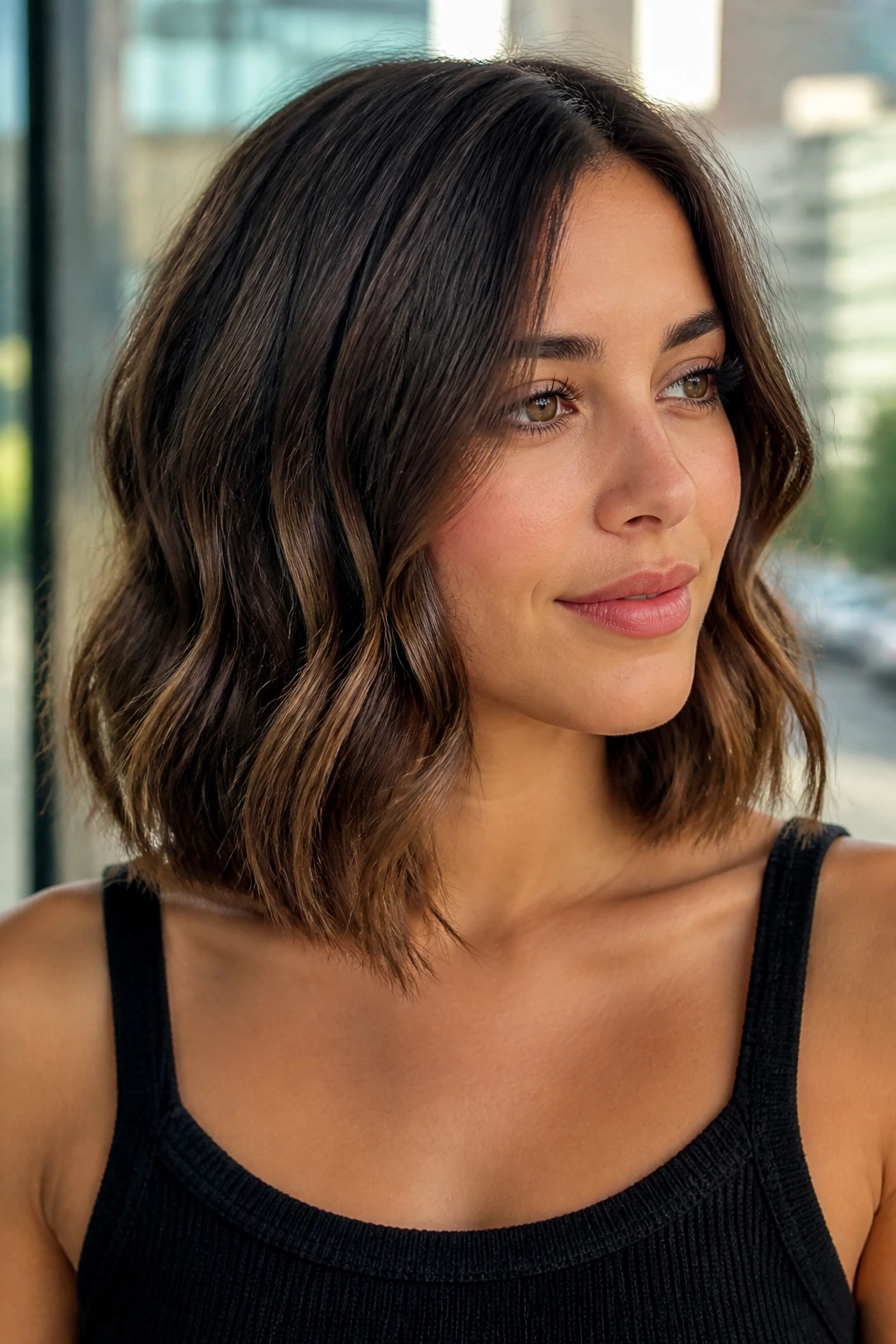
Unlike a blunt lob, a wavy lob with invisible layers hides the shaping inside the cut, so the surface still looks smooth. That makes it a smart choice if your hair already has some wave and you do not want it to puff into a triangle.
The hidden layers take weight out of the middle without breaking up the outline too much. On an oval face, that gives you movement around the cheeks and jaw while keeping the length clean. It’s a quieter haircut than a shag, but it still has life.
This style works especially well if your waves start around the mid-lengths and bend more as they dry. Add too many visible layers and the wave pattern can get weird. Keep the structure underneath, not on top. That’s the part people miss.
If you want low-maintenance hair that still looks styled, this is a strong bet. A little wave cream, a scrunch with your hands, and you’re most of the way there. No elaborate routine. No drama.
13. Choppy Ends With Airy Fringe
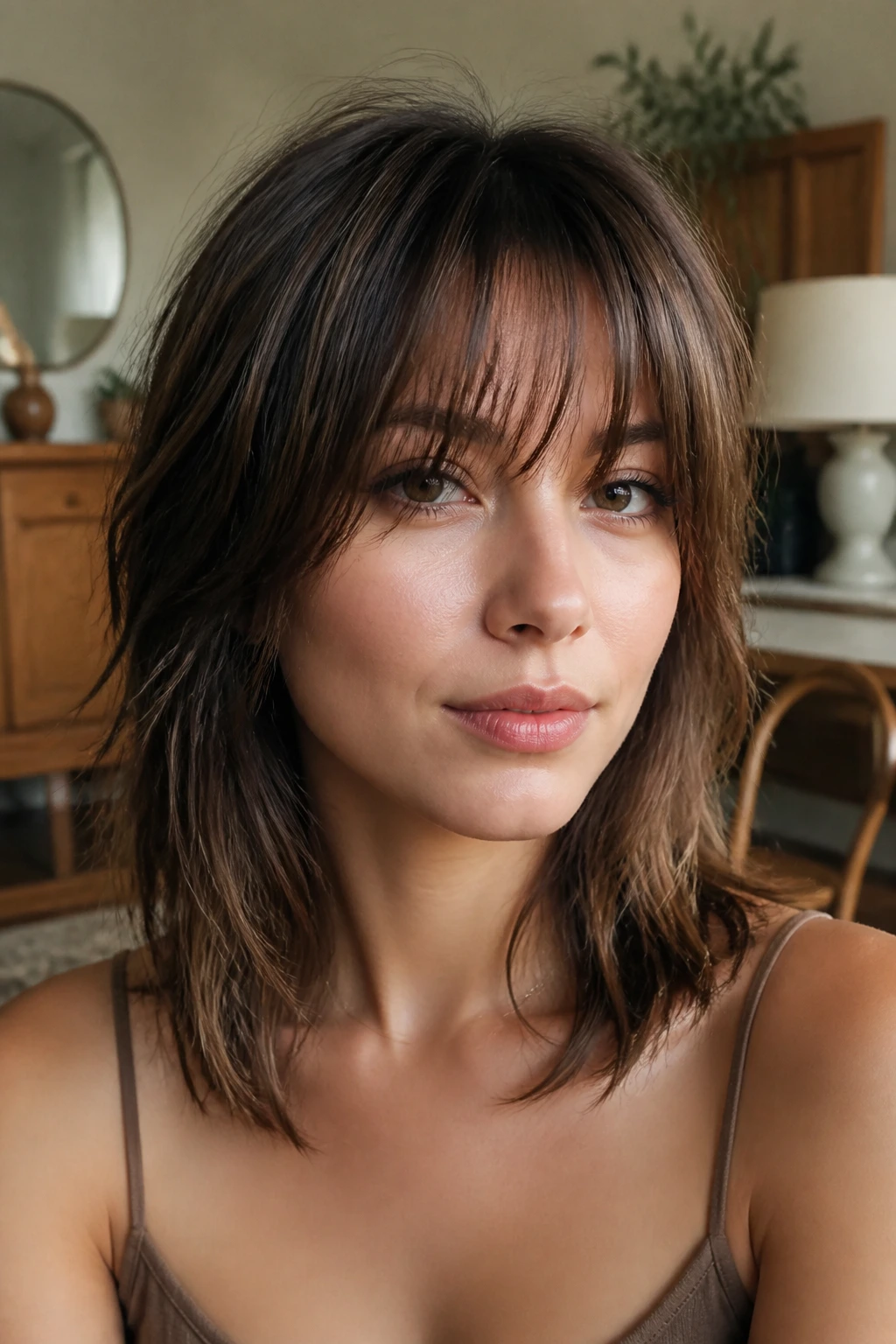
Choppy ends can look careless in the wrong hands, but when they’re cut with restraint, they give medium hair a bit of edge. On an oval face, the uneven texture stops the cut from feeling too polished or too flat.
The airy fringe is the important part. This is not a dense bang that sits like a curtain. It’s lighter, softer, and more broken up, so the forehead still shows through. That keeps the face open while adding detail where it counts.
How Much Choppiness Is Enough
A little. Not a lot. You want the ends to feel lived-in, not shredded. Ask for point cutting or light texturizing near the perimeter, then keep the fringe long enough to move—usually around eyebrow level or just below.
- Keep the fringe feather-light, not dense.
- Let the ends around the jaw stay soft and uneven.
- Style with a matte texture spray for separation.
- Avoid heavy oils that make the fringe clump together.
This cut is good if you want personality without a high-maintenance outline. It looks best when it’s slightly imperfect. That’s the whole point.
14. Shoulder-Length Cut With Long Curtain Bangs

Shoulder-length hair can do more for an oval face than a severe short cut if you want softness and movement at the same time. The length gives the face room, and the long curtain bangs bring the eye back toward the center.
The bangs should open from the middle and sweep down toward the cheekbones. If they’re cut too blunt, they lose the softness that makes this style work. If they’re too long, they stop framing and start hiding.
This is a smart cut for people who tuck their hair behind their ears a lot. The bangs fill in the front when the rest of the hair gets pushed back, so you do not end up with a bare-looking face. That small detail matters.
It also plays well with a simple blow-dry. Lift the bangs at the root, bend them away from the face, and let the ends fall. Nothing fussy. Nothing stiff. The cut does the talking if you let it.
15. Midi Cut With a Deep Side Part and Volume

Can one side part really change the whole cut? Yes, and on an oval face it can change the mood from soft to sharp in a single move.
The key is crown lift. A deep side part works when the roots at the top have some height and the lengths fall with a bit of bend. Without that lift, the part just looks like you were in a hurry. With it, the face gets a stronger diagonal line and the haircut feels more styled.
Where to Build the Lift
Focus the volume at the root near the heavier side, not all over the head. Blow-dry the hair in the opposite direction first, then flip it back. That gives the roots a little memory and keeps the part from collapsing.
This cut is a good pick if your hair is straight and tends to lie close to the scalp. A little mousse at the roots, a round brush, and a soft bend through the front sections are enough. If your hair is already thick, go lighter on product. Too much and the side part becomes bulky instead of lifted.
16. Straight Glassy Lob

Some days you want hair that looks calm, not busy. The straight glassy lob gives you exactly that—clean lines, a smooth surface, and enough length to frame an oval face without competing with it.
This cut is at its strongest when the edges are precise. The perimeter should sit around the collarbone or a little above it, and the surface should stay sleek from root to end. On an oval face, that long vertical line can look elegant without trying too hard.
The Small Details That Matter
- Ask for a blunt outline with minimal layering.
- Keep the ends polished, not thinned out.
- Use a heat protectant before any flat ironing.
- Finish with a light serum on the mid-lengths and ends.
This one is less forgiving than textured cuts. If the ends are dry, you’ll see it. If the shine is missing, you’ll see that too. But when the cut is done well, it has a clean, almost liquid look that makes the face appear longer and more refined.
17. Tousled Layered Cut for Fine Hair
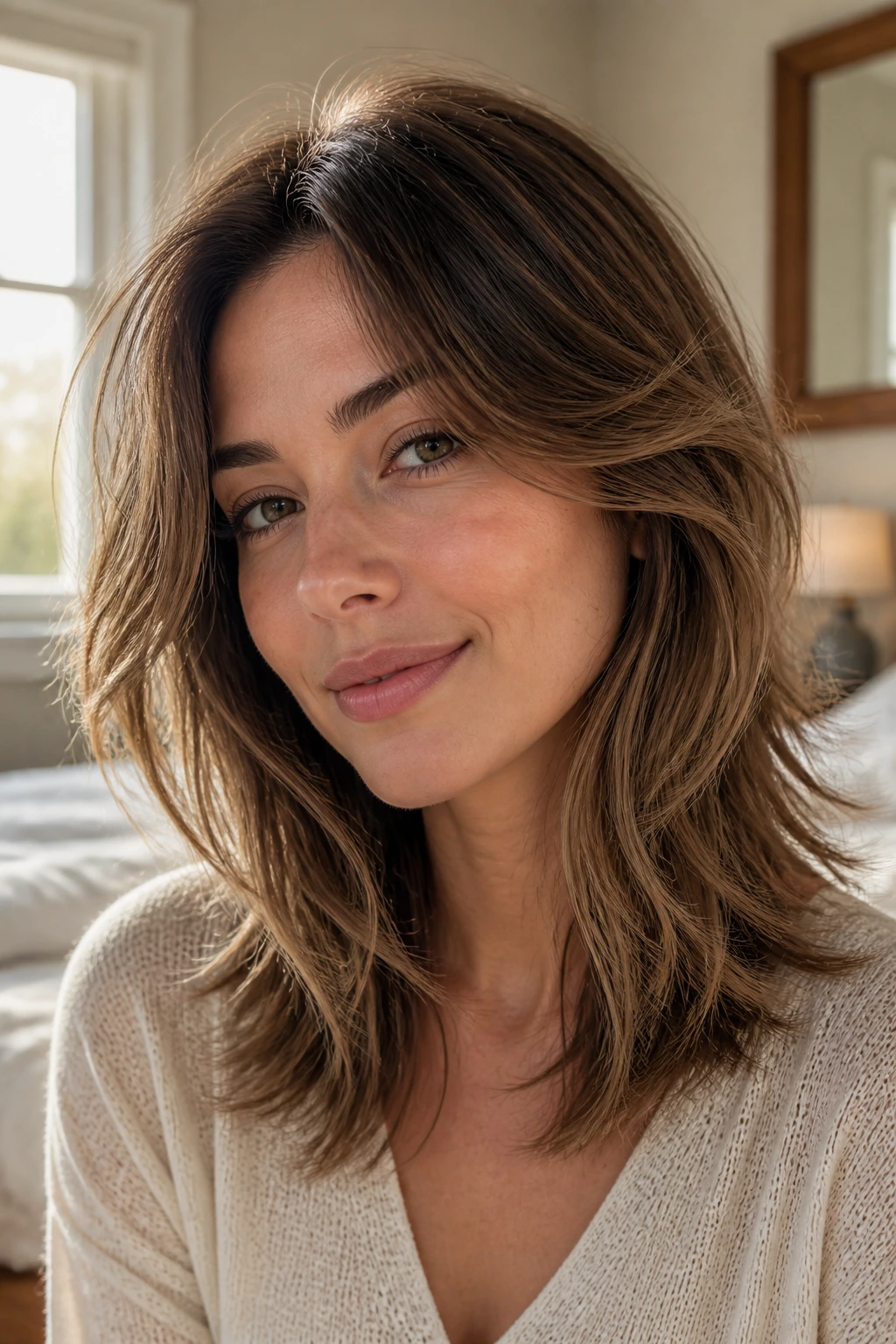
Fine hair needs a careful hand. Too many short layers and you lose density; too little layering and the whole shape hangs flat. A tousled layered cut solves that by keeping the layers long and soft enough to create movement without stripping away fullness.
On an oval face, that movement matters because it keeps the cut from sitting like a sheet. The texture softens the cheek area and gives the face some lift near the ends. It’s a nice way to add life without making the cut look overworked.
I would not ask for heavy texturizing here. That can backfire fast on fine hair. Instead, keep the layers blended and use styling products that add grip—light mousse, root spray, maybe a dry texture mist after the hair is dry. Small amounts. Fine hair gets weighed down faster than most people expect.
This is the kind of cut that looks casual but still needs a little intention. Not much. Just enough to keep it from going limp by noon.
18. Curly Medium Cut With a Rounded Shape

Curly hair needs shape in its own language. A medium cut with a rounded outline respects that, which is why it works so well on oval faces.
Unlike straight cuts that rely on blunt edges, curly hair lives by shrinkage and spring. A rounded shape keeps the curl pattern balanced around the face and stops the sides from ballooning out in odd places. On an oval face, that can create a soft halo effect that feels natural instead of forced.
If your curls are loose to medium, the layers should follow the curl pattern instead of slicing through it. If your curls are tighter, the perimeter needs enough weight to keep the ends from poofing. Cutting curls dry, or at least mostly dry, can help the stylist see where each curl actually sits. Wet curls lie.
This is one of those cuts that rewards a good stylist. It also rewards patience at the sink. A rough cut will show up every day.
19. Medium Wolf Cut
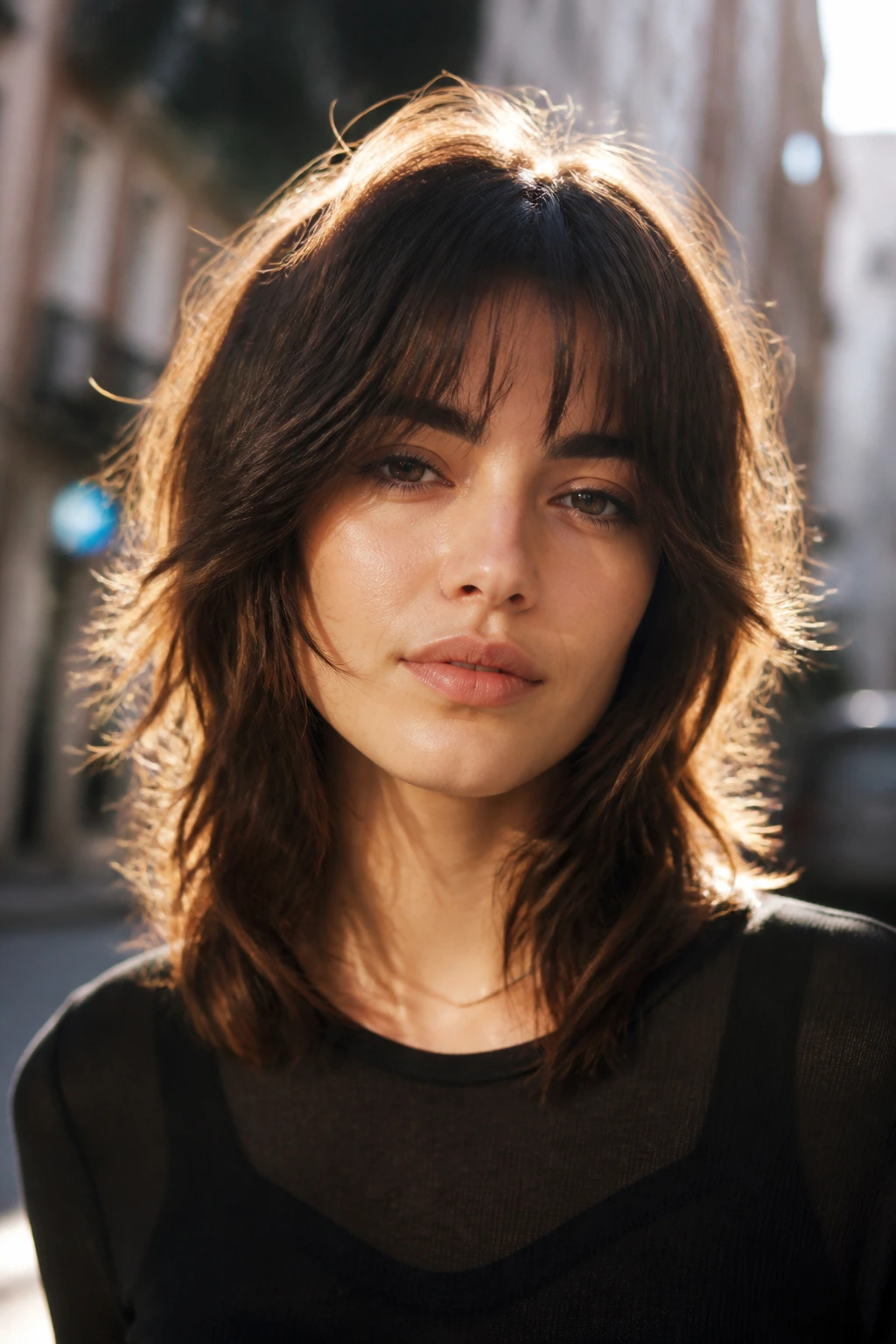
A medium wolf cut sounds wild, and it can be. But a softer version works well on oval faces because the balanced face shape can handle the strong crown texture and the longer, shaggy ends.
The trick is keeping it soft enough to wear. You want crown lift, broken layers, and a bit of fringe around the front, but not a full-on mullet silhouette unless that is exactly what you want. Most people do better with a gentler version that keeps the face frame loose and the back length still present.
What to Ask For
- Shorter layers at the crown, but not too aggressive.
- Long, shaggy ends that still read as medium length.
- A soft fringe or curtain-style front.
- Texture spray or mousse for the finish.
This cut is not low effort. I wish it were. You’ll usually need a little styling to keep it from collapsing or frizzing out. Still, if you like hair with edge and movement, it can look sharp on an oval face without making the proportions feel heavy.
20. Soft Midi With Bottleneck Bangs

Bottleneck bangs are the neatest way to add shape without swallowing an oval face. They start narrow at the center, then open wider through the temples and cheekbones, which makes the whole front of the cut feel soft and controlled.
The medium-length version works because it keeps the bangs connected to the rest of the hair. That connection matters. If the fringe is too separate, it can feel like an add-on. If it blends into a soft midi, the whole haircut reads as one shape.
This is a smart choice if you want bangs but do not want the full commitment of a blunt fringe. The shorter center gives a little edge; the longer sides keep it wearable. And yes, it grows out in a friendlier way than most people expect.
I like this cut on oval faces because it keeps the forehead from feeling too open without crowding the features. It frames, but it doesn’t box the face in. That difference is small in theory. In the mirror, it’s a lot.
Final Thoughts
Oval faces can wear a lot of different medium cuts, which is exactly why the decision can feel weirdly hard. The shape already gives you balance. The haircut is what decides whether you lean sharp, soft, airy, polished, or a little undone.
If you want the easiest path, start with your texture and your routine. A blunt lob, a soft layered lob, and a collarbone cut with curtain bangs all live in the same length range, but they ask different things from your morning. That is the real filter. Not trend. Not hype. Just what you will actually style.
One thing I always tell people: bring photos that show the length on a real head, not a tiny crop. Ask where the shortest face-framing pieces land, and ask where the longest ends hit the body. Those two details tell you more than the name of the haircut ever will.
