



Oval faces have a reputation for being easy to style, and that reputation is partly deserved. The proportions are balanced, the jawline is usually soft, and the forehead and chin tend to play nicely together. But that does not mean every haircut looks equal on an oval face. Some cuts flatter. Some just sit there.
Finding hairstyle ideas for oval faces is less about fixing proportions and more about choosing a mood. A blunt bob can make the face feel sharper. Long layers can soften everything. A side part can shift the whole expression in ten seconds flat. That’s the fun part, honestly. You get to choose the vibe instead of fighting the shape.
The trick is to pay attention to the small stuff: where the shortest layer lands, how much height sits at the crown, whether the ends are blunt or wispy, and whether the style adds width at the cheekbones or length at the jaw. Hair texture matters too. A cut that looks airy on straight hair can turn into a puffball on thick waves if the layering is off by even an inch.
So let’s get practical. These 22 hairstyle ideas for oval faces lean on shape, movement, and balance rather than trend-chasing fluff. Some are polished. Some are messy in the best way. A few are low-effort and still look intentional. Start with the blunt bob, because it tells you a lot about what your hair can actually do.
1. Blunt Chin-Length Bob

A chin-length blunt bob is one of those cuts that makes an oval face look clean and focused in the best way. The line lands right where the jaw starts to matter, so the face doesn’t read as too long or too soft. It feels crisp. A little architectural, even.
What I like about this cut is how little it needs. If your hair is straight or only slightly wavy, the blunt edge does most of the work for you. If your hair is fine, the heavier perimeter makes it look fuller. If your hair is thick, it can remove that dragged-down feeling a long, layered cut sometimes creates.
What to Ask For
- Ask for the ends to sit at the chin or just below it.
- Keep the perimeter blunt, not shredded.
- Leave the front pieces no longer than the back by much more than a quarter inch.
- Style it with a bend under or straight and sleek.
Best tip: keep the line heavy. Thinning out the ends too much makes the whole thing lose its punch.
2. Curtain Bangs with Long Layers
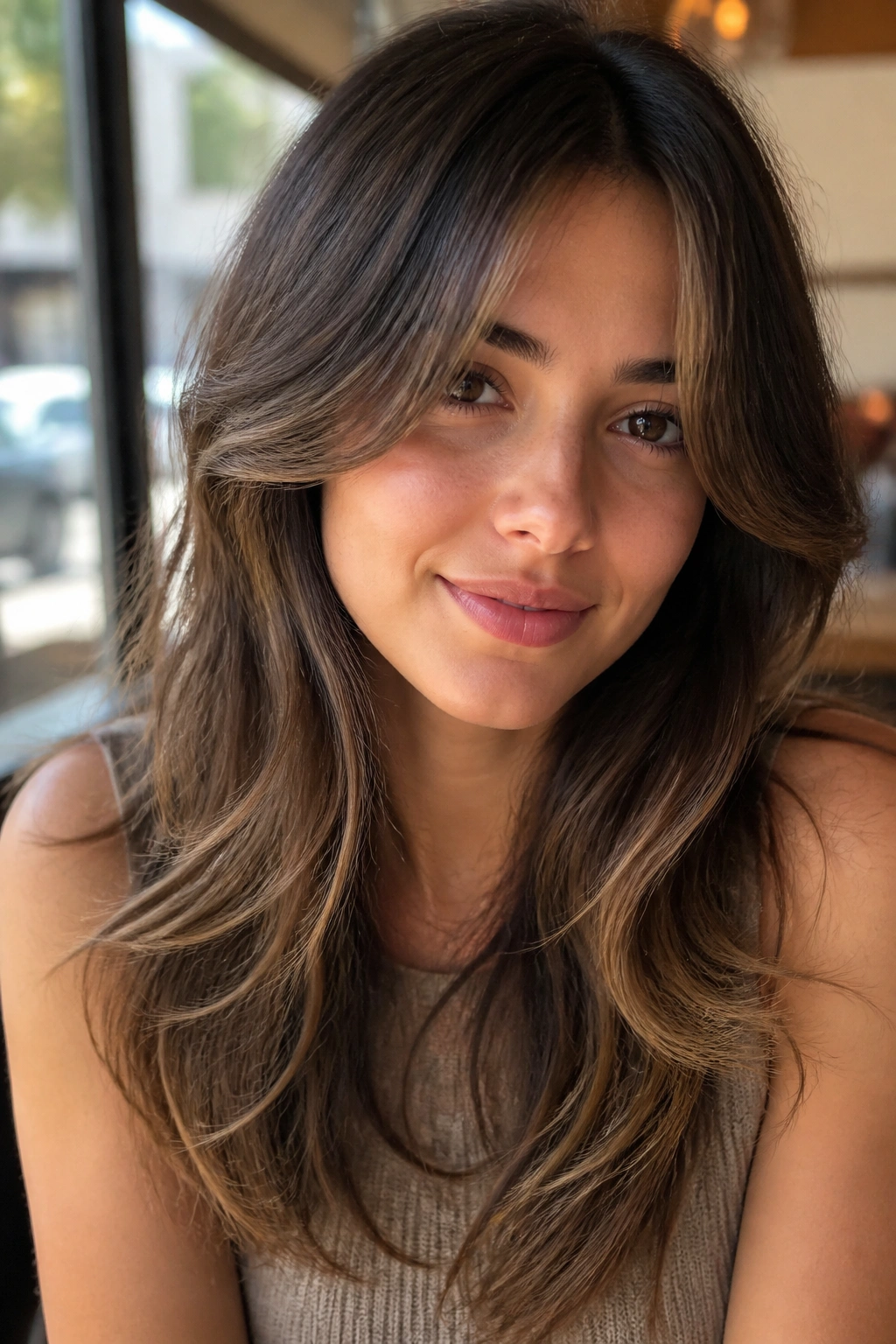
Why do curtain bangs keep showing up with oval faces? Because they give you shape without hiding the face. The bangs split softly down the middle and skim the cheekbones, which keeps the forehead from feeling too open while still showing off the balance that oval faces already have.
The real win here is movement. Long layers stop the haircut from feeling flat, and the bangs give the front a little attitude. You can wear them blown out with a round brush, brushed into a bend, or left looser on a wavy day. They don’t need to be perfect. That’s the point.
How to Keep Them from Looking Too Wide
Ask for the shortest pieces to hit around the cheekbone, not the middle of the forehead. If they start too short, they can make the face look smaller on top and wider in the wrong place. The longer outer pieces should graze the jaw or collarbone.
A good curtain fringe grows out nicely, too. That matters more than people admit. Bad bangs can trap you in monthly trims. These usually do not.
3. Sleek Center-Part Lob

A sleek center-part lob is the haircut equivalent of a clean white shirt that actually fits. Nothing noisy. Nothing fussy. Just a sharp line, a little swing at the ends, and enough length to tuck behind one ear without losing the shape.
On an oval face, the center part keeps everything symmetrical, which can be a good thing if your features are already balanced and you want them to stay that way. The lob length—usually somewhere between the jaw and collarbone—keeps the look modern without dragging the face downward. If the ends are slightly beveled inward, even better. They move instead of hanging there like wet rope.
I especially like this cut on hair that wants to look polished with minimal effort. Blow it out with a round brush, or let it air-dry and smooth the top with a little serum. The style works because the shape is doing the heavy lifting. You don’t need a lot of product. You need a clean part and a tidy edge.
4. Soft Shoulder-Length Waves

Shoulder-length waves are the easy answer when you want softness without giving up structure. On oval faces, they add a little width through the mid-lengths, which can make the face feel even more balanced. The cut lands in that sweet spot where it still moves, but it doesn’t collapse into the neck.
Where the Wave Should Start
The wave should begin below the cheekbone, not right at the roots. That keeps the crown from getting too big and lets the face stay open. If the waves start too high, the style can turn fluffy fast, especially on hair that already has a bit of body.
A 1.25-inch curling iron or wand usually gives the most natural bend. Wrap the hair away from the face for the front pieces, then alternate directions through the back so it doesn’t look too done. Brush it out once it cools. That part matters. Half the time, the difference between “soft wave” and “pageant hair” is a single brush stroke.
- Keep the ends a little straighter for a modern finish.
- Use a light mist of flexible hairspray, not a stiff shell.
- Clip the front sections for a few minutes while they cool if you want longer-lasting shape.
Small thing, big payoff: let the waves sit for ten minutes before touching them. They settle into a nicer shape.
5. Textured Pixie with Side Fringe
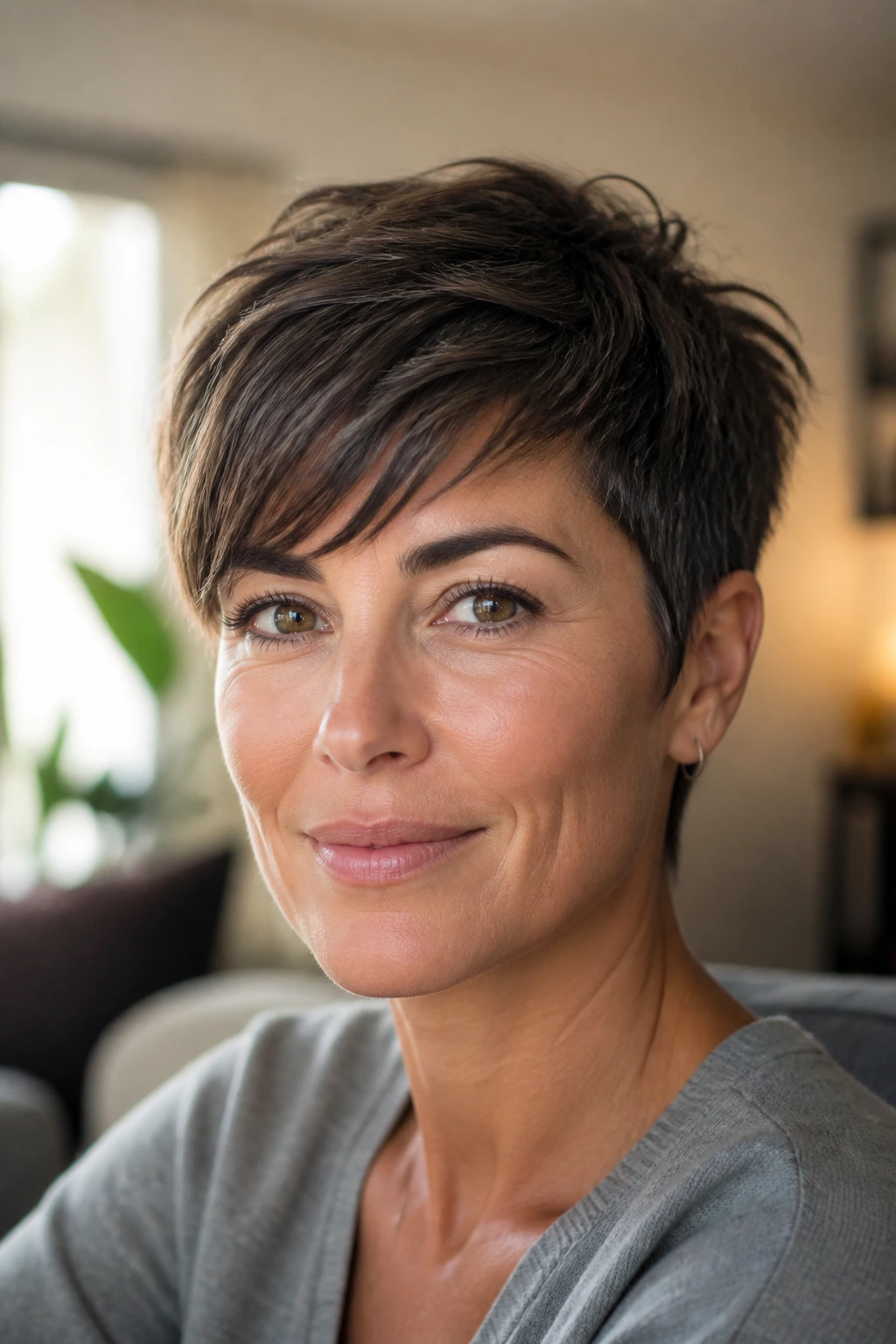
A pixie can be one of the most flattering cuts on an oval face. People act like it’s a bold move, and it is, but the proportions actually make sense. Oval faces can carry short hair well because the shape isn’t fighting the cut. The trick is to keep some softness up front.
The side fringe is doing real work here. It breaks up the forehead just enough, then angles down toward the cheekbone, which keeps the whole style from feeling boxy or severe. The top should have texture, not helmet hair. Think piecey and light, not stiff and sculpted.
Short hair like this also draws attention to the eyes and brows, which is where oval faces often look especially good. That’s the honest reason this cut keeps showing up in salons. It shows off bone structure. It doesn’t hide it.
If you like a wash-and-go routine, this is a strong pick. A pea-sized amount of matte paste, rubbed between the palms, can give the top a little lift and the fringe a soft bend. That’s usually enough.
6. The Soft Shag for Oval Faces
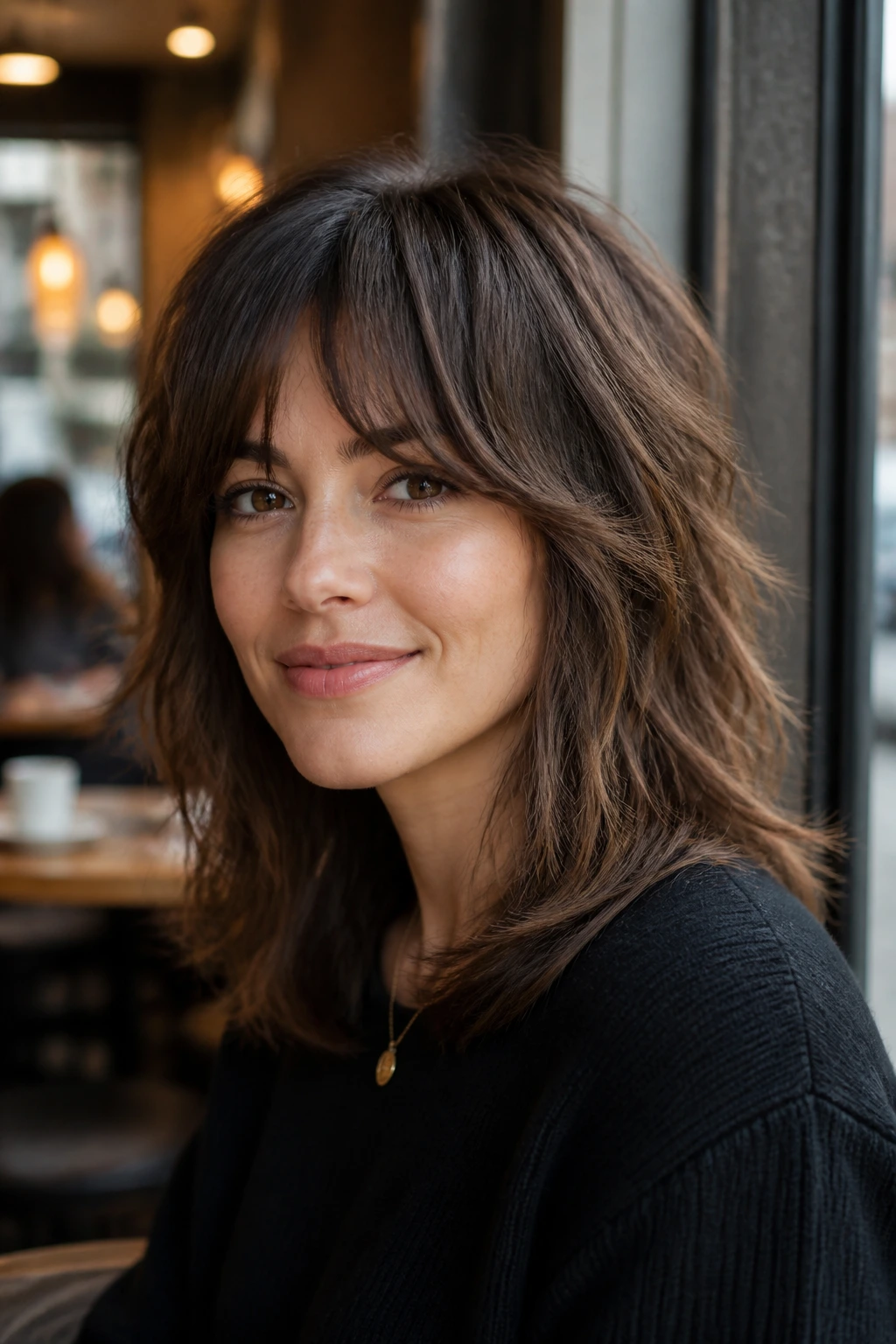
Unlike a neat layered cut, a shag wants a little chaos. That’s what makes it work. On oval faces, the rough edges and broken-up layers keep the look from feeling too precious, and the shape can add width where you want it without throwing the whole face off balance.
This version works best when the layers are controlled. I’m not talking about the heavy, over-thinned shag that leaves the ends wispy and dry-looking. I mean a softer one with movement through the crown, cheekbones, and collarbone. The result feels relaxed, but not sloppy.
It’s a smart cut for wavy hair because the texture helps the layers sit in place on their own. Straight hair can wear it too, but it usually needs more styling—some bend with a flat iron, some finger-shaping, maybe a little mousse at the roots. Thick hair can handle more internal layering. Fine hair needs restraint.
Who this suits best: people who want shape without a blowout every morning. If you like a little mess, this cut has your name on it.
7. Deep Side Part with Glossy Blowout

A deep side part changes an oval face faster than almost any cut change. That sounds dramatic, but it’s true. The part shifts the eye line, adds lift on one side, and gives the face a slightly longer, leaner feel without actually changing the length of the hair.
This style works especially well when the blowout is smooth and glossy. The root lift near the heavier side makes the hair feel fuller, and the opposite side can tuck behind the ear or fall across the cheek. It’s a nice option when you want polish but don’t want your hair to look stiff. There’s a difference, and people can tell.
If your face already feels very symmetrical, this is a good way to create a little tension. A center part keeps things calm. A deep side part adds motion. The roots should lift, the ends should swing, and the front should frame the face rather than hiding it.
A round brush and a little heat protectant go a long way here. So does patience. The style looks simple, but clean roots and smooth ends take a bit of time.
8. High Ponytail with Wrapped Base
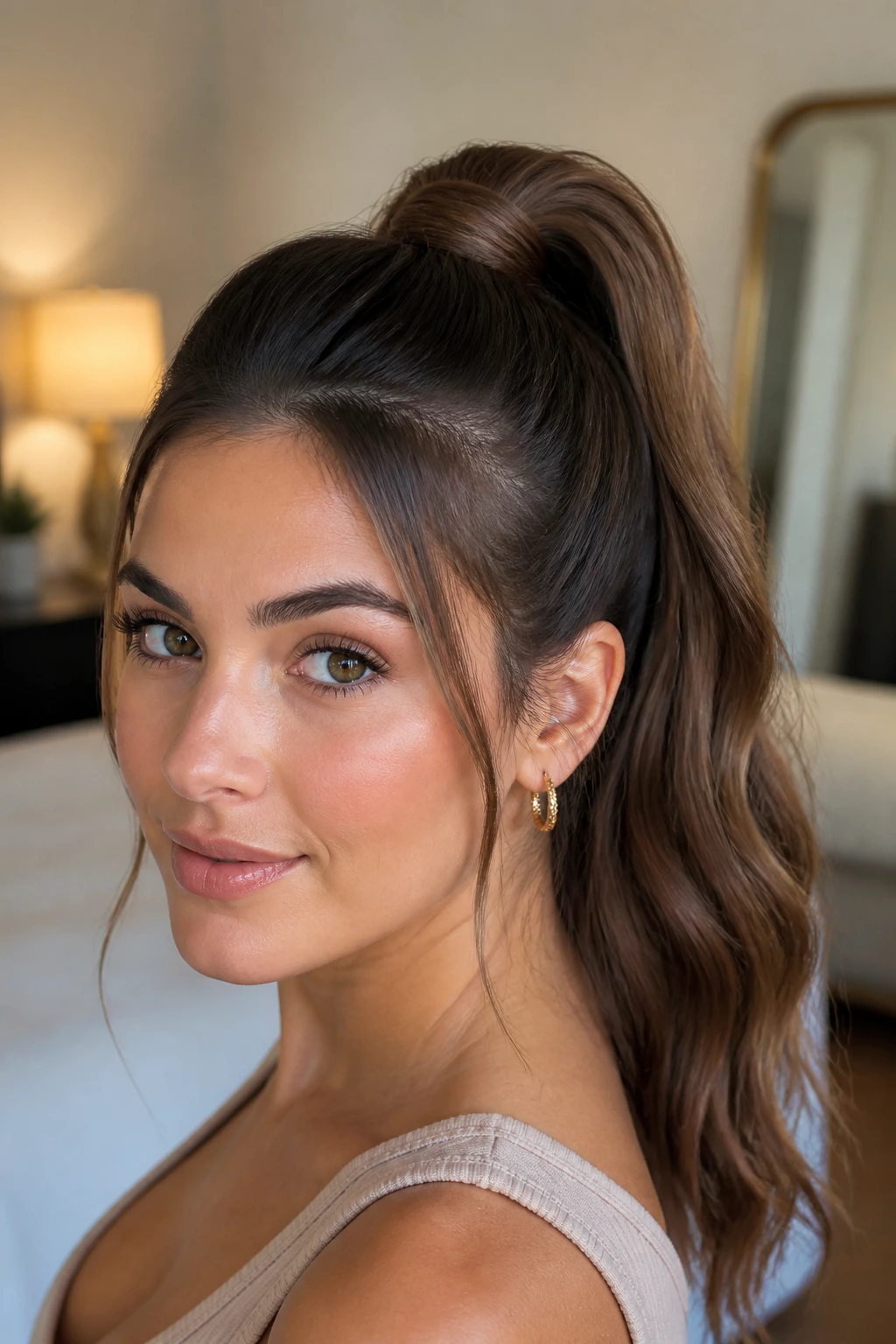
A high ponytail can look almost unfair on an oval face. It lifts the eyes, shows the cheekbones, and makes the whole face read a little more sculpted. The key is not to yank it so tight that it turns severe. That’s where people go wrong.
The best version sits high enough to create lift at the crown, but not so high that it feels cartoonish. Wrap a small strand of hair around the elastic so the base looks finished, and leave a few pieces loose around the temples if you want softness. That little bit of slack keeps the style from looking like it was pulled back for a job interview you didn’t want.
Easy Details That Matter
- Place the ponytail around the high crown area, not at the top of the head.
- Backcomb the roots lightly if the hair is fine.
- Wrap a 1-inch section around the elastic to hide it.
- Smooth the top with a boar-bristle brush for a cleaner finish.
This style is especially good when you want your face on display. It has a sharp, lifted feel without needing a haircut at all.
9. Low Chignon with a Middle Part
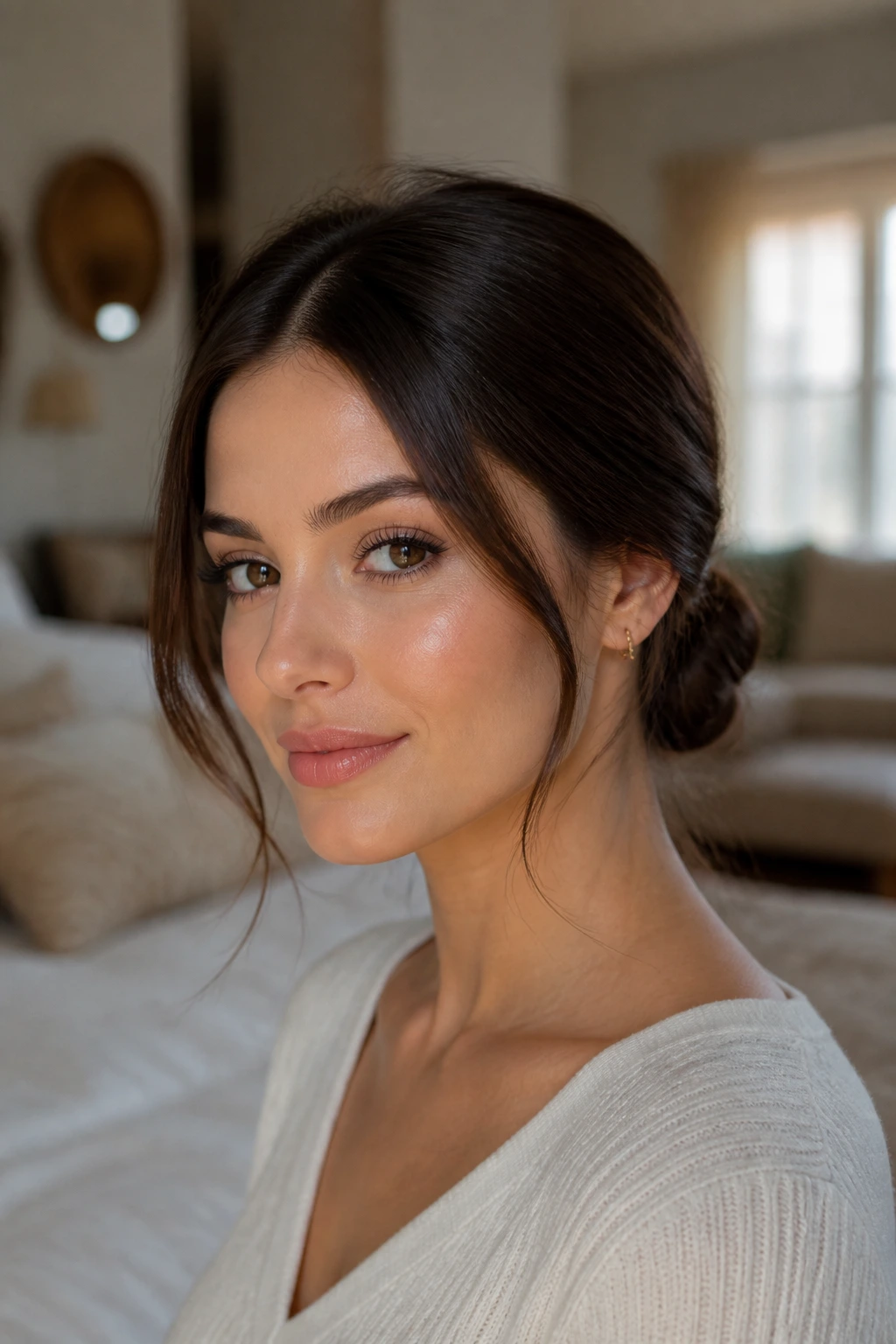
Can a low bun flatter an oval face without looking too plain? Absolutely. The answer is in the details. A low chignon with a middle part keeps the style balanced, and the placement near the nape gives the face room to breathe. It reads elegant, but not fussy.
The middle part keeps the overall shape symmetrical, which suits an oval face beautifully. If you leave a few narrow pieces loose near the cheekbones, the bun feels softer. If you keep the chignon loose rather than twisted into a tight knot, the whole look feels more human and less like a ballet recital.
Where to Leave Softness
A little softness near the ears makes a huge difference. You do not need face-framing pieces everywhere. Just a whisper of movement around the temples is enough. The bun itself should sit low and slightly wide, not tiny and perched up on the back of the head.
This is one of those styles that works for a lot of situations: work, dinner, a wedding, a day when your hair is being annoying and you’ve had enough. It is neat. It is calm. And it looks better when it is not overworked.
10. French Bob with Micro-Texture

A French bob is blunt, short, and a little cheeky. On oval faces, that little hit of attitude can be excellent. The cut usually sits around the jaw, sometimes a touch higher, and the tiny amount of texture keeps it from feeling too stiff.
What makes this version work is restraint. You want the ends to look touched, not chopped to death. A small bend at the edges, a light wave through the body, or even a naturally imperfect air-dry can keep it from turning into a helmet. That matters. A French bob should feel lived-in, not lacquered.
It also does a nice job of spotlighting brows and lips. If you like strong makeup or simple jewelry, this cut gives you room to play. It doesn’t compete. It frames.
A good stylist will usually leave the front a touch longer than the back, especially if the hair has a lot of density. That tiny angle keeps the shape from becoming boxy. No one wants that.
11. Long Straight Hair with Face-Framing Layers

Long straight hair can look gorgeous on oval faces, but one-length length can get heavy fast. The trick is to keep the length and add shape where the eyes need it. Face-framing layers starting around the cheekbone or lip line can stop the hair from falling into one flat curtain.
Unlike very short cuts, this style keeps the vertical line of the hair intact. That means the face stays open while the layers give it movement. It’s a good choice if you love long hair and don’t want to give it up. You just want it to do a little more.
The best version isn’t overloaded with layers. Too many short pieces around the face can look choppy on straight hair. A couple of well-placed cuts are enough. The front should blend into the rest of the length instead of sitting on top of it.
- Ask for layers that begin at the cheekbone or collarbone.
- Keep the ends blunt enough to hold weight.
- Use a flat iron only on the front pieces if the rest air-dries well.
- Finish with a light shine spray, not a heavy oil.
Simple. Clean. No drama, which is exactly why it works.
12. Curly Mid-Length Cut with Rounded Ends
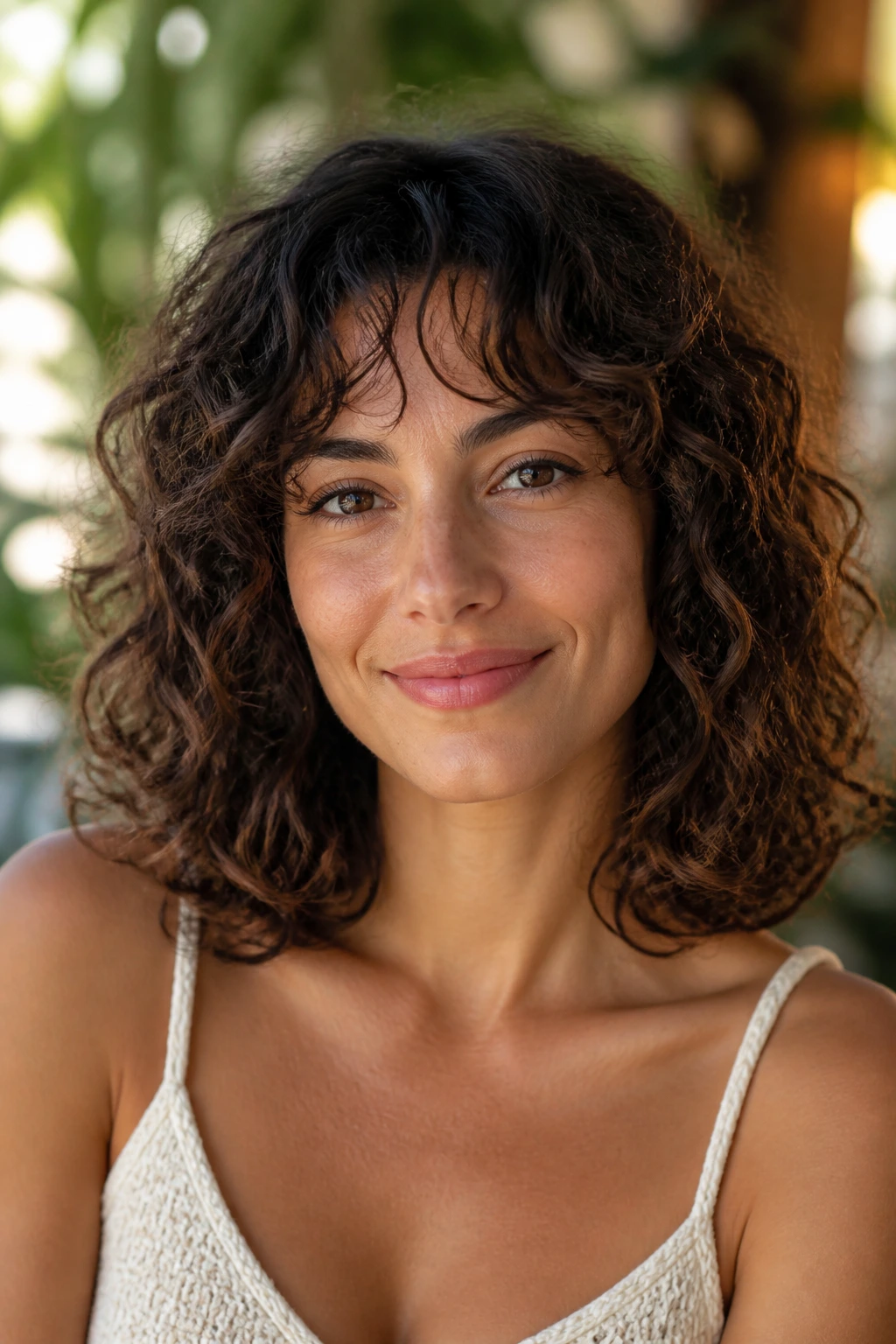
Curly hair on an oval face needs shape that respects the curl pattern. A mid-length cut with rounded ends does that better than a blunt, heavy shape that just sits there and puffs in the wrong places. The roundness keeps the silhouette soft, and the length hits somewhere around the collarbone or just above it, which usually gives curls enough room to bounce.
The important part is where the bulk lives. You want the volume to be balanced, not stacked all at the sides. Too much width at the cheeks can crowd the face. Too much height at the crown can stretch it. Rounded ends keep the whole thing from turning triangular.
A dry cut can be useful here because it shows how the curl actually behaves, not how it looks soaking wet under a cape. Some stylists prefer to shape curls that way, and honestly, it makes sense. Curls have opinions. They will tell on a bad cut later.
This is the kind of style that gets better when you leave it alone. Scrunch in a curl cream, diffuse gently, and stop touching it once it starts to set. That part is boring, but it works.
13. Half-Up Half-Down with Crown Volume

The half-up half-down style is sneaky. It opens the face, keeps some length visible, and gives you a little height at the crown without needing a full updo. On oval faces, that extra lift can be flattering because it adds shape above the eyes and leaves the jawline alone.
The Crown Placement Matters
If the half-up section sits too low, the style loses energy. Too high, and it can look like a child’s party hairstyle. The sweet spot is usually around the upper back of the head, near the crown but not on top of it. That keeps the lift natural.
A little tease at the roots helps, especially if the hair is fine. So does leaving the front pieces out. You do not need thick face-framing sections here. Two slim pieces near the temples are enough to soften the front.
A Few Ways to Wear It
- Twist the top section into a small knot for a casual look.
- Secure it with a barrette if you want a cleaner finish.
- Curl the loose ends for more shape.
- Keep the top slightly loose so the style doesn’t feel tight.
It’s one of those styles that can go from desk to dinner without much work. That’s hard to beat.
14. Slicked-Back Bun with Clean Edges

A slicked-back bun can look brutally good on an oval face. No softening. No hiding. Just bone structure, clean lines, and hair pulled right off the face so the proportions do all the talking. If your features are balanced and you like a sharp look, this is a strong one.
The catch is product control. Too much gel and the hair gets crunchy. Too little and the style falls apart halfway through the day. Start with a small amount, smooth it through the top and sides with a brush, then add more only where flyaways need it. That’s the sensible order. Not the other way around.
The bun itself can sit low or mid-height, but I’d keep it compact. A giant bun can start to compete with the face. A tighter knot keeps the emphasis where it belongs. If your hairline is strong, you can leave a few tiny bits soft around the edges. If not, a cleaner finish usually looks better.
This is not a “cute” hairstyle. It is a decisive one.
15. Asymmetrical Bob with Longer Front Pieces

An asymmetrical bob works because it creates movement through contrast. One side is slightly shorter, the other falls longer, and that diagonal line keeps the haircut from feeling static. On an oval face, that angle can be a nice little jolt. It keeps the eye moving.
The difference between the two sides does not need to be dramatic. A one-inch shift can be enough. That small change keeps the cut wearable while still giving it personality. If you go too extreme, the style starts wearing you instead of the other way around.
This cut is a smart pick if you want short hair but don’t want something as plain as a standard bob. It has a little edge. It also gives you options: tuck the longer side behind the ear, curl it under, or wear it sleek for a more obvious shape.
- Short side: usually lands around the jaw.
- Long side: can graze the collarbone.
- Finish: straight and sharp, or softly bent under.
- Best texture: straight to wavy hair with some density.
A good asymmetrical bob should look deliberate, not accidental. That distinction matters.
16. Feathered Layers with Airy Ends

Feathered layers are one of those old-school ideas that still work because they solve a real problem: heavy hair that hangs flat around the face. On an oval face, airy ends can add softness without adding bulk. The haircut feels lighter, and the whole style moves when you turn your head.
Why does that matter? Because a lot of long layered cuts lose shape at the bottom. Feathering fixes that by taking some weight out of the ends and letting the hair break apart a little. It is especially useful if your hair is thick or coarse. The cut lets it breathe.
The best version is not shredded. That’s the mistake. Feathering should make the ends look soft and mobile, not dry and frayed. A round brush helps, and so does a little bend away from the face at the front pieces. The style should feel breezy, not delicate.
If you grew up seeing feathered layers on a terrible magazine cover, give them another chance. The modern version is cleaner and easier to wear.
17. Curtain Fringe and Collarbone Cut for Oval Faces
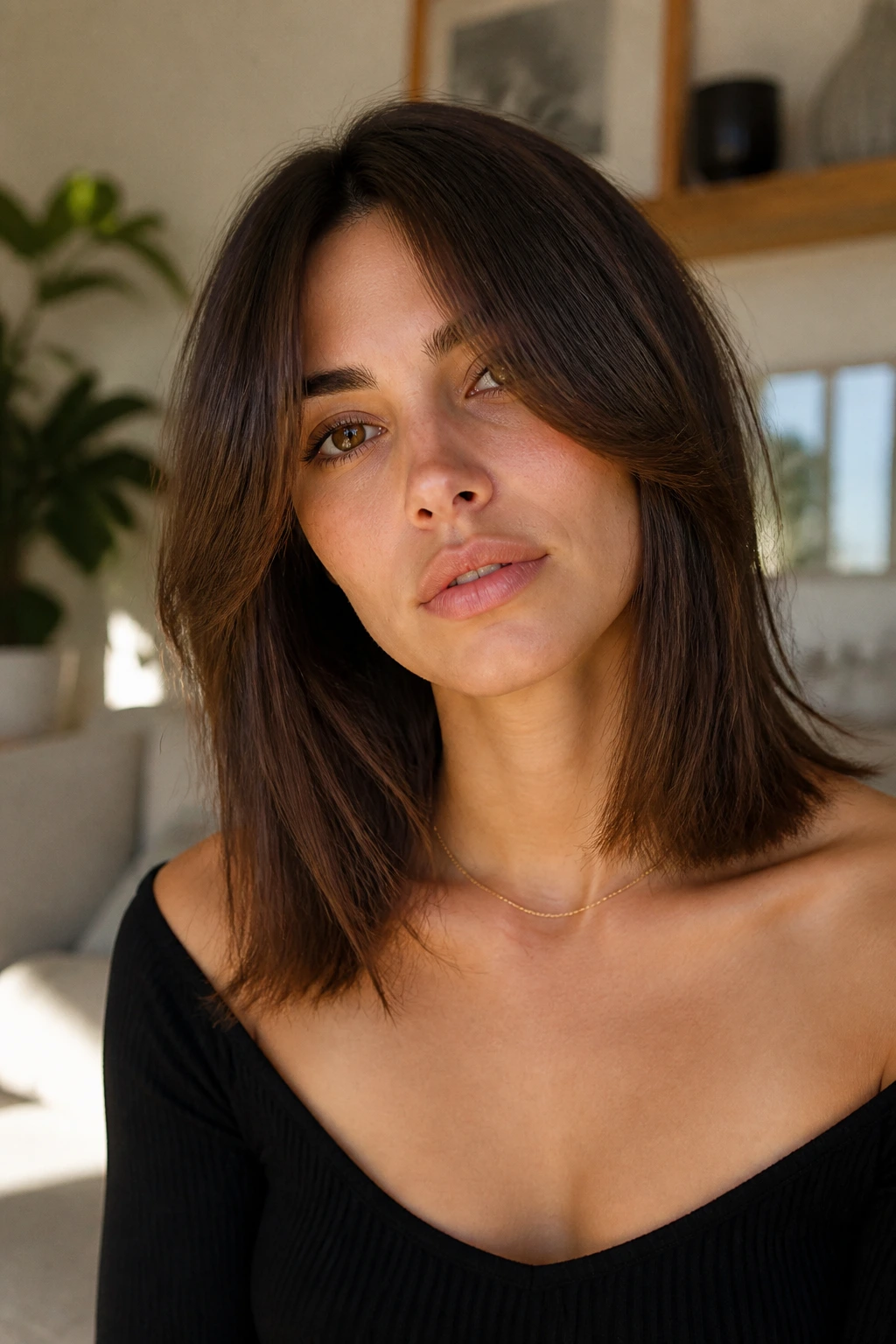
This is one of the easiest hairstyle ideas for oval faces to wear day after day because it does two jobs at once. The curtain fringe opens the face, and the collarbone length keeps enough shape in the rest of the cut that it never falls flat. It has movement, but not too much. A nice middle ground.
The Fringe
The fringe should start around the cheekbone and drift longer at the sides. That keeps the center of the face open while still giving you a soft frame. If the shortest piece lands too high, the look can feel top-heavy. If it’s too long, the fringe stops doing much at all.
The Cut
The collarbone length gives the hair a swing point. That length is flattering on oval faces because it doesn’t stop at the chin, where some cuts can make the face feel wider than intended. It also gives you enough hair to tie up, braid, or clip back without losing the shape.
The Finish
A little bend at the ends is enough. You do not need a full blowout every time. A flat iron curve, a medium round brush, or even a good air-dry routine can work here. The cut is the star, not the styling routine.
This one is easy to live with. That’s the main reason I keep recommending it.
18. Wolf Cut with Controlled Shape
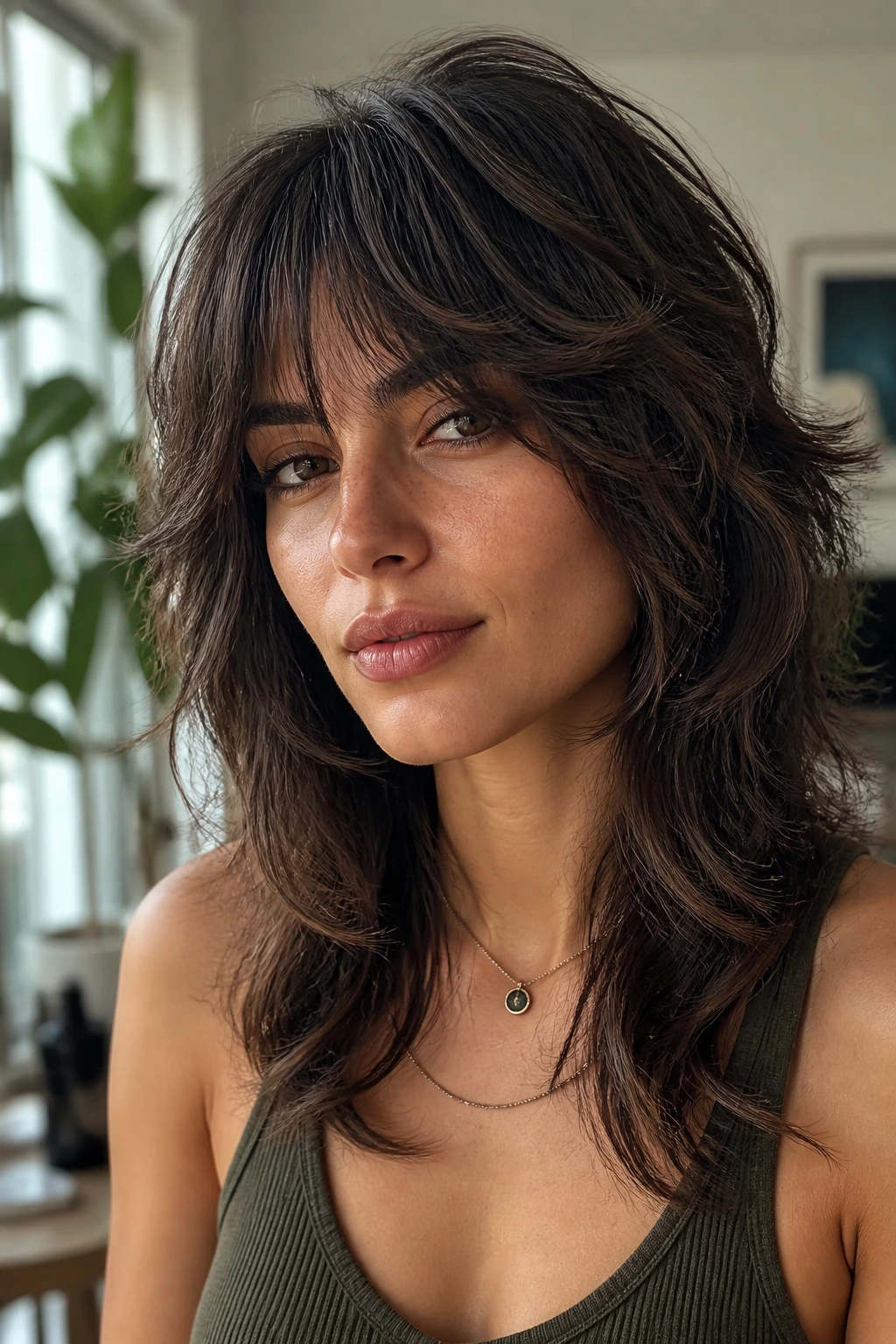
A wolf cut can flatter an oval face when it’s handled with some restraint. The messier, heavier version can be too much in the crown and too thin at the ends. The better version keeps the shaggy energy but controls the outline so the face still feels balanced.
The top layers should add lift without going into full mushroom territory. The bottom should keep enough weight to stop the style from floating away. On oval faces, that balance matters because the shape already has natural harmony; you want to add texture, not erase it.
I prefer this cut on wavy or slightly curly hair. The texture gives the layers something to grab onto. Straight hair can wear it too, but it usually needs more styling to keep the piecey shape alive. A touch of mousse at the roots and a bit of cream through the ends can help.
Not every wolf cut needs to look wild. Some of the best ones look almost calm from a distance, then break apart in a few smart pieces when you get closer. That’s the version I trust.
19. Side-Swept Waves with One-Shoulder Volume

Side-swept waves are a good choice when you want romance without making the style too soft. On an oval face, the diagonal line creates movement across the face, and the volume on one side can make the whole look feel a little more dramatic. It’s a simple trick. It works.
Unlike a center part, which keeps everything even, a side sweep changes the balance on purpose. That can be handy if you want to highlight one cheekbone or shift attention away from a forehead you don’t feel like showing off. The waves should be loose enough to brush the collarbone and shoulder, not so tight that they start looking formal.
A 1.25-inch iron usually gives enough bend. Clip the heavier side behind one ear or secure it with a small hidden pin under the hair so the shape stays put. Then brush through the waves once they cool. That softens the pattern and gives the hair some air.
This is a strong evening look, but it doesn’t need to be dressed up. It can work with jeans and a sweater too, which is part of why I like it.
20. Cropped Curls with a Soft Taper
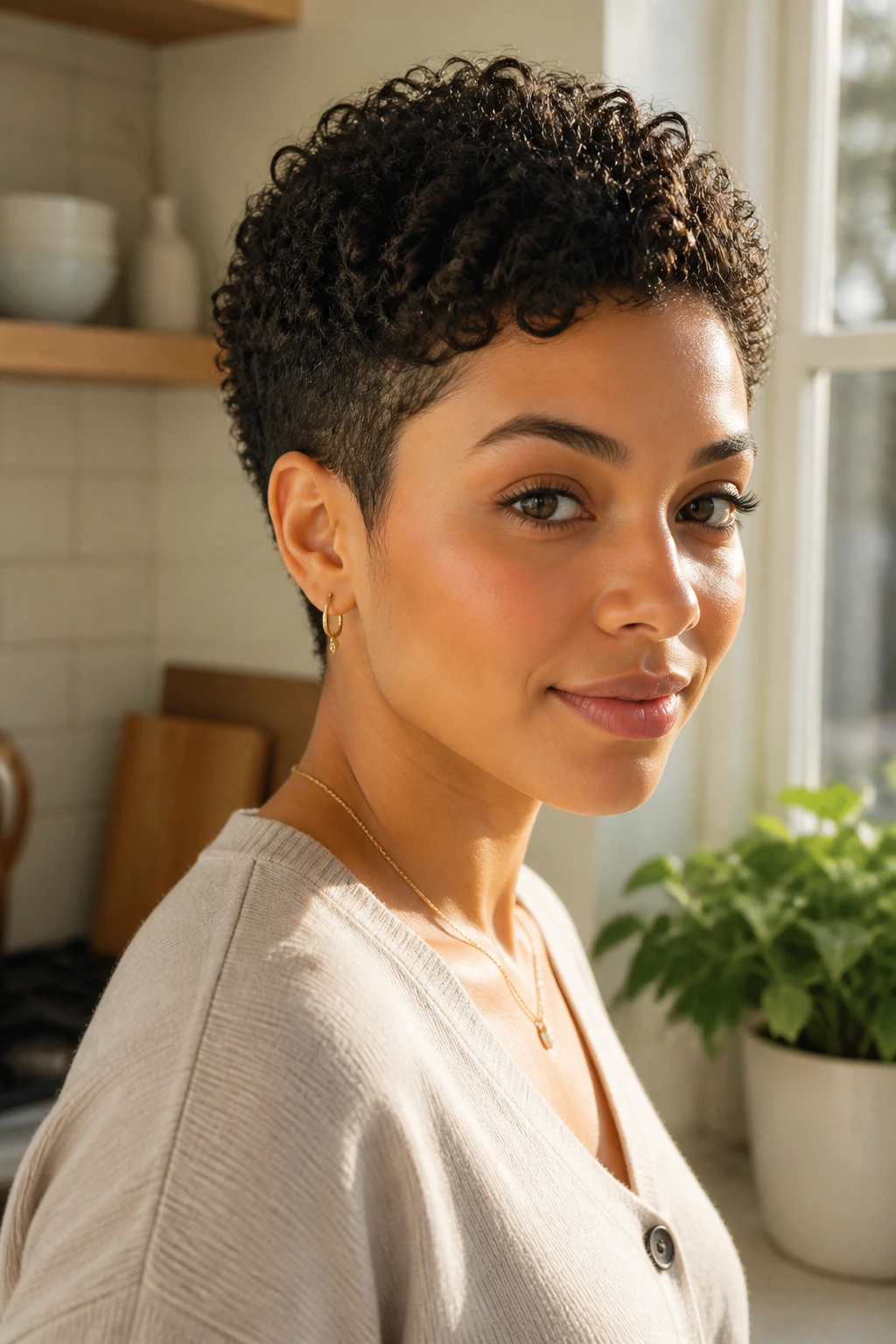
Cropped curls can look fantastic on an oval face when the sides are tapered and the top keeps a rounded shape. The cut shows the face instead of hiding it, and the taper keeps the sides from puffing out into a boxy outline. That makes a big difference.
The danger with short curly cuts is overbuilding the sides. Too much width near the ears can make the head look wider than the face itself. A soft taper near the nape and around the temples keeps everything neat without flattening the curl pattern. The top stays alive. The sides stay clean.
This is a great option if you want short hair but don’t want the severity of a straight pixie. Curls soften the whole thing automatically. Add a little curl cream, scrunch, and let the shape dry in place. If the top needs more lift, diffuse at the roots for a few minutes.
- Ask for the curls to stay rounded on top.
- Keep the taper soft, not buzzed tight.
- Leave enough length at the crown for the curls to spring.
- Avoid over-brushing once it’s dry.
That last one is a lifesaver. Brush curly short hair too much, and it turns into a frizz cloud.
21. Polished Flip-Out Lob
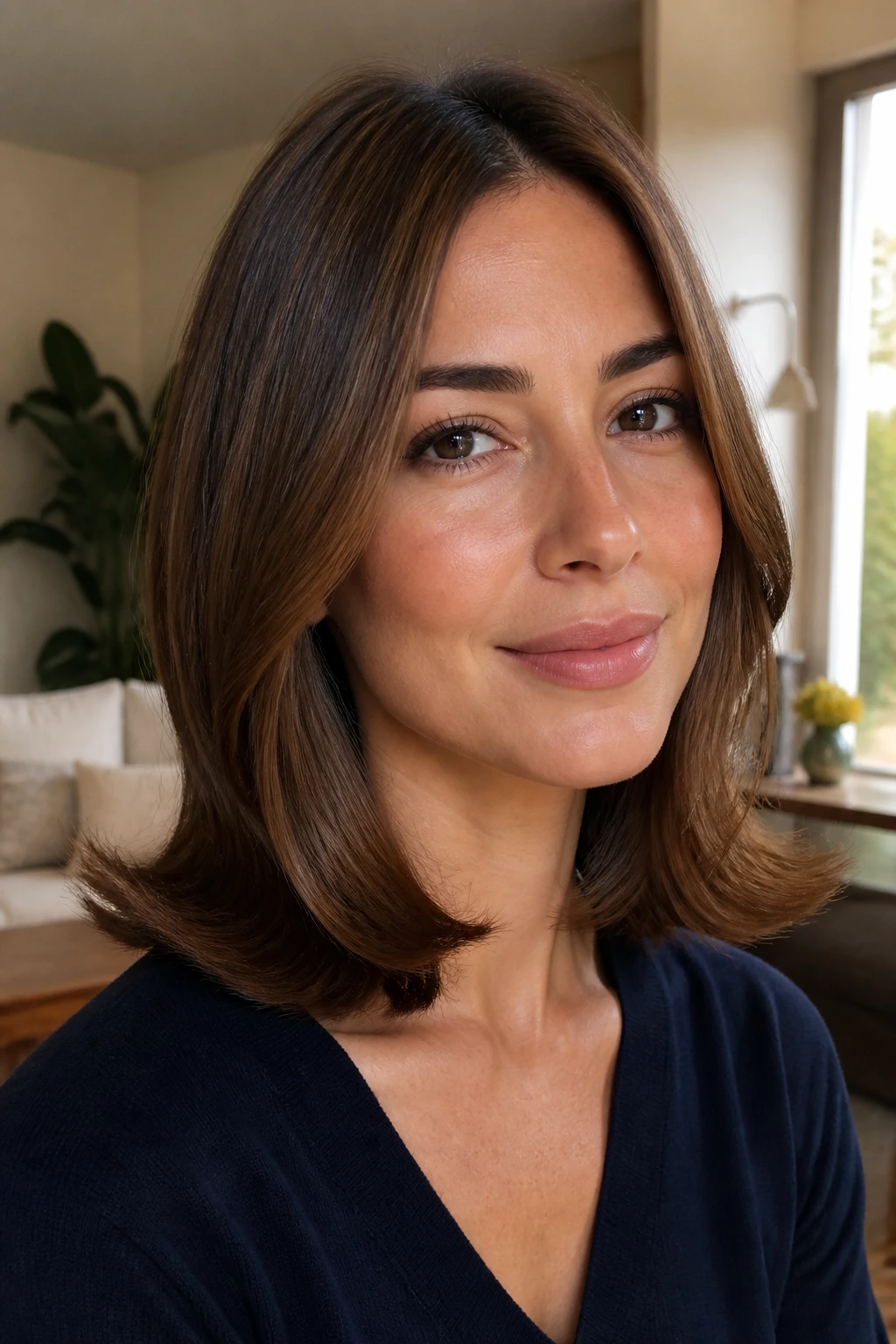
A polished flip-out lob has a little retro energy, but it doesn’t feel stuck in the past. On oval faces, the outward bend at the ends adds width near the jawline, which can be a nice counterpoint to the vertical length of the face. It gives the whole cut a lively edge.
How to Get the Bend
Start with shoulder-grazing or collarbone-length hair. That length lets the ends flip without looking forced. Use a round brush or flat iron to turn the ends away from the face by just a small amount—about 20 to 45 degrees. Too much and the style starts looking cartoonish. Too little and you miss the point.
The top should stay smooth so the flipped ends stand out. That contrast is what makes the style work. A little root lift helps too, especially if your hair is fine or tends to fall flat by noon.
The polished flip-out lob is good when you want something a bit more styled than loose waves, but not as formal as a blowout. It feels finished without being precious. That’s a nice place to land.
22. The Easy Collarbone Cut for Oval Faces
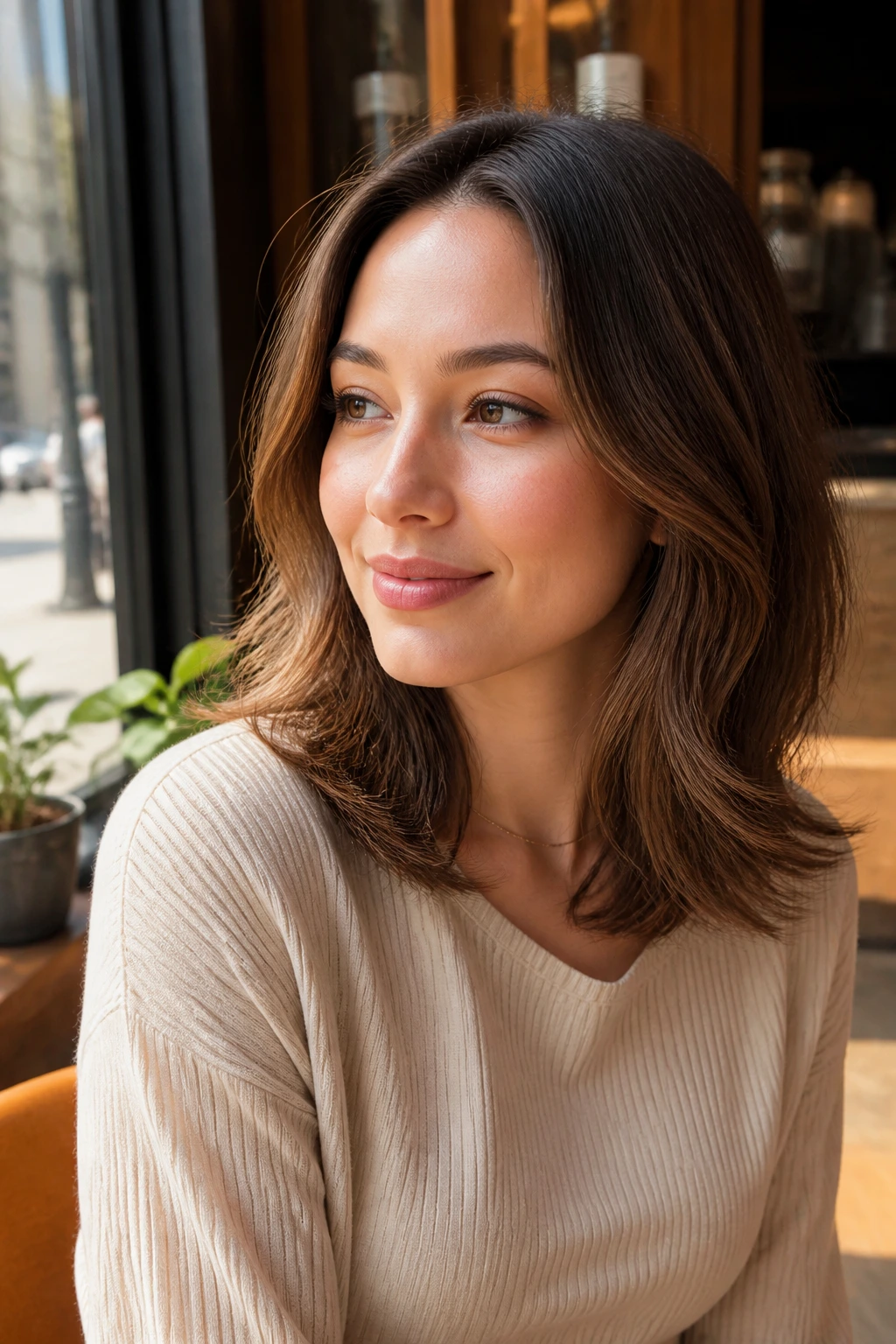
A collarbone cut is the haircut I keep coming back to when someone wants one style that can do a little bit of everything. It’s long enough to tuck up, short enough to feel fresh, and balanced enough to suit an oval face without much argument from the hair itself.
What makes it work is the length. The collarbone gives the ends a natural stopping point, so the hair doesn’t drag the face down the way very long, heavy lengths can. It also makes the cut easy to grow out. That’s a small thing until you’re six months in and still like your hair.
If you want to make it look more interesting, ask for soft layers that begin below the cheekbones. If you want it cleaner, keep the line mostly even and let the styling do the work. Air-dried, brushed out, or bent slightly under with a round brush—it takes all of them well. A little flexibility is the whole appeal.
And honestly, that’s the haircut many people end up loving most. Not the loud one. The one that still looks good when you’re late, when the weather is rude, or when you cannot be bothered to do much at all.
